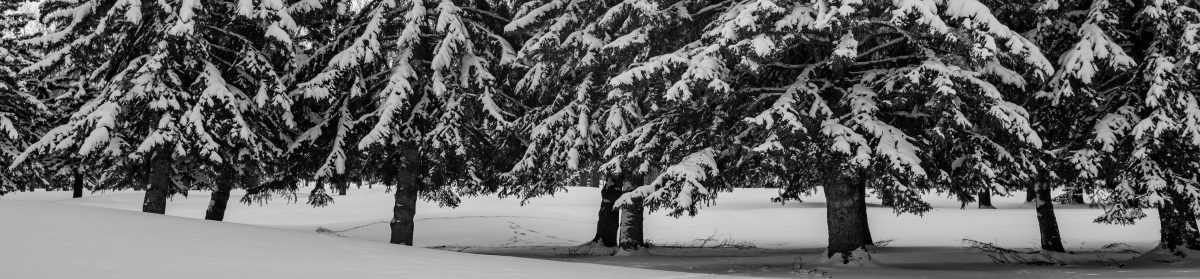
A Foggy parkrun and a Larchy Hike

What a weekend!

Saturday.

parkrun is a worldwide phenomenon. It started in 2004 in the UK, when a small group of runners got together for an informal 5k run. There are now more than 3 million registered runners who can show up at any weekly parkrun around the world.

As a historical aside, park runs were a thing decades ago. That was in the late 1970s, at the dawn of the running boom. I remember doing 1, 3 or 5 mile runs around Gage Park in Hamilton, which were organized by the local YMCA. Like parkrun, those runs were free and informal. But I digress…

We now have several parkruns to choose from in the Calgary area. My friend Tim (a veteran of 100 parkruns) encouraged us to give it a try, so Deb and I decided to join for our first Nose Hill parkrun, and the 285th weekly edition.
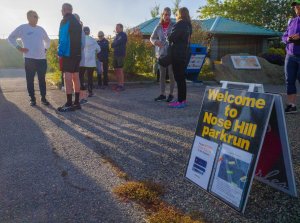
Nose Hill Parkrun 285

Fog settled over the park as we did an easy warm-up jog. The field was large, with over 150 runners. It included a large number of airline employees from around the world. They were in town to participate in the World Airline Road Race, a large race that was scheduled for the next day.

Our run went well. We handled the two laps of mixed terrain without much trouble. That said, we saw almost nothing, due to the thick fog. It did make for some interesting photos, with runners disappearing off in the misty distance.
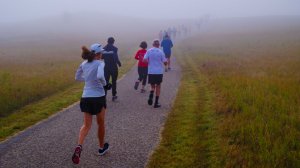
Fog and mystery on Nose Hill

We finished in 30 minutes, and thanks to a modern technological touch, we scanned our personal parkrun barcodes against our finisher’s chips. An hour later we had an email with our age-graded results and our updated parkrun record.

We’ll be back for another parkrun soon!

Sunday. Another day, another early start. This time it was for a trip to the mountains.

Tim (yes, that’s parkrun Tim) and his wife Judi proposed the Pocaterra Ridge in Kananaskis. This moderately strenuous, point-to-point, 10-kilometre hike is renowned for its larches. And given that this weekend would see the larches at their golden peak, we knew the trail would be busy.

Despite our early start, the parking situation was already very tight when we arrived at the north trailhead. We carpooled to the south end of the trail at the Highwood Pass, got ourselves organized, and set off.

The well-trodden, muddy trail began climbing immediately. We admired the magnificent golden larches as we toiled through the first couple of kilometres of the hike.
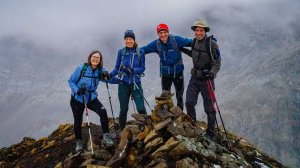
Reaching the first summit on Pocaterra Ridge

The first of three peaks along the ridge hike maxes out at an elevation of 2722m. The views of the entire Kananaskis Valley to the north were spectacular, when we had views. This being an Alberta autumn, it had begun to snow. The temperature dropped and we reached for our toques and extra layers.

We made good time coming down from the summit. We timed our lunch stop perfectly, to coincide with a brief interlude of sunny and calm weather. By this point, the crowds were much thinner. Many hikers had clearly focused on the lower reaches of the trail, but they may have missed the best part of the hike. Our high altitude paid huge dividends, in the form of incredible views, as we walked along the well-defined ridge trail.
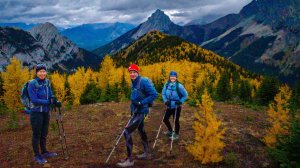
Larches and great views on Pocaterra Ridge

The last hour of the hike was a steep descent back through the larches to the highway. We gingerly made our way down, with quads burning.

Overall, it was a memorable day in the mountains, made better with good friends and magical views.
Running, Across the Iberian Peninsula

Our trip to Portugal and Spain offered ample opportunities for us to explore the region on foot, and we did just that. Working our way from Lisbon to Barcelona, we made sure to include a run in each location. As many readers will attest, there is no better way to see a new place than at running speed. We had some memorable runs (camera in hand, of course) and faced only a few minor challenges along the way. Here’s a summary.

  1. Lisbon

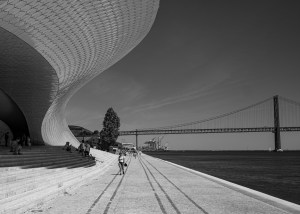
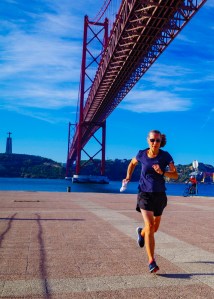
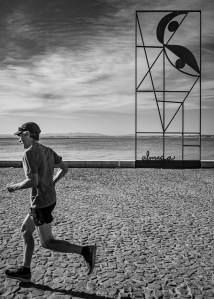
The Portuguese capital was a charming place to start our Iberian tour. The Praça do Comércio and the Tagus River were just steps from the Pousada Lisboa Hotel. We did an easy out-and-back run to the Ponte 25 de Abril, enjoying magnificent views along the way. We decided to turn around before reaching the impressive modern Museum of Art, Architecture and Technology (MAAT) in Belém. We knew that we wanted to visit the area later in the day so we could explore the sights more fully. We were thrilled to see so many fast and fit runners on the (cobbled!) pathway.

Ponte 25 de Abril
The cobbled path along the Tagus River

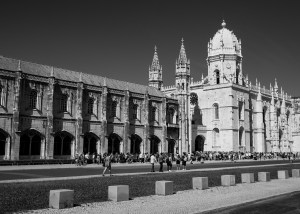
And here’s what we saw later in Belém (but not running):

The spectacular Museum of Art, Architecture and Technology
The Jerónimos Monastery

2. Faro

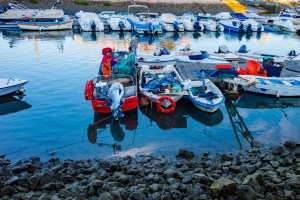
We fit in a short run during our stopover in Faro, the capital city of the Algarve district in southern Portugal, which let us see the morning activity along the waterfront. Fishing boats were returning to port, and clamdiggers were taking full advantage of the low tide as the sun rose. The temperature was already climbing as we returned to our comfortable room among the narrow, cobbled streets of the old town.

Early morning, Faro harbour

3. Seville

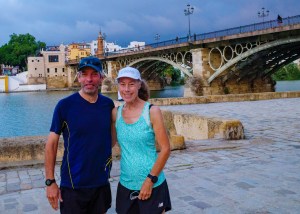
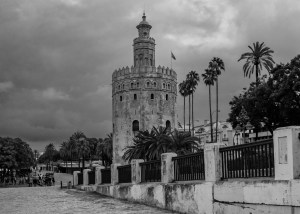
Our first stop in Spain was a revelation. The capital of Andalucia is brimming with Spanish character. Our apartment was a few blocks from the historic Puente de Isabel on the beautiful Guadalquivir River. We were treated to many sights on our early morning seven-kilometre run. Rowers and runners were out in force, all with the same thought of avoiding the heat of the day. Unique public art, several famous monuments and contemporary architecture were all to be found along the route. Our turnaround point was the lush Maria Luisa Park, the gardens next to Plaza de España, and one of the many features in Seville that were constructed for the 1929 Ibero-American Exhibition.

We started from the historic Ponte Isabel II in Sevilla
Torre del Oro, one of the sights along the Guadalquivir River

4. Granada

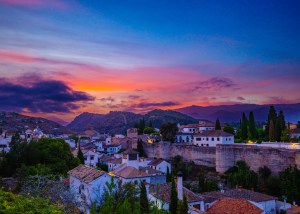
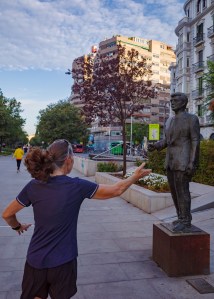
Our challenge in this historic city was to find a flat spot to run. From our apartment in the Albaicin neighbourhood we had a panoramic view of the most famous feature of the city (the Alhambra, a massive Moorish fortress and palace), but it was also a steep, twisty and cobbled kilometre away from the city centre. As a result, we decided to enjoy a leisurely walk down to the Avenida de la Constitución before starting our run. A few laps of this pedestrian-friendly mall made for a pleasant outing. We didn’t see many other runners during our early morning run, but we did get a chance to say hello to statues of many famous people from the region.

Sunrise over the Alhambra, Granada
Good morning Granada

5. Madrid

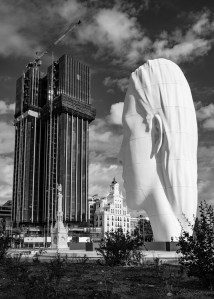
We were impressed by the capital city of Spain as soon as we arrived at the handsome and historic Estación de Atocha. This very walkable city of 3.2 million people is crammed with sights, including the world-famous Prado Museum. We found surprises around every corner. When it came to planning our run, we were pleased to see that the Hotel Fénix Gran Meliá in the Salamanca district was a few minutes away from the Parque de Buen Retiro, possibly the most beautiful urban park in Europe. A lap of the gravel path around the park was 4.5 kilometres, leaving us with enough energy to check out the Estanque del Retiro, a spectacular artificial pond and monument. Aside from the Retiro, there are many other green spaces to explore in Madrid. We were disappointed to learn that a hugely popular 10k race (Corre por Madrid) was taking place on the morning we left the city. Maybe next time!

Julia, a monumental sculpture by Jaume Plensa
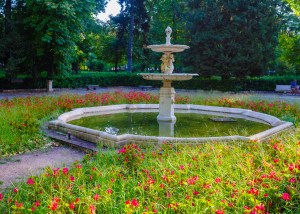
Just one of many picturesque spots in el Retiro, Madrid

6. Barcelona

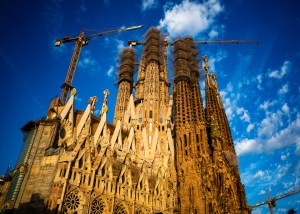
Our stay at the Hotel Casa Fuster in the Gracia district of Barcelona was a highlight of the trip. Our fifth-floor view was dominated by the Sagrada Familia, Gaudi’s Modernist masterpiece. We intended to run an out-and-back route on via Diagonal, a pedestrian avenue near the hotel, but road construction and a close call with a taxi changed our plans. While looking for an easier route, we took a couple of wrong turns and found ourselves staring up at the iconic church. Breathtaking! We thoroughly enjoyed our stay in the capital city of the Catalonia region. The Sagrada and the Picasso Museum were well worth a visit.  Overall, it was a fitting end to our travels.

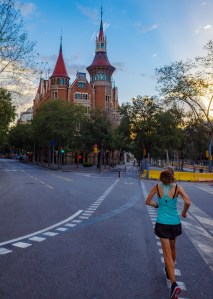
Navigating the roads in Barcelona
Sagrada Familia, Gaudi’s masterpiece

A Brief Introduction to an Amazing System

Two main sets of arteries feed blood to the human brain. At the front of the neck are the left and right common carotid arteries. The common carotids divide into the external and internal carotids. The carotid arteries are big, as far as arteries go, at about six millimetres in diameter for the average adult, and they account for about eighty percent of the total blood supply to our brains.

At the back of the neck, we find the left and right vertebral arteries—the verts. These major arteries run from a point behind the collarbones, up and through the vertebrae in our neck, and into the back of the brain. The verts originate from a junction with the subclavian arteries, another pair of large arteries that deliver blood into the arms. The verts are smaller than the subclavians, at about three millimetres in most adults.

As I’ve mentioned before, I look at medical subjects from a strictly layman’s perspective. One aspect of the arterial system feeding the brain that I find fascinating is the amount of redundancy that is built into it. In most people, the left and right vertebrals do the same job. The two separate arteries meet up in the back of the skull to form the larger basilar artery. It is the basilar artery that supplies the remainder of the blood to the brain, about twenty percent of the total.

Redundancy extends further than just between the left and right vertebrals. It also includes connectivity between the two sets of arteries feeding the brain, the carotids and the vertebrals. At the base of the brain, where the various arteries come together, there is a circle of connections between the carotid and vertebral arteries. This arrangement of communicating arteries is called the Circle of Willis, named for Thomas Willis, an English doctor who discovered it in the seventeenth century. Several other arteries meet up in the Circle of Willis and then take blood away to other parts of the brain.

The reason for the Circle of Willis is quite simple and elegant. If any of the main arteries is blocked, or occluded, then the parts of the brain that depend on the blocked artery can still get blood supply. In other words, blood can flow around the circle to get to its destination by another route.

Not the Circle of Willis

There can be differences in each person’s arterial connections, and many people have an arrangement other than a textbook Circle of Willis. This is what a neurologist would refer to as an “incomplete Circle of Willis”. It doesn’t seem that having an incomplete Circle of Willis is necessarily a problem. Besides, there is no option to fix it, given the complexities involved. In other words, an incomplete Circle of Willis is likely something that would only ever be discovered in an autopsy.

So, why am I even writing about this?

I know from personal experience that having an incomplete Circle of Willis can lead to higher risks of stroke or other neurological problems.

Even if that weren’t the case, I look at this system from a chemical engineer’s perspective. And when I do, I can’t help but be fascinated by the perfection of the design for this most essential system.

Mine just doesn’t happen to be perfect.