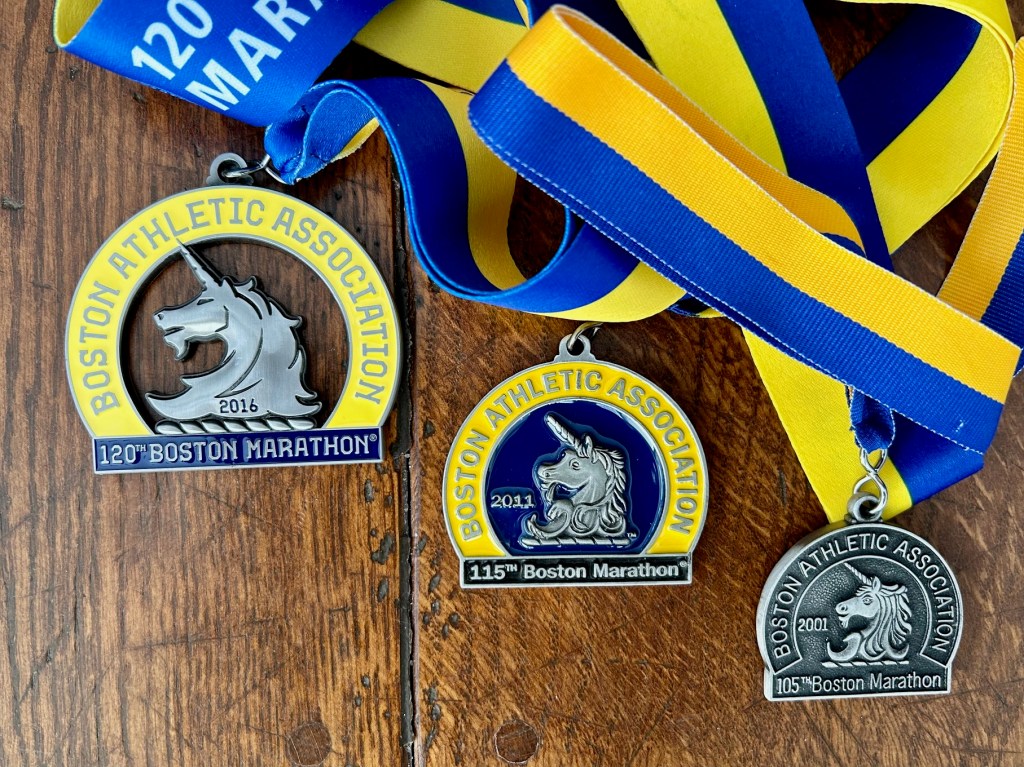

Late April and early May are a wonderful time for fans of marathon running. As I do every year, I followed the latest news from Boston and London, home to the world’s most famous marathons. The 2026 races brought some notable headlines, including a new course record by John Korir in Boston and a remarkable but hardly unexpected result, as Sebastian Sawe convincingly broke the 2-hour barrier in London.
But as has happened for several years, I was left with mixed feelings, especially reading some of the online chatter after these two premier races. I decided to let things sit for a while, before putting my concerns into words. Since this is my blog, I will go ahead and share my opinions on the state of the sport. I’m interested in any reader comments, especially if you have a different take on this subject.
Celebrating the good
I’ll start by reiterating my opinion that athletics (and specifically, running) is the greatest of all the sports. Competitive running has been at the core of my existence for most of my life, and I remain captivated by a sport with such rich history, diverse personalities, infinite challenge, and tangible benefits.
Because running confers countless benefits, I’m thrilled whenever I see people taking up the sport, no matter their circumstances. I encourage anyone who is curious about running to take it up, with an open mind. If they choose to take the step into competitive running, so much the better.
Apparently many people are doing just that—it was announced this week that entry applications for the 2027 London Marathon exceeded 1.3 million. This is more than twice the figure for the 2024 race. The odds of being selected in the lottery are slim—now only about 1 in 100. And it’s not just London that is seeing dramatic growth. I haven’t done a detailed analysis, but big city marathons and many other races are filling up fast. It’s a worldwide phenomenon.
Higher participation in running is a very good thing. Running races, whatever the distance, is a worthy objective, and it will pay dividends for individuals and society as a whole. Here’s a quote from the foreword of my book, Stroke of Luck, as written by Dr. Michael Hill—he’s one of my heroes at the Foothills Stroke Unit. His words should inspire us all:
“If Steve’s book can inspire others both before and after illness to pursue a more active life, then it will have achieved a key purpose. If it can also inspire builders and planners and engineers to build environments, indoor and outdoor, that promote that physical activity, then whole groups and neighbourhoods will benefit. If it can inspire political leaders to imagine a society where these environments are protected, encouraged and nourished, then an entire nation can thrive.”
– Michael D Hill, OC MD MSc FRCPC FRCS
This coming weekend will be Calgary’s time to celebrate running, with the 62nd Calgary Marathon. I’ll take up my usual spot on 14 Street SW, around the 15k mark, camera in hand, to watch the action. Look for pictures on my Instagram shortly after the race!
Acknowledging the not-so-good
Notice that I didn’t say “finishing a marathon” is a very good thing. On balance, it usually is, but it’s on this point that I will add some cautionary words. Committing to a marathon takes extraordinary dedication, and finishing one is always a major accomplishment, especially for those who do so as amateurs.
The real question is, why have runners come to see the marathon as a measure of their status? It’s complicated. Running has become big business. There’s a subculture around races that is undeniably elitist, characterized by high entry barriers (and fees to match), international travel and expensive equipment.
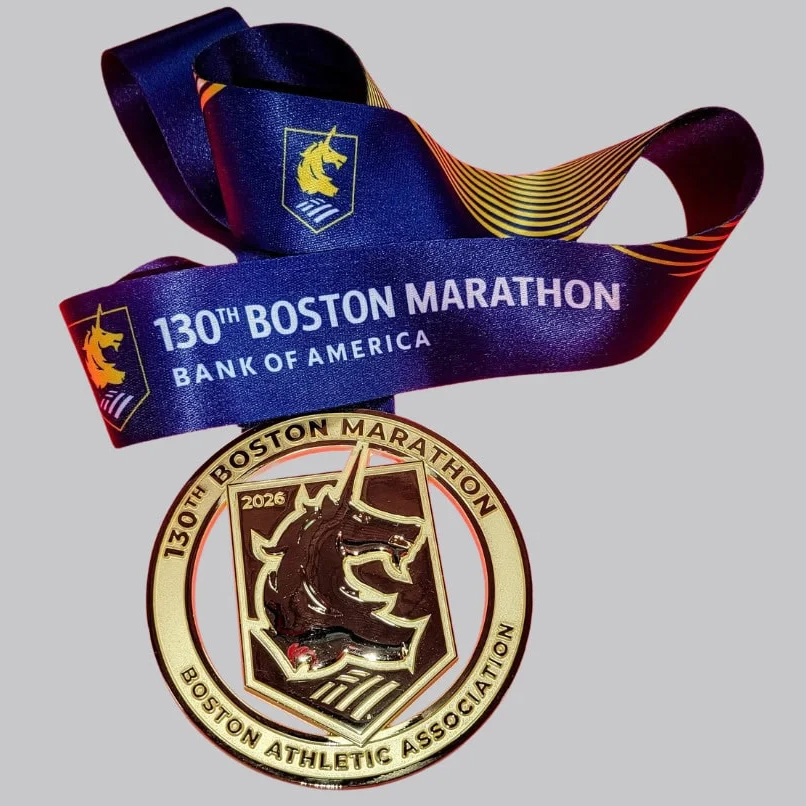
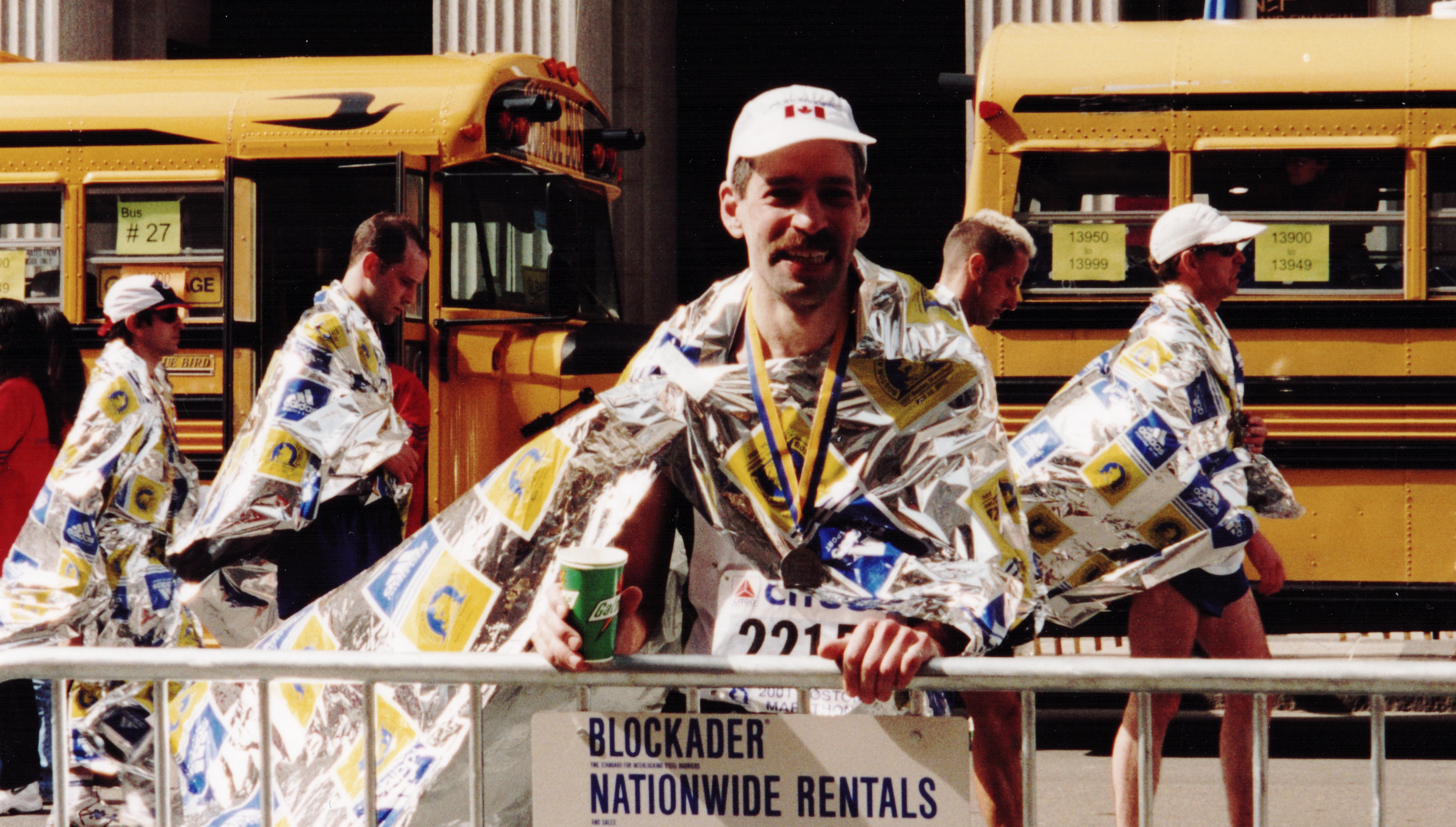
It even involves fashion and jewelry (think blingy finisher’s medals). The flashy medals from this year’s Boston Marathon (pictured at left) are already selling on eBay for $500 US. While this may suggest greater recognition of the value of the sport, it also points to what I see as a major threat—commercialism.
Commercialism has led to myths and misconceptions, mainly among new runners. There’s the “real runner” myth. There are fractures in the running community, along the lines of which races one has done or not done. In my view, this puts pressure on runners to prove they belong. What nonsense! If you run, you are a runner. It’s not for anyone to dictate to someone else which races they should run, let alone races with the peculiar distance of 42.195 kilometres.
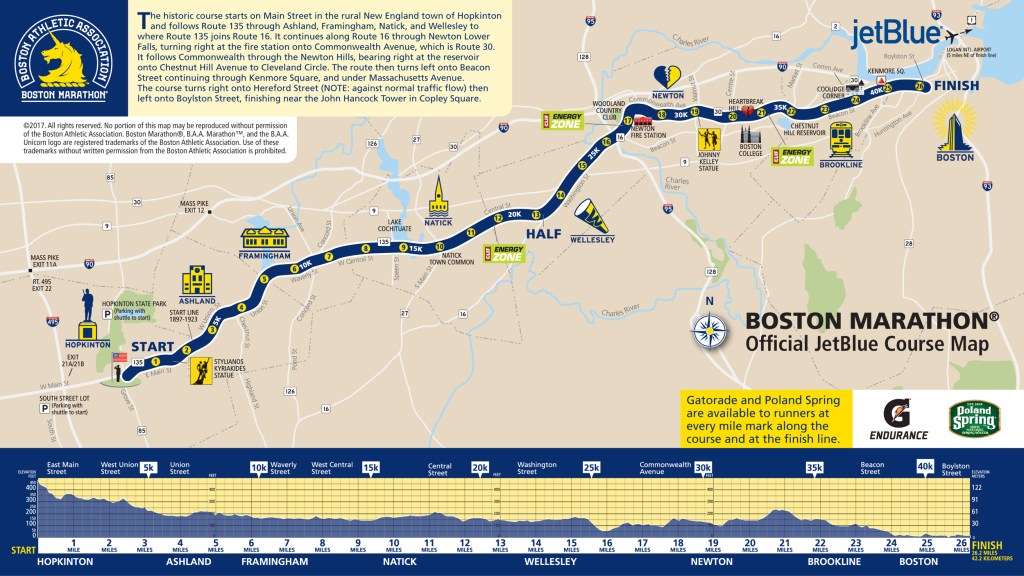
Then there’s the “holy grail” myth. This is an unfortunate result of the higher demand for race entries. Increasing demand for something unique and in short supply—like a race bib for the Boston Marathon—will increase its value. Route 135 between Hopkinton and Boylston Street has become sacred ground, and the pressure to get there can be overwhelming. Aspiring runners will chase any idea to improve their odds: the latest shoe, the best nutritional supplements; the latest training plans.
I ask, what happened to just enjoying running for its own sake? I think we’ve let our competitive nature—the human need to strive, to achieve, and then to recognize our achievements—overtake our common sense. Even small, local races now have large, shiny finisher’s medals.
I put some of the blame on the Abbott World Marathon Majors, a series that has turned marathoning into a medal treasure hunt. I concede that the Abbott Majors has had some beneficial impact, by increasing awareness and interest in marathon running. Fortunately, it’s also spawned trends like the boom in trail running and the minimalist Parkrun.
What are the Abbott World Marathon Majors?
Starting in the mid-2000s, five big city marathons (Boston, New York, Chicago, London and Berlin) got together, and declared that they had special status owing to their size and reputation amongst runners. The World Marathon Majors was born. It was a novel idea. At the time it was almost certainly true.
Some years later, Abbott entered the picture, recognizing that an annual marathon series was a novel marketing opportunity. Their goal was to foster elite competition, but it quickly morphed into an enticement to average runners.
Not surprisingly, the Abbott series has grown—Tokyo was added as the sixth major in 2012, then Sydney in 2024. More majors are coming, and Cape Town (eight) and Shanghai (nine) are next.
And the ugly
If your circumstances allow you to travel the world, to always own the latest carbon-plated supershoe, to enter and train and compete in marathons in some of the leading cities of the world—go right ahead. I hope people who are on this path are there for good and valid reasons.
But what if you can’t manage it? What if the wear and tear on your body from even one marathon is too much? What if wearing the same $500 superlight shoe that Sawe wore to set his record is actually hurting you? Here’s where the problems start.
Anyone who commits to a marathon—or any race—should do so because they intend to compete. That is easier said than done. If you are happier running your local Parkrun or 10k, with no consideration of your pace, wearing ordinary running shoes, then that’s what you should do. You’ll be better off in the long run.
The worst consequences of this pressure are becoming clear. There’s cheating aimed at securing valuable race entries—runners who will do anything to secure a Boston Qualifier, a BQ. Reports of bib swapping, course cutting and “bib mules” are now fairly common.
I’ll also note the significant environmental toll from “marathon tourism”, as people fly around the world to compete in marquee races, when there are so many other events closer to home. Some would downplay the seriousness of these issues, but I don’t. How valuable is a finisher’s medal if it wasn’t earned fairly?
Finally, I’ll mention the so-called running influencers, whose interest in Boston, New York or London seems to be in checking these races off a list. They use their online platform to bring their followers along with them. It’s the marathoning equivalent of snapping a selfie at the Eiffel Tower and the Grand Canyon.
What happens next? Look to Boston
I think explosive growth in demand is eroding some of the goodwill that exists around a sport fundamentally based on fitness. Even Boston, the premier marathon in the world, has become the focus of online angst. Why? For the very reason that it is so prestigious. Boston is the race with the most challenging entry criteria—a BQ is coveted more than any other credential in the marathoning world. For decades, Boston has simply been out of reach for many runners, even serious competitive runners. With limited exceptions for charity spots, if you weren’t fast enough, you couldn’t get in.
Interestingly, I see this feature putting Boston into a position of conflict with the other Abbott races. Clearly, a runner can’t complete their six-star commitment unless they can run Boston. So, isn’t it structurally unfair to those runners for the BAA to enforce Boston’s traditionally stringent entry standards?
I say NO, for one simple reason: Entry to Boston is a privilege, not a right.
I’d hate to see Boston’s status as the world’s leading marathon diluted to satisfy essentially infinite demand for entries. In fact, I see the BAA facing an imminent dilemma—stick to their principles (limiting entries as much as necessary to put on a world-leading event) or find a way to accommodate the call on entries by non-qualifying Abbott runners. If it comes to this, there can be only one answer. I’m optimistic that the BAA will do the right thing, and I’m sure Boston would do just fine alongside and apart from the Abbott series. If that means some incomplete six-star medals, so be it.
The final word
The sport of marathoning is thriving, and I’m confident it will get past its current challenges. For those who enjoy running for its own sake, my advice will never change—find your own way in the sport. If that happens to include marathons, that’s awesome. I wish you great success. Just don’t let anyone dictate what races you must run, or that you must race at all. Remember, if you run, you are a runner, and you can be content with that.
Until next time, be well and BE FAST!