Chasing Aviation History in Nanton

Well, here we are in June. Because this is Alberta, the weather has been more suited to November. As I write this, I’m huddled in my basement, to get away from the wind and rain. For today at least, the idea of writing about running is more appealing than an actual run.

I started the year with the idea of a series of photo runs, highlighting interesting towns in southern Alberta. My first subject was Longview, and you can read that piece here. I’ve visited more towns in the meantime, and I hope you’ll enjoy this summary of one recent outing.

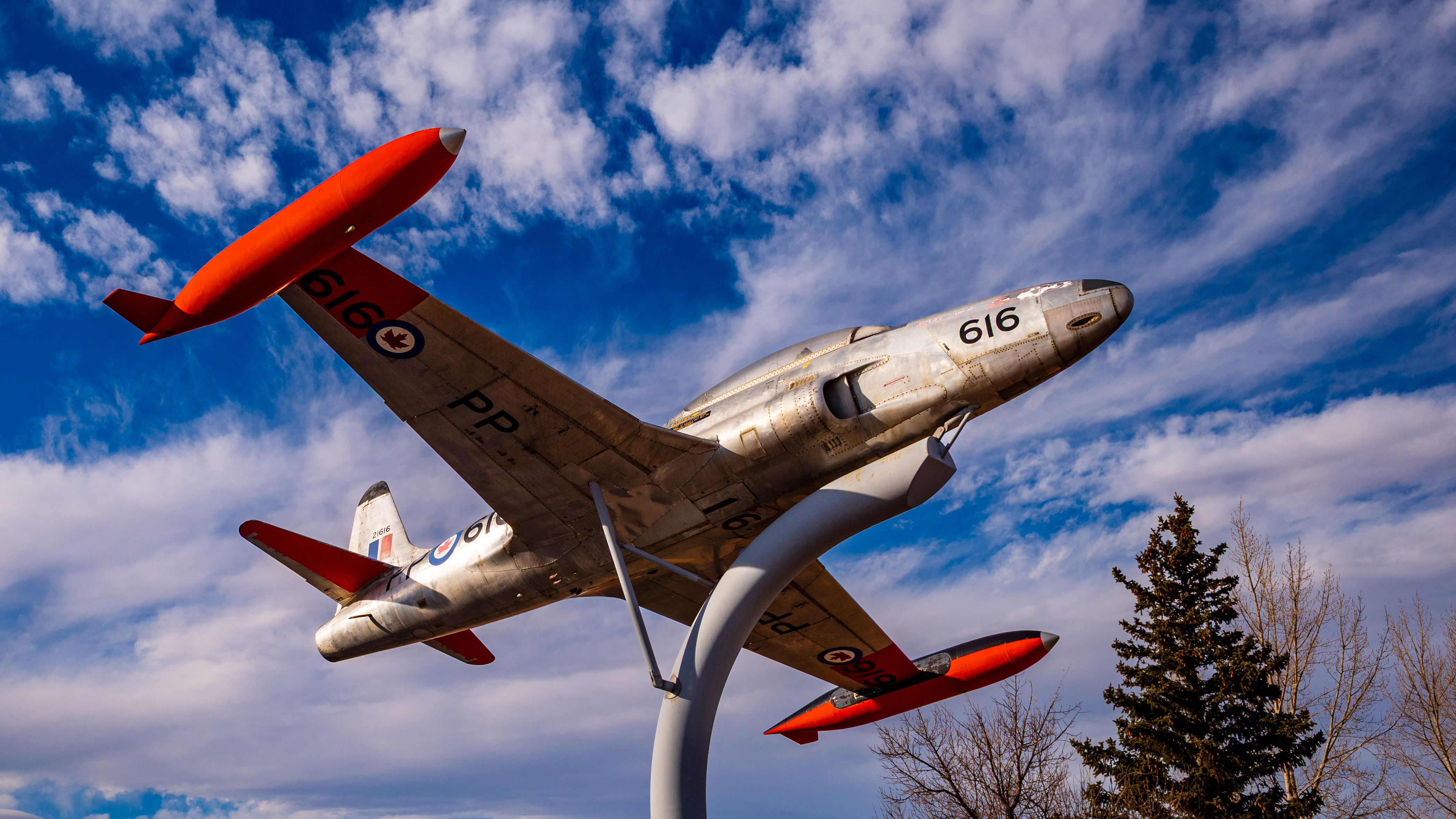
The Bomber Command Museum

Nanton is located about an hour south of Calgary. Pioneers first settled in the area around the turn of the twentieth century, and in 1903 the village of Nanton was formed. It was named for Sir Augustus Nanton (1869-1925), who was a partner in the financial firm Osler, Hammond and Nanton. The town was incorporated in 1907. Its population has been fairly steady around 2,500 in recent years.

My interest in visiting Nanton was twofold. Deborah and I were overdue for a return visit to the Bomber Command Museum. The museum is a gem. It documents the fascinating history of aviation in Alberta in the first half of the 20th century. We made the scenic drive on a beautiful February day, which felt more like June. Oh right, Alberta.
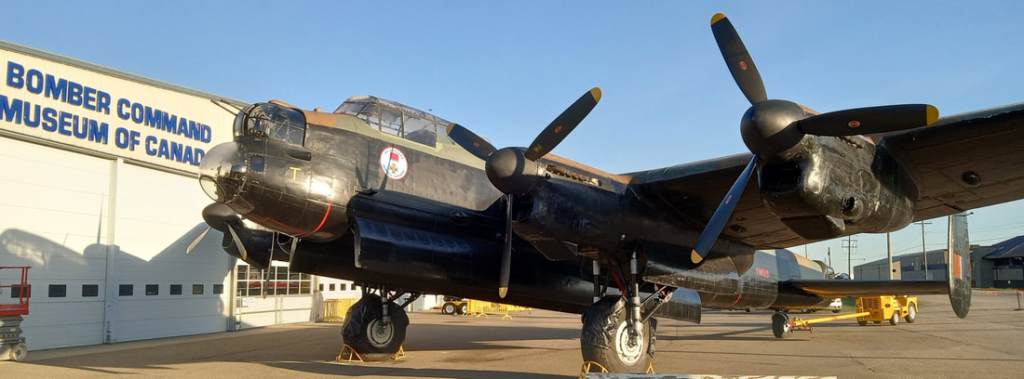
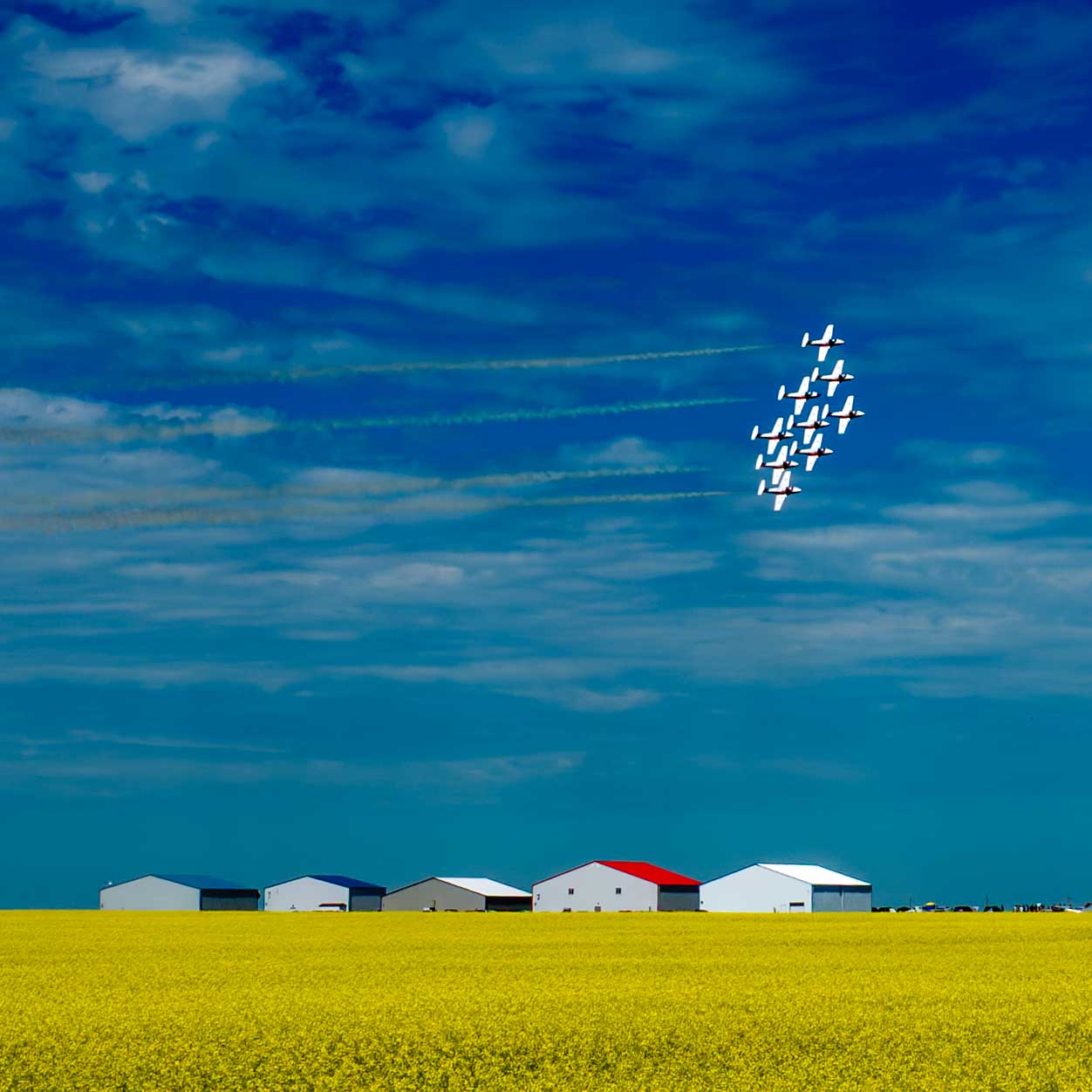
RCAF Centennial Celebrations, May 2024 (Photo by John Chalmers)

Almost before we got in the door, we were chatting with the knowledgeable volunteers. We then got an insider’s tour of the hangar. The museum displays offer a complete record of the men and women who were at the forefront of military aviation. The hangar is well known for its collection of wartime airplanes and other equipment. It was quiet during our tour, but make no mistake—this is a working operation.

We had a close up look at the museum’s restored Avro Lancaster bomber (FM-159). The plane is dedicated to Ian Bazalgette, a Lancaster pilot who was awarded the Commonwealth’s highest award for valour in the Second World War, the only Albertan to receive the honour. The Lancaster is legendary, and the story of FM-159 and its connection to Nanton would fill another piece. You can read about it here. The museum’s plane isn’t airworthy, though it is started up from time to time. While FM-159 never flew in combat, it saw service in maritime patrol.
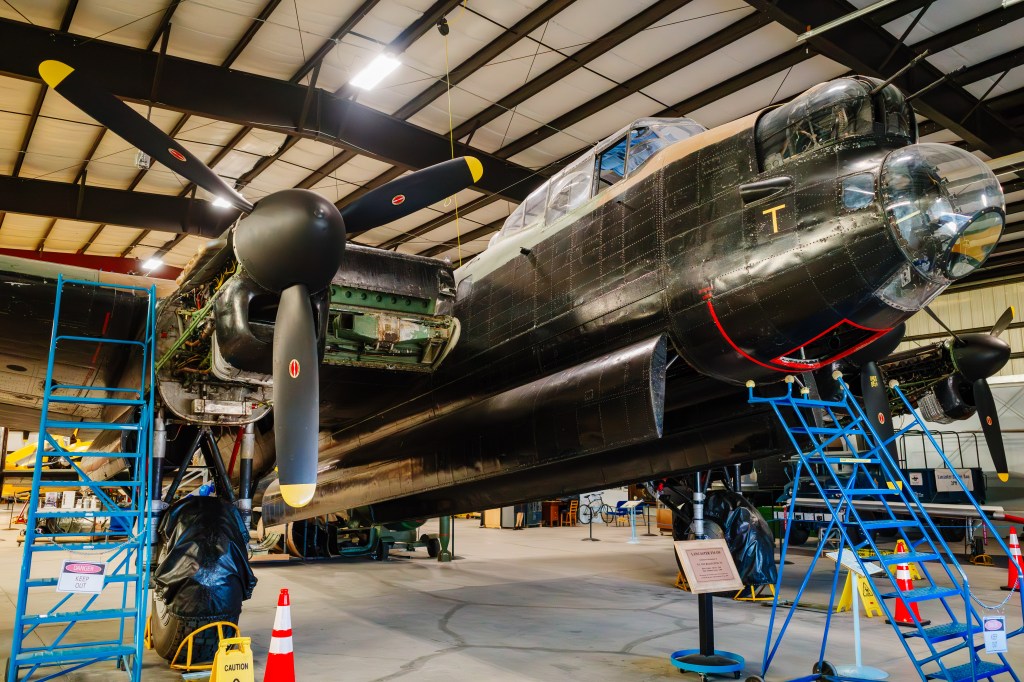
FM-159 Avro Lancaster

There are a couple of major projects going on at the museum. A DeHavilland Mosquito (CF-HMS) was moved to Nanton after 50 years in storage, and is now being meticulously restored. Like FM-159, CF-HMS has some history, which you can read about here. The Mosquito was a highly versatile plane—its wooden fuselage and wings meant it was light and fast. It was also rugged and easily repairable. And it was ideal for reconnaissance, as it could evade enemy radar. CF-HMS was built just after the war, and it served as a photo mapping plane.
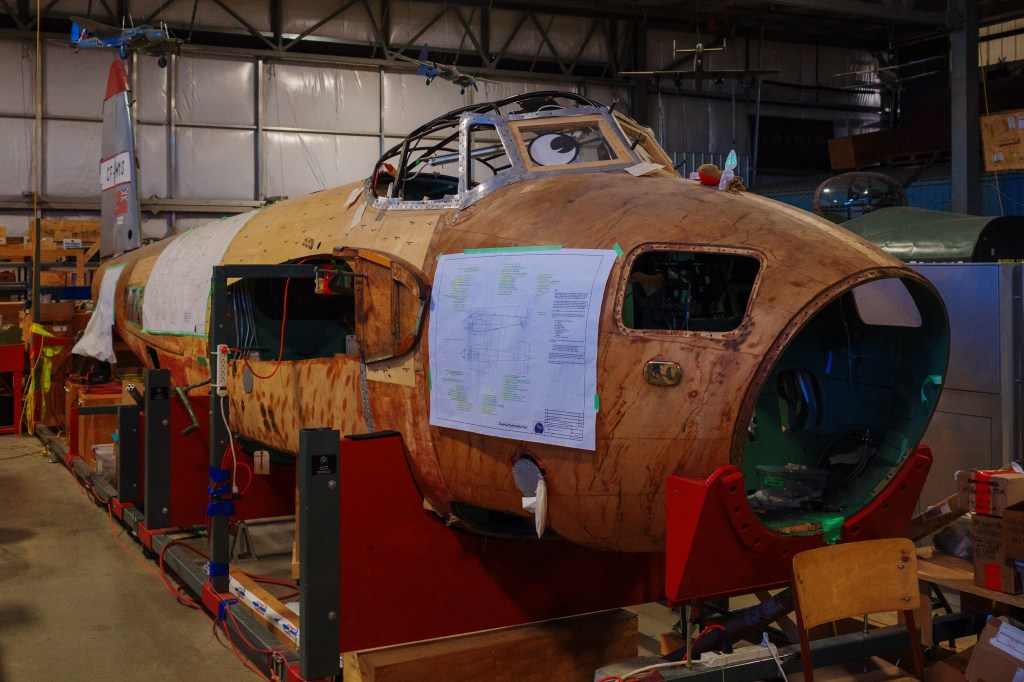
CF-HMS Avro Mosquito

An Avro Anson Mk. II (#7481) is being restored, with the goal of keeping as much original material as possible. The Anson was designed in the UK for civil aviation, and a military variant soon followed. About 1,000 Anson Mk. II aircraft were built in Canada. Although it was intended as a maritime patrol aircraft, the airplane found its niche as a multi-engine trainer during the war. As for Anson #7481, a lot of work has already been done and much remains to do. This is clearly a long-term project. Seeing this work up close confirmed how dedicated the museum volunteers really are.
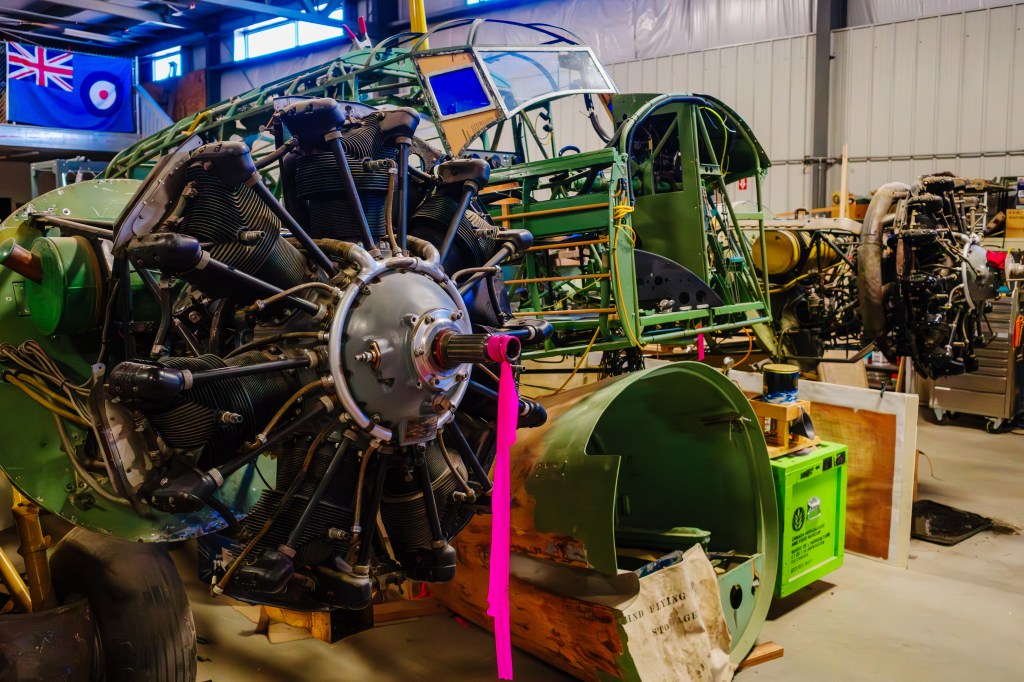
Avro Anson Mk. II (#7481)

British Commonwealth Air Training Plan

Did you know that southern Alberta played a pivotal role in the Allied war effort? Under the direction of the British Commonwealth Air Training Plan (BCATP), aviation training facilities were established in about 230 locations, in every Canadian province. The program initially relied on existing airfields and training facilities, and was soon supplemented by purpose-built sites.

Coincidentally, I recently wrote a piece about North York, in Toronto. The de Havilland Aircraft plant in Downsview has an illustrious past—during the war it supplied thousands of airplanes to BCATP schools across the country. In all, more than 130,000 people graduated from BCATP programs.
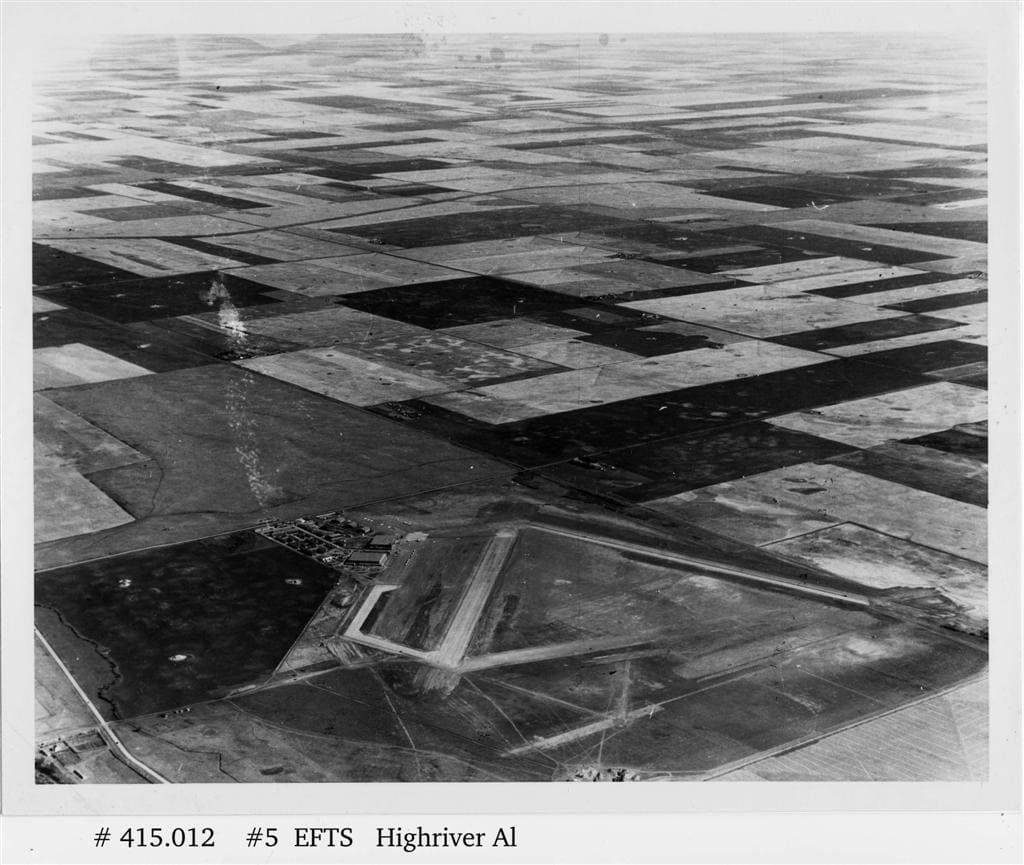
#5 Elementary Flying Training School, High River (National Defence Photo)

The wide open skies and agreeable terrain in Alberta made it an ideal location for aviation training. From command headquarters which were set up in Calgary in 1941, flight training took place at multiple locations across the province. In total, there were 18 training sites in Alberta, which helped meet the diverse needs of Canada’s rapidly expanding air force.
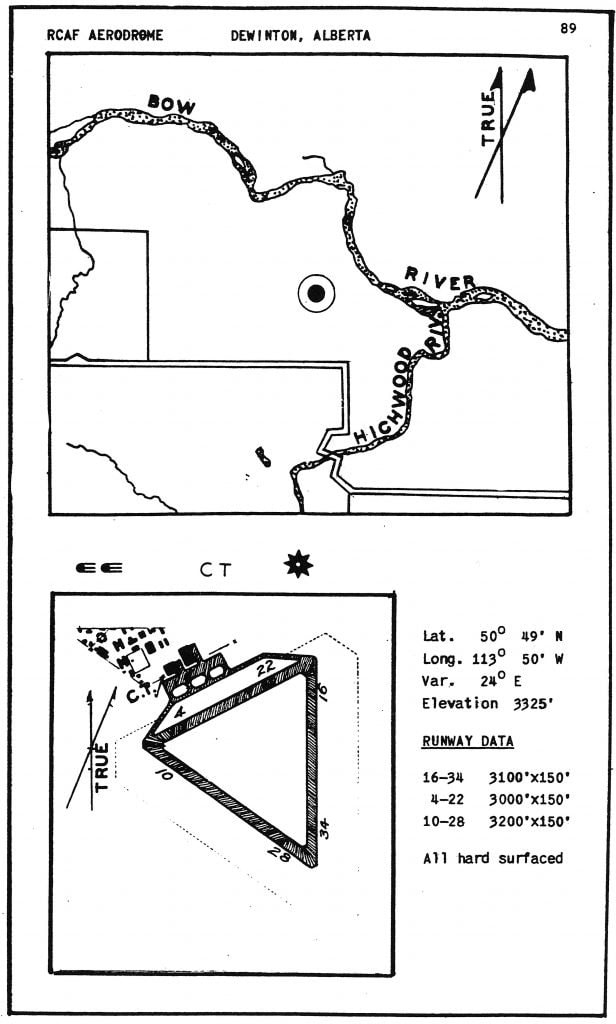
While no facilities were established in Nanton, the town was right in the middle of the action—training schools at nearby Claresholm, De Winton, High River, Fort MacLeod, Lethbridge and Vulcan meant the skies over southern Alberta were busy during the war years. This image from 1942 shows details for the airfield at the No.31 Elementary Flying Training School in De Winton. The triangular runway configuration is typical for military airfields.

As you’d expect, RCAF history is well documented. I’ve only scratched the surface of RCAF history in Alberta for this piece. If you’re interested in learning more, I can recommend several books by local author and historian Dave Birrell:

  • The Canadian Air Force at High River
  • The Bomber Command Museum of Canada
  • People and Planes: Stories from the Bomber Command Museum of Canada

Birrell is one of the founders of the Bomber Command Museum, and the museum bookstore carries print copies of his many books. The above titles and some others are available for free download; click here. I’d also recommend RCAF.Info as a good resource for information about BCATP sites across Canada.

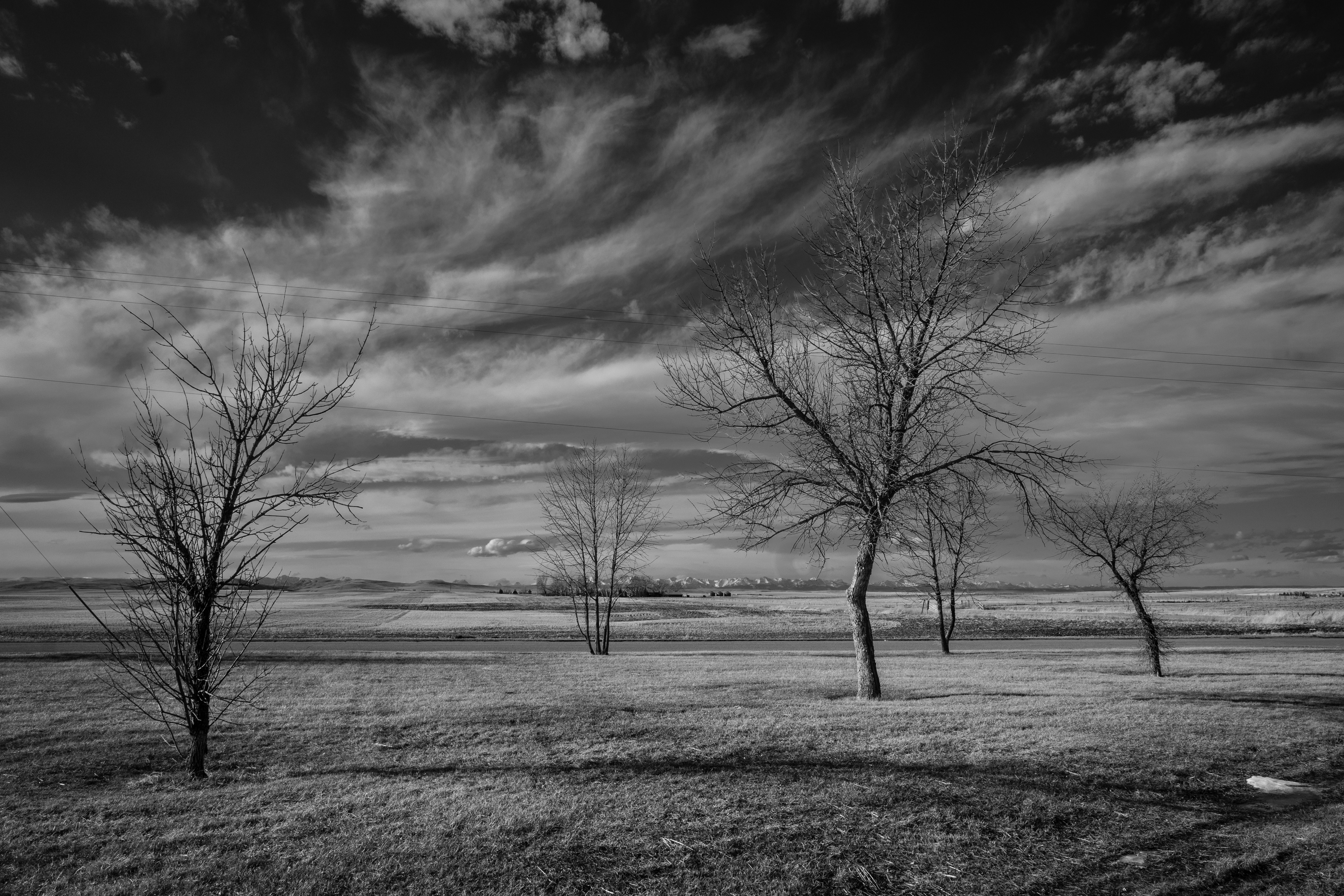
While in Nanton, a photo run
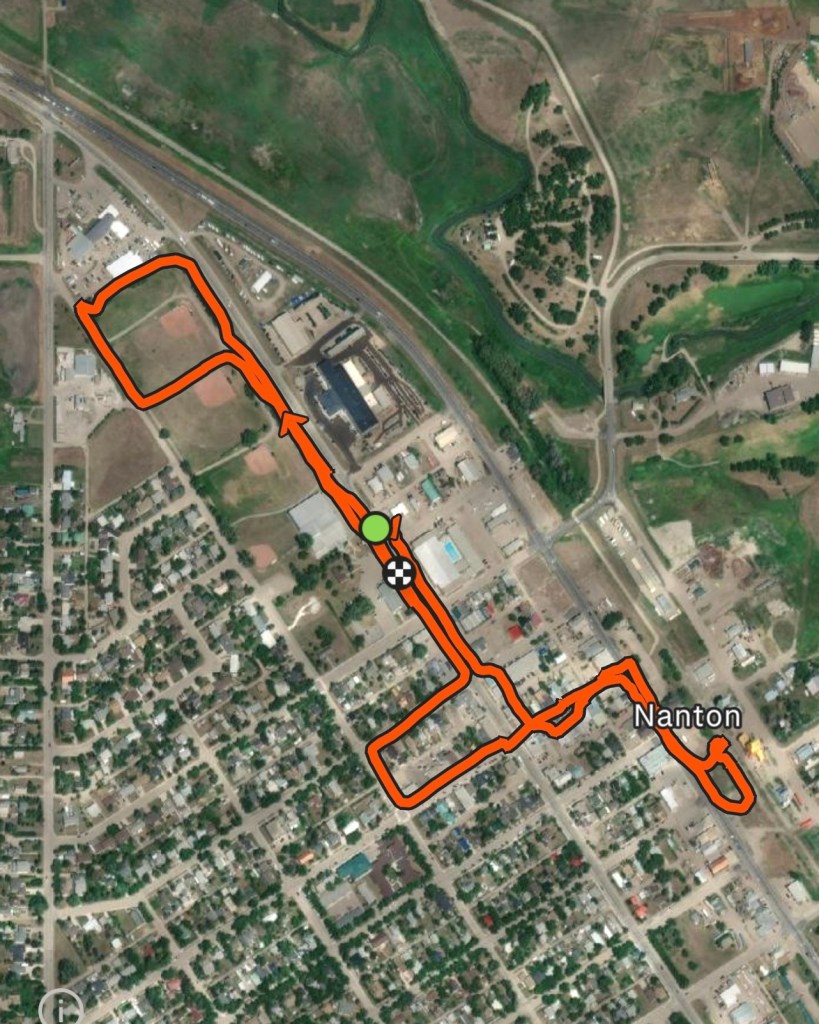
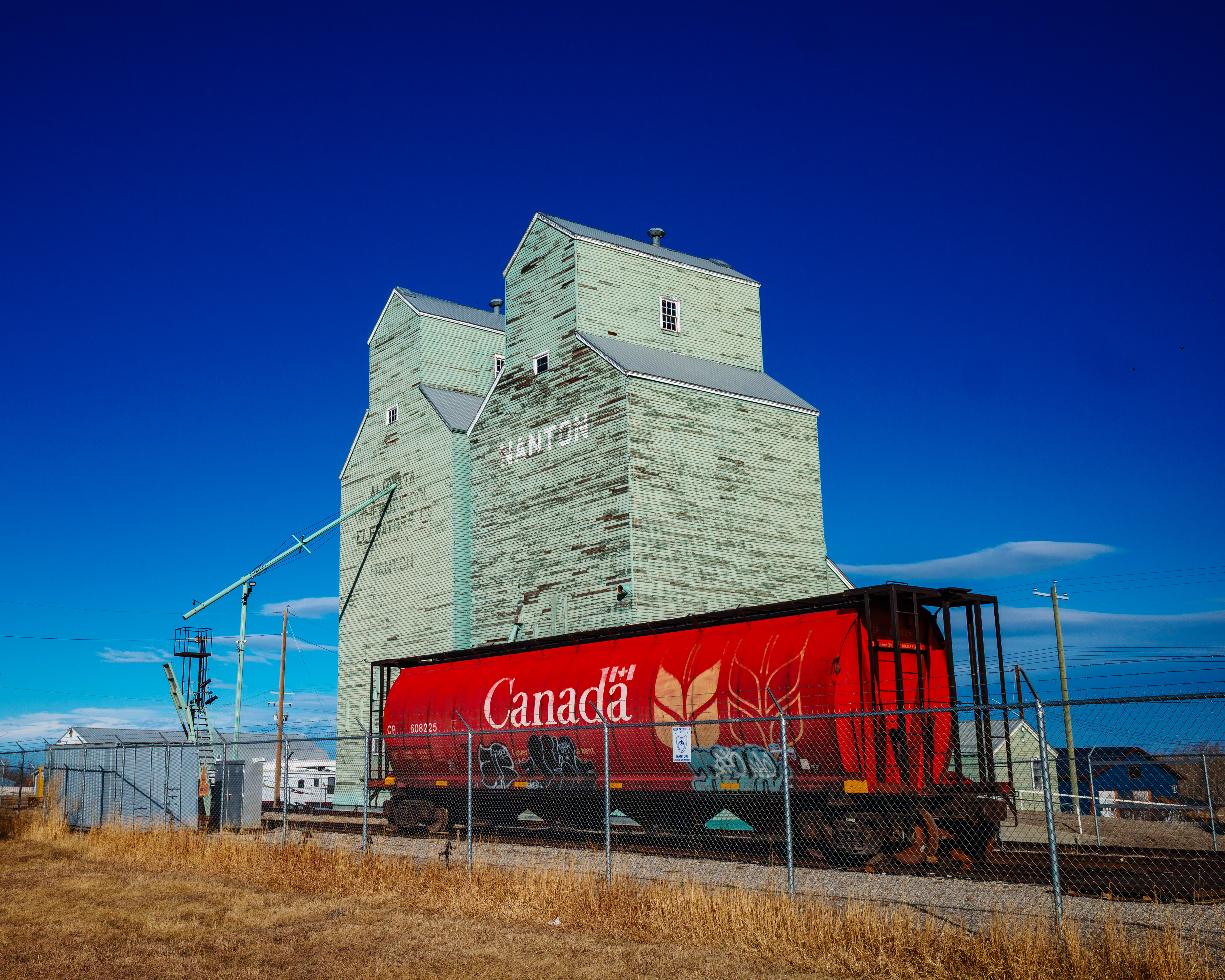
After our museum tour, I did a short photo run around the town. I headed for the tallest structures on the horizon, the town’s twin grain elevators. (Yes, we will have to come back another time to visit the Canadian Grain Elevator Discovery Centre.) Of course, I checked out Nanton’s main street. Then, because it was such a nice day, I extended my run by doing a lap around the park on the north side of town.

Here are a few shots from my photo run:
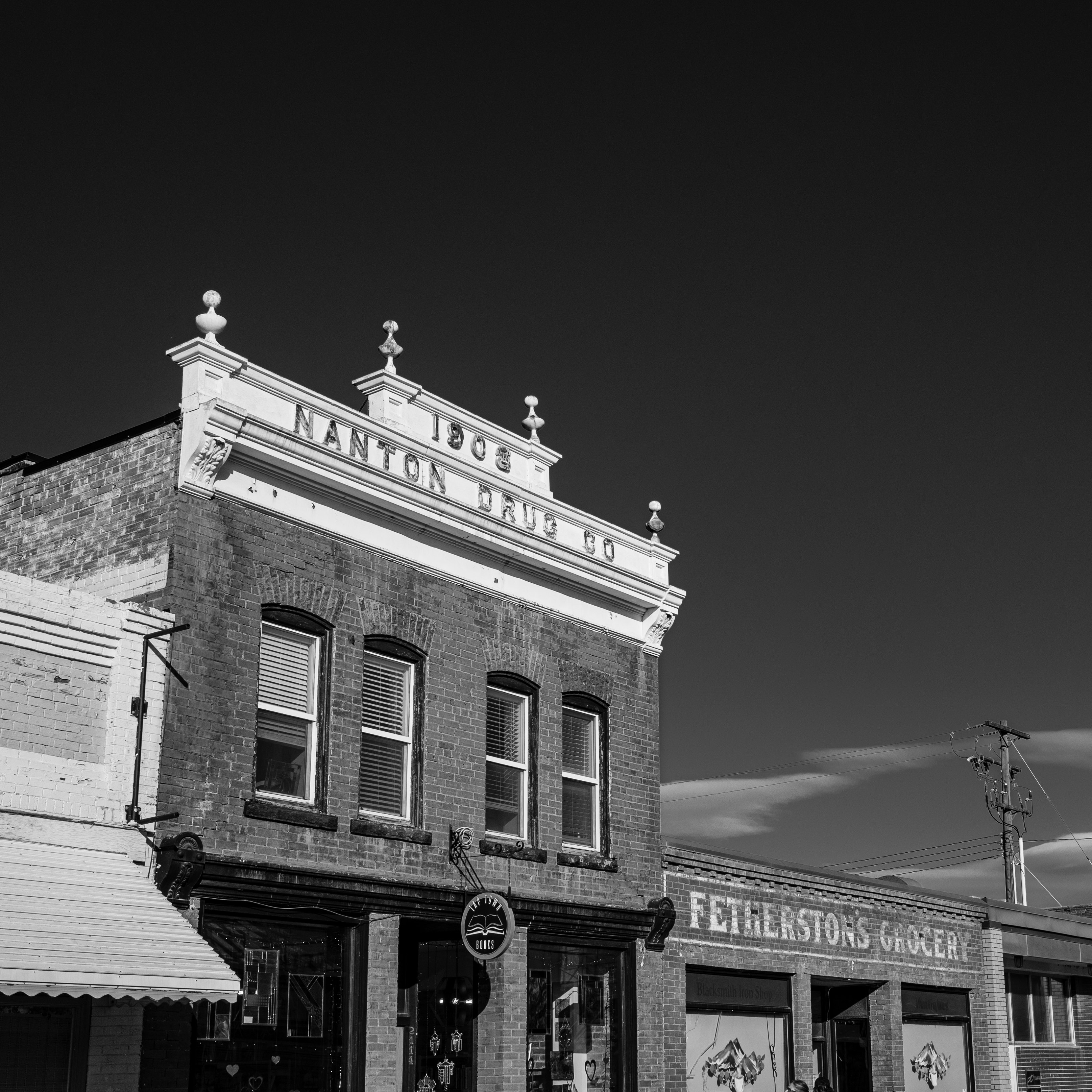
Touching down

We left Nanton feeling we’d experienced a lot. At a precarious time in the world, it’s perhaps more important than ever that we remember the role Canada has played as a defender of democracy. Our aviation history is a big part of that story. And that history is being preserved and celebrated at the Bomber Command Museum. The museum is well worth a visit, and rest assured there’s more to see and do while you’re in Nanton.

Until next time, be well and BE FAST!
Magnificent Japan: Part 3

This post is my third from our recent Japan trip. I’ve dealt with the logistics of our travels in Part 1 and Part 2 of the series, and I have a lot to cover, so I’m going to jump right in.

Historic Kyoto

Kyoto is a must-see destination in Japan. It’s the capital city of Kyoto Prefecture in the Kansai region, and it has a population of 1.5 million. Interesting facts, but totally irrelevant, because Kyoto’s rich history makes it so much more than a compilation of facts and figures. Kyoto was the seat of imperial power in Japan for eleven centuries, from 794 to 1869.

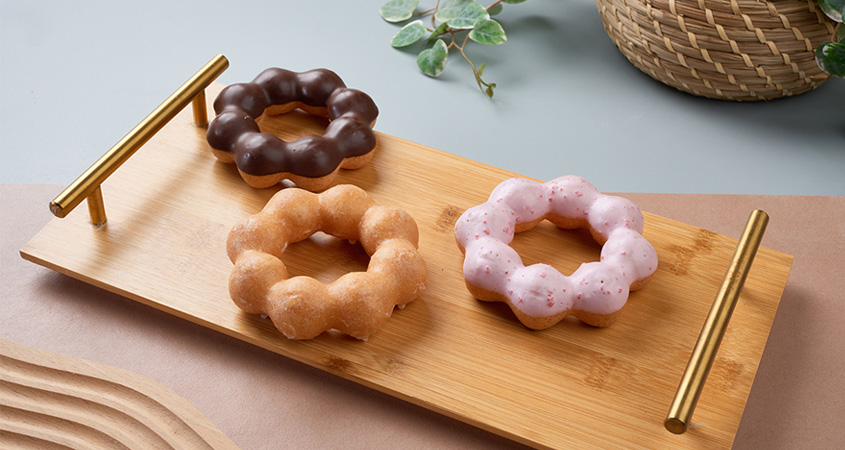
Our time in Kyoto was short, and we made a false start just getting out of Kyoto Station—an impressive but rather intimidating building. We regrouped at a Mister Donut, where we shared a Pon de Ring, their signature mochi donut. (Their photo too.) I’ll admit this was a stop I’d wanted to make for nearly two weeks. It was worth the wait. Delicious!

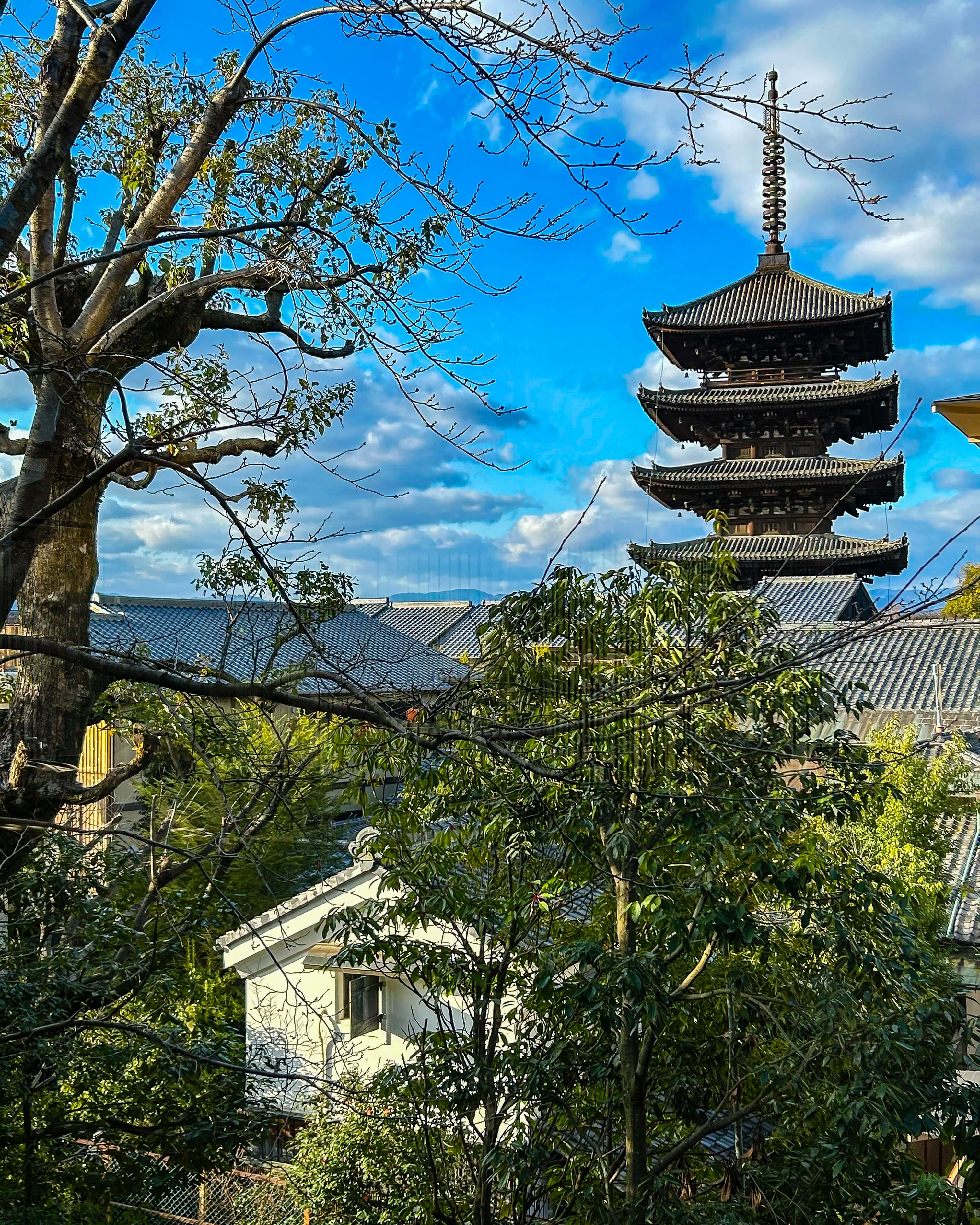
With our courage restored, we successfully hailed a cab and headed for the Hotel Seiryu Kyoto Kiyomizu. The hotel, set in the preserved walls of a former school, had us speechless. It was spectacular. Trendy yet refined, with world-class amenities and impeccably attentive staff. The lounge offered postcard views of the nearby Yasaka Pagoda, a majestic five-storey landmark.

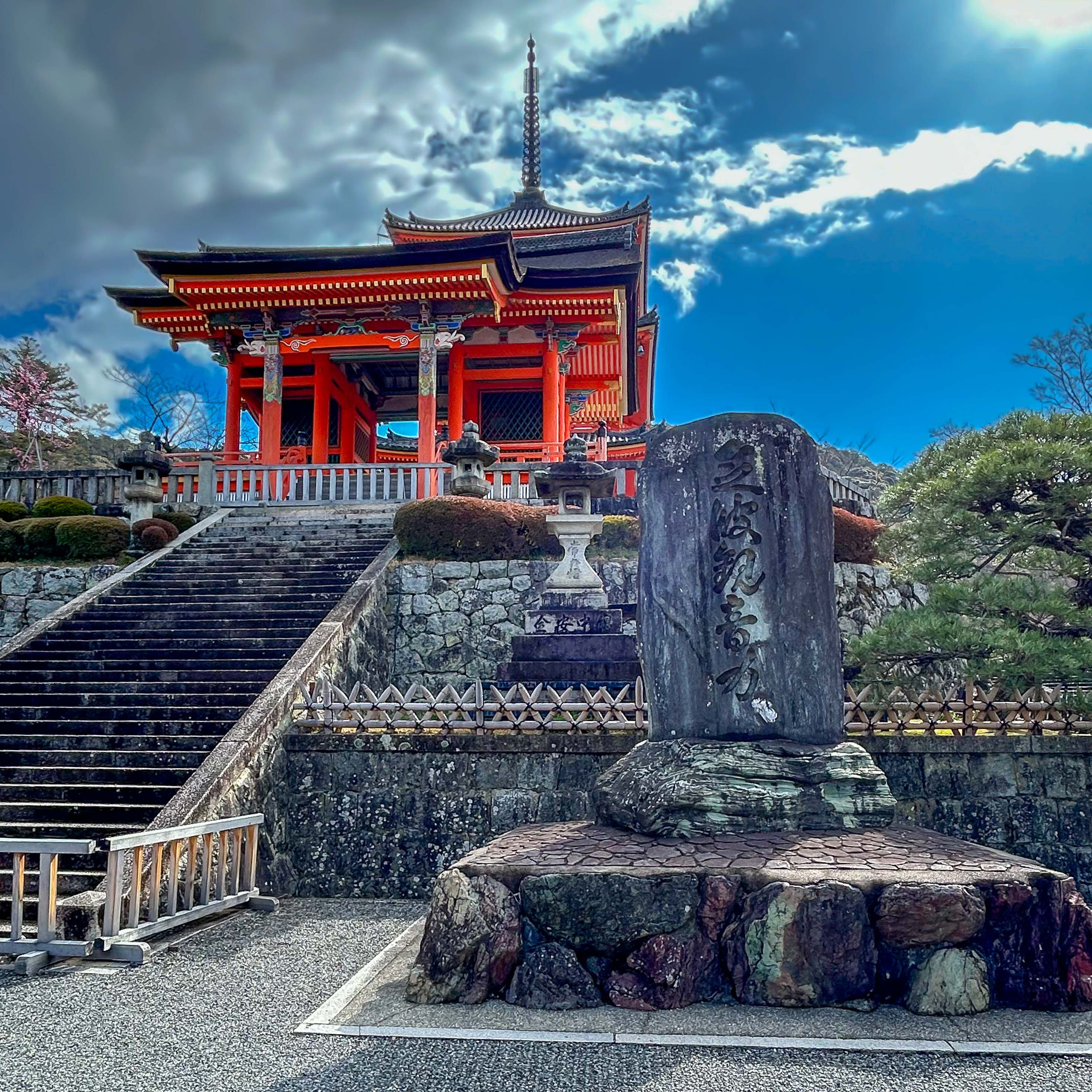
We could have spent our whole time in the hotel, but there was much exploring to do. As we had been doing for the whole trip, we followed Matthew’s advice. We ventured out into the Kiyomizu-dera area. When we visited the site of the eponymous temple, it was clear why it is such a popular attraction—a beautiful site, with great views of the city below.

Copyright for all photographs on the site is mine, unless noted.

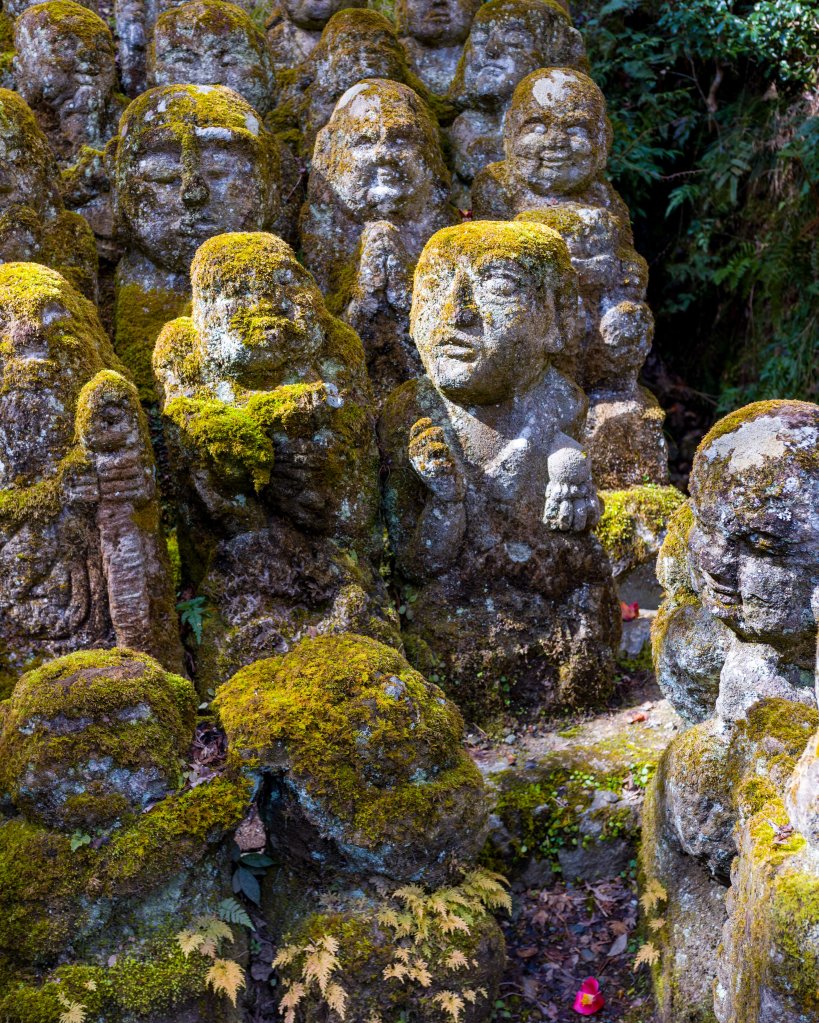
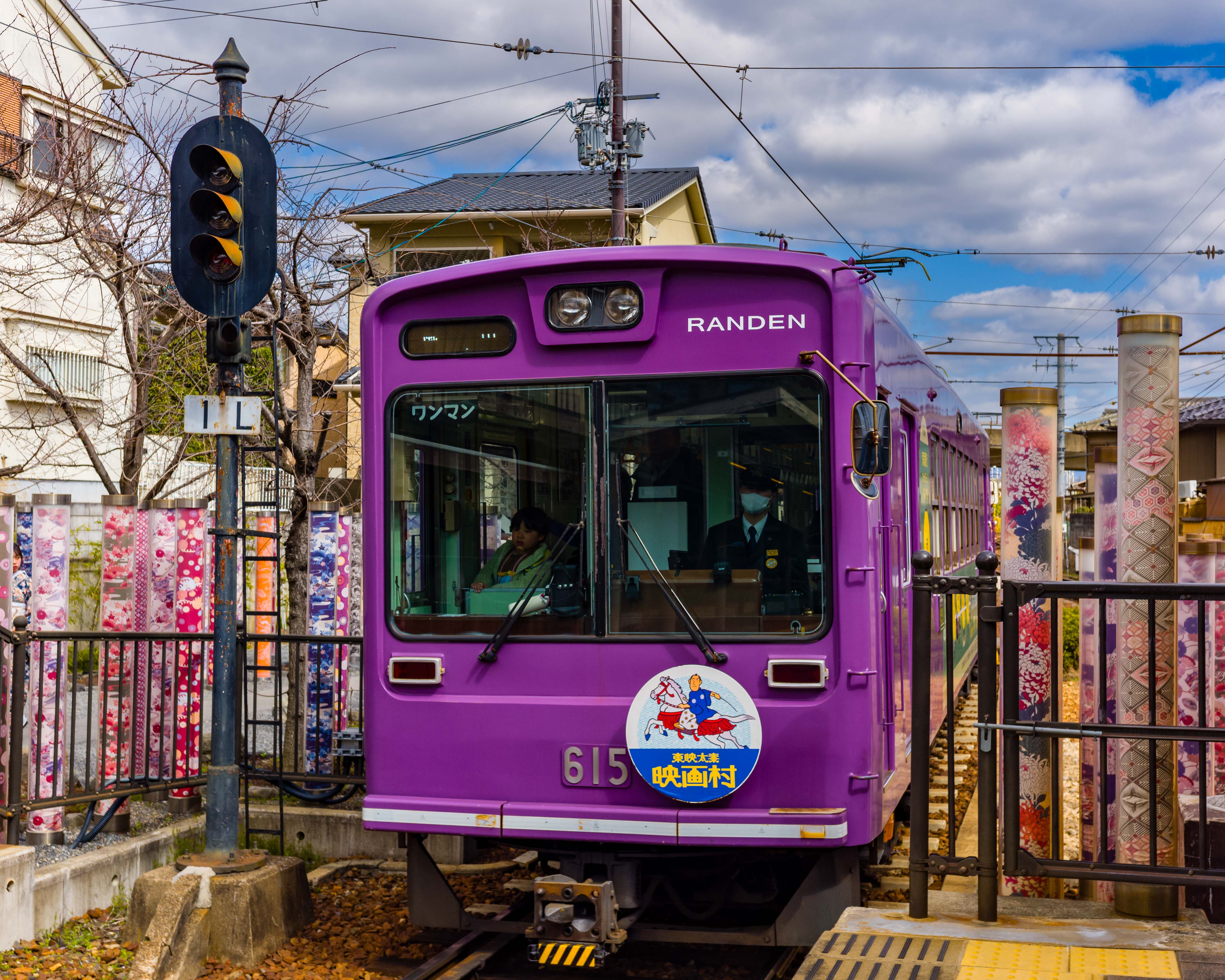
On our first full day, we rode the historic Randen (Keifuku) Arashiyama tram to the end of the line and got a cab to the Otagi Nenbutsuji Shrine. The shrine is (almost) off the tourist track. It holds a hidden treasure, in the form of carved Buddhist statues (rakan). These whimsical statues tell a remarkable story of resilience, for a temple that has moved several times over its long history. The sculptures look ancient, but they actually aren’t. Several decades ago, the head priest initiated a program to share his skill as a sculptor with the community. Given that there are 1,200 statues around the shrine, his efforts were very successful!

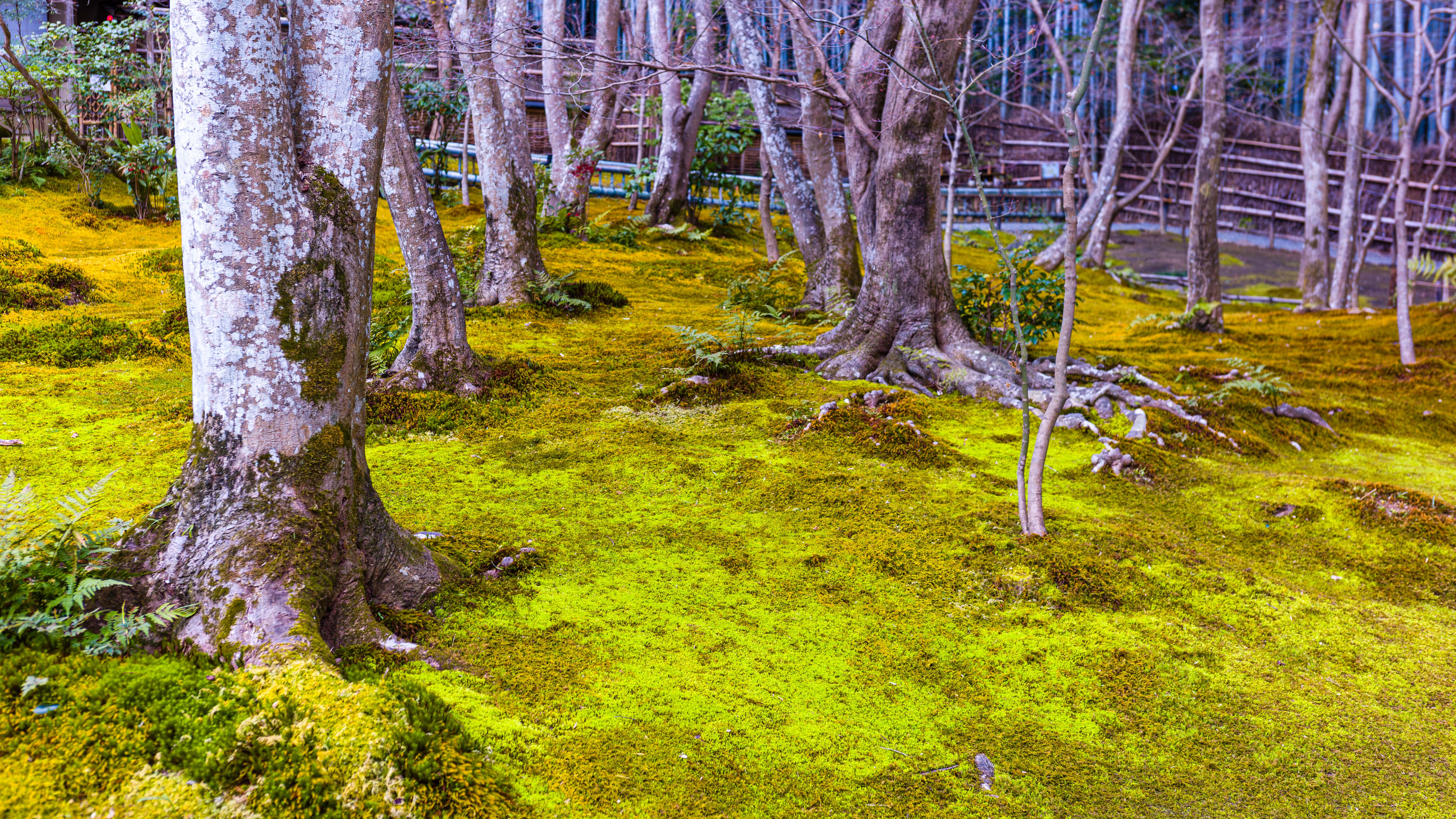
From the temple, it was a easy walk back into the city. On the way, we visited the intimate Gio-ji Shrine, site of one of the finest moss gardens in Japan. Then we walked through the famed Arashiyama bamboo grove, where we encountered the full impact of Kyoto’s popularity with tourists.

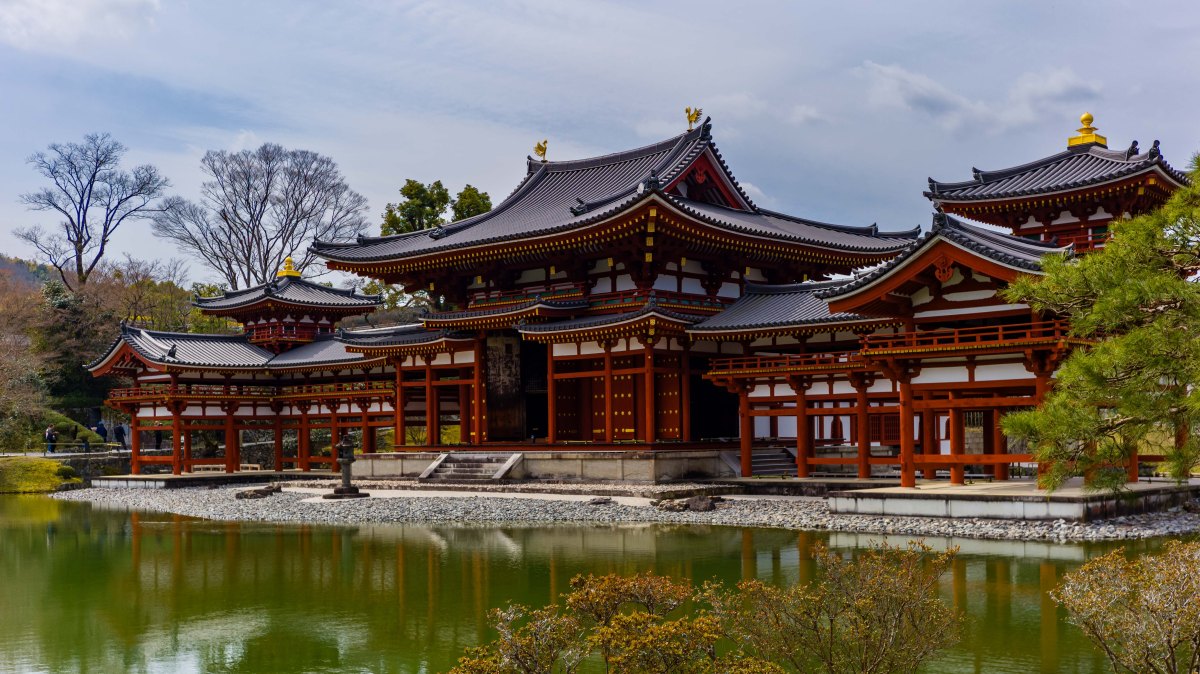
Next day, we made the short trip to Uji, south of Kyoto. We decided to skip Nara, and its resident deer population, in favour of a longer visit to the Byodoin Temple. We found Phoenix Hall (the featured photo, above) and its adjacent museum fascinating, and the streets of Uji—renowned for matcha tea—well worth a bit of sightseeing.

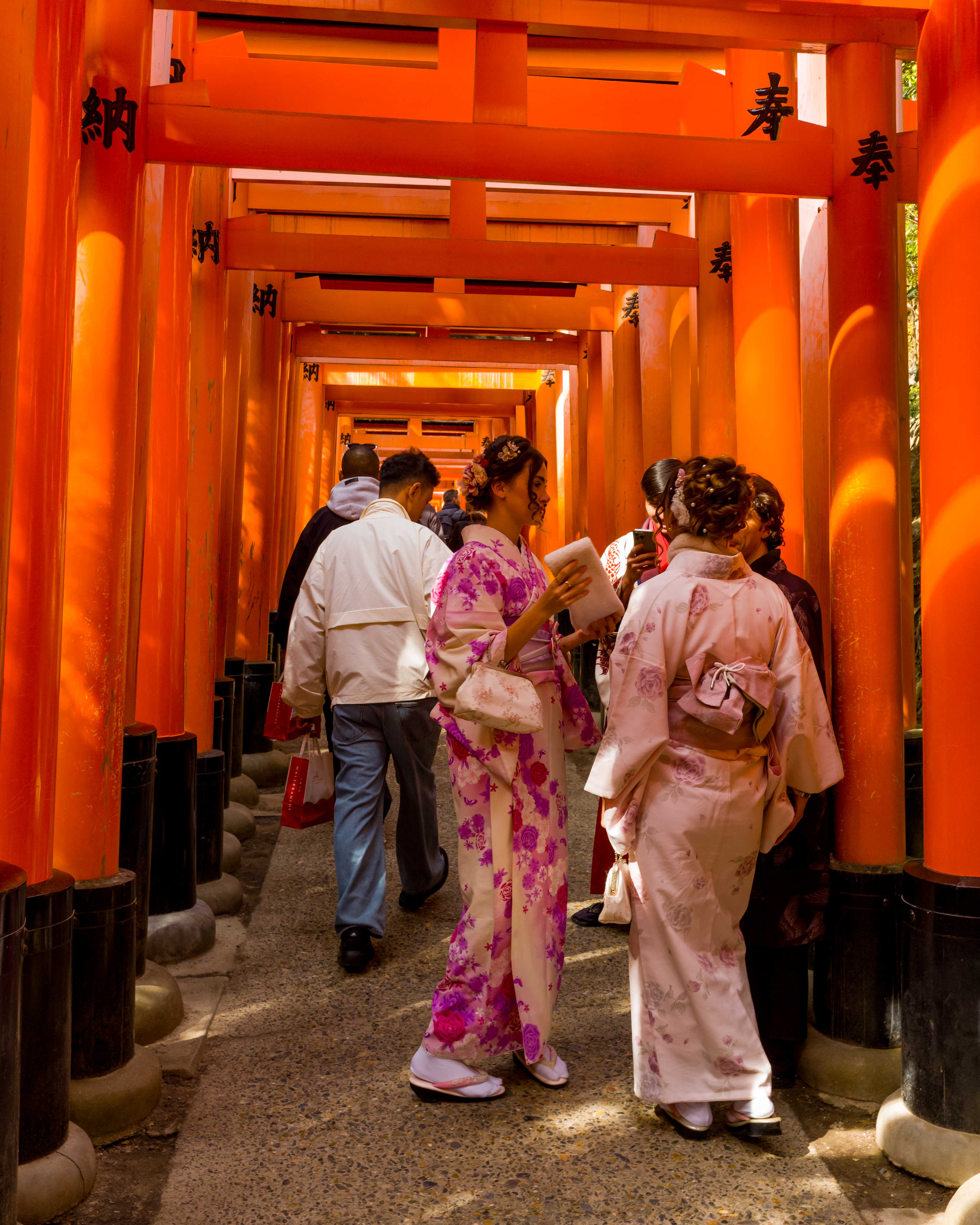
On our return to Kyoto, the train conveniently stopped at Inari, steps from Fushimi Inari Taisha, one of Japan’s most popular sites. There, a long procession of torii gates guides visitors all the way to the top of Mount Inari. We didn’t make it that far, but we were suitably impressed by the spectacle of 10,000 vermillion gates. What dedication!

Here is a small album of photos from our time in Kyoto:

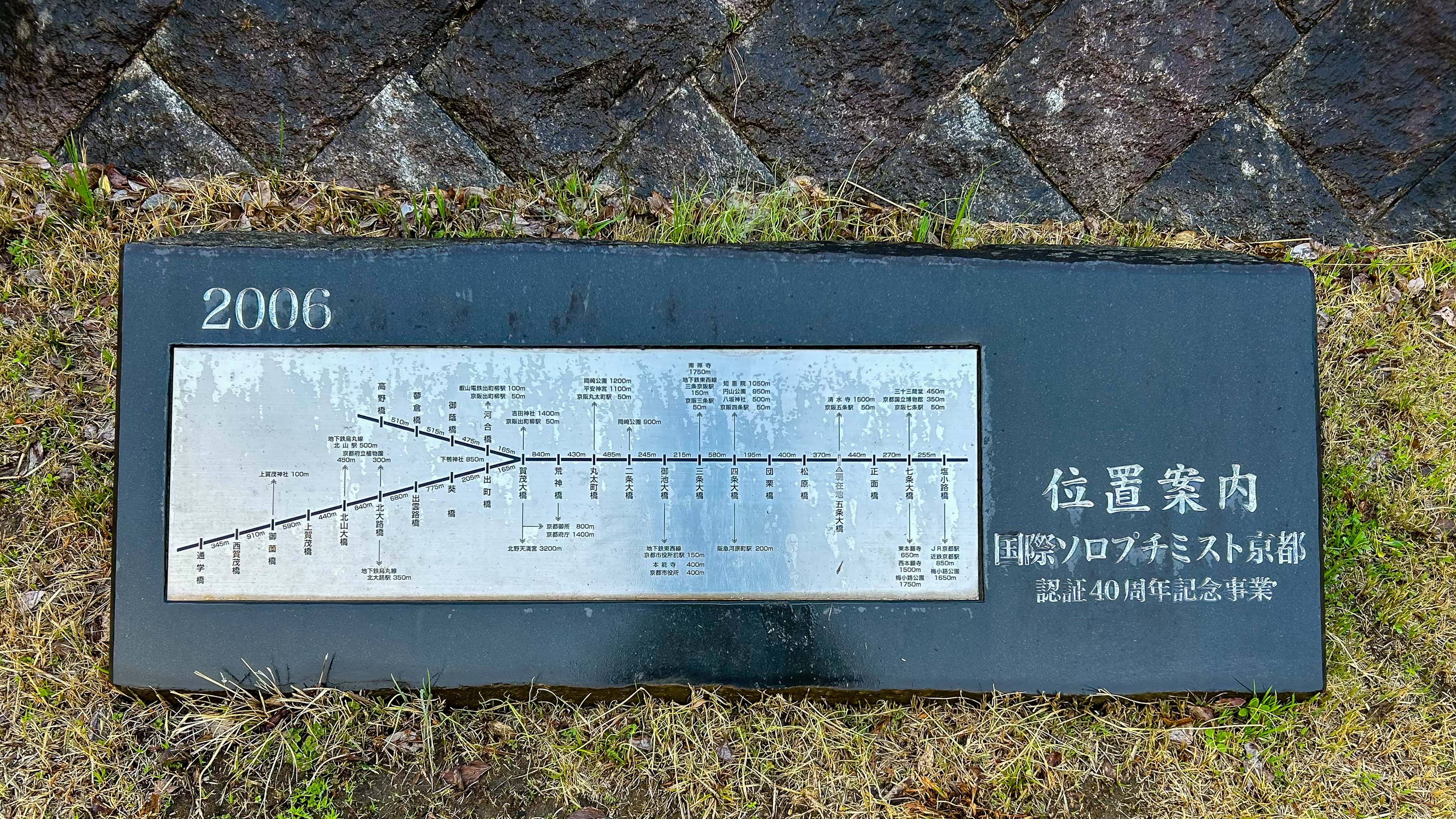
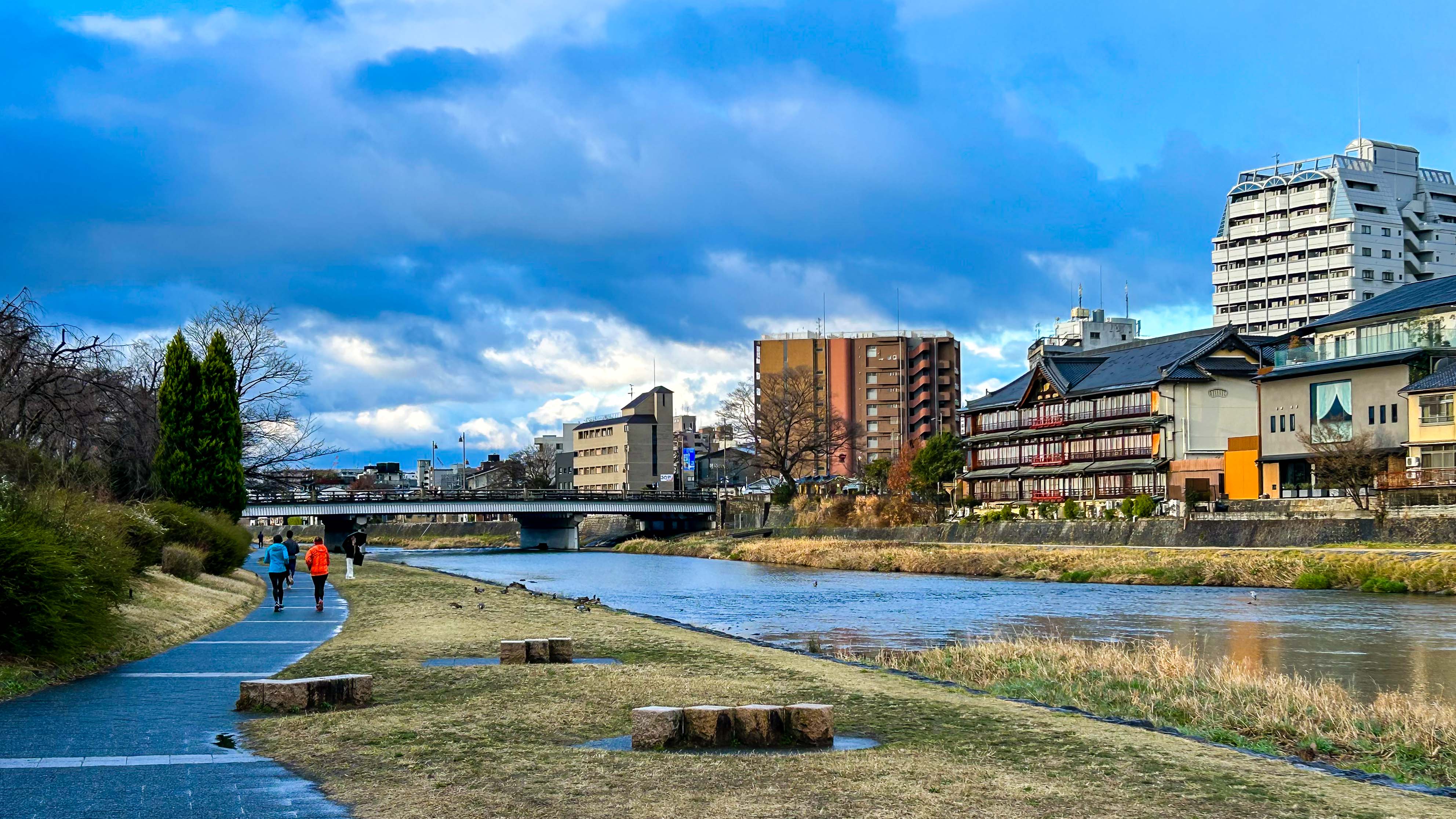
On our last morning, I snuck out early for a run along the Kamo River (Kamo-gawa). The light rain didn’t dampen my enthusiasm. The pathway was quiet—I saw only a few other runners and cyclists. My easy out-and-back jog was just what I needed. It reminded me of the Bow River pathway in Calgary, half a world away. Aside from the views, I really liked the pathway signs, with their absolutely precise distance measurements. It was a nice final memory of a wonderful city.

And finally, it’s dynamic Tokyo!

For the final time, we boarded a Shinkansen, this time bound for Tokyo Station. If you do like numbers, Tokyo’s are impressive. The Greater Tokyo area is the largest metropolitan region in the world, with a population of 37 to 41 million people. To put that in perspective, it’s the population of Canada—in one city!

Four days may not be enough.

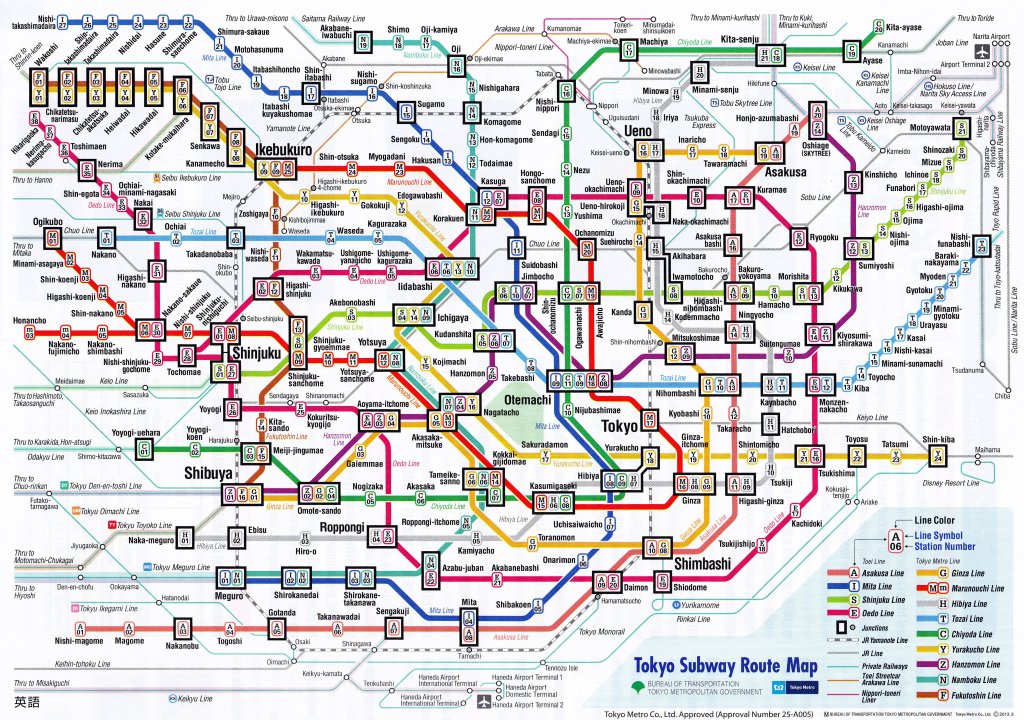
I’ve left myself a big task—to summarize our visit to the capital city of Japan in just a few paragraphs. I can start with an admission that might help—I’m a subway junkie. Anytime we visit a city that has one, I like to study the “Beck Map”, a highly schematic map based on an iconic design created by Henry Beck in 1933 for the London Underground. Even in this simplified format, the Tokyo Metro system is mind-boggling…

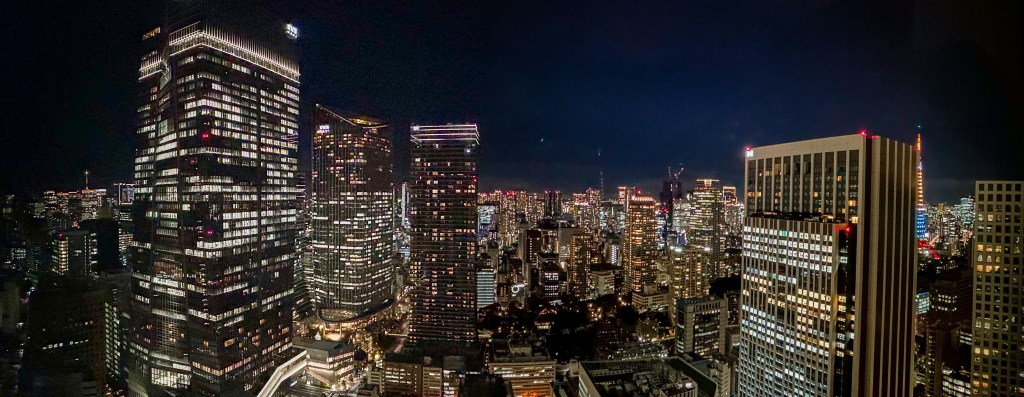
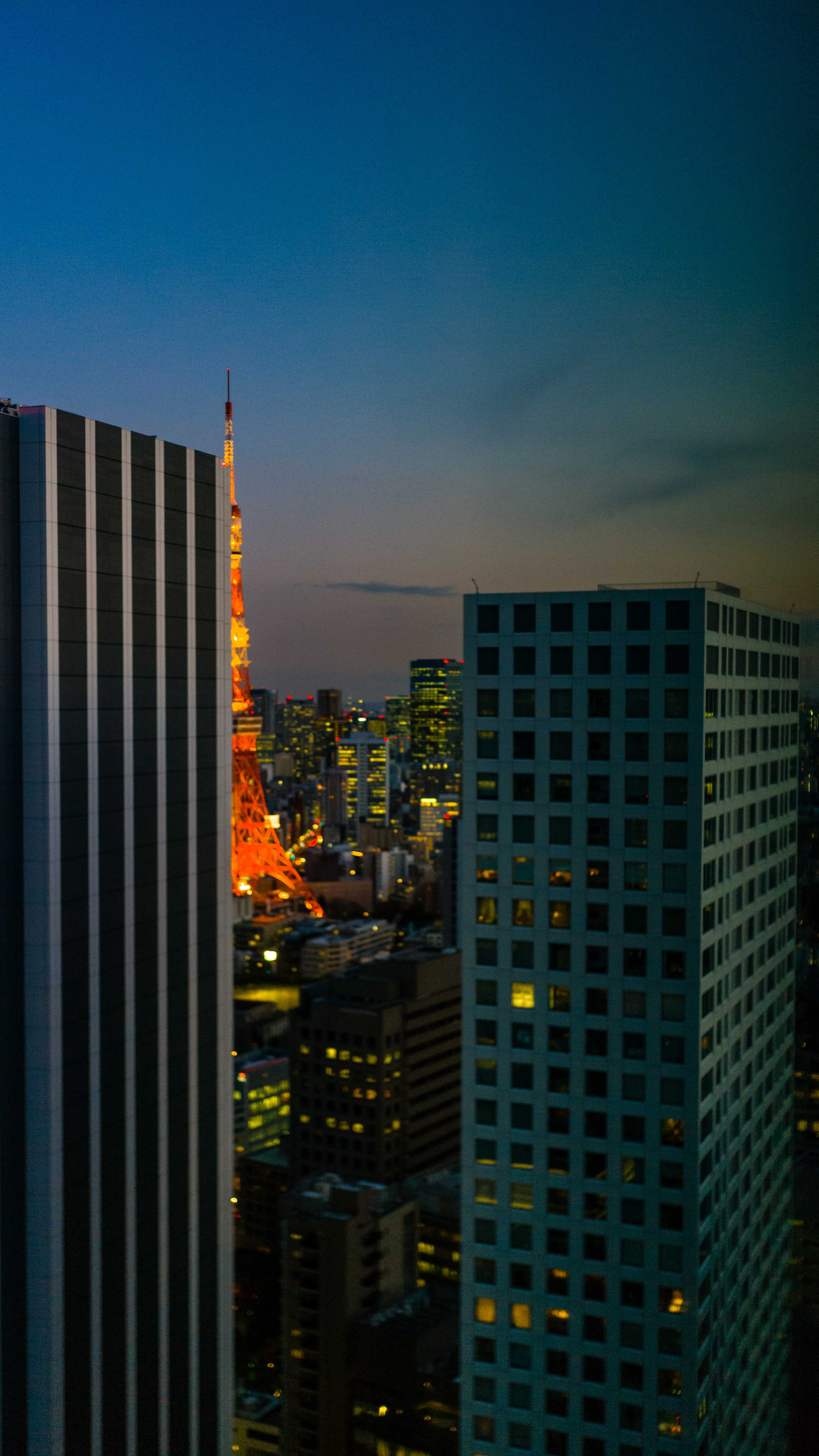
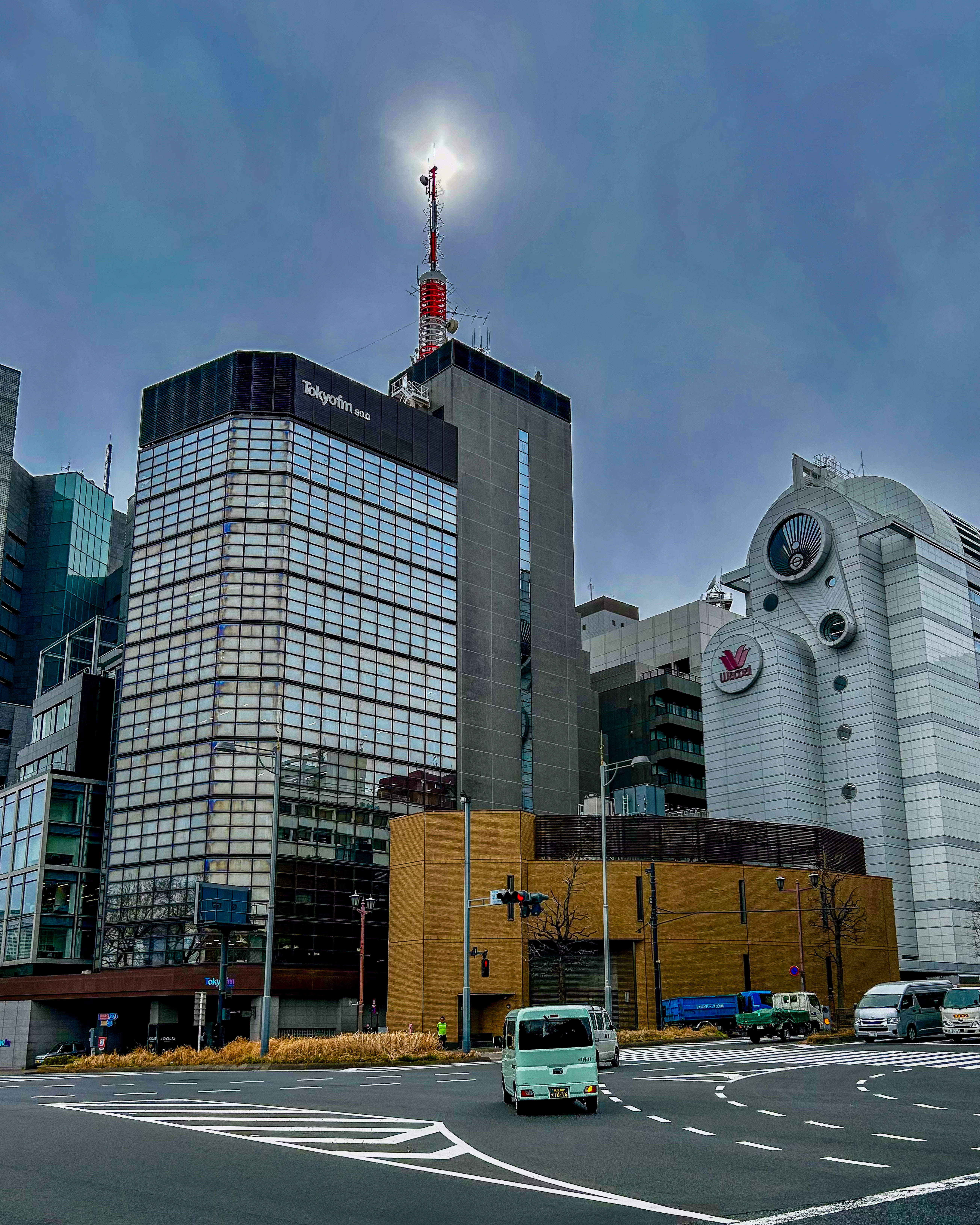
Our hotel in Tokyo was another treasure. After much deliberation, Deborah chose The Okura Tokyo in the Toranomon area. It was a great choice, as the Okura combines mid-century tradition with modern sophistication. We immediately felt at home—a personal welcome from the hotel manager does have that effect! The view to the east from our 34th floor window wasn’t bad either. It spanned the distant Tokyo Skytree to the (much closer) Tokyo Tower.

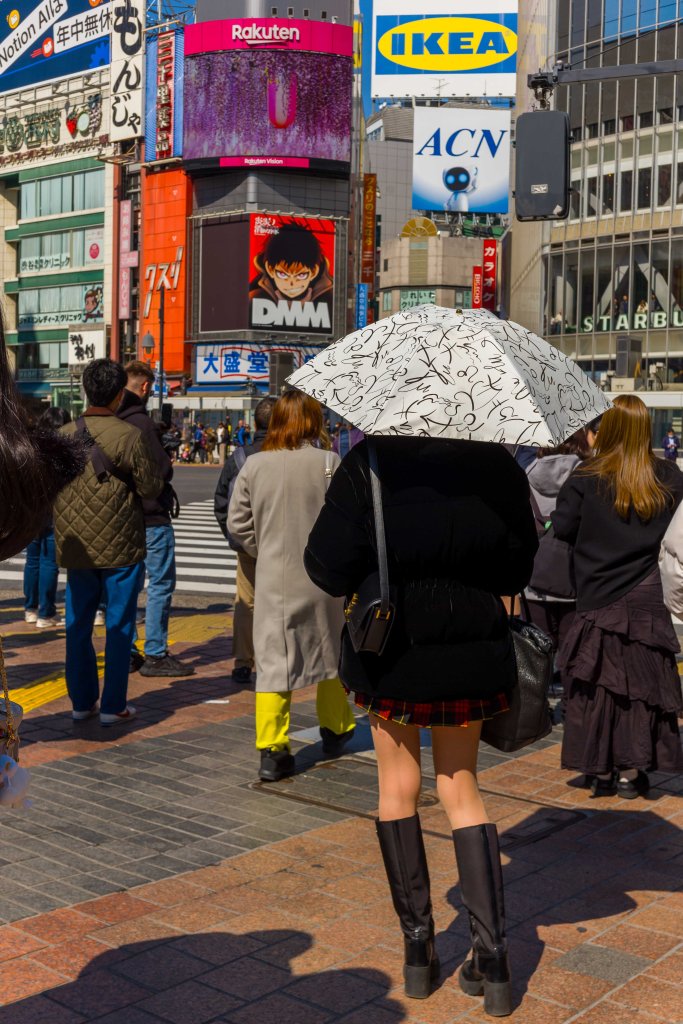
Orienting ourselves, we figured out there were three subway stations near the hotel, giving us flexibility to get anywhere we wanted to go. We ventured out, with our trusty IC cards in hand. Well aware it was a touristy area, we headed for Shibuya—an easy ride on the Ginza Line, Station G07 to G01—and its chaotic Scramble crossing. We saw it, we crossed it, we snapped a couple of pictures. It was interesting, but we soon moved on, feeling this was a so-so introduction to Tokyo.

We headed north to get away from the crowds, and found pleasant Yoyogi Park, where we saw a few early cherry blossoms. Then we walked through the grounds of Meiji Jingu, an important Shinto shrine. The serene forest setting is actually manmade—100,000 trees were planted in 1920 to commemorate Emperor Meiji and Empress Shoken.

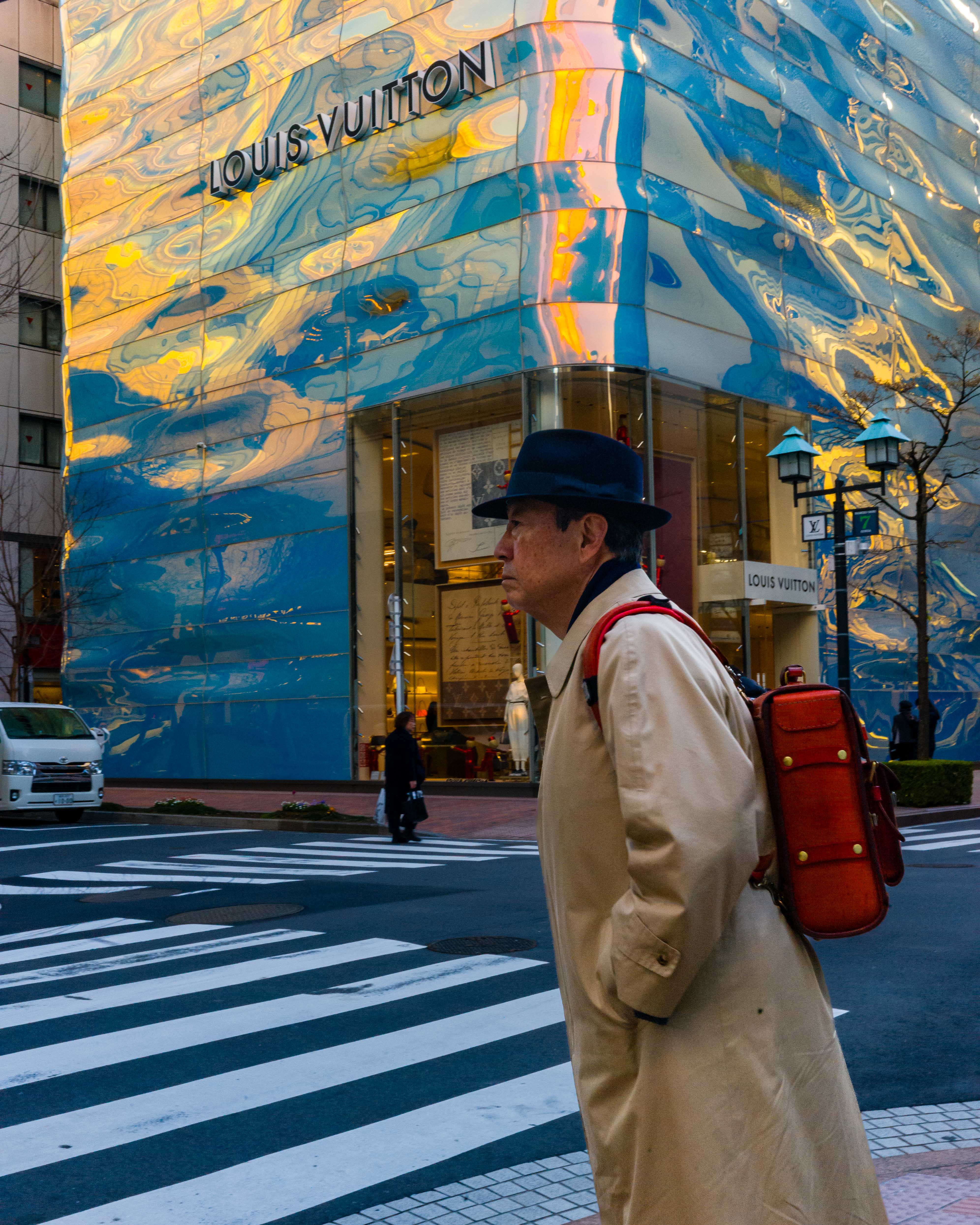
We did some shopping, including a visit to a couple of Tokyo’s famous camera shops in Shinjuku (for me) and a walk through Minato-ku and the high-end shops of Ginza (for Deborah). Closer to our hotel, we found Shiba Park at the base of the Tokyo Tower. That connected us to the Roppongi Hills area and the Azabudai Hills development, a chic cultural and dining hub. Each time out, we expanded our knowledge of the Metro system, with only a couple of missteps along the way…

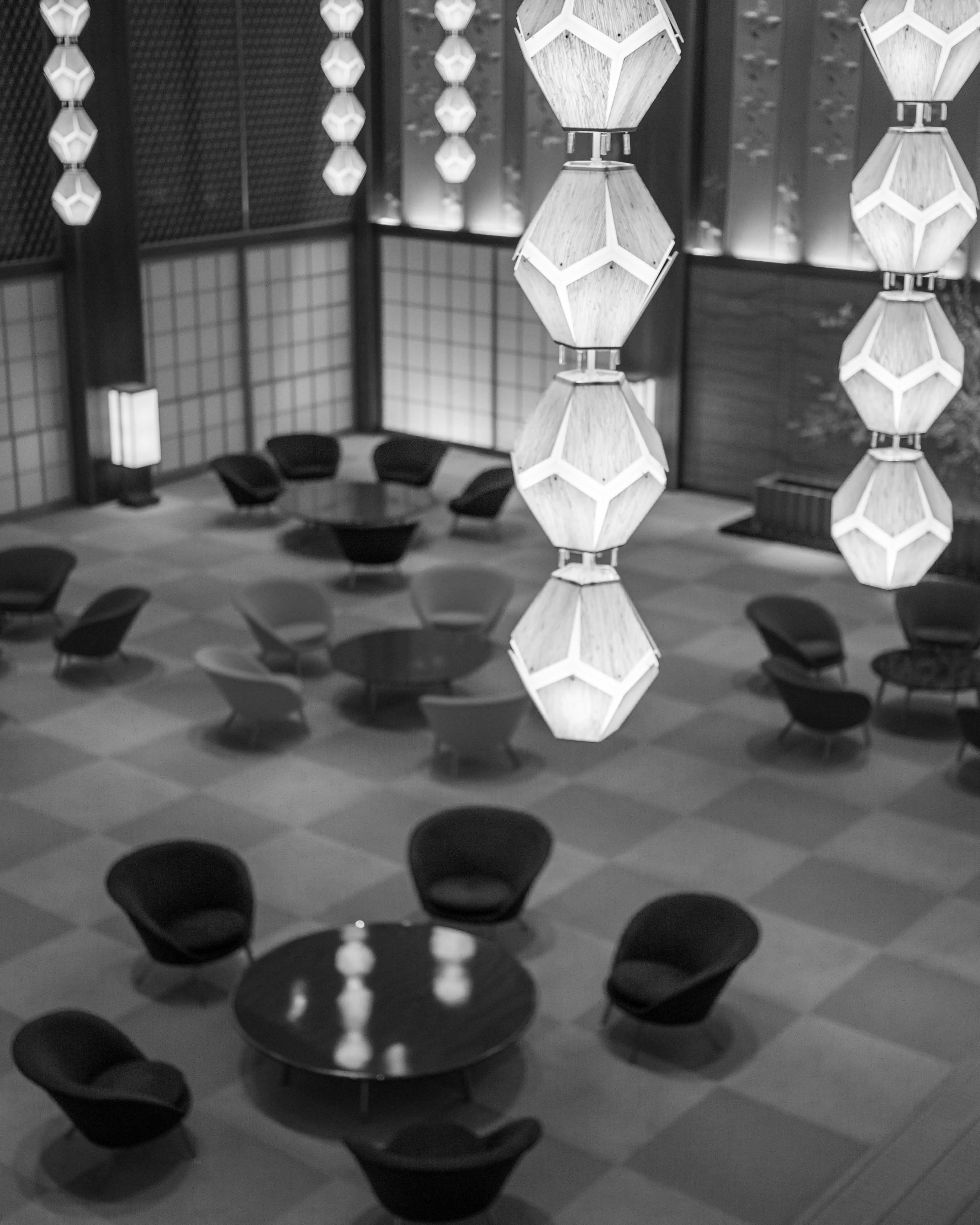
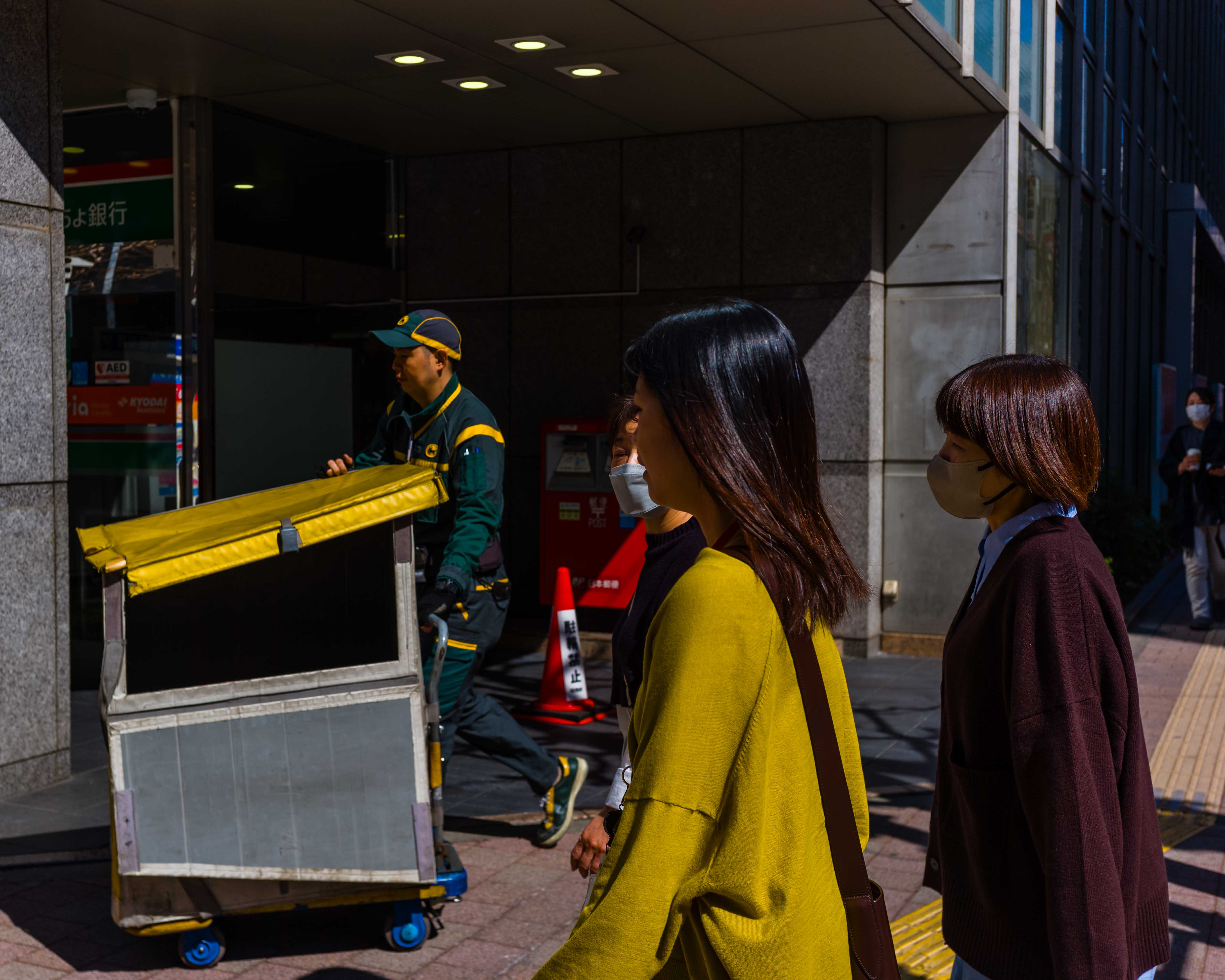
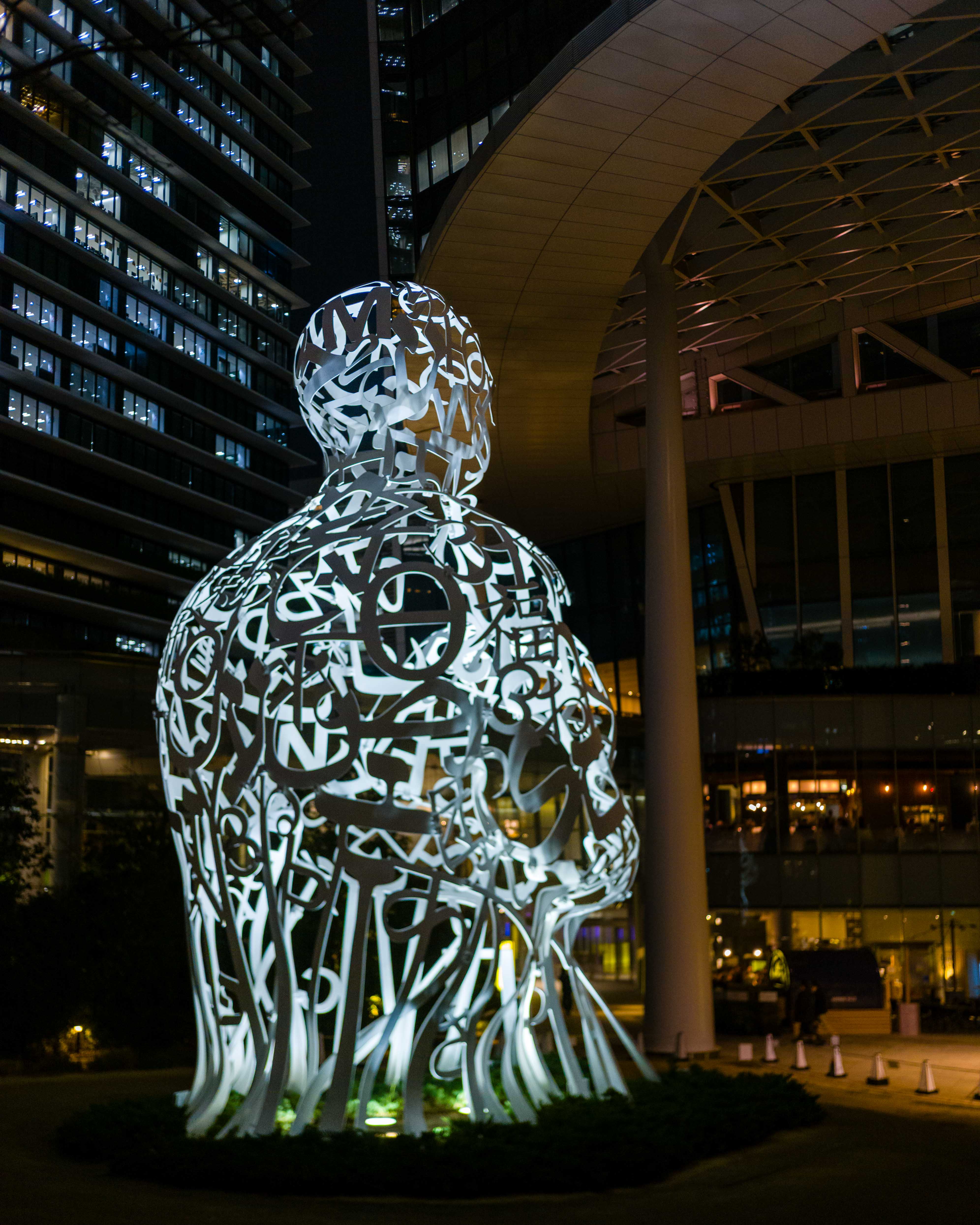
There was history and art in and around the hotel. The original lobby was designed by Yoshiro Taniguchi for the 1962 opening. Then, in 2014, when a rebuilding project was undertaken, it was Yoshiro’s son Yoshio who preserved the look and feel of the original lobby. The Okura Museum of Art—the oldest existing private museum in Japan—was across the plaza. Having seen a tea ceremony in Kinosaki, which seemed a long time ago but was only a week, we enjoyed the exhibit of ancient tea utensils. And we checked out a Jaume Plensa sculpture that we could see from our hotel window—it was similar to one in Montreal that I wrote about here.

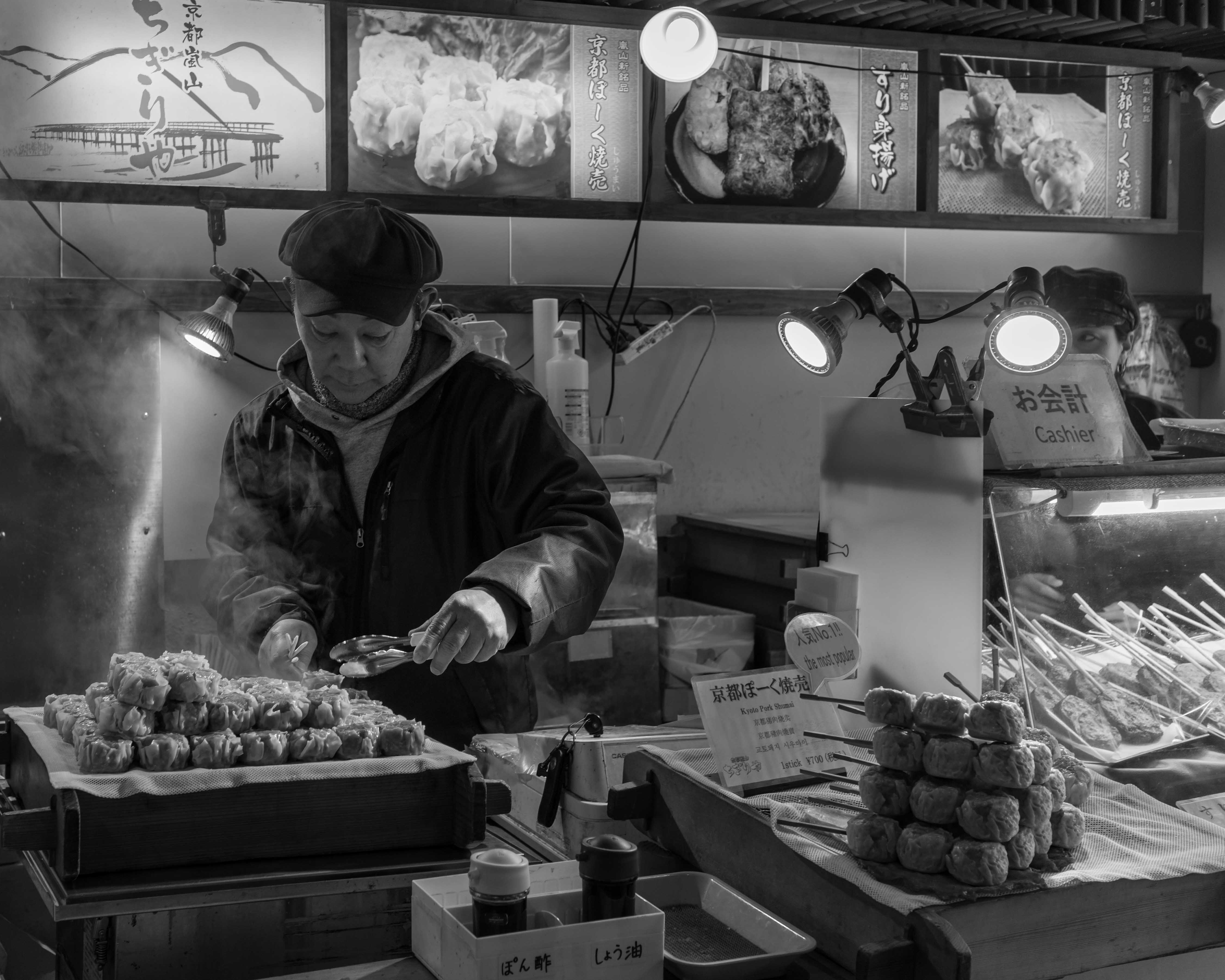
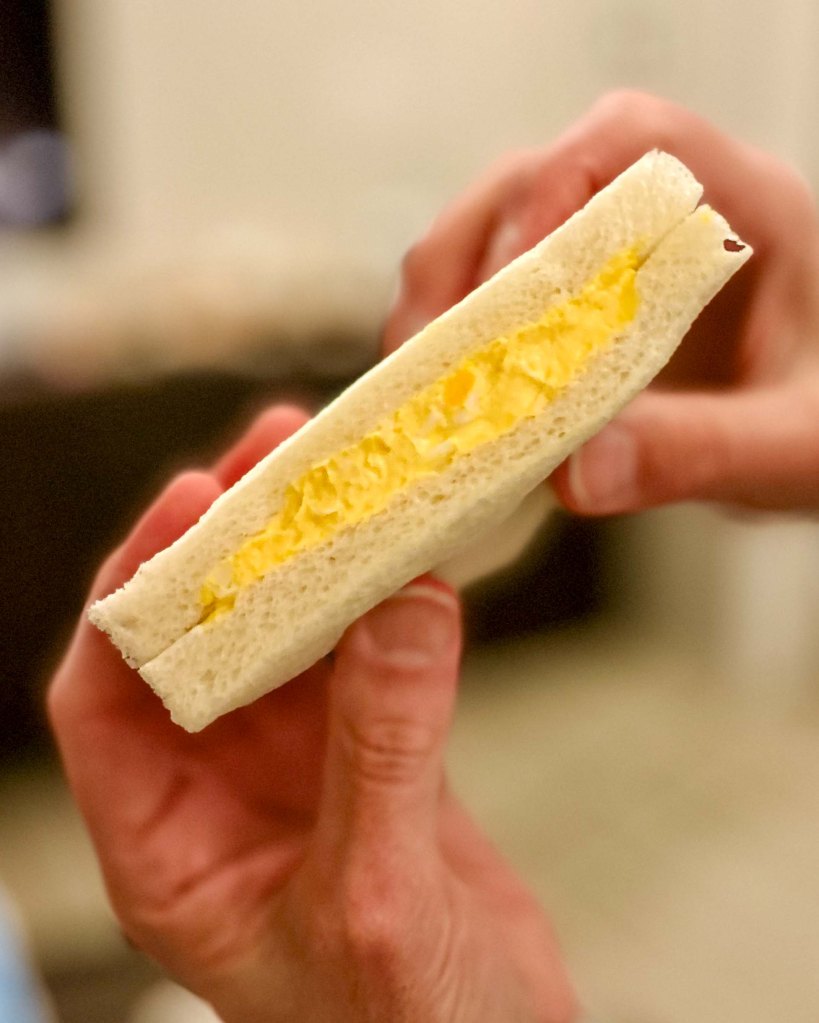
Food? Oh yes! We took full advantage of the amazing breakfast buffet at the hotel, to get us through most of the day. For dinner, we found restaurants with great tonkatsu curry and soba noodles. And there were always onigiri for a snack. One evening, we did a convenience store (konbini) dinner, to see what all the fuss was about over egg salad sandwiches and chicken cutlets. Life changing? No, but they’re not bad.

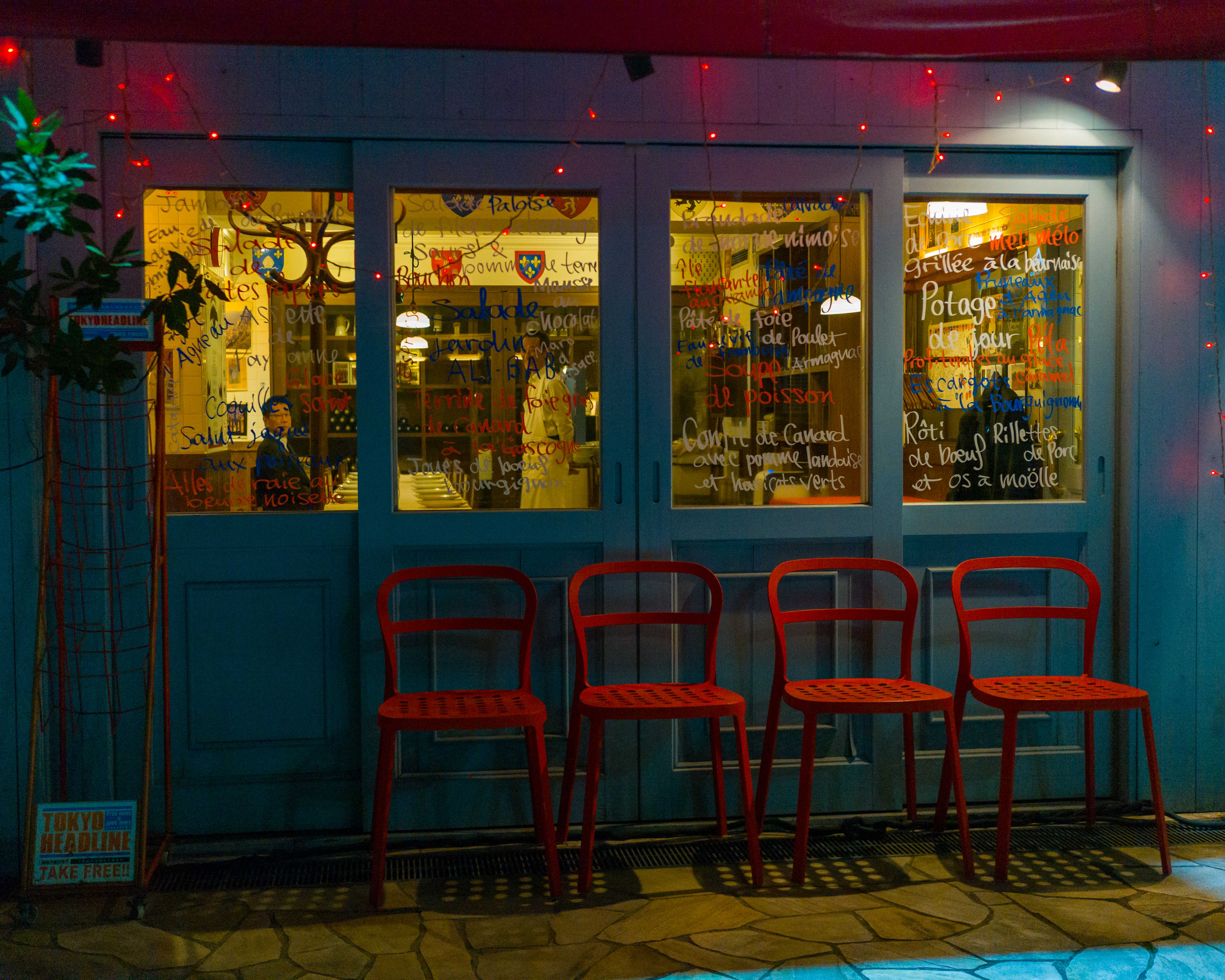
Here’s an album of pictures from Tokyo…

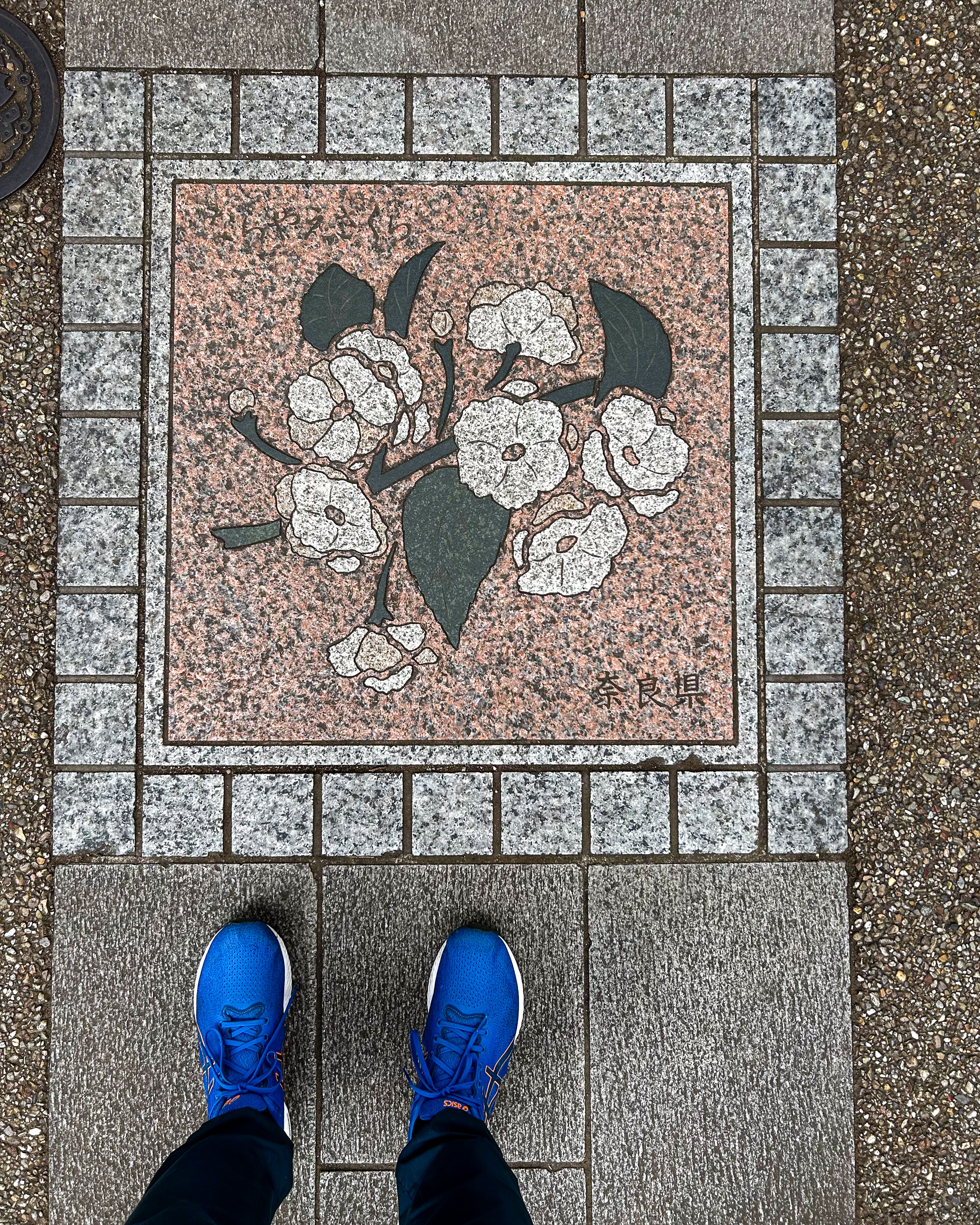
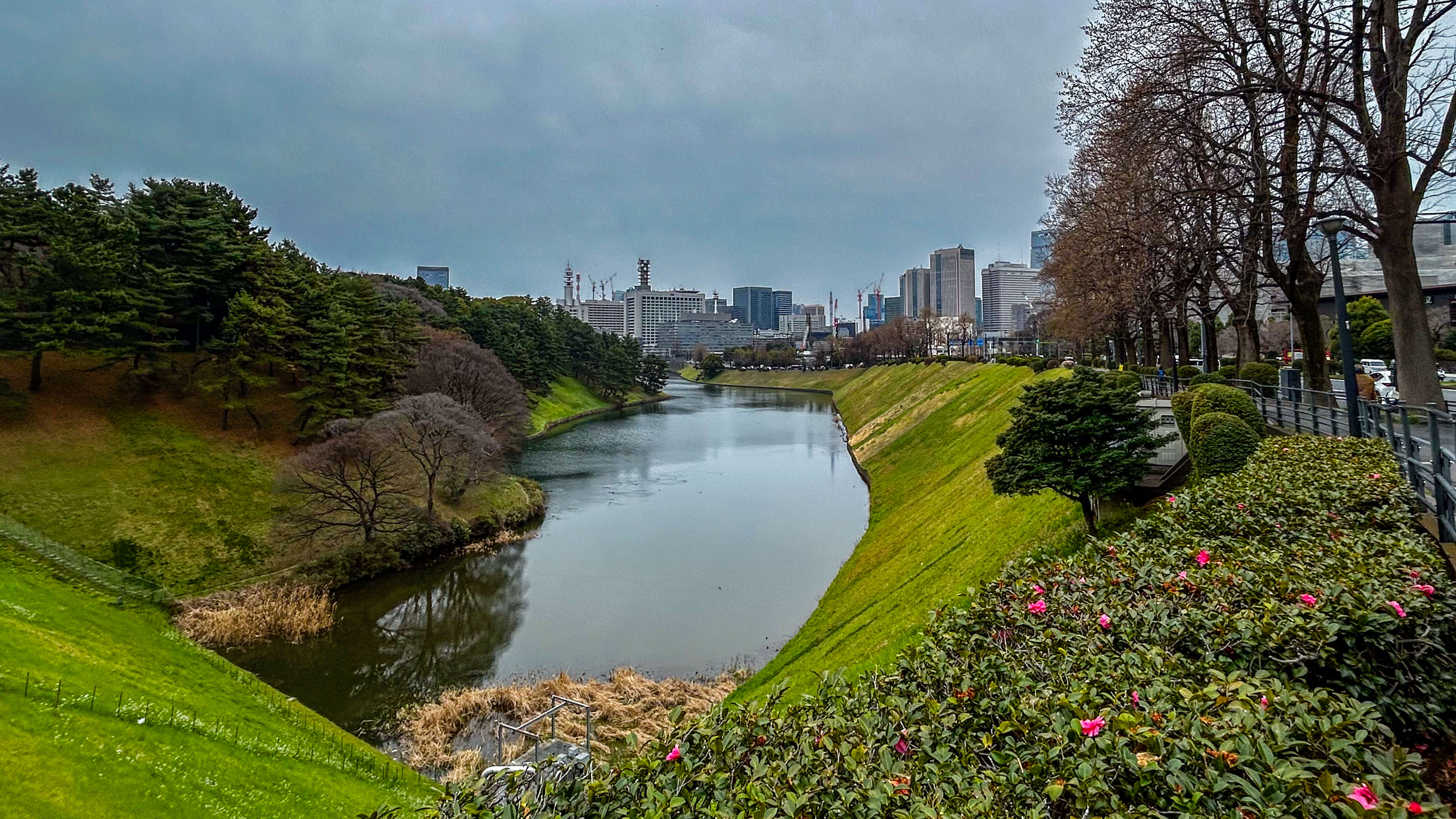
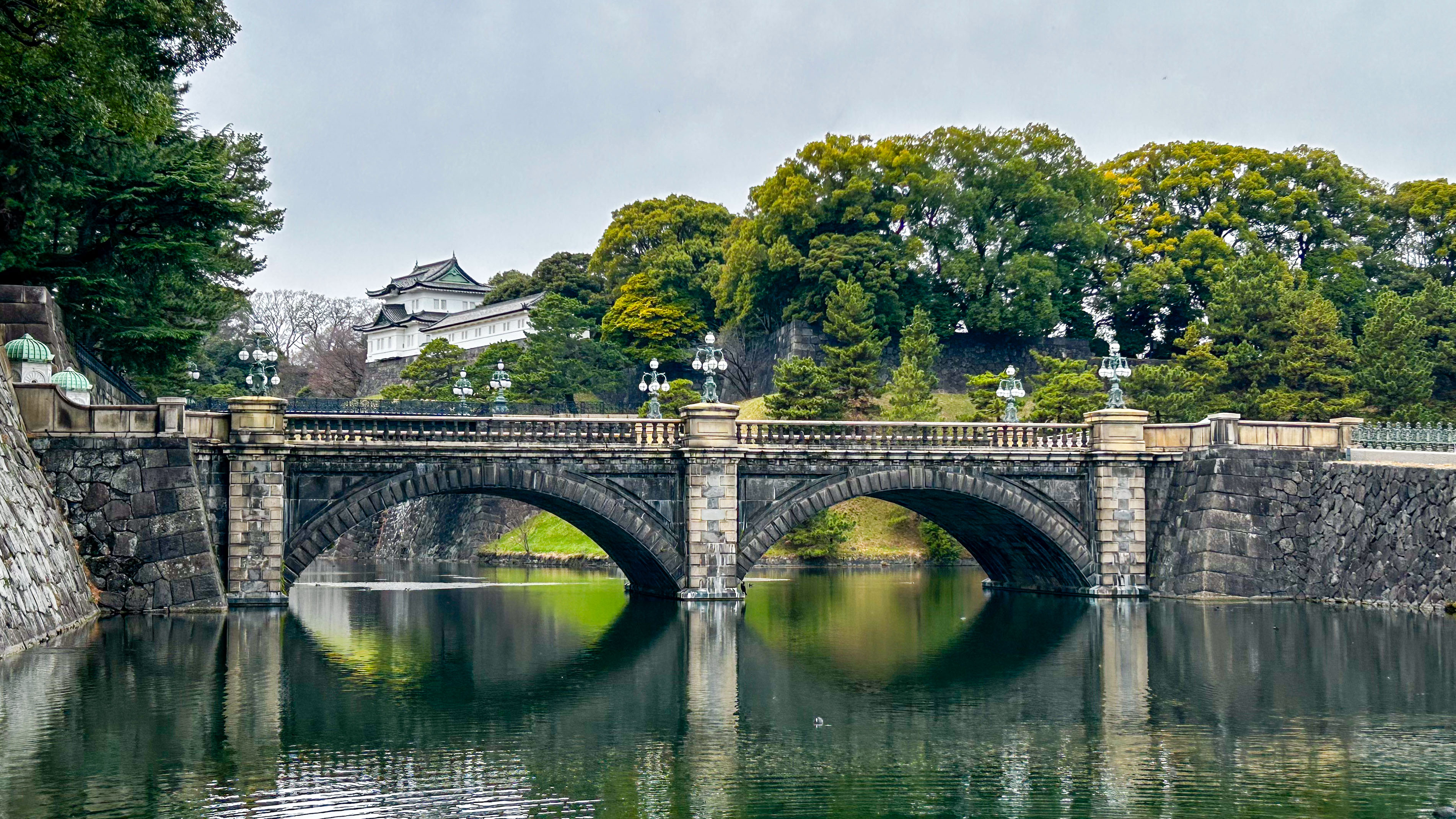
My final run in Japan was a lap around the Imperial Palace. Not surprisingly, it is a popular location in central Tokyo. The grounds are beautiful, with sculptural trees and a huge moat. I noticed a nice touch on the path—the distance markers feature flowers for each prefecture in Japan. I ran and Deb walked, which meant we both earned an ice cream.

The Final Word

Although we’d allowed more time in Kyoto and Tokyo than in other locations, we left both cities feeling there was too much unseen and undone. We were captivated by Kyoto. While it took us a little time to warm up to Tokyo, we left knowing we needed to come back. In the end, we think we were simply overwhelmed, and maybe a bit tired after three weeks. The key takeaway is that we will return to this wonderful country. We’re already planning our next trip, and Matthew has given us a list of Tokyo neighbourhoods we must visit! Who knows, there may even need to be another blog piece, to wrap up some loose ends from this visit.

Sayonara! And until next time, be well and BE FAST!

Exploring North York

We’ve been spending time in North York lately, due to a family matter. For a Hamilton boy like me, the boroughs of Toronto have always been a mystery. Over the years, I have become familiar with a small area of North York, near the intersection of Keele Street and Lawrence Avenue. Our most recent visit yielded some memorable experiences, resulting in this piece.

A brief history of North York

What we now know as North York was the northern part of York Township—the city of Toronto (originally York) formed the southern part. In 1922, the mainly rural population voted to separate from Toronto. Apparently, there was resentment about the lack of services provided by the city in relation to the taxes being paid.

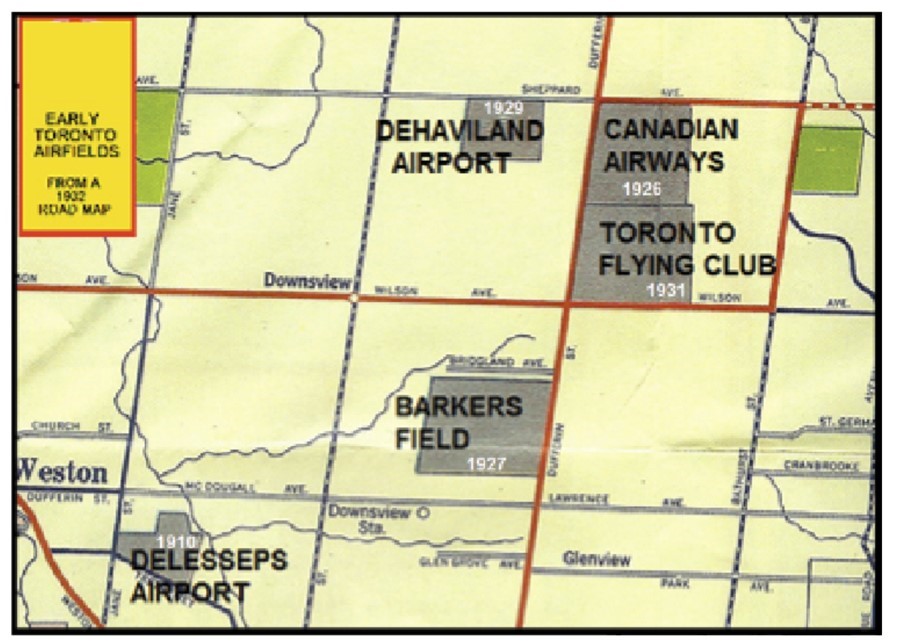
North York has had a long connection to Canada’s aviation industry. This made sense because Downsview was the highest point of land between the Don and Humber Rivers. The Downsview Airport opened as a general airfield in 1929. Early maps (like this one from The Downsview Advocate) show several airfields and aviation facilities.

Downsview was located next to a de Havilland Canada aircraft manufacturing plant, which used the airfield as a test site. It became a Royal Canadian Air Force station in the Second World War. In 1947, the Department of National Defence bought surrounding land to expand the airfield into a RCAF base. Then, in 1953, the RCAF established its storage and repair facilities for Eastern Canada at Downsview. The runways were lengthened to accommodate all types and sizes of aircraft.

Urban development in North York was minimal until after the war. A housing boom in the 1950s and 1960s brought residents into close contact with activities at Downsview. North York grew rapidly—it was incorporated as a borough in 1967, then as a city in 1979, and was amalgamated into Toronto in 1998.

Urban growth was the beginning of the end for the airport. When the Government of Canada announced the closure of Canadian Forces Base Toronto in 1995, the site transitioned into two distinct parcels: Downsview Park and Downsview Lands. Both parcels are overseen by the Canada Lands Company. Downsview Park is a large green space—more on that below.

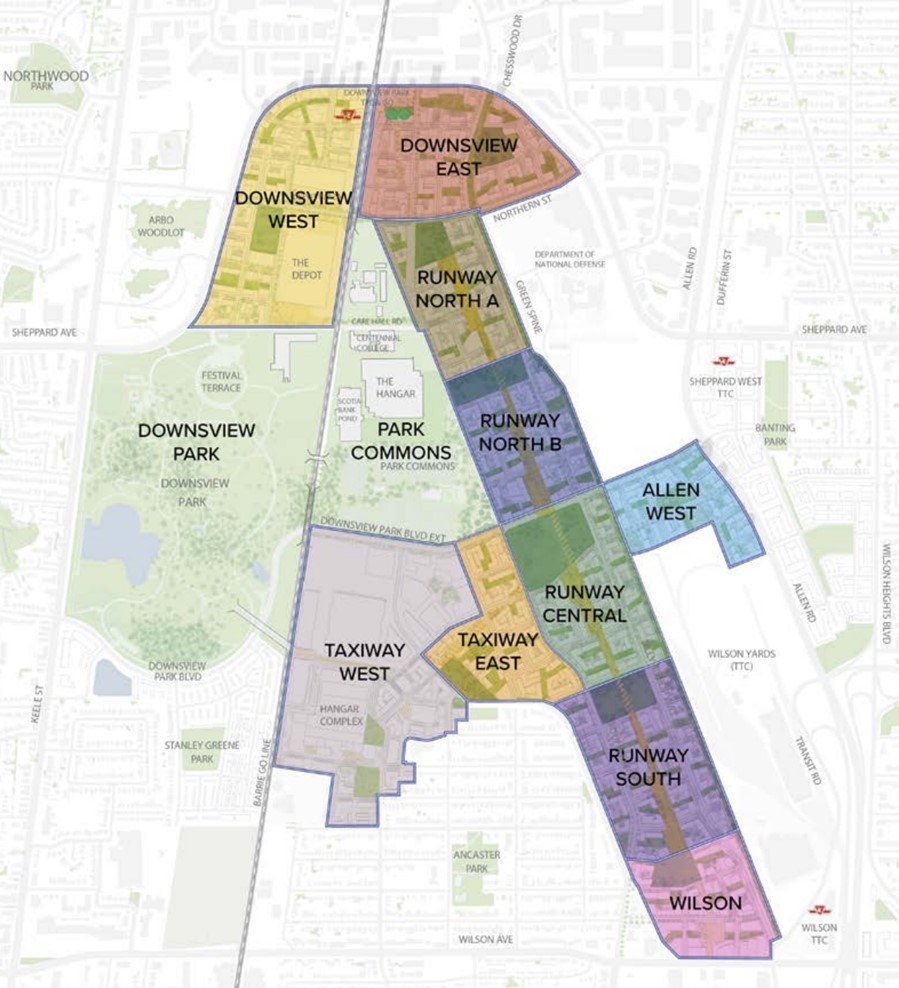
The airport sits on the Downsview Lands. It was closed in March 2024. Now, a major urban redevelopment project, “YZD”, is underway for the site. Valued at $22 billion, the project is unique in that it will repurpose facilities at the airfield (the hangars and the mile-long runway) into a new community for 55,000 residents. This project plan (the id8 Framework Plan) shows the park and the future residential areas.

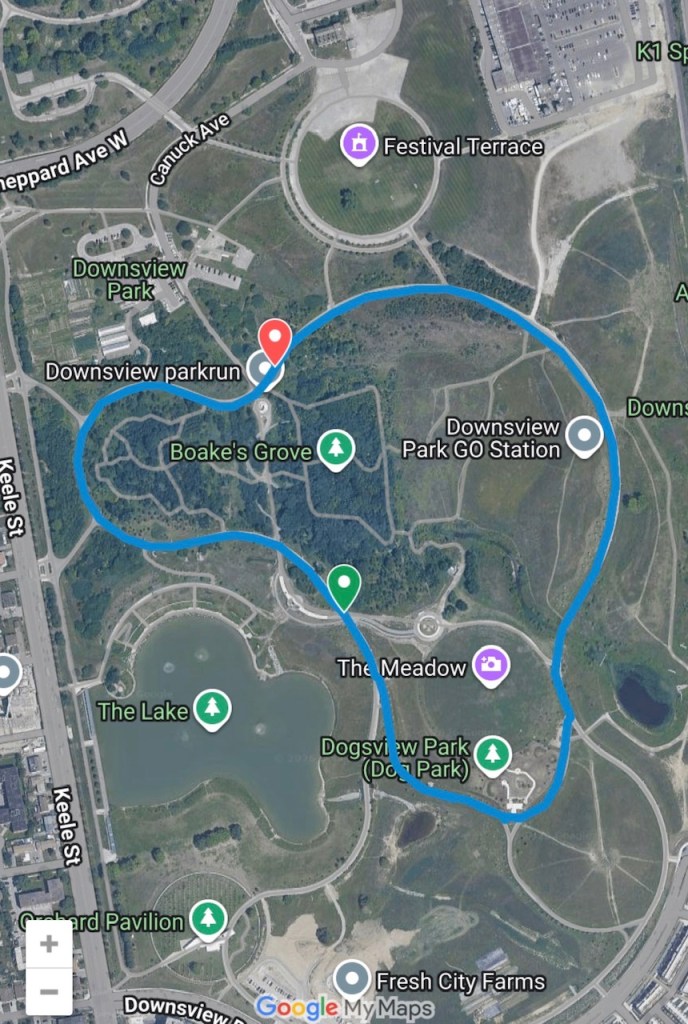
Downsview parkrun, solo edition

Our location was just south of the busy Highway 401. Downsview Park is about the same distance from the highway on the north side. That meant we were fairly close to the Downsview parkrun.

Like all parkruns, Downsview is a stress-free running event, held every Saturday morning. Well, almost every Saturday morning.

I pitched the idea of arranging our daily outing around the parkrun, and Deb was up for it. We figured we could take an Uber to the start, see the park, and then walk back to the house. Unfortunately, Mother Nature had other plans. Toronto was in the grip of a cold snap so severe that the organizers cancelled the run, out of concern for the volunteers.

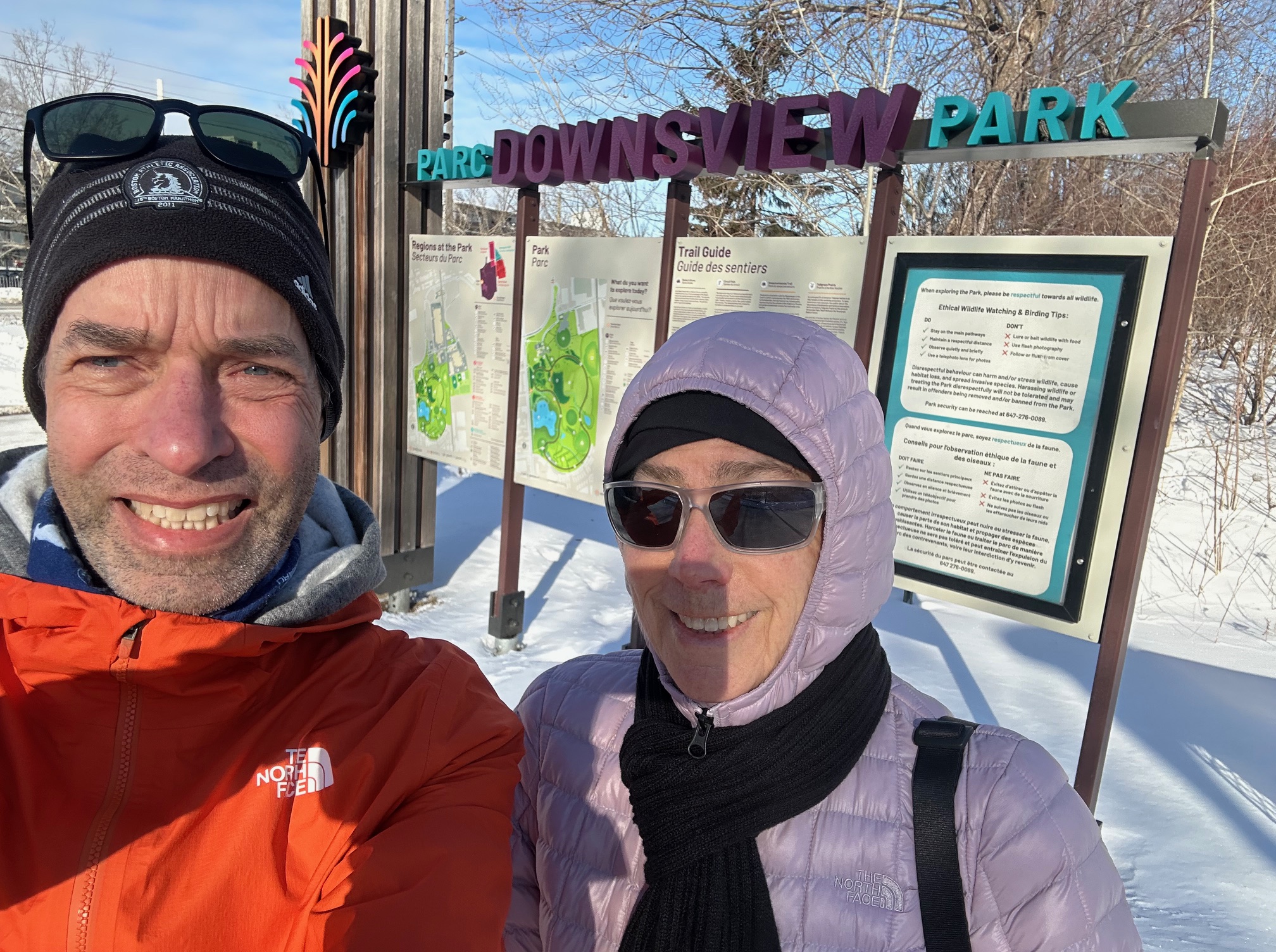
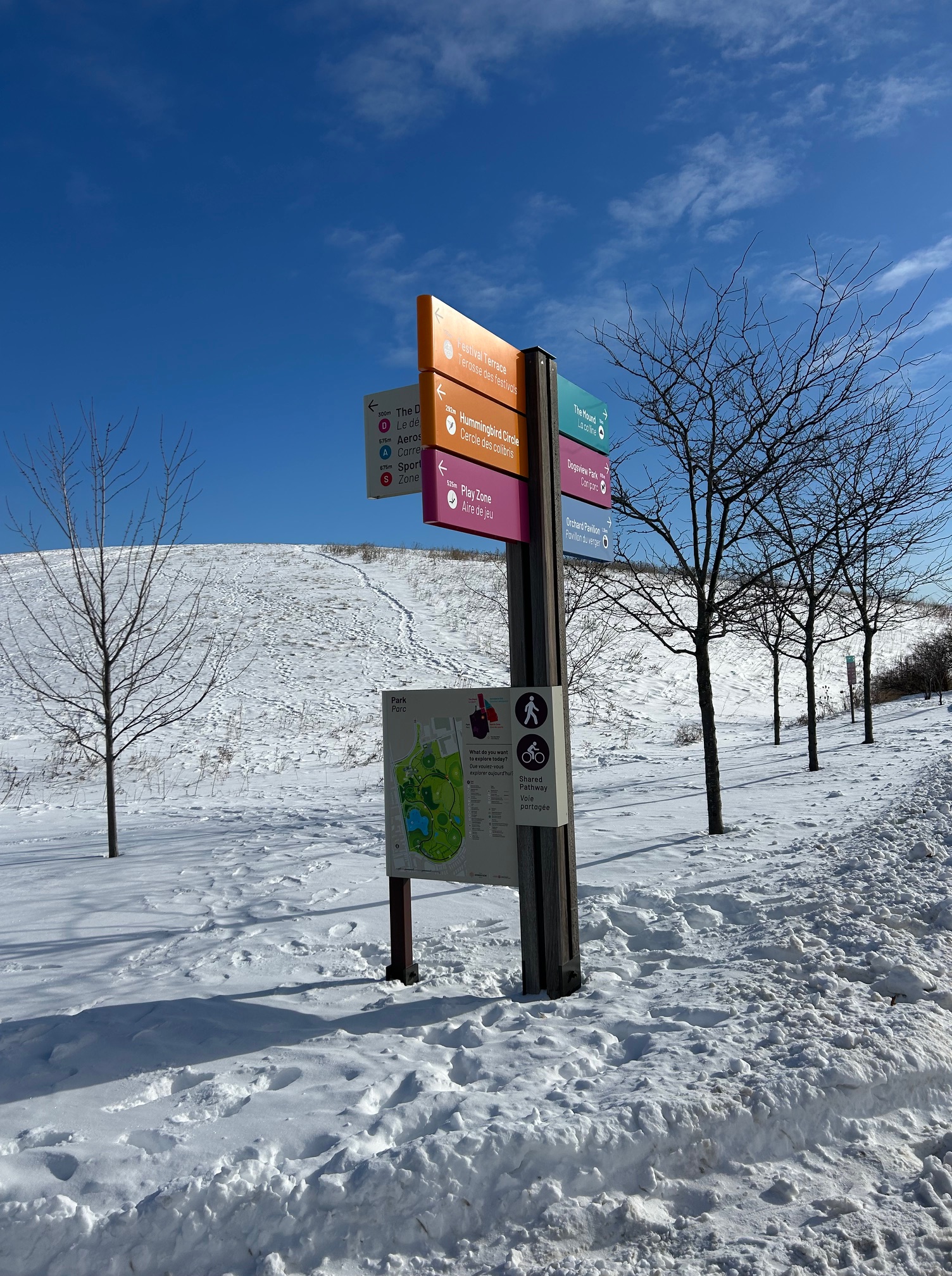
Our enthusiasm was only slightly dented by this news, because we had set our minds on seeing the park. So we went ahead with our plan. I did an easy jog, two laps of the park on the well-marked trail, while Deb walked. It was a beautiful, sunny morning. The park is a treasure. It was a good thing we had bundled up, because it was cold. A good excuse to keep moving.

I took a few pictures with my iPhone 14, which is never quite as convenient as my Ricoh GR III—especially since I had to take my gloves off each time!

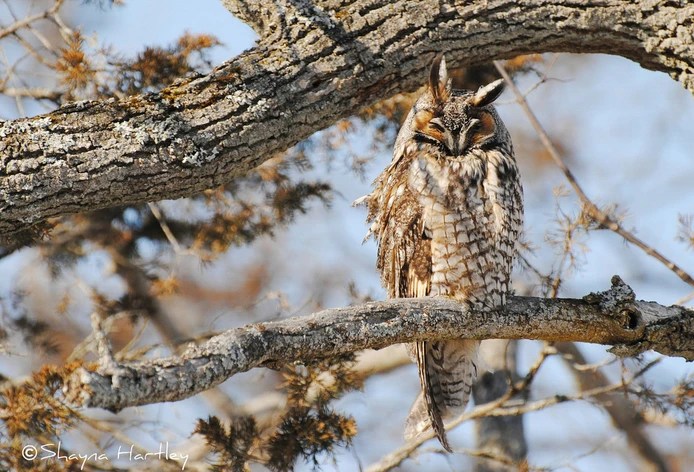
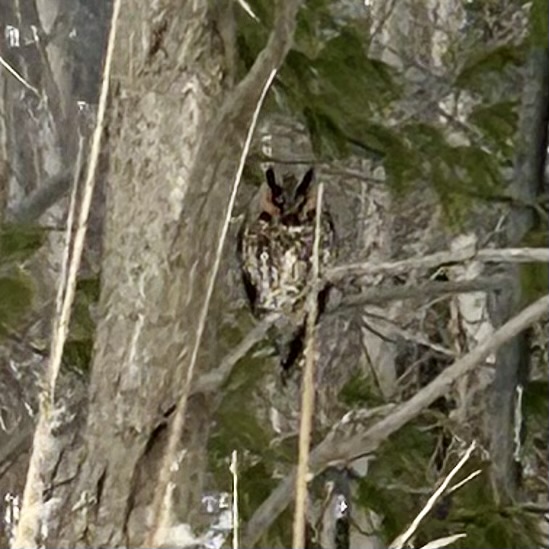
A highlight of my run was a meeting with a group of birdwatchers. I had to admire the dedication of these hardy folks. It’s one thing to be running at -20 Celsius and quite another to be standing knee-deep in snow. I was curious what they were looking at, so I stopped and said hello. They pointed out a long-eared owl, perched in a tree about 50 feet away. Once more, I took my gloves off and tried to snap a picture. It was not a resounding success. The shot on the left is mine. The one on the right, from the Audubon Society, shows what the bird actually looks like.

Record snowfalls—a personal history

The cold and wind that led to the cancellation of the parkrun were just a taste of what was to come. On Sunday, Toronto experienced the largest single-day snowfall in its history. The official figure was 46 cm of snow. We had work to do in the house, so I was content to stay inside while the storm raged. Deb was more adventurous, and she gamely did some shovelling around the house.

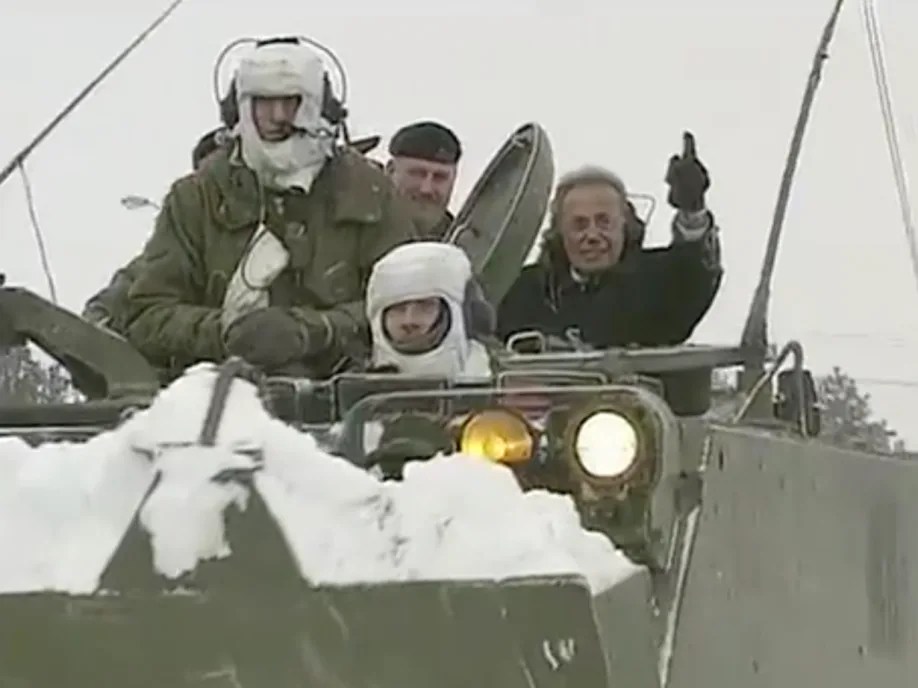
The talk about record snowfalls reminded me that, by coincidence, I had been in Toronto many years earlier for another historic winter event. There was some notoriety around that day in January 1999 when Toronto’s mayor, Mel Lastman, called in the military to help dig out the city. He was ridiculed because, you know, this is Canada. We can deal with snow. (Photo: The Weather Network)

My connection to the 1999 snowfall was professional in nature. I was in town for a business meeting, and I was staying at the luxurious Royal York Hotel. The city shut down, and I was trapped. Oh, the hardship! Mind you, the hotel’s kitchen and bars remained fully operational, so it wasn’t all bad. In fact, since the streets were abandoned, I got to my meeting 30 minutes early. 

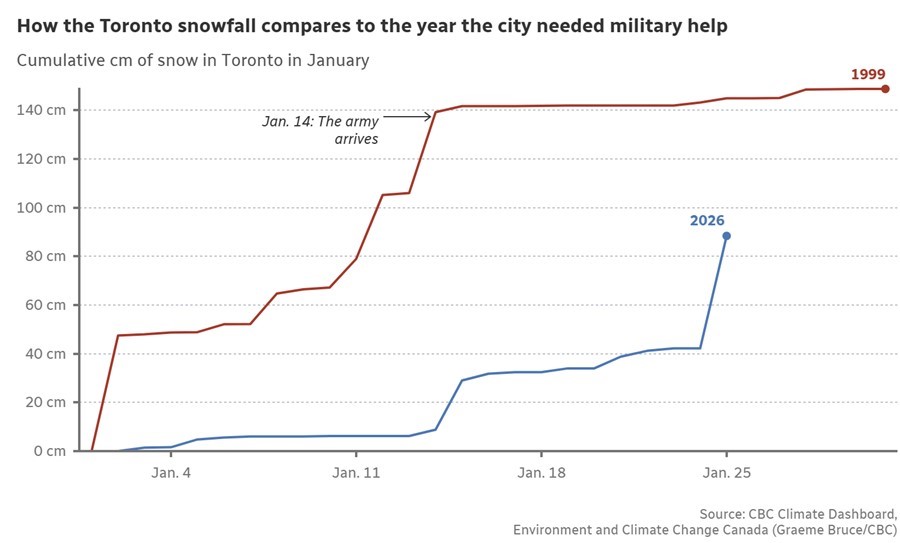
Apparently, I’m not the only one who was curious about how these two events (1999 and 2026) compare. Check out this chart from a CBC article. It turns out 1999 was worse than 2026, only because of the accumulation of snow that occurred in the days leading up to the big event. In retrospect, maybe we can cut Mayor Mel some slack after all! 

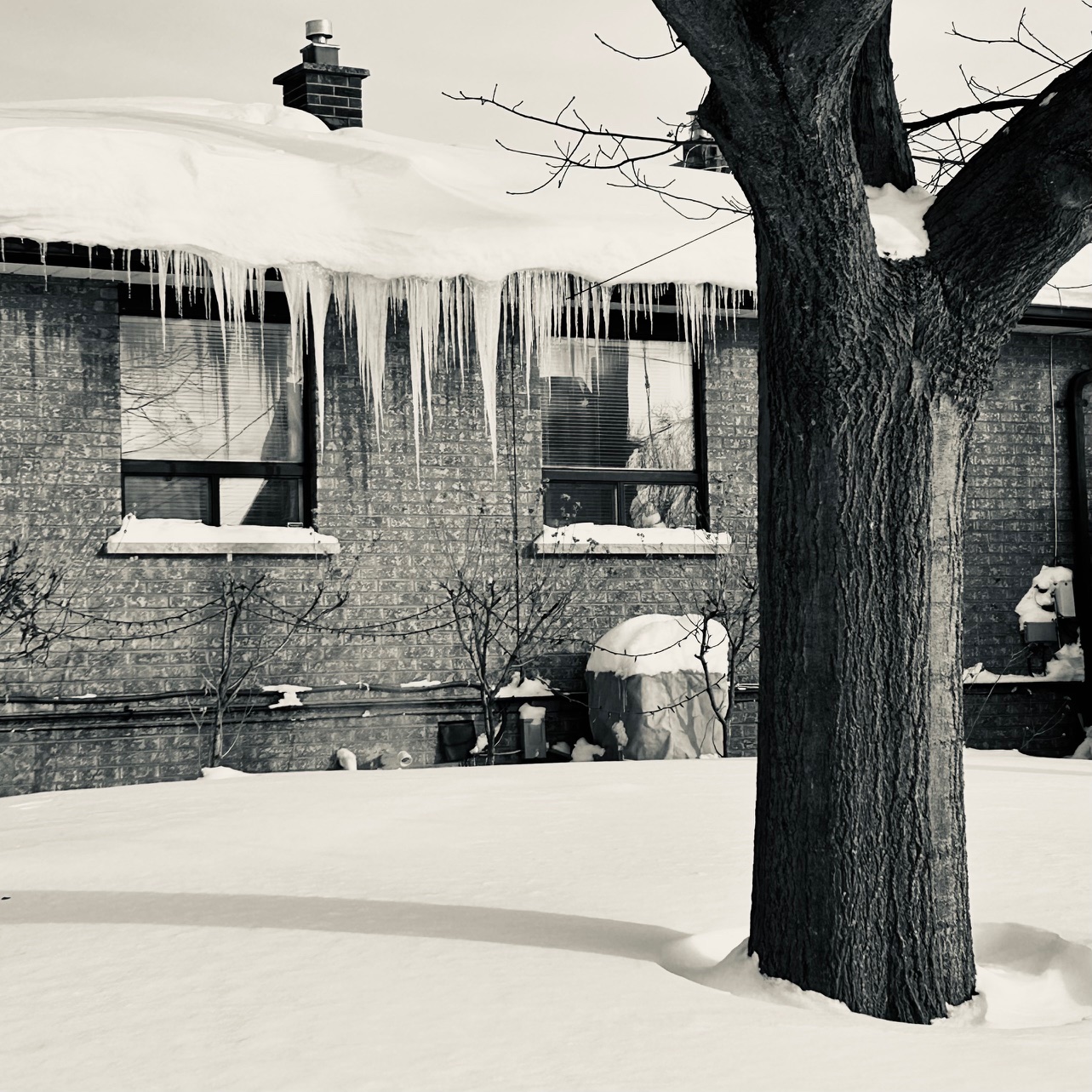
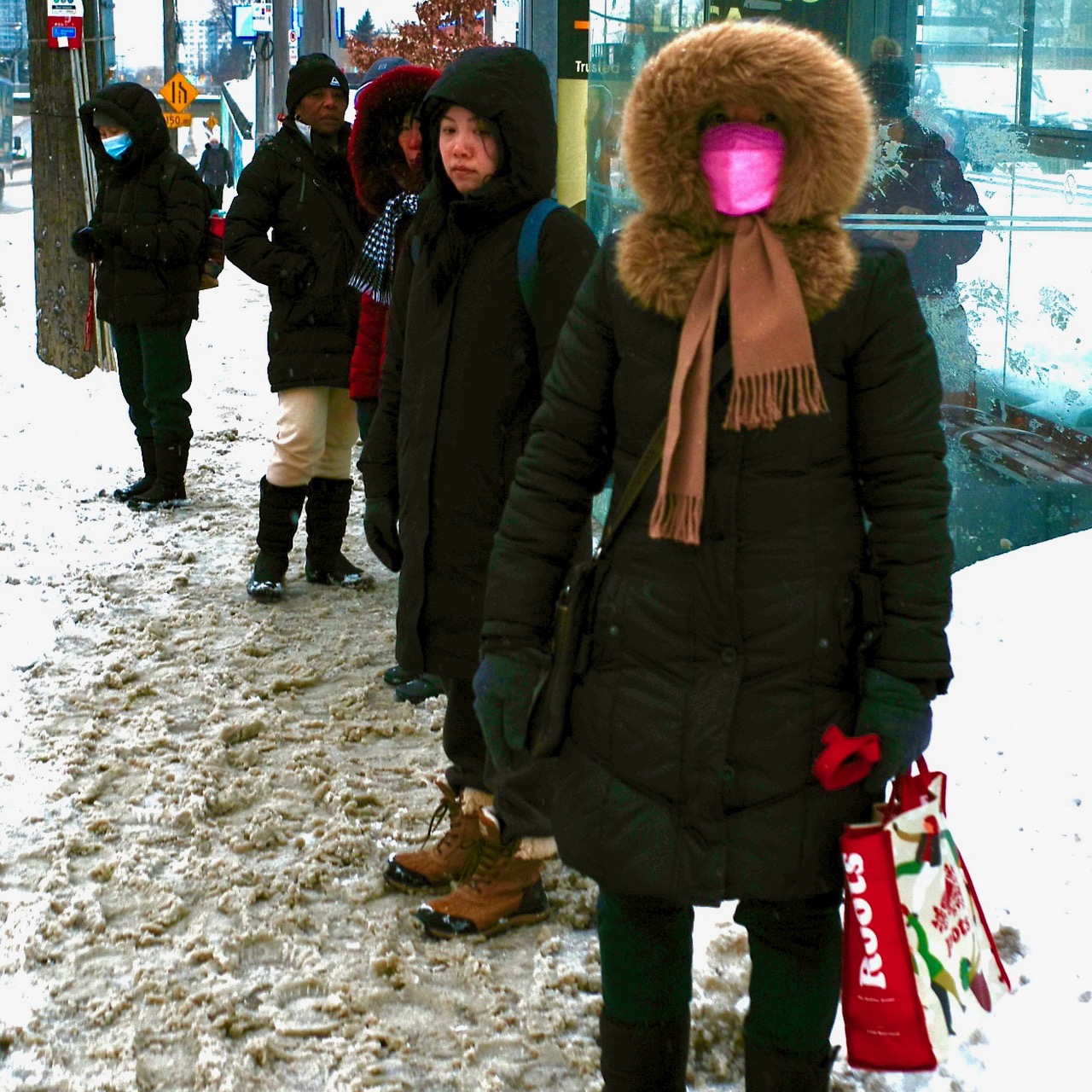
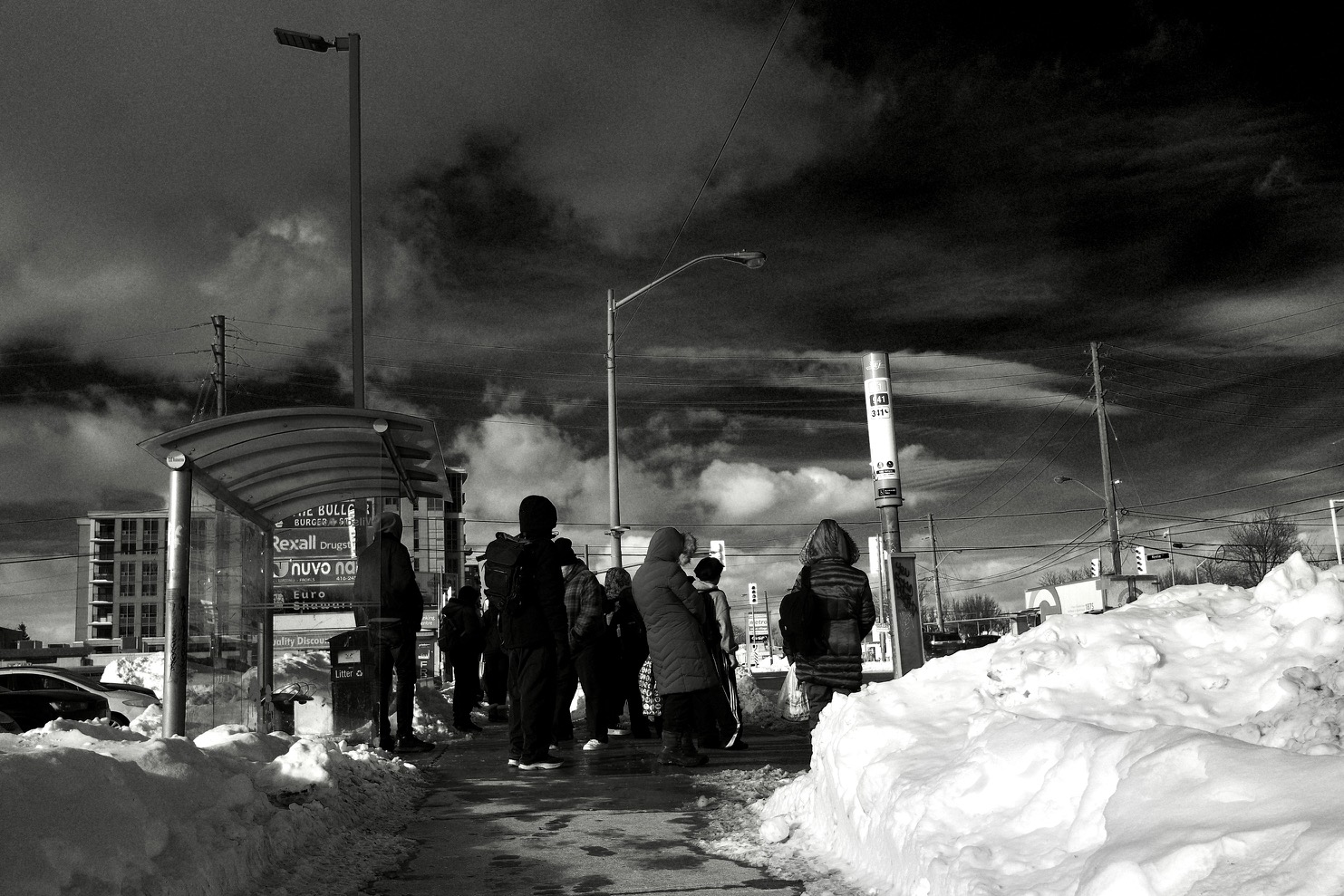
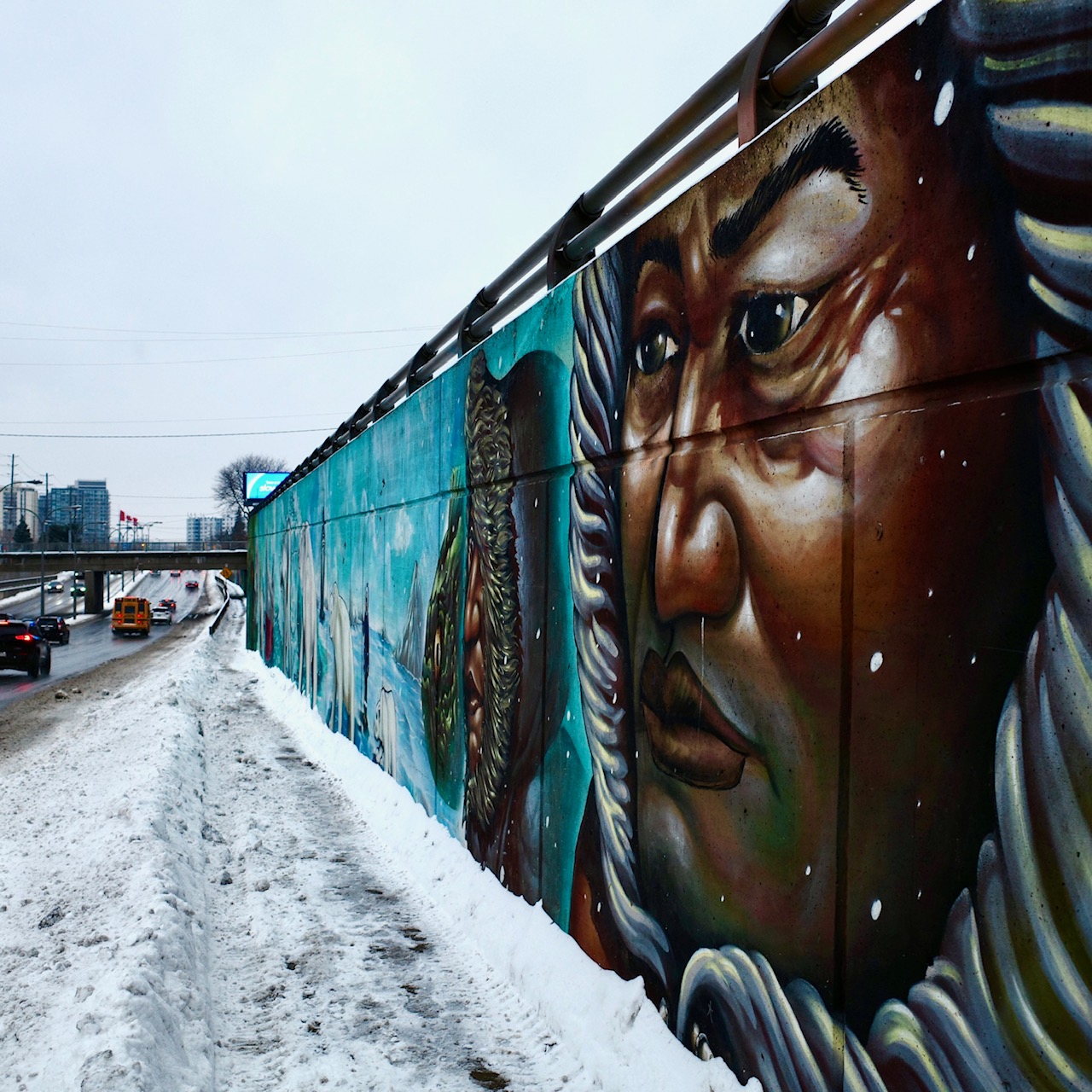
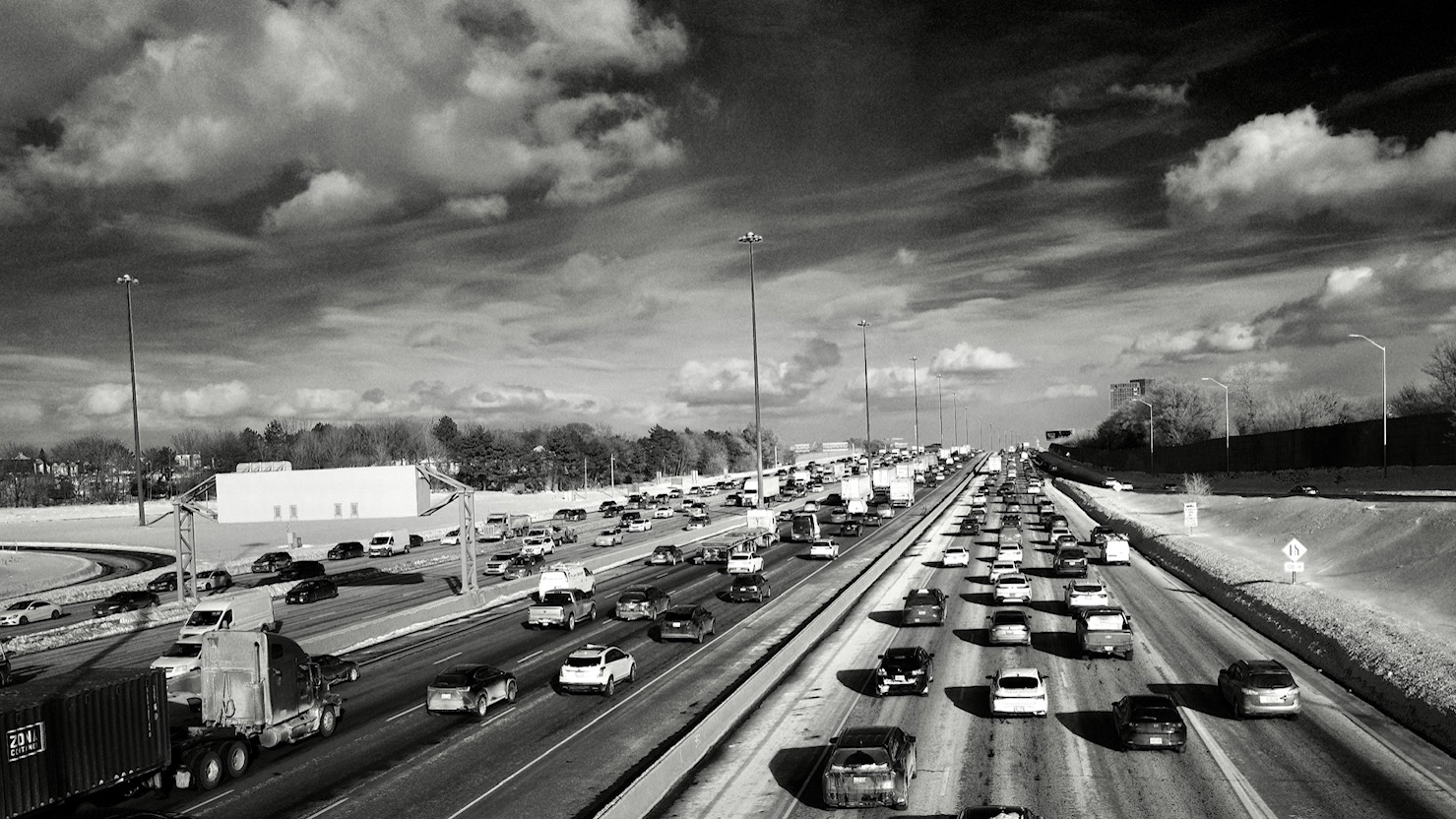
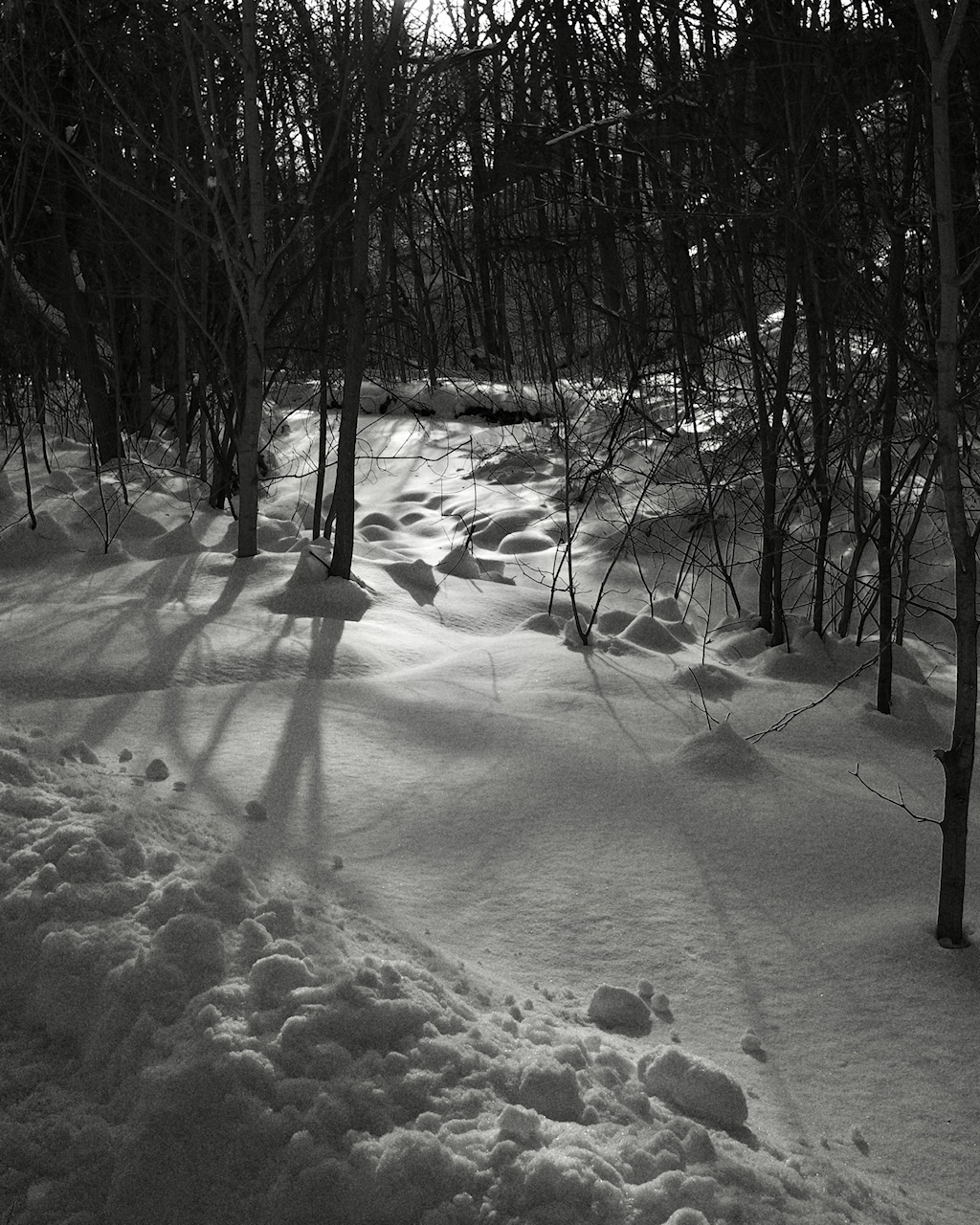
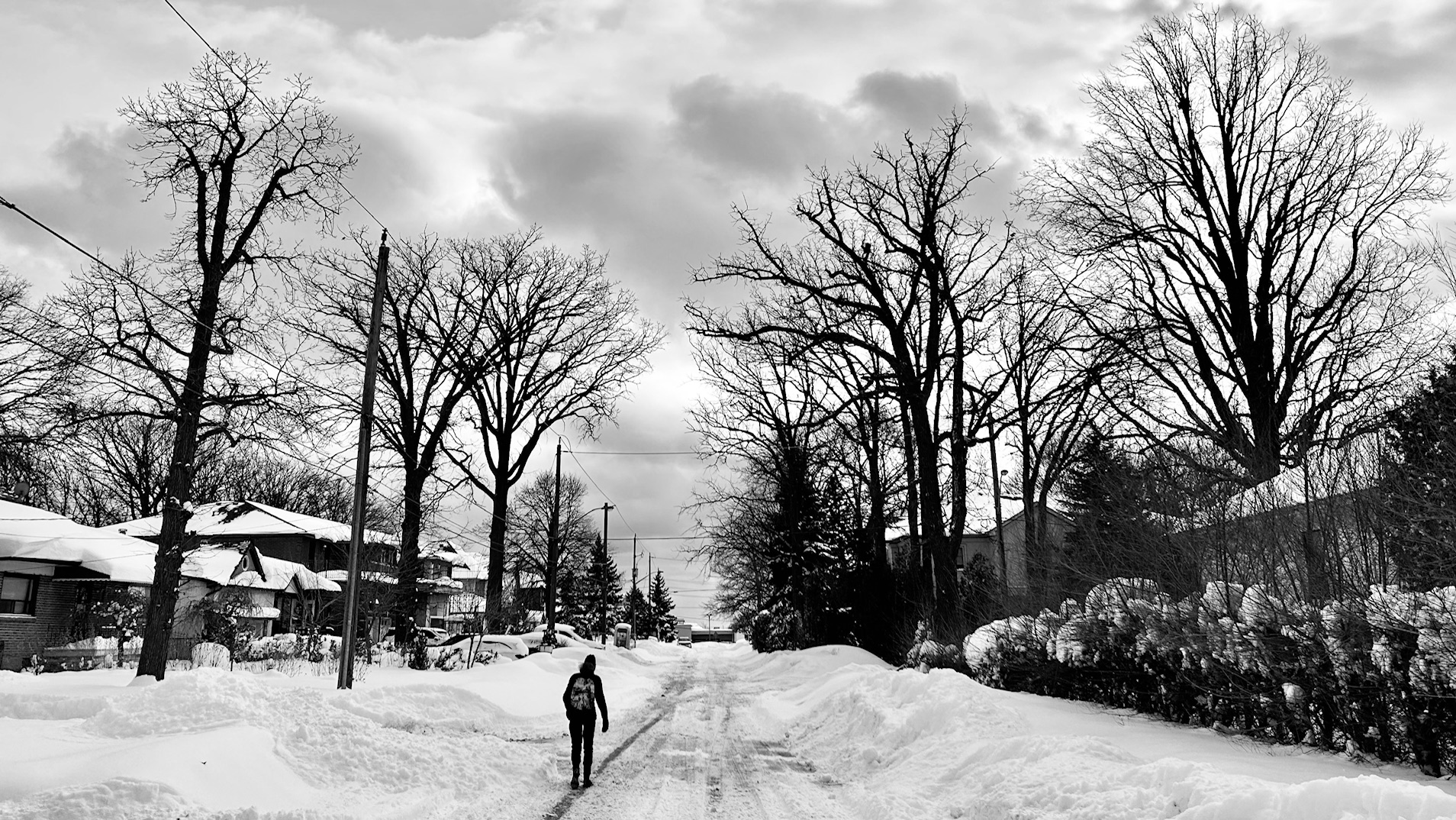
The days before and after Toronto’s record snowfall provided some good photo opportunities. It was a monochrome world as the city dug itself out. Here’s a sample. Copyright for all photos is mine.

Wrapping up

All told, it was an interesting week in Toronto (or North York, if you prefer). We experienced weather more reminiscent of Alberta than Ontario. I tried to add the Downsview parkrun to my resume, and even though that didn’t happen, Deb and I had an enjoyable outing. And then we weathered the storm. I expect to be back there in the spring—-hopefully it will be worthy of another post. 

Until next time, be well and BE FAST!
Milestone Reached—100 Blog Posts!

With a small, self-congratulatory pat on the back, I will advise my readers that this is the 100th post on My Second Running Life. It seems appropriate that I’m writing this as we turn the page to a new year, and also as I approach the third anniversary of this project. These are both events that lend themselves to introspection, so I will do a bit of that before looking forward to 2026.

State of the Blog

With a few exceptions, I write pieces on these topics: running, photography, and/or strokes. Here’s my rationale—running has been a constant presence in my life for fifty years; strokes threatened to end it all, and likely would have, had it not been for the previous point; and photography has increasingly been the medium where I express my thoughts and feelings as I go through life.

And what about this life—My Second Running Life? When I settled on the title for the blog, it was my way of reminding myself that fulfillment can come in different ways. I think the title still serves that purpose. I hope that my readers see it the same way.

I will add a thought for readers who may struggle to balance elements of their own life, especially if that includes trying to maintain a high standard of performance as an amateur athlete. For many years, I was there, too. Let me remind you that there will be no harsher judge of your success than you. Only you can decide what success looks like—don’t let anyone presume to tell you. And only you can give yourself permission to back away when that is the right thing to do, because of family or work commitments. It’s worth remembering that the word amateur refers to someone who participates in an activity for no reason other than the love of doing it.

I describe competitive distance running as a perfect proxy for life itself. There will inevitably be highs and lows. In a race, we may be having a rough stretch, only to find the next mile is better. If today’s effort falls short and the race doesn’t go to plan, we can console ourselves with the thought that there will be another chance soon.

In other words, we must never lose hope or stop believing in ourselves. That’s what this blog has always been about.

The Year in Review

Running

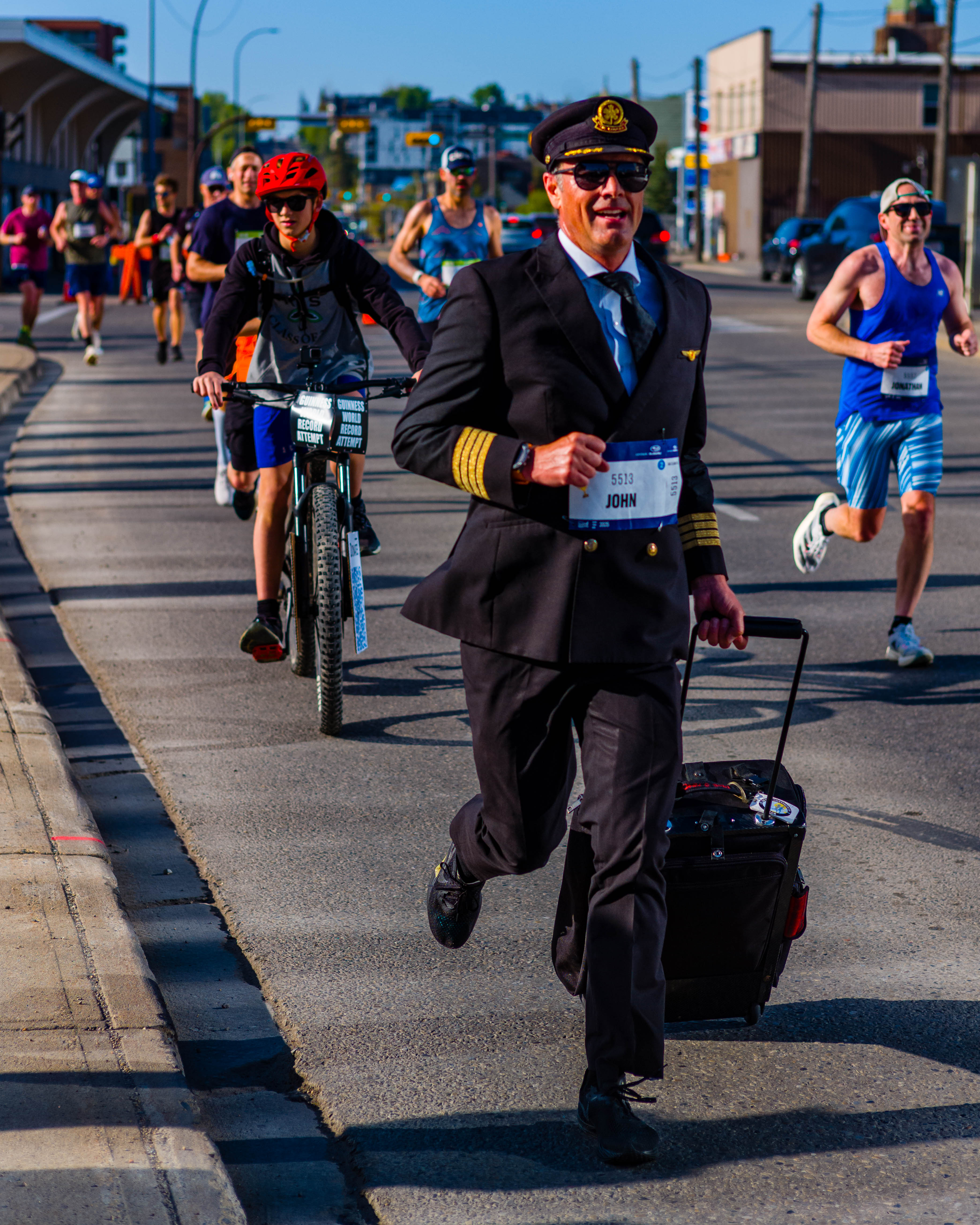
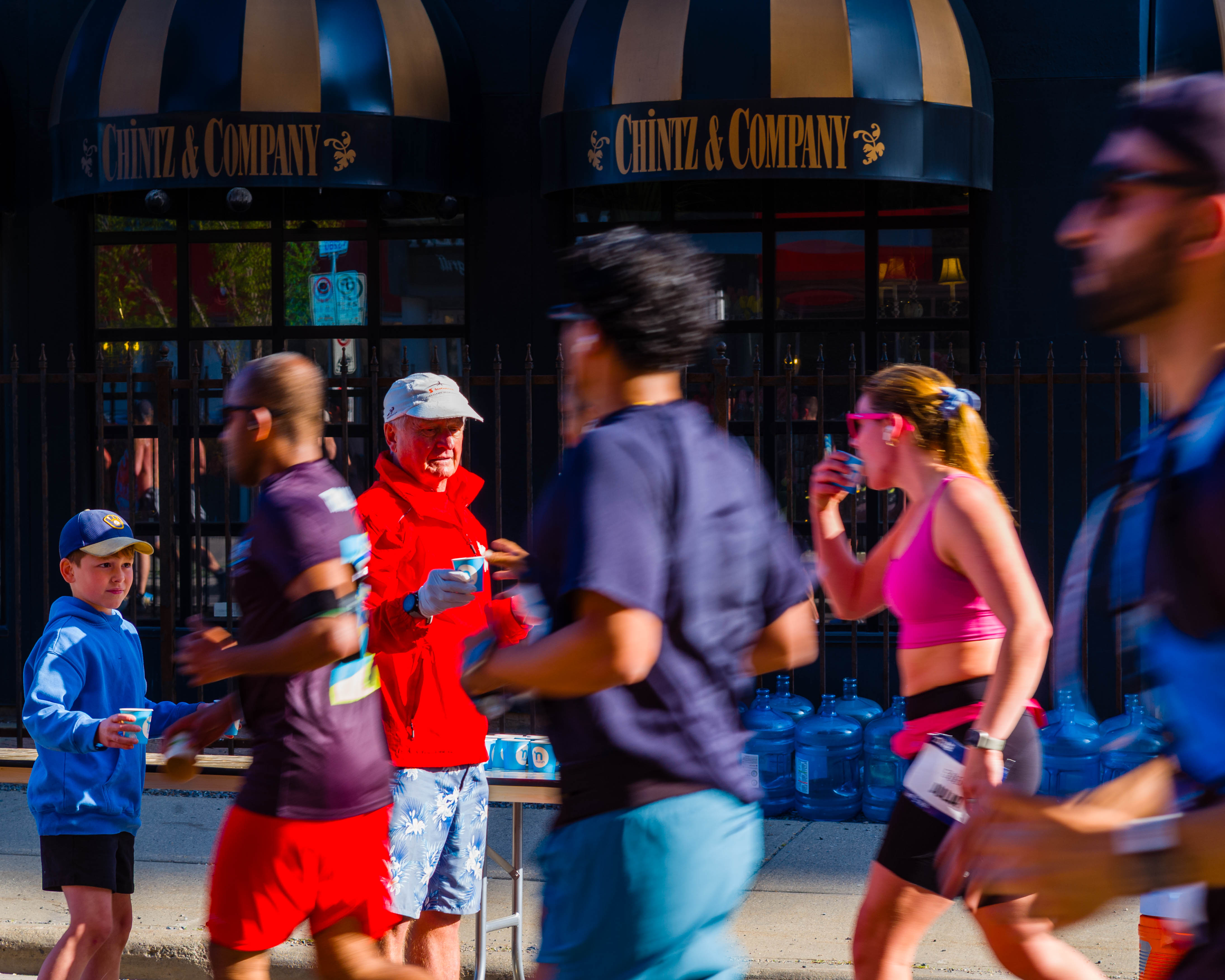
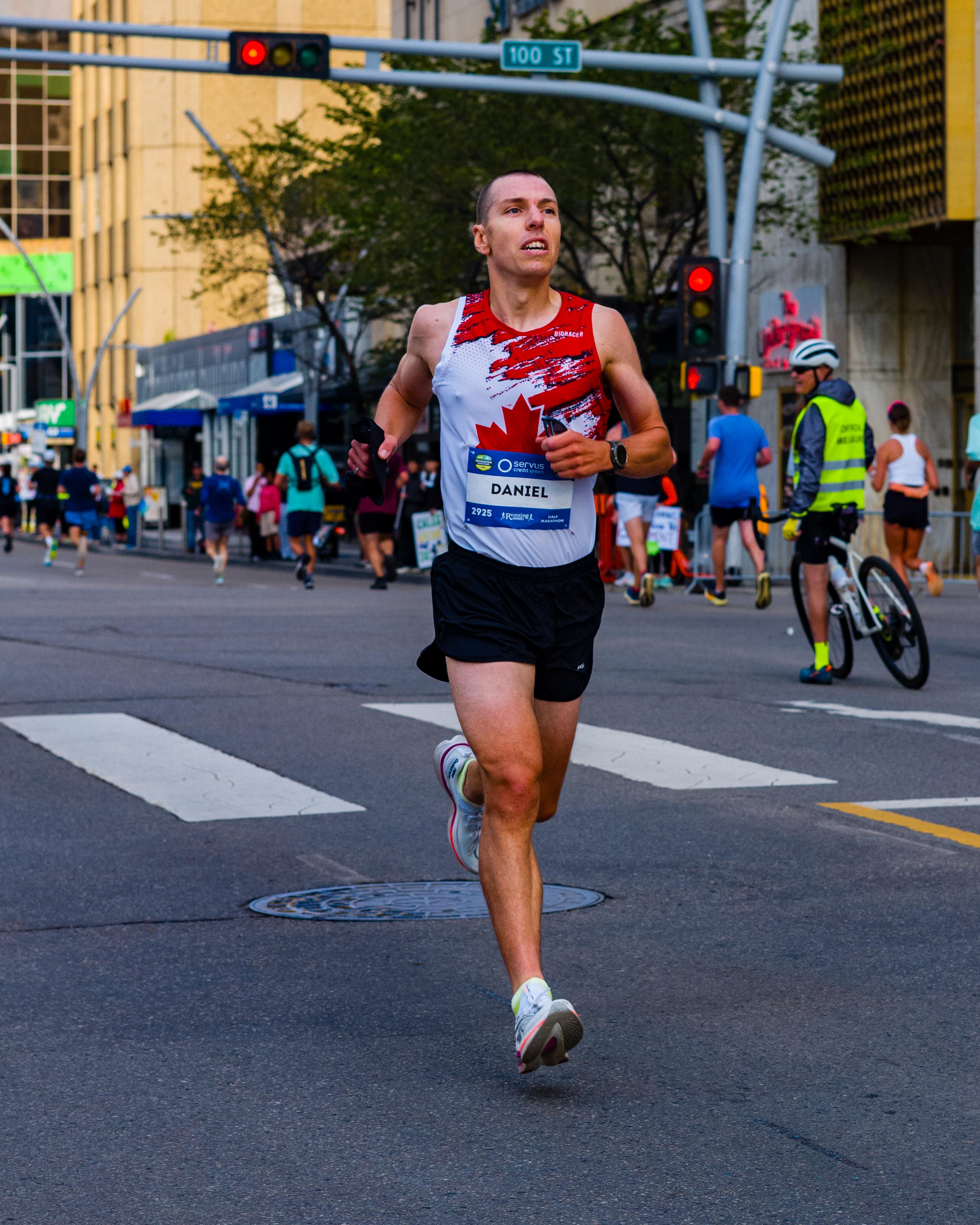
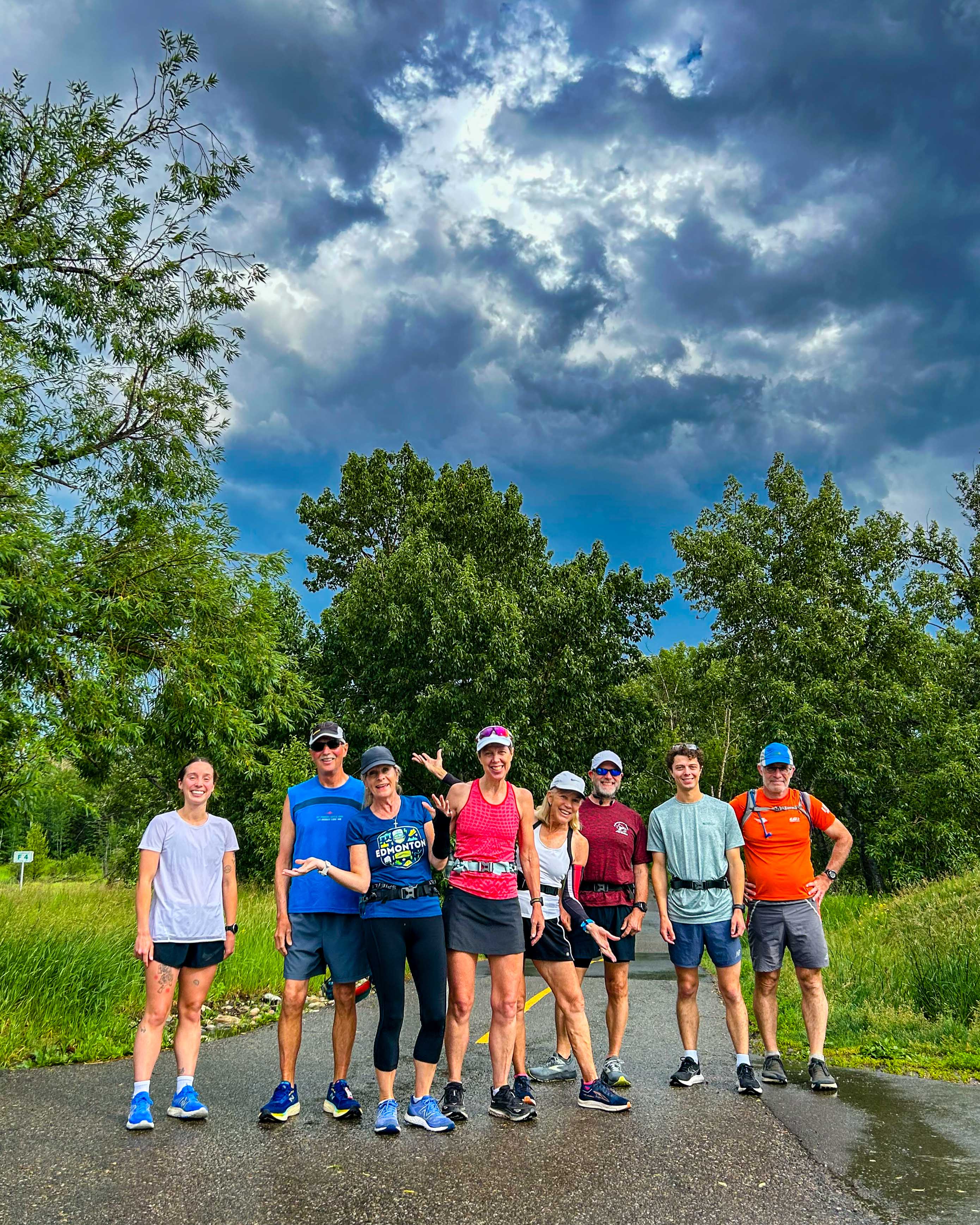
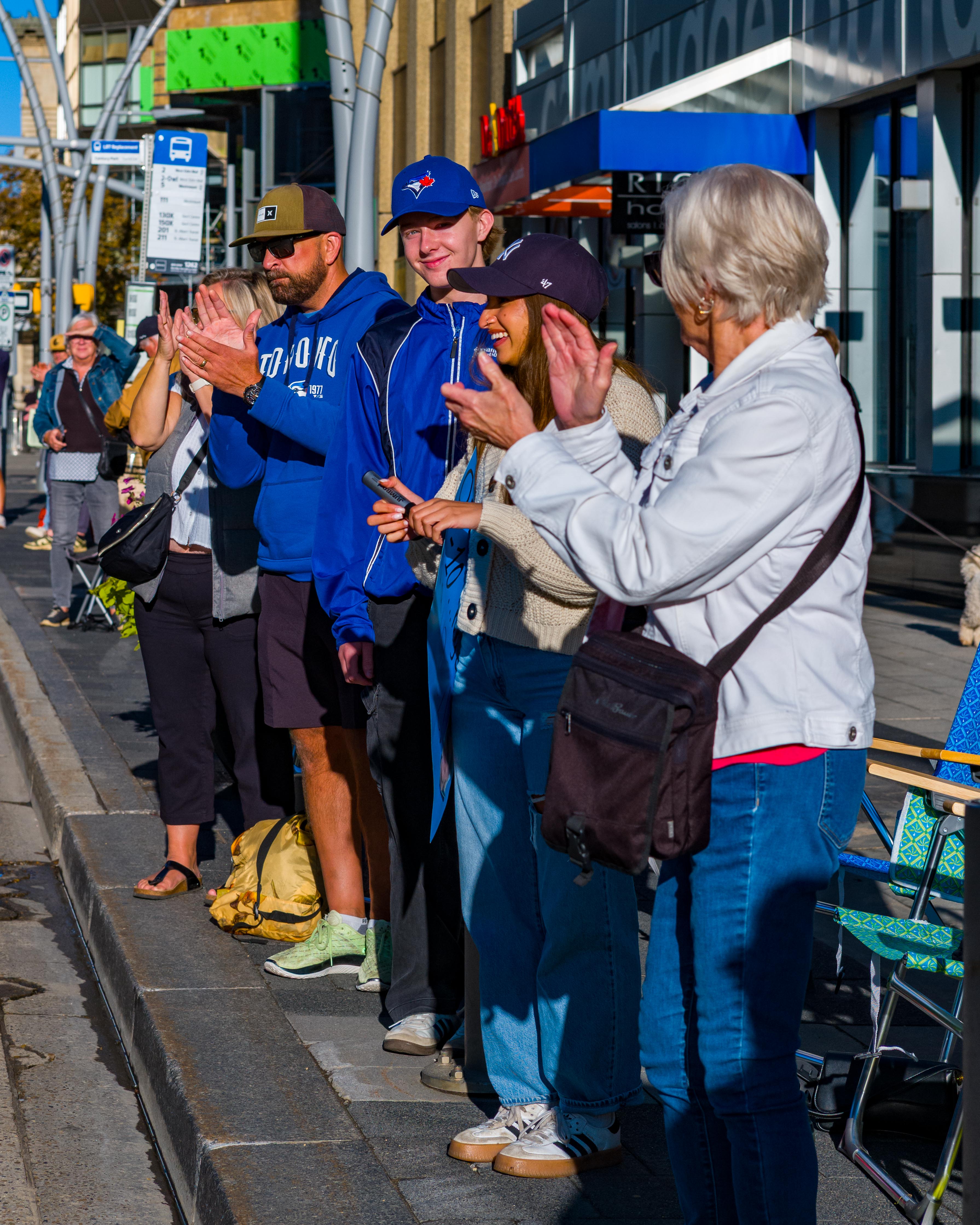
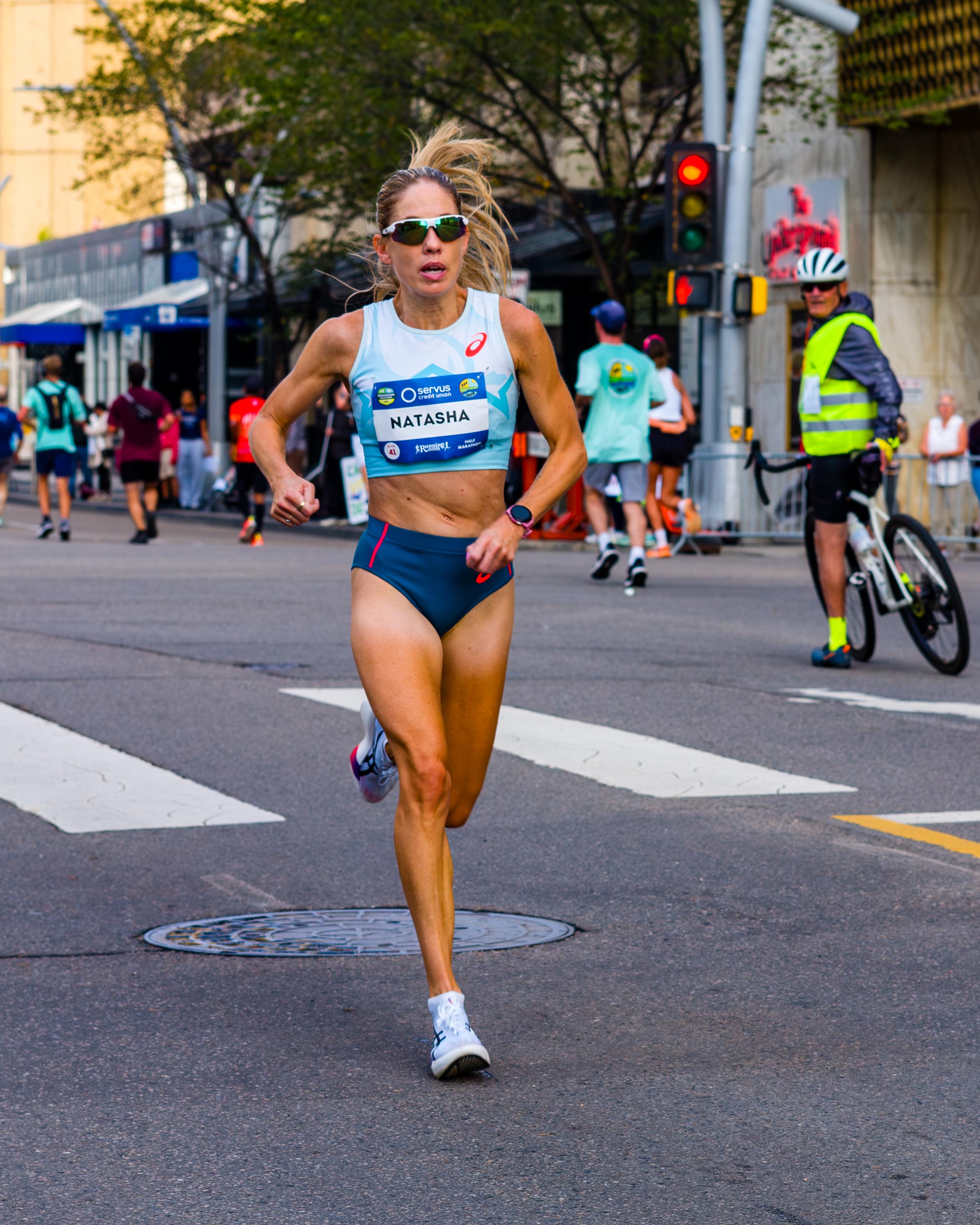
My days of preparing for and executing goal races are over, but I will never tire of being around runners. In 2025, I had plenty of opportunities to catch racing action in Alberta; cheer on friends and teammates; meet some very talented athletes; do some volunteering; and, of course, snap some memorable photographs. We also said goodbye to a dear friend. You can read about the major events on the calendar here, here, and here. Below is a small sample of my favourite running pictures from 2025:

Copyright for all photographs is mine.

Strokes

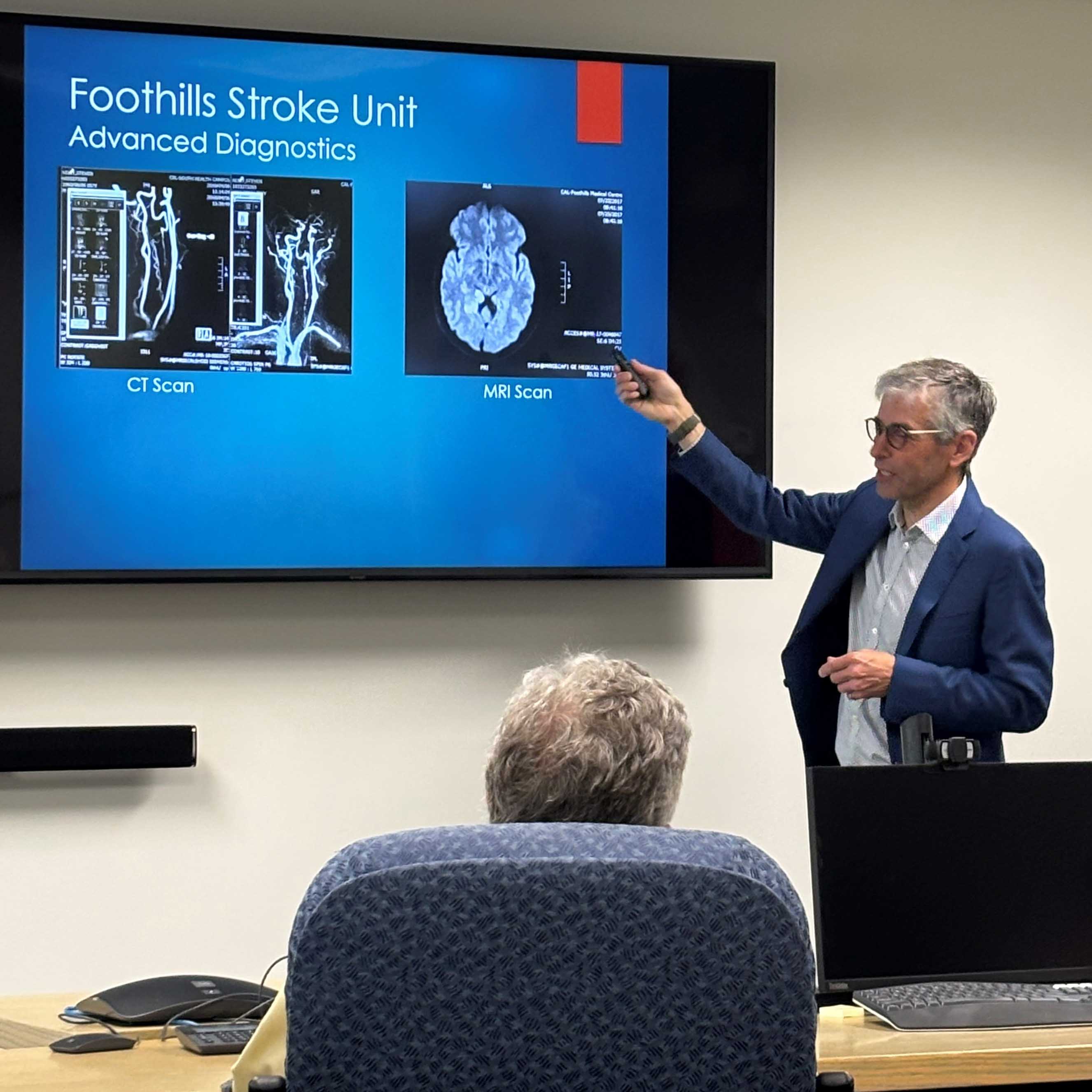
When I started on the path of self-publishing a book, I knew almost nothing about the process. However, I knew I wanted to share what I had learned about strokes, which are typically the fourth leading cause of death in Canada. And I wanted to give back in whatever ways I could, to support the essential work being done every day at the Foothills Stroke Unit and the University of Calgary.

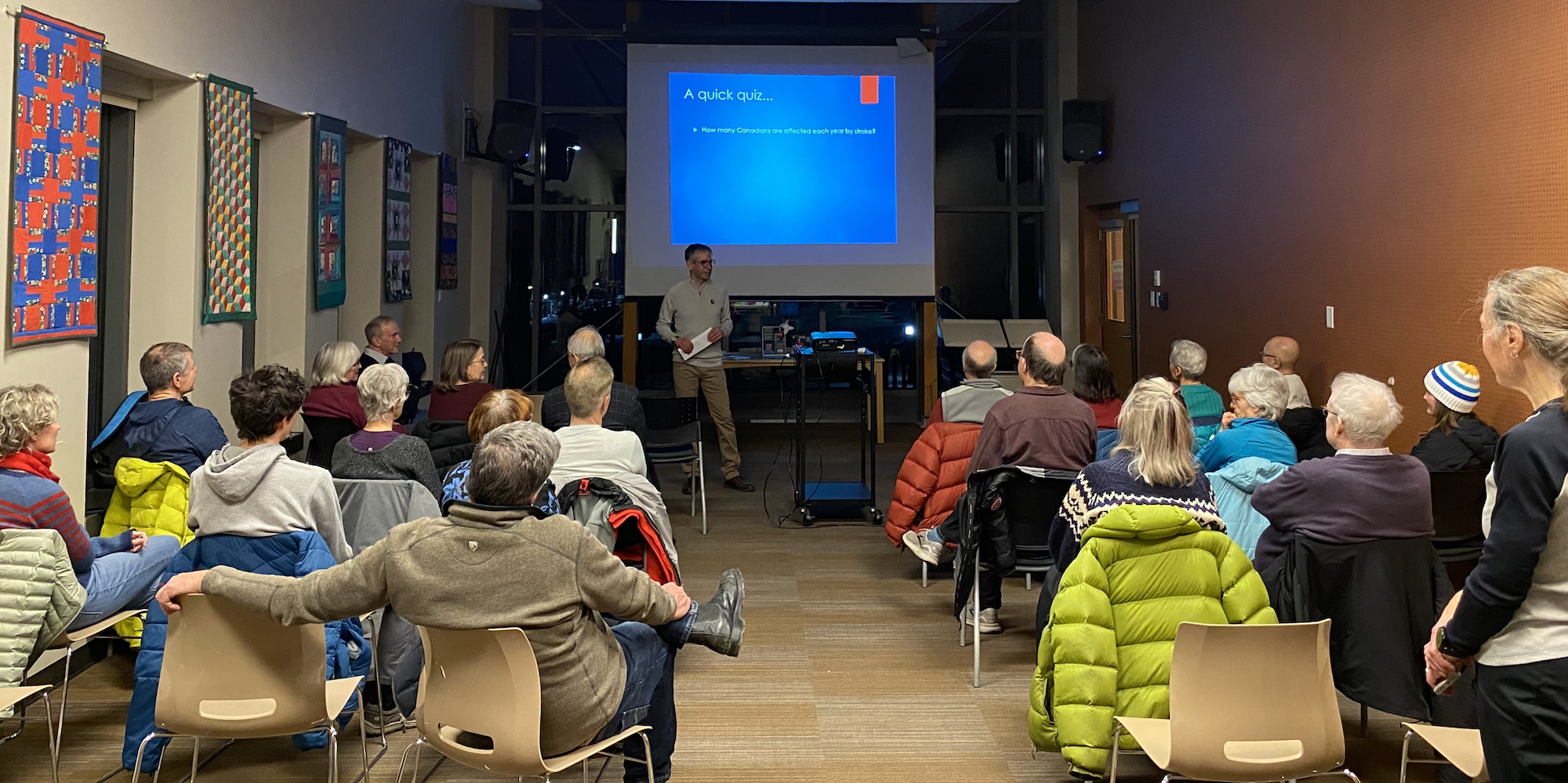
I was fortunate last year to have had several opportunities to tell my story, as written in Stroke of Luck. It’s extremely gratifying to share my key messages: the importance of an active lifestyle, awareness of the full range of stroke symptoms, and recognition of (and support for) the world-class stroke care and research being done at Foothills.

Naming everyone who made these events possible would be difficult. I appreciate the help of the Calgary Health Foundation to ensure that funds raised go where they should. Let me share a few photographs from events in Canmore, Edmonton, and Calgary:

I close my posts with the acronym BE FAST, but it seems timely to remind my readers just what this small and powerful phrase means:

If you or someone you care about is experiencing any of the symptoms of stroke, don’t hesitate—call 9-1-1 right away! If you want to learn more, do check out some of these other posts on the blog: here, here, and here.

Other Photography

Photography has become my constant companion, on my runs and walks, in good times and bad. Believe me, the last couple of years have brought more than enough bad news. Fortunately, memories of family and friends that we’ve lost are a blessing that will sustain us.

I still prefer to carry a dedicated camera, although I find myself slowly giving in to the convenience of digital. I admit that I shot less film in 2025 than I have in previous years, and that’s a shame. In any case, here are some of my memorable shots from 2025 (all digital, as it happens):

Regardless of the format, my approach to photography is almost completely intuitive. Recently, a guest on my blog wrote that calling myself an observer may not be accurate. But that’s okay. I never know what pictures I’m looking for when I head out the door. What I’ve learned is that I should trust my instincts—if I see something that catches my attention, I should react to it. I plan to keep that going.

Goals for 2026

With a bit of luck and planning, I think 2026 will be a good year. The first good omen was the Sheep River Parkrun on New Year’s Day in lovely Okotoks. It was a perfect start to the year, as I was surrounded by good friends and my son Daniel.

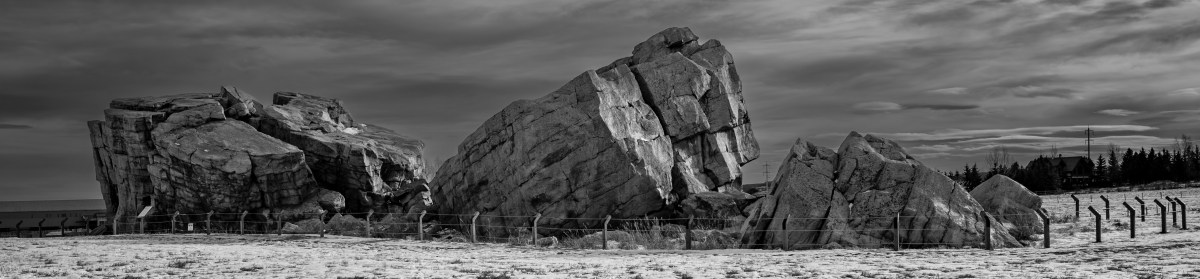
This morning, chinook clouds south of Calgary seemed to be calling to me. I drove in that direction and found myself back in Okotoks, at the “big rock” which gives the town its name. As I admired and photographed this impressive glacial erratic, it occurred to me that the rock is a symbol of my life—it’s not on the path that was expected, and it sits in pieces. I take solace that, like the rock, I have survived. It’s a fitting picture for the top of this post.

As I quietly walked around the famous rock, I thought about topics for future articles. One idea I have is a series of photo runs in my favourite Southern Alberta towns, including more shots on film. I think it will be a wonderful way to explore the history and culture of our province, while (more or less) staying in shape. So look for that, as well as more of my favourite photographs from life, and of course, news on stroke research and prevention.

I hope you’ll check in often. As ever, be well and BE FAST!
On Running Streaks

A running streak is pretty much what it sounds like—run every day until you can’t. And while it’s up to each runner to set their own parameters, the Streak Runners International, Inc. and the United States Running Streak Association, Inc. (yes, there is a governing body for this activity) have set out some helpful guidelines. Here’s a quote from the SRI/USRSA website:

The official definition of a running streak, as adopted by the Streak Runners International, Inc., and United States Running Streak Association, Inc., is to run at least one mile (1.61 kilometers) within each calendar day. Running may occur on either the roads, a track, over hill and dale, or on a treadmill.

-SRI/USRSA website

So that’s it. Sounds simple enough, right? The longest active run streak, as reported recently in Canadian Running, belongs to Jim Pearson of Marysville, WA. As of September 24, 2025, he has run for 20,310 consecutive days. Over that time—more than 55 years—Pearson has run 305,000 kilometres. Now that’s impressive!
Is a running streak a good idea?

As I wrote in my memoir, Stroke of Luck, I’ve never bought into the idea that runners, even highly competitive runners, need to run every day. Of course, regular exercise is hugely beneficial, and running streaks are as consistent as you can get. So, the routine of getting out the door every day will pay dividends in overall health and cardiovascular fitness. From my own experience, regular running seems to increase resistance to seasonal bugs. It may reduce susceptibility to injuries (or it may not). And perhaps most important—streaking instills a feeling of mental toughness, given all the challenges that must be overcome to keep one going.

But there are downsides. The most obvious is that sometimes, when we are injured or feeling under the weather, the best thing we should do is rest. Forcing ourselves out the door, just to check a box and continue a streak, may be making a bad situation worse.

Although streaks aren’t really my thing, I will admit to a certain fascination with runners who can and do carry on long streaks. My brother Paul completed a decades-long streak, as did my old running partner in Calgary, Rick Webb. Rick used to regale me with stories about how he kept his streak alive. One of my heroes is the late Ron Hill, a fascinating man, a legendary runner, and a running streaker. I wrote this in Stroke of Luck:

“… I appreciate what it takes to carry on a running streak. I have known a number of streakers through the years. This evolutionary branch of the running population is an eccentric lot. Most serious runners of the last few decades would have heard of Ron Hill, the great British marathoner and Olympian, whose 52-year streak—which ended in 2017—is legendary. To running streakers, Ron Hill is a patron saint, a person who is universally admired and spoken of with great reverence. He died in 2021.”

Strides Run Streak, 2025 edition

With that background, there should be no surprise that I’ve once again taken on the challenge of the annual Strides Run Streak (SRS). The challenge is simple: run at least one mile every day in December. Kudos to Jeremy and his team at Strides for giving us a manageable goal, one that will help keep us motivated over the holidays.

I’ve been a regular participant in the SRS. In fact, there is a connection between the SRS and my stroke story, which goes all the way back to 2012. I explained in Stroke of Luck how I extended the 2012 streak from a month-long event into one that lasted more than four years. This became my longest personal running streak, even though it paled in comparison to Hill or Pearson. I joked in the book that I might be able to make a case to the RSI/USRSA for the most interesting END to a running streak.

I’ll leave my story there, but if you’d like to know how things turned out, why not get a copy of my book? In doing so, you’ll be supporting a great cause—the stroke unit at the Foothills Medical Centre in Calgary. The book would be a great gift for the runner on your Christmas list!
Now, as some of my followers on Strava will know, I give myself the added challenge of finding a worthy photo while I’m completing my daily run. Sometimes that is a bigger test than the running part, particularly with the days getting shorter and winter setting in. There aren’t many great photos taken on a treadmill!

So far in 2025, my commitment is strong, and the weather has been agreeable. There are a few hurdles, mostly a nagging soreness in my right Achilles tendon. Fortunately, that seems to loosen up after a couple of kilometres. Worse for me is that my training partner is still sidelined with a sore hip. That means my running is mostly solo.

Enough words. Here are some images from the 2025 SRS, which started while we were in Toronto. It’s obviously a work in progress, and I hope to send out another batch of pictures by month-end:

Copyright for all images is mine.

While it’s always nice to capture the festive spirit, I don’t consider it essential. As I’ve said before, my goal is to find images that transport me back to that time and place. I like visiting different neighbourhoods during the month. For me, a good photo run is thrilling; a way of adding meaning to my runs. It doesn’t replace the excitement of competition in a road race, but it’s sure better than nothing. And while there are no governing bodies for photo runs, I can recommend the Ricoh GR III—portable, capable, and durable. It’s been a constant companion on my outings.

Merry, Merry!

Wrapping Up

I hope you’re finding your own source of motivation at this time of year. While it’s easy to avoid going outside, especially when the temperature is -18c, as it is in Calgary today, I always feel better for having made the effort. So, whether it’s a month-long run streak, a walk with your dog, or a jog on a treadmill, I highly recommend a daily dose of activity. Having a camera with me is a reminder to keep things informal, and if I’m lucky, I’ll come home with a memento of the day.

Happy Holidays! And until next time, be well and BE FAST…

The Longview Photo Run

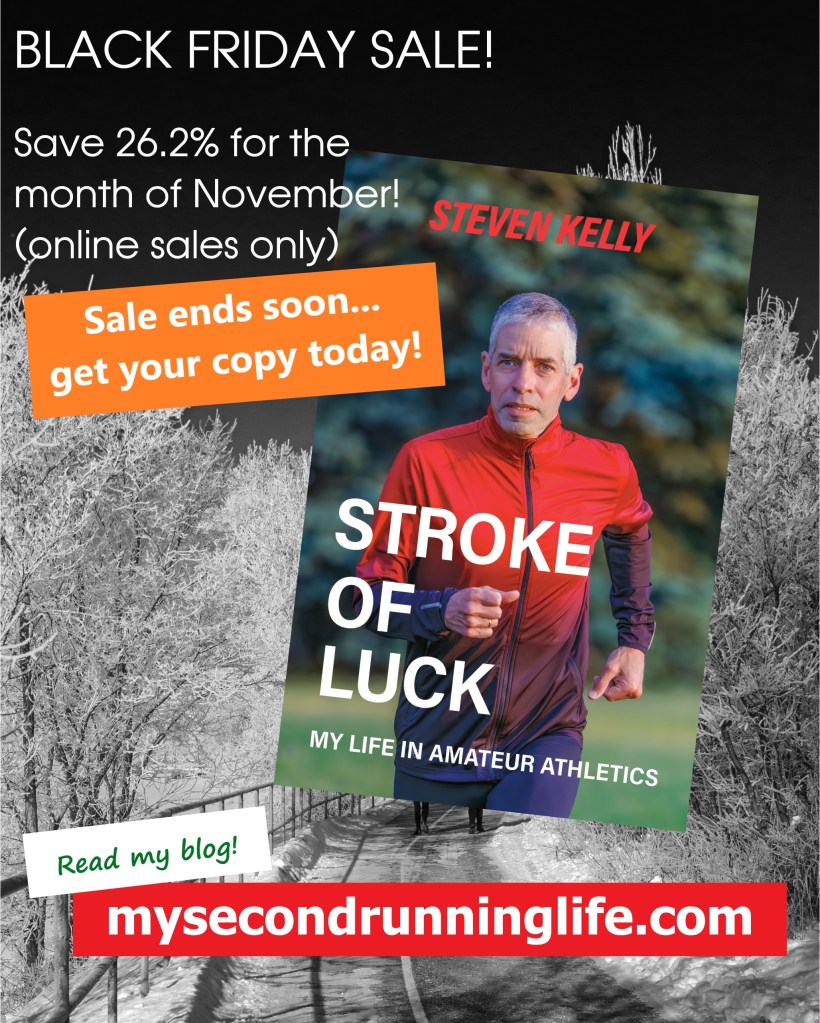
The Black Friday Sale ends soon!

Time is running out for an unbeatable deal on a running story you don’t want to miss!

Stroke of Luck is available on Amazon at a marathon-inspired 26.2 % discount—but only until the end of November.

Get your copy today!

Longview: A Short History

For as long as I’ve been in Calgary, the Village of Longview has been my idea of what makes Alberta special. It’s a quiet village in an idyllic setting. The views of the foothills to the west are spectacular, and that’s because Longview sits just outside Kananaskis Country. Highway 22 (the Cowboy Trail) is the town’s main street. I’ve often told Deb that I want to move to a ranch in Longview, although I wouldn’t have a clue what to do once I actually got there. No matter.

I learned about Longview’s fascinating history when I did my research for this piece. The village is named for brothers Thomas and Oliver Long, who homesteaded in the area at the beginning of the 20th century. Given its location, Longview has a long connection with farming and ranching. When oil was discovered in nearby Turner Valley in the late 1930s, Longview boomed—so much so that it earned the nickname Little New York. Of course, booms tend to go bust, and that’s what happened a few years later. For most of the last 60 years, the village’s population has been around 300.  

One of Longview’s claims to fame is that the annual Kananaskis 100 Mile Relay starts there, early on a Saturday morning in late June, just after the Highwood Pass opens up. There are some fond memories there, I can tell you! I wrote about the race earlier this year—check it out here.

And if anyone needs another reason to visit Longview, here’s one: Flic Film is a business that caters to those of us who can’t quite give up film photography. I used to have a convenient option for film development near my house, until “my guy”—that was Paul Stack—wrapped up his business and retired to Nova Scotia. I’ve been wondering what to do with my film since then, so I was thrilled to learn about Flic Film. I met Dalton on my visit to Longview, and left him with my order.

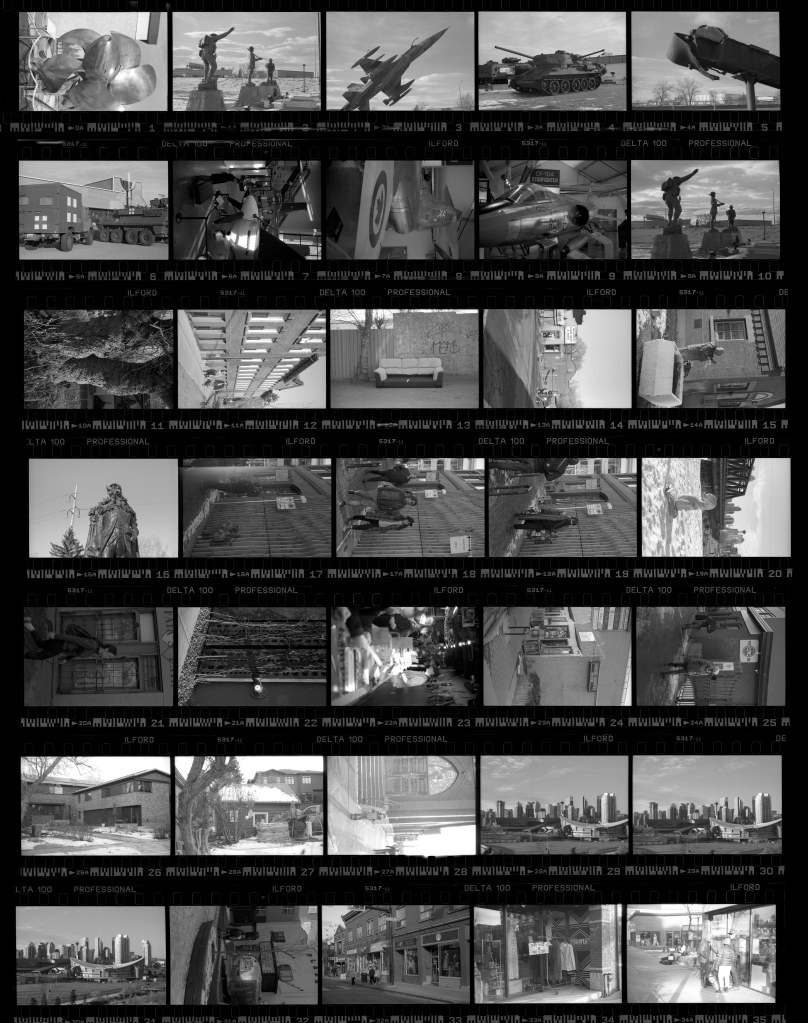
Feeling slightly nostalgic, here’s a contact sheet, which (if you’ve never seen one) is a handy way to identify any “keepers” on a roll of film. There’s something real about flipping through a binder of negatives.

A Short Jog Through the Village

Since I knew I’d be back to pick up my negatives, I decided to add a short photo run through the village on my return visit. I already knew there would be a lot of interesting material along the main street (Morrison Street), like the iconic Twin Cities Hotel. When I’m faced with that situation on a photo run, I try to get a few kilometres under my belt so I’m not starting and stopping too much.

Here’s my running route, courtesy of Garmin:

I did end up with a few worthwhile images, carrying the venerable (but now discontinued) Ricoh GR III. I learned a lesson, though. At this time of year, the sun sets quickly. If you see it, shoot it, because it might not be there a few minutes later!

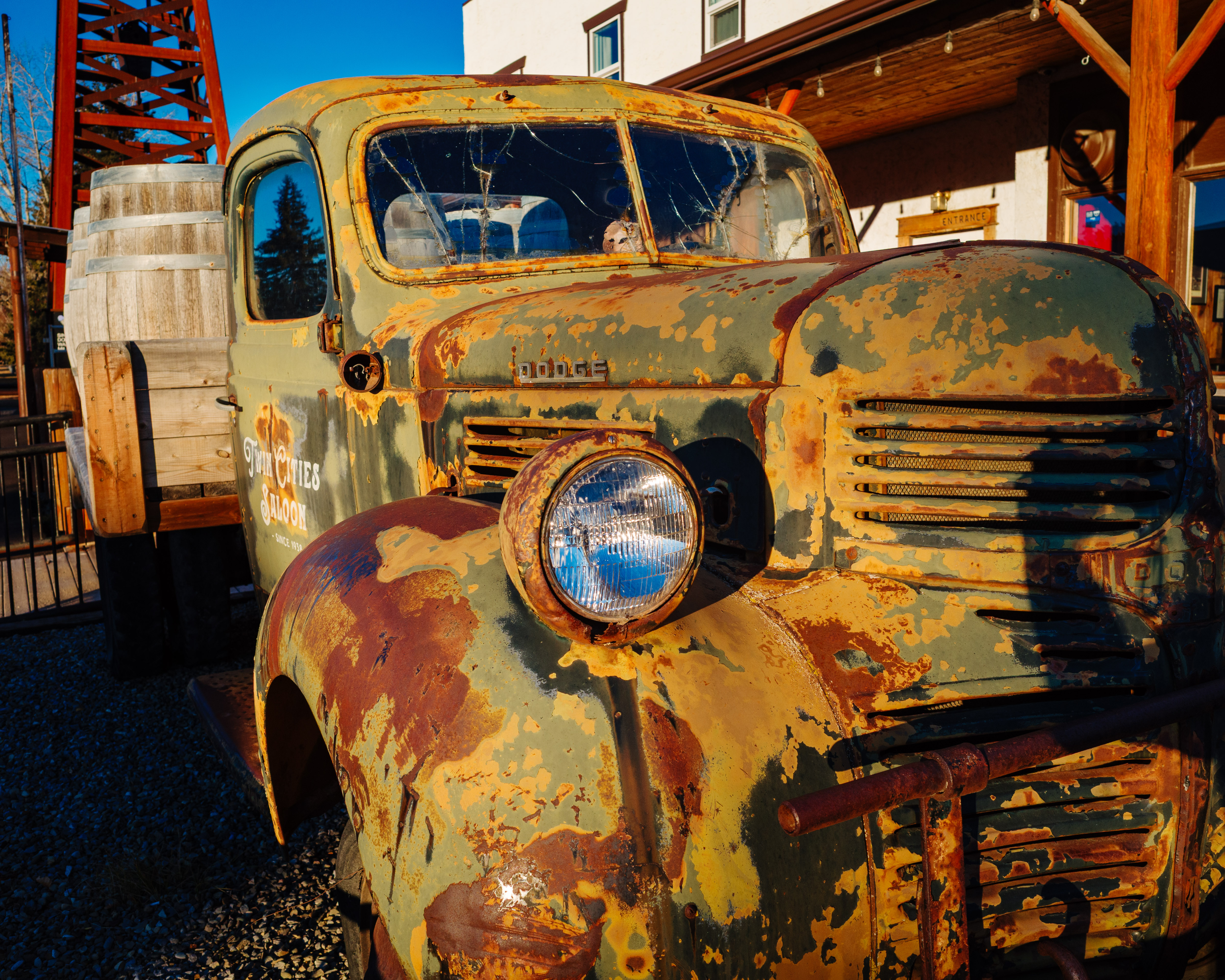
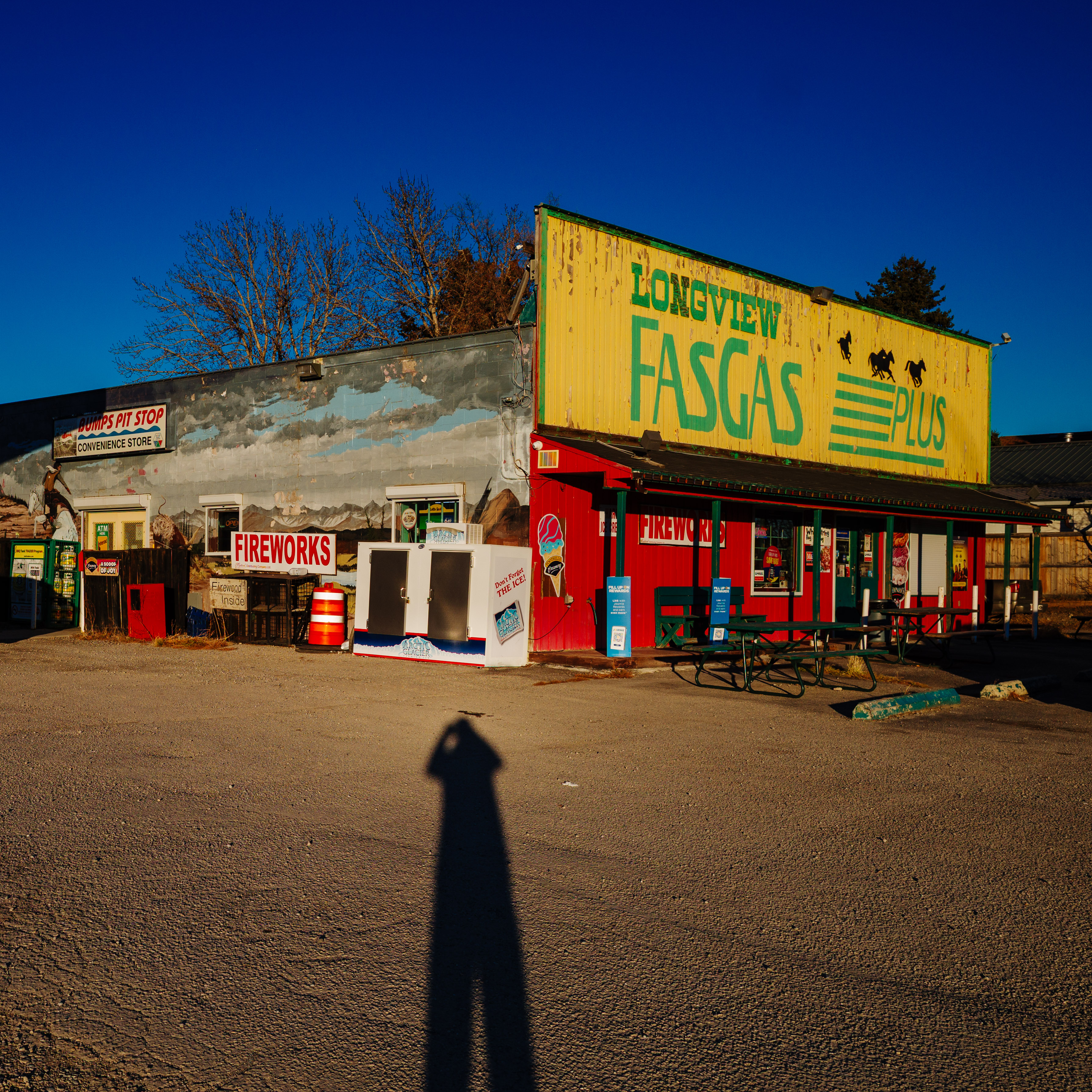
Enjoy these images (copyright is mine):

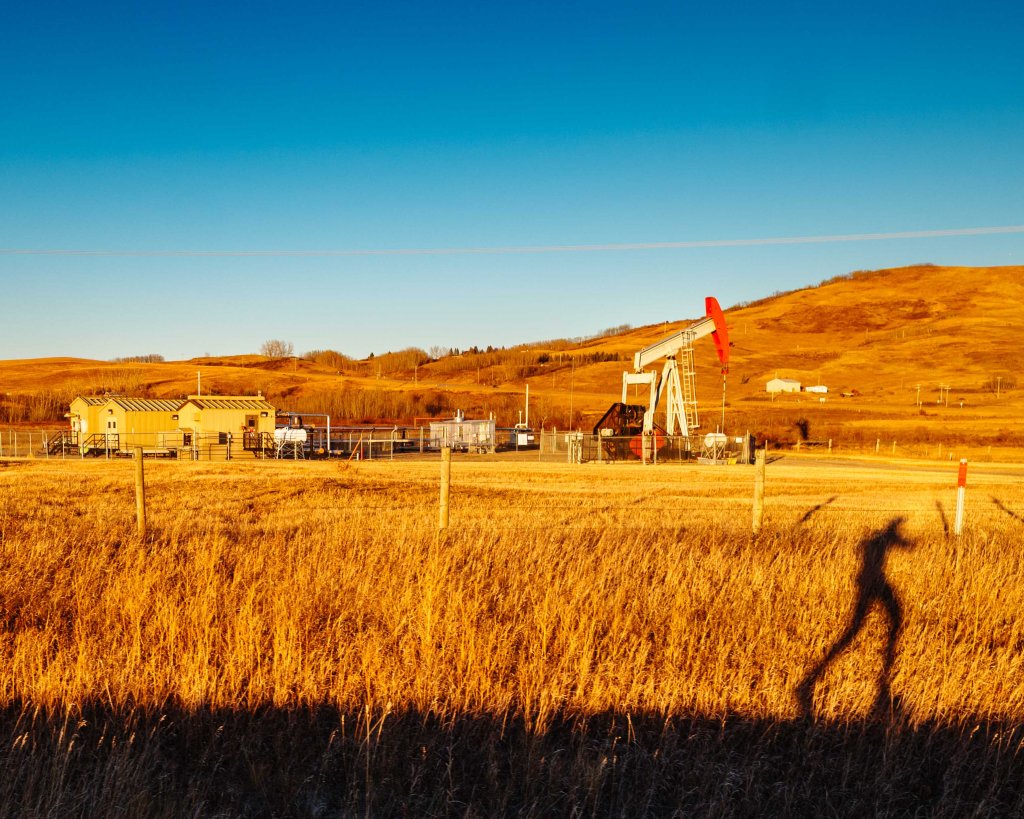
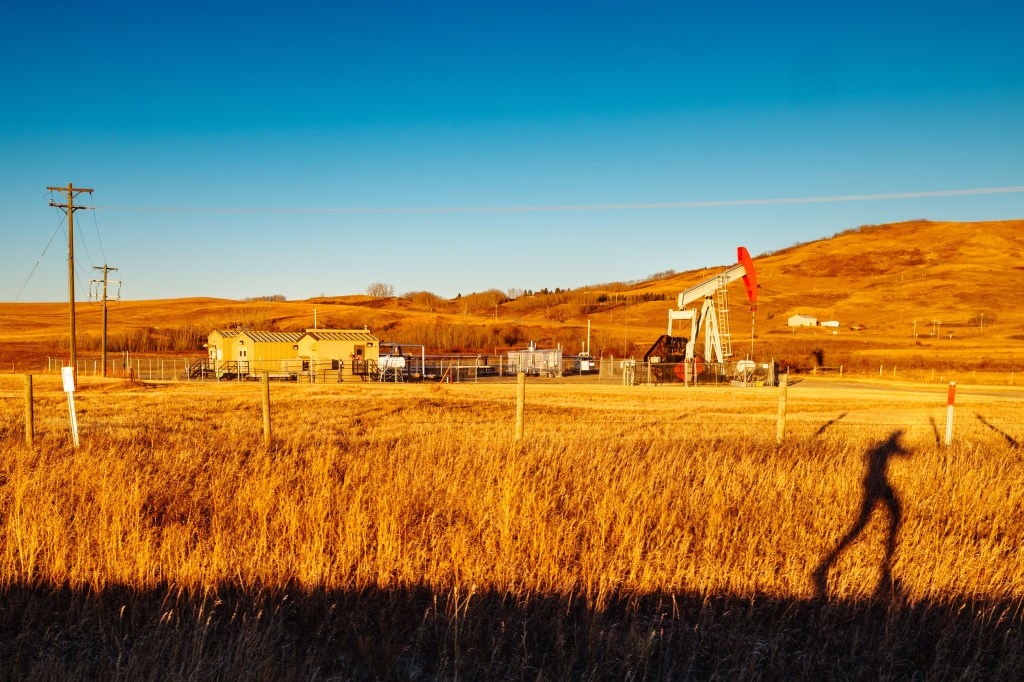
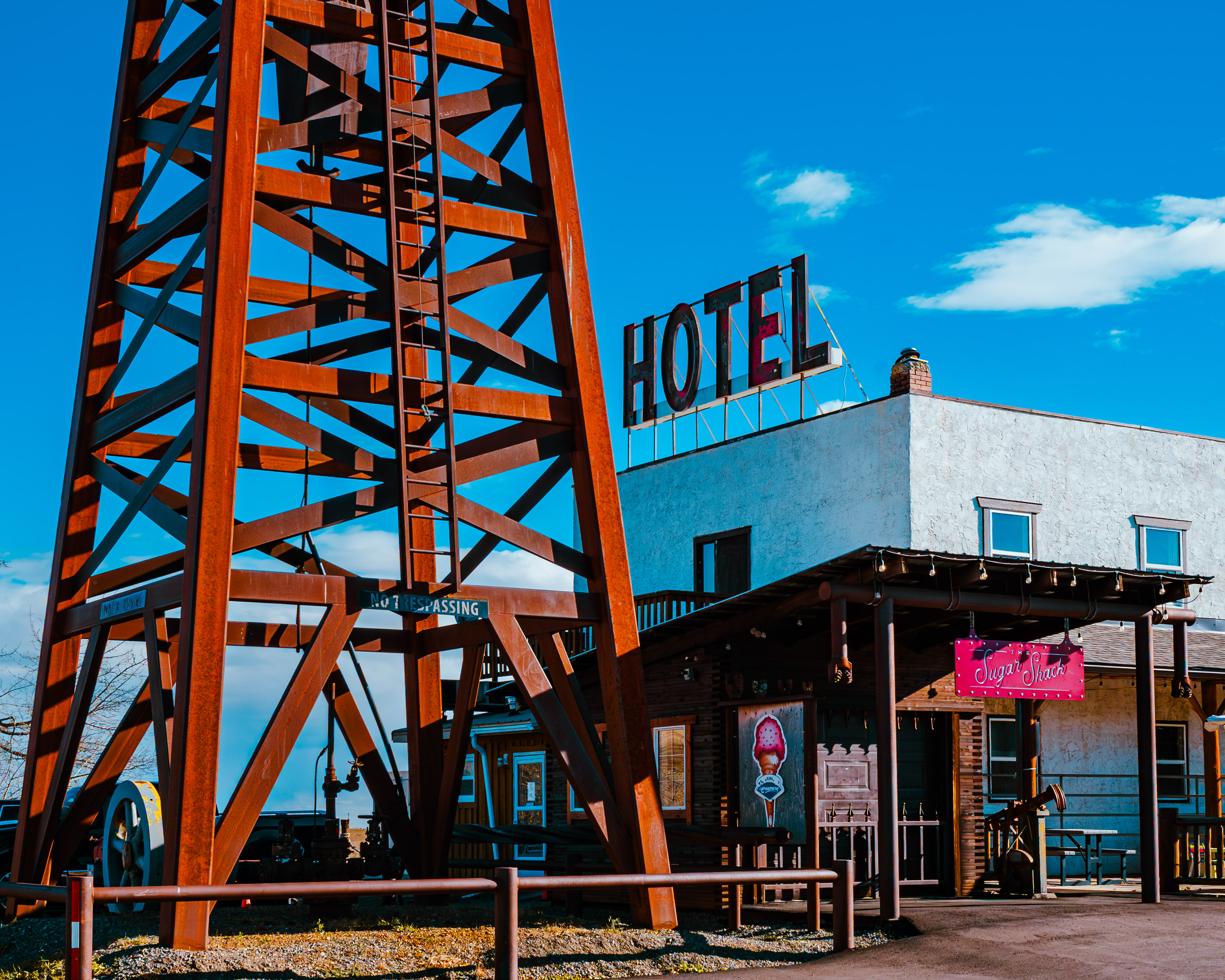
After an out-and-back run to the Highwood River at the south end of the village, including a decent hill, I headed out on Highway 541 towards K-Country. I was thinking about some of my past adventures on the relay. Running the first couple of kilometres was great, and being able to turn around was even better. Here’s a selfie, where I did my best imitation of the pump jack in the background.

Heading for Home

After I got home and started putting this piece together, I read about a bit of Alberta history that I was completely unaware of. A few kilometres north of Longview is a historic site marker, which I have driven by and wondered about, since there doesn’t seem to actually be anything there.

Well, it turns out to be a commemorative plaque and display for Little Chicago. Apparently, the boom that fueled growth in Longview led to another town springing up, just up the road. That’s where the Twin Cities Hotel got its name. The name Little Chicago was changed to Royalties, as it caused confusion with, you know, that other Chicago. At the peak in the late 1930s, the population of the two towns was about 3,200. As things turned sour economically, all traces of Little Chicago disappeared, except for the plaque that tells the story. I’ll definitely stop for a look—and a photo—on my next film drop.

Until next time, be well and BE FAST!