Stroke News Update

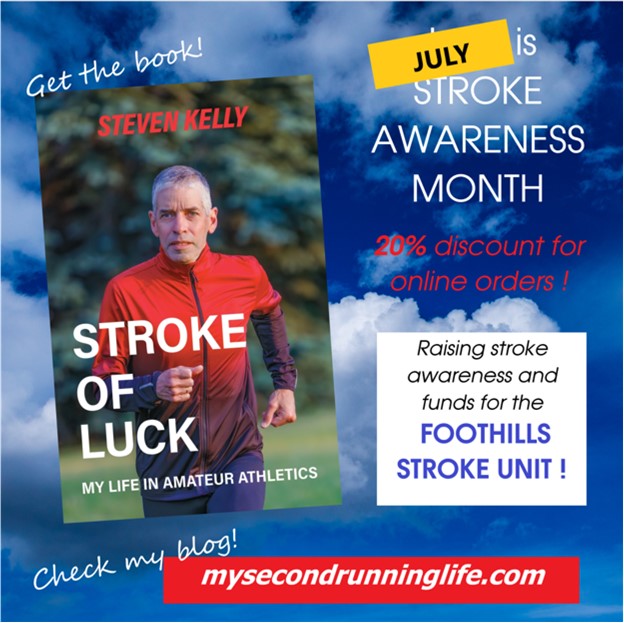
June is Stroke Awareness Month in Canada. I suppose I should say “was”. Due to a busy schedule, I’m late getting to some important stroke news. First things first—I’ve reduced prices on Amazon for print and Kindle copies of Stroke of Luck. Order a copy now and save 20 percent! The sale will run all month.

A Visit with Calgary Health Foundation

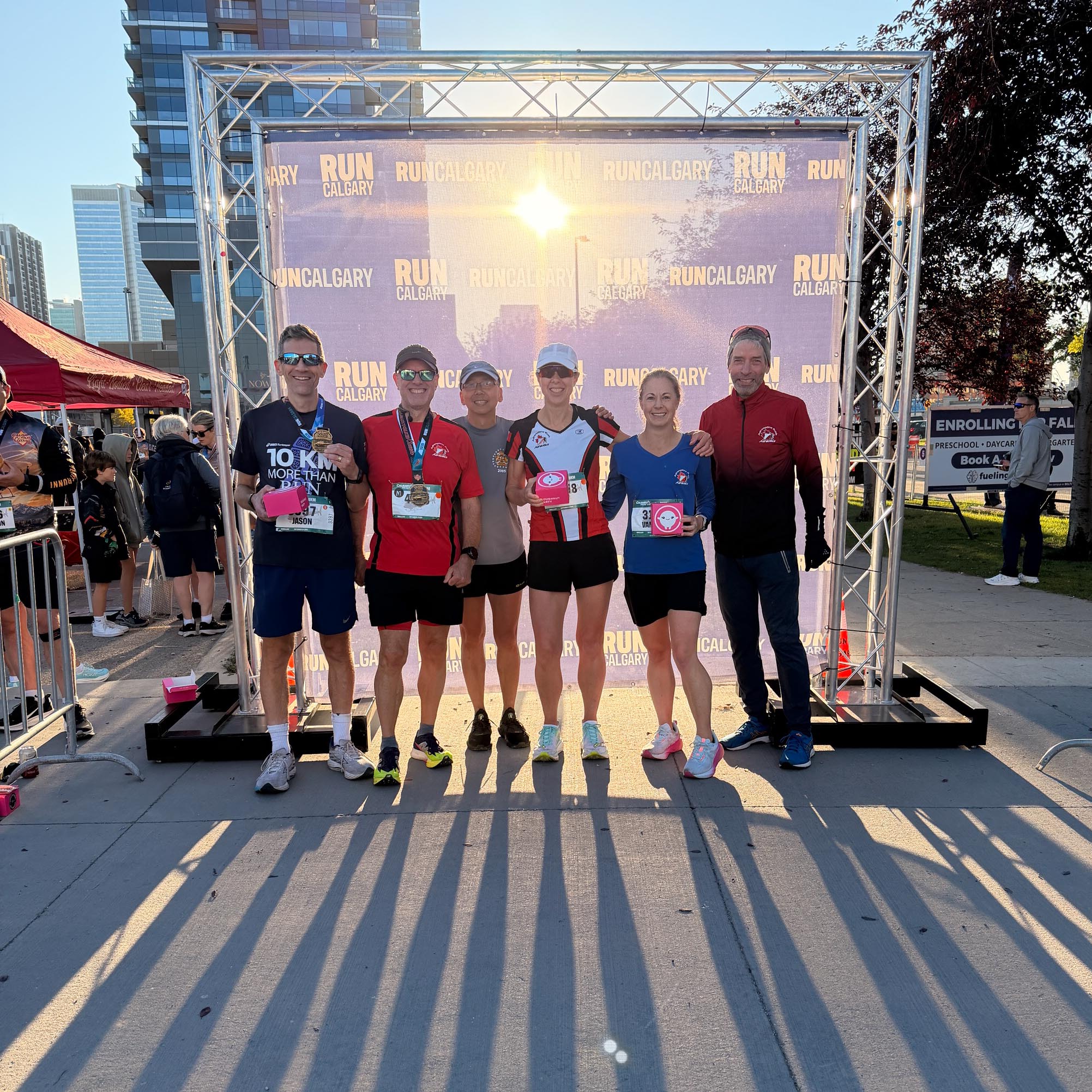
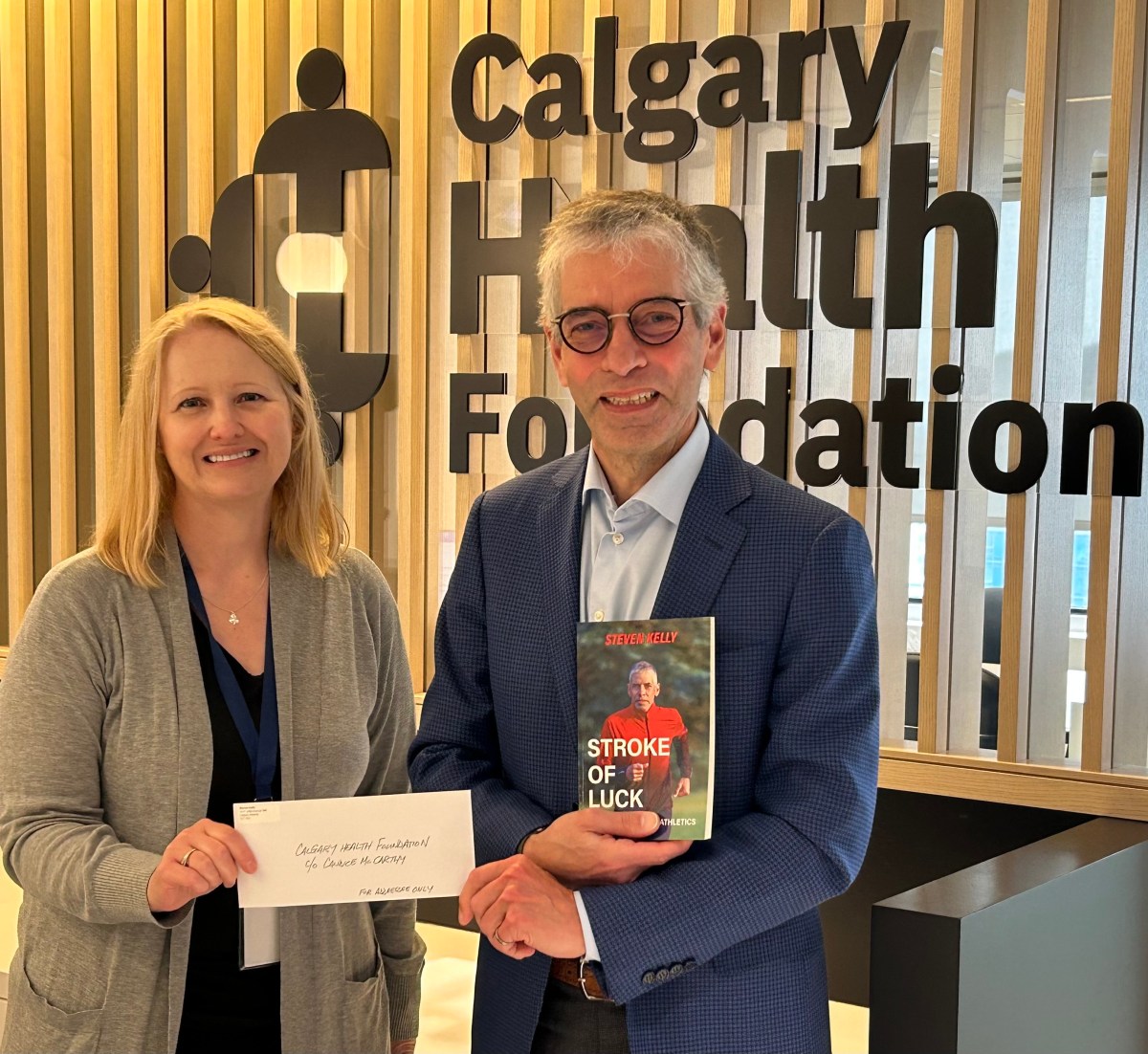
Earlier this week, I dropped into the  (new) Calgary Health Foundation  office to present CHF with a donation cheque on behalf of everyone who has supported me and my  Stroke of Luck book project.

From the low point of my stroke recovery, writing a book was the furthest thing from my mind. I was indebted to the doctors, nurses and staff at the Foothills Medical Centre, Unit 100 (“the Stroke Unit“) for their care during and after my time in hospital. It occurred to me that crafting my story into a book might be a way for me to help ensure continuation of their invaluable work.

Since my book was published, I’ve committed to pool sales proceeds with any direct donations I receive (and as much of my own resources as I can spare). This year, with help from Candice McCarthy (Philanthropy Advisor), these funds will go to the Clinical Neurosciences team. See the featured image, above.

This is an opportunity for me to thank all who have bought the book or have contributed to the cause. Your support is greatly appreciated! By the way, I love hearing from readers, so don’t hesitate to reach out.

Focus on Tenecteplase, clot busting drug

In this piece, I look at one of the many breakthroughs pioneered by the neurosciences team at the University of Calgary: the use of Tenecteplase for treating acute ischemic stroke. You can read an article about Dr. Bijoy Menon and the team behind this project here. Dr. Menon is Section Head of the Neurology Department, and one of the heroes in my personal stroke story.

Tenecteplase is a “clot busting drug” that has revolutionized stroke treatment. When I did more reading on the subject, I uncovered a fascinating story, one that highlights many advances in biomedical engineering.

Warning: medical jargon ahead—but please bear with me!

Let me start with a brief overview of clot formation (hemostasis) and clot busting (fibrinolysis), two interrelated processes that are essential to human life. When we suffer damage to a blood vessel, clots form in three steps—constriction of the blood vessel; formation of a platelet plug at the site; and coagulation. Coagulation is a complex chain reaction, one that would take a whole article to explain (if I could). I’ll skip all the details, except one: the conversion of the soluble protein fibrinogen in the bloodstream into insoluble strands called fibrin. These strands weave together to close the wound.

Even as a clot is forming, the body begins a process that will allow the clot to break up in due course. It does this by binding an enzyme called plasminogen into the fibrin mesh. Damaged blood vessels release a protein, tissue plasminogen activator (tPA), which converts trapped plasminogen into its active form, called plasmin. Plasmin acts like microscopic scissors, slicing the fibrin mesh into small, soluble fragments that can be absorbed by the body.

You may ask, what does this have to do with strokes? Well…

When plaque that has built up in an artery is released into the bloodstream, it can restrict blood flow to the brain by blocking an artery. This is the definition of an ischemic stroke. The structure of these arterial clots—dense and highly cross-linked with plaque—is resistant to the body’s natural clot-busting process. Essentially, these clots outpace the body’s natural tPA response. That’s why doctors administer artificial clot-busting drugs, which are synthetic forms of tPA, to activate plasminogen and clear the blocked artery.

The development of synthetic tPA is a biomedical success story. The first generation of recombinant tPA (called Alteplase) was initially used in the 1980s for treating heart attacks. It was later expanded for use in ischemic strokes. A second-generation, bioengineered variant called Tenecteplase followed in 2000—it has many advantages over earlier drugs. Dr. Menon’s study led to Tenecteplase being approved for stroke treatment in 2025.

As a chemical engineer, I find two aspects of this story remarkable. First, is the targeted increase in efficiency of the clot busting process. We can think of natural tPA as an inefficient catalyst. While it initiates clot busting, it circulates broadly and it is quickly neutralized in the body. (That’s as it should be, otherwise we’d be at constant risk of bleeding to death.) What scientists have done is utilize recombinant DNA technology to make highly specific molecular modifications and create a catalyst that’s more efficient in targeting the fibrin mesh that holds clots together. In fact, Tenecteplase has a 15-fold increase in  fibrin specificity compared to older drugs. This dramatically lowers the risk of severe bleeding complications.

Second, the molecular modifications drastically improve  reaction kinetics. Tenecteplase is resistant to the body’s normal processes that would otherwise shut down its clot-busting action. That means it stays in the bloodstream longer, and unlike older drugs, it doesn’t require a difficult, continuous intravenous infusion. Instead, it can be administered in a rapid, highly effective single injection, often by first responders. As we know, minutes matter when it comes to stroke treatment.

Tenecteplase represents the culmination of decades of progress in medical science. It has quickly become the standard clot-busting treatment for acute ischemic strokes. As a result, lives are being saved every day. And for that, we can be thankful for the world-class research being done right here in Calgary!

Reminder: Stroke Symptoms

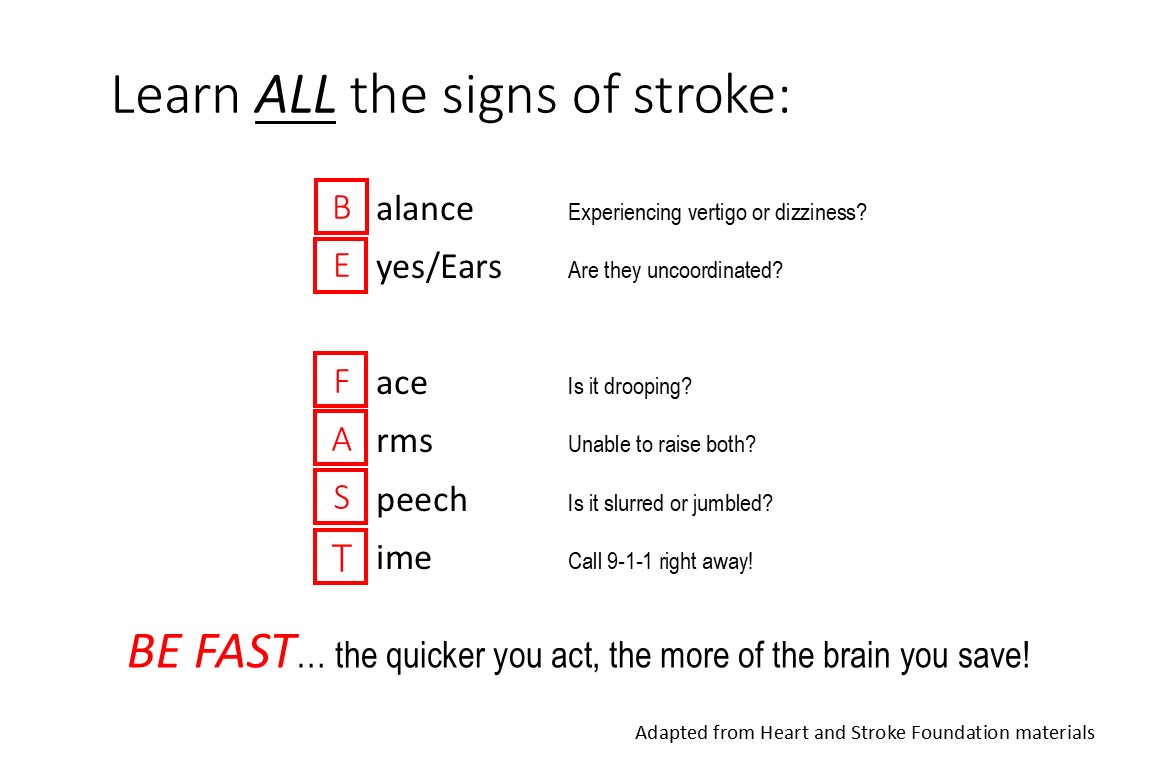
I usually close my posts with the acronym  BE FAST, but it seems timely to remind readers just what this small and powerful phrase means. It’s a handy acronym to remember ALL the signs of stroke:

If you or someone you care about is experiencing  any  of these symptoms of stroke, don’t hesitate—call  9-1-1  right away! If you want to learn more, do check out some of these other posts on the blog:  here,  here, and  here.

Until next time, be well and BE FAST!
The Solo Workout

I stand at the railing of the empty grandstand. Sunlight glints off metal bleachers. I look out over the broad, blue expanse—featureless, if not for the sun, still low and benign at this hour.

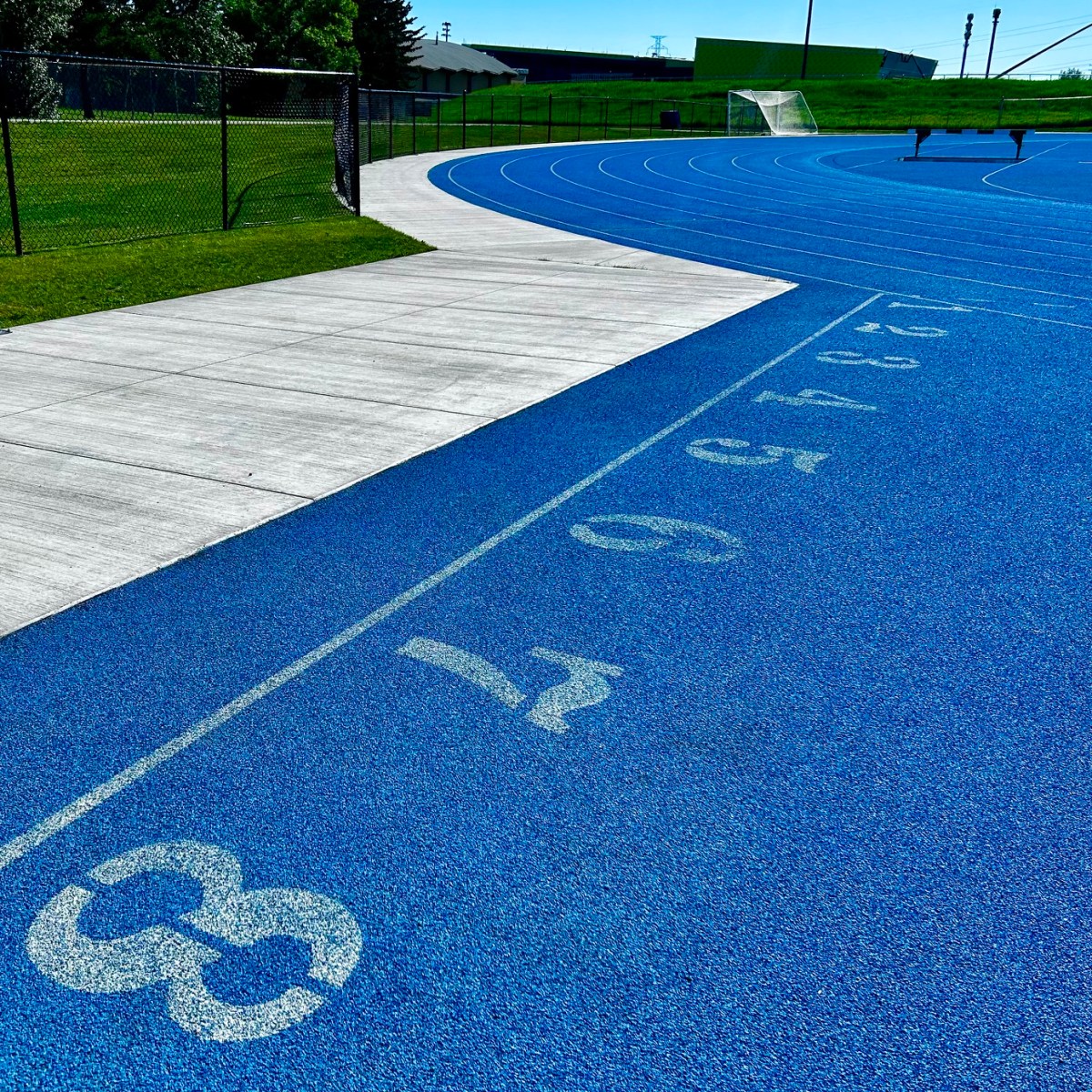
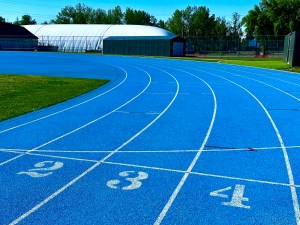
Below me is the track, in brilliant blue to mimic the sky. Four hundred metres of geometric precision. Monumental, even when dwarfed by the sky above it. But not today. Today, the track is an old friend.

I study the familiar painted lines—patterns of white that mark hallowed ground. They reduce the complex world into eight simple ovals. Here and there, marks of yellow, red and green; arrows and distance markers; ready for an unknown future contest.

Stepping onto the pebbled surface, I begin the slow build into a crescendo of physical effort. Pattern is distilled to instinct after decades of repetition. The routine is part drama, part choreography—warmup to workout to cooldown.

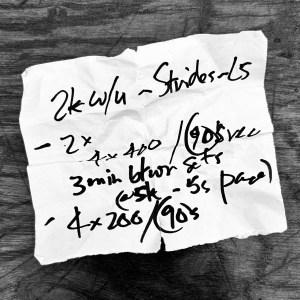
I ease into it, clearing the rust, trusting the movement. Strides, leg swings. Then I find the instructions, scribbled on a scrap of paper and tucked into the pocket of my shorts. One last check to memorize today’s variation, a new puzzle to solve. My only teammate is a Timex Ironman, its buttons worn nearly unreadable after so many sessions, so many seasons.

I take a sip of water, then step to the mark and go. I visualize ideal form and accept that I will fall short. Stay tight to the lane marker, feel the synthetic surface compress under my stride. Use the watch to find the pace, then hold it. One more repeat, then another, until the set is done.

Anticipation builds with each slow walk to the line. As ever, the quick rhythmic beat of my stride takes over—the surest antidote to pain and the only way to silence the inner critic. I count the 400s down. Four, three, two. Only one to go.  

Next, the 200s. Notch the pace up once more. Fighting against fatigue, I tell myself to drive my tired arms to lead my legs. Ignore the burning in my calves. Let the building lactic acid be the reward for my effort.

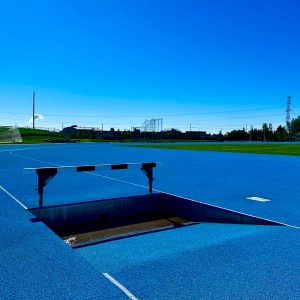
Passing the steeplechase pit one last time, the workout resolves to the finish straight. One hundred metres. I straighten my form, look for the line and cross it with purpose.

It’s done—I’m done. Sweaty hands on still-quaking knees. Slowly, my head clears. My breath and heart rate settle into a quieter rhythm.

I look down at my trusty Asics—stationary for now—and I notice a hole, forming in the usual spot. The white lane lines curving away beneath me are the clouds absent from this morning’s brilliant sky.

Track and sky merge into one. I’m totally alone. The only sound, the hollow slap of a tennis ball against a distant wall, echoes my heartbeat.

With my mind as clear as the sky, my cooldown jog becomes a victory lap. Never mind that the grandstand is empty. The track is all mine. Not ready yet to leave this place, I jog another lap, then walk one more. The rising sun, warm on my face, is a gentle reminder from the world beyond.

Until next time, be well and BE FAST!

Return to Prairie Mountain!

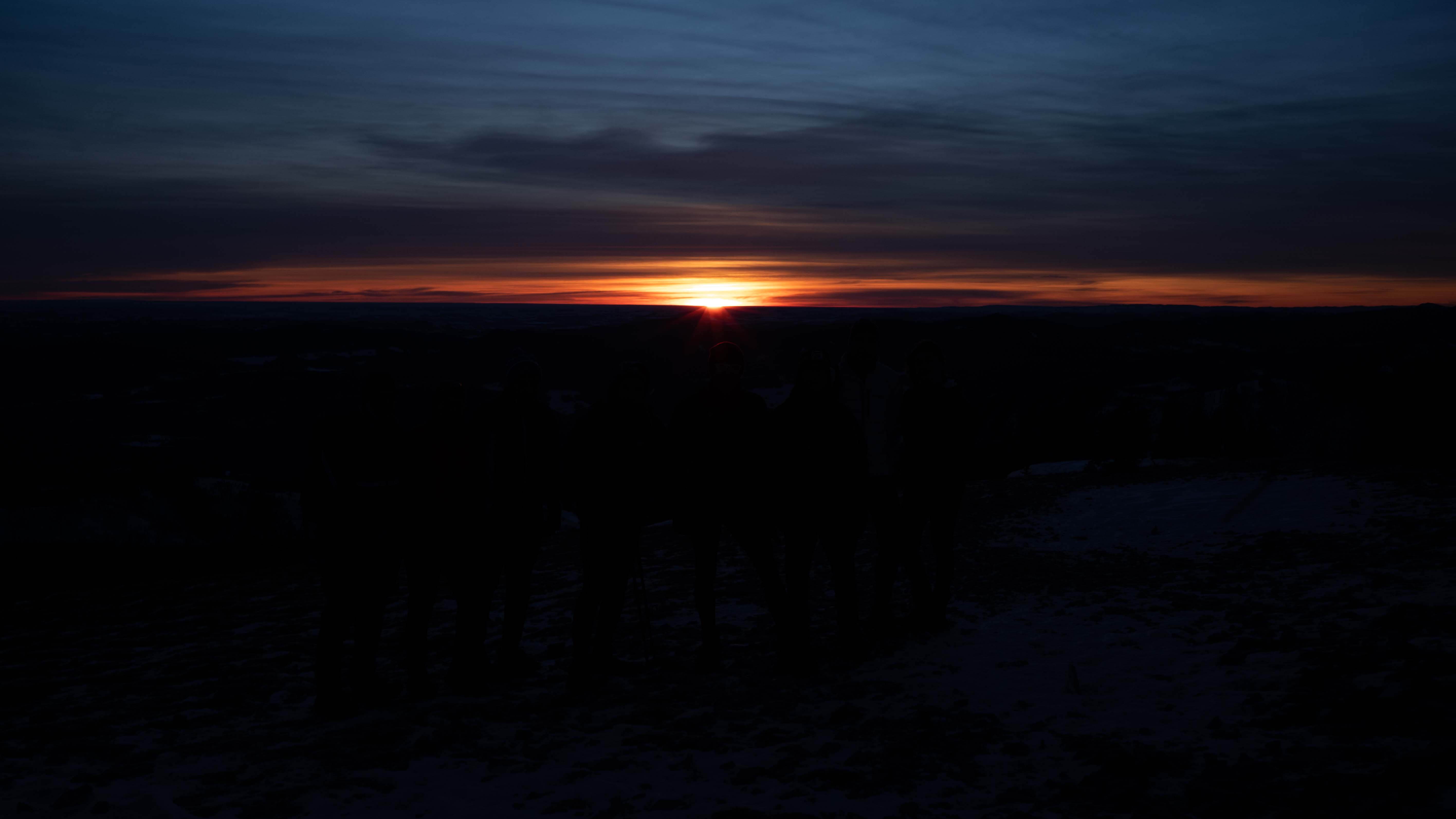
Just as Santa can be counted on for a visit in late December, we look to my friend Tim to reveal the details of the annual Prairie Mountain Winter Sunrise Hike. True to form, Tim set the date for the 2025 hike on December 29. Sunrise on that day would be, within a few seconds, the latest of the year.

Working back from a target of 8:39:33 a.m., our convoy of eight hikers met up at the Tsuut’ina Subway on Buffalo Run Boulevard at 6:10 a.m. With practiced efficiency, we were geared up and on the trail by 7:00 a.m. We expected to have ample time to reach the summit.

I’ve posted on our previous PM hikes, and I’m pleased to say these pieces have been popular. In 2023, I shared photos of a beautiful sunrise in Part 1: The Hike and delved into the mysteries of the celestial world for Part 2: The Science. We were not deterred by last year’s cloudy conditions—you can read about that hike here. This year’s forecast suggested that the star attraction would likely make a return appearance.

For readers who are unfamiliar with Prairie Mountain, it is the most accessible mountain for Calgary hikers. Accessible doesn’t mean easy, though—this is a good workout at any time. Last year, I noted that the hike seemed to be tougher than what I remembered. This time out, I had the same feeling. I’m not sure I like that trend! One foot, then the other. Repeat.

The Hiking Bit

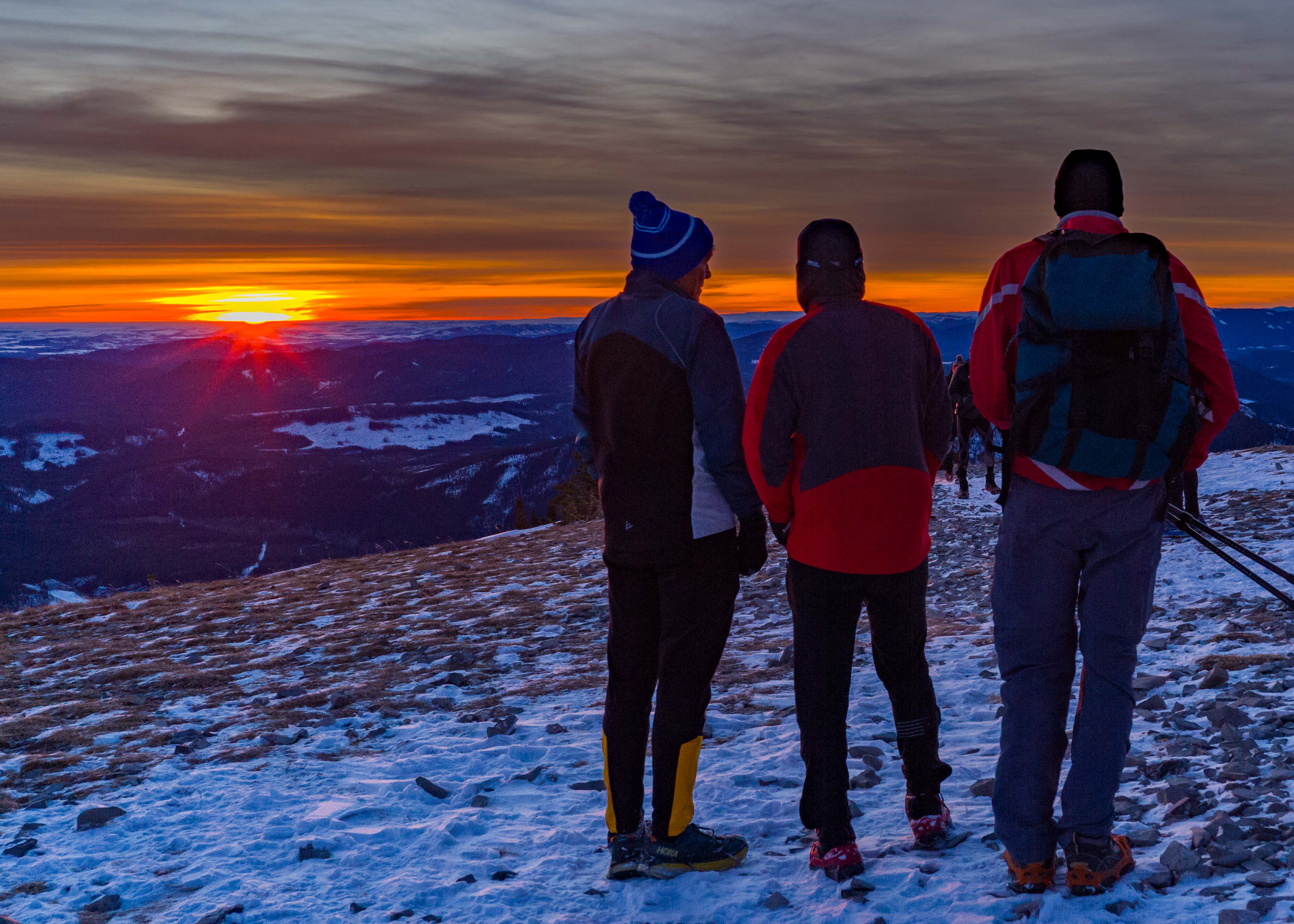
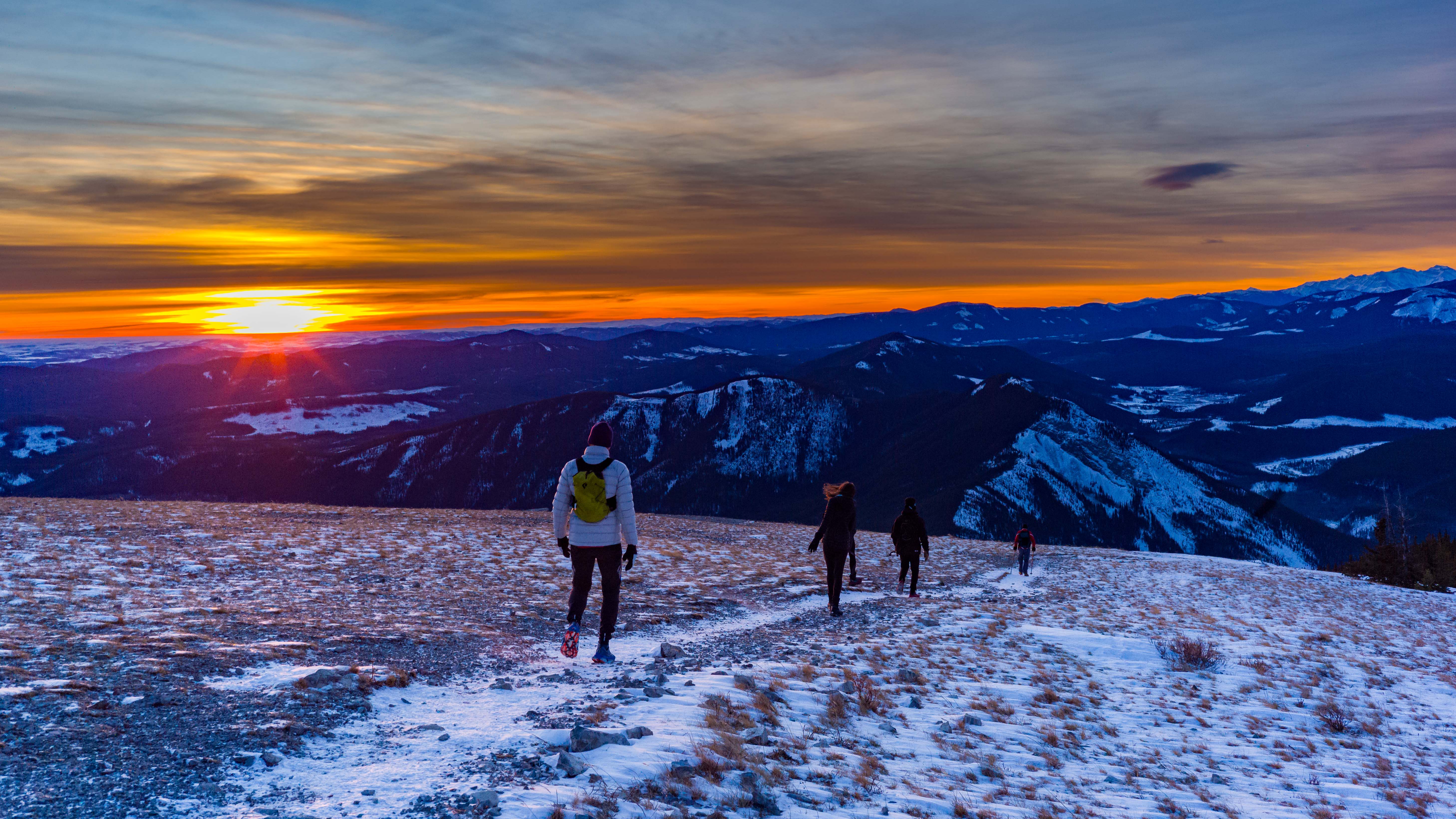
Given the snow-packed conditions on the trail, I was (again) very thankful for the new stone steps on the toughest sections. Even so, I welcomed a short pause at the first lookout, where we switched off our headlamps. I couldn’t help but notice the vibrant orange light to the east, which was already impressive as we approached the summit ridge. Were we too late?

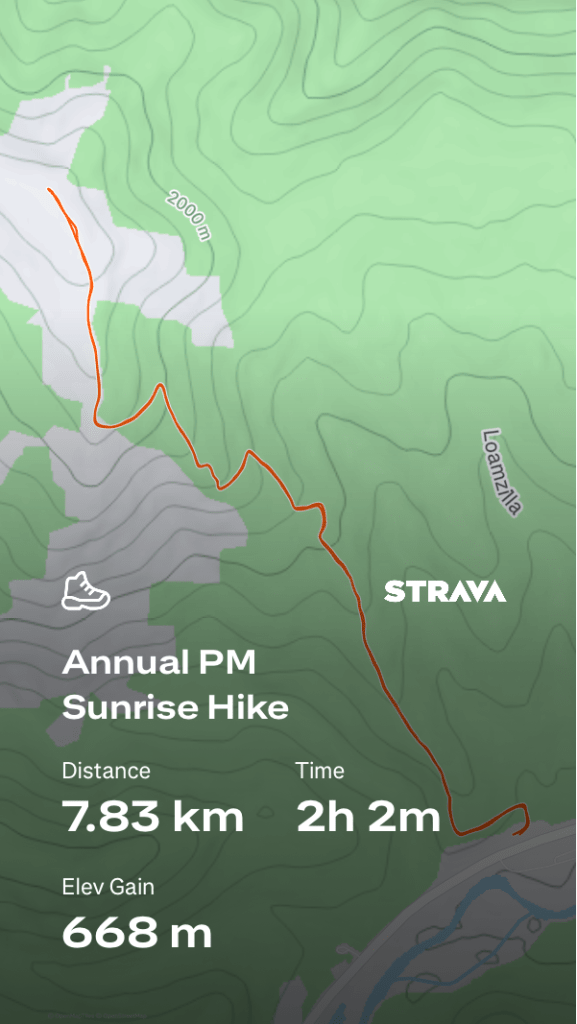
Because any PM summit is an impressive achievement, here’s my Strava activity summary.

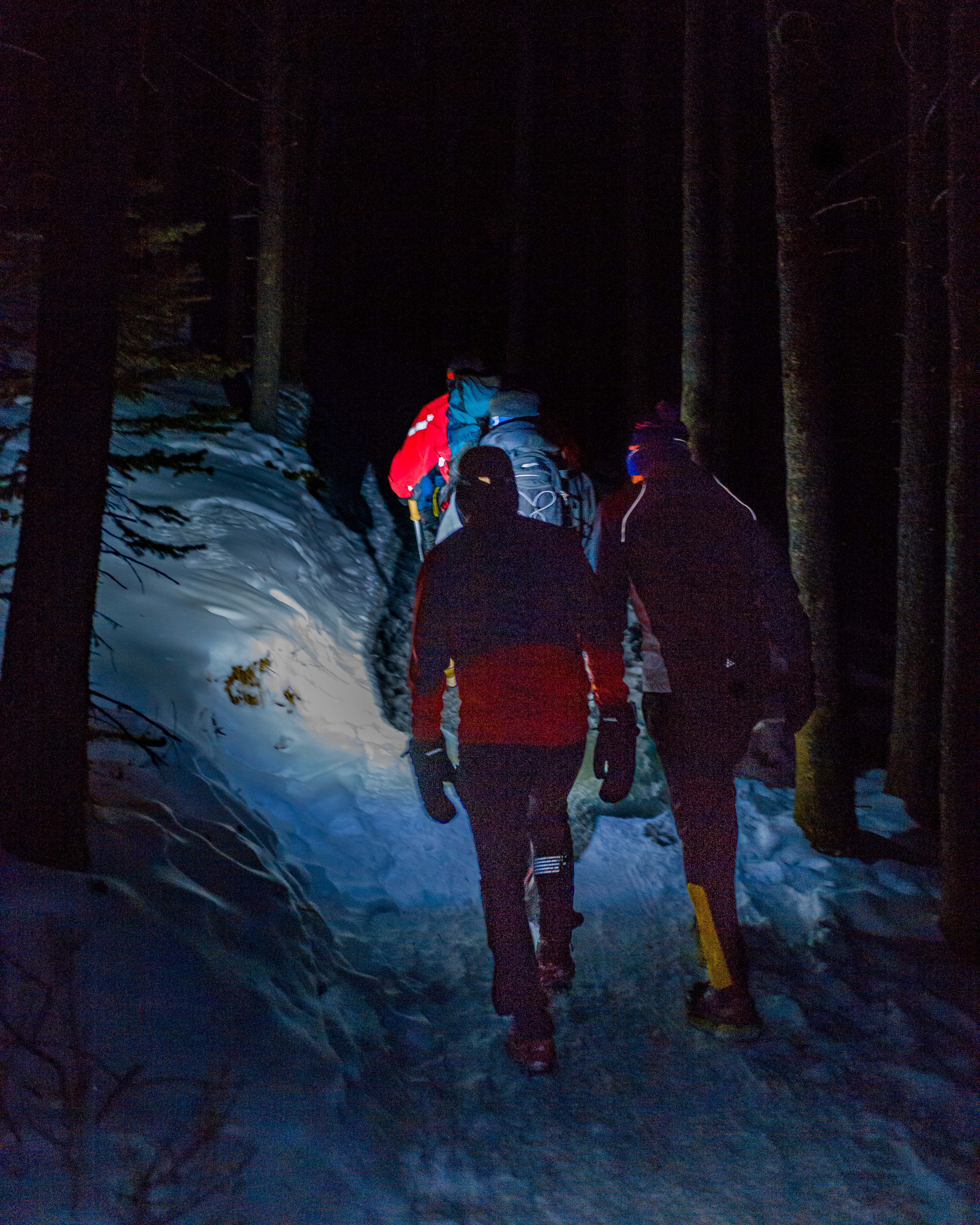
A few words on equipment. I decided to bring my “good camera”, the totally manual Leica M10. It’s a wonderful camera, but when you are bringing up the rear in the dark, as I was, adjustments are challenging. That meant I came home with blurry shots of my hiking partners’ backsides and severely underexposed images. Overall, I think the Ricoh GR III is better suited to this task. As always, my Kahtoola Microspikes and ancient red Komperdell poles were a necessity.

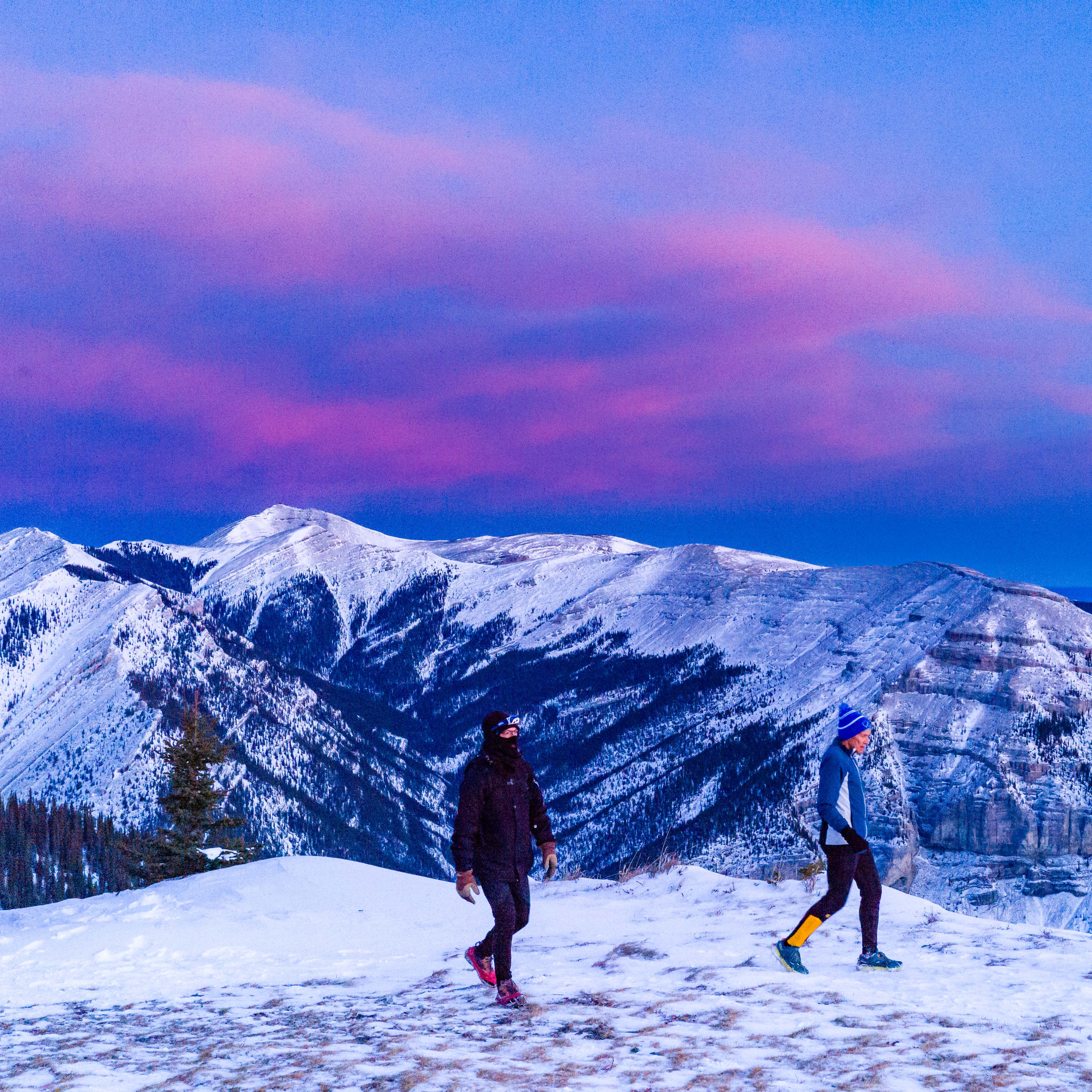
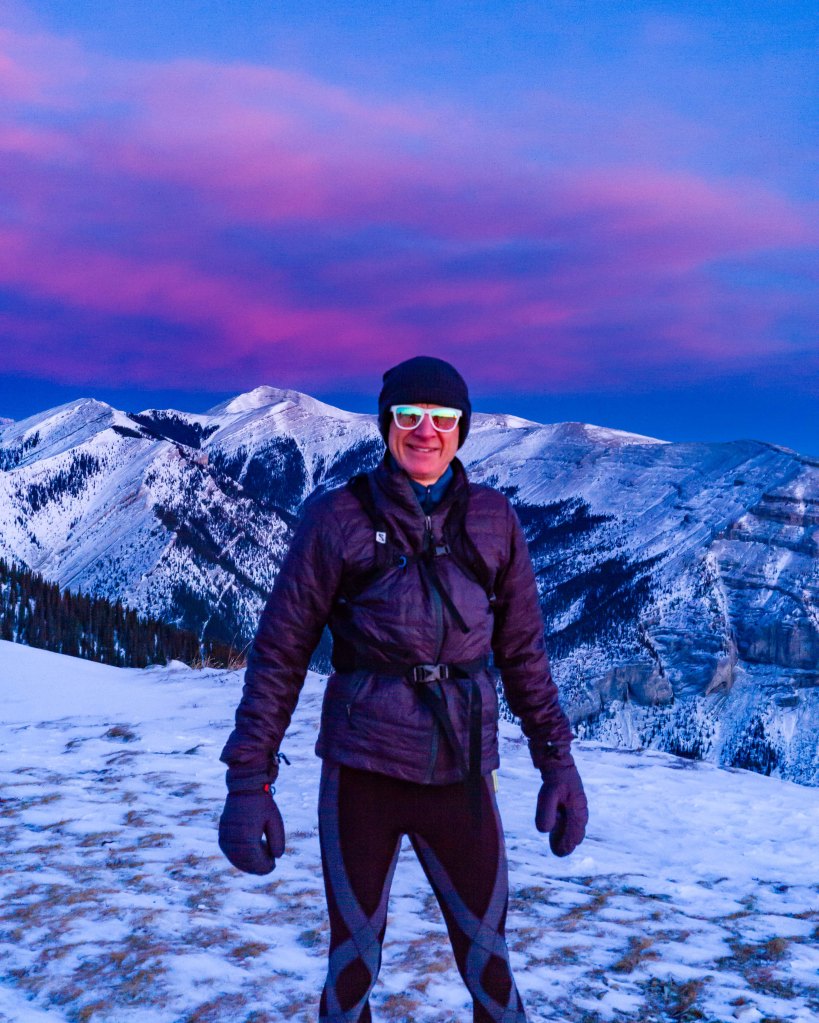
As usual, our group set a steady pace. (I hang around with some very healthy folks.) It’s hard to blame my comparatively slow pace on my photographic duties unless I present a few photos. So here’s the evidence!

Note: Copyright for all pictures is mine

We enjoyed the relatively mild temperature (-5C) and the shelter of the treeline for most of the hike. However, as soon as we reached the summit ridge, we were immersed in a strong westerly wind. We slogged the rest of the way up the ridge. The small Canadian flag on the summit cairn was no match for the stiff breeze. We headed for the shelter of a few scraggly trees below the summit to wait for the rest of our group. With fingers losing feeling, operating cameras and zippers became almost impossible. There was no loitering at the top on this day!

The Technical Bit

Given the challenges I mentioned with manual camera settings, I thought it might be interesting to present a comparison of my pre- and post-editing for one of this year’s key PM shots. I suppose this is called making lemonade out of lemons.

Of course, everyone hopes for a good group picture at the summit. This year, we imposed on a solo hiker who reached the summit just ahead of us to do the honours. Now, my comment that “the settings should be fine” must be tempered with the reality that I didn’t actually look at these before handing over the camera. Yes, I was freezing, the wind was howling, and for all I know, he had never touched a manual camera before. I’m fully to blame for any technical shortcomings. That said, my heart sank when I saw the images straight out of the camera. However, with some comprehensive (and slightly desperate) work in Lightroom Classic, I managed to extract a passable image. You can compare the before and after image here:

A hardy group celebrates another Prairie summit!

At the risk of losing some readers, I’ll summarize the edits I made to this image in my attempt to rescue it. First, I increased the overall exposure significantly—a whopping 3.5 stops. I think the meter was fooled by the sun in the centre of the image. Then I dropped the sky by a stop, and raised the foreground by almost another stop. I raised the white balance to warm the image up slightly. I dropped the highlights, mostly around the sun, and raised the shadows. Then I increased the saturation, clarity and dehaze. That left me with a noisy image, which I tried to fix using the latest AI tools in Lightroom. In the end, I gave up, as all this did was create artifacts that were, to my eye, worse than the noise.

So, as long as no one looks too closely, this is a fair reminder of what it felt like to stand on the summit that morning. My homework for next year is to be better prepared.

Wrapping Up

With the start of a new year, one is often moved to contemplate things that truly have value and be thankful for people who are important in life. I’m very fortunate to be surrounded by like-minded people who value fitness and friendship. And we are all blessed to have special places like Kananaskis just a short drive from home. Thanks, Tim, for getting us out there and up there again.

The annual winter solstice hike was a great experience and a perfect end to the year. Oh yes, the post-hike coffee and baked goods at the Handle-bar Cafe in Bragg Creek were delicious. And well earned.

Until next time, be well, BE FAST—and Happy New Year to all!

Urban Sustainability? Hardly!

We live in interesting times in Calgary. I’ve formed strong opinions about what I see happening in my city. For many reasons, I think we’re on the wrong track. From what I’ve seen recently in other large Canadian cities, the same things are happening there, too.

One of the first pieces I wrote for this blog was on the topic of sustainability. You can find it here. My focus then was on objects that are perfectly designed for their intended purpose. They are sustainable, in that they can be expected to work perfectly for a lifetime (or longer) if properly maintained.

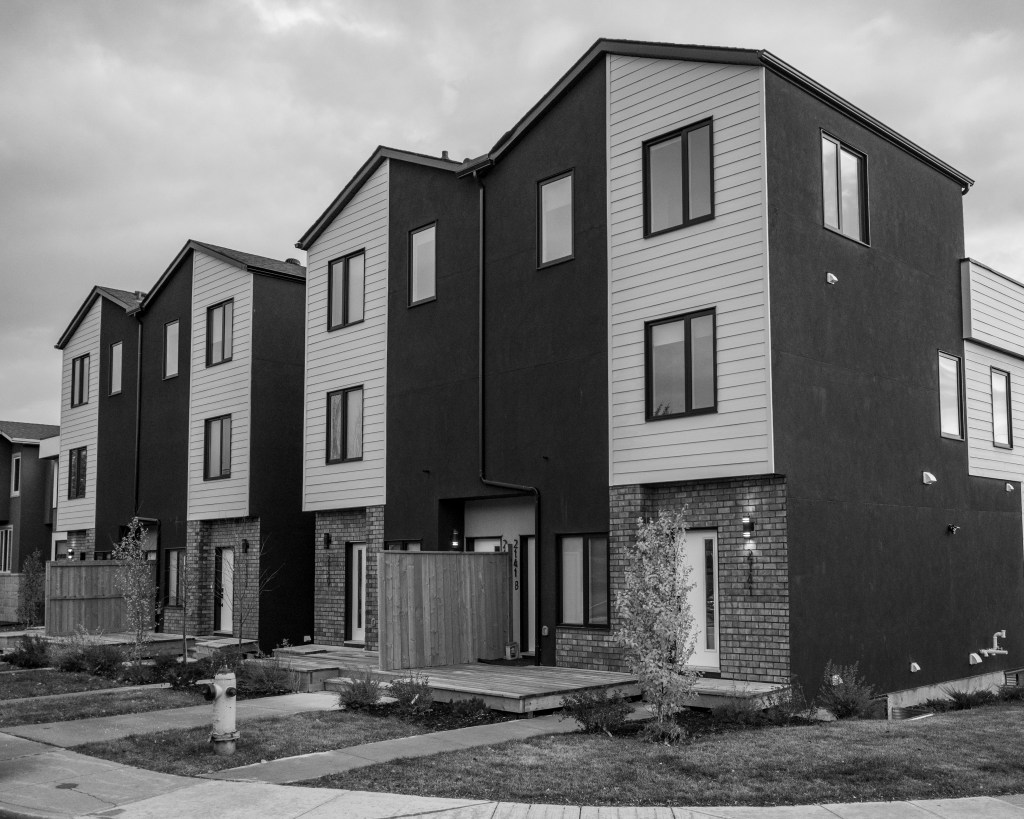
As I walk around inner-city neighbourhoods in Calgary, I’m bothered by a pattern that I see being repeated over and over again. Homes that have stood for decades are being levelled and replaced by one of two things: large, contemporary boxes or large, multi-family boxes. And it’s not just homes. Commercial buildings are being torn down and replaced by high-rise residential towers full of small (you guessed it) boxes.

Boxes, boxes and more boxes…

Why is this happening? Well, it is now presented as common knowledge that housing is a critical problem in Calgary. City administration has prepared or commissioned studies to explain the situation and how dire it is. I’ve read their material, and I’m willing to admit that I don’t know. I’m not an urban planner or a sociologist. Maybe it’s a crisis, or maybe it isn’t.

What I do know is that if I exercise my right to ask questions or comment on proposed developments that directly affect me, by writing letters to my councillor and city planners, the usual response consists of boilerplate talking points about housing supply and affordability challenges. I used to write such letters, but I don’t do so anymore. When a response starts with the words “because we are in a housing crisis…“, then it will include justification for all sorts of irrational actions.

As I said, I have many problems with this trend, but let me come back to that word, sustainability. I define sustainability as encompassing the social, environmental and economic aspects of a project. In my view, nothing in the current teardown and build cycle is sustainable. I’ve noticed that the experts who tout densification and the bureaucrats who facilitate it—the same people who are quick to extol its benefits—tend to be silent on this point. This isn’t an oversight; it’s because the facts don’t fit their narrative.

How about an illustration?

Yesterday, I walked by a row of three post-war houses. All were small, neat and well-kept. They have been standing for decades, so we know they have survived many brutal Calgary winters. The owners of these homes have replaced roofs, tended lawns, and done the hundreds of other routine tasks needed to keep them functioning. They have put their personal touches on them. These houses are not flashy, large, or modern, but they definitely are sustainable. On the evidence, these are the type of structures that stand in the way of solutions to our housing problem.

The impediments to solving our housing crisis… really?

Let’s contrast this scene with another, where a transition has already occurred. The houses that used to stand in this location were like the ones pictured above. They have been replaced by multiple, multi-family dwellings; in this case, four fourplexes.

Tell me, what problem is this solving?

To get to this point, three houses were demolished and carted to the landfill. I estimate this would have generated 400 cubic metres (200 tonnes) of waste. That’s without consideration of the concrete foundations, which represent more waste to the landfill, and heavy waste at that.

Pouring new foundations generates significant GHG emissions, because cement manufacturing is one of the most GHG-intensive industries. Of course, there will be a continuous stream of waste while construction is in progress. And our lush urban tree canopy? Gone.

What are the main development scenarios for inner city locations?

If we see a custom contemporary house going up, it’s usually large and built to serve the needs of a couple or a small family. In other words, there will be a lot of space dedicated to a few people. Don’t get me wrong. This is a free country, and people can build to their own taste and budget. But on a full lifecycle basis, it’s hardly sustainable.

If it’s a multi-family dwelling, it’s almost certainly going to be built by a developer who will target the minimum building standards. There will be pressed board exterior walls, thin insulation and interior walls, plastic pipe and cheap finishings. Unlike the post-war houses pictured above, nothing built today will last. We can be sure of two more things: the developer will realize a healthy margin, and the finished units will not be affordable.

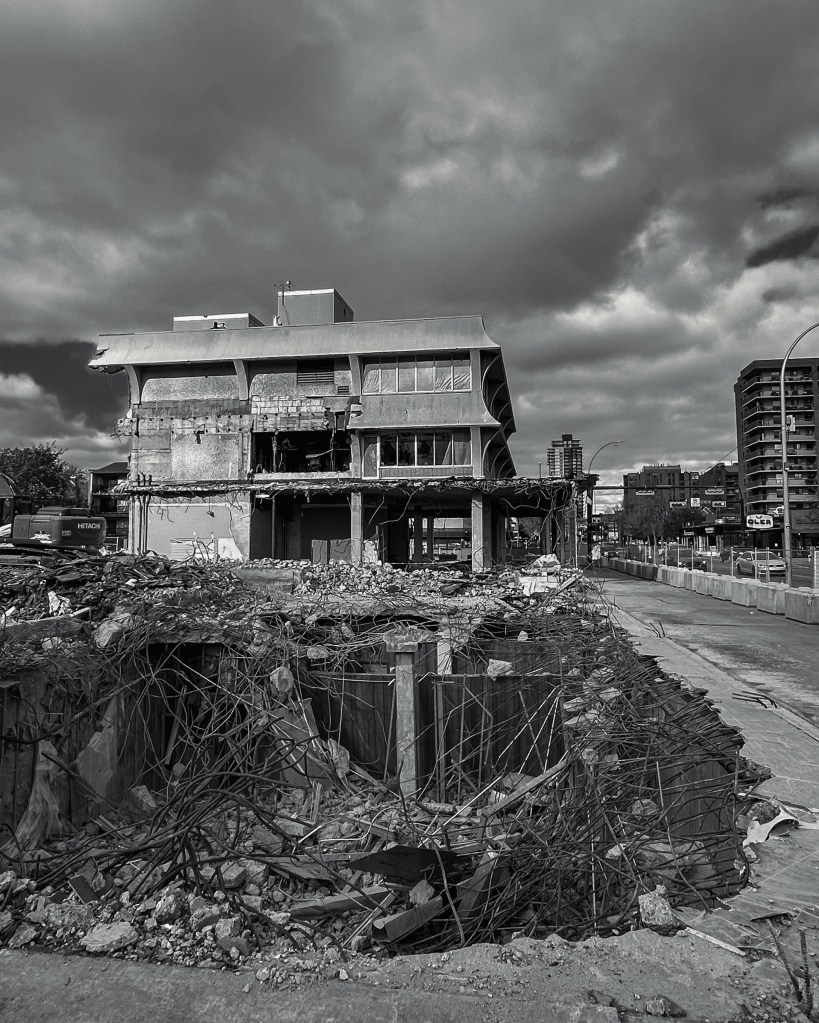
What about commercial properties? To round out my review, I checked the progress on the long-planned demolition of the Jimmie Condon Building at the corner of 17th Avenue and 14th Street. Some would say the building is (sorry, was) historic, and others would say its pagoda-style roofline was an eyesore. Either way, if a picture is worth a thousand words, then this one is a mouthful.

Off to the landfill, Jimmie!

We hear a lot these days about the need to build more “climate resilient” infrastructure. In response, I’ll note that I’ve seen plenty of buildings shrouded in tarps a few years after construction, presumably to repair deficiencies in exterior construction or incorrect materials. That is neither resilient nor sustainable.

I’ll leave for another day related questions—like whether multi-family dwellings (or high-rise towers) will solve the apparent housing crisis that led to their construction in the first place. Or who ultimately pays for luxury condo units that sit on the market unsold, or peddled as short-term rentals. Or whether we should be replacing our city’s already small inventory of historic buildings with characterless, cheaply-built boxes.

To conclude, there’s a saying that a good crisis should never be wasted. I think our municipal government and administration are doing just that with their housing crisis. Their logic is simple: the more housing units that are built, the more tax revenue will be generated. So inner city buildings are being demolished at a rapid pace, with no consideration of what makes our neighbourhoods unique or desirable.

This is a trend that’s hard to justify if one is thinking sustainably. We’re targeting one objective—increasing the supply of housing units—at all costs. In this context, “at all costs” means neglecting environmental stewardship and economic sensibility.

Fortunately, the market has a way of correcting irrational behaviour. I hope we will soon see evidence that a much-needed correction is underway.

An Ansel Adams Inspired Photo Run

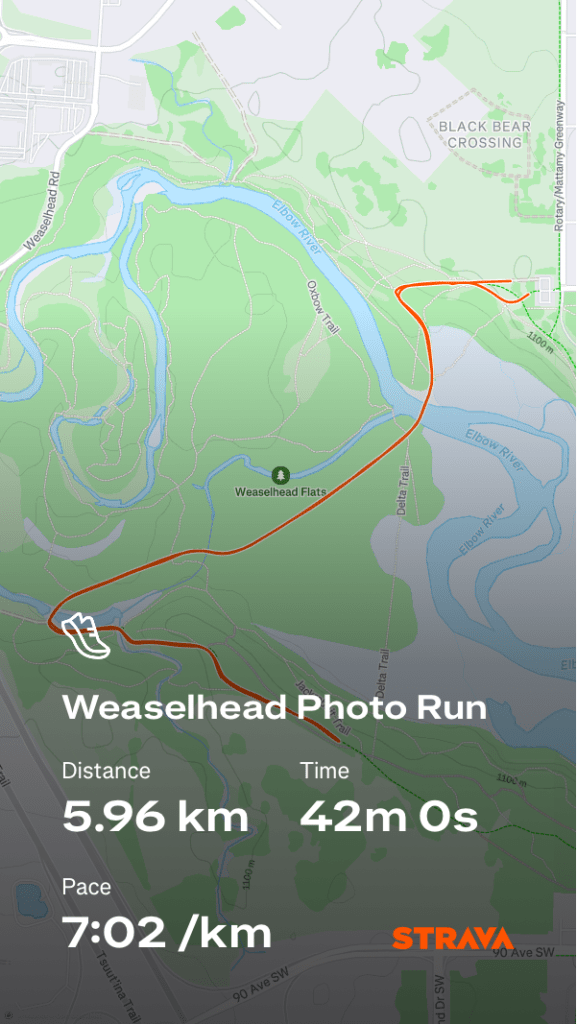
Knowing that Weaselhead Park would be in its full autumn splendour this week, I decided to do a short photo run starting in North Glenmore Park.

Here’s the Strava record of my out-and-back route through the Weaselhead Flats. It’s a beautiful place to run at any time, but especially at this time of year.

I recently had an idea for a new series, highlighting my favourite photographers. As I trudged up the hill at the far corner of Weaselhead, where the path heads into a pleasant birch forest, I realized I had my first subject: Ansel Adams. Adams is a good choice, given that he was the first photographer who came to my attention after I purchased a film camera as a teenager. I’ve admired his photographs for years. And when I saw the white trunks of the birch trees, two specific images popped into my head.

But first, let me introduce Adams.

Ansel Adams: Photography Legend

Ansel Adams (1902-1984) was an American photographer and environmentalist. As a young man, he showed talent as a pianist. However, he decided to pursue his early interest in photography, even though at the time that was hardly a sure career path.

Adams is best known for dramatic black and white landscape images, many of which were shot on large glass plate negatives. He also developed innovative and disciplined approaches to capturing and printing images. He formalized the use of the Zone System, which allows the photographer to realize what they saw in the scene, based on analysis of the tonal ranges in the image. 

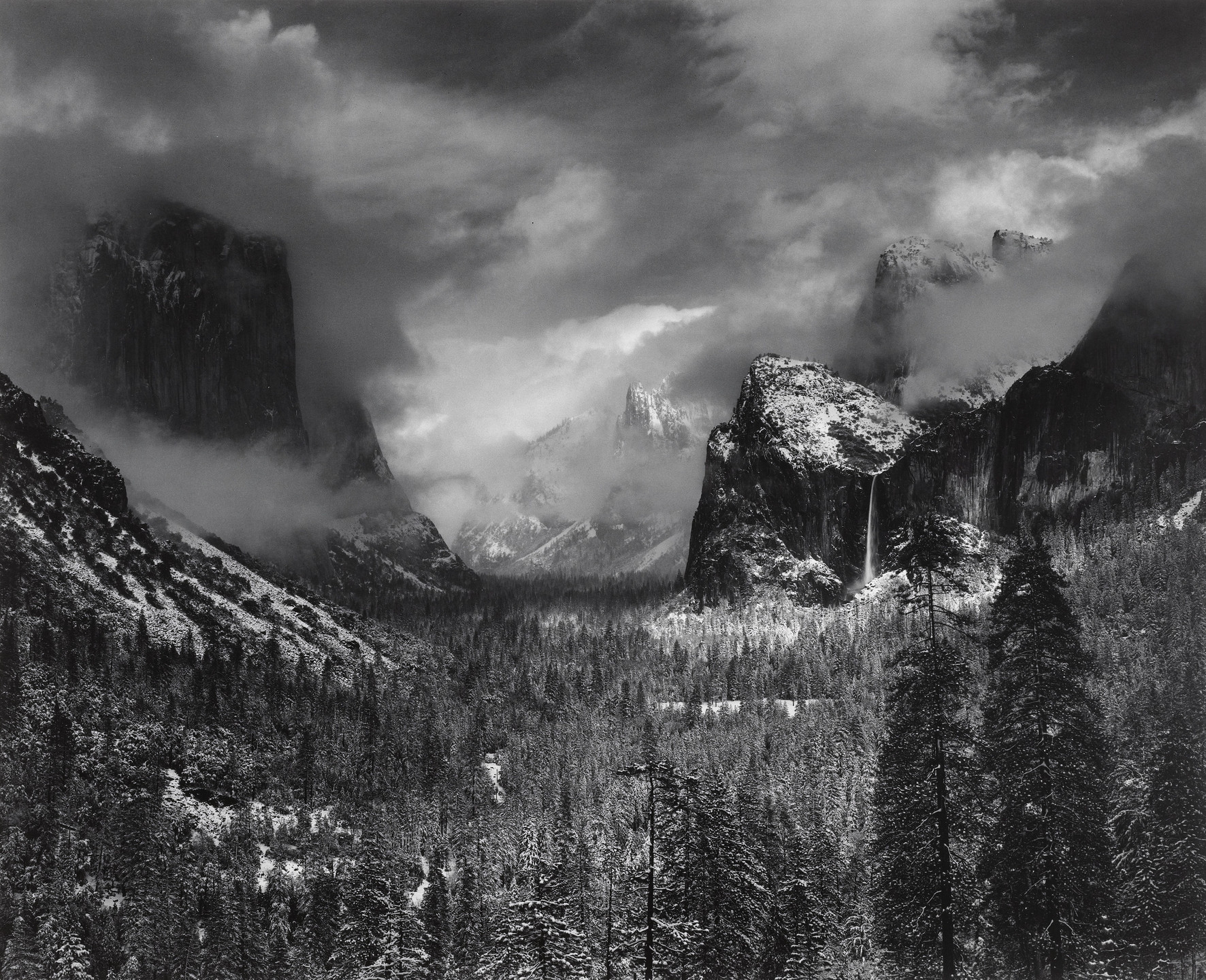
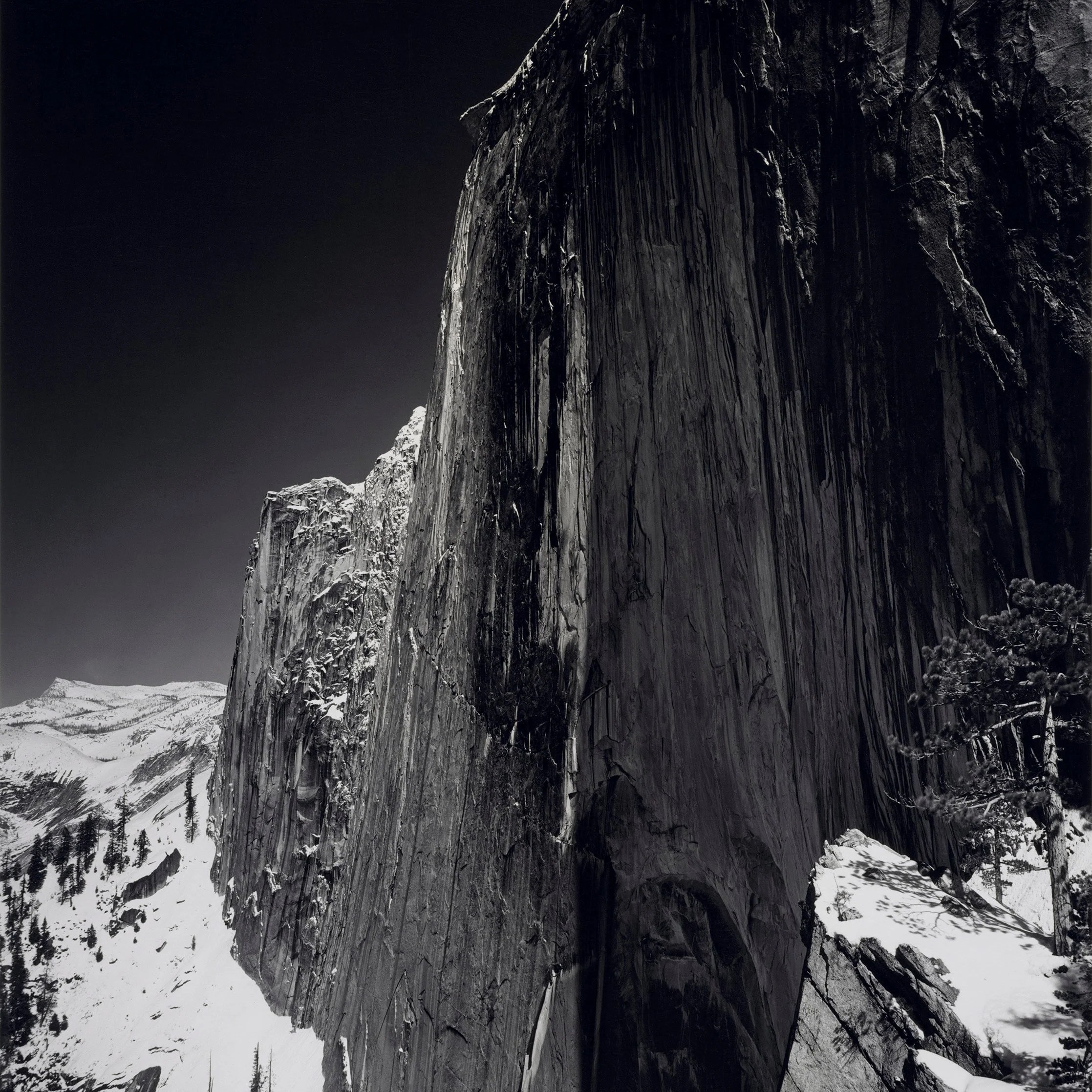
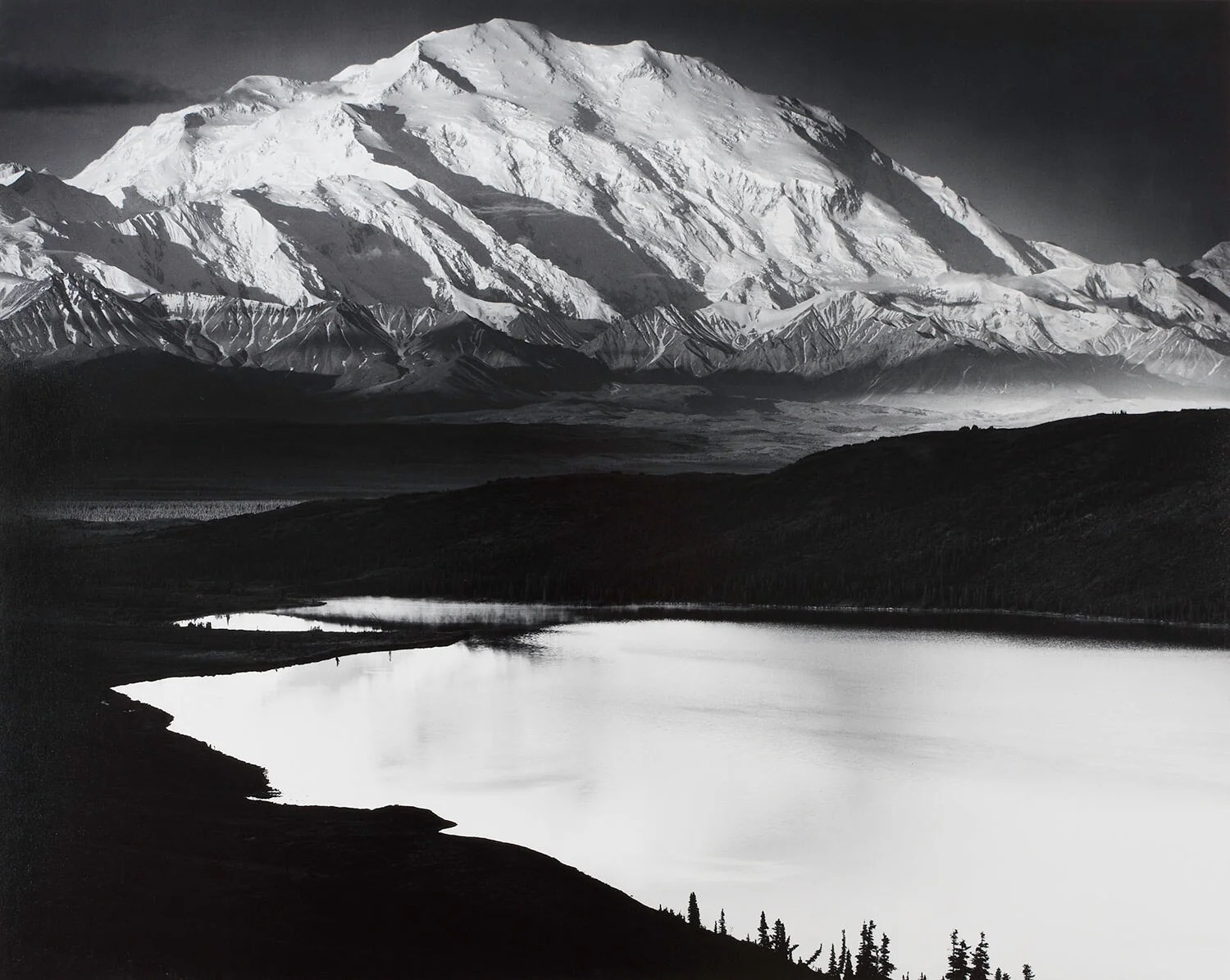
Given the sheer number of Adams’ iconic images, it would be difficult to settle on my personal favourite. I’ve always admired his Clearing Winter Storm (1944) and Monolith, The Face of Half Dome (1927). His photograph of Denali—Mount McKinley and Wonder Lake (1944)—is brilliant. These images matter because they illustrate Adams’ deep commitment to preserving some of the great natural places in the U.S.

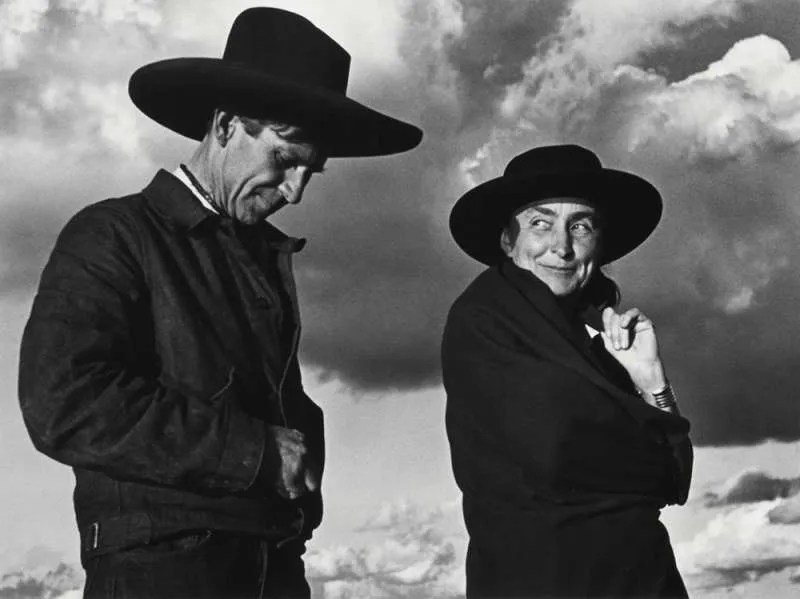
Even though they aren’t what he is best remembered for, Adams’ portraits are remarkable, too. His candid shot of Georgia O’Keeffe and Orville Cox (1937)—shot with a 35mm camera—may be my favourite of all his images. So, regardless of which image we look at, it’s easy to see why Adams is regarded as one of the greatest American photographers. 

Georgia O’Keeffe and Orville Cox (1937)

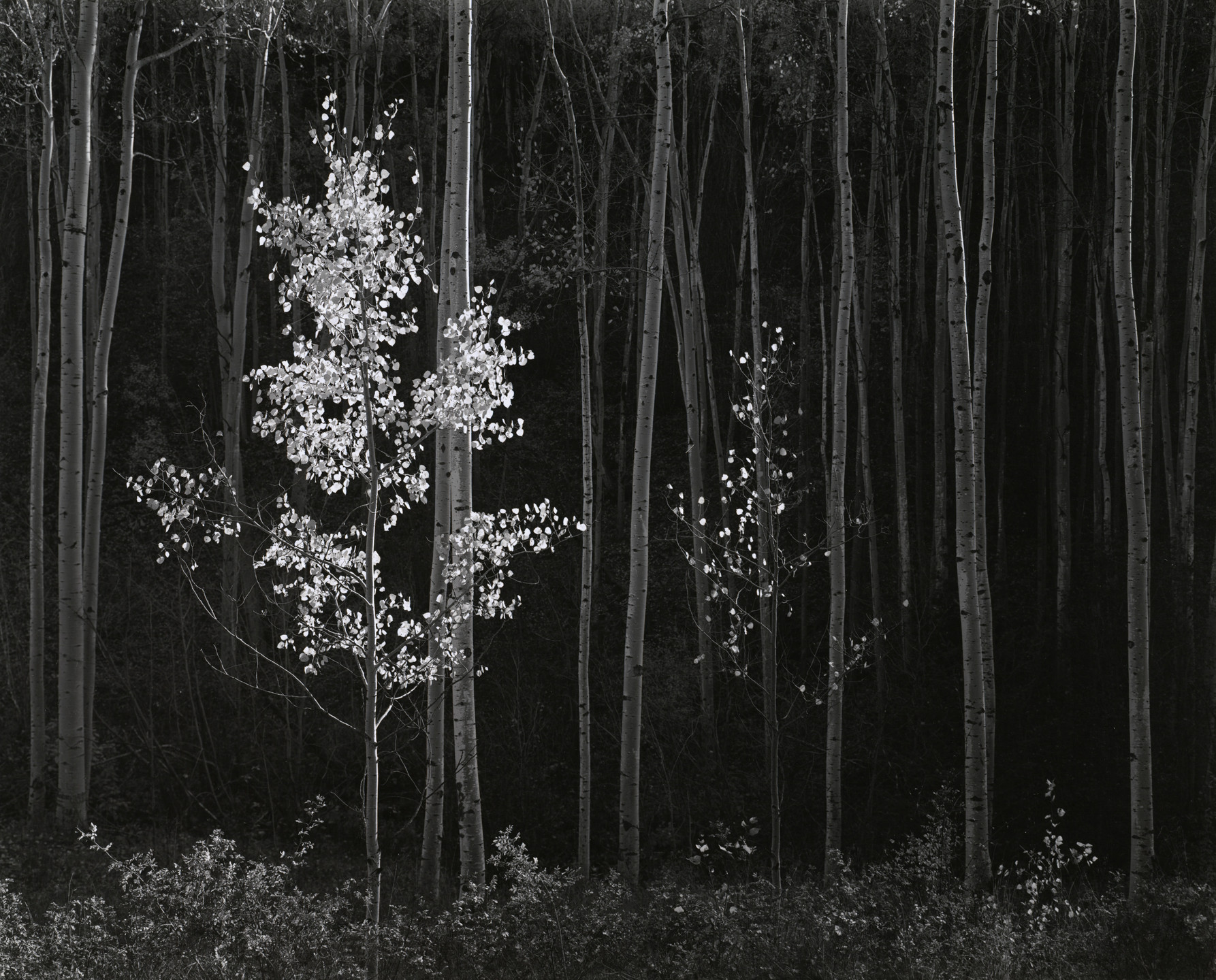
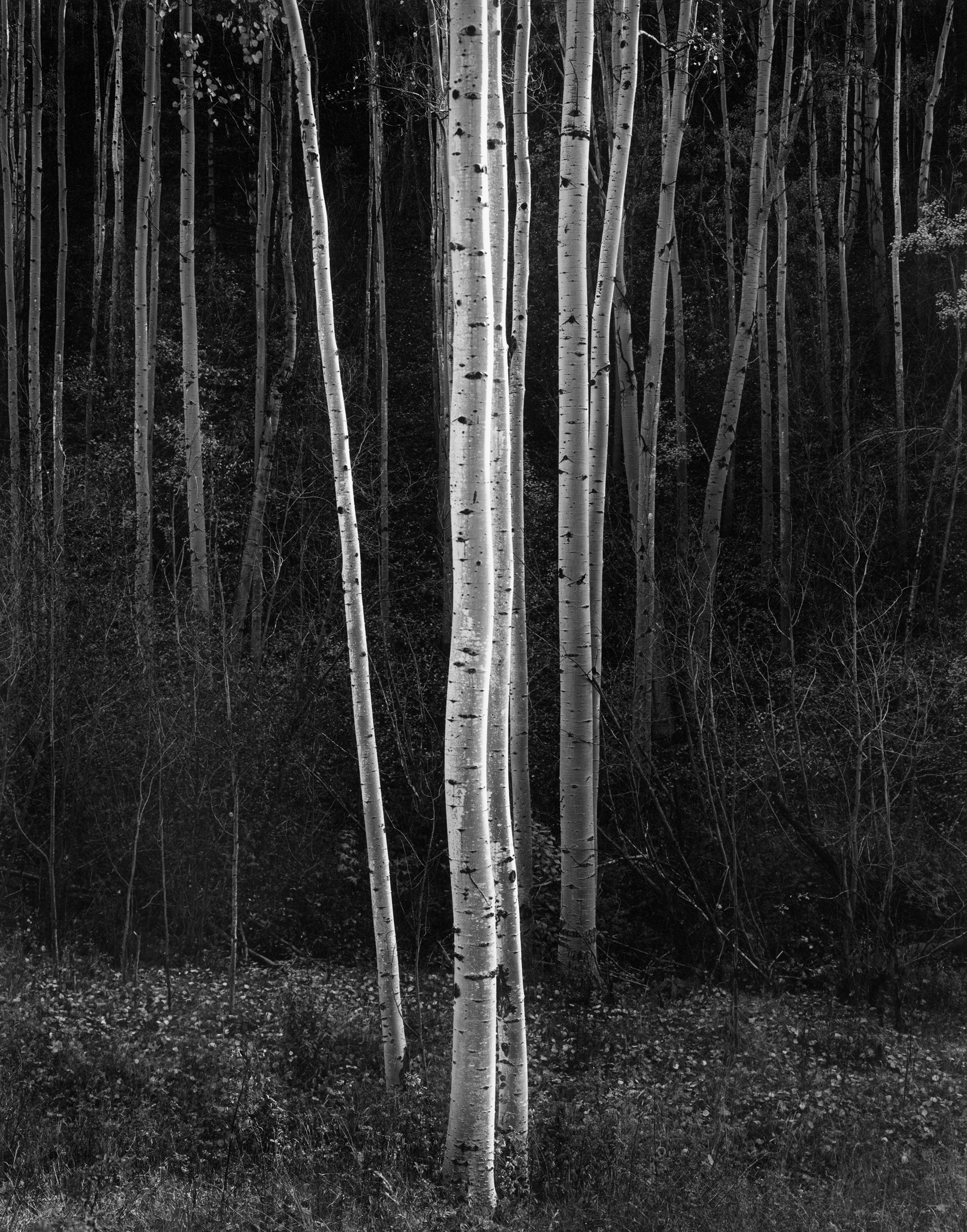
Aspens, Northern New Mexico (1958)

There’s a book by Adams that I’ve turned to dozens of times for inspiration. It’s called Examples: The Making of 40 Photographs. Adams takes the reader on journeys that culminate in the images in his book. He sets the scene, explains the equipment he used, and the process of creating the final print. It’s far more than a how-to manual. What I appreciate most about the book is Adams’ honesty. Many times, he admits to making errors in his camera settings or finds he’s created challenges for himself in achieving the result he wants. These are refreshing admissions by a person we may think of as being infallible. 

Two images in Examples are relevant to this piece. Aspens, Northern New Mexico (1958) is a pair of complementary photographs, one vertical and the other horizontal. Adams shot them with an 8″x10” camera using a yellow filter, which would have lightened its own colour (yellow) and darkened its opposite colour (blue). He typically printed the images in very large format, up to 30″x40″. Adams describes these as “quite satisfying statements”, “cool and aloof and rather stately”. I’ll say! He also writes that they are good expressions of his philosophical approach to photography, in that he was able to express what he saw and felt in the scene. 

And so, today in Weaselhead

At the risk of embarrassing myself—-we can agree that Adams is a tough act to follow—-let me turn to my own attempt to capture what I saw and felt on today’s Weaselhead photo run. It was a similar day to what Adams described for his Aspens: a crisp autumn day. The birch forest was in full fall colours. Even better, the sun was trying to make an appearance after a short rain shower. There was no wind. In other words, the prospects were good. As usual, I had my Ricoh GR III in hand—no 8″x10” cameras here. 

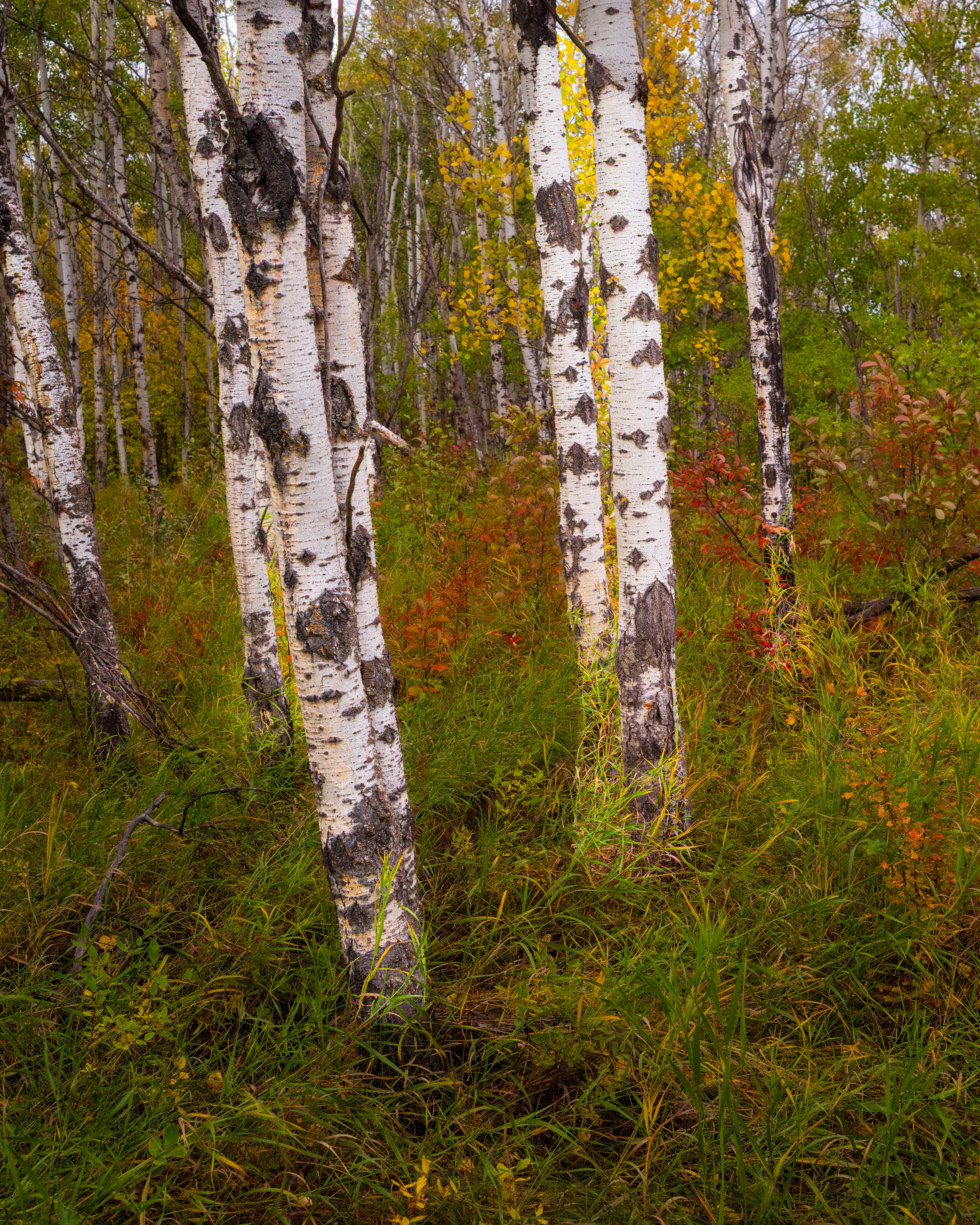
I could see what Adams had to deal with, given all the colours of autumn: reds, yellows, purples, greens. A colour photograph would certainly have impact, but my worry was that it would end up being an incoherent riot of colour. Because digital photography gives us some huge advantages over Ansel and his glass negatives, I’m able to let my readers decide for themselves.

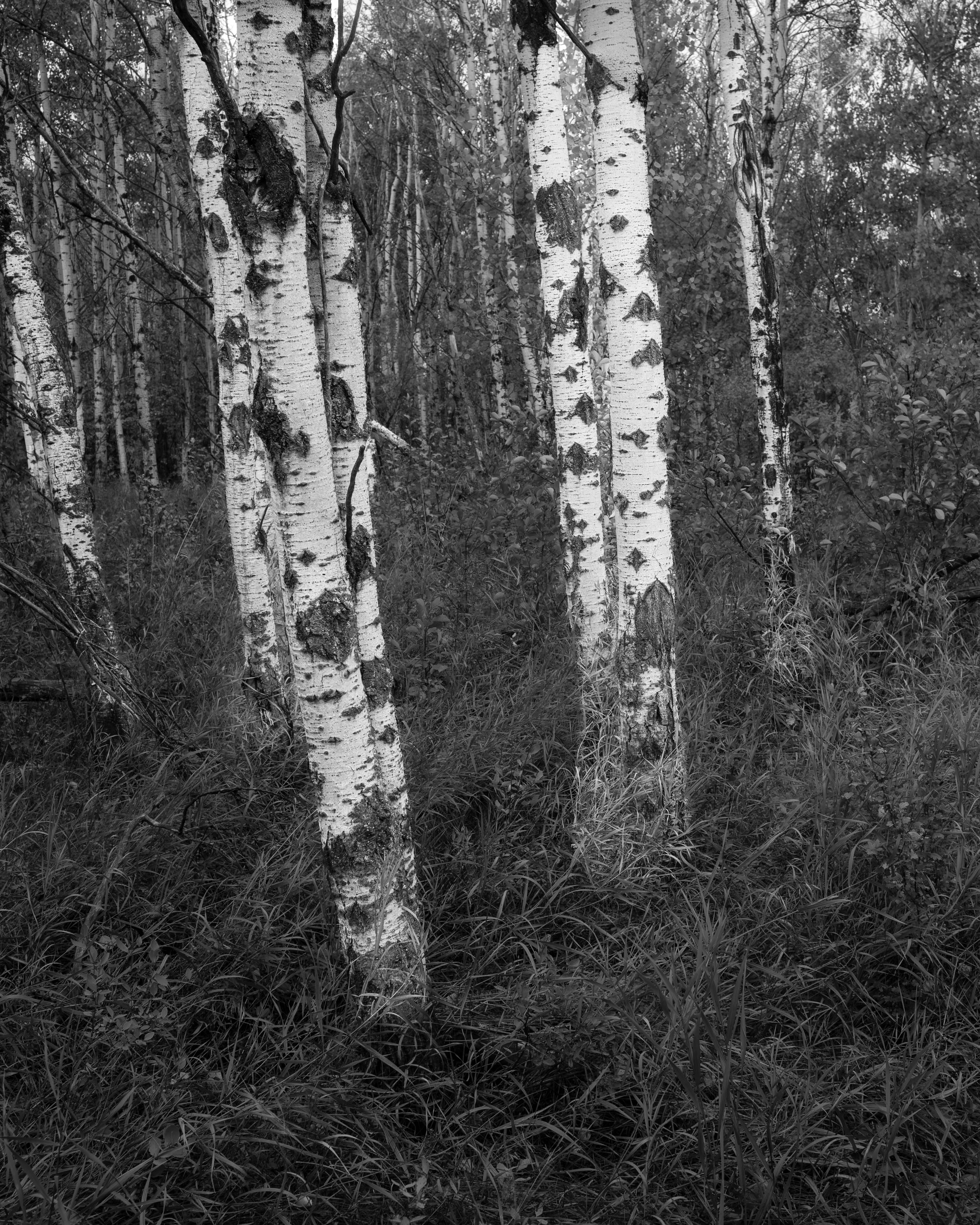
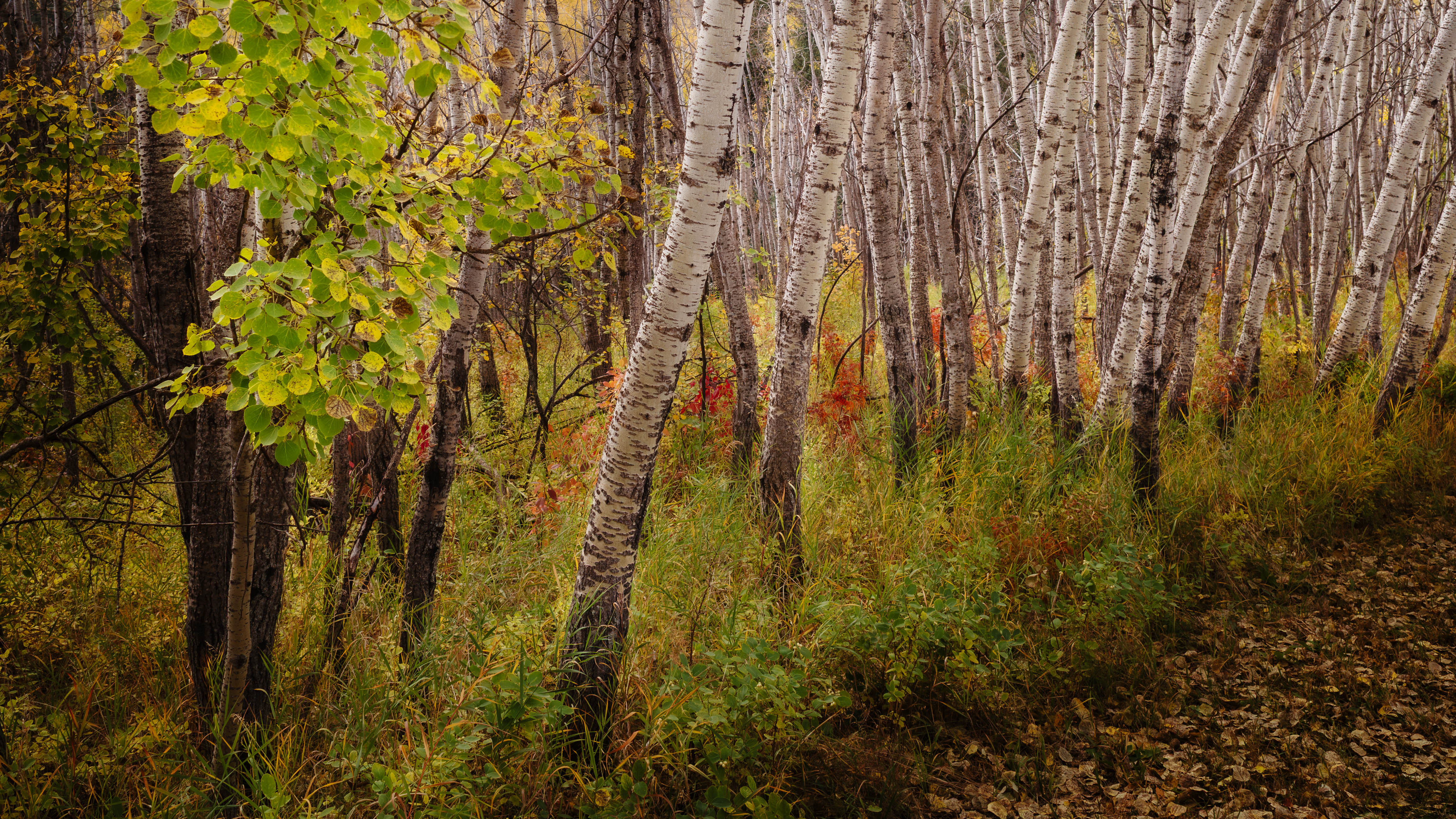
I’ll start with a vertical shot. I did some masking in Lightroom to bring out the trees at the front of the image and give some separation against the busy background. Using Lightroom’s simulated filters, I boosted the yellow channel to brighten the leaves. As is often the case, I prefer the black and white version.

Weaselhead Birch Forest – Vertical (Sept 30, 2025) (Copyright: Steven Kelly)

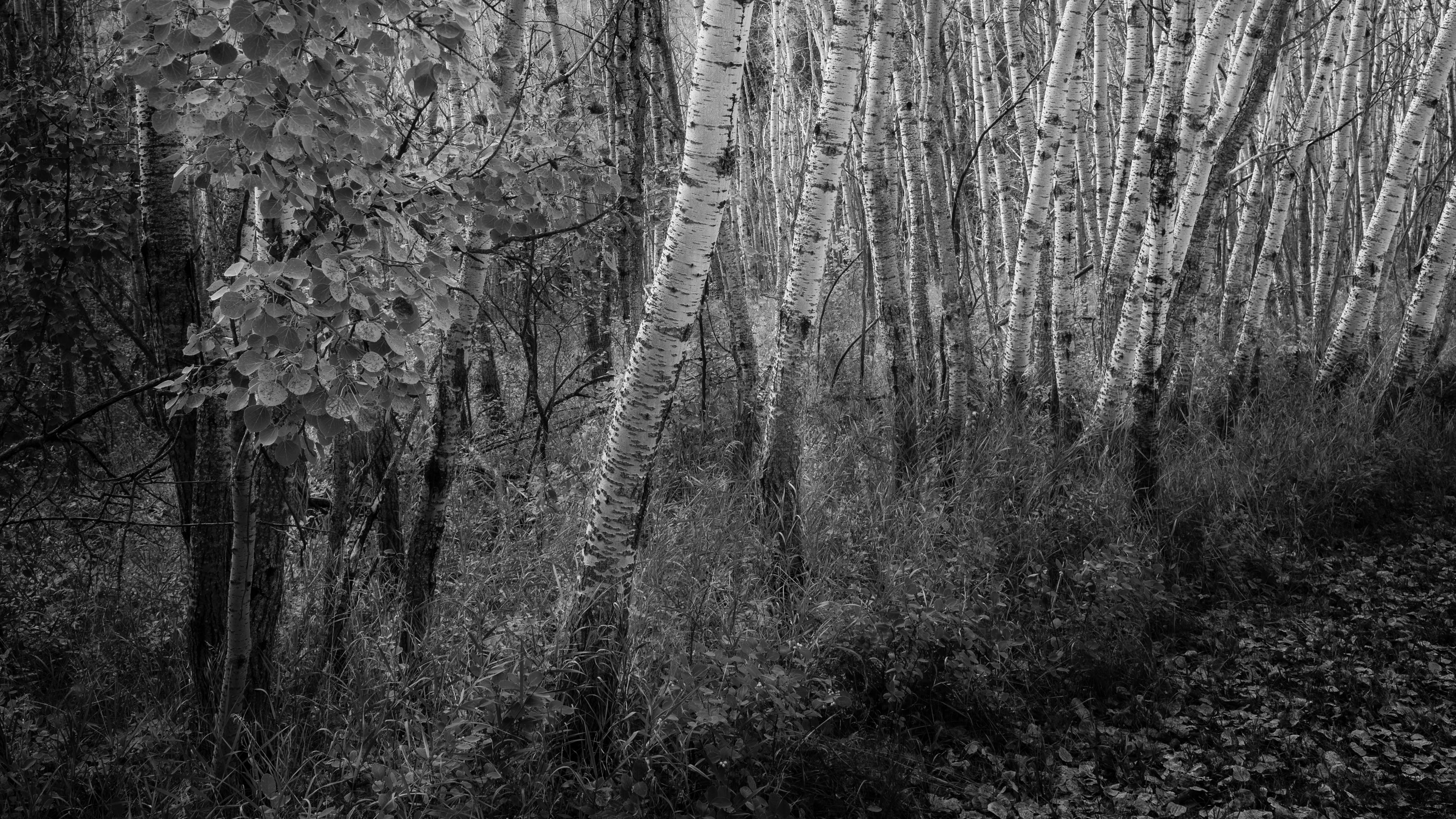
Moving on, I looked for a scene that might work in horizontal format. My idea was to have some prominent leaves in the picture, as on the left side of Adams’ image. I found a grove with a dense grouping of trees and a splash of green on the left of the frame. I don’t think this was the perfect example, but you know, I was in the middle of my run. I snapped my shot and carried on. Later, I darkened the left edge and the foreground to accentuate the trees that were in sunlight. Again, I prefer the monochrome version, but I’d like to hear from any readers who have an opinion.

Weaselhead Birch Forest – Horizontal (Sept 30, 2025) (Copyright: Steven Kelly)

Wrapping Up

My photo run was short but productive. I headed to this spot because I hadn’t been there for a while, and I wanted to see the fall colours. Once I got to the birch forest on the south side of the reservoir, Ansel Adams’ iconic images popped into my head. It encouraged me to slow my pace and look around. And what I found was well worth the effort. I may even try to get back there with a film camera and tripod—and without my running shoes!

Until next time, be well and BE FAST!
Off Track: A Eulogy of Sorts for GAP 1.0

So that’s it. The end of an era. The south end of the original Glenmore Athletic Park (GAP) track—I call it GAP 1.0—is gone. Torn up. 

I know the guys in the excavators are just doing their job, but it was hard to watch them pulling up the tattered red surface. The sign posted on the fence helpfully explains that the work is for the installation of a natural gas line to serve the new Glenmore Twin Arena that is being constructed nearby. According to the City website, the south end of the track will become a parking lot. Of course, another parking lot.

I have countless memories of the old circuit. It’s been the site of race finishes (like the Stampede Road Race), club events like handicap races, and innumerable workouts. GAP has hosted hundreds of track meets over the last six decades, including one in May 2011, where my mates and I set a Canadian M35 age group record for the 4x800m relay. (Our record didn’t stand for long, so don’t bother searching for it.)

I wrote about the old GAP track in Stroke of Luck, about how just seeing the red surface puts me in a comfortable place. I also did a blog piece—Homage to GAP 1.0—to mark the seventieth anniversary of Roger Bannister’s historic four-minute mile and the sixtieth (or so) of the GAP track itself. That was more than a year ago.

Sure, with a new, modern facility (some have started calling that one Smurf Turf, but I prefer Big Blue) being built a stone’s throw away, the writing was on the wall. I dared to hope that the City would keep the old place open. And if that wasn’t going to happen, I was sure they would leave it in service until the new track was ready. Well, now we have our answers: no and no.

Here is the main issue I have with the City’s decision: there’s no convenient alternative for running clubs that train in Calgary’s Southwest. As rough as the surface was, the track was in constant use by individual runners and clubs. To demonstrate their commitment, athletes regularly organized themselves into shovelling crews to keep a couple of lanes open through the winter. Speaking of the winter, progress on the new facility seems rather slow, so we’ll have to wait until sometime in the new year. 

I pointed out all of these things when I called 311 today, but it won’t change where we are. 

I don’t need to repeat what I wrote in my previous piece. Instead, with a distinct feeling of nostalgia, the best thing for me to do is add a few more memories, to convey what the old track meant to me. 

Here’s a photo from a one-mile senior’s challenge race, which took place in May 2010. It was all smiles on the start line, except for competitor 15 (me). For the record, I never smiled in the final few minutes before the gun. That’s okay, though, as I doubt anyone was smiling ten minutes later. I have no record of the results, so that might mean I didn’t do very well. Even so, it’s a cool memory.

This is the current state of the spotting booth on the back straight. Although the plywood mural that covers the scoreboard is deteriorating and falling off in chunks, I can report that the pigeons that have taken up residence in the booth are doing well. I like the juxtaposition of these two half-images.

And here’s a photo I took during a recent workout. My friend Doreen and I ran intervals on a beautiful, warm August morning. Little did we know it would be our last spin around the track. This photo of Doreen, smiling as she heads into the back straight, seems to be a fitting one to close with. 

I don’t know if there is such a thing as a memorial service for a facility, but I feel like the Calgary running community could do with one in this situation. For now, I tore off a chunk of the synthetic rubber surface as a keepsake. Deb was grossed out, but I don’t care—I’ll keep it in the garage. 

Maybe I should deal with this the way I usually do—go for a jog and come to terms with this disappointing news. 

Until next time, be well and BE FAST!