I stand at the railing of the empty grandstand. Sunlight glints off metal bleachers. I look out over the broad, blue expanse—featureless, if not for the sun, still low and benign at this hour.
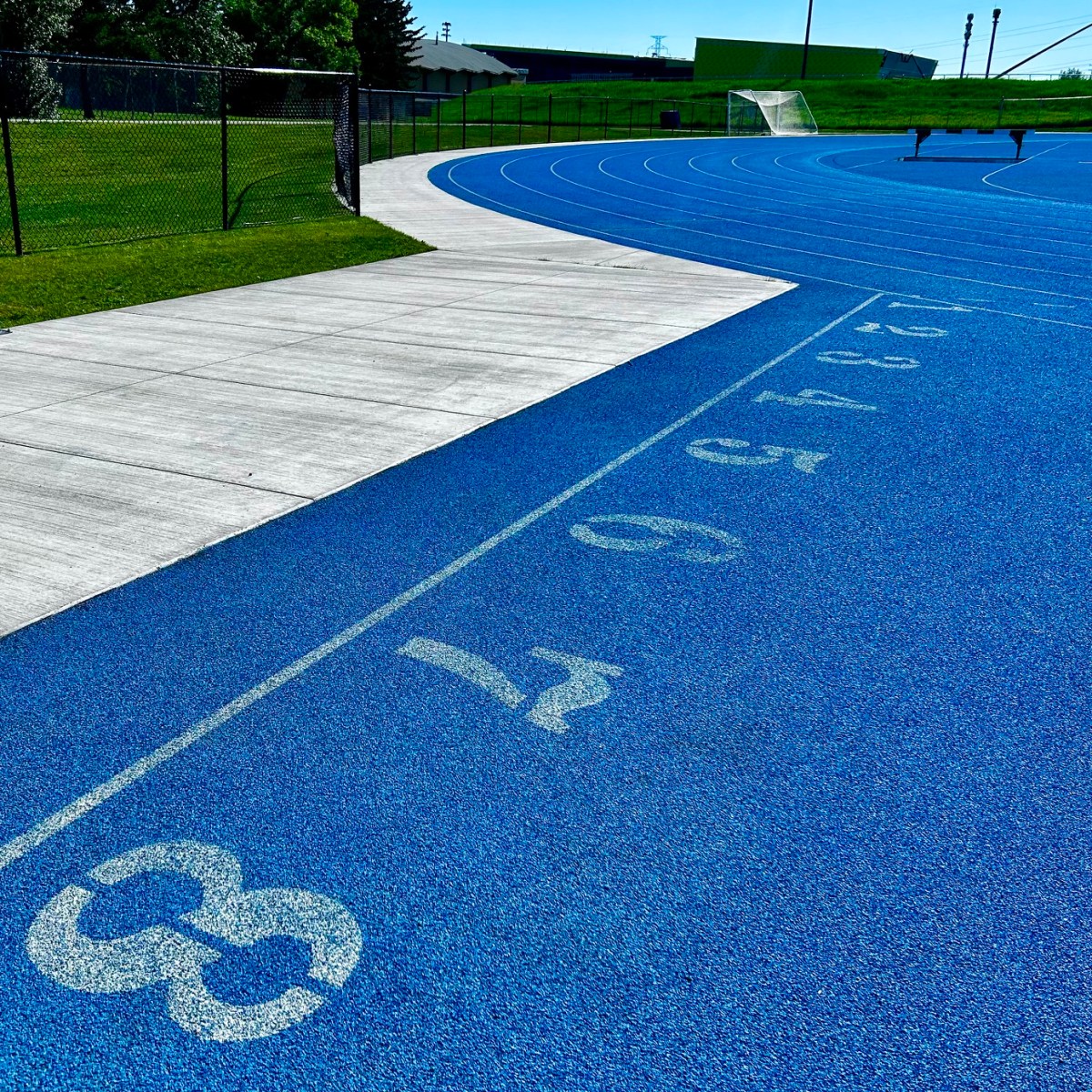
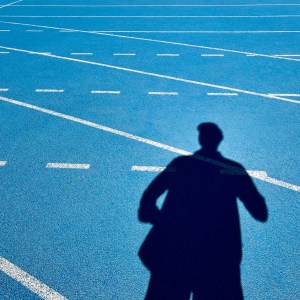
Below me is the track, in brilliant blue to mimic the sky. Four hundred metres of geometric precision. Monumental, even when dwarfed by the sky above it. But not today. Today, the track is an old friend.
I study the familiar painted lines—patterns of white that mark hallowed ground. They reduce the complex world into eight simple ovals. Here and there, marks of yellow, red and green; arrows and distance markers; ready for an unknown future contest.
Stepping onto the pebbled surface, I begin the slow build into a crescendo of physical effort. Pattern is distilled to instinct after decades of repetition. The routine is part drama, part choreography—warmup to workout to cooldown.
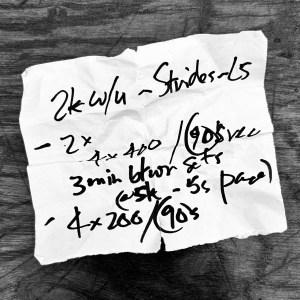
I ease into it, clearing the rust, trusting the movement. Strides, leg swings. Then I find the instructions, scribbled on a scrap of paper and tucked into the pocket of my shorts. One last check to memorize today’s variation, a new puzzle to solve. My only teammate is a Timex Ironman, its buttons worn nearly unreadable after so many sessions, so many seasons.
I take a sip of water, then step to the mark and go. I visualize ideal form and accept that I will fall short. Stay tight to the lane marker, feel the synthetic surface compress under my stride. Use the watch to find the pace, then hold it. One more repeat, then another, until the set is done.
Anticipation builds with each slow walk to the line. As ever, the quick rhythmic beat of my stride takes over—the surest antidote to pain and the only way to silence the inner critic. I count the 400s down. Four, three, two. Only one to go.
Next, the 200s. Notch the pace up once more. Fighting against fatigue, I tell myself to drive my tired arms to lead my legs. Ignore the burning in my calves. Let the building lactic acid be the reward for my effort.
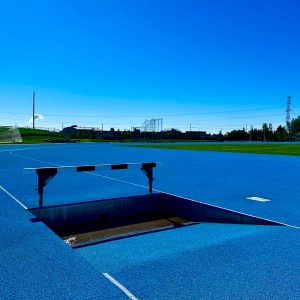
Passing the steeplechase pit one last time, the workout resolves to the finish straight. One hundred metres. I straighten my form, look for the line and cross it with purpose.
It’s done—I’m done. Sweaty hands on still-quaking knees. Slowly, my head clears. My breath and heart rate settle into a quieter rhythm.
I look down at my trusty Asics—stationary for now—and I notice a hole, forming in the usual spot. The white lane lines curving away beneath me are the clouds absent from this morning’s brilliant sky.
Track and sky merge into one. I’m totally alone. The only sound, the hollow slap of a tennis ball against a distant wall, echoes my heartbeat.
With my mind as clear as the sky, my cooldown jog becomes a victory lap. Never mind that the grandstand is empty. The track is all mine. Not ready yet to leave this place, I jog another lap, then walk one more. The rising sun, warm on my face, is a gentle reminder from the world beyond.
I think about my own mortality a lot. Perhaps too much. Sometimes a trivial observation will send my mind down that track—like when I’m walking down a busy street, and I realize that I’m older than almost all the people I see.
Given my personal health story, thoughts of my humanness are perhaps more present than they were when I was young and, as the saying goes, invincible. I’ve experienced a significant decline, one that goes beyond “aging”, although a growing count of orbits around the sun means I’m experiencing that type of decline as well. Apparently, aging occurs in both a stepwise and linear fashion, and the decades of our 40s and 60s are where the biggest steps occur. I think I can attest. And of course, I know how the story will end.
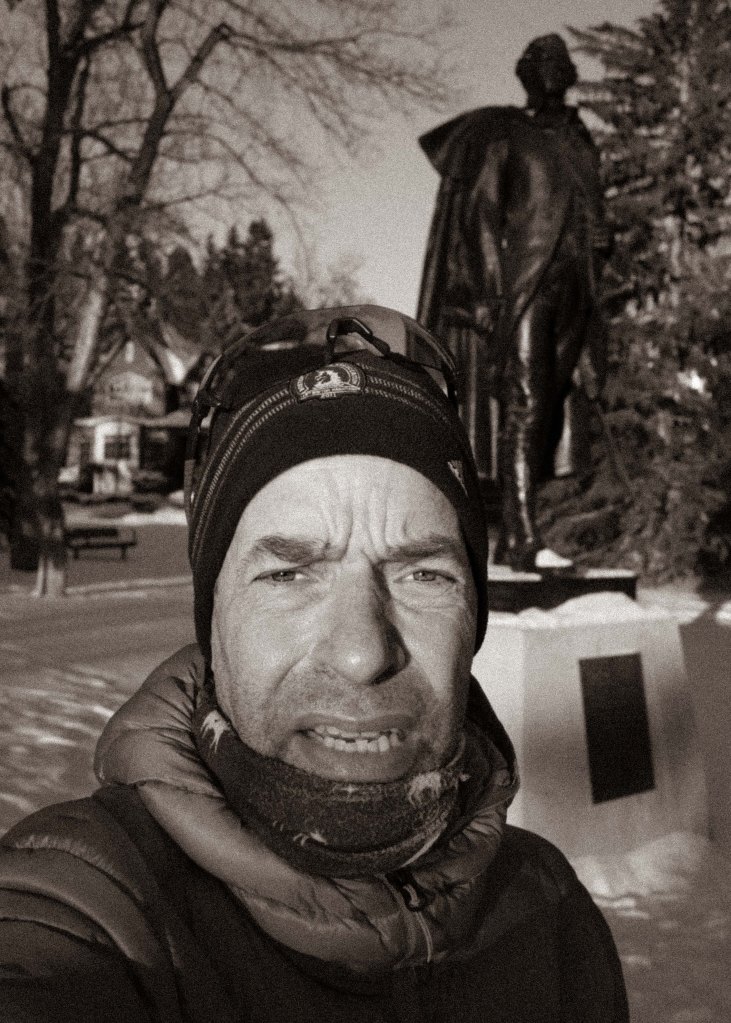
But then, sometimes, the most amazing things happen, things that make me celebrate my situation, my very obvious mortality. Things like today’srun1, in which I reluctantly took on Calgary’s arctic conditions, and returned home somehow feeling 20 years younger. It was a wonderful outing, easily my best run in a month, and one that made me feel truly alive. You may know the feeling— it’s like history being made, even if the run itself counted for nothing.
My recent reading list includes several books that deal with decline and death, and that may explain my focus on the subject. While this piece doesn’t offer any great insights, I generally find it easiest to deal with things by writing. So here goes, with a decidedly unfestive, but hopefully not depressing, piece.
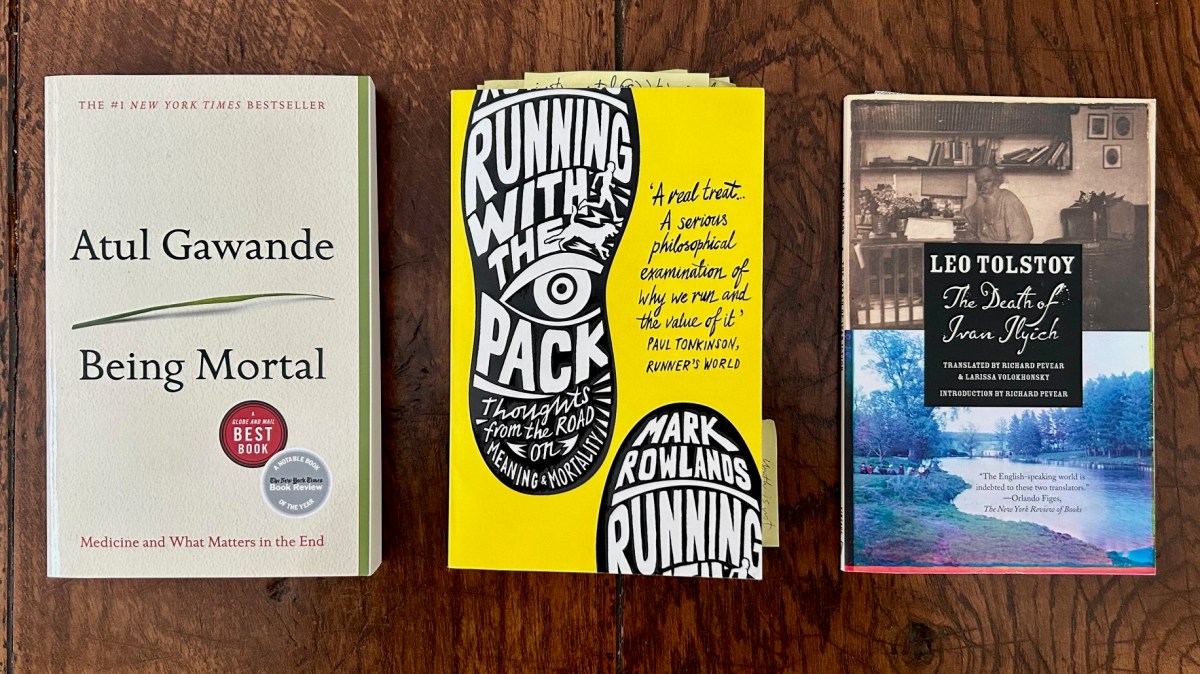
Being Mortal, by Atul Gawande
Being Mortal, by surgeon and author Atul Gawande, was suggested to me by a friend. We were both dealing with parents in their declining years—in fact, my mother had died just a few weeks before. I sat on his recommendation for a while, perhaps because I was afraid to open the book. I’m glad I eventually did.
Gawande describes how modern medical intervention has changed the profile of physical decline, essentially blurring the transition from life to death. While sobering, the book makes the point that our societal approach to medicine is often not suited to the needs of people nearing the end of life.
Gawande argues that the role of the medical establishment should not be to ensure survival at all costs. He would rather see the system as enabling well-being, however a person (the patient) might define it. He presents numerous examples of human decline, not all of which are age-related, to support his contention that the best action at any time may be palliative, rather than interventional.
I finished Being Mortal with a feeling of anxiety. I suppose the book confirmed what I already knew, that the circumstances of my own demise are likely to be unknown to me. I looked back over the ever-growing list of people I’ve known who have died. The full gamut of difficult human experience is there for my contemplation.
My takeaways? I should ensure that those around me are aware of my wishes at the end of my life, and to the extent possible, stay involved in the process.
Running with the Pack, by Mark Rowlands
Running with the Pack, by philosopher and University of Miami professor Mark Rowlands, is a book I discovered during the formative stages of my research for Stroke of Luck. The challenge I faced at the time was to understand my long personal connection with running at a deeper level. The evidence clearly demonstrated a connection, but I was grappling with a version of that most fundamental philosophical question: “What is the meaning of life?”
Rowlands’ unique book helped me organize my thoughts. I appreciated his ability to parse philosophical discourse into manageable pieces. Better still was his framing of mini-lectures around his own running. (And his dogs, which play a major role in his life.) While the answers remain as elusive as ever, I certainly relate to Rowlands’ thought process.
I wanted to see what Rowlands had to say about decline. In fact, he says a lot. He observes that philosophers have tended to be less interested in decline, even though for human beings it is an inevitable aspect of living. Using the example of running injuries, Rowlands explains why there really is no escaping our decline, given our evolution as mammals and our physiology.
So, what are we to do? Rowlands would have us look to young children and animals, especially dogs. These beings instinctively know what is important in life—the things that bring joy, the things that are worth doing for their own sake. Things like, you guessed it, running. The highlight of Rowlands’ book is his explanation of the “intrinsic value” of running; the idea that when we are immersed in a run, we experience it for its own sake. We find joy in an activity that has no instrumental value.
This line of thinking was hugely beneficial to my own assessment of running and its importance to me. As Rowlands says, “youth exists whenever action has become play”. That may explain why today’s run made me feel 20 years younger—it was pure joy to be outside and in control. In a small way, it was a statement of defiance against my own decline.
The Death of Ivan Ilyich, by Leo Tolstoy
The Death of Ivan Ilyich is a short work by Leo Tolstoy, written in 1886. It tells the story of the demise of a prominent and successful bureaucrat from an unspecified affliction, or possibly the result of a seemingly insignificant fall while doing a home renovation project. (Aside: I must remember to point out to Deb how dangerous these activities can be!)
Whatever the cause, Ivan’s death is slow and painful, both physically and emotionally. His illness highlights many themes that remain relevant today. First is the superficial nature of Ivan’s relationships with his family and friends. Those close to him are too absorbed in their own affairs to understand what he is going through, much less feel any empathy for him. Quite the opposite. His suffering proves to be an inconvenience to his socially conscious wife and an opportunity for his rivals at work.
Second, it’s a story about the role of medicine. The medical care offered to Ivan is inept and, worse, insensitive. As readers, it’s tempting to look at Ivan’s situation with full awareness of the miracles that modern medicine could have offered him. However, after having read Being Mortal, I realized that Ivan faced the same issues we face today. Are today’s invasive interventions any more humanistic than those of Ivan’s callous doctor? Medicine shouldn’t be about the miracles that science can offer, but whether and when the tools at hand should be used at all.
What does it all mean?
I’ve highlighted three books that allowed me to think about decline from new and different perspectives. The books could not be more different. This is a subject where it is worthwhile considering as many viewpoints as possible. For that reason alone, I recommend all three books. Read together, they complement each other well.
It seems the best course of action is to be prepared for my own decline by knowing how I define living. That will inform any difficult conversations with family and friends, as we face decisions about the type and extent of medical intervention I am ultimately willing to endure. Until then, I should seek joy as I’ve always done—by going for a run!
I hope 2026 is good for you and yours. Remember, BE FAST!
I wrote this piece in mid-December, during a long cold snap. I decided to sit on it for a while, realizing that it would have been a downer during the festive season. Now, here we are, well into the new year and in the middle of another cold snap, so I decided it was time to hit the “publish” button. SK ↩︎
With a small, self-congratulatory pat on the back, I will advise my readers that this is the 100th post on My Second Running Life. It seems appropriate that I’m writing this as we turn the page to a new year, and also as I approach the third anniversary of this project. These are both events that lend themselves to introspection, so I will do a bit of that before looking forward to 2026.
State of the Blog
With a few exceptions, I write pieces on these topics: running, photography, and/or strokes. Here’s my rationale—running has been a constant presence in my life for fifty years; strokes threatened to end it all, and likely would have, had it not been for the previous point; and photography has increasingly been the medium where I express my thoughts and feelings as I go through life.
And what about this life—My Second Running Life? When I settled on the title for the blog, it was my way of reminding myself that fulfillment can come in different ways. I think the title still serves that purpose. I hope that my readers see it the same way.
I will add a thought for readers who may struggle to balance elements of their own life, especially if that includes trying to maintain a high standard of performance as an amateur athlete. For many years, I was there, too. Let me remind you that there will be no harsher judge of your success than you. Only you can decide what success looks like—don’t let anyone presume to tell you. And only you can give yourself permission to back away when that is the right thing to do, because of family or work commitments. It’s worth remembering that the word amateur refers to someone who participates in an activity for no reason other than the love of doing it.
I describe competitive distance running as a perfect proxy for life itself. There will inevitably be highs and lows. In a race, we may be having a rough stretch, only to find the next mile is better. If today’s effort falls short and the race doesn’t go to plan, we can console ourselves with the thought that there will be another chance soon.
In other words, we must never lose hope or stop believing in ourselves. That’s what this blog has always been about.
The Year in Review
Running
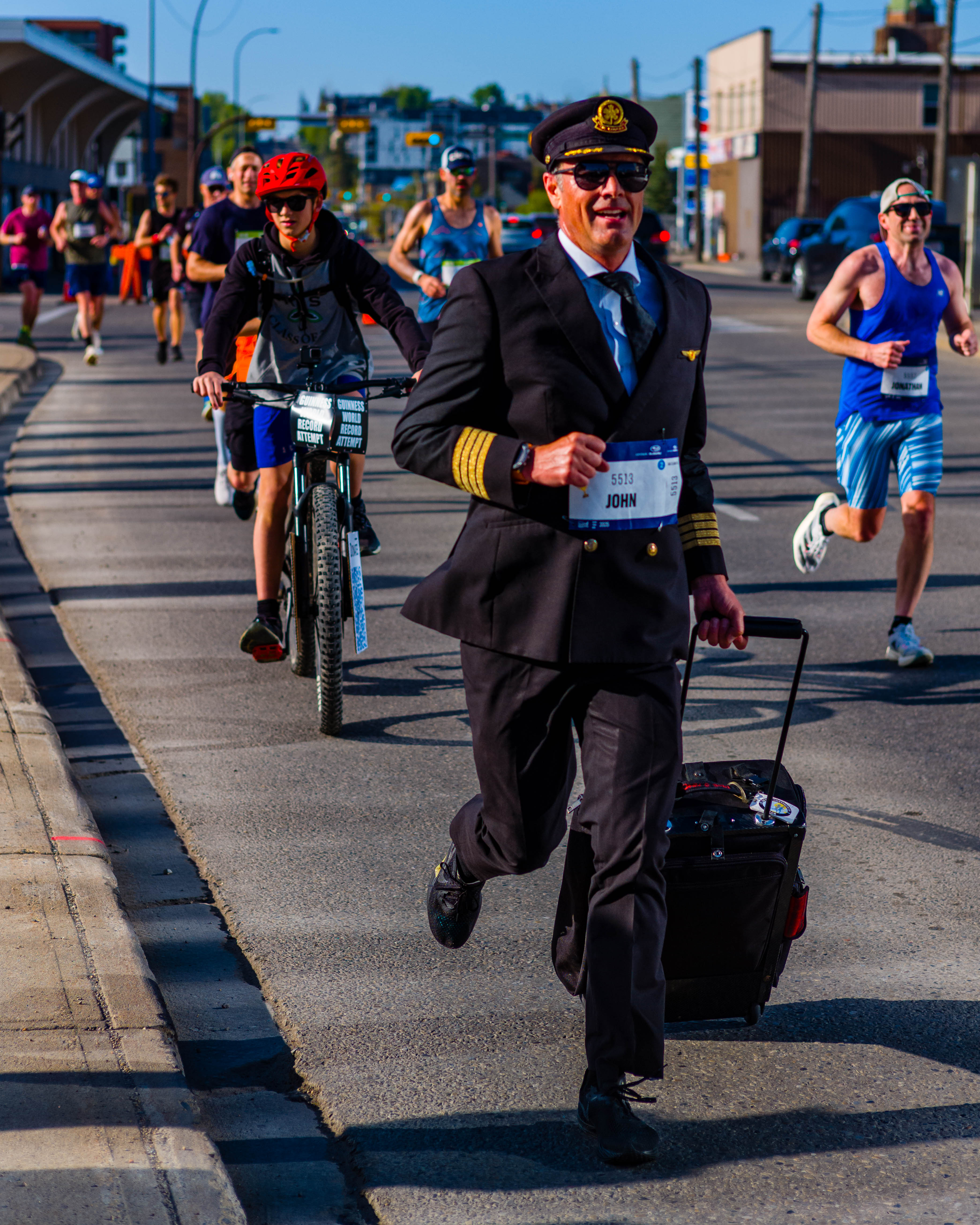
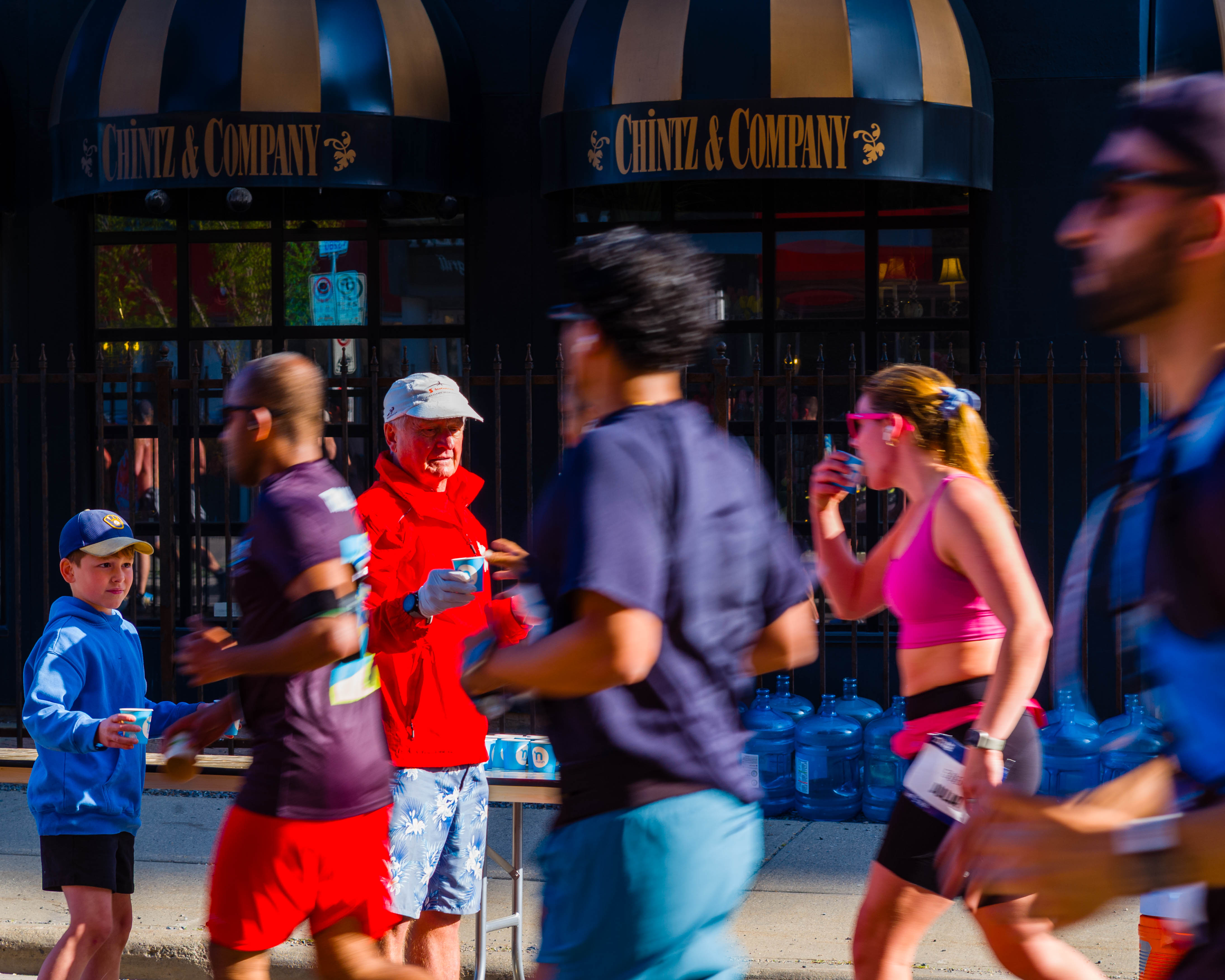
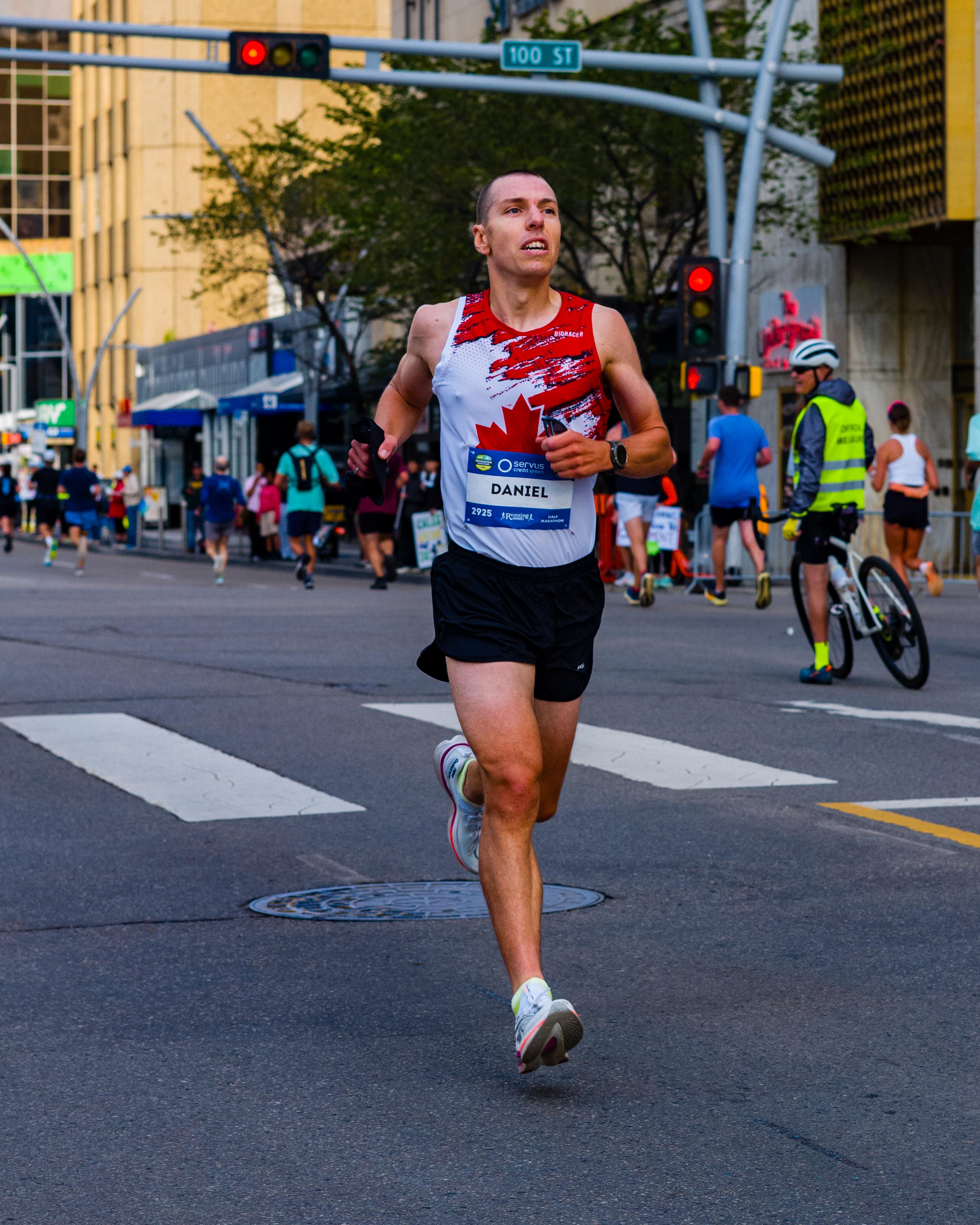
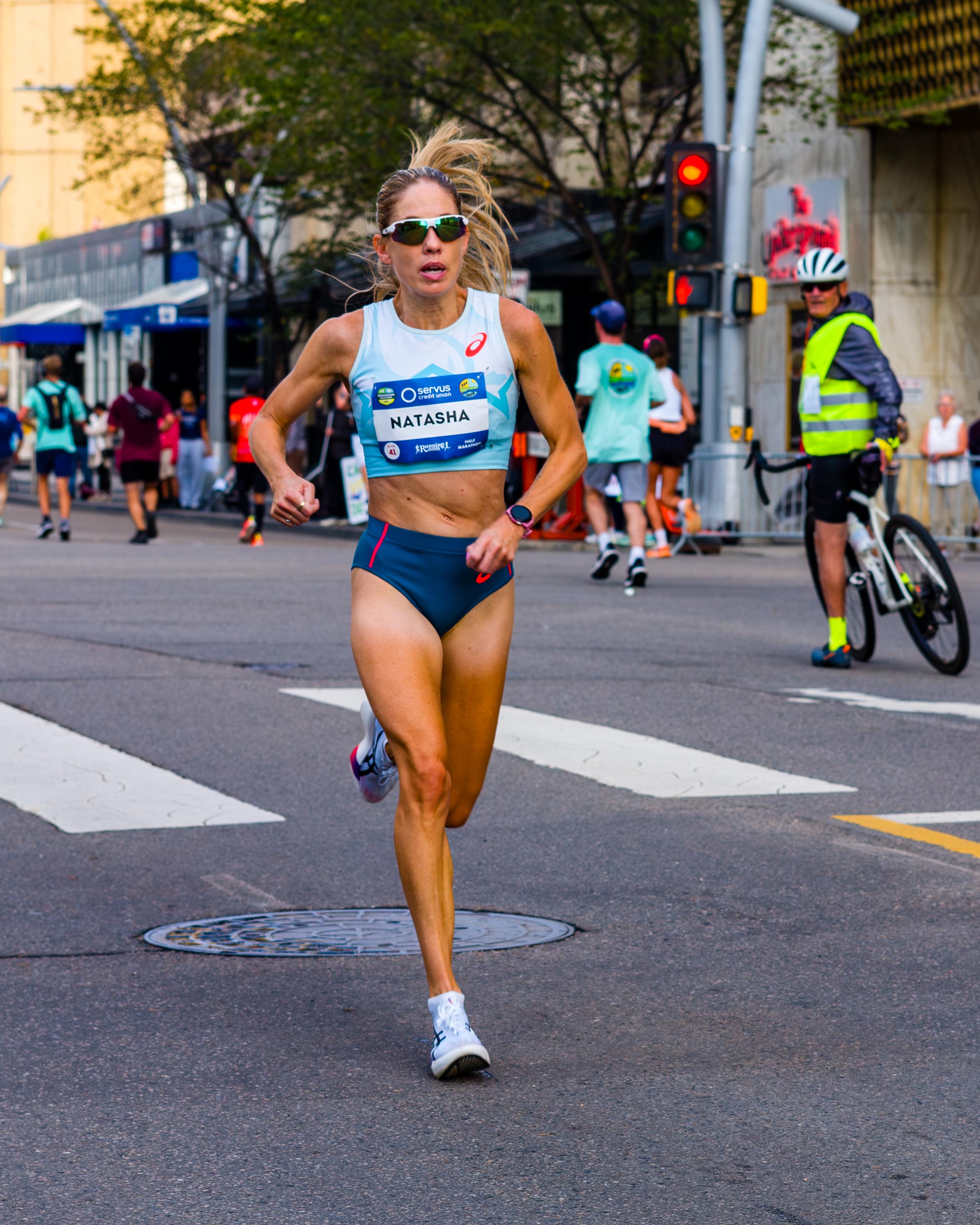
My days of preparing for and executing goal races are over, but I will never tire of being around runners. In 2025, I had plenty of opportunities to catch racing action in Alberta; cheer on friends and teammates; meet some very talented athletes; do some volunteering; and, of course, snap some memorable photographs. We also said goodbye to a dear friend. You can read about the major events on the calendar here, here, and here. Below is a small sample of my favourite running pictures from 2025:
Copyright for all photographs is mine.
Strokes
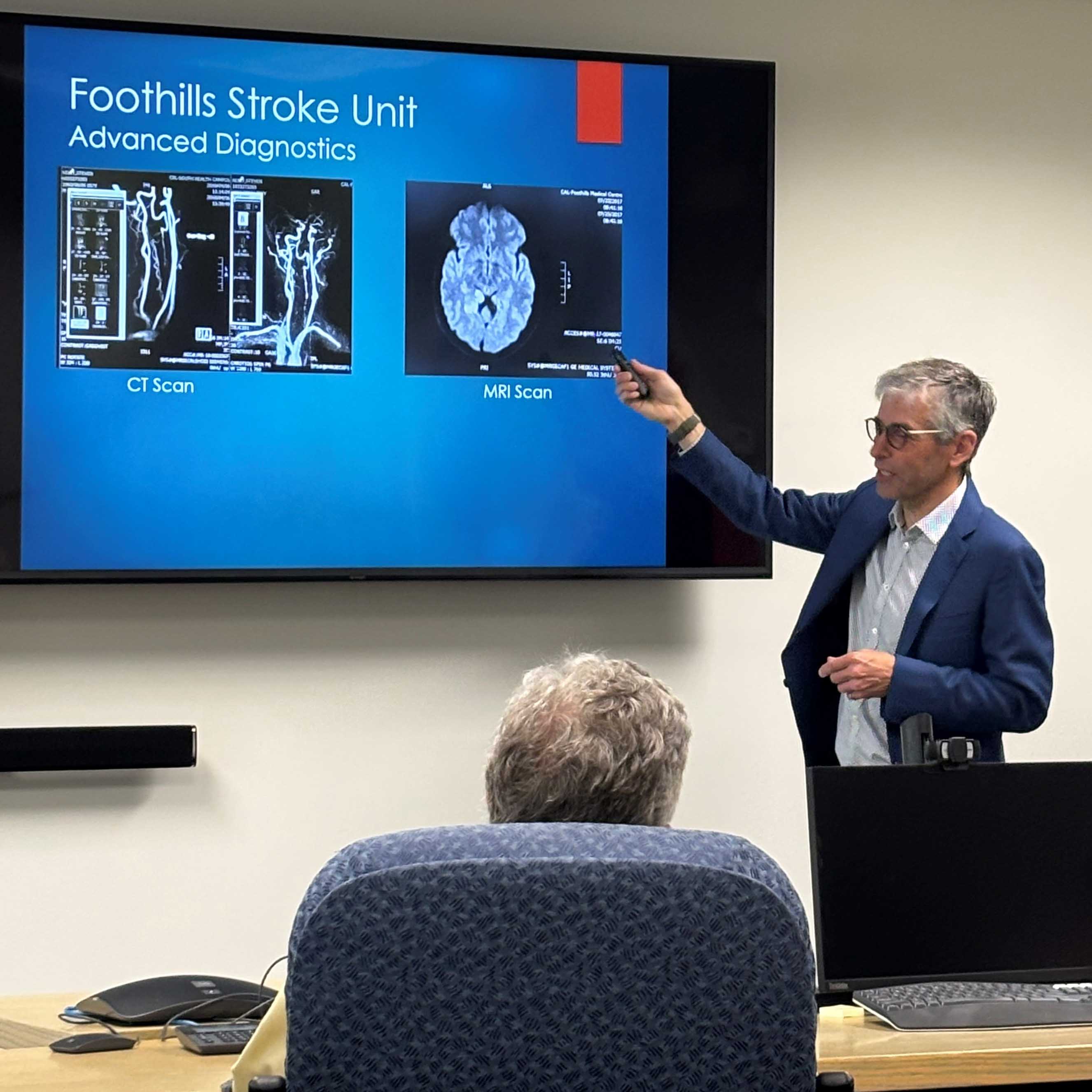
When I started on the path of self-publishing a book, I knew almost nothing about the process. However, I knew I wanted to share what I had learned about strokes, which are typically the fourth leading cause of death in Canada. And I wanted to give back in whatever ways I could, to support the essential work being done every day at the Foothills Stroke Unit and the University of Calgary.
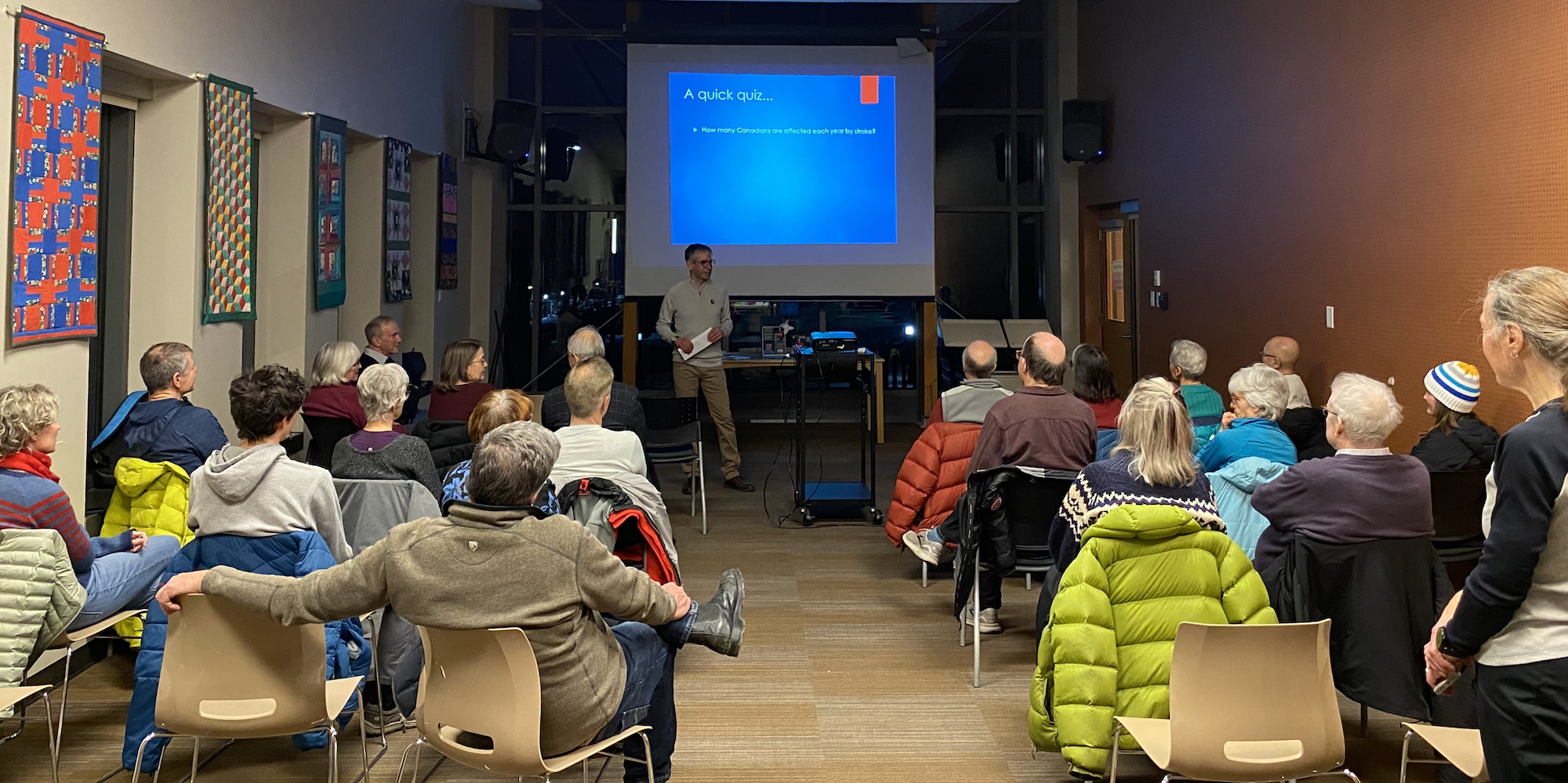
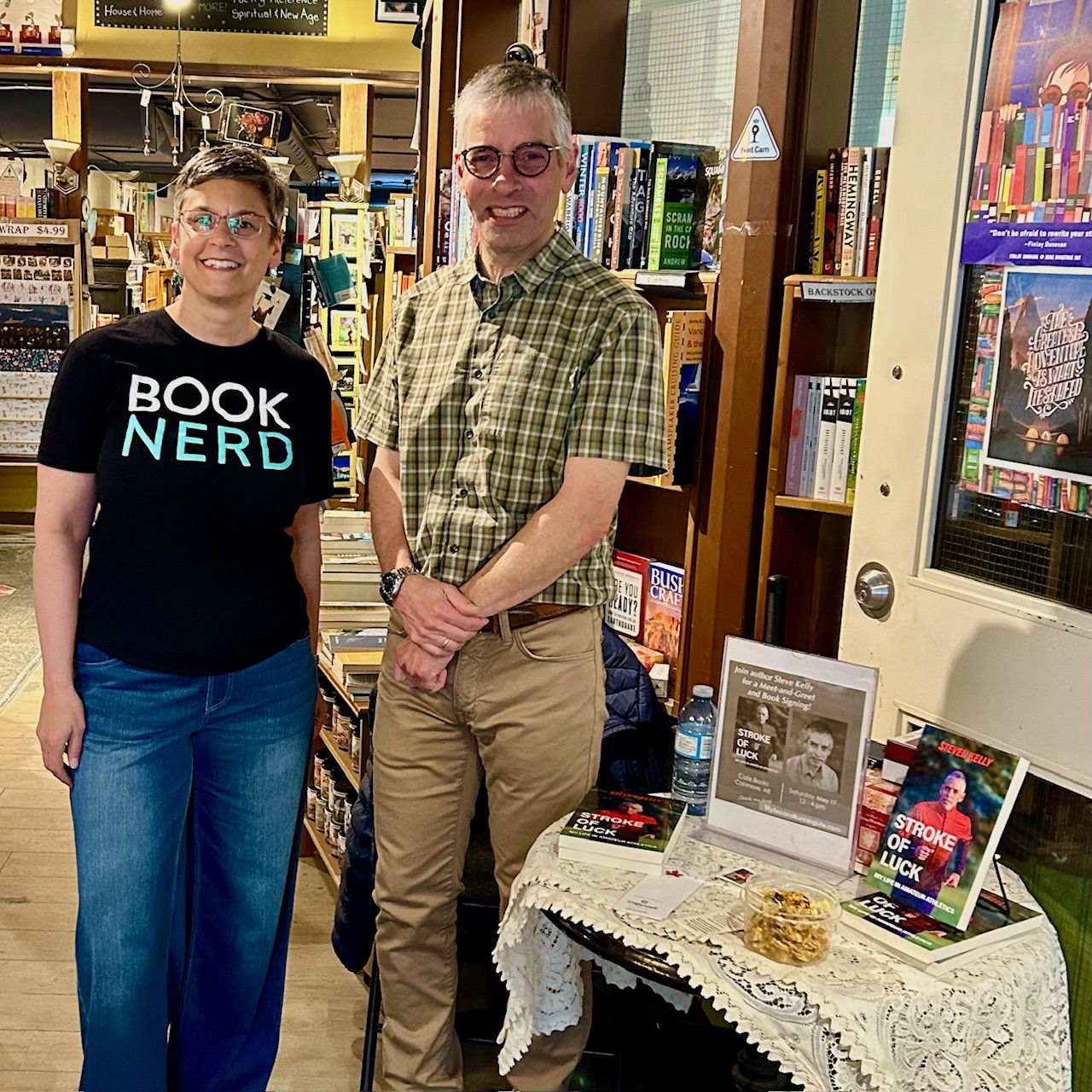
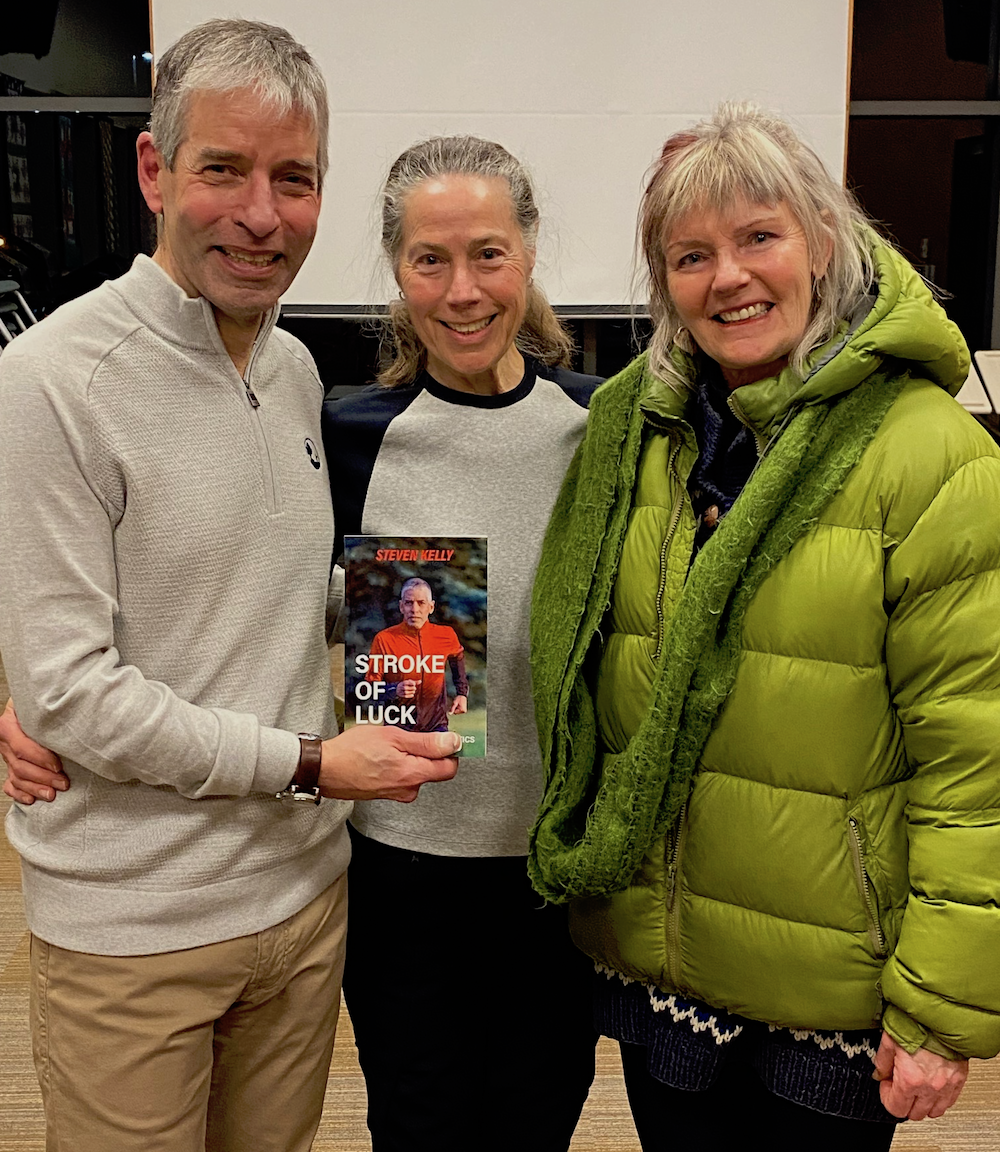
I was fortunate last year to have had several opportunities to tell my story, as written in Stroke of Luck. It’s extremely gratifying to share my key messages: the importance of an active lifestyle, awareness of the full range of stroke symptoms, and recognition of (and support for) the world-class stroke care and research being done at Foothills.
Naming everyone who made these events possible would be difficult. I appreciate the help of the Calgary Health Foundation to ensure that funds raised go where they should. Let me share a few photographs from events in Canmore, Edmonton, and Calgary:
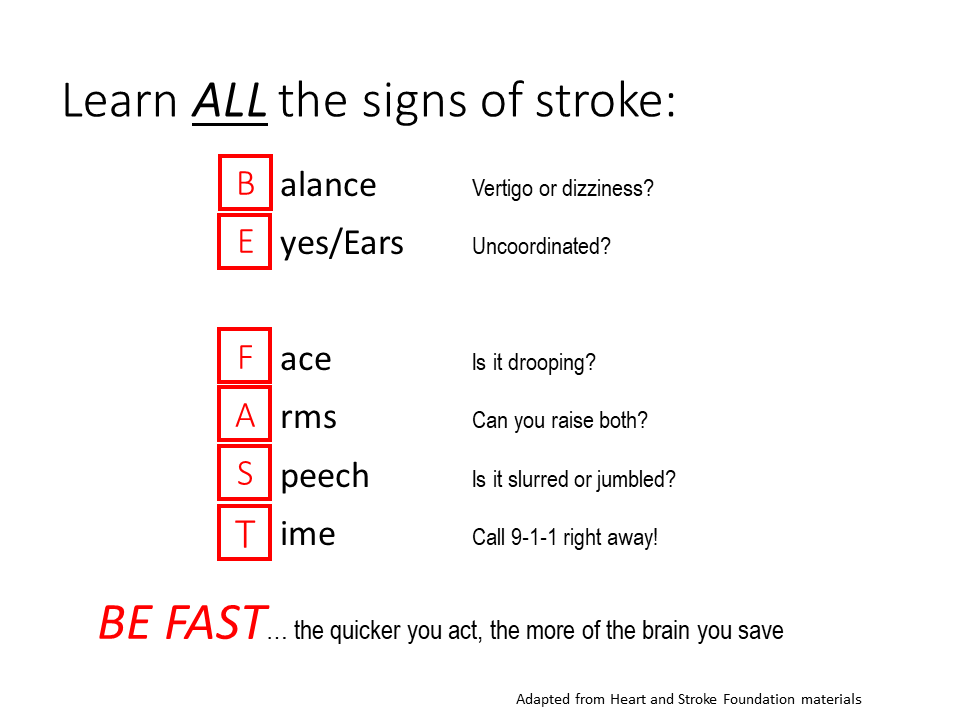
I close my posts with the acronym BE FAST, but it seems timely to remind my readers just what this small and powerful phrase means:
If you or someone you care about is experiencing any of the symptoms of stroke, don’t hesitate—call 9-1-1 right away! If you want to learn more, do check out some of these other posts on the blog: here, here, and here.
Other Photography
Photography has become my constant companion, on my runs and walks, in good times and bad. Believe me, the last couple of years have brought more than enough bad news. Fortunately, memories of family and friends that we’ve lost are a blessing that will sustain us.
I still prefer to carry a dedicated camera, although I find myself slowly giving in to the convenience of digital. I admit that I shot less film in 2025 than I have in previous years, and that’s a shame. In any case, here are some of my memorable shots from 2025 (all digital, as it happens):
Regardless of the format, my approach to photography is almost completely intuitive. Recently, a guest on my blog wrote that calling myself an observer may not be accurate. But that’s okay. I never know what pictures I’m looking for when I head out the door. What I’ve learned is that I should trust my instincts—if I see something that catches my attention, I should react to it. I plan to keep that going.
Goals for 2026
With a bit of luck and planning, I think 2026 will be a good year. The first good omen was the Sheep River Parkrun on New Year’s Day in lovely Okotoks. It was a perfect start to the year, as I was surrounded by good friends and my son Daniel.
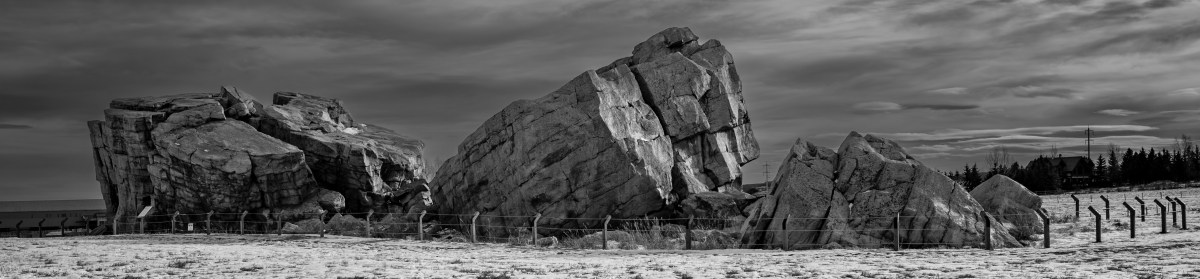
This morning, chinook clouds south of Calgary seemed to be calling to me. I drove in that direction and found myself back in Okotoks, at the “big rock” which gives the town its name. As I admired and photographed this impressive glacial erratic, it occurred to me that the rock is a symbol of my life—it’s not on the path that was expected, and it sits in pieces. I take solace that, like the rock, I have survived. It’s a fitting picture for the top of this post.
As I quietly walked around the famous rock, I thought about topics for future articles. One idea I have is a series of photo runs in my favourite Southern Alberta towns, including more shots on film. I think it will be a wonderful way to explore the history and culture of our province, while (more or less) staying in shape. So look for that, as well as more of my favourite photographs from life, and of course, news on stroke research and prevention.
I hope you’ll check in often. As ever, be well and BE FAST!
Just as Santa can be counted on for a visit in late December, we look to my friend Tim to reveal the details of the annual Prairie Mountain Winter Sunrise Hike. True to form, Tim set the date for the 2025 hike on December 29. Sunrise on that day would be, within a few seconds, the latest of the year.
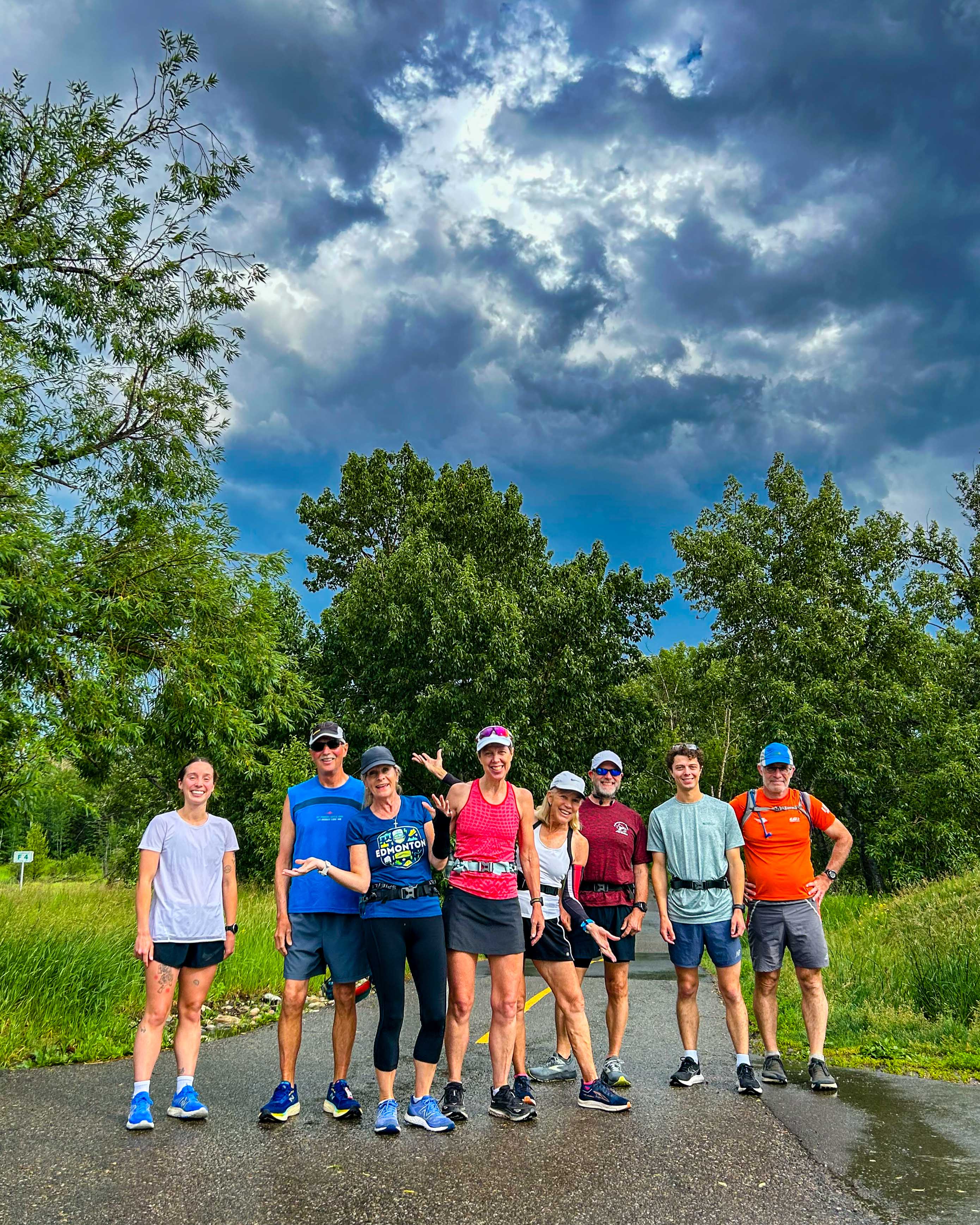
Working back from a target of 8:39:33 a.m., our convoy of eight hikers met up at the Tsuut’ina Subway on Buffalo Run Boulevard at 6:10 a.m. With practiced efficiency, we were geared up and on the trail by 7:00 a.m. We expected to have ample time to reach the summit.
I’ve posted on our previous PM hikes, and I’m pleased to say these pieces have been popular. In 2023, I shared photos of a beautiful sunrise in Part 1: The Hike and delved into the mysteries of the celestial world for Part 2: The Science. We were not deterred by last year’s cloudy conditions—you can read about that hike here. This year’s forecast suggested that the star attraction would likely make a return appearance.
For readers who are unfamiliar with Prairie Mountain, it is the most accessible mountain for Calgary hikers. Accessible doesn’t mean easy, though—this is a good workout at any time. Last year, I noted that the hike seemed to be tougher than what I remembered. This time out, I had the same feeling. I’m not sure I like that trend! One foot, then the other. Repeat.
The Hiking Bit
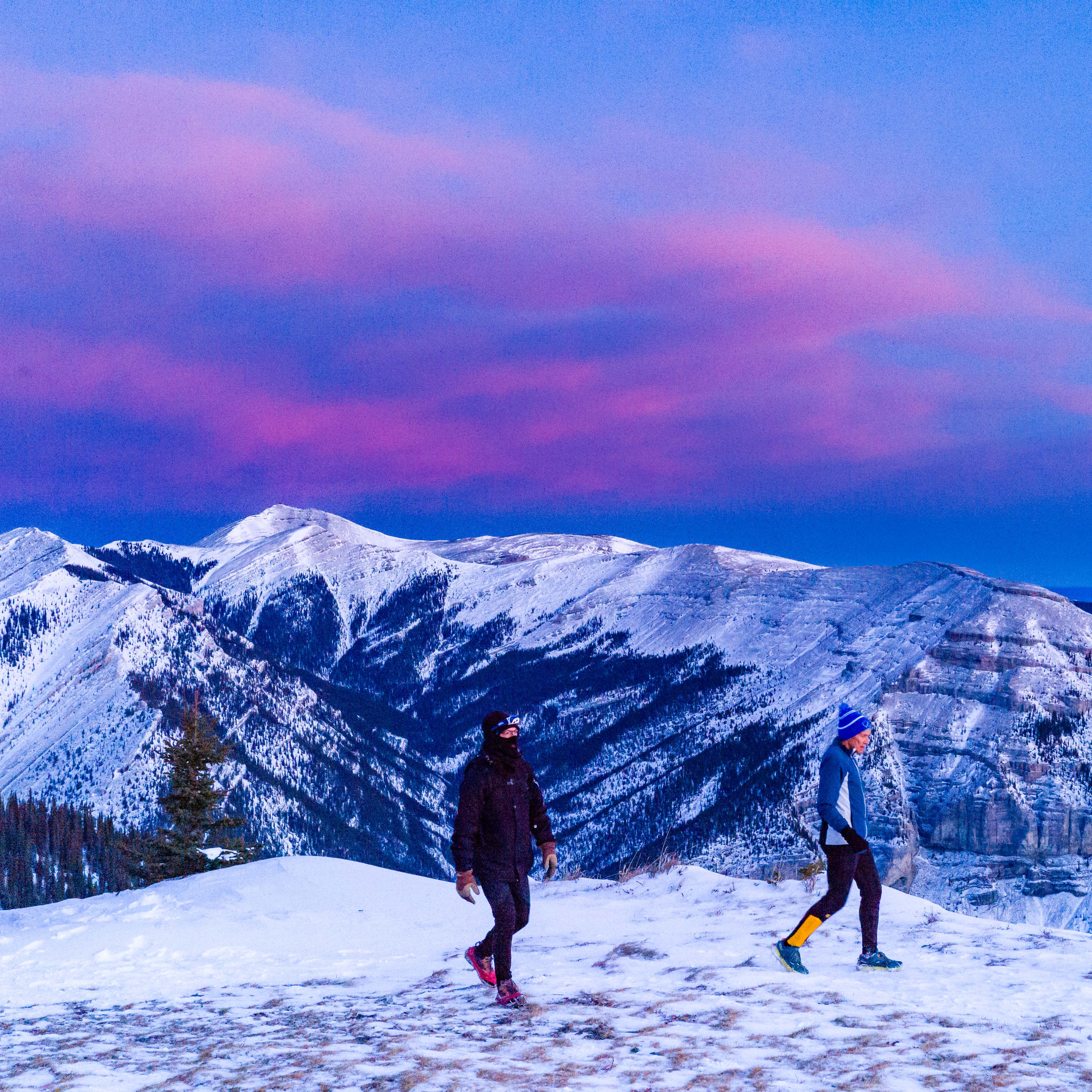
Given the snow-packed conditions on the trail, I was (again) very thankful for the new stone steps on the toughest sections. Even so, I welcomed a short pause at the first lookout, where we switched off our headlamps. I couldn’t help but notice the vibrant orange light to the east, which was already impressive as we approached the summit ridge. Were we too late?
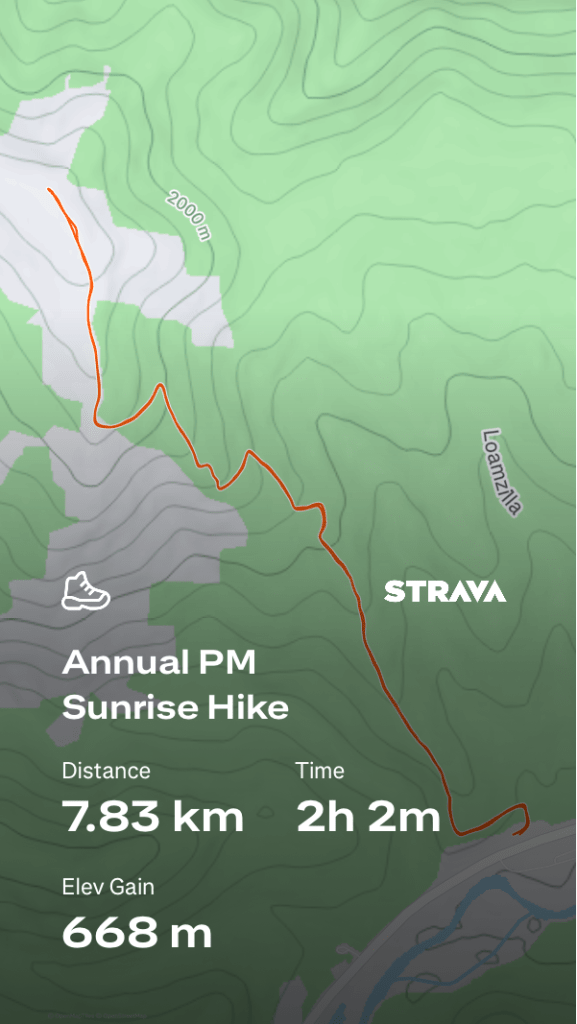
Because any PM summit is an impressive achievement, here’s my Strava activity summary.
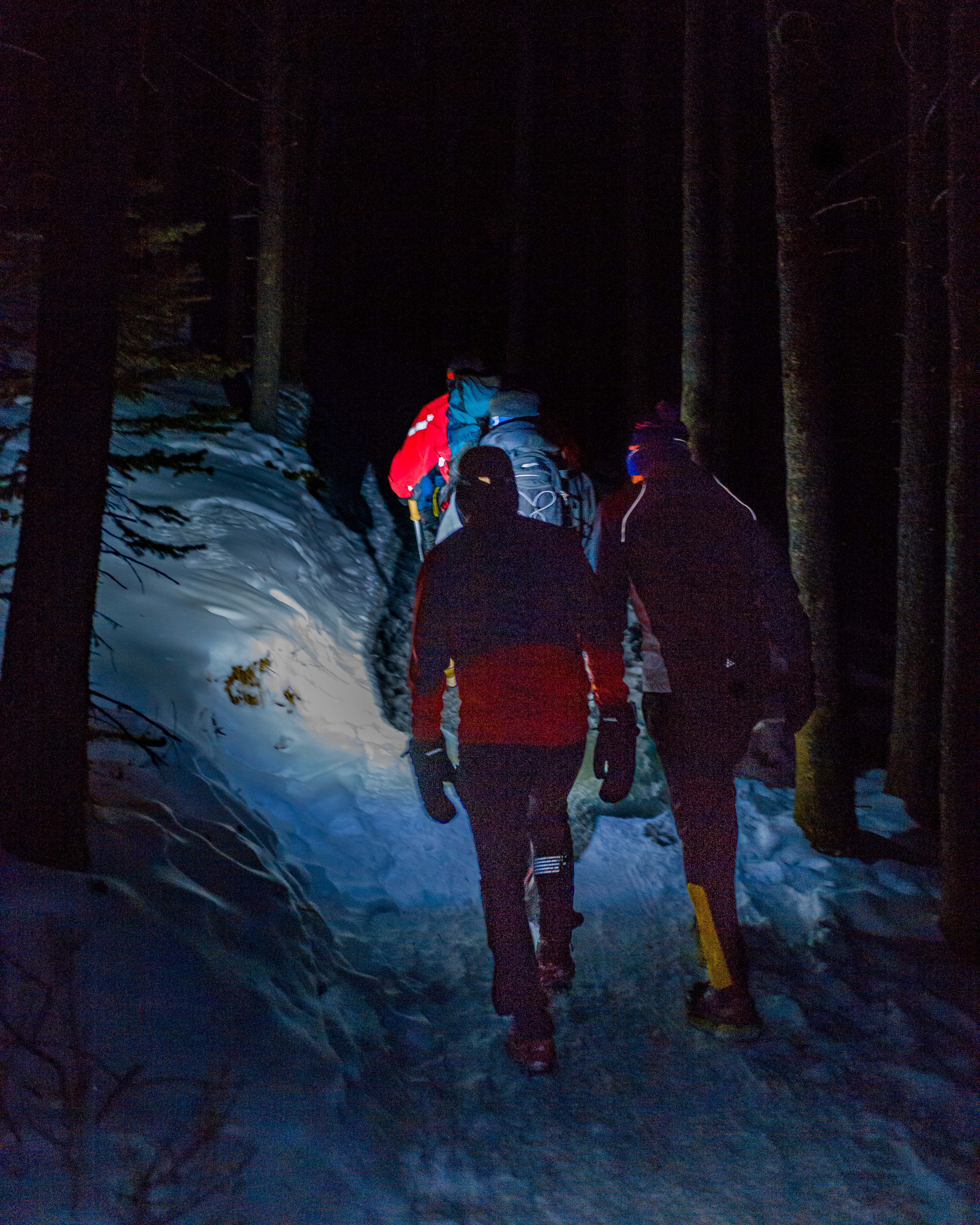
A few words on equipment. I decided to bring my “good camera”, the totally manual Leica M10. It’s a wonderful camera, but when you are bringing up the rear in the dark, as I was, adjustments are challenging. That meant I came home with blurry shots of my hiking partners’ backsides and severely underexposed images. Overall, I think the Ricoh GR III is better suited to this task. As always, my Kahtoola Microspikesand ancient red Komperdell poles were a necessity.
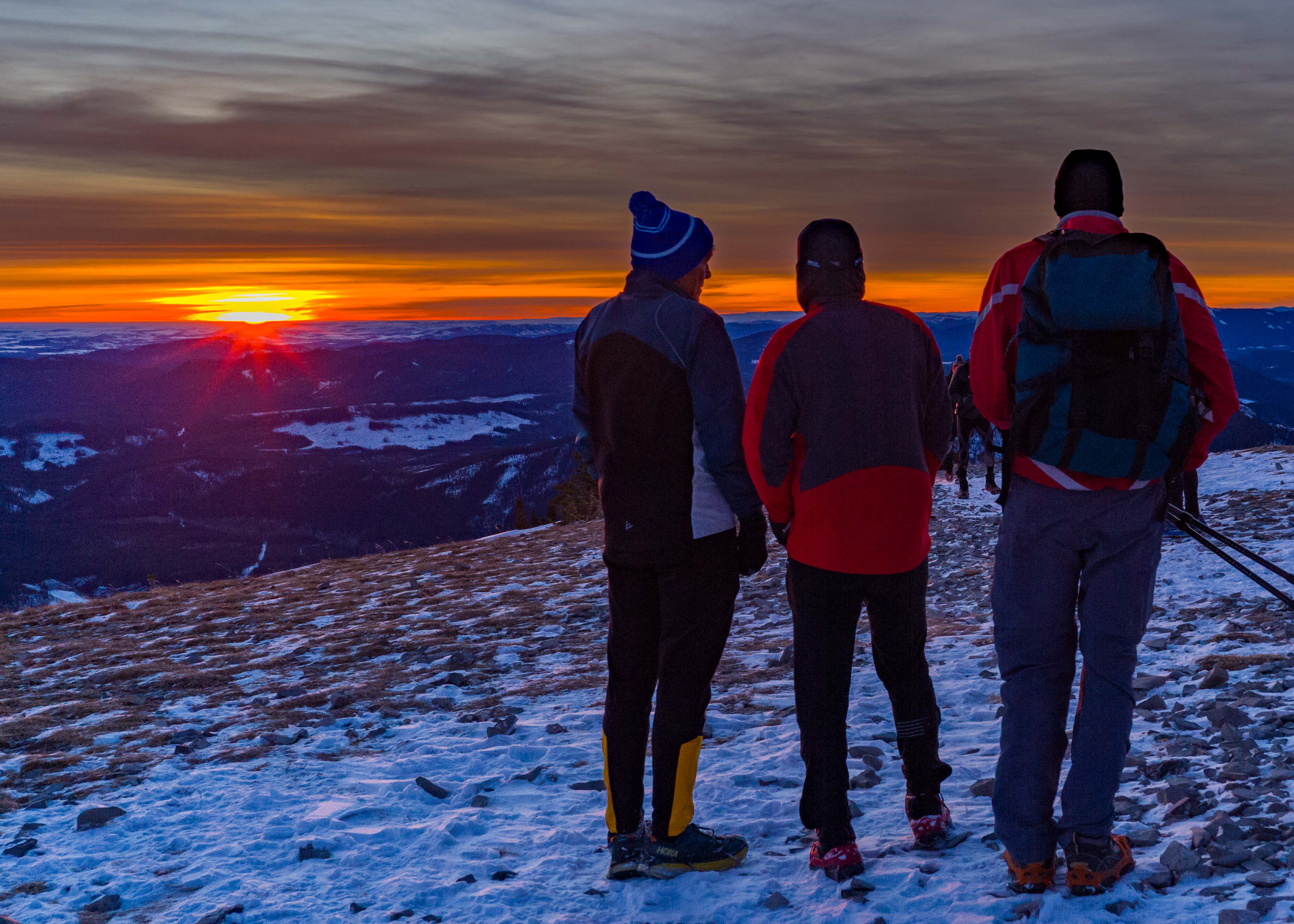
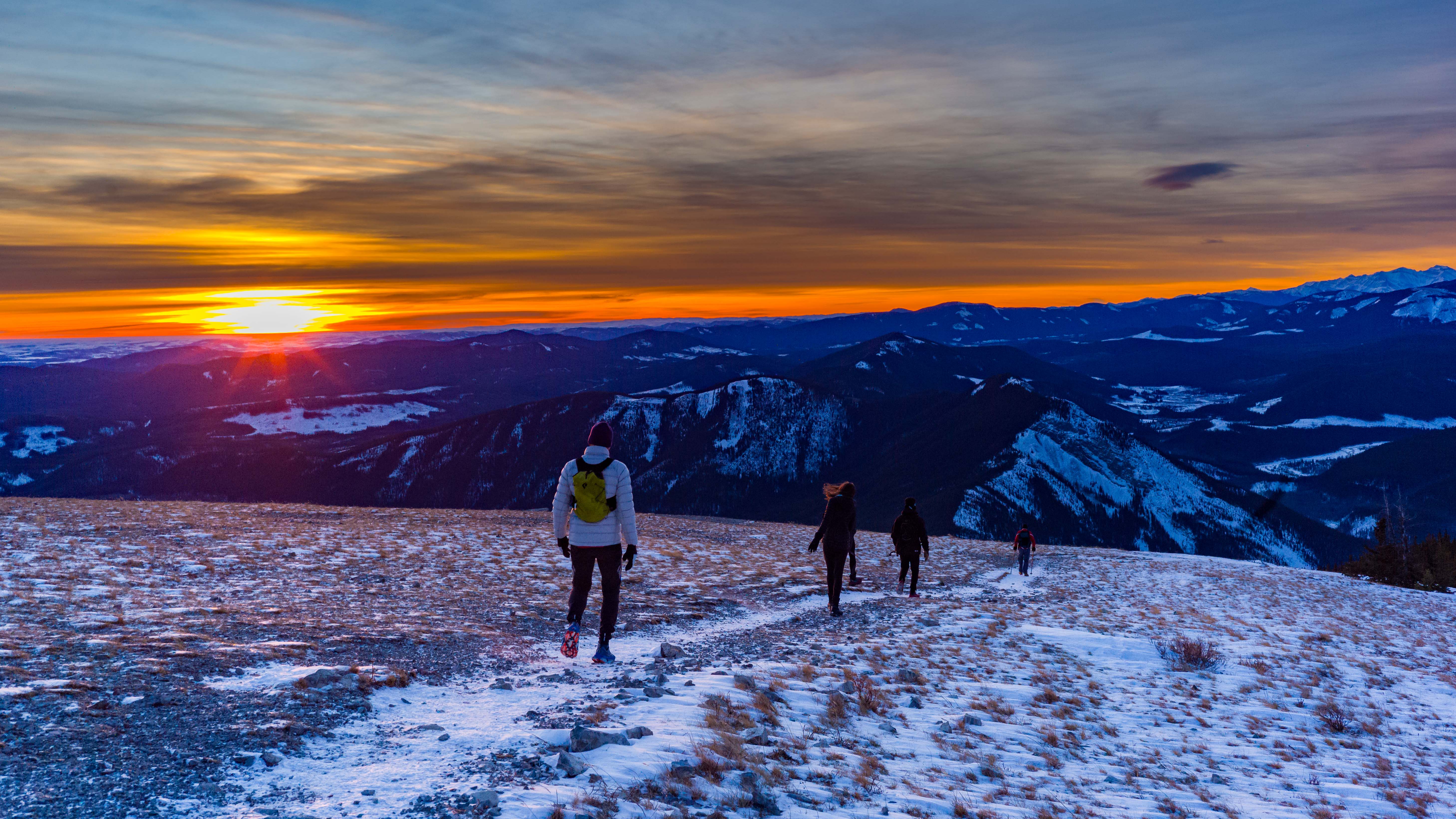
As usual, our group set a steady pace. (I hang around with some very healthy folks.) It’s hard to blame my comparatively slow pace on my photographic duties unless I present a few photos. So here’s the evidence!
Note: Copyright for all pictures is mine
We enjoyed the relatively mild temperature (-5C) and the shelter of the treeline for most of the hike. However, as soon as we reached the summit ridge, we were immersed in a strong westerly wind. We slogged the rest of the way up the ridge. The small Canadian flag on the summit cairn was no match for the stiff breeze. We headed for the shelter of a few scraggly trees below the summit to wait for the rest of our group. With fingers losing feeling, operating cameras and zippers became almost impossible. There was no loitering at the top on this day!
The Technical Bit
Given the challenges I mentioned with manual camera settings, I thought it might be interesting to present a comparison of my pre- and post-editing for one of this year’s key PM shots. I suppose this is called making lemonade out of lemons.
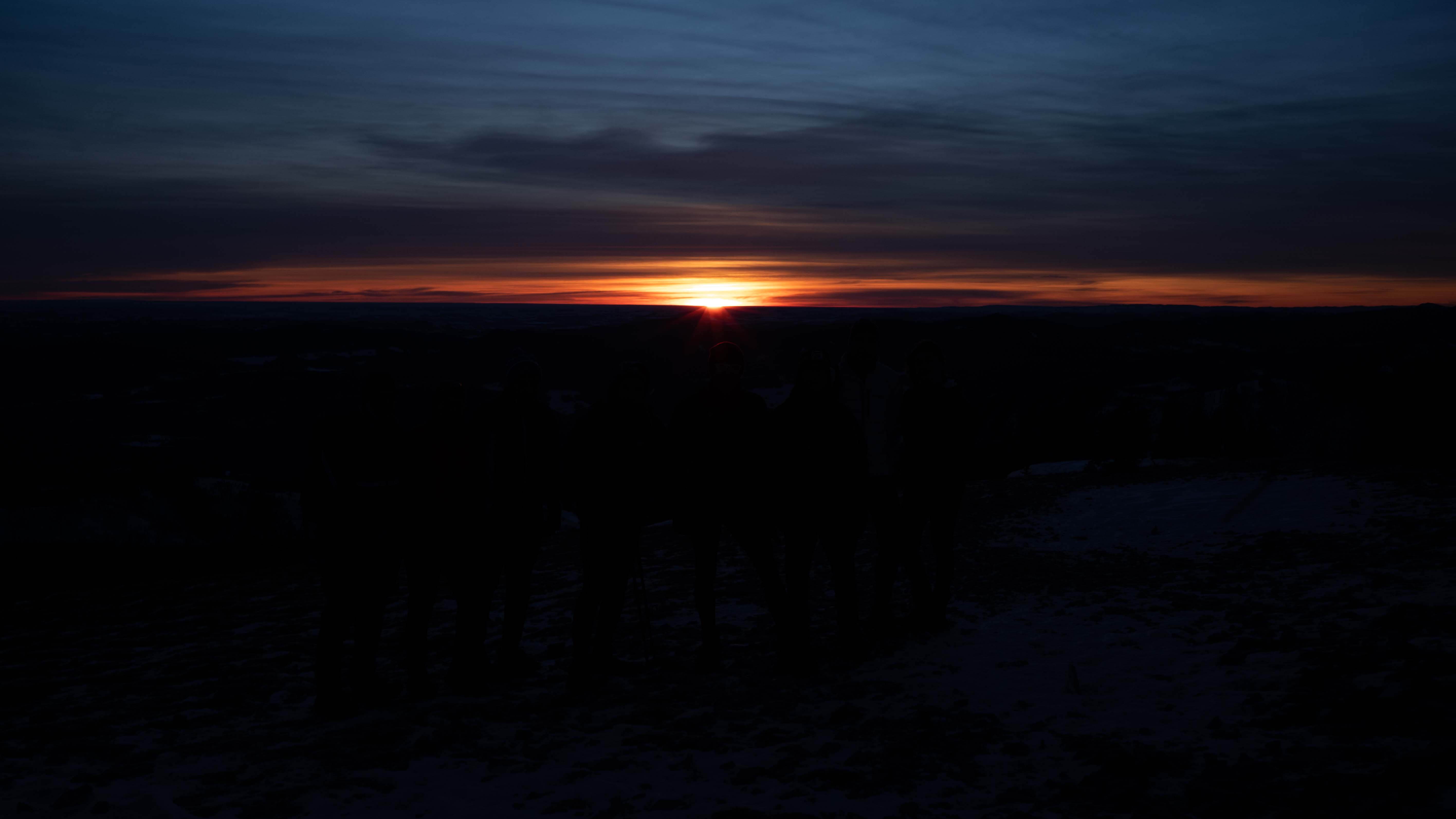
Of course, everyone hopes for a good group picture at the summit. This year, we imposed on a solo hiker who reached the summit just ahead of us to do the honours. Now, my comment that “the settings should be fine” must be tempered with the reality that I didn’t actually look at these before handing over the camera. Yes, I was freezing, the wind was howling, and for all I know, he had never touched a manual camera before. I’m fully to blame for any technical shortcomings. That said, my heart sank when I saw the images straight out of the camera. However, with some comprehensive (and slightly desperate) work in Lightroom Classic, I managed to extract a passable image. You can compare the before and after image here:
A hardy group celebrates another Prairie summit!
At the risk of losing some readers, I’ll summarize the edits I made to this image in my attempt to rescue it. First, I increased the overall exposure significantly—a whopping 3.5 stops. I think the meter was fooled by the sun in the centre of the image. Then I dropped the sky by a stop, and raised the foreground by almost another stop. I raised the white balance to warm the image up slightly. I dropped the highlights, mostly around the sun, and raised the shadows. Then I increased the saturation, clarity and dehaze. That left me with a noisy image, which I tried to fix using the latest AI tools in Lightroom. In the end, I gave up, as all this did was create artifacts that were, to my eye, worse than the noise.
So, as long as no one looks too closely, this is a fair reminder of what it felt like to stand on the summit that morning. My homework for next year is to be better prepared.
Wrapping Up
With the start of a new year, one is often moved to contemplate things that truly have value and be thankful for people who are important in life. I’m very fortunate to be surrounded by like-minded people who value fitness and friendship. And we are all blessed to have special places like Kananaskis just a short drive from home. Thanks, Tim, for getting us out there and up there again.
The annual winter solstice hike was a great experience and a perfect end to the year. Oh yes, the post-hike coffee and baked goods at the Handle-bar Cafe in Bragg Creek were delicious. And well earned.
Until next time, be well, BE FAST—and Happy New Year to all!
What follows is a story separated by exactly ten years—and a generation.
The Opening Act
The marathon was never my favourite distance, but over the decades of my amateur running career, I ran plenty of them. It was a love-hate thing. By 2014, I had sworn off marathons, and not for the first time. Then, I let myself be talked into signing up for the 2015 Vancouver race. I’ll leave the specifics of that part of the story for another time.
I had run the Vancouver Marathon once before, in 1993. I finished the race one minute on the wrong side of 3 hours, and I remember being quite disappointed. Why? Well, 1992 had been a year of personal bests. Naturally, I came into 1993 full of optimism. After the Vancouver race, I worried that I might have already peaked. And that was more than 30 years ago!
Heading into the 2015 race, I had been through a minor crisis of confidence. You see, I’d run a very poor Around the Bay Race in March 2014, and I was finding the preparation for a spring marathon during another of our nasty Calgary winters more than I could handle. All credit goes to my awesome training partners, Allison B and Ken S, who kept me going week in and week out. They deserve kudos for helping get me to the start line on May 3, 2015.
As for my race tactics, I had worked out a novel plan with coach Janice. The idea was to get me around the deceptively tough Vancouver course while avoiding the slow-motion crashes I’d experienced in some previous marathons. We decided on a series of four mid-race pickups, each 3k with a 1k easy recovery. Janice knew me well enough to realize that a series of tasks would help keep my mind from wandering.
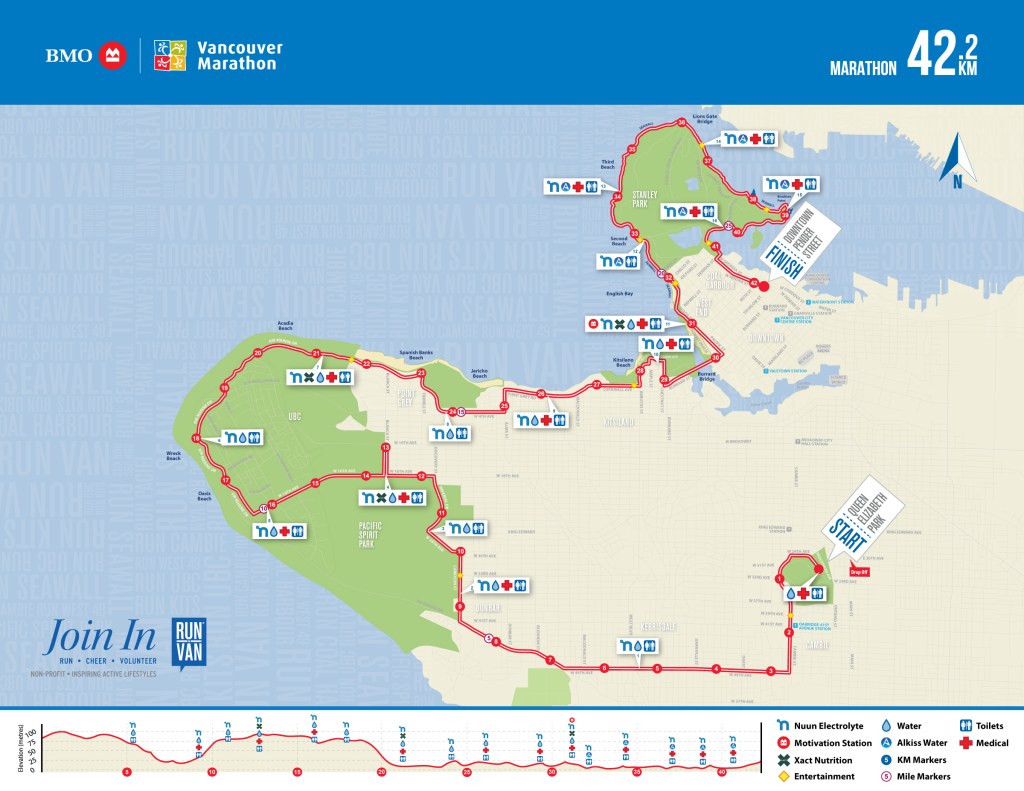
I had modest expectations. I could foresee some challenges on the 2015 course—still in use today—which was very different from the route I’d run years before. The first ten kilometres were mostly downhill. There was the Burrard Bridge at 30k. Of course, there was the 42.2k distance to contend with.
Our race plan worked like a charm. The 3k pickups were effective, and I got to 38k before my quads seized up—no doubt the price to be paid for the early downhills. Being a veteran of four decades, I didn’t panic. Instead, I managed my effort over the last few kilometres. Afer all, it was only a few minutes until the finish. Worst case, I might be a little outside my target range.
I finished in 3:18:04. Not bad. My age-graded time was the same as my PB, set many years earlier. It was a satisfying outing, and a prelude to the eventful years that followed. Again, I’ll leave those details for another time.
Daniel Delivers!
Fast forward ten years… to the best part of this story.
By the spring of 2025, our son Daniel had been a serious runner for at least 12 years. He ran his first marathon in Montreal, in 2014. Even as a rookie he methodically attacked the distance. In the intervening years, he’s taken on many different running challenges. The last couple of years have been especially rewarding for him. He’s been honing his technique and working on strength, speed and flexibility. So, when he set his sights on the 2025 Vancouver race, it was with the goal of improving his PB… significantly.
All signs were positive during his training cycle, and a speedy 1:12 half marathon in April hinted at something special. He overcame a niggling overuse injury to make it to the start line in Queen Elizabeth Park on May 4, 2025.
Major marathons now feature online tracking for spectators. As a result, it was a nervous morning for Deborah and me, as we watched the little dot that represented Dan work its way around the course. It seemed that I was reliving every step with him, through Pacific Spirit Park and the UBC campus (where he reached the half in 1:15:44), then through Kitsilano, over the Burrard Bridge and into Stanley Park for a lap of the seawall.
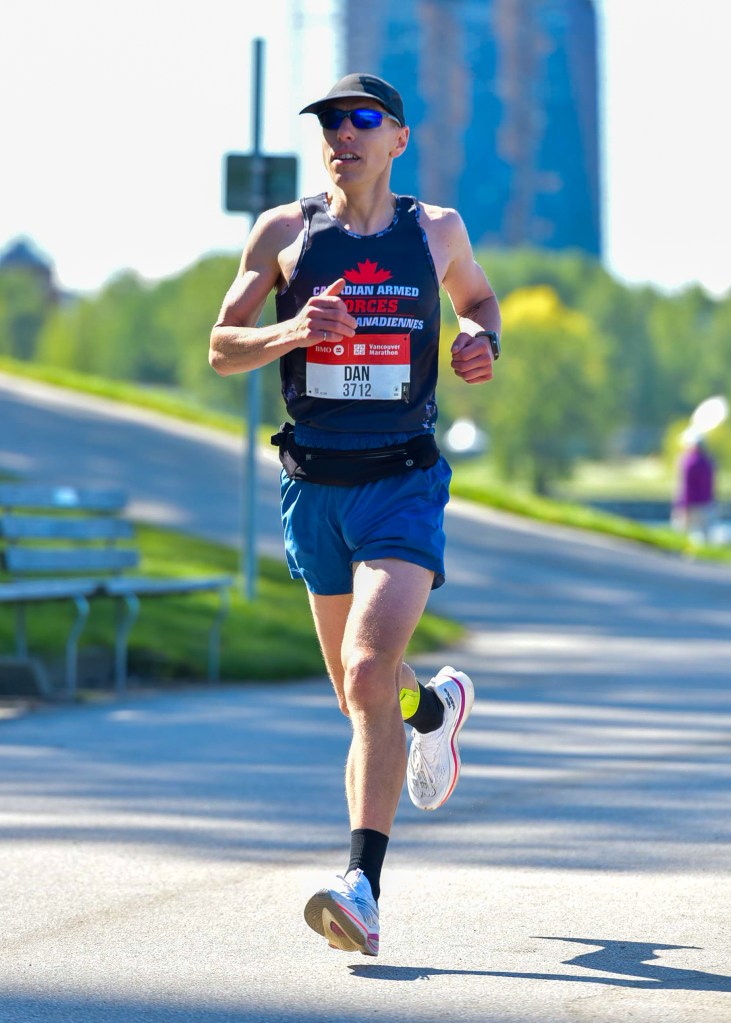
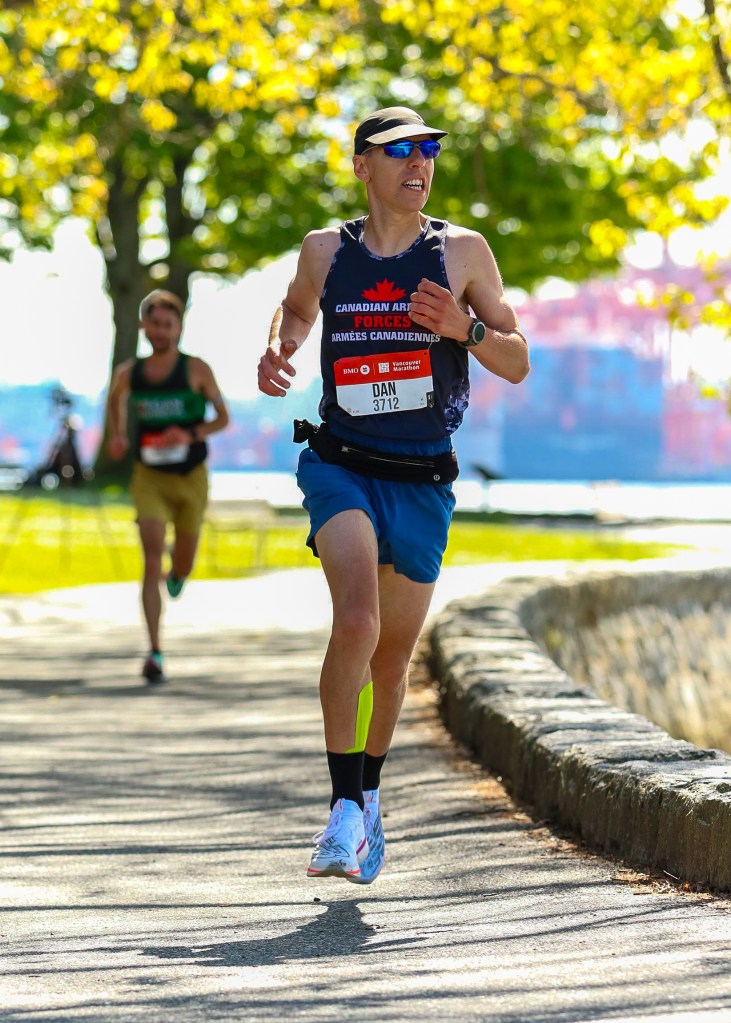
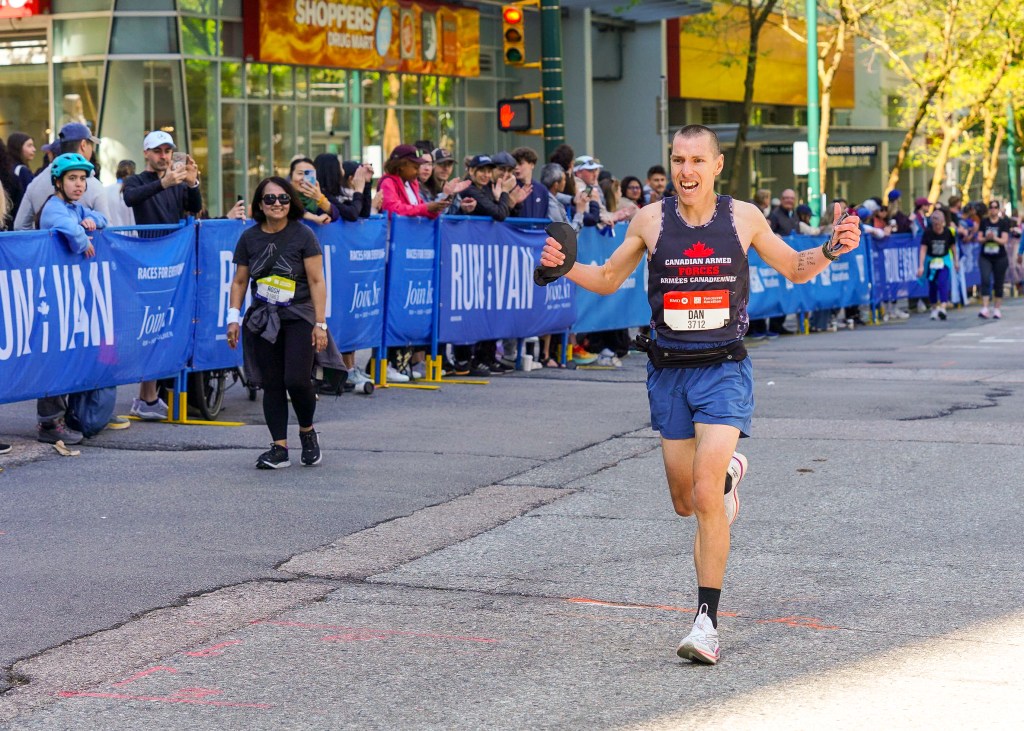
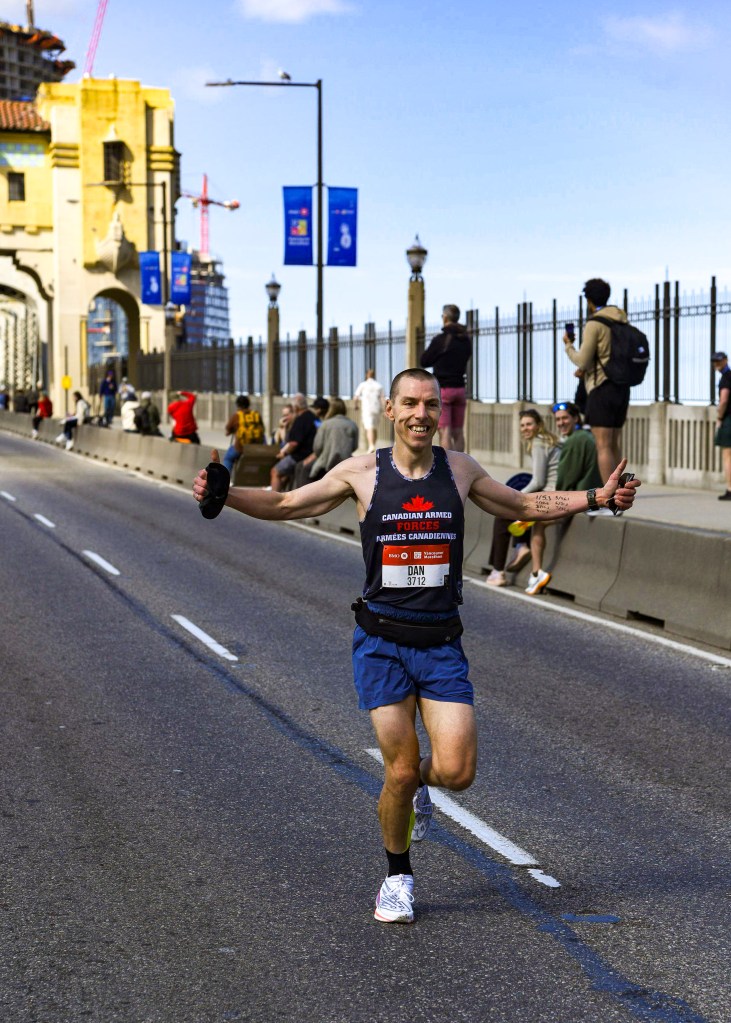
Dan’s early splits were speedy, but by 30k he seemed to be slowing. Was there a problem? We could only watch and wait, holding our breath. Once he got to 40k in 2:27:16, everything was looking good for a superb finish. He brought it home in 2:35:52. By that point I was yelling encouragement at my phone. He placed 21st overall in a strong field of nearly 7,000 runners. Amazing!
Here are some pictures from his awe-inspiring run (all from Marathon Photos):
Running strongA lap of Stanley ParkTo the finish!In cruise mode, coming off the Burrard Bridge
When we talked to him shortly after he finished, he was full of energy, relief and joy. He had been cheerleading with the crowds along the route. And his apparent slowdown? He had the presence of mind to ease off his pace slightly at 24k, to avoid aggravating his calf. Not only fast running but smart too!
It’s hard to find words to express what I’ve been feeling this week. Of course, I’m filled with awe and pride, as I consider what Dan has accomplished. Seeing my son reach a personal goal with determination and purpose makes me very happy. I know he earned this result—including the massive 15-minute improvement in his PB. Being a runner myself, I have a good idea how hard he worked for this. Running 2:35 puts him in the top 1 percent of marathon runners. I have often said he’s never set a foot wrong in his life, and that was perhaps never truer than in this race.
I wrote about the relative arc of our lives in Stroke of Luck, and while I may eventually think of something more profound to say, for now, I’m just relieved he finished and that he did so well. While I understand that a small part of this might be attributed to lessons he learned from me—from us—early in his life, this triumph is all his doing. If life were a relay race, I would be content knowing that the handoff has been made and the baton is safely headed to the finish.
And that might be an apt analogy, as the next challenge Dan will tackle is the annual Cabot Trail Relay on May 24, with a team called the Iron Lungs out of Toronto. He has run the race with them several times, and they (like us) know he will be a worthy addition to their squad.
I like to keep up with news from the wonderful sport of athletics, but I’ll admit to some recent frustration. I regularly scan the headlines from online sources, having largely given up on print media. I’m always interested in results from major road races and track meets around the world. To a lesser extent, I follow developments in equipment, training techniques and nutrition.
Lately, it seems that all I’ve read about is controversy. Some examples…
Twelve years after the race, competitors in the women’s 1,500m final at the 2012 London Olympics are still being disqualified for doping infractions. The race has been called the “dirtiest of all time”, with five of the 12 racers now banned. Maybe the last three finishers shouldn’t give up hope for a medal yet.
Two competitors in a collegiate 5,000m event were disqualified for wearing shoes that didn’t meet NCAA regulations for “stack height”. One racer set a massive PB in the shoes, the swift-sounding Nike Streakfly 2. If only they’d stuck with the lowly (and lower?) Streakfly 1…
A runner and social media influencer was banned for life from the Chinese Half-Marathon Championships after she was discovered to have worn a fake race bib. Not surprisingly, the perpetrator claimed she had been duped. The race is clearly popular: it received more than 150,000 applications, of which less than 10 percent were accepted.
The dirtiest race in history? (Photo from Daily Mail Online)The Nike VF2. Too stacked? (Photo from Canadian Running Magazine)
I could go on, but you get the idea. It’s all rather depressing. In my opinion, these stories detract from what I believe is STILL the greatest of sports. Athletics is getting harder to love.
The Problem
I’ll explain what I think the problem is, and it starts at the top echelon of the sport. It’s money. Pure and simple. Athletics has become a big, commercial business. There’s a lot at stake in the Olympics and other major championships. As a result, exciting races and great individual performances (and there are many) frequently get lost in controversy.
Cheating seems to affect athletics more directly than other sports. And I believe that stems from athletics being the most accessible of sports. Comparatively speaking, while none of us will make it to the NHL, any of us can lace up a pair of running shoes and find a road or trail to run on.
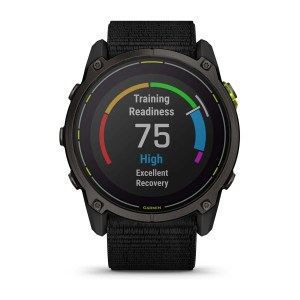
The accessibility of running is both good and bad. It’s good because of the health benefits that accrue from an active lifestyle. The negative part is that we can become overly influenced by other people’s opinions about what defines success in this sport. Today, influencers are everywhere. Technology imbues every aspect of the sport: race results are micro-analyzed, every kilometre is measured, workouts are instantly posted to Strava. Heck, our watches even estimate our recovery time… can anyone tell me why this is necessary?
Do I need this? (Photo from Garmin, for the Enduro 3)
All of this creates extraordinary pressure to always be improving. There’s a trickle-down effect, from elite athletes to self-appointed experts to average runners. We can wear the same carbon-plated shoe, use the same GPS watch, and gulp down the same gel as Eliud Kipchoge, while we chase every second in the marathon. And why not? What’s a few hundred bucks for the latest super shoe, if we would gladly spend thousands more once the shoes earn us that elusive race entry we’re seeking? (That reminds me of another recent headline. The 2025 New York Marathon received a record 200,000 applications for lottery entry… that’s up 22 percent from 2024. Good luck!)
I need to emphasize that the vast majority of runners compete fairly, and there is nothing wrong with taking advantage of the available technology. We have to recognize that some will be tempted to cross the line; many more will lose sight of what’s really important.
The Way Forward
A quest for constant improvement and achievement might make sense if we were professional athletes. (Not the doping stuff, of course.) But the fact is, we’re not.
From my perspective, which is that of an average runner… a pure amateur… with his best days behind him, let me offer a few thoughts on how we move on from these challenges.
First, recognizing that most of us will never make it to the top tier of the sport, we should celebrate rather than fight against this reality. To do that, we should define where running fits within our specific life puzzle. How you balance work, family and running is unique to you. Success in the sport should mean different things to different people. Give yourself permission to do your best, to let your performances ebb and flow, and most importantly, be content with the results.
I’ve written about the joy I now get from what I call photo runs… where I swap a GPS watch for a camera. For me, it’s been a way to get back to the carefree days when I took up running as a teenager. Then, I was an open book. I loved the freedom that came with running on a wooded trail or a quiet road. I ran in the shoes I had, and I used a cheap Timex watch. I discovered the rich history of the sport and followed great runners… true role models… before anyone had heard of doping.
If you are willing to ditch the influencers and find your own path (I call it finding your why) I think you might be better off. If that path becomes a journey to finish all six (sorry, seven) Abbott World Major Marathons, that’s fine. But if it means enjoying easy runs around a local park with friends, while wearing budget shoes, that’s fine too. Maybe better, in fact.