
It was a scenario that will be familiar to many runners. I arrived at our weekly interval session, only to find that my Garmin Forerunner watch had died. Given that our workout called for 600-metre repeats, and I had been tasked with leading a small group of new runners in our club, I had a sinking feeling. How would I measure our time and distance? And what about managing the pace for our group?
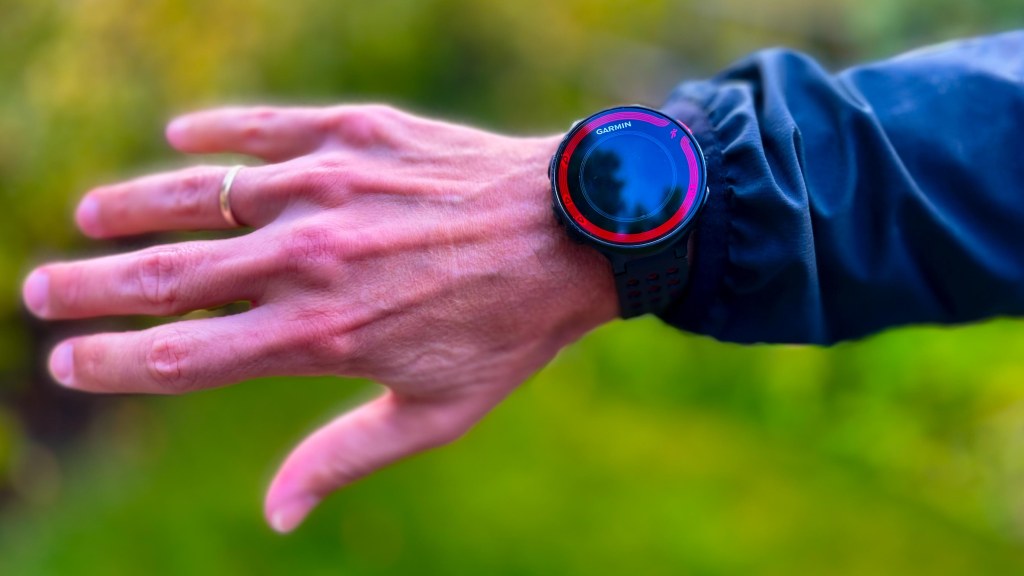
Fortunately, my training partners had fully charged watches, so we got through the session with no issues. But for me, going through the workout without a watch did make me think about the challenges of finding… maybe feeling is a better word… a specific training pace. That is especially true if we are building to a goal race, when pacing is most important.
Alex Hutchinson just wrote a piece on pacing for the latest edition of Canadian Running magazine. His article, Pacing for the Marathon, goes into the science behind pace-making and explores some of the latest research on the subject. Anyone who has tackled the monster that is the marathon knows how difficult it is to parcel out your resources over 42 kilometres.
Hutchinson’s article makes the point that the relationship between running speed and energy consumption isn’t a straight line, which argues for holding a steady pace in a race situation. In short, surges cost you more energy than you can get back by slowing down. The problem is that most runners tend to NOT run evenly-paced races. Of course, there are many variables that contribute to this result, including the course profile, our individual fitness, our perception of the distance itself, and the psychology of running against other competitors.
Hutchinson makes another point that seems to get to the heart of the issue. He notes that modern pacing theories focus on a runner’s subjective perception of effort. This suggests that with experience, a runner can learn how hard a pace should feel.
I couldn’t agree more.
This research supports the argument that we need to develop a good sense of what our target pace feels like.
I’ve long been a believer in doing at least some of my running without a watch, at least not a GPS watch. In my view, not every kilometre needs to be accurately timed. And besides, I think it’s too easy to rely on our high-tech devices rather than our own innate sense of what pace we are running.
Like most things, good pacing is a learned behaviour. We can work to improve it. For me, interval sessions are the perfect place to do just that. By working as a group, and especially by taking turns to lead a rep, we can improve our individual feel for pace.
There are also opportunities to improve our ability to dial in a pace in a race situation. For example, we can look for a local parkrun or low-key 5k or 10k race where we can practice finding and holding a goal pace.
Here’s another idea. Run a race (maybe not your major goal race) without a watch. See how close you can get to your predicted time. You’ll be training yourself what a certain pace feels like.
These skills can be very valuable on goal race day. I’m reminded of Trevor Hofbauer’s impressive run in the 2019 Toronto Marathon. At the time, his 2:09:51 finish was the second-fastest marathon ever run by a Canadian. Trevor ran that race without a watch, as he does with much of his training mileage. He said about his remarkable race, “I don’t use pace now, I just go off of time and effort. And that was how I ran today.”
I think there is something to be said for this approach. It requires a runner to be aware of how a given pace feels and trust in their training.
And what about our interval session, the one I ran without a watch? My internal watch told me we had kept a nice steady pace. When my partners shared their data later, it turned out that our pace for each 600m repeat was within a few seconds of our target. Not bad!

 My Second Running Life