Did you know that June is Stroke Awareness Month in Canada?
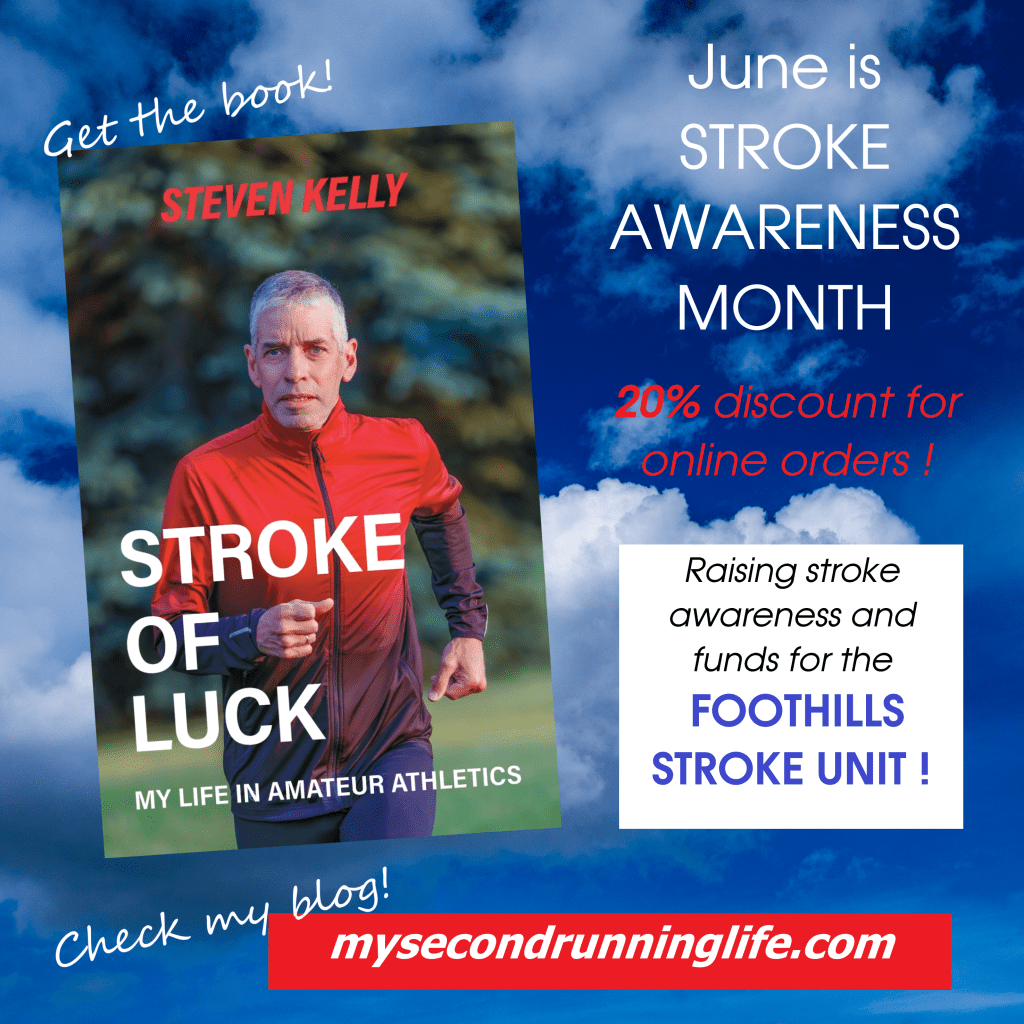
To recognize the importance of stroke awareness, I’ve extended the online promotion for my memoir, Stroke of Luck.
Get your copy on Amazon and save 20% until July 15. And help me help the heroes at the Foothills Stroke Unit!
Stroke incidence continues to rise in Canada – more strokes are happening and more people are living with stroke due to our aging population and more younger people having strokes. There are now nearly 110,000 strokes each year in Canada. That is roughly one stroke every five minutes.
Strokes occur due to an interruption of blood flow to the brain, and most strokes originate in the carotid arteries. The carotid arteries are the large arteries at the front of the neck. They deliver most of the blood to the brain. Carotid artery strokes produce symptoms that are familiar to many people, thanks to effective public awareness campaigns:
F – Face drooping
A – Arms can’t be lifted above your head
S – Speech is slurred or jumbled
T – Time to call 9-1-1
As I learned, strokes can also occur due to an interruption of blood flow in the vertebral arteries. These arteries are at the back of the neck. They are smaller than the carotid arteries, but just as important.
The symptoms of vertebral strokes are different than those originating in the carotid arteries because they control different bodily functions. Here’s what to look for as possible signs of a vertebral artery stroke:
B – Balance and coordination problems, like vertigo
E – Eyes and Ears behaving strangely, especially if uncoordinated
Taken together, these symptoms can be remembered by the words BE FAST.
BE FAST is an appropriate phrase, because regardless of the type of stroke, time is of the essence. If there’s any doubt, call 911 right away!
The arrival of summer in the northern hemisphere is welcome for many reasons. There is a minor downside, if one plans to make a sunrise trek to the peak of Prairie Mountain in Kananaskis: the early start. Of course, my friend Tim hatched the idea, as the perfect complement to our winter solstice hike last December. If you haven’t read my blog pieces for that epic outing, here are links to Part One (the hike) and Part Two (the science).
My first reaction was “I’m in!” Then, when the reality of the required 2:50 a.m. departure from Calgary set in, I found several excuses to bail out. To Tim’s credit, he persevered and he managed to wrangle a couple of friends to join him. He didn’t even mind sharing his photos, so I could pretend to have been there!
The Hike
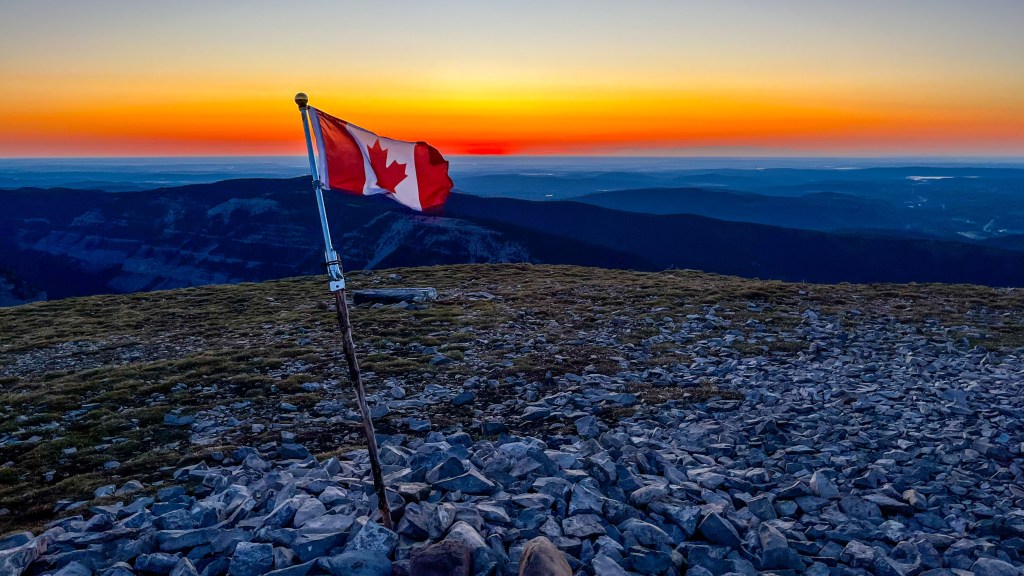
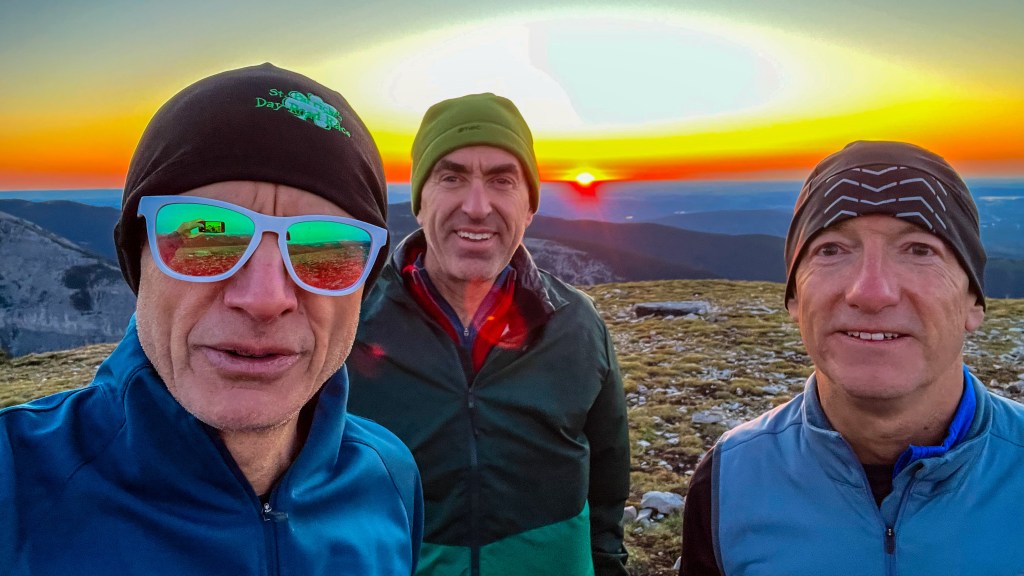
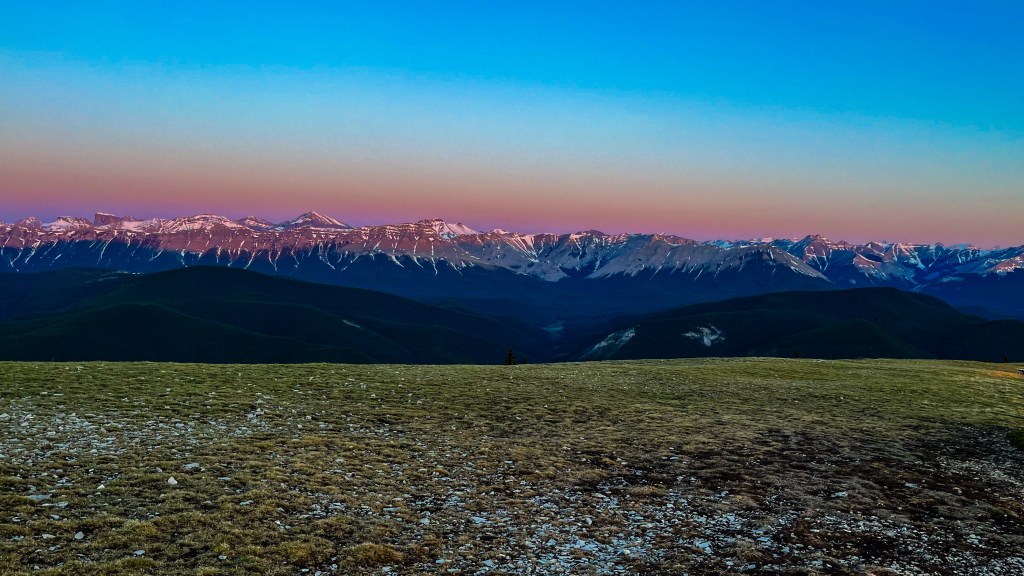
Tim, Jerry and Peter departed the Prairie Mountain trailhead at 3:50 a.m. and reached the summit in time for the 5:21 a.m. sunrise. Tim commented that it was amazing to see the full moon go down in the west while the sun was coming up in the east. He mentioned that while he knew the sun would break the horizon much further north than it did on the winter solstice, it was even more of a difference than he expected. More on that later.
With thanks to Tim, here are a few photos from their hike:
Prairie Mountain Sunrise / June 20, 2024 (Photo: Tim A)Tim, Peter and Jerry at the summit / June 20, 2024 (Photo: Tim A)Western vista, from the Summit / June 20, 2024 (Photo: Tim A)
The Science (abbreviated)
For the winter solstice, you may recall I did some research on the unexpected timing of the solstice, and why the day with the latest sunrise wasn’t the same as what we think of as the shortest day of the year. If you are interested in orbital eccentricity, angles of obliquity, solar days, and other astronomical wonders, you can read about them here.
Since it’s summer, and I’m feeling a bit lazy, I did a shortened version of the research. You’ll be happy to know that I confirmed the same factors affect the timing of the summer solstice. Here’s what I found:
The summer solstice occurred at 2:50 p.m. on June 20
The earliest sunrise was at 5:20 a.m. on June 16
The longest solar day was 16:33:17 (hh:mm:ss) on June 20
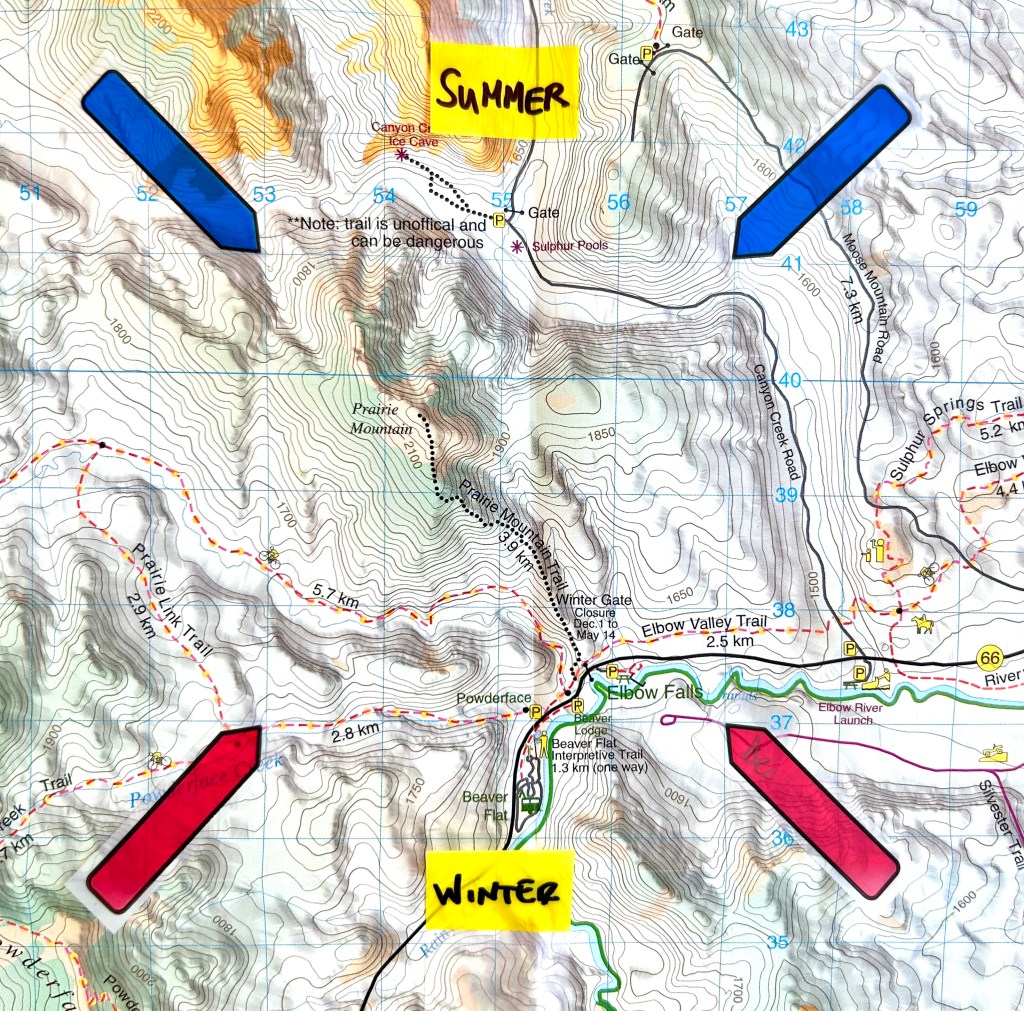
Tim’s comment about the sun’s compass direction at sunrise on June 20 compared to the direction on December 29 got me thinking. I marked up a trail map for the area of Prairie Mountain. The arrows show the sun’s compass direction at sunrise and sunset, on the summer (blue) and winter (red) solstices, respectively. What’s interesting is just how much the sun’s coverage changes between the two solstices.
Sunrise/sunset compass directions at the solstices, Prairie Mountain
The apparent travel of the sun (because it’s the earth that’s moving around the sun, after all) is from 128 degrees (roughly southeast) at sunrise to 233 degrees (roughly SW) at sunset on the winter solstice. That’s a span of 105 degrees. In contrast, the sun traverses a range from 49 degrees (roughly NE) to 311 degrees (nearly NW) at the summer solstice—a span of 262 degrees.
While flipping through some recent pictures, I realized I was “seeing” them in either black & white or colour. This was before I had started doing any editing. My mind seemed to be jumping to conclusions about the end result.
Maybe this was inevitable, as I must have “seen” some version of the final image before I pushed the shutter button. Was my initial visualization strong enough to override any subsequent artistic choices?
I try not to limit myself to one expression or another, and I take plenty of photos in each style. My preference is for black & white images. Many of the photographers who have made an impression on me worked mainly in monochrome. Adams. Cartier-Bresson. Schaller.
That would be a good idea for a future piece… the photographers or the images that have been most impactful for me. But for this piece, I wanted to explore the idea of initial visualization and see if that process might be acting as a barrier to my artistic ideas. I picked several recent images, more or less at random, for the following, non-scientific analysis.
Sedona Landscape
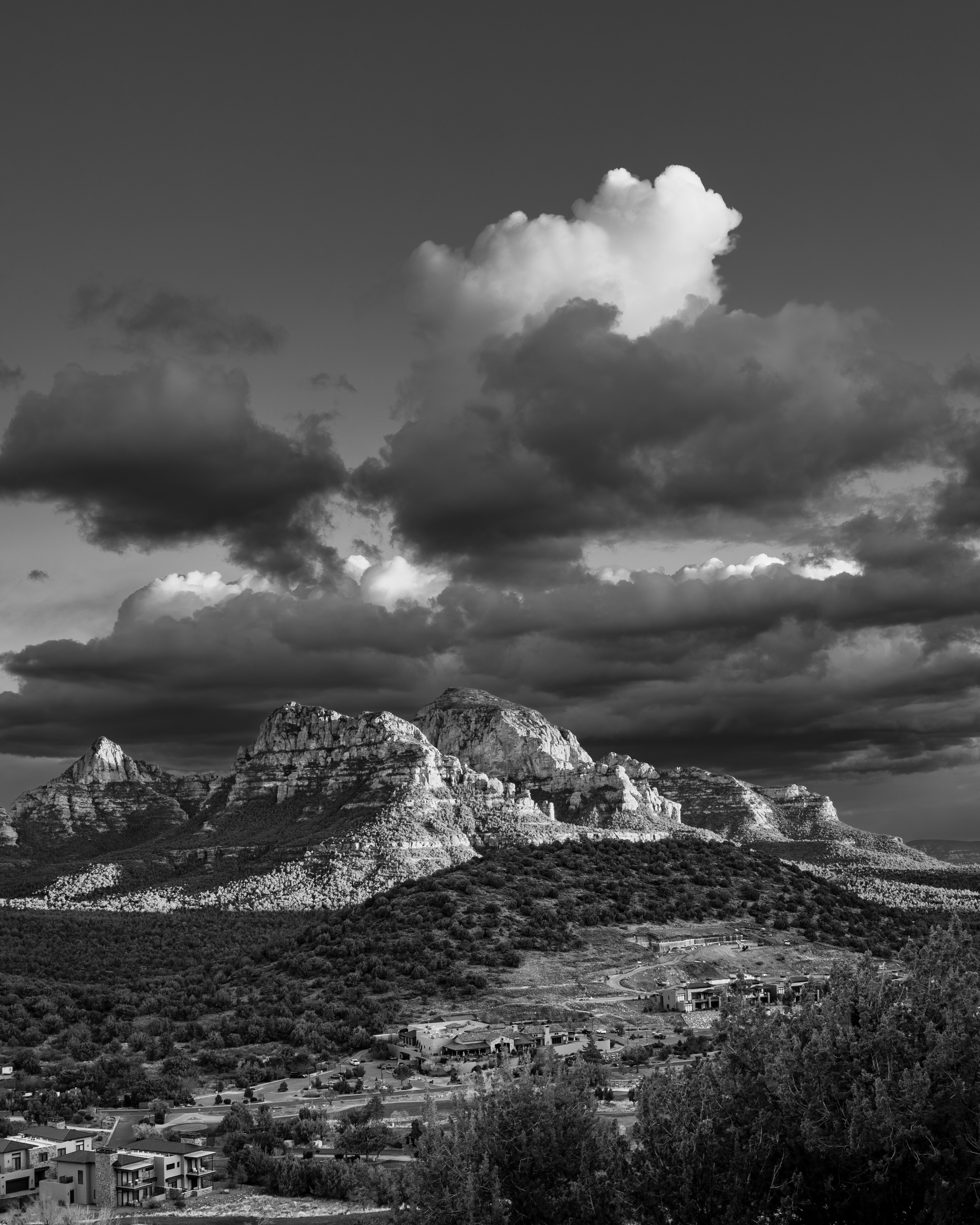
The first image was a landscape, highlighted by the setting sun and building clouds over the peaks in Sedona, Arizona. There’s no doubt I imagined this image in bold monochrome. I shot it using my favourite JPG setting in the Ricoh GR III: hard monochrome. The in-camera JPG looked promising, on the tiny 3″ viewfinder screen. I couldn’t wait to see the image in Lightroom.
I hadn’t even considered the option of a colour version of this image, but maybe I had been too hasty. I reimported the image and forced myself to ignore the monochrome button. This is a comparison of the two versions:
Evening clouds, Sedona (March 2024)
To my surprise, I found the colours in the foreground… the famous red rocks of Sedona… to be a distraction. This wasn’t the result I expected. The dramatic clouds, which I was able to set against the sky with a red filter effect, were hardly noticeable. Instead, they were competing for attention. I had to go with my first instinct. This photograph is better in monochrome.
Cold, Icy Calgary
My second image was totally different from the picturesque scene in Sedona. We had returned to a late blast of winter in Calgary. It must have been some blast, based on the icicles that were hanging from every rooftop. A photo opportunity!
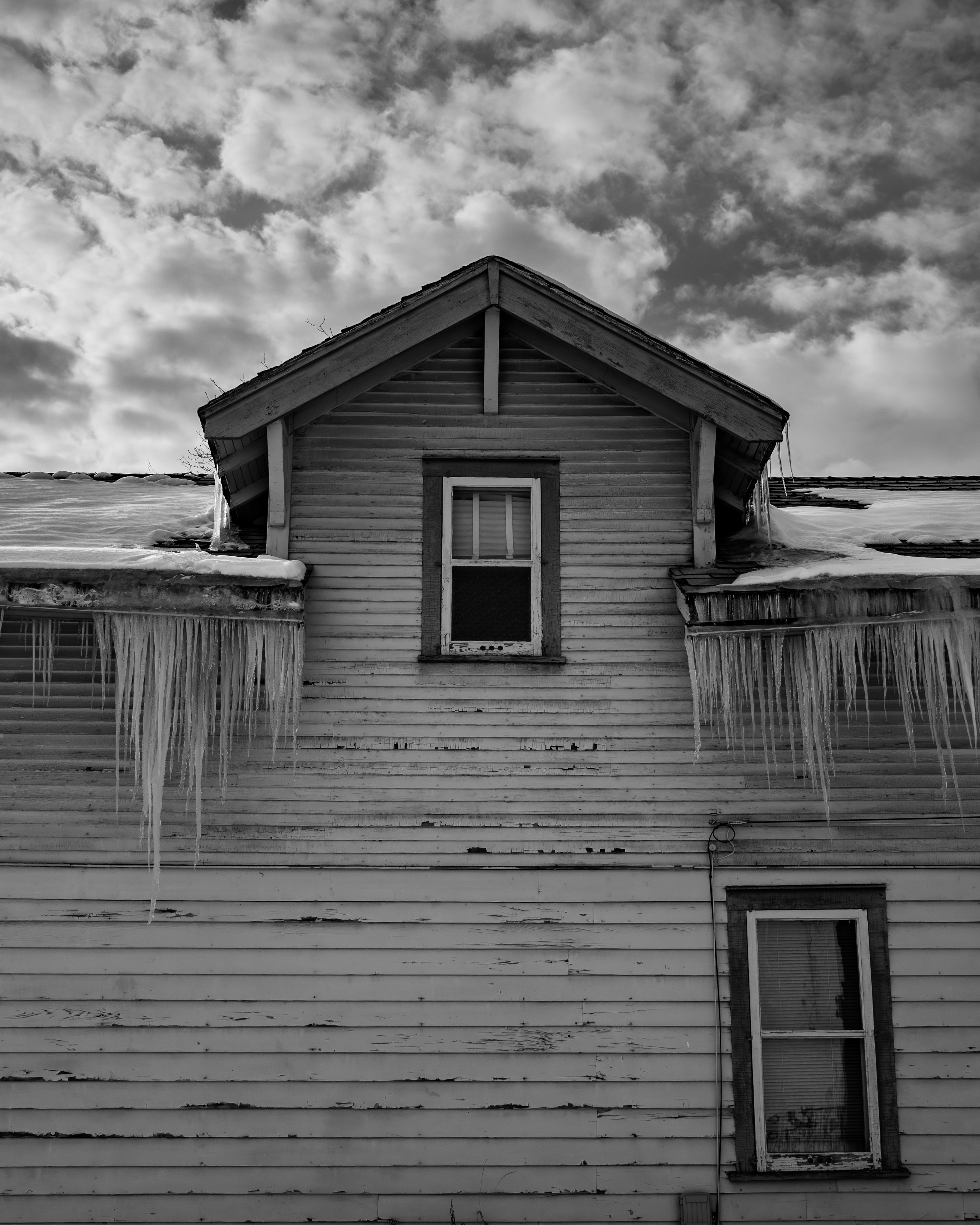
As with the landscape, I saw this roof and its crop of icicles in black & white. Texture and lines, contrasty clouds (where’s that red filter?) The thick icicles were a cool feature… no pun intended.
My monochrome image needed only a few edits: an increase in contrast and darkening of the sky. I also bumped up the exposure a little, to ensure the picture wasn’t a complete wash of drab grey. And I added a bit of texture to the peeling paint. This was just about exactly what I visualized when I took the shot.
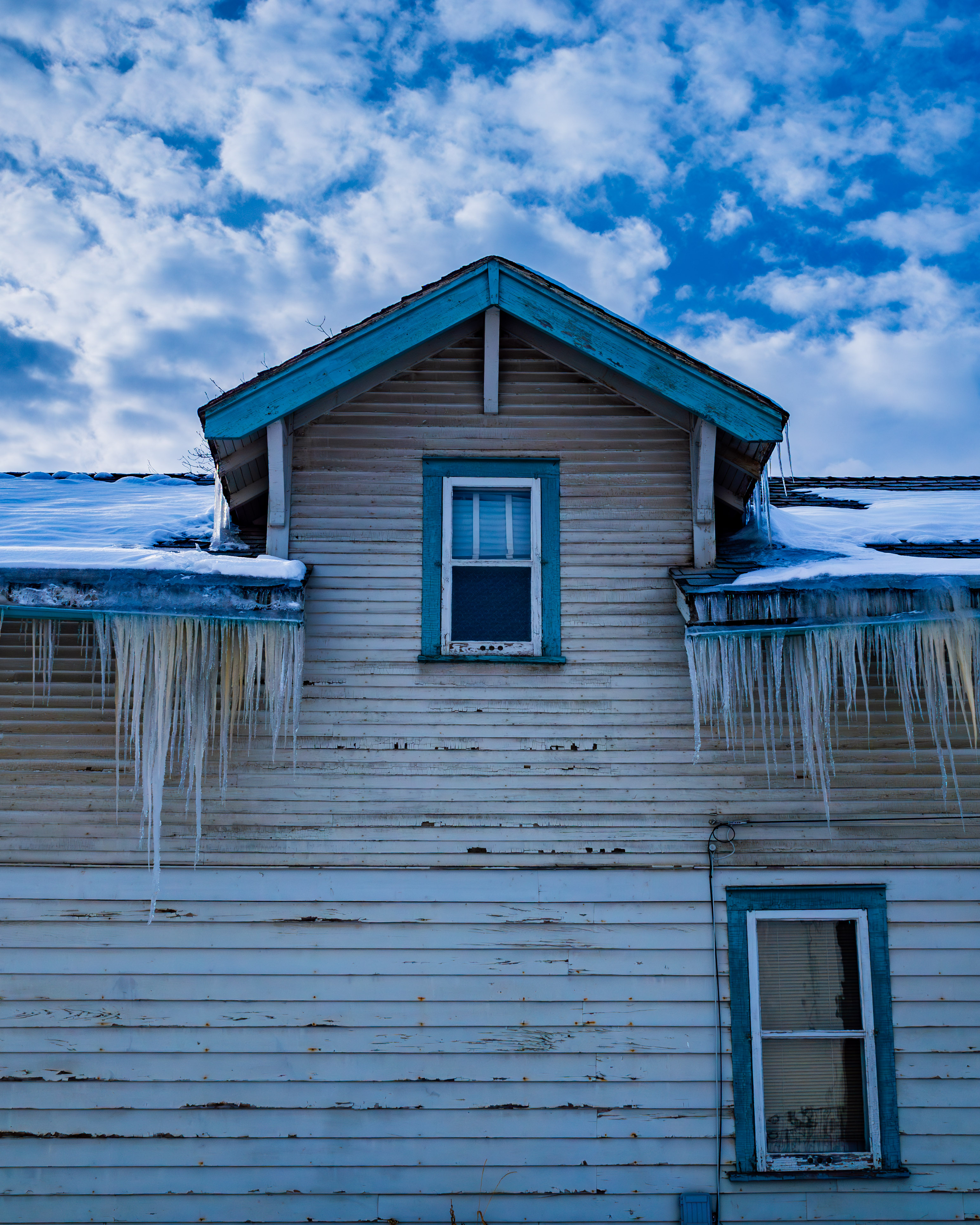
A good crop of icicles (March 2024)
But had I been too hasty? I had to find out. So I re-imported the RAW image and edited the colour version. I hadn’t even noticed the blue paint on the trim. And I missed the discolouration in the icicles from whatever had been oozing out of the eavestroughs. Time for some repairs.
What do you think?
Personally, I don’t like it at all. My mind’s eye was right to see this image in tones of grey. The colours are irrelevant to the story that this picture is telling. I wanted to put the viewer into a scene that was edgy, cold and stark. Instead, the pale blue trim on the house tempers the scene, while the brownish stuff coming out of the eaves is a distraction.
Springtime in Hamilton
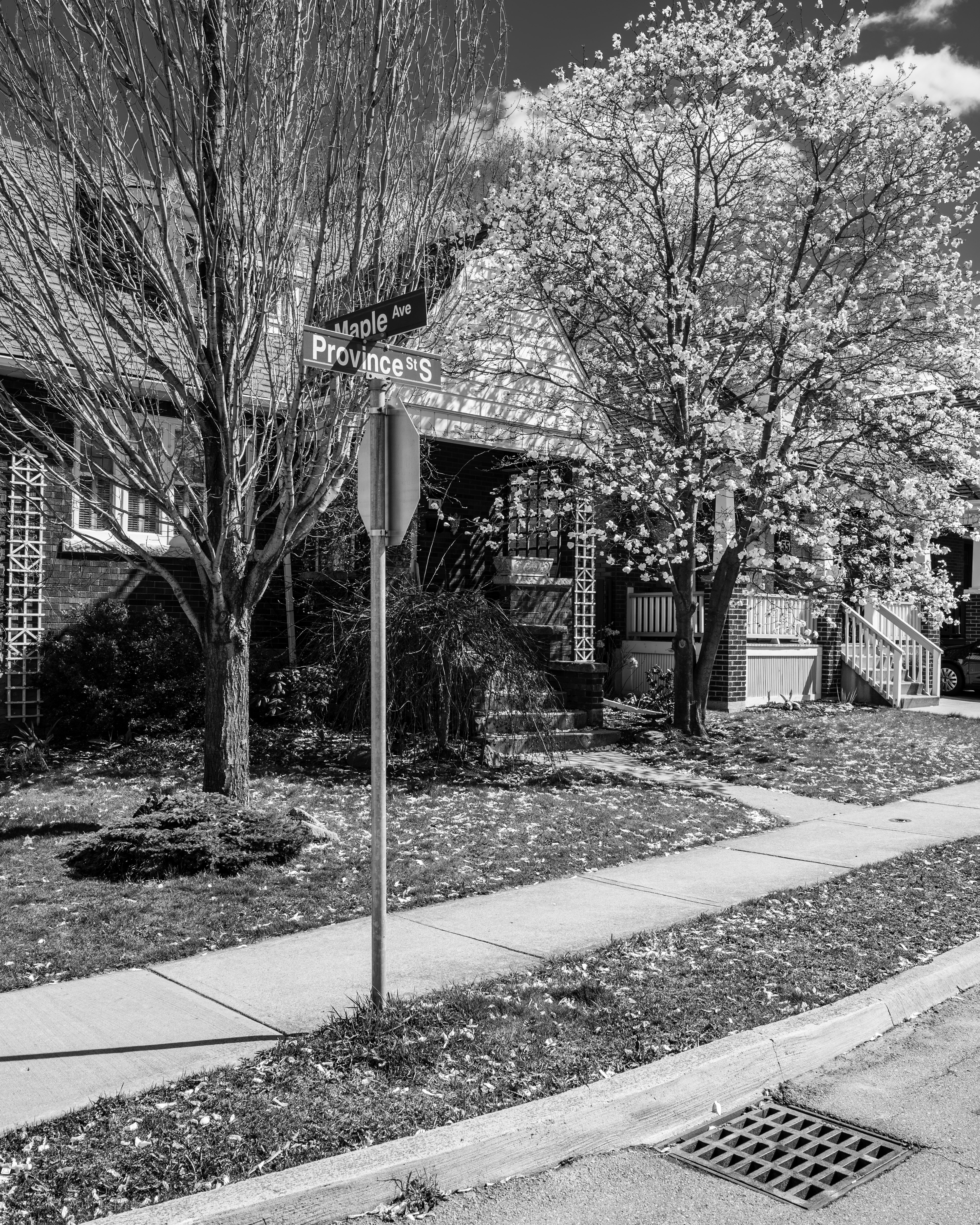
My final image is from a recent visit to Hamilton. Walking around my old neighbourhood in April was a riot for the senses. Spring was in full bloom. I snapped a picture at the corner of (obviously) Maple Avenue and Province Street. I initially saw this as a colour picture, with a sunlit magnolia tree as the highlight.
Maple and Province, Springtime (April 2024)
Even though I like the colour image, I decided to try a monochrome version. This one is more of a toss-up. I like both versions. Why? The colour version puts the viewer right in the scene. Spring has clearly sprung. On the other hand, the monochrome version shows us every detail but leaves us to imagine what colour everything is in the scene.
Of course, these are just my thoughts. Let me ask you: monochrome or colour? Leave me a reply in the comments.
BE FAST is a memory jogger that I’ve been sharing with people, because it covers the full range of stroke symptoms. Here’s what it stands for:
BE FAST – someone’s life could depend on it!
Stroke incidence continues to rise in Canada – more strokes are happening and more people are living with stroke due to our aging population and more younger people having strokes. There are now nearly 110,000 strokes each year in Canada. That is roughly one stroke every five minutes.
I’ll leave you with the words of Dr. Michael Hill, the Calgary neurologist who wrote the foreword to Stroke of Luck:
“Time is brain when it comes to stroke and everyone has a role to play. It starts with someone recognizing the signs of stroke and calling 9-1-1”
– Dr. Michael Hill, Neurologist, Calgary Stroke Program
So, during June, why not take a minute to familiarize yourself with ALL the potential signs of stroke? Even better, spread the message to those you care about. It could save a life! And if you’re looking for a bit of motivation, why not order your copy of Stroke of Luck for a discounted price?
I had a late evening return flight from Ontario yesterday, so I was feeling a bit out of sorts as I parked next to the Glenmore Athletic Park (GAP) track. A high school track meet was in full swing. I watched from trackside for a few minutes, absorbing waves of energy and hearing the screams of hundreds of students as they cheered on their teammates. It motivated me to get going on my short and overdue run.
I’d been thinking for some time about a homage post to the GAP track. I should say the original GAP track (GAP 1.0), because a spiffy new facility is being constructed by CANA, just a short distance away. I have a lot of criticism for decisions coming out of Calgary city hall but this isn’t one of them. I can’t wait for the new facility to be finished.
The grandstands have been taken down and moved to the new track. The brilliant blue of the new surface looks magnificent and oh so ready for spiked shoes. Crews are working on the finishing touches, like landscaping. It will soon be the dawn of an exciting new era in track and field in Calgary.
It seems timely to say a few words about GAP 1.0. I’ll be honest. The place is definitely looking worse for wear. Chunks of Lane 1 are crumbling into the infield. Patches and cracks are plentiful, thanks to our winter freeze-thaw cycles. The spotting booth on the back straight has been taken over by pigeons.
Pigeon holes on the back straight
I did a little research and found out that GAP 1.0 was built in 1962-63. It’s just a couple of years younger than me. No wonder it has cracks and wrinkles!
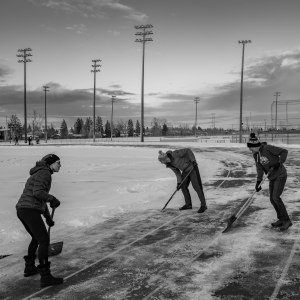
Despite these blemishes, the track has also been the site of countless track meets, interval workouts and road race finishes. I’ve personally done thousands of laps of the track, in all sorts of weather. And that’s a good segue to the fact that the Calgary running community has been second to none when it comes to keeping a lane or two of GAP 1.0 open through the winter months. All it takes is willpower and a lot of shovels, as demonstrated in this shot from October 2023.
Deb, Reinier and Jeremy dig in
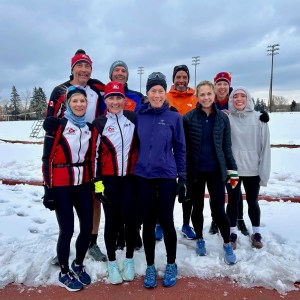
Here’s a shot of an interval session from late March. It was one of those Calgary spring evenings when we started with water in the far corner and ended with sheet ice. No one complained when we decided to cut things short.
Late March interval training, GAP 1.0
Or how about a photo from the 2019 Stampede Road Race? The park was a beehive of activity that morning, with lots of racing action and a pancake breakfast as our reward.
Sherrey and Deb, post-race
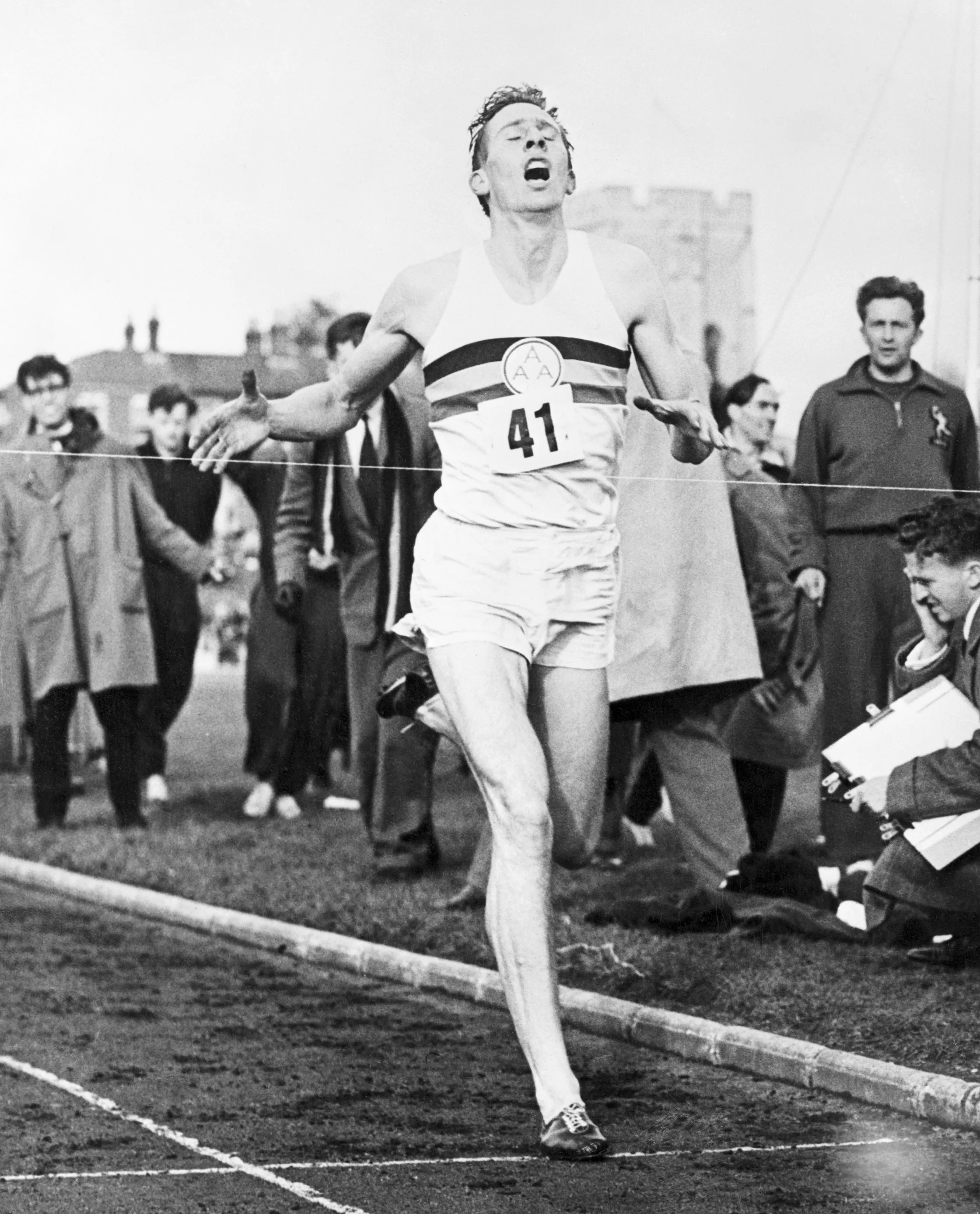
A recent track racing milestone got me thinking nostalgically about GAP 1.0. It was on May 6, 2024, the seventieth anniversary of Roger Bannister’s four-minute mile breakthrough on the Iffley Road track in Oxford, England.
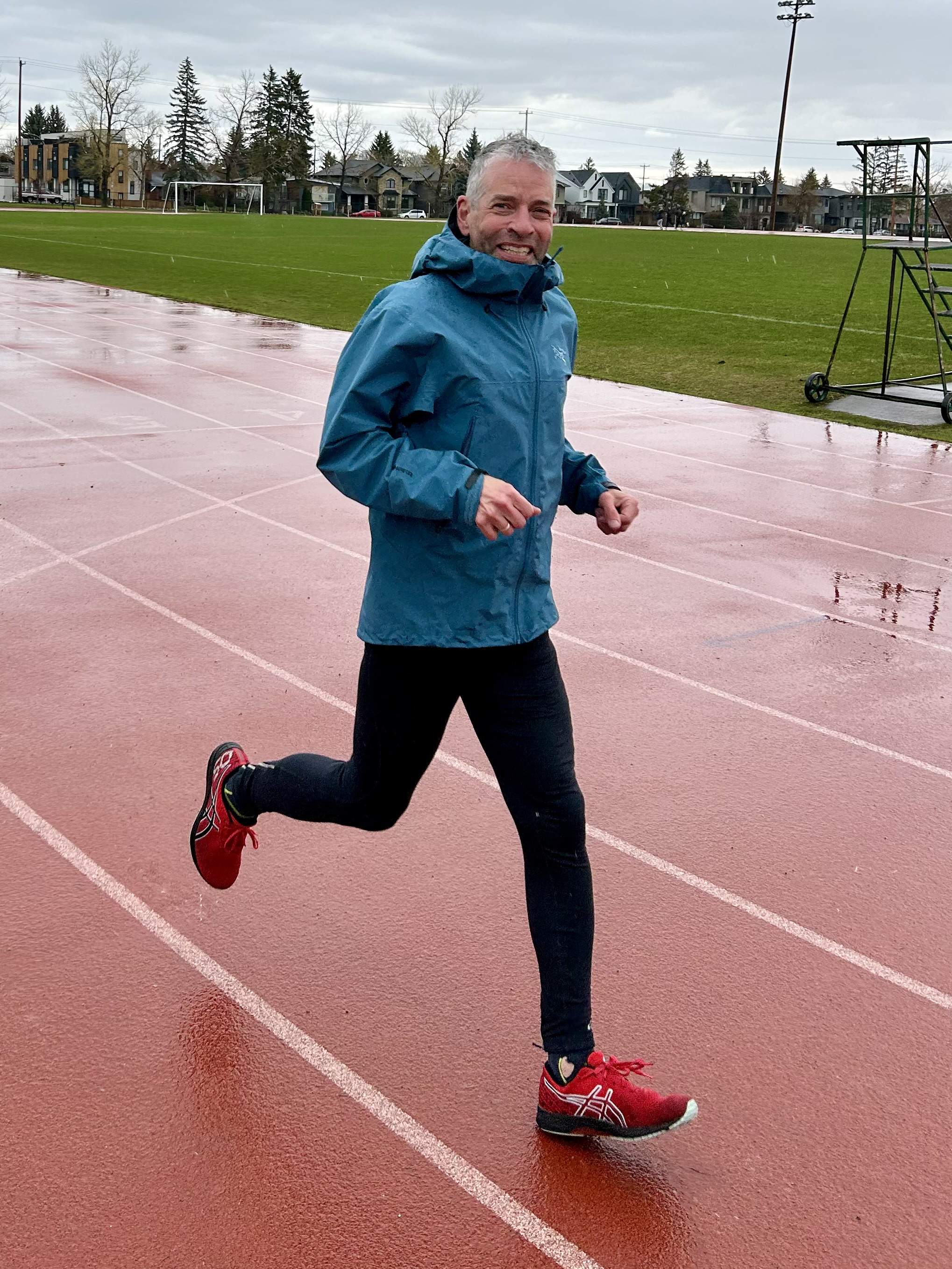
It seemed fitting to make a brief pilgrimage, in pouring rain, to run four ceremonial laps in honour of this great achievement. After all, the GAP track is only 10 years younger than Bannister’s record. I pointed out the significance of the day to a young athlete who had just finished his track workout. He gave me a polite but puzzled smile. I secretly wished for him to do the same on the hundredth anniversary in 2054, running his commemorative laps on the new track.
In closing, I have many fond memories of running on the GAP 1.0 track. I don’t know what lies ahead, but if they do tear it down I’ll miss that familiar red surface, flaws and all. For years, it has been a great venue and meeting place for runners. It’s one of my favourite spots in the city.
So here’s to a good run for a fine old facility! And here’s to GAP 2.0… can’t wait to try out “big blue”.













 My Second Running Life