The Van Gogh to Van Gogh Photo Run

My photo run was bookended by two very different pieces of public art in Calgary. The pieces have a couple of things in common. Both are large, impressive sculptural works. And both have Vincent Van Gogh as their subject.

What a coincidence! I decided to do some research after I got home. But first, it was time to explore on foot. Here’s my route from Strava:
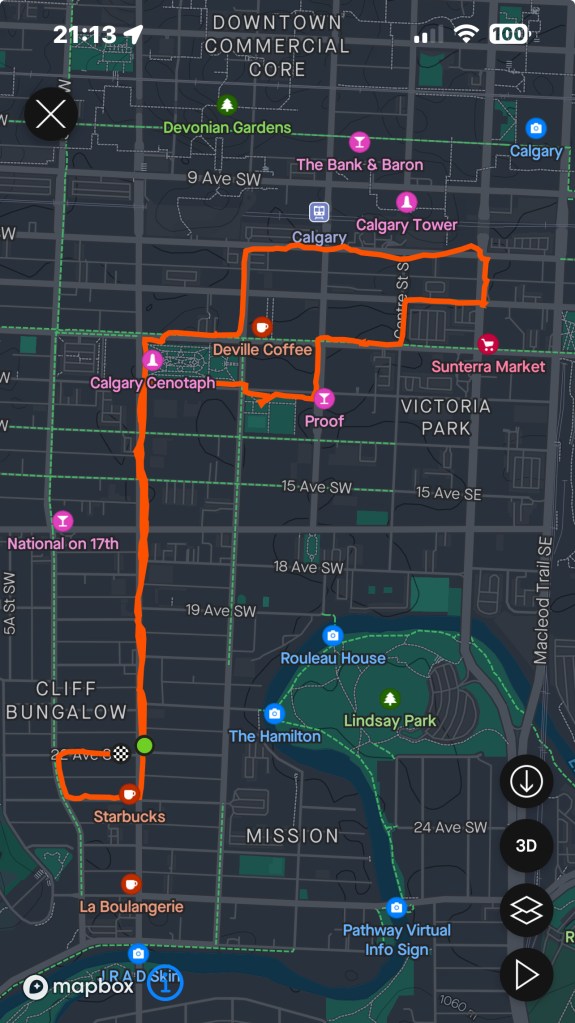
The Van Gogh Photo Run

And here’s what I found out about the artworks and the artists.

Van Gogh Observes, by Joe Fafard

I parked on 4th Street SW in Mission, near Masters Gallery, for the start of my easy run. I always like checking out what’s on display in their windows. Whatever else I happen to see, I can stop to admire the large piece installed just outside the gallery.

That piece, Van Gogh Observes (VGO), is a major sculpture by the late Joe Fafard. I wrote about Fafard last fall, when I photographed Do Re Mi Fa Sol La Si Do, his sculpture comprising eight stampeding horses. That piece is installed in Harley Hotchkiss Park in downtown Calgary.

Fafard’s piece is big and colourful. It’s fantastic. Van Gogh silently watches everything going on outside the gallery… hence the title. And from his vantage point, he’s seen a lot since the piece was unveiled in 2019. Van Gogh Observes was one of Fafard’s last major works… he died in March of the same year.

Although it wasn’t taken during my recent run, here’s one of my favourite pictures at that location. This couple seems to be deep in conversation with Vincent.
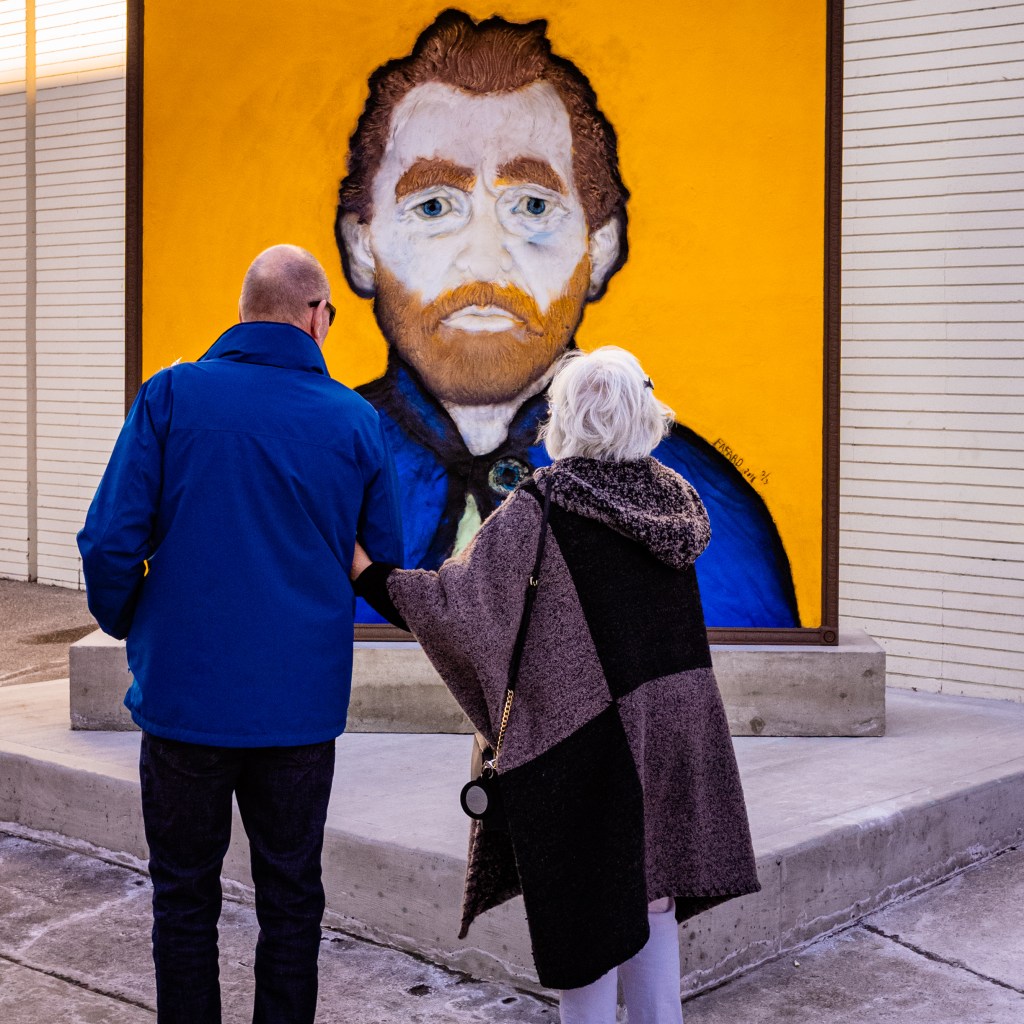
“Hello Vincent!”

Fafard was famous for his sculptural works, which often have a highly animated look. He sculpted livestock, people and other subjects, in bronze or laser-cut steel. His work is always visually appealing. This is certainly true of VGO. I think Fafard’s use of bold yellow and blue was a nod to Van Gogh’s frequent use of the same colours. It’s a piece that brightens up bleak winter days in Calgary.

Even from the back, it’s an amazing piece to look at.
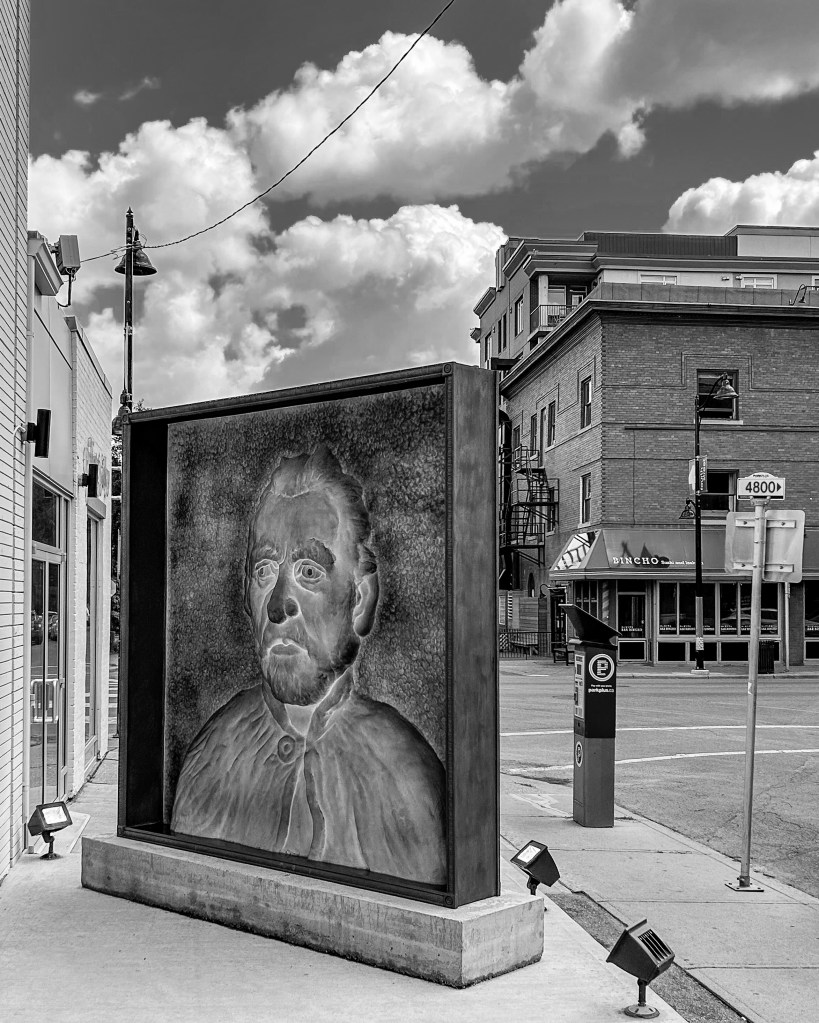
Van Gogh Observes (Joe Fafard), from the rear

Van Gogh Monumental, by Bruno Catalano

I made my way to the UPTEN building at 10 Avenue and 1 Street SE to see Bruno Catalano’s 2020 painted bronze statue, Van Gogh Monumental. The four-metre-tall statue on the southeast corner of the intersection presents the artist walking purposefully while holding a well-used suitcase and carrying a painting on his back. He walks in the direction of the downtown core.
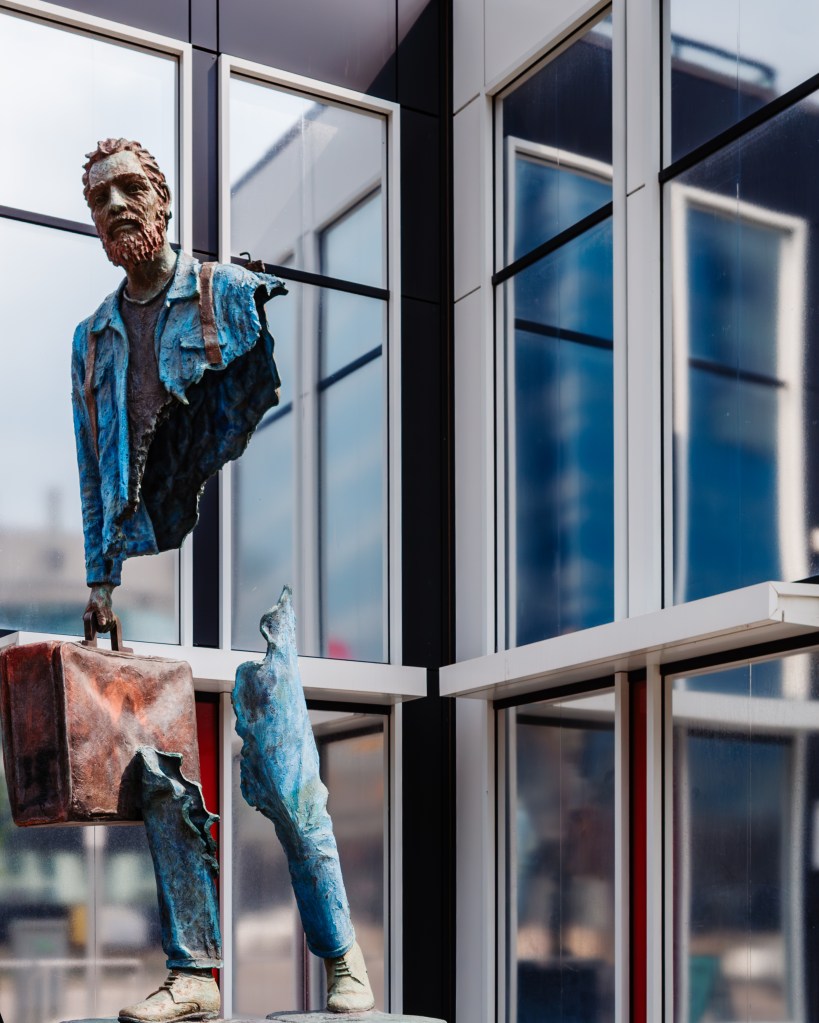
Van Gogh Monumental (Bruno Catalano)

The statue is part of Catalano’s Les Voyageurs series, all of which depict characters in motion. Many of Catalano’s sculptures, including this one, have a large diagonal gap, really a gash, at mid-torso. The sculptures seem to defy physics… they shouldn’t be standing, but they do. Catalano’s bio tells us he discovered this technique when he had a casting accident with an earlier piece. He liked the result, and he incorporated it into many of his subsequent works. It’s become his trademark.

Catalano’s sculpture invites speculation about its meaning. What is Van Gogh searching for? Where is he headed? Maybe there are clues in Catalano’s own story. He was born in Morocco. His French-Italian family moved to Marseille when he was ten. Catalano has Jewish ancestors, who were expelled from Spain in the 15th century, and eventually settled in North Africa. The theme of travelling, of searching nomadically, seems to fit naturally into his art. 

I find it interesting that Catalano chose Van Gogh for this sculpture, because most of his subjects are anonymous people. Here, he has chosen one of the world’s most famous and troubled artists. We shouldn’t be surprised to see Van Gogh searching for something while carrying his worldly possessions and his art. The gap in the statue is visually startling, but it also reinforces the idea that the subject has lost something quite fundamental.

Conclusion

As I jogged back to my car, I pondered the two art pieces I had just seen. I like both the Fafard and the Catalano pieces, even though they give us very different takes on an artist we all have some familiarity with.

The Fafard piece is approachable. Its animated look and bright colours give us an optimistic Van Gogh. Like the couple pictured above, we feel we could have a conversation with the man in the statue. That might explain why the statue is a huge attraction. I often see pedestrians stopping to admire it (or have a chat.)

On the other hand, the Catalano piece is more aligned with how we usually think of Van Gogh. It is a darker piece. The burdens Van Gogh is carrying and the cut across his body seem to portend his death by suicide. These are effective techniques to tell us something about the subject, but also about the artist. If Catalano relates to Van Gogh’s trials, he has done a great job of telling us.

I am most moved by the Catalano piece. What about you? Whichever piece you prefer, we are fortunate to have these important artworks in the city. It’s even better that they are just an easy jog apart.
The LPGA Comes to Town

Just when I needed a reminder that things are rarely as bad (or as good) as they seem, I took up my duties as a volunteer at the CPKC Women’s Open. The tournament is our national championship for the stars of the Ladies Professional Golf Association (LPGA). For 2024, the Open was being held at Earl Grey Golf Club in Calgary, which happens to be my home course. 

I signed up for the gig months ago. That was before the downturn in my mother’s health, and her passing in early July. I almost forgot about the tournament; it seemed so far off. Then, suddenly, tournament week arrived.

After a quick orientation to the role of course marshal, we were thrown into the deep end, with practice rounds on Monday and Tuesday, and a pro-am on Wednesday. The four tournament rounds would run from Thursday to Sunday.

I’ve watched enough golf to have a good idea of my job description. Even so, seeing marshals on television is quite different from being a few feet away from the top golfers as they tee off or line up their putts. 

Where Golf and Hockey Meet

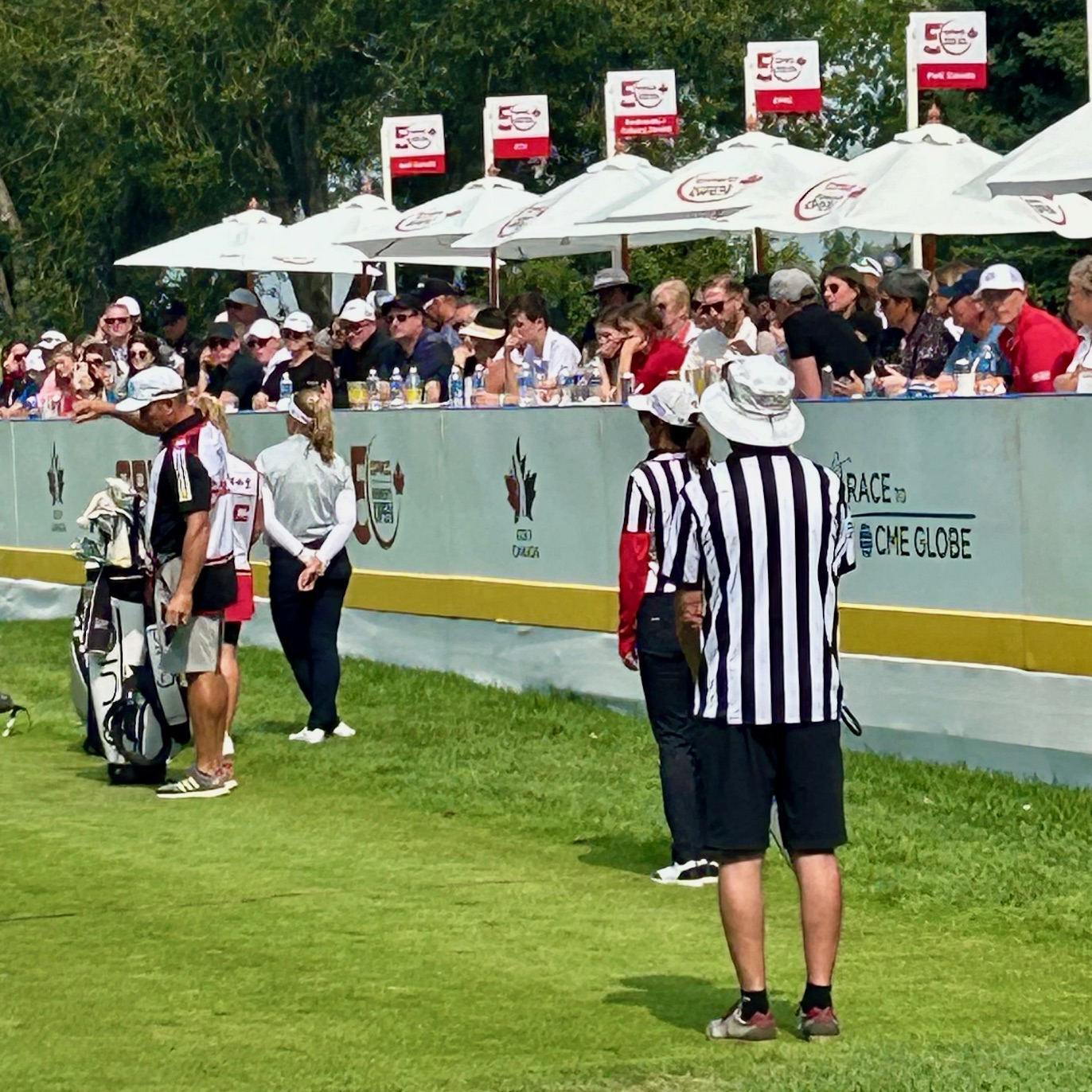
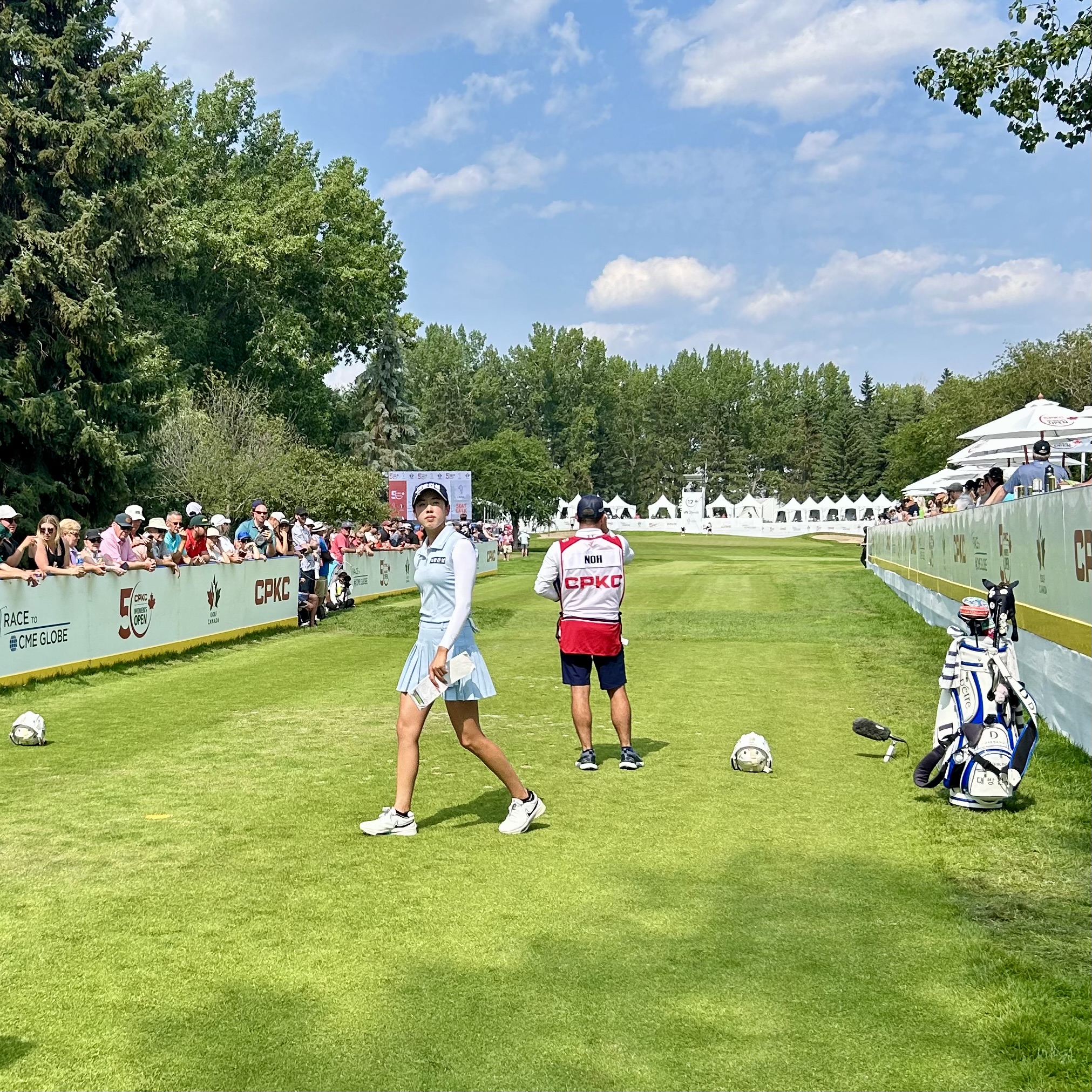
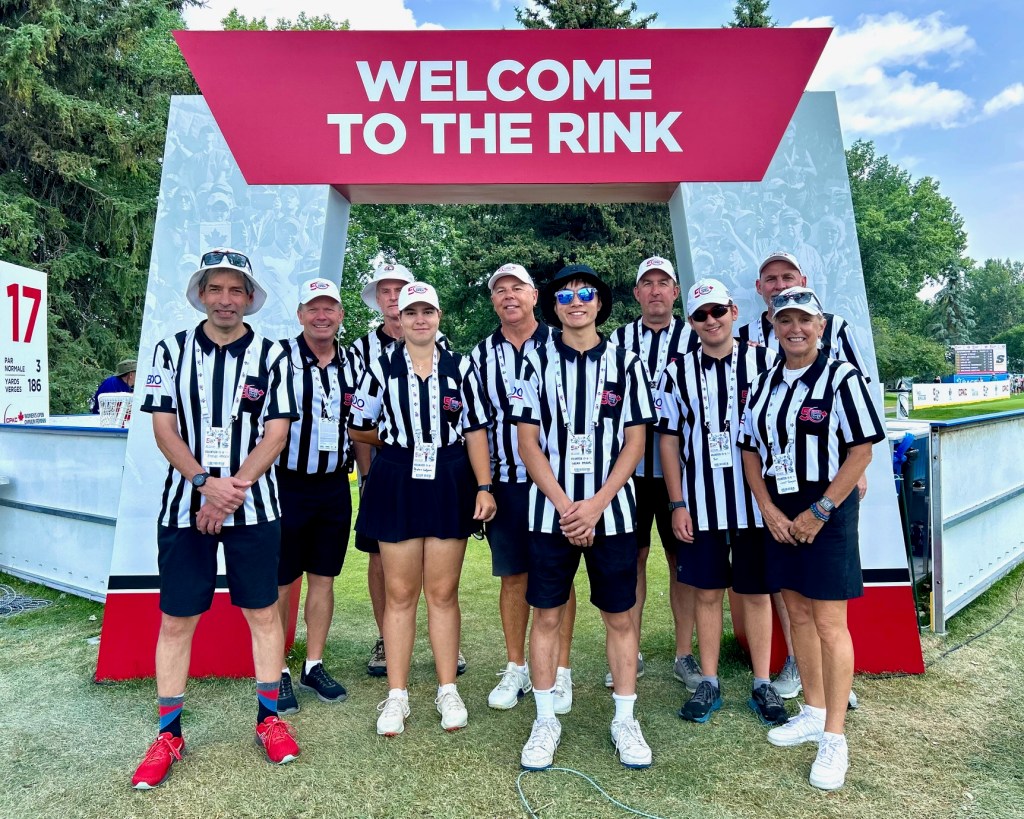
One feature of this tournament promised to make it special. I was assigned to the “rink hole”, a recent but very popular addition to open championships in Canada. It’s now customary to convert a par 3 hole into a hockey rink, with boards around the tee box and a Zamboni parked beside the fairway.

For me and the other marshals, the transformation into a rink was complete when we received our referee shirts. I secretly hoped we were not going to be called upon to break up any fights in the stands. This was golf, after all. 

Getting ready for action in Round 4 at the Rink Hole (July 28, 2024)

Thanks to Wes Gilbertson of the Calgary Herald for featuring us in a story!

Our challenging par 3 9th hole was designated as the rink hole. For the tournament layout, it would be the 17th hole. That meant there was the potential for drama on our hole in the final round. It certainly delivered!

On to the Action

My first shift on Tuesday was a chance to meet my fellow refs… er, marshals… and practice our routines before the tournament started. I enjoyed the day, and I marveled at the skills of the top-tier golfers. It was amazing to see my course changed into a world-class sports venue. And that was before any fans were on site. I already felt better than I had in weeks.

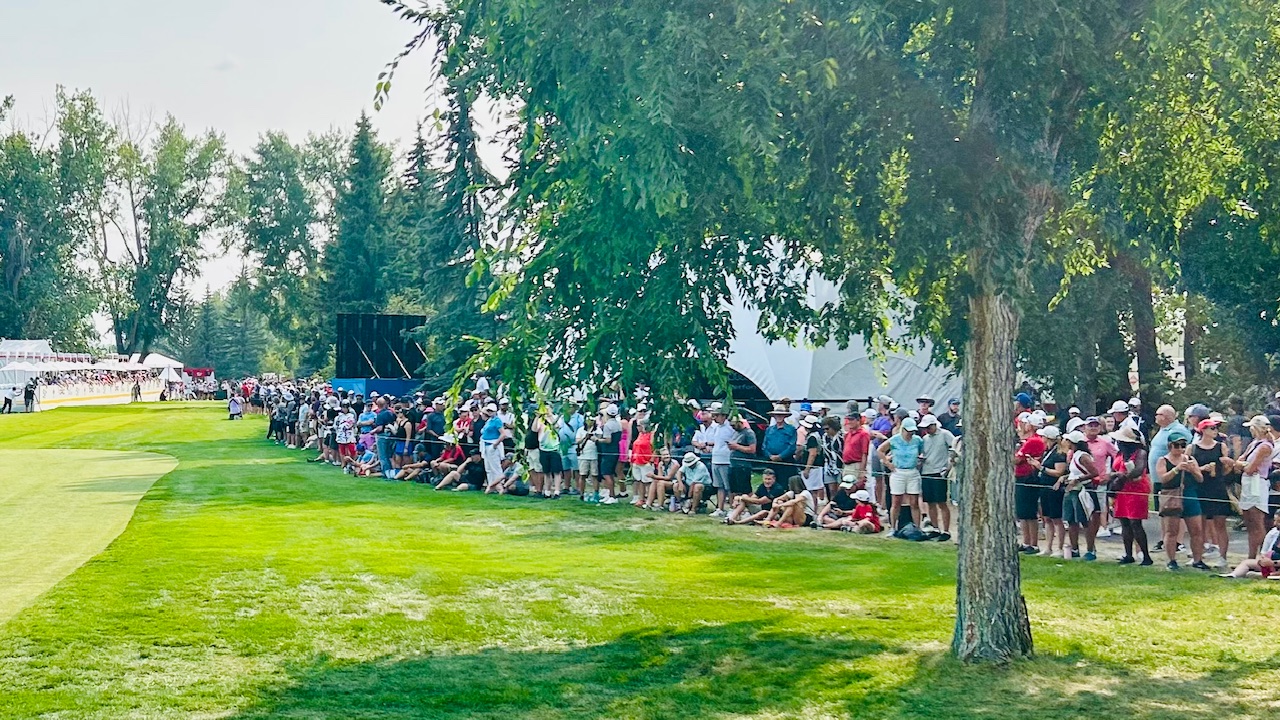
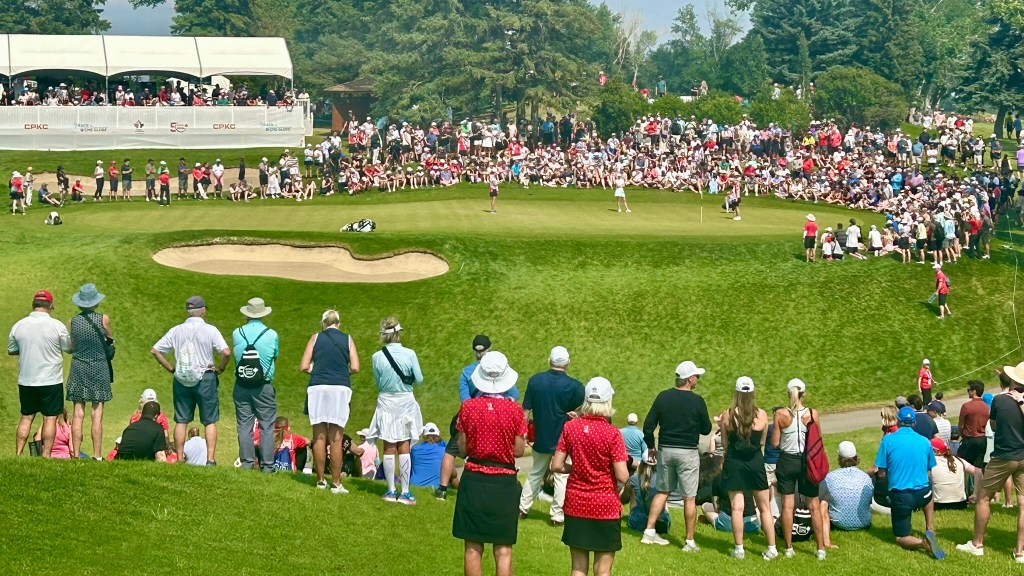
When I returned for my weekend shifts, the energy was palpable. Now every shot mattered. The golfers had their game faces on. Television cameras broadcast the action live around the world. The crowds grew by the day.

Record crowds turned out for the CPKC Women’s Open final round (July 28, 2024)

Amidst the tension, I noticed a few things. Calgarians were doing what they do best… welcoming visitors to our beautiful city. Tournament volunteers were full of pride for what was shaping up to be an exciting (and record-breaking) event. And Earl Grey GC members were beaming, knowing that the world was discovering our gem of a course on the north shore of the Glenmore Reservoir. 

This being Calgary, the weather had to play a role. From a heatwave just a few days earlier, things had changed totally. Wind, smoke and cool temperatures greeted the players on opening day. Visitors must have wondered how such a change was possible in just 24 hours. We locals have a word for that: summer. 

By the end of the third round on Saturday, we had seen history, as tour rookie Mao Saigo of Japan tore up our course with 9 birdies and an eagle, for a stellar 61. It was the lowest score ever recorded in a Canadian women’s open. 

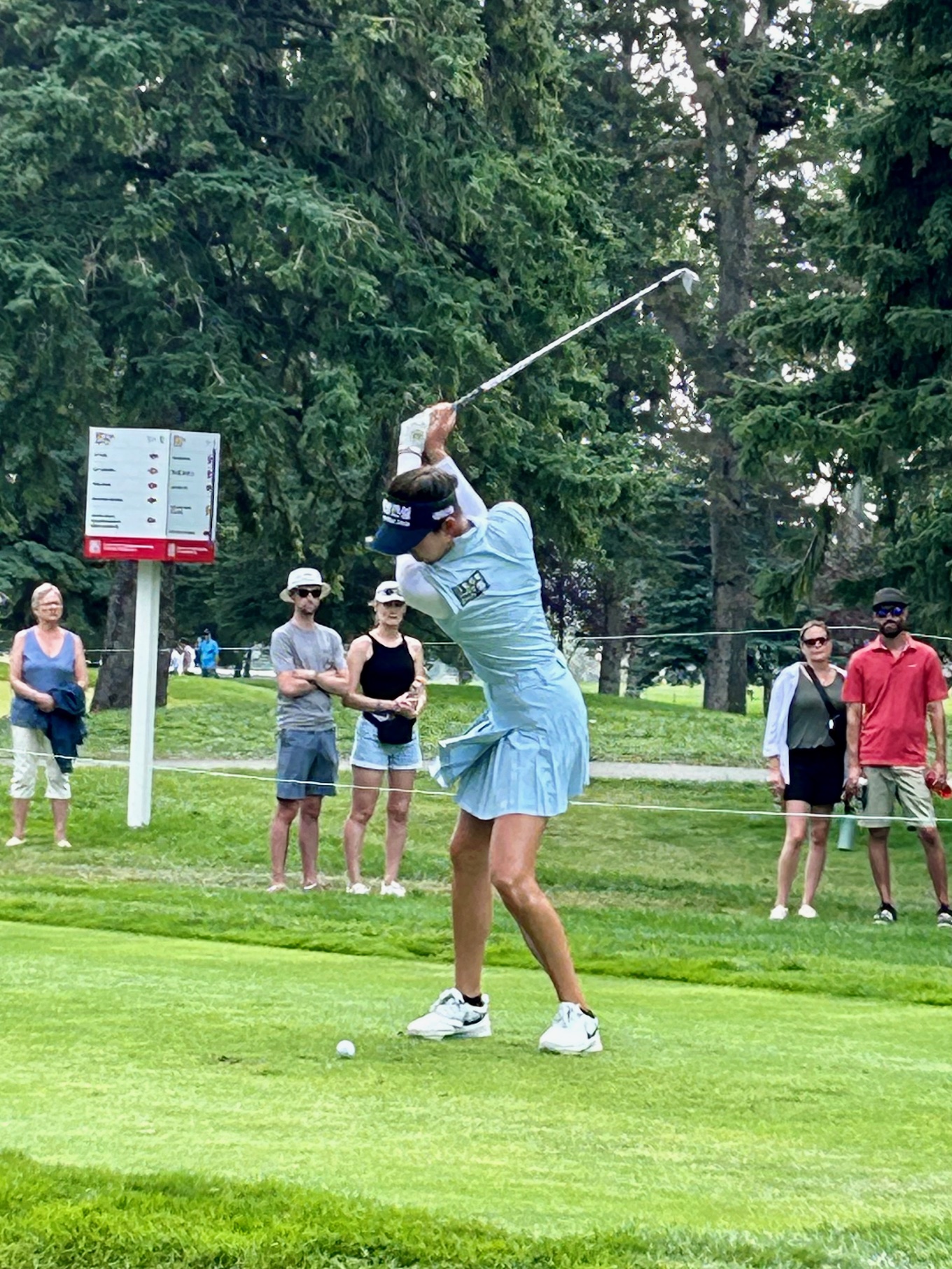
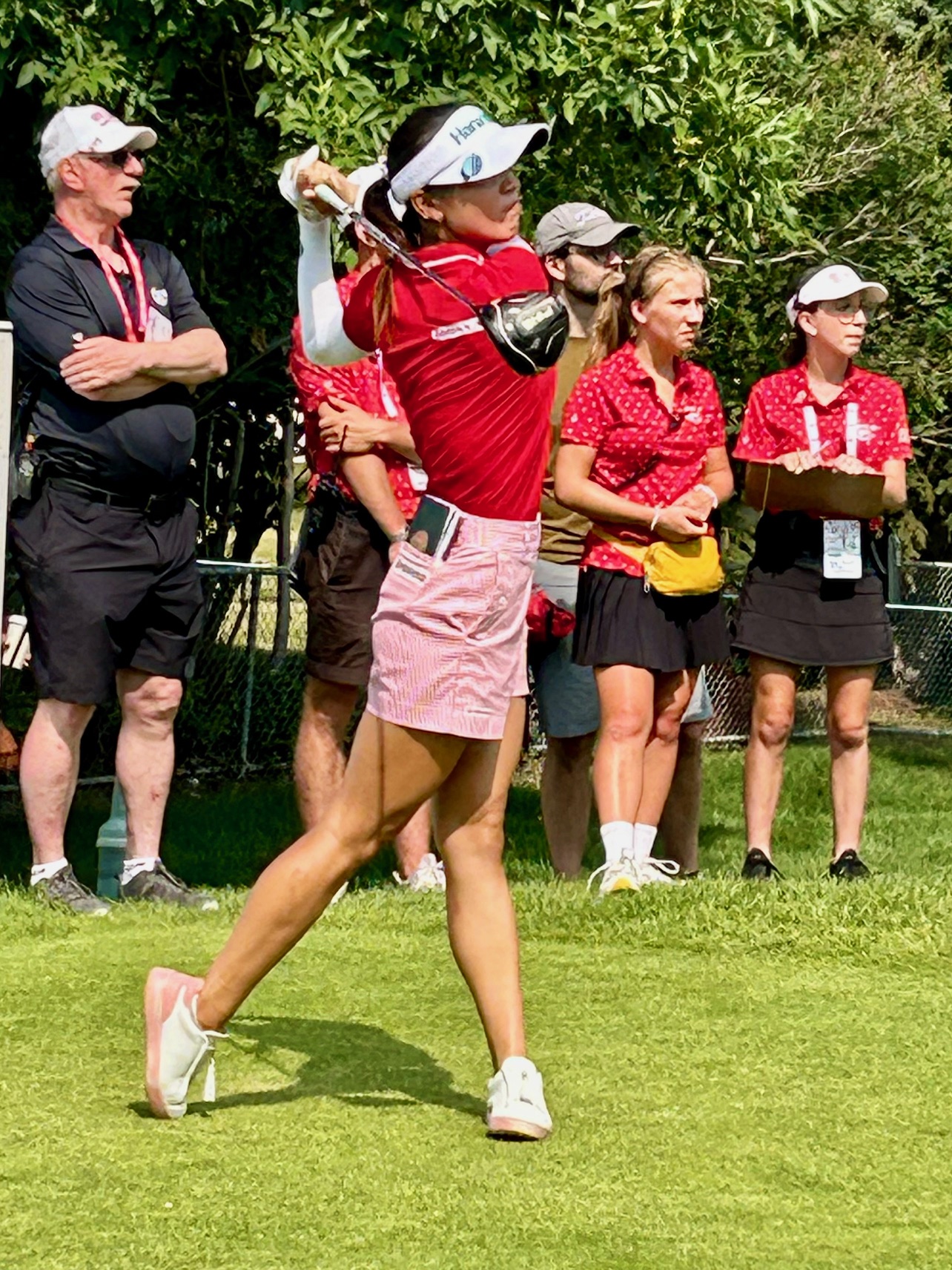
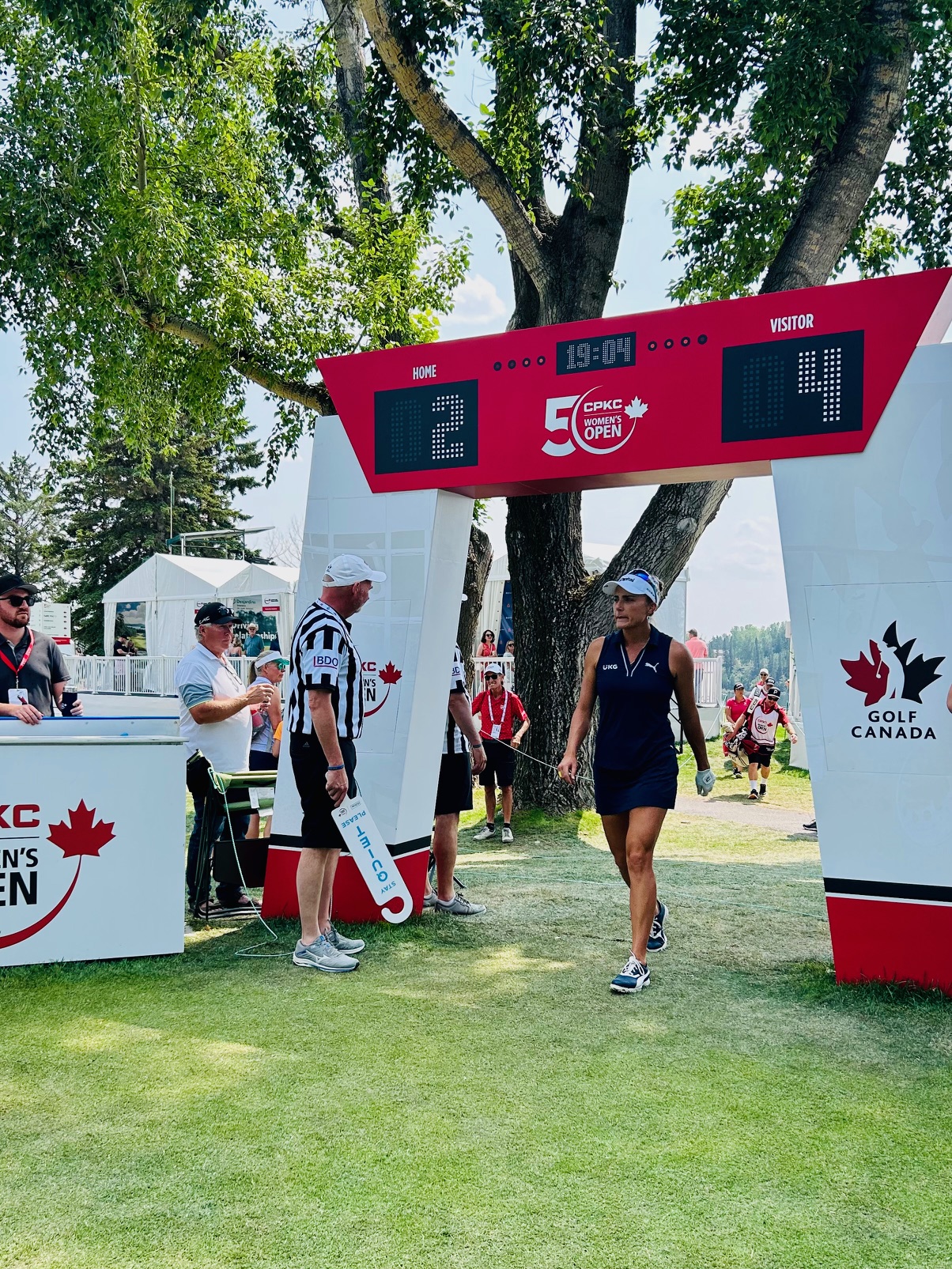
Sunday brought more drama. Several players vied for the lead in the final nine. As marshals, we focused on our assignments, even as Lexi Thompson, Lydia Ko, Minjee Lee and other top players came through the gate into the rink. Brooke Henderson led a strong contingent of Canadians, including her fellow Paris Olympic golfer (and Hamiltonian), Alena Sharp. What a thrill!

The drama reached a peak as the last few groups finished their final round. Saigo watched in disbelief as she stubbed her chip on 17, leading to a bogey. The third-round leader, Haeran Ryu, found the greenside bunker and also struggled to a 4. 

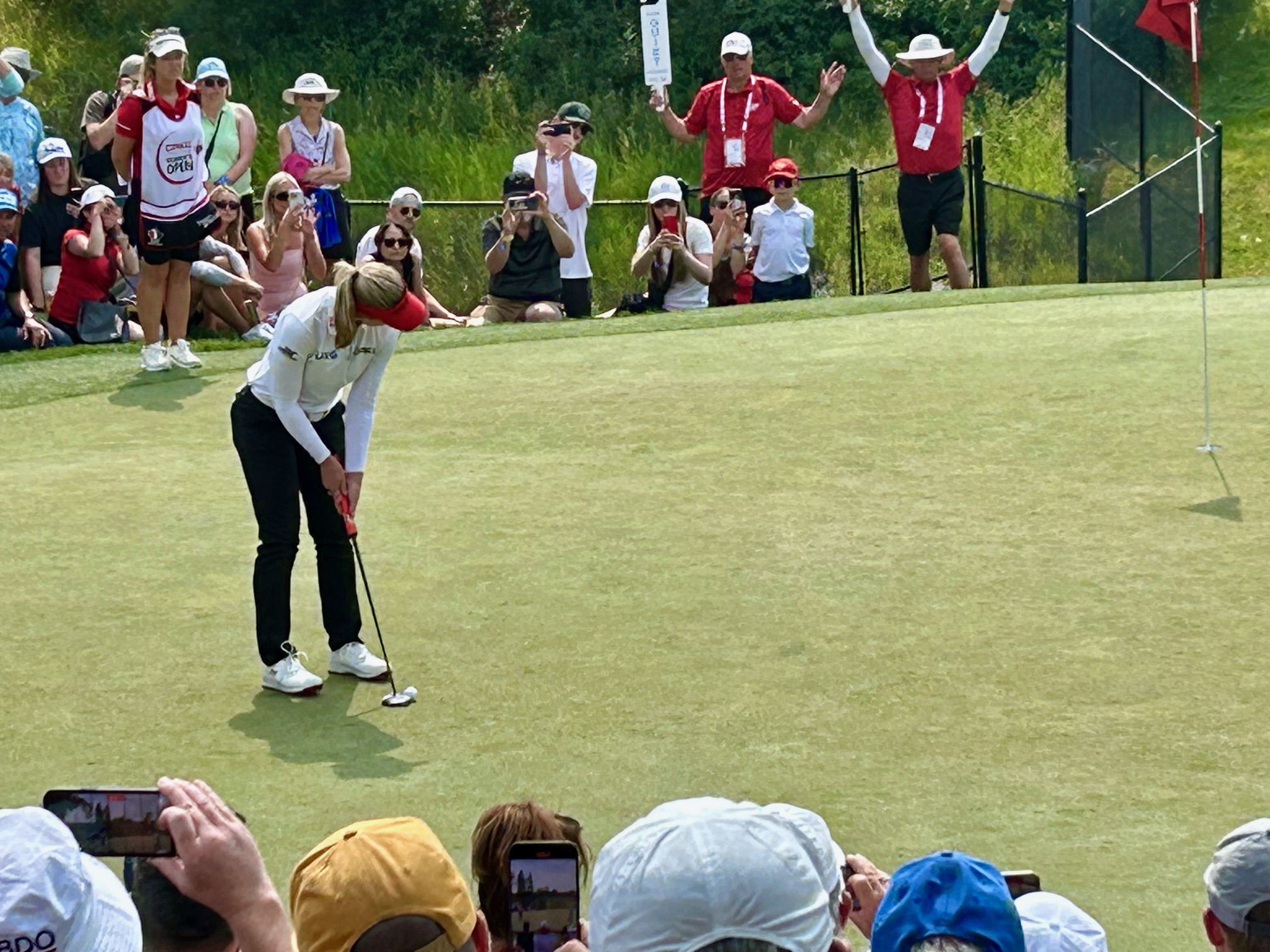
That left only Lauren Coughlin. The American veteran bravely hit a six-iron to the tough back left pin location, leaving a delicate eight-foot birdie putt. By chance, I was stationed at the back of the green, so I was only a few steps from Coughlin and her caddie as they lined up the shot. I had the best spot in the house to see her roll it in, guaranteeing herself a two-shot win with a 13-under score of 275. It was her first tour victory.

It was an exhilarating weekend, and an experience not likely to be repeated. 

On the rink hole, there was plenty of good-natured cheering and banging on the boards. Fans showed their deep patriotic pride and love for our Canadian stars, especially Henderson. This is Canada, so everyone was polite. Thankfully, we didn’t even need to put anyone in the penalty box! 

I walked back to my car on a perfect Sunday evening, exhausted but satisfied. 

Maybe there is still hope for 2024.