Signal Hill Photo Run

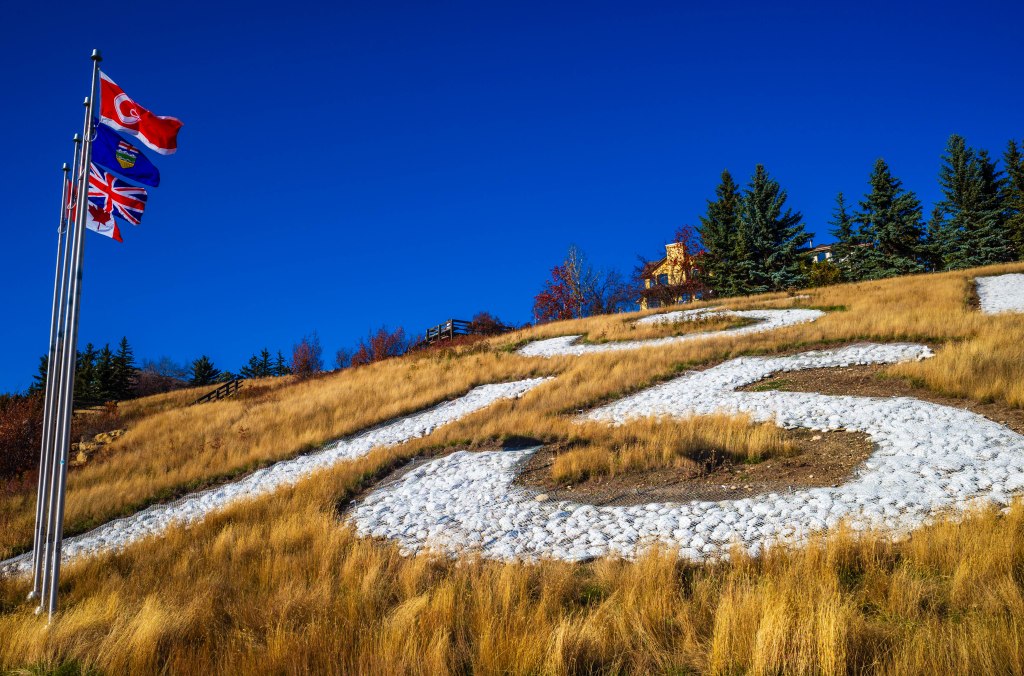
A recent errand led me to an unexpected trail of discovery through Calgary’s military history. I had stopped at the busy Westhills shopping district, the usual collection of big box stores. As I walked back to my car, I noticed the battalion numbers preserved on the side of the hill below the Signal Hill neighbourhood.

I knew about the battalion markers but hadn’t thought much about their significance. My first reaction when I saw the whitewashed stones was how small they looked, sandwiched in between the RONA store and Calgary’s residential sprawl just above. I made a point to return soon for a closer look.
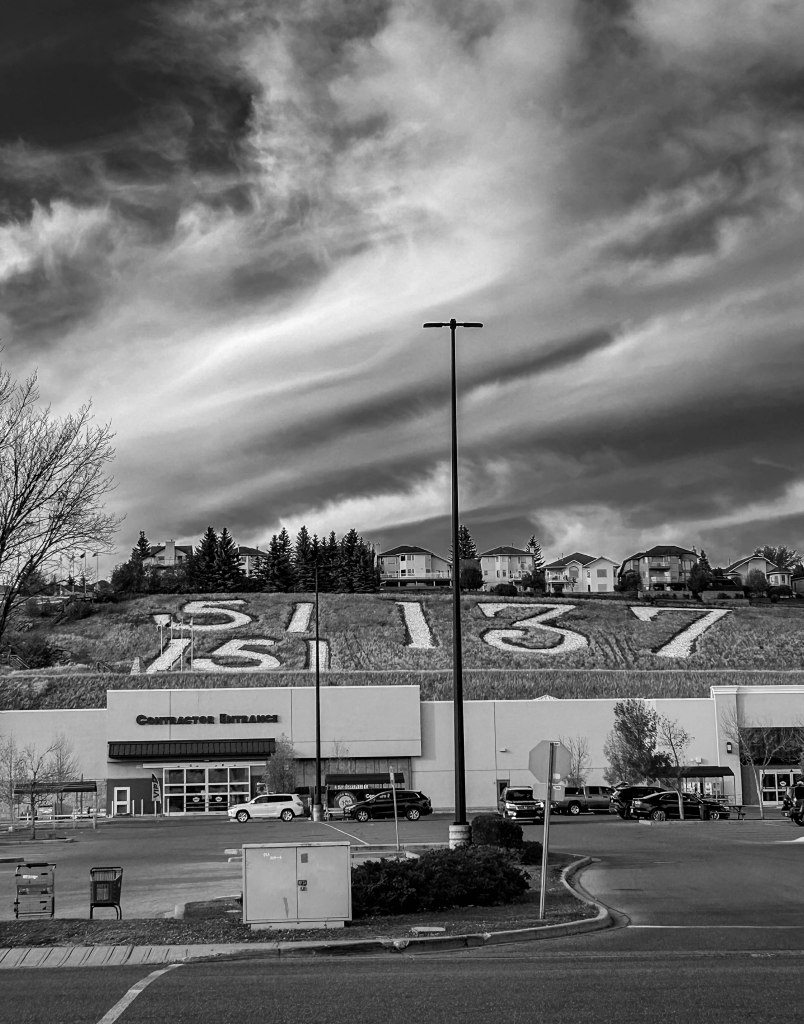
Military history squeezed into the urban landscape

A couple of days later, I was jogging through North Glenmore Park, along the crest of the bluff. I ran by a monument at the west end of the park, one that I had passed hundreds of times. I decided to stop and check it out. The plaque indicated that this was a 1967 memorial to the 137th Battalion of the Canadian Expeditionary Force (the CEF) in World War I. I remembered that “137” was also one of the battalion numbers on Signal Hill.
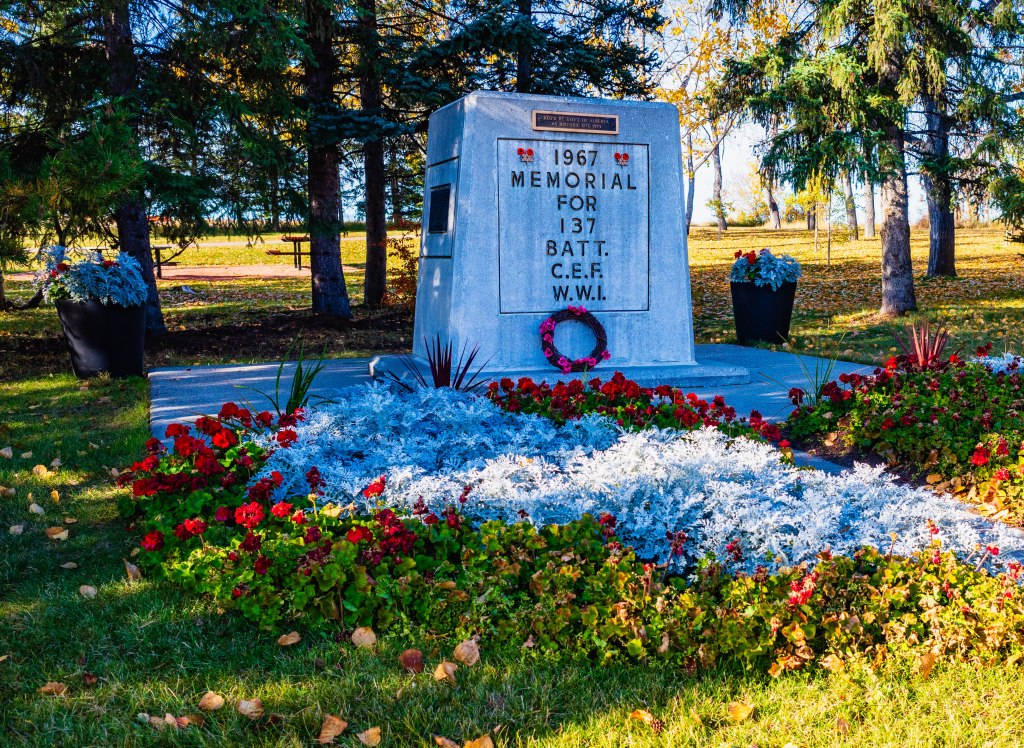
The 1967 memorial to the 137th Battalion

I guessed, correctly, that this was the same 137th battalion immortalized on the hillside. Now I definitely had to make my way over to Signal Hill. I figured it would be a great excuse for a photo run.

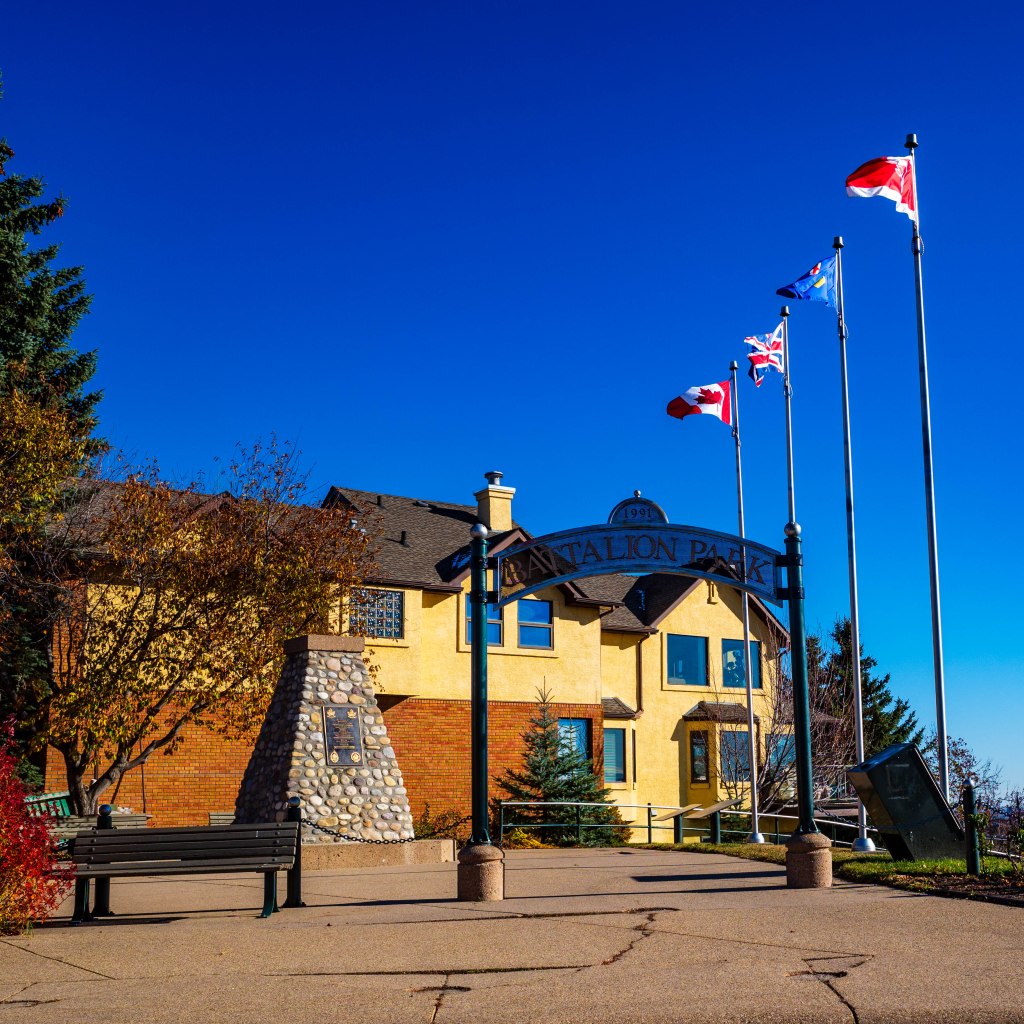
I grabbed my camera (the Ricoh GR III of course) and parked at Battalion Park on Signal Hill Drive. Here’s the Strava entry for my easy run. It was a beautiful day and I did an enjoyable 6-kilometre loop around the neighbourhood.

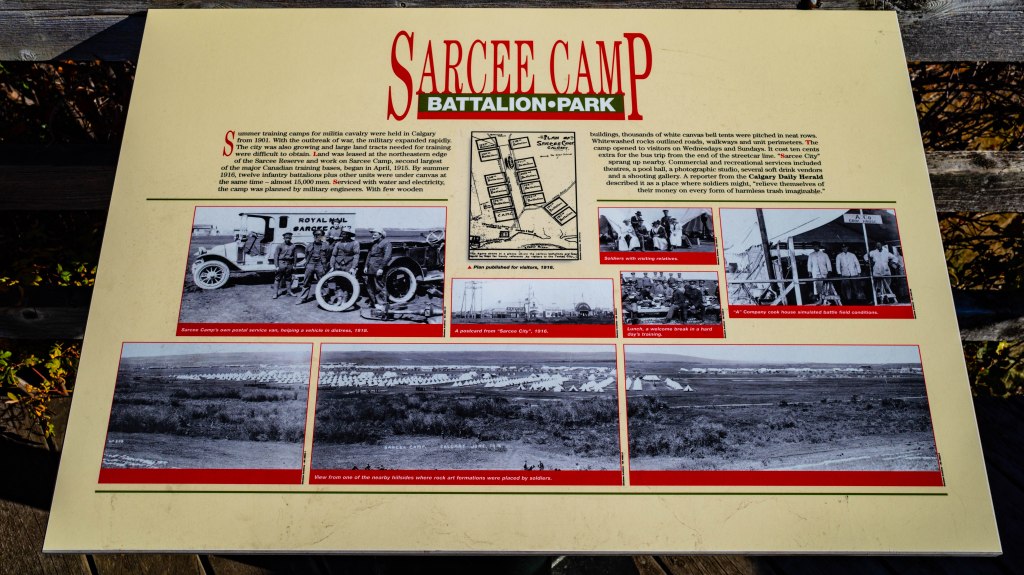
The story of Sarcee Camp is well explained in a series of plaques next to the stairs that wind through the markers. I learned that the camp was established in 1914. It was in a section of the Sarcee Indian reserve (now Tsuu T’ina) that was leased by the Canadian militia as a training site.

Sarcee Camp was a busy place. As many as 45,000 military personnel from 30 battalions trained at the site during the war. It was customary for each battalion to construct a “geoglyph” (that’s a design or motif created by humans and built into the natural landscape) with their unit number. They did this using stones hauled by hand from the riverbed, which is two kilometres away from the hill. 

The 113 is the oldest of the four stone markers on Signal Hill. The 113th Battalion was formed as the Lethbridge Highlanders in 1915. The battalion relocated to Sarcee Camp in May 1916 and sailed for England in September of that year. The 113th was broken up for replacements, with most of the men transferred to France. The battalion never saw action as a unit and was disbanded in 1917.

The other numbers on the hillside were constructed by battalions of the CEF that trained at the Sarcee Camp, including the following:

  • The 137th Infantry Battalion of Calgary began recruiting in late 1915. After sailing to England in August 1916, the battalion was absorbed into the 21st Reserve Battalion.  It’s worth noting that the King’s Own Calgary Regiment (RCAC) perpetuates the 137th Battalion. Members of the 137th Battalion CEF Association erected the memorial to the unit in Glenmore Park.
  • The 151st Central Alberta Battalion began recruiting in 1915. It sailed to England in October 1916 and was absorbed into several reserve battalions.
  • The 51st Canadian Infantry Battalion was recruited in Edmonton. It sailed to England in April 1916 and provided reinforcements for the Canadian Corps until it was reorganized in November 1916.

Although there were approximately 20 geoglyphs built, most were destroyed in the 1950s during the construction of a mess hall.

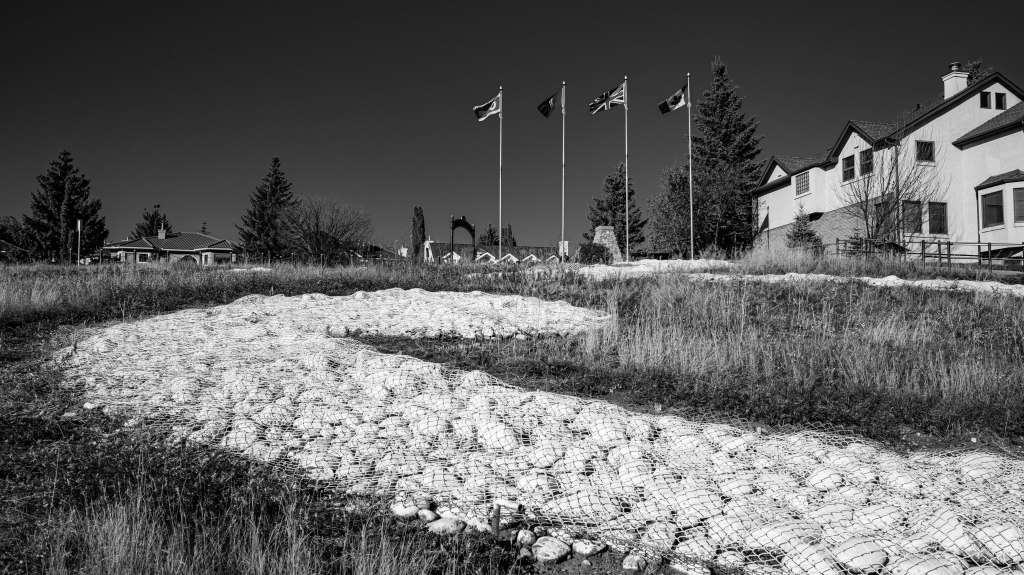
When we first moved to Calgary in the early 1990’s, the battalion markers were just about the only thing in the area. Over time, residential development nearly swallowed up the geoglyphs. Fortunately, there was enough recognition of the significance of these markers that they were preserved. In fact, three of the markers (137, 151 and 51) were meticulously moved a short distance from their original locations.
You can see a few photos I took during my cooldown walk. I found it quite challenging to get any perspective on the geoglyphs when I was right next to them. In that respect, the parking lot of the RONA store isn’t a bad place to stop and admire this unique piece of Canada’s military history. Even so, with Remembrance Day just around the corner, I recommend getting closer and doing more exploration if you have the time.

On the Street with Hektor

This is a review of a camera lens that nobody uses. It might make sense to add up front that I’m not a reviewer of camera equipment. So, if there are no readers of this piece, the only loss will be the time I spent writing it. That said, I hope to introduce an unusual piece of equipment in an approachable way, even for non-photographers. 

So, what’s the story?

I have what might be described as a diverse collection of cameras and lenses. I don’t chase the latest equipment, and I don’t change my gear often. A lot of my gear is, well, old. The oldest and probably the oddest lens I own is a 70-year-old telephoto, made by Leica. It’s a lens that can be used on any M-series Leica camera made in the last seven decades. That’s quite remarkable when you think about it. It speaks to a solid legacy of product design.

For those who don’t fuss over cameras, Leica equipment is held in high regard… it’s considered to be an elite brand. In Leica’s rangefinder cameras (their “M” range), the products have a reputation for being practical, solidly built and efficient.

Except maybe for Hektor.

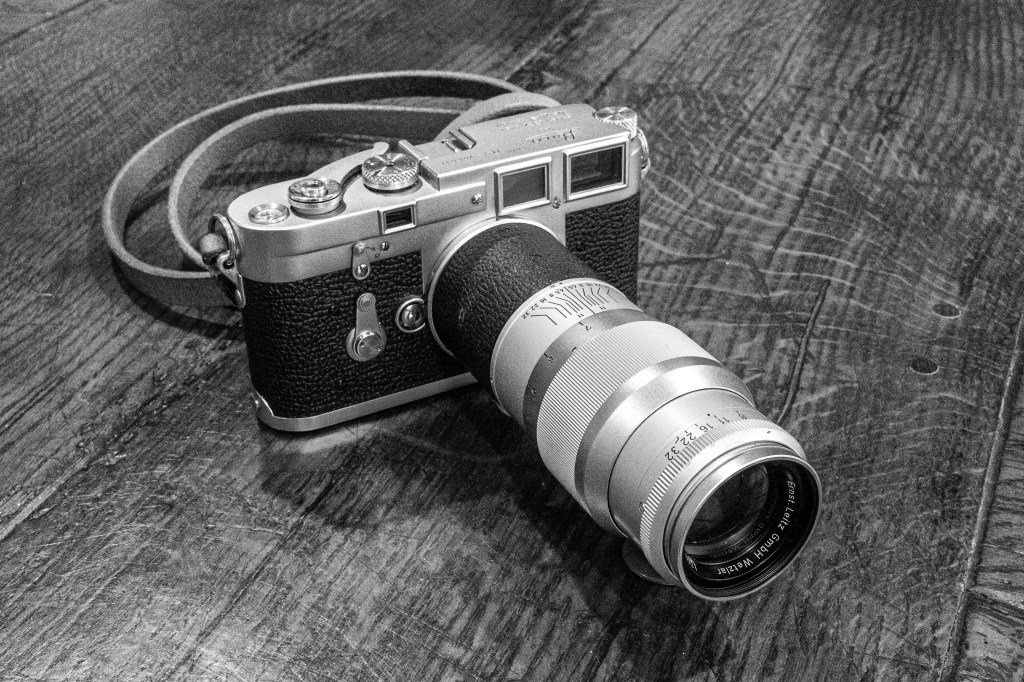
The Hektor is a medium telephoto lens, with maximum aperture of f/4 and focal length of 135mm. (That is the extent of the technical lingo in this review.)

The 1954 Leica Hektor 135mm f4

First off, 135mm happens to be a difficult… some would say unusable… focal length on Leica M rangefinders. Given my intention to keep this piece readable, I won’t explain why that is. But it is a serious knock against the lens. 

I’m going to lump a few other points together because they collectively contribute to the look of the lens. And how would I describe its looks? In a word, it’s unattractive. Okay, ugly. (That reminds me of the story that the Hektor is named after Leica lens designer Max Berek‘s dog. I wonder what that says about the dog.)

Anyway, the lens design, meaning the arrangement of glass elements inside the tube that forms the lens, is simple. In photographic terms, the f/4 aperture makes this a “slow” lens. This combination of design decisions means that the lens itself is long and skinny. I don’t really like the look (or the feel) of the lens when I’m walking around with it over my shoulder. 

As a further negative point, the Hektor is awkward to use. It is well-made and solid. After all, it IS a Leica lens. Still, when taking a photo, it’s hard to focus because it requires a lot of rotation of the lens barrel. This isn’t a lens for action photography.

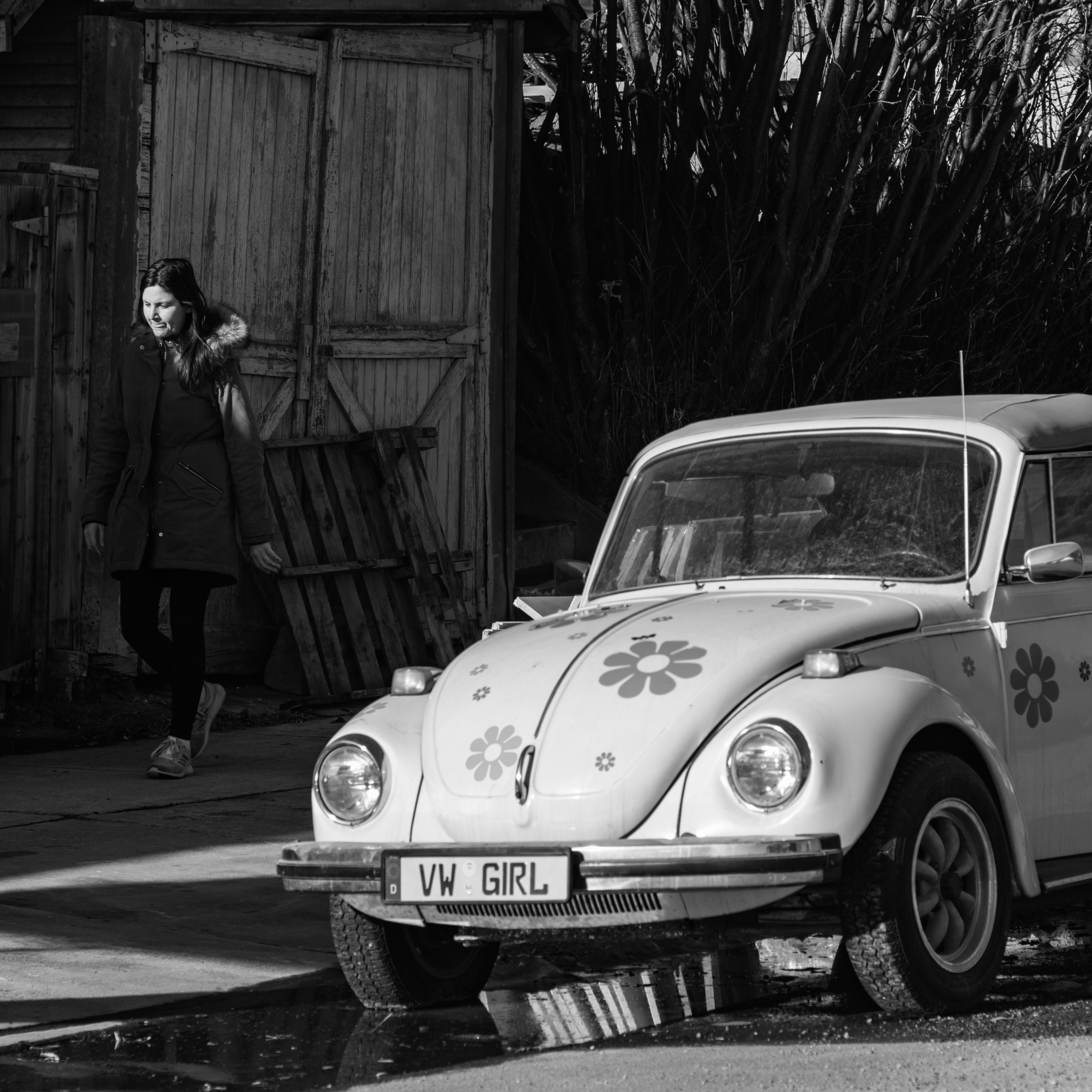
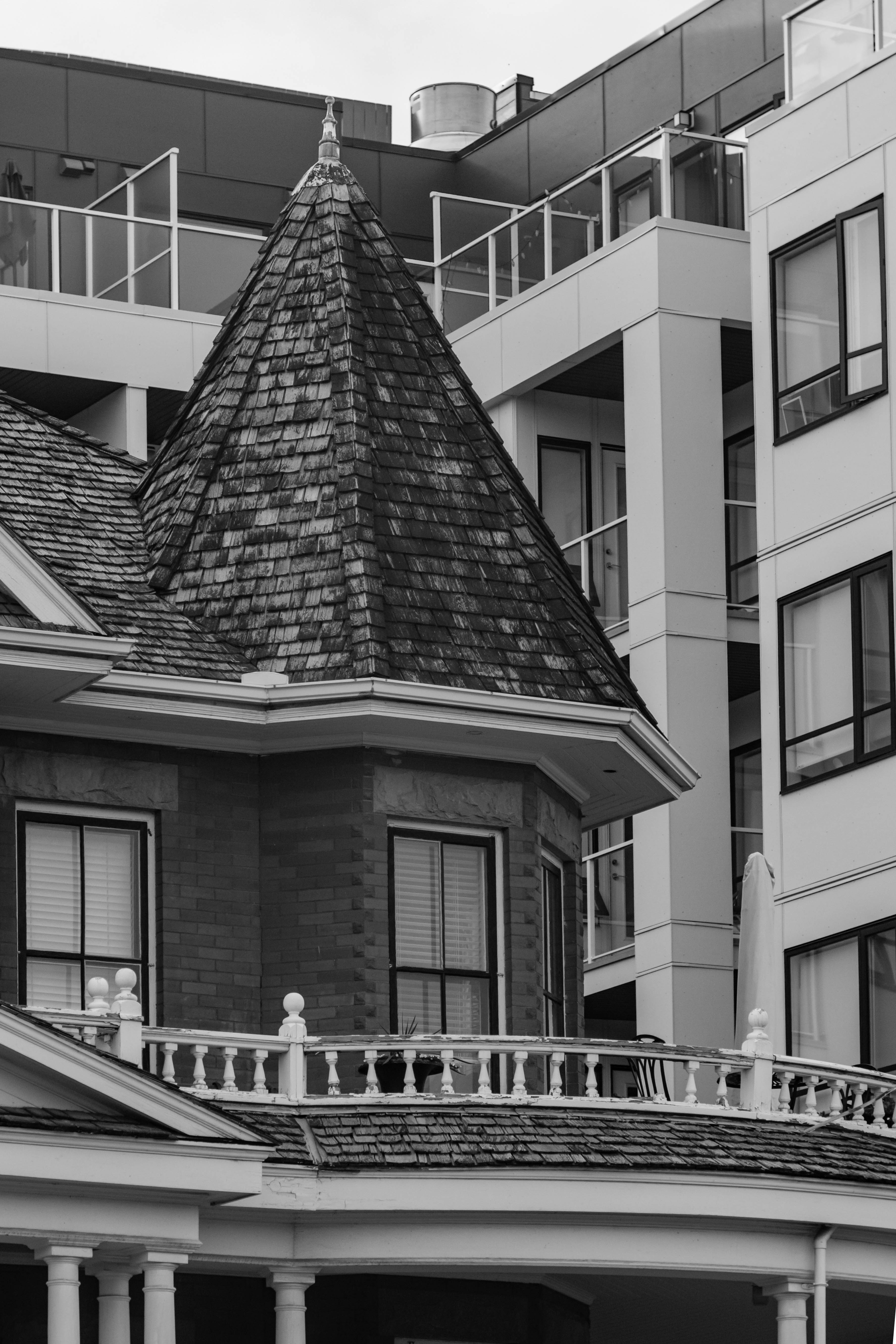
With all those flaws, I might be advised to end my review here. But here’s the problem. I think it actually takes good pictures. Check out these examples:

These pictures all came out of the camera with soft contrast, kind of a “mid-century” look. Could that be the result of whatever combination of optics and coatings was put into the lens in 1954? Maybe. It isn’t necessarily a bad look. In fact, it may be exactly what one is looking for, especially for portraits. After some editing, the results look fine, at least to me. (I should add that the Hektor’s colour rendition isn’t good, so I usually use it for B&W shooting.)

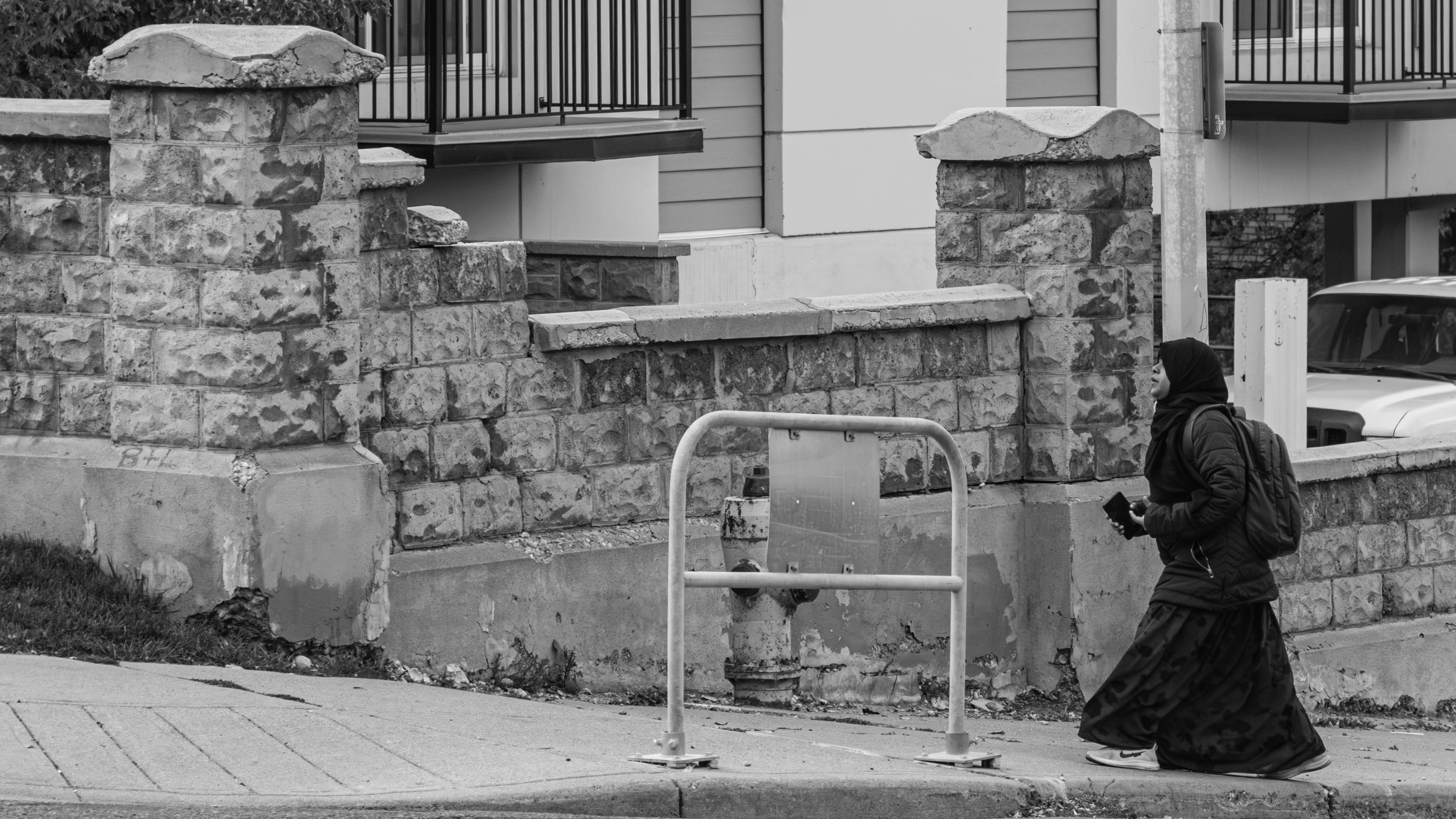
I’ve used the lens for street photography, and it’s best for distant subjects… shots across a street, like “VW Girl”, above. Shooting with Hektor brings all the shortcomings I mentioned earlier into play. For that reason, if I’m using this lens I have to get my settings ready and wait for subjects to enter the scene.

The lens is quite sharp across the aperture range, even shooting wide open. Again, it should work well in portraiture. Given how slow it is, maybe outdoor portraiture would be the best bet.

I’ve read a few other reviews of this lens. Most bash it quite harshly. One review by a well-known online source is very negative. However, when one reads the full review, the reviewer concedes the many strong points the lens has going for it when taking pictures. And isn’t that what matters?

Wrapping up, the Hektor is a lens I rarely reach for. There are good reasons for that. But every so often, when I feel like giving myself a photographic challenge, I put it on a Leica M camera and take it out for a spin. I marvel at the fact that I can do that at all, with such an ancient piece of equipment. And if I’m patient, I usually come home with a shot or two that convince me to keep this oddball in my kit. 

Auroras and Other Distractions

Good news! I’ve extended my Dedication Sale through the end of October. It’s a nod to our Thanksgiving holiday.

Print and e-book versions are available on Amazon at a 20% discount.

There’s a hard stop on the sale on November 1!

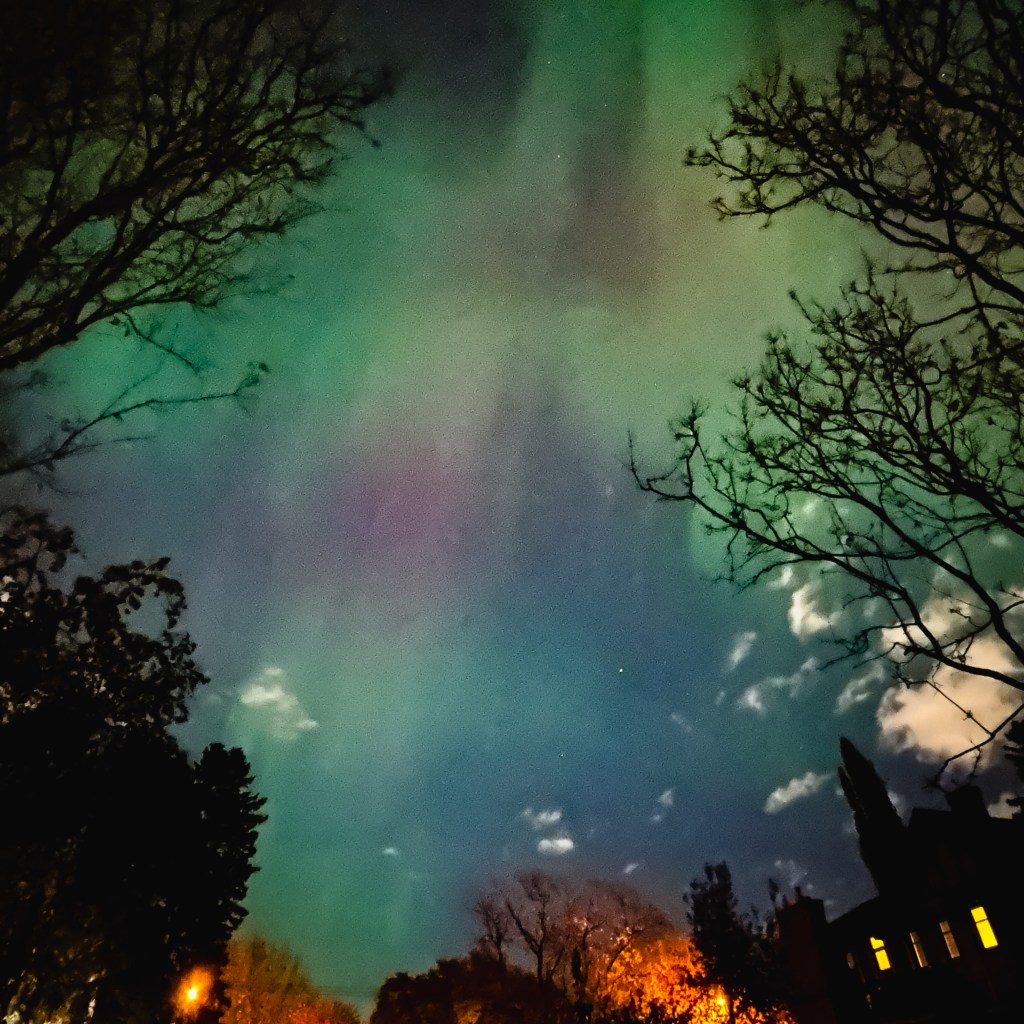
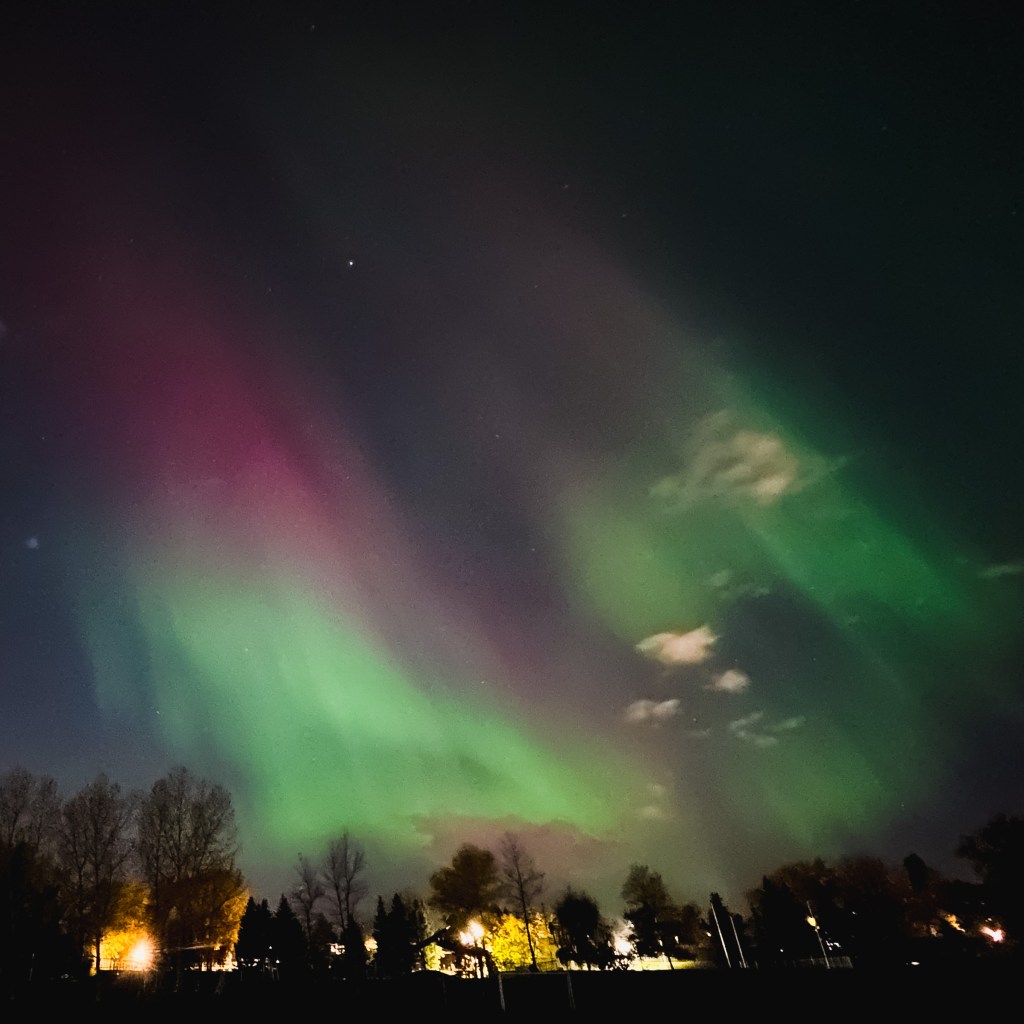
In what was a fairly chaotic week, I did manage to capture a few interesting images. There was no shortage of subject matter. I only had to force myself out the door with a camera.

Auroras a-plenty!

This year has been unmatched for solar activity. I read that it’s all because the cycle of solar activity is at its peak. (Sounds like a topic for a future blog piece!)

I’ve always been interested in photographing the aurora borealis (the “Northern Lights”) but frankly, I wasn’t up to what I assumed was the significant effort needed to make it happen. What gear did I need? How much work would it be to get to a good location, and to do so in the middle of winter when the aurora are most active?

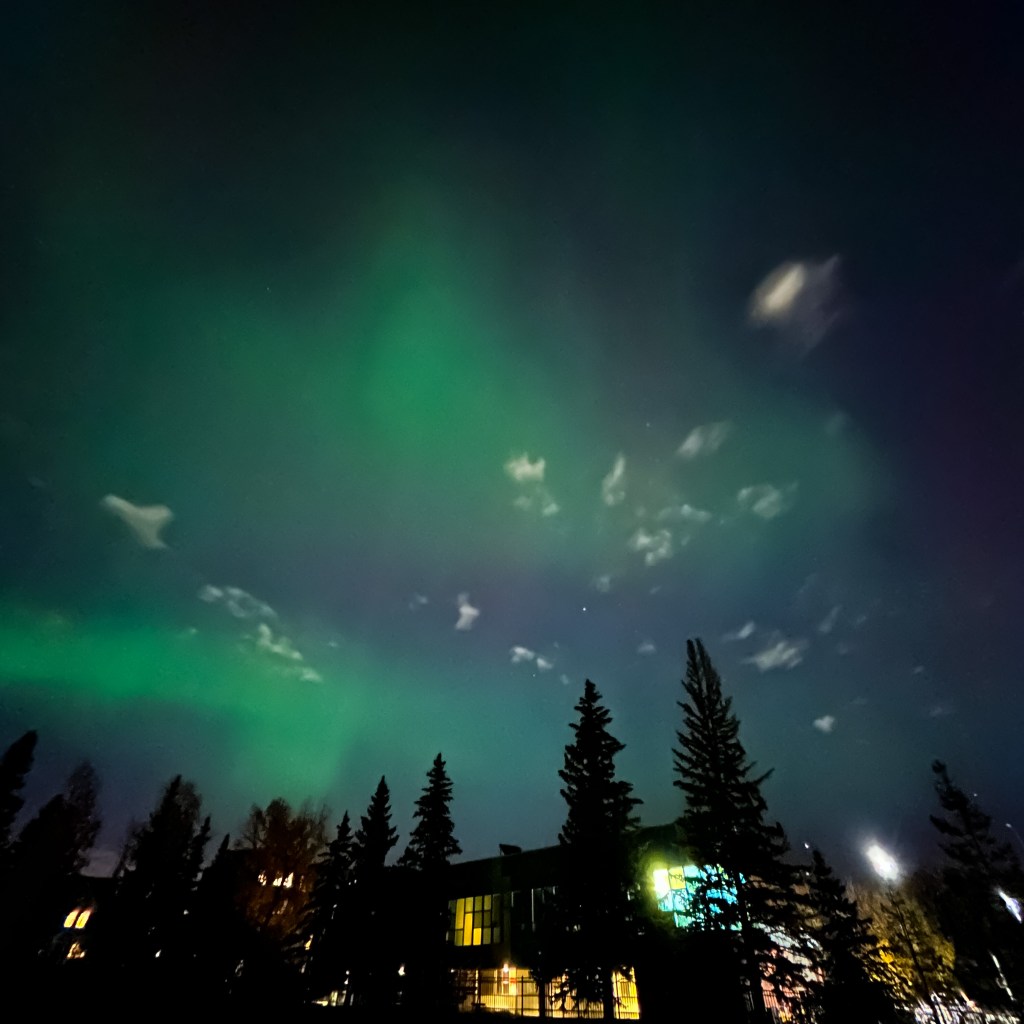
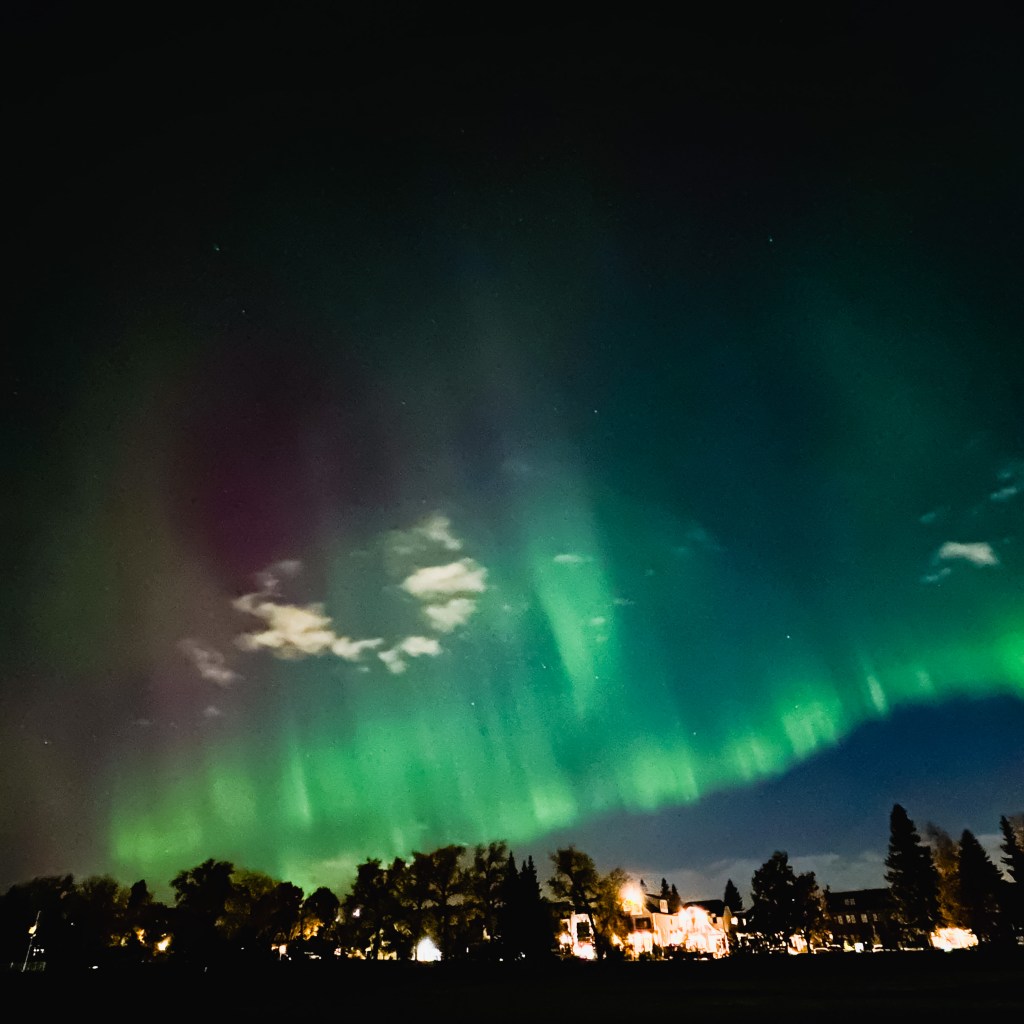
It turns out, this year at least, all one has to do is put an iPhone on a tripod (or maybe not), walk to the nearest park, and look up. I started seeing IG posts from friends who were taking pictures from their backyards, so I figured I could make a similar commitment.

I found a great website (Alberta Aurora Status) that estimates the combination of solar and atmospheric conditions necessary for good viewing. Lately, even that much science may not have been needed.

As for the photos, those took a few nights of experimentation. Fortunately, our recent weather has been agreeable and the skies have been mainly clear. I tried some shots with a “real” camera and soon learned that my iPhone 14 was more than adequate to land some decent shots. I plan to try again soon with other cameras… it looks like the good viewing isn’t finished yet.

The iPhone has a “Night Mode”, which uses a long exposure and some noise reduction. Later, it took some trial and error to get the best result with my photo editor… mainly I adjusted the exposure and added some saturation. Overall, I think the results are pretty good, considering how easy it all was.

Here are some of my edited shots from Lightroom.

Fall Colours and Intervals

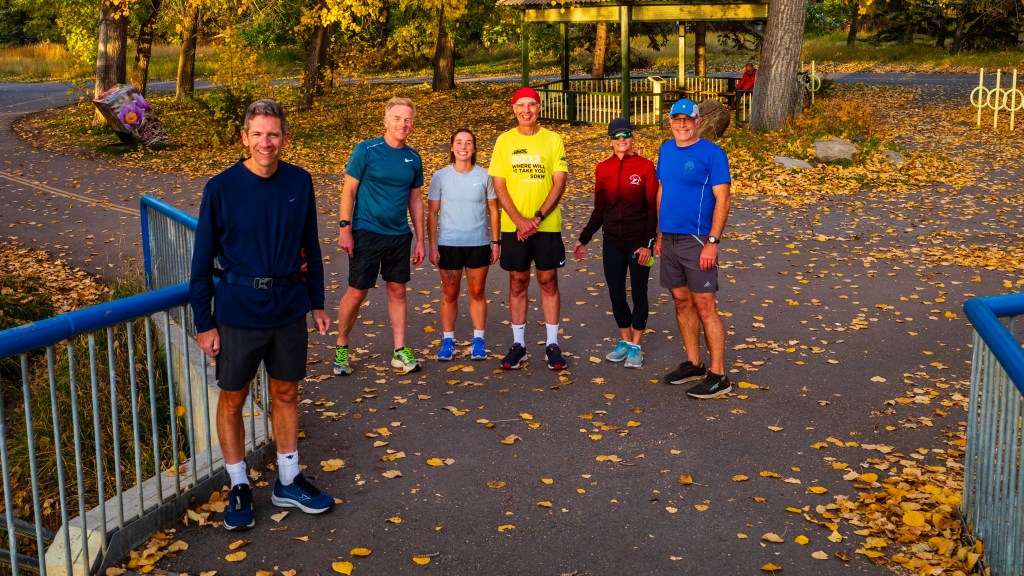
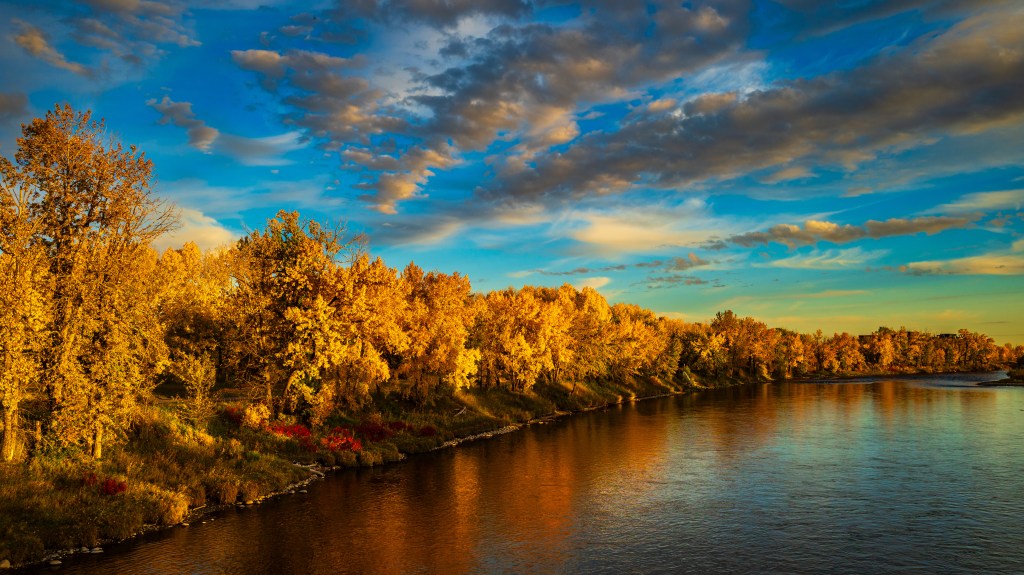
Knowing that our daylight hours are in rapid decline, I made sure to join our weekly group run at Carburn Park on Thursday evening. It was a perfect outing, and it may turn out to be our last outdoor session for the season. A small group showed up since many of our teammates were in recovery mode after a recent target race. Jason G led us through some sets of 500m – 500m – 1k.

We headed over to the west side of the Bow River and turned north. The views back across the river were spectacular. The setting sun lit up the fall colours, with most of the leaves still on the trees. I used our short 1-minute breaks to good effect, snapping as many pictures as I could before the light show ended. I couldn’t have asked for better training partners than Doreen and Elidh. All pictures with the unbeatable Ricoh GR III.

A-B-C’s

A is for Art and B is for Borduas. What? Who?

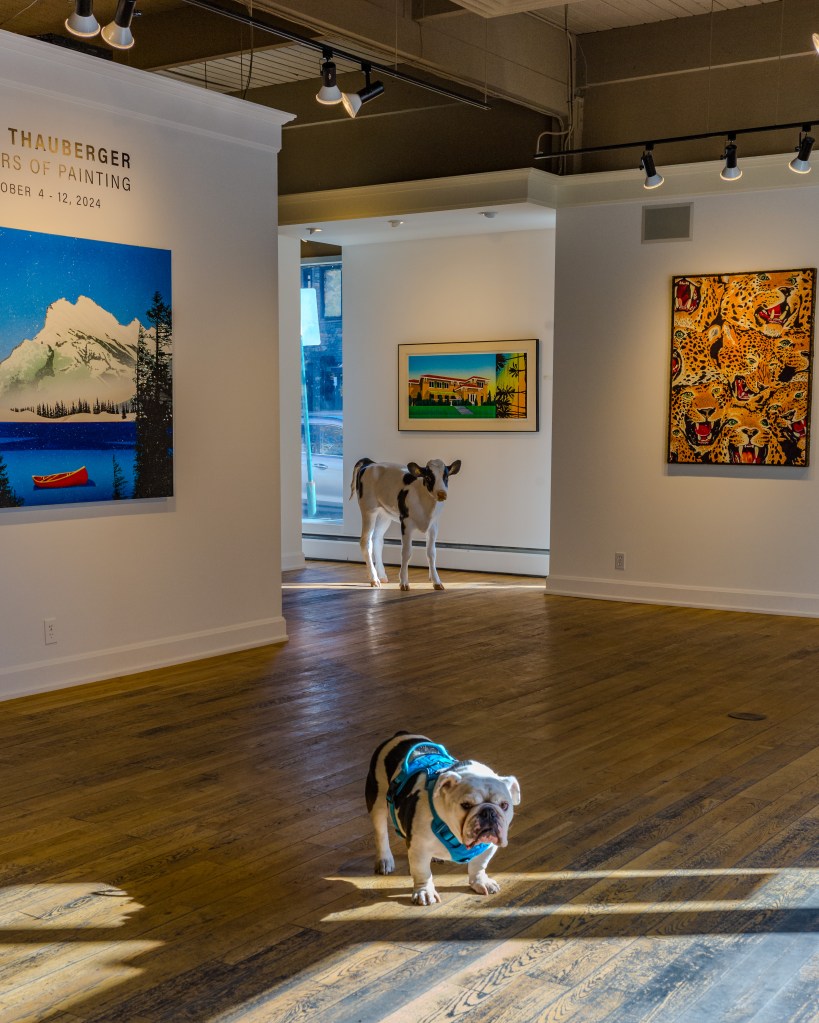
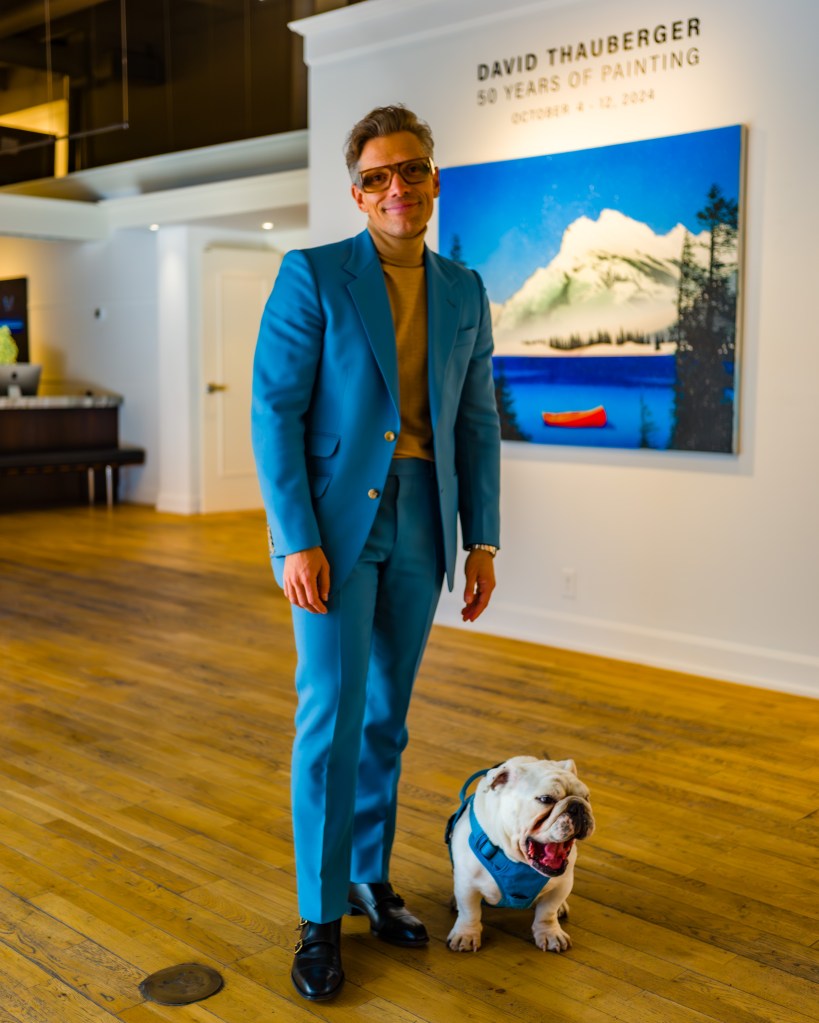
On Saturday, Deb and I made our way to Masters Gallery, to catch the last day of a David Thauberger exhibit. He’s a Saskatchewan painter who’s been active for 50 years. The gallery had an interesting selection of works from his long career.

We always enjoy stopping into the gallery on 4th Street SW to chat with Ryan Green (@ryngreen on IG) and visit with his sidekick. This visit was no exception.

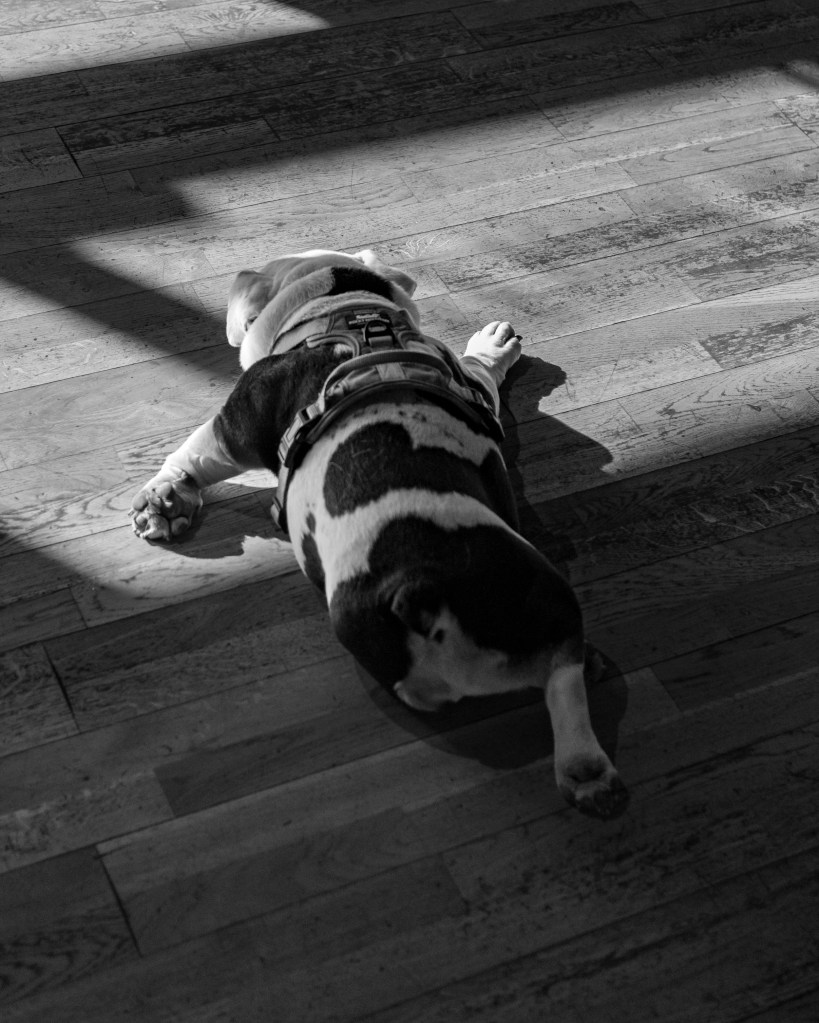
The sidekick I’m referring to is Borduas, aka “Bordy”. Bordy is a wonderful British Bulldog. He’s named after the Canadian artist, Paul-Émile Borduas (1905-1960), and he (the dog) is a fixture in the gallery. I snapped a few pictures of Ryan and Bordy because I had to. You’ll see what I mean.

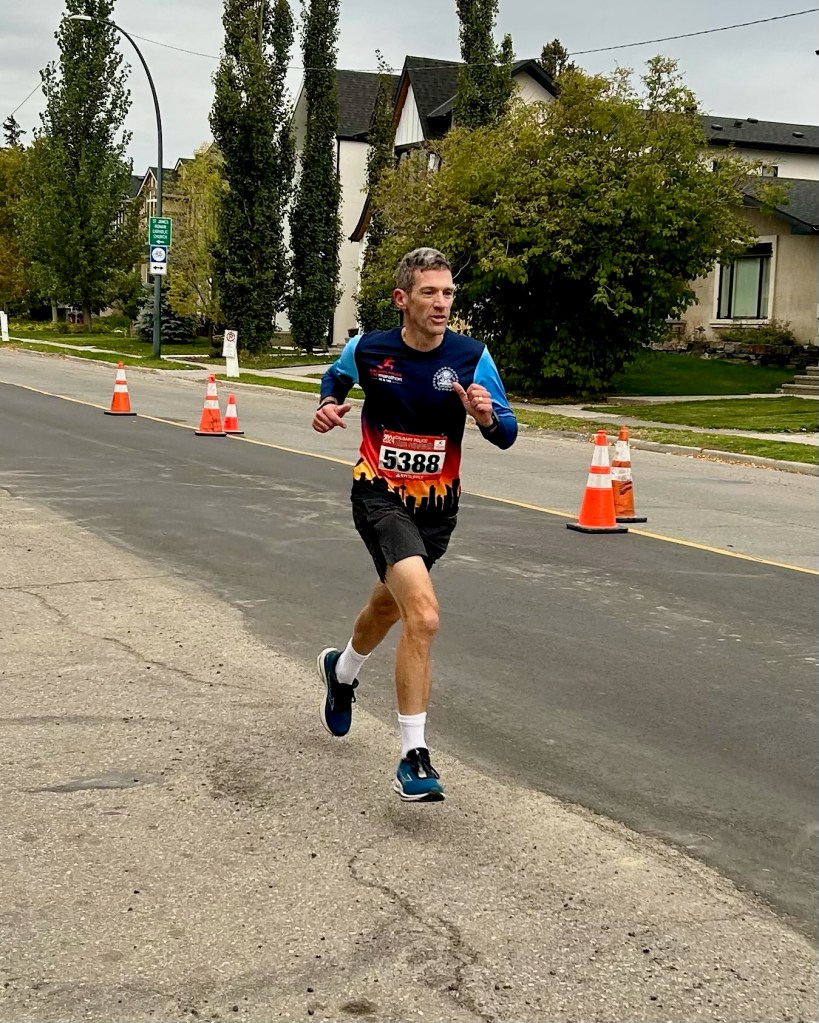
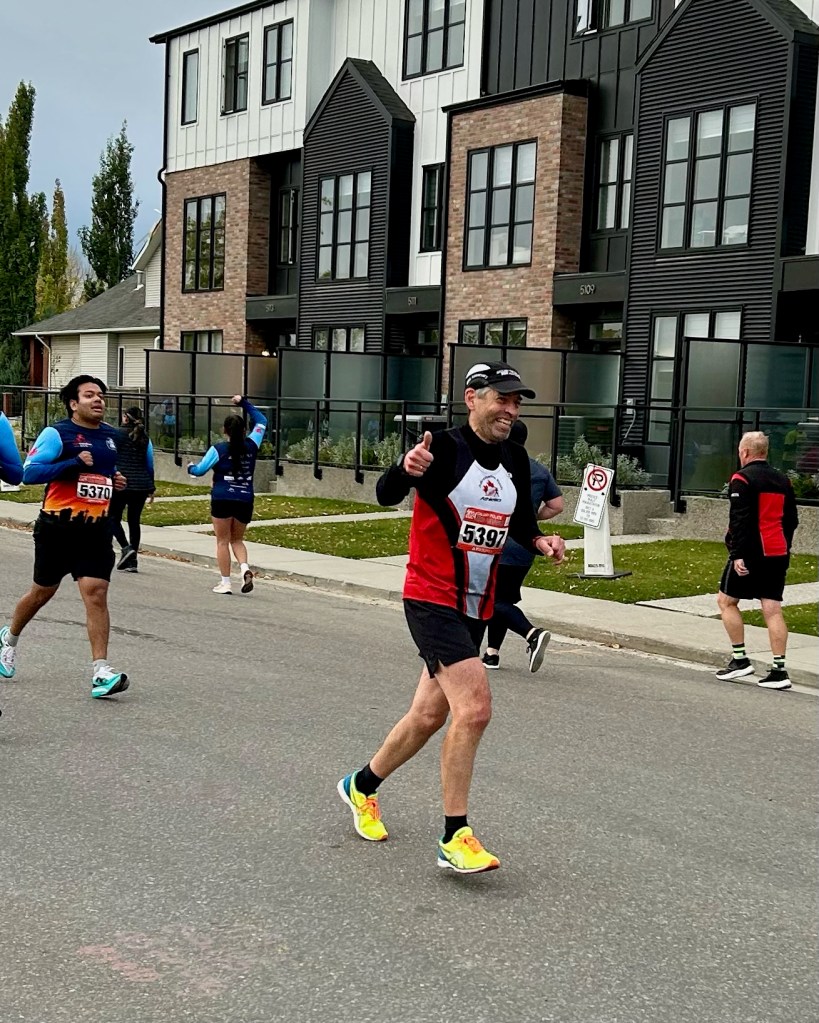
And what about C? This week, C was for Competition, as in racing. After a long hiatus, I signed up for a 5k. This was largely due to peer pressure, from the same Jason I referenced earlier. He had signed up for the 5k as part of the Calgary Police Half Marathon… one of the longest-running, best-organized races in Calgary… and encouraged me to do the same. Thanks for the push, Jason!

I had no illusions of running with Jason, but I set as my goal to run a steady effort at a challenging pace. In other words, I wanted this to be a race, even though it was at my current (reduced) capabilities. I figured I might have a shot at a podium finish in the M60-69 age group, but it was no problem if it didn’t happen. I was just happy to be over my recent calf/Achilles tendon problem.

All photos by Deb Kelly:

Conditions were ideal for racing, and it was a successful outing for Adrenaline Rush runners. Jason flew to a 10th-place overall finish and set a personal best in the process. His time of 19:13 easily placed him first in his age group, by several minutes. Scott did very well in the 10k, running 53:43 and finishing 4th in his age group. Alistair (no photo) cruised to a second-place overall finish in the main event (the half marathon), running 1:22:34. That was impressive enough, but consider that he was taken off course by the lead cyclist, a miscue that added 500m to his race distance. Way to go, guys!

And me? I finished the 5k in 25:55. It was a solid effort. I was happy and maybe a bit surprised with it. I ran smart. I did miss the podium by one spot, and I missed running with Deb even more. Maybe next time!