This is a review of a camera lens that nobody uses. It might make sense to add up front that I’m not a reviewer of camera equipment. So, if there are no readers of this piece, the only loss will be the time I spent writing it. That said, I hope to introduce an unusual piece of equipment in an approachable way, even for non-photographers.
So, what’s the story?
I have what might be described as a diverse collection of cameras and lenses. I don’t chase the latest equipment, and I don’t change my gear often. A lot of my gear is, well, old. The oldest and probably the oddest lens I own is a 70-year-old telephoto, made by Leica. It’s a lens that can be used on any M-series Leica camera made in the last seven decades. That’s quite remarkable when you think about it. It speaks to a solid legacy of product design.
For those who don’t fuss over cameras, Leica equipment is held in high regard… it’s considered to be an elite brand. In Leica’s rangefinder cameras (their “M” range), the products have a reputation for being practical, solidly built and efficient.
Except maybe for Hektor.
The Hektor is a medium telephoto lens, with maximum aperture of f/4 and focal length of 135mm. (That is the extent of the technical lingo in this review.)
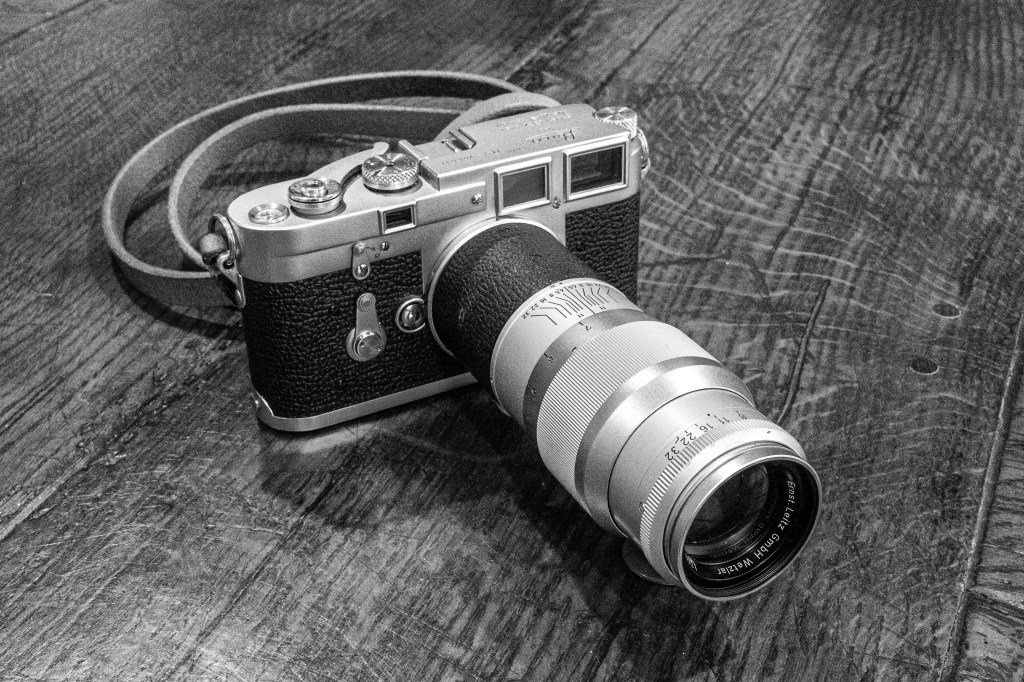
First off, 135mm happens to be a difficult… some would say unusable… focal length on Leica M rangefinders. Given my intention to keep this piece readable, I won’t explain why that is. But it is a serious knock against the lens.
I’m going to lump a few other points together because they collectively contribute to the look of the lens. And how would I describe its looks? In a word, it’s unattractive. Okay, ugly. (That reminds me of the story that the Hektor is named after Leica lens designer Max Berek‘s dog. I wonder what that says about the dog.)
Anyway, the lens design, meaning the arrangement of glass elements inside the tube that forms the lens, is simple. In photographic terms, the f/4 aperture makes this a “slow” lens. This combination of design decisions means that the lens itself is long and skinny. I don’t really like the look (or the feel) of the lens when I’m walking around with it over my shoulder.
As a further negative point, the Hektor is awkward to use. It is well-made and solid. After all, it IS a Leica lens. Still, when taking a photo, it’s hard to focus because it requires a lot of rotation of the lens barrel. This isn’t a lens for action photography.
With all those flaws, I might be advised to end my review here. But here’s the problem. I think it actually takes good pictures. Check out these examples:
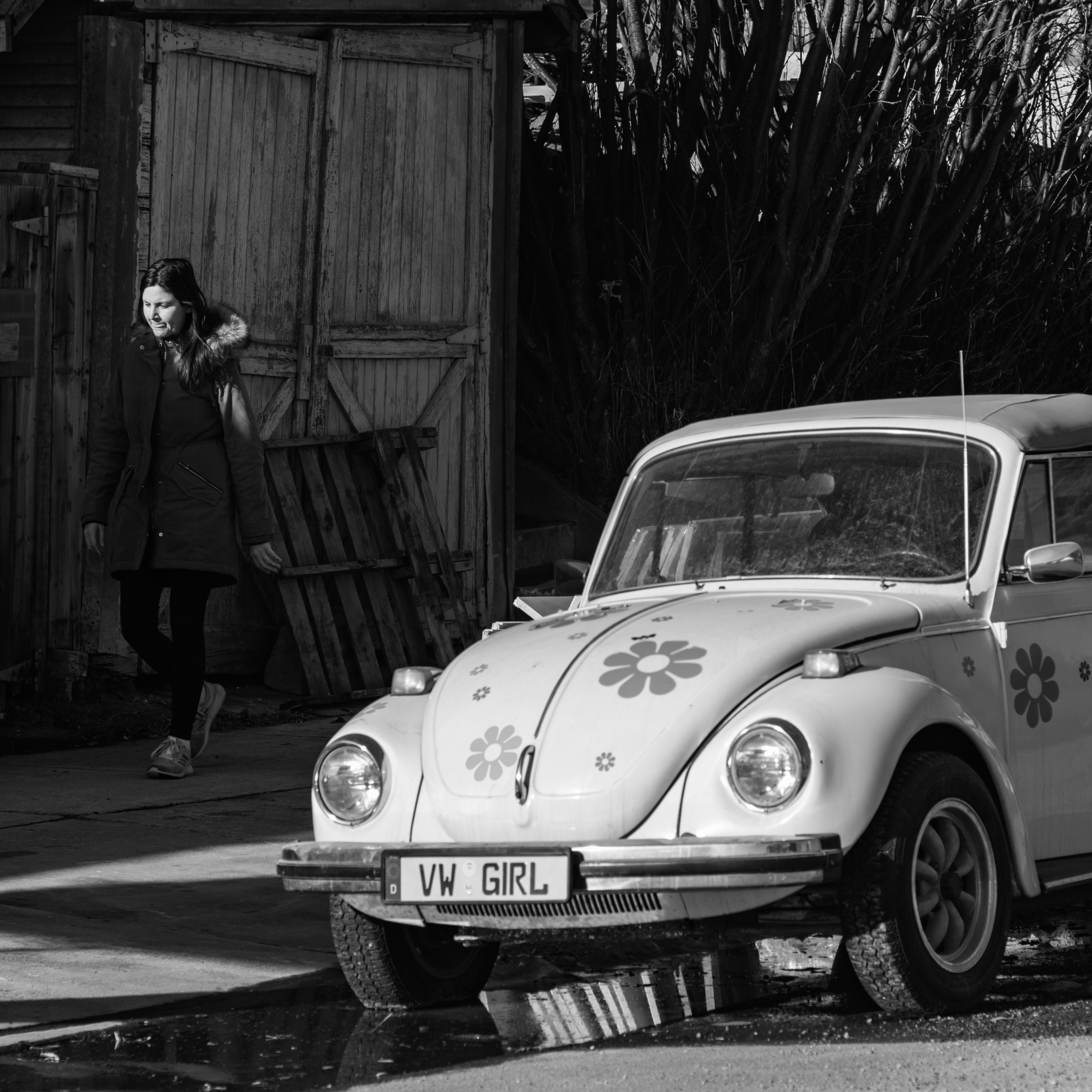
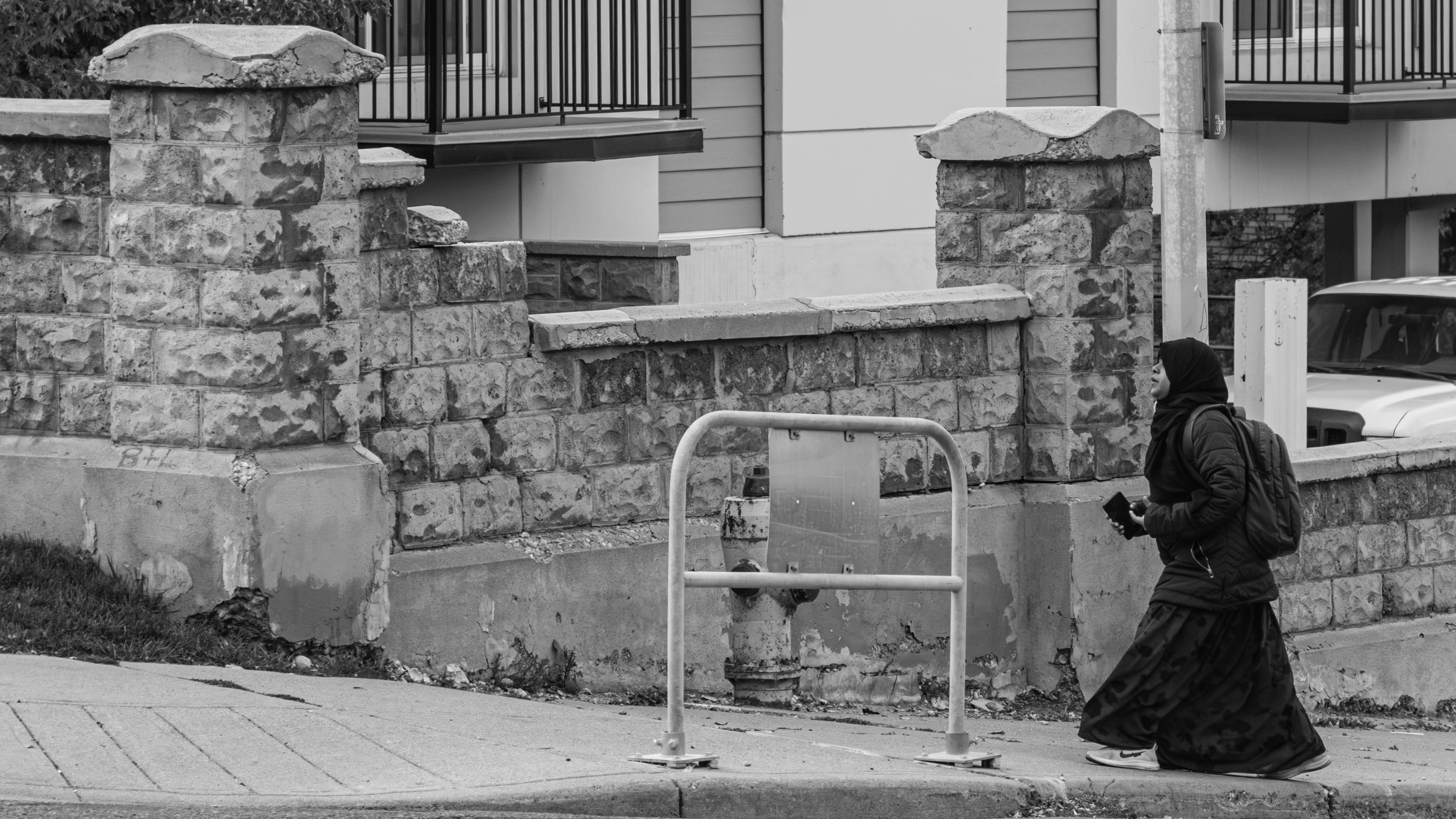

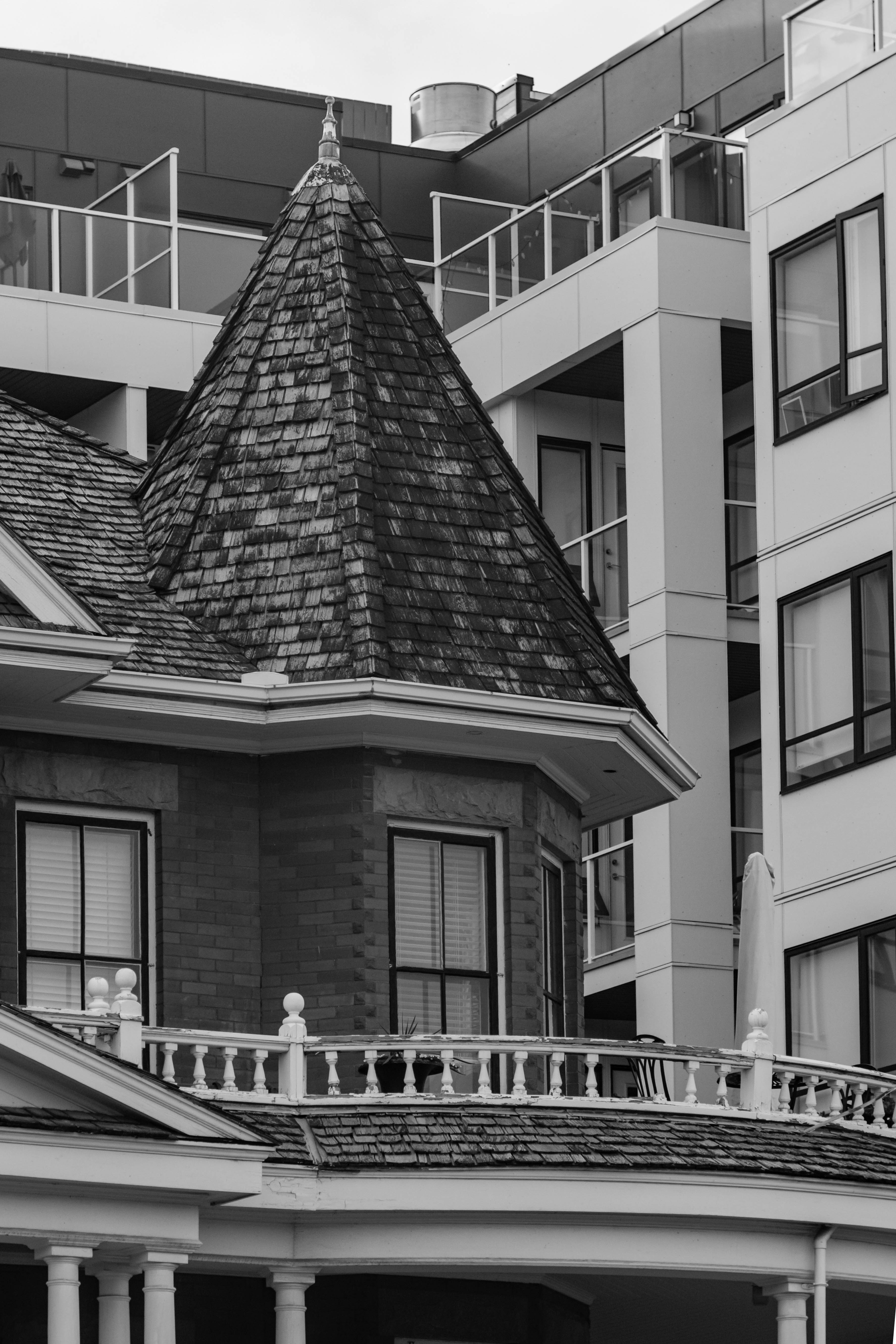
These pictures all came out of the camera with soft contrast, kind of a “mid-century” look. Could that be the result of whatever combination of optics and coatings was put into the lens in 1954? Maybe. It isn’t necessarily a bad look. In fact, it may be exactly what one is looking for, especially for portraits. After some editing, the results look fine, at least to me. (I should add that the Hektor’s colour rendition isn’t good, so I usually use it for B&W shooting.)
I’ve used the lens for street photography, and it’s best for distant subjects… shots across a street, like “VW Girl”, above. Shooting with Hektor brings all the shortcomings I mentioned earlier into play. For that reason, if I’m using this lens I have to get my settings ready and wait for subjects to enter the scene.
The lens is quite sharp across the aperture range, even shooting wide open. Again, it should work well in portraiture. Given how slow it is, maybe outdoor portraiture would be the best bet.
I’ve read a few other reviews of this lens. Most bash it quite harshly. One review by a well-known online source is very negative. However, when one reads the full review, the reviewer concedes the many strong points the lens has going for it when taking pictures. And isn’t that what matters?
Wrapping up, the Hektor is a lens I rarely reach for. There are good reasons for that. But every so often, when I feel like giving myself a photographic challenge, I put it on a Leica M camera and take it out for a spin. I marvel at the fact that I can do that at all, with such an ancient piece of equipment. And if I’m patient, I usually come home with a shot or two that convince me to keep this oddball in my kit.

 My Second Running Life