I thought it would be fun to highlight individual performances that have inspired and motivated me. As you’ll see, it isn’t necessary that the person I’m writing about won the race in question. This is all about their effort on the day.
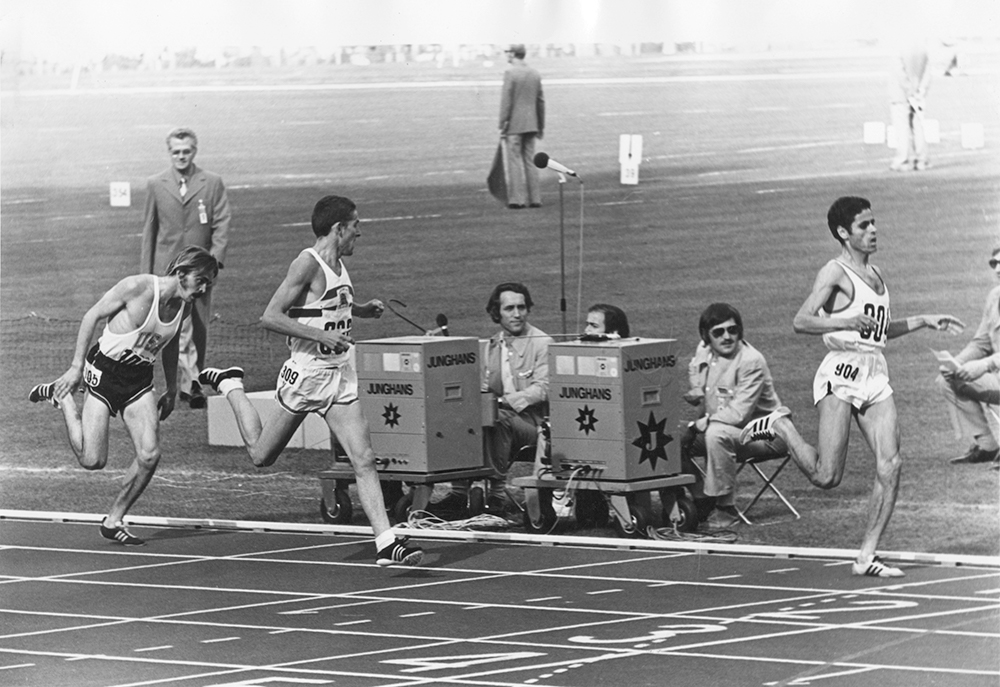
Steve Prefontaine, Munich 5000m Final
I’ll start with a confession: on my own race mornings, I used to watch the video of this great individual performance to get myself into the right frame of mind. BBC commentator David Coleman’s description of Steve Prefontaine, the brash American, as “a sort of athletic Beatle” is classic.
Setting the scene, Prefontaine was running in what would be his only Olympic final, against a deep field. With two slow miles behind them, Pre boldly “states his case” to lead to the finish. As a pack of five separates itself with two laps to go, the Finn Lasse Viren asserts control. Is it over? No, not with Pre in the mix. Time and again, he fights to regain the lead. Coleman’s fateful comment, with 200m to go, that “these are the medal men” would turn out to be wrong, as a totally spent Pre is passed in the last few metres by Ian Stewart. Viren won gold.
Measured by the result… fourth, and out of the medals… this could be seen as a foolish gamble by the inexperienced young American. Instead, I look at it as the epitome of racing. There was no playing it safe for Prefontaine. No wonder I get goosebumps every time I watch the video.
Mo Ahmed, Paris 10,000m Final
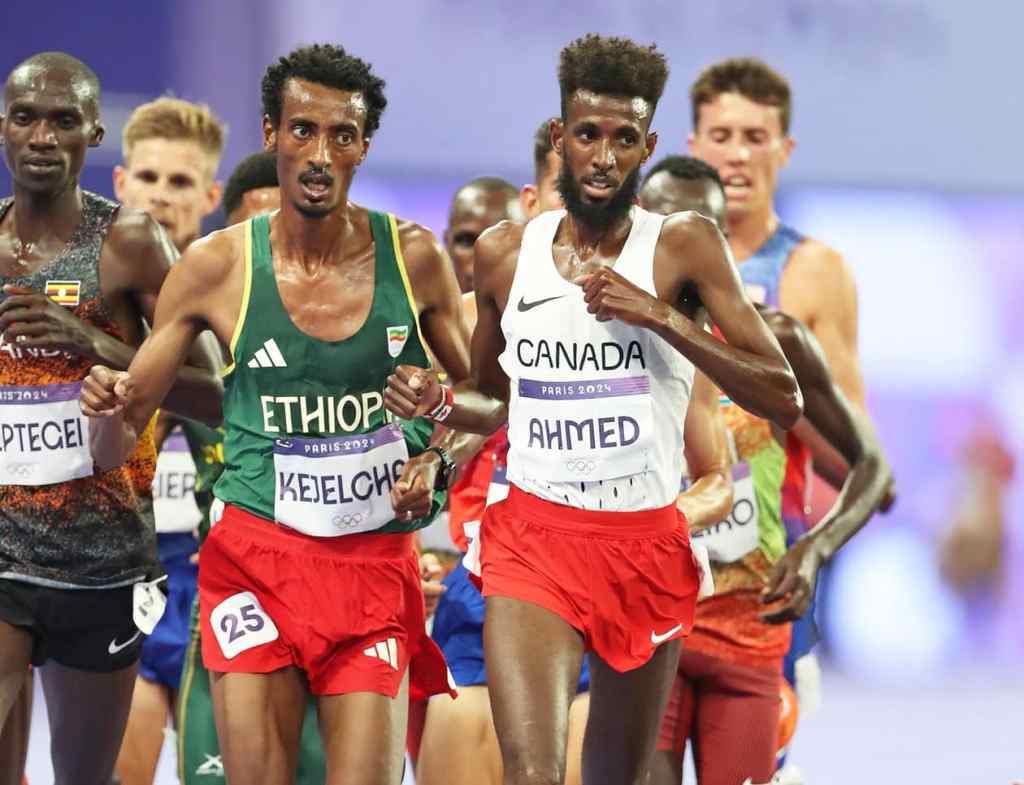
At the risk of repeating myself, I’ve chosen another Olympic finals performance that left the runner out of the medals. This time, it was Canadian Mo Ahmed in the Paris 2024 Olympics 10,000m final.
Ahmed ran what might be the smartest race I’ve ever seen. He stayed out of trouble in a top-class field, paced himself beautifully, and was in contention against team tactics of other runners until the final 30 metres. I thought I might have been the only one who noticed his deceptively smart racing, until I heard David Moorcroft (broadcasting for CBC) make the same observation.
Finishing with nothing in the tank, Ahmed’s performance (26:43.79) was good for fourth place. That he and 12 other finishers were well under the previous Olympic record attests to the quality of the field. It was a spectacular race, and one where Ahmed demonstrated that he belonged with the very best.
Paula Radcliffe, 2003 London Marathon
In 2002 and 2003, Paula Radcliffe was on top of the marathon world. She had set a world record in Chicago in October 2002, running 2:17:18, so there was great anticipation for her race the following spring in London. Running before her home crowd, Radcliffe didn’t disappoint. Leading from start to finish, she shattered her own world record, en route to an astonishing 2:15:25. Her nearest competitor was more than four minutes behind her.
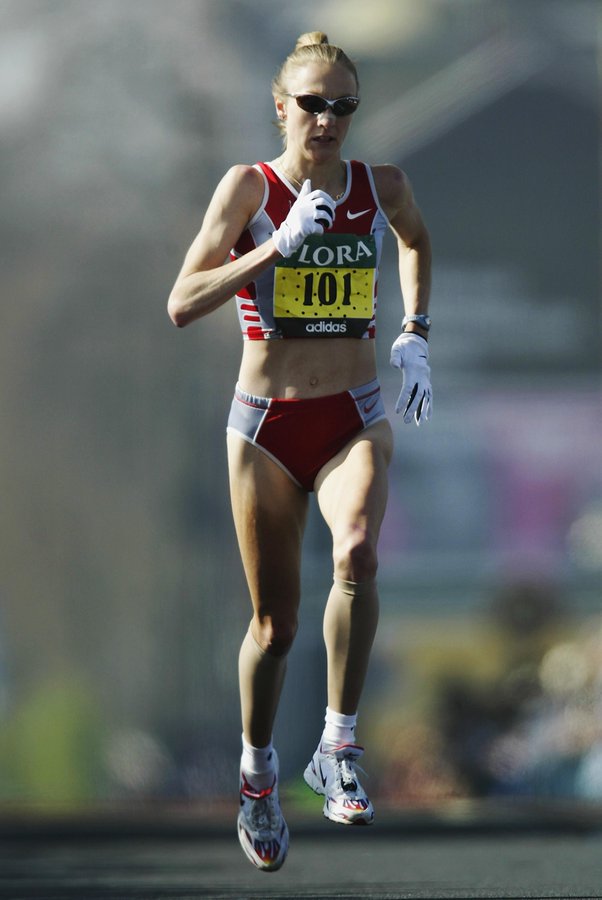
I have a tenuous connection to Radcliffe’s race. You see, I was on the same course that sunny April morning in London. Admittedly I finished nearly an hour behind her. I’ve replayed the videos and read the stories so many times to fully grasp what Paula achieved. The strain on her face in the final few kilometres shows how much she wanted this result.
In an era before supershoes and without any team support, Radcliffe delivered a courageous performance, well deserving of being in my top 5.
Filbert Bayi, Christchurch 1,500m Final
In recent years, the Commonwealth Games have struggled to remain relevant. Competition from other mega-events (like the Olympics and the World Cup) and other *um, political* factors have led prospective host cities to back away from the Games.
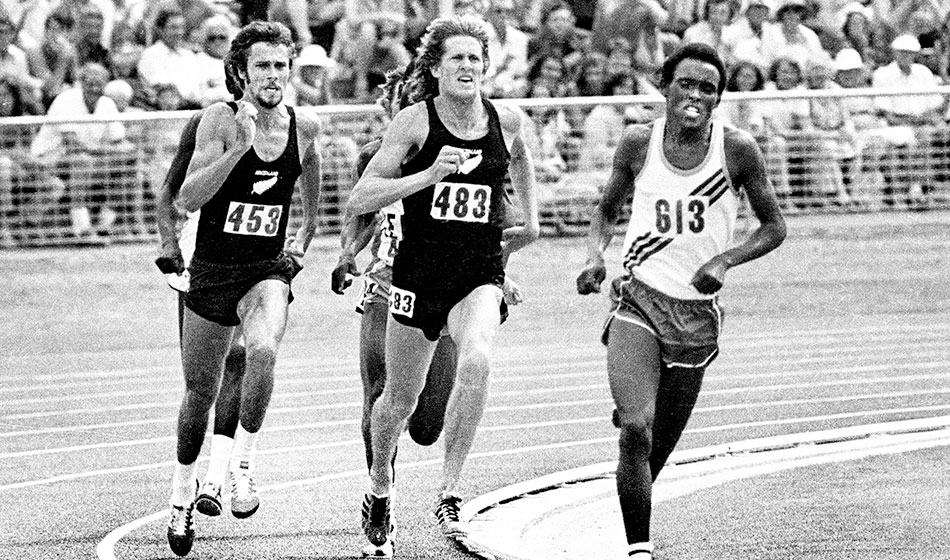
Whatever the future holds, the Games have been host to some great athletics history. Here’s a case in point. In 1974, the young Tanzanian runner, Filbert Bayi, was relatively unknown. That didn’t stop him from taking on a handful of the world’s best in the 1,500m final in Christchurch, New Zealand. His race was one of the most audacious performances of all time. He led from start to finish and set a world record of 3:32.2. Not only that, he beat the hometown favourite, Kiwi John Walker.
Bayi’s account of the race, in a wonderful Athletics Weekly article, leaves no doubt that he trusted his front-running strategy. “I was confident that anyone trying to close the gap over the last 100m or 200m would have a real fight on their hands,” he states. And with the field in a pack bearing down on him, his plans were certainly put to the test. In the end, Bayi beat Walker by a couple of strides. He knew immediately the importance of what he had achieved. It was a perfectly executed race.
Roger Bannister, 1954 Mile Double
Even as the 1,500m has largely eclipsed the mile as the middle distance standard, it’s worth noting that the mile continues to get attention. In the last week, the men’s indoor mile record has been broken… not once, but twice. So it is worth looking back to the furor that surrounded Roger Bannister in 1954.
Cheating a little, I will highlight two of Sir Roger’s epic performances. His epic May 1954 run to break the four-minute barrier for the first time is the race everyone knows about. But I would suggest that with his performance in Vancouver at the then-called Empire Games in August, Bannister put an exclamation mark on his miraculous year.
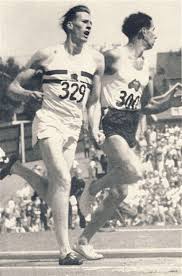
By August 7, Bannister’s record time had already been beaten by Australian John Landy. The Vancouver race was the first time they competed head-to-head. The race generated global hype, and it became known as the Miracle Mile. Although Landy led most of the way, he made a fateful error on the last corner, looking to his left for the hard-charging Bannister. Sensing Landy’s weakness, Bannister passed on the right and didn’t let up. He reached the finish in 3:58.8, five yards and 0.8 seconds ahead of Landy.
I’ve written about Bannister, here and here. What impresses me most about him is that he competed as a pure amateur. As memorable as his exploits on the track were, he never considered them to be his greatest personal achievement.
So that’s my top 5. I could have easily found a top 10, but one has to draw the line somewhere! I’d be interested in any thoughts on these performances, and any that my readers are convinced I’ve missed.
Until next time, be well and BE FAST!


 My Second Running Life