
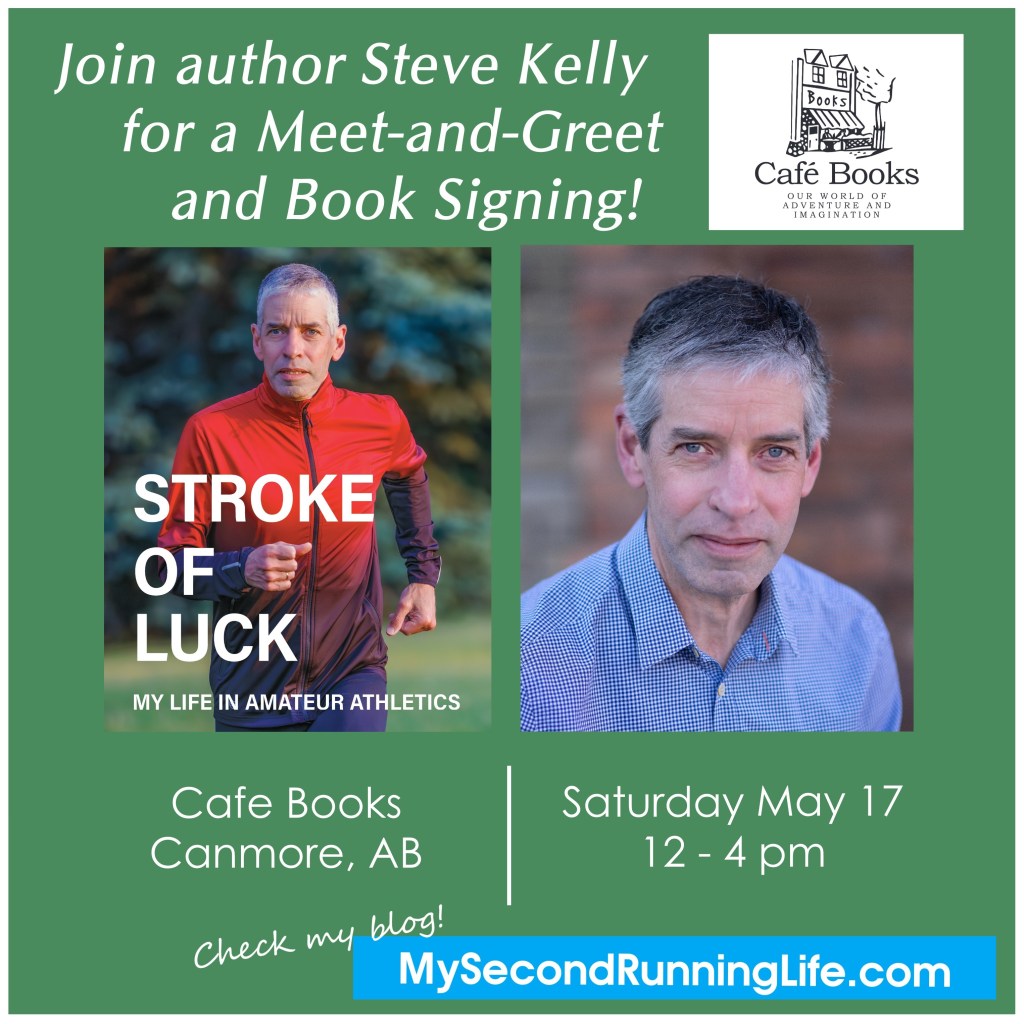
I’m looking forward to visiting Cafe Books in beautiful Canmore in a few weeks, for an in-store book event.
If you can make it on May 17, I’d love to see you there, for a chat about running, my stroke journey, and of course, my book!
Speaking of running, I’ve almost let the week go by without a blog post, but this week—Boston Marathon week—is too special to pass up. A gutsy performance by one of my teammates, who demonstrated character by overcoming injuries to finish the race, prompted me to start writing—congratulations Jason!
If there is one road race that stands above all others, it is the Boston Marathon. There are many reasons for this, and it would take much more than one short piece to go through them. I can already see more posts being needed!
Why Boston Matters
Boston is a celebration of tradition and history. The race is a tribute to athletic excellence, with many of the great runners having won in Boston—Tom Longboat, Johnny Miles, Ron Hill, Bill Rodgers, Jerome Drayton. It’s a unique sporting event, where the best professional runners compete on the same road, at the same time, with the most devoted amateurs. The crescendo of support—from the quiet country roads of Ashland, to the enthusiastic women of Wellesley College at the halfway point, to the screaming crowds in Kenmore Square—makes every inch of the route special.
Devotion doesn’t begin to describe what it takes to earn an entry to Boston. Talent, dedication, and good luck are also needed. Then, just to get to the start line in Hopkinton on the third Monday in April takes extraordinary commitment, focused training, and more good luck. Those fortunate enough to reach the historic finish line on Boylston Street will have dealt with one of the most devilish, net downhill, point-to-point race courses anywhere in the world; and unpredictable weather conditions that can include everything from torrential rain to blistering heat.
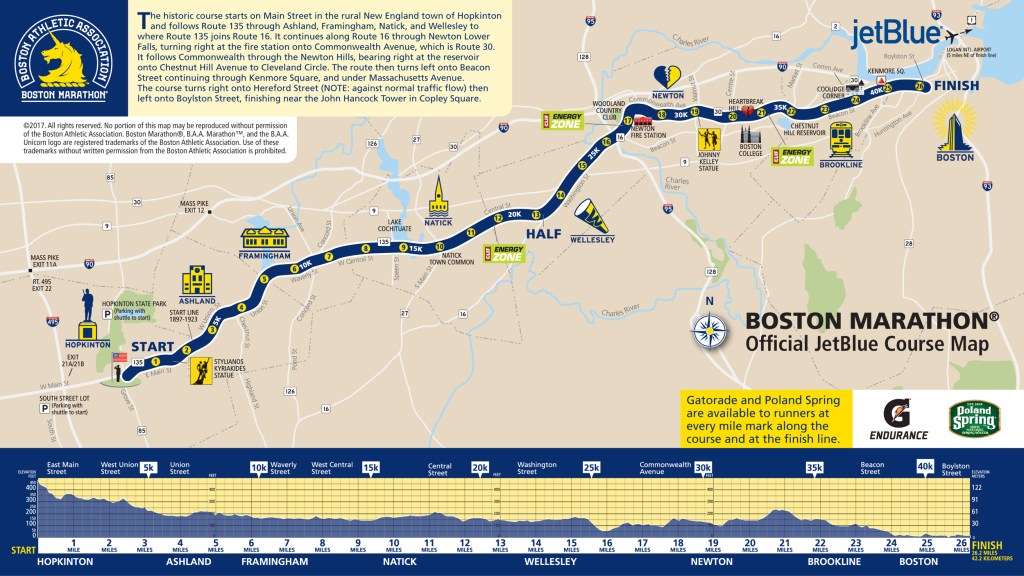
Some context might be helpful. Today, running a marathon is seen by many beginners as part of a natural progression, as an achievement that lets someone call themselves a runner. (That isn’t true, by the way.) For many years, the 42.195km distance was the domain of the sport’s fringe players: tough, sinewy, hard men. Yes, they were almost all men. And while it may have been debated, the Boston Marathon was at, or at least near, the pinnacle of the world’s top marathons.
I think of two eras for the Boston Marathon: pre- and post-1996. You see, 1996 was the 100th anniversary of the race. Compared to prior years, the field that year was huge. Since then, demand for entries has ballooned, as more runners add Boston to their bucket list. To their credit, the Boston Athletic Association (the BAA) found a way to squeeze more runners onto the narrow roads of Route 135 by adding wave starts (and by upping their game on the organization side).
I will add an opinion that may not be popular with some readers. The BAA will never be able to accommodate the demand for entries to this most desirable race. And that is fine with me. Boston has always been (and in my view, should remain) exclusive… it should be an event set aside for those who can earn a place. Opening it up to any and all participants would only dilute what makes the race special.
Personal Connections
I’ve run Boston three times. It’s been such an integral part of my running life—my first running life, that is—that I can’t really remember a time when I didn’t want to run it. Through the 1980s and 1990s, the race was an enigma and a vague aspiration. It was an event that I read about on the back page of the sports section. If I wanted to know more, I would have to dig deep. And I did. But in the days before social media, I had more questions than answers: Where should I even begin? How would I qualify… or enter? My god, assuming I did enter, how would I run the damn thing?
Let’s just say I worked my way up to the race. I call it doing my apprenticeship. Finally, in 2001, for the 105th running, I felt ready to tackle the challenge. It helped that I qualified by a comfortable margin in another of my favourite races, the 2000 Royal Victoria Marathon.
I wrote extensively about my first Boston Marathon experience in Stroke of Luck. It is, quite simply, one of the defining events of my life. My family made the trek to Boston with me, having sacrificed much to make my 25-year dream possible. The race itself was a personal triumph. I planned well and I executed well. I met my optimistic goal by going under three hours. I even put aside my competitive instincts—a little—to smile and wave at the best marathon fans in the world. In short, I finished knowing I had done everything humanly possible to achieve this result. As I said in the book:
“The numbers were impressive and satisfying, but they were only numbers. I was at a loss for words to describe what I was feeling. Years later, I still have trouble. It was exceptional. Momentous. Transcendent. It was everything I had hoped it would be.”
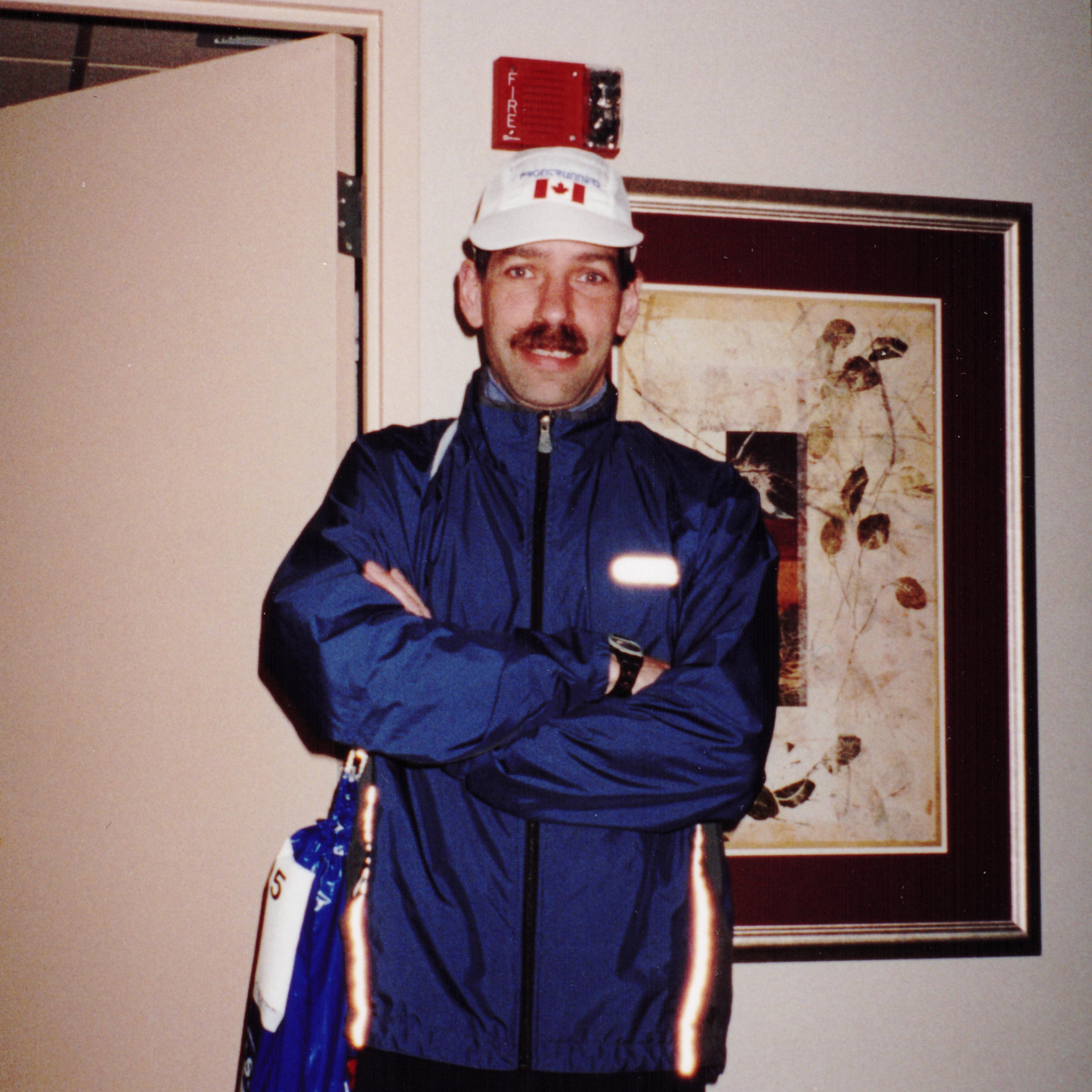
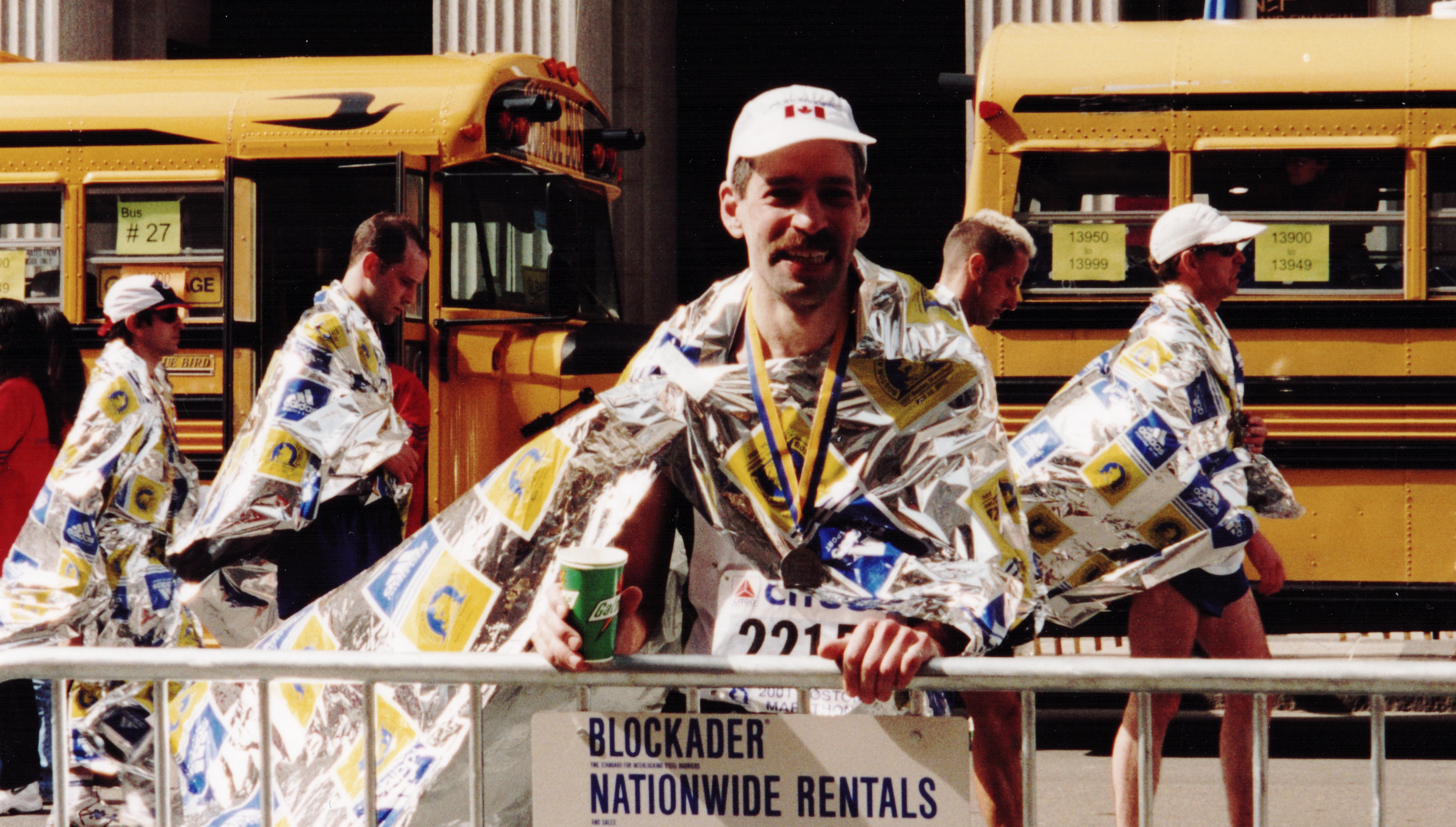
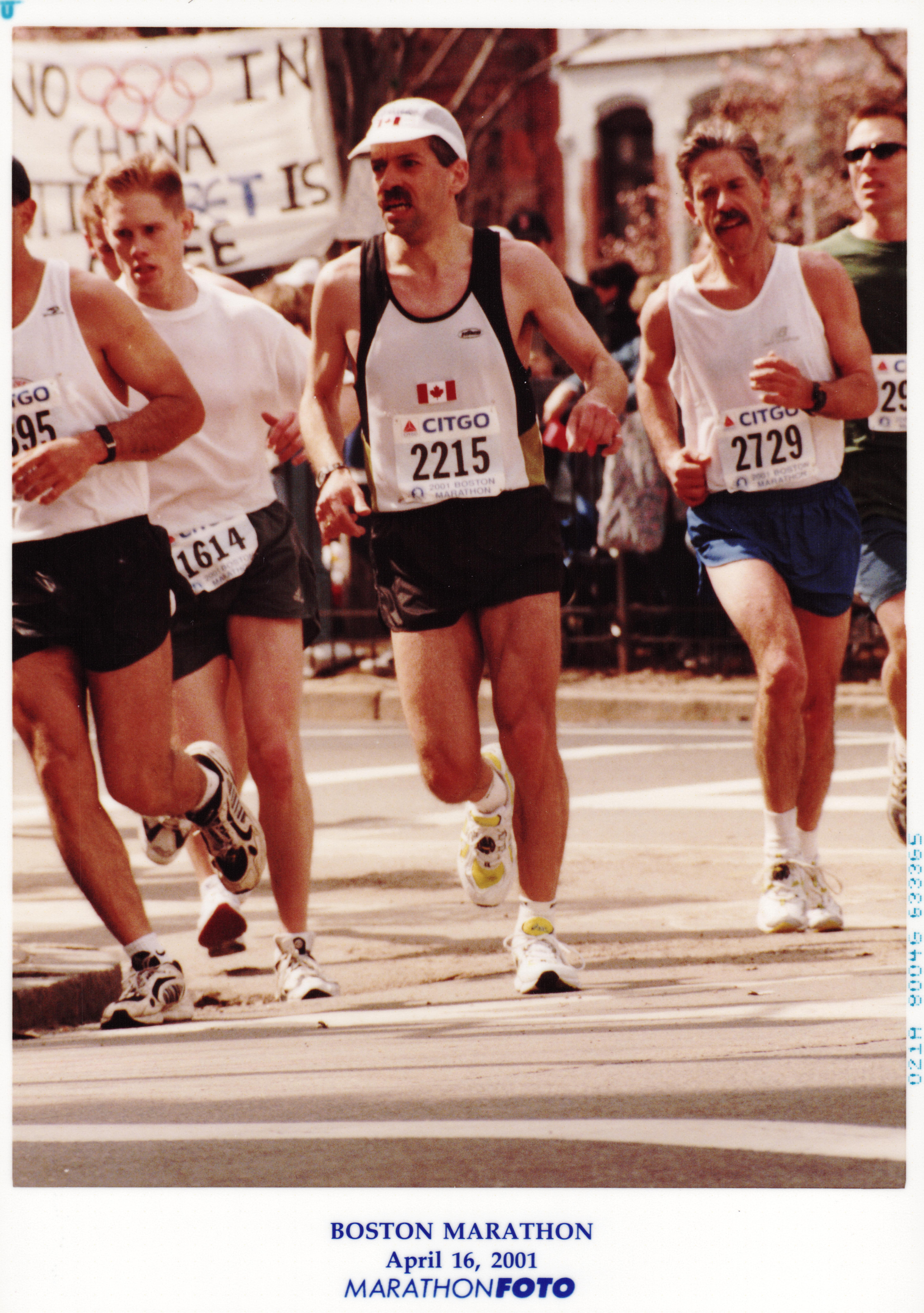
That magical day in April 2001 was the culmination of a long personal journey. I believe that putting substance to my childhood dream, working towards it, and finally achieving it, says more about me than words can ever do.
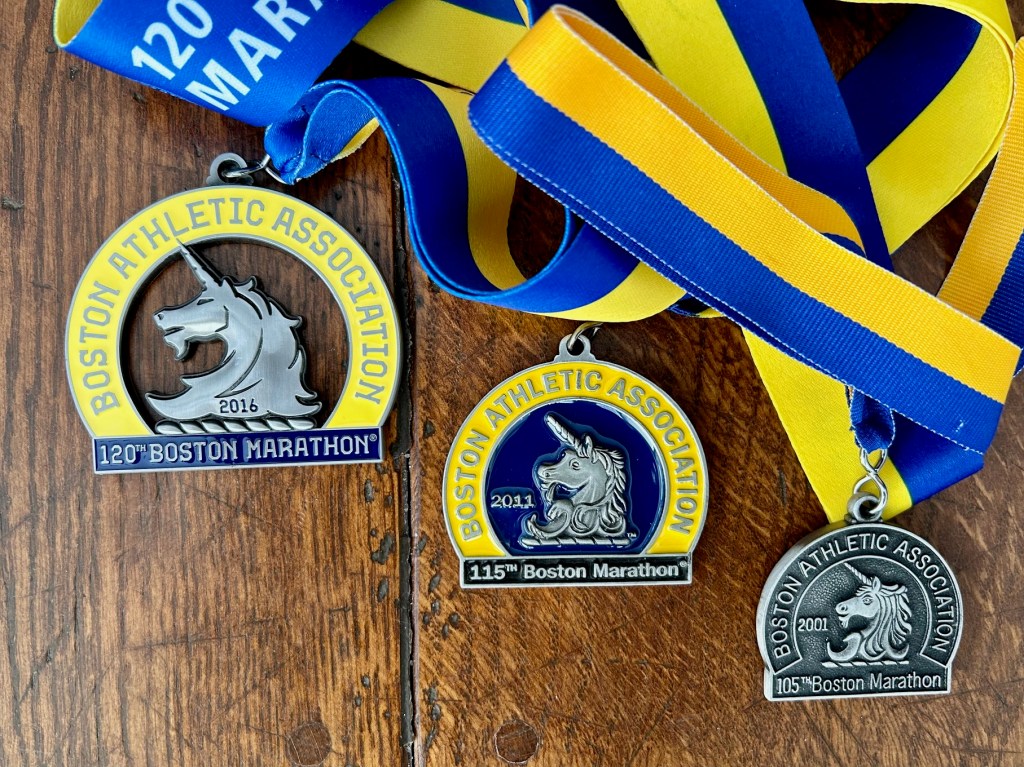
I’ve been back to run Boston twice more. The experiences were each different and in their own way, worth writing about. There’s no question that for sheer emotional intensity, nothing could compare to the first time I made those famous turns, the ones every Boston finisher will recognize—“right on Hereford, left on Boylston”. Look for more in future posts.
For now, I’ll ride the annual Marathon Monday wave for a little while longer.
Until next time, be well and BE FAST!














 My Second Running Life