Calgary Marathon Action!

Did you know that June is Stroke Awareness Month in Canada?
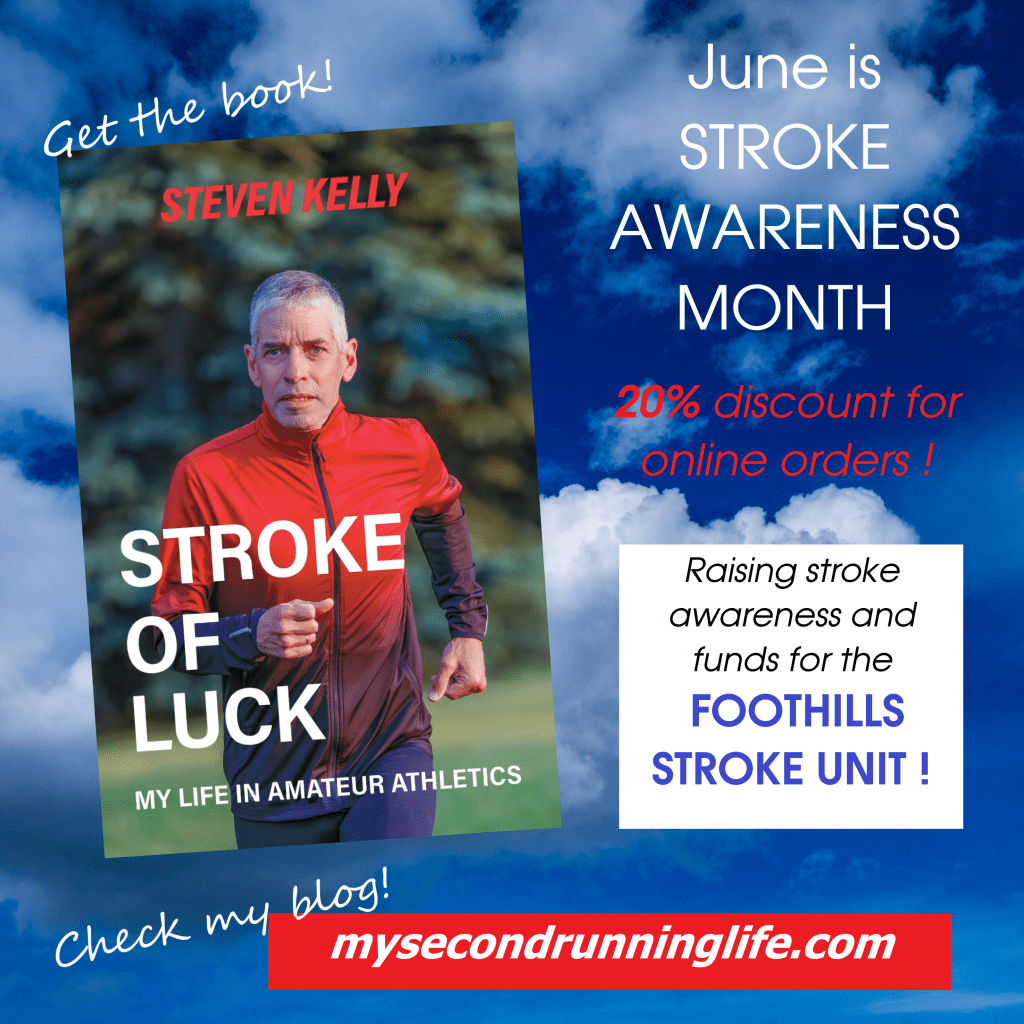
To raise awareness of the prevalence of stroke, I’m once again offering my memoir—Stroke of Luck: My Life in Amateur Athletics—for a special price in June. Order your copy on Amazon and save 20%.

Help me raise funds for the essential work of the doctors and staff at Foothills Stroke Unit!

Calgary Marathon Weekend

It was a great weekend for racing, and this year a record number of runners laced up for the 61st edition of the Calgary Marathon. Across several races, more than 17,000 runners turned out. Race distances were from 1k (toddlers only I’m told) right up to the marathon.

The Calgary Marathon is the oldest in Canada. It’s only a few years younger than me. Speaking of being younger, I dug into my archives to share with readers my own history with this storied race. Then, I’ll share some highlights from the 2025 races, where I was strictly a spectator!

1987 – A milestone is reached!

It’s hard to believe, but I first ran the Calgary Marathon in 1987—I had to check my math to verify that it was 38 years ago. At the time, Deborah and I were living in Edmonton, which means we made the trek to Calgary in an underpowered Honda Civic.

The race route is shown below, copied from my well-preserved race entry.
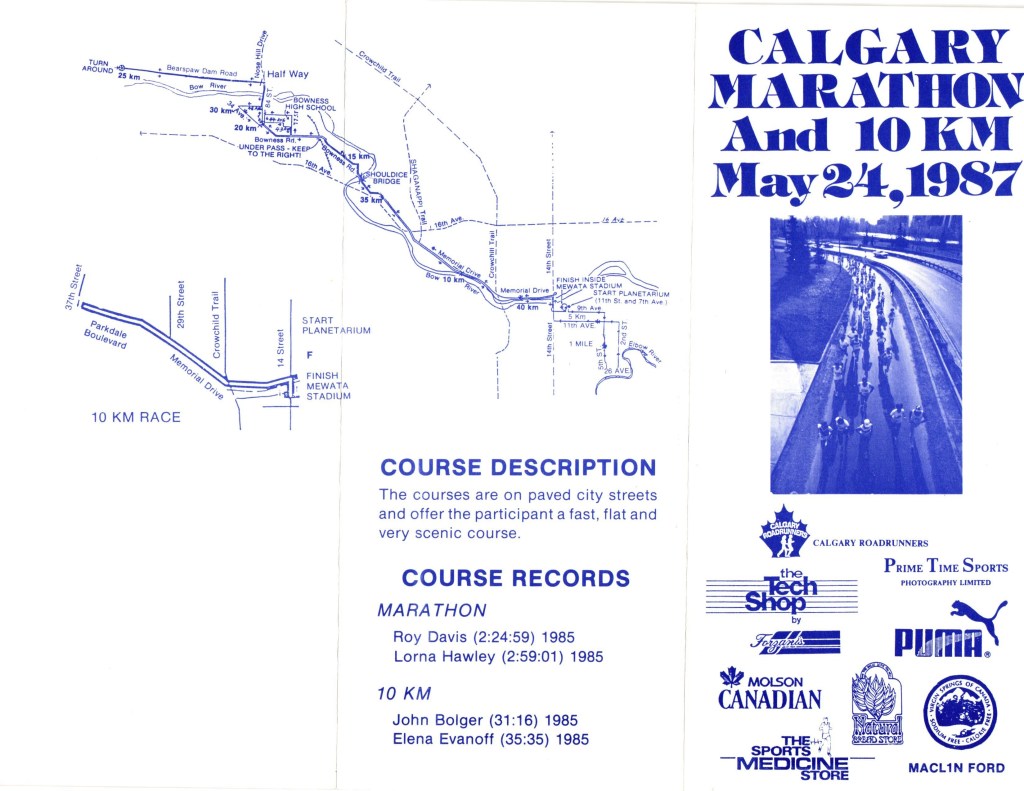
The race entry fee, for those who are used to paying over $100 now, was $12. And that included a cotton singlet, which has curiously not survived—I don’t even remember it. The NB 990 shoes I wore are also long gone. However, I was a proud member of the Edmonton Roadrunners in those days, and my club singlet is still around, buried in a drawer somewhere.
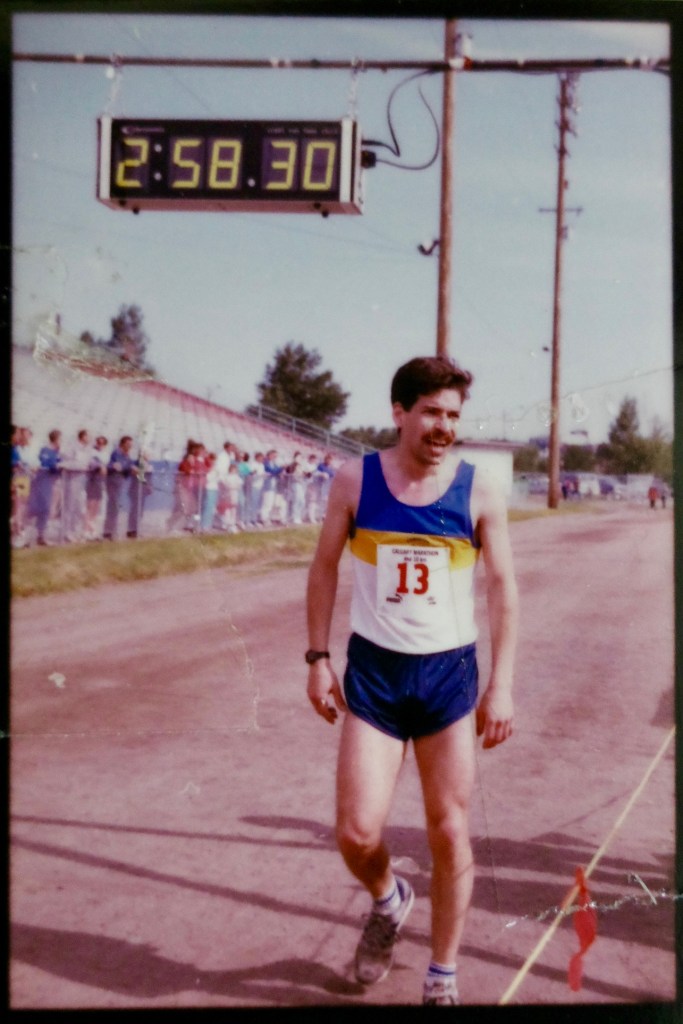
The 1987 Calgary race was my fourth marathon, and it turns out that race bib 13 was not unlucky. In fact, it was a notable race, because I managed to go under 3 hours for the first time—2:58:30 to be precise.

You can see my relief in this finish-line picture. I finished 42nd overall, and 7th in the (yikes!) 18-29 age group. And yes, that last bit makes me feel old!

1992 – Another milestone

I’ve had a long love-hate relationship with the marathon. As evidence, it was five years before I would tackle the distance again. In July 1992, I came into the race—called the Calgary Miracle Marathon that year—in what may have been the best shape of my life. We had moved to Calgary in 1991, so I felt I had a home-field advantage. What’s more, in the two months before the race, I had set PB’s in the half marathon and 10k, so I was full of confidence.

In Stroke of Luck, I wrote about how my careful race preparations were almost upset by unplanned events on race morning. Here’s an excerpt:

“I went through my final planning for race day. Then everything just about fell apart. Our son Daniel, who was by then nearly a year old, had been a sound sleeper most of the time. However, on this night, he had some unknown issue that kept him up until the early hours. I was reduced to lying in bed with my eyes open, thinking about what this would do to my marathon in a few hours. … Finally, Daniel quieted down, and I fell asleep. Too soundly, as it turned out. In addition to my other troubles, I had set my alarm incorrectly and it didn’t wake me up when I had planned. The only thing that saved me was my decision to take a cab to the race. The sound of the driver honking his horn was my alarm. At first, the sound was part of a dream, but as the cobwebs slowly cleared it dawned on me what had happened. I leapt out of bed, totally skipped my normal race day breakfast, and jumped into the car for the short ride downtown. Still half asleep, I stowed my bag and headed to the start line, believing that my day was ruined.”

It turns out I need not have worried. While I did run well, setting a PB by 7 minutes, I remember being disappointed at the finish. Over time, that disappointment has softened, to the point where I’m now quite content with my 2:51:39 result. I finished 20th overall, and fourth in the 30-39 age group.
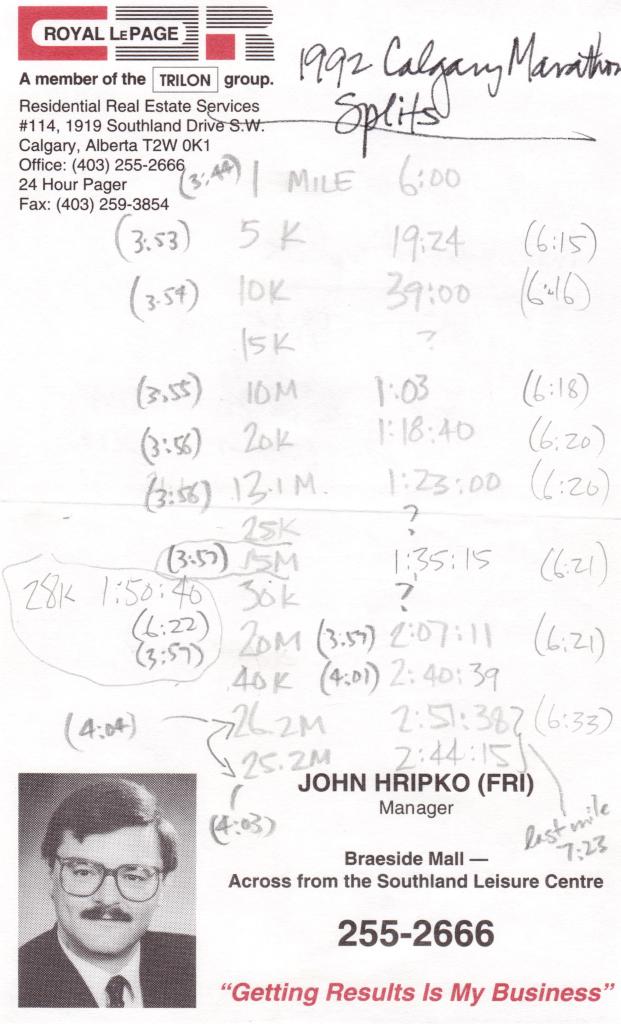
Unfortunately, no photographic evidence or T-shirts have survived from that momentous 1992 race, and there were no finisher’s medals. But that’s okay, as I’ll never forget that day. I can still relive the entire race in my mind.

One thing I did keep is the scrap of paper where I scribbled all my race splits. Like me, my friend John has a few more gray hairs now than he did in 1992.

And yes, my last mile (7:53) was extremely slow!

To show how much things have changed in the last 30+ years, here’s a scan from the Calgary Herald article on the 1992 race. My friends and training partners—Dave Purcell (4th) and Rick Webb (6th)—had a very good race.

2001/2010 – Nothing to see here

I ran the 2001 and 2010 marathons. Neither was my best outing. We can move on…

2025 – Strictly spectating

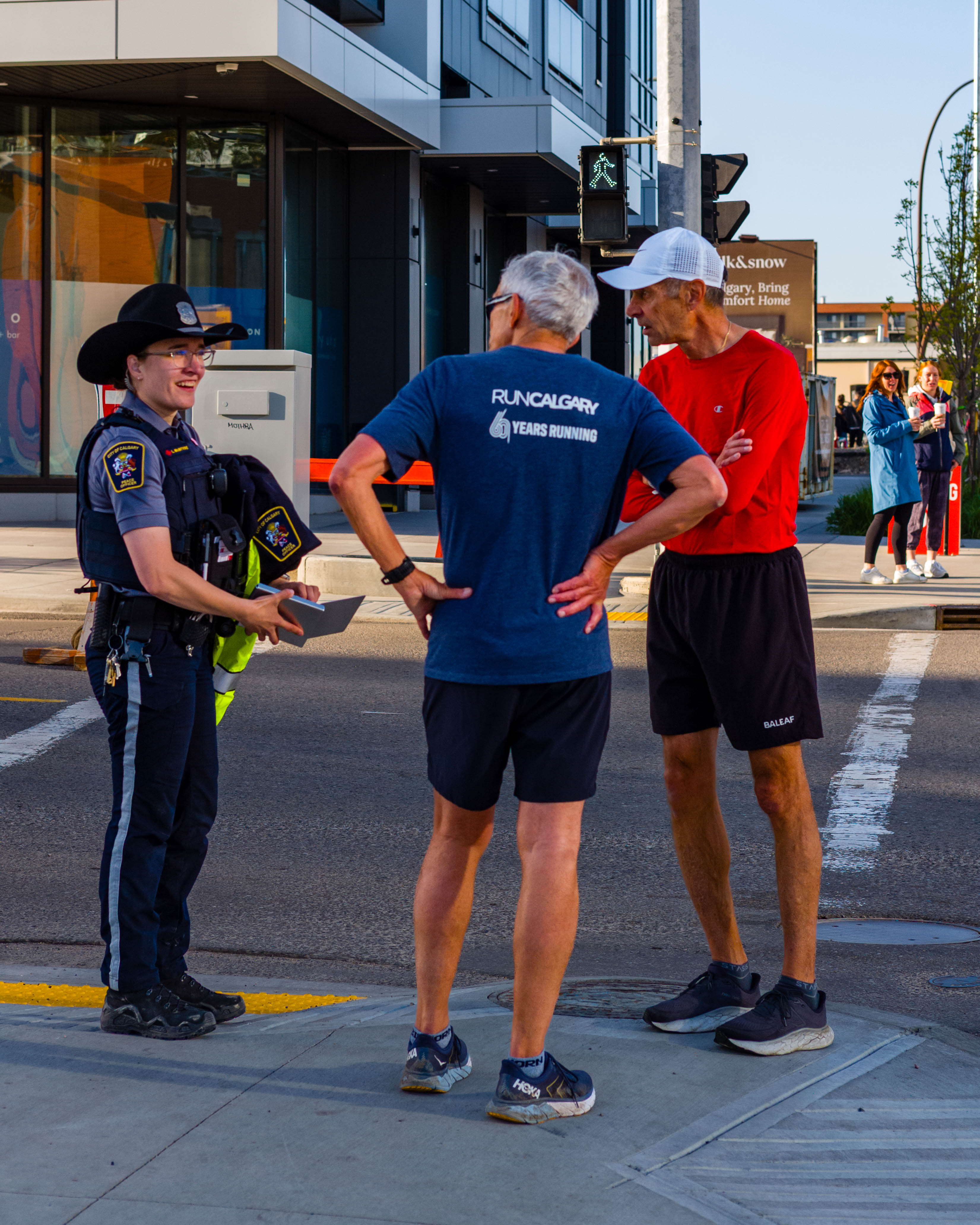
As has become my custom, I like to find a convenient spot on the race route to watch the action and take pictures of the runners. This year was no different, other than the fact that the races are now split between Saturday (5k and 10k) and Sunday (half and full marathon). So, yes, it means getting up early both days on the weekend, but I wouldn’t want to miss the fun.

I was watching for teammates and friends and I had to be alert. I find it particularly hard to spot familiar faces AND take their picture, which is too bad, as that is the whole point!

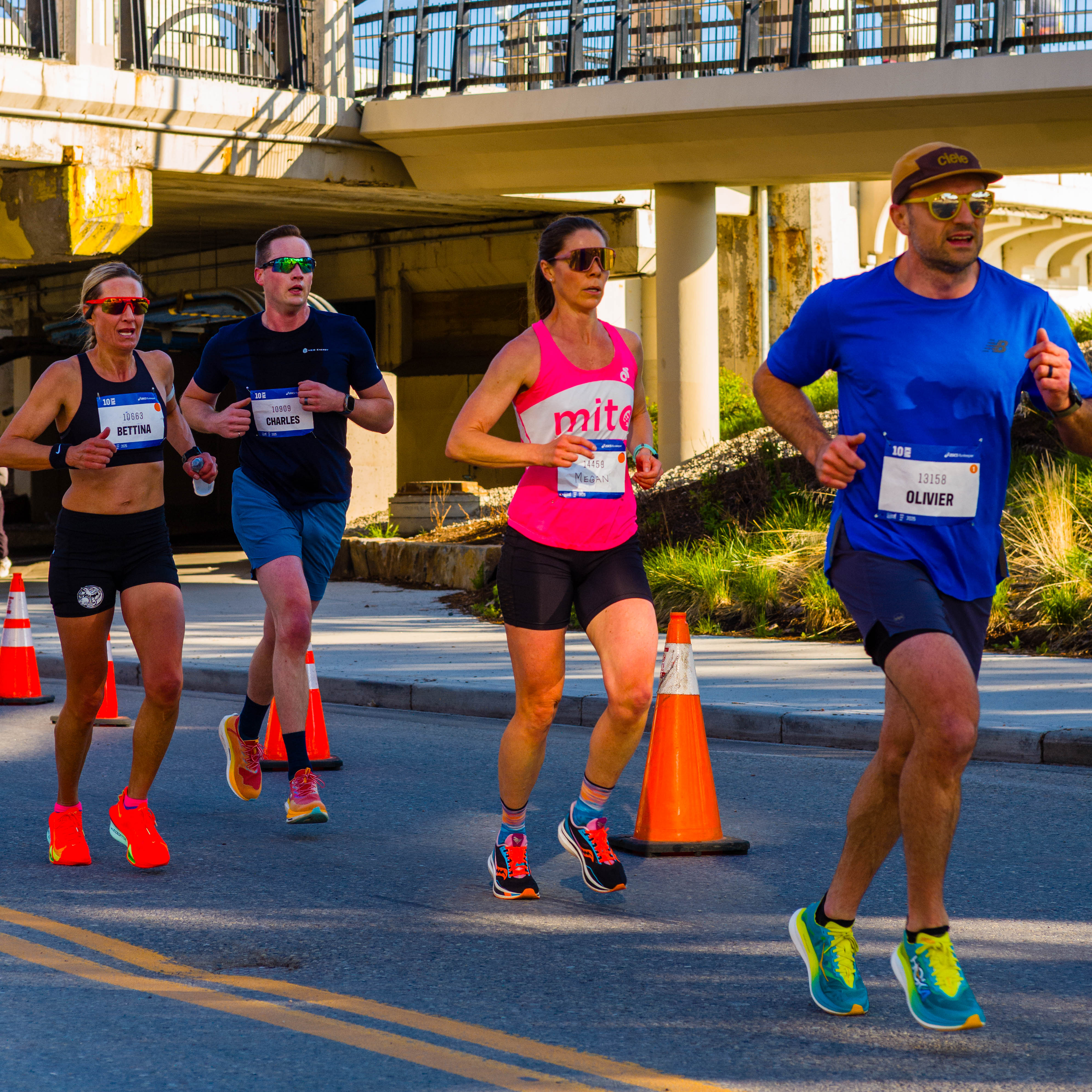
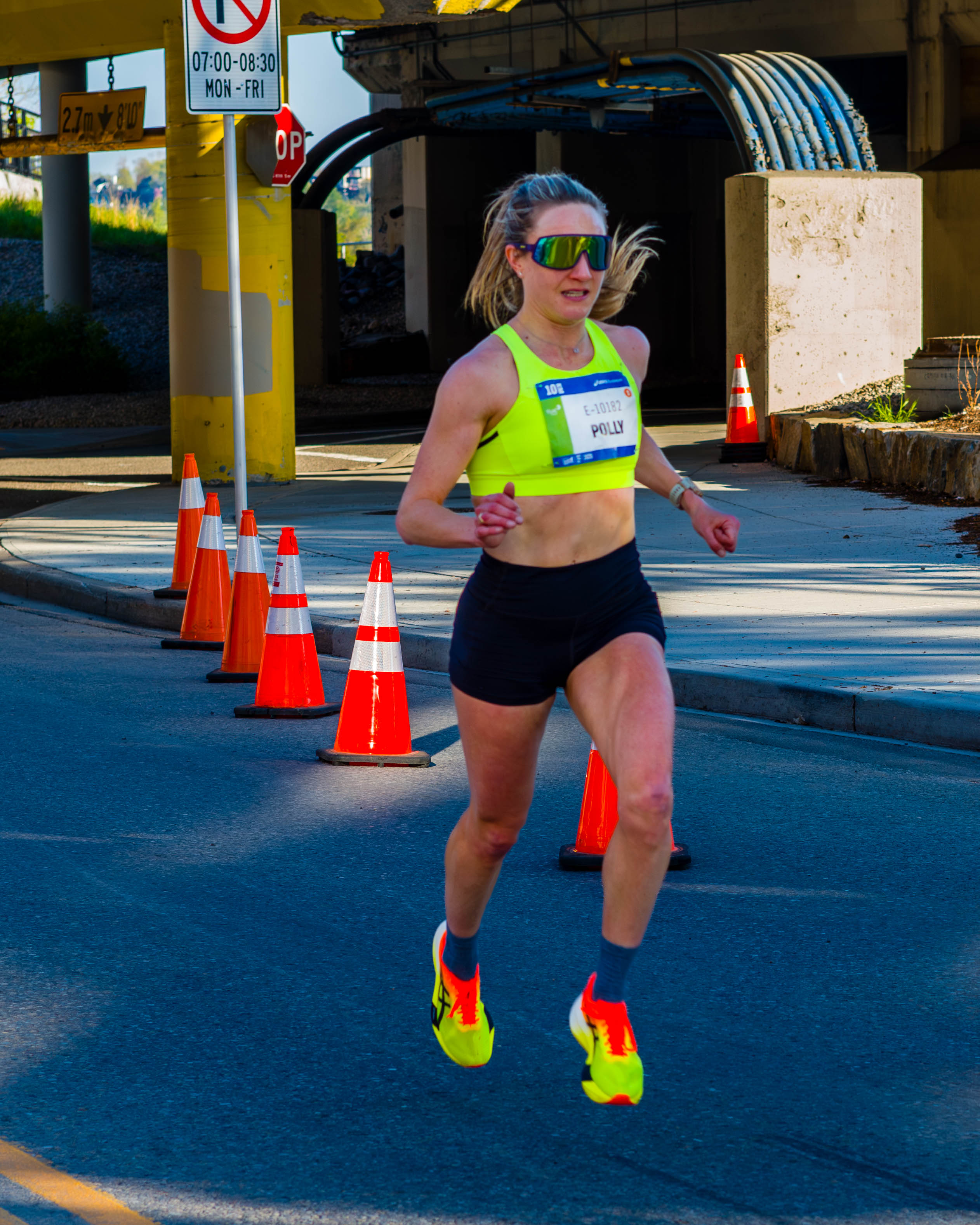
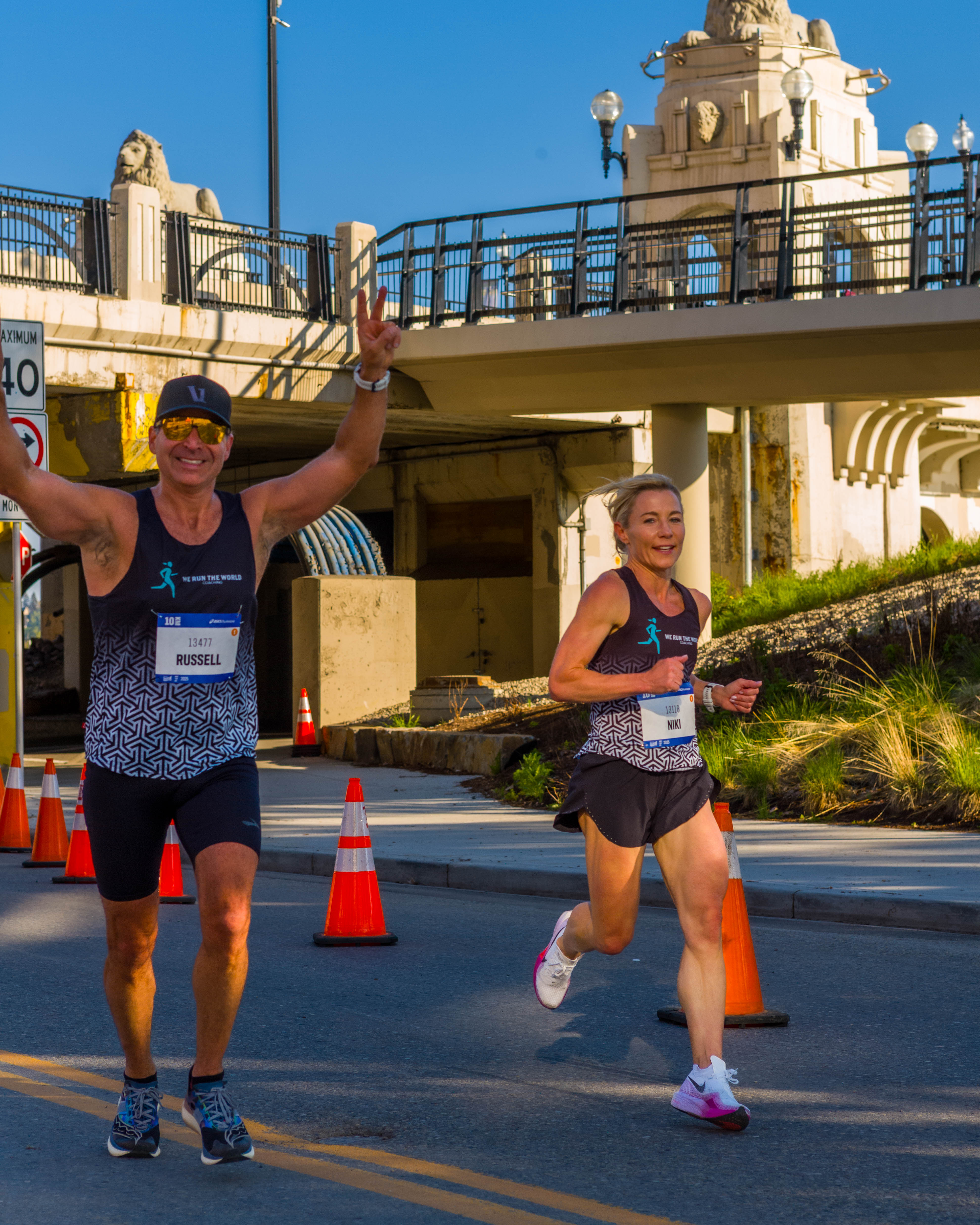
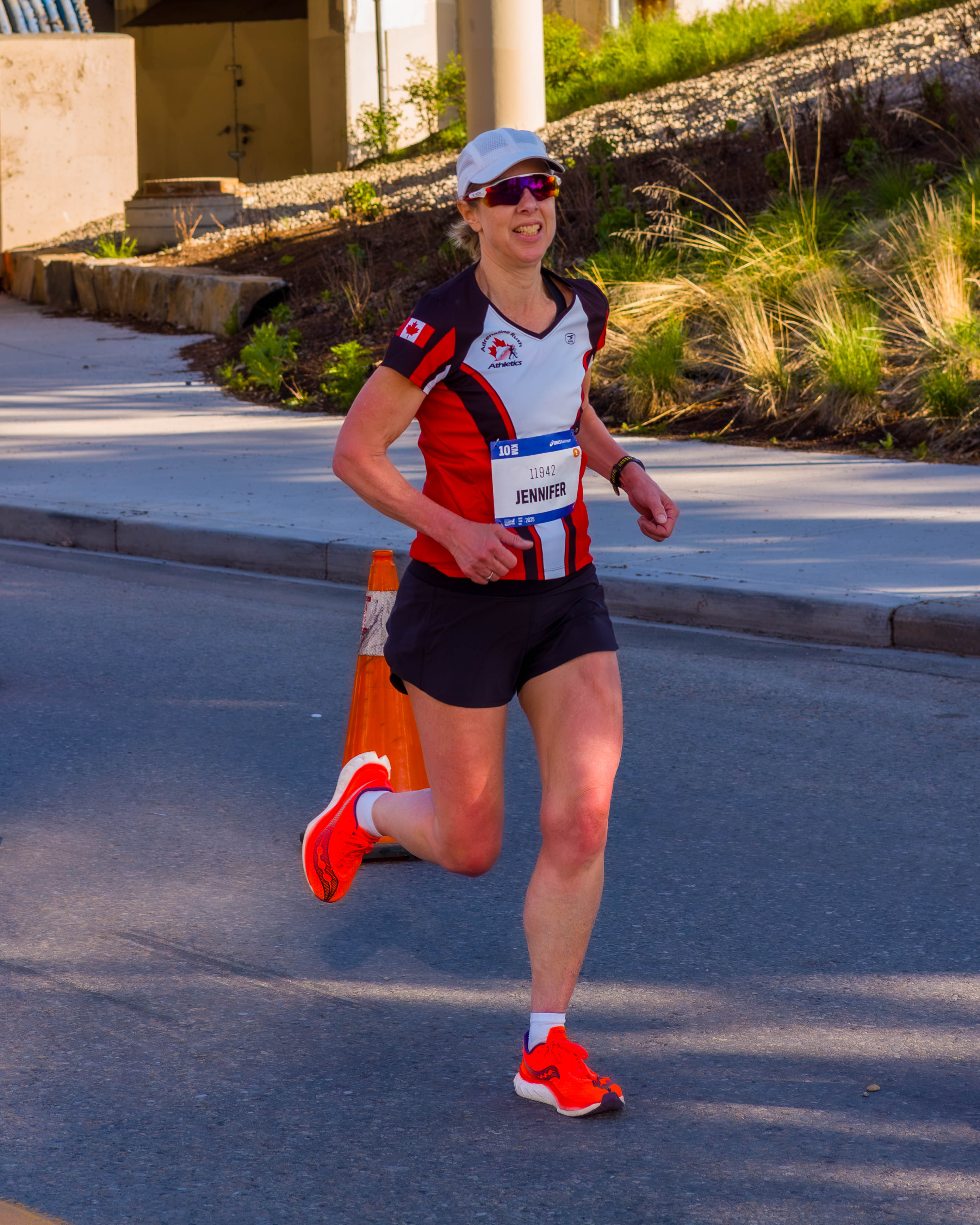
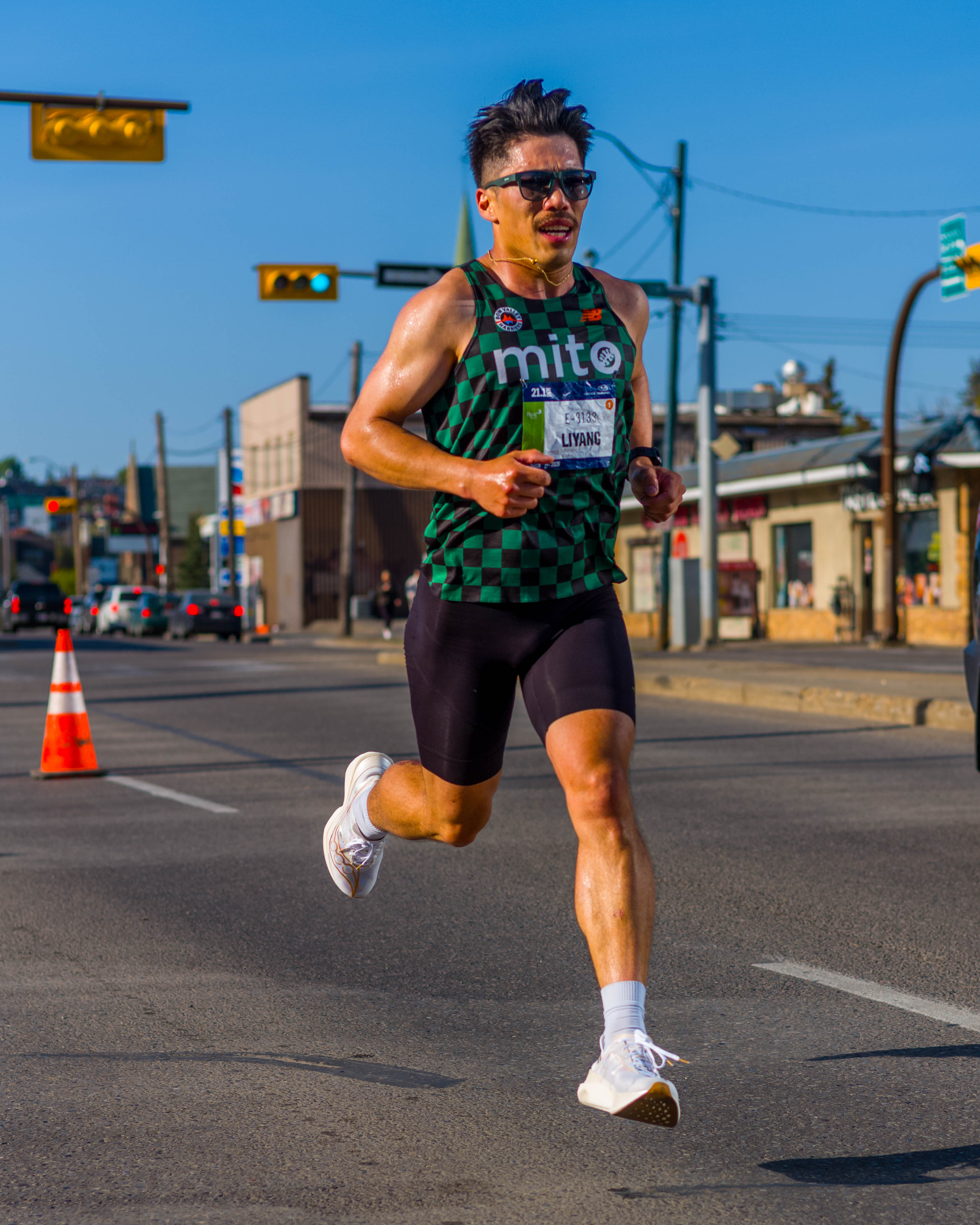
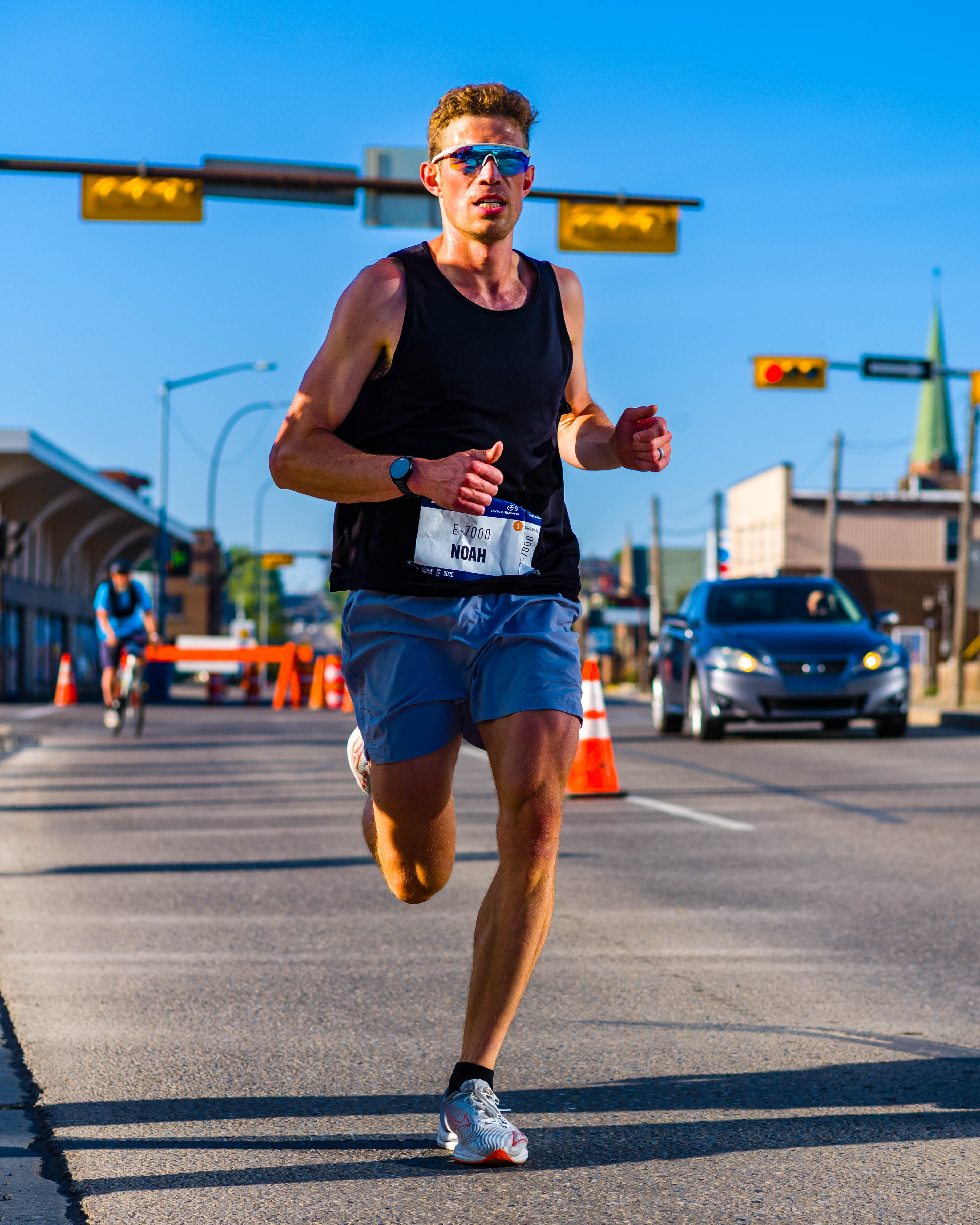
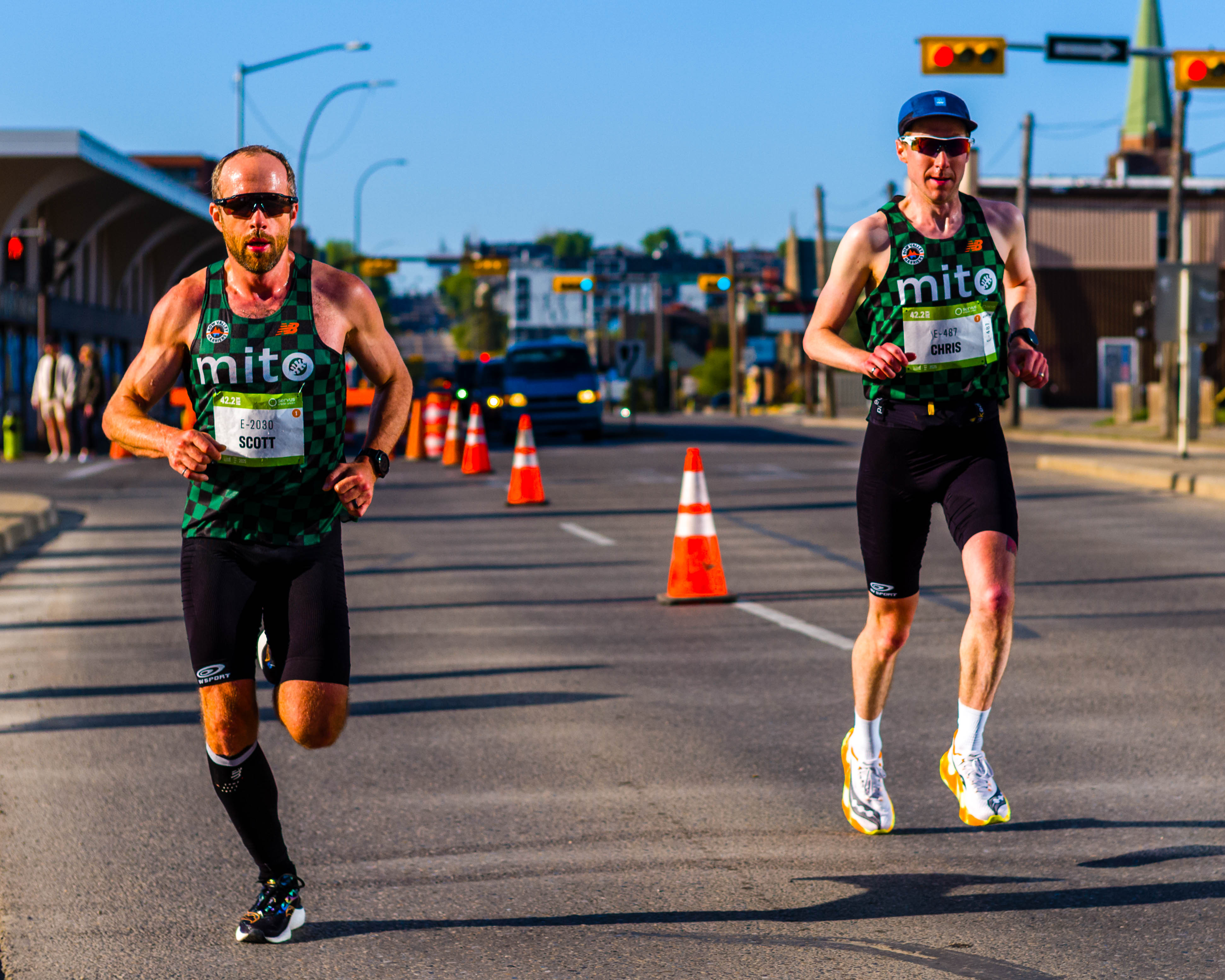
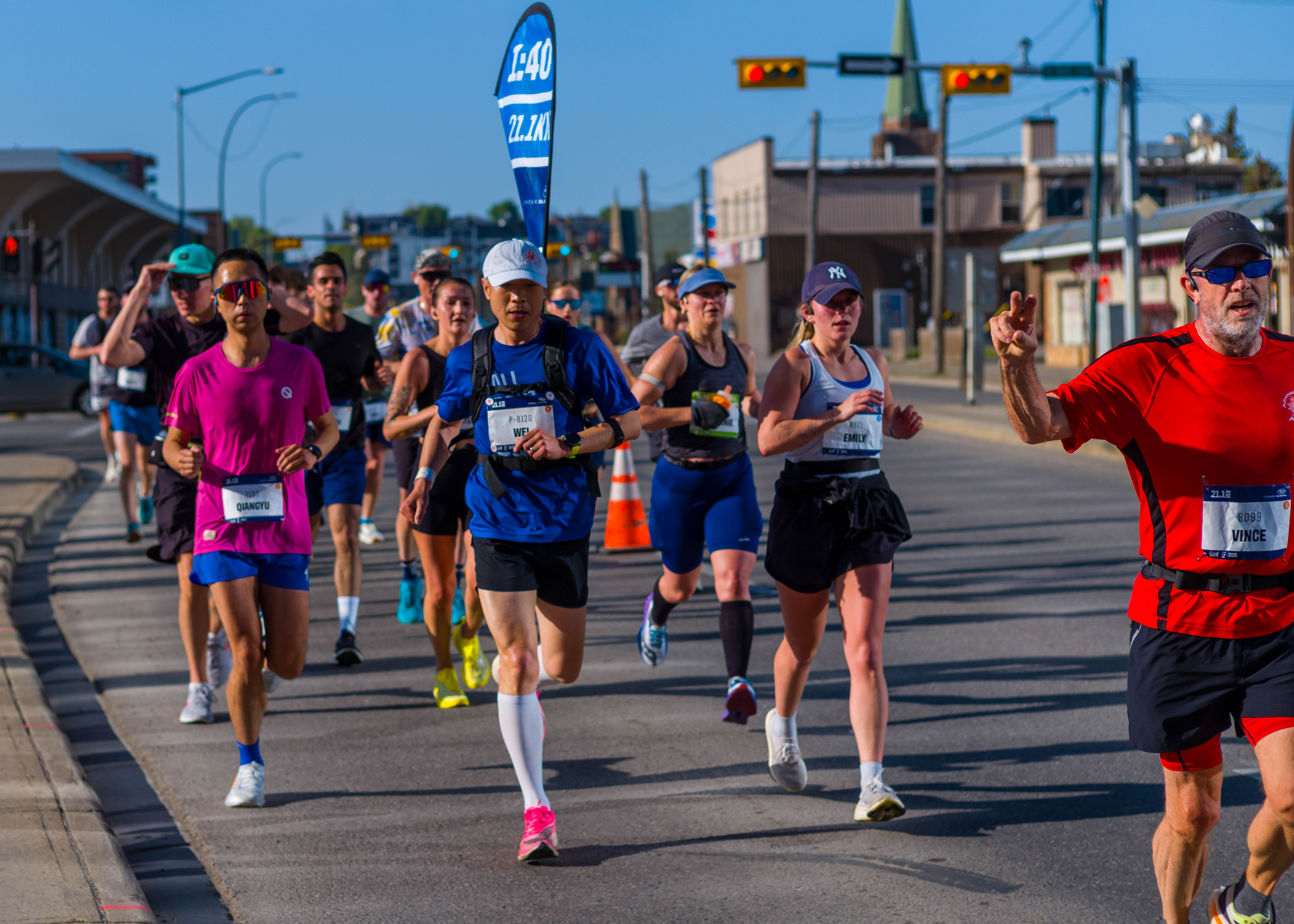
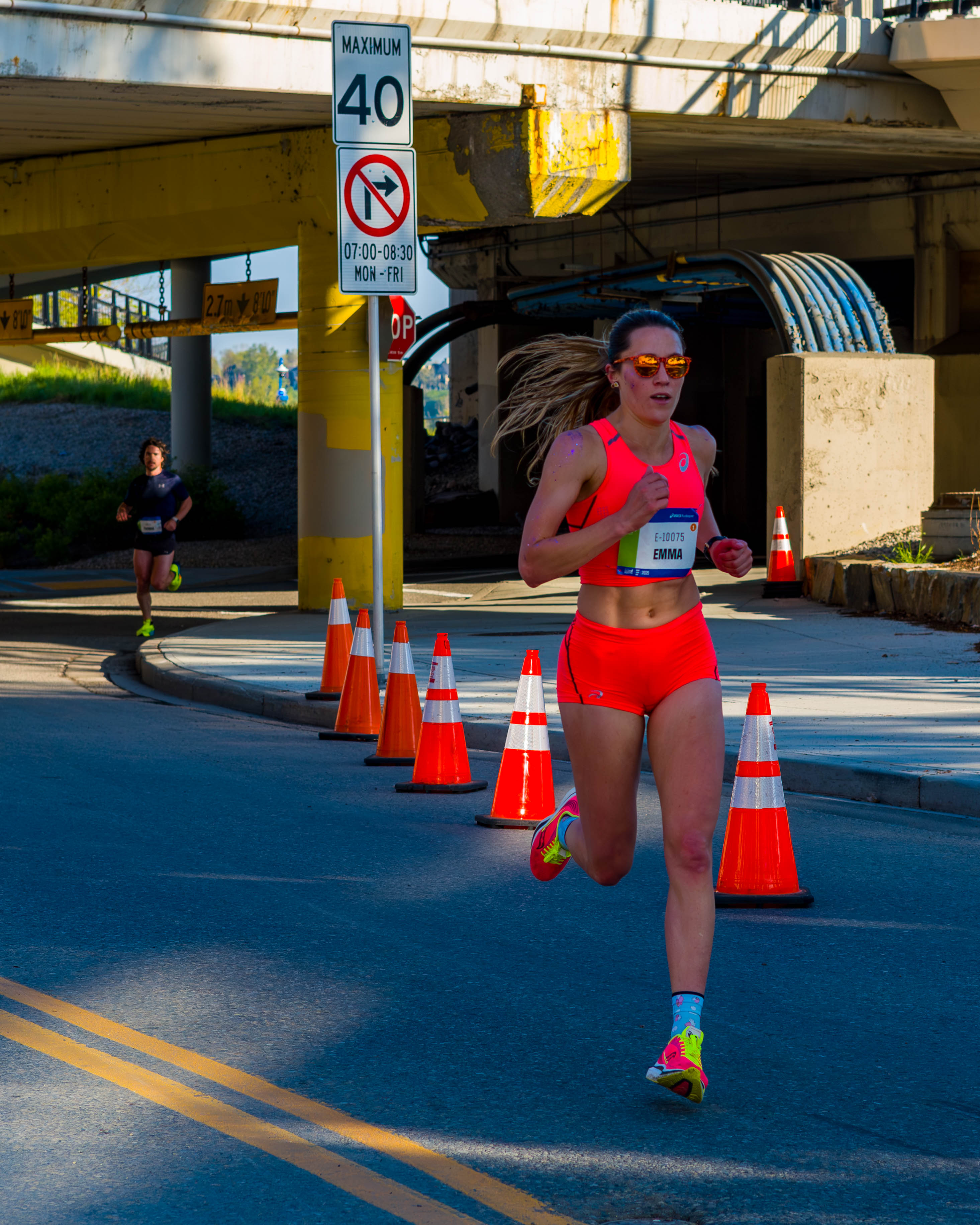
Anyway, here is a collage of photos from the races. I ended up with a lot of good pictures, so it looks like I’ll be sifting through them for a while. Starting with the 10k, where I set up at the 7k mark, just as the runners came off the Centre Street Bridge:
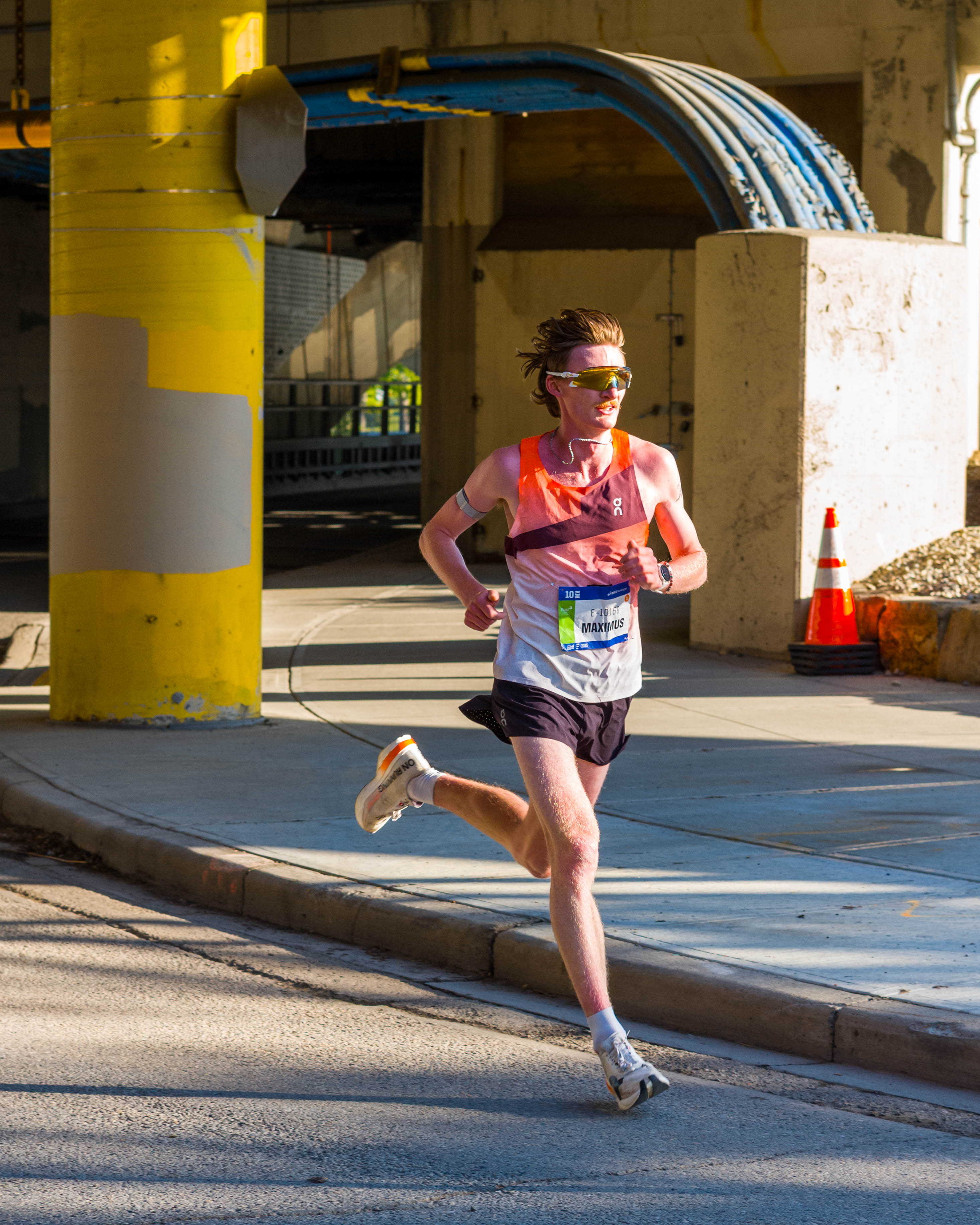
And here’s an album from the half/full marathon. For this route, I set up on 14th Street, just around the 14k mark. This year, the morning light was amazing, even though it meant the conditions were a bit warm for the runners:

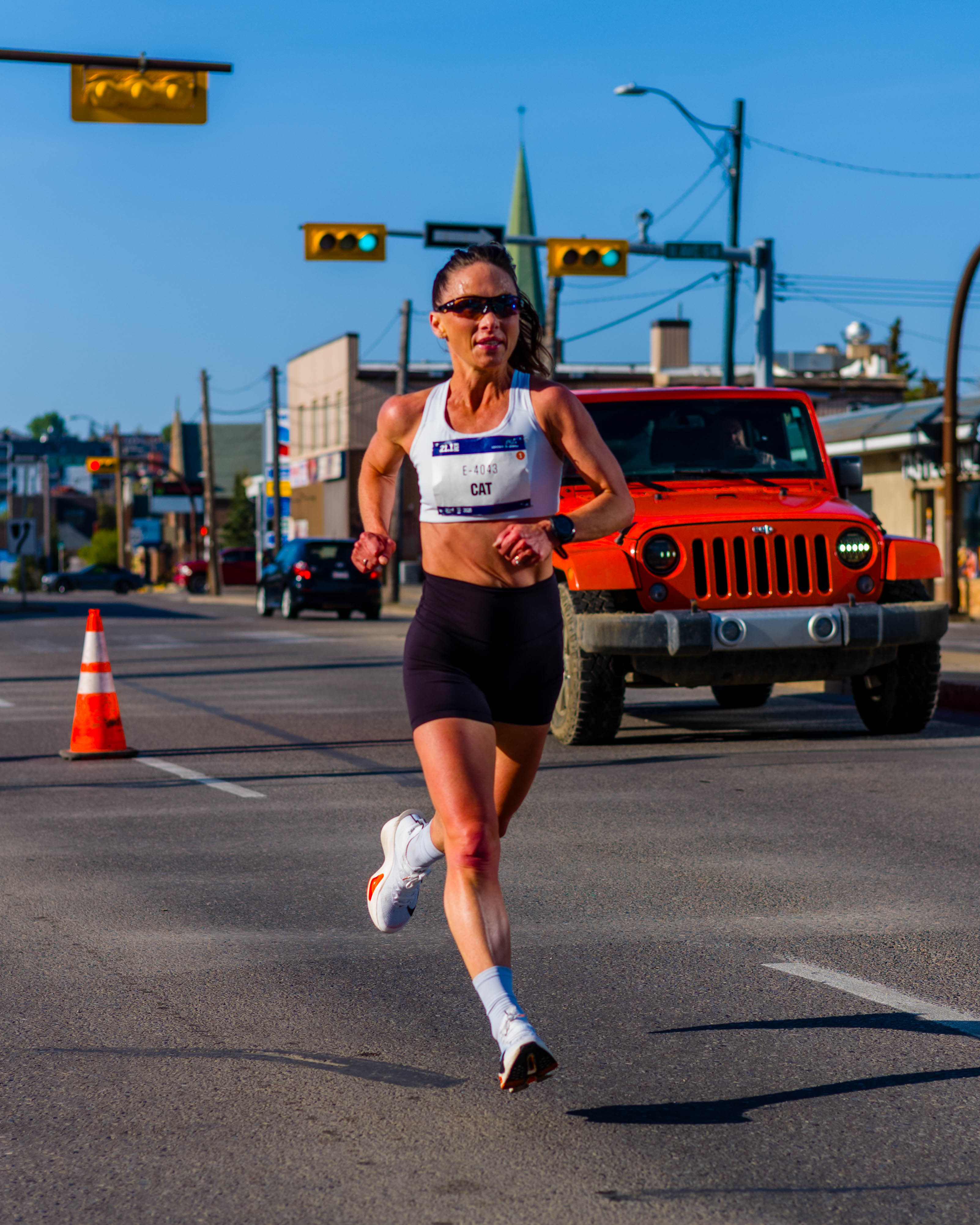
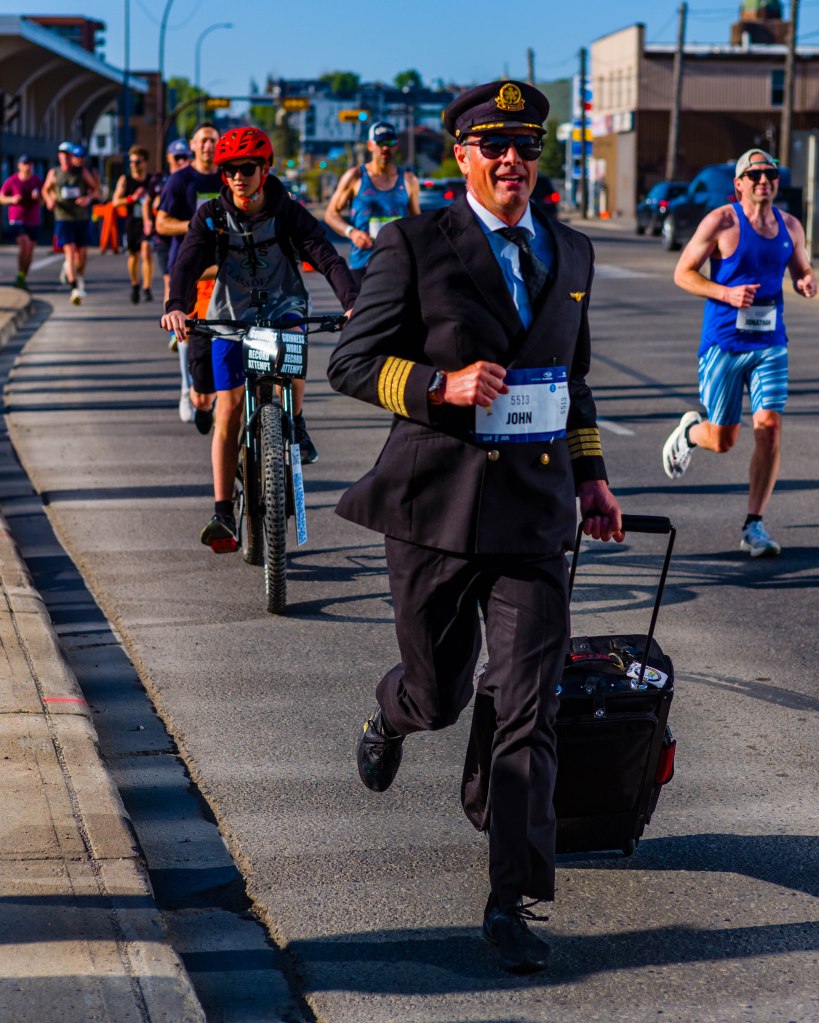
I have to make special mention of John Bird, who ran the half marathon in his pilot uniform while pulling a roller suitcase. John set a Guinness World Record for the fastest half marathon in this outfit, and he is raising money for Dreams Take Flight, a very worthy cause. Congratulations John!
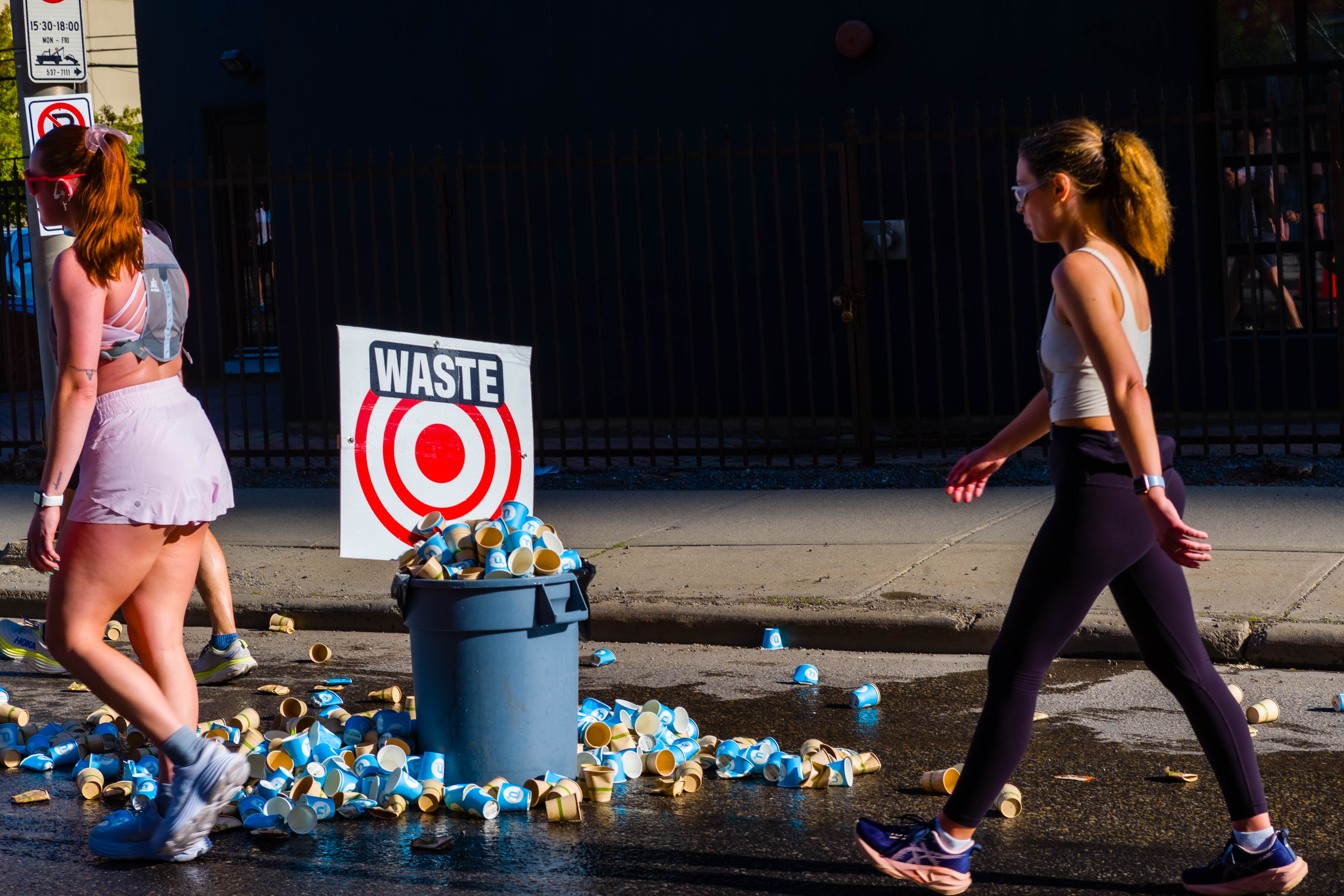
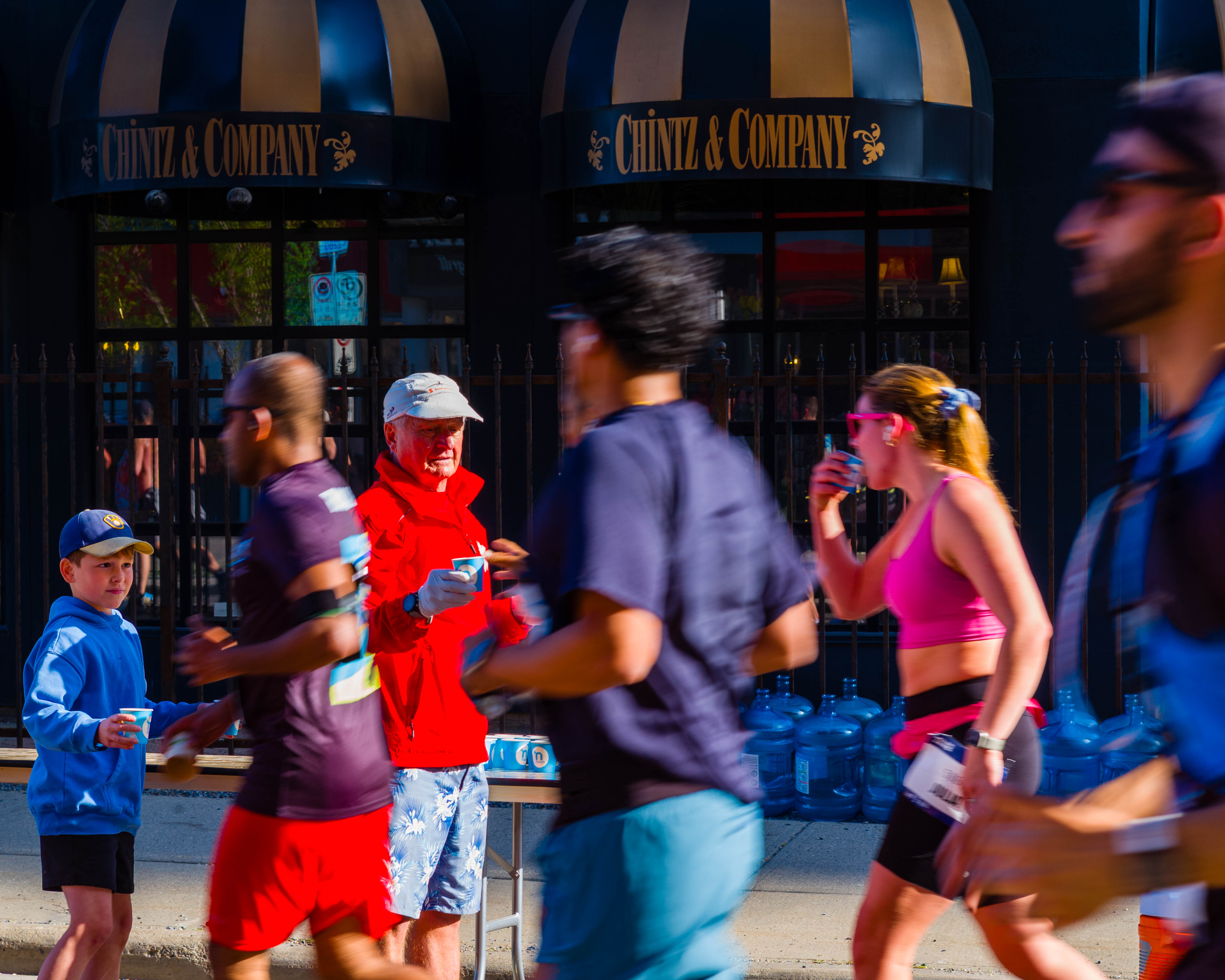
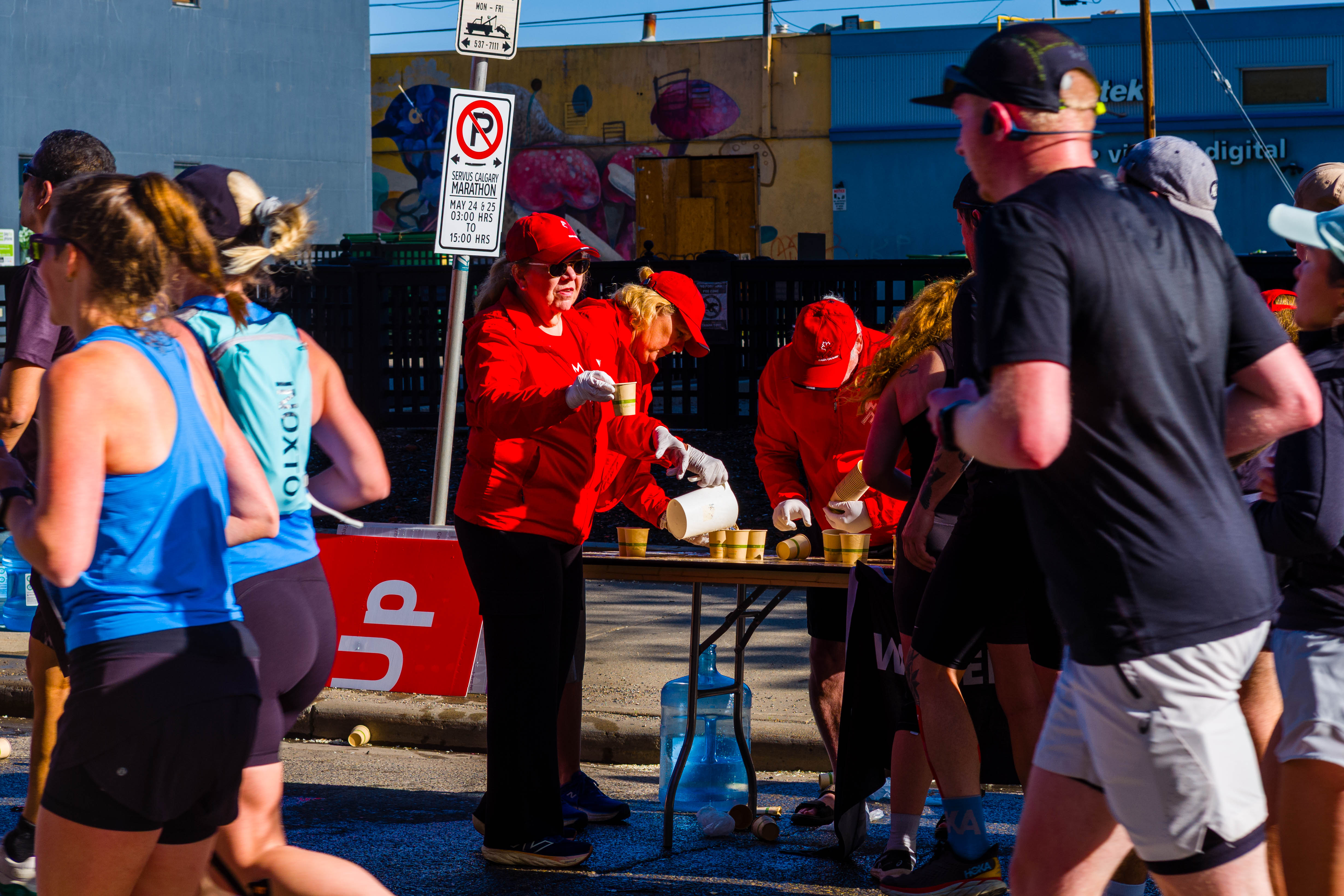
Finally, there were some cool non-running scenes, for example at the 11th Avenue water station. It was a bit chaotic, but that’s what makes it fun.

As always, if you want to use/distribute any of these photos, please give me a photo credit.

Until next time, be well and BE FAST!

Book Review: “Today We Die A Little”

Today We Die a Little: Emil Zatopek, Olympic Legend to Cold War Hero, by British journalist and author Richard Askwith, tells the fascinating story of the great Czech runner, Emil Zatopek.

Zatopek was an enigma. His life paralleled his country’s history and is intertwined with the Second World War and the rise and fall of the Soviet Union. Askwith did a thorough job of researching his subject.

The Czech Locomotive

Today, if people know anything about Zatopek, it’s likely because of his ungainly running style. Videos of his great performances are easily found, and worth a look. But his rolling head, flailing arms and gnashing teeth may be the least interesting part of his story.

Emil was a true sportsman. His nickname comes from a front-running style that left his competitors strung out behind him. He befriended those same runners and maintained contact with them well into old age. His training techniques were unorthodox. For instance, he was known to train in army boots, or in deep snow. Any of us who have done interval workouts can thank Zatopek—he may have invented 400m repeats. The difference? He did 60, 80, even 100 of them—every day.

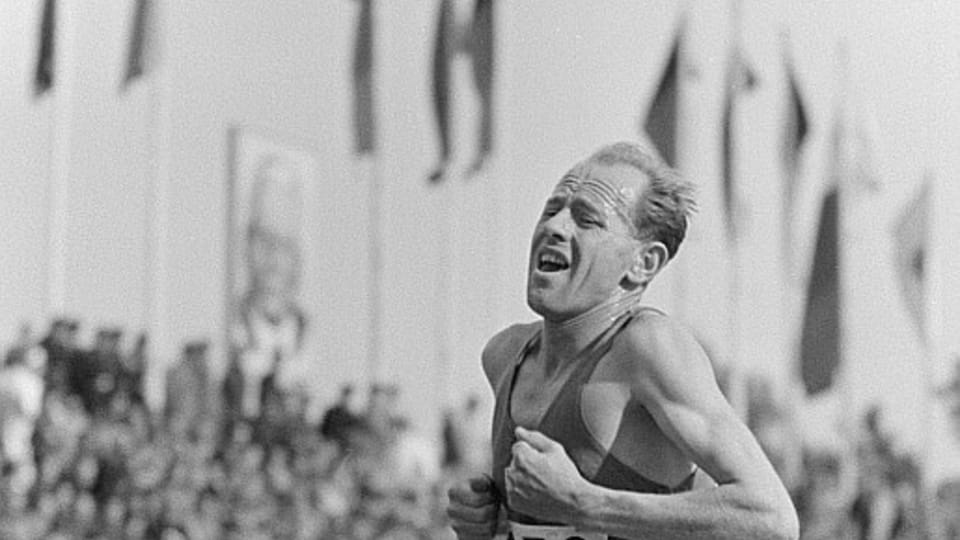
Emil Zatopek, giving it his all (Photo: Roger Rössing, Deutsche Fotothek)

There are so many anecdotes about Zatopek that it’s nearly impossible to separate fact from fiction. I give Askwith credit for trying. Some things aren’t in dispute though. Emil taught himself 8 or 9 languages by reading dictionaries. He and his wife, Dana, won 4 gold medals at the 1952 Helsinki Olympics—a count that was second only to the US. Emil won the 5000m, 10000m and marathon, a record likely never to be repeated. Dana won the women’s javelin competition.

Socialist icon or misunderstood hero?

Zatopek may have been the most famous athlete in the world in the late 1940s and early 1950s. Few could match his talent and charisma—he was the Muhammad Ali of his generation. Even after his competitors copied his tactics and started surpassing him, he remained a national hero. It seemed everyone wanted to meet him and feel the warmth of his personality. 

The story that best demonstrates Zatopek’s generosity has him handing a small package to Australian runner Ron Clarke after Clarke visited Emil in Prague in 1966. Clarke had competed at a high level internationally but had come away empty-handed. Zatopek had been the perfect host, readily sharing his training advice. Clarke assumed Zatopek had given him something he wanted smuggled out of the Iron Curtain. In fact, it was one of Zatopek’s 1952 Olympic gold medals. “Because you deserve it,” read the simple inscription. 

Despite the constraints imposed by the Czech regime, Zatopek travelled the world. In fact, he became a sort of role model for socialist ideals. And it’s here where his story gets a bit hazy. Depending on who one believes, Zatopek was either a naive pawn of the regime or a committed agent. He was an officer in the Czech army, so it’s hard to totally accept the former view. However, he had managed to tread a fine line for a long time, apparently avoiding any suspicion of his commitment just by being his gregarious self. Or perhaps by mouthing the words that were expected of him.

Some things may never be known about Zatopek, but it is clear he believed in the concept of socialism. After all, it was how he had tried to live. When Soviet tanks moved in to crush the Prague Spring in 1968, he spoke up for compromise, possibly hoping his celebrity would save him from retribution. Soon after, he was expelled from the army, stripped of his status as a sporting hero, and exiled to years of manual labour in remote work camps. Through it all, he maintained a positive attitude. He was a broken man when he was finally allowed to return to his modest home. Then he suffered several strokes and was all but forgotten when he died in 2000.

Lessons far beyond the track

Askwith is sympathetic to Zatopek, and I found that his enthusiasm for the man clouded his judgment at times. If Askwith is to be faulted, it is for trying too hard. I came to accept Askwith’s case—that there is reason to doubt the worst accusations against Zatopek—and I found it unnecessary that he keep making it.

As for Zatopek, there is no reason to fault him for his eccentricities. He was an intelligent, independent and humble man. I found myself wondering how any of us would have managed in his situation; if our homeland had been first taken by the Nazis, then by the Communists. Zatopek lived and competed bravely, and left us lessons that go well beyond the realm of amateur competition. 

The “Czech Locomotive” was a complex figure, a great athlete, and a gentleman. Askwith’s book is an homage to Zatopek, and there is much to commend it—not least so the reader can decide for themselves how they view the man. I started the book and put it aside for a while. When I persevered, I was rewarded with a complete picture of an astonishing athlete. I’m glad I did.

By the way, the title of the book comes from the comment Zatopek made to his fellow competitors on the start line of the 1956 Olympic Marathon in Melbourne. By then, Zatopek was well past his best form. The day was brutally hot, and he made his remark just as the runners set off for what they all knew would be an extreme physical test. It was a noble gesture. Anyone who has set a challenging goal for themselves and worked hard to achieve it will relate to the sentiment.

Until next time, be well and BE FAST!

Vancouver Marathon – 2015 to 2025

What follows is a story separated by exactly ten years—and a generation.

The Opening Act

The marathon was never my favourite distance, but over the decades of my amateur running career, I ran plenty of them. It was a love-hate thing. By 2014, I had sworn off marathons, and not for the first time. Then, I let myself be talked into signing up for the 2015 Vancouver race. I’ll leave the specifics of that part of the story for another time.

I had run the Vancouver Marathon once before, in 1993. I finished the race one minute on the wrong side of 3 hours, and I remember being quite disappointed. Why? Well, 1992 had been a year of personal bests. Naturally, I came into 1993 full of optimism. After the Vancouver race, I worried that I might have already peaked. And that was more than 30 years ago!

Heading into the 2015 race, I had been through a minor crisis of confidence. You see, I’d run a very poor Around the Bay Race in March 2014, and I was finding the preparation for a spring marathon during another of our nasty Calgary winters more than I could handle. All credit goes to my awesome training partners, Allison B and Ken S, who kept me going week in and week out. They deserve kudos for helping get me to the start line on May 3, 2015.

As for my race tactics, I had worked out a novel plan with coach Janice. The idea was to get me around the deceptively tough Vancouver course while avoiding the slow-motion crashes I’d experienced in some previous marathons. We decided on a series of four mid-race pickups, each 3k with a 1k easy recovery. Janice knew me well enough to realize that a series of tasks would help keep my mind from wandering.

I had modest expectations. I could foresee some challenges on the 2015 course—still in use today—which was very different from the route I’d run years before. The first ten kilometres were mostly downhill. There was the Burrard Bridge at 30k. Of course, there was the 42.2k distance to contend with.

Our race plan worked like a charm. The 3k pickups were effective, and I got to 38k before my quads seized up—no doubt the price to be paid for the early downhills. Being a veteran of four decades, I didn’t panic. Instead, I managed my effort over the last few kilometres. Afer all, it was only a few minutes until the finish. Worst case, I might be a little outside my target range.

I finished in 3:18:04. Not bad. My age-graded time was the same as my PB, set many years earlier. It was a satisfying outing, and a prelude to the eventful years that followed. Again, I’ll leave those details for another time.

Daniel Delivers!

Fast forward ten years… to the best part of this story.

By the spring of 2025, our son Daniel had been a serious runner for at least 12 years. He ran his first marathon in Montreal, in 2014. Even as a rookie he methodically attacked the distance. In the intervening years, he’s taken on many different running challenges. The last couple of years have been especially rewarding for him. He’s been honing his technique and working on strength, speed and flexibility. So, when he set his sights on the 2025 Vancouver race, it was with the goal of improving his PB… significantly.

All signs were positive during his training cycle, and a speedy 1:12 half marathon in April hinted at something special. He overcame a niggling overuse injury to make it to the start line in Queen Elizabeth Park on May 4, 2025.

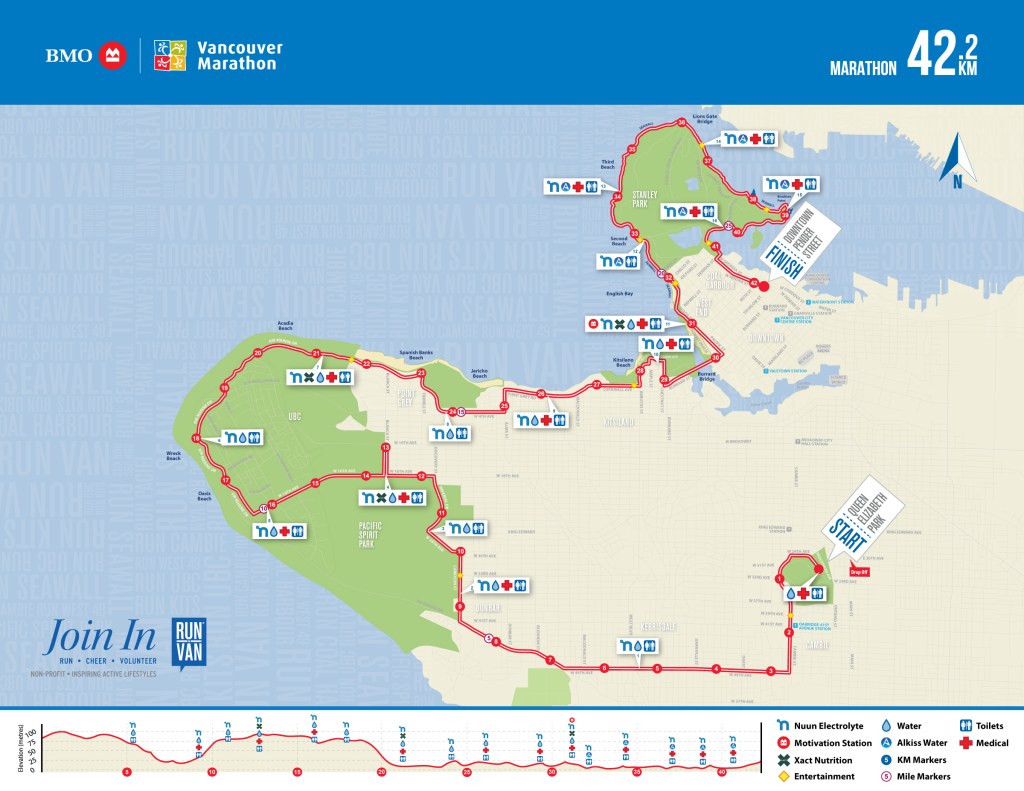
Major marathons now feature online tracking for spectators. As a result, it was a nervous morning for Deborah and me, as we watched the little dot that represented Dan work its way around the course. It seemed that I was reliving every step with him, through Pacific Spirit Park and the UBC campus (where he reached the half in 1:15:44), then through Kitsilano, over the Burrard Bridge and into Stanley Park for a lap of the seawall.

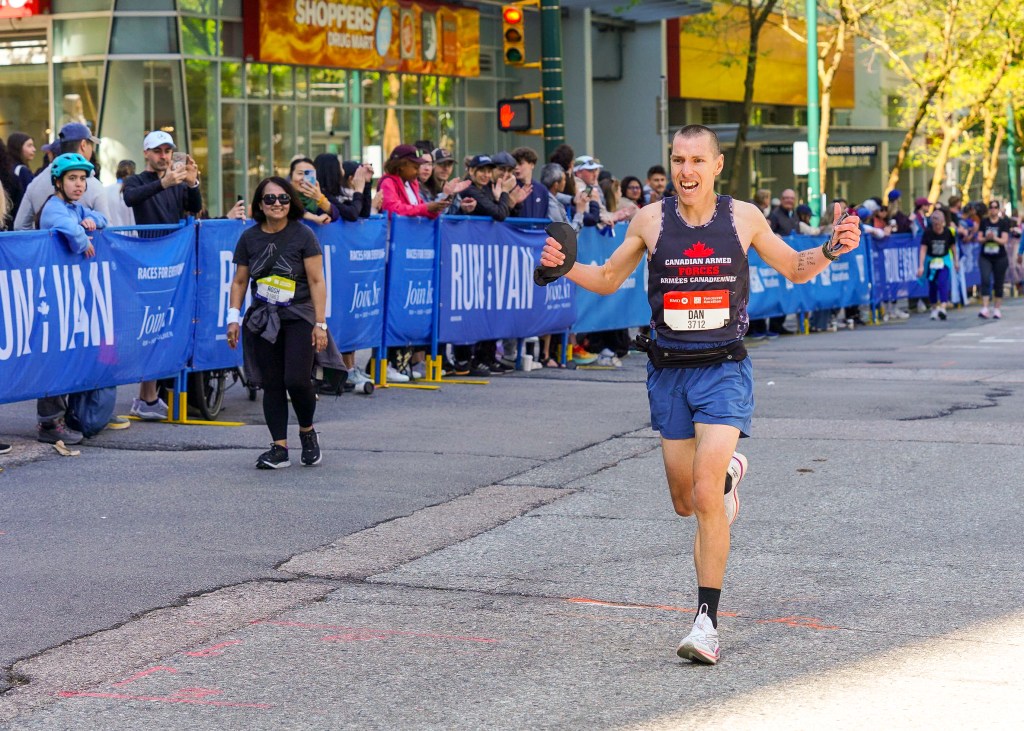
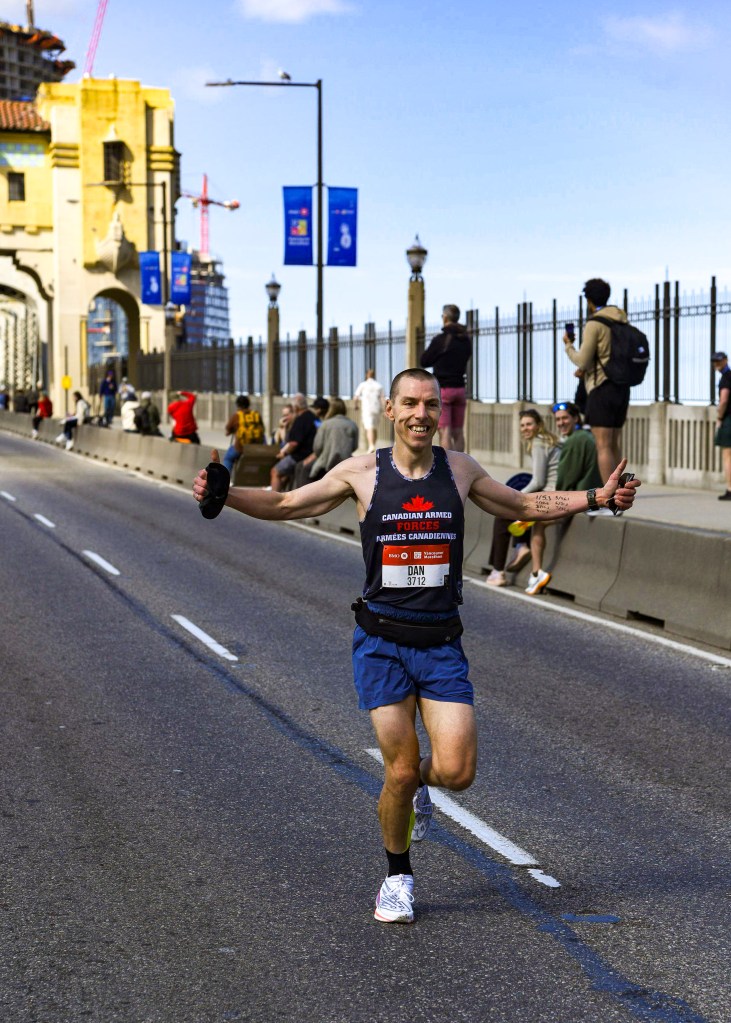
Dan’s early splits were speedy, but by 30k he seemed to be slowing. Was there a problem? We could only watch and wait, holding our breath. Once he got to 40k in 2:27:16, everything was looking good for a superb finish. He brought it home in 2:35:52. By that point I was yelling encouragement at my phone. He placed 21st overall in a strong field of nearly 7,000 runners. Amazing!

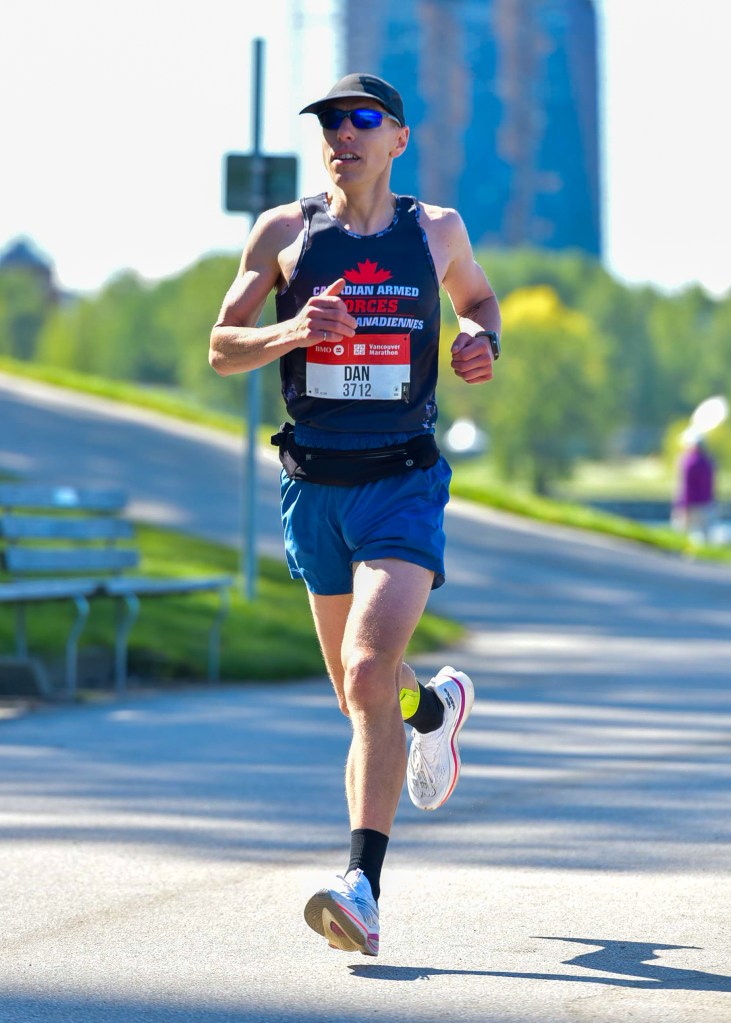
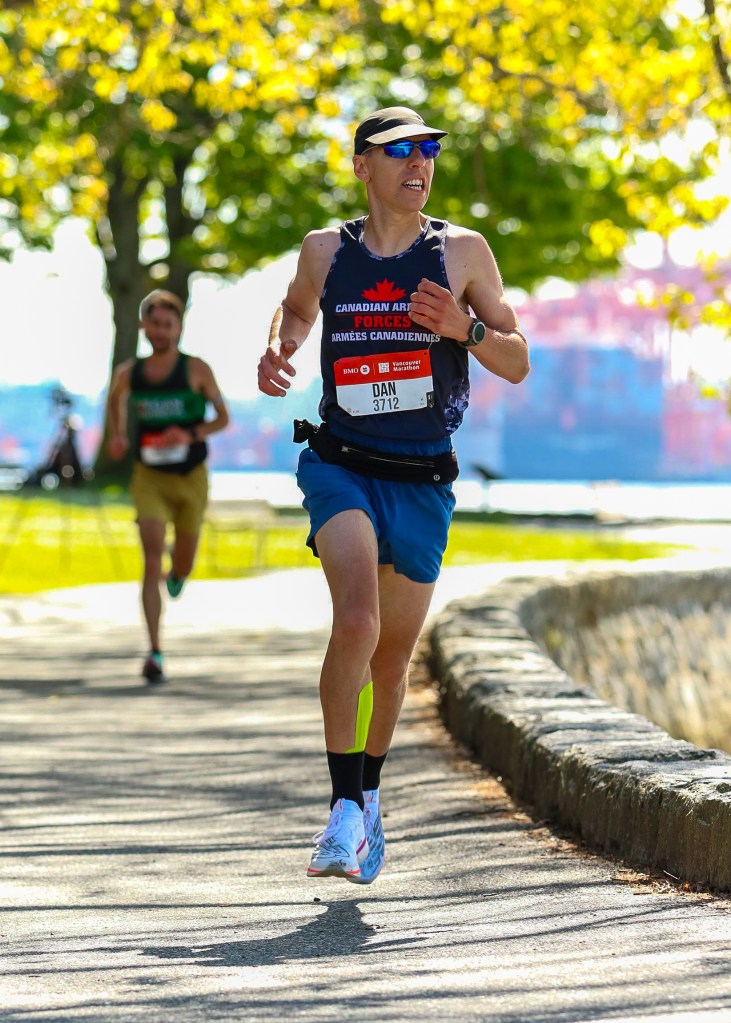
Here are some pictures from his awe-inspiring run (all from Marathon Photos):

When we talked to him shortly after he finished, he was full of energy, relief and joy. He had been cheerleading with the crowds along the route. And his apparent slowdown? He had the presence of mind to ease off his pace slightly at 24k, to avoid aggravating his calf. Not only fast running but smart too!

It’s hard to find words to express what I’ve been feeling this week. Of course, I’m filled with awe and pride, as I consider what Dan has accomplished. Seeing my son reach a personal goal with determination and purpose makes me very happy. I know he earned this result—including the massive 15-minute improvement in his PB. Being a runner myself, I have a good idea how hard he worked for this. Running 2:35 puts him in the top 1 percent of marathon runners. I have often said he’s never set a foot wrong in his life, and that was perhaps never truer than in this race.

I wrote about the relative arc of our lives in Stroke of Luck, and while I may eventually think of something more profound to say, for now, I’m just relieved he finished and that he did so well. While I understand that a small part of this might be attributed to lessons he learned from me—from us—early in his life, this triumph is all his doing. If life were a relay race, I would be content knowing that the handoff has been made and the baton is safely headed to the finish.

And that might be an apt analogy, as the next challenge Dan will tackle is the annual Cabot Trail Relay on May 24, with a team called the Iron Lungs out of Toronto. He has run the race with them several times, and they (like us) know he will be a worthy addition to their squad.

We can’t wait to see what’s next for him.

Until next time, be well and BE FAST!