
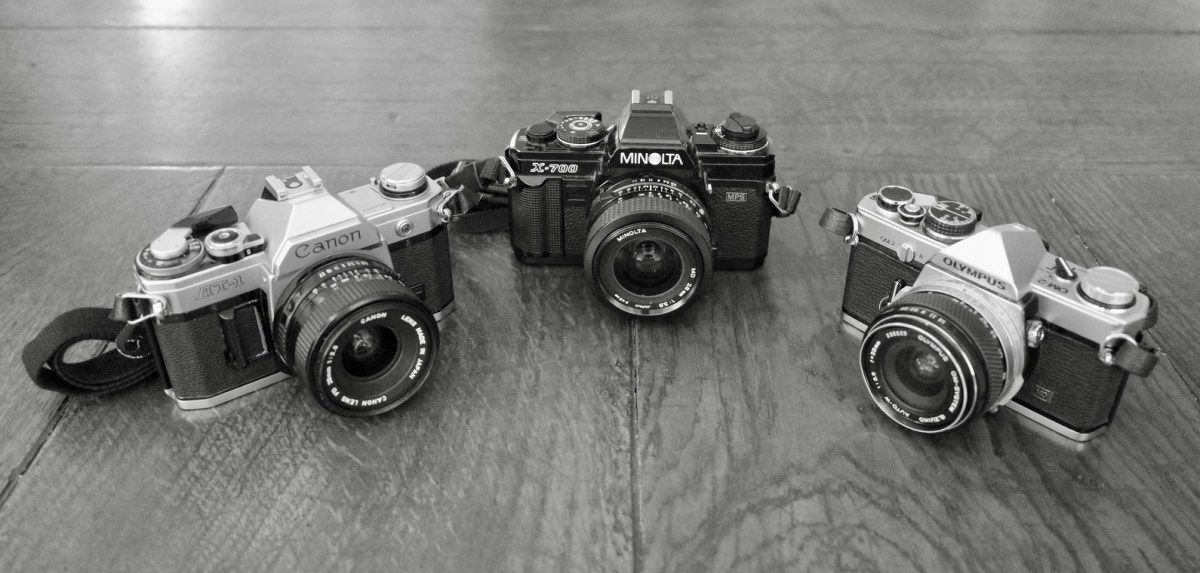
This is a totally useless piece.
Useless, that is, if you carry a camera around with you at all times, one that is instantly available in your cell phone. Or if the link between your camera and your social media accounts is as short and quick as pressing a button.
Some of us have a broader definition of a camera, or think of photographs for something more than their transient value.
My collection from the heyday of Japanese single-lens reflex (SLR) film cameras is a small treasure. It’s unbelievable these cameras work so well after 40 or 50 years. They are flawless machines. Sure, there are foam seals I should replace. And some of the batteries are getting hard to find. But overall, they’re doing better than I am after all that time!
Canon AT-1
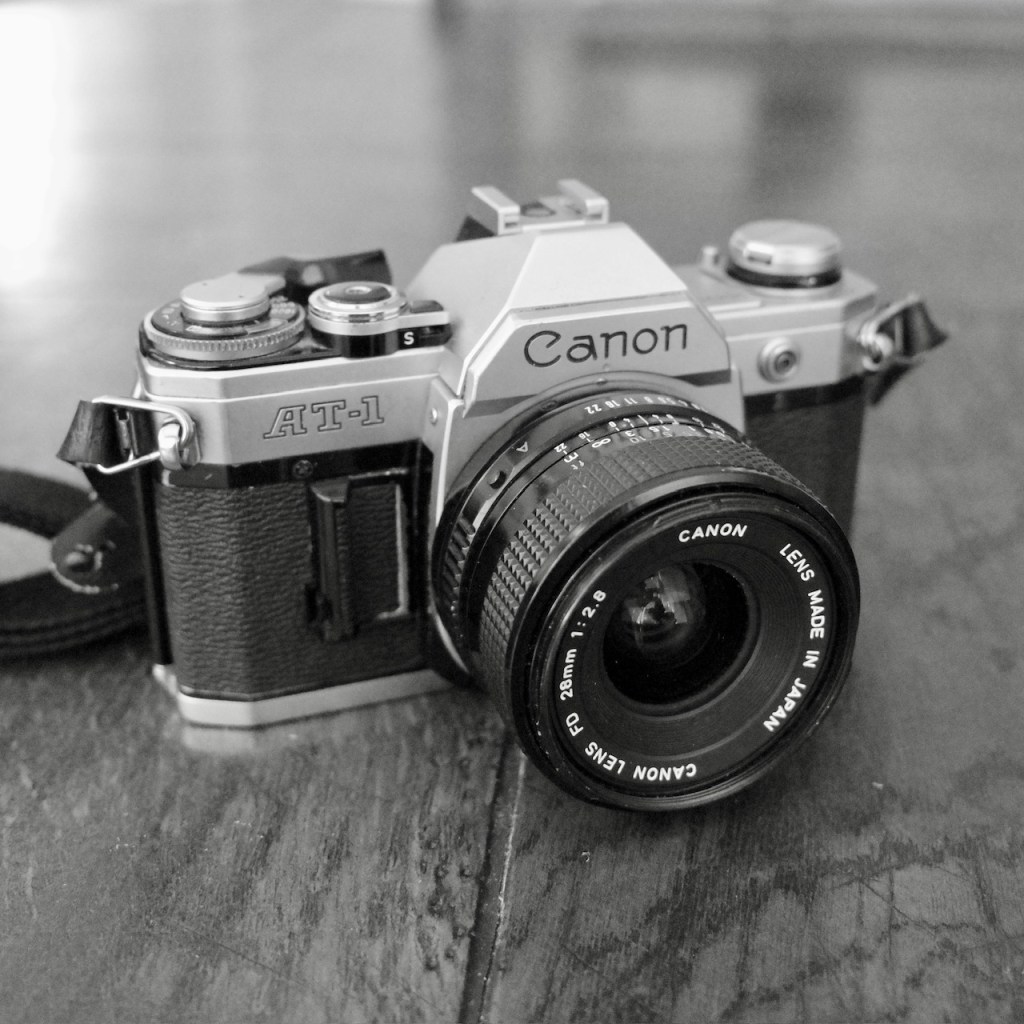
The Canon AT-1 invokes many fond memories for me. I bought mine in 1978 with savings from my first job. My aunt Connie worked at the Sears store in the Centre Mall in Hamilton, and she made the purchase so I could benefit from her employee discount. I remember paying $265. It’s odd to think that Sears used to have a photography department… but I digress.
When I bought the AT-1, I didn’t know anything about cameras or photography. I learned the basics of shooting film—metering exposure AND focusing in a completely manual camera. (The AT-1 was never as popular as the automatic variant, the AE-1, but I was on a budget.) Once you’re used to it, manual metering is simple. It’s a bit like target practice: move the exposure needle by changing aperture and/or shutter speed until it lines up with another needle indicating the measured light. Like learning to drive a car with a manual transmission, this is a good skill to have!
Manual focusing brought its own challenges, especially if you were keen on shooting sports, as I was. Sure, I missed plenty of shots, but I also felt the thrill of getting many more.
The AT-1 feels solid, and its viewfinder is big and bright. Canon FD lenses mount to the camera with a secure metal ring. Because it was my first camera, I’m biased towards its controls, which are accessible and well laid out. I will admit, it now feels slightly bulky compared to the other cameras in this review.
For years after I bought the camera, I pored through photography books and magazines. When I could afford it, I added lenses to the f1.8/50mm that came standard with the camera. For a short time, when we lived in Edmonton, I even set up a darkroom in my basement. I give this humble camera a lot of credit for instilling in me a lifelong interest in photography.
Olympus OM-2
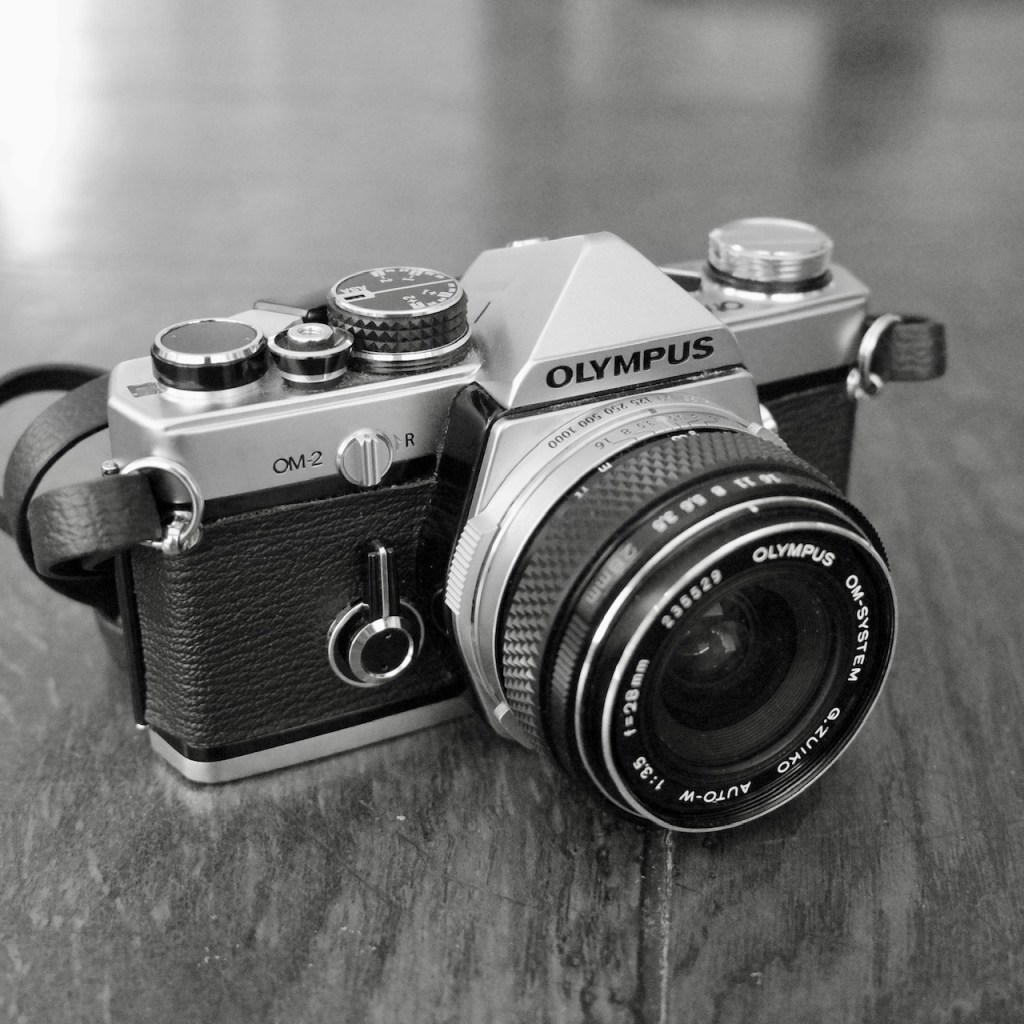
I ended up with a parallel camera kit to my own after my father-in-law Kurt’s passing. Where I was invested in Canon, he was an Olympus guy. His outfit was built around the Olympus OM-2, a highly regarded automatic camera manufactured between 1975 and 1988. I also inherited several lenses.
Kurt and I shared our experiences; mine with Canon and his with Olympus. He used the OM-2 a lot. He was a stickler for getting composition and lighting just so. Naturally, I think of him every time I pick up the camera.
The first and most impressive feature about the OM-2 is its small size. It’s light but doesn’t feel cheap. The OM cameras were designed by Yoshihisa Maitani, something of a legend in photographic circles. The OM-2 is noticeably smaller than the AT-1. I can see there were some compromises to make the camera and lenses so compact. For example, the aperture has only full steps rather than half steps. While I like the way the camera feels in my hands, I do find the controls slightly cramped.
From my experience, the OM-2 is close to perfect. It has a bright viewfinder and some novel features. It can be operated in Aperture Priority mode or manual mode. Did I mention I like shooting in manual mode? (I admit it’s great to have the option of setting the aperture and letting the camera do the hard work.)
My only quibble with the OM-2 layout is that the shutter speed dial is next to the lens barrel, rather than on top of the body. I find that illogical. Or maybe it’s just different than the setup on the AT-1 (or most other SLRs).
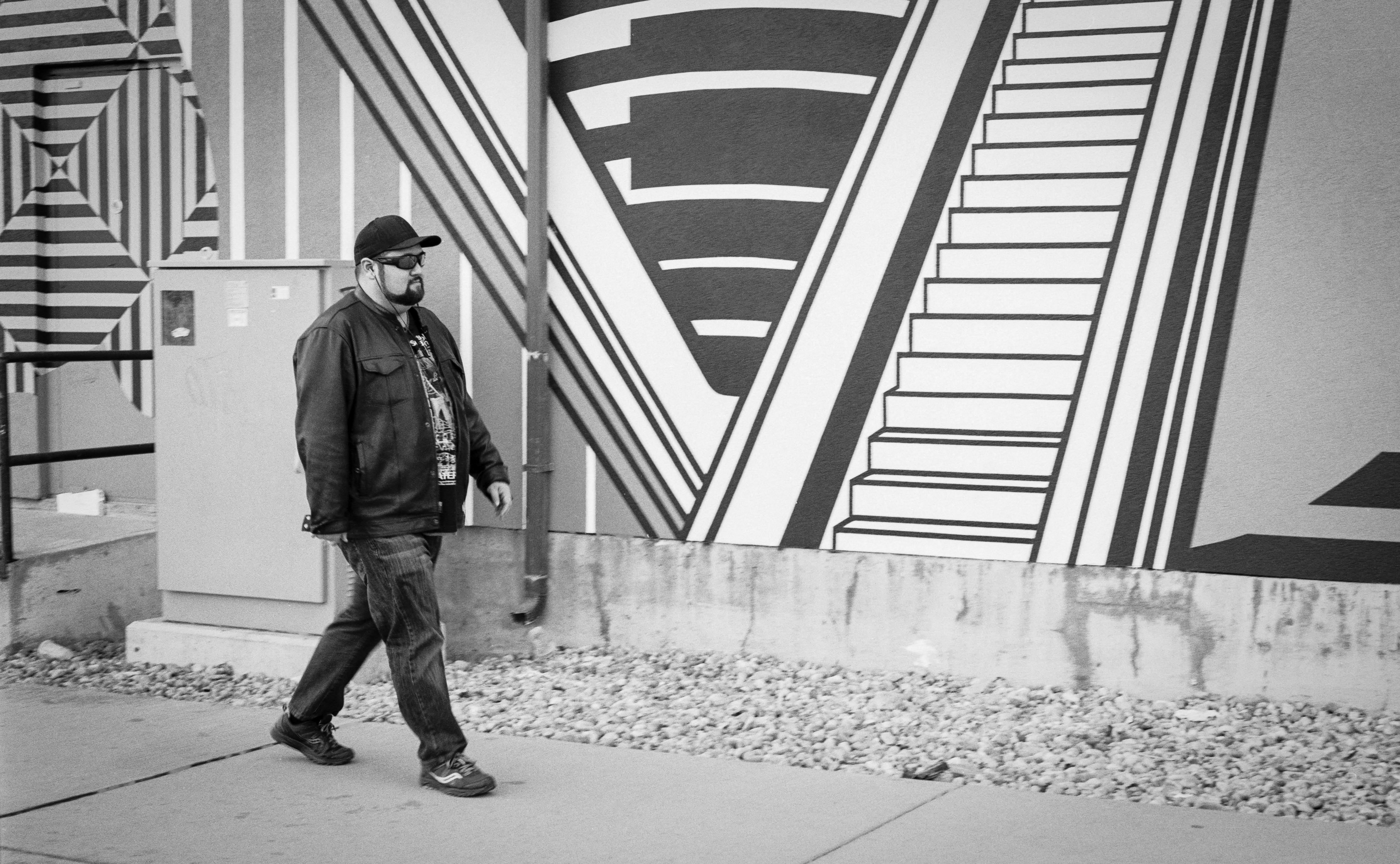
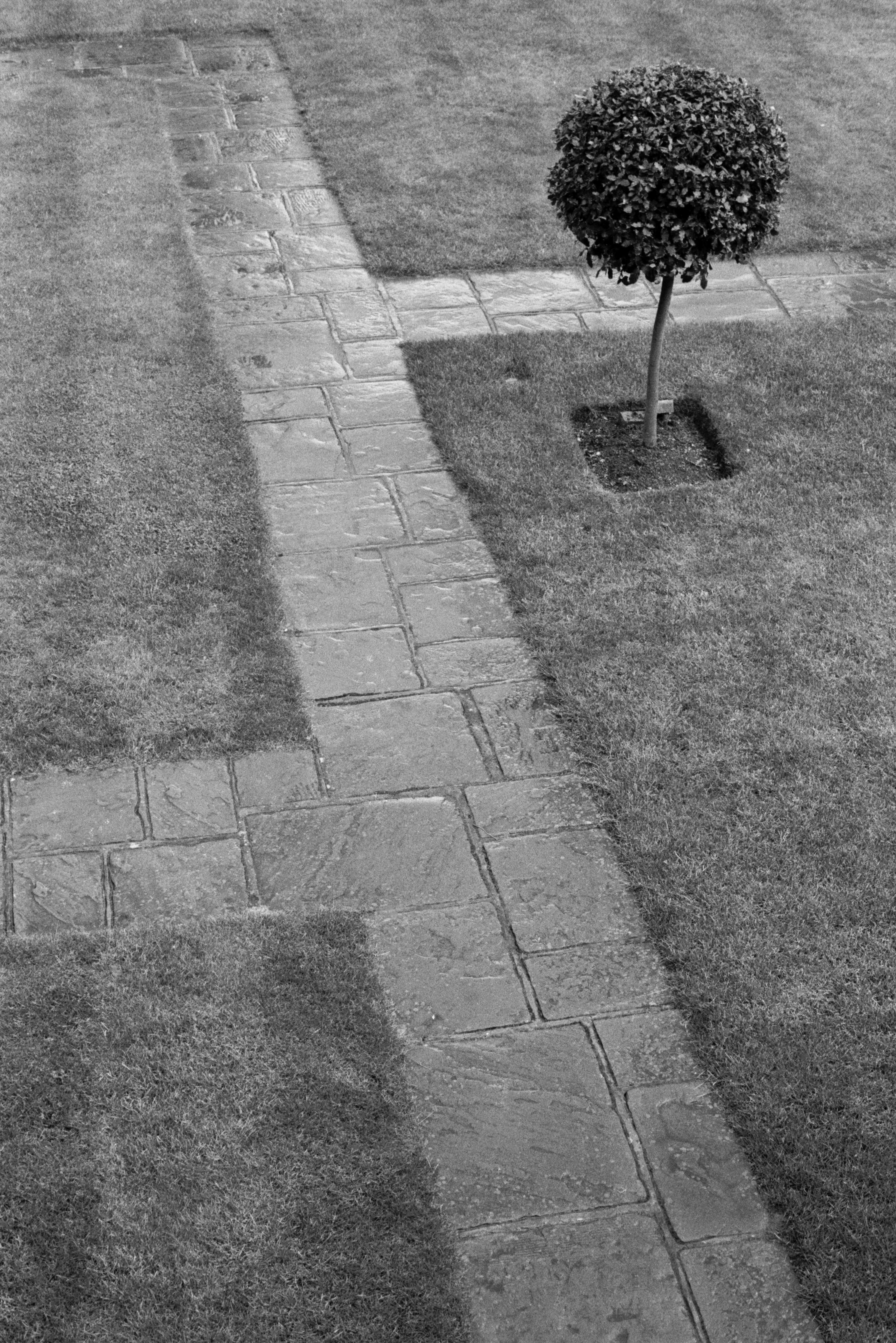
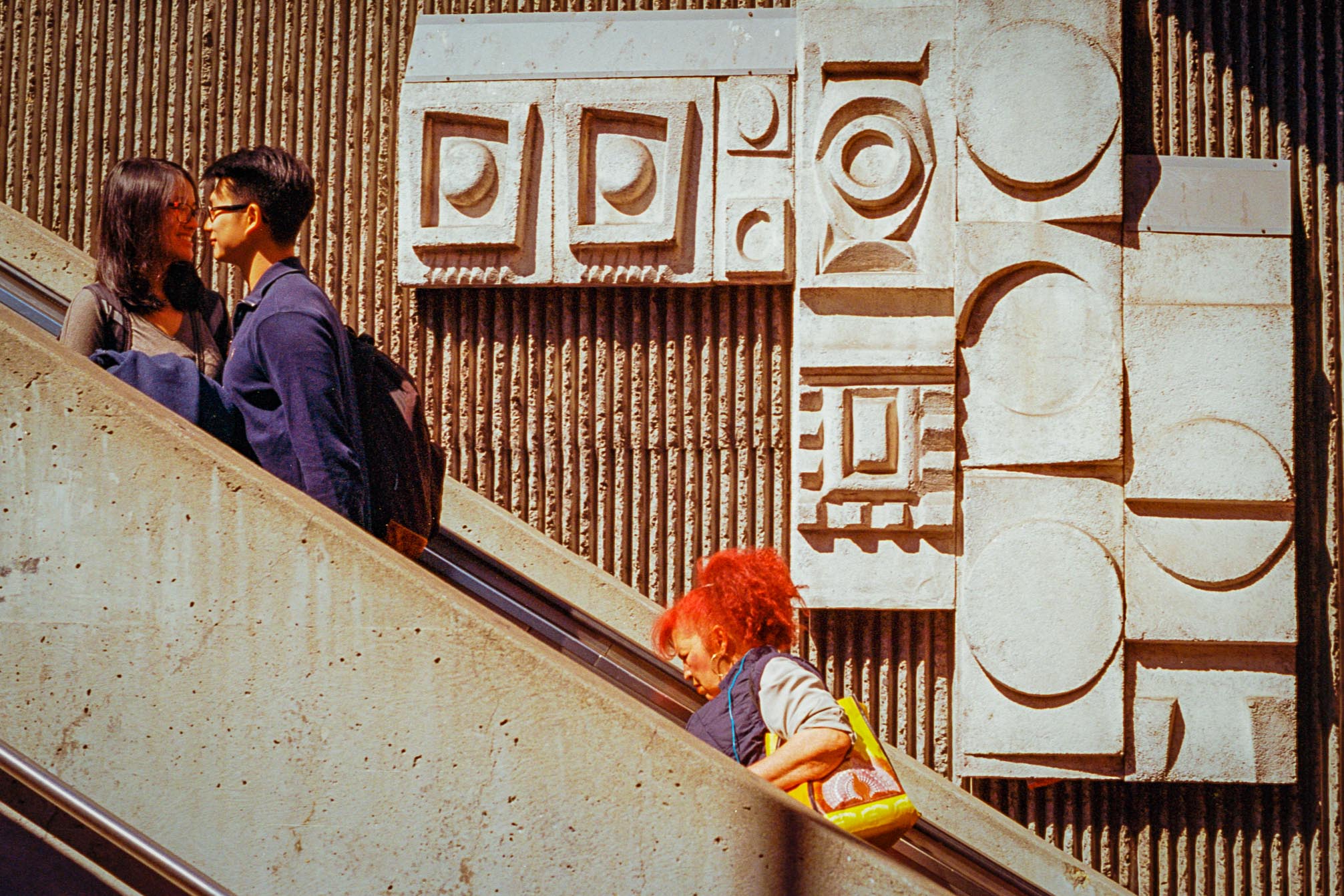
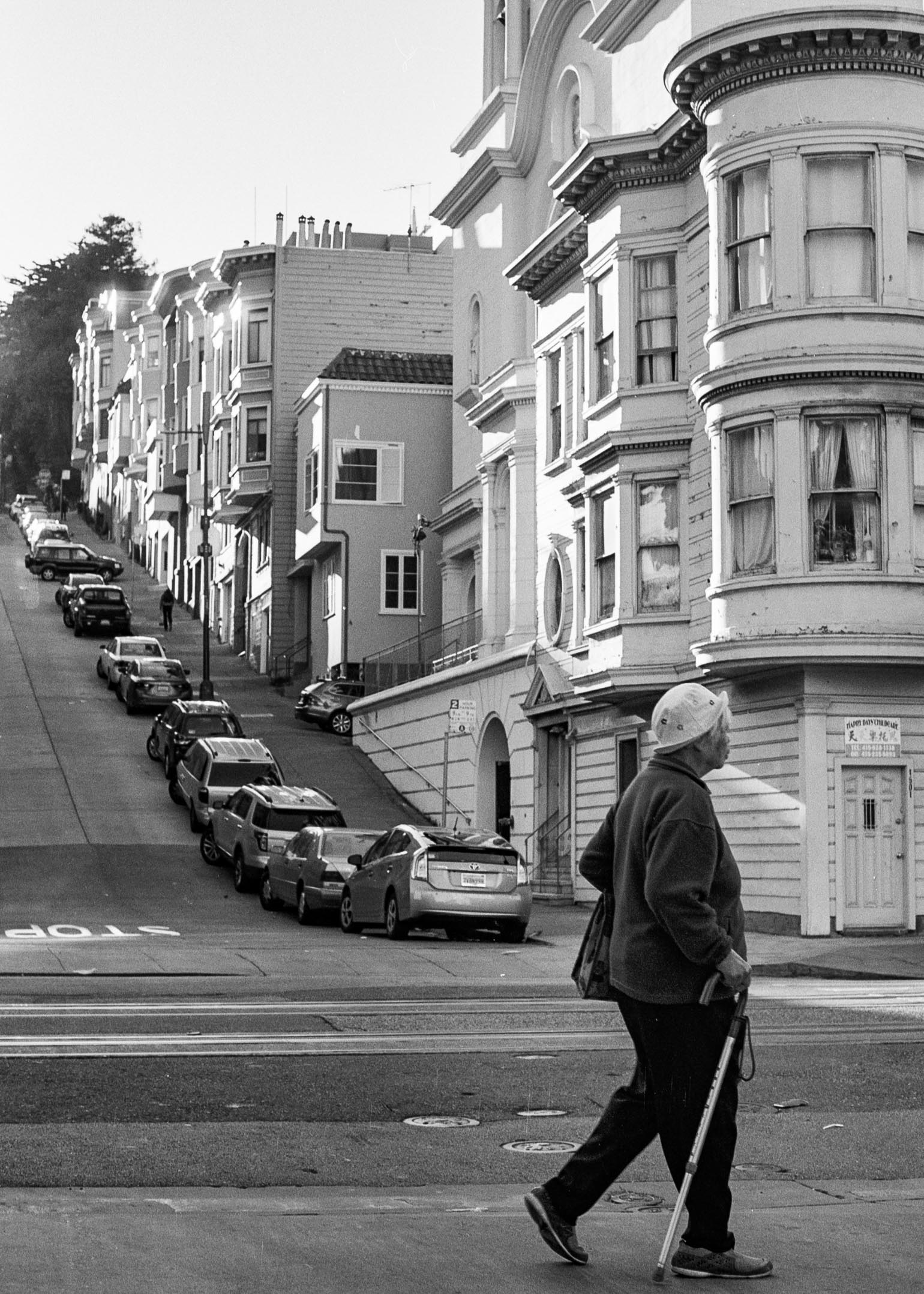
The OM-2 is very accurate when metering a shot. I mainly shoot B&W film with it, and I am always impressed by how well the lenses render urban scenes and street shots.
The Olympus name has mostly disappeared—it was absorbed into the “OM System” brand five years ago. Let’s call it a casualty of the cellphone camera trend. Even so, the OM-2 has earned a special place in my collection. I hope it keeps working as long as I do.
Minolta X-700
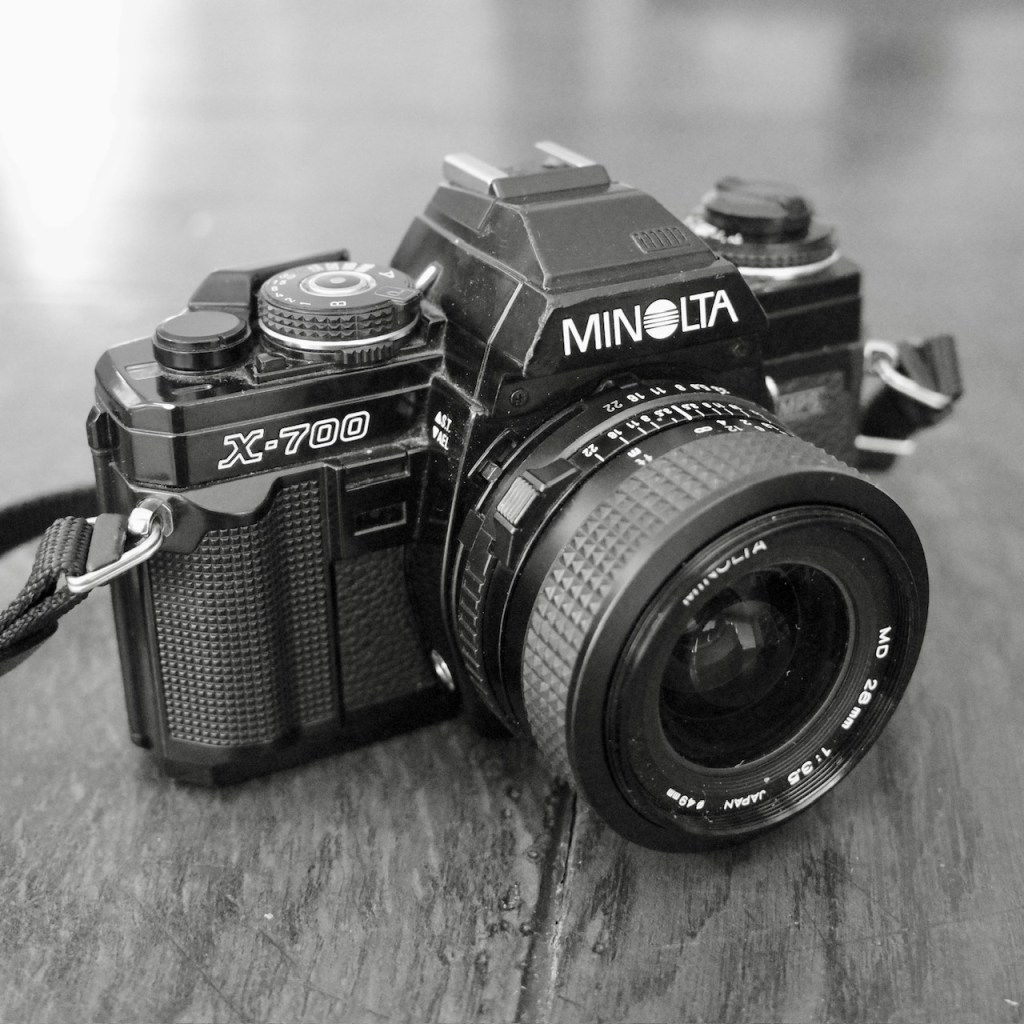
The Minolta X-700 is another small miracle. This particular one belongs to Deb. She got it from her parents as a Christmas gift. She used it for a few years, then it was relegated to a closet. Dan dusted it off for a school photography course when we lived in England. I remember buying him a 28mm lens to go with the original 50mm lens.
The X-700 was the pinnacle of Minolta’s manual focus SLR line, and it was very popular. It was manufactured between 1981 and 1999, which is a long production run. The features of the X-700 are impressive. In addition to manual mode, it has Aperture Priority mode and a Program mode that integrates with Minolta MD lenses. It’s got a compact shape and it’s very light. The LEDs in the viewfinder are genius (with one downside).
In my research for this piece, I learned that Minolta used plastic for some components of the camera. That goes some way to explaining its weight, and also why the camera feels less substantial than the other two in this piece. It’s also noisy when the shutter is activated. It’s worth remembering that by the mid-1980s, the SLR market was crowded, if not saturated, and autofocus cameras were starting to hit the market. No doubt that would have detracted Minolta’s attention away from their manual focus line.
To this day, the X-700 remains a great camera. I like the feel of it in my hand, and that isn’t a coincidence. Size-wise, it fits in between the Canon and the Olympus.
My main beef comes when using the X-700 in manual mode, where the user gets shutter speed information in the viewfinder. Why is that a problem? Well, the same LEDs I mentioned force the user to look away from the subject to see and adjust the shutter speed. It’s fine for landscapes or other static subjects, and fortunately, one can always switch into Aperture Priority mode and fire away.

By the numbers
For what it’s worth, I did a few measurements… here are the bare facts:
| Canon AT-1 | Olympus OM-2 | Minolta X-700 | |
| Weight, grams (w/28mm lens) | 780 | 715 | 690 |
| Size, cm (W x D x H) | 14.5 x 10.0 x 9.0 | 13.7 x 8.3 x 8.3 | 14.0 x 9.5 x 9.0 |
Wrapping up
So, the obvious question… which of these cameras/systems do I like the best? That’s a tough question. If I had to choose one, it would be the OM-2. I’m a fan of small and light cameras, and this one definitely delivers. That said, I like each of the cameras for different reasons. You can tell I have emotional, physical and intellectual attachments to these marvelous machines. That’s why I make it a point to include all of them in my rotation. For me, there’s no better feeling than loading a manual SLR with a favourite film (or a new one) and heading out for a photo walk. As long as they keep working—and they are so well made, there’s no reason to expect them not to do so for a while yet—I’ll happily reach for one.
Until next time, be well and BE FAST!


 My Second Running Life