When a window of opportunity opened for us in early October, Deborah proposed and then arranged a short trip to Ireland. We had been to the Emerald Isle once before, about 20 years ago, for a driving tour of the Ring of Kerry. This time, our plan was to stay mainly in Dublin and take a short side trip to Belfast. It was an enjoyable week.
The Sights of Dublin
With hotel spaces in high demand, we grabbed a same-day reservation at the Leinster Hotel. It’s a comfortable, new boutique hotel in Merrion Square, and a great location for exploring the city on foot. That’s what we did, as Dublin is a very walkable city.
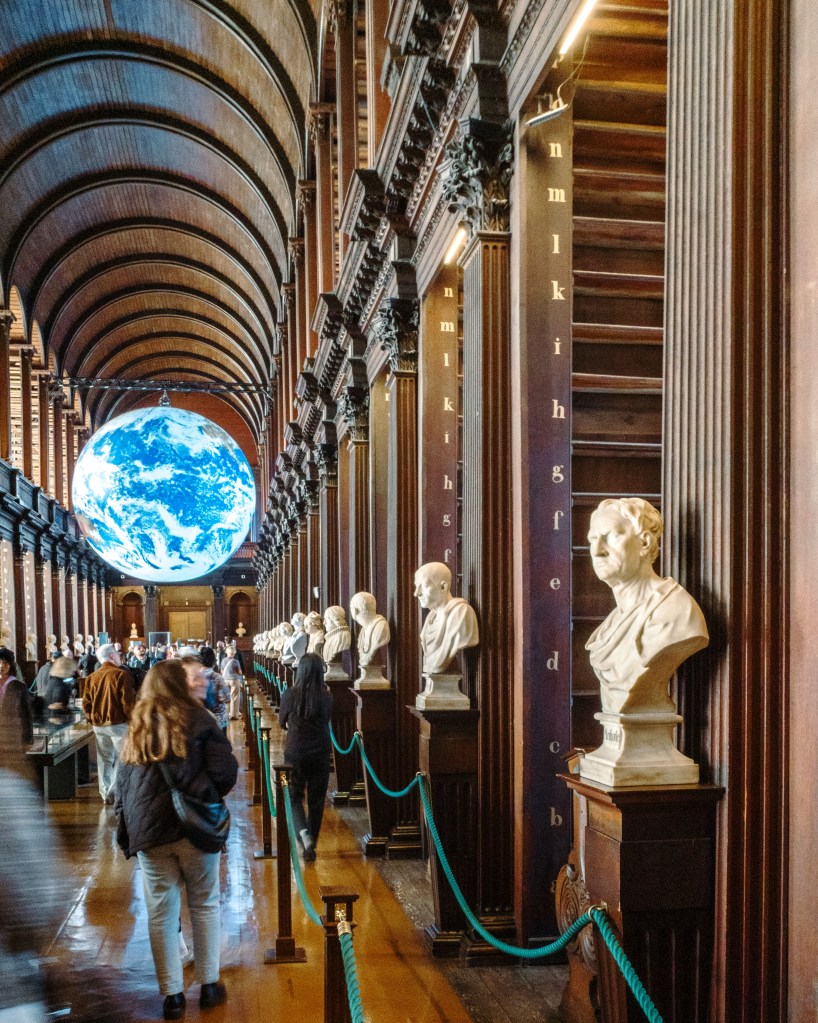
A highlight of our previous trip was a visit to Trinity College to see the Book of Kells and the library at the Long Room. We made sure to visit again, as the college was only a kilometre from the hotel. The library is being extensively renovated, but even with most of the books removed, it’s an impressive building. Watching a video about the project, I wondered how often these ancient books are actually touched by human hands.
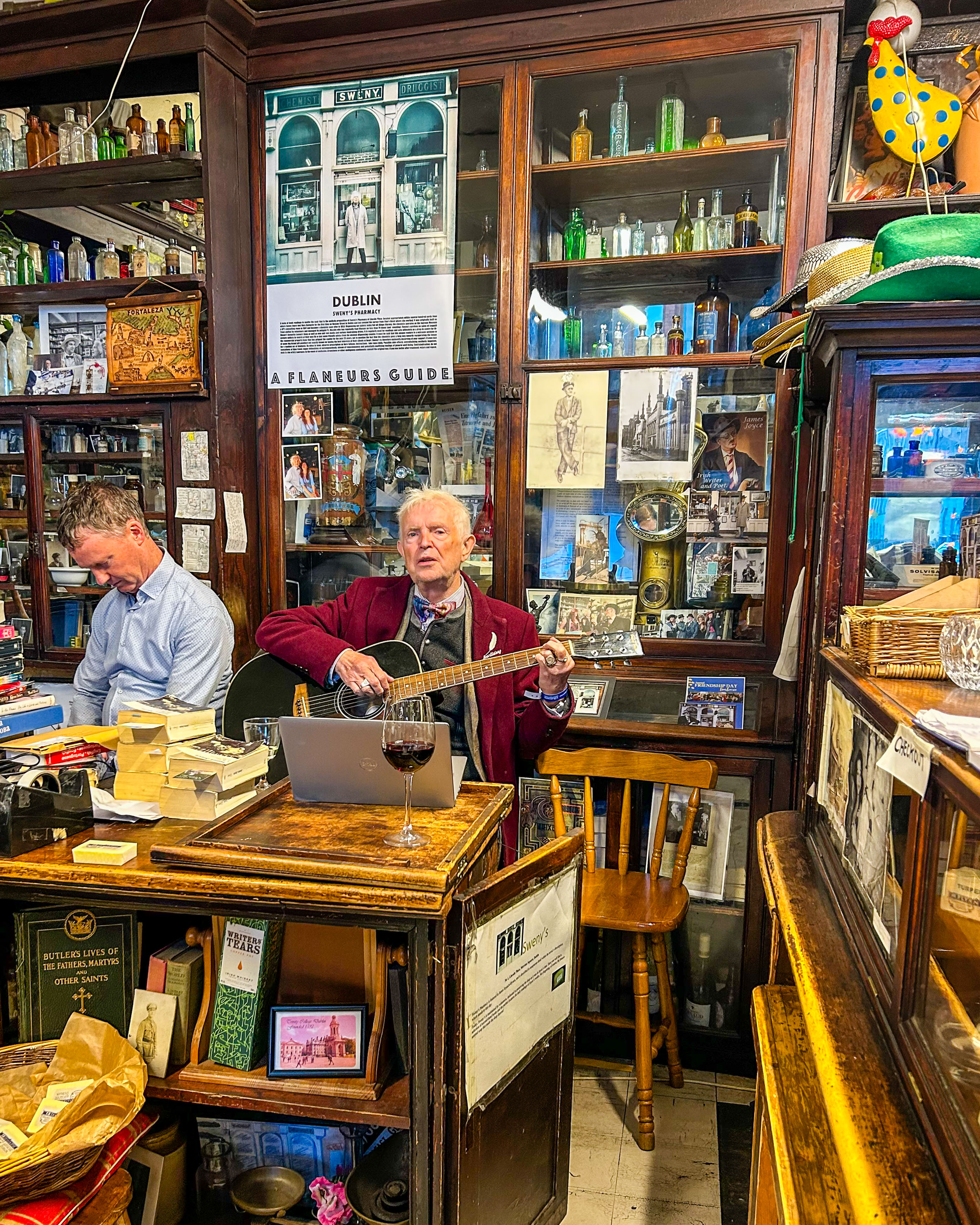
This being Ireland, there was some rain to contend with. In fact, we got caught twice on the same day, and each time we were treated to Irish hospitality. Ducking into a shop for shelter, we found ourselves in a most unusual place. It was Sweny’s Pharmacy, a shop dedicated to local legend James Joyce, and his masterpiece, Ulysses. The proprietor (PJ Murphy) treated us to a Gaelic song, offered us a glass of wine, and invited us to that evening’s reading from the novel—in French! He added that he has personally read the book in at least eight languages. We noticed that the rain was letting up, so we made our excuses and moved on. I was reminded that I have yet to finish my longstanding project of getting through Ulysses for the first time, and only in English. I made a note to give it another try once I was back home.
It’s likely not the first thing visitors to Dublin would consider, but we made a trek by city bus to an important place in the history of Ireland, the Kilmainham Gaol Museum. The jail, which opened in 1796, has held thousands of common criminals, as well as political prisoners involved in the struggle for Ireland’s independence. Fourteen leaders of the 1916 Easter Rising were executed by firing squad in the prison yard.
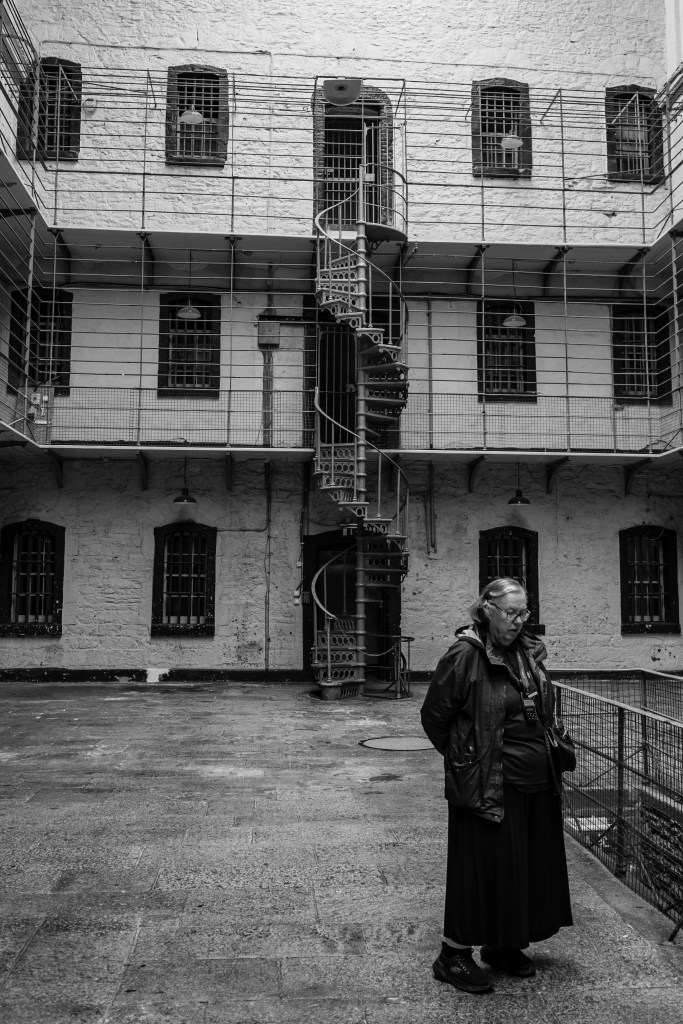
Although the day’s tours were all booked, we took our chances and scored a pair of free tickets—luck of the Irish, perhaps.
The tour was informative, and our guide was passionate about both the jail and Irish history more generally.
While we waited for our tour, we had a pleasant lunch and chat at the nearby Old Royal Oak pub.
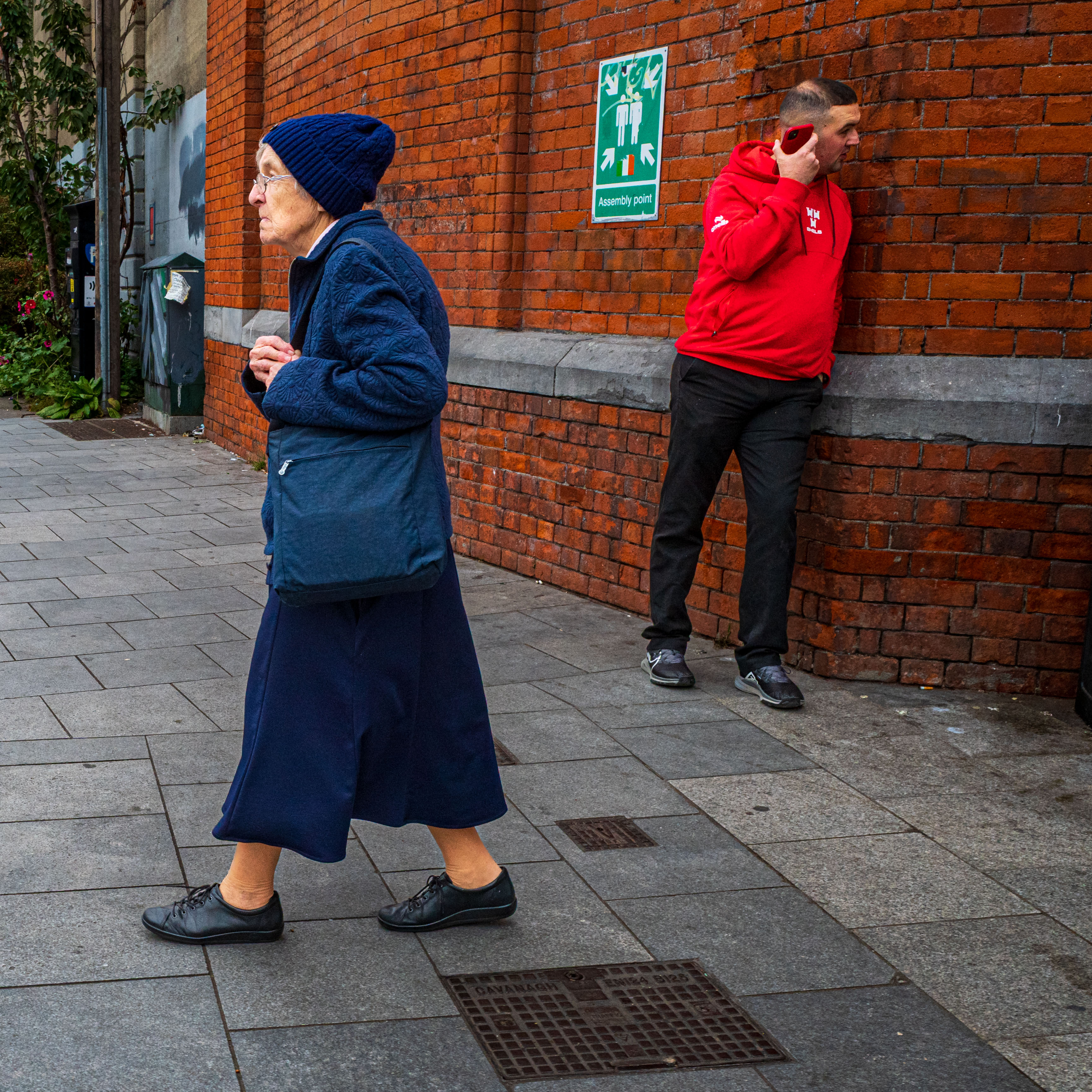
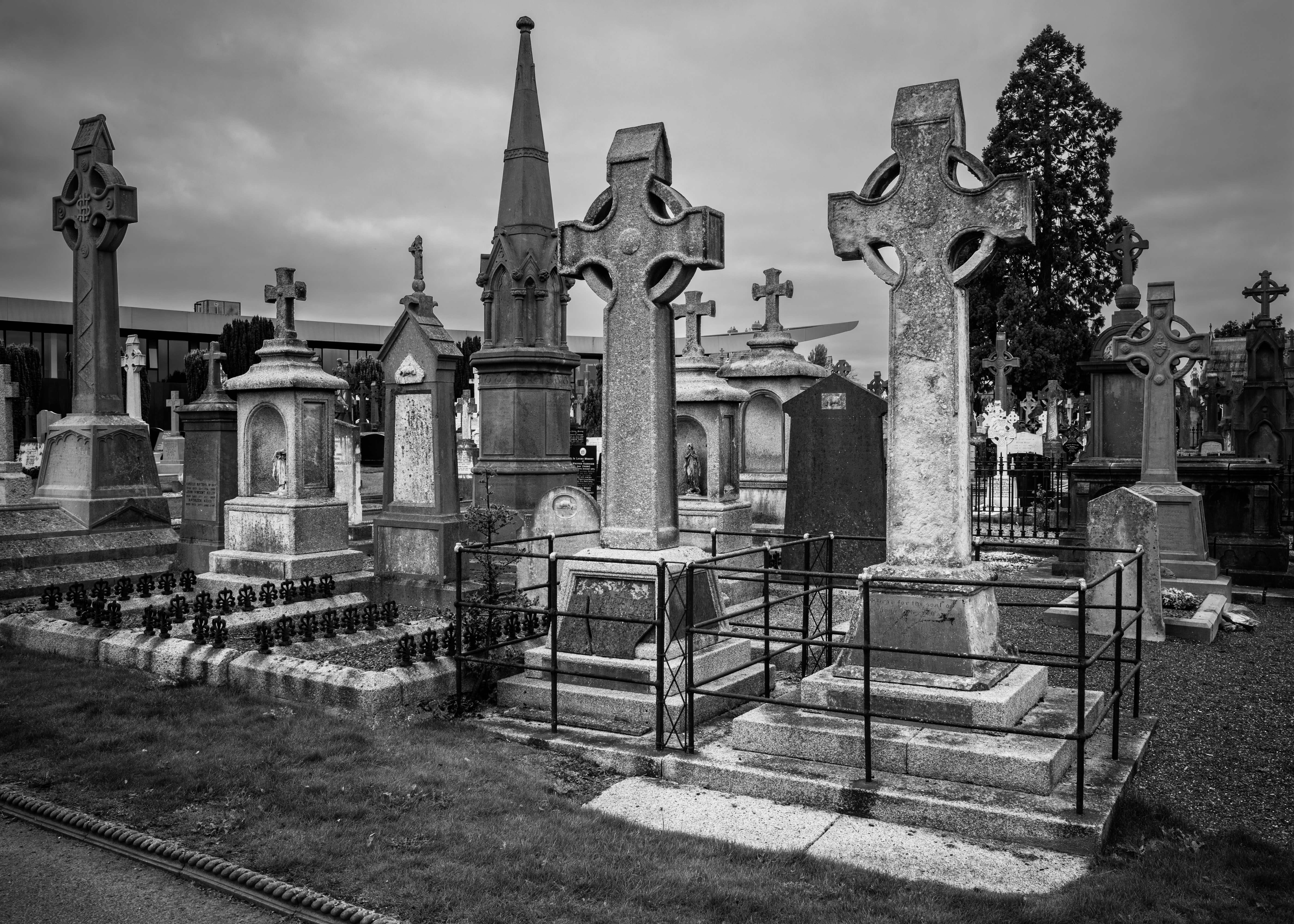
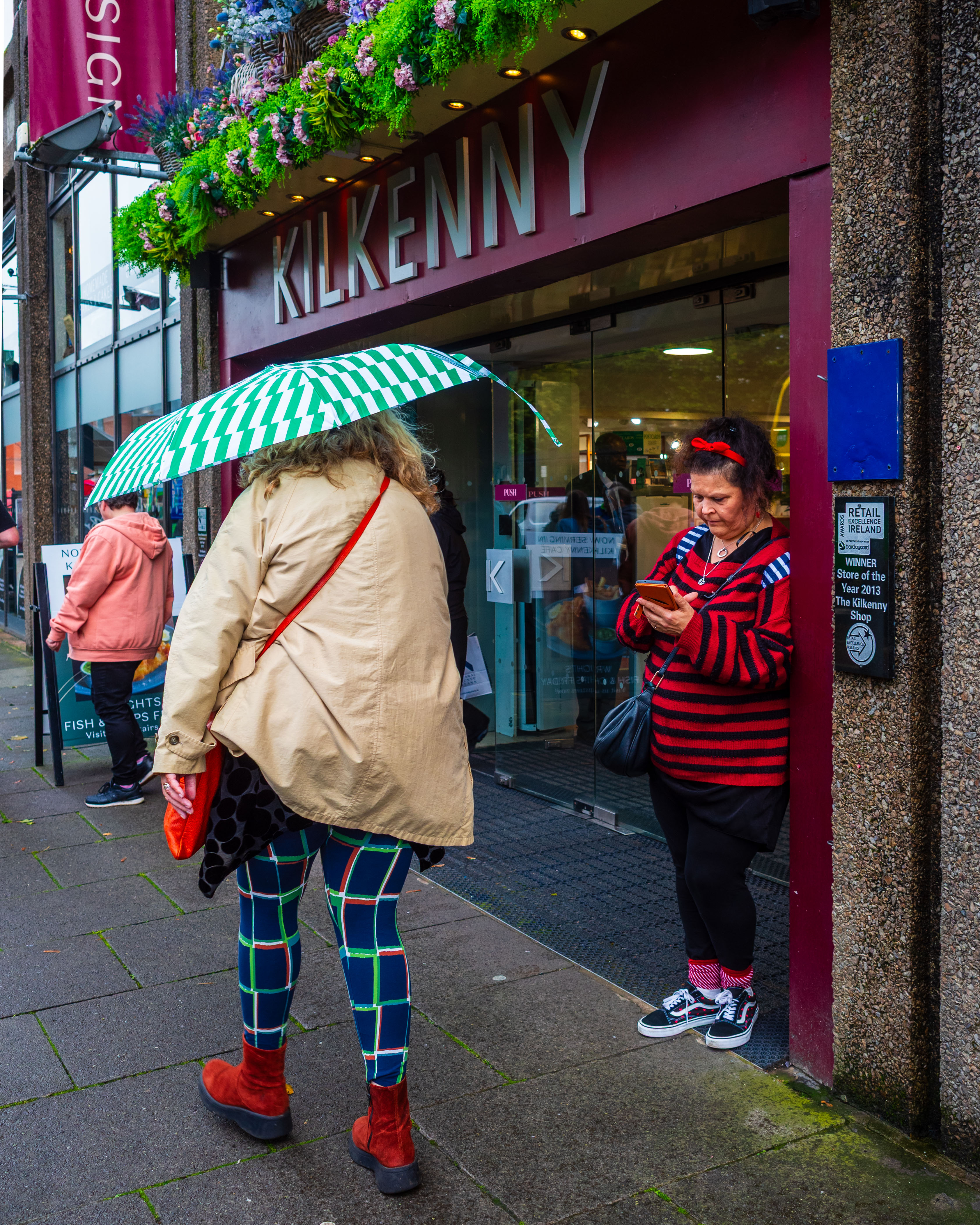
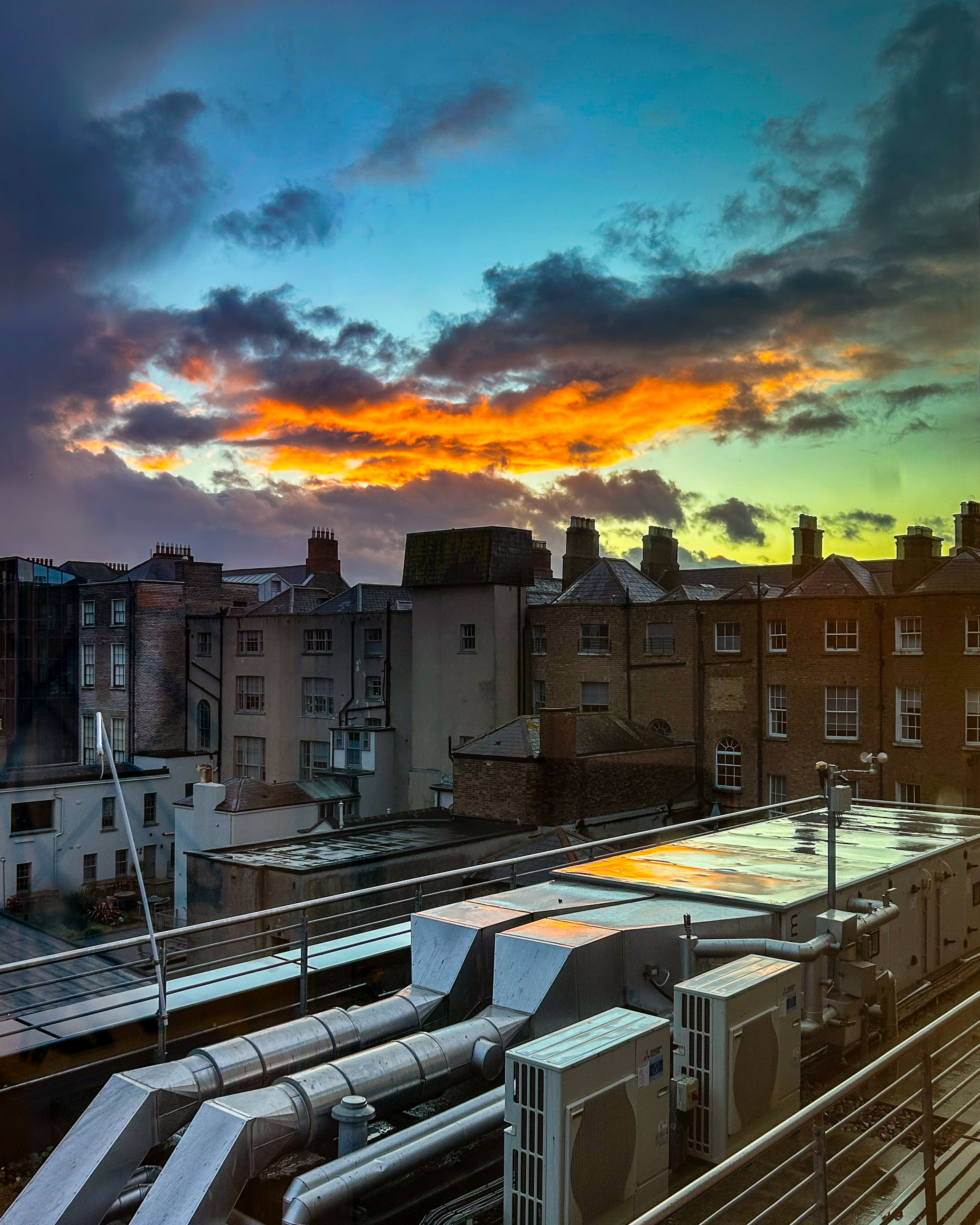
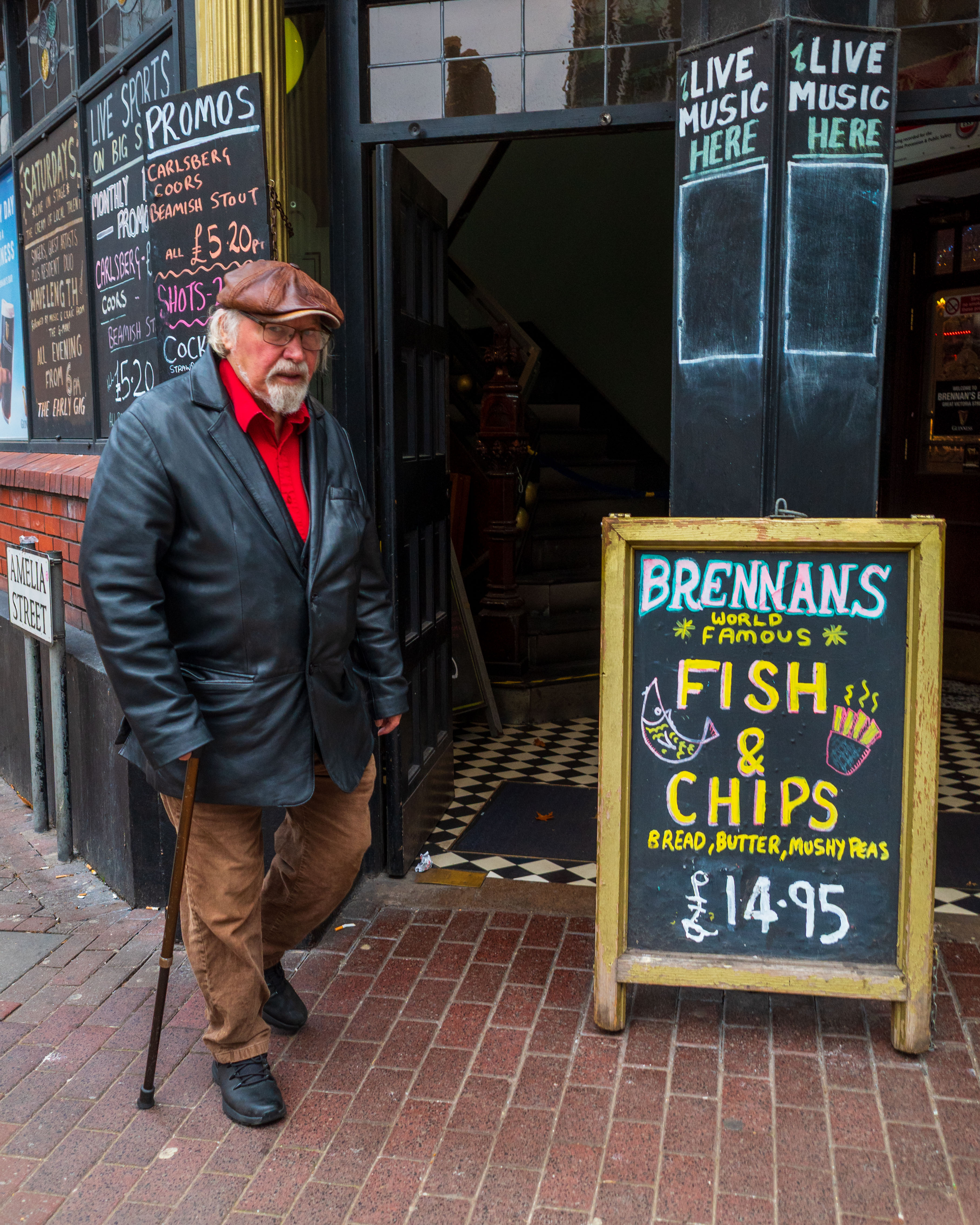
Dublin is an amazing place for street photography, and I did my best to capture some scenes. My muse may have also been on vacation, as I seemed to struggle to find worthy photos on this trip. Well, we do what we can! Copyright for all photos is mine.
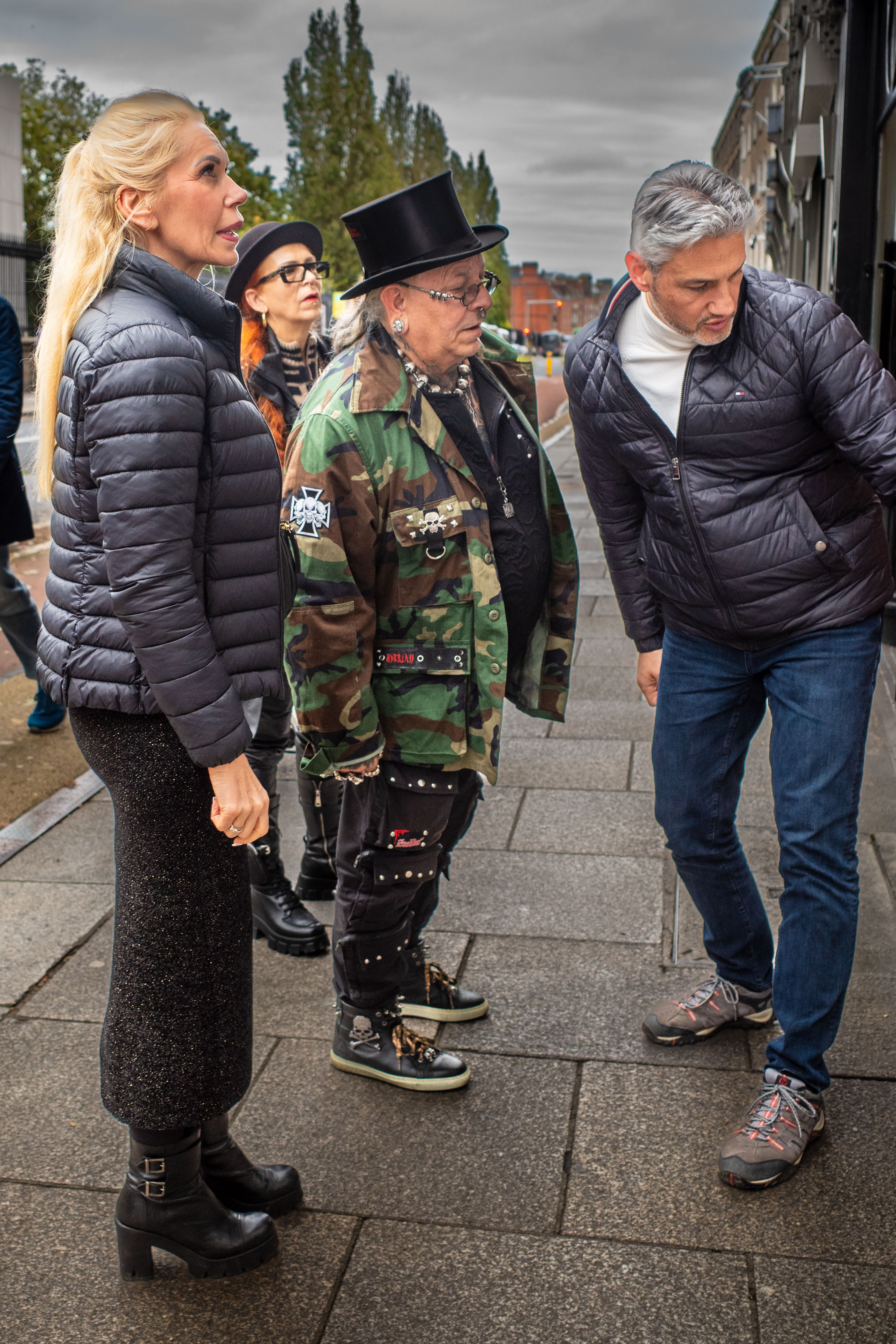
We decided not to do the popular Guinness Storehouse brewery tour, because we took the tour on our first visit to Dublin. Besides, we had just finished watching the excellent Netflix series, House of Guinness. I settled for drinking my share of the black stuff while in town—just enough to confirm that it really does taste better in its home city than anywhere else.
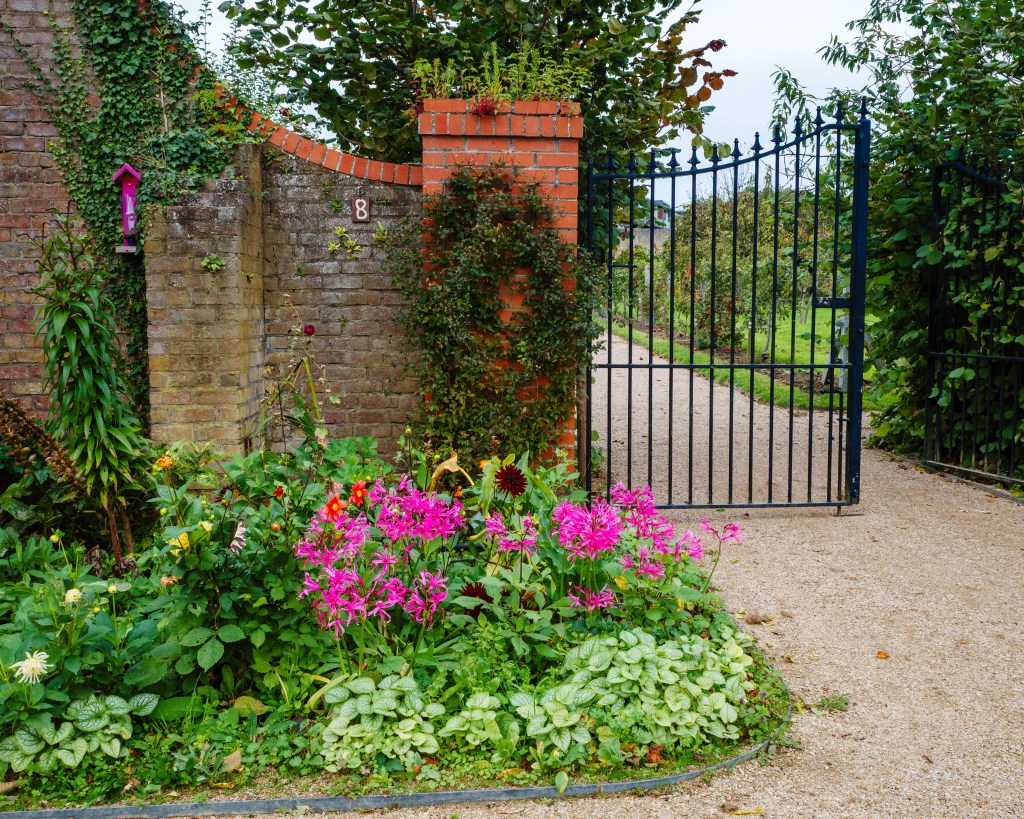
Other highlights of our time in Dublin were a visit to the Glasnevin Cemetery, some window shopping in Grafton Street, a visit to the impressive National Gallery, and a stroll through bucolic St. Stephen’s Green. On our last day, I fit in a short photo run through pretty Santry Park.
Overall, it was a fine stay in Ireland’s capital city. Sláinte!
North to Belfast
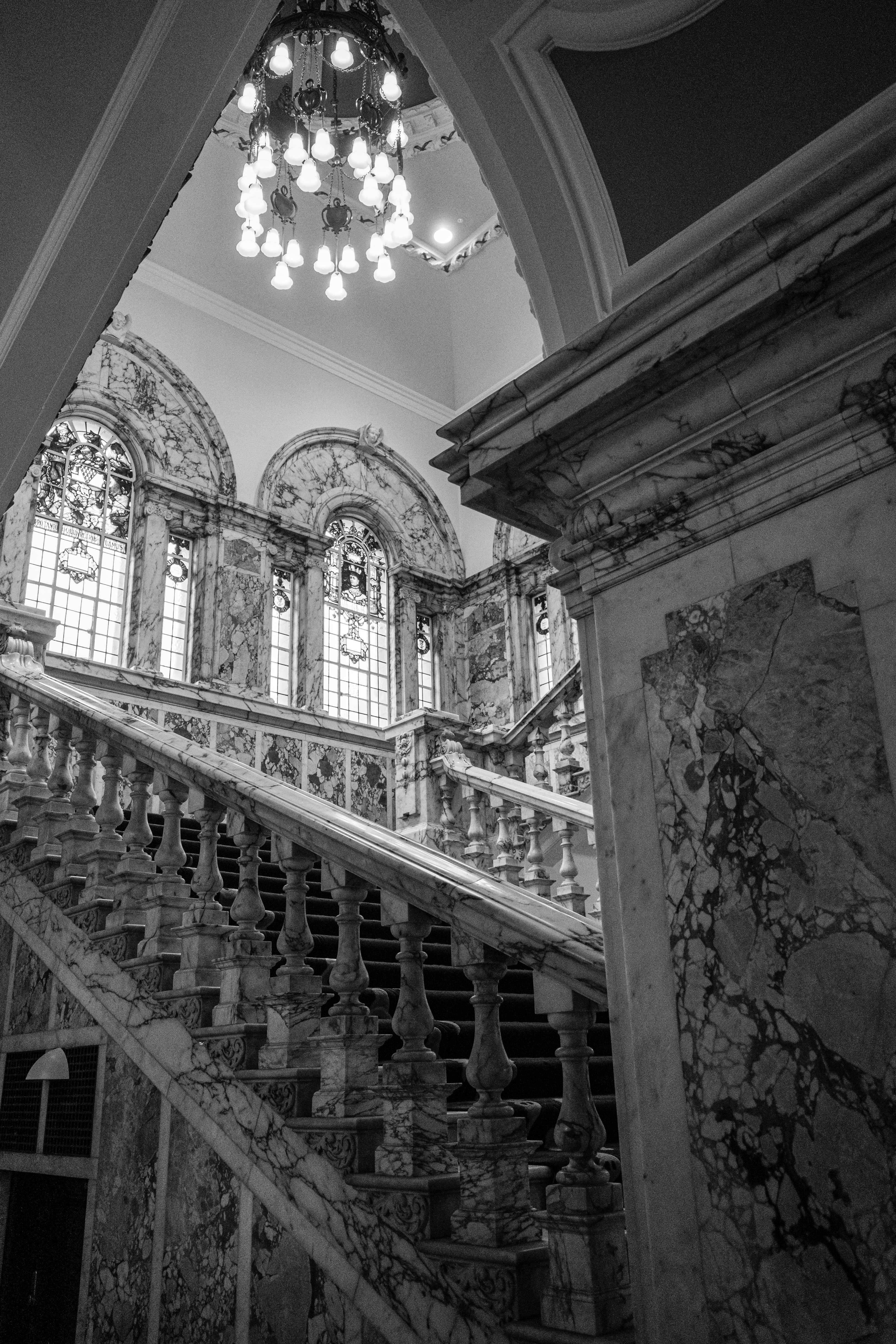
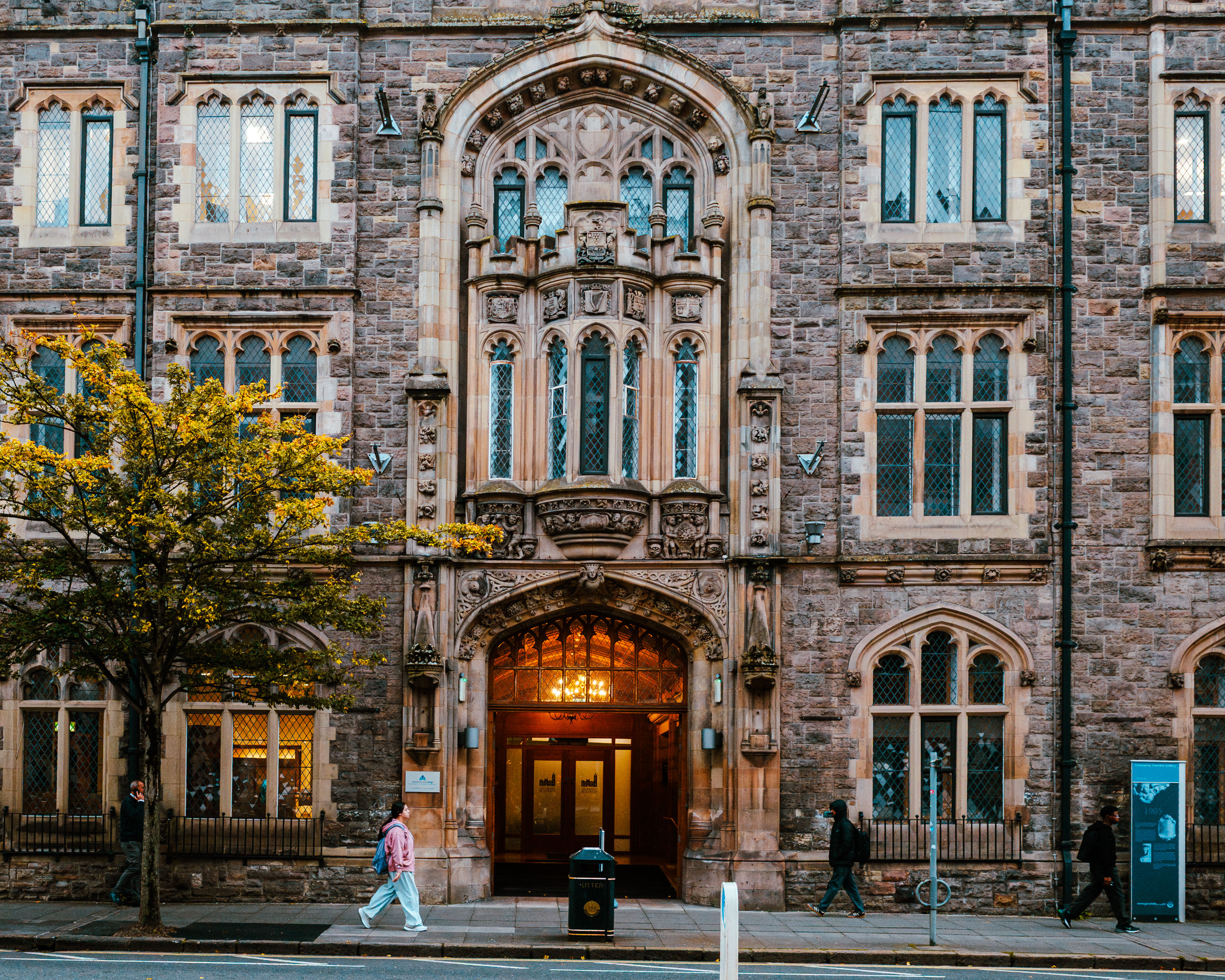
We took advantage of convenient train connections to make a short dash up to Belfast, the capital city of Northern Ireland. The city centre has a very different character to Dublin, not surprising given its historical connection to the United Kingdom. Like Dublin, getting around on foot is the best way to see the city. We stayed two blocks from City Hall, an imposing Victorian building.
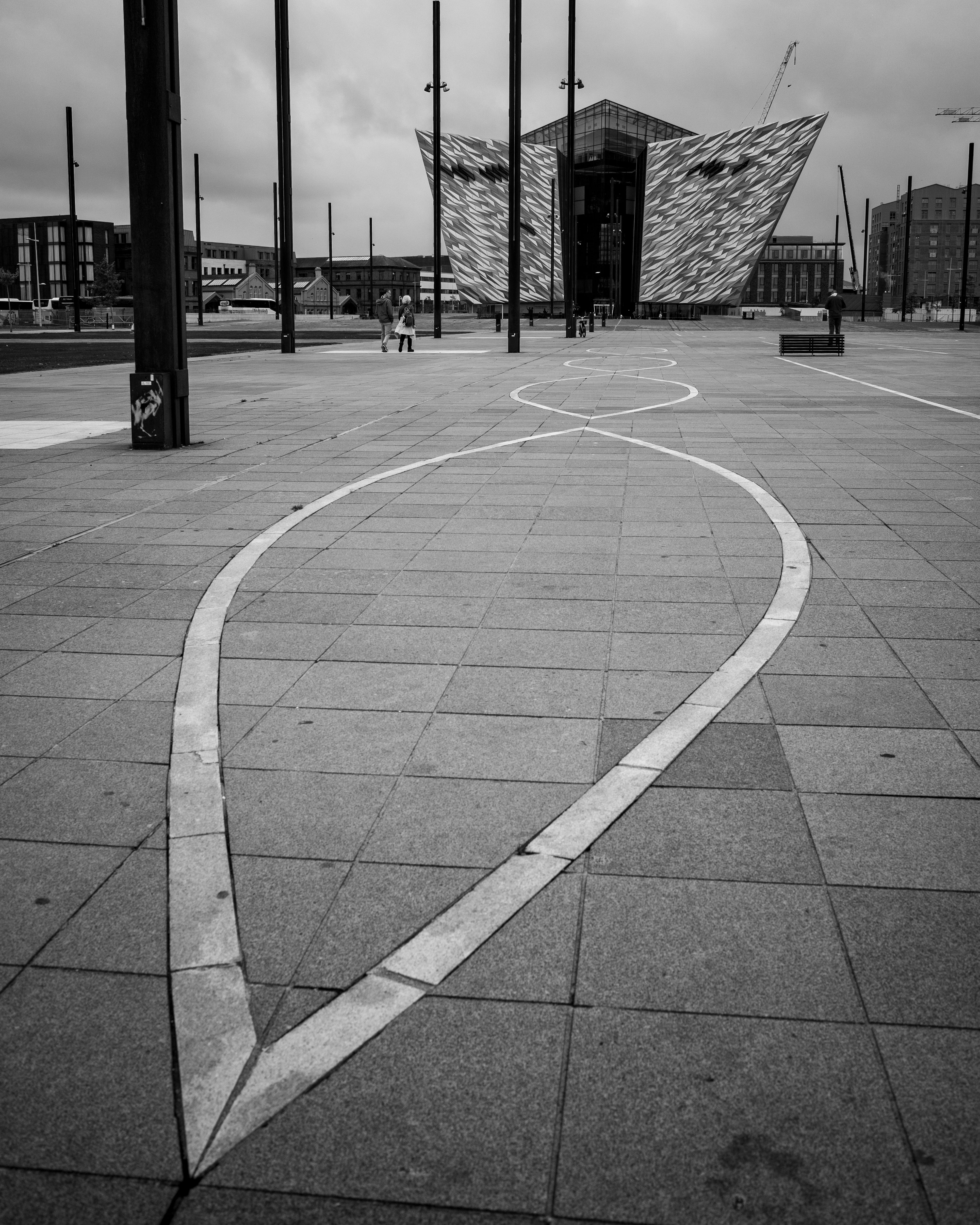
We only began to appreciate the historical significance of Belfast when we took in The Titanic Experience. Part museum and part theme park, we thoroughly enjoyed the two hours it took to work our way through the exhibits. We learned about the socioeconomic impact of shipbuilding on the city: a linen industry which accounted for 75,000 jobs in the early 20th century; and shipyards that employed 15,000 men in all aspects of design and construction of the largest ocean liners that had ever been constructed.
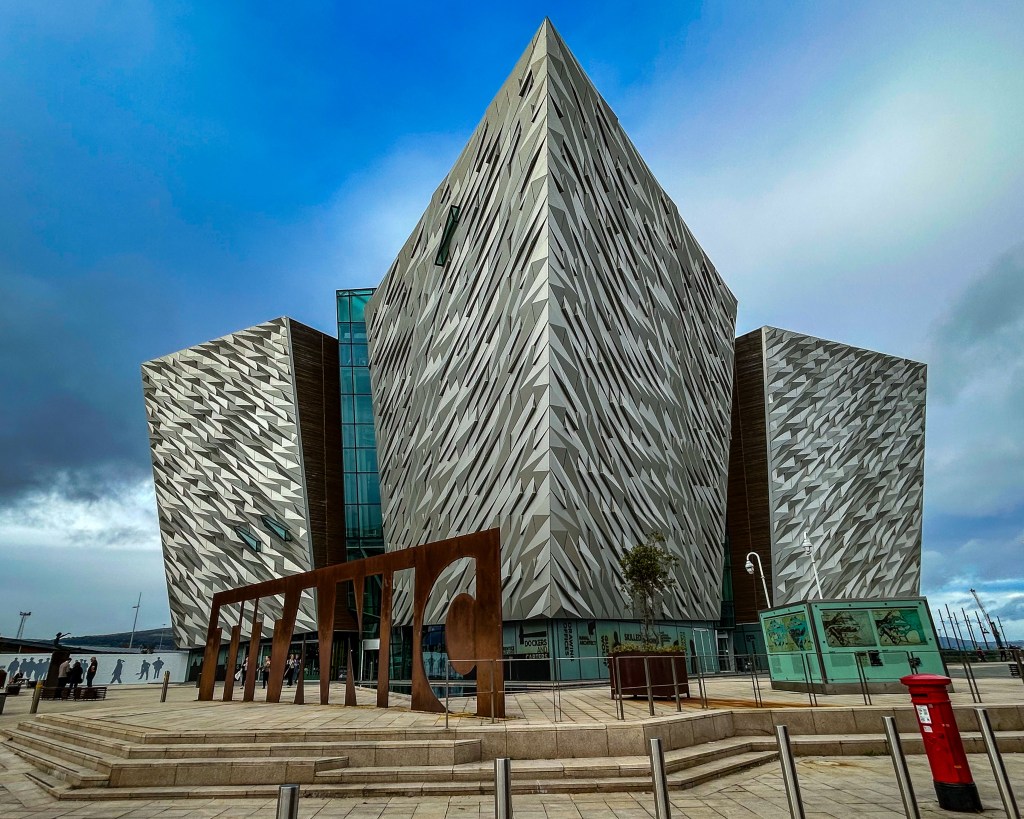
Of course, Titanic is famous for another, more tragic reason—its collision with an iceberg and sinking on its maiden voyage. The exhibits do justice to the whole story, including the discovery of the wreck in the 1980s. For me, walking the length of the ship’s outline, just outside the building, really brought home the sense of immediacy with another part of Belfast’s history.
The next day, we signed up for a coach tour of the coastal region. Over seven hours, our tour guide and driver, Steve, did a wonderful job of explaining the complicated history of Northern Ireland, while pointing out the many sights of the region.
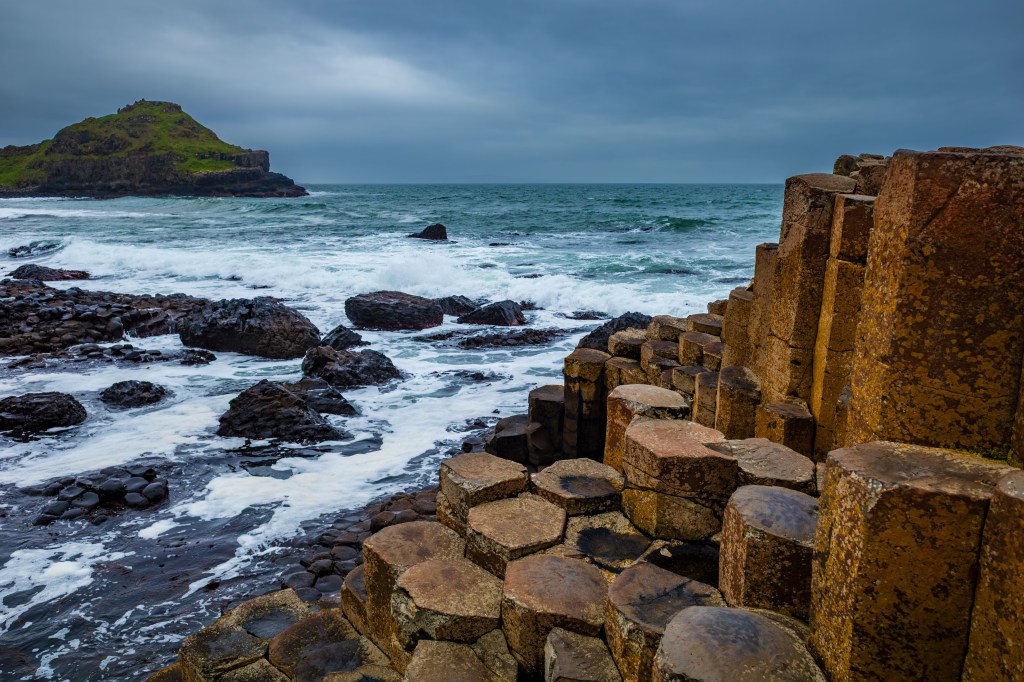
The main attraction for us was the Giant’s Causeway, a unique geological formation and UNESCO site on Ireland’s northern coastline. The Causeway consists of thousands of hexagonal pillars of basalt, which extend out into the ocean. A folk legend says that Fionn McCool, an Irish giant, built the causeway by throwing boulders into the sea. McCool wanted to make a bridge that would reach the Scottish Isle of Staffa, where he could challenge a rival giant, Benandonner, who had made a claim for Fionn’s island (Ireland). You can read the full story and find out what happened to Fionn here.
The scientific explanation is that the causeway resulted from a volcanic explosion about 60 million years ago. As the lava cooled quickly, it cracked into the distinctive pattern of interconnected basalt columns. These two explanations can exist side-by-side, because this is Ireland, after all. However it came to be, the formation is unlike anything else we have seen.
We had no idea that the popular HBO series Game of Thrones had been such a boon to the regional economy. In fact, we were the only people on our coach who had never watched the series. Nevertheless, we enjoyed the pop culture lesson as we checked out many of the shooting locales.
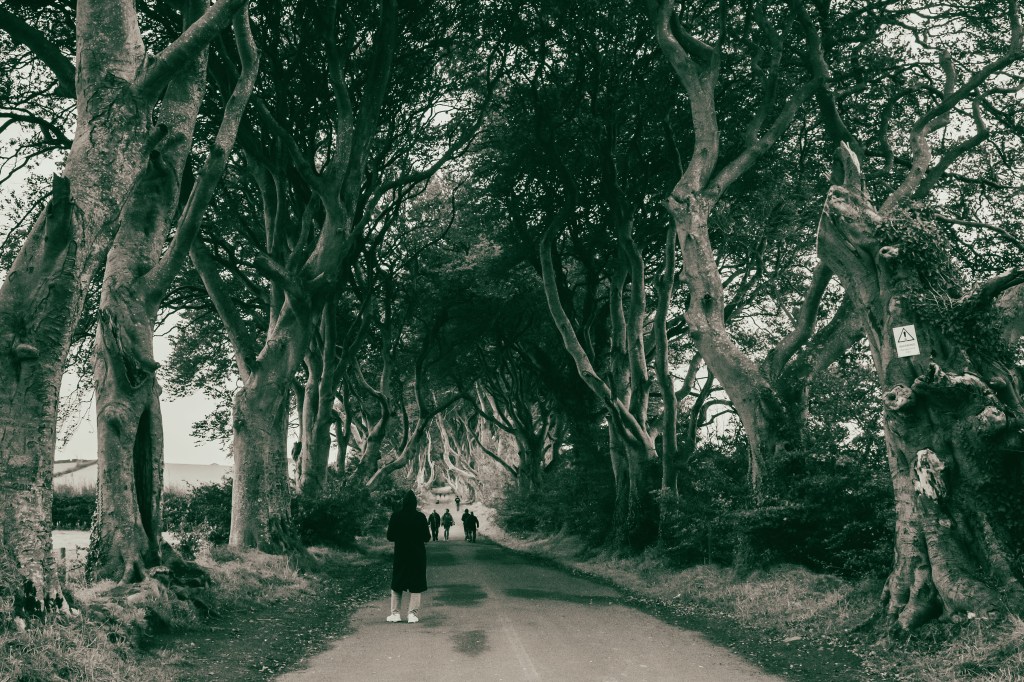
The most recognizable locale is probably the Dark Hedges, a long avenue lined with ancient beech trees, which create a distinctly medieval atmosphere. We enjoyed strolling the length of the avenue as our last stop before returning to Belfast city centre.
Let me share a few pictures from our short but impactful time in Northern Ireland. We’re very glad we decided to visit.

Final Thoughts
Ireland (the whole island) is an easy place to visit, and even better, to enjoy. We’ve found the locals to be welcoming, patient and engaging. We had fond memories of our first visit, so we were keen to return. The main cities, Dublin and Belfast, have very different histories, and that is reflected in the way each city feels as you explore on foot. In a few words, Dublin feels more intimate, warm and friendly. Belfast is more serious and stately. And perhaps due to a couple of peaceful decades, there is also a strong positive vibe in the city.
Until next time, be well and BE FAST!


 My Second Running Life