I think about my own mortality a lot. Perhaps too much. Sometimes a trivial observation will send my mind down that track—like when I’m walking down a busy street, and I realize that I’m older than almost all the people I see.
Given my personal health story, thoughts of my humanness are perhaps more present than they were when I was young and, as the saying goes, invincible. I’ve experienced a significant decline, one that goes beyond “aging”, although a growing count of orbits around the sun means I’m experiencing that type of decline as well. Apparently, aging occurs in both a stepwise and linear fashion, and the decades of our 40s and 60s are where the biggest steps occur. I think I can attest. And of course, I know how the story will end.
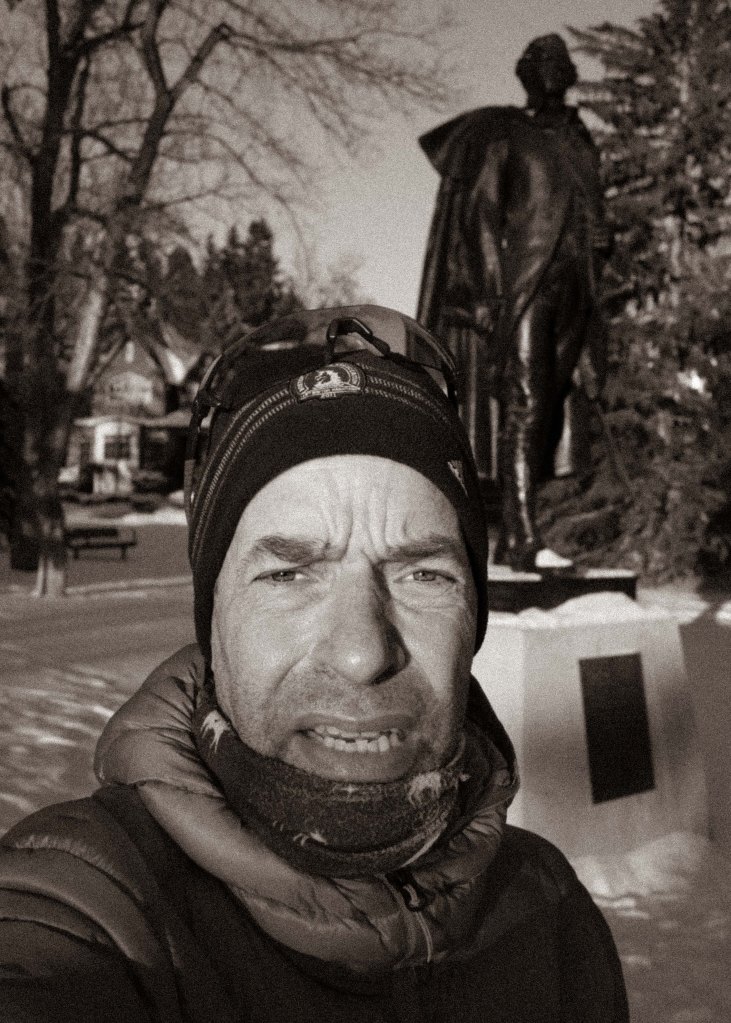
But then, sometimes, the most amazing things happen, things that make me celebrate my situation, my very obvious mortality. Things like today’s run1, in which I reluctantly took on Calgary’s arctic conditions, and returned home somehow feeling 20 years younger. It was a wonderful outing, easily my best run in a month, and one that made me feel truly alive. You may know the feeling— it’s like history being made, even if the run itself counted for nothing.
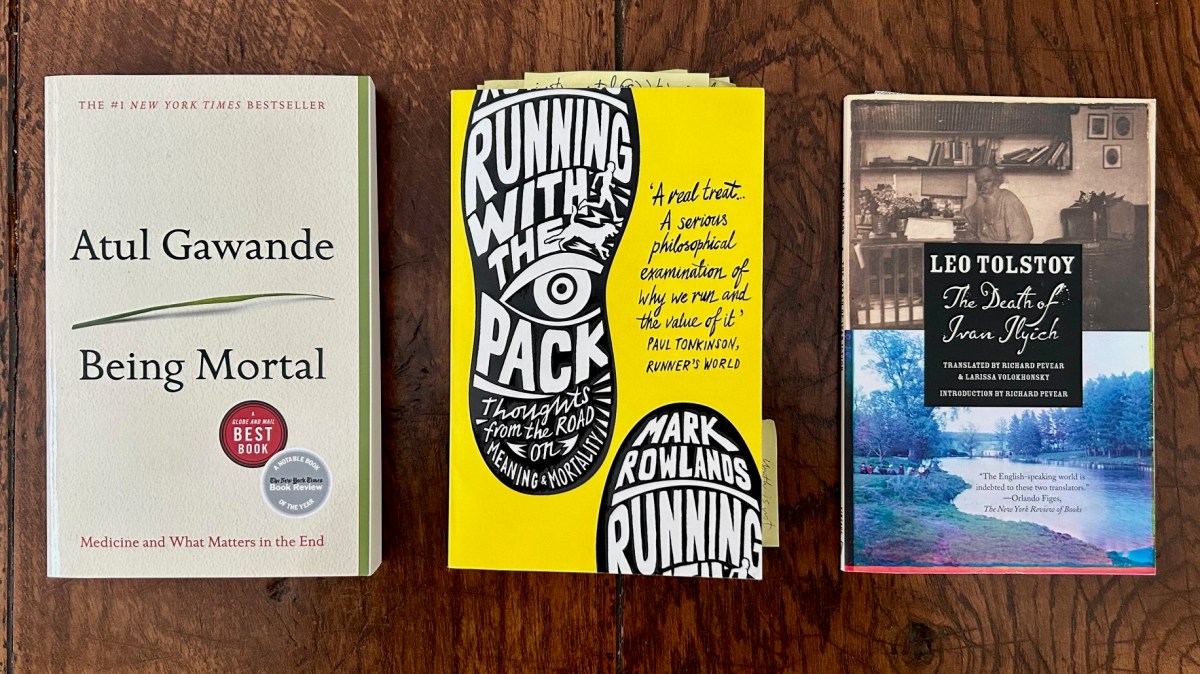
My recent reading list includes several books that deal with decline and death, and that may explain my focus on the subject. While this piece doesn’t offer any great insights, I generally find it easiest to deal with things by writing. So here goes, with a decidedly unfestive, but hopefully not depressing, piece.
Being Mortal, by Atul Gawande
Being Mortal, by surgeon and author Atul Gawande, was suggested to me by a friend. We were both dealing with parents in their declining years—in fact, my mother had died just a few weeks before. I sat on his recommendation for a while, perhaps because I was afraid to open the book. I’m glad I eventually did.
Gawande describes how modern medical intervention has changed the profile of physical decline, essentially blurring the transition from life to death. While sobering, the book makes the point that our societal approach to medicine is often not suited to the needs of people nearing the end of life.
Gawande argues that the role of the medical establishment should not be to ensure survival at all costs. He would rather see the system as enabling well-being, however a person (the patient) might define it. He presents numerous examples of human decline, not all of which are age-related, to support his contention that the best action at any time may be palliative, rather than interventional.
I finished Being Mortal with a feeling of anxiety. I suppose the book confirmed what I already knew, that the circumstances of my own demise are likely to be unknown to me. I looked back over the ever-growing list of people I’ve known who have died. The full gamut of difficult human experience is there for my contemplation.
My takeaways? I should ensure that those around me are aware of my wishes at the end of my life, and to the extent possible, stay involved in the process.
Running with the Pack, by Mark Rowlands
Running with the Pack, by philosopher and University of Miami professor Mark Rowlands, is a book I discovered during the formative stages of my research for Stroke of Luck. The challenge I faced at the time was to understand my long personal connection with running at a deeper level. The evidence clearly demonstrated a connection, but I was grappling with a version of that most fundamental philosophical question: “What is the meaning of life?”
Rowlands’ unique book helped me organize my thoughts. I appreciated his ability to parse philosophical discourse into manageable pieces. Better still was his framing of mini-lectures around his own running. (And his dogs, which play a major role in his life.) While the answers remain as elusive as ever, I certainly relate to Rowlands’ thought process.
I wanted to see what Rowlands had to say about decline. In fact, he says a lot. He observes that philosophers have tended to be less interested in decline, even though for human beings it is an inevitable aspect of living. Using the example of running injuries, Rowlands explains why there really is no escaping our decline, given our evolution as mammals and our physiology.
So, what are we to do? Rowlands would have us look to young children and animals, especially dogs. These beings instinctively know what is important in life—the things that bring joy, the things that are worth doing for their own sake. Things like, you guessed it, running. The highlight of Rowlands’ book is his explanation of the “intrinsic value” of running; the idea that when we are immersed in a run, we experience it for its own sake. We find joy in an activity that has no instrumental value.
This line of thinking was hugely beneficial to my own assessment of running and its importance to me. As Rowlands says, “youth exists whenever action has become play”. That may explain why today’s run made me feel 20 years younger—it was pure joy to be outside and in control. In a small way, it was a statement of defiance against my own decline.
The Death of Ivan Ilyich, by Leo Tolstoy
The Death of Ivan Ilyich is a short work by Leo Tolstoy, written in 1886. It tells the story of the demise of a prominent and successful bureaucrat from an unspecified affliction, or possibly the result of a seemingly insignificant fall while doing a home renovation project. (Aside: I must remember to point out to Deb how dangerous these activities can be!)
Whatever the cause, Ivan’s death is slow and painful, both physically and emotionally. His illness highlights many themes that remain relevant today. First is the superficial nature of Ivan’s relationships with his family and friends. Those close to him are too absorbed in their own affairs to understand what he is going through, much less feel any empathy for him. Quite the opposite. His suffering proves to be an inconvenience to his socially conscious wife and an opportunity for his rivals at work.
Second, it’s a story about the role of medicine. The medical care offered to Ivan is inept and, worse, insensitive. As readers, it’s tempting to look at Ivan’s situation with full awareness of the miracles that modern medicine could have offered him. However, after having read Being Mortal, I realized that Ivan faced the same issues we face today. Are today’s invasive interventions any more humanistic than those of Ivan’s callous doctor? Medicine shouldn’t be about the miracles that science can offer, but whether and when the tools at hand should be used at all.
What does it all mean?
I’ve highlighted three books that allowed me to think about decline from new and different perspectives. The books could not be more different. This is a subject where it is worthwhile considering as many viewpoints as possible. For that reason alone, I recommend all three books. Read together, they complement each other well.
It seems the best course of action is to be prepared for my own decline by knowing how I define living. That will inform any difficult conversations with family and friends, as we face decisions about the type and extent of medical intervention I am ultimately willing to endure. Until then, I should seek joy as I’ve always done—by going for a run!
I hope 2026 is good for you and yours. Remember, BE FAST!
- I wrote this piece in mid-December, during a long cold snap. I decided to sit on it for a while, realizing that it would have been a downer during the festive season. Now, here we are, well into the new year and in the middle of another cold snap, so I decided it was time to hit the “publish” button. SK ↩︎
 My Second Running Life