Prairie Mountain Sunrise, Part 2

The Science

NOTE: This article was updated in January 2026 to correct errors and expand on some of the concepts.

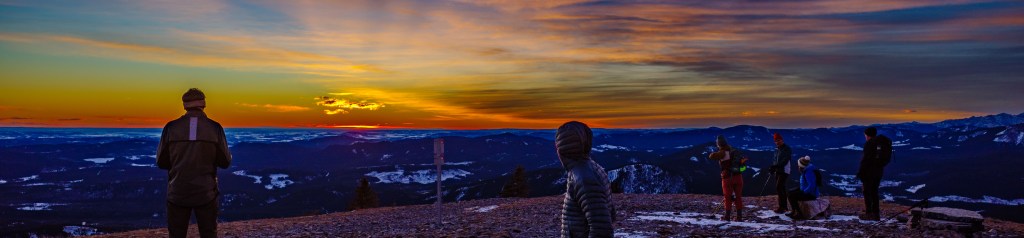
After we returned to Calgary from our December 29 Prairie Mountain sunrise hike, I started to wonder about the small anomaly that led us to pick that day. Specifically, the fact that the day with the latest sunrise does not align with the winter solstice in the northern hemisphere. Before I get into the science, here’s another photo from that memorable morning.
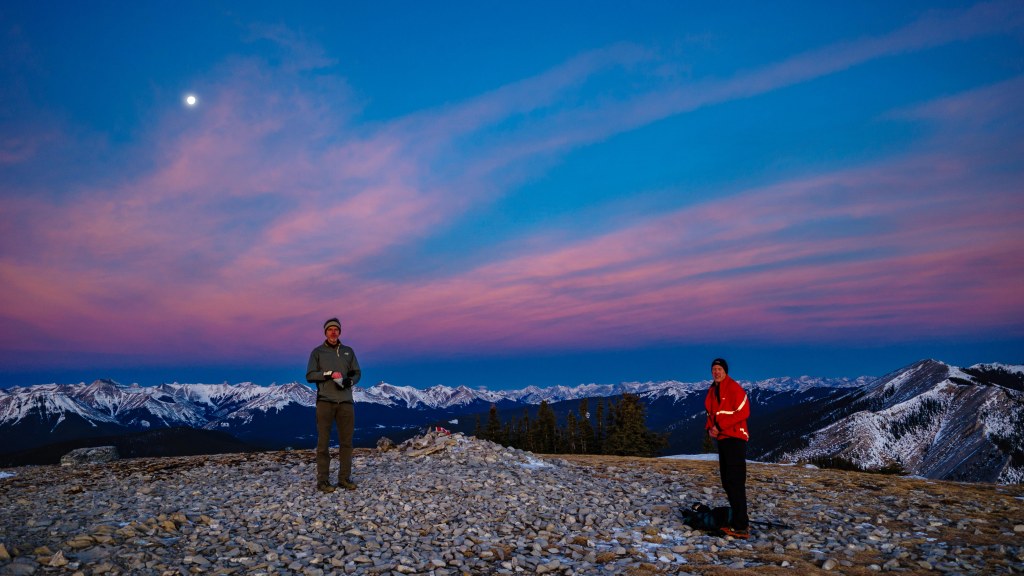
Looking northwest from the summit (December 29, 2023)

I did some research and learned the interesting astronomical reasons for this phenomenon. I first looked up the sunrise/sunset tables for southern Alberta. The solstice occurred at8:27 p.m. on December 21, but the latest sunrise occurred more than a week later. Not only that, the date of our earliest sunset was well before the solstice—way back on December 12, to be exact. 

What’s going on here? After all, these differences are not small. 

While it’s true that the solstice is the shortest day based on sunlight hours, it isn’t the shortest solar day, which is defined as the measured time for the sun to pass over a given meridian line from one day to the next. In fact, solar days are the longest in December. It’s important to note that solar days are not the same as clock days, which are the familiar 24-hour periods that we measure with our timepieces.

A recent article in Scientific American explains that there are two reasons for this counterintuitive result. With all credit to the excellent minutephysics video by Henry Reich (“Why December Has the Longest Days”) referenced in the article, I’ve reproduced the two reasons in the following chart.
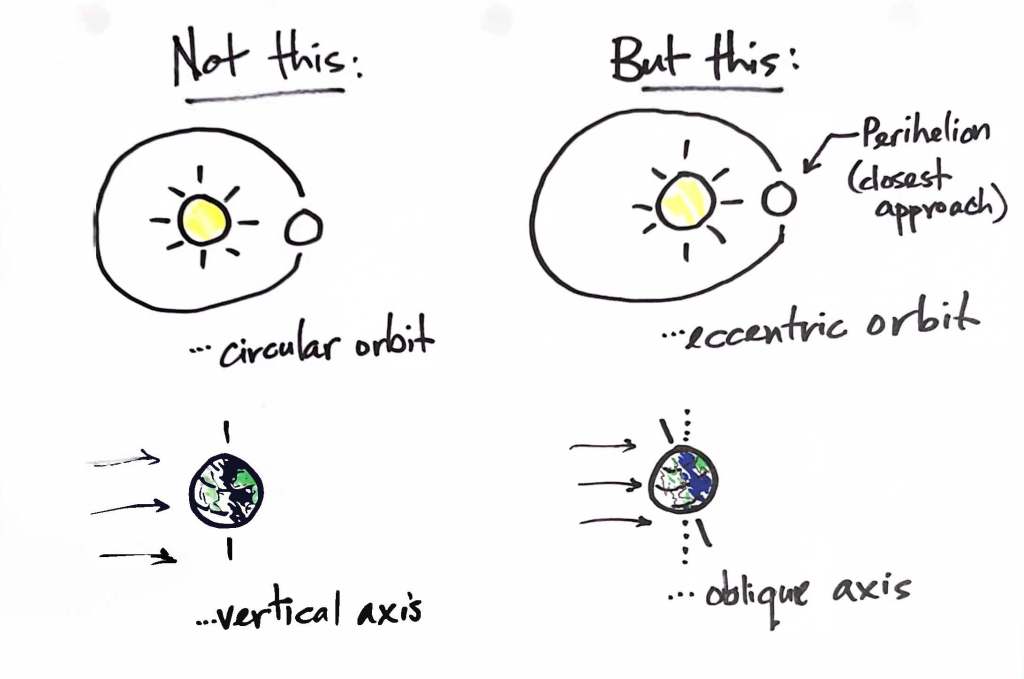
First, the shape of the Earth’s orbit is not a circle but an oval, an ellipse. The difference between the earth’s nearest and farthest points from the sun is small, about 3 percent of its average orbital distance of 150 million kilometres. This matters because as the earth reaches its closest point (called the perihelion), it moves faster through space. This faster movement lengthens the solar day—again, that’s the time needed for a given line of longitude to come around the next day to align with the sun. This effect adds about eight seconds to the solar day.

Besides the eccentricity of the earth’s orbit, the tilt of its axis also contributes to the disparity between solar day and clock day. This effect, called the obliquity effect, lengthens the solar days by about 20 seconds around the solstices and shortens them by about 20 seconds around the equinoxes.

The impact of these two factors on the solar day is well known. There is even an equation of time to relate solar time to clock time. Mathematically, the effect is represented by two sine wave functions. The frequency of the eccentricity curve matches the earth’s annual rotation, and the tilt curve goes through two cycles each year. The figure below was generated on PlanetCalc. It shows how adding the curves results in solar days that are shortest in February and longest in December. There is also a smaller peak in the spring and a dip in the summer.
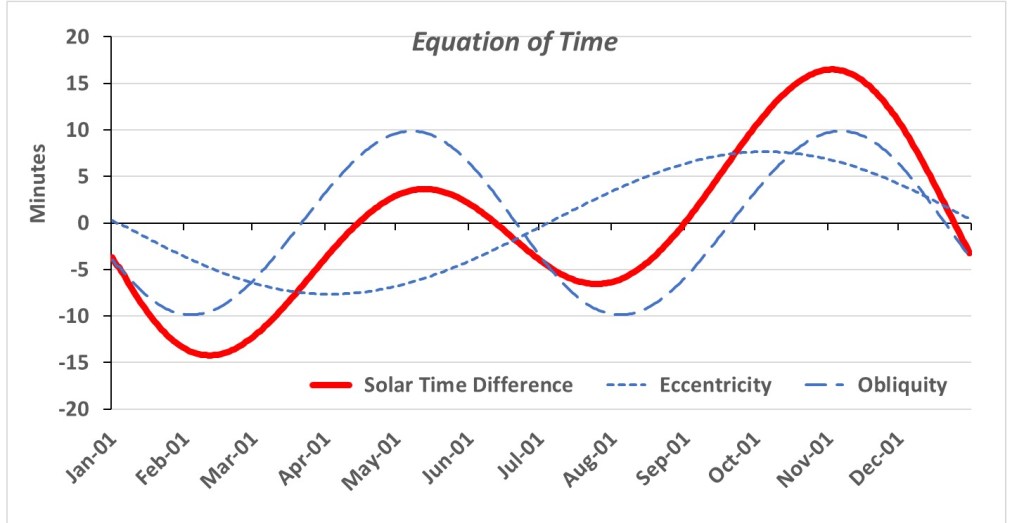
Source: PlanetCalc Equation of Time calculator for 2024

Because perihelion occurs close to the winter solstice (on January 2), the two day-lengthening effects are additive, totalling about 30 seconds a day at the peak in November. These “extra” seconds are pushed forward to subsequent days, making solar noon (the precise time that the sun reaches its highest point in the sky each day) later and later at that time of the year. And because sunrises and sunsets are symmetrical around solar noon, we get the observed result: the earliest sunset gets shifted backward (before the solstice), and the latest sunrise gets pushed forward (after the solstice).

As a final point, if you were to do an experiment in which you marked the tip of the shadow cast by a sundial each day at precisely noon, it would trace out a unique, elongated figure eight shape over the course of a year. That shape is called an analemma, and it is a graph of the equation of time. Changes along the vertical axis of the curve are due to the tilt of the earth (cycling between -23.5 degrees to +23.5 degrees), and changes along the horizontal axis are due to the eccentricity of the earth’s orbit.

The figure at left is the analemma plotted at noon GMT from the Royal Observatory at Greenwich, England (Source: JPL Horizons Lab). I like this figure because it includes calendar notations, which make it easy to compare with the equation of time graph shown above.

Whew! I expected the answer to this question to be simple, but it’s taken me a few tries and a lot of soak time to understand. Somehow it seems appropriate, having just started a new year (and passed the perihelion), to recognize that the universe is full of mystery.

Until next time,

Prairie Mountain Sunrise, Part 1

My friend Tim can always be counted on to organize good outings. A coffee, a lunch, a hike. He organized our excellent excursion to Pocaterra Ridge in September to see the larches.

One of Tim’s good ideas in the last few years is a sunrise hike to the summit of Prairie Mountain in Kananaskis. He’s been considerate enough to arrange the hike on the day with the latest sunrise. This year, that day was December 29. Before the hike, I didn’t independently verify Tim’s assertion on this point. More on that in Part 2 of this post. But I did enjoy the extra two minutes of sleep that I was told would be available by delaying our hike from the winter solstice by eight days. 

Dan and I joined the convoy that left Calgary at 6:20 to reach the trailhead by 7:10. A testament to the popularity of Tim’s idea is that our group was ten this year, up from five last year. Mind you, last year’s -20C temperature may have been a contributing factor. (I passed on that one.)

The hike was great. It was my first time on the new and improved Prairie Mountain trail. It’s now 8.4 km with 711 metres of elevation gain. The modifications evened out the trail’s steepest segments, added some Lawrence Grassi-like stone steps in a couple of places, and widened the trail. Even in the dark, lit by a headlamp, I liked the changes. I’m not a PM veteran or a mountain goat. I have done the hike maybe six times, in various weather conditions. And I’ve been in a couple of slippery situations on the old trail that left me wondering if we’d taken a wrong turn. It just never seemed safe to me. Now it does. 

We may have been a bit late getting started. The southeastern sky was already lit with beautiful shades of pink at the first viewpoint. We hustled onward, knowing that if we could get onto the summit ridge we would see the sun break the horizon. Our time for the ascent was about 75 minutes. 

We didn’t have long to wait once we reached the 2,210-metre summit. The light display was stunning. Sunbeams streamed around a lone cloud that was parked just above the horizon. 

First rays (December 29, 2023)

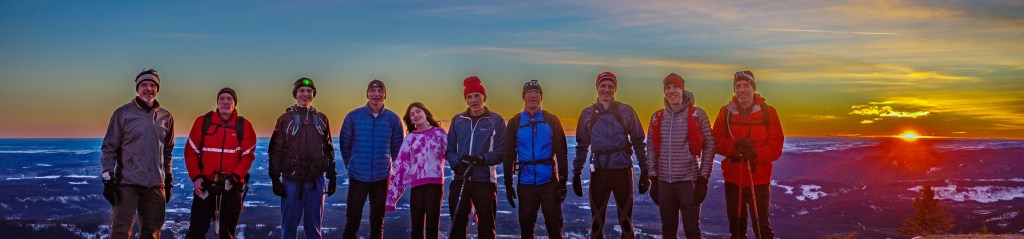
I had my Ricoh GR III with me. (Yes, I know, I say this often, but I really love this camera!) We snapped a few group shots as the sun made its appearance.

The group, on the summit

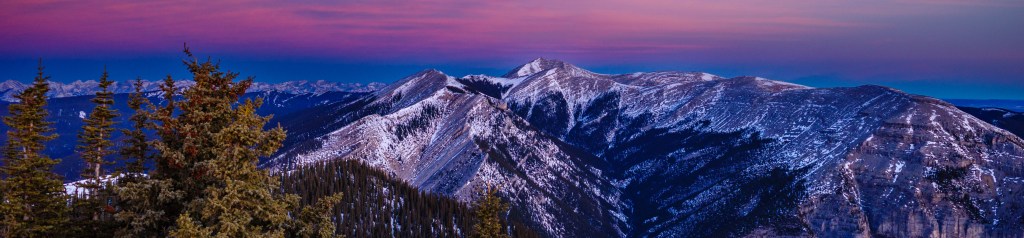
To the northwest, Moose Mountain was glowing, with snowy highlights and a rosy sky above. 

Moose Mountain looking splendid

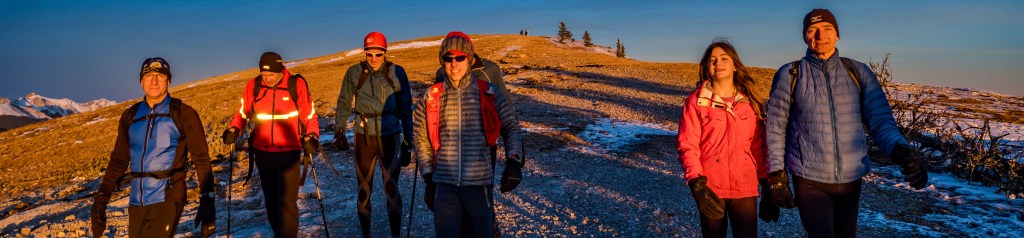
We enjoyed the vistas and took more photos. As I reached for a snack, I realized that my fingers were freezing. It was deceptively cool, but thankfully the summit winds were moderate. That isn’t always the case on Prairie. We started down, trading our headlamps for sunglasses.

On the descent

An enjoyable coffee and treat at the Bragg Creek Cafe & Baking Co. rounded out the morning. 

Happy New Year to all!

December Run Streak, Non-festive Edition

The month is almost over, and that means the end of the Strides Run Streak. Looking forward from our December 1 start, the task seemed daunting. But here we are, already closing in on January. The persistent pattern of warm weather and the relative absence of snow in the city this year have certainly made our task much more bearable. Even so, I don’t mind saying that I’m looking forward to a day off on January 1.

Now that Christmas is in the rear-view mirror, I felt I should do a follow-up post to my last piece. That one was my attempt at a (slightly) festive piece, in keeping with the season.

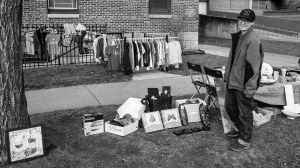
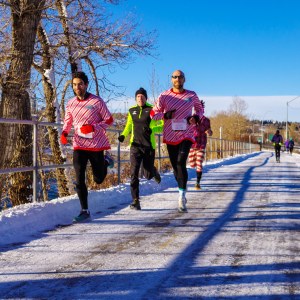
This time, I feel I can loosen up the constraints. The photos in this post were all taken while out for one of my December runs. They were all taken with the incomparable Ricoh GR III. However, the subjects are less “Santa” and more “street”. These are subjects that fall closer to what I might normally look for when I’m out and about with my camera.

So, with no explanatory text, I present… my December Run/Photography Streak, non-festive edition:

Let me know what you think. I haven’t seen much in the comments section lately.

Until next time, Happy New Year!

In closing, I’ll mention that my book, Stroke of Luck: My Life in Amateur Athletics, will be available on Amazon for a special resolution sale price, starting in January. Thanks to everyone who has already picked up a copy. It’s been great hearing your thoughts on the book.

Streaking through December

The pressure has been building for three weeks already. It’s nothing serious, mind you.

For the last few years, the arrival of December has meant the start of the Strides Run Streak, hosted by our wonderful neighbourhood running store. The parameters of the challenge are simple: run at least a mile a day for the full month. It’s wildly popular with the locals, including Deb and I.

I do have some history with this challenge. In 2012, I started running on December 1 and turned a one-month goal into a multi-year streak. That particular streak, which didn’t end well, isn’t the point of this post. You can read all about that adventure in my book, Stroke of Luck: My Life in Amateur Athletics. (By the way, if you hurry, you can still get your copy in time for Christmas, either at Owl’s Nest Books or directly from me. Thanks to all of you who picked up a copy. Much appreciated!)

This year’s streak has brought the usual mix of weather and physical challenges. Pathways have been notoriously icy. I’ve been dealing with a nagging calf issue lately, which fortunately seems to be on the mend. It’s looking promising that I will get through the month.

As has become my custom, I’ve added to the challenge with a photographic element. I look for a memorable photo during each run. That can be a tougher goal than the run itself, but equally rewarding. I’ve been giving my trusty Ricoh GR III a good workout. That camera is amazing!

I like the idea that I don’t know what I’ll see when I leave the house. I have a built-in incentive to explore other neighbourhoods (or even my own) with the idea of finding fresh photographic subjects (and good running).

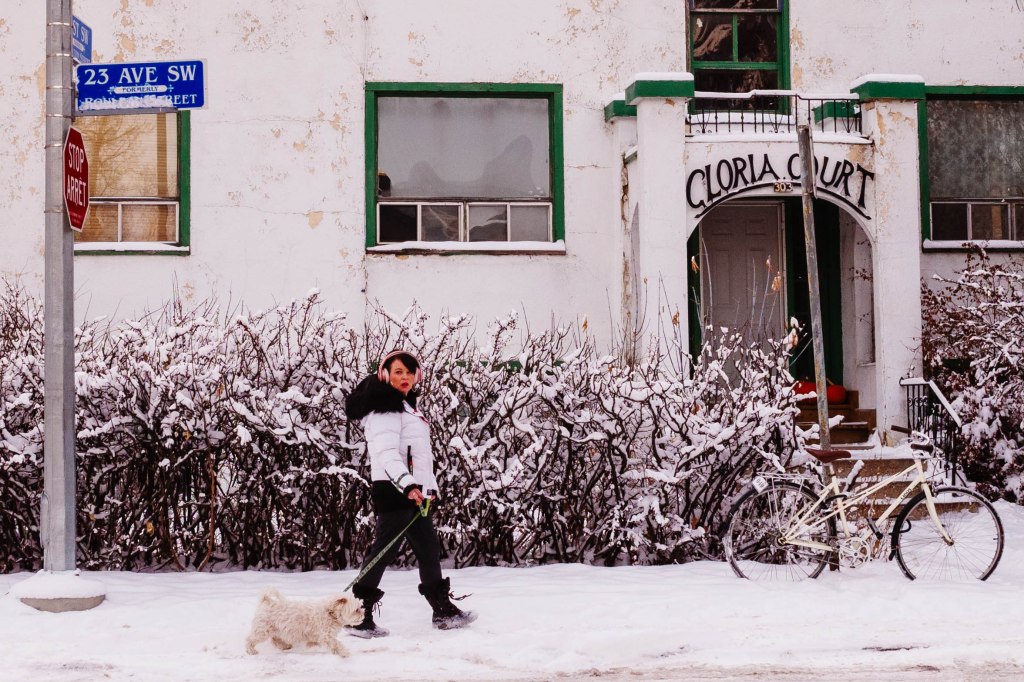
Gloria Court, Mission (December 2023)

If I’m totally honest… and I think my readers would want me to be… I feel that the results this year have been something less than stellar. Or maybe it’s just that my subjects haven’t been leaping out at me. I think my muse may already be on holiday. But as always, I find if I keep my eyes open and trust my instincts, I will be rewarded with some surprises.

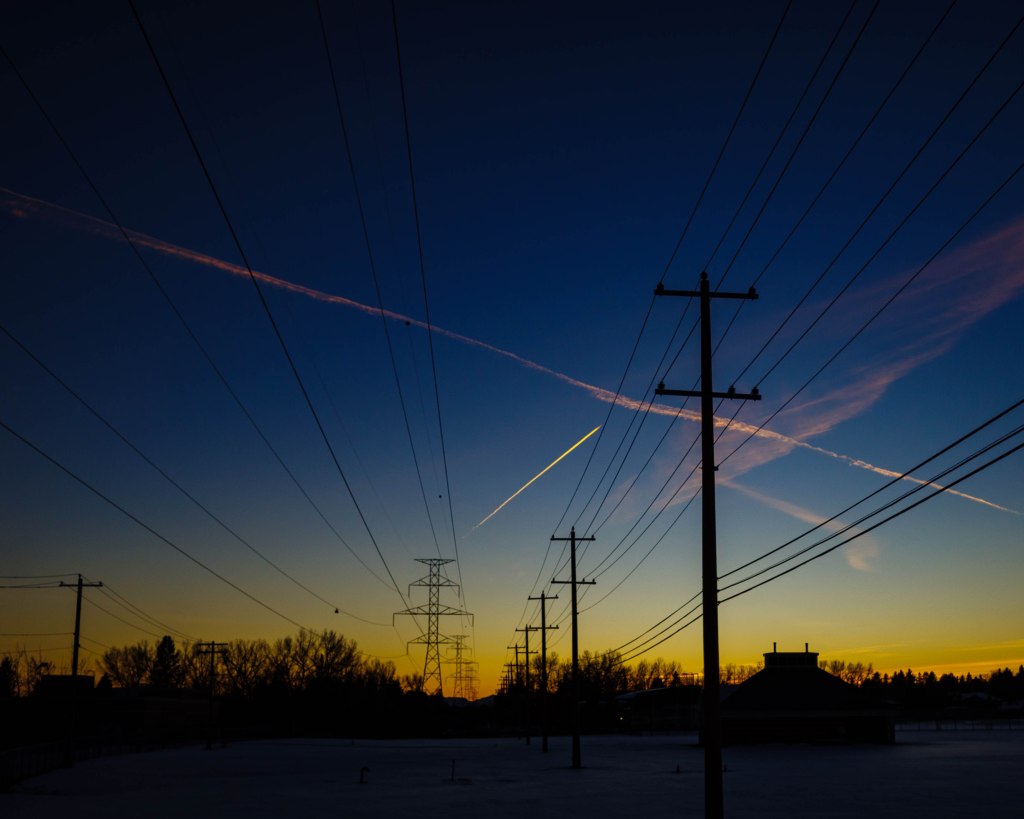
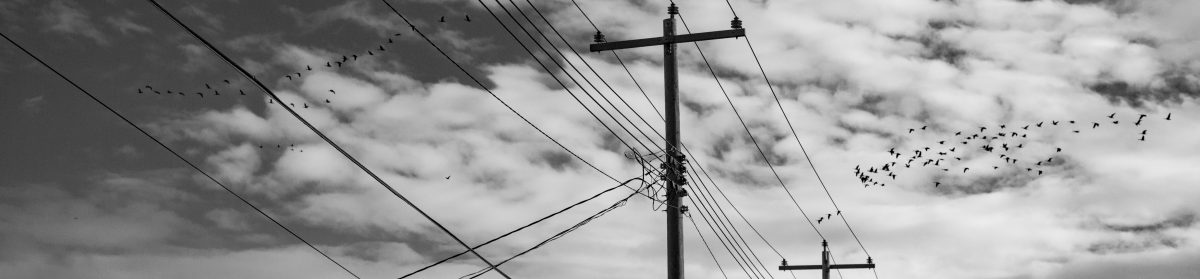
Lines in the sky, Glenmore Athletic Park (December 2023)

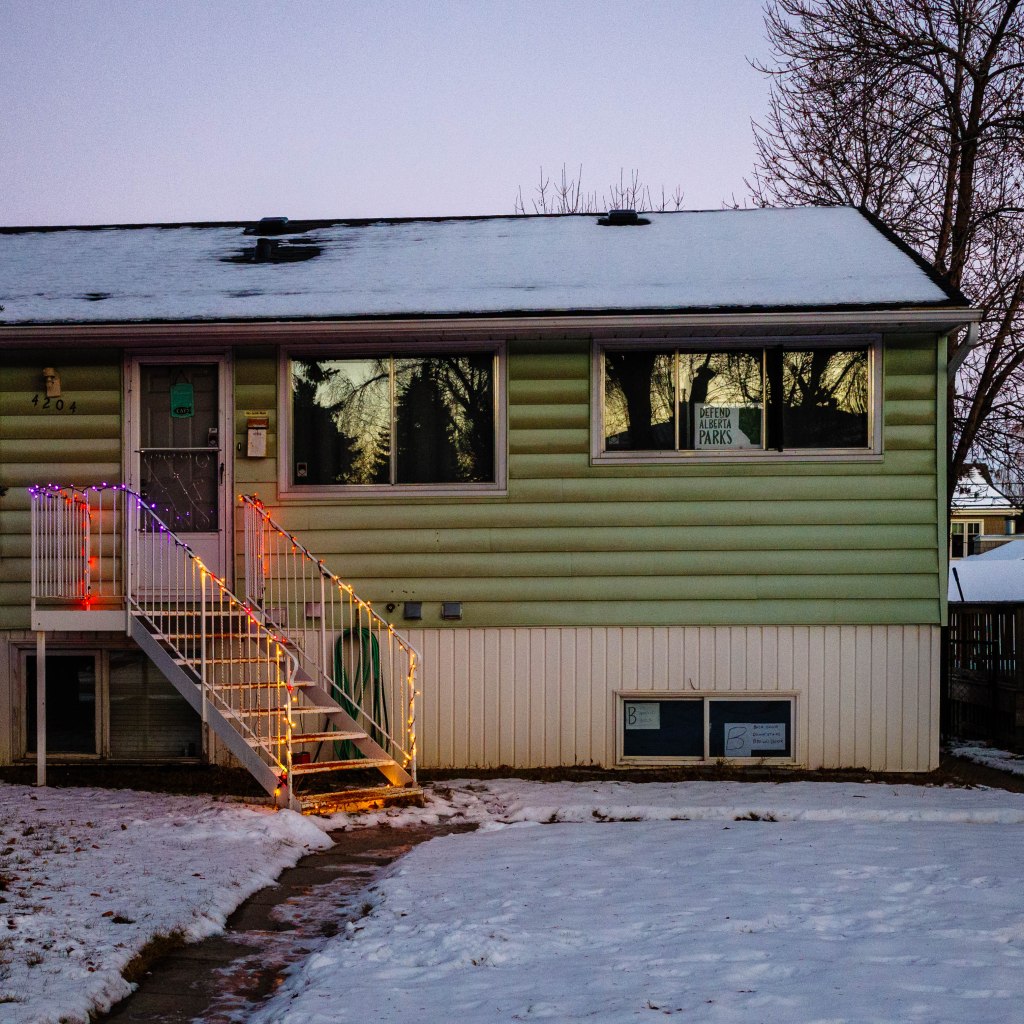
I try not to fall into the trap of snapping easy targets, like excessively decorated houses. Yes, that is a small, self-imposed constraint that makes my daily task a little tougher. That said, I find that even if some light displays don’t compare with Clark W. Griswold’s, they are still worth photographing.

Merry Merry, Altadore (December 2023)

My 2023 SRS photos may not be totally traditional, at least as defined by seasonal expectations, but when I look at them as a whole they seem to evoke a rather pleasant feeling. Is it hopefulness? Calm? Wonder?

I’ll let you decide for yourselves. I’m keen to hear from you, so do leave a comment.

Looking slightly festive, Beltline (December 2023)

Signing off for now, I’ll say Merry Christmas. Until next time, I wish you happy running, shooting, or whatever your particular passion is.

Be well and enjoy what’s around you. Peace!