Catching Up

It’s been a couple of weeks since I posted anything, so this will be a quick effort to catch up. I’ve been wrestling with some more pithy pieces. Those aren’t really coming together, and I needed an excuse to park them for a while.

The first thing I wanted to mention is that my Dedication Sale is still on.

For the rest of September, you can pick up a copy of Stroke of Luck on Amazon, at a 20% discount, in either print or e-book format.

Don’t miss out!
A Major Milestone

Deb and I marked a special occasion in early September: our 40th wedding anniversary. Although the day seemed to come up quickly… it’s been that kind of year… we did enjoy a quiet dinner together.

Apparently, the 40th anniversary gift is ruby. I can assure you that no rubies were exchanged. Maybe we will plan a vacation for early 2025 to mark the occasion.

It was fun to pull out our wedding album and confirm how little (?) we’ve changed over the years. No comments, please!

Street Scenes

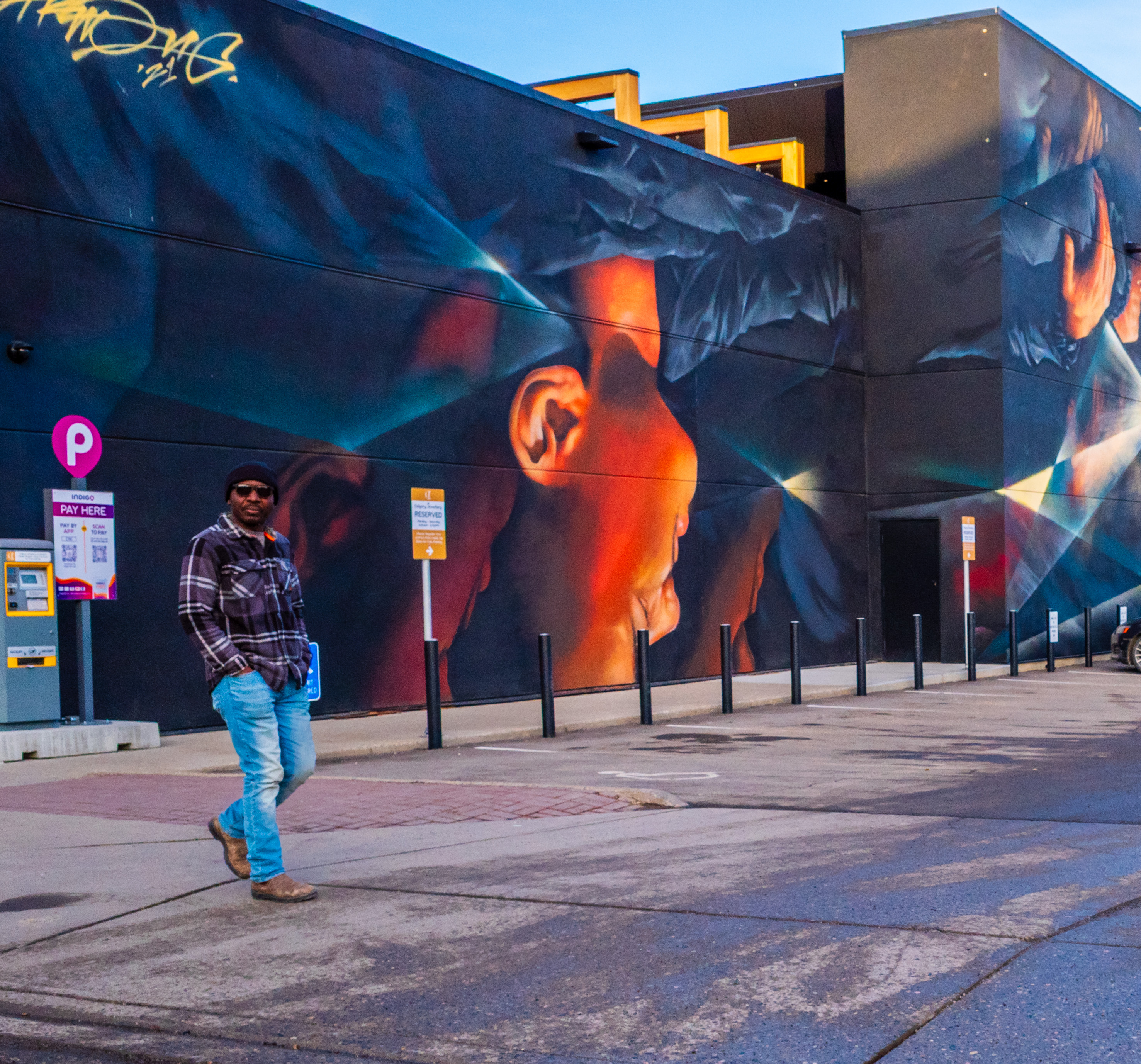
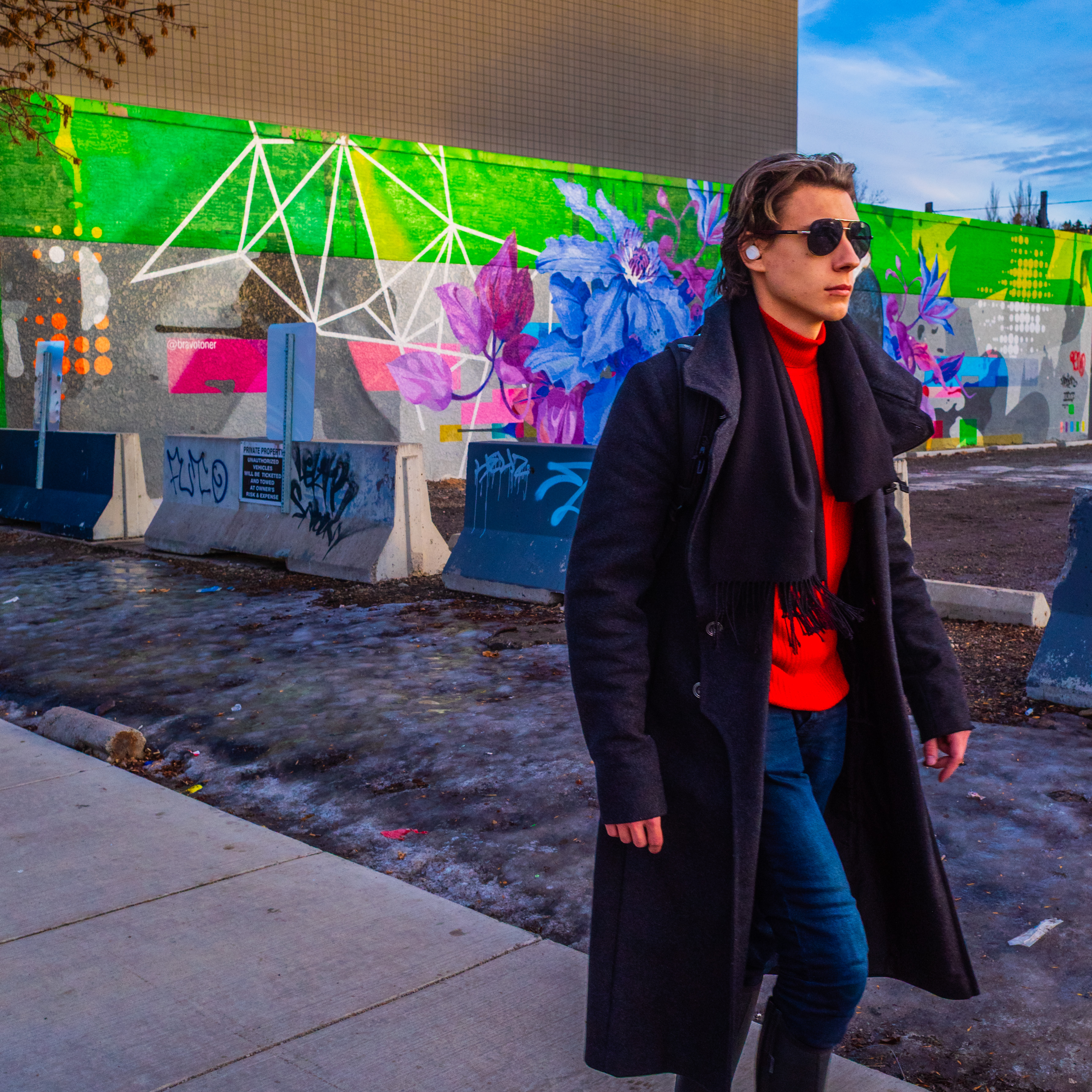
Last week, I was reminded why it’s a good idea to always carry a camera. (I still don’t count the one in my phone.) I happened to be in the East Village during what would usually be the commuting hour. Good thing that I don’t have to bother with that anymore. It was a beautiful morning. The light was so amazing that I had to stop the car. I was at the corner of Centre Street at 11th Avenue SW.

I hadn’t seen a specific image, but I felt there might be some good shots for the taking. I didn’t have far to go. Overnight rain had conveniently left some puddles on the sidewalk. Looking east down 11th Avenue, the buildings were perfectly framed, with the sunrise reflected in the building across the street. I crouched down and snapped a couple of shots. Here’s the result.

East Village, morning commute (13 September, Ricoh GR III)

Two days later, I was driving north on Crowchild Trail with no real plans. Every time I pass the Eamon’s Bungalow Camp sign at the Tuscany LRT station, I think about stopping to have a look. As that isn’t my part of town, it took me a few minutes to actually find the station. The reason I’ve wanted to stop is that I remember the sign from our earliest years in Calgary. We used to take the kids to Butterfield Acres, and we would see the sign on our way up there.

I did some digging on the internet. The Eamon’s Tourist Centre was in operation from 1949 to 1961. It was basically a gas station and restaurant, with some motel-style bungalows. The place had some good years before the TransCanada Highway changed traffic patterns. The business declined and the restaurant was destroyed by fire. Of course, as Calgary expanded north, the whole area was eventually absorbed by urban sprawl. Fortunately, the city preserved the sign and incorporated it (rather nicely I think) into the architecture of the C-Train station.

My shot was taken on a sunny afternoon. The vibe was decidedly mid-century, so my photo had to be monochrome. The clouds added some interest. I even lucked out when a transit patron came into the shot, holding an umbrella.

Tuscany LRT Station, homage to Eamon’s (15 September, Ricoh GR III)

Always Grateful

I’ve missed several of our regular Thursday evening interval sessions at Carburn Park, and for a variety of reasons. I think I’m over the worst of my tight calf/Achilles tendon issue, thanks to Jenna Nichol at Alpine Sports Therapy. Then it was recovery from my tooth implant, and one missed session due to torrential rain.

Finally, this past Thursday, I was ready to give it a try. We had a good turnout, on a perfect late summer evening. I can almost hear the AC/DC soundtrack playing when I look at this photo.

Ready for business, Carburn Park (19 September, Ricoh GR III) Photo by Jason Gurevitch

Our workout called for mile repeats, with an option of some shorter stuff for those targeting shorter races or just returning to form. That last part suited me. I set my sights on 2 sets of 1 mile-800m-400m. I wasn’t sure I would even be able to achieve that.

I’ve gotten used to bringing up the rear among my talented teammates. Still, given that several of them are in the final stages of marathon training, and I am at a very different point, it promised to be a humbling experience.

In fact, it was a great workout. I surprised myself by managing to hang on the back of the bunch, but only just. My mind did its usual thing of wandering while I ran. I wondered, is there a running equivalent for the “lanterne rouge” of the Tour de France?

Given that I was doing a shorter version of the workout, I was back to our starting point with a bit of time before the thoroughbreds made it there. I had a few minutes to check out the lagoon and snap a couple of pictures of the peaceful scene in the fading light. Beautiful!

Carburn Park Lagoon, sunset (19 September, Ricoh GR III)

It was the kind of evening that makes me very grateful, for all the blessings I’ve had. I hope you may also be so fortunate.

Until next time, all the best.

The Van Gogh to Van Gogh Photo Run

My photo run was bookended by two very different pieces of public art in Calgary. The pieces have a couple of things in common. Both are large, impressive sculptural works. And both have Vincent Van Gogh as their subject.

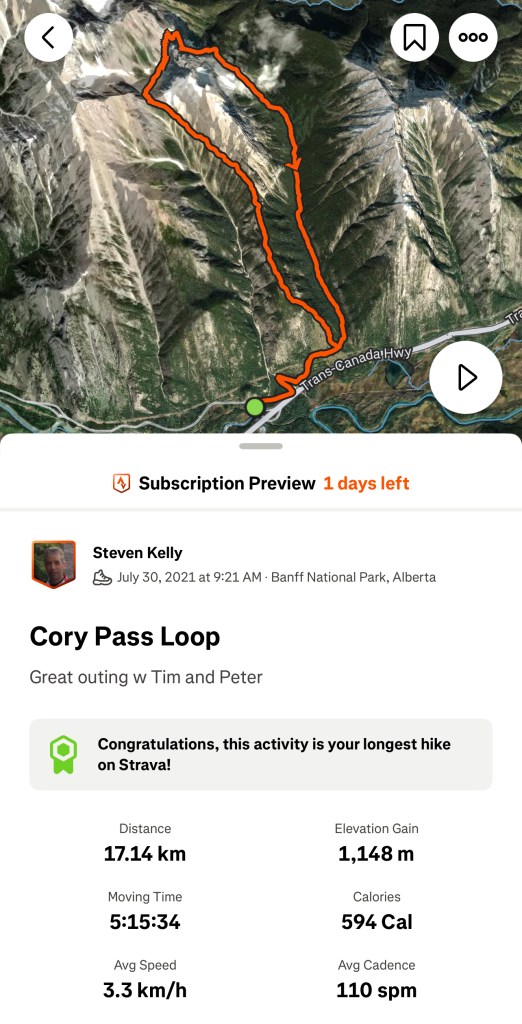
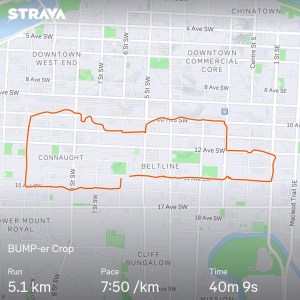
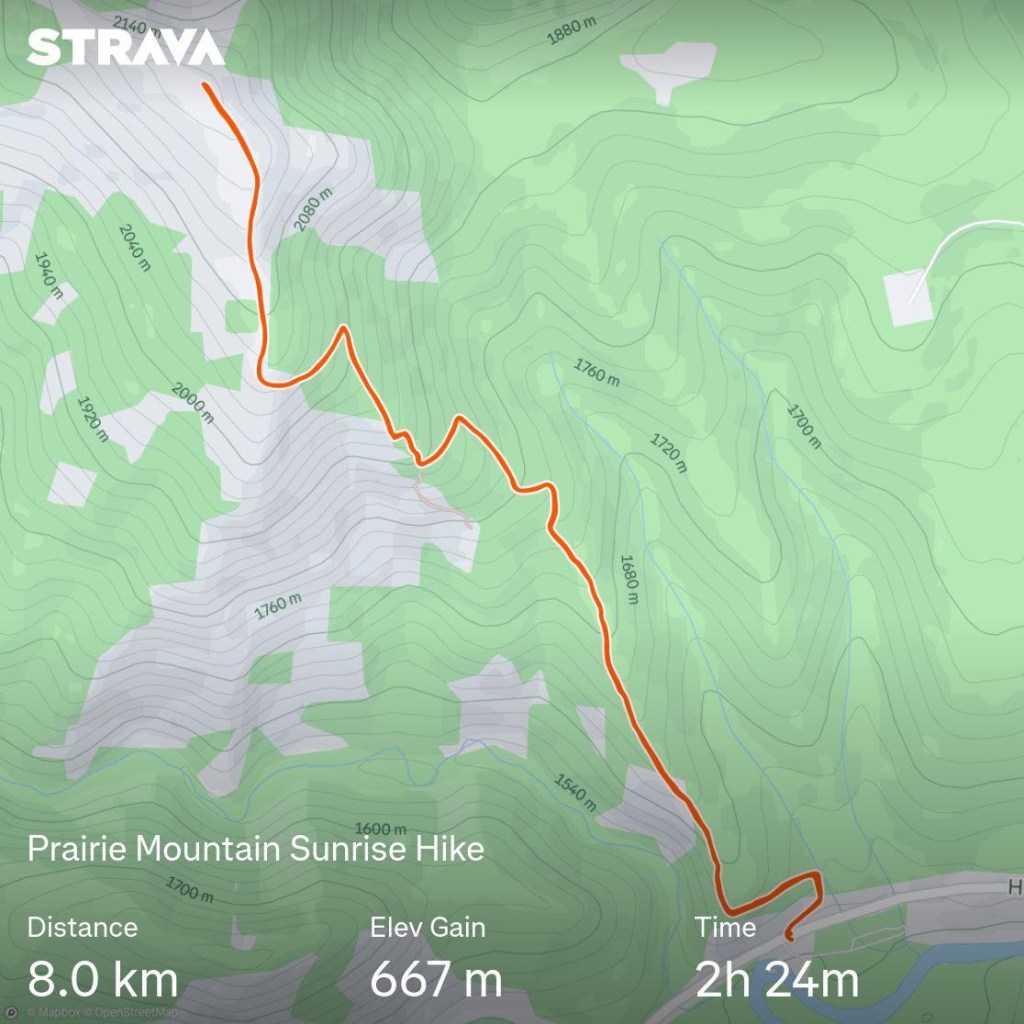
What a coincidence! I decided to do some research after I got home. But first, it was time to explore on foot. Here’s my route from Strava:

The Van Gogh Photo Run

And here’s what I found out about the artworks and the artists.

Van Gogh Observes, by Joe Fafard

I parked on 4th Street SW in Mission, near Masters Gallery, for the start of my easy run. I always like checking out what’s on display in their windows. Whatever else I happen to see, I can stop to admire the large piece installed just outside the gallery.

That piece, Van Gogh Observes (VGO), is a major sculpture by the late Joe Fafard. I wrote about Fafard last fall, when I photographed Do Re Mi Fa Sol La Si Do, his sculpture comprising eight stampeding horses. That piece is installed in Harley Hotchkiss Park in downtown Calgary.

Fafard’s piece is big and colourful. It’s fantastic. Van Gogh silently watches everything going on outside the gallery… hence the title. And from his vantage point, he’s seen a lot since the piece was unveiled in 2019. Van Gogh Observes was one of Fafard’s last major works… he died in March of the same year.

Although it wasn’t taken during my recent run, here’s one of my favourite pictures at that location. This couple seems to be deep in conversation with Vincent.

“Hello Vincent!”

Fafard was famous for his sculptural works, which often have a highly animated look. He sculpted livestock, people and other subjects, in bronze or laser-cut steel. His work is always visually appealing. This is certainly true of VGO. I think Fafard’s use of bold yellow and blue was a nod to Van Gogh’s frequent use of the same colours. It’s a piece that brightens up bleak winter days in Calgary.

Even from the back, it’s an amazing piece to look at.

Van Gogh Observes (Joe Fafard), from the rear

Van Gogh Monumental, by Bruno Catalano

I made my way to the UPTEN building at 10 Avenue and 1 Street SE to see Bruno Catalano’s 2020 painted bronze statue, Van Gogh Monumental. The four-metre-tall statue on the southeast corner of the intersection presents the artist walking purposefully while holding a well-used suitcase and carrying a painting on his back. He walks in the direction of the downtown core.

Van Gogh Monumental (Bruno Catalano)

The statue is part of Catalano’s Les Voyageurs series, all of which depict characters in motion. Many of Catalano’s sculptures, including this one, have a large diagonal gap, really a gash, at mid-torso. The sculptures seem to defy physics… they shouldn’t be standing, but they do. Catalano’s bio tells us he discovered this technique when he had a casting accident with an earlier piece. He liked the result, and he incorporated it into many of his subsequent works. It’s become his trademark.

Catalano’s sculpture invites speculation about its meaning. What is Van Gogh searching for? Where is he headed? Maybe there are clues in Catalano’s own story. He was born in Morocco. His French-Italian family moved to Marseille when he was ten. Catalano has Jewish ancestors, who were expelled from Spain in the 15th century, and eventually settled in North Africa. The theme of travelling, of searching nomadically, seems to fit naturally into his art. 

I find it interesting that Catalano chose Van Gogh for this sculpture, because most of his subjects are anonymous people. Here, he has chosen one of the world’s most famous and troubled artists. We shouldn’t be surprised to see Van Gogh searching for something while carrying his worldly possessions and his art. The gap in the statue is visually startling, but it also reinforces the idea that the subject has lost something quite fundamental.

Conclusion

As I jogged back to my car, I pondered the two art pieces I had just seen. I like both the Fafard and the Catalano pieces, even though they give us very different takes on an artist we all have some familiarity with.

The Fafard piece is approachable. Its animated look and bright colours give us an optimistic Van Gogh. Like the couple pictured above, we feel we could have a conversation with the man in the statue. That might explain why the statue is a huge attraction. I often see pedestrians stopping to admire it (or have a chat.)

On the other hand, the Catalano piece is more aligned with how we usually think of Van Gogh. It is a darker piece. The burdens Van Gogh is carrying and the cut across his body seem to portend his death by suicide. These are effective techniques to tell us something about the subject, but also about the artist. If Catalano relates to Van Gogh’s trials, he has done a great job of telling us.

I am most moved by the Catalano piece. What about you? Whichever piece you prefer, we are fortunate to have these important artworks in the city. It’s even better that they are just an easy jog apart.

The LPGA Comes to Town

Just when I needed a reminder that things are rarely as bad (or as good) as they seem, I took up my duties as a volunteer at the CPKC Women’s Open. The tournament is our national championship for the stars of the Ladies Professional Golf Association (LPGA). For 2024, the Open was being held at Earl Grey Golf Club in Calgary, which happens to be my home course. 

I signed up for the gig months ago. That was before the downturn in my mother’s health, and her passing in early July. I almost forgot about the tournament; it seemed so far off. Then, suddenly, tournament week arrived.

After a quick orientation to the role of course marshal, we were thrown into the deep end, with practice rounds on Monday and Tuesday, and a pro-am on Wednesday. The four tournament rounds would run from Thursday to Sunday.

I’ve watched enough golf to have a good idea of my job description. Even so, seeing marshals on television is quite different from being a few feet away from the top golfers as they tee off or line up their putts. 

Where Golf and Hockey Meet

One feature of this tournament promised to make it special. I was assigned to the “rink hole”, a recent but very popular addition to open championships in Canada. It’s now customary to convert a par 3 hole into a hockey rink, with boards around the tee box and a Zamboni parked beside the fairway.

For me and the other marshals, the transformation into a rink was complete when we received our referee shirts. I secretly hoped we were not going to be called upon to break up any fights in the stands. This was golf, after all. 

Getting ready for action in Round 4 at the Rink Hole (July 28, 2024)

Thanks to Wes Gilbertson of the Calgary Herald for featuring us in a story!

Our challenging par 3 9th hole was designated as the rink hole. For the tournament layout, it would be the 17th hole. That meant there was the potential for drama on our hole in the final round. It certainly delivered!

On to the Action

My first shift on Tuesday was a chance to meet my fellow refs… er, marshals… and practice our routines before the tournament started. I enjoyed the day, and I marveled at the skills of the top-tier golfers. It was amazing to see my course changed into a world-class sports venue. And that was before any fans were on site. I already felt better than I had in weeks.

When I returned for my weekend shifts, the energy was palpable. Now every shot mattered. The golfers had their game faces on. Television cameras broadcast the action live around the world. The crowds grew by the day.

Record crowds turned out for the CPKC Women’s Open final round (July 28, 2024)

Amidst the tension, I noticed a few things. Calgarians were doing what they do best… welcoming visitors to our beautiful city. Tournament volunteers were full of pride for what was shaping up to be an exciting (and record-breaking) event. And Earl Grey GC members were beaming, knowing that the world was discovering our gem of a course on the north shore of the Glenmore Reservoir. 

This being Calgary, the weather had to play a role. From a heatwave just a few days earlier, things had changed totally. Wind, smoke and cool temperatures greeted the players on opening day. Visitors must have wondered how such a change was possible in just 24 hours. We locals have a word for that: summer. 

By the end of the third round on Saturday, we had seen history, as tour rookie Mao Saigo of Japan tore up our course with 9 birdies and an eagle, for a stellar 61. It was the lowest score ever recorded in a Canadian women’s open. 

Sunday brought more drama. Several players vied for the lead in the final nine. As marshals, we focused on our assignments, even as Lexi Thompson, Lydia Ko, Minjee Lee and other top players came through the gate into the rink. Brooke Henderson led a strong contingent of Canadians, including her fellow Paris Olympic golfer (and Hamiltonian), Alena Sharp. What a thrill!

The drama reached a peak as the last few groups finished their final round. Saigo watched in disbelief as she stubbed her chip on 17, leading to a bogey. The third-round leader, Haeran Ryu, found the greenside bunker and also struggled to a 4. 

That left only Lauren Coughlin. The American veteran bravely hit a six-iron to the tough back left pin location, leaving a delicate eight-foot birdie putt. By chance, I was stationed at the back of the green, so I was only a few steps from Coughlin and her caddie as they lined up the shot. I had the best spot in the house to see her roll it in, guaranteeing herself a two-shot win with a 13-under score of 275. It was her first tour victory.

It was an exhilarating weekend, and an experience not likely to be repeated. 

On the rink hole, there was plenty of good-natured cheering and banging on the boards. Fans showed their deep patriotic pride and love for our Canadian stars, especially Henderson. This is Canada, so everyone was polite. Thankfully, we didn’t even need to put anyone in the penalty box! 

I walked back to my car on a perfect Sunday evening, exhausted but satisfied. 

Maybe there is still hope for 2024.

Prairie Mountain – Summer Solstice

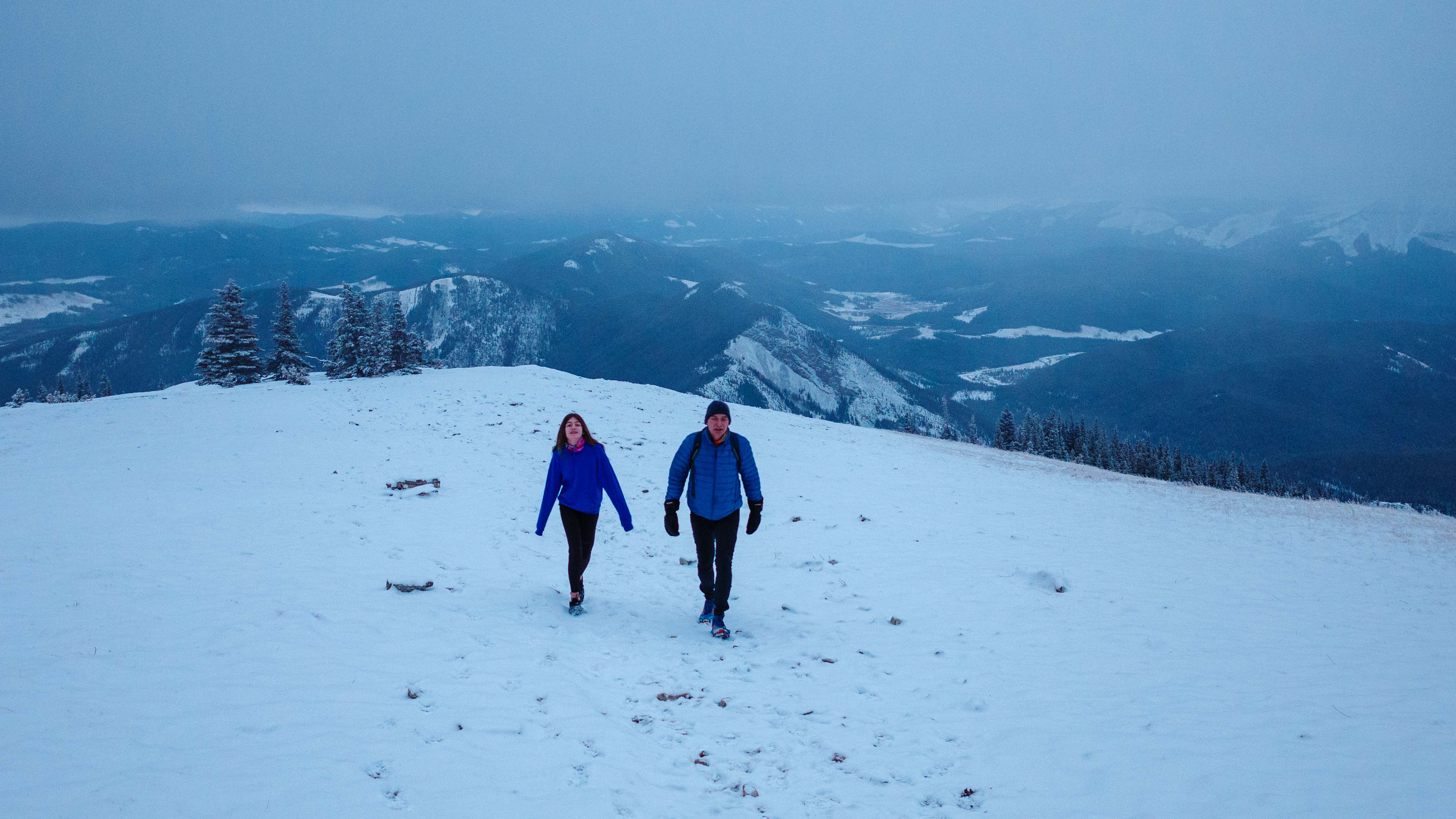
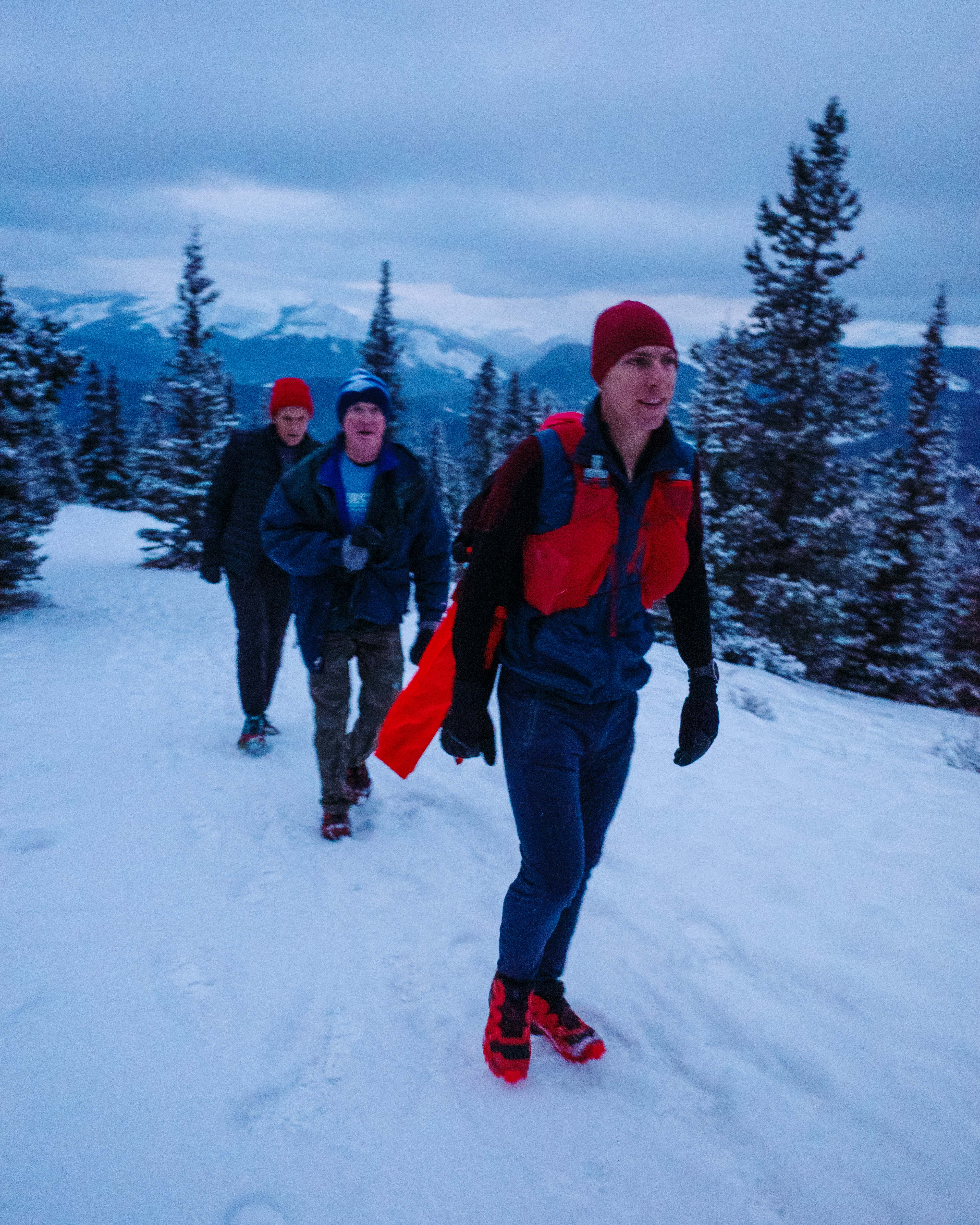
The arrival of summer in the northern hemisphere is welcome, for many reasons. There is a minor downside, if one plans to make a sunrise trek to the peak of Prairie Mountain in Kananaskis: the early start. Of course, my friend Tim hatched the idea, as the perfect complement to our winter solstice hike last December. If you haven’t read my blog pieces for that epic outing, here are links to Part One (the hike) and Part Two (the science).

My first reaction was “I’m in!” Then, when the reality of the required 2:50 a.m. departure from Calgary set in, I found several excuses to bail out. To Tim’s credit, he persevered and he managed to wrangle a couple of friends to join him. He didn’t even mind sharing his photos, so I could pretend to have been there!

The Hike

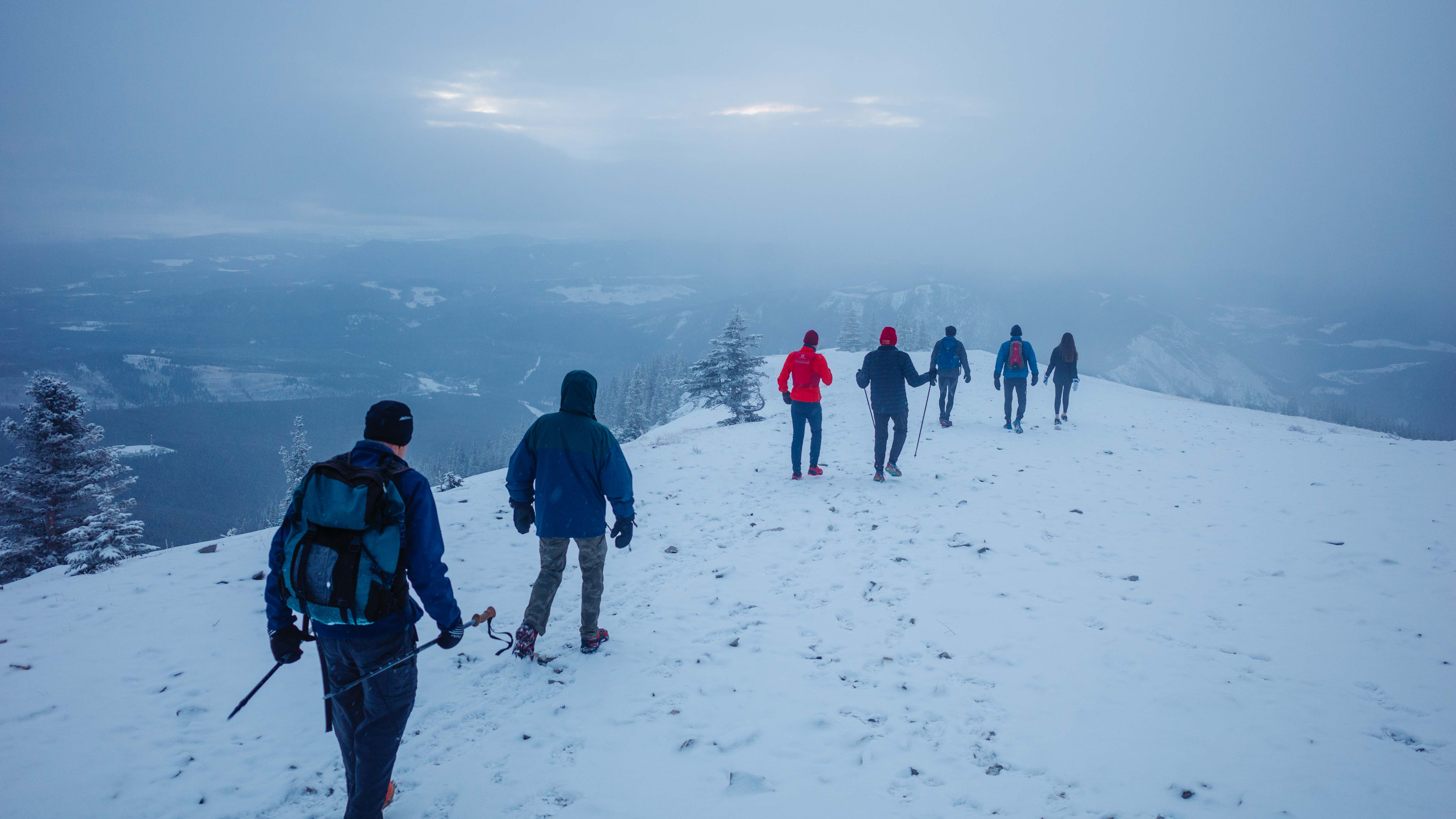
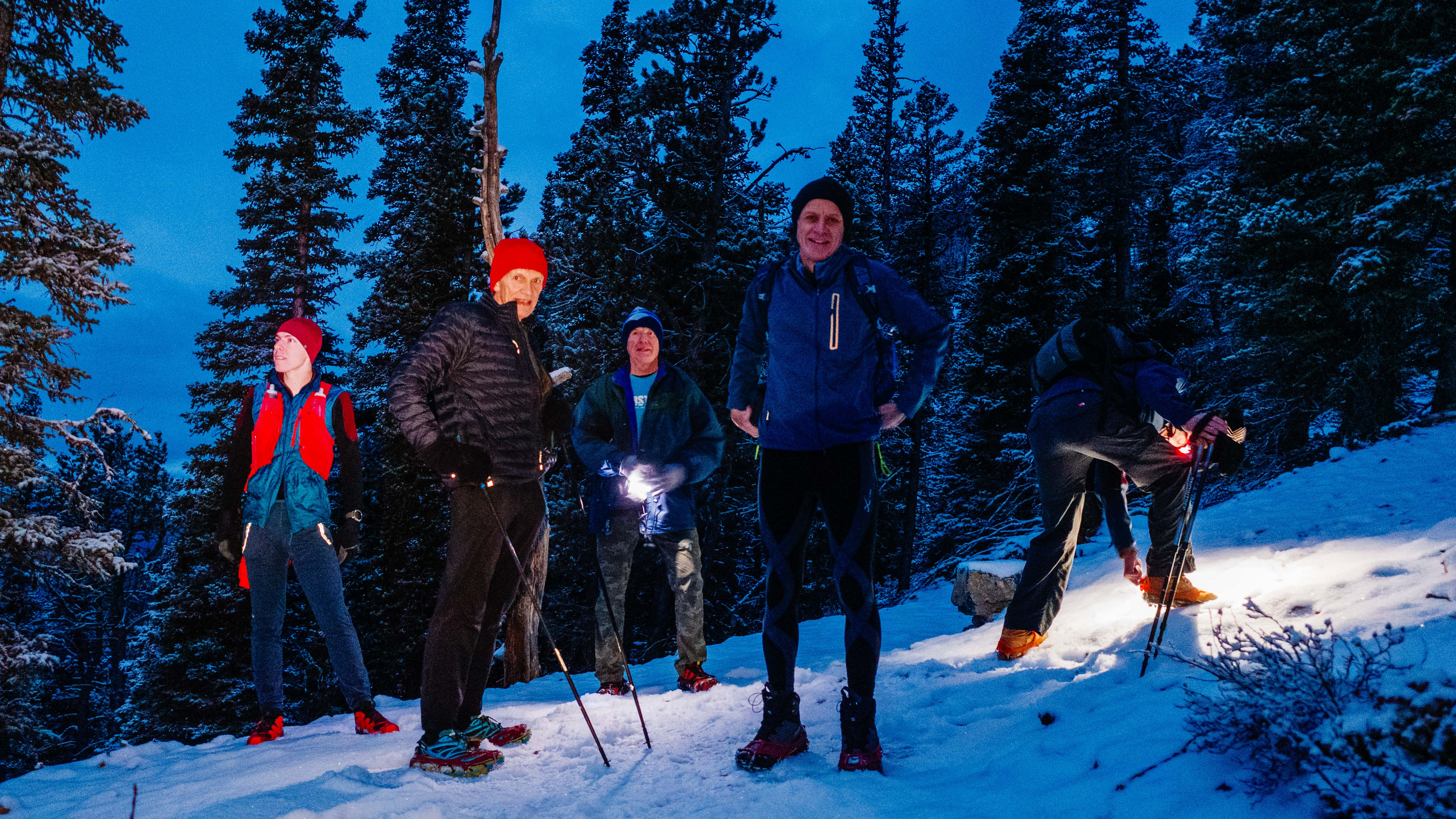
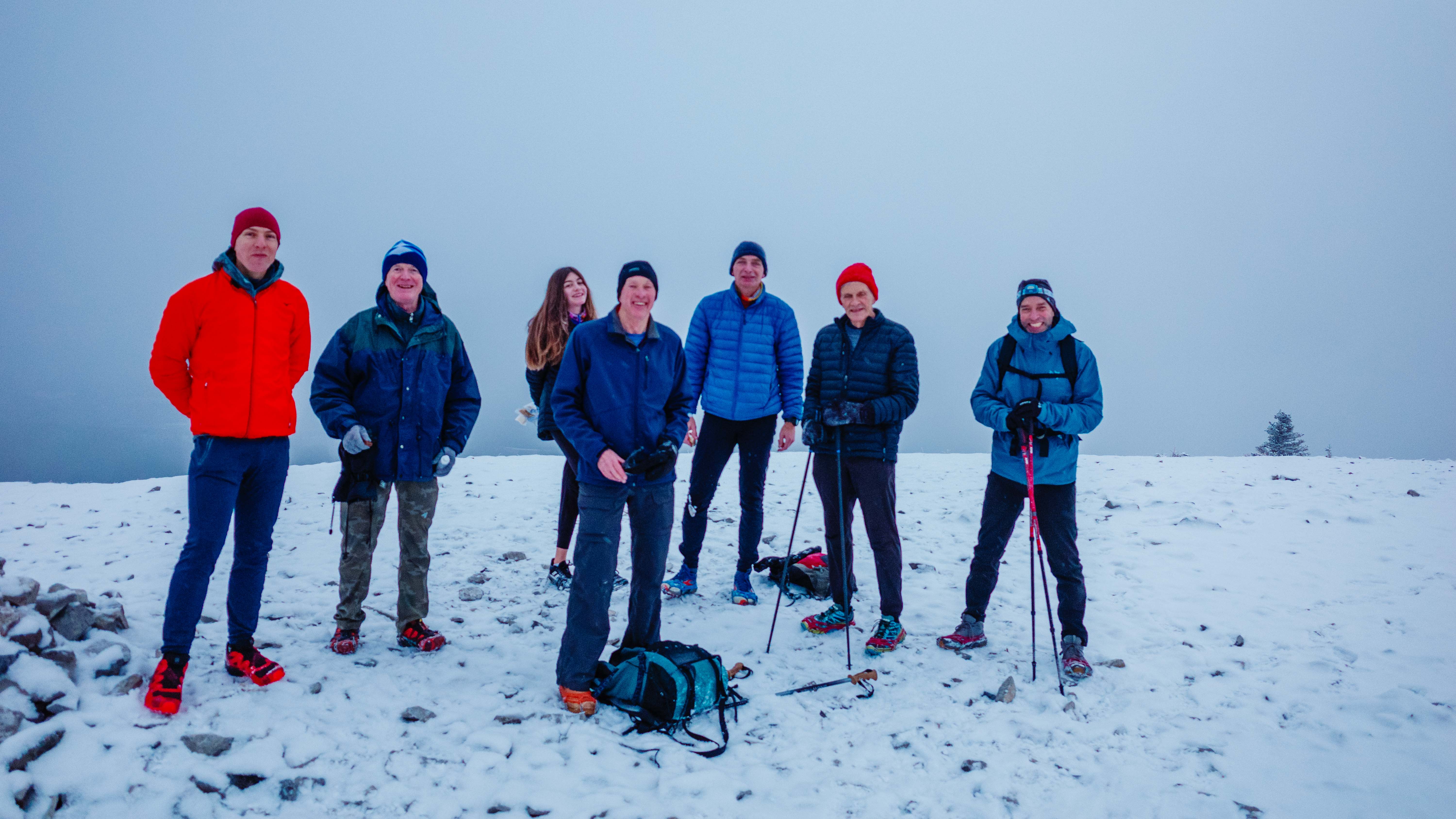
Tim, Jerry and Peter departed the Prairie Mountain trailhead at 3:50 a.m. and reached the summit in time for the 5:21 a.m. sunrise. Tim commented that it was amazing to see the full moon go down in the west while the sun was coming up in the east. He mentioned that while he knew the sun would break the horizon much further north than it did on the winter solstice, it was even more of a difference than he expected. More on that later.

Here are a few photos from their hike:

Prairie Mountain Sunrise / June 20, 2024 (Photo: Tim A)
Tim, Peter and Jerry at the summit / June 20, 2024 (Photo: Tim A)
Western vista, from the Summit / June 20, 2024 (Photo: Tim A)

The Science (abbreviated)

For the winter solstice, you may recall I did some research on the unexpected timing of the solstice, and why the day with the latest sunrise wasn’t the same as what we think of as the shortest day of the year. If you are interested in orbital eccentricity, angles of obliquity, and other astronomical wonders, you can read about them here.

Since it’s summer, and I’m feeling a bit lazy, I did a shortened version of the research. You’ll be happy to know that I confirmed the same factors affect the timing of the summer solstice. Here’s what I found:

  • the summer solstice occurred at 2:50 p.m. on June 20
  • the day with the earliest sunrise was June 16 (5:20 a.m.)
  • the longest solar day was June 20 (16 hours, 33 minutes, 17 seconds)

Tim’s comment about the sun’s compass direction at sunrise on June 20 compared to the direction on December 29 got me thinking. I marked up a trail map for the area of Prairie Mountain. The arrows show the sun’s compass direction at sunrise and sunset, on the summer (blue) and winter (red) solstices, respectively. What’s interesting is just how much the sun’s coverage changes between the two solstices.

Sunrise/sunset compass directions at the solstices, Prairie Mountain

The apparent travel of the sun (because it’s the earth that’s moving around the sun, after all) is from 128 degrees at sunrise to 233 degrees at sunset on the winter solstice. That’s a span of 105 degrees. In contrast, the sun traverses a range from 49 to 311 degrees at the summer solstice… a span of 262 degrees.

Isn’t that fascinating? I think so too.

Colour or Monochrome?

While flipping through some recent pictures, I realized I was “seeing” them in either black & white or colour. This was before I had started doing any editing. My mind seemed to be jumping to conclusions about the end result. 

Maybe this was inevitable, as I must have “seen” some version of the final image before I pushed the shutter button. Was my initial visualization strong enough to override any subsequent artistic choices?

I try not to limit myself to one expression or another, and I take plenty of photos in each style. My preference is for black & white images. Many of the photographers who have made an impression on me worked mainly in monochrome. Adams. Cartier-Bresson. Schaller.

That would be a good idea for a future piece… the photographers or the images that have been most impactful for me. But for this piece, I wanted to explore the idea of initial visualization and see if that process might be acting as a barrier to my artistic ideas.  I picked several recent images, more or less at random, for the following, non-scientific analysis.

Sedona Landscape

The first image was a landscape, highlighted by the setting sun and building clouds over the peaks in Sedona, Arizona. There’s no doubt I imagined this image in bold monochrome. I shot it using my favourite JPG setting in the Ricoh GR III: hard monochrome. The in-camera JPG looked promising, on the tiny 3″ viewfinder screen. I couldn’t wait to see the image in Lightroom.

I hadn’t even considered the option of a colour version of this image, but maybe I had been too hasty. I reimported the image and forced myself to ignore the monochrome button. This is a comparison of the two versions:

Evening clouds, Sedona (March 2024)

To my surprise, I found the colours in the foreground… the famous red rocks of Sedona… to be a distraction. This wasn’t the result I expected. The dramatic clouds, which I was able to set against the sky with a red filter effect, were hardly noticeable. Instead, they were competing for attention. I had to go with my first instinct. This photograph is better in monochrome. 

Cold, Icy Calgary

My second image was totally different from the picturesque scene in Sedona. We had returned to a late blast of winter in Calgary. It must have been some blast, based on the icicles that were hanging from every rooftop. A photo opportunity!

As with the landscape, I saw this roof and its crop of icicles in black & white. Texture and lines, contrasty clouds (where’s that red filter?) The thick icicles were a cool feature… no pun intended.  

My monochrome image needed only a few edits: an increase in contrast and darkening of the sky. I also bumped up the exposure a little, to ensure the picture wasn’t a complete wash of drab grey. And I added a bit of texture to the peeling paint. This was just about exactly what I visualized when I took the shot.

A good crop of icicles (March 2024)

But had I been too hasty? I had to find out. So I re-imported the RAW image and edited the colour version. I hadn’t even noticed the blue paint on the trim. And I missed the discolouration in the icicles from whatever had been oozing out of the eavestroughs. Time for some repairs.

What do you think?

Personally, I don’t like it at all. My mind’s eye was right to see this image in tones of grey. The colours are irrelevant to the story that this picture is telling. I wanted to put the viewer into a scene that was edgy, cold and stark. Instead, the pale blue trim on the house tempers the scene, while the brownish stuff coming out of the eaves is a distraction.

Springtime in Hamilton

My final image is from a recent visit to Hamilton. Walking around my old neighbourhood in April was a riot for the senses. Spring was in full bloom. I snapped a picture at the corner of (obviously) Maple Avenue and Province Street. I initially saw this as a colour picture, with a sunlit magnolia tree as the highlight.

Maple and Province, Springtime (April 2024)

Even though I like the colour image, I decided to try a monochrome version. This one is more of a toss-up. I like both versions. Why? The colour version puts the viewer right in the scene. Spring has clearly sprung. On the other hand, the monochrome version shows us every detail but leaves us to imagine what colour everything is in the scene.

Of course, these are just my thoughts. Let me ask you: monochrome or colour? Leave me a reply in the comments.

Thanks, Steve

Arizona Dreaming – Part 2

Sedona, Red Rock Country

Straight from our successful morning at the XTerra Black Canyon trail run, our convoy headed north to beautiful Sedona for a week at the Seven Canyons resort. Our theme for the week was “Elevate Performance”, and our hosts, Bill and Janice, were exceptionally generous, opening their home and directing all manner of activities. 

We explored the extensive trail system around Sedona, which brought us awesome views of the stunning “red rocks” for which the city is famous. Sedona was much busier than what we remembered from our last visit, so we made sure to get an early start for our trail runs. 

Did you know that the unique red colour of Sedona’s geological formations comes from iron oxide? The rocks are primarily sandstone and limestone. Because these are relatively soft rocks, they are susceptible to physical and chemical erosion. Wind and water (think flash flooding) have played a significant role in shaping the landscape over millions of years. And the result is spectacular… it’s unlike any other place I’ve been.

Our first group run was on the Little Horse-Bell Rock trail. We could have legitimately said we were still recovering from the race a couple of days earlier. That may have been partly true for Deb, but I was definitely okay with an easy start as I was still feeling the effects of my fall (and knowing that we had a busy week ahead of us.) This trail was perfect, even for those in our group who were a bit more ambitious. We did an out-and-back route that brought us all to the trailhead at the same time, so it all worked out. And what views!

“Elevate Performance” – Adrenaline Rush hits the trails at Little Horse

A highlight of the week was a trail run starting from the Dry Creek trailhead. We went out on the Long Canyon trail and returned via the Mescal-Yucca loop. We knew this route from prior runs, and we stopped along the way to enjoy the breathtaking… in both senses of the word… views.

Taking a break on Mescal

We added a second trail race to our calendar, given that the Sedona Stumble was conveniently scheduled for Saturday March 23, at the Posse Grounds Park in town. The 5k and 10k distances were full of challenges, including sections on a narrow single-track circuit and a mountain bike slalom course. Wow!

The race was very well organized by Run Sedona. Adrenaline Rush runners tackled both distances. Once around this technical loop was enough for Deb and me. We enjoyed the post-race snacks and festivities, especially the delicious donuts provided by Sedonuts. It was no surprise that Adrenaline Rush runners again made an impact on the podium. Congrats to Allison (1st in F50-59) and Al (1st in M60-69) in the 10k, to Doreen (1st in F60-69), Janice (2nd in F60-69) and Carolyn (1st in F50-59) in the 5k, and to the rest of our group on your strong results!

In addition to trail running, there was a lot of golf action on the beautiful Seven Canyons course throughout the week. Deb and I enjoyed a few casual games, although the glaring truth, for me at least, is that my game needs serious attention. A summer project, perhaps?

It was all smiles after the (cool and breezy) Adrenaline Rush golf game

Of course, I carried my Ricoh GR III with me on our runs and was rewarded with some good shots. From our vantage point on Rachel’s Knoll, I also got some amazing landscapes. The weather was cool and breezy, which meant some very interesting evening cloud formations. And the sunsets were outstanding.

Evening clouds roll in, Sedona

All told it was a magical week in paradise.

Thanks for reading,

Elbow River Photo Walk

Ever had a day when you lacked the drive for running? When a little voice was telling you you’d be better off just doing a walk?

Today was one of those days for me.

It was a week I’d been dreading. I’ve been stressing for weeks about a problem tooth… a molar that had become something of a mystery. I’d been bounced back and forth between two specialists, but eventually, it became clear that the end was looming for tooth number 3-6.

I went through the week with a feeling of dread. But now it’s over and the tooth is gone. We can turn our attention to the next stage of the process, inserting an implant and crown. While I wouldn’t say I’m looking forward to that part, I am curious about how it all works and how the tooth will look in the end. Maybe I’m naive.

So, this morning, even though I was feeling much better, I decided that the tooth episode was a convenient excuse to pass on our usual Sunday long run. It was a pleasant morning, a little cool and breezy, but better than the weather being forecast for the week ahead. The prospect of some good shots along the Elbow River was enough motivation for me to grab the Leica M10 and head out for a photo run… sorry, walk.

I walked along the bluff in Ramsay. The views of downtown are spectacular from Scotsman’s Hill. The light looked promising when I left the house… cloudy but clearing. By the time I got going, the sun had just about burned off the cloud cover. Maybe I was too late. Regardless, it was a brilliant morning and I was feeling fine.

I made my way down towards Fort Calgary, knowing that the old train bridge in Inglewood is often worth a look. This morning, a train was conveniently passing through, heading east, just as I arrived. I snapped a few pictures, drawn by the curving line of identical cars in the sunlight.

Later, in Lightroom Classic, I tried one of the many presets that come with the software. Usually, I avoid these, preferring instead to make all my own editing decisions. But why not try something new? Given the oranges and browns in the scene, an “Autumn” preset seemed appropriate. What do you think?

Inglewood Rail Bridge, Lightroom preset TM07 (February 25, 2024)

I wandered on through Stampede Park. The new BMO Centre has been under construction for a couple of years. The building is an amazing piece of architecture… especially the graceful curved lines on the eastern facade. I’ve gone by there many times, but it’s not been an easy building to photograph, what with all the construction equipment in front.

Today, I saw a nice scene as I walked along the pathway by the Saddledome. Later, in Lightroom, I stuck close to the subject matter and tried an “Architectural” preset. I have to say, I liked the result.

Stampede Events Centre, Lightroom present UA10 (February 25, 2024)

I continued along the river pathway, past the unimaginatively-named Stampede Ground Bridge at the south end of Stampede Park. It’s an attractive bridge, and I’ve shot it many times. While I was tempted to linger there this morning, the sky wasn’t doing me any favours. I moved on.

I finished my walk by climbing the stairs back up to Salisbury Avenue. As I approached the car, I realized that much of my walk had been solitary. I’d hardly seen anyone on the path. At the top of the stairs, I was rewarded with one “street shot”… a lady out on her bottle-picking rounds. Let’s say she was a little suspicious of me. But never mind, it was a nice finish for my outing. For this shot, it had to be a “Portrait” preset.

Scotsman’s Hill, Lightroom preset “Gritty Portrait” (February 25, 2024)

Overall, it was a productive morning. I didn’t miss running, not even a little. But I’ll be back at it next Sunday, I promise!

Quite a Week!

Owl’s Nest Book Launch – Calgary

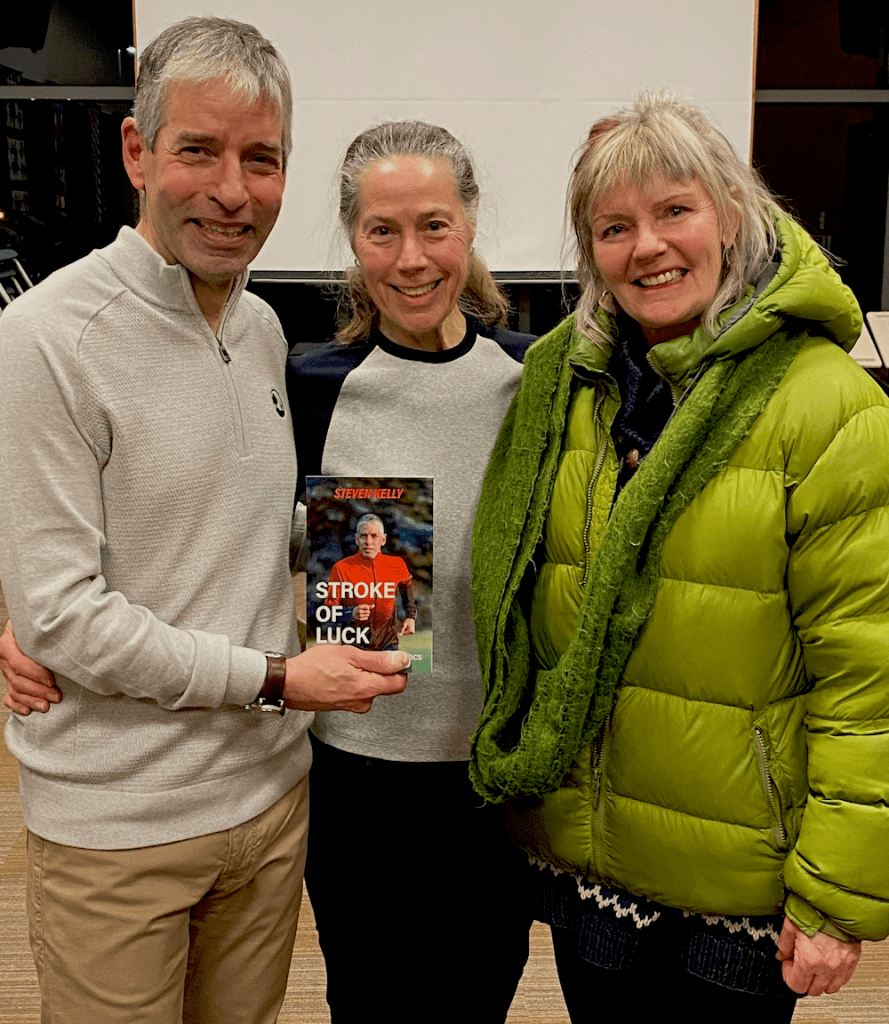
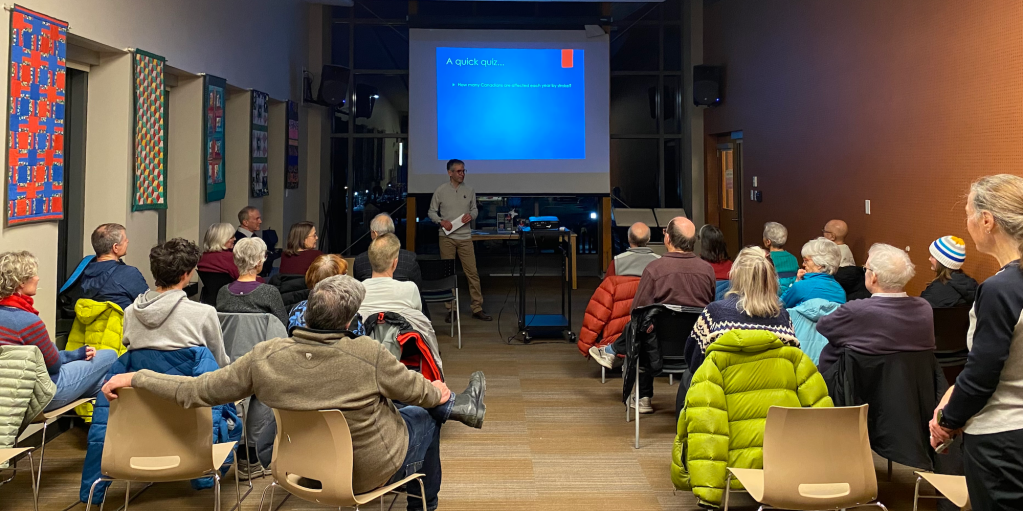
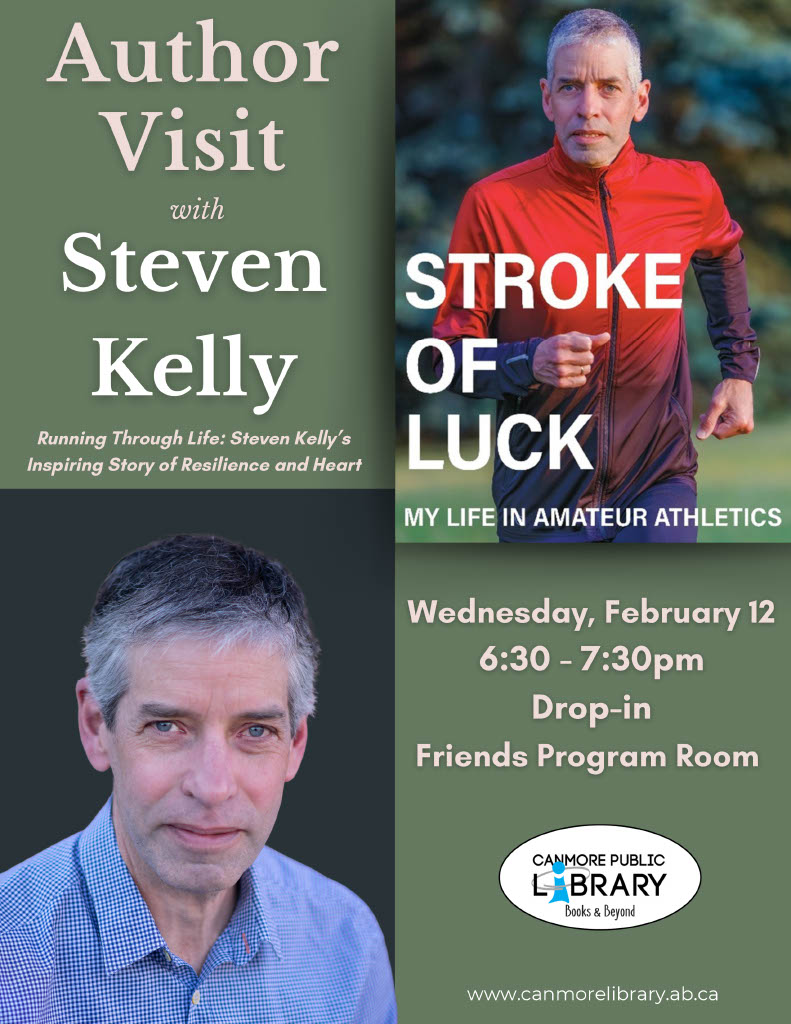
On Wednesday, February 7 we held a book launch event at our favourite local indie book store, Owl’s Nest Books. Sarah Pratt, the Events Director at the store (and an avid ultramarathoner) was our marvelous host for the evening.

We were thrilled to welcome a standing-room crowd of friends, neighbours, teammates and work colleagues. I was honoured that my neurologist (Dr. Demchuk) and my long-time teammate at Adrenaline Rush Athletics (Dr. Stephen Wood)… both heroes of my stroke story… joined us for the evening.

I did a short reading from Stroke of Luck: My Life in Amateur Athletics. During the lively Q&A portion of the program, I shared my main messages:

  • the importance of an active lifestyle
  • knowing ALL the signs of stroke
  • raising awareness (and funds) for the world-class stroke care provided by the doctors, nurses and staff in the Foothills Stroke Unit
Owl’s Nest book launch (February 7, 2024)

Sincere thanks to Sarah at Owl’s Nest Books and Jeremy Deere from Strides Running Store, for your support of the reading and running communities in Calgary.

It was a special evening!

First Half Marathon – Vancouver

We didn’t get much time to recover, as we headed off to Vancouver on Friday for a weekend visit with Matthew. The headline purpose of the trip was to participate in the annual First Half Marathon, put on by RunVan and sponsored by BlueShore Financial.

As usual, the race was outstanding. It sold out immediately, as it does every year. This is definitely one of the premier races in Canada; well-organized and perfectly executed. It doesn’t hurt that the scenery is second to none. The highlight is the lap of the Stanley Park seawall.

I wrote about my history with the race in a previous post. This year, our race was challenging. The weather did not cooperate, although the steady rain was little more than an inconvenience. Deb and I were both hobbled by nagging injuries, which affected our preparation. While it is often true that one can run through these things on race day, neither of us was so lucky this time.

The second half of the race was a slog. The good news is that we got through it. The finish line on Drake St. in Yaletown is always a welcome sight. And who cares if we were a few minutes slower than last year?

It was all smiles at kilometre 6 (February 11, 2024) – Photo by Matt Kelly

…and a bit of street photography

I always look forward to walking the streets of Vancouver, armed with my discrete camera, the Ricoh GR III. It is the perfect camera for street photography.

Here are a few samples of the photos from the weekend.

Ready to ride
Suki’s
Too busy to ride

Photo Run – Big Game Edition

Our long runs along the Bow River often take us past the Centre Street Bridge. It’s an imposing and historic structure, and in good morning light photo ops are plentiful. As we ran under the bridge last Sunday, I made a note to take a closer look at the lions that guard the four corners of the upper deck.

Fortunately, we ended up back at the bridge towards the end of our run. I welcomed an excuse to stop at that point. Deb was keen to do another kilometre. “Good for you”, I told her, “but I’ll be here checking out the big cats.”

The morning light was strong and contrasty. From the pedestrian ramp, I got a couple of nice shots of the southwest lion. The statue looked great (regal, actually) with a monochrome edit in Lightroom.

Centre Street Bridge, Southwest corner (January 28, 2024)

I decided I would return in a couple of days for a photo run and a closer tour of the lions. In the meantime, I did some research into the history of the statues.

The original lions were commissioned in 1916, along with the bridge. They were modelled after bronze lions that guard Nelson’s Column in Trafalgar Square in London. The Calgary copies were cast in concrete by one James Thomson, a city employee. They each weigh 12,600 kilograms.

By the 1990s, the statues were in a state of significant deterioration, due to decades of Calgary weather cycles and vibration from bridge traffic. In 2000, city council directed the repair and conservation of the southwest lion. It also directed that the same lion be used as a template for the construction of four new statues. The restored lion now sits on display at Calgary’s municipal government building. The original northeast cat was repaired and conserved. It was relocated to its current location in Rotary Park in 2018.

With that background, here’s more on my photo run.

I went late in the afternoon, hoping for an interesting chinook sunset. We’ve had a lot of those lately. Would I get lucky? Yes and no.

I started my run in Rotary Park, so I could see the repaired northeast lion up close. It’s the only statue to have been returned to the bridge, and it commands a perfect spot at the south end of the park, overlooking downtown.

I navigated the ice and mud around the statue. I snapped a few shots, but none of the compositions I tried were very satisfying. I might have had better results with a wider focal length lens instead of the 28mm Ricoh GR III. No problem… this was supposed to be a run, so I moved on.

I jogged along the crest of the bluff for a few minutes and enjoyed the vista, then headed down towards the bridge. When I looked back up the hill, the lion was bathed in the low, setting sun. I knew I had only a few minutes before the light changed, so I scrambled back up the muddy pathway to a spot just below the lion. I snapped one shot. The light was amazing, and I think the result was good. It was by far my best shot of the day.

Rotary Park lion, enjoying the chinook sunset (January 30, 2024)

I continued down to the bridge and did a short loop around Chinatown. I was rewarded with a few worthy shots before I made my way back up the bridge on the west side. It had been a while since I ran up this hill… yes, it’s still tough!

Prosperity Bar (January 30, 2024)

As for any more shots of the lions on the bridge, the fading light was quite flat and uninteresting by that time. There was a bit of chinook magic going on though… so I worked with what I had!

Centre Street Bridge, looking northwest (January 30, 2024)

There was also the challenge of getting a good perspective on the statues and the other details on the bridge (like the medallions that recognize the distinct influences in Calgary’s past… see the example below) while being confined to the sidewalks that pass underneath the statues. I suppose a drone would have been a nice accessory for this shoot, but that’s not my thing.

Here’s one of the small details on the bridge: medallions on the side of the “kiosks” that serve as the base for the Centre Street Bridge lions.

There are roses for England, shamrocks for Ireland, thistles for Scotland, and maple leaves for Canada. And bison heads to represent the west.

In the end, I managed to get a few shots of the “big game”. But maybe the best result was the realization that I left many good ones on the bridge for another day.

Prairie Mountain Sunrise, Part 2

The Science

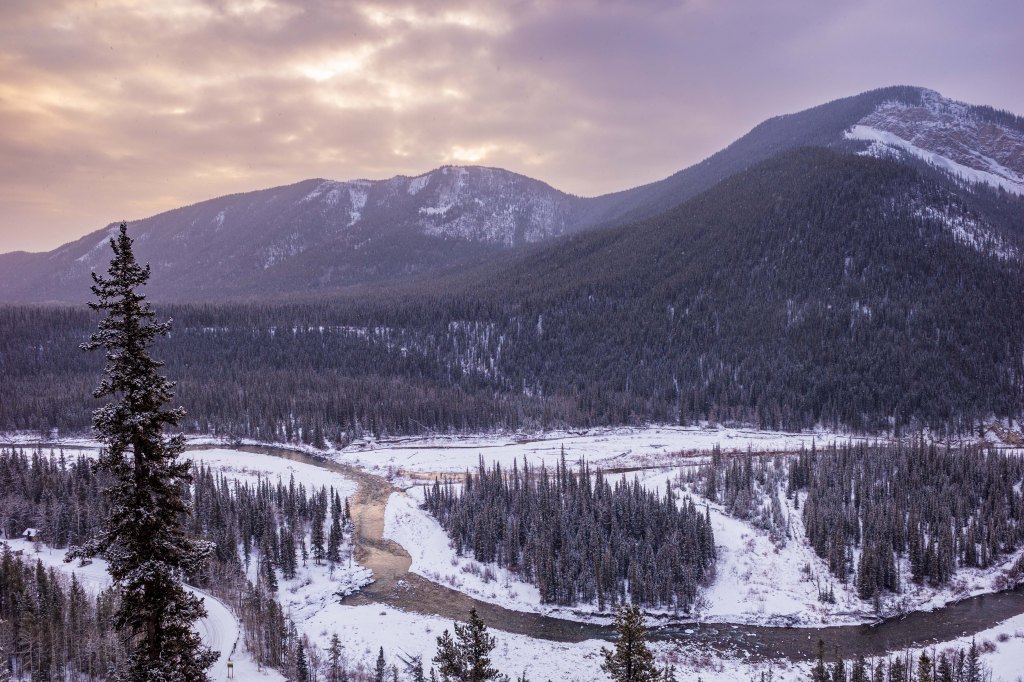
After we returned to Calgary from our December 29 Prairie Mountain sunrise hike, I started to wonder about the small anomaly that led us to pick that day. Specifically, the fact that the day with the latest sunrise does not align with the winter solstice in the northern hemisphere. Before I get into the science, here’s another photo from that great morning.

Looking northwest from the summit (December 29, 2023)

I did some research and learned the interesting astronomical reasons for this phenomenon. I first looked up the sunrise/sunset tables for southern Alberta. The solstice occurred at 8:27pm on December 21, but the latest sunrise occurred more than a week later. Not only that, the date of our earliest sunset was well before the solstice… way back on December 12, to be exact. 

What’s going on here? After all, these differences are not small. 

While we think of the solstice as the shortest day based on sunlight hours, it isn’t the shortest “solar day”, defined as the measured time from noon on one day to noon on the next. In fact, solar days are the longest in December.

A recent article in Scientific American explains that there are two reasons for this counterintuitive result. With all credit to the excellent minutephysics video by Henry Reich (“Why December Has the Longest Days”) referenced in the article, I’ve reproduced the two reasons in the following chart.

First, the shape of the Earth’s orbit is not a circle but an oval, an ellipse. The difference between the earth’s nearest and farthest points from the sun is small, about 3% of its average orbital distance of 150 million kilometres. This matters because as the earth reaches its closest point (perihelion), it moves faster through space. The faster movement lengthens the time needed for a given line of longitude to come around the next day to align with the sun. This effect adds about eight seconds to the solar day.

Besides the eccentricity of the earth’s orbit, the tilt of the earth’s axis also contributes to the disparity between solar day and clock day. This effect, called the obliquity effect, lengthens the days by about 20 seconds around the solstices, and shortens them by about 20 seconds around the equinoxes.

The impact of these two factors on the solar day is well known. There is even an “equation of time” to relate solar time to clock time. Mathematically, the effect is represented by two sine functions. The frequency of the eccentricity curve matches the earth’s annual rotation, and the tilt curve goes through two cycles each year. The figure below was generated on PlanetCalc. It shows how adding the curves results in solar days that are shortest in February and longest in December. There is also a smaller peak in the spring and a dip in the summer.

Source: PlanetCalc Equation of Time calculator for 2024

Because perihelion occurs close to the winter solstice (on January 2), the two day-lengthening effects are additive, totalling about 30 seconds a day at the peak in November. These “extra” seconds are pushed forward to subsequent days, making solar noon later and later at that time of the year. And because sunrises and sunsets are symmetrical around solar noon, we get the observed result: the earliest sunset gets shifted backward (before the solstice) and the latest sunrise gets pushed forward (after the solstice).

Whew!

I expected the answer to this question to be simple, but it’s taken me a few tries and a lot of soak time to understand.

Somehow it seems appropriate, having just started a new year (and passed the perihelion), to recognize that the universe is full of mystery.