On Running Streaks

A running streak is pretty much what it sounds like—run every day until you can’t. And while it’s up to each runner to set their own parameters, the Streak Runners International, Inc. and the United States Running Streak Association, Inc. (yes, there is a governing body for this activity) have set out some helpful guidelines. Here’s a quote from the SRI/USRSA website:

The official definition of a running streak, as adopted by the Streak Runners International, Inc., and United States Running Streak Association, Inc., is to run at least one mile (1.61 kilometers) within each calendar day. Running may occur on either the roads, a track, over hill and dale, or on a treadmill.

-SRI/USRSA website

So that’s it. Sounds simple enough, right? The longest active run streak, as reported recently in Canadian Running, belongs to Jim Pearson of Marysville, WA. As of September 24, 2025, he has run for 20,310 consecutive days. Over that time—more than 55 years—Pearson has run 305,000 kilometres. Now that’s impressive!

Is a running streak a good idea?

As I wrote in my memoir, Stroke of Luck, I’ve never bought into the idea that runners, even highly competitive runners, need to run every day. Of course, regular exercise is hugely beneficial, and running streaks are as consistent as you can get. So, the routine of getting out the door every day will pay dividends in overall health and cardiovascular fitness. From my own experience, regular running seems to increase resistance to seasonal bugs. It may reduce susceptibility to injuries (or it may not). And perhaps most important—streaking instills a feeling of mental toughness, given all the challenges that must be overcome to keep one going.

But there are downsides. The most obvious is that sometimes, when we are injured or feeling under the weather, the best thing we should do is rest. Forcing ourselves out the door, just to check a box and continue a streak, may be making a bad situation worse.

Although streaks aren’t really my thing, I will admit to a certain fascination with runners who can and do carry on long streaks. My brother Paul completed a decades-long streak, as did my old running partner in Calgary, Rick Webb. Rick used to regale me with stories about how he kept his streak alive. One of my heroes is the late Ron Hill, a fascinating man, a legendary runner, and a running streaker. I wrote this in Stroke of Luck:

“… I appreciate what it takes to carry on a running streak. I have known a number of streakers through the years. This evolutionary branch of the running population is an eccentric lot. Most serious runners of the last few decades would have heard of Ron Hill, the great British marathoner and Olympian, whose 52-year streak—which ended in 2017—is legendary. To running streakers, Ron Hill is a patron saint, a person who is universally admired and spoken of with great reverence. He died in 2021.”

Strides Run Streak, 2025 edition

With that background, there should be no surprise that I’ve once again taken on the challenge of the annual Strides Run Streak (SRS). The challenge is simple: run at least one mile every day in December. Kudos to Jeremy and his team at Strides for giving us a manageable goal, one that will help keep us motivated over the holidays.

I’ve been a regular participant in the SRS. In fact, there is a connection between the SRS and my stroke story, which goes all the way back to 2012. I explained in Stroke of Luck how I extended the 2012 streak from a month-long event into one that lasted more than four years. This became my longest personal running streak, even though it paled in comparison to Hill or Pearson. I joked in the book that I might be able to make a case to the RSI/USRSA for the most interesting END to a running streak.

I’ll leave my story there, but if you’d like to know how things turned out, why not get a copy of my book? In doing so, you’ll be supporting a great cause—the stroke unit at the Foothills Medical Centre in Calgary. The book would be a great gift for the runner on your Christmas list!

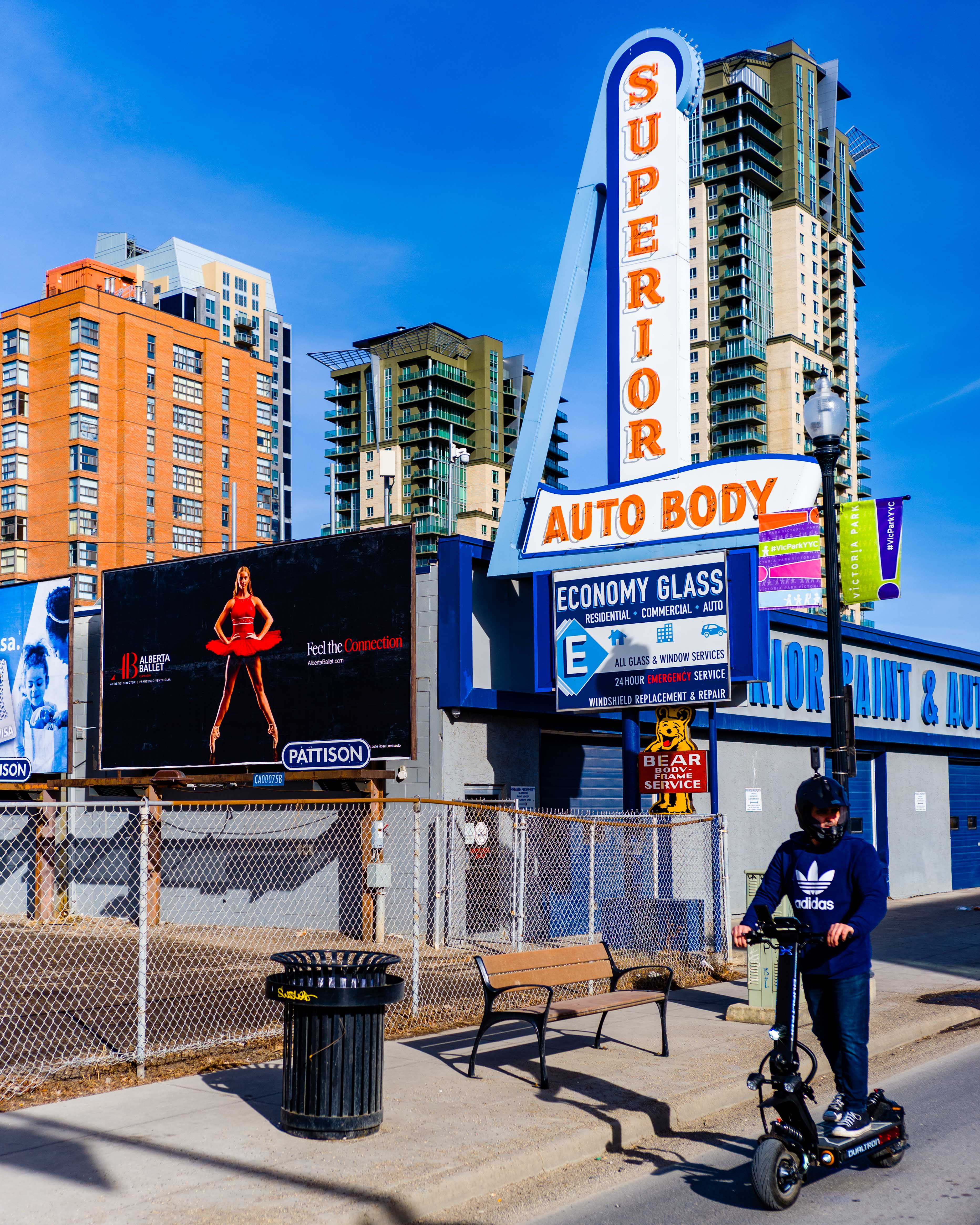
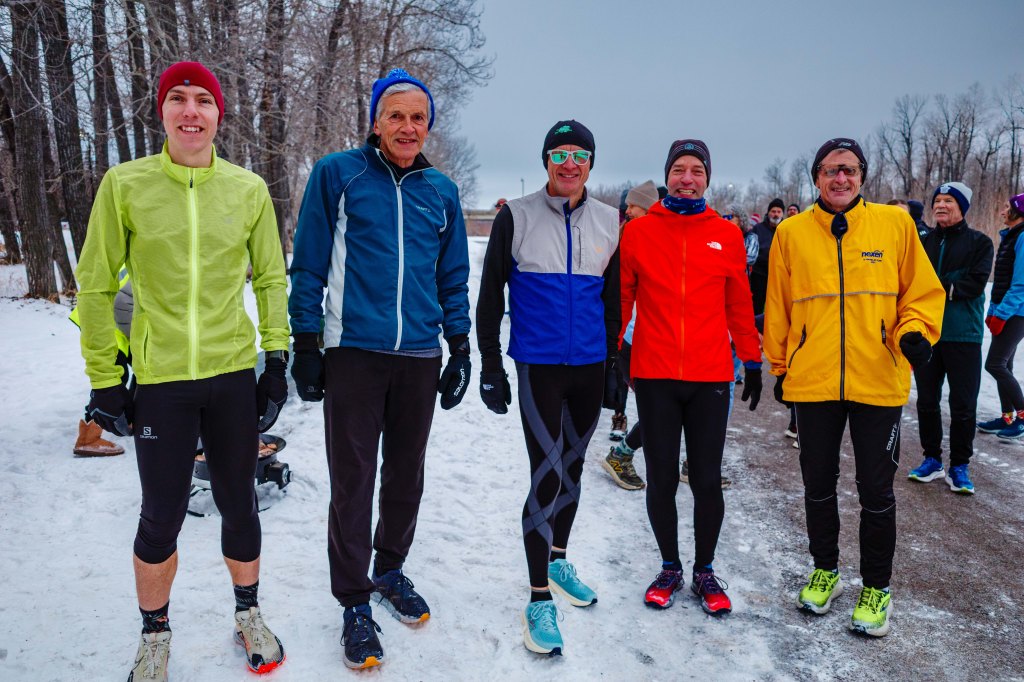
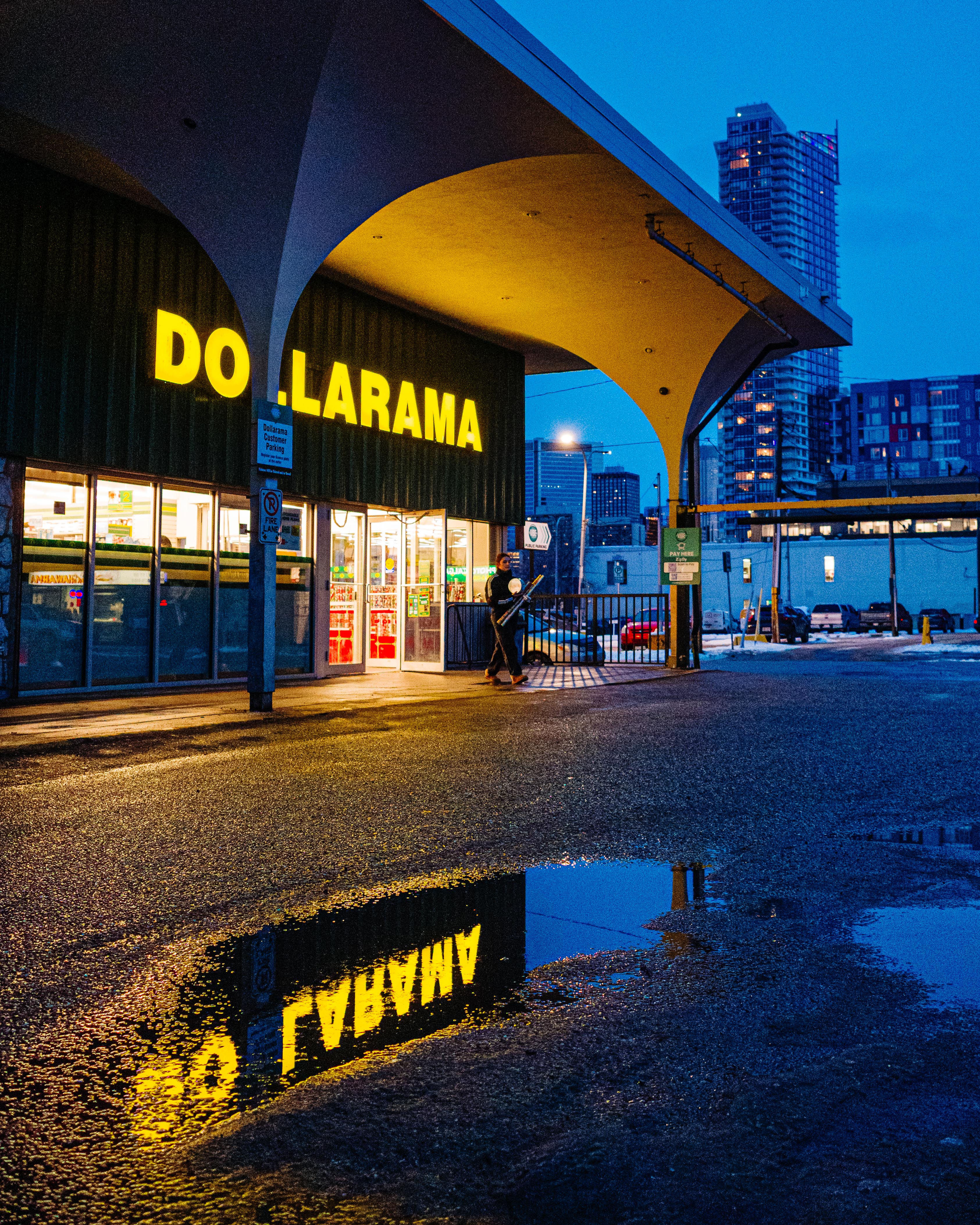
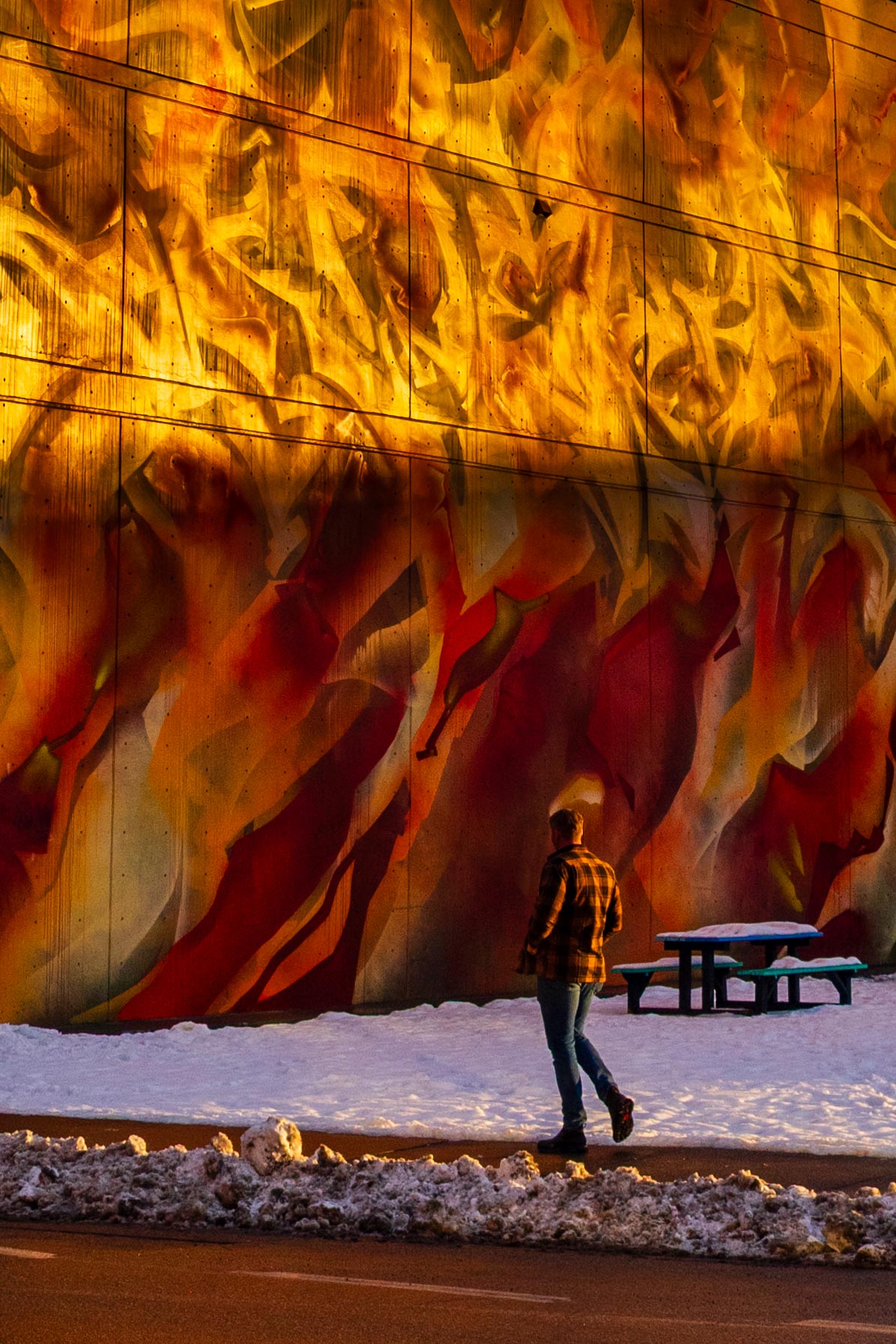
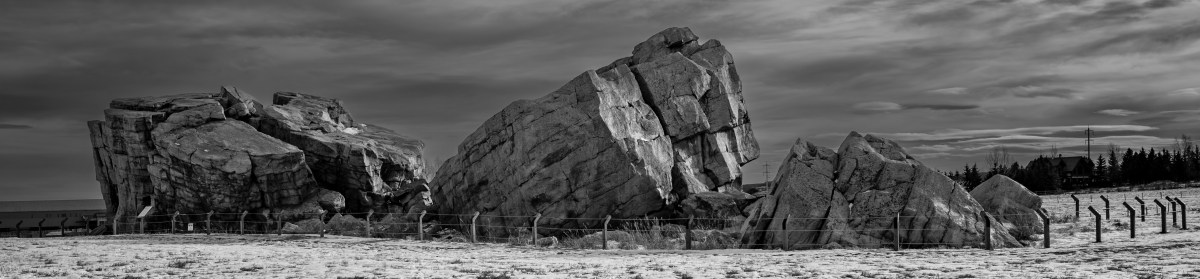
Now, as some of my followers on Strava will know, I give myself the added challenge of finding a worthy photo while I’m completing my daily run. Sometimes that is a bigger test than the running part, particularly with the days getting shorter and winter setting in. There aren’t many great photos taken on a treadmill!

So far in 2025, my commitment is strong, and the weather has been agreeable. There are a few hurdles, mostly a nagging soreness in my right Achilles tendon. Fortunately, that seems to loosen up after a couple of kilometres. Worse for me is that my training partner is still sidelined with a sore hip. That means my running is mostly solo.

Enough words. Here are some images from the 2025 SRS, which started while we were in Toronto. It’s obviously a work in progress, and I hope to send out another batch of pictures by month-end:

Copyright for all images is mine.

While it’s always nice to capture the festive spirit, I don’t consider it essential. As I’ve said before, my goal is to find images that transport me back to that time and place. I like visiting different neighbourhoods during the month. For me, a good photo run is thrilling; a way of adding meaning to my runs. It doesn’t replace the excitement of competition in a road race, but it’s sure better than nothing. And while there are no governing bodies for photo runs, I can recommend the Ricoh GR III—portable, capable, and durable. It’s been a constant companion on my outings.

Merry, Merry!

Wrapping Up

I hope you’re finding your own source of motivation at this time of year. While it’s easy to avoid going outside, especially when the temperature is -18c, as it is in Calgary today, I always feel better for having made the effort. So, whether it’s a month-long run streak, a walk with your dog, or a jog on a treadmill, I highly recommend a daily dose of activity. Having a camera with me is a reminder to keep things informal, and if I’m lucky, I’ll come home with a memento of the day.

Happy Holidays! And until next time, be well and BE FAST…

Hello Vancouver!

CALL Health and Wellness Speaker Series

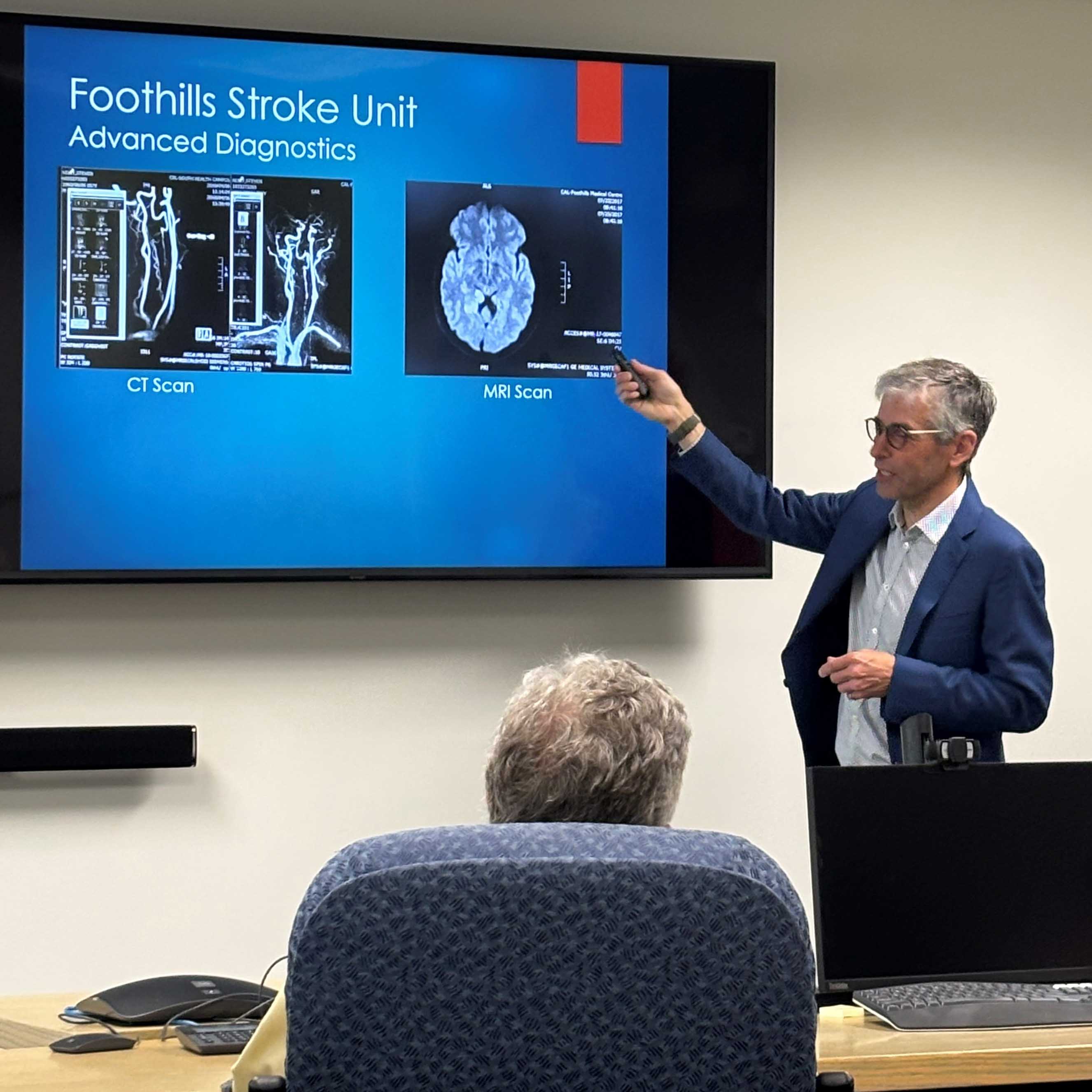
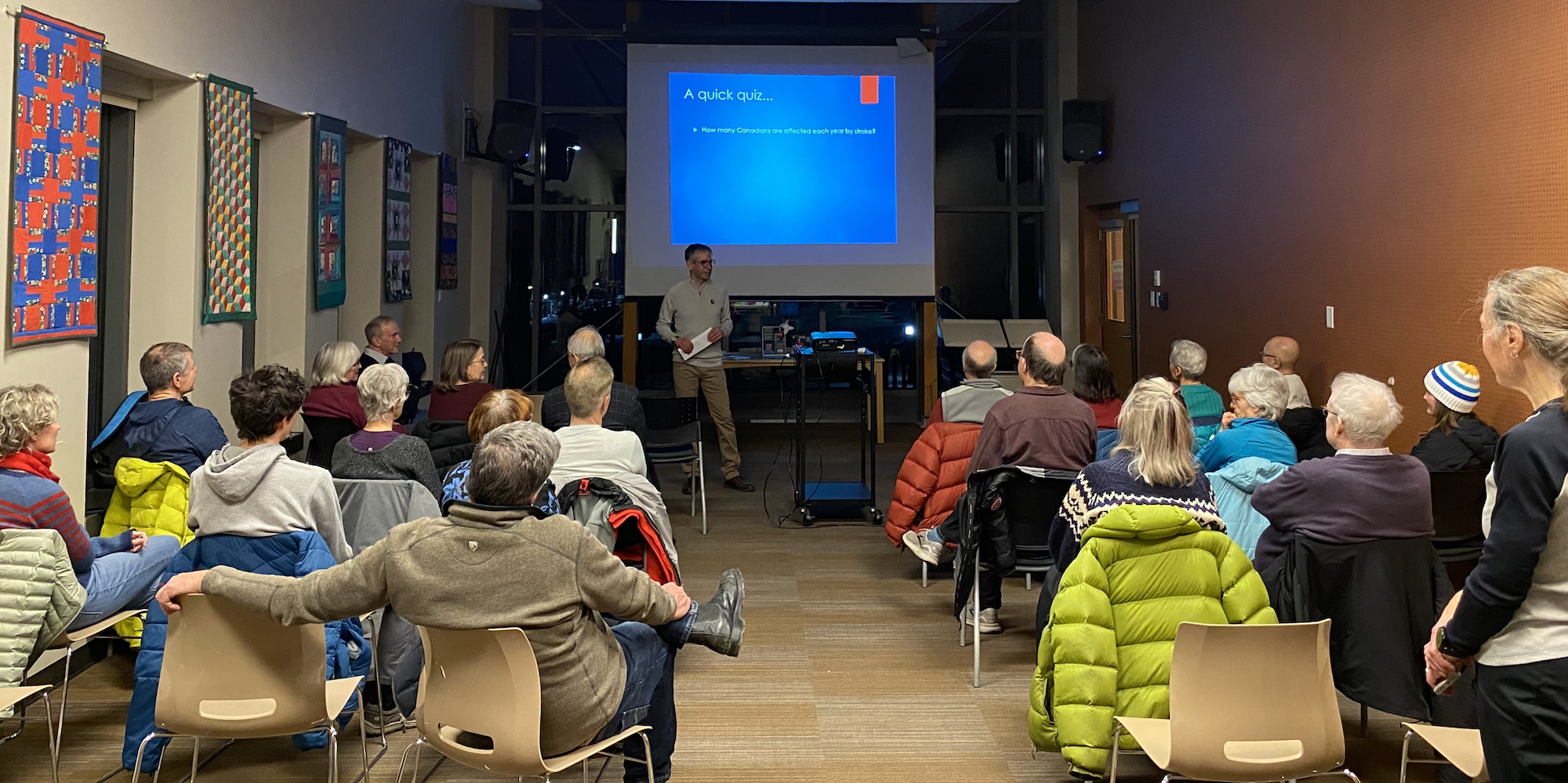
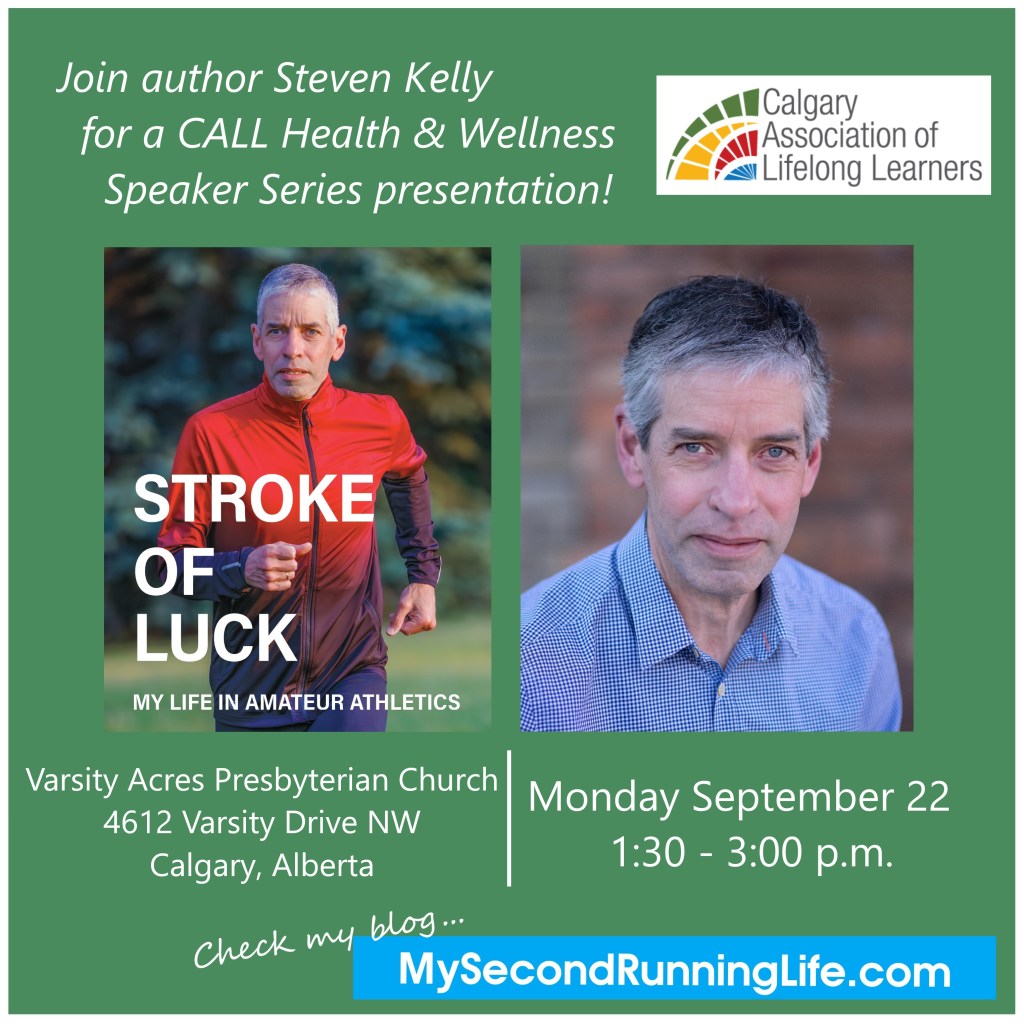
I’m thrilled to announce an upcoming event with the Calgary Association of Lifelong Learners. I’ll be doing a presentation of my memoir on September 22, 2025, at the Varsity Acres Presbyterian Church. See the details below.

The Calgary Association of Lifelong Learners (CALL) is a member-led, non-profit organization. Their mandate is to facilitate lifelong learning for residents of Calgary and area. Programs and activities are wide-ranging, focusing on arts and culture, society and politics, and health and science.

My presentation will be part of CALL’s Health and Wellness Speaker Series. I look forward to telling the story of my lifelong connection to the great sport of athletics and my recovery from a series of strokes in 2017. As my regular readers will know, I wrote about running, health, and recovery in Stroke of Luck: My Life in Amateur Athletics. The opportunity to meet with groups and clubs is by far the best part of this project. I’m gratified to be able to share my main messages:

  • The importance of an active lifestyle
  • Awareness of the full range of stroke symptoms
  • Raising funds to support the lifesaving work at the Foothills Stroke Unit

If you are interested in joining us on the 22nd, or if you’d like to find out more about CALL, please reach out to them here. I hope to see you then!

A Quick Visit to Vancouver

Our vacation planning this year has been somewhat ad hoc. That’s resulted in a series of short trips to some unexpected locations: Moose Jaw, San Diego, and Edmonton. But rather than being a problem, it’s been an opportunity. So much so that we are looking forward to doing more of the same in the months to come.

Last week, we decided to make an impromptu, short trip to Vancouver. There’s never a bad time to visit Vancouver, but our timing was especially good. We were in the city for two perfect days. While most of our trips to the city in the last few years have had us staying in Kitsilano or Yaletown—both fine locations—we opted for downtown this time. 

Deb suggested that we stay at the new Azur Hotel on W Pender Street. The Azur is one of the Leading Hotels of the World, and she was curious about it. We’ve enjoyed stays at several LHW hotels—the Azur is one of only a few in North America. It was a great decision. Everything about our stay was excellent. The hotel feels quaint, and it exudes style. The staff were amazing. They treated us like royalty. The amenities were excellent, and the included breakfast was delicious. 

We enjoyed walking through Gastown and along the waterfront at Canada Place. Of course, watching the Harbour Air seaplanes taking off and landing is always fun. We took the SeaBus across Burrard Inlet to North Vancouver and checked out the latest exhibits at the Polygon Gallery. We both thought the large-scale astronomical photographs by Thomas Ruff, a German photographer, part of the current Star Witnesses exhibit, were a highlight.

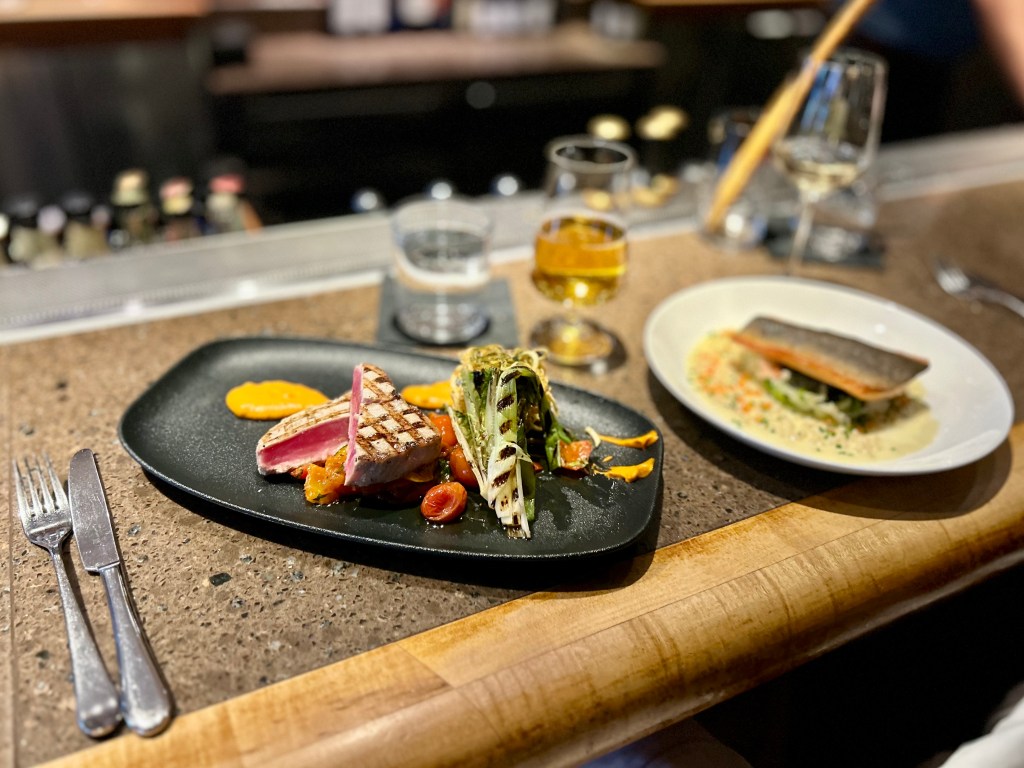
Food and drink? Well, you can’t go wrong with a coffee and doughnut from the 49th Parallel cafe on Thurlow, so we did that. And for dinner, we enjoyed a meal at the bar in the Blue Water Cafe in Yaletown. I had the Yellowfin Tuna, and Deb chose the Arctic Char. Both were delicious.

Some Vancouver Street Photography

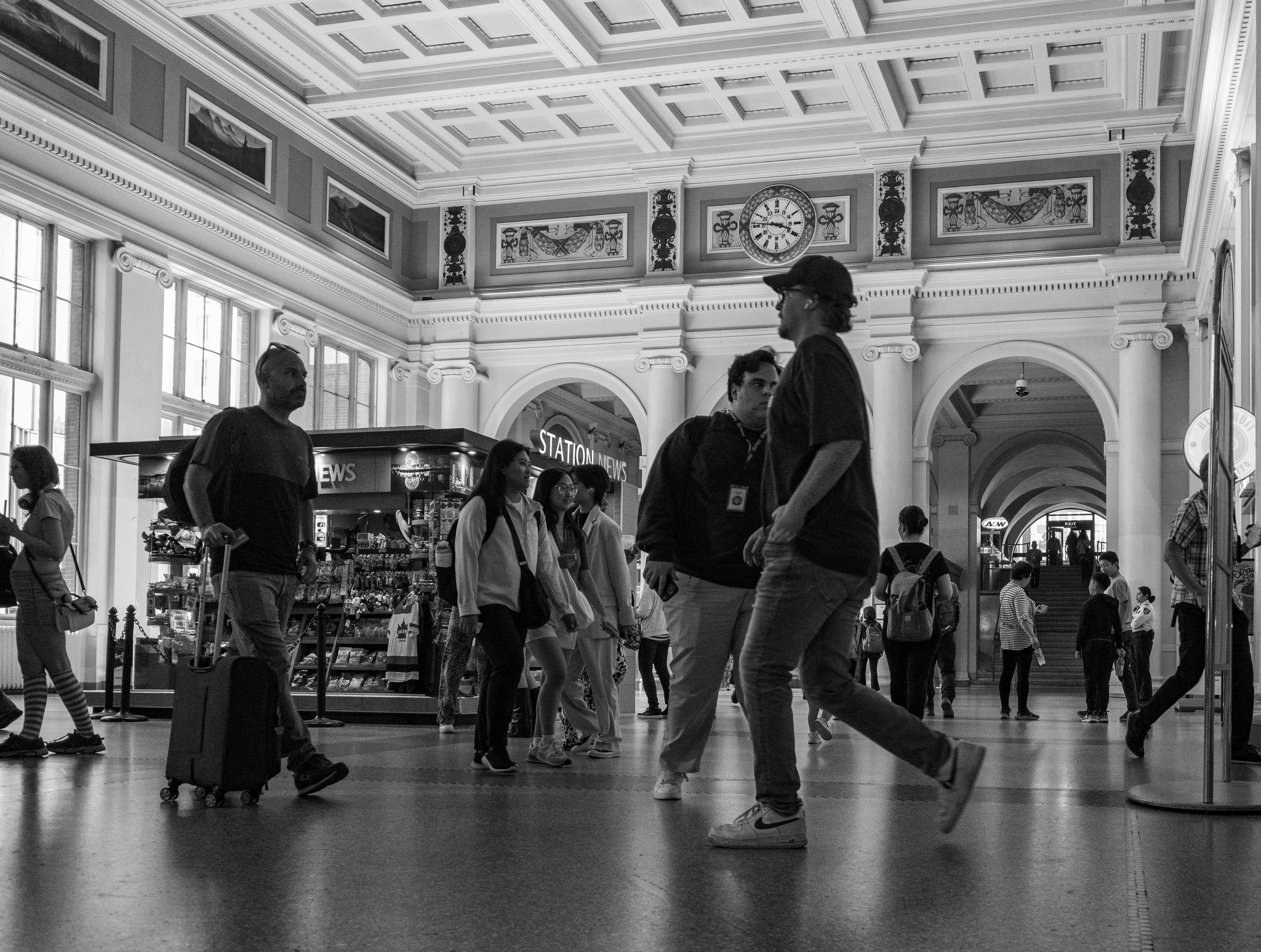
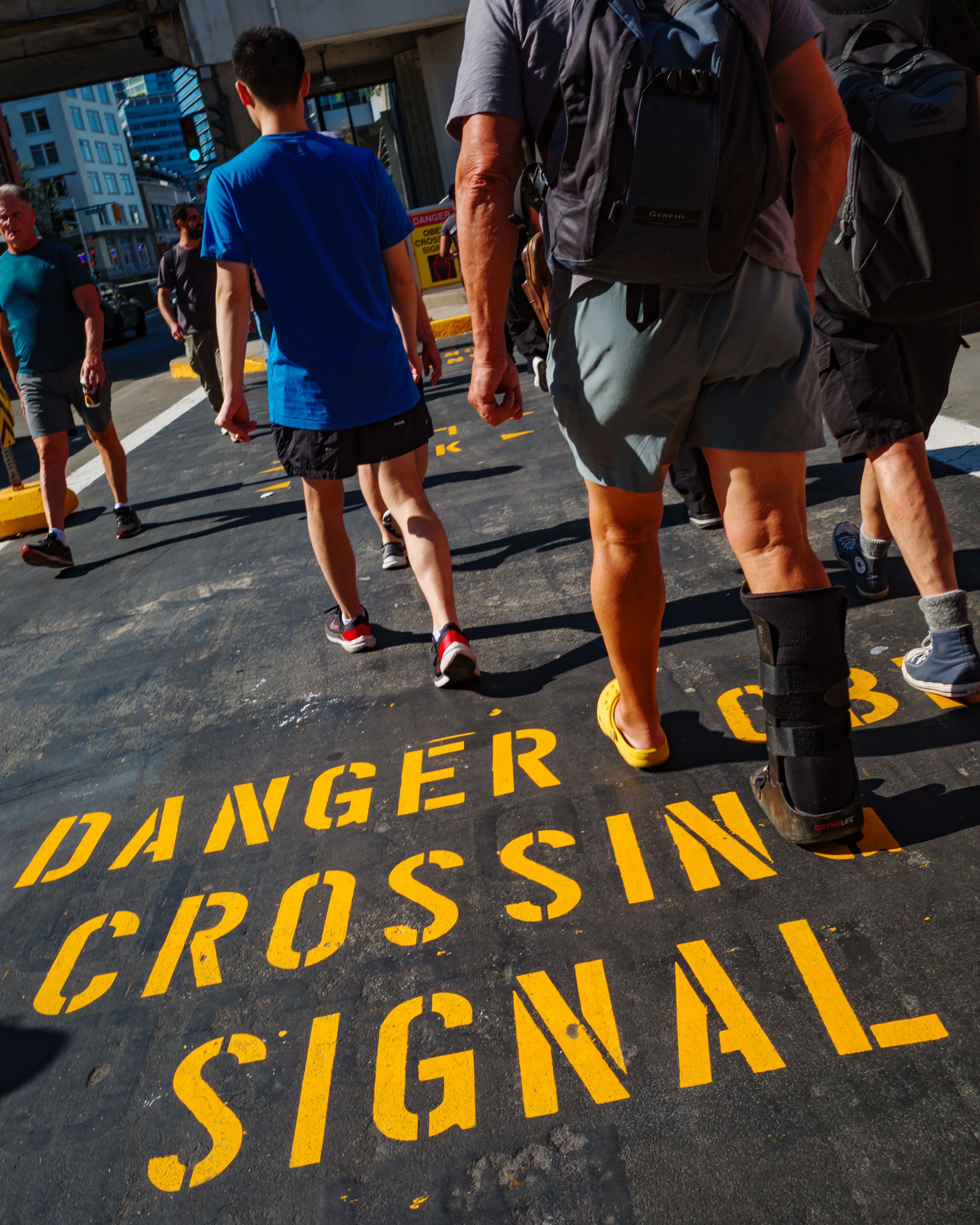
Now, it wouldn’t be an outing worth talking about if there weren’t a few photos to share. With my trusty Ricoh GR III in hand, I caught the occasional street scene. Here are some examples:

When we’re in Vancouver, we always think about Fred Herzog. For those who aren’t familiar with him, Herzog was a Vancouver-based photographer, active in the 1950s and 1960s. He’s one of our favourite photographers, and a source of inspiration when I’m walking the streets of Vancouver. Herzog mainly shot with a Leica rangefinder using Kodachrome colour film, and his photographs reveal much about the character of the city during that era.

Although it isn’t fair to say Herzog was unknown during his lifetime, his work is really only getting the credit it deserves now. That’s due in large part to the efforts of the Equinox Gallery in Vancouver and the Trepanier Baer Gallery in Calgary. Here’s the cover of Fred Herzog: Modern Color. It’s a superb collection of Herzog’s photographs, published in 2017 by the Equinox Gallery. The image on the cover happens to be my favourite Herzog photograph.

This gives me an idea for a new blog series: My Favourite Photographers. I think Fred Herzog will have to be my first subject. Look for that soon! 

While writing about the GR III, I’ll mention that Ricoh has just announced the GR IV (and discontinued the GR III). I’m definitely interested, although it might be said that on first glance, the specs are only marginally better than my current one. That said, my camera is now four years old, and I’ve noticed that it seems to have accumulated a lot of dust on the sensor. This problem is a known issue for the GR III. I thought I had avoided the problem until I looked closer at my shots from Vancouver. I probably shouldn’t be surprised, given how I handle (mishandle?) this camera on my photo runs. C’est la vie!

On that note, I’ll sign off. Thanks for reading. Until next time, be well and BE FAST!
Calgary Marathon Action!

Did you know that June is Stroke Awareness Month in Canada?

To raise awareness of the prevalence of stroke, I’m once again offering my memoir—Stroke of Luck: My Life in Amateur Athletics—for a special price in June. Order your copy on Amazon and save 20%.

Help me raise funds for the essential work of the doctors and staff at Foothills Stroke Unit!

Calgary Marathon Weekend

It was a great weekend for racing, and this year a record number of runners laced up for the 61st edition of the Calgary Marathon. Across several races, more than 17,000 runners turned out. Race distances were from 1k (toddlers only I’m told) right up to the marathon.

The Calgary Marathon is the oldest in Canada. It’s only a few years younger than me. Speaking of being younger, I dug into my archives to share with readers my own history with this storied race. Then, I’ll share some highlights from the 2025 races, where I was strictly a spectator!

1987 – A milestone is reached!

It’s hard to believe, but I first ran the Calgary Marathon in 1987—I had to check my math to verify that it was 38 years ago. At the time, Deborah and I were living in Edmonton, which means we made the trek to Calgary in an underpowered Honda Civic.

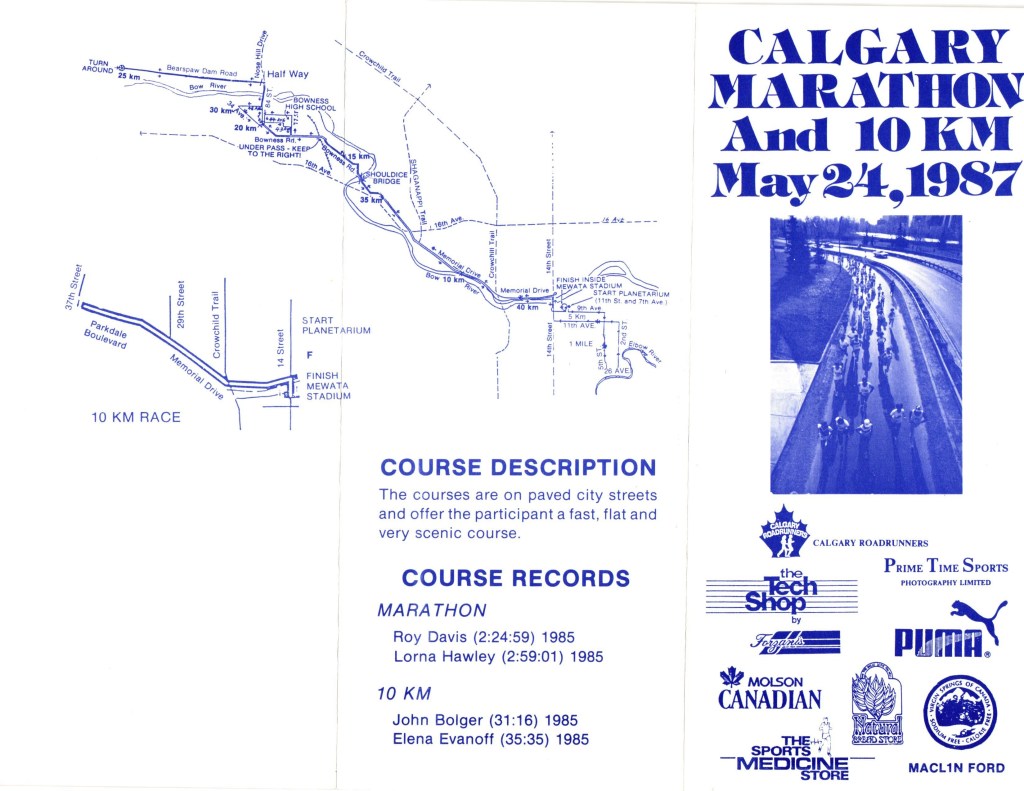
The race route is shown below, copied from my well-preserved race entry.

The race entry fee, for those who are used to paying over $100 now, was $12. And that included a cotton singlet, which has curiously not survived—I don’t even remember it. The NB 990 shoes I wore are also long gone. However, I was a proud member of the Edmonton Roadrunners in those days, and my club singlet is still around, buried in a drawer somewhere.

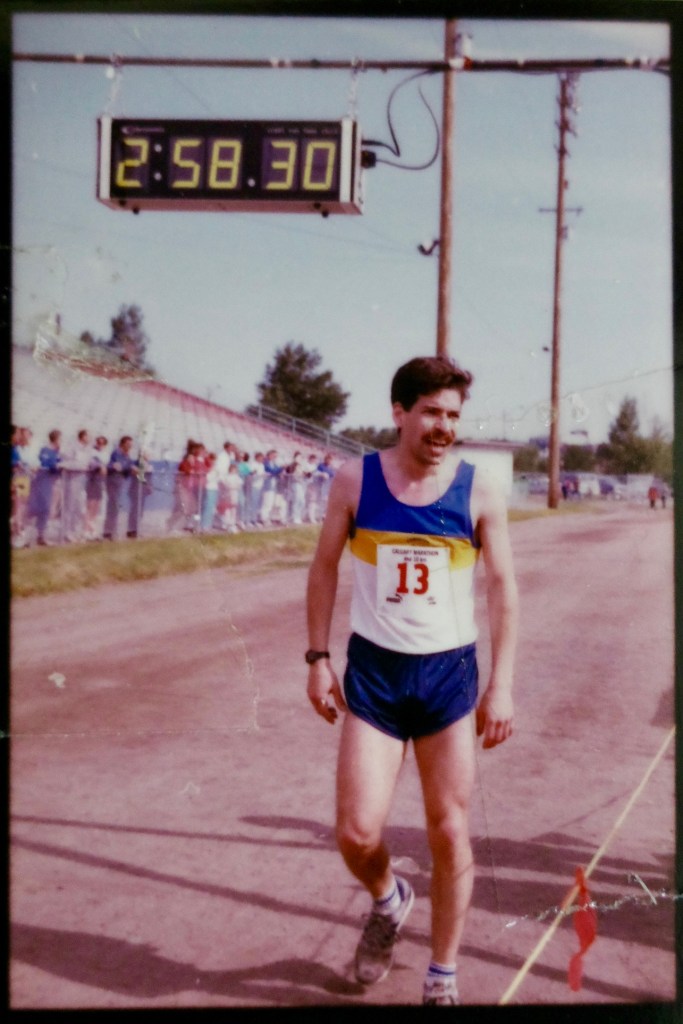
The 1987 Calgary race was my fourth marathon, and it turns out that race bib 13 was not unlucky. In fact, it was a notable race, because I managed to go under 3 hours for the first time—2:58:30 to be precise.

You can see my relief in this finish-line picture. I finished 42nd overall, and 7th in the (yikes!) 18-29 age group. And yes, that last bit makes me feel old!

1992 – Another milestone

I’ve had a long love-hate relationship with the marathon. As evidence, it was five years before I would tackle the distance again. In July 1992, I came into the race—called the Calgary Miracle Marathon that year—in what may have been the best shape of my life. We had moved to Calgary in 1991, so I felt I had a home-field advantage. What’s more, in the two months before the race, I had set PB’s in the half marathon and 10k, so I was full of confidence.

In Stroke of Luck, I wrote about how my careful race preparations were almost upset by unplanned events on race morning. Here’s an excerpt:

“I went through my final planning for race day. Then everything just about fell apart. Our son Daniel, who was by then nearly a year old, had been a sound sleeper most of the time. However, on this night, he had some unknown issue that kept him up until the early hours. I was reduced to lying in bed with my eyes open, thinking about what this would do to my marathon in a few hours. … Finally, Daniel quieted down, and I fell asleep. Too soundly, as it turned out. In addition to my other troubles, I had set my alarm incorrectly and it didn’t wake me up when I had planned. The only thing that saved me was my decision to take a cab to the race. The sound of the driver honking his horn was my alarm. At first, the sound was part of a dream, but as the cobwebs slowly cleared it dawned on me what had happened. I leapt out of bed, totally skipped my normal race day breakfast, and jumped into the car for the short ride downtown. Still half asleep, I stowed my bag and headed to the start line, believing that my day was ruined.”

It turns out I need not have worried. While I did run well, setting a PB by 7 minutes, I remember being disappointed at the finish. Over time, that disappointment has softened, to the point where I’m now quite content with my 2:51:39 result. I finished 20th overall, and fourth in the 30-39 age group.

Unfortunately, no photographic evidence or T-shirts have survived from that momentous 1992 race, and there were no finisher’s medals. But that’s okay, as I’ll never forget that day. I can still relive the entire race in my mind.

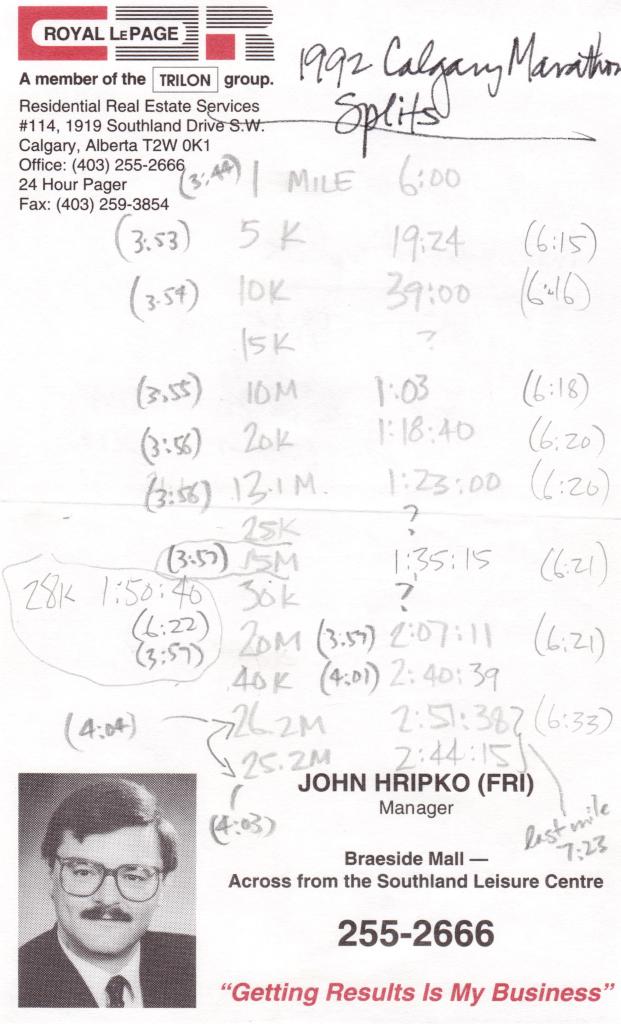
One thing I did keep is the scrap of paper where I scribbled all my race splits. Like me, my friend John has a few more gray hairs now than he did in 1992.

And yes, my last mile (7:53) was extremely slow!

To show how much things have changed in the last 30+ years, here’s a scan from the Calgary Herald article on the 1992 race. My friends and training partners—Dave Purcell (4th) and Rick Webb (6th)—had a very good race.

2001/2010 – Nothing to see here

I ran the 2001 and 2010 marathons. Neither was my best outing. We can move on…

2025 – Strictly spectating

As has become my custom, I like to find a convenient spot on the race route to watch the action and take pictures of the runners. This year was no different, other than the fact that the races are now split between Saturday (5k and 10k) and Sunday (half and full marathon). So, yes, it means getting up early both days on the weekend, but I wouldn’t want to miss the fun.

I was watching for teammates and friends and I had to be alert. I find it particularly hard to spot familiar faces AND take their picture, which is too bad, as that is the whole point!

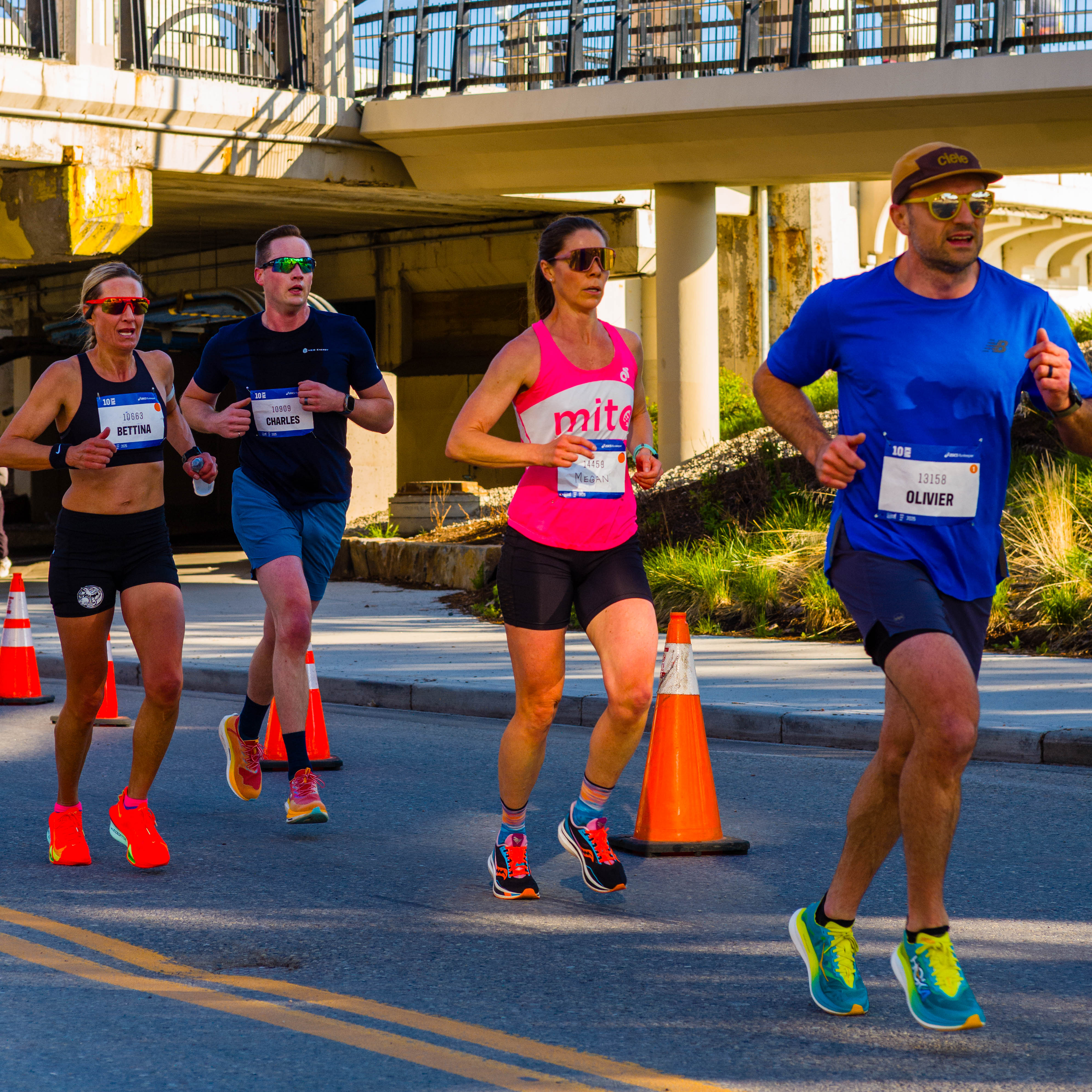
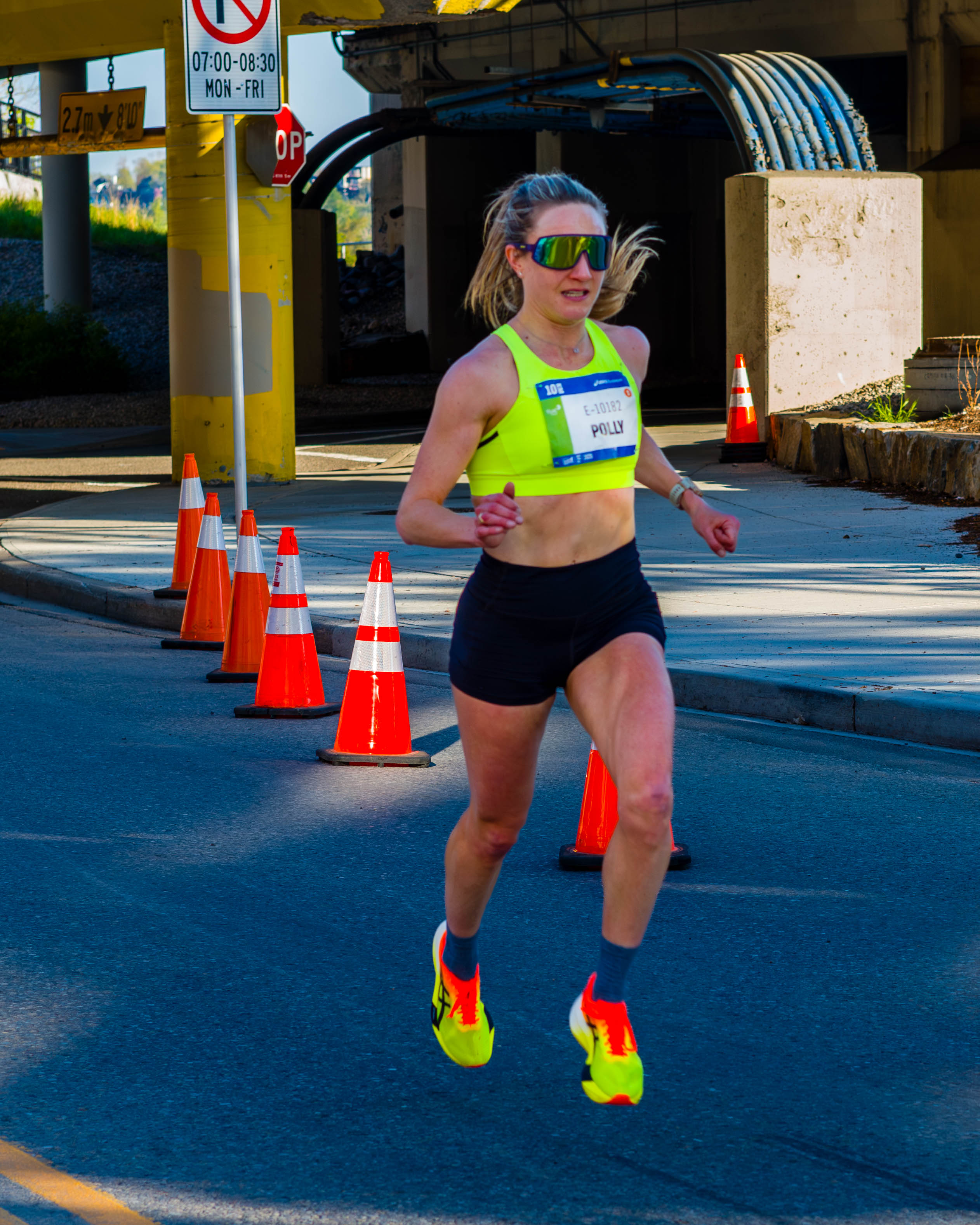
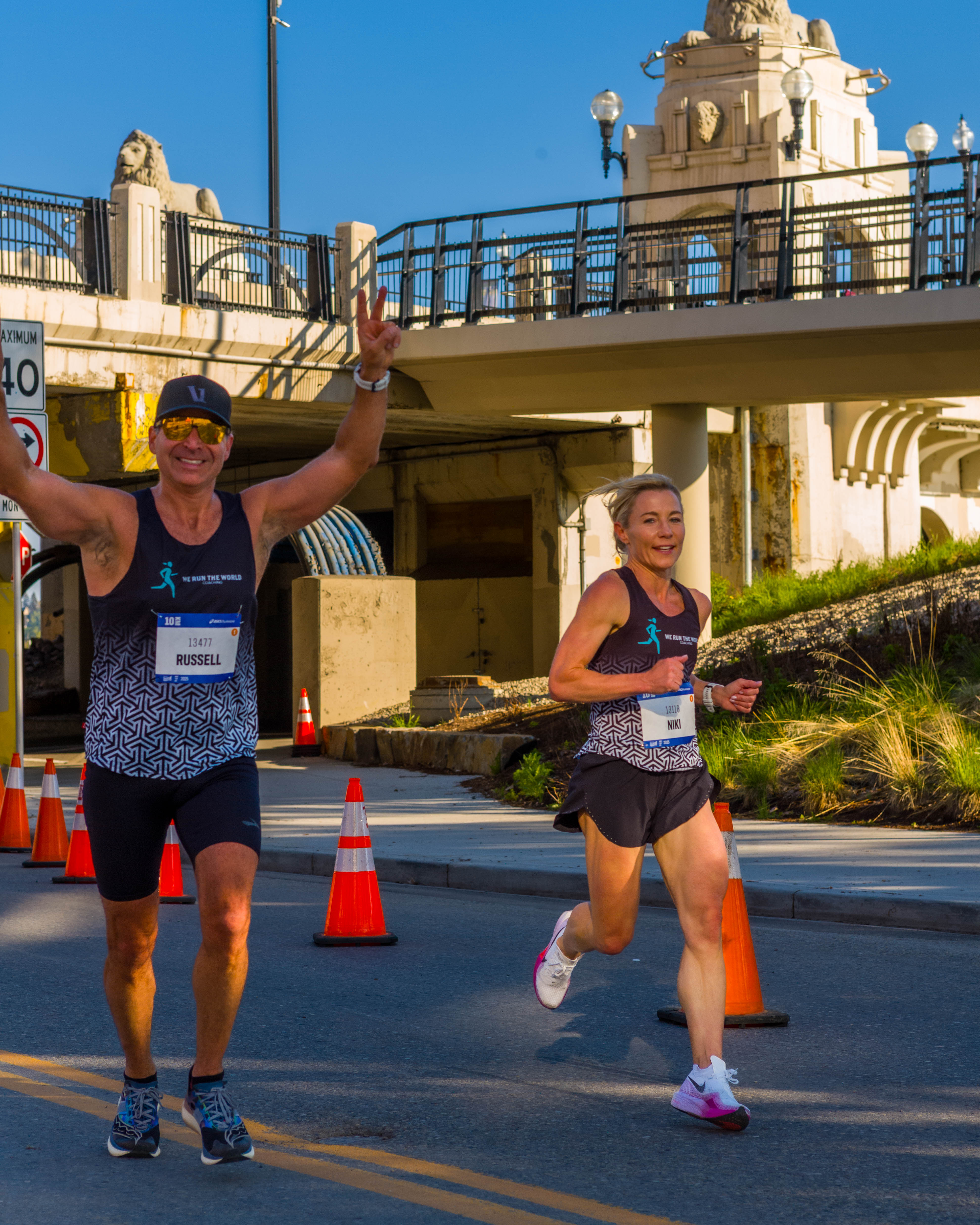
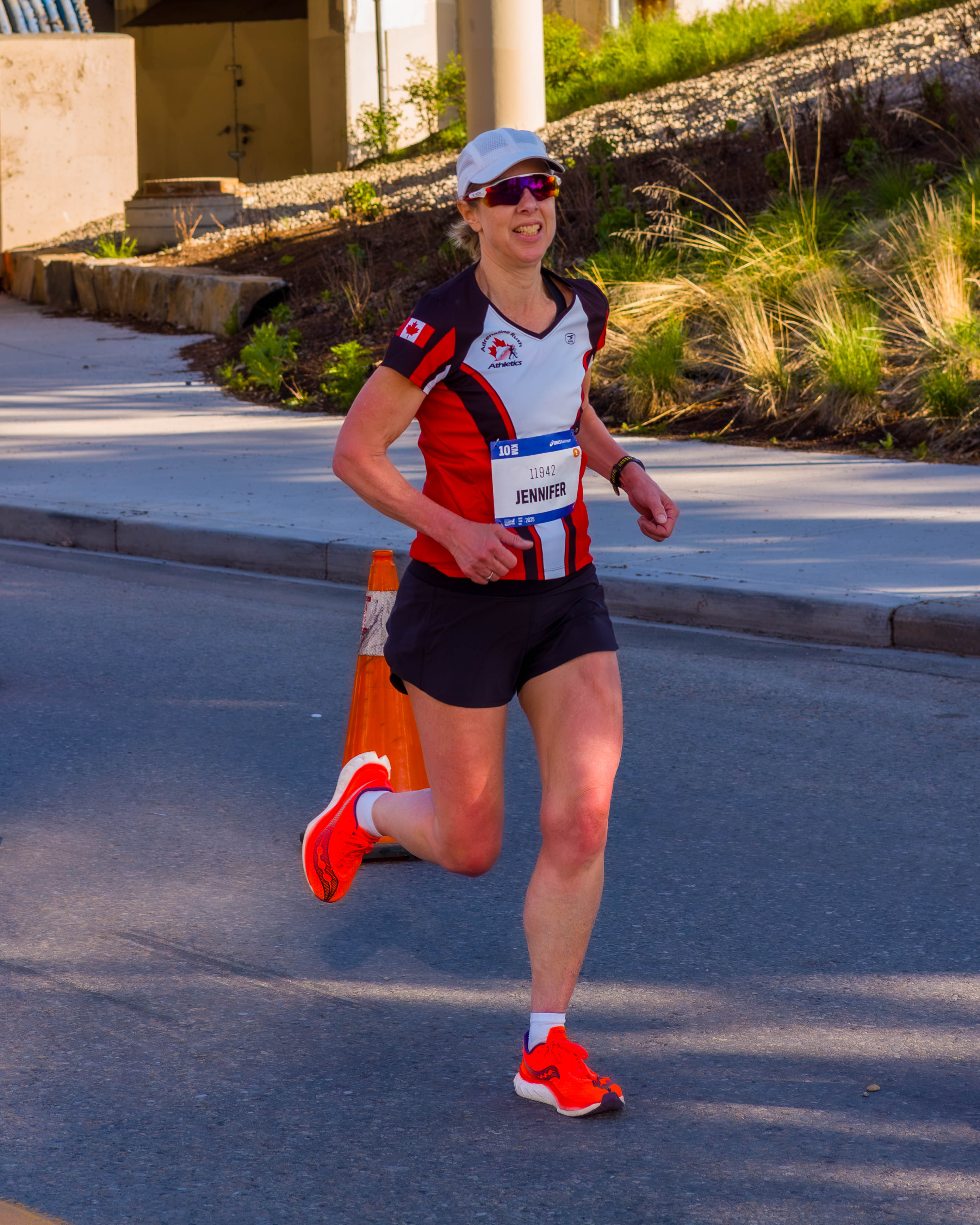
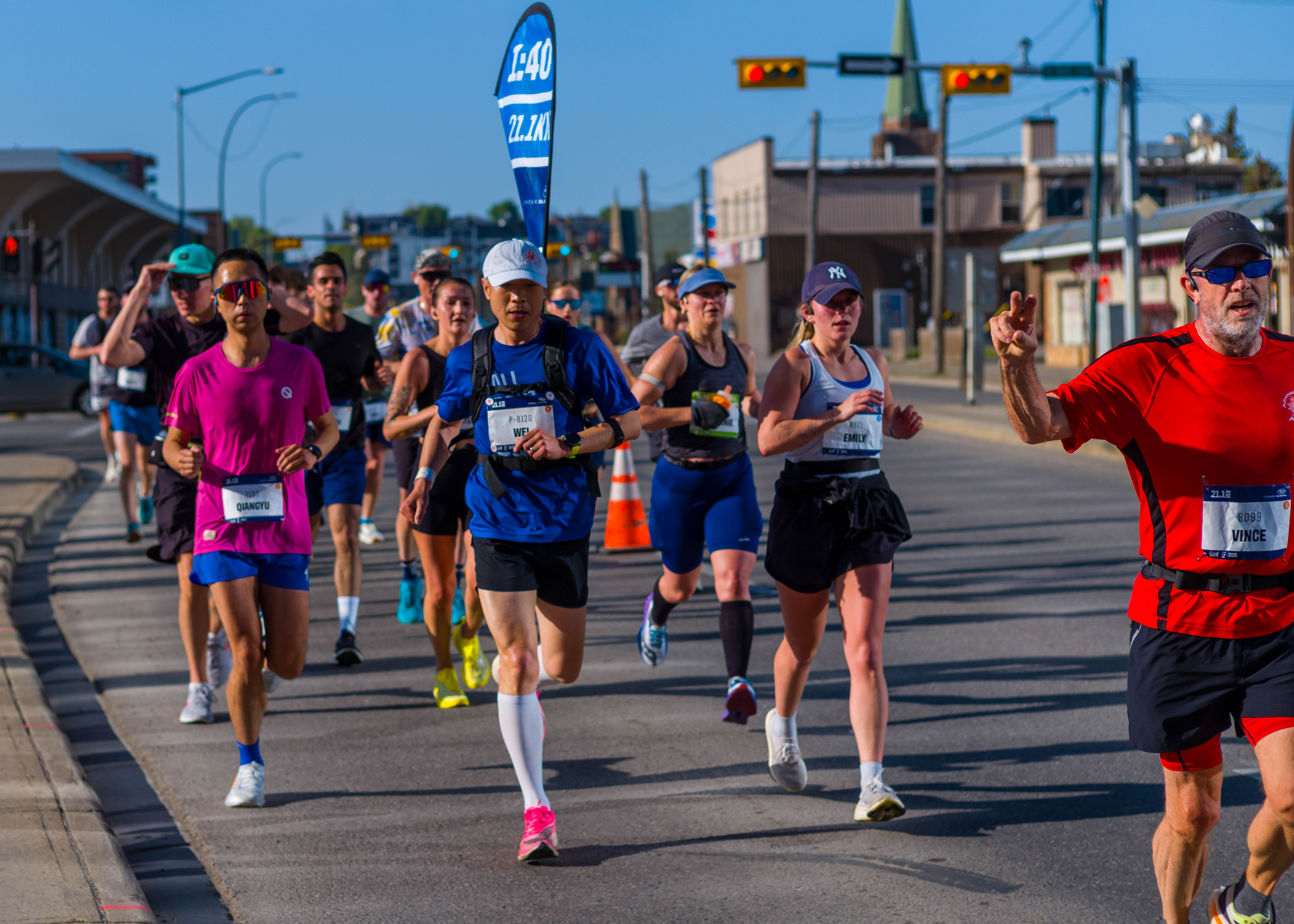
Anyway, here is a collage of photos from the races. I ended up with a lot of good pictures, so it looks like I’ll be sifting through them for a while. Starting with the 10k, where I set up at the 7k mark, just as the runners came off the Centre Street Bridge:

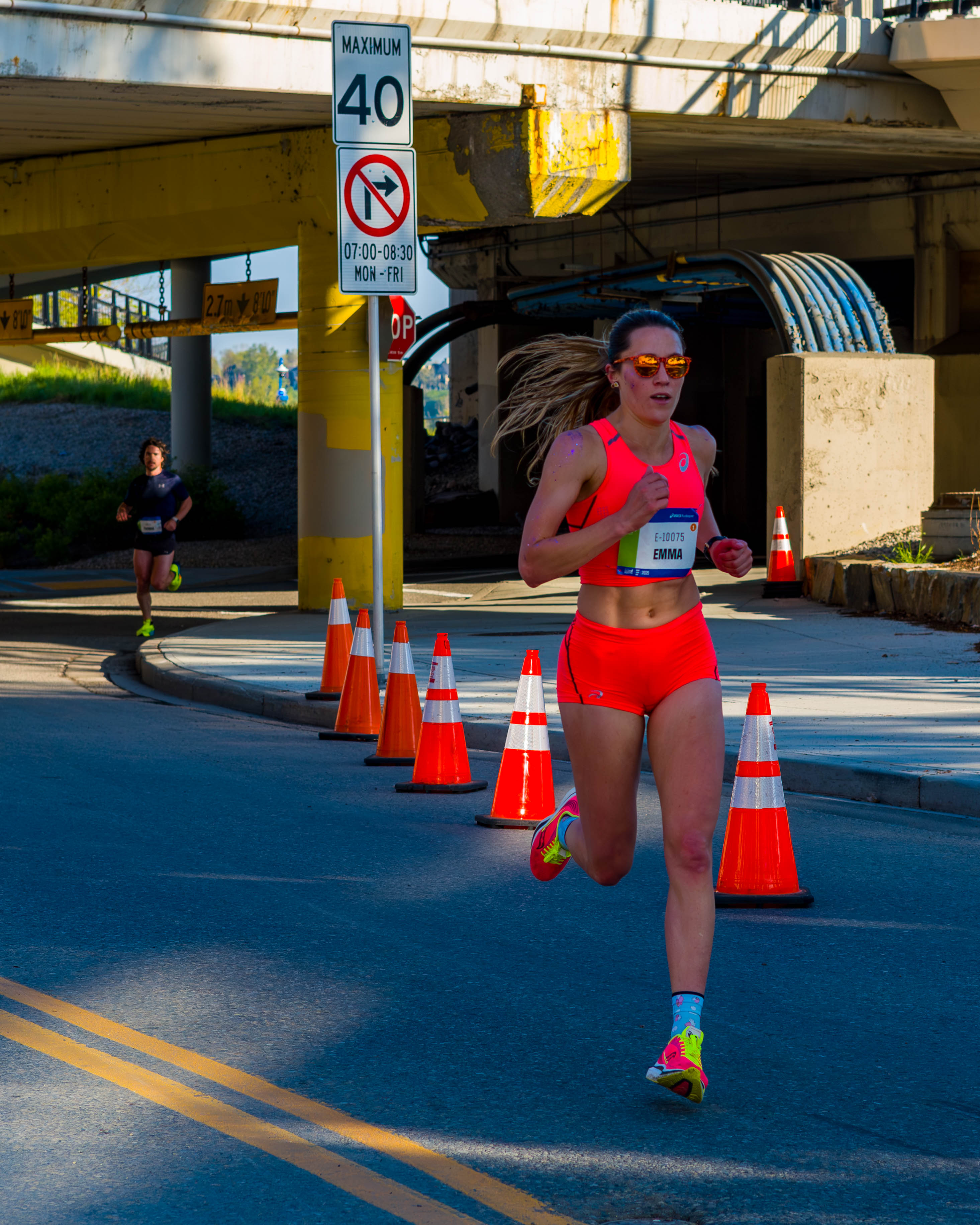
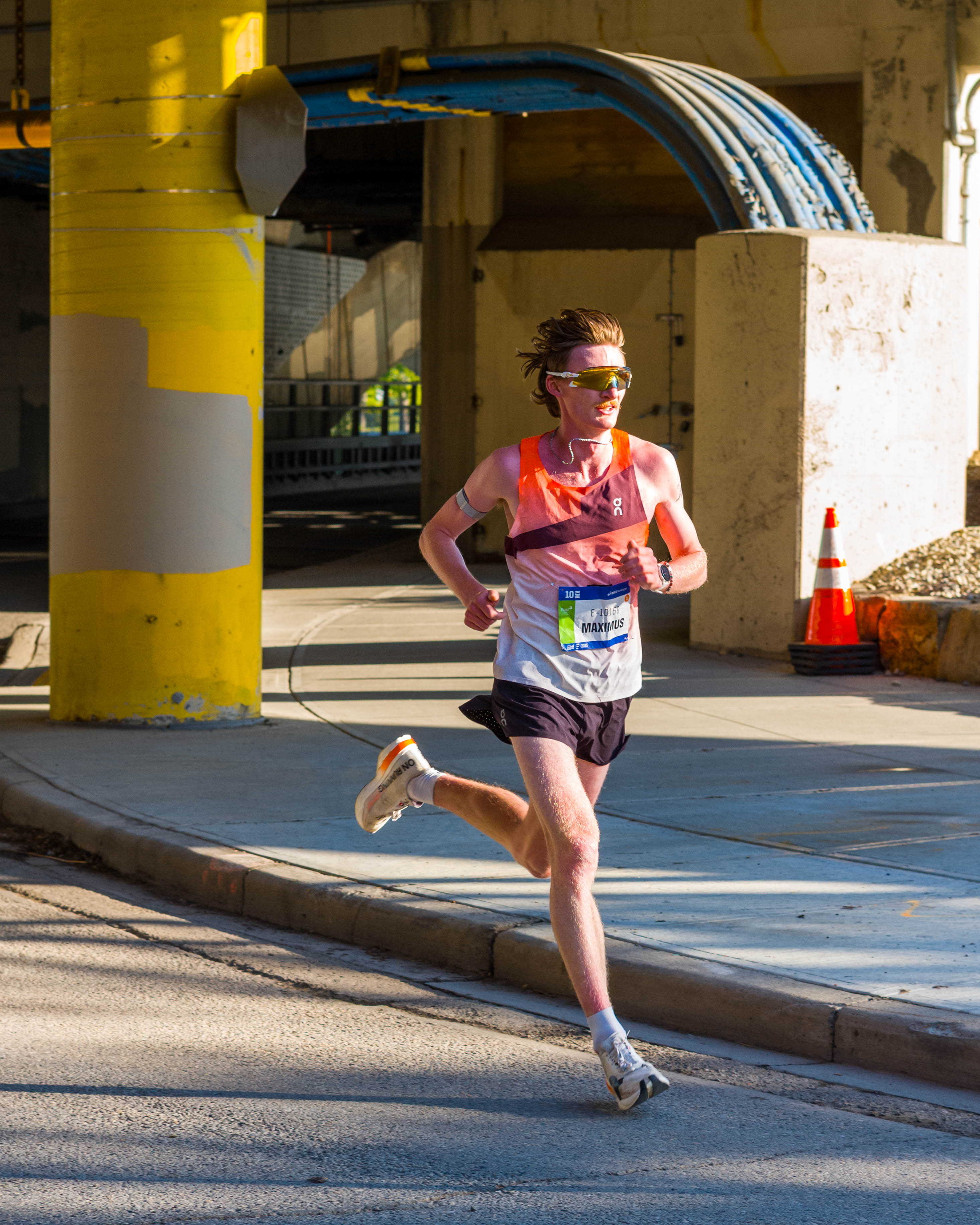
And here’s an album from the half/full marathon. For this route, I set up on 14th Street, just around the 14k mark. This year, the morning light was amazing, even though it meant the conditions were a bit warm for the runners:

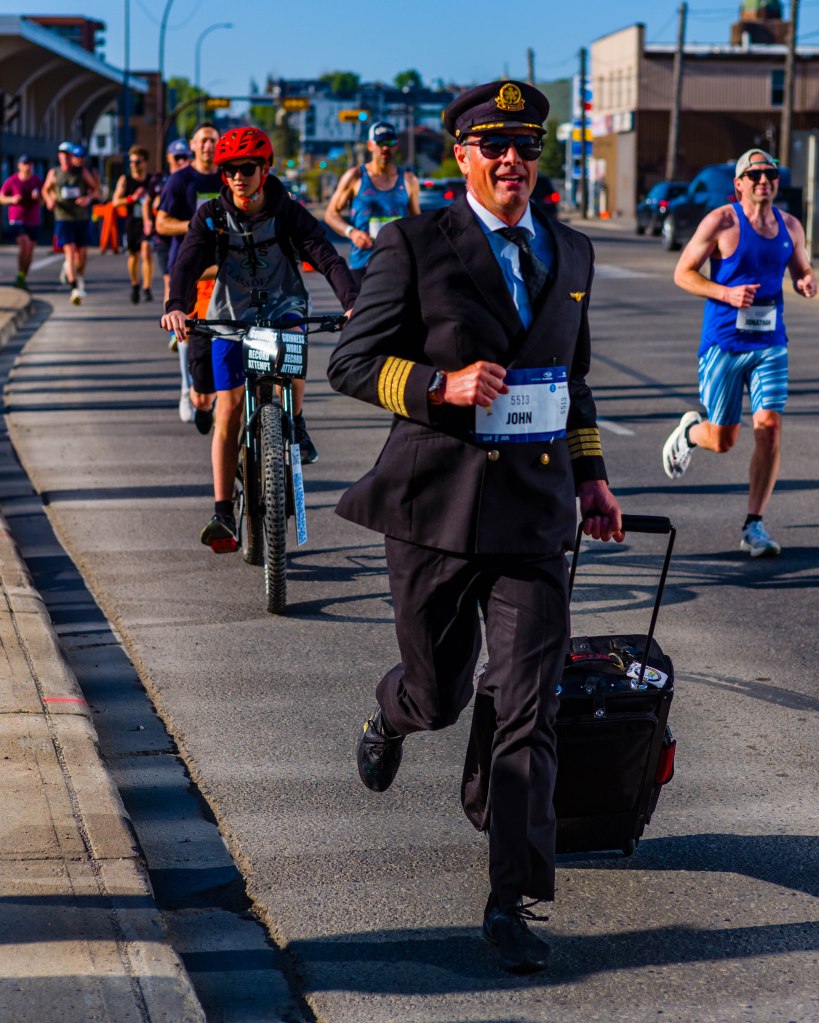
I have to make special mention of John Bird, who ran the half marathon in his pilot uniform while pulling a roller suitcase. John set a Guinness World Record for the fastest half marathon in this outfit, and he is raising money for Dreams Take Flight, a very worthy cause. Congratulations John!

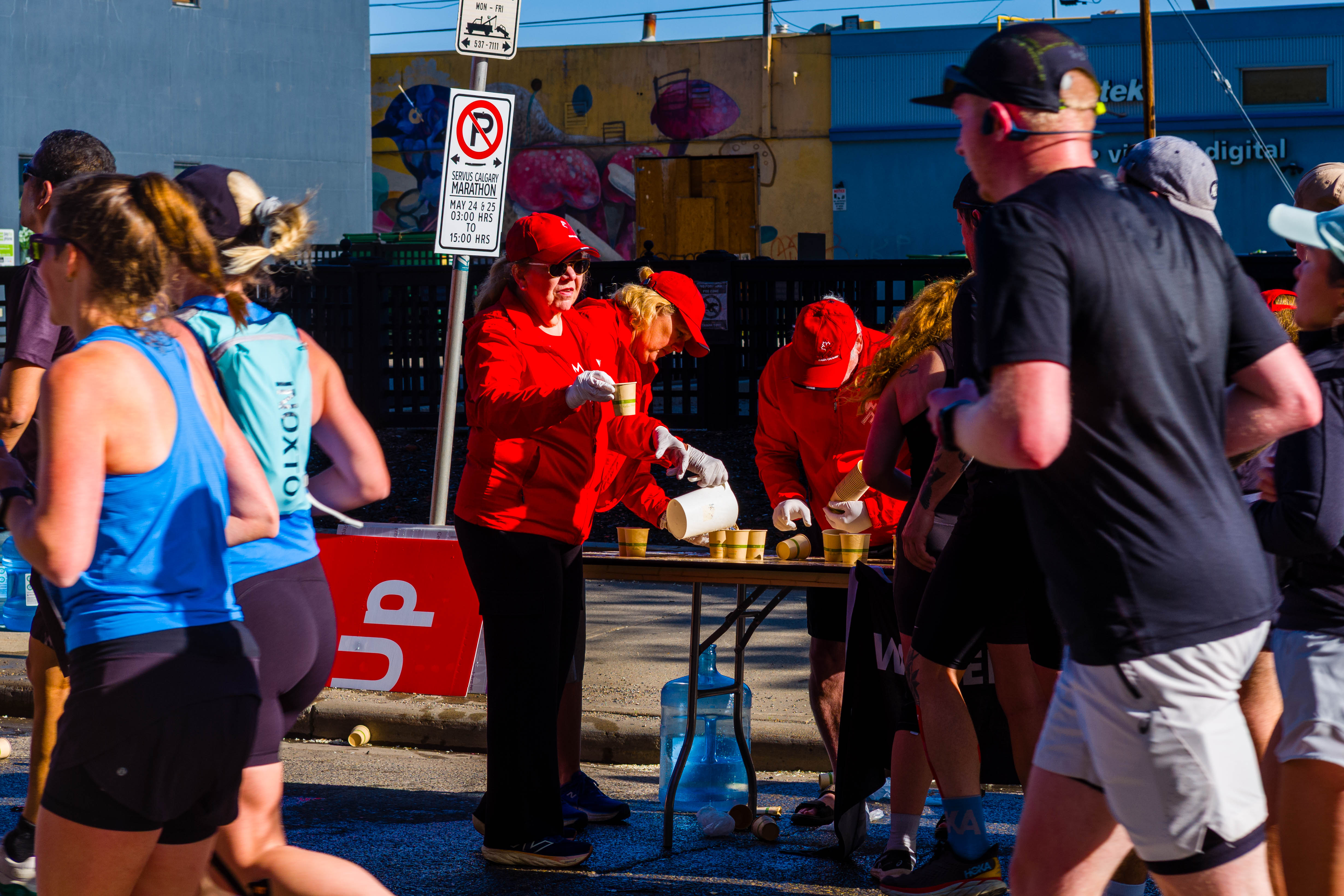
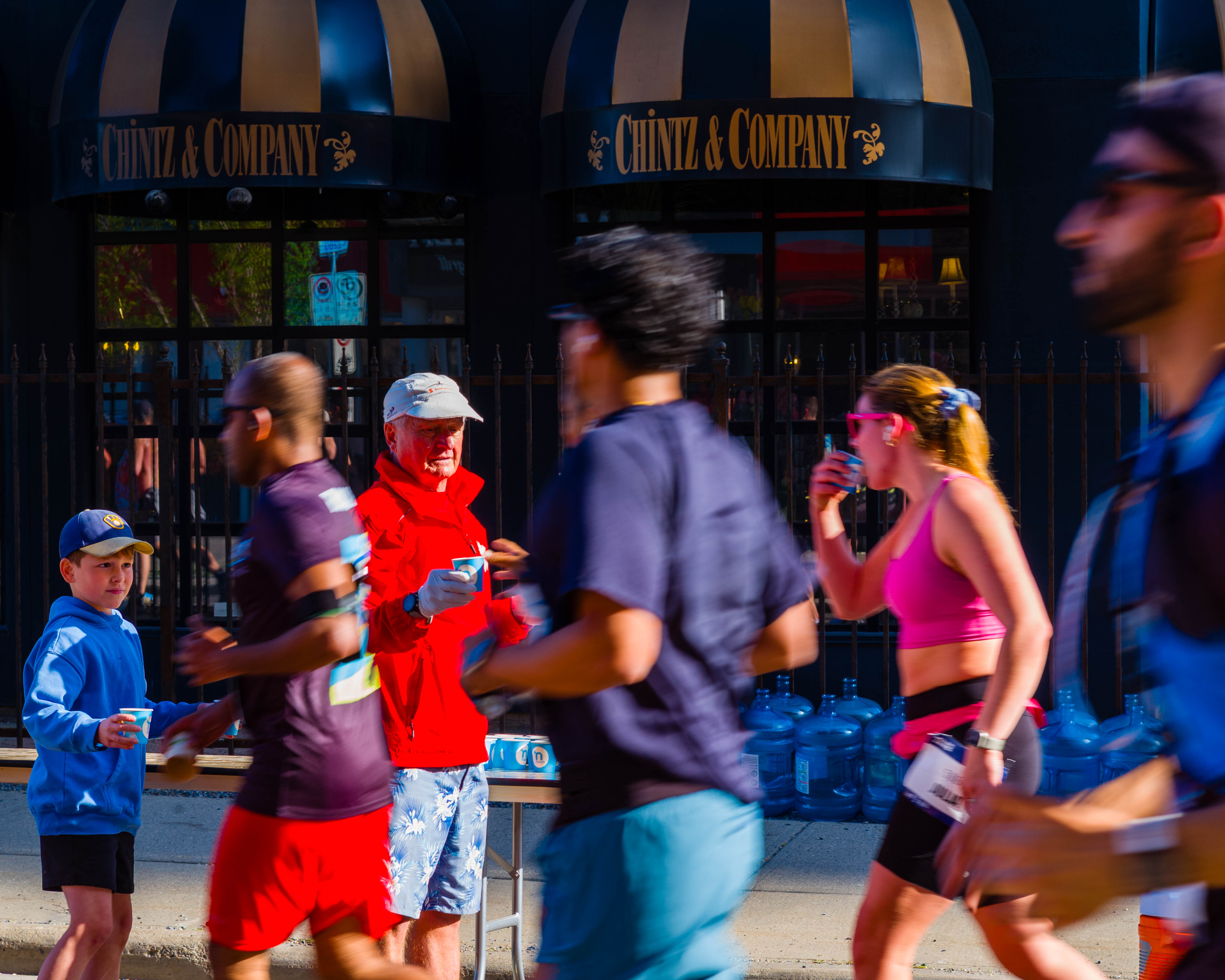
Finally, there were some cool non-running scenes, for example at the 11th Avenue water station. It was a bit chaotic, but that’s what makes it fun.

As always, if you want to use/distribute any of these photos, please give me a photo credit.

Until next time, be well and BE FAST!
An Important Visit With CHF

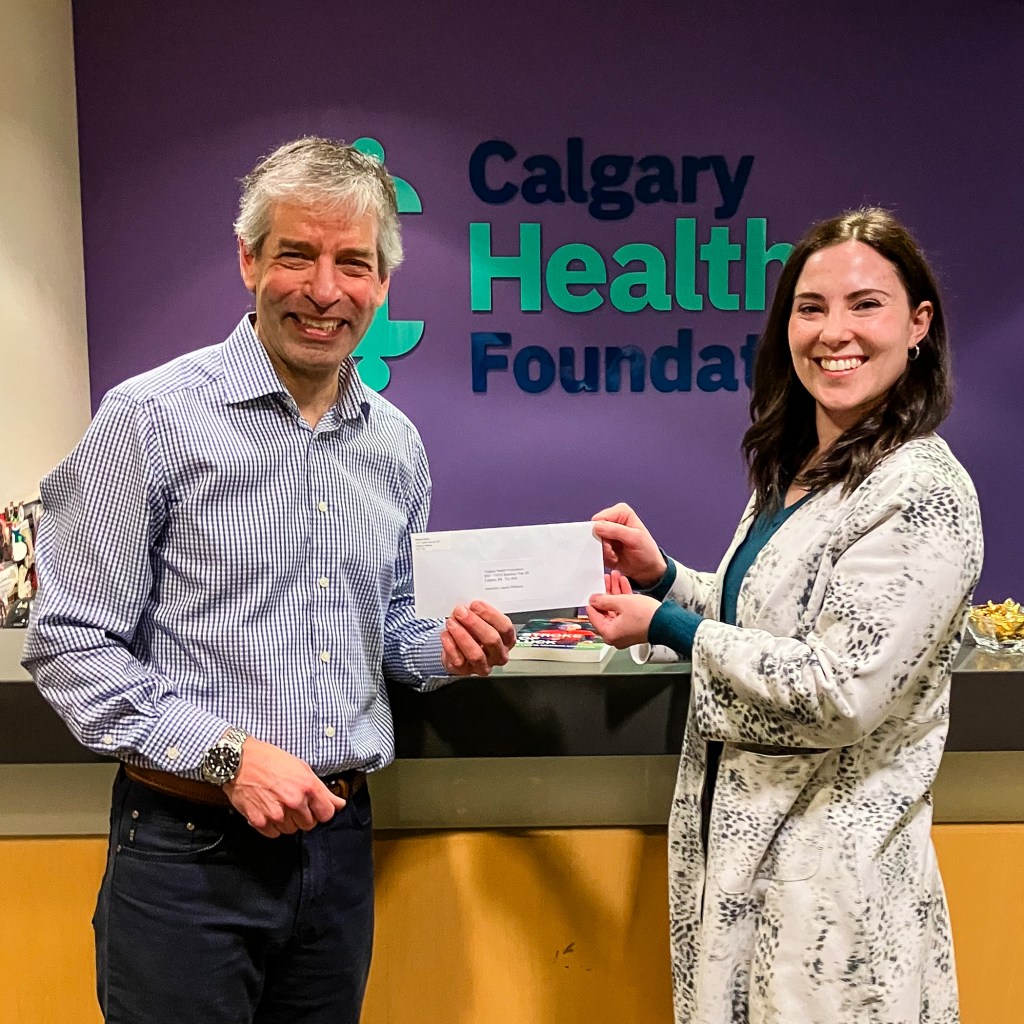
I had the pleasure of dropping into the Calgary Health Foundation office today. The purpose of my visit was to present CHF with a donation cheque, on behalf of everyone who has supported my Stroke of Luck book project.

When I first considered writing a book about my stroke journey, it was a daunting prospect. I was indebted to the doctors, nurses and staff at the Foothills Medical Centre, Unit 100 (“the Stroke Unit“) for their care during my stroke journey. As a grateful patient, it was ultimately an easy decision to go ahead with the project, once I realized that my book could be a platform for helping them in their invaluable work.

I’ve committed to sharing with the Stroke Unit proceeds from book sales, plus all other direct donations I receive. With the help of Laurel Williams (Philanthropy Advisor) and Ashley Oakley (Communications Advisor), these funds will go directly toward the ongoing needs of the Stroke Unit. It’s the least I can do.

Thanks again to all who have bought the book or have contributed to the cause. Your support is greatly appreciated!

With Laurel Williams, CHF Philanthropy Advisor, March 2025 (Photo by Ashley Oakley)

While I’m writing, I will take the opportunity to remind my readers about my three main messages:

  • The importance of an active lifestyle
  • Awareness of ALL the symptoms of stroke, and of course…
  • Raising funds to support the great work being done every day on stroke prevention and care at the Foothills Medical Centre’s Stroke Unit

Finally, if you have not already read the story that Ashley wrote about my stroke journey, you can find it here.

Until next time, be well and BE FAST!

February Sale – Time is Running Out!

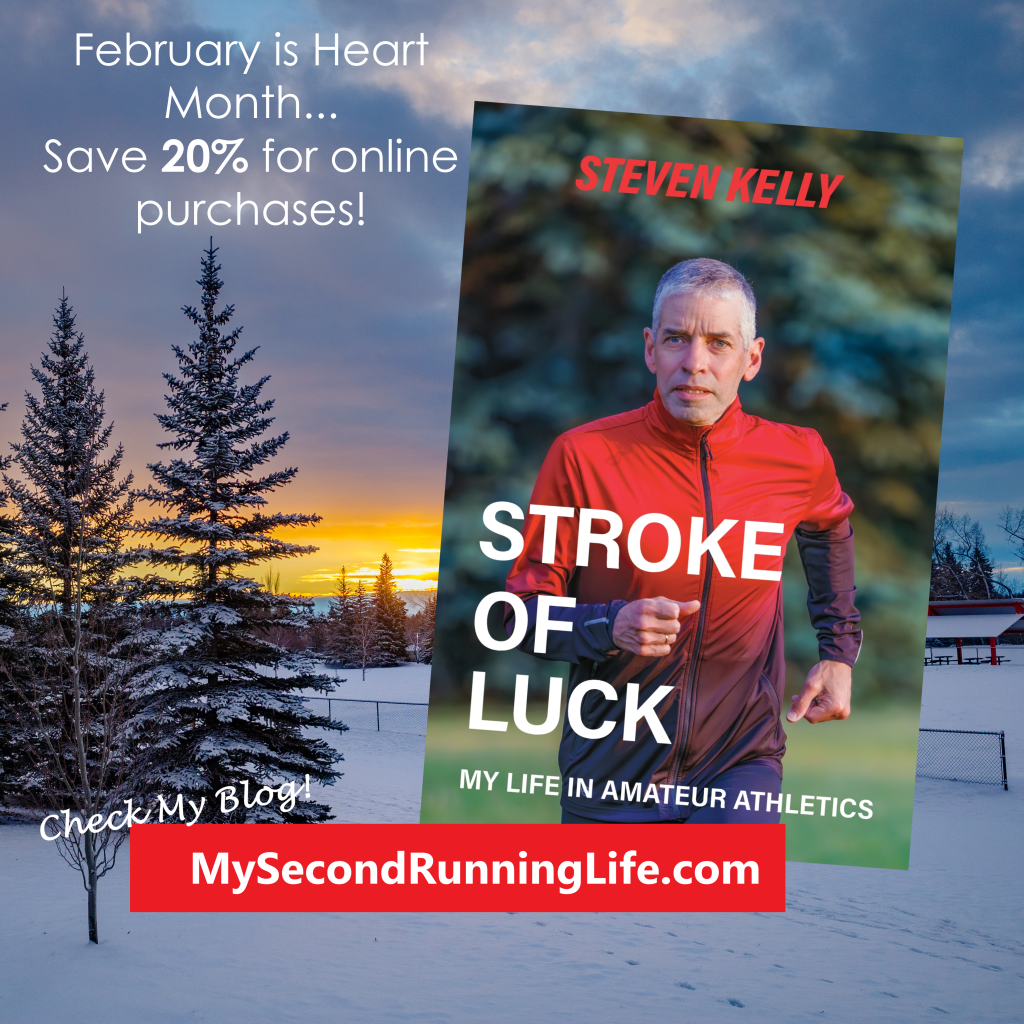
February is Heart Month in Canada, and to mark the event, online purchases of Stroke of Luck: My Life in Amateur Athletics enjoy a healthy 20% discount. But act fast, the month… and the sale… are nearly done. Order your copy today on Amazon!

Did You Know?

We all know that February is the shortest month, at 28 (or 29) days, not the usual 30 or 31. But do you know how this came to be?

We have to go back to the Roman calendar, which divided the year into ten (not twelve) months, from March to December. These months were either 29 or 31 days, not 30, because the Romans considered even numbers to be unlucky. The early part of the year was not even named.

The second king of Rome, Numa Pompilius (ca. 753-652 BC) reformed the Roman calendar and introduced the months we know as January and February. However, it would have been problematic for these new months to have either 29 or 31 days. Why? Because the total number of days for the year (that is, the product of 12 odd-numbered months) would have ended up as an even number, not the required 365.

So, February was adjusted to make the annual math work. A couple of reasons are cited for this decision. The name itself comes from the Roman festival of purification, ‘februa’, which occurred at that time of the year. It was also the time when people mourned the departed. These factors led to February being the month that was shortened to 28 days.


Until next time, be well and BE FAST!
February News Roundup – UPDATED

This is a short post, with the latest news. I’ve been busy compiling and editing photographs for my new BUMP Photo Run series. If you aren’t familiar with BUMP, it’s the Beltline Urban Mural Project, a vibrant project that has been brightening up our city since 2017. Check out my first piece here. You can read about the background of the project while enjoying photographs of some amazing art. Look for more posts very soon!

Canmore Public Library Event, Feb 12

UPDATED!

It was a wonderful evening in Canmore. The venue in Elevation Place was beautiful, we had a great turnout for our talk and an engaged audience. What more could we ask for?

Thanks to my friend, Don Crowe, for taking on MC duties, to Carey Lees of the Canmore Public Library for her flawless organization, and to all who attended. Thanks too, to Kylie and Tim at Strides Canmore, for their generous support of this event!

Here’s a synopsis of the talk:

  • A brief personal introduction
  • A collage of my running adventures (see below)
  • Discussion of my stroke journey, including the useful phrase to remember stroke symptoms (readers of this blog will already be familiar with BE FAST)

Of course, I shared my three main messages, listed below:

  • The importance of an active lifestyle
  • Awareness of ALL the symptoms of stroke
  • Raising funds to support the great work being done every day on stroke prevention and care at the Foothills Stroke Unit
This is what 50 years of running memories look like on one page!

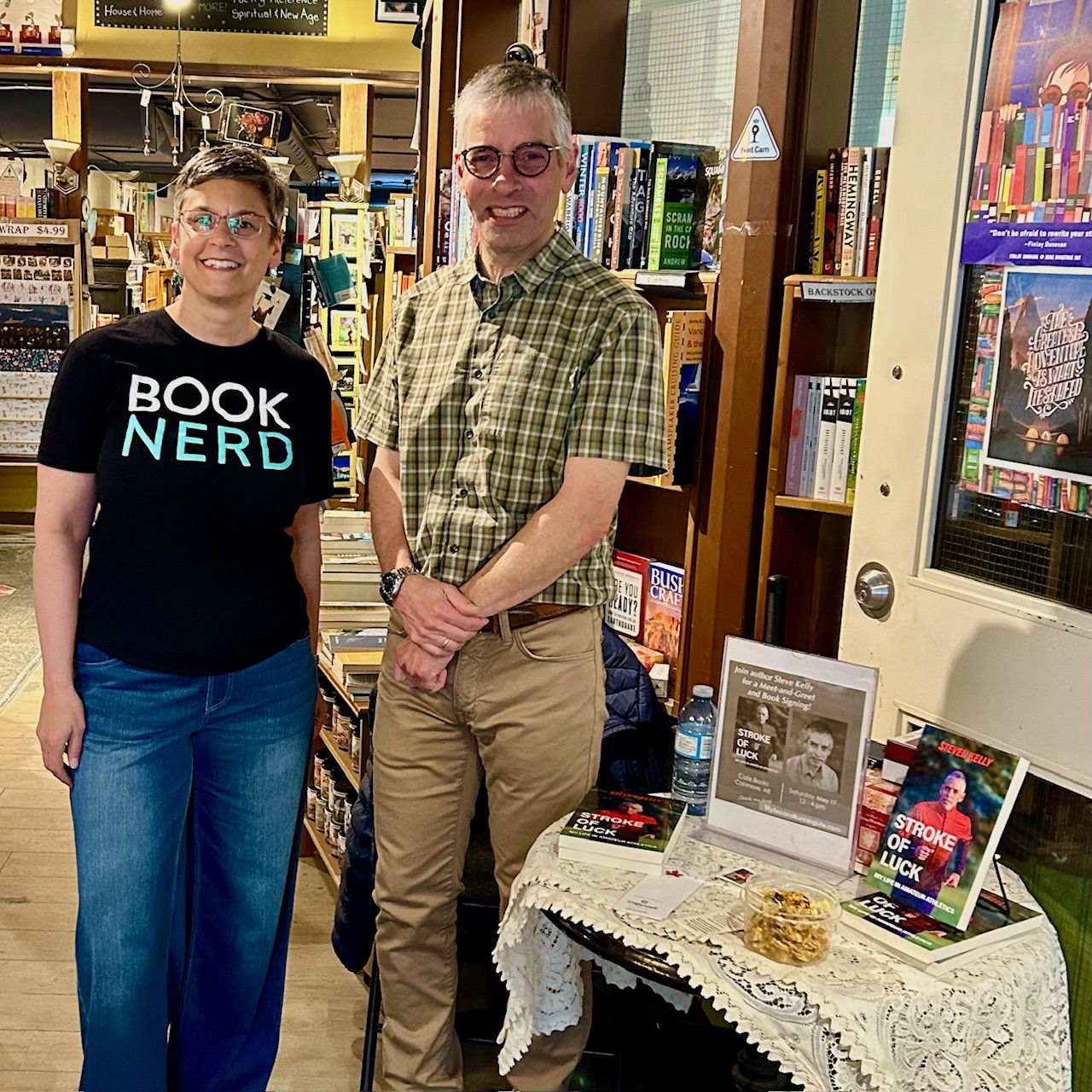
You can read all the details in Stroke of Luck: My Life in Amateur Athletics. And there’s some news on that front: Cafe Books in Canmore will be carrying the book. So, if you live in Canmore, please drop into this unique bookstore and grab your copy!


For anyone in the Canmore area this Wednesday (February 12), I’ll be speaking at an Author Event at the Canmore Public Library at 6:30 p.m. Join me if you can, for an informal (and informative) presentation of my story, as told in Stroke of Luck: My Life in Amateur Athletics. There will be a short presentation, a Q&A session, and some draw prizes. I’ll have copies of the book available for purchase, at a special event price. Proceeds from book sales support the great work being done every day in the Foothills Stroke Unit.

I’d like to thank the staff at the library for hosting us in your wonderful facility. Also, to my friends at Strides Canmore, thank you for spreading the word about this event, and for your ongoing support of my book project. I feel blessed to be part of the tremendous local running community… it’s second to none!

Finally, thanks to Dianne Deans, whom I had the pleasure of meeting at the CanStroke Congress in November. Dianne is an enthusiastic patient support volunteer for stroke victims at the Foothills Medical Centre. She kindly connected me with the Canmore library staff, which led to this event coming together. Thank you, Dianne!

Heart Month Sale Still On!

What better way to mark Heart Month than a healthy discount for online sales of Stroke of Luck?

Order your copy on Amazon, and save 20%. The sale will run through the end of February.

Until next time, be well and BE FAST!
Strokes, Streaks and Snow

Now for a post dedicated to the core subjects on this site: strokes, running, and of course photography. Covering all of that might seem like a tall order, but the last month has provided me with plenty of material on all three subjects. So, without further ado…

CanStroke Congress

In late November, Calgary hosted the 2024 Canadian Stroke Congress, which is described as “a forum for stroke researchers, trainees, clinicians, allied health, administrators, policymakers, and People With Lived Experience of stroke (PWLE) to share new discoveries and innovations, the latest science and therapies, and to build relationships for future collaboration.”

I learned about the congress in a recent conversation with representatives of the Heart and Stroke Foundation. By registering as a PWLE, I was able to attend any of the main sessions at a very reasonable cost. It was a unique opportunity to participate in an exceptional event.

Several workshops were offered on the day before the congress, and I attended one on patient engagement. We heard from scientists and advocates on a range of topics, all focused on ways that PWLE can become involved in stroke research and advocacy. Breakout sessions addressed the practicalities of various engagement paths. The workshop was a good chance to meet other people and share our respective stroke journeys.

I was so impressed with the workshop that I returned the next day to attend a couple of the main sessions. Dr. Andrew Demchuk, the hero of my own stroke story, and Dr. Thalia Field from UBC led a discussion, “What’s New in Stroke Prevention?” It was standing room only for this session. While much of the discussion was over my head, I was so impressed by the depth and breadth of the presentation, and the knowledge and confidence of the speakers. It reinforced my opinion that world-class stroke care is available in Canada.

Another session (“What’s New in Acute Stroke?”) had three eminent stroke neurologists discuss developments in stroke diagnostics and therapies, including some that I touched on in a recent post. It turns out I have a connection to all three of the speakers:

  • Dr. Michael Hill was one of the physicians involved in my care at the Foothills Stroke Unit in 2017. He kindly wrote the foreword for Stroke of Luck.
  • I’ve never met Dr. Mayank Goyal, but he would have been the physician responsible for inserting a stent into my blocked vertebral artery, should the decision have been made to follow this treatment route for me.
  • Finally, Dr. Aristeidis Katsanos is an eminent stroke neurologist at my alma mater, McMaster University.

My takeaway from attending the congress is that while stroke incidence is increasing and our healthcare system is under severe pressure, we should be encouraged by many significant advancements that are being made in stroke diagnostics and therapy. There is reason to be optimistic about the future.

A Blast of Winter

Coincident with the stroke congress was Calgary’s first blast of winter. This likely gave the conference organizers fits. It was quite a wallop. I think we got something like three times our usual November snowfall in one day. Now, while that did complicate a lot of things, it also provided for some great photography. Here are some shots from around the city… with a reminder that the copyright for all images is mine.

Strides Run Streak

Here we are, already halfway through December. Cue the usual observations about where the year has gone. December is also when many Calgary runners take on the annual Strides Run Streak. The challenge is simple: run at least one mile every day during the month.

I have some meaningful connections to this event, so whatever else is going on at this time of year, I like to sign up for it. One mile a day is an achievable goal. I give myself the added challenge of finding a worthy photo or two while I’m completing my run. Sometimes that is a bigger test, particularly with the days getting shorter and shorter!

This year, my commitment is strong, but the challenges are not insignificant. We started the month with plenty of snow on the roads and sidewalks, which have slowly turned into skating rinks. Ah, Calgary weather! I’m also doing most of my running solo these days, as my favourite training partner is sidelined with a sore hip. We are both hoping for some improvement soon.

Two weeks into December, my streak is intact, and I have managed to accumulate a few images. Maybe more images than miles, if I’m honest. While it is nice to capture the festive spirit… the snow does help with that… it isn’t essential. Rather, my goal is to find images that can transport me back into that time and place. It’s a way of adding meaning to my runs. When it comes together, it’s a nice feeling. Here’s a sample.

And while I did say the images don’t have to be festive, there is one that has the potential to put even a Grinch like me into the Christmas spirit. See what you think.

Look for more images soon. I have ideas for other posts before I shut things down for the holidays. In case that doesn’t happen, I will take this opportunity to offer my best wishes for a Merry Christmas to one and all.

Be well and BE FAST!

Stroke News Digest

I haven’t written much about strokes lately, so it was time to scan the recent headlines. It turns out there is quite a lot to report on, and much of it (but not all) is good news. I always prefer to start with the positives, so here goes…

Announcing the Black Friday Sale!

If you’ve been waiting to order your copy of Stroke of Luck: My Life in Amateur Athletics, now’s the perfect time. I’ve reduced prices for e-book and print editions by a marathon-inspired 26.2 percent. These are the best prices you’ll see in 2024. The book would be a great gift for a runner… or non-runner… on your holiday gift list!

Order your copy of Stroke of Luck on Amazon today!

Sale prices will be in effect until December 1.

Awareness Campaigns are Working

June is Stroke Awareness Month in Canada. Heart and Stroke is committed to helping improve the lives of people at risk for and living with heart disease and stroke. When it comes to stroke, much has changed in the last several decades. The keys are increased awareness of the signs of stroke, and some revolutionary changes in stroke diagnostics and treatment.

Promoting stroke awareness is a priority for Heart and Stroke. Their media campaigns rely on an easy-to-remember acronym… F-A-S-T. By now, most of us will have seen the television ads and billboards, which remind us of the major signs of stroke, as follows:

  • F is for FACE… Is it drooping?
  • A is for ARMS… Is the person unable to lift both?
  • S is for SPEECH… Is it slurred or incoherent?
  • T is for TIME… Call 9-1-1 if any of these conditions exist!

Heart and Stroke notes that awareness campaigns have been successful. For example, 4 in 10 Canadians surveyed can name at least 2 signs of stroke. Women and older Canadians are more likely to recognize stroke symptoms. Of course, there is always more that can be done.

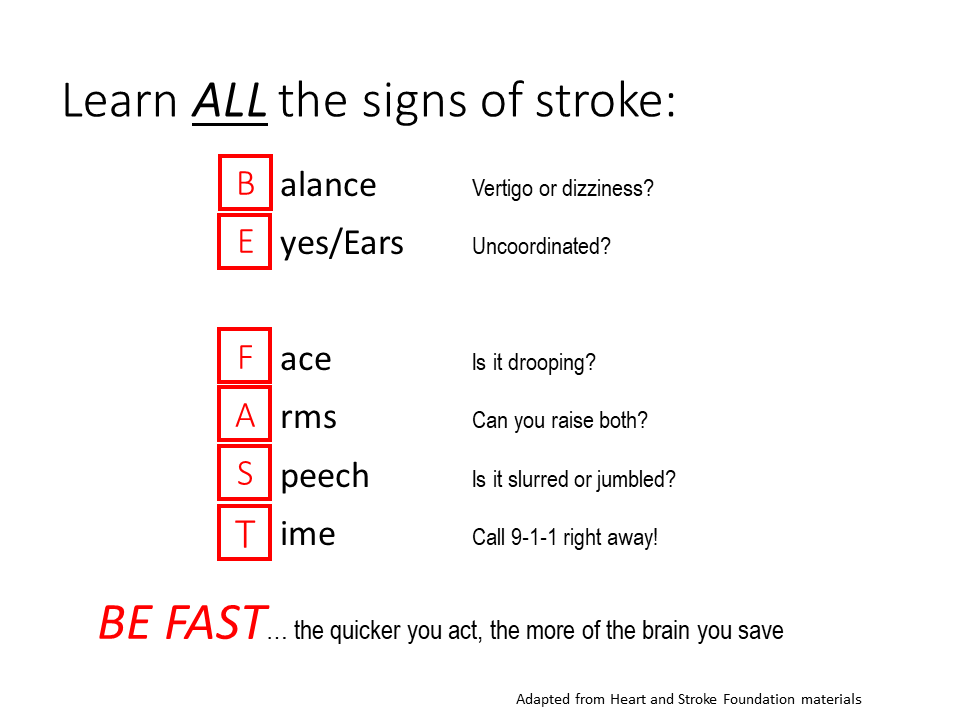
At this point, I will add a caveat about stroke awareness, because my symptoms did not fall into the F-A-S-T framework. It’s an 80-20 situation. I encourage everyone to read my blog pieces where I describe the less frequent symptoms. These include problems with balance and eyes/ears. So, if you can, please remember BE FAST, to cover off all the signs of stroke.

U of Calgary – Leading in Stroke Research

While there can never be a good time or place to have a stroke, it’s been said that Calgary is the place to be if is going to happen to you. I do have some direct experience in this regard, but I didn’t fully appreciate how much innovation is happening here.

A couple of March 2024 articles in Arch, the University of Calgary magazine (here and here) highlight advancements in diagnosis and treatment that originated at the Calgary Stroke Program (CSP). Here are just a few:

(1) A Calgary-based clinical trial led to a procedure known as EVT (endovascular thrombectomy), which is drastically reducing the death rate from one of the most common types of strokes. EVT is a procedure that can disrupt large clots in the brain. If done promptly after the onset of symptoms, EVT can triple a patient’s chance of making a full recovery from certain strokes.

(2) The Alberta Stroke Program Early CT Score (ASPECTS) is a grading system for strokes. This tool, which is based on a brain CT scan, has been adopted around the world as a way of measuring changes in a patient’s condition.

(3) A clinical trial of a clot-busting drug called Tenecteplase (TNKase™) compared it to the standard drug used for dissolving blood clots in brain arteries with acute ischemic stroke. As a result, TNKase™ is becoming the standard of care in hospitals around the world.

I could go on. The innovations originating in Calgary cover diagnostic processes, treatment options and rehabilitative therapies. It is a remarkable success story. On a personal note, I have come to know several of the doctors involved in these research programs. They are truly miracle workers.

Stroke Incidence is Increasing

A study in The Lancet Neurology found that the global prevalence of cardiovascular disease, including stroke, increased from 271 million in 1990 to 523 million in 2019. The study found that population growth and aging account for this increase. While stroke mortality rates had been declining in the latter part of the twentieth century, some countries have actually seen a reversal in this trend since 2010. Unfortunately, the US and UK are two countries that have seen an increase in stroke numbers.

A study on stroke prevalence by the Centers for Disease Control and Prevention fills in some of the details for the US. Here are a couple of headlines: stroke is the fifth leading cause of death in the US and it costs the economy about $56 billion annually. Digging deeper, the CDC study confirms the trend in stroke incidence. Overall US stroke prevalence increased by about 8 percent from 2011-2013 to 2020-22. The increase was slightly higher in females than males. There was an inverse relationship between education level and stroke prevalence. Perhaps most worrying was a significant increase in adults aged 18-64. As you might guess, obesity is a leading risk factor for stroke.

Not surprisingly, the trends in Canada are similar. Stroke is the fifth leading cause of death in Canada, accounting for about 13,000 deaths annually. There are more than 108,000 strokes in Canada each year… that’s one every five minutes. And nearly 900,000 Canadians are living with the outcome of strokes. As in other countries, it’s a result of our aging population.

Fortunately, when strokes do happen, more people are recognizing them and taking action.

Before signing off, I couldn’t help but include a photograph taken on yesterday’s short walk along the Elbow River in Calgary. The picture has nothing to do with strokes, but I liked it. Yes, winter is here!

Elbow River (November 20, 2024)

Thanks for reading. Be well, and BE FAST…

Stroke Awareness Sale Extended!

Did you know that June is Stroke Awareness Month in Canada?

To recognize the importance of stroke awareness, I’ve extended the online promotion for my memoir, Stroke of Luck.

Get your copy on Amazon and save 20% until July 15. And help me help the heroes at the Foothills Stroke Unit!

Stroke incidence continues to rise in Canada – more strokes are happening and more people are living with stroke due to our aging population and more younger people having strokes.  There are now nearly 110,000 strokes each year in Canada. That is roughly one stroke every five minutes.

Strokes occur due to an interruption of blood flow to the brain, and most strokes originate in the carotid arteries. The carotid arteries are the large arteries at the front of the neck. They deliver most of the blood to the brain. Carotid artery strokes produce symptoms that are familiar to many people, thanks to effective public awareness campaigns:

  • FFace drooping
  • AArms can’t be lifted above your head
  • SSpeech is slurred or jumbled
  • TTime to call 9-1-1

As I learned, strokes can also occur due to an interruption of blood flow in the vertebral arteries. These arteries are at the back of the neck. They are smaller than the carotid arteries, but just as important.

The symptoms of vertebral strokes are different than those originating in the carotid arteries because they control different bodily functions. Here’s what to look for as possible signs of a vertebral artery stroke:

  • BBalance and coordination problems, like vertigo
  • EEyes and Ears behaving strangely, especially if uncoordinated

Taken together, these symptoms can be remembered by the words BE FAST.

BE FAST is an appropriate phrase, because regardless of the type of stroke, time is of the essence. If there’s any doubt, call 911 right away!

Be well, and BE FAST!
“Stroke Awareness Month” Sale!

To raise awareness of the prevalence of stroke, I’m offering Stroke of Luck: My Life in Amateur Athletics for a special price in June. Order your copy on Amazon and save 20%.

Help me raise funds for the essential work of the doctors and staff at Foothills Stroke Unit!

The Heart and Stroke Foundation of Canada is celebrating 10 years of raising awareness about recognizing the signs of stroke, and the need to call 9-1-1 right away to get to the best hospital for stroke care. 

BE FAST is a memory jogger that I’ve been sharing with people, because it covers the full range of stroke symptoms. Here’s what it stands for:

BE FAST – someone’s life could depend on it!

Stroke incidence continues to rise in Canada – more strokes are happening and more people are living with stroke due to our aging population and more younger people having strokes.  There are now nearly 110,000 strokes each year in Canada. That is roughly one stroke every five minutes.

I’ll leave you with the words of Dr. Michael Hill, the Calgary neurologist who wrote the foreword to Stroke of Luck:

“Time is brain when it comes to stroke and everyone has a role to play. It starts with someone recognizing the signs of stroke and calling 9-1-1”

– Dr. Michael Hill, Neurologist, Calgary Stroke Program

So, during June, why not take a minute to familiarize yourself with ALL the potential signs of stroke? Even better, spread the message to those you care about. It could save a life! And if you’re looking for a bit of motivation, why not order your copy of Stroke of Luck for a discounted price?

BE FAST, and be well!

Steve