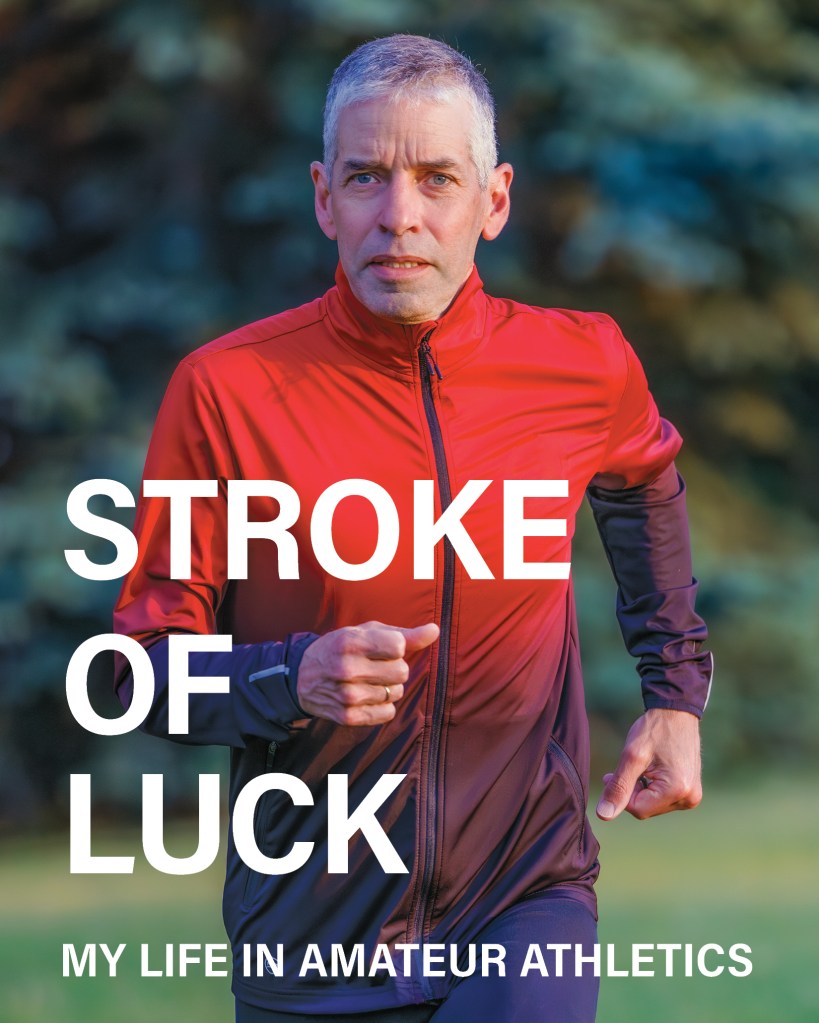
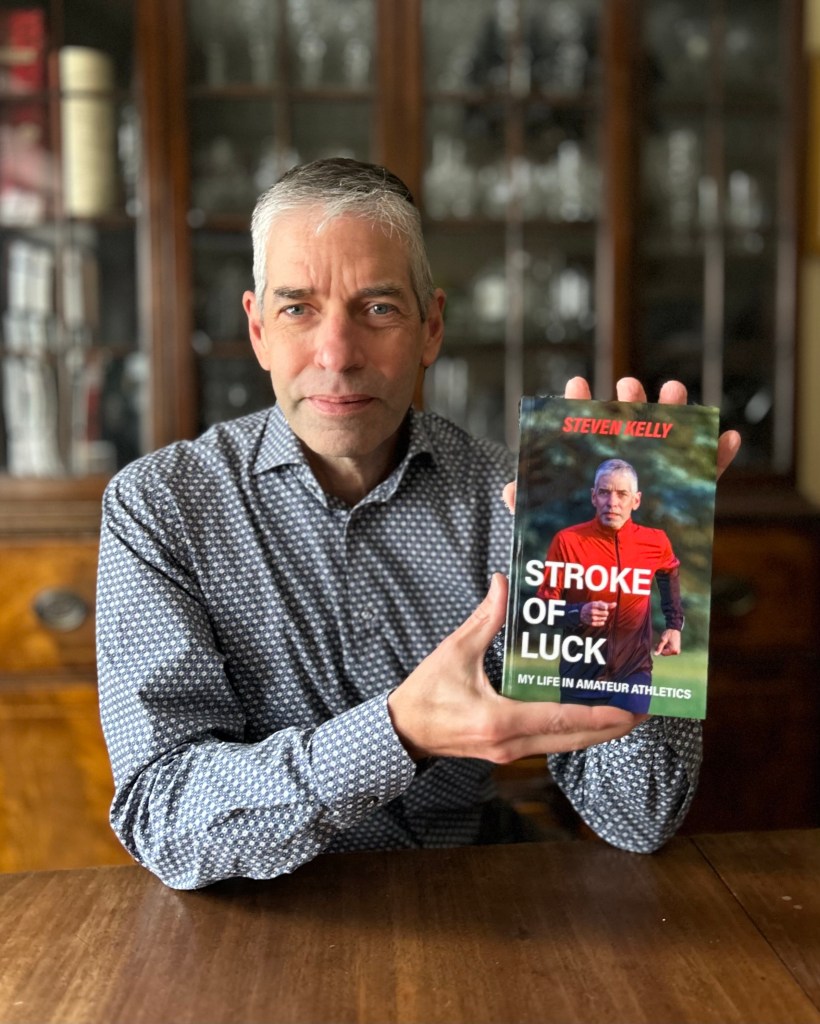
I’m pleased to announce that my memoir, Stroke of Luck: My Life in Amateur Athletics, was recently published. The book is available now on Amazon (in either print or e-book format) or through independent bookstores. For those in Calgary, you can reach out to me directly for a copy. You’ll find details about the book on the dedicated page on this site. Click here.
Writing and publishing the book has been a personal journey of discovery. I hope you will enjoy reading about my lifelong connection with distance running, and the process of recovering from a number of strokes in 2017.
To my readers, and to those of you following me on the blog or on Instagram, I appreciate your interest and support. I look forward to sharing more stories and photographs with you.
Steve
Stroke of Luck: My Life in Amateur Athletics – order your copy today!
As anyone who has lived here can tell you, Calgary doesn’t do fall very well. Sure, it can be nice one day, but we know not to be fooled. It’s only a matter of time before the weather turns into a demon.
This past week was a good case in point.
The First Responders races are hosted by Multisports Canada, in support of all first responders – police, fire, EMS and military. Races are held across Western Canada. This year, the Calgary race was held on October 22, on beautiful St. Patrick’s Island.
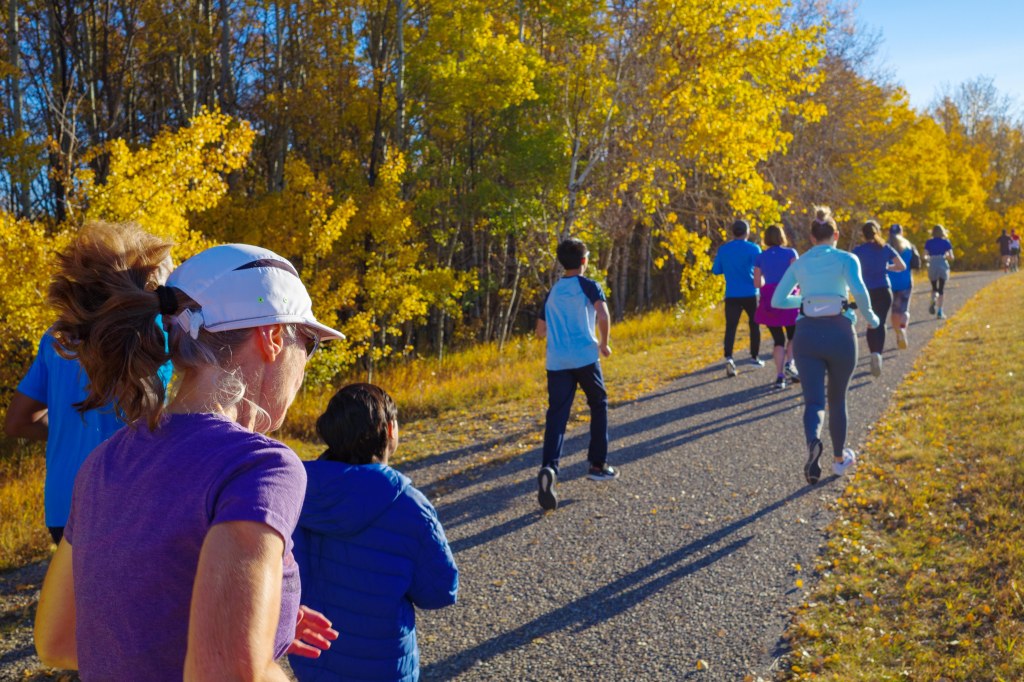
It was a cool day… a perfect day for racing. A good turnout for the 5k, 10k and half marathon races provided lots of opportunities for runners and spectators. Deb and I were there to cheer on some young athletes from our club. We were also fortunate to have Dan in town for the weekend. He was with members of his Cold Lake squadron, to compete in the 10k.
Overcast skies and the scenic backdrop of the island also promised some great photo opportunities. I got myself ready in a few strategic locations, with my Leica M10 and the excellent Voigtlander 75mm Heliar f1.8 lens in hand.
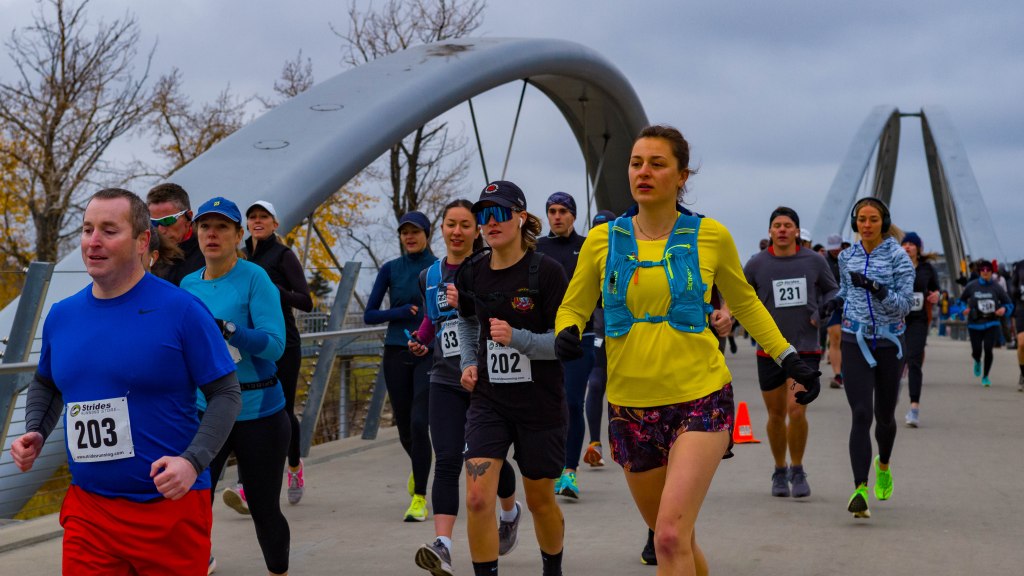
Competitors in the Half Marathon make their way across the George C. King Bridge
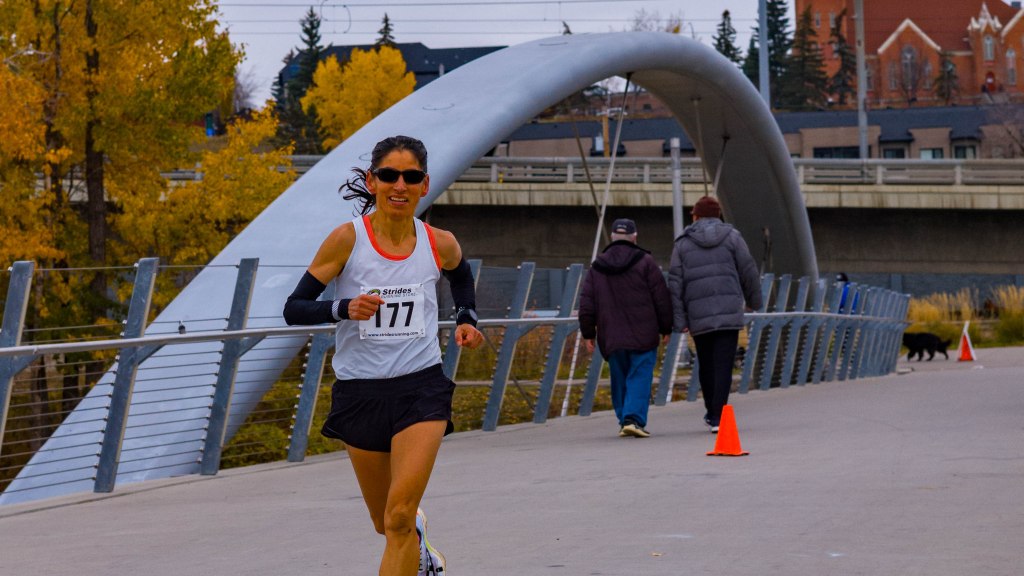
The racers didn’t disappoint. There was plenty of excitement and some terrific performances. You can find the results for all the races here. The ageless Maria Zambrano, who has been a fixture in the Calgary race scene for decades, won the 10k outright, in a sparkling time of 36:09. She isn’t getting older, she is getting faster. Amazing!
Maria Zambrano heads for home in the 10k
Providing more evidence that age is really just a number, Andrew Brown took home top honours in the half marathon, running 1:26:35. By the way, Andrew is in the 50-59 age group.
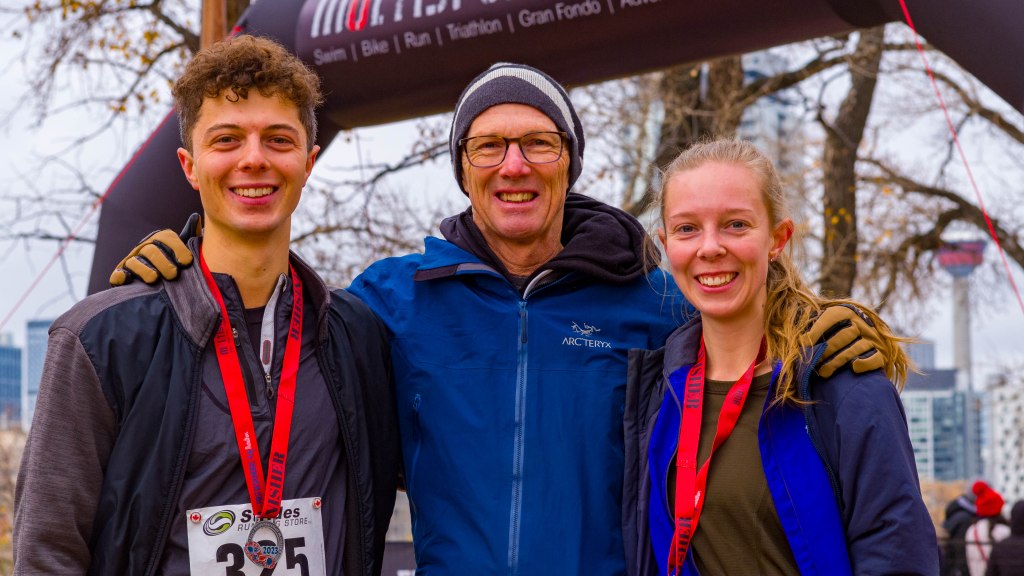
I was wearing two hats (well maybe three, given the temperature.) As an assistant coach, I was rooting for two young runners in our Adrenaline Rush club, Alison and Owen MacPherson. Both raced their plans to perfection, chalking up negative splits and looking far too comfortable at the finish. Dad Gord was there to cheer them on!
The MacPherson family celebrates two fine performances in the 5k
Now, what about the demon, you ask?
Our time ran out on Monday, with the arrival of a cold front. It was the first blast of winter. By the time it was done, 15cm of snow had fallen on Calgary, and our pleasant fall was a distant memory. We are still digging out! And running on treadmills for the most part.
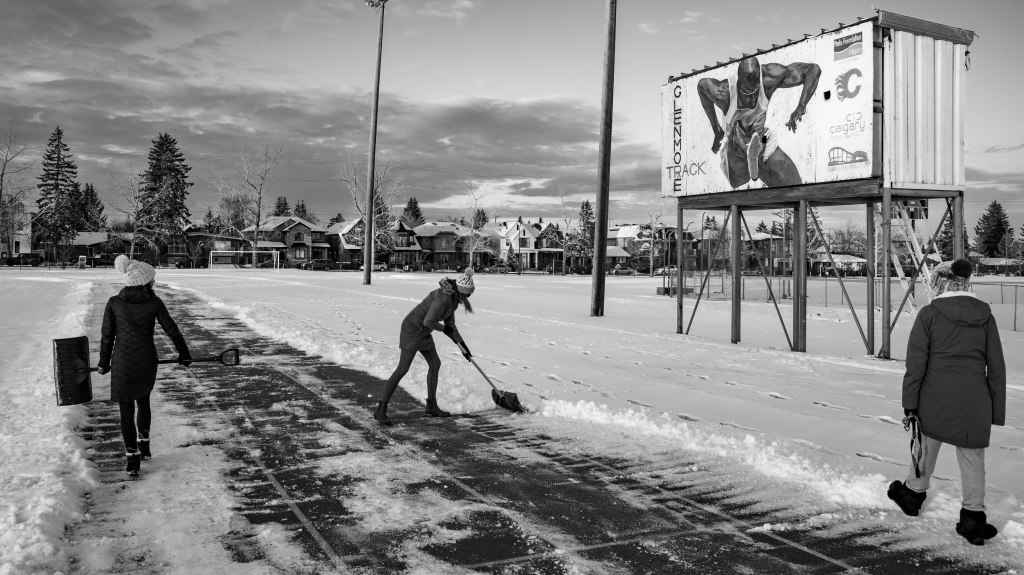
Proving the resilience of the Calgary running community, a small army of volunteers picked up their shovels and headed for the track at the Glenmore Athletic Park.
Shovels ready!
As Deb and I worked to clear a couple of lanes on the back straight, I did some math to take my mind off my aching back. It took us an hour of hard work to clear about 200m of one lane. Did you know that one lane on a standard track is 4 feet (1.2m) wide? That means each of us did about 250 square metres of shovelling.
I also had time to figure out that the total surface area of a 400m track is about 4,300 square metres. So, between Deb and I, we managed to clear about 12 percent of the total surface area of the track. Thank goodness we had a lot of help.
No wonder I’m sore today.
Deb, Reinier Paauwe and Jeremy Deere work on the first corner
It all goes to show that Calgarians are adaptable, resilient and community-minded. We runners in the southwest will have a few lanes to train in, at least until the next snowfall.
An impromptu trip to my hometown of Hamilton, Ontario came together quickly last weekend. A visit with my mother was long overdue. While in the city, I took the opportunity to explore some of my old favourite running routes in the east end. There are some good ones.
My first outing was to Gage Park, a 75-acre urban oasis a few kilometres east of downtown. The city purchased the land for the park from Robert Russell Gage in 1917. The landscape architects Howard and Lorrie Grubb designed the park from 1919 to 1927. It features a picturesque 2-kilometre paved pathway loop, a historic greenhouse, gardens, fountains and many monumental trees.
I had racked up countless laps of the park as a novice runner. That was nearly fifty years ago. A couple of easy laps transported me right back to those days. There was something reassuring about seeing all the landmarks just as I remembered them. Where did all the years go?
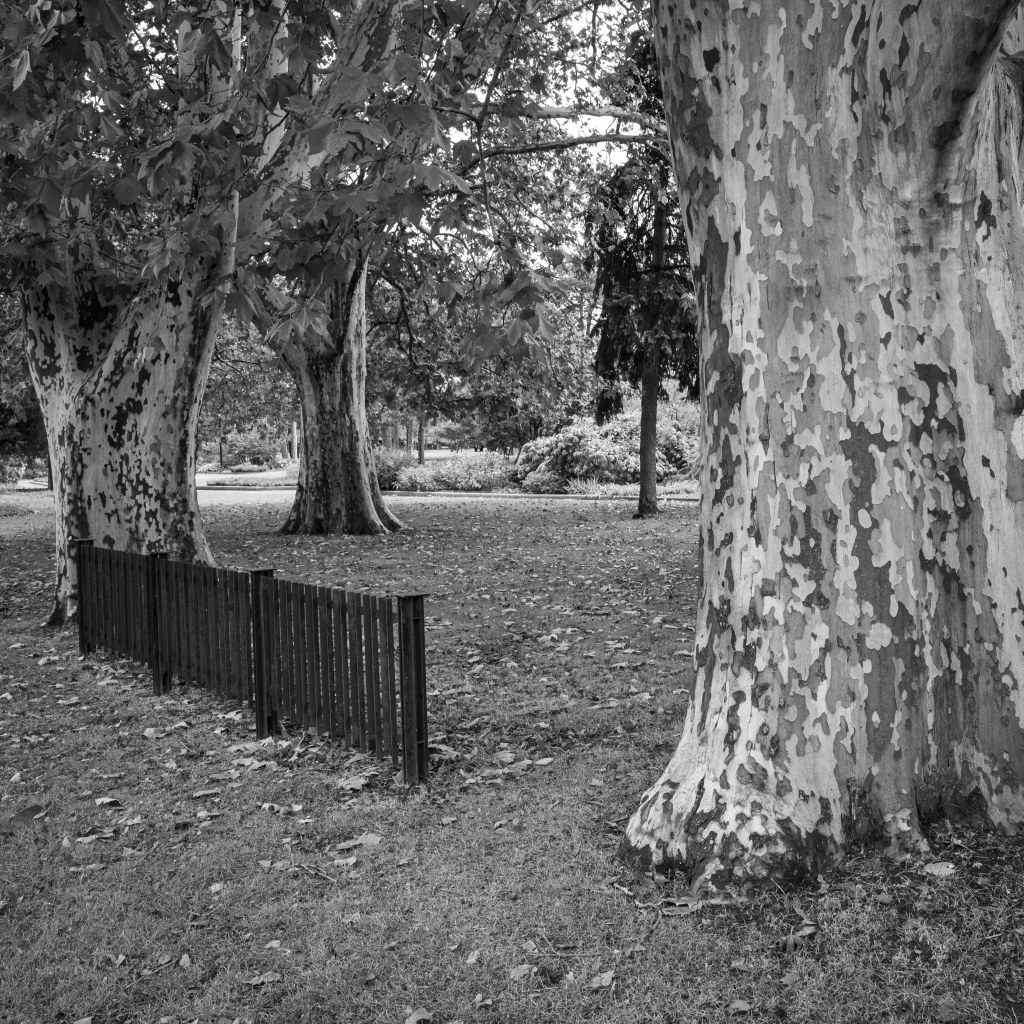
I made sure to check on my three favourite trees, a grouping of massive plane trees along the northern edge of the park. They were just as impressive as ever. Plane trees are large, deciduous trees that are native to North America, eastern Europe, and Asia. They are characterized by scaling bark, which I think looks fantastic in a black and white photograph. See if you agree.
Plane trees, Gage Park
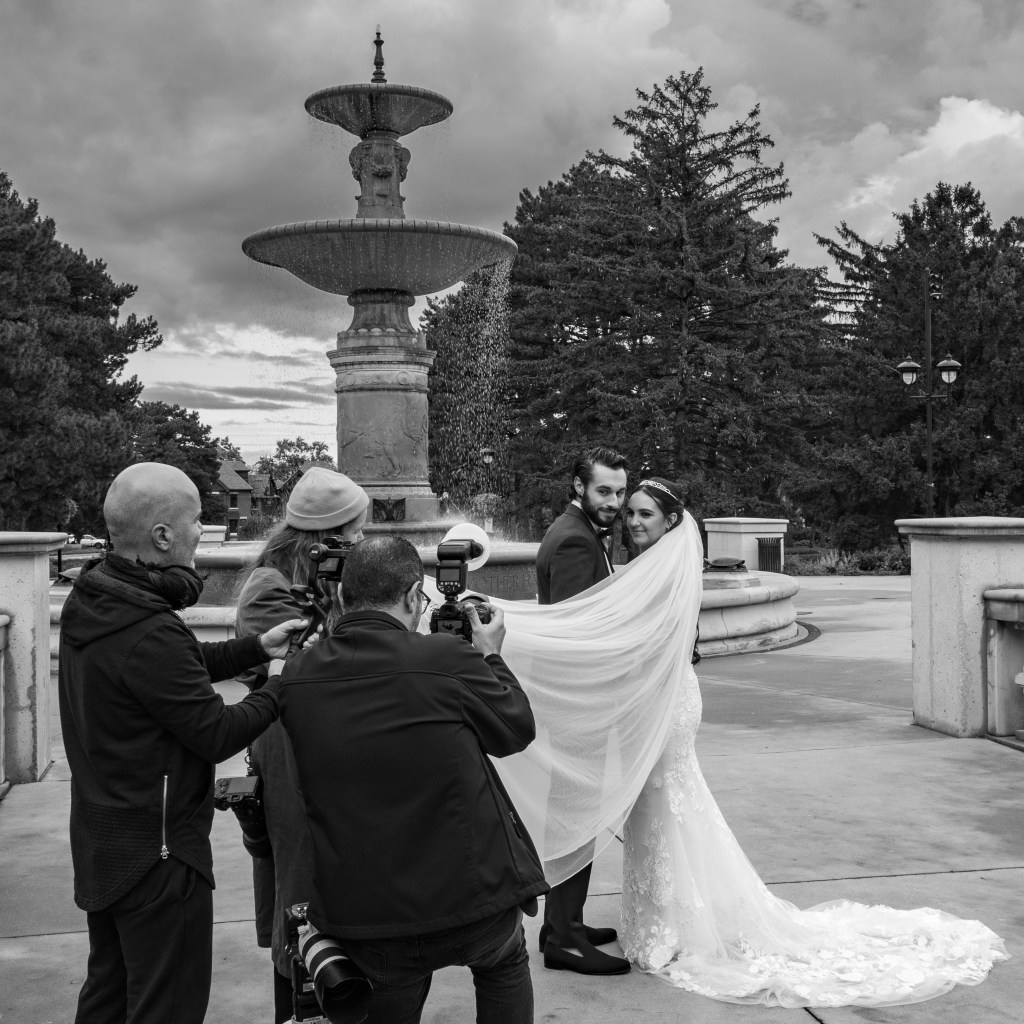
I swung by the fountain which sits in the centre of the park. Surprisingly, it was operating. I can’t say I’ve seen that very often. A young couple was using the fountain as a backdrop for their wedding pictures. They didn’t seem to mind a sweaty runner stopping to snap a few pictures of his own.
Wedding pictures, Gage Park
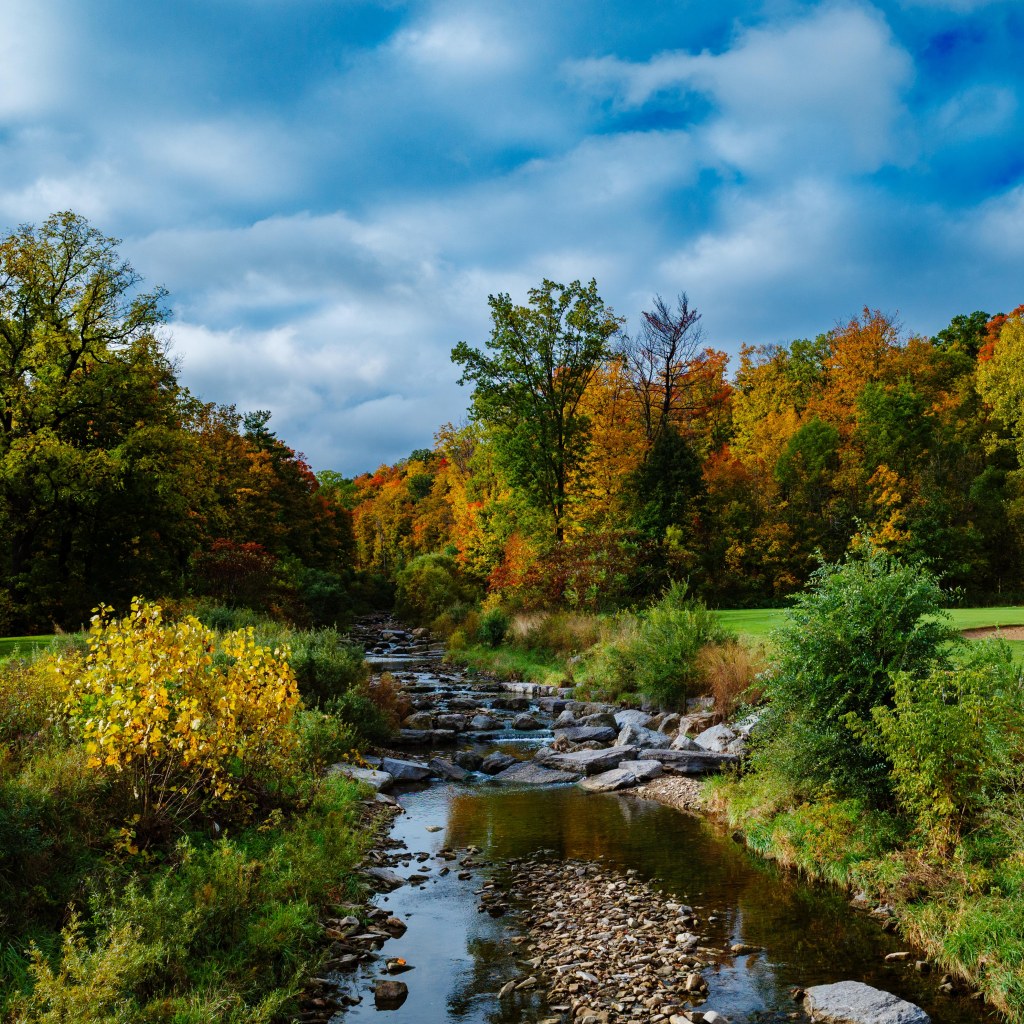
The next morning, I made my way to the Rosedale neighbourhood. As with Gage Park, I have many happy memories of running through and around the King’s Forest Golf Club as a high school cross-country runner. It was our training headquarters, and we knew every inch of the trails. Redhill Creek meanders through the golf course, and it made for a pleasant photo stop.
Redhill Creek, King’s Forest GC
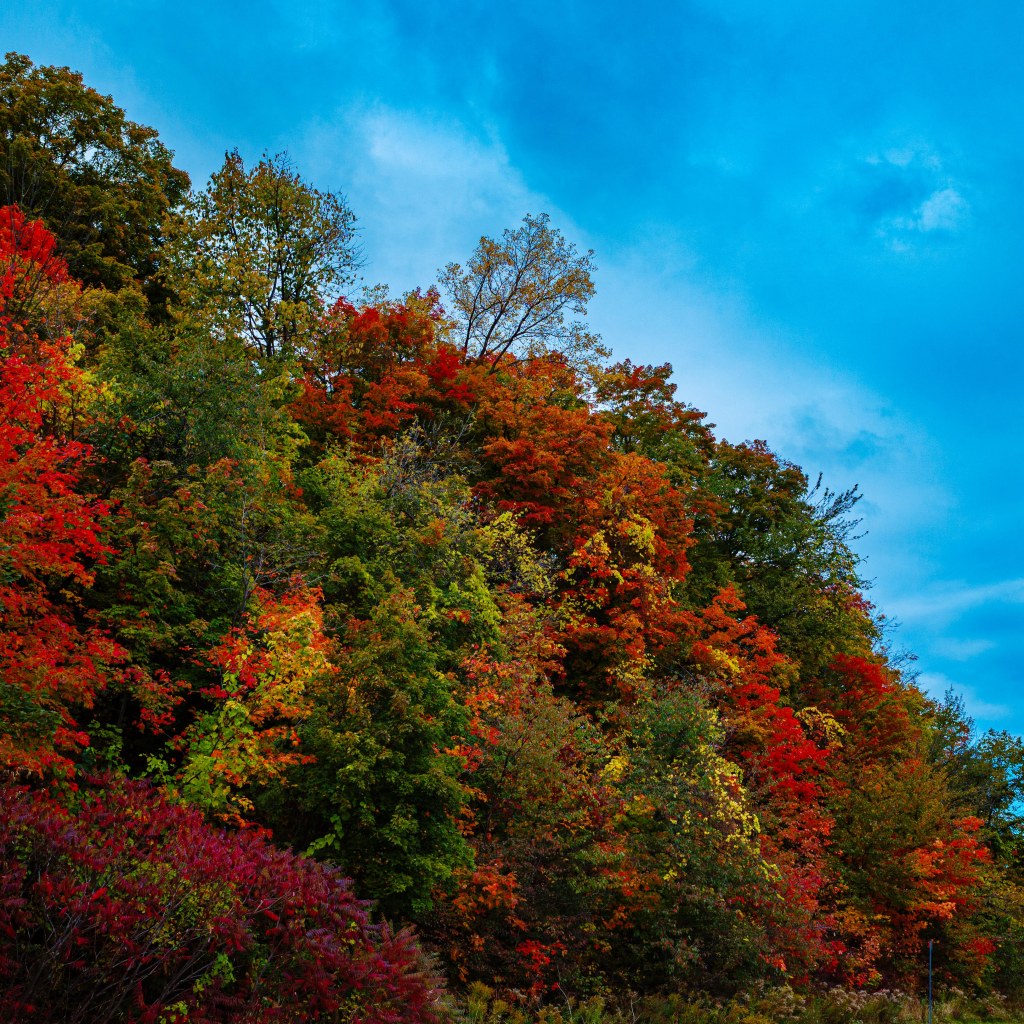
On my way home, I made sure to run along Kimberly Drive, as I knew the foliage on the Niagara Escarpment (aka “the Mountain” to those of us from Hamilton) would be in peak fall colours. I wasn’t disappointed.
Fall colours, Hamilton escarpment
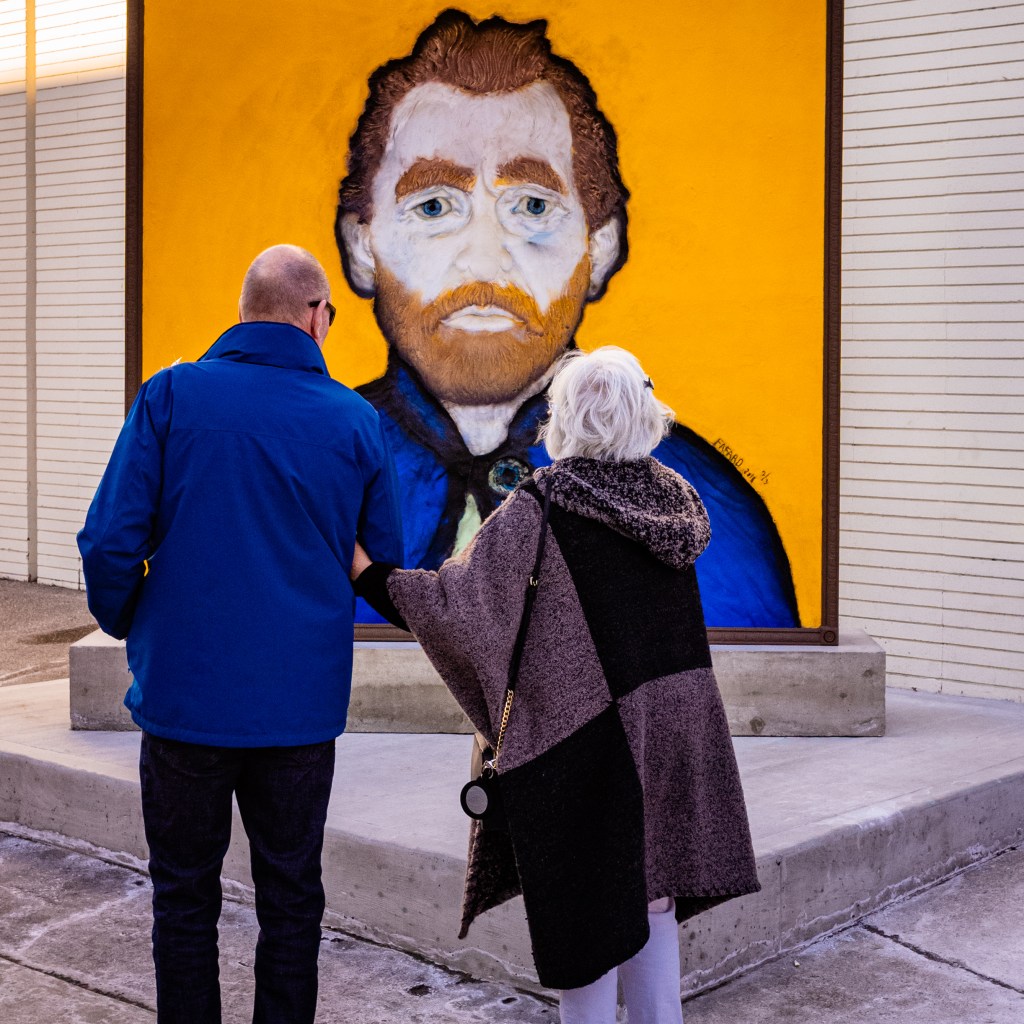
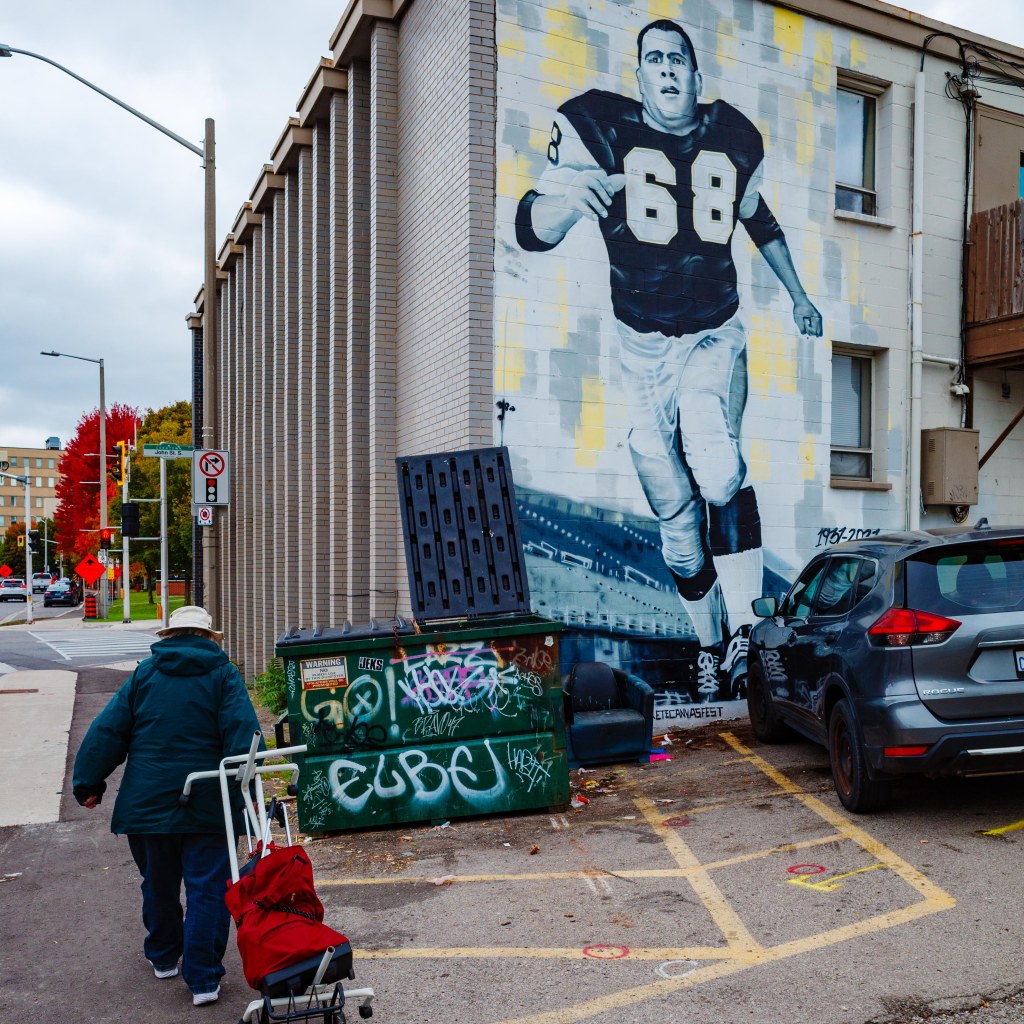
A bonus (non-running) photo from my time in Hamilton presented itself as I made my way to the GO Transit station for my trip back to Pearson airport. As a lifelong fan of my hometown team, the Tiger-Cats, I couldn’t help but stop and admire this mural of the great Angelo Mosca. He was inducted into the Canadian Football Hall of Fame in 1987. Mosca’s hard-hitting style of play suited Hamilton. He died in 2021.
Thanksgiving weekend was a satisfying one for your blog host. We Canadians roast our turkeys on the second weekend of October, rather than waiting another six weeks like our friends to the south.
The first order of business was another parkrun. We had a special visitor from Cold Lake for the weekend who was up for the challenge. Dan was seeking more mountain adventures, and yes, the promise of a turkey dinner. There was no better way to start the holiday weekend.
Ready to run, Nose Hill parkrun 287
Conditions were ideal. Dan took off right from the gun, while Deb and I settled into a more pedestrian pace. Unlike our foggy Nose Hill parkrun (#285) of two weeks earlier… our first… this Saturday morning brought fine fall weather.
Clear skies meant we could see every detail of the challenging circuit. It includes mixed hard asphalt, gravel and a short section of single track. The Nose Hill course consists of two laps of about 2k each, with an out and back section making up the 5k distance. It’s a good test.
A perfect fall day on Nose Hill
We enjoyed a brief peek of the mountains at the far end of the course. (The dusting of snow there was a prelude to our next adventure.)
When we arrived at the finish line, Dan was already cooling down, having put in a hard tempo pace to reach his goal of a sub-20-minute 5k. We were content with a finishing time that was close to (okay, a bit slower than) our previous result. We headed home, all satisfied with our performances.
The energy level is always higher around the house when Dan is there, and this weekend was no different. So, we were not surprised when he explained that his plans for Sunday included a hike in Canmore.
I reminded myself that we would soon be lamenting the return of cold, dark and short days. I asked him to count me in. Who needs sleep anyway?
He had selected Ha Ling Peak, a moderately challenging 8k round tripper with 700m of elevation gain. I had always wanted to try this one, especially since the trail modifications that were done in 2019.
We made an early start, figuring that many enthusiasts would already be on the trail, all keen to burn some calories before a big dinner. In fact, it wasn’t that busy. We encountered more hikers making their way down from sunrise treks to the summit. It would have been a good one, based on the beautiful pink sky we enjoyed on our drive to the mountains.
Our ascent was quick. We stopped only briefly at the two intermediate viewpoints. Then we marvelled at the engineering behind the wooden staircases built into the steep upper sections of the trail. Dan was nimble on the last scrabbly (and unmaintained) section before the summit, and as always, considerate enough to wait for me every so often.
Whew! Ha Ling ascent done
I wondered how I’d do near the top, given that Ha Ling is known to be a bit of a challenge for those prone to vertigo. I have to count myself in that category, after my vertebral strokes.
I focused on the ground in front of me, only looking up when I stopped to catch my breath. Fortunately, I had no issues at all with my balance on the day.
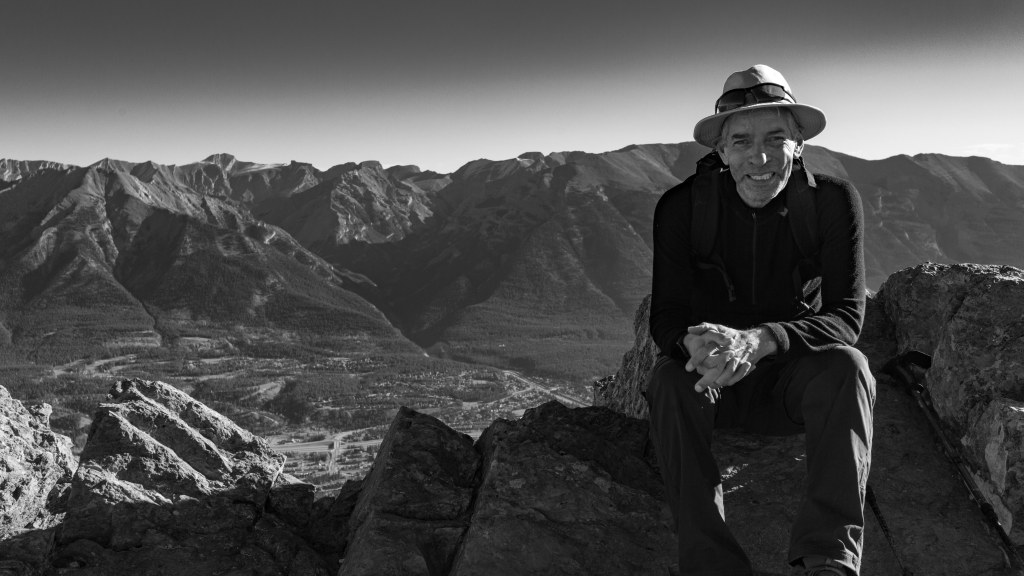
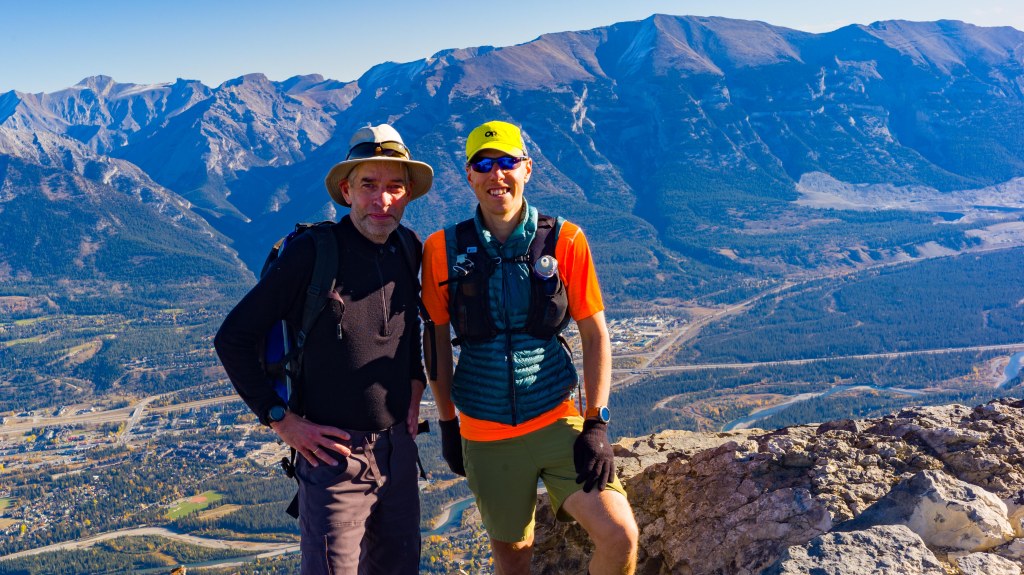
Views of the town opened up below us near the top. It was spectacular; a very rich reward for the 90 minutes of effort needed to get us there.
Dan proposed that we make the side trip to Miners Peak, maximizing our reward even more. I was slightly intimidated by the prospect, until he pointed out that I was looking at the wrong peak. We checked out the cairn at the col, before making quick work of the small peak… more of a mound… directly in front of us.
Dan scouts Miners Peak, with Ha Ling behind
Having skipped down the mountain in no time, after meeting many groups of hikers on their way up, we made the obligatory stop at The Bicycle Cafe in town for an excellent latte. Delicious!
All in all, it was a fine and memorable weekend. It was made even better by the impressive results achieved by my Adrenaline Rush teammates (and many other Calgary runners) in top-flight marathons in Chicago, Victoria and St. George. More on that in a future piece.
It’s been a busy couple of months for your blog host. Between work and travel, there hasn’t been much time for a simple photo run in and around the neighbourhood. Knowing how short our autumn is here in Alberta, it looked like I might miss the whole season.
It was a pleasure to have a short window of opportunity a couple of weeks ago. So I grabbed the trusty Ricoh GR III, left my watch at home, and headed out on a perfect fall day.
Fall splendour was everywhere. Yellow leaves and green grass were on vivid display against the clear blue sky. Magical.
I ran by an elm tree in the corner of Wolfe Park, not far from home. I had to stop. The yellow leaves were glowing in the afternoon sunlight. Then, a minute later and only a few feet away, I came across a vintage trailer parked on the street. I snapped my pictures and finished my run, hoping that I had captured the feeling of the day.
The photos sat in the camera until this morning, when I finally got a few minutes to open them up in Lightroom.
The rich colour palette and stately profile of the elm tree did make for a nice photo. It was a classic fall shot of a fine-looking tree.
Elm tree in full sunlight, as we usually see it
But something seemed to be missing. My picture of the elm tree didn’t grab me as much as I had hoped. After all, the way it looked on that warm September afternoon had made me stop and reach for my camera.
I thought I would try the same shot in an infrared (IR) simulation mode that Lightroom conveniently offers. What’s that about, you may ask?
Well, the short answer is that IR shots respond to different wavelengths than the human eye. Here’s how it works. The human eye sees light in the 400-700 nanometre (nm) range, covering the colour spectrum from purple to red. IR light is in the range of 700-1200 nm; that is, beyond the visible spectrum. We can’t see IR light, but it can be captured (or as in this case, simulated) in photographs. Because the leaves of the elm tree emit light in the IR range, the yellow foliage is recorded as bright white. It can make for surreal images.
Here’s what the infrared version of the same photo looks like.
Same elm tree, simulated IR filter, as we can’t see it
I’m not sure which image I prefer. I like them both. I would never want to overuse the IR effect, given its other worldly look. Seeing the images side-by-side made me realize that there can never be anything that matches seeing nature in person. I am curious which image of the elm tree you prefer. Please let me know in the comments section, below.
As for the picture of the trailer, it was more straightforward to edit. I like the way that the blue of the trailer matches the sky. It’s a bonus that the curtains in the window of the trailer give the picture a distinct fall vibe, picking up the foliage in the background. But that’s just my opinion. What do you think?
Vintage trailer, Wolfe Park
I hope wherever you are, you are experiencing good weather and capturing lots of memorable photographs.
It was a scenario that will be familiar to many runners. I arrived at our weekly interval session, only to find that my Garmin Forerunner watch had died. Given that our workout called for 600-metre repeats, and I had been tasked with leading a small group of new runners in our club, I had a sinking feeling. How would I measure our time and distance? And what about managing the pace for our group?
Oops… dead Garmin. Now what?
Fortunately, my training partners had fully charged watches, so we got through the session with no issues. But for me, going through the workout without a watch did make me think about the challenges of finding… maybe feeling is a better word… a specific training pace. That is especially true if we are building to a goal race, when pacing is most important.
Alex Hutchinson just wrote a piece on pacing for the latest edition of Canadian Running magazine. His article, Pacing for the Marathon, goes into the science behind pace-making and explores some of the latest research on the subject. Anyone who has tackled the monster that is the marathon knows how difficult it is to parcel out your resources over 42 kilometres.
Hutchinson’s article makes the point that the relationship between running speed and energy consumption isn’t a straight line, which argues for holding a steady pace in a race situation. In short, surges cost you more energy than you can get back by slowing down. The problem is that most runners tend to NOT run evenly-paced races. Of course, there are many variables that contribute to this result, including the course profile, our individual fitness, our perception of the distance itself, and the psychology of running against other competitors.
Hutchinson makes another point that seems to get to the heart of the issue. He notes that modern pacing theories focus on a runner’s subjective perception of effort. This suggests that with experience, a runner can learn how hard a pace should feel.
I couldn’t agree more.
This research supports the argument that we need to develop a good sense of what our target pace feels like.
I’ve long been a believer in doing at least some of my running without a watch, at least not a GPS watch. In my view, not every kilometre needs to be accurately timed. And besides, I think it’s too easy to rely on our high-tech devices rather than our own innate sense of what pace we are running.
Like most things, good pacing is a learned behaviour. We can work to improve it. For me, interval sessions are the perfect place to do just that. By working as a group, and especially by taking turns to lead a rep, we can improve our individual feel for pace.
There are also opportunities to improve our ability to dial in a pace in a race situation. For example, we can look for a local parkrun or low-key 5k or 10k race where we can practice finding and holding a goal pace.
Here’s another idea. Run a race (maybe not your major goal race) without a watch. See how close you can get to your predicted time. You’ll be training yourself what a certain pace feels like.
These skills can be very valuable on goal race day. I’m reminded of Trevor Hofbauer’s impressive run in the 2019 Toronto Marathon. At the time, his 2:09:51 finish was the second-fastest marathon ever run by a Canadian. Trevor ran that race without a watch, as he does with much of his training mileage. He said about his remarkable race, “I don’t use pace now, I just go off of time and effort. And that was how I ran today.”
I think there is something to be said for this approach. It requires a runner to be aware of how a given pace feels and trust in their training.
And what about our interval session, the one I ran without a watch? My internal watch told me we had kept a nice steady pace. When my partners shared their data later, it turned out that our pace for each 600m repeat was within a few seconds of our target. Not bad!