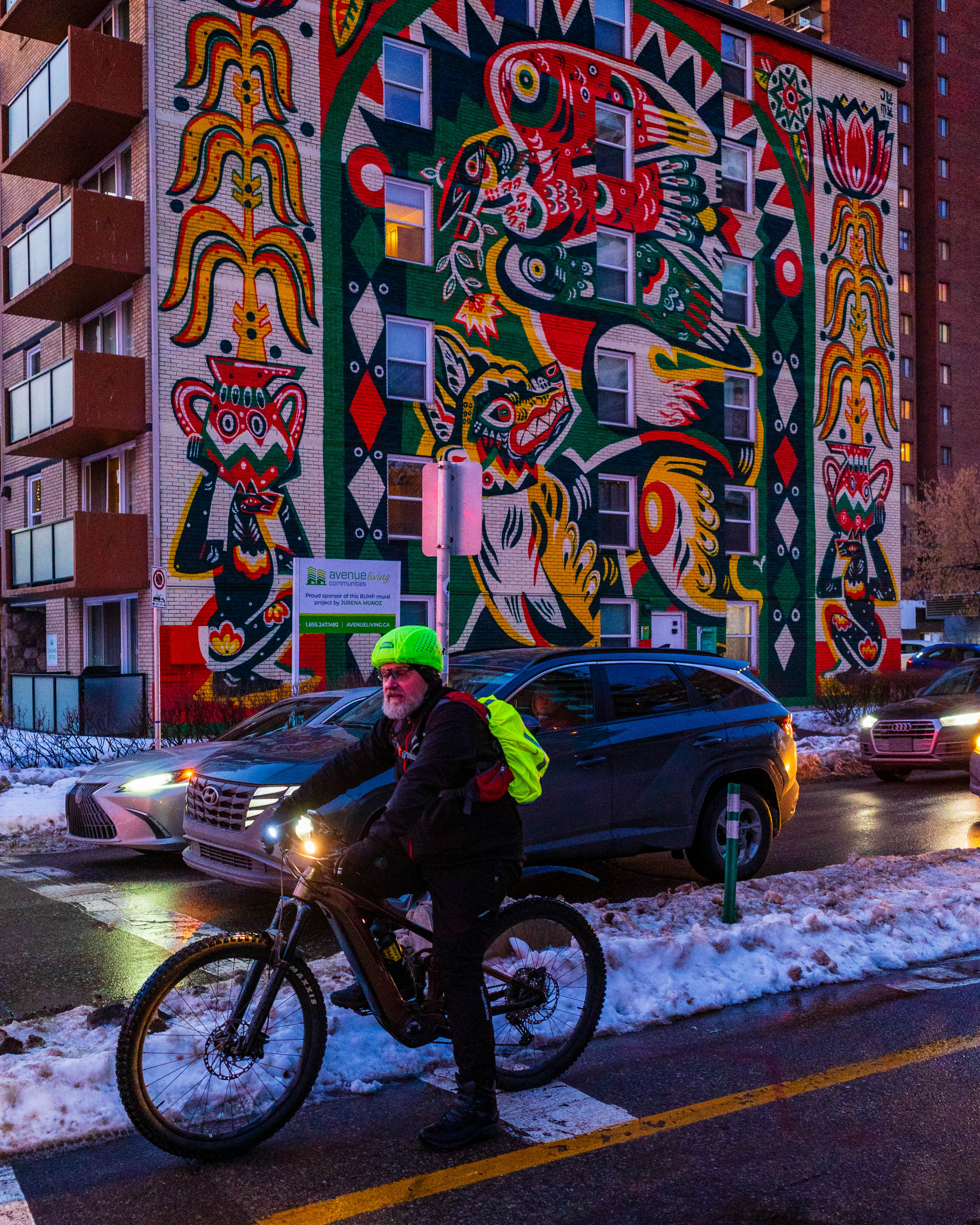
This is a short post, with the latest news. I’ve been busy compiling and editing photographs for my new BUMP Photo Run series. If you aren’t familiar with BUMP, it’s the Beltline Urban Mural Project, a vibrant project that has been brightening up our city since 2017. Check out my first piece here. You can read about the background of the project while enjoying photographs of some amazing art. Look for more posts very soon!
Canmore Public Library Event, Feb 12
UPDATED!
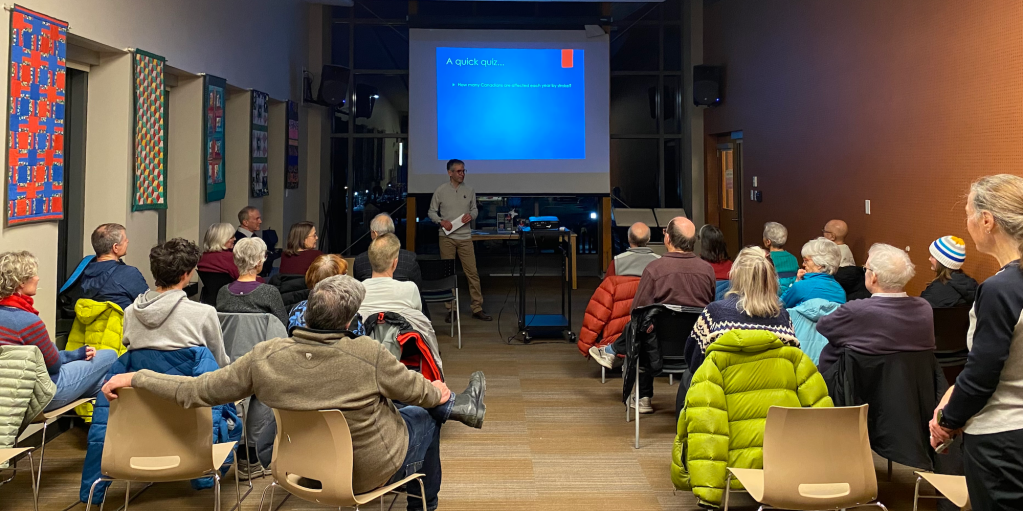
It was a wonderful evening in Canmore. The venue in Elevation Place was beautiful, we had a great turnout for our talk and an engaged audience. What more could we ask for?
Thanks to my friend, Don Crowe, for taking on MC duties, to Carey Lees of the Canmore Public Library for her flawless organization, and to all who attended. Thanks too, to Kylie and Tim at Strides Canmore, for their generous support of this event!
Here’s a synopsis of the talk:
A brief personal introduction
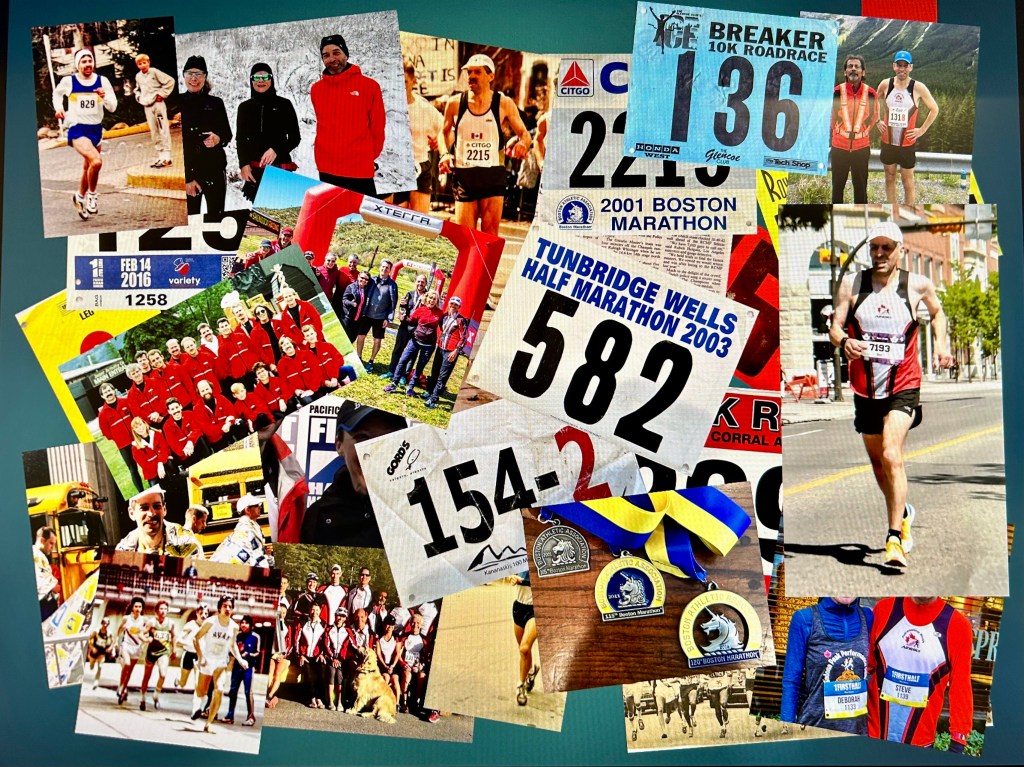
A collage of my running adventures (see below)
Discussion of my stroke journey, including the useful phrase to remember stroke symptoms (readers of this blog will already be familiar with BE FAST)
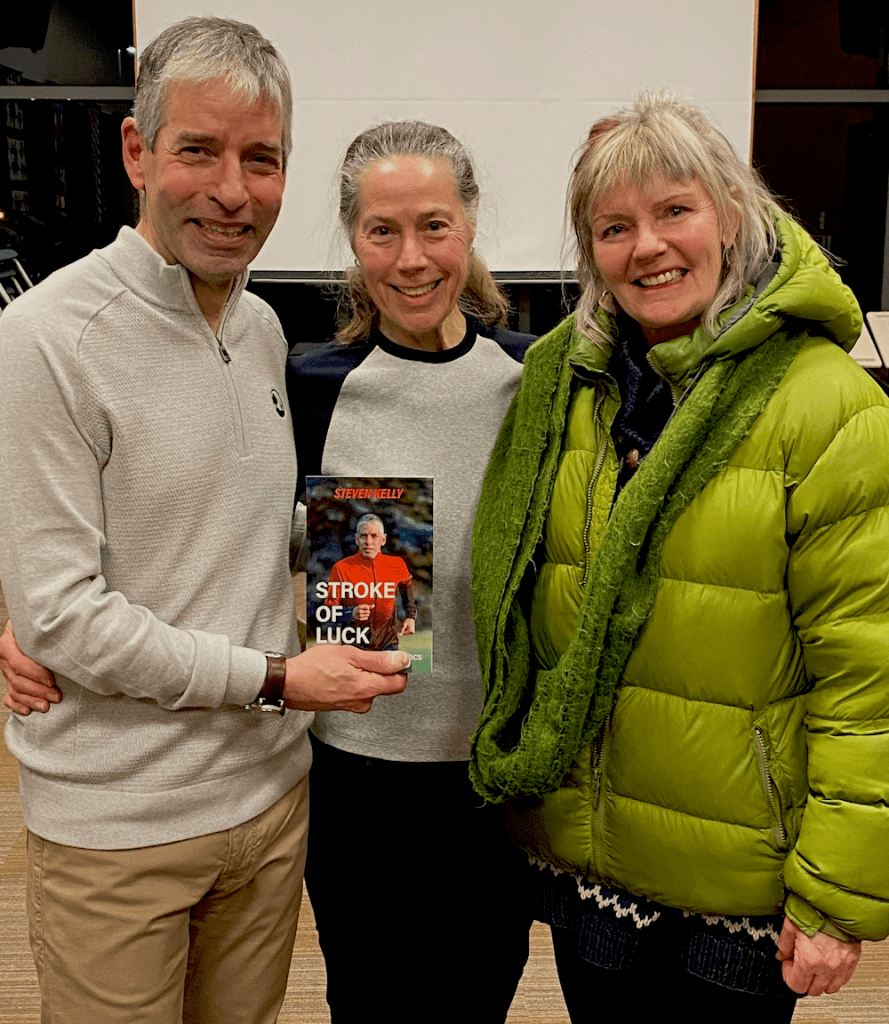
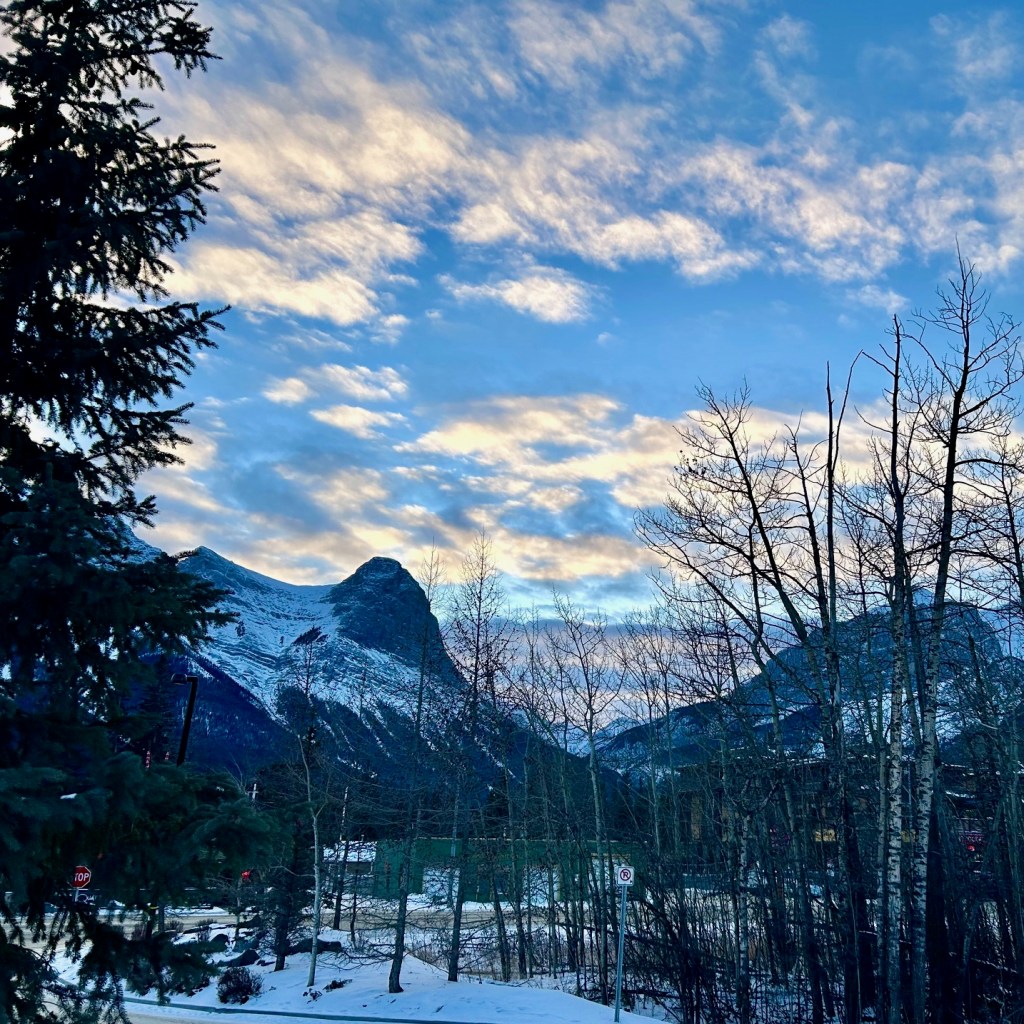
Steve and Deb greet Dianne DeansAuthor Event Feb 12Canmore Vista from Elevation Place
Of course, I shared my three main messages, listed below:
The importance of an active lifestyle
Awareness of ALL the symptoms of stroke
Raising funds to support the great work being done every day on stroke prevention and care at the Foothills Stroke Unit
This is what 50 years of running memories look like on one page!
You can read all the details in Stroke of Luck: My Life in Amateur Athletics. And there’s some news on that front: Cafe Books in Canmore will be carrying the book. So, if you live in Canmore, please drop into this unique bookstore and grab your copy!
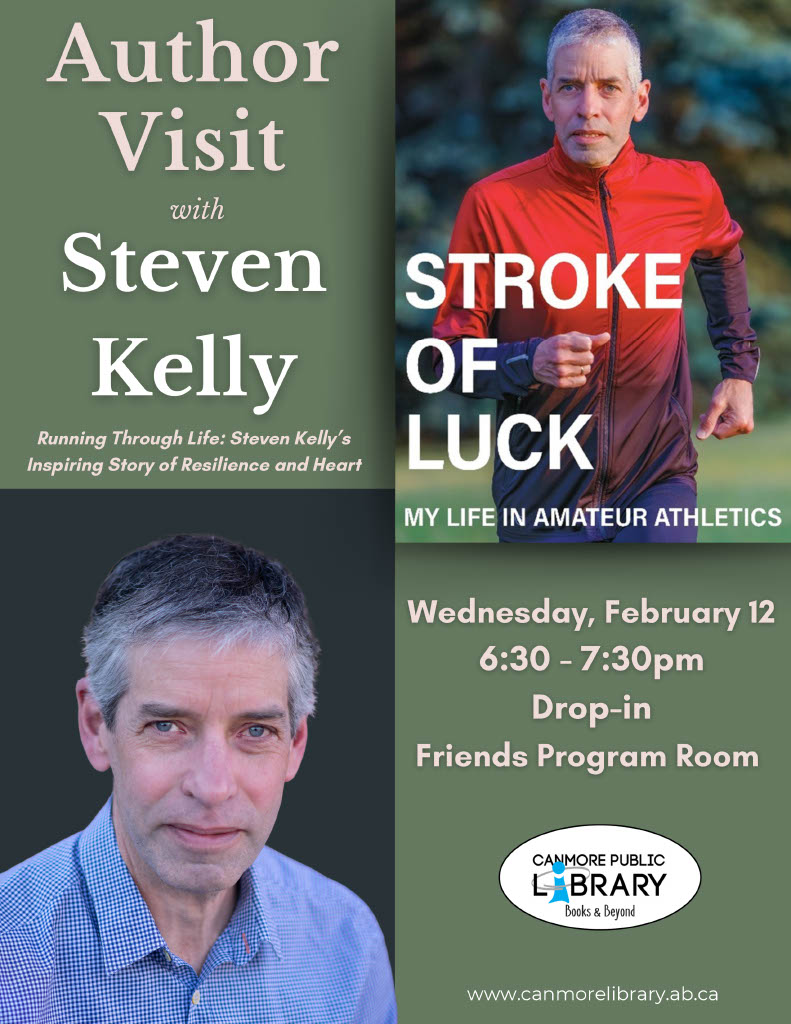
For anyone in the Canmore area this Wednesday (February 12), I’ll be speaking at an Author Event at the Canmore Public Library at 6:30 p.m. Join me if you can, for an informal (and informative) presentation of my story, as told in Stroke of Luck: My Life in Amateur Athletics. There will be a short presentation, a Q&A session, and some draw prizes. I’ll have copies of the book available for purchase, at a special event price. Proceeds from book sales support the great work being done every day in the Foothills Stroke Unit.
I’d like to thank the staff at the library for hosting us in your wonderful facility. Also, to my friends at Strides Canmore, thank you for spreading the word about this event, and for your ongoing support of my book project. I feel blessed to be part of the tremendous local running community… it’s second to none!
Finally, thanks to Dianne Deans, whom I had the pleasure of meeting at the CanStroke Congress in November. Dianne is an enthusiastic patient support volunteer for stroke victims at the Foothills Medical Centre. She kindly connected me with the Canmore library staff, which led to this event coming together. Thank you, Dianne!
Heart Month Sale Still On!
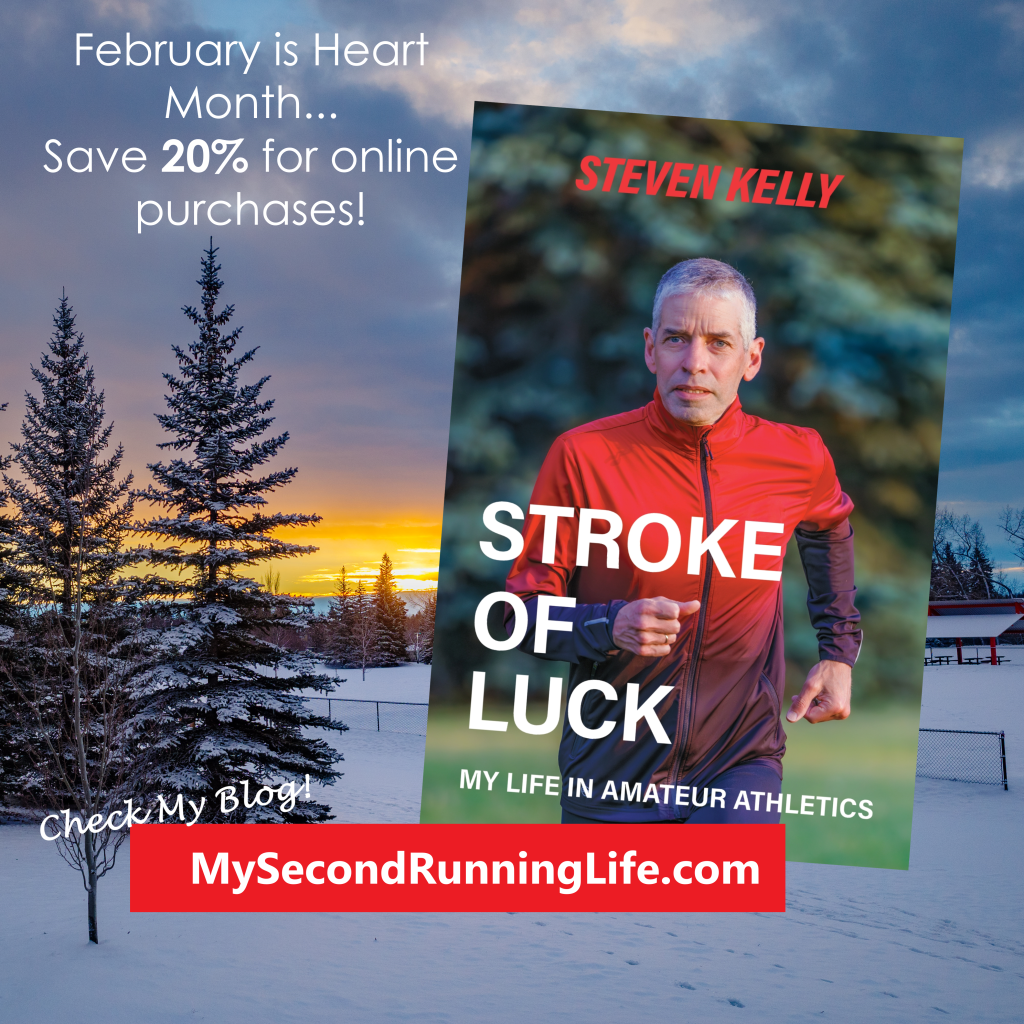
What better way to markHeart Month than a healthy discount for online sales of Stroke of Luck?
Order your copy on Amazon, and save 20%. The sale will run through the end of February.
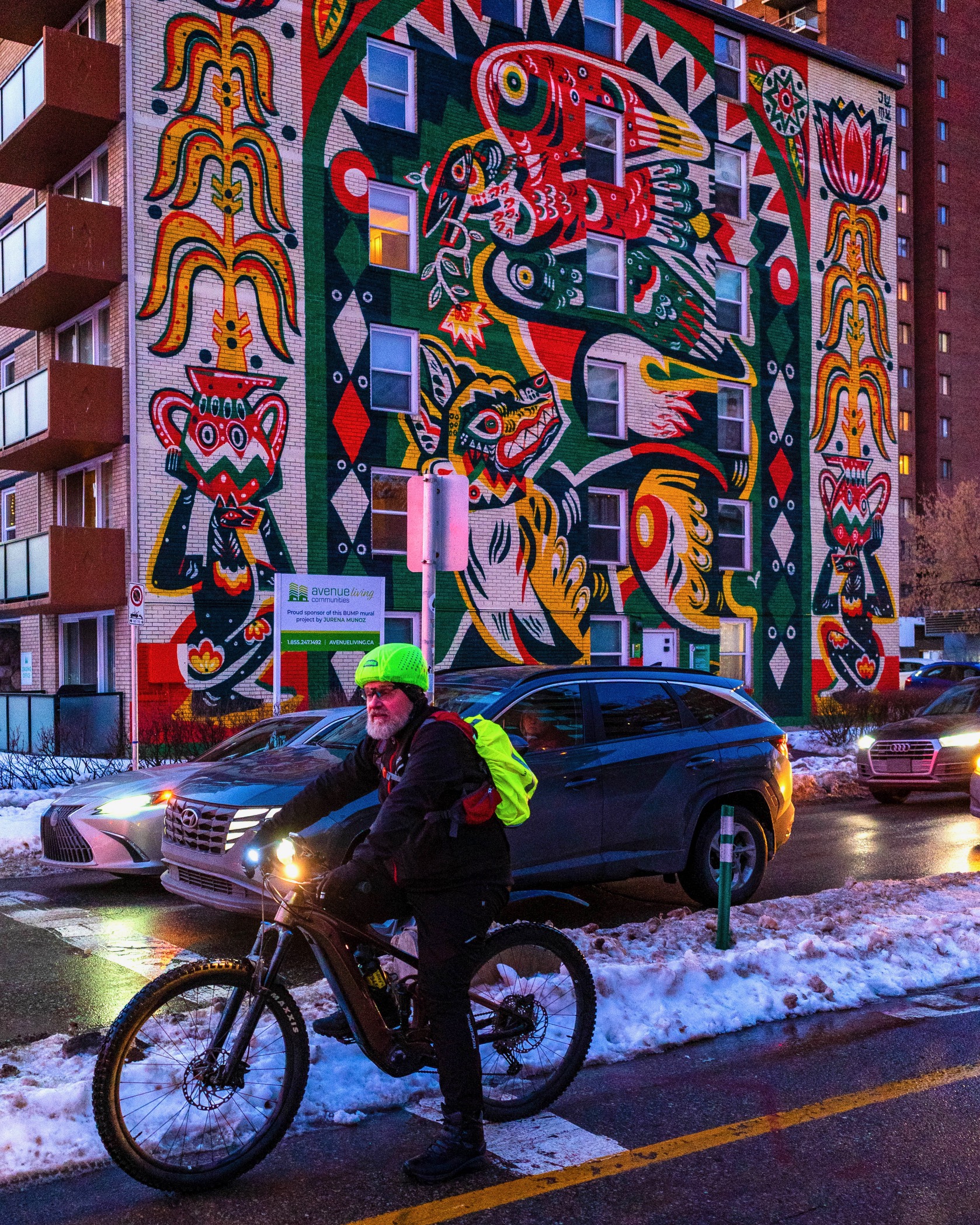
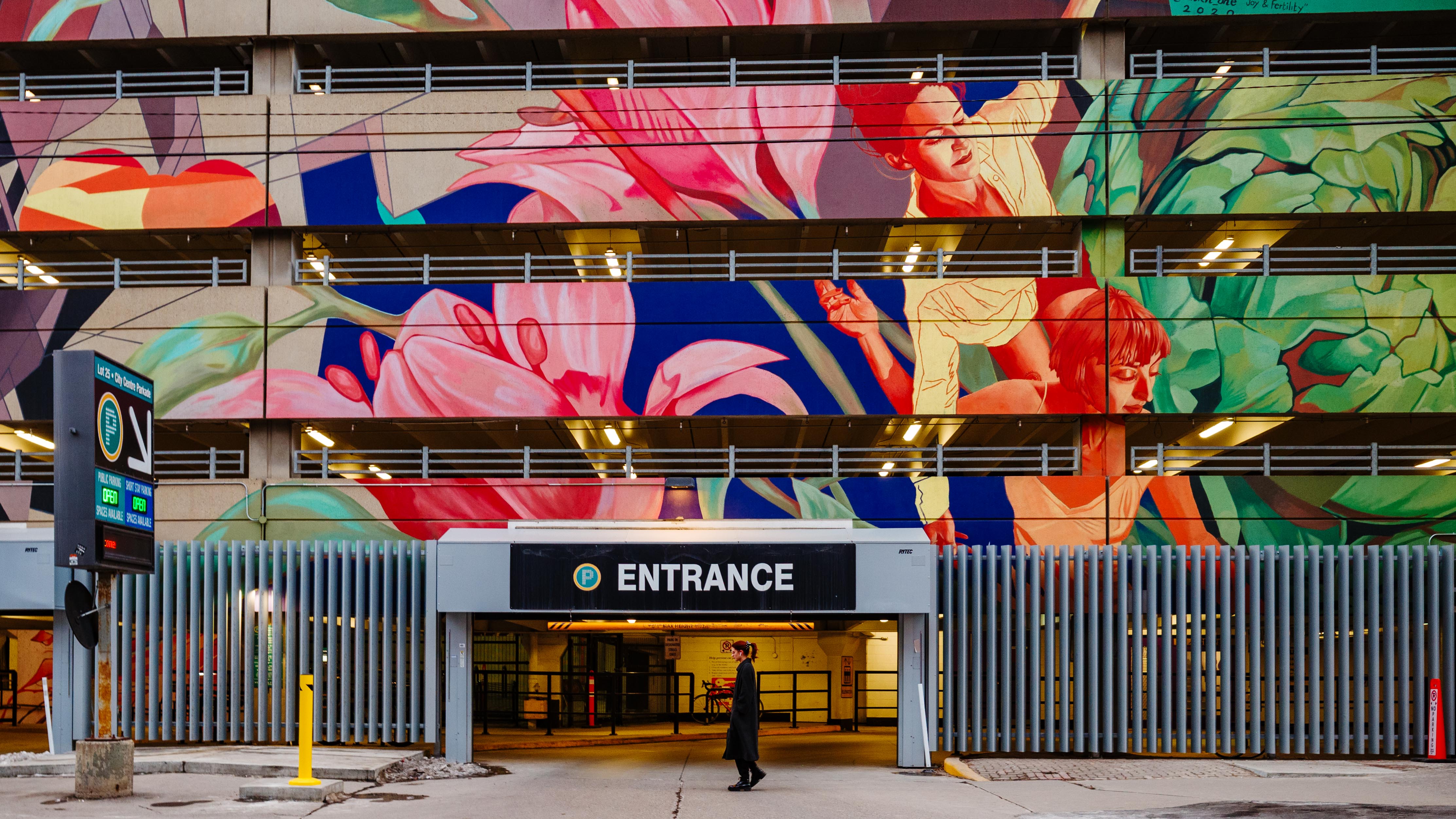
I was jogging around Calgary’s Beltline, feeling a bit short of ideas for my next urban run/photo adventure. As I rounded the corner from 7th Street onto 15th Avenue, I glanced up at the side of the building. What I saw stopped me in my tracks, and instantly gave me the inspiration I needed.
What’s BUMP?
There’s a program called the Beltline Urban Mural Project… BUMP… that has been making Calgary’s inner city streets more interesting and colourful for years. I had to find out more.
From the BUMP website, I learned that the project started in 2017, and has grown significantly since then. Seeing all the artwork in one run would be challenging, if not impossible. There are dozens of sites, spread throughout the core. I needed a plan. I often start my runs near Lougheed House, so I decided to use that location as my base. I could get a good overview of the murals (and hopefully some worthy photos) by concentrating on different neighbourhoods over several runs. This is the first of what is likely to be an ongoing series.
Run 1 – BUMP in the Beltline
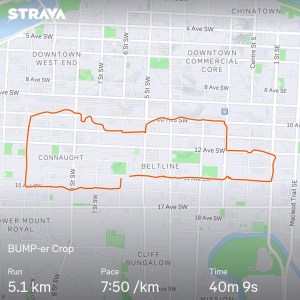
Run 1 focused on the Beltline itself… bounded roughly by 15th and 10th Avenue, and 1st and 10th Street. Here’s my Strava map:
Turning to the art, let me start with the mural that prompted this idea. It’s a large, striking piece in green, called “The Last Maple Leaf”. It was painted in 2023 by the Colombian artist Wosnan. This is from the mural description:
“Rising from nature an ancient guardian of the forest who merges the realms of magic, other worlds and dimensions, spirit and space stands tall, looking over our city…”
Wosnan, “The Last Maple Leaf”, 1411 7th Street SW
This was an apt description of the mysterious tree-like being that loomed over me, guarding his/her corner of the neighbourhood while pondering (no surprise) the last maple leaf. Stirring stuff! I studied the mural carefully, with my stopwatch running. The magnitude of the challenge I had taken on dawned on me. Maybe I should make this a slow photo walk…
No! I resumed my run, with my goal of at least five kilometres in mind. I tried to ignore the glimpses of colour that I started to notice down every alley.
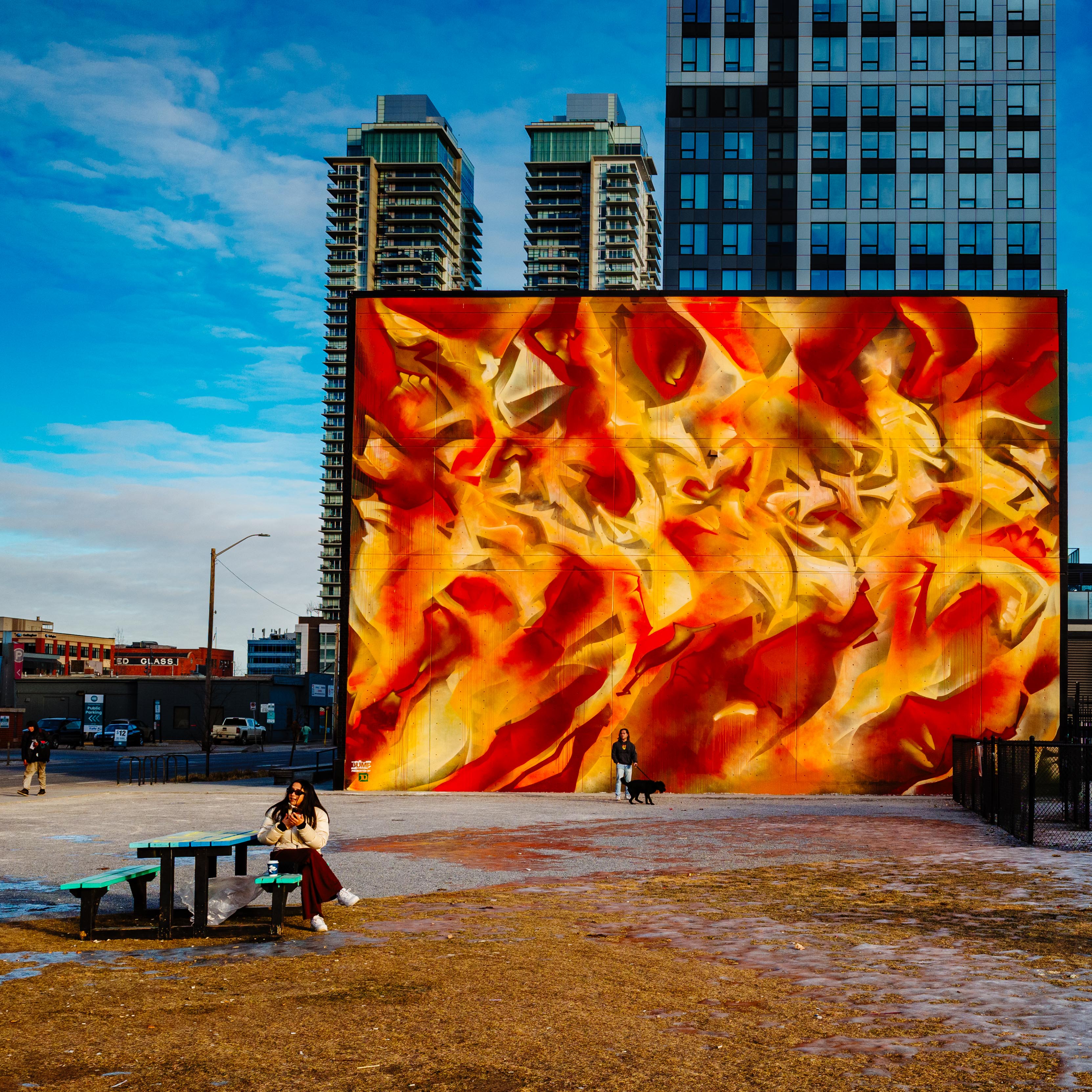
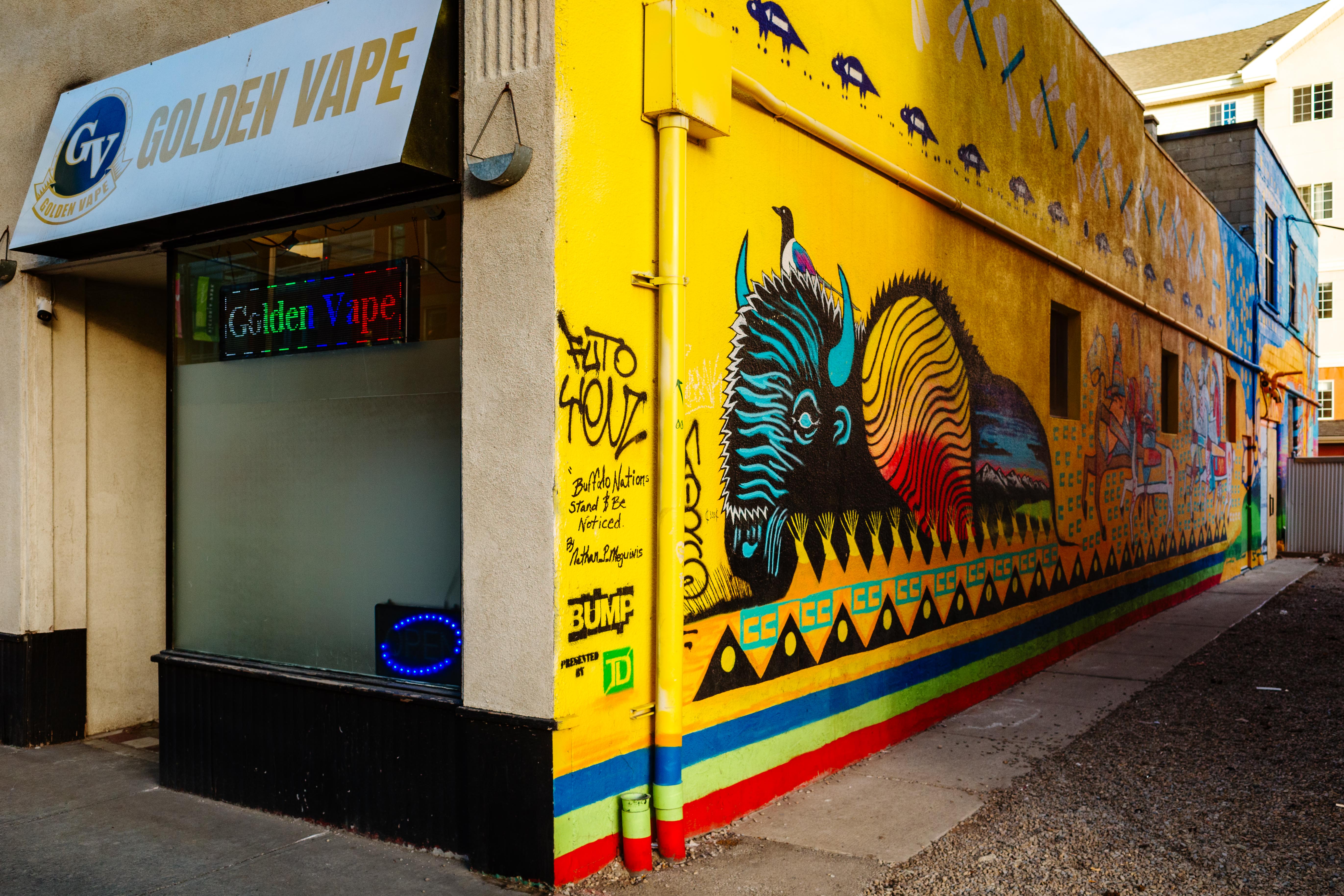
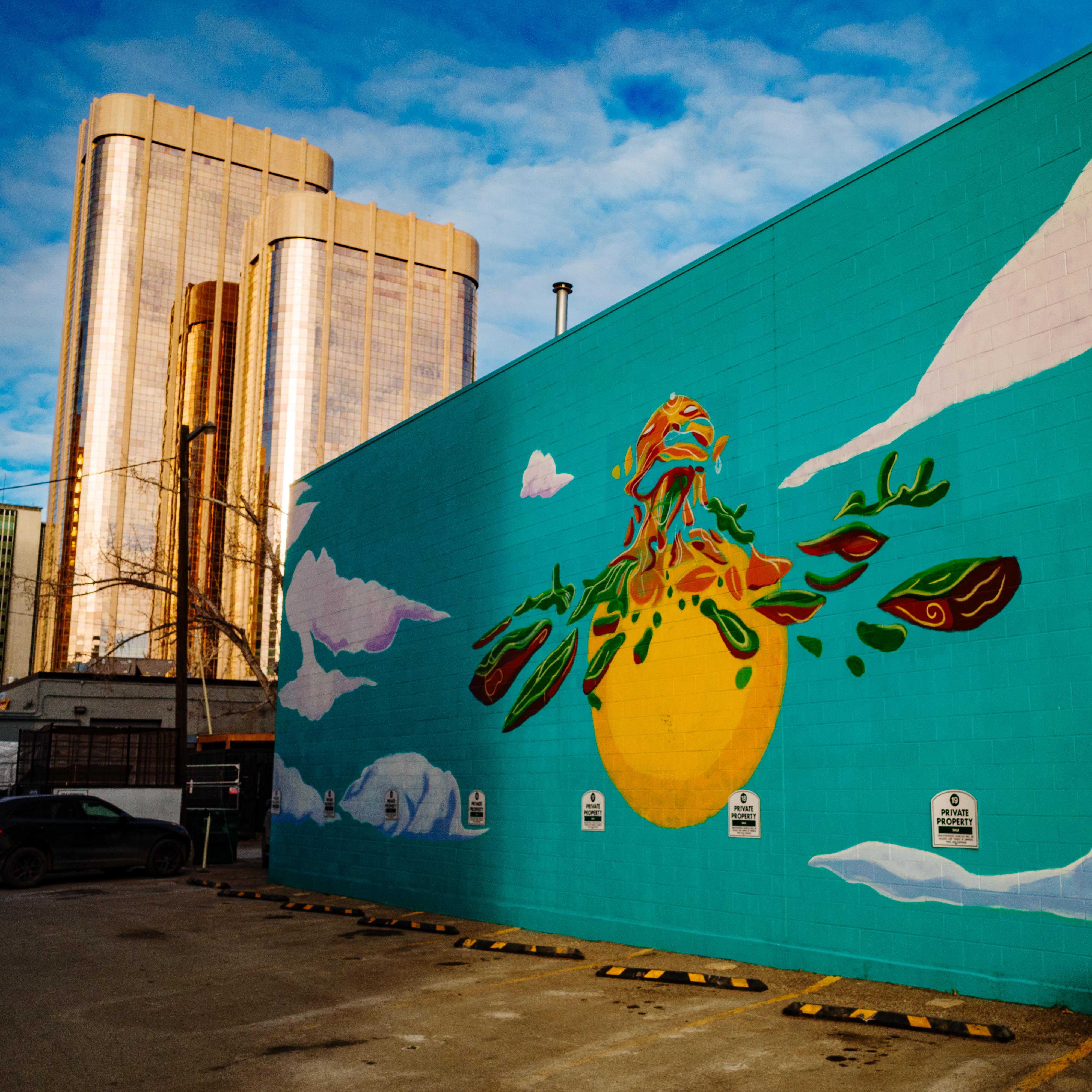
Bottom line? I finished with lots of pictures and a feeling that I had made a small dent in the many Beltline murals. For full disclosure, while I saw all these murals on BUMP Run 1, some of the photos are from previous runs because I liked the shot more. Light is everything, you know!
Here’s a short summary of the pieces in the photographs. I recommend following the links to the map on the BUMP website to find out more.
Imagine painting a mural on a wall 60 feet wide by 30 feet high. How does one even begin? Laying out a piece at that size and scale must be extremely difficult. And the execution would bring very different challenges. I marvel at the way the artists manage the intricate details, while still capturing their vision for the whole piece.
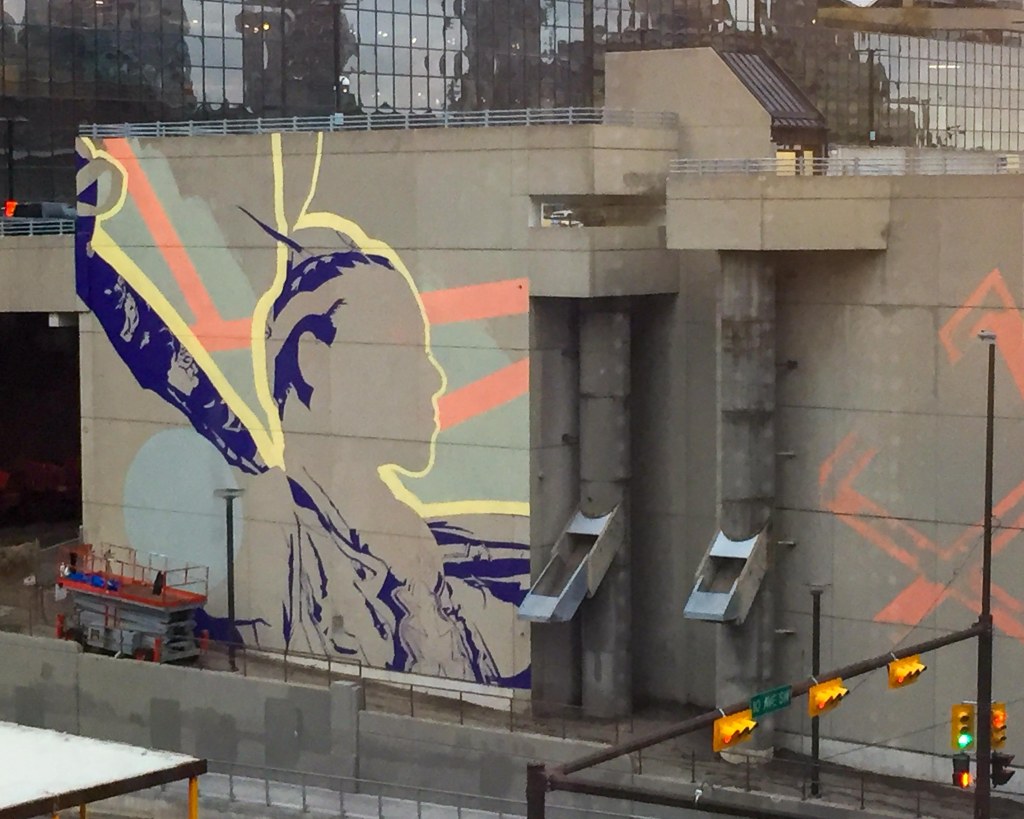
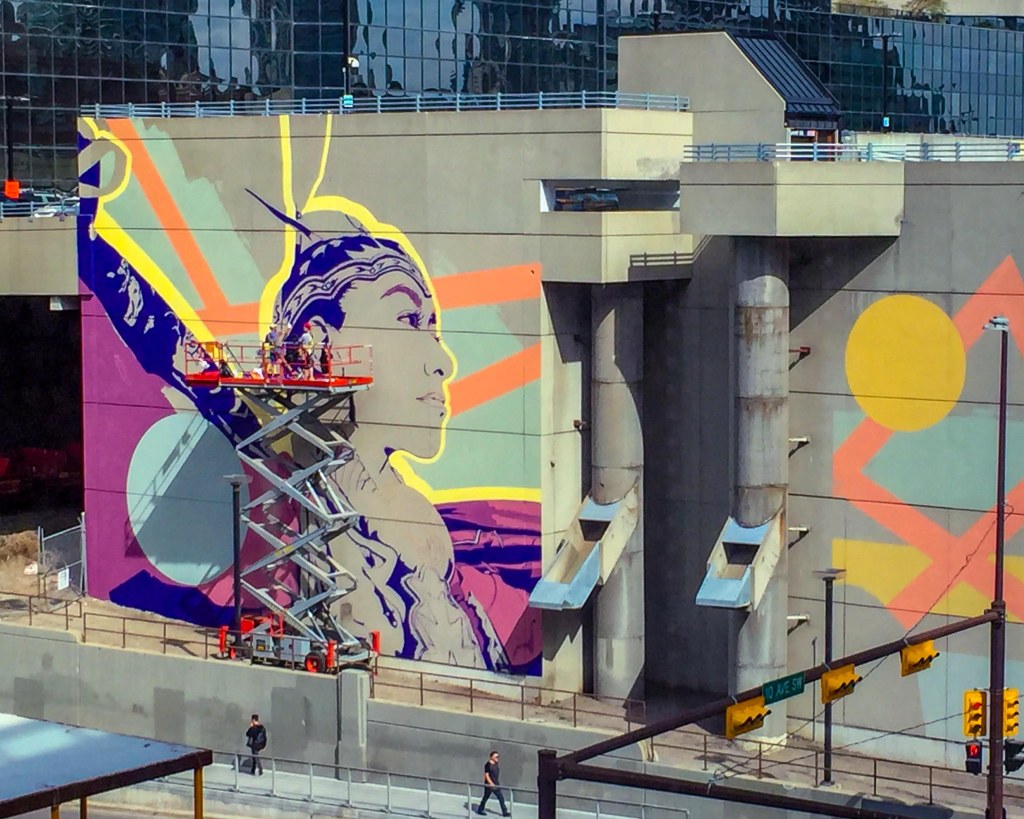
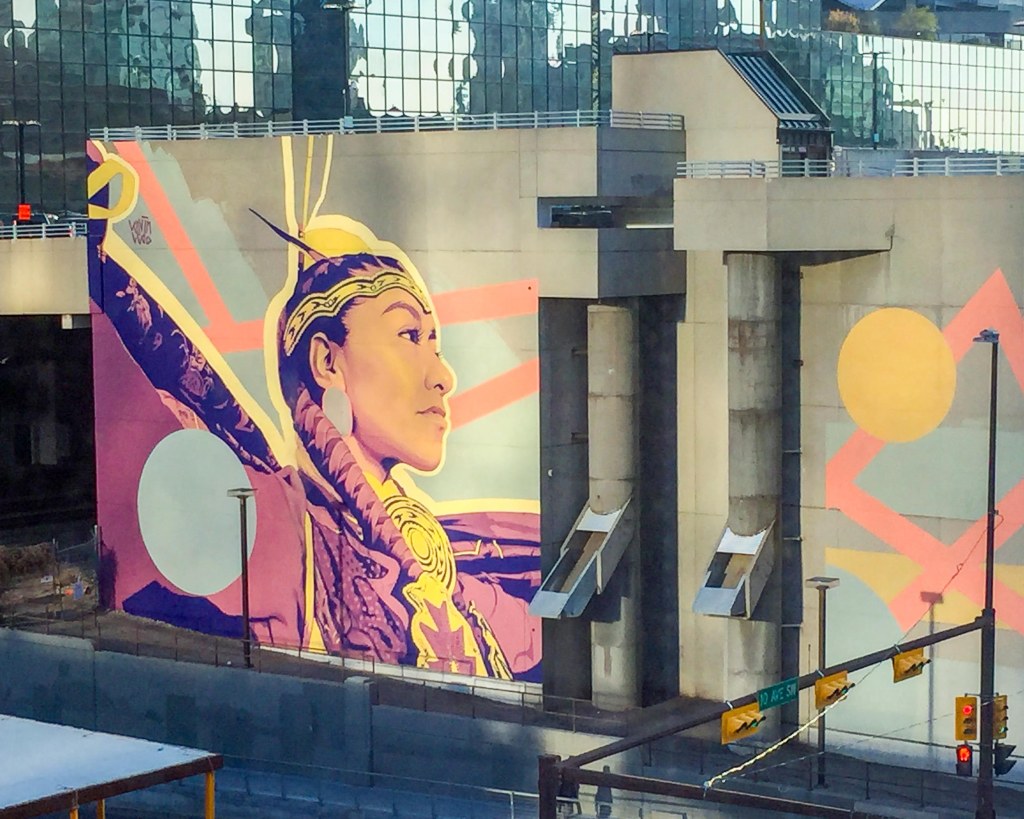
I had a front-row seat for the creation of sôhkâtisiwin (that’s Canadian artist Kevin Ledo’s striking mural at 340 10 Avenue SW). The title means “strength/power” in the Cree language. The image is taken from a picture of B-Girl and traditional hoop dancer, Angela Gladue. I watched the beautiful portrait of this young Indigenous woman come to life in 2018, from the comfort of my office across the street. Kevin and his helpers toiled away in the hot summer sun on a stage lift, going up and down endlessly over several weeks to complete the image, which now livens up the west side of a parking garage. I made sure to give them a thumbs-up every time I walked by.
Here’s a rough timelapse of the process (I had many more pictures on my phone, but I recently deleted most of them). You get the idea though.
Impressions
This is an amazing initiative. To state the obvious, BUMP is a diverse selection of art. I’m impressed by the sheer number and quality of the murals. It’s great to have artists from around the world come to Calgary and share their talent. I hope the project continues and expands its reach across the city.
This is the kind of project that invites us to slow down and take a closer look at the art. Sure, we can (and most often, do) pass by these murals in our daily routine. Maybe we glance at them, maybe we don’t. But this first photo run has already prompted many questions… Who is this artist? What is their message? Do I think they succeeded? What does this piece make me feel?
The BUMP website helpfully lets the user select pieces they would like to see on a walking tour, and this is probably the correct way to see them. I will persevere with my photo run idea, knowing I will still see and learn a lot along the way.
My early impressions are very positive. I already have some favourites. I will defer any thoughts about that question until I’ve done more exploration. There will eventually be a personal top 10 list, but even that will be subject to change as I see more of the contenders. Look for more posts on my BUMP photo runs soon.
Thanks for reading. Please drop me a comment. Let me know if you have a favourite BUMP mural that you think I should see.
In mid-December, my friend Tim announced the details of what can now be called the Annual Prairie Mountain Winter Sunrise Hike. This would be the third (or was it the fourth?) consecutive trek. Whatever the number, it’s still a great idea.
After consulting his celestial tables, Tim determined that the morning of December 30 would align us with the latest sunrise of the season, plus or minus a few seconds.
If you haven’t seen my posts on last year’s hike, I recommend you check out Part 1: The Hike and Part 2: The Science. (Tim even organized a Prairie Mountain summer solstice hike in June 2024 for the real early risers. You can read about that one here.)
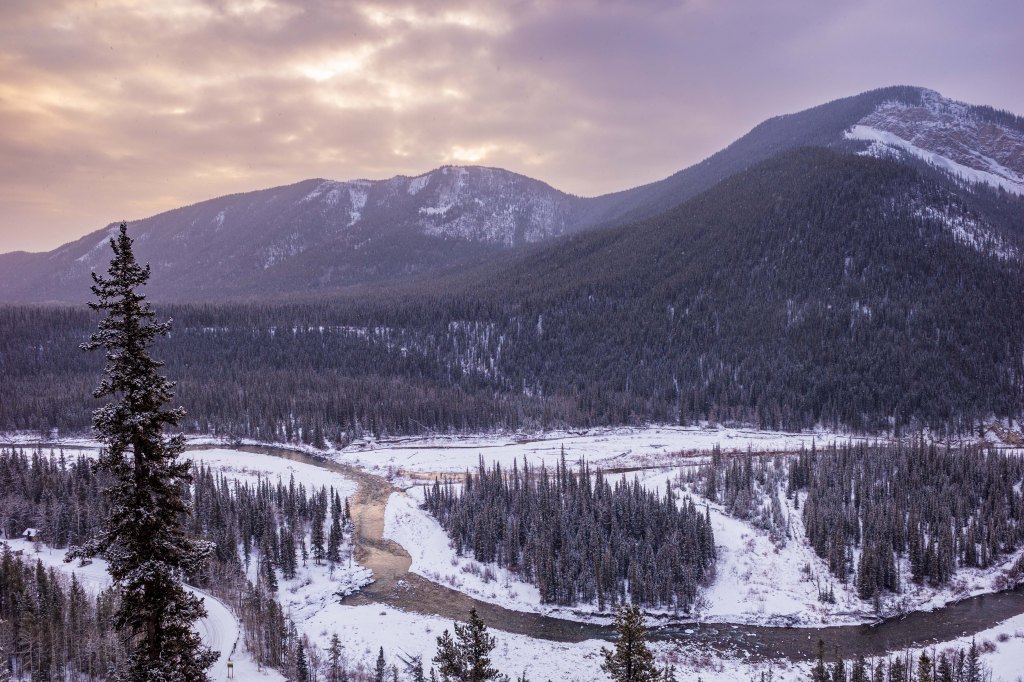
For those who aren’t familiar with Prairie Mountain in Kananaskis, it is the most accessible mountain for Calgary hikers. Conditions on the trail and at the summit can be quite variable, so it’s important to check the weather and prepare for anything. Of course, allowance for the drive and the ascent were critical to getting us to the summit in good time for the sun’s (hopeful) appearance at 8:39 a.m.
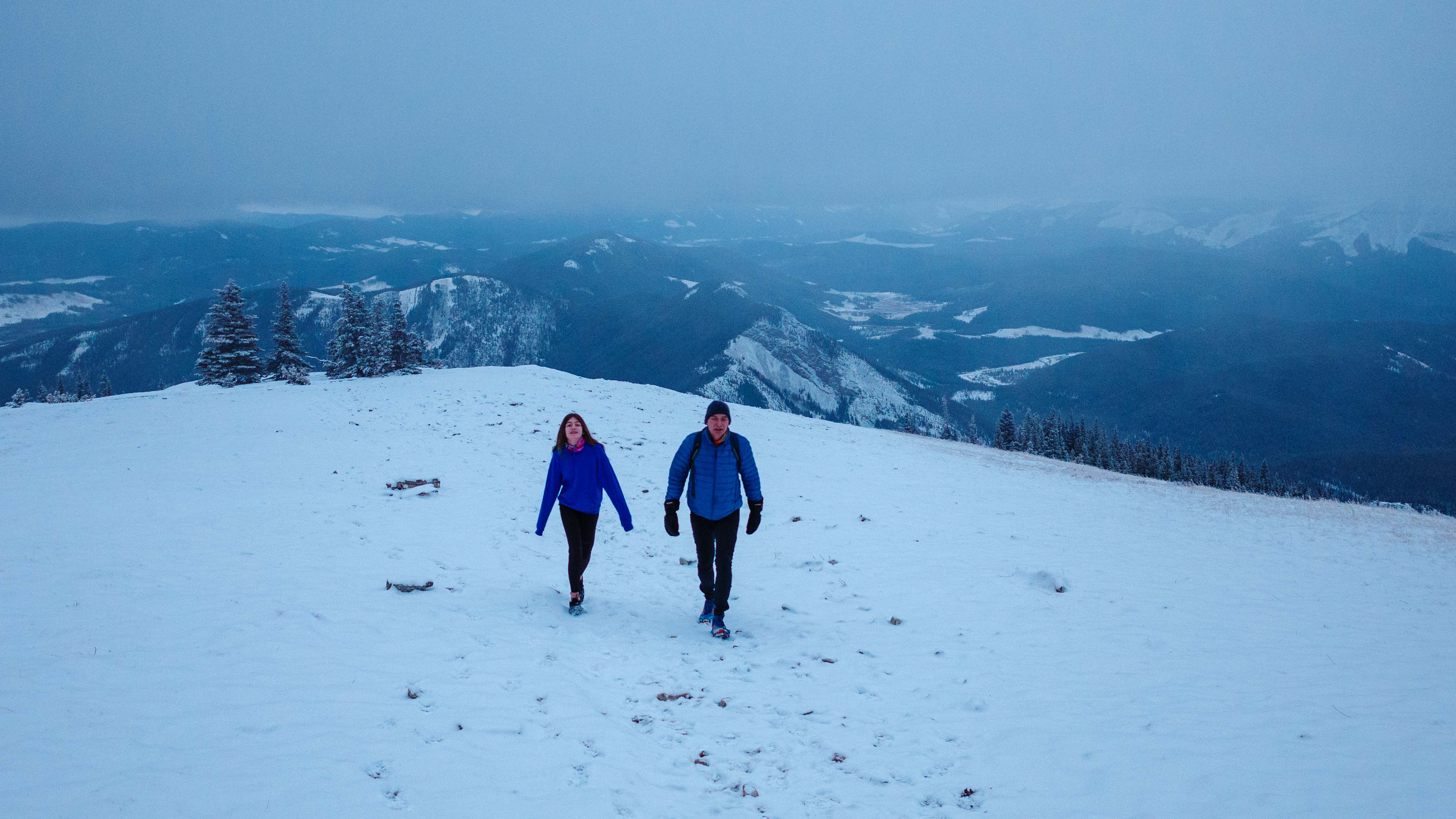
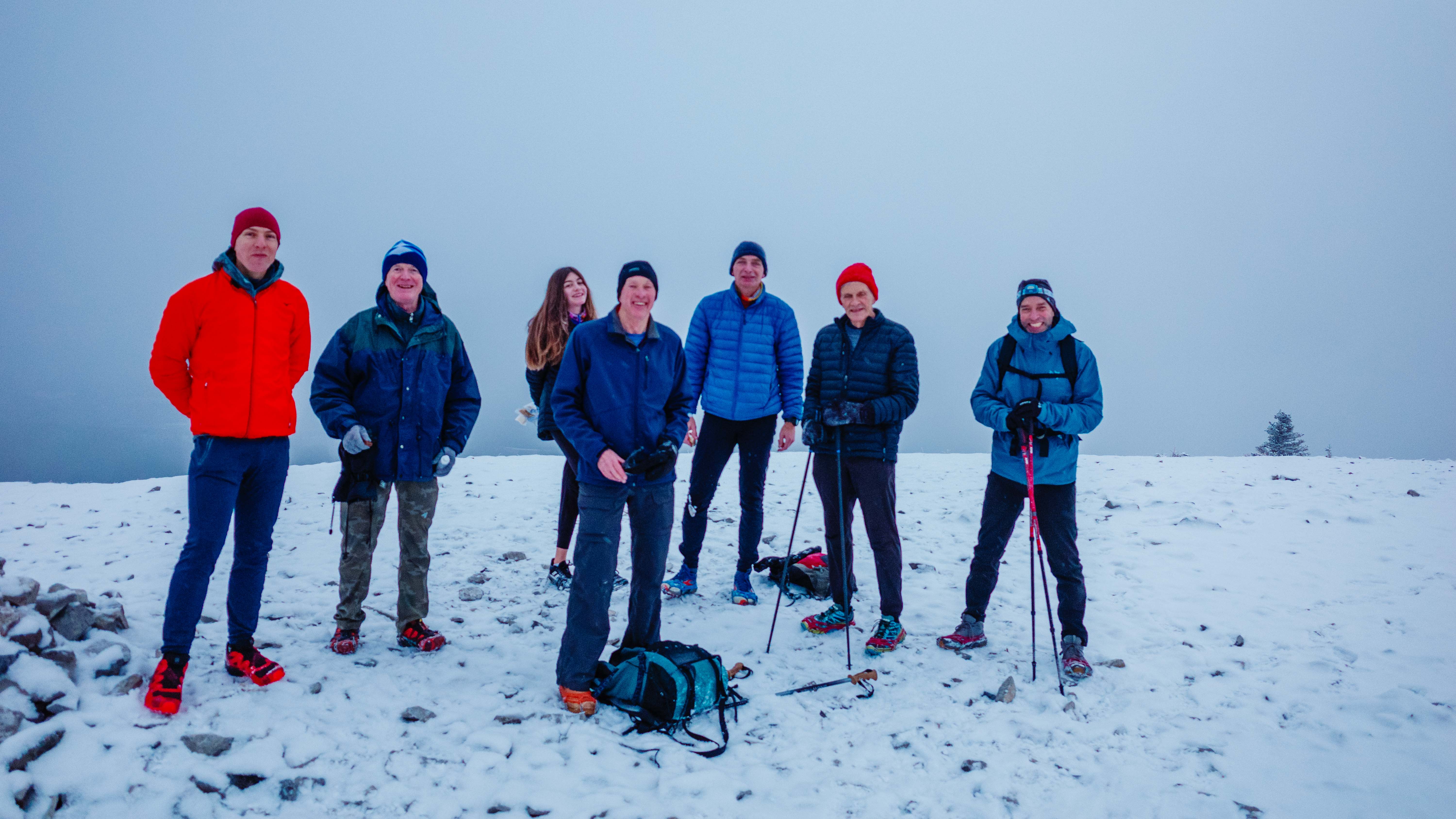
This year, our party consisted of eight hikers. We had seven regulars and one PM rookie… welcome Ken! We woke up to snowy conditions in Calgary, a big change from the prevailing weather pattern of the previous month. What awaited us at the summit?
Dan and I joined the convoy that left Calgary at 6:10 a.m. We reached the trailhead at around 7 and were off and climbing just a few minutes later.
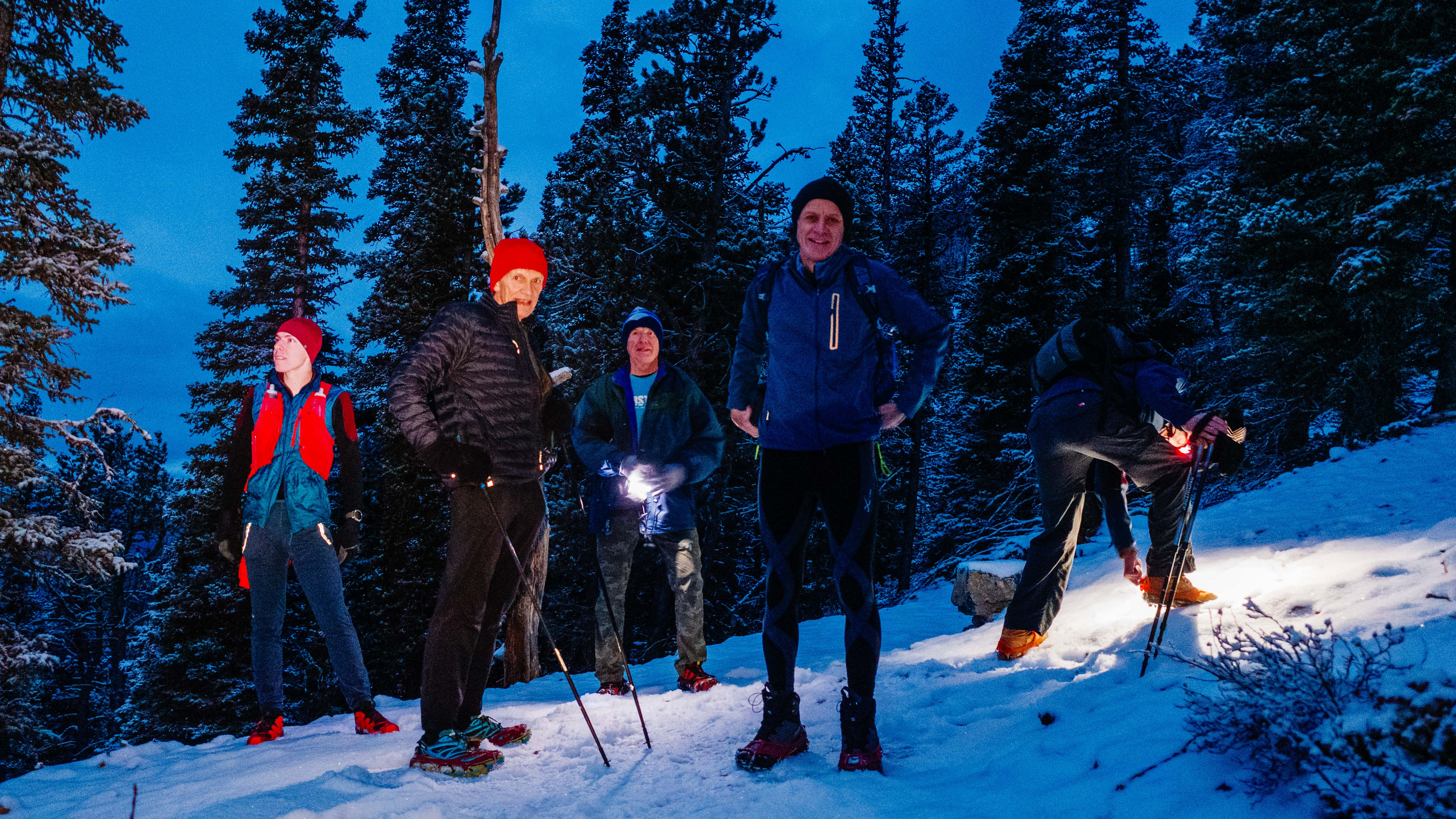
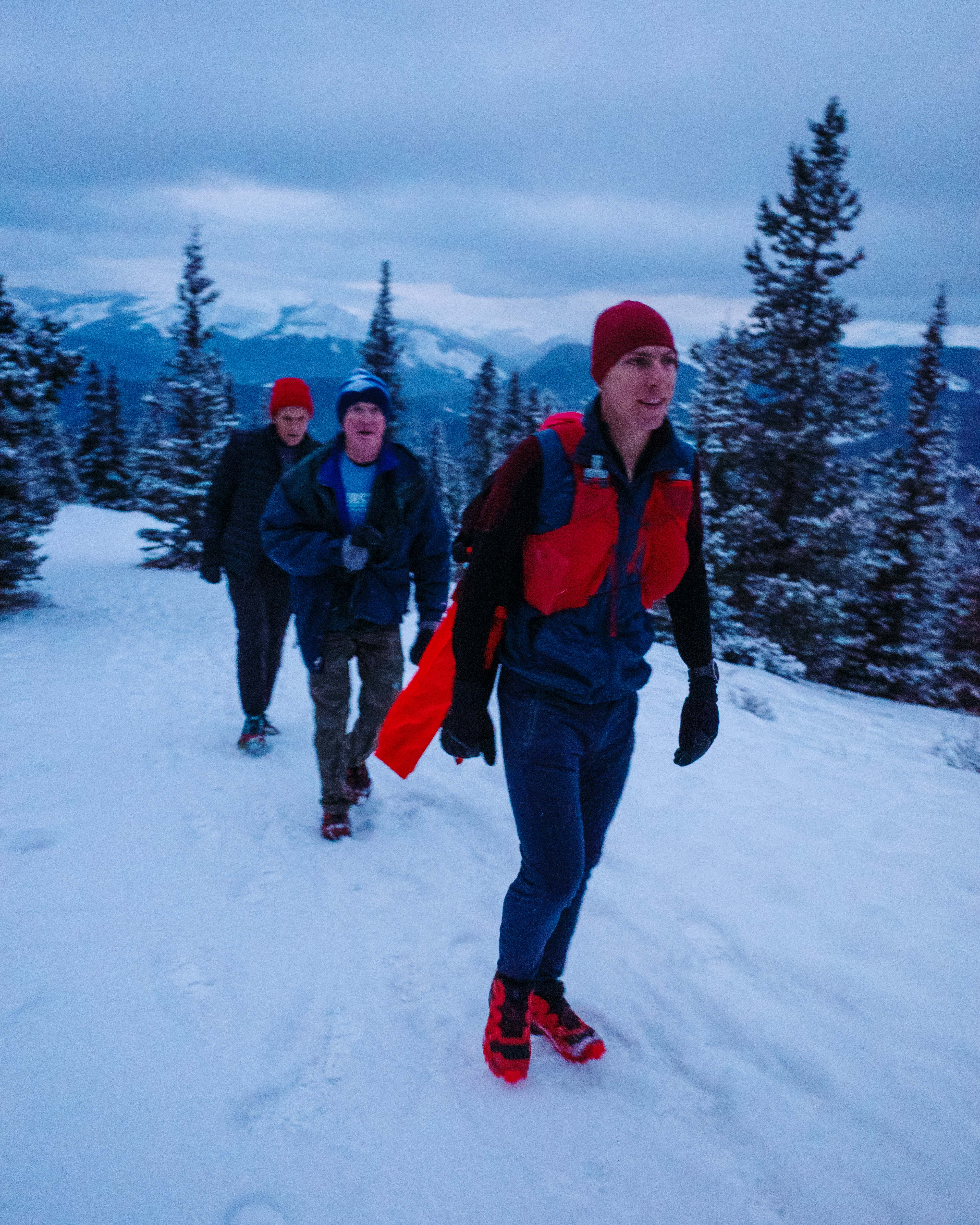
The conditions (or maybe it was my conditioning) made for a tougher hike than what I remember in 2023. After last year’s outing, I knew what to expect on the revamped (and in my opinion, significantly improved) Prairie Mountain trail. I put my head down and tried to dole out my energy efficiently. I knew that counting three one-kilometre beeps from my Garmin would just about put us on the summit ridge. I welcomed a couple of short breaks, first to shut off our headlamps and then to regroup at the lower viewpoint.
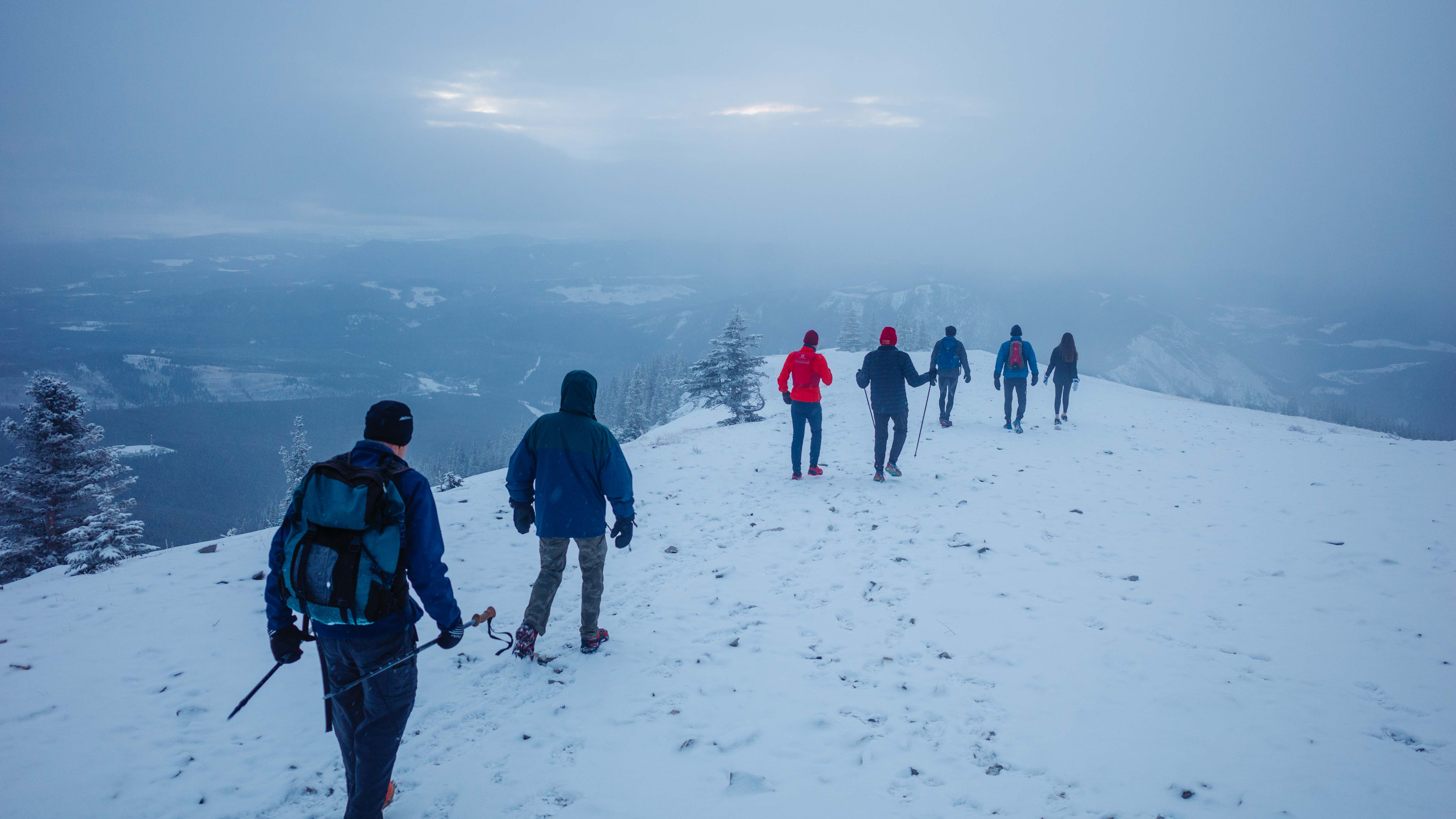
On this morning, there was only the dimmest of dawn light to guide us. Clouds socked in the summit as we arrived. There would be no repeat of last year’s glorious sunrise show. But no matter. Fortunately, there was little wind. We all grabbed a quick snack, posed for a couple of group photos, and got organized for the descent. I was thankful for my Kahtoola Microspikes, which were a necessity as we got to some slippery sections lower on the mountain.
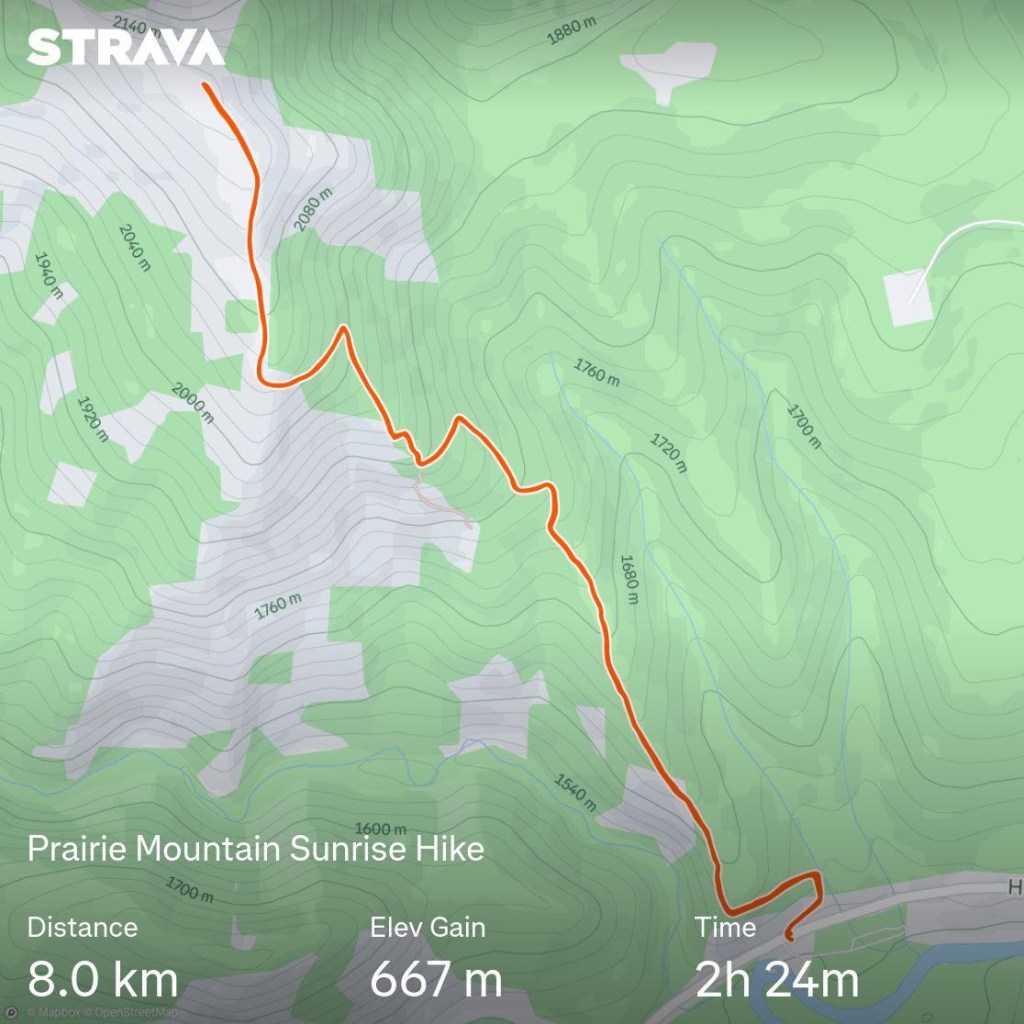
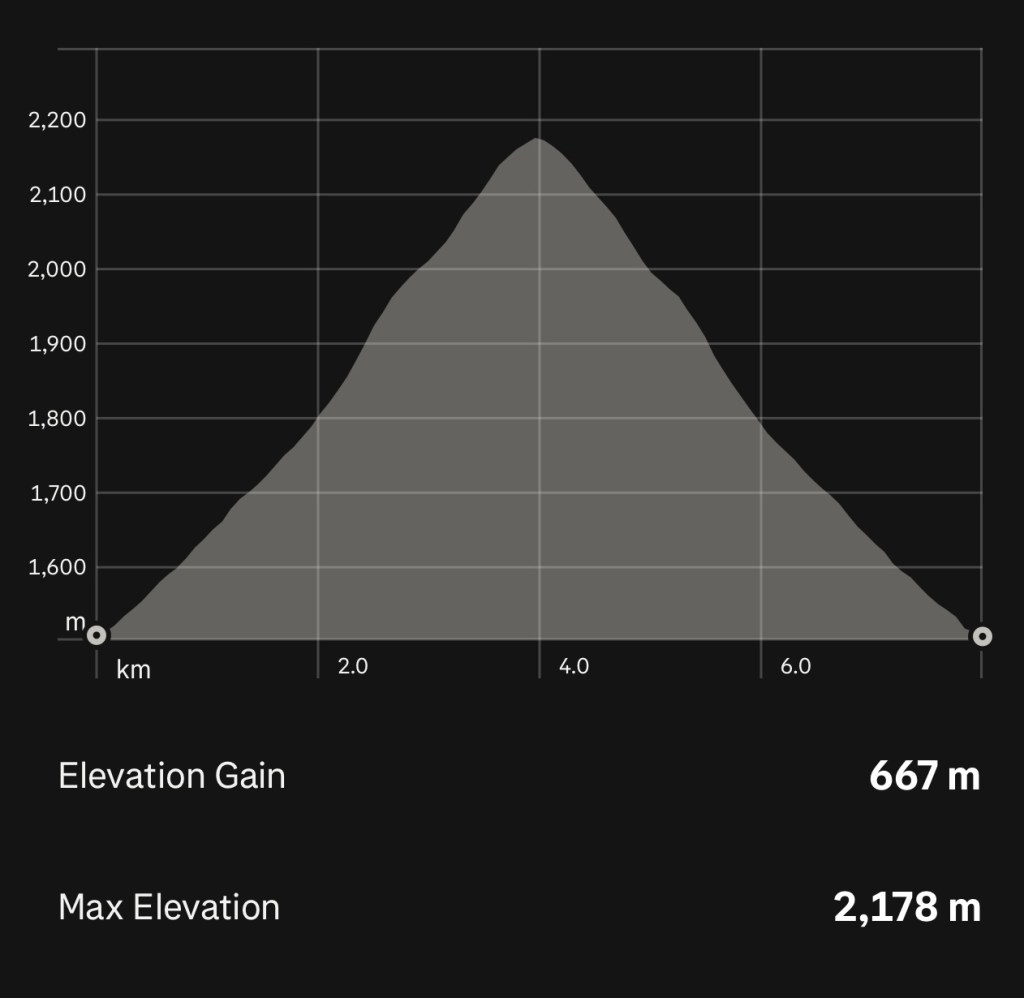
Here’s my activity summary from Strava. One thing is clear: Prairie Mountain is always a good workout!
I was impressed by the calibre of our hiking group. What a hardy and enthusiastic bunch… including our youngest hiker, who didn’t even need a hat! Here are a few photos from this year’s hike, taken with my constant companion, the invincible Ricoh GR III.
And the sun? It made only the briefest of appearances, as if to tease us, just before we arrived back at the trailhead.
Too little, too late (December 30, 2024)
So, even though the sun didn’t show up to the party, it was still an enjoyable outing and a good way to close out 2024. I look forward to more adventures in the new year.
On that note, Happy New Year to all. Be well, and BE FAST!
Do you have any sporting heroes? Maybe you do, or maybe you think the idea of sporting heroes is quaint and outdated. Given the commercialization of sports, I can certainly understand this view. I do have several sporting heroes, but maybe the best way to explain this is to say that there are people I have looked up to throughout my life. Some of them happen to have been great athletes.
Bobby Orr
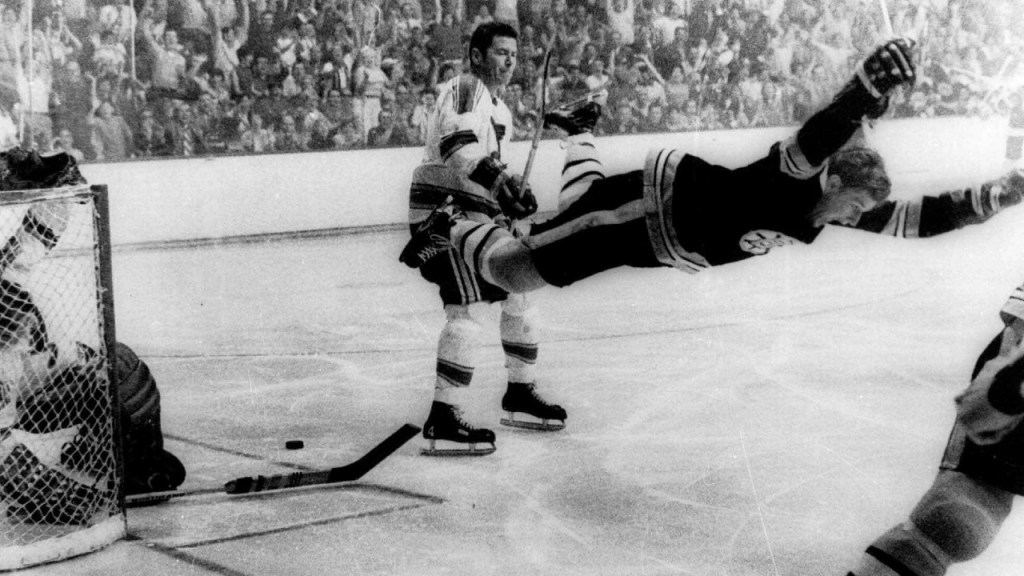
It was Sunday, May 10, 1970. Game four of the Stanley Cup finals. Overtime. One brilliant play was about to etch itself in my brain forever. Here’s what I wrote about that moment in my book, Stroke of Luck:
So it was that in May 1970, as an impressionable nine-year-old, I was watching game four of the Stanley Cup finals, between the Boston Bruins and the St. Louis Blues. It was less than a minute into overtime. Bobby Orr rushed the St. Louis net and took a pass from Derek Sanderson, who was behind the goal line. As Orr directed his shot into the net, to win the game and the Cup for the Bruins, I was in awe. I remember, like it was yesterday, Orr’s flying celebration of his goal. I was an instant fan of the Bruins, and I had found my first real sports hero in this young, talented defenseman.
Ray Lussier’s photograph of Orr flying through the air is one of the most iconic pictures in sports history. As Orr was half-tripped and half-jumped, he had already begun celebrating his cup-winning overtime goal. But here’s the thing: I don’t even need the photograph. I can play the whole video in perfect detail in my mind.
“The Goal” (Ray Lussier, May 1970)
Orr did more in his short career than most players could dream of. His ability to control a game was unmatched. I believe he was the best defenseman to ever play the game. And even today, I get goosebumps if I watch highlight videos of his end-to-end rushes. It’s a rare player who can make the best in the world look ordinary, but Orr did it to opponents game after game. And yet, he never grandstanded after scoring a goal. In interviews, he was quiet, almost shy. He let his ability speak for itself.
I followed Orr’s career from beginning to end. His wonky knees were his undoing, drastically shortening his career. I wonder how different things might have been had Orr played a generation later, given that surgical repair of torn ligaments is now routine. Instead, the last images of him (in a Chicago Blackhawks jersey, no less), struggling to execute moves that would have been routine just a few years earlier, are heartbreaking.
In my opinion, a worthy sporting hero can inspire us even in difficult circumstances, and beyond the field of play. Orr has been the perfect role model: humble in victory and accepting of defeat. We should all strive to emulate his example.
Sebastian Coe
I hinted at the depth of my admiration for Seb Coe in a brief passage when telling my own story:
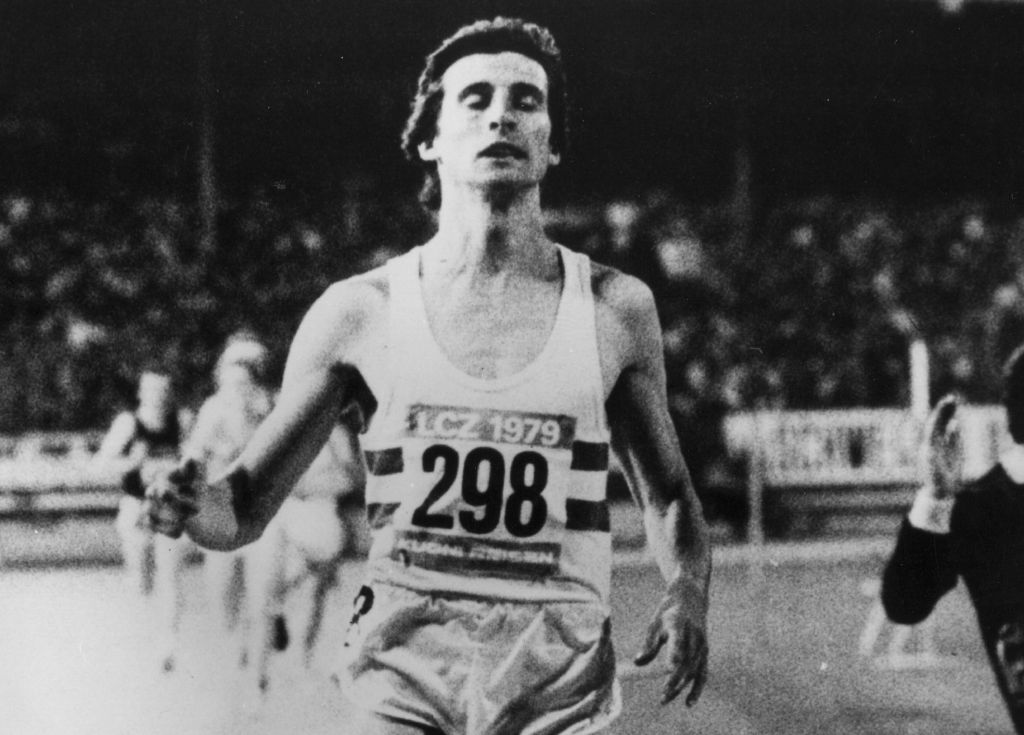
My appreciation and love of athletics grew. I followed all the results for my latest heroes, the middle-distance stars Sebastian Coe and Eamonn Coghlan. Coe became a global sensation when he set three brilliant world records on the track, all within six weeks in the summer of 1979. But it was the way he ran, with elegance and effortless power—with passion—that I admired most.
My dilemma when writing my book was whether I should say more about this gifted and charismatic runner, and the impact he had on me, or keep it brief to move the story along. I opted for brevity, but I feel I should add to what I wrote.
For context, in the summer of 1979, I was well on my own path. I had just finished my first year of engineering. I was dedicated to athletics, having participated in cross country and track in high school for several years.
Coe seemed to emerge on the scene out of nowhere. Of course, we didn’t have instant news and 24-hour coverage then. The athletics world held its collective breath as this slight, supremely talented 22-year-old Brit smashed three major world records in rapid succession. Here’s a synopsis:
July 5, Oslo: Coe shattered Alberto Juantorena’s world 800m record at the Bislett Games, running 1:42.33.
July 17, Oslo: In the Golden Mile, Coe broke John Walker’s record in 3:48.95 against a world-class field.
August 15, Zurich: At the Weltklasse meet, Coe broke Filbert Bayi’s 1500m world record in 3:32.03.
World record in the Golden Mile, July 1979 (Getty Images)
I remember scouring the newspapers for any information on Coe and his races. His records all came within a few weeks of my birthday, so it was as if he was gifting me with these performances. I felt I was somehow a part of his epic summer. In fact, I was so taken by Coe’s streak that I decided to try out for the university athletics team when the school year started in September. (Sadly, my performances fell so far short of his that my experiment ended quickly.)
Since the summer of 1979, Coe has had a full and productive career. He won two consecutive Olympic 1500m gold medals. He went on to lead the 2012 London Olympic Games committee, and he is the current president of the IAAF. From my perspective, Coe has always carried himself with that same passion and dignity that set him apart on the track. I’ve admired him for decades, both in my athletic and personal pursuits. I considered him a role model 45 years ago, and I still do.
Eamonn Coghlan
In my view, Eamonn Coghlan is underrated compared to some other big names in athletics. It turns out I have a couple of tenuous connections to this great middle-distance runner. Coghlan was born in Drimnagh, Ireland, a suburb of Dublin. Drimnagh is a short distance from Monasterevin, the hometown of my paternal ancestors. I wrote about Coghlan in my book:
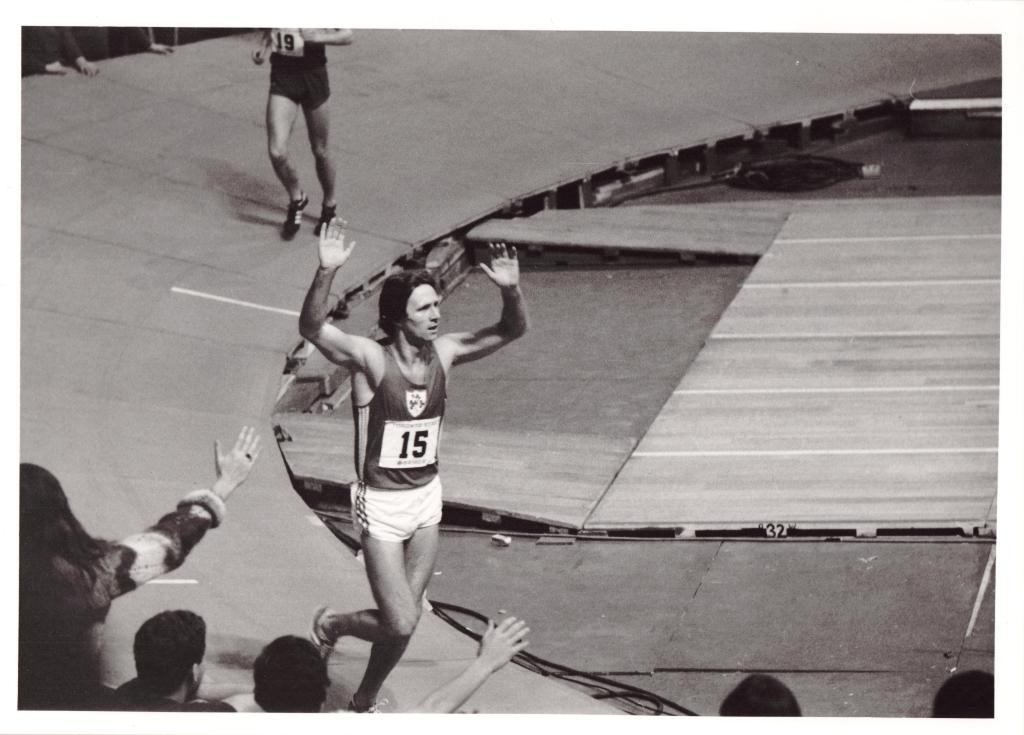
Coghlan’s specialty was the indoor mile. He had earned the nickname “Chairman of the Boards” due to his ability to perform well on tight, wooden indoor tracks. Deb humoured me for an evening in February 1981 at the Toronto Star Indoor Games, with its temporary track set up in Maple Leaf Gardens. I had run there as a schoolboy a few years earlier. We watched Coghlan win the mile in 3:55, an astounding achievement considering the quality of that track. I still have a black and white photograph that I snapped as he jogged around the track for his victory lap.
I found that picture as I was sorting through some old files the other day. It took me right back into Maple Leaf Gardens on that cold February night.
The Chairman of the Boards takes his victory lap (Toronto, February 1981)
As a mature athlete, I’ve always been most impressed by Coghlan’s consistency. It would be enough to say that he broke the 4-minute mile 83 times, but he did so much more. He dominated indoor meets, where tight turns are a handicap as compared to outdoor racing. He ran the first sub-3:50 mile indoors (February 1983), and he was the first man over 40 to break 4 minutes for the mile (February 1994). Quite a career!
Coghlan’s competitive track career spanned 20 years. Like Coe, he has had a fruitful career after athletics. He works as a coach and served as a senator in the Irish parliament from 2011 to 2016.
Wrapping Up
I’ve highlighted some of the lessons that I’ve learned from watching these three outstanding athletes. It confirms for me that great sportsmen (or should I say great people?) still have the power to inspire greatness in all of us.
Although it extends an already long post, I will add a few words about sources. Stephen Brunt’s excellent book, Searching for Bobby Orr, is a well-researched and eloquent biography that puts Orr’s career and life in the context of a sport that was changing dramatically. There is a lot of material available on Coe, including his own books. I enjoyed The Perfect Distance by Pat Butcher, which delves into the rivalry between Coe and another talented British middle-distance man, Steve Ovett. As for Coghlan, I relied on an excellent piece by John Cobley, on his Racing Past website. Cobley’s piece cites Coghlan’s autobiography, Chairman of the Boards, which is unfortunately out of print.
Until next time, be well and BE FAST! Happy New Year to all.
Now for a post dedicated to the core subjects on this site: strokes, running, and of course photography. Covering all of that might seem like a tall order, but the last month has provided me with plenty of material on all three subjects. So, without further ado…
CanStroke Congress
In late November, Calgary hosted the 2024 Canadian Stroke Congress, which is described as “a forum for stroke researchers, trainees, clinicians, allied health, administrators, policymakers, and People With Lived Experience of stroke (PWLE) to share new discoveries and innovations, the latest science and therapies, and to build relationships for future collaboration.”
I learned about the congress in a recent conversation with representatives of the Heart and Stroke Foundation. By registering as a PWLE, I was able to attend any of the main sessions at a very reasonable cost. It was a unique opportunity to participate in an exceptional event.
Several workshops were offered on the day before the congress, and I attended one on patient engagement. We heard from scientists and advocates on a range of topics, all focused on ways that PWLE can become involved in stroke research and advocacy. Breakout sessions addressed the practicalities of various engagement paths. The workshop was a good chance to meet other people and share our respective stroke journeys.
I was so impressed with the workshop that I returned the next day to attend a couple of the main sessions. Dr. Andrew Demchuk, the hero of my own stroke story, and Dr. Thalia Field from UBC led a discussion, “What’s New in Stroke Prevention?” It was standing room only for this session. While much of the discussion was over my head, I was so impressed by the depth and breadth of the presentation, and the knowledge and confidence of the speakers. It reinforced my opinion that world-class stroke care is available in Canada.
Another session (“What’s New in Acute Stroke?”) had three eminent stroke neurologists discuss developments in stroke diagnostics and therapies, including some that I touched on in a recent post. It turns out I have a connection to all three of the speakers:
Dr. Michael Hill was one of the physicians involved in my care at the Foothills Stroke Unit in 2017. He kindly wrote the foreword for Stroke of Luck.
I’ve never met Dr. Mayank Goyal, but he would have been the physician responsible for inserting a stent into my blocked vertebral artery, should the decision have been made to follow this treatment route for me.
Finally, Dr. Aristeidis Katsanos is an eminent stroke neurologist at my alma mater, McMaster University.
My takeaway from attending the congress is that while stroke incidence is increasing and our healthcare system is under severe pressure, we should be encouraged by many significant advancements that are being made in stroke diagnostics and therapy. There is reason to be optimistic about the future.
A Blast of Winter
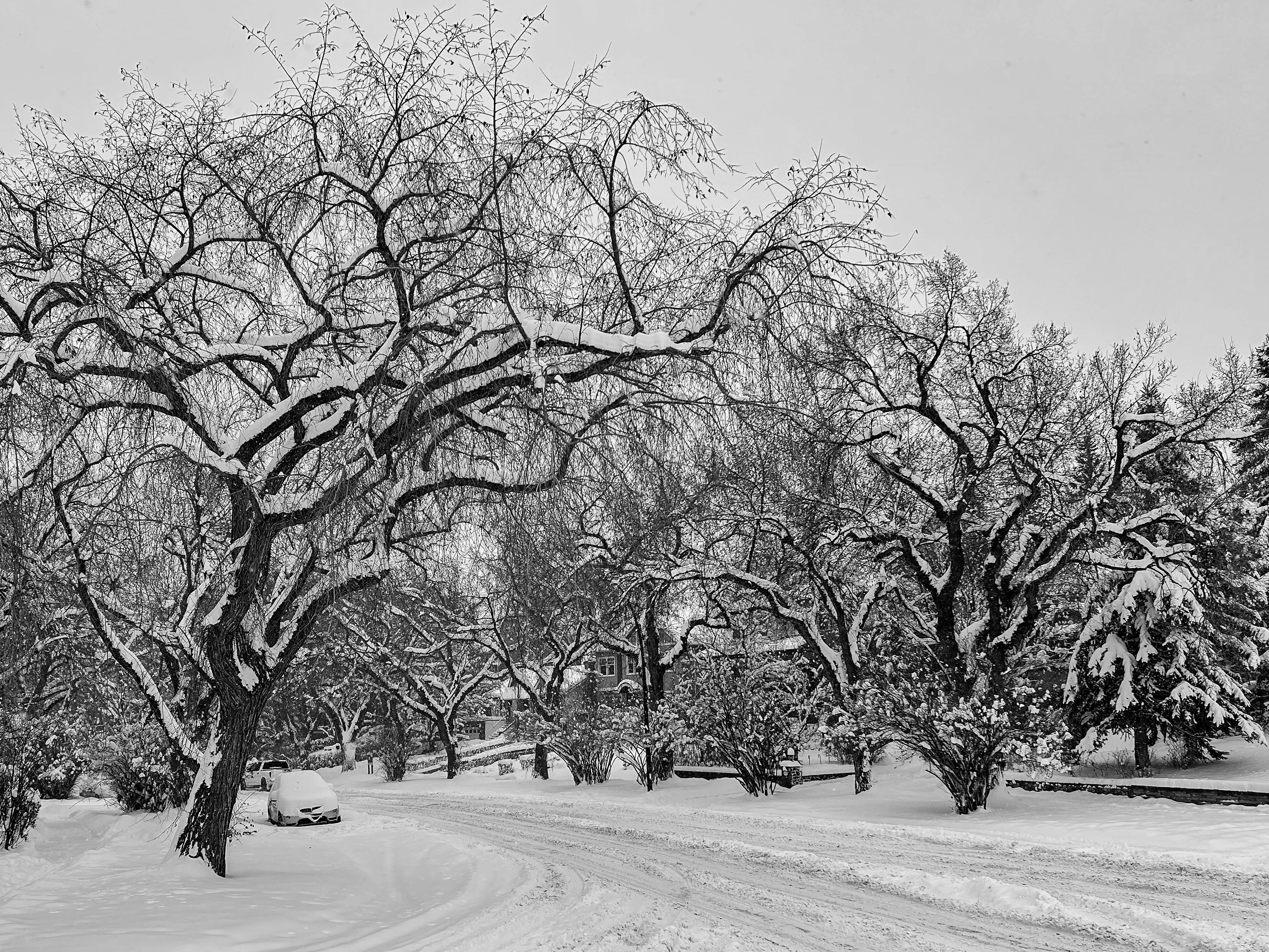
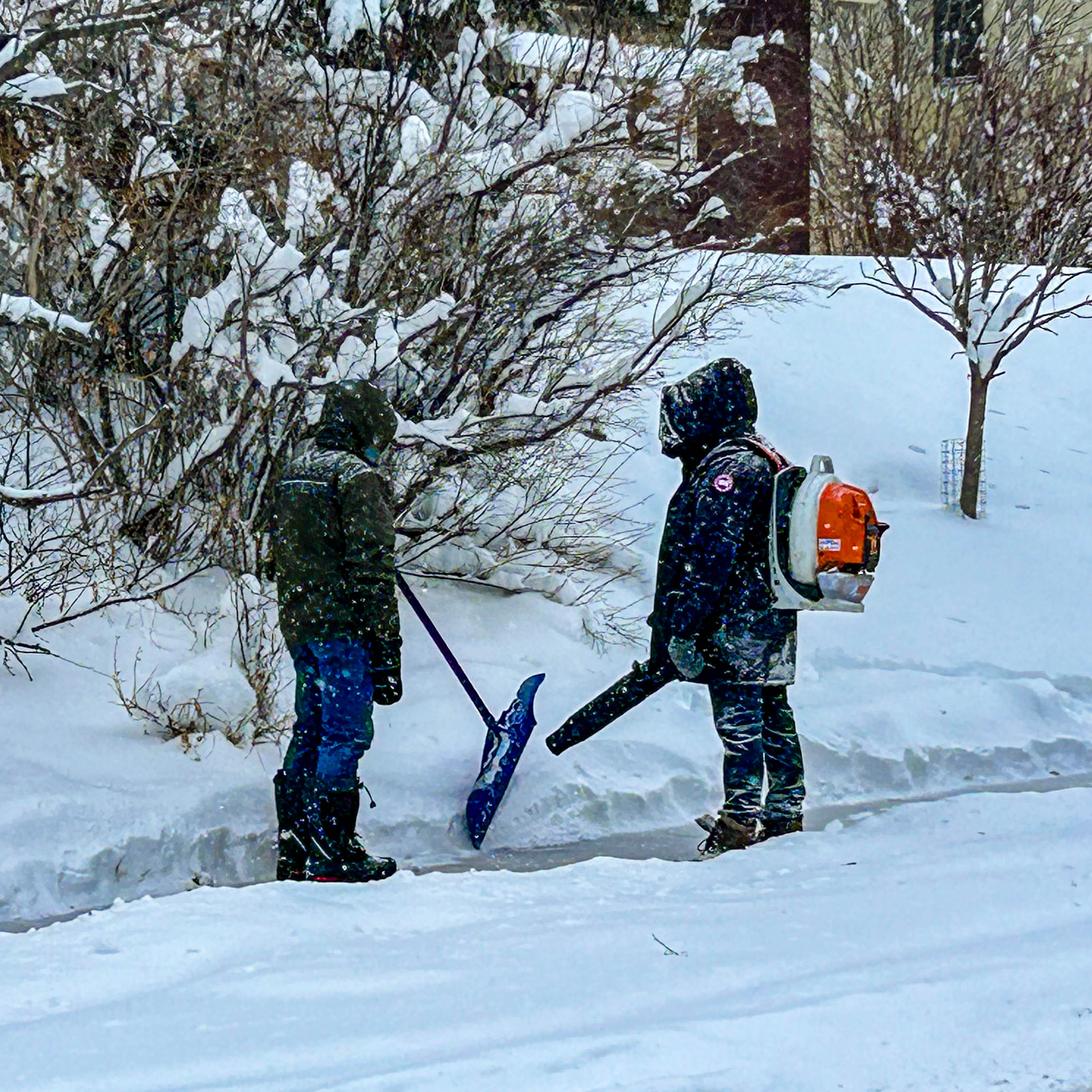
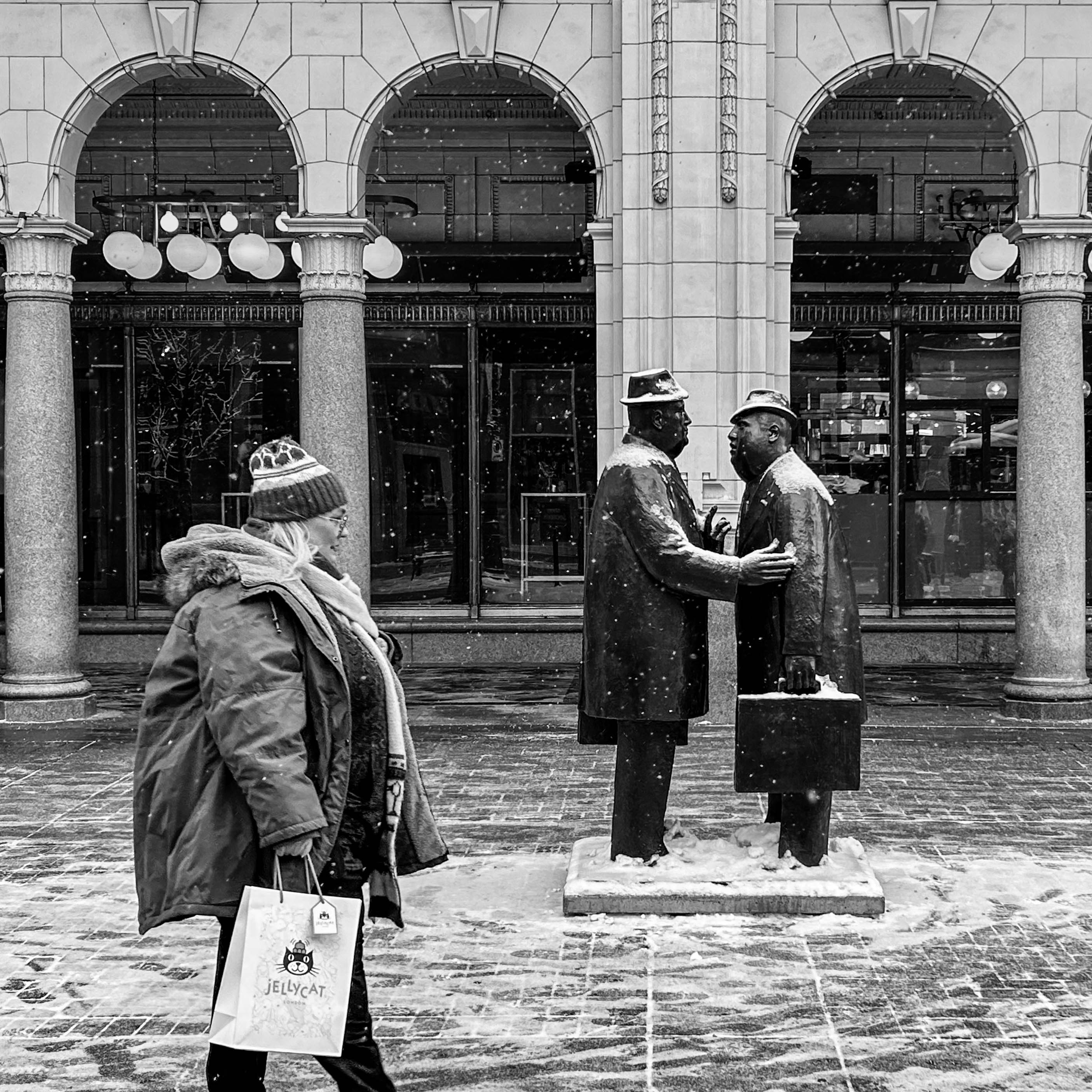
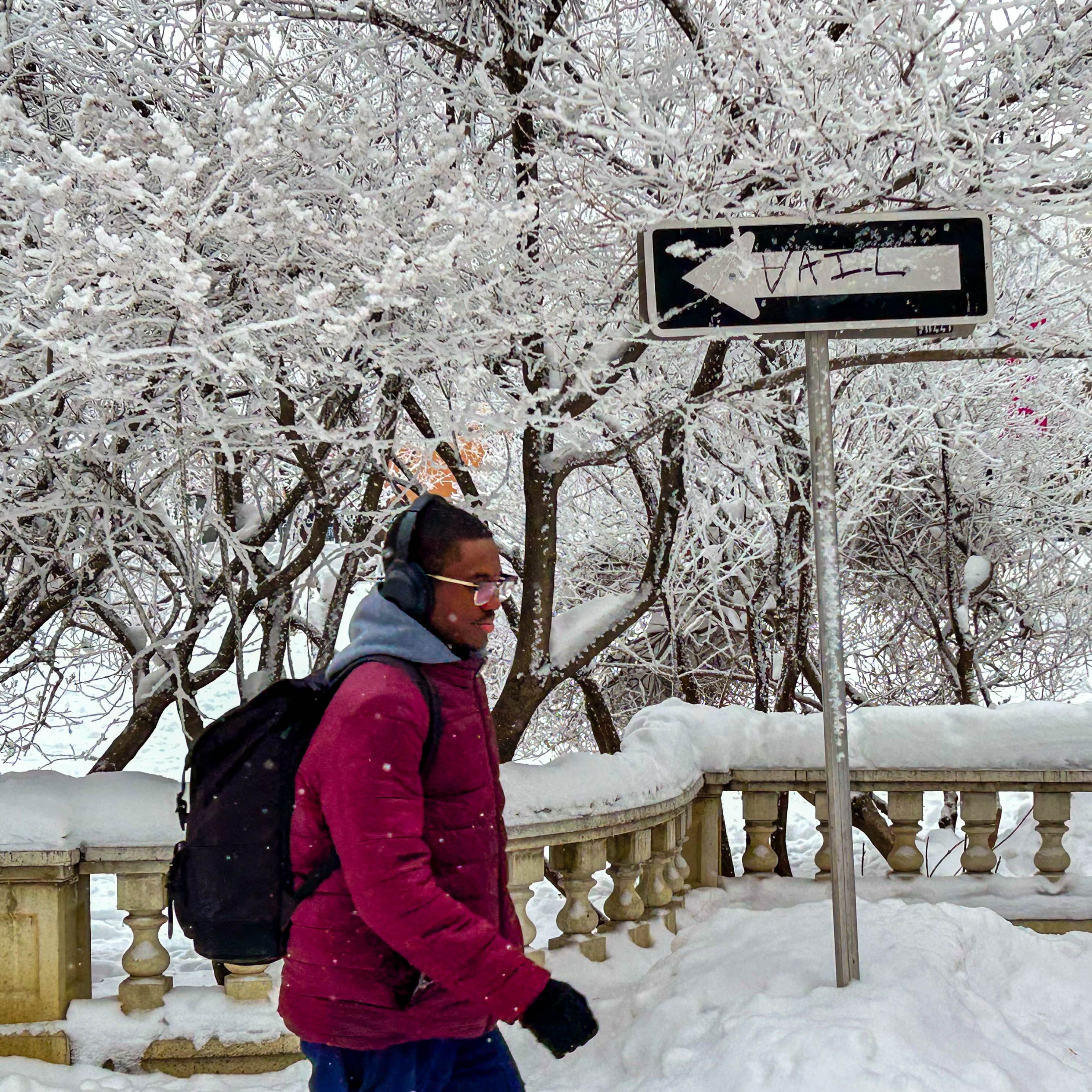
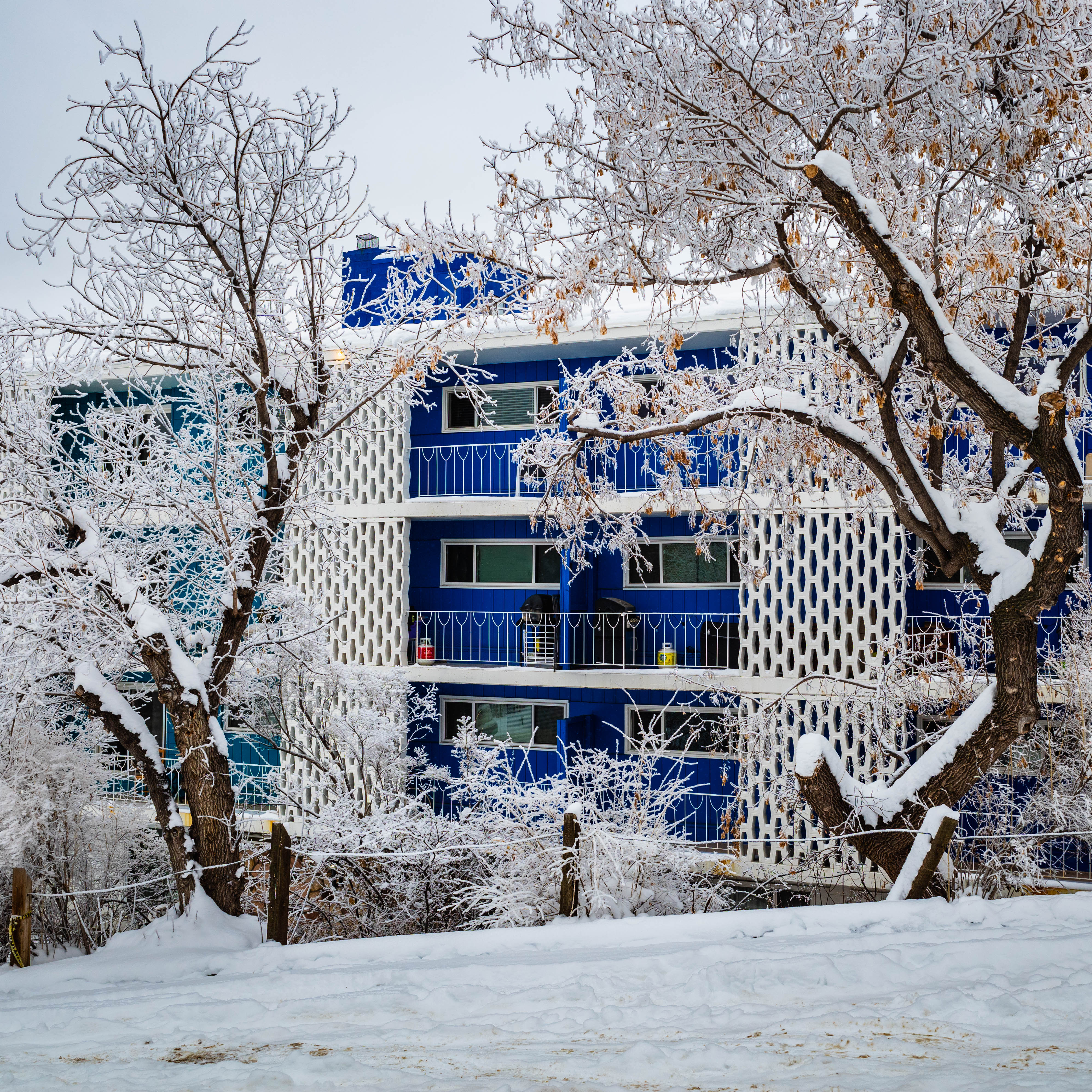
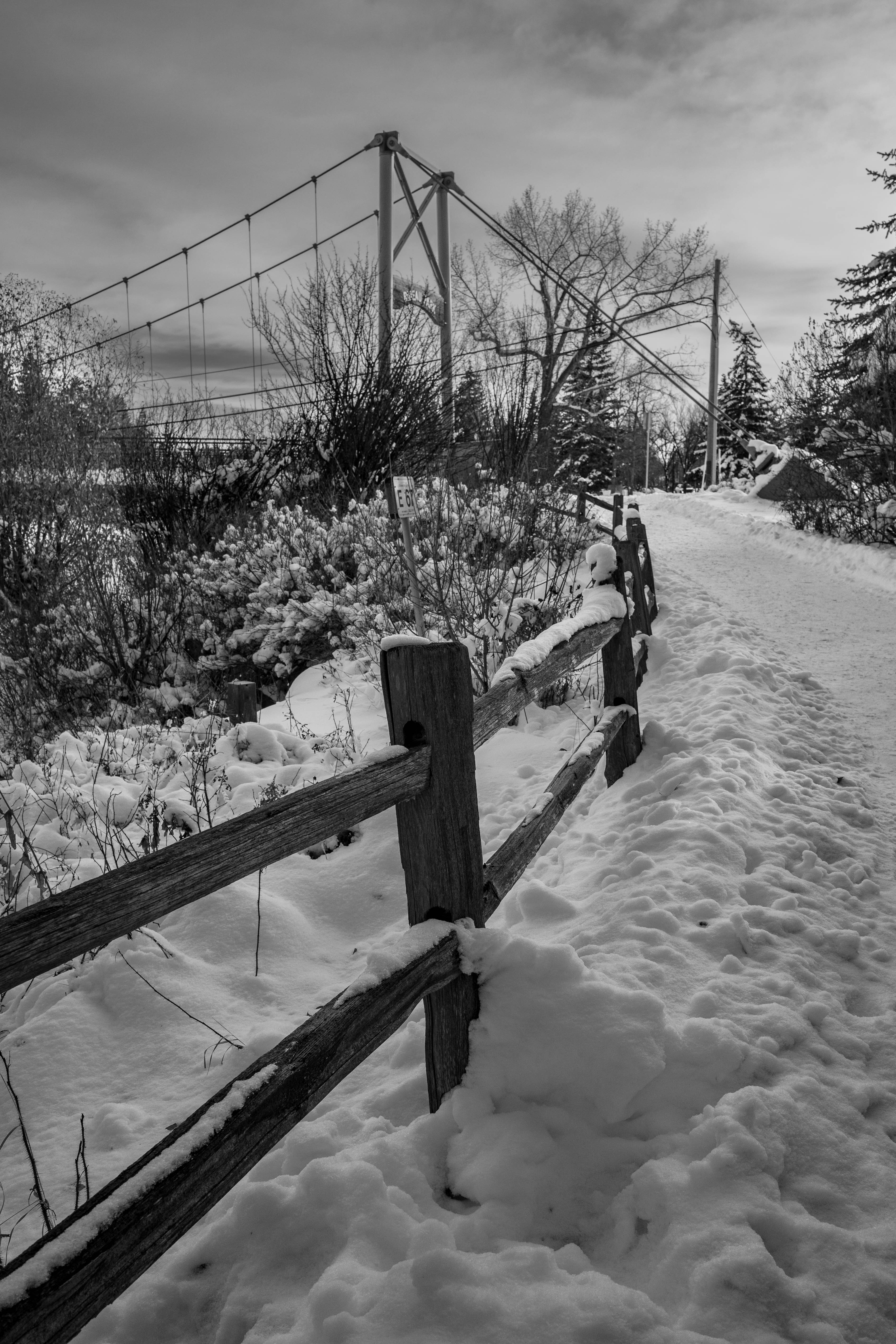
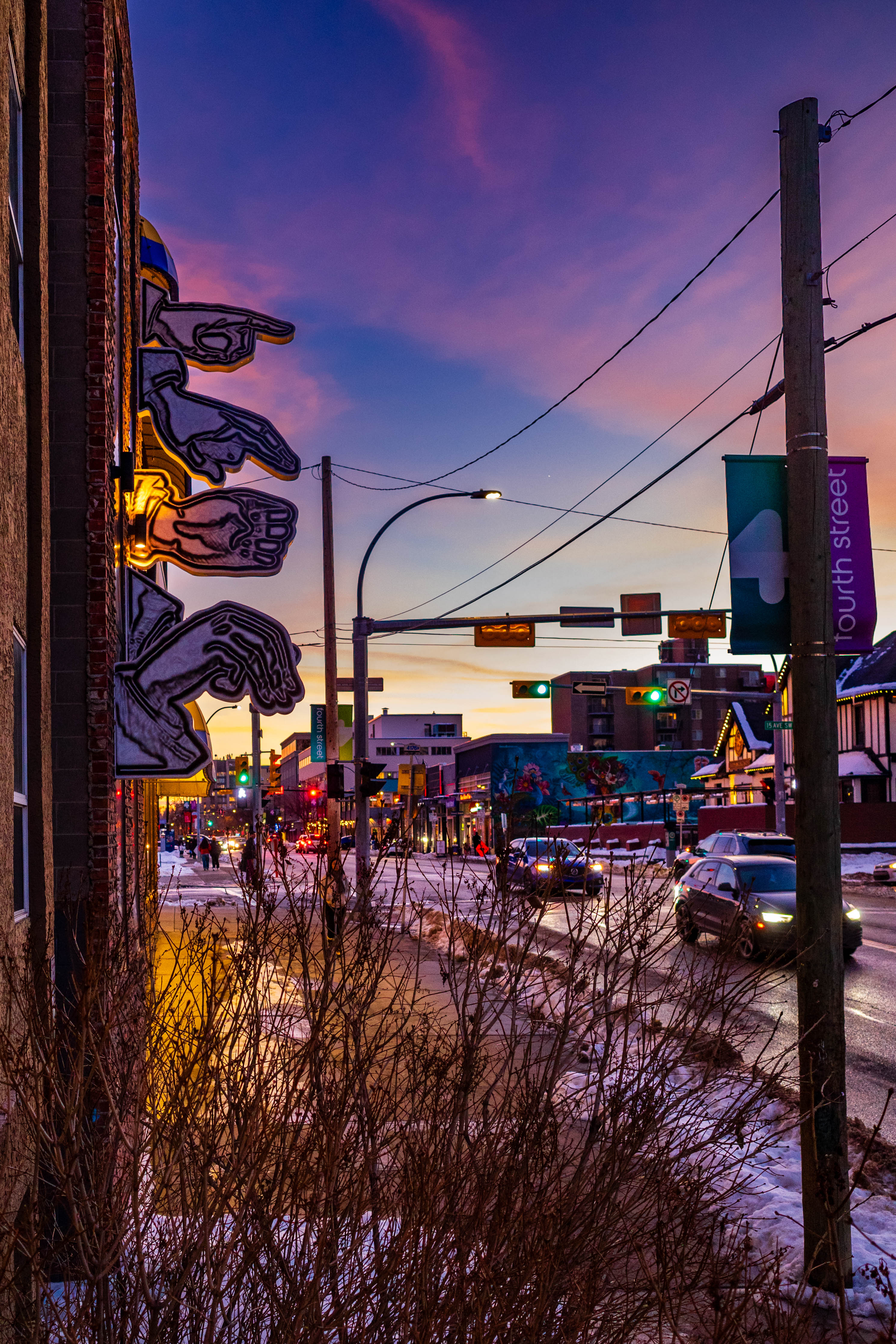
Coincident with the stroke congress was Calgary’s first blast of winter. This likely gave the conference organizers fits. It was quite a wallop. I think we got something like three times our usual November snowfall in one day. Now, while that did complicate a lot of things, it also provided for some great photography. Here are some shots from around the city… with a reminder that the copyright for all images is mine.
Strides Run Streak
Here we are, already halfway through December. Cue the usual observations about where the year has gone. December is also when many Calgary runners take on the annual Strides Run Streak. The challenge is simple: run at least one mile every day during the month.
I have some meaningful connections to this event, so whatever else is going on at this time of year, I like to sign up for it. One mile a day is an achievable goal. I give myself the added challenge of finding a worthy photo or two while I’m completing my run. Sometimes that is a bigger test, particularly with the days getting shorter and shorter!
This year, my commitment is strong, but the challenges are not insignificant. We started the month with plenty of snow on the roads and sidewalks, which have slowly turned into skating rinks. Ah, Calgary weather! I’m also doing most of my running solo these days, as my favourite training partner is sidelined with a sore hip. We are both hoping for some improvement soon.
Two weeks into December, my streak is intact, and I have managed to accumulate a few images. Maybe more images than miles, if I’m honest. While it is nice to capture the festive spirit… the snow does help with that… it isn’t essential. Rather, my goal is to find images that can transport me back into that time and place. It’s a way of adding meaning to my runs. When it comes together, it’s a nice feeling. Here’s a sample.
And while I did say the images don’t have to be festive, there is one that has the potential to put even a Grinch like me into the Christmas spirit. See what you think.
Look for more images soon. I have ideas for other posts before I shut things down for the holidays. In case that doesn’t happen, I will take this opportunity to offer my best wishes for a Merry Christmas to one and all.
I don’t have hard rules for the topics on this blog, and there are times when I feel I need to write about something of importance to me. Or someone. This is one of those times.
Gerard Rejskind passed away a year ago to the day that I’m writing these words. I suspected something may have happened to him. As I’ve done occasionally if I’m unsure about someone’s personal situation, I reluctantly typed his name and “obituary” into Google. I was right… he died peacefully in Montreal in December 2023 after a short illness.
So who was Gerard?
It would not be true to say he was a friend. But as I wrote in a similar tribute piece almost two years ago, it is possible in our highly connected world to feel close to someone even if you’ve only spoken to them a few times on the phone. Through his writing, I came to know Gerard and understand him quite well.
Gerard wrote with passion, and he was the driving force behind an independent audio publication (UHF Magazine) that had a small but dedicated following. Through his reviews of audio equipment and recorded music, Gerard influenced many people, including me.
Let me first make a connection, between a subject that I do post about on this site… photography… and music. It isn’t a stretch to say that both these art forms have much in common. They are subjective; that is, they are things that cannot be quantified. If done well, they evoke an emotional response in us. And at their best, they are timeless.
When I found out that Gerard had passed away, I thought about the many ways he had influenced me over more than twenty years. Initially, I had been looking to upgrade my entry-level Sony CD player, a tinny-sounding thing. A colleague lent me a few back issues of UHF, and I was immediately hooked.
UHF (now defunct) was a publication unlike anything else I’d seen. With a modest budget and a small crew, Gerard managed to produce a magazine that bettered any of the big, commercial publications. It did so with a rare offering: totally honest reviews. There were none of the filtered, biased reviews that I read elsewhere. My favourite feature was a short, subjective paragraph from each of the review panelists about a particular piece of gear. This was invaluable for someone like me, who was new to the hobby.
Besides the magazine, Gerard also wrote a couple of books about “hi-fi”. Again, in plain language, he explained what the equipment did (or should do) and how it ought to be designed. This hit a chord with my engineering sensibilities. I found myself coming back to these books time and time again.
My wife will attest that I dropped everything when the latest print issue of UHF showed up in the mail. Because of their shoestring operation, the frequency of publication was, shall I say, variable. Gerard kept UHF going through COVID and his own health challenges. Those things only increased the appeal of the enterprise. I read every word of every issue, and I would save Gerard’s editorial page on the inside of the back cover until last. There, he would offer another nugget of audio wisdom, in his usual style… self-effacing, but with the authority he had earned over a lifetime of experience.
I’ve bought quite a lot of audio equipment and recorded music since I first encountered Gerard and UHF. In all that time, I wouldn’t think about buying anything unless I had checked to see if Gerard had reviewed the gear in question. If he liked it, that was good enough for me. If he really liked an item, he would become a distributor, which said a lot about his motivation. It was also quite convenient. I can honestly say he never steered me wrong.
Beyond all that, he made sure I and his other readers became more self-sufficient, by writing frequent articles and opinion pieces that educated us. In fact, the last edition of UHF, the 101st, consists of a series of introductory “101” pieces (in the usual nomenclature of first-year university courses) on various audio gear. It seems a fitting legacy to Gerard. The final paragraph of his last “State of the Art” piece is worth repeating here:
“The final rule is to do what we do: take notes, with details on what you liked and what you didn’t. Concentrate on the music, which is the purpose of the system in the first place.”
Gerard was a rare person: an honest businessman; a knowledgeable and generous resource; and above all, a gentleman. He will be missed.
Now I think I will go and put on a record and re-read some of his pieces.










 My Second Running Life