
Edmonton Marathon Report

In what has already been a memorable year for racing, the 2025 edition of the Servus Edmonton Marathon may have delivered the most excitement. And I haven’t even been racing!

Deborah and I decided to make a quick weekend trip to Alberta’s capital city for a couple of reasons, the main one being a chance to see Dan race in the Half Marathon. For a short time, I entertained the idea of signing up for the 5k—that was until my dodgy Achilles decided the matter for me.

It was a thrilling weekend. We enjoyed soaking up the atmosphere around race headquarters at the Edmonton Convention Centre. It was also a busy weekend, with various festivals going on around the city, in addition to the race. We had forgotten how lush and green the Edmonton river valley is.

To the action

All the distances at this year’s 34th edition of the event were popular. Across all the races, more than 8,000 runners signed up. On a perfect day, sunny but not too warm, 1,200 runners started in the main event, the Servus Marathon. The Healthcare Solutions Half Marathon was the biggest event by far, with over 3,000 runners toeing the line for the 7:45 a.m. start. By the way, the HM served as the Canadian championship race, so the field was big and the elite field was very deep. The Army 10k took place later in the morning, with a field of 1,800 runners, and the Family 5k Fun Run rounded out the day.

Dan competed in the HM with the Canadian Armed Forces CISM Elite Running Team. For those unfamiliar with CISM, it’s the Conseil International du Sport Militaire, or the International Military Sports Council. Founded in 1948, CISM is one of the largest multidisciplinary organizations in the world. CISM organizes various sporting events for the armed forces of its 142 member countries.

Canada’s armed forces are active in many sports through CISM, and each year the athletics team is one of the largest. In Edmonton, 13 CISM runners competed in the HM and 10k, and they all turned in excellent performances.

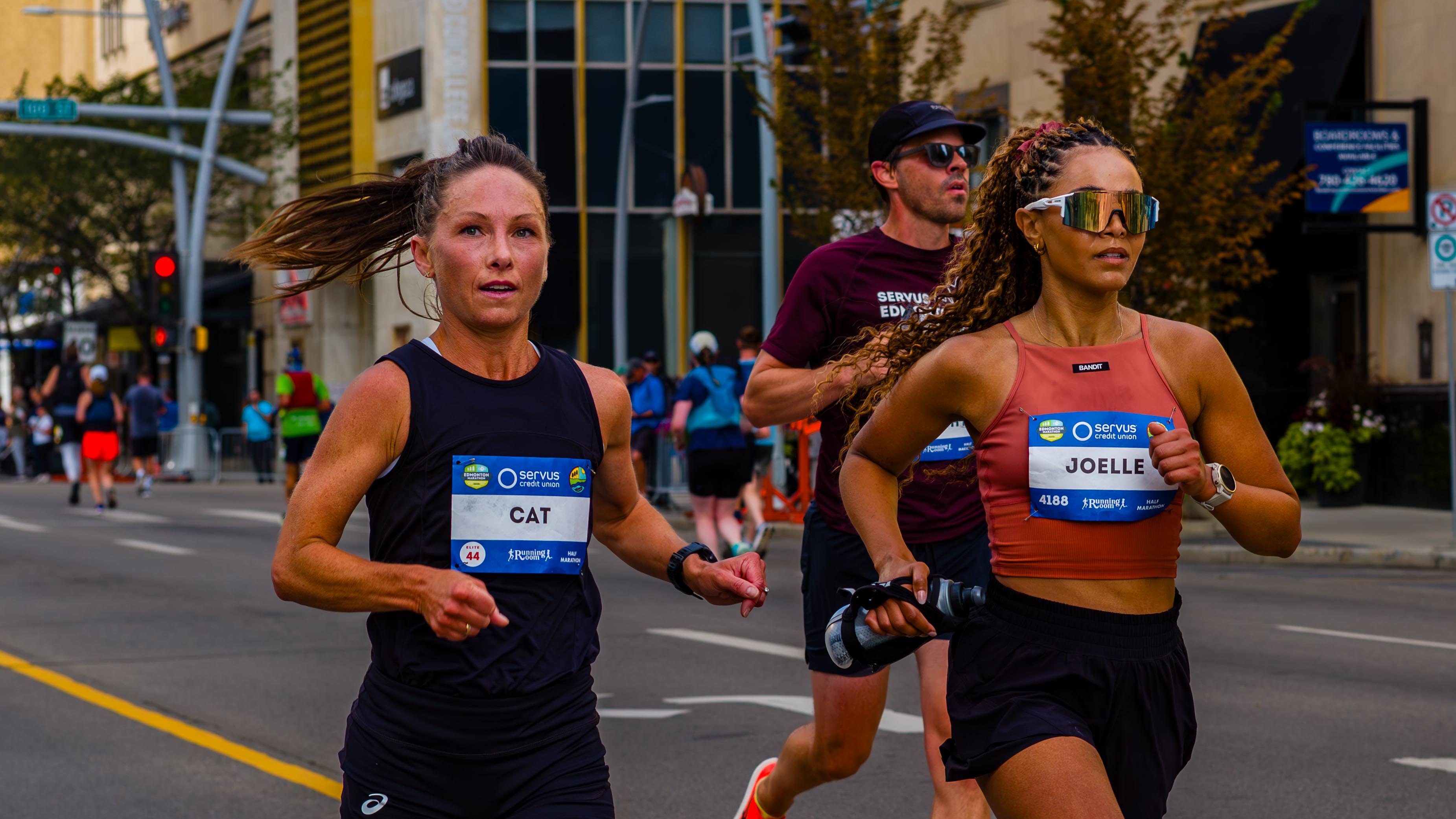
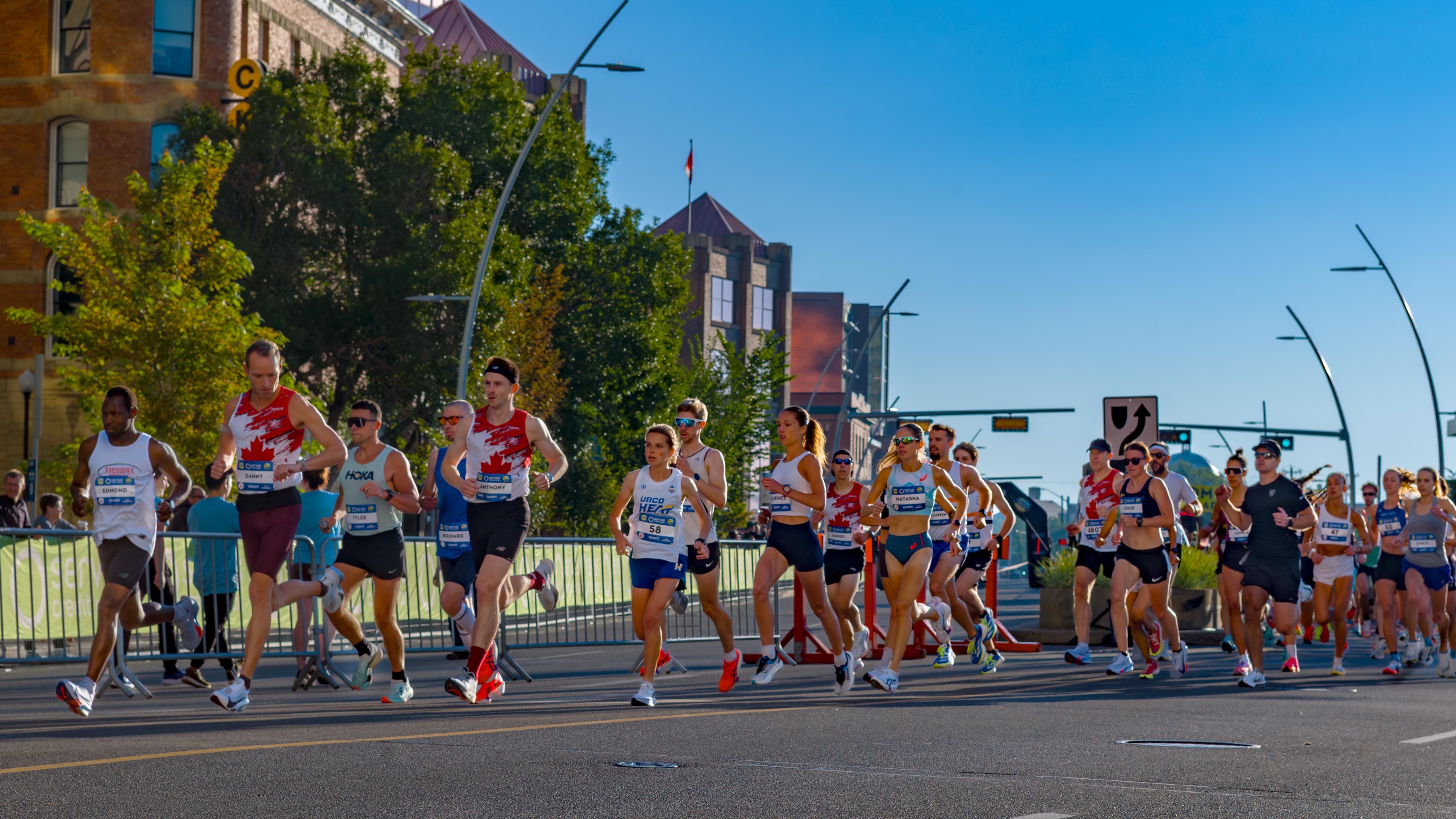
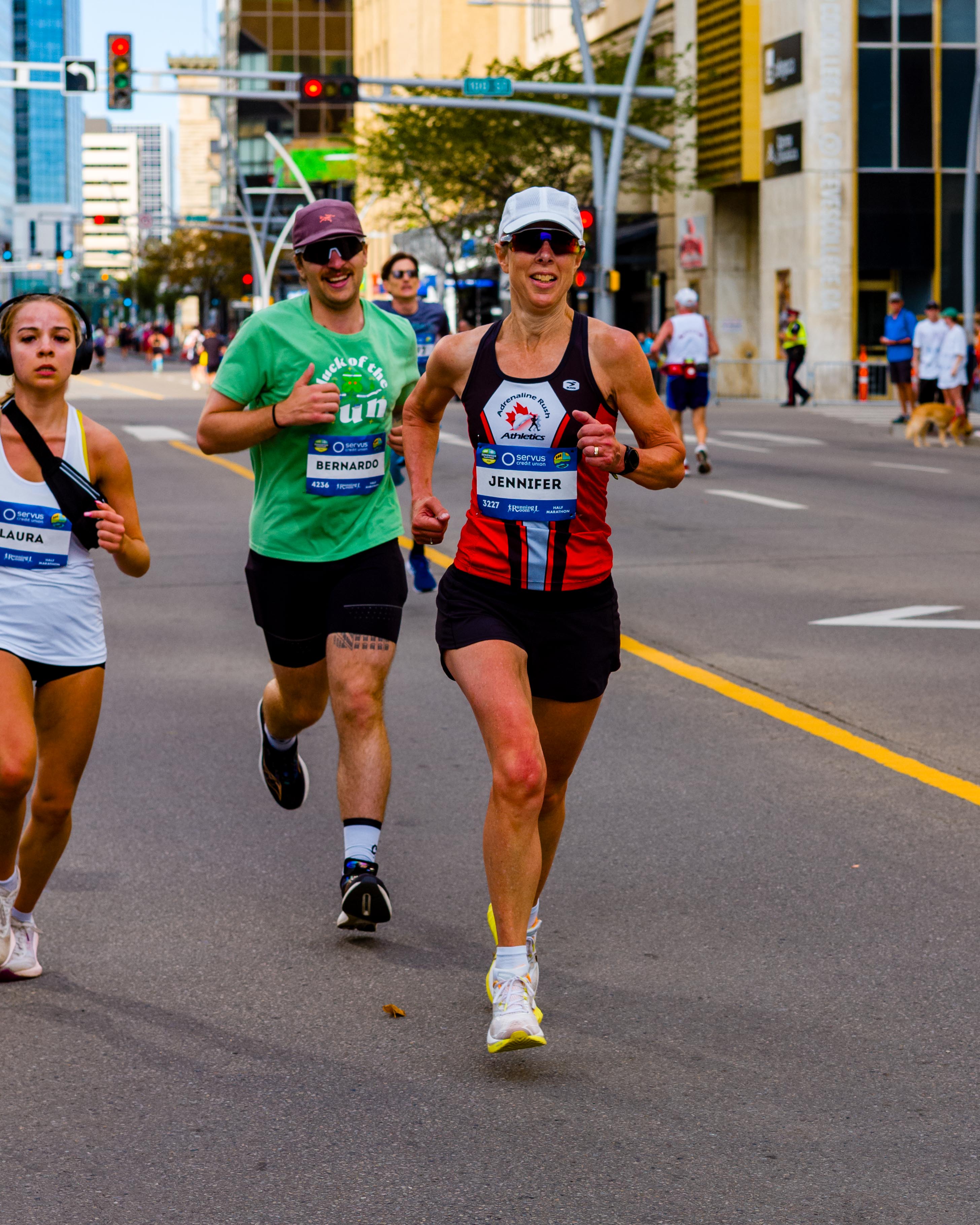
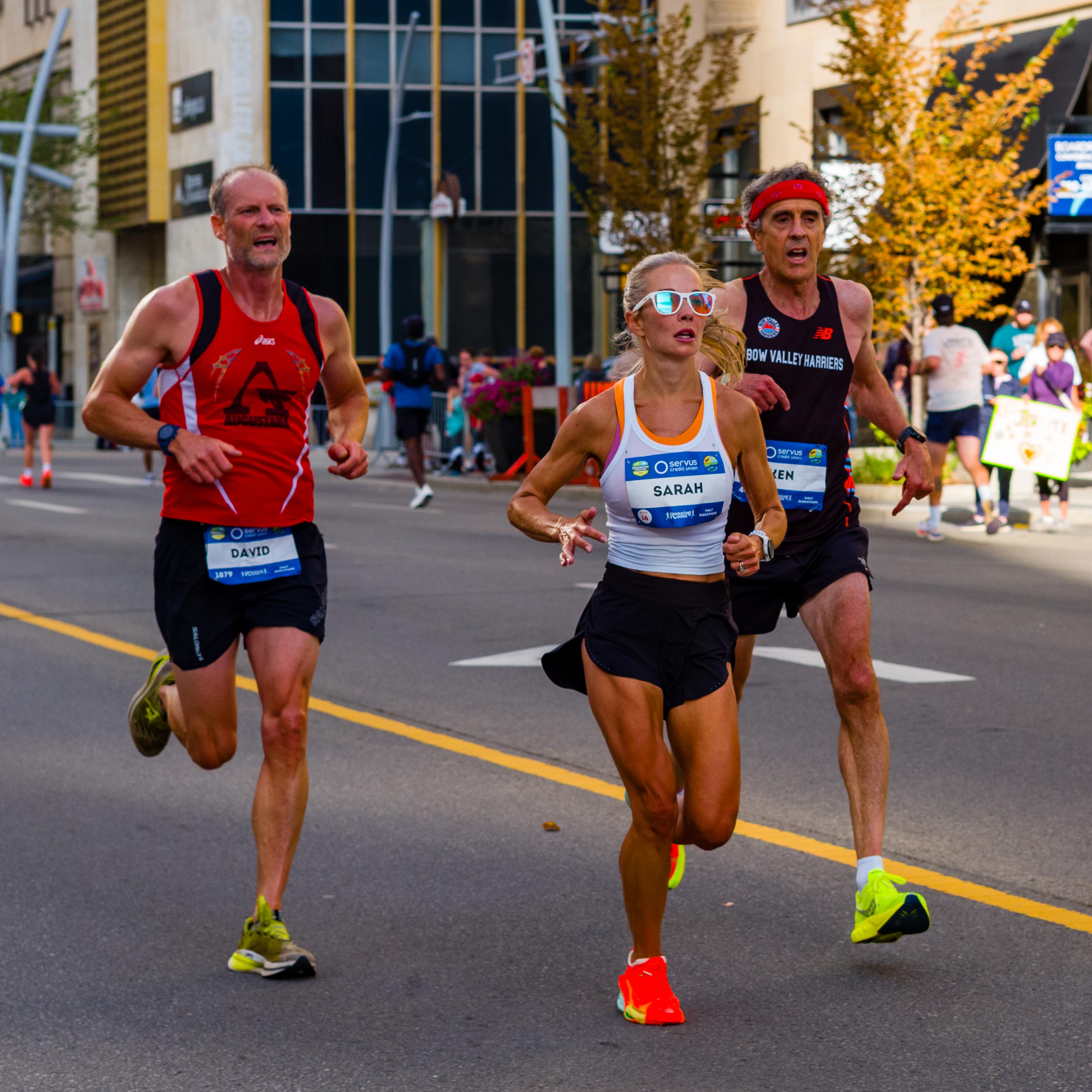
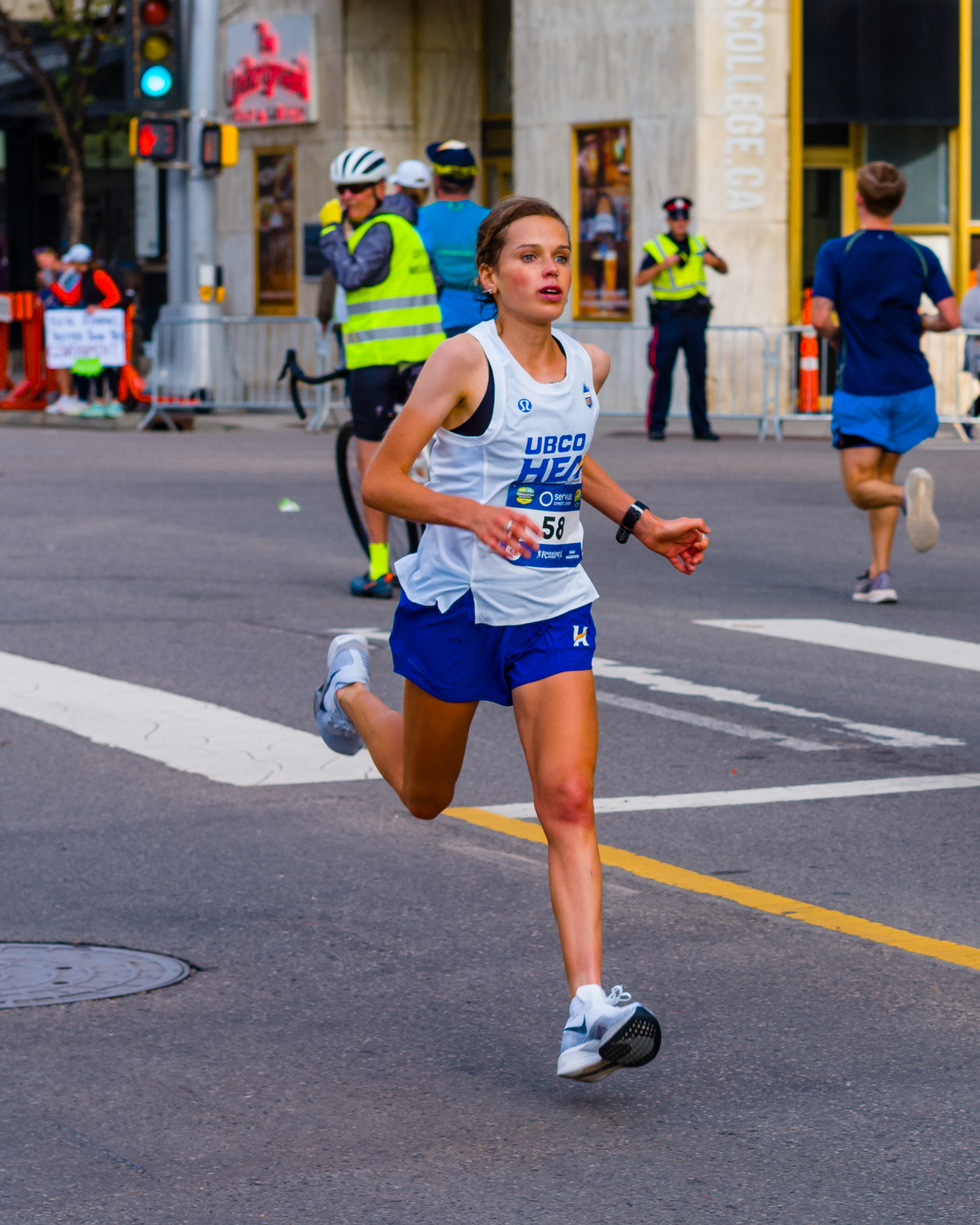
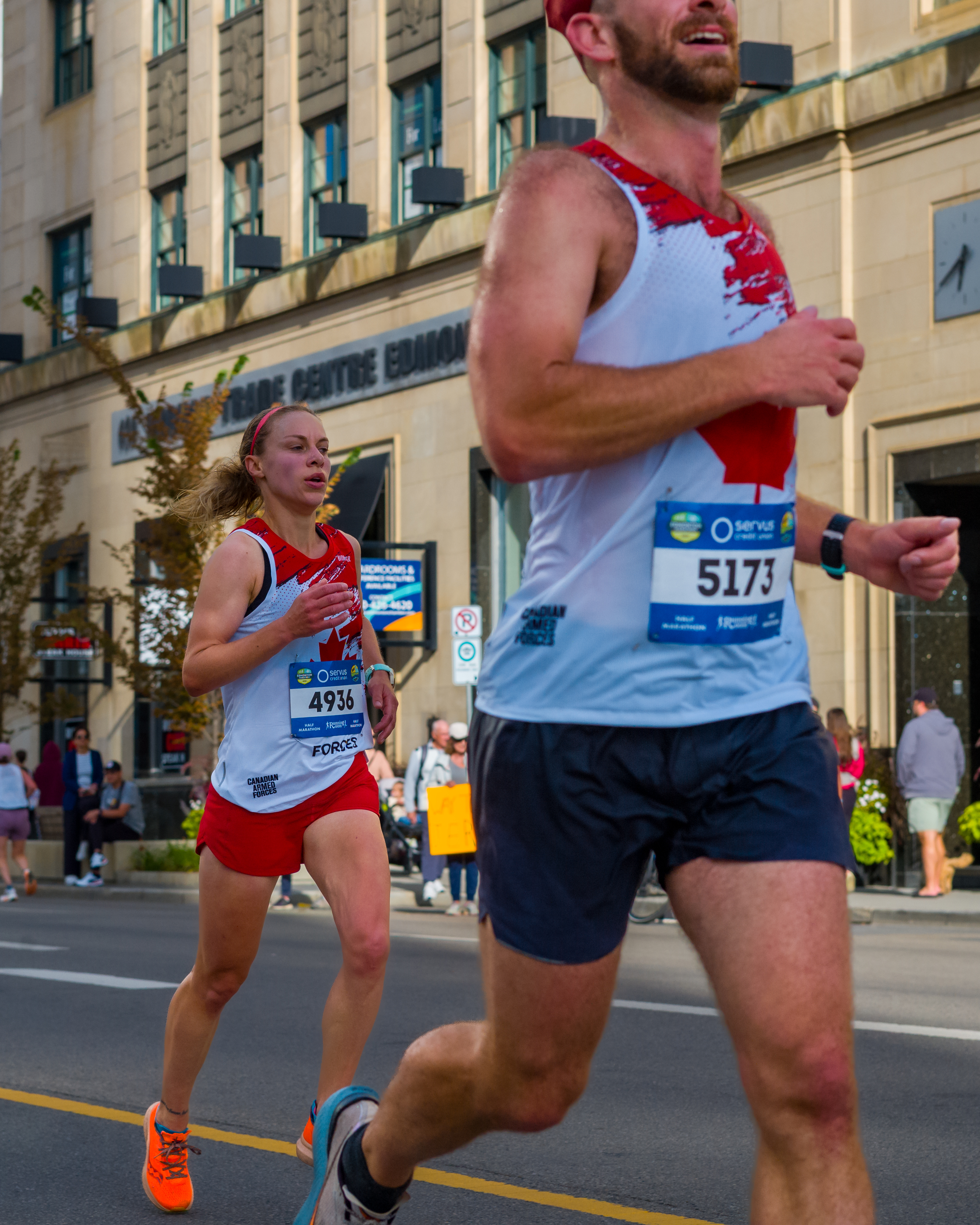
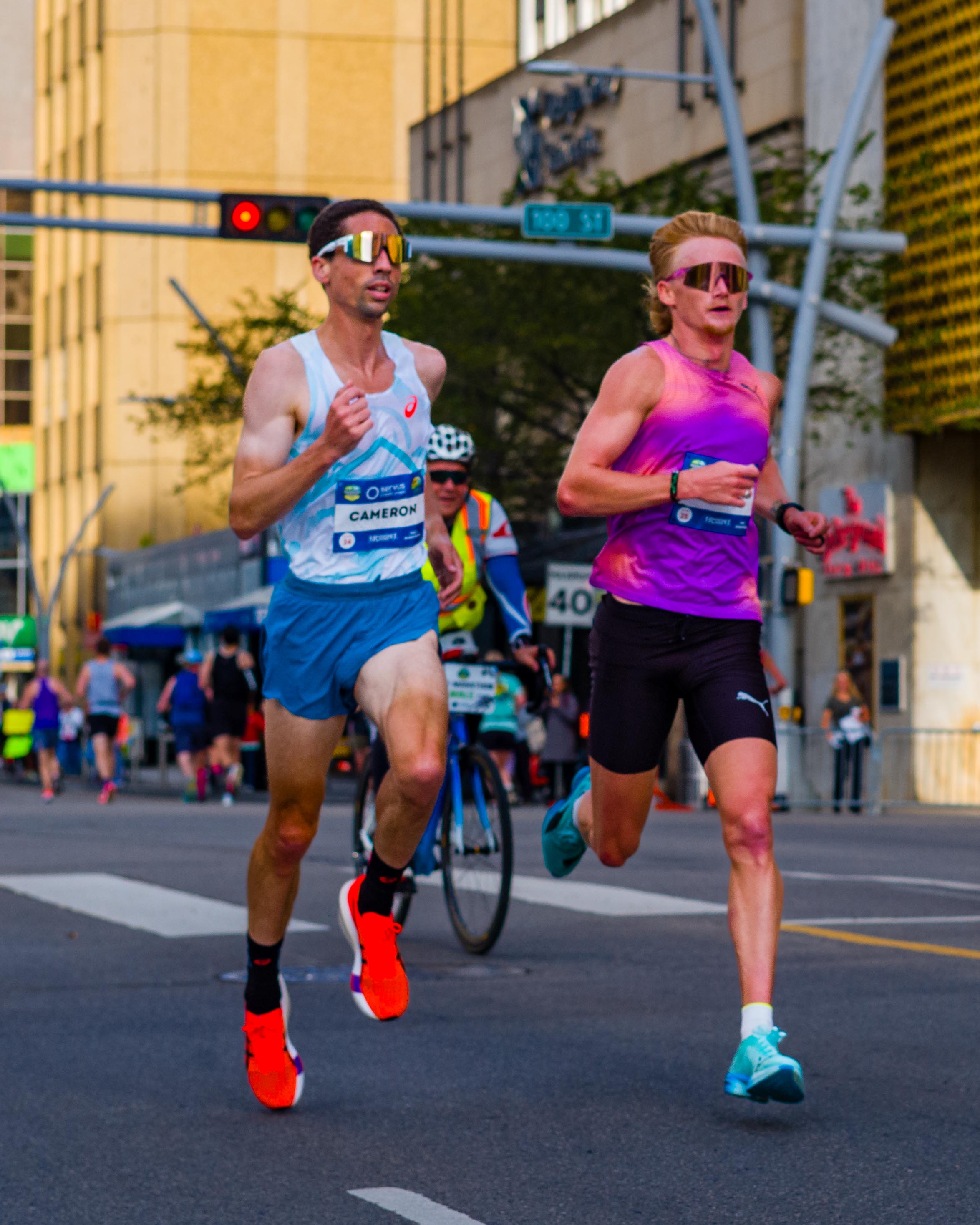
My vantage point on Jasper Avenue was ideal for photographing the action on the fast out-and-back course. The bright sunshine created both opportunities and challenges behind the lens, but I did manage to capture quite a few worthy shots. The finish in the men’s race was as close as you can get, with Rory Linkletter nipping Cam Levins at the wire, in just under 63 minutes. Lauren McNeil of Great Britain took the women’s race in 1:11:25. My Adrenaline Rush Athletics teammate, Jen MacPherson, won the F55-59 age group, in a very speedy 1:38:35, as she builds to a fall marathon. Well done, Jen!

Here’s a sample of photos from the Half Marathon:
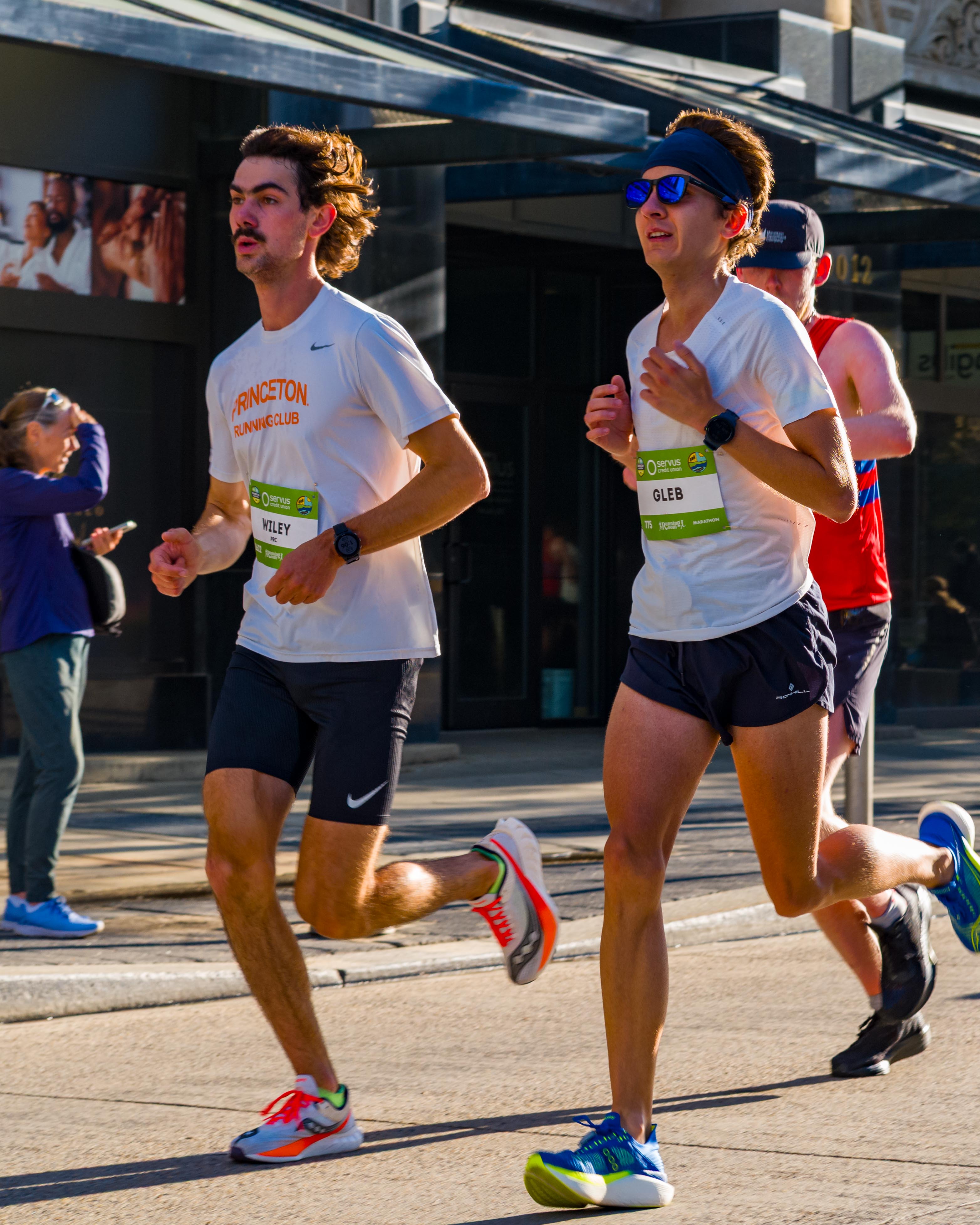
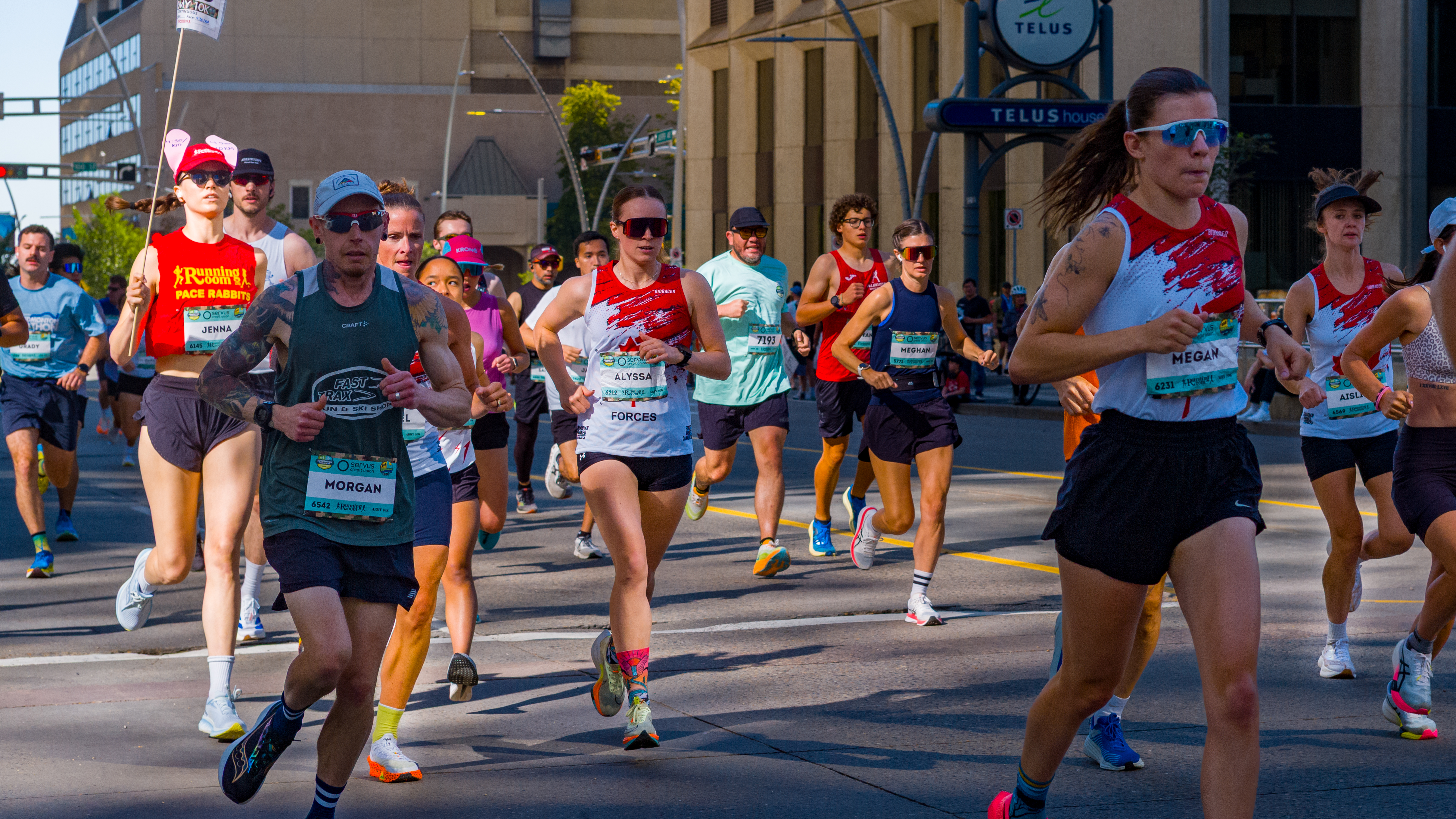
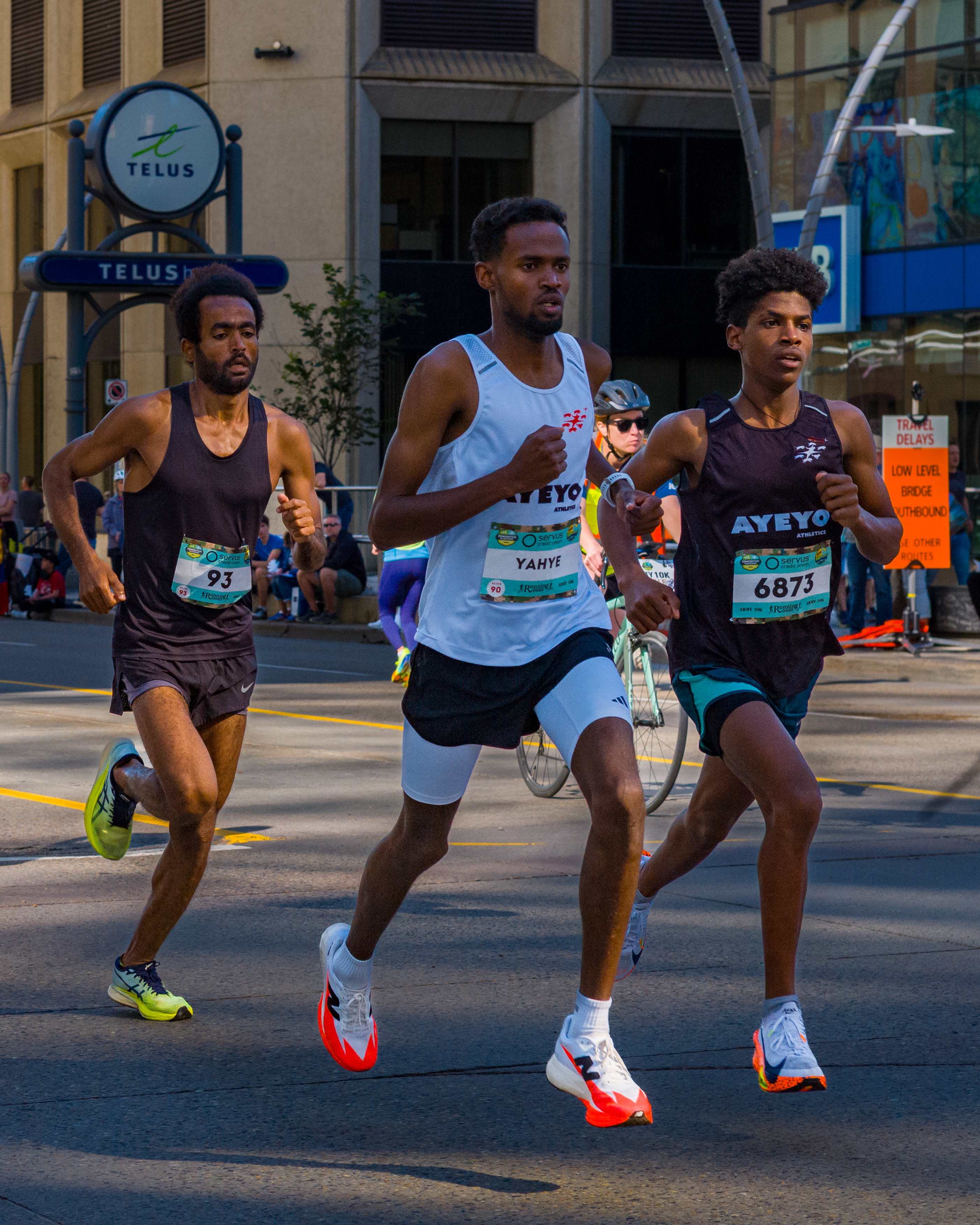
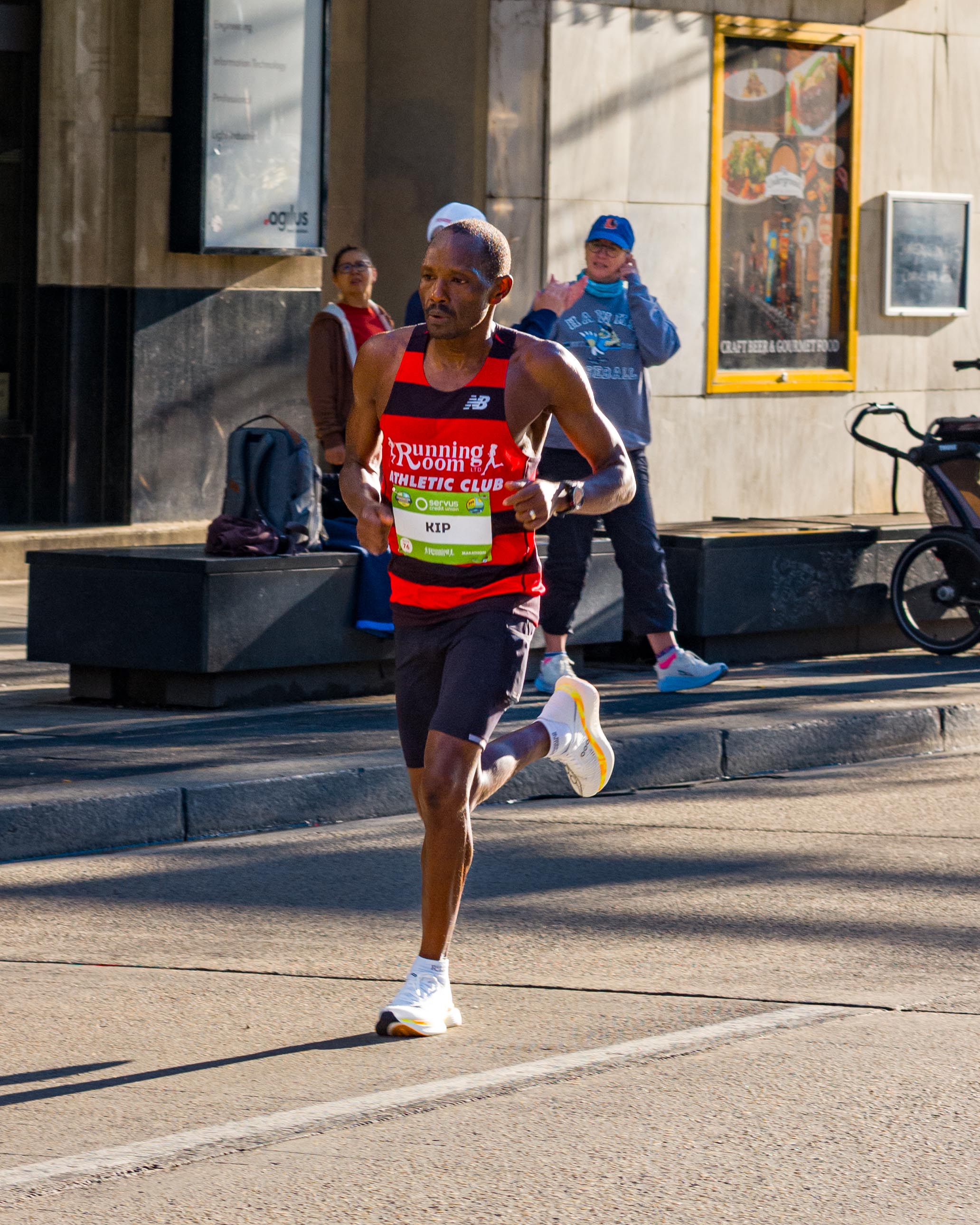
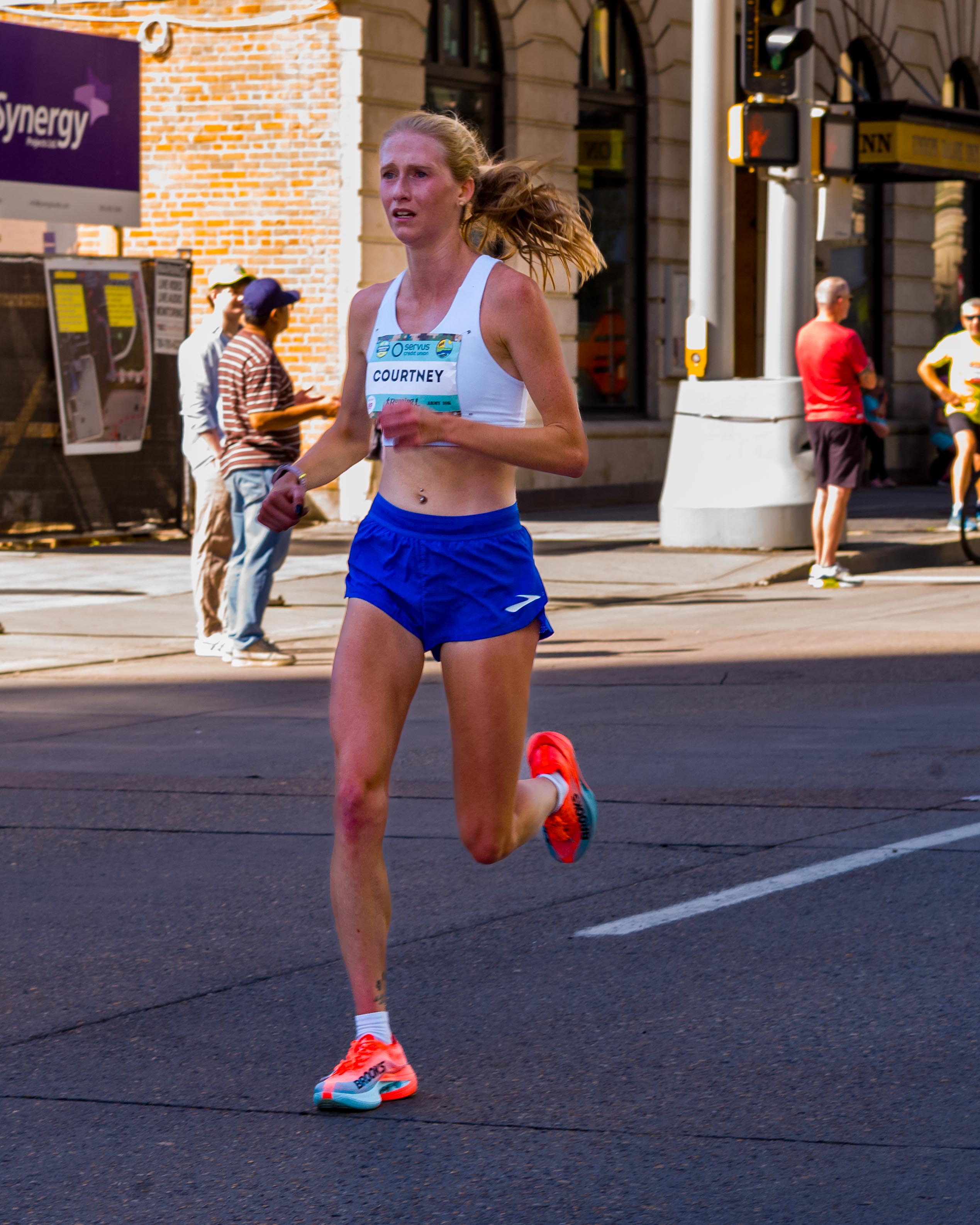
The men’s Marathon was won by Alberta running legend, Kip Kangogo. On the women’s side, Kristen Spady was the winner. The 10k didn’t disappoint, with lots of fast times and great competition. The winners were Courtney Hufsmith in the women’s race and Yahye Mohmaed Jama for the men. Another Adrenaline Rush athlete, Gord MacPherson, ran his goal time of 54:58 while balancing his training with his other summer passion, golf!

A few more snaps from the 10k and marathon:
The CISM Team rocks!

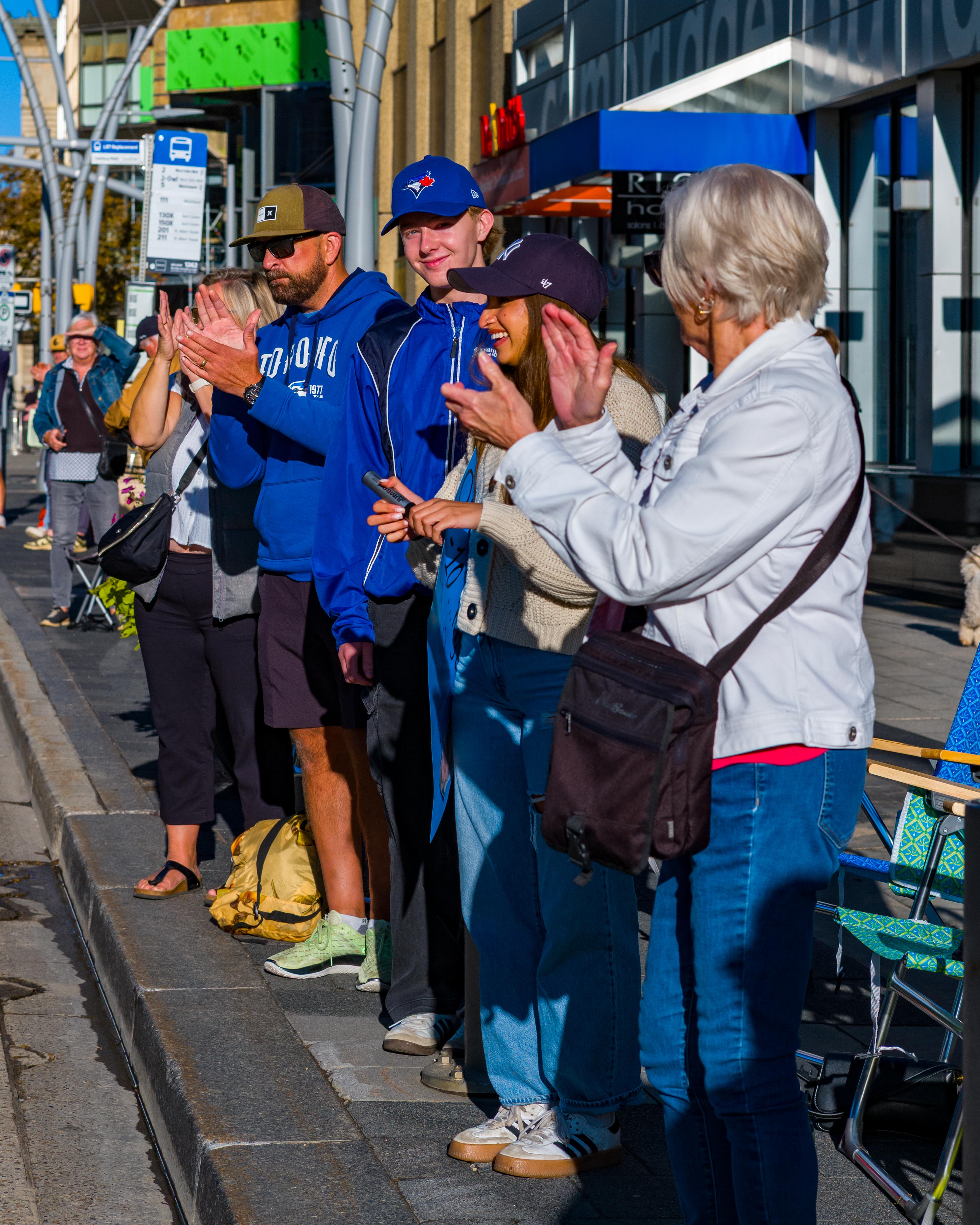
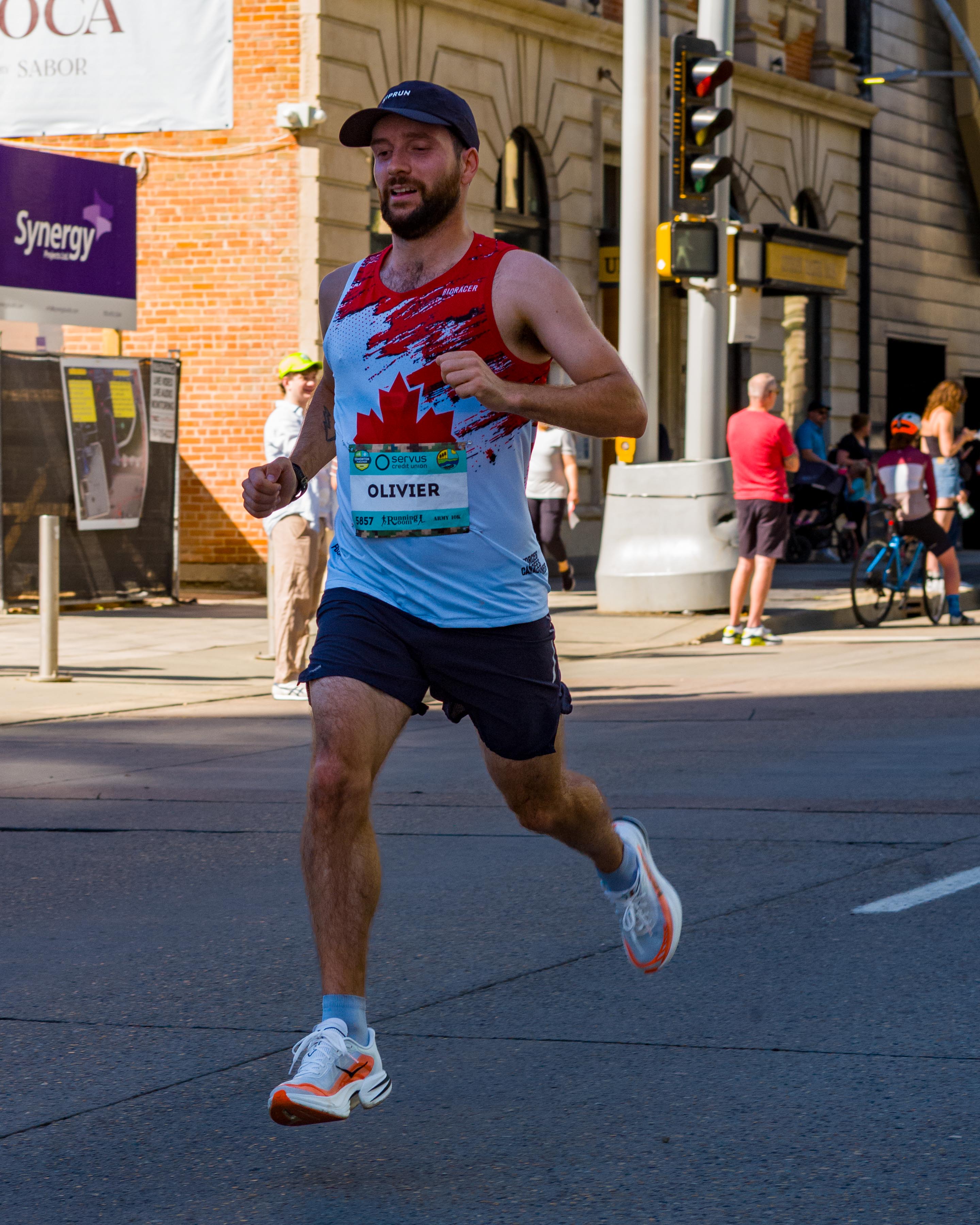
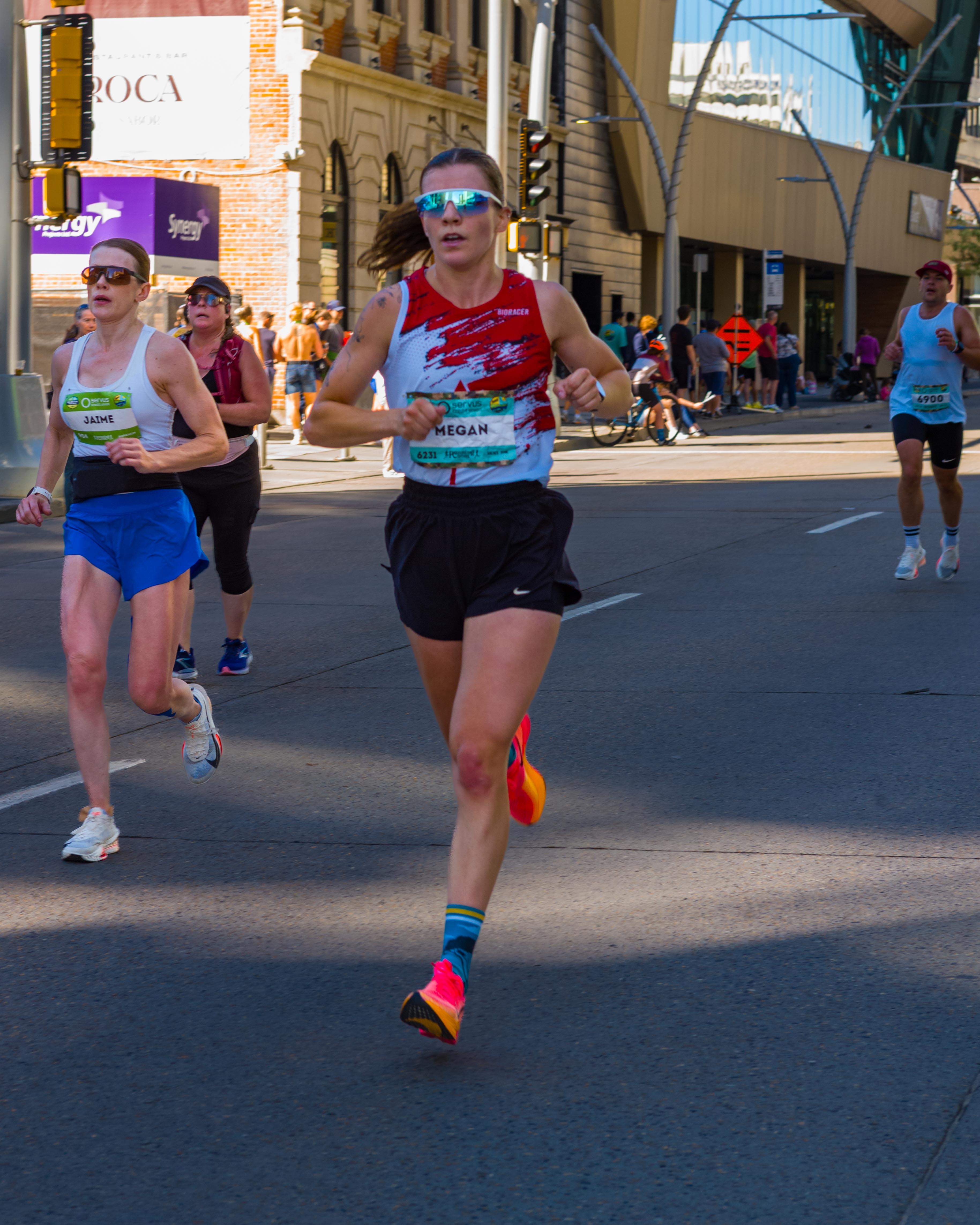
Having Daniel and his teammates involved added a whole new dimension to our spectating. Fortunately, there was also plenty to cheer about. Our task was made easier because we could pick out the distinctive red and white singlets from a long way off. Here’s a small sample from the many impressive performances recorded by CISM racers on Sunday.
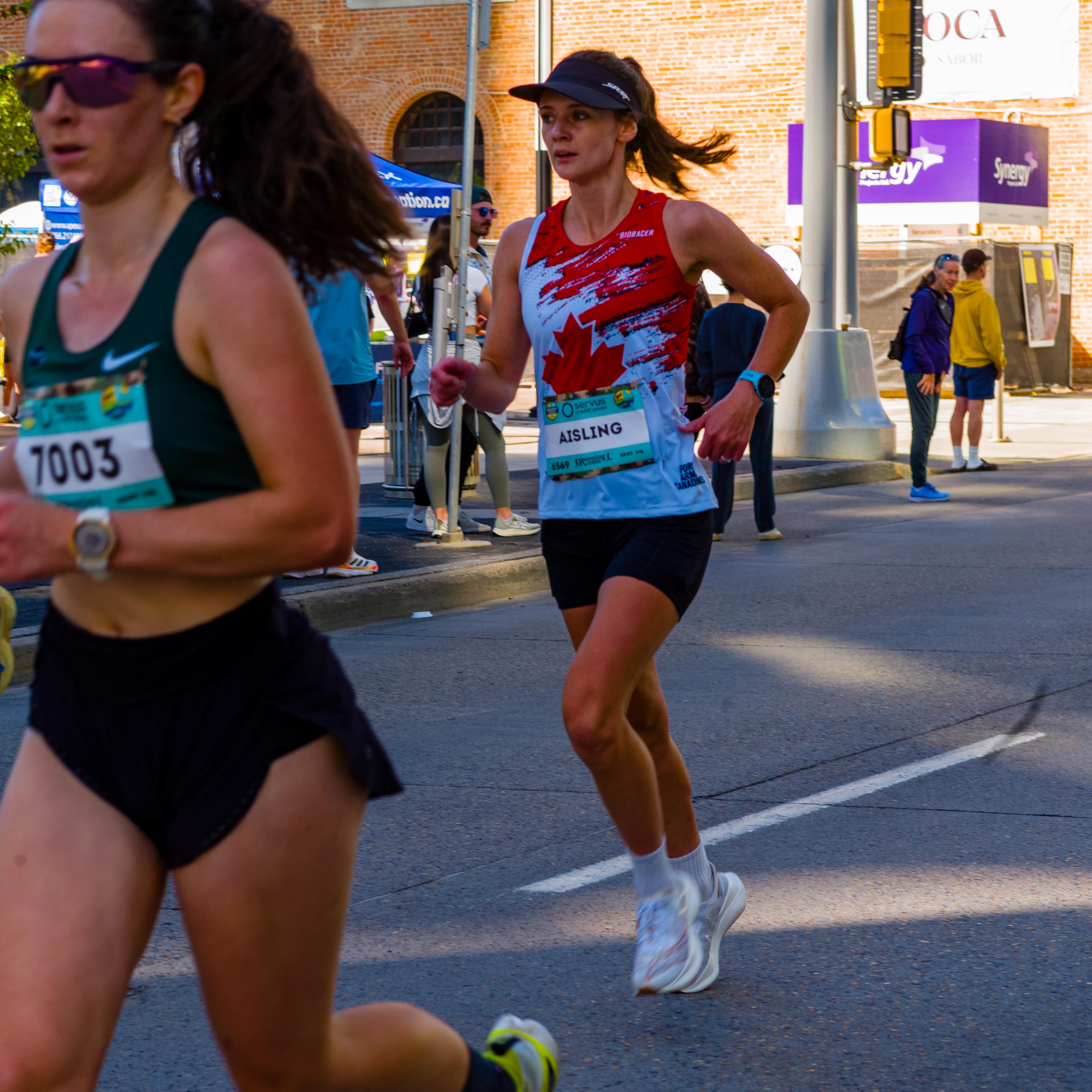
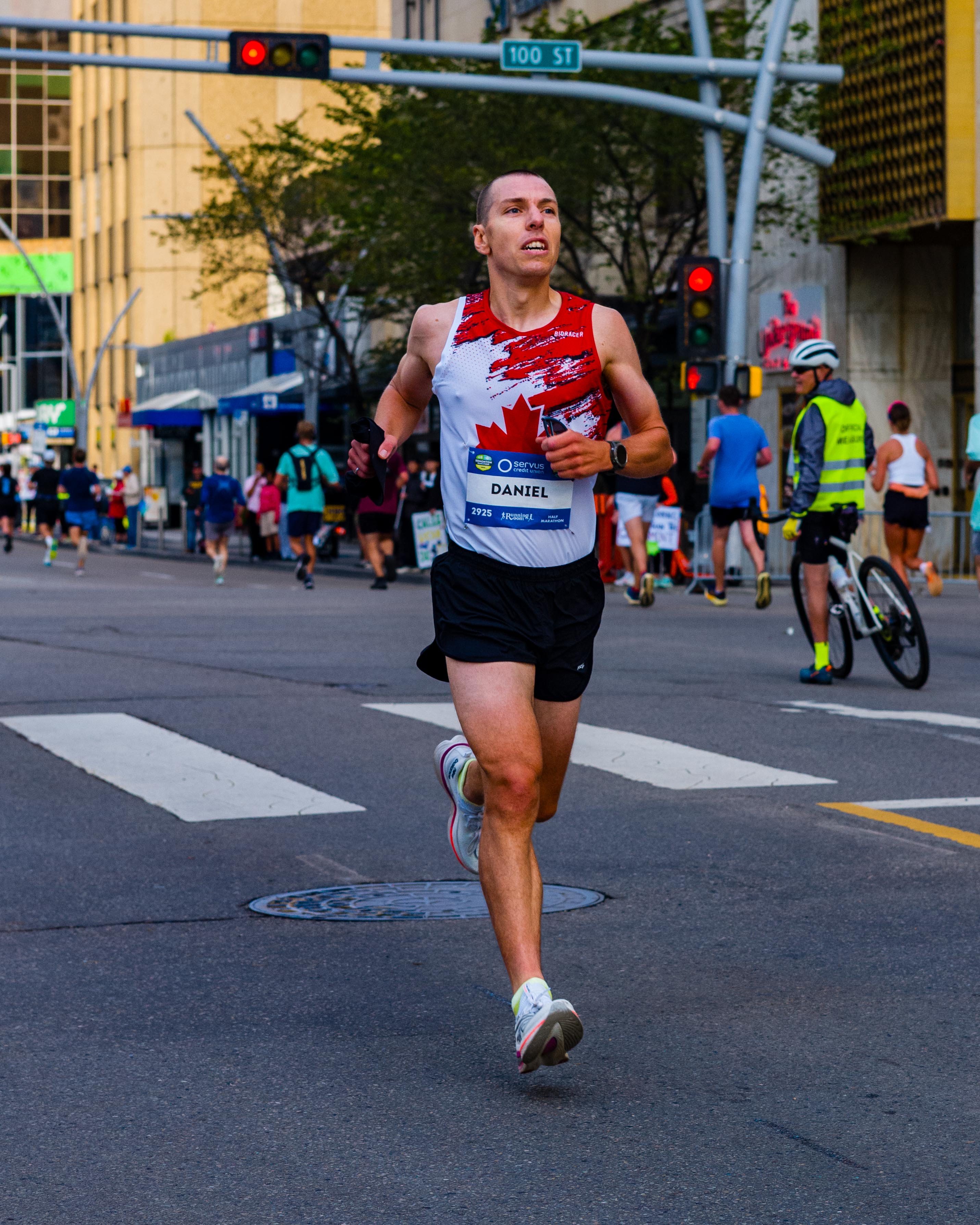
Now, I can’t move on to my final subject before mentioning one story that came out of the Half Marathon. To set the scene, Daniel (@stridesandsummits) started strong for the first third of the race, but felt he had more to prove. As it happened, he met up and teamed up with Canadian marathon record holder, Natasha Wodak. For the rest of the race, they worked together to crush their respective goals: Natasha took home the Canadian Half Marathon title (1:11:40), and Dan notched a solid PB of 1:11:35. Way to go, Daniel and Natasha!
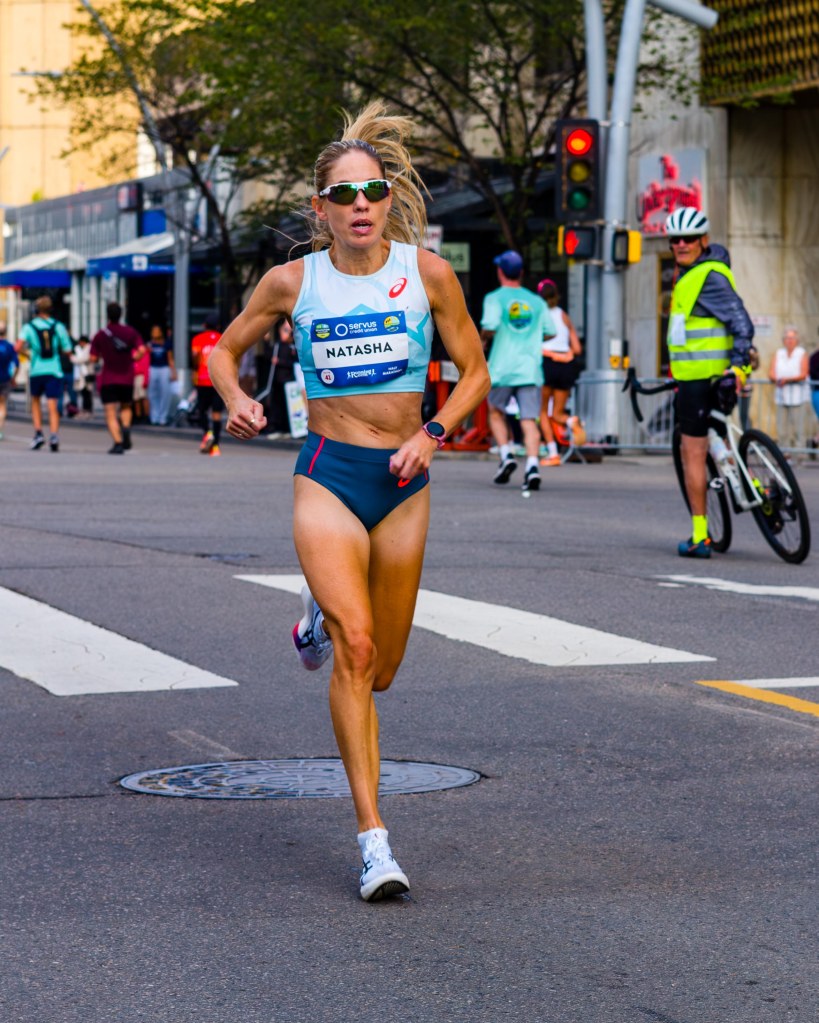
Natasha Wodak powers to the Canadian title!

Yes, there is a personal connection!

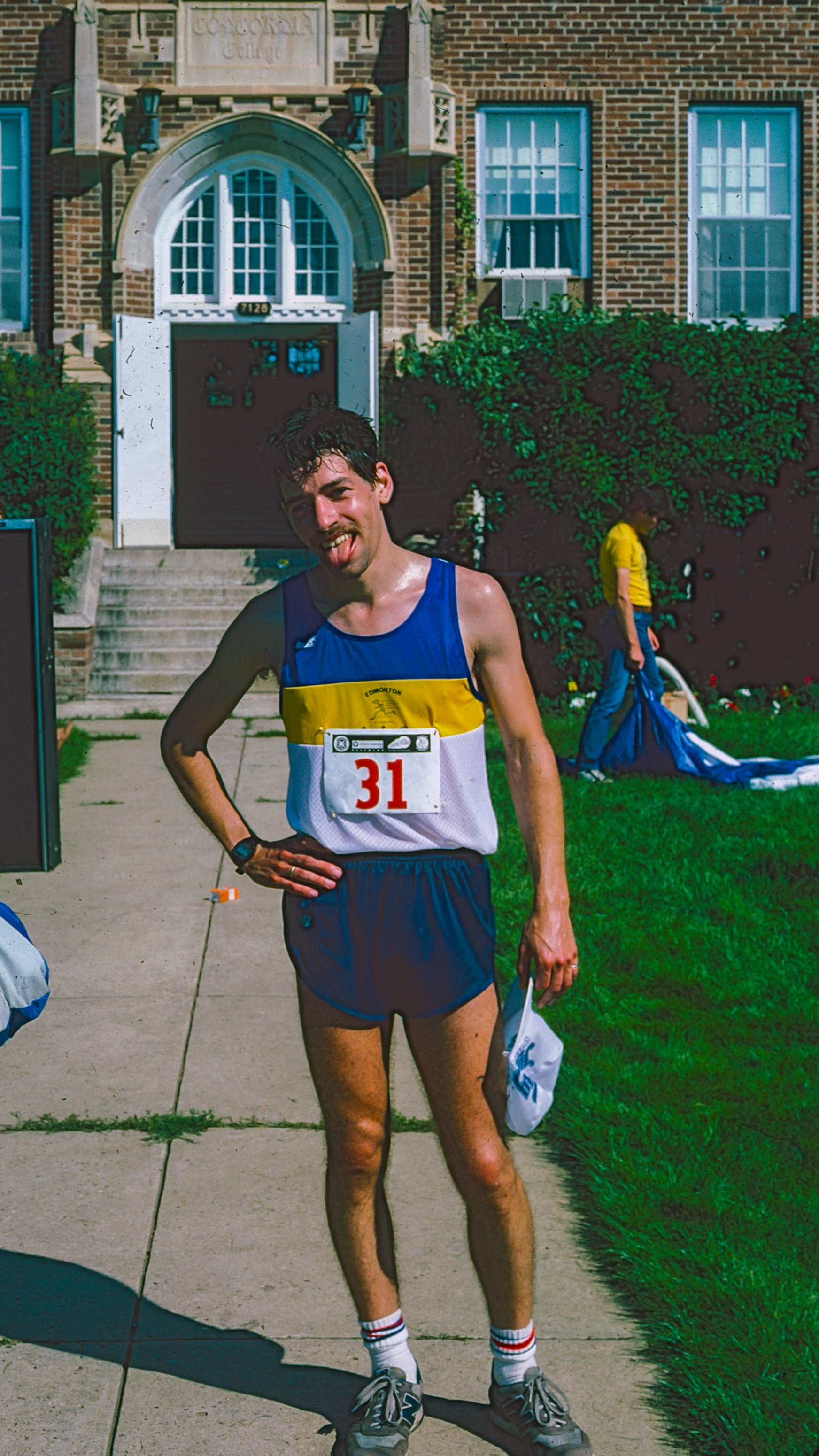
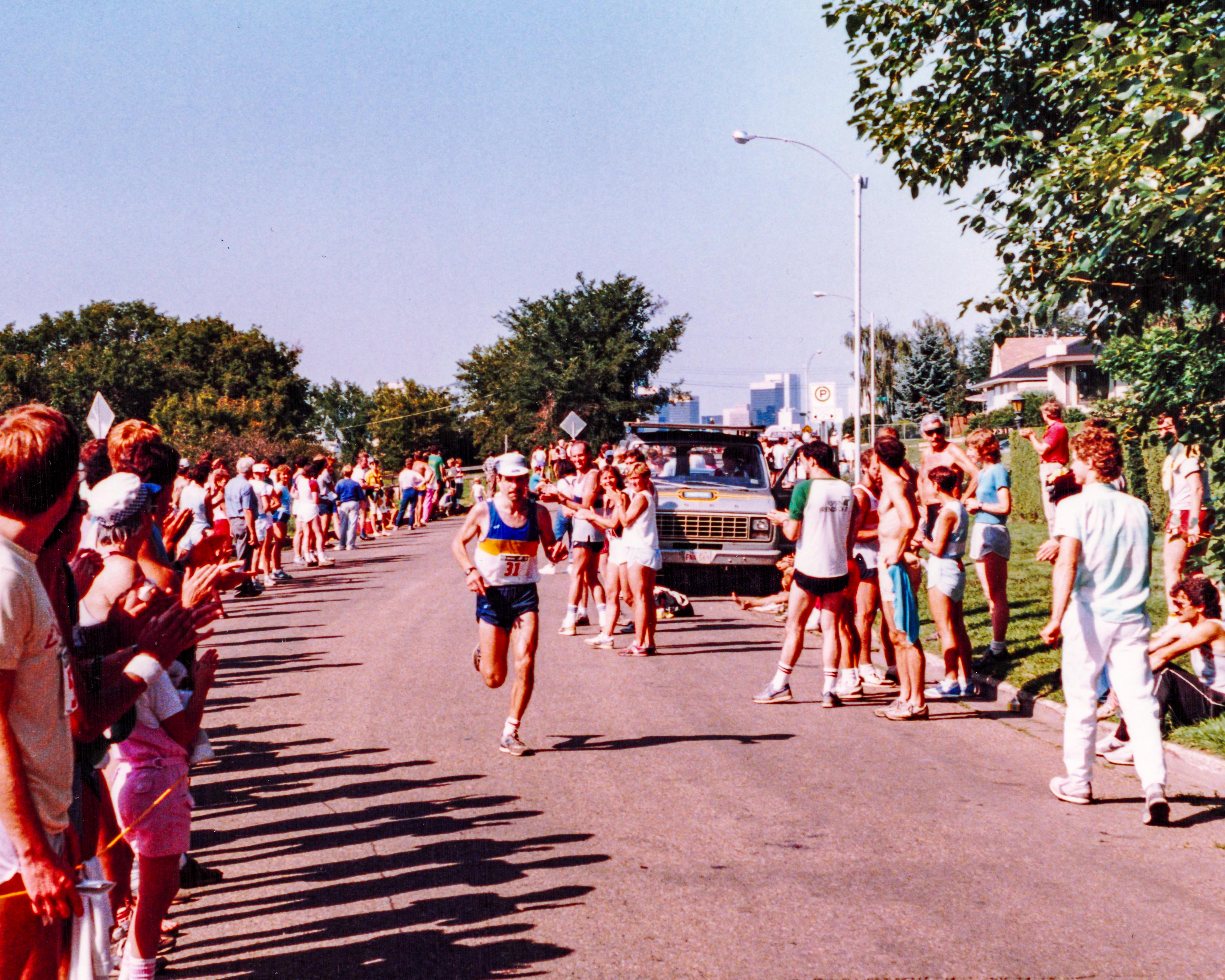
It seems I have a connection to a lot of races, and that includes the Edmonton Marathon. Deb and I moved to Edmonton in the dark, cold days of December 1984. By the summer of 1986, I was confident enough to sign up for what was then called the Northlands Klondike Marathon. I recall it being a short-lived effort to get a marathon going in the city.

This was my third attempt at the distance. My previous efforts had been less than successful, based on how dissatisfied I was with my performances. Things did turn out a little better for me on this warm July day. I finished 19th out of 139 finishers, running for the Edmonton Roadrunners—check out the vintage singlet. My time of 3:01:27 was tantalizingly close to the magical 3-hour barrier. Looking back, I figure the heavy New Balance 990s I wore must have cost me about 5 minutes—not exactly supershoes!
So there you have it. Another eventful day at the races. For those of you who ran, congratulations! For anyone thinking about it, the Edmonton races are now a solid fixture on the Alberta race calendar. See you there in 2026?

Until next time, be well, and BE FAST!

Book Review: “Today We Die A Little”

Today We Die a Little: Emil Zatopek, Olympic Legend to Cold War Hero, by British journalist and author Richard Askwith, tells the fascinating story of the great Czech runner, Emil Zatopek.

Zatopek was an enigma. His life paralleled his country’s history and is intertwined with the Second World War and the rise and fall of the Soviet Union. Askwith did a thorough job of researching his subject.

The Czech Locomotive

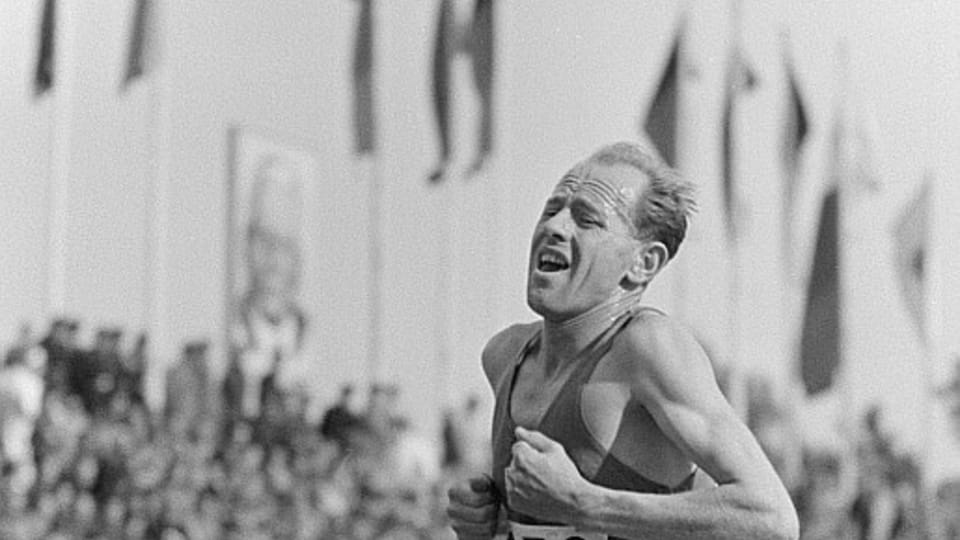
Today, if people know anything about Zatopek, it’s likely because of his ungainly running style. Videos of his great performances are easily found, and worth a look. But his rolling head, flailing arms and gnashing teeth may be the least interesting part of his story.

Emil was a true sportsman. His nickname comes from a front-running style that left his competitors strung out behind him. He befriended those same runners and maintained contact with them well into old age. His training techniques were unorthodox. For instance, he was known to train in army boots, or in deep snow. Any of us who have done interval workouts can thank Zatopek—he may have invented 400m repeats. The difference? He did 60, 80, even 100 of them—every day.

Emil Zatopek, giving it his all (Photo: Roger Rössing, Deutsche Fotothek)

There are so many anecdotes about Zatopek that it’s nearly impossible to separate fact from fiction. I give Askwith credit for trying. Some things aren’t in dispute though. Emil taught himself 8 or 9 languages by reading dictionaries. He and his wife, Dana, won 4 gold medals at the 1952 Helsinki Olympics—a count that was second only to the US. Emil won the 5000m, 10000m and marathon, a record likely never to be repeated. Dana won the women’s javelin competition.

Socialist icon or misunderstood hero?

Zatopek may have been the most famous athlete in the world in the late 1940s and early 1950s. Few could match his talent and charisma—he was the Muhammad Ali of his generation. Even after his competitors copied his tactics and started surpassing him, he remained a national hero. It seemed everyone wanted to meet him and feel the warmth of his personality. 

The story that best demonstrates Zatopek’s generosity has him handing a small package to Australian runner Ron Clarke after Clarke visited Emil in Prague in 1966. Clarke had competed at a high level internationally but had come away empty-handed. Zatopek had been the perfect host, readily sharing his training advice. Clarke assumed Zatopek had given him something he wanted smuggled out of the Iron Curtain. In fact, it was one of Zatopek’s 1952 Olympic gold medals. “Because you deserve it,” read the simple inscription. 

Despite the constraints imposed by the Czech regime, Zatopek travelled the world. In fact, he became a sort of role model for socialist ideals. And it’s here where his story gets a bit hazy. Depending on who one believes, Zatopek was either a naive pawn of the regime or a committed agent. He was an officer in the Czech army, so it’s hard to totally accept the former view. However, he had managed to tread a fine line for a long time, apparently avoiding any suspicion of his commitment just by being his gregarious self. Or perhaps by mouthing the words that were expected of him.

Some things may never be known about Zatopek, but it is clear he believed in the concept of socialism. After all, it was how he had tried to live. When Soviet tanks moved in to crush the Prague Spring in 1968, he spoke up for compromise, possibly hoping his celebrity would save him from retribution. Soon after, he was expelled from the army, stripped of his status as a sporting hero, and exiled to years of manual labour in remote work camps. Through it all, he maintained a positive attitude. He was a broken man when he was finally allowed to return to his modest home. Then he suffered several strokes and was all but forgotten when he died in 2000.

Lessons far beyond the track

Askwith is sympathetic to Zatopek, and I found that his enthusiasm for the man clouded his judgment at times. If Askwith is to be faulted, it is for trying too hard. I came to accept Askwith’s case—that there is reason to doubt the worst accusations against Zatopek—and I found it unnecessary that he keep making it.

As for Zatopek, there is no reason to fault him for his eccentricities. He was an intelligent, independent and humble man. I found myself wondering how any of us would have managed in his situation; if our homeland had been first taken by the Nazis, then by the Communists. Zatopek lived and competed bravely, and left us lessons that go well beyond the realm of amateur competition. 

The “Czech Locomotive” was a complex figure, a great athlete, and a gentleman. Askwith’s book is an homage to Zatopek, and there is much to commend it—not least so the reader can decide for themselves how they view the man. I started the book and put it aside for a while. When I persevered, I was rewarded with a complete picture of an astonishing athlete. I’m glad I did.

By the way, the title of the book comes from the comment Zatopek made to his fellow competitors on the start line of the 1956 Olympic Marathon in Melbourne. By then, Zatopek was well past his best form. The day was brutally hot, and he made his remark just as the runners set off for what they all knew would be an extreme physical test. It was a noble gesture. Anyone who has set a challenging goal for themselves and worked hard to achieve it will relate to the sentiment.

Until next time, be well and BE FAST!

Lessons from Sporting Legends

Do you have any sporting heroes? Maybe you do, or maybe you think the idea of sporting heroes is quaint and outdated. Given the commercialization of sports, I can certainly understand this view. I do have several sporting heroes, but maybe the best way to explain this is to say that there are people I have looked up to throughout my life. Some of them happen to have been great athletes.

Bobby Orr

It was Sunday, May 10, 1970. Game four of the Stanley Cup finals. Overtime. One brilliant play was about to etch itself in my brain forever. Here’s what I wrote about that moment in my book, Stroke of Luck:

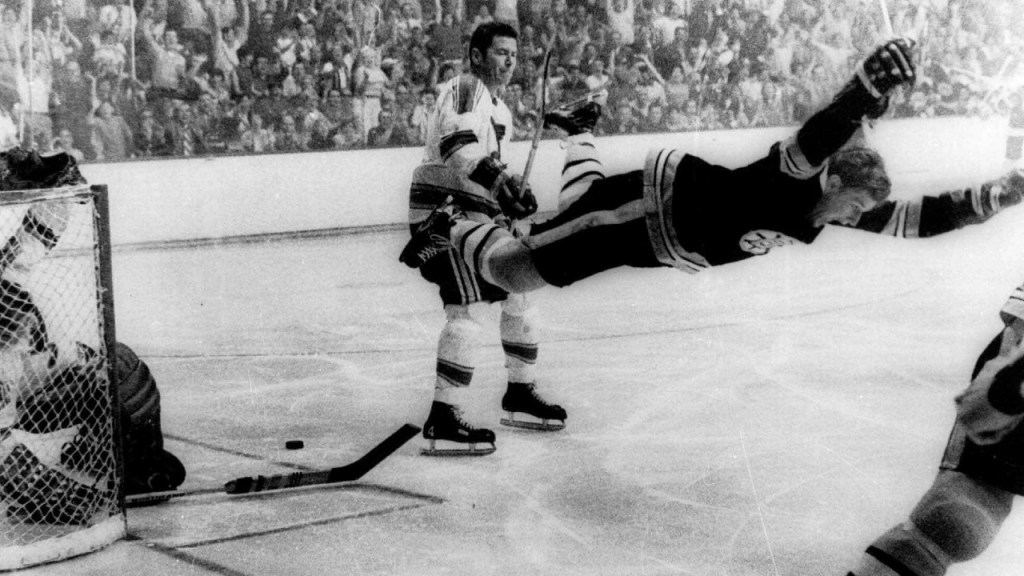
So it was that in May 1970, as an impressionable nine-year-old, I was watching game four of the Stanley Cup finals, between the Boston Bruins and the St. Louis Blues. It was less than a minute into overtime. Bobby Orr rushed the St. Louis net and took a pass from Derek Sanderson, who was behind the goal line. As Orr directed his shot into the net, to win the game and the Cup for the Bruins, I was in awe. I remember, like it was yesterday, Orr’s flying celebration of his goal. I was an instant fan of the Bruins, and I had found my first real sports hero in this young, talented defenseman.

Ray Lussier’s photograph of Orr flying through the air is one of the most iconic pictures in sports history. As Orr was half-tripped and half-jumped, he had already begun celebrating his cup-winning overtime goal. But here’s the thing: I don’t even need the photograph. I can play the whole video in perfect detail in my mind.

“The Goal” (Ray Lussier, May 1970)

Orr did more in his short career than most players could dream of. His ability to control a game was unmatched. I believe he was the best defenseman to ever play the game. And even today, I get goosebumps if I watch highlight videos of his end-to-end rushes. It’s a rare player who can make the best in the world look ordinary, but Orr did it to opponents game after game. And yet, he never grandstanded after scoring a goal. In interviews, he was quiet, almost shy. He let his ability speak for itself.

I followed Orr’s career from beginning to end. His wonky knees were his undoing, drastically shortening his career. I wonder how different things might have been had Orr played a generation later, given that surgical repair of torn ligaments is now routine. Instead, the last images of him (in a Chicago Blackhawks jersey, no less), struggling to execute moves that would have been routine just a few years earlier, are heartbreaking.

In my opinion, a worthy sporting hero can inspire us even in difficult circumstances, and beyond the field of play. Orr has been the perfect role model: humble in victory and accepting of defeat. We should all strive to emulate his example.

Sebastian Coe

I hinted at the depth of my admiration for Seb Coe in a brief passage when telling my own story:

My appreciation and love of athletics grew. I followed all the results for my latest heroes, the middle-distance stars Sebastian Coe and Eamonn Coghlan. Coe became a global sensation when he set three brilliant world records on the track, all within six weeks in the summer of 1979. But it was the way he ran, with elegance and effortless power—with passion—that I admired most.

My dilemma when writing my book was whether I should say more about this gifted and charismatic runner, and the impact he had on me, or keep it brief to move the story along. I opted for brevity, but I feel I should add to what I wrote.

For context, in the summer of 1979, I was well on my own path. I had just finished my first year of engineering. I was dedicated to athletics, having participated in cross country and track in high school for several years.

Coe seemed to emerge on the scene out of nowhere. Of course, we didn’t have instant news and 24-hour coverage then. The athletics world held its collective breath as this slight, supremely talented 22-year-old Brit smashed three major world records in rapid succession. Here’s a synopsis:

  • July 5, Oslo: Coe shattered Alberto Juantorena’s world 800m record at the Bislett Games, running 1:42.33.
  • July 17, Oslo: In the Golden Mile, Coe broke John Walker’s record in 3:48.95 against a world-class field.
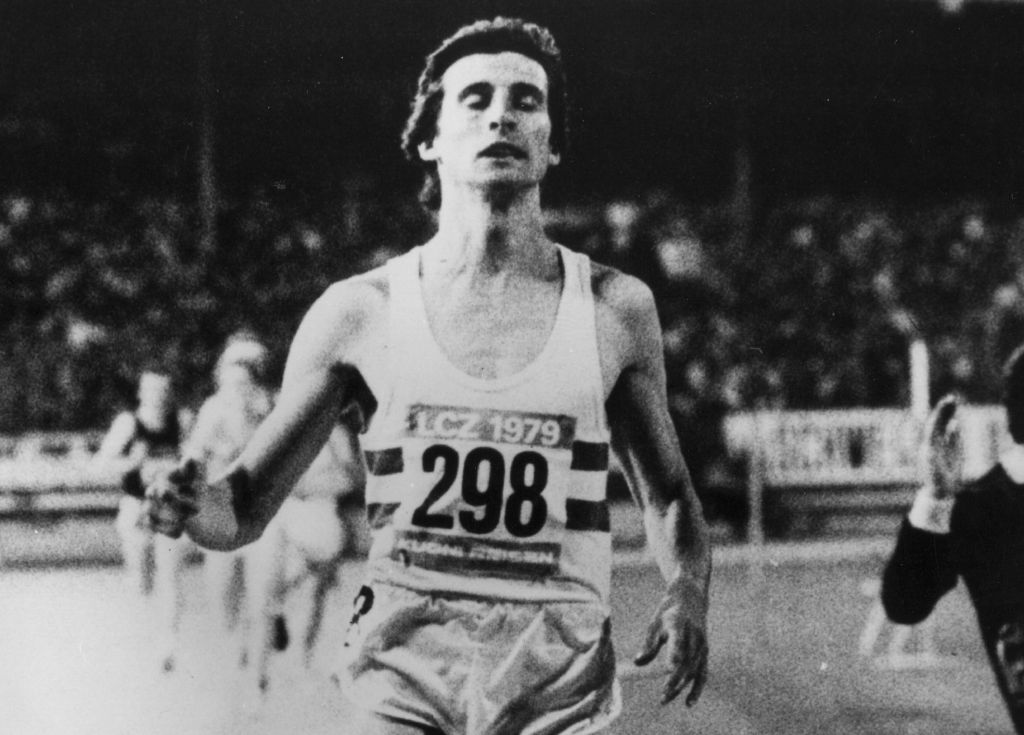
  • August 15, Zurich: At the Weltklasse meet, Coe broke Filbert Bayi’s 1500m world record in 3:32.03.
World record in the Golden Mile, July 1979 (Getty Images)

I remember scouring the newspapers for any information on Coe and his races. His records all came within a few weeks of my birthday, so it was as if he was gifting me with these performances. I felt I was somehow a part of his epic summer. In fact, I was so taken by Coe’s streak that I decided to try out for the university athletics team when the school year started in September. (Sadly, my performances fell so far short of his that my experiment ended quickly.)

Since the summer of 1979, Coe has had a full and productive career. He won two consecutive Olympic 1500m gold medals. He went on to lead the 2012 London Olympic Games committee, and he is the current president of the IAAF. From my perspective, Coe has always carried himself with that same passion and dignity that set him apart on the track. I’ve admired him for decades, both in my athletic and personal pursuits. I considered him a role model 45 years ago, and I still do.

Eamonn Coghlan

In my view, Eamonn Coghlan is underrated compared to some other big names in athletics. It turns out I have a couple of tenuous connections to this great middle-distance runner. Coghlan was born in Drimnagh, Ireland, a suburb of Dublin. Drimnagh is a short distance from Monasterevin, the hometown of my paternal ancestors. I wrote about Coghlan in my book:

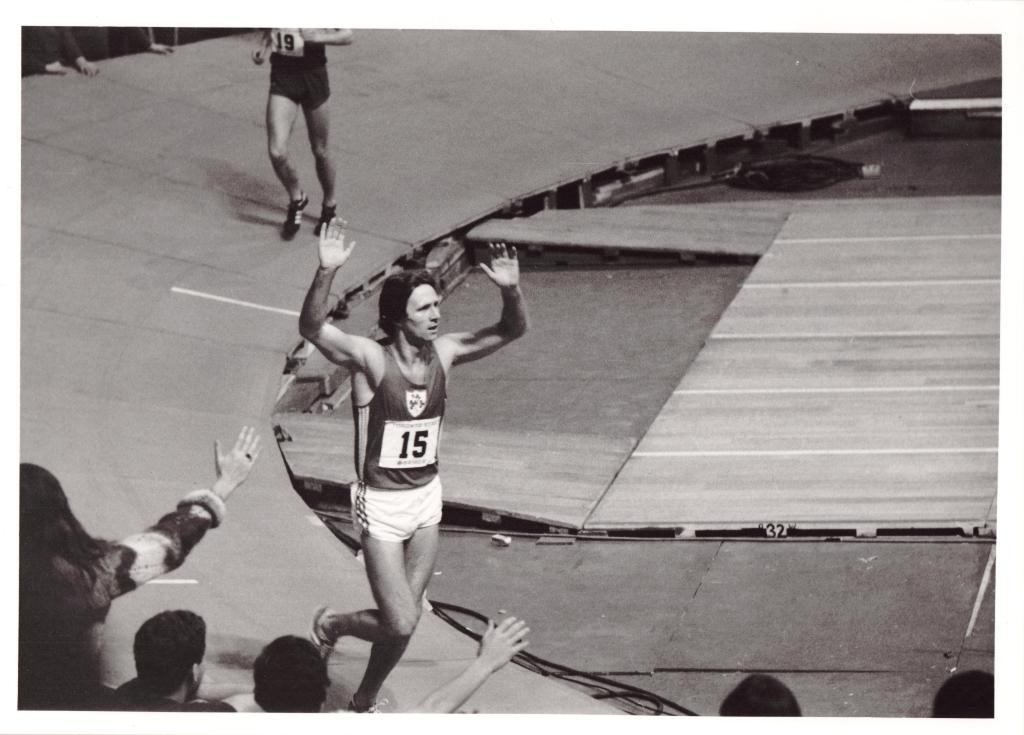
Coghlan’s specialty was the indoor mile. He had earned the nickname “Chairman of the Boards” due to his ability to perform well on tight, wooden indoor tracks. Deb humoured me for an evening in February 1981 at the Toronto Star Indoor Games, with its temporary track set up in Maple Leaf Gardens. I had run there as a schoolboy a few years earlier. We watched Coghlan win the mile in 3:55, an astounding achievement considering the quality of that track. I still have a black and white photograph that I snapped as he jogged around the track for his victory lap.

I found that picture as I was sorting through some old files the other day. It took me right back into Maple Leaf Gardens on that cold February night.

The Chairman of the Boards takes his victory lap (Toronto, February 1981)

As a mature athlete, I’ve always been most impressed by Coghlan’s consistency. It would be enough to say that he broke the 4-minute mile 83 times, but he did so much more. He dominated indoor meets, where tight turns are a handicap as compared to outdoor racing. He ran the first sub-3:50 mile indoors (February 1983), and he was the first man over 40 to break 4 minutes for the mile (February 1994). Quite a career!

Coghlan’s competitive track career spanned 20 years. Like Coe, he has had a fruitful career after athletics. He works as a coach and served as a senator in the Irish parliament from 2011 to 2016.

Wrapping Up

I’ve highlighted some of the lessons that I’ve learned from watching these three outstanding athletes. It confirms for me that great sportsmen (or should I say great people?) still have the power to inspire greatness in all of us.

Although it extends an already long post, I will add a few words about sources. Stephen Brunt’s excellent book, Searching for Bobby Orr, is a well-researched and eloquent biography that puts Orr’s career and life in the context of a sport that was changing dramatically. There is a lot of material available on Coe, including his own books. I enjoyed The Perfect Distance by Pat Butcher, which delves into the rivalry between Coe and another talented British middle-distance man, Steve Ovett. As for Coghlan, I relied on an excellent piece by John Cobley, on his Racing Past website. Cobley’s piece cites Coghlan’s autobiography, Chairman of the Boards, which is unfortunately out of print.

Until next time, be well and BE FAST! Happy New Year to all.