
Vancouver Marathon – 2015 to 2025

What follows is a story separated by exactly ten years—and a generation.

The Opening Act

The marathon was never my favourite distance, but over the decades of my amateur running career, I ran plenty of them. It was a love-hate thing. By 2014, I had sworn off marathons, and not for the first time. Then, I let myself be talked into signing up for the 2015 Vancouver race. I’ll leave the specifics of that part of the story for another time.

I had run the Vancouver Marathon once before, in 1993. I finished the race one minute on the wrong side of 3 hours, and I remember being quite disappointed. Why? Well, 1992 had been a year of personal bests. Naturally, I came into 1993 full of optimism. After the Vancouver race, I worried that I might have already peaked. And that was more than 30 years ago!

Heading into the 2015 race, I had been through a minor crisis of confidence. You see, I’d run a very poor Around the Bay Race in March 2014, and I was finding the preparation for a spring marathon during another of our nasty Calgary winters more than I could handle. All credit goes to my awesome training partners, Allison B and Ken S, who kept me going week in and week out. They deserve kudos for helping get me to the start line on May 3, 2015.

As for my race tactics, I had worked out a novel plan with coach Janice. The idea was to get me around the deceptively tough Vancouver course while avoiding the slow-motion crashes I’d experienced in some previous marathons. We decided on a series of four mid-race pickups, each 3k with a 1k easy recovery. Janice knew me well enough to realize that a series of tasks would help keep my mind from wandering.

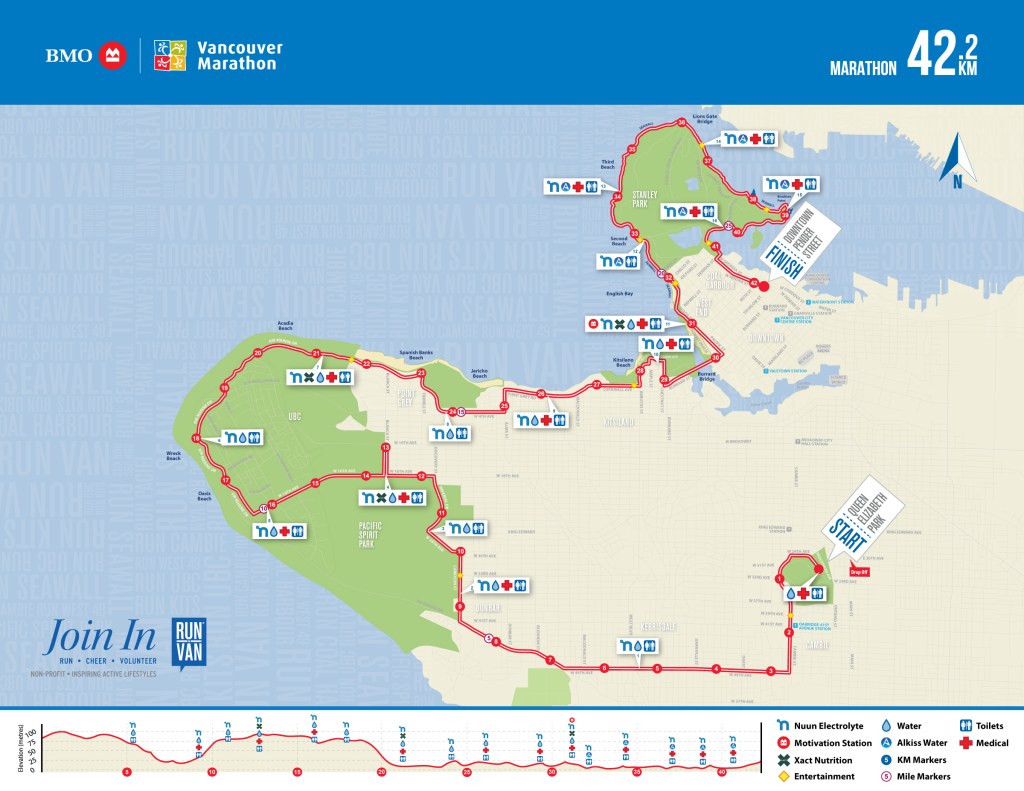
I had modest expectations. I could foresee some challenges on the 2015 course—still in use today—which was very different from the route I’d run years before. The first ten kilometres were mostly downhill. There was the Burrard Bridge at 30k. Of course, there was the 42.2k distance to contend with.

Our race plan worked like a charm. The 3k pickups were effective, and I got to 38k before my quads seized up—no doubt the price to be paid for the early downhills. Being a veteran of four decades, I didn’t panic. Instead, I managed my effort over the last few kilometres. Afer all, it was only a few minutes until the finish. Worst case, I might be a little outside my target range.

I finished in 3:18:04. Not bad. My age-graded time was the same as my PB, set many years earlier. It was a satisfying outing, and a prelude to the eventful years that followed. Again, I’ll leave those details for another time.

Daniel Delivers!

Fast forward ten years… to the best part of this story.

By the spring of 2025, our son Daniel had been a serious runner for at least 12 years. He ran his first marathon in Montreal, in 2014. Even as a rookie he methodically attacked the distance. In the intervening years, he’s taken on many different running challenges. The last couple of years have been especially rewarding for him. He’s been honing his technique and working on strength, speed and flexibility. So, when he set his sights on the 2025 Vancouver race, it was with the goal of improving his PB… significantly.

All signs were positive during his training cycle, and a speedy 1:12 half marathon in April hinted at something special. He overcame a niggling overuse injury to make it to the start line in Queen Elizabeth Park on May 4, 2025.

Major marathons now feature online tracking for spectators. As a result, it was a nervous morning for Deborah and me, as we watched the little dot that represented Dan work its way around the course. It seemed that I was reliving every step with him, through Pacific Spirit Park and the UBC campus (where he reached the half in 1:15:44), then through Kitsilano, over the Burrard Bridge and into Stanley Park for a lap of the seawall.

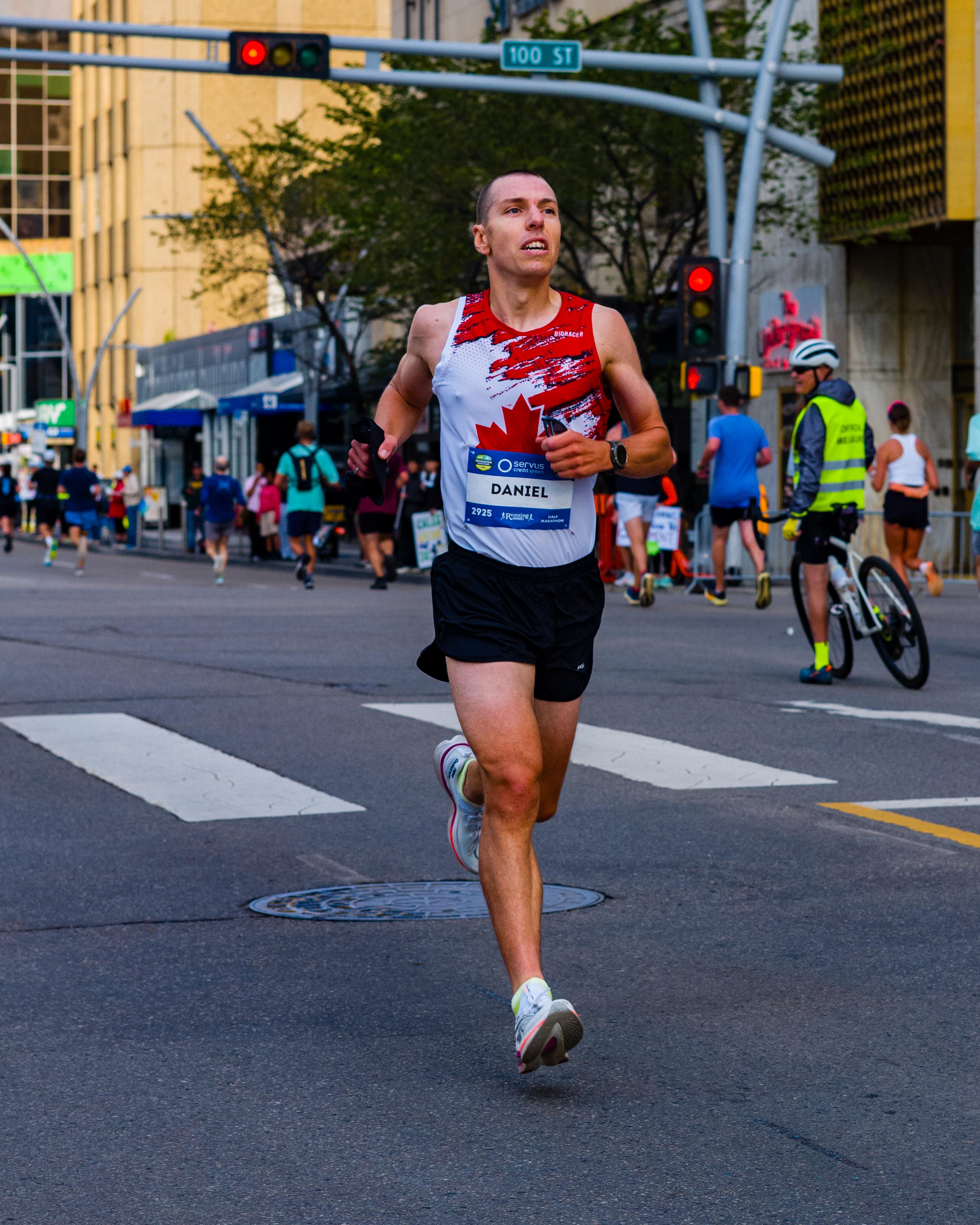
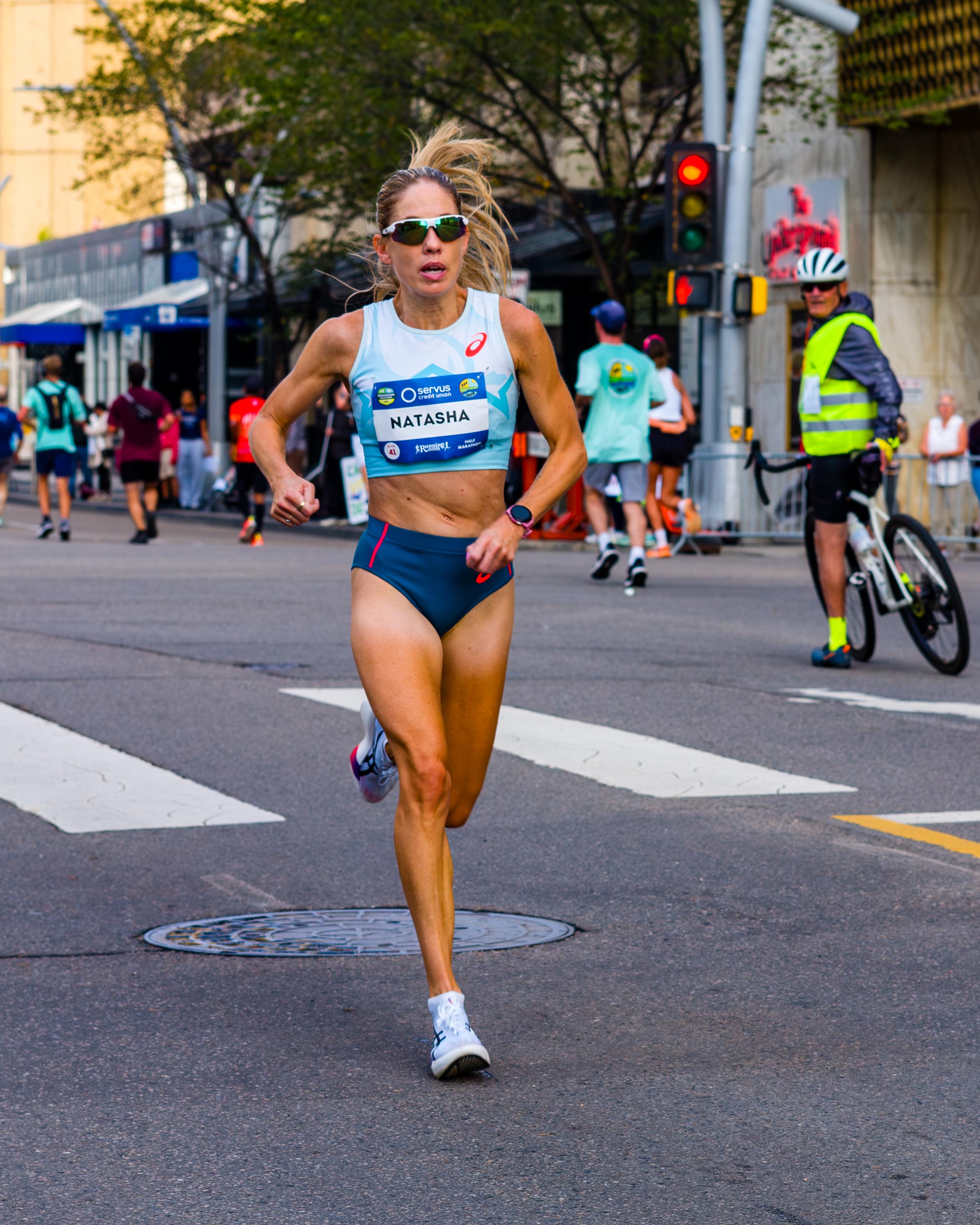
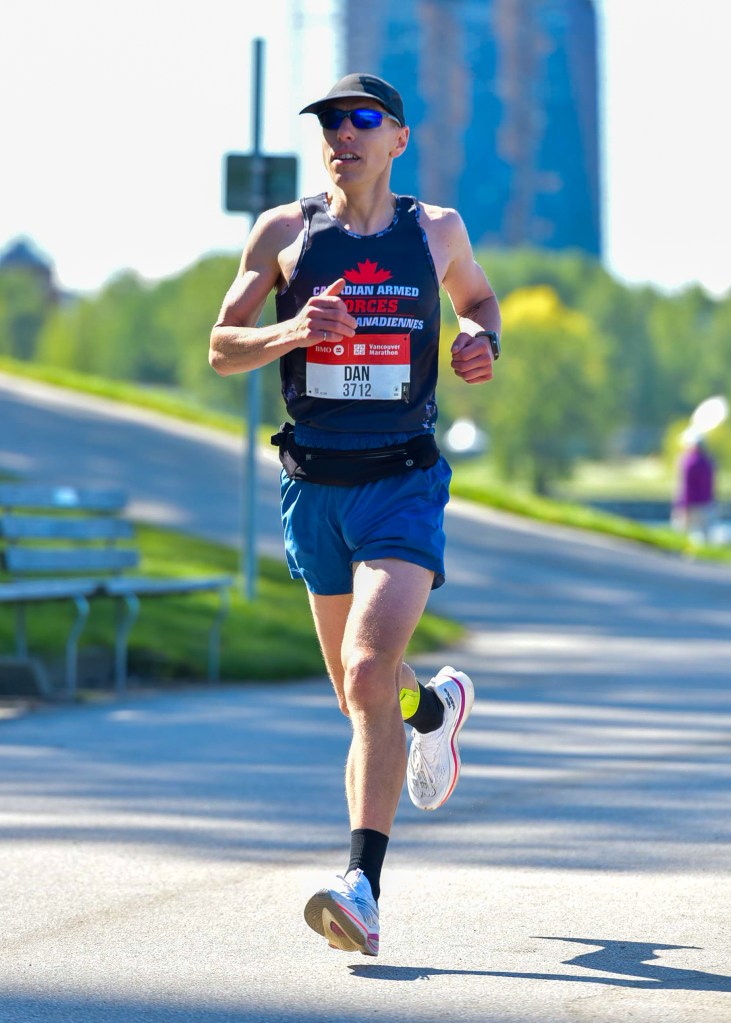
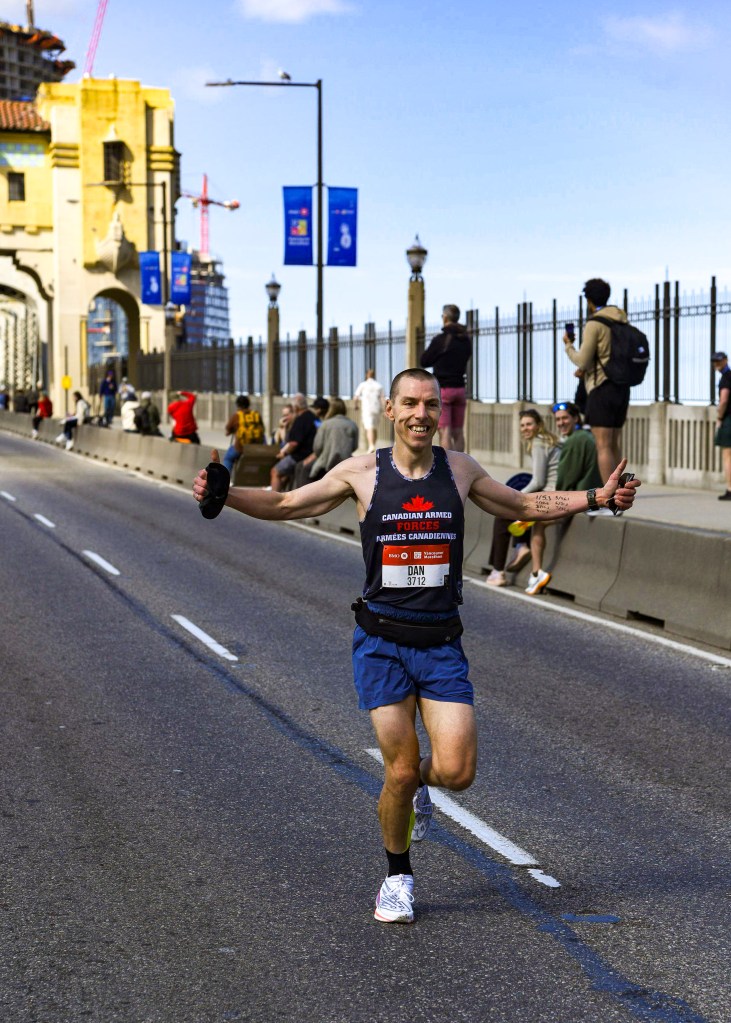
Dan’s early splits were speedy, but by 30k he seemed to be slowing. Was there a problem? We could only watch and wait, holding our breath. Once he got to 40k in 2:27:16, everything was looking good for a superb finish. He brought it home in 2:35:52. By that point I was yelling encouragement at my phone. He placed 21st overall in a strong field of nearly 7,000 runners. Amazing!

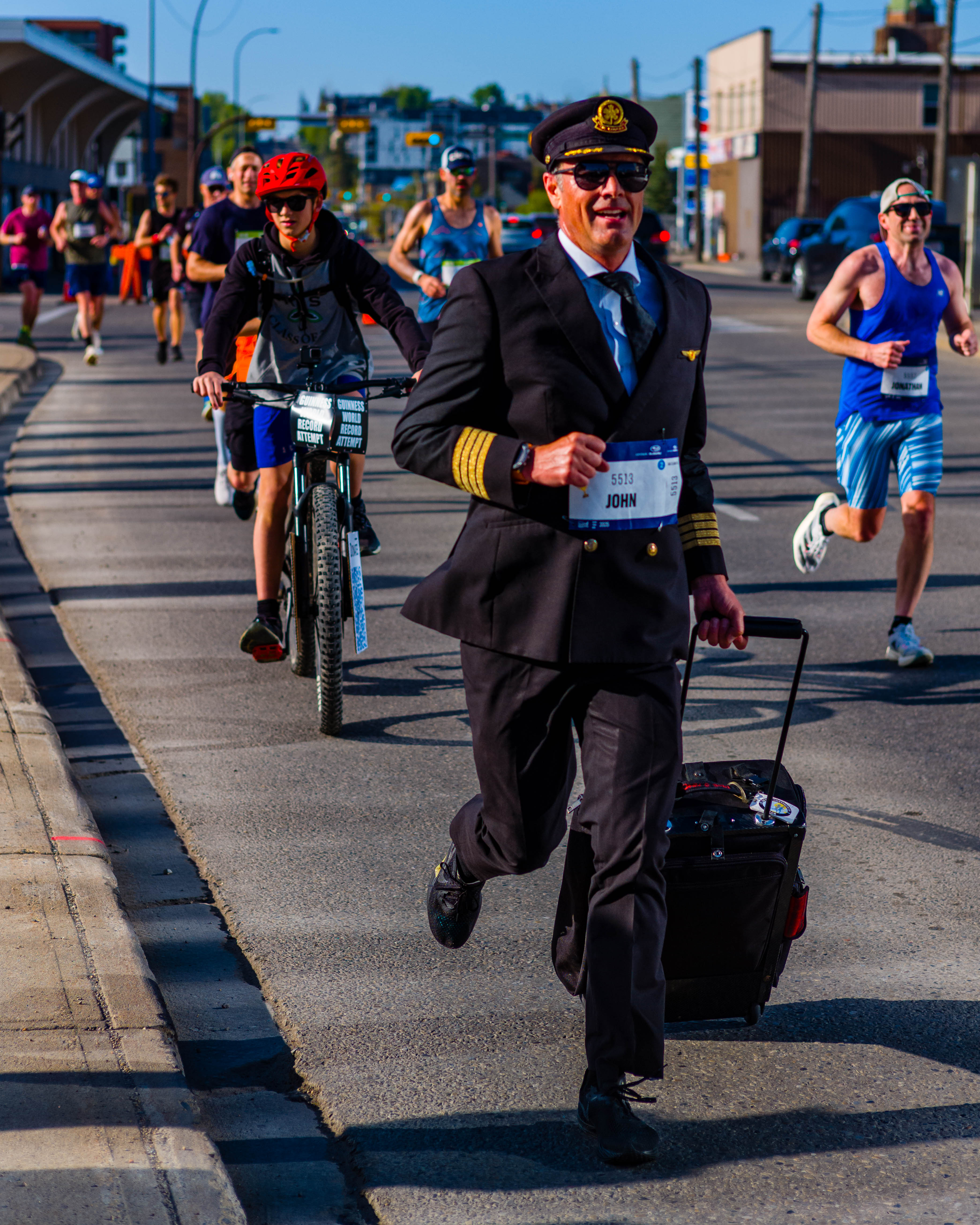
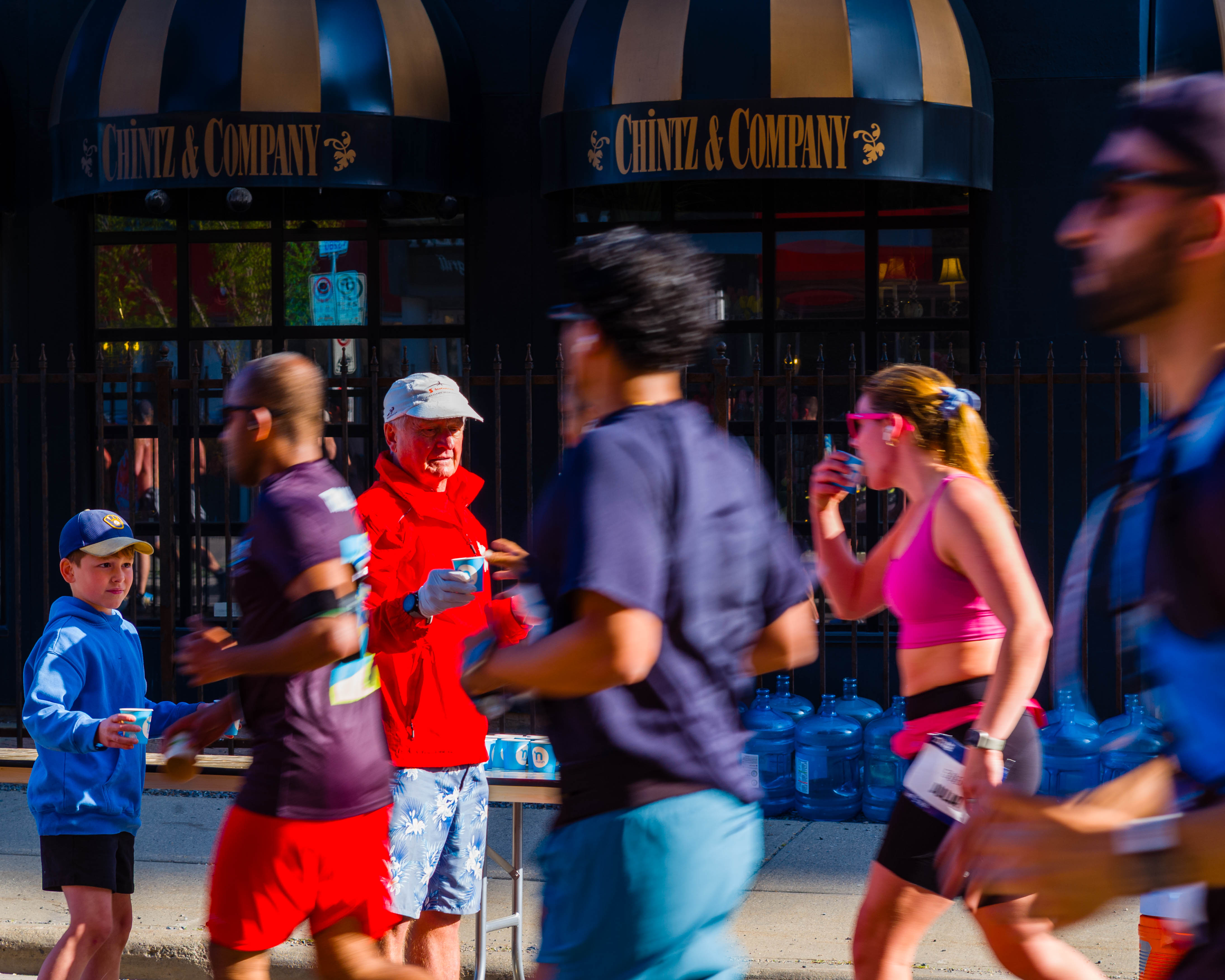
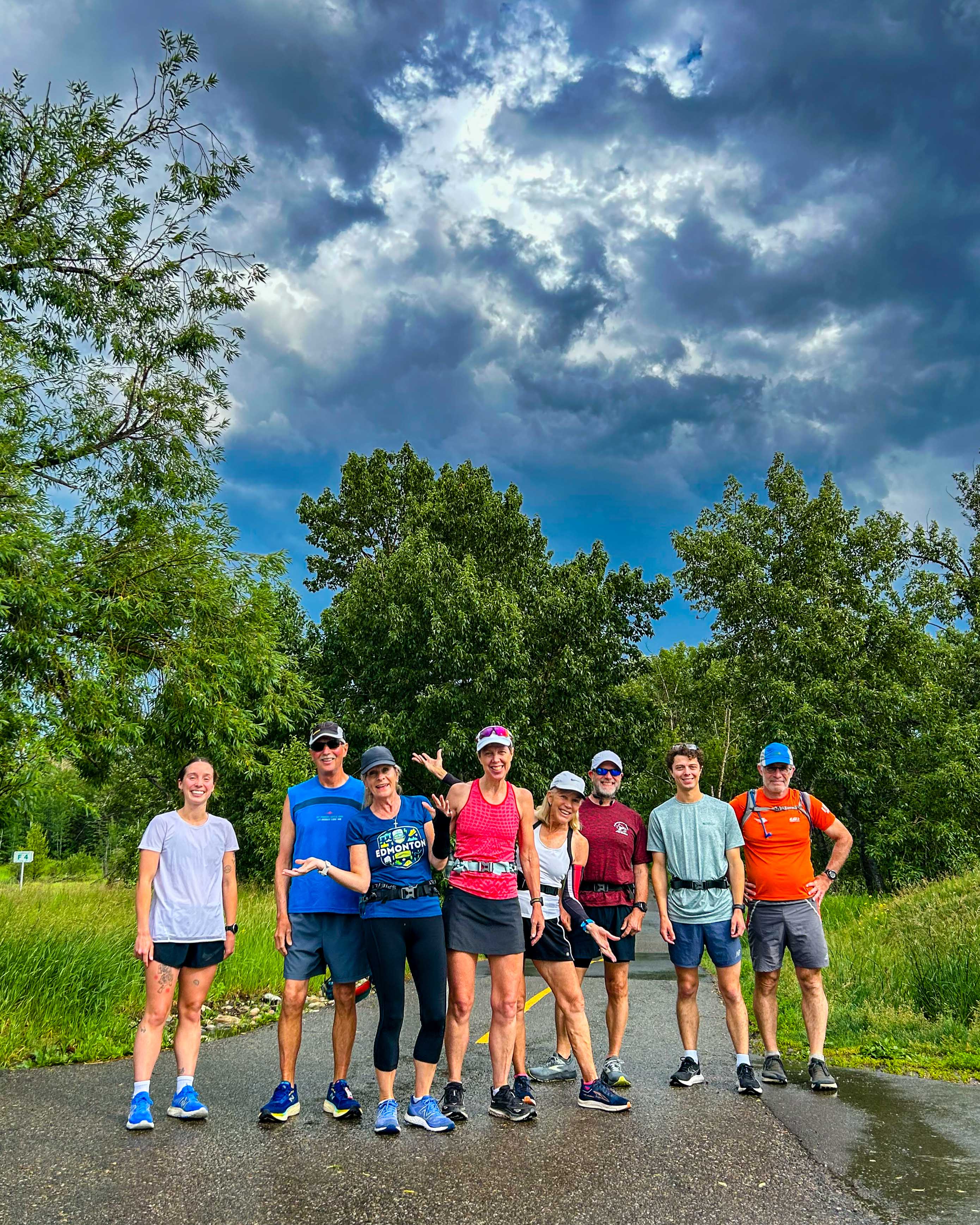
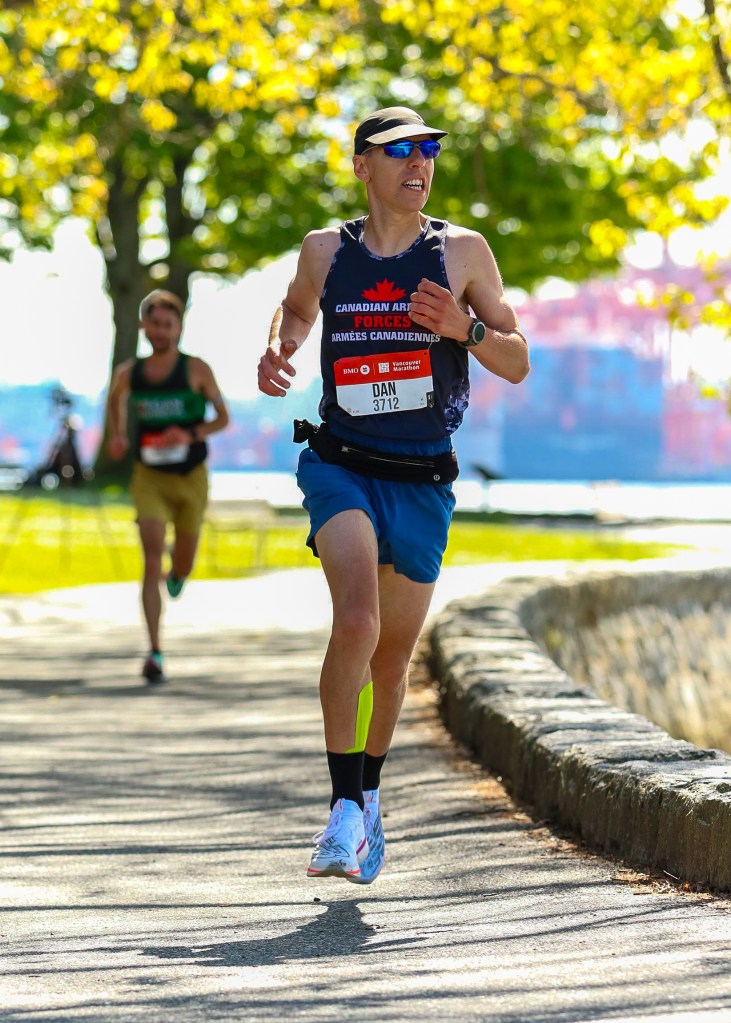
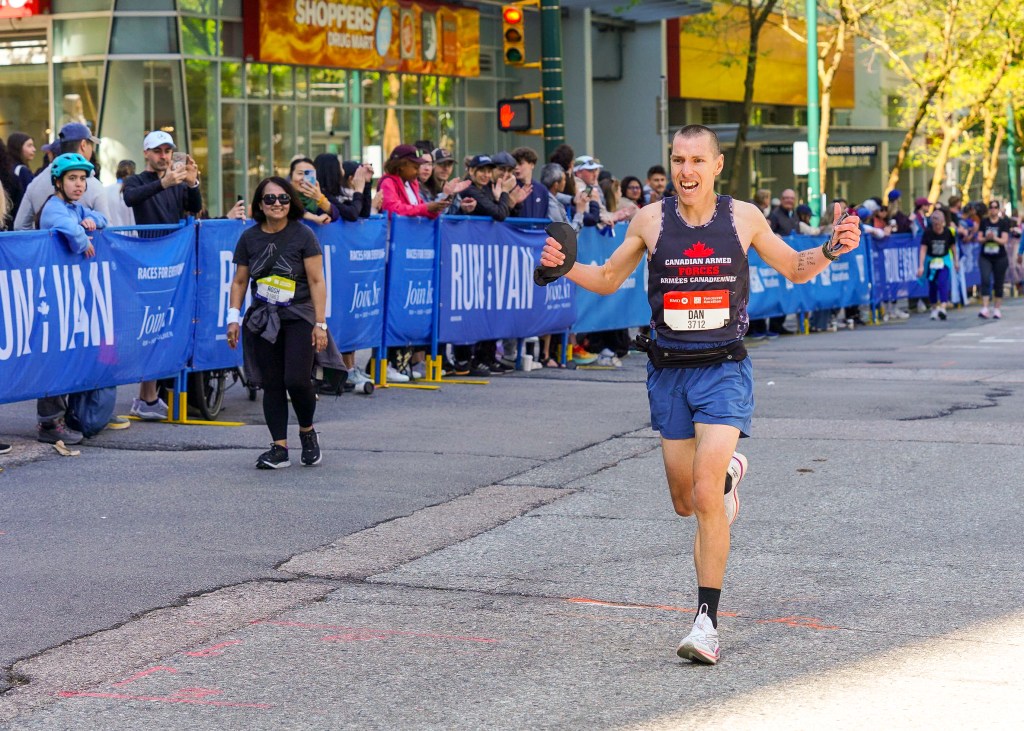
Here are some pictures from his awe-inspiring run (all from Marathon Photos):

When we talked to him shortly after he finished, he was full of energy, relief and joy. He had been cheerleading with the crowds along the route. And his apparent slowdown? He had the presence of mind to ease off his pace slightly at 24k, to avoid aggravating his calf. Not only fast running but smart too!

It’s hard to find words to express what I’ve been feeling this week. Of course, I’m filled with awe and pride, as I consider what Dan has accomplished. Seeing my son reach a personal goal with determination and purpose makes me very happy. I know he earned this result—including the massive 15-minute improvement in his PB. Being a runner myself, I have a good idea how hard he worked for this. Running 2:35 puts him in the top 1 percent of marathon runners. I have often said he’s never set a foot wrong in his life, and that was perhaps never truer than in this race.

I wrote about the relative arc of our lives in Stroke of Luck, and while I may eventually think of something more profound to say, for now, I’m just relieved he finished and that he did so well. While I understand that a small part of this might be attributed to lessons he learned from me—from us—early in his life, this triumph is all his doing. If life were a relay race, I would be content knowing that the handoff has been made and the baton is safely headed to the finish.

And that might be an apt analogy, as the next challenge Dan will tackle is the annual Cabot Trail Relay on May 24, with a team called the Iron Lungs out of Toronto. He has run the race with them several times, and they (like us) know he will be a worthy addition to their squad.

We can’t wait to see what’s next for him.

Until next time, be well and BE FAST!
What’s Gone Wrong With Athletics?

I like to keep up with news from the wonderful sport of athletics, but I’ll admit to some recent frustration. I regularly scan the headlines from online sources, having largely given up on print media. I’m always interested in results from major road races and track meets around the world. To a lesser extent, I follow developments in equipment, training techniques and nutrition.

Lately, it seems that all I’ve read about is controversy. Some examples…

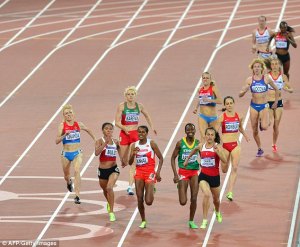
  • Twelve years after the race, competitors in the women’s 1,500m final at the 2012 London Olympics are still being disqualified for doping infractions. The race has been called the “dirtiest of all time”, with five of the 12 racers now banned. Maybe the last three finishers shouldn’t give up hope for a medal yet.
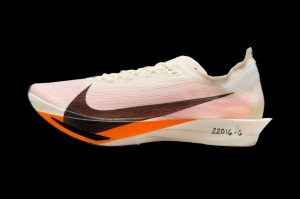
  • Two competitors in a collegiate 5,000m event were disqualified for wearing shoes that didn’t meet NCAA regulations for “stack height”. One racer set a massive PB in the shoes, the swift-sounding Nike Streakfly 2.  If only they’d stuck with the lowly (and lower?) Streakfly 1…
  • A runner and social media influencer was banned for life from the Chinese Half-Marathon Championships after she was discovered to have worn a fake race bib. Not surprisingly, the perpetrator claimed she had been duped. The race is clearly popular: it received more than 150,000 applications, of which less than 10 percent were accepted.
The dirtiest race in history? (Photo from Daily Mail Online)
The Nike VF2. Too stacked? (Photo from Canadian Running Magazine)

I could go on, but you get the idea. It’s all rather depressing. In my opinion, these stories detract from what I believe is STILL the greatest of sports. Athletics is getting harder to love.

The Problem

I’ll explain what I think the problem is, and it starts at the top echelon of the sport. It’s money. Pure and simple. Athletics has become a big, commercial business. There’s a lot at stake in the Olympics and other major championships. As a result, exciting races and great individual performances (and there are many) frequently get lost in controversy.

Cheating seems to affect athletics more directly than other sports. And I believe that stems from athletics being the most accessible of sports. Comparatively speaking, while none of us will make it to the NHL, any of us can lace up a pair of running shoes and find a road or trail to run on.

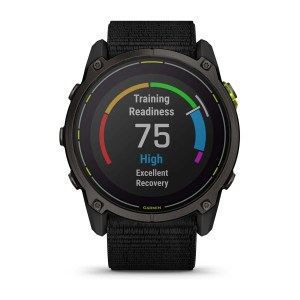
The accessibility of running is both good and bad. It’s good because of the health benefits that accrue from an active lifestyle. The negative part is that we can become overly influenced by other people’s opinions about what defines success in this sport. Today, influencers are everywhere. Technology imbues every aspect of the sport: race results are micro-analyzed, every kilometre is measured, workouts are instantly posted to Strava. Heck, our watches even estimate our recovery time… can anyone tell me why this is necessary?

Do I need this? (Photo from Garmin, for the Enduro 3)

All of this creates extraordinary pressure to always be improving. There’s a trickle-down effect, from elite athletes to self-appointed experts to average runners. We can wear the same carbon-plated shoe, use the same GPS watch, and gulp down the same gel as Eliud Kipchoge, while we chase every second in the marathon. And why not? What’s a few hundred bucks for the latest super shoe, if we would gladly spend thousands more once the shoes earn us that elusive race entry we’re seeking? (That reminds me of another recent headline. The 2025 New York Marathon received a record 200,000 applications for lottery entry… that’s up 22 percent from 2024. Good luck!)

I need to emphasize that the vast majority of runners compete fairly, and there is nothing wrong with taking advantage of the available technology. We have to recognize that some will be tempted to cross the line; many more will lose sight of what’s really important.

The Way Forward

A quest for constant improvement and achievement might make sense if we were professional athletes. (Not the doping stuff, of course.) But the fact is, we’re not.

From my perspective, which is that of an average runner… a pure amateur… with his best days behind him, let me offer a few thoughts on how we move on from these challenges.

First, recognizing that most of us will never make it to the top tier of the sport, we should celebrate rather than fight against this reality. To do that, we should define where running fits within our specific life puzzle. How you balance work, family and running is unique to you. Success in the sport should mean different things to different people. Give yourself permission to do your best, to let your performances ebb and flow, and most importantly, be content with the results.

I’ve written about the joy I now get from what I call photo runs… where I swap a GPS watch for a camera. For me, it’s been a way to get back to the carefree days when I took up running as a teenager. Then, I was an open book. I loved the freedom that came with running on a wooded trail or a quiet road. I ran in the shoes I had, and I used a cheap Timex watch. I discovered the rich history of the sport and followed great runners… true role models… before anyone had heard of doping.

If you are willing to ditch the influencers and find your own path (I call it finding your why) I think you might be better off. If that path becomes a journey to finish all six (sorry, seven) Abbott World Major Marathons, that’s fine. But if it means enjoying easy runs around a local park with friends, while wearing budget shoes, that’s fine too. Maybe better, in fact.

And me? I should stop scanning the headlines.

Until next time, be well and BE FAST!
Top 5 Athletics Performances

I thought it would be fun to highlight individual performances that have inspired and motivated me. As you’ll see, it isn’t necessary that the person I’m writing about won the race in question. This is all about their effort on the day.

Steve Prefontaine, Munich 5000m Final

I’ll start with a confession: on my own race mornings, I used to watch the video of this great individual performance to get myself into the right frame of mind. BBC commentator David Coleman’s description of Steve Prefontaine, the brash American, as “a sort of athletic Beatle” is classic.

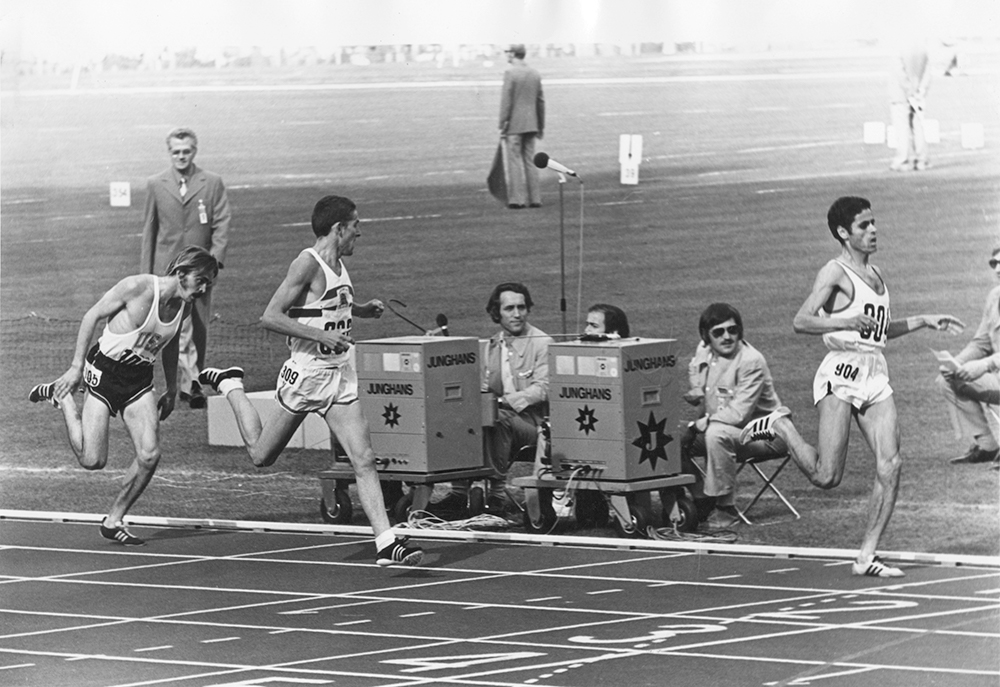
Setting the scene, Prefontaine was running in what would be his only Olympic final, against a deep field. With two slow miles behind them, Pre boldly “states his case” to lead to the finish. As a pack of five separates itself with two laps to go, the Finn Lasse Viren asserts control. Is it over? No, not with Pre in the mix. Time and again, he fights to regain the lead. Coleman’s fateful comment, with 200m to go, that “these are the medal men” would turn out to be wrong, as a totally spent Pre is passed in the last few metres by Ian Stewart. Viren won gold.

Measured by the result… fourth, and out of the medals… this could be seen as a foolish gamble by the inexperienced young American. Instead, I look at it as the epitome of racing. There was no playing it safe for Prefontaine. No wonder I get goosebumps every time I watch the video.

Prefontaine gambles it all, Munich Olympics 5000m final (Photo from Track and Field News)

Mo Ahmed, Paris 10,000m Final

At the risk of repeating myself, I’ve chosen another Olympic finals performance that left the runner out of the medals. This time, it was Canadian Mo Ahmed in the Paris 2024 Olympics 10,000m final.

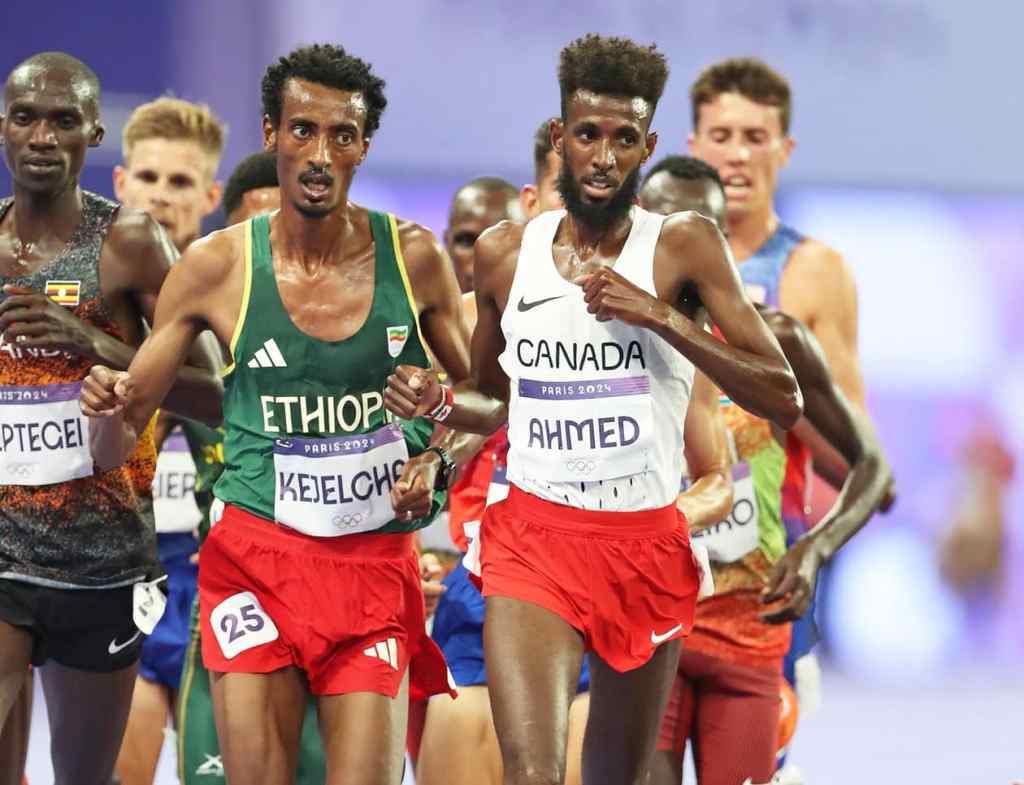
Ahmed ran what might be the smartest race I’ve ever seen. He stayed out of trouble in a top-class field, paced himself beautifully, and was in contention against team tactics of other runners until the final 30 metres. I thought I might have been the only one who noticed his deceptively smart racing, until I heard David Moorcroft (broadcasting for CBC) make the same observation.

Finishing with nothing in the tank, Ahmed’s performance (26:43.79) was good for fourth place. That he and 12 other finishers were well under the previous Olympic record attests to the quality of the field. It was a spectacular race, and one where Ahmed demonstrated that he belonged with the very best.

Mo Ahmed shines in the Paris 10,000m final (Photo from Athletics Canada)

Paula Radcliffe, 2003 London Marathon

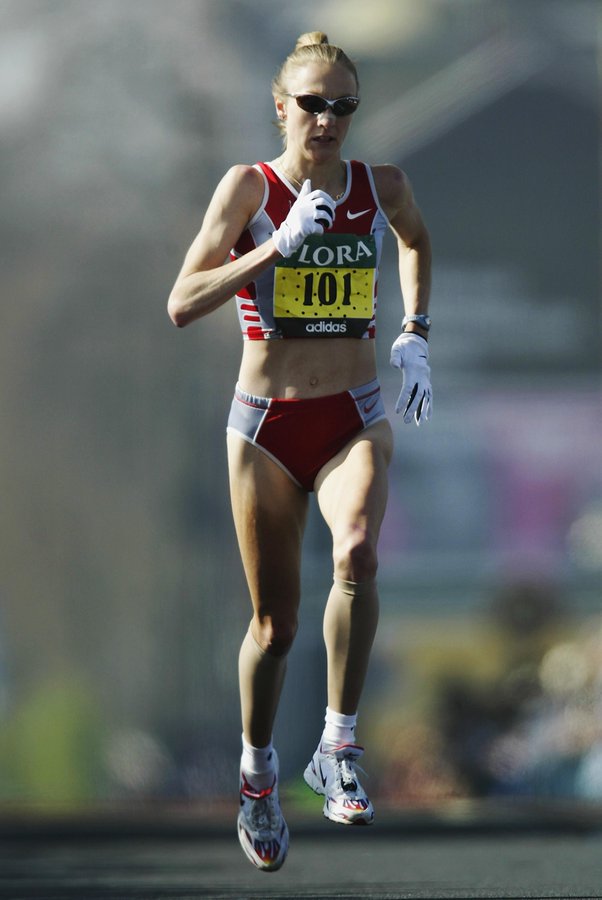
In 2002 and 2003, Paula Radcliffe was on top of the marathon world. She had set a world record in Chicago in October 2002, running 2:17:18, so there was great anticipation for her race the following spring in London. Running before her home crowd, Radcliffe didn’t disappoint. Leading from start to finish, she shattered her own world record, en route to an astonishing 2:15:25. Her nearest competitor was more than four minutes behind her.

I have a tenuous connection to Radcliffe’s race. You see, I was on the same course that sunny April morning in London. Admittedly I finished nearly an hour behind her. I’ve replayed the videos and read the stories so many times to fully grasp what Paula achieved. The strain on her face in the final few kilometres shows how much she wanted this result.

In an era before supershoes and without any team support, Radcliffe delivered a courageous performance, well deserving of being in my top 5.

Filbert Bayi, Christchurch 1,500m Final

In recent years, the Commonwealth Games have struggled to remain relevant. Competition from other mega-events (like the Olympics and the World Cup) and other *um, political* factors have led prospective host cities to back away from the Games.

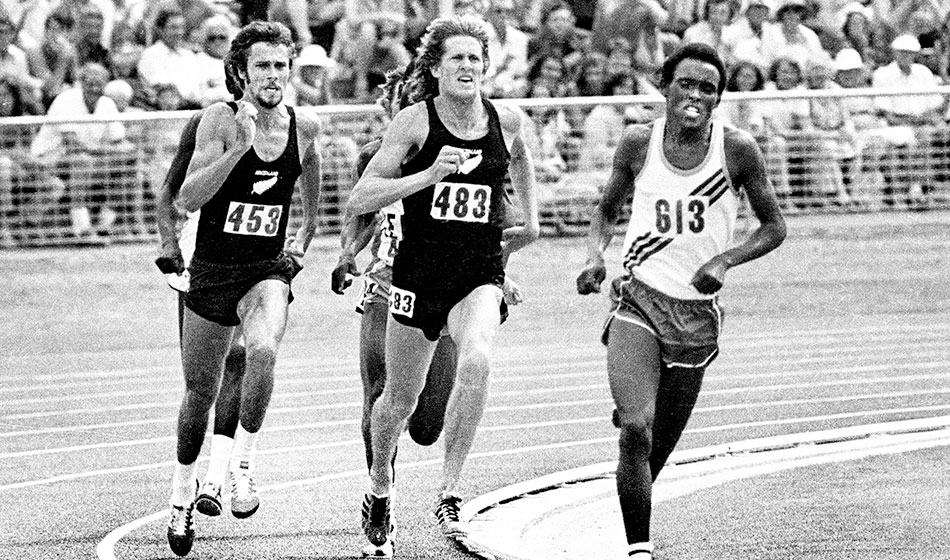
Whatever the future holds, the Games have been host to some great athletics history. Here’s a case in point. In 1974, the young Tanzanian runner, Filbert Bayi, was relatively unknown. That didn’t stop him from taking on a handful of the world’s best in the 1,500m final in Christchurch, New Zealand. His race was one of the most audacious performances of all time. He led from start to finish and set a world record of 3:32.2. Not only that, he beat the hometown favourite, Kiwi John Walker.

Bayi’s account of the race, in a wonderful Athletics Weekly article, leaves no doubt that he trusted his front-running strategy. “I was confident that anyone trying to close the gap over the last 100m or 200m would have a real fight on their hands,” he states. And with the field in a pack bearing down on him, his plans were certainly put to the test. In the end, Bayi beat Walker by a couple of strides. He knew immediately the importance of what he had achieved. It was a perfectly executed race.

Filbert Bayi leads John Walker and the rest to the finish (Photo from Athletics Weekly)

Roger Bannister, 1954 Mile Double

Even as the 1,500m has largely eclipsed the mile as the middle distance standard, it’s worth noting that the mile continues to get attention. In the last week, the men’s indoor mile record has been broken… not once, but twice. So it is worth looking back to the furor that surrounded Roger Bannister in 1954.

Cheating a little, I will highlight two of Sir Roger’s epic performances. His epic May 1954 run to break the four-minute barrier for the first time is the race everyone knows about. But I would suggest that with his performance in Vancouver at the then-called Empire Games in August, Bannister put an exclamation mark on his miraculous year.

By August 7, Bannister’s record time had already been beaten by Australian John Landy. The Vancouver race was the first time they competed head-to-head. The race generated global hype, and it became known as the Miracle Mile. Although Landy led most of the way, he made a fateful error on the last corner, looking to his left for the hard-charging Bannister. Sensing Landy’s weakness, Bannister passed on the right and didn’t let up. He reached the finish in 3:58.8, five yards and 0.8 seconds ahead of Landy.

I’ve written about Bannister, here and here. What impresses me most about him is that he competed as a pure amateur. As memorable as his exploits on the track were, he never considered them to be his greatest personal achievement.


So that’s my top 5. I could have easily found a top 10, but one has to draw the line somewhere! I’d be interested in any thoughts on these performances, and any that my readers are convinced I’ve missed.

Until next time, be well and BE FAST!
Lessons from Sporting Legends

Do you have any sporting heroes? Maybe you do, or maybe you think the idea of sporting heroes is quaint and outdated. Given the commercialization of sports, I can certainly understand this view. I do have several sporting heroes, but maybe the best way to explain this is to say that there are people I have looked up to throughout my life. Some of them happen to have been great athletes.

Bobby Orr

It was Sunday, May 10, 1970. Game four of the Stanley Cup finals. Overtime. One brilliant play was about to etch itself in my brain forever. Here’s what I wrote about that moment in my book, Stroke of Luck:

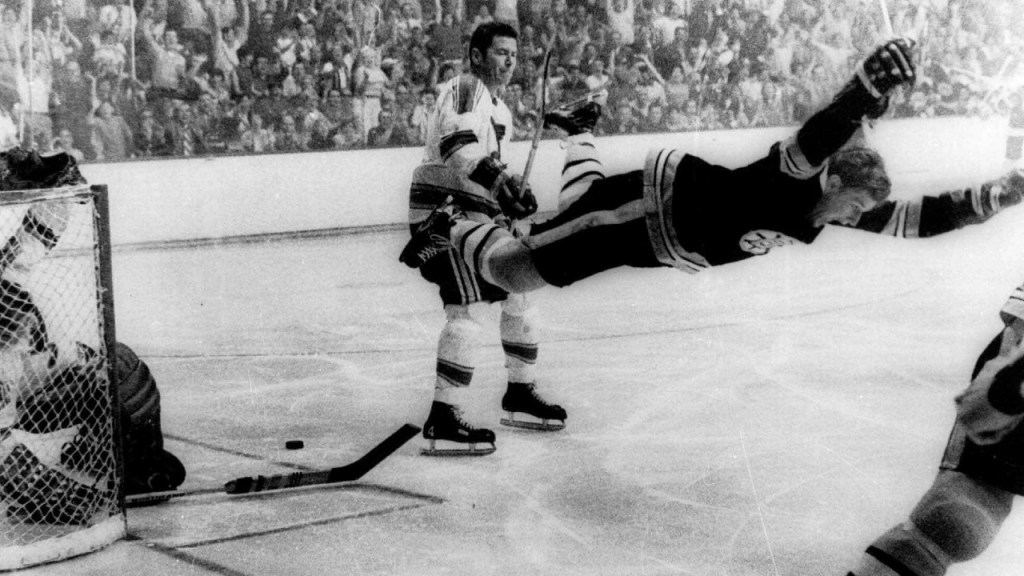
So it was that in May 1970, as an impressionable nine-year-old, I was watching game four of the Stanley Cup finals, between the Boston Bruins and the St. Louis Blues. It was less than a minute into overtime. Bobby Orr rushed the St. Louis net and took a pass from Derek Sanderson, who was behind the goal line. As Orr directed his shot into the net, to win the game and the Cup for the Bruins, I was in awe. I remember, like it was yesterday, Orr’s flying celebration of his goal. I was an instant fan of the Bruins, and I had found my first real sports hero in this young, talented defenseman.

Ray Lussier’s photograph of Orr flying through the air is one of the most iconic pictures in sports history. As Orr was half-tripped and half-jumped, he had already begun celebrating his cup-winning overtime goal. But here’s the thing: I don’t even need the photograph. I can play the whole video in perfect detail in my mind.

“The Goal” (Ray Lussier, May 1970)

Orr did more in his short career than most players could dream of. His ability to control a game was unmatched. I believe he was the best defenseman to ever play the game. And even today, I get goosebumps if I watch highlight videos of his end-to-end rushes. It’s a rare player who can make the best in the world look ordinary, but Orr did it to opponents game after game. And yet, he never grandstanded after scoring a goal. In interviews, he was quiet, almost shy. He let his ability speak for itself.

I followed Orr’s career from beginning to end. His wonky knees were his undoing, drastically shortening his career. I wonder how different things might have been had Orr played a generation later, given that surgical repair of torn ligaments is now routine. Instead, the last images of him (in a Chicago Blackhawks jersey, no less), struggling to execute moves that would have been routine just a few years earlier, are heartbreaking.

In my opinion, a worthy sporting hero can inspire us even in difficult circumstances, and beyond the field of play. Orr has been the perfect role model: humble in victory and accepting of defeat. We should all strive to emulate his example.

Sebastian Coe

I hinted at the depth of my admiration for Seb Coe in a brief passage when telling my own story:

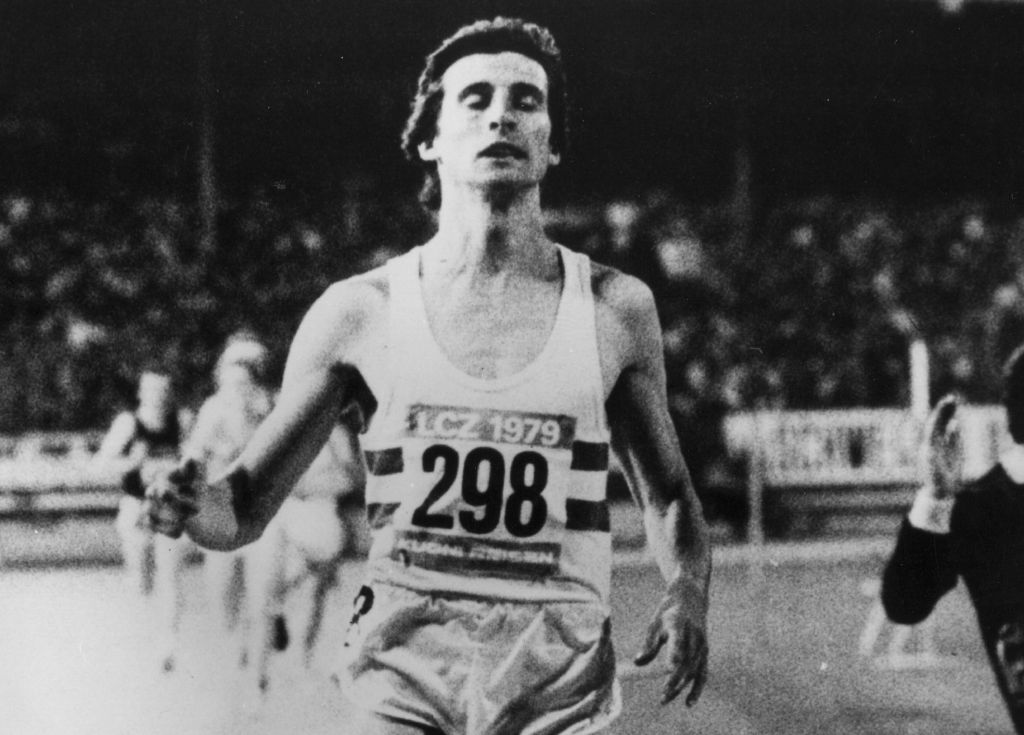
My appreciation and love of athletics grew. I followed all the results for my latest heroes, the middle-distance stars Sebastian Coe and Eamonn Coghlan. Coe became a global sensation when he set three brilliant world records on the track, all within six weeks in the summer of 1979. But it was the way he ran, with elegance and effortless power—with passion—that I admired most.

My dilemma when writing my book was whether I should say more about this gifted and charismatic runner, and the impact he had on me, or keep it brief to move the story along. I opted for brevity, but I feel I should add to what I wrote.

For context, in the summer of 1979, I was well on my own path. I had just finished my first year of engineering. I was dedicated to athletics, having participated in cross country and track in high school for several years.

Coe seemed to emerge on the scene out of nowhere. Of course, we didn’t have instant news and 24-hour coverage then. The athletics world held its collective breath as this slight, supremely talented 22-year-old Brit smashed three major world records in rapid succession. Here’s a synopsis:

  • July 5, Oslo: Coe shattered Alberto Juantorena’s world 800m record at the Bislett Games, running 1:42.33.
  • July 17, Oslo: In the Golden Mile, Coe broke John Walker’s record in 3:48.95 against a world-class field.
  • August 15, Zurich: At the Weltklasse meet, Coe broke Filbert Bayi’s 1500m world record in 3:32.03.
World record in the Golden Mile, July 1979 (Getty Images)

I remember scouring the newspapers for any information on Coe and his races. His records all came within a few weeks of my birthday, so it was as if he was gifting me with these performances. I felt I was somehow a part of his epic summer. In fact, I was so taken by Coe’s streak that I decided to try out for the university athletics team when the school year started in September. (Sadly, my performances fell so far short of his that my experiment ended quickly.)

Since the summer of 1979, Coe has had a full and productive career. He won two consecutive Olympic 1500m gold medals. He went on to lead the 2012 London Olympic Games committee, and he is the current president of the IAAF. From my perspective, Coe has always carried himself with that same passion and dignity that set him apart on the track. I’ve admired him for decades, both in my athletic and personal pursuits. I considered him a role model 45 years ago, and I still do.

Eamonn Coghlan

In my view, Eamonn Coghlan is underrated compared to some other big names in athletics. It turns out I have a couple of tenuous connections to this great middle-distance runner. Coghlan was born in Drimnagh, Ireland, a suburb of Dublin. Drimnagh is a short distance from Monasterevin, the hometown of my paternal ancestors. I wrote about Coghlan in my book:

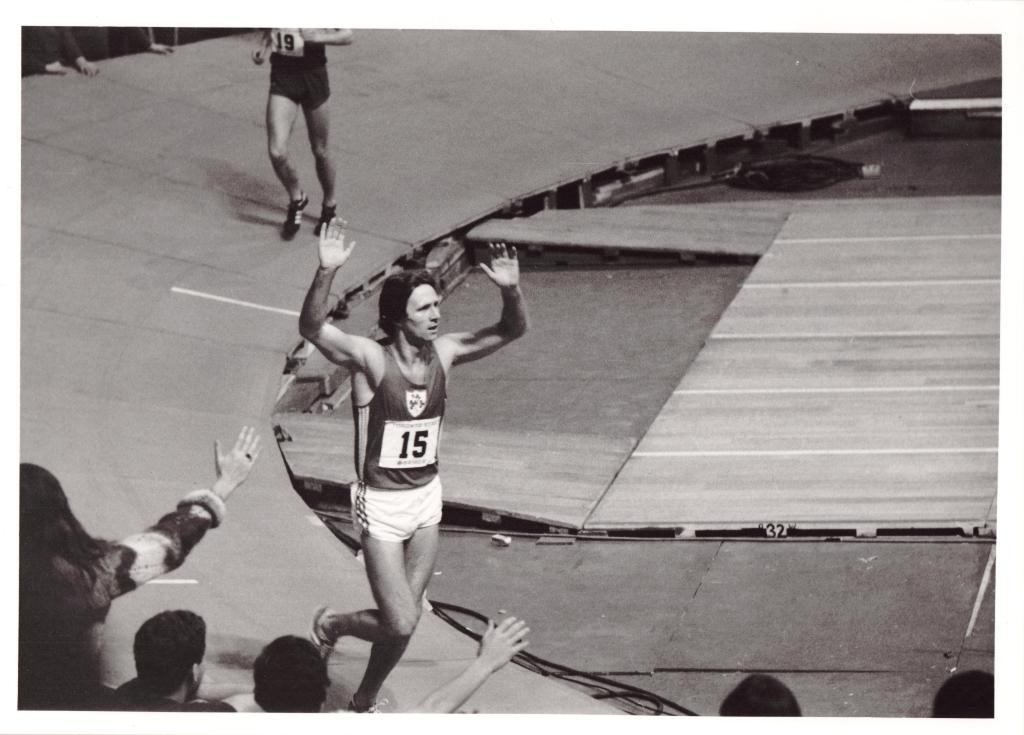
Coghlan’s specialty was the indoor mile. He had earned the nickname “Chairman of the Boards” due to his ability to perform well on tight, wooden indoor tracks. Deb humoured me for an evening in February 1981 at the Toronto Star Indoor Games, with its temporary track set up in Maple Leaf Gardens. I had run there as a schoolboy a few years earlier. We watched Coghlan win the mile in 3:55, an astounding achievement considering the quality of that track. I still have a black and white photograph that I snapped as he jogged around the track for his victory lap.

I found that picture as I was sorting through some old files the other day. It took me right back into Maple Leaf Gardens on that cold February night.

The Chairman of the Boards takes his victory lap (Toronto, February 1981)

As a mature athlete, I’ve always been most impressed by Coghlan’s consistency. It would be enough to say that he broke the 4-minute mile 83 times, but he did so much more. He dominated indoor meets, where tight turns are a handicap as compared to outdoor racing. He ran the first sub-3:50 mile indoors (February 1983), and he was the first man over 40 to break 4 minutes for the mile (February 1994). Quite a career!

Coghlan’s competitive track career spanned 20 years. Like Coe, he has had a fruitful career after athletics. He works as a coach and served as a senator in the Irish parliament from 2011 to 2016.

Wrapping Up

I’ve highlighted some of the lessons that I’ve learned from watching these three outstanding athletes. It confirms for me that great sportsmen (or should I say great people?) still have the power to inspire greatness in all of us.

Although it extends an already long post, I will add a few words about sources. Stephen Brunt’s excellent book, Searching for Bobby Orr, is a well-researched and eloquent biography that puts Orr’s career and life in the context of a sport that was changing dramatically. There is a lot of material available on Coe, including his own books. I enjoyed The Perfect Distance by Pat Butcher, which delves into the rivalry between Coe and another talented British middle-distance man, Steve Ovett. As for Coghlan, I relied on an excellent piece by John Cobley, on his Racing Past website. Cobley’s piece cites Coghlan’s autobiography, Chairman of the Boards, which is unfortunately out of print.

Until next time, be well and BE FAST! Happy New Year to all.

Thoughts on Dedication… and a sale!

I’ve been thinking about the word DEDICATION recently; two quite different meanings of the same word, in fact. The following definitions are from the Collins English Dictionary:

dedication n. 2. an inscription… prefixed to a book… dedicating it to a person… 3. complete and wholehearted devotion, esp. to a career, ideal, etc.

Let me share some thoughts on these different but related meanings. Be sure to read through to the end of the piece for a sale announcement…

The Inscription to Stroke of Luck

Here’s what I wrote last year as the dedication of my memoir, Stroke of Luck:

“To the strong and resilient women I’ve been blessed to have in my life: Mom, Nonna and Grandma, Kathleen and Carolyn, Lisa, and for always, Deb”

It’s been a tough summer. My mother died in July. I wrote a piece about her, which you can find here. Naturally, she’s been on my mind a lot lately. What’s more, my late sister Carolyn’s birthday was in late August and we are coming up to the anniversary of her passing. It’s still hard to believe she’s gone. These two amazing women are missed and will continue to be missed.

Not all the news has been negative though. My sister Kathleen continues to be an inspiration to me. In a few days, my wife Deborah and I will celebrate a milestone anniversary. I know I don’t deserve her, and I count myself lucky every day. I can only hope she sees her way to keeping me around so we can enjoy many more years together.

The words I wrote about my mom, my sisters, my wife and the other important women in my life ring true, perhaps this year more than most.

I truly have been blessed.

Complete and Wholehearted Devotion

For many people, Labour Day is the first reminder that the end of summer is near. The rapidly shortening days are hard to ignore. For me, there is inevitably one night in August when the temperature drops enough to wake me up, freezing under a thin summer blanket. That has already happened… a couple of weeks ago!

So, fall is approaching. And even though I’m mostly on the sidelines now, I still think of September as the beginning of the fall racing season.

I’m in awe of runners who continue to show such dedication to our sport. I haven’t forgotten the feelings. There’s nothing quite as daunting, or as satisfying, as finishing a long training run in July, with a goal race still months away. Building up a base of fitness, day by day and workout by workout, resonates with me.

Speaking of goal races, what’s on the calendar this year? Quite a lot.

Several of my club mates are closing in on the St. George Marathon or the Portland Marathon (October 5 and 6, respectively). One of the world’s premier races, the Chicago Marathon, goes a week later. I recently met a couple of Calgary runners who have been preparing for Chicago. I’m so proud of all these great athletes, and I can’t wait to track their progress on race day!

In Canada, one of my all-time favourite races, the Royal Victoria Marathon, is also on October 13, our Thanksgiving weekend. Other upcoming events are the Marathon Beneva de Montreal (September 22) and the Toronto Waterfront Marathon (October 20).

Besides the marquee races, September also marks the start of the cross-country season. On the local scene, the Calgary Roadrunners organize an annual XC Grand Prix Series. The series includes ten races at various locations around town.

In short, it’s a great time of the year for runners or fans of athletics.

Anyone gearing up for a goal race will be anxious for the payoff, with months of preparation now in the rear-view mirror. All that remains are a few more weeks of targeted training before a well-earned taper. The final weeks before race day can be challenging: staying healthy and focused is key. Even the taper can be nerve-wracking, as we reluctantly scale back from the workload our bodies have become accustomed to.

It really does take extraordinary dedication. So, to all racers… I salute you. Best of luck!

And so, a Dedication Sale…

Maybe you are thinking about the important people in your life.

Or maybe you are gearing up for a fall race and need some extra motivation.

I’ve got just the thing for you… a Dedication Sale!

For the rest of September, you can purchase print and e-book versions of my memoir, Stroke of Luck: My Life in Amateur Athletics, at a special online price. Act fast, as the 20% discount applies only for a limited time.

Who knows, Stroke of Luck might be the secret sauce for a big race result. If you’re not a runner, I’m sure you will relate to my story. Why not order your copy today?

Until next time,

The LPGA Comes to Town

Just when I needed a reminder that things are rarely as bad (or as good) as they seem, I took up my duties as a volunteer at the CPKC Women’s Open. The tournament is our national championship for the stars of the Ladies Professional Golf Association (LPGA). For 2024, the Open was being held at Earl Grey Golf Club in Calgary, which happens to be my home course. 

I signed up for the gig months ago. That was before the downturn in my mother’s health, and her passing in early July. I almost forgot about the tournament; it seemed so far off. Then, suddenly, tournament week arrived.

After a quick orientation to the role of course marshal, we were thrown into the deep end, with practice rounds on Monday and Tuesday, and a pro-am on Wednesday. The four tournament rounds would run from Thursday to Sunday.

I’ve watched enough golf to have a good idea of my job description. Even so, seeing marshals on television is quite different from being a few feet away from the top golfers as they tee off or line up their putts. 

Where Golf and Hockey Meet

One feature of this tournament promised to make it special. I was assigned to the “rink hole”, a recent but very popular addition to open championships in Canada. It’s now customary to convert a par 3 hole into a hockey rink, with boards around the tee box and a Zamboni parked beside the fairway.

For me and the other marshals, the transformation into a rink was complete when we received our referee shirts. I secretly hoped we were not going to be called upon to break up any fights in the stands. This was golf, after all. 

Getting ready for action in Round 4 at the Rink Hole (July 28, 2024)

Thanks to Wes Gilbertson of the Calgary Herald for featuring us in a story!

Our challenging par 3 9th hole was designated as the rink hole. For the tournament layout, it would be the 17th hole. That meant there was the potential for drama on our hole in the final round. It certainly delivered!

On to the Action

My first shift on Tuesday was a chance to meet my fellow refs… er, marshals… and practice our routines before the tournament started. I enjoyed the day, and I marveled at the skills of the top-tier golfers. It was amazing to see my course changed into a world-class sports venue. And that was before any fans were on site. I already felt better than I had in weeks.

When I returned for my weekend shifts, the energy was palpable. Now every shot mattered. The golfers had their game faces on. Television cameras broadcast the action live around the world. The crowds grew by the day.

Record crowds turned out for the CPKC Women’s Open final round (July 28, 2024)

Amidst the tension, I noticed a few things. Calgarians were doing what they do best… welcoming visitors to our beautiful city. Tournament volunteers were full of pride for what was shaping up to be an exciting (and record-breaking) event. And Earl Grey GC members were beaming, knowing that the world was discovering our gem of a course on the north shore of the Glenmore Reservoir. 

This being Calgary, the weather had to play a role. From a heatwave just a few days earlier, things had changed totally. Wind, smoke and cool temperatures greeted the players on opening day. Visitors must have wondered how such a change was possible in just 24 hours. We locals have a word for that: summer. 

By the end of the third round on Saturday, we had seen history, as tour rookie Mao Saigo of Japan tore up our course with 9 birdies and an eagle, for a stellar 61. It was the lowest score ever recorded in a Canadian women’s open. 

Sunday brought more drama. Several players vied for the lead in the final nine. As marshals, we focused on our assignments, even as Lexi Thompson, Lydia Ko, Minjee Lee and other top players came through the gate into the rink. Brooke Henderson led a strong contingent of Canadians, including her fellow Paris Olympic golfer (and Hamiltonian), Alena Sharp. What a thrill!

The drama reached a peak as the last few groups finished their final round. Saigo watched in disbelief as she stubbed her chip on 17, leading to a bogey. The third-round leader, Haeran Ryu, found the greenside bunker and also struggled to a 4. 

That left only Lauren Coughlin. The American veteran bravely hit a six-iron to the tough back left pin location, leaving a delicate eight-foot birdie putt. By chance, I was stationed at the back of the green, so I was only a few steps from Coughlin and her caddie as they lined up the shot. I had the best spot in the house to see her roll it in, guaranteeing herself a two-shot win with a 13-under score of 275. It was her first tour victory.

It was an exhilarating weekend, and an experience not likely to be repeated. 

On the rink hole, there was plenty of good-natured cheering and banging on the boards. Fans showed their deep patriotic pride and love for our Canadian stars, especially Henderson. This is Canada, so everyone was polite. Thankfully, we didn’t even need to put anyone in the penalty box! 

I walked back to my car on a perfect Sunday evening, exhausted but satisfied. 

Maybe there is still hope for 2024.

“Stroke Awareness Month” Sale!

To raise awareness of the prevalence of stroke, I’m offering Stroke of Luck: My Life in Amateur Athletics for a special price in June. Order your copy on Amazon and save 20%.

Help me raise funds for the essential work of the doctors and staff at Foothills Stroke Unit!

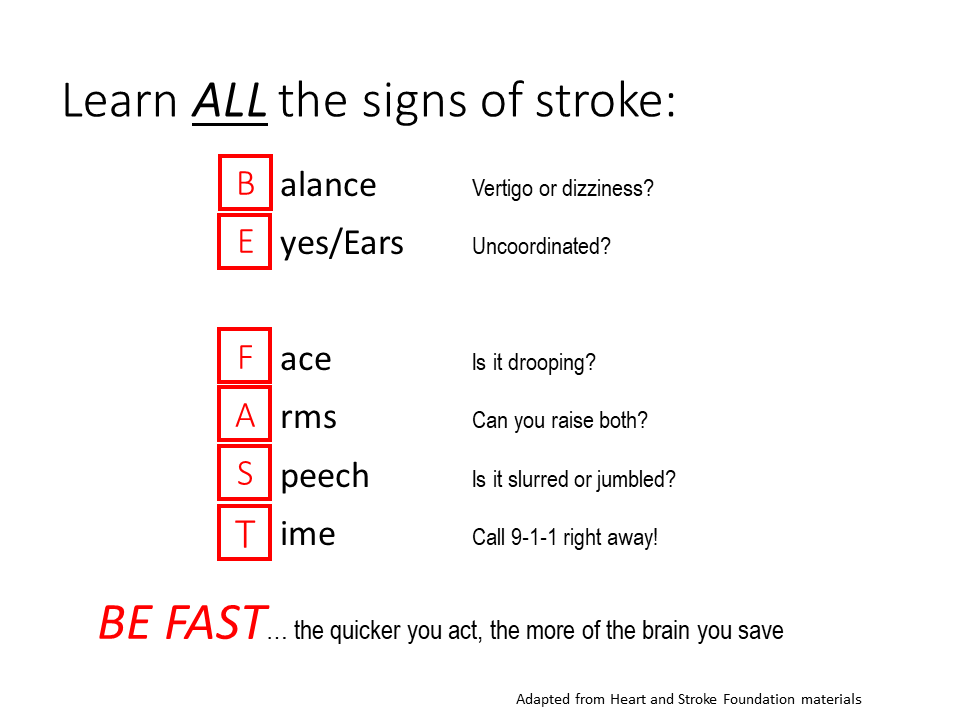
The Heart and Stroke Foundation of Canada is celebrating 10 years of raising awareness about recognizing the signs of stroke, and the need to call 9-1-1 right away to get to the best hospital for stroke care. 

BE FAST is a memory jogger that I’ve been sharing with people, because it covers the full range of stroke symptoms. Here’s what it stands for:

BE FAST – someone’s life could depend on it!

Stroke incidence continues to rise in Canada – more strokes are happening and more people are living with stroke due to our aging population and more younger people having strokes.  There are now nearly 110,000 strokes each year in Canada. That is roughly one stroke every five minutes.

I’ll leave you with the words of Dr. Michael Hill, the Calgary neurologist who wrote the foreword to Stroke of Luck:

“Time is brain when it comes to stroke and everyone has a role to play. It starts with someone recognizing the signs of stroke and calling 9-1-1”

– Dr. Michael Hill, Neurologist, Calgary Stroke Program

So, during June, why not take a minute to familiarize yourself with ALL the potential signs of stroke? Even better, spread the message to those you care about. It could save a life! And if you’re looking for a bit of motivation, why not order your copy of Stroke of Luck for a discounted price?

BE FAST, and be well!

Steve

Don’t Stop Believing

Sometimes life is hard.

It will be obvious from the long gap between posts that I haven’t been thinking much about the blog lately. It has been a difficult time on the personal front. I don’t feel like going into the specifics… maybe I will someday. 

Several times, I’ve tried putting my feelings into words, never sure if the result would end up in a blog post. Each time I’ve tried, it has been a failure. It’s frustrating, especially since I’m usually not at a loss for words. 

Music seems to help. As I write this, I’m listening to Car Wheels on a Gravel Road, a classic album by Lucinda Williams. This is melancholic music. It suits my mood and I think it makes me feel better… it’s hard to say. The lyrics of one of my favourite songs, Time from Pink Floyd’s Dark Side of the Moon, have been stuck in my head. This verse seems appropriate. 

Every year is getting shorter
Never seem to find the time
Plans that either come to naught
Or half a page of scribbled lines

My half pages (not literal, of course… they’re typed on my iPad) have been piling up, as I’ve grappled with anxiety. I’ve been feeling helpless against our overwhelming insignificance. Our impermanence. Our mortality.

North Glenmore Park pathway, April 2024

Then came a breakthrough of sorts. It was in a situation that might not be conducive to finding inspiration. But it was no surprise to me because I was running at the time. Anyone familiar with my story (Stroke of Luck is still available, by the way) will know that running has often been a source of consolation and positivity in my life.

To set the scene, I met a small but hardy group of my teammates at Carburn Park in Calgary for an interval workout. It was a ladder workout, which for those who aren’t familiar, is a session with increasing length intervals. This workout, with intervals of 400m up to 2000m, looked daunting. Each set totaled 5.4k, and Coach Janice had specified 2-3 sets. I had to go back to her to confirm the details because it seemed that she must have miscalculated. This was TOO MUCH!

To add another degree of difficulty, the weather was awful. The threatening sky opened up just as we finished our warmup jog around the lagoon. Clouds turned to rain, then snow. My eyes were being pelted with icy crystals. We were soaked in no time. The temperature hovered just above freezing. 

We ran south beside the steel-blue water of the Bow River, and I began to wonder what on earth we were doing. It didn’t help that I was the slowest runner in our group, meaning I also had the pleasure of watching my friends stretch out and away from me as the first set wore on. 

As I approached the turnaround point, now miles from my warm car, my mood lightened. I was enjoying this. Even as my vision was being obscured by sleet, my thoughts were becoming clearer. Then, as if on cue, the sun peeked out briefly, casting a warm glow on the wet pathway in front of me. (I didn’t bring a camera on this run… it would have been waterlogged… so I can’t even show you a picture of that special but fleeting moment.)

By now, I was totally on my own. My teammates were out of sight and the pathway was deserted. I was enjoying the feeling of movement, of being in control. Running was proof of life. I was thriving in what had just a few minutes earlier seemed an impossible task. 

Then the following thoughts came into my head, without any prompting:

  • I don’t have all the answers
  • Sometimes there are no answers to find
  • All I have to offer is my best effort
  • I can only control what I do, not what anyone else does 

I eventually made my way back to Carburn, where I caught up with my teammates. They had waited for me… how nice! We were soaked, shivering, and content. We patted each other on the back for getting through this monstrous workout on a rotten night, together. On that day, we were all heroes. Of course, even heroes need to dry off and warm up, so we said our short goodbyes and headed home. 

With my mind clear, even if temporarily, I was ready to face whatever challenges were still waiting for me. Running and music and writing can help me figure things out, even if the answers themselves remain elusive. 

Look for more pieces and photography soon. 

Peace.

Leap To It!

There are less than two weeks left in February, and time is running out for my online sale. Get your copy of Stroke of Luck (print or e-book) on Amazon for a tidy 24% discount.

Of course, there is one extra day to place your order, with this being a leap year.* Extra day or not, leap to it and save!

* Did You Know?

The tradition of inserting an extra day into February every four years is how the calendar is aligned to the rotational frequency of the Earth’s orbit around the sun.

But wait… one orbit takes 365.24219 days. That means if a whole day is added every four years, for an average of 365.25 days, the calendar would be lengthened a bit too much.

As a result, the schedule of leap years is adjusted slightly to reduce this mismatch. If the year is divisible by 100 and not divisible by 400, the leap year is skipped. The year 2000 was a leap year, but 1700, 1800, and 1900 were not. The next time a leap year will be skipped is the year 2100. This gives an average calendar year of 365.2425 days, almost exactly matching the orbital frequency.