On Running Streaks

A running streak is pretty much what it sounds like—run every day until you can’t. And while it’s up to each runner to set their own parameters, the Streak Runners International, Inc. and the United States Running Streak Association, Inc. (yes, there is a governing body for this activity) have set out some helpful guidelines. Here’s a quote from the SRI/USRSA website:

The official definition of a running streak, as adopted by the Streak Runners International, Inc., and United States Running Streak Association, Inc., is to run at least one mile (1.61 kilometers) within each calendar day. Running may occur on either the roads, a track, over hill and dale, or on a treadmill.

-SRI/USRSA website

So that’s it. Sounds simple enough, right? The longest active run streak, as reported recently in Canadian Running, belongs to Jim Pearson of Marysville, WA. As of September 24, 2025, he has run for 20,310 consecutive days. Over that time—more than 55 years—Pearson has run 305,000 kilometres. Now that’s impressive!
Is a running streak a good idea?

As I wrote in my memoir, Stroke of Luck, I’ve never bought into the idea that runners, even highly competitive runners, need to run every day. Of course, regular exercise is hugely beneficial, and running streaks are as consistent as you can get. So, the routine of getting out the door every day will pay dividends in overall health and cardiovascular fitness. From my own experience, regular running seems to increase resistance to seasonal bugs. It may reduce susceptibility to injuries (or it may not). And perhaps most important—streaking instills a feeling of mental toughness, given all the challenges that must be overcome to keep one going.

But there are downsides. The most obvious is that sometimes, when we are injured or feeling under the weather, the best thing we should do is rest. Forcing ourselves out the door, just to check a box and continue a streak, may be making a bad situation worse.

Although streaks aren’t really my thing, I will admit to a certain fascination with runners who can and do carry on long streaks. My brother Paul completed a decades-long streak, as did my old running partner in Calgary, Rick Webb. Rick used to regale me with stories about how he kept his streak alive. One of my heroes is the late Ron Hill, a fascinating man, a legendary runner, and a running streaker. I wrote this in Stroke of Luck:

“… I appreciate what it takes to carry on a running streak. I have known a number of streakers through the years. This evolutionary branch of the running population is an eccentric lot. Most serious runners of the last few decades would have heard of Ron Hill, the great British marathoner and Olympian, whose 52-year streak—which ended in 2017—is legendary. To running streakers, Ron Hill is a patron saint, a person who is universally admired and spoken of with great reverence. He died in 2021.”

Strides Run Streak, 2025 edition

With that background, there should be no surprise that I’ve once again taken on the challenge of the annual Strides Run Streak (SRS). The challenge is simple: run at least one mile every day in December. Kudos to Jeremy and his team at Strides for giving us a manageable goal, one that will help keep us motivated over the holidays.

I’ve been a regular participant in the SRS. In fact, there is a connection between the SRS and my stroke story, which goes all the way back to 2012. I explained in Stroke of Luck how I extended the 2012 streak from a month-long event into one that lasted more than four years. This became my longest personal running streak, even though it paled in comparison to Hill or Pearson. I joked in the book that I might be able to make a case to the RSI/USRSA for the most interesting END to a running streak.

I’ll leave my story there, but if you’d like to know how things turned out, why not get a copy of my book? In doing so, you’ll be supporting a great cause—the stroke unit at the Foothills Medical Centre in Calgary. The book would be a great gift for the runner on your Christmas list!

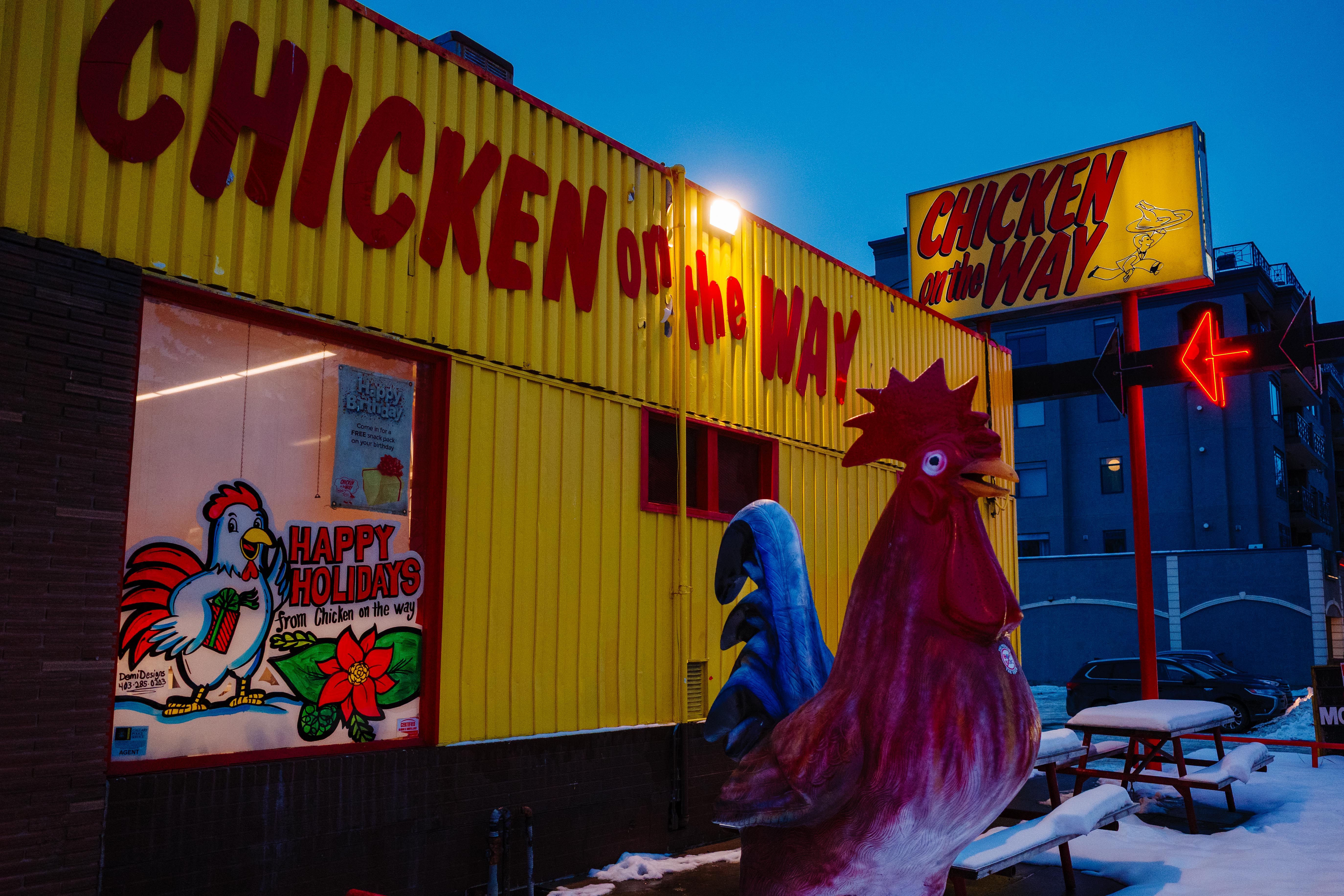
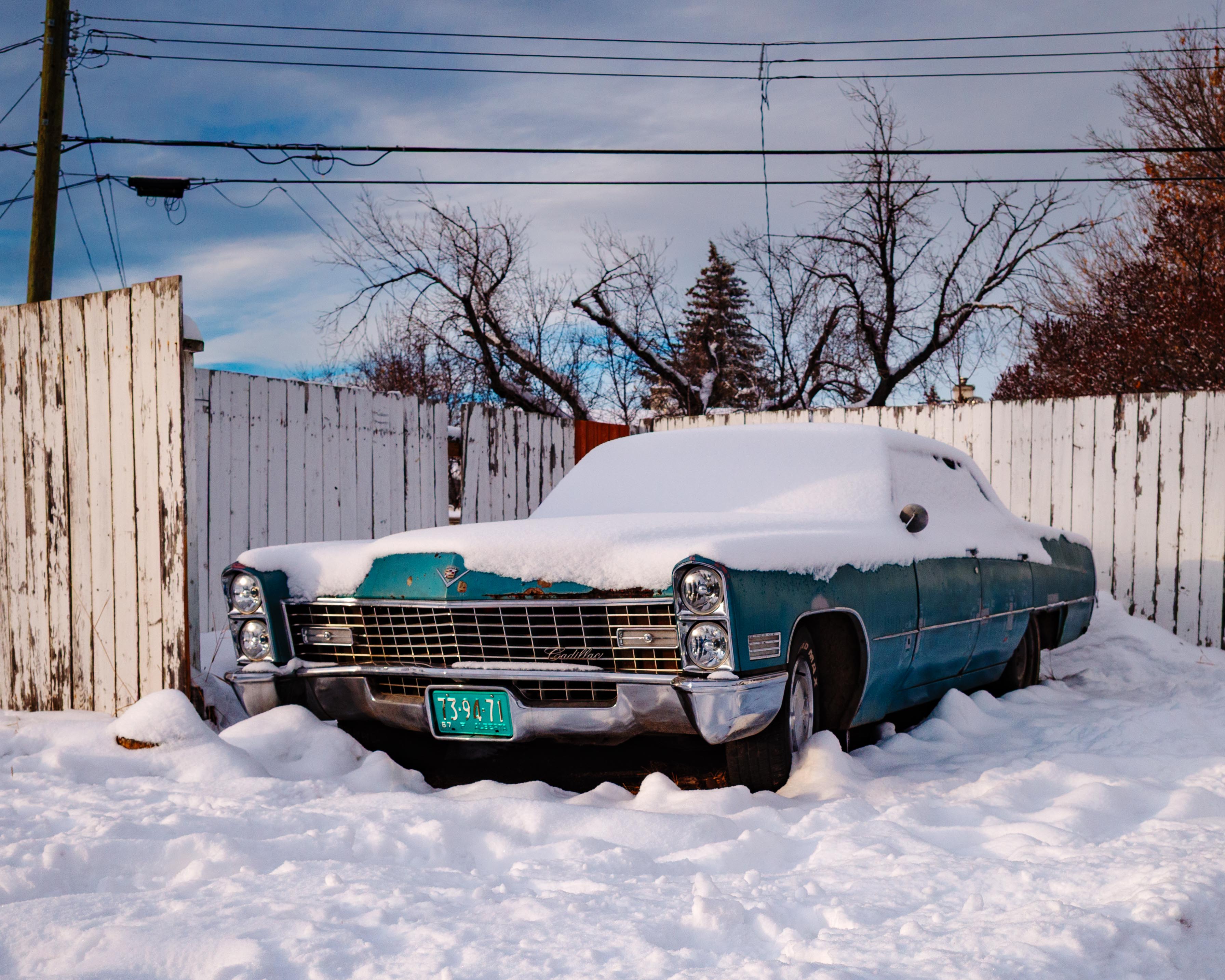
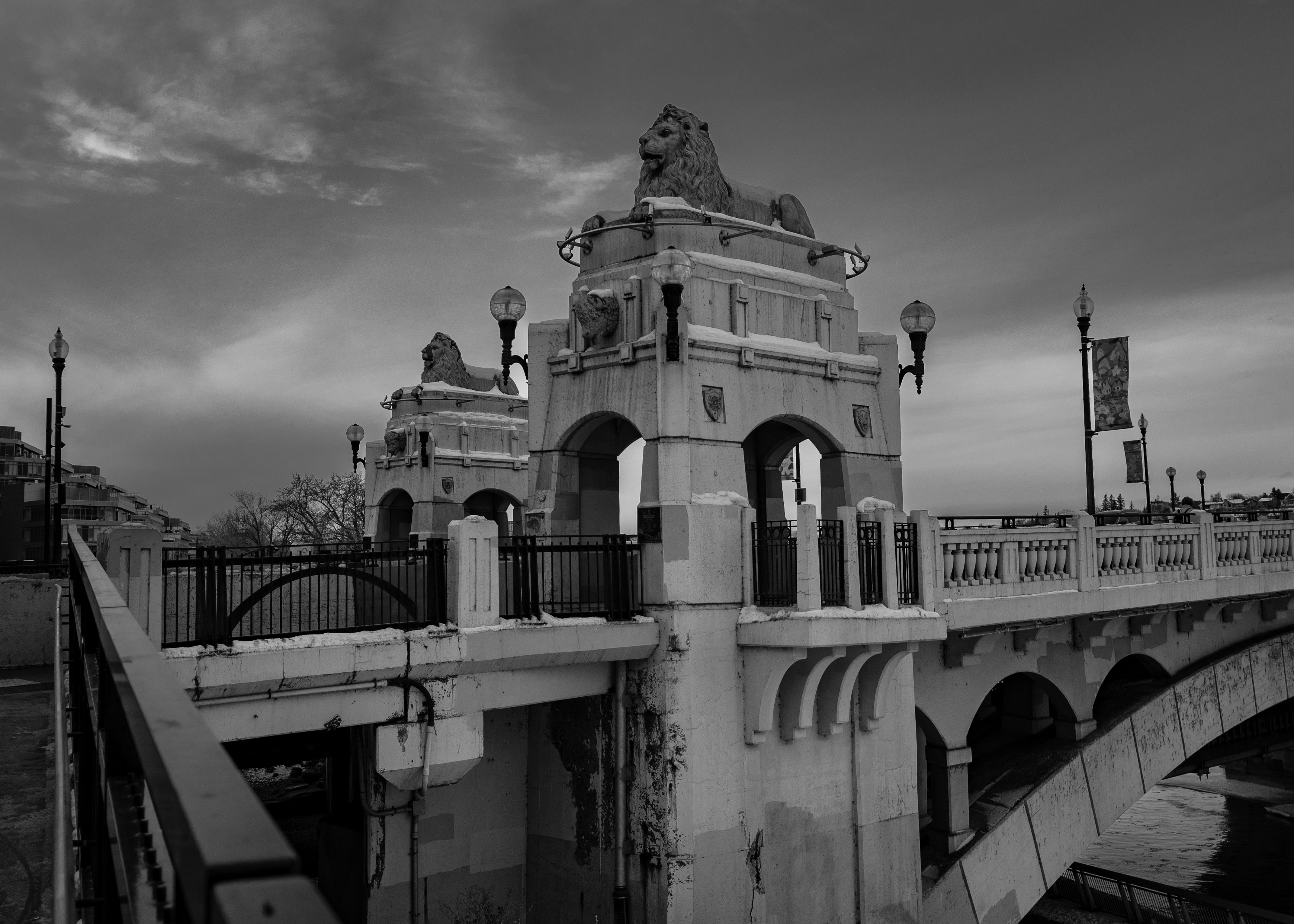
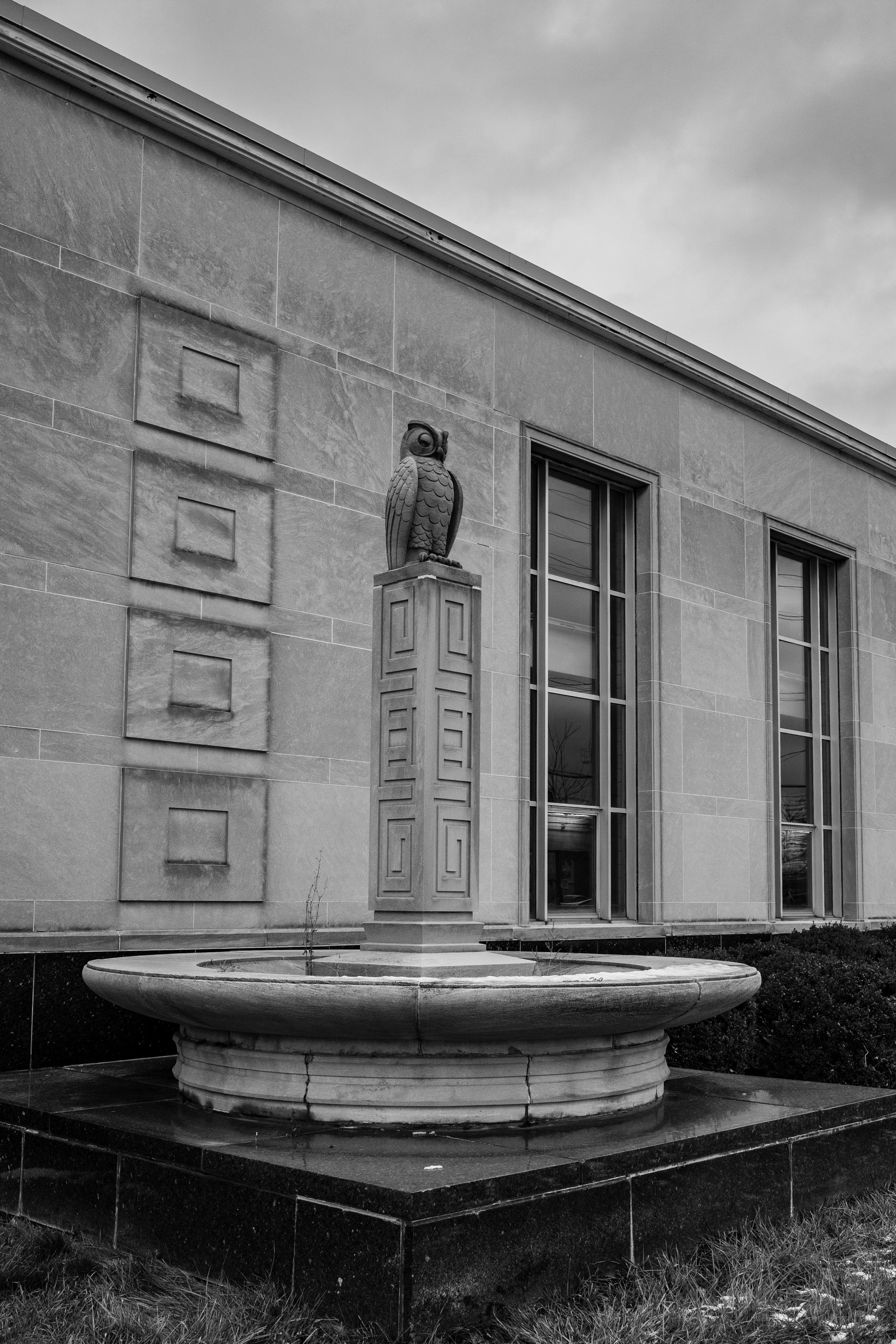
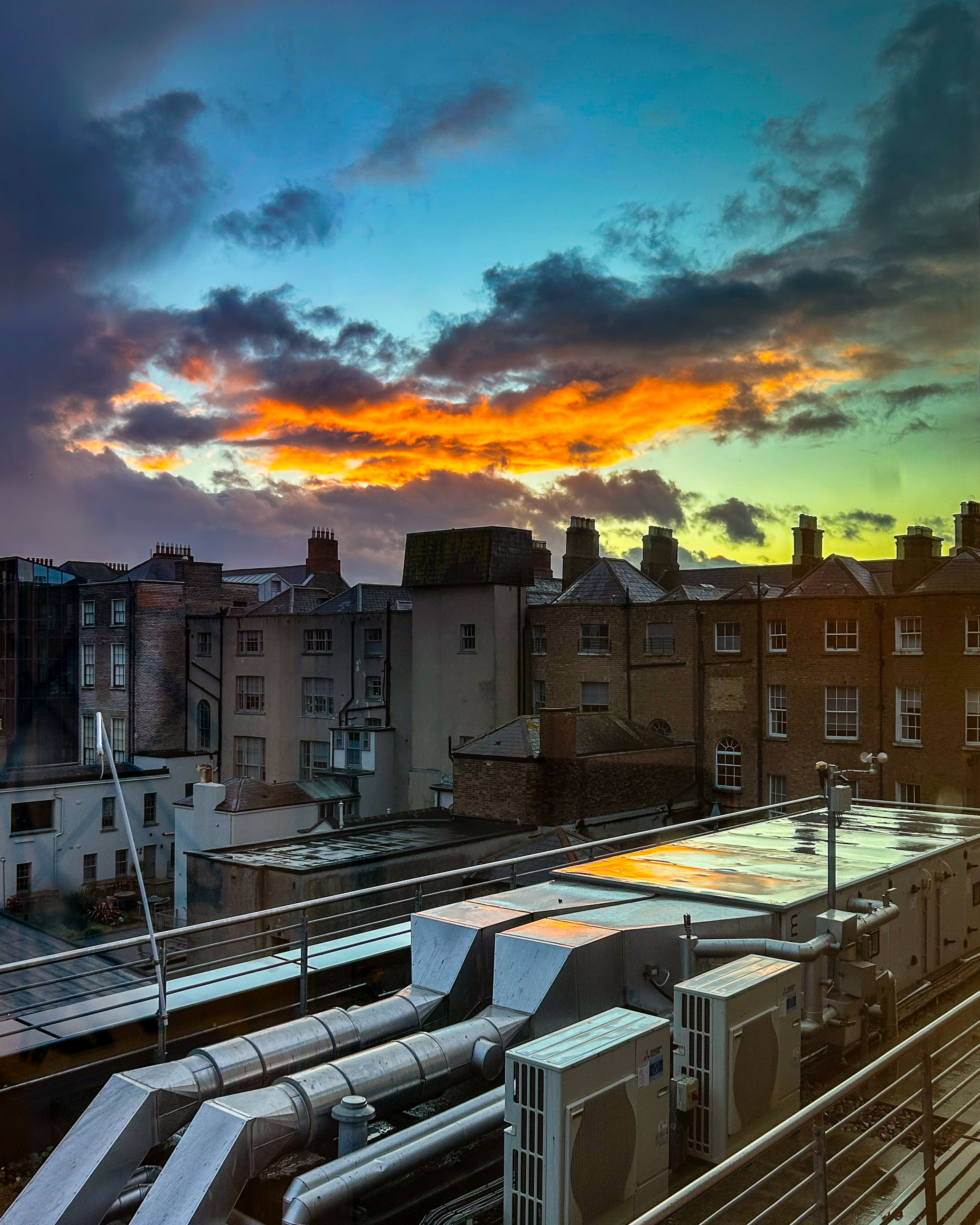
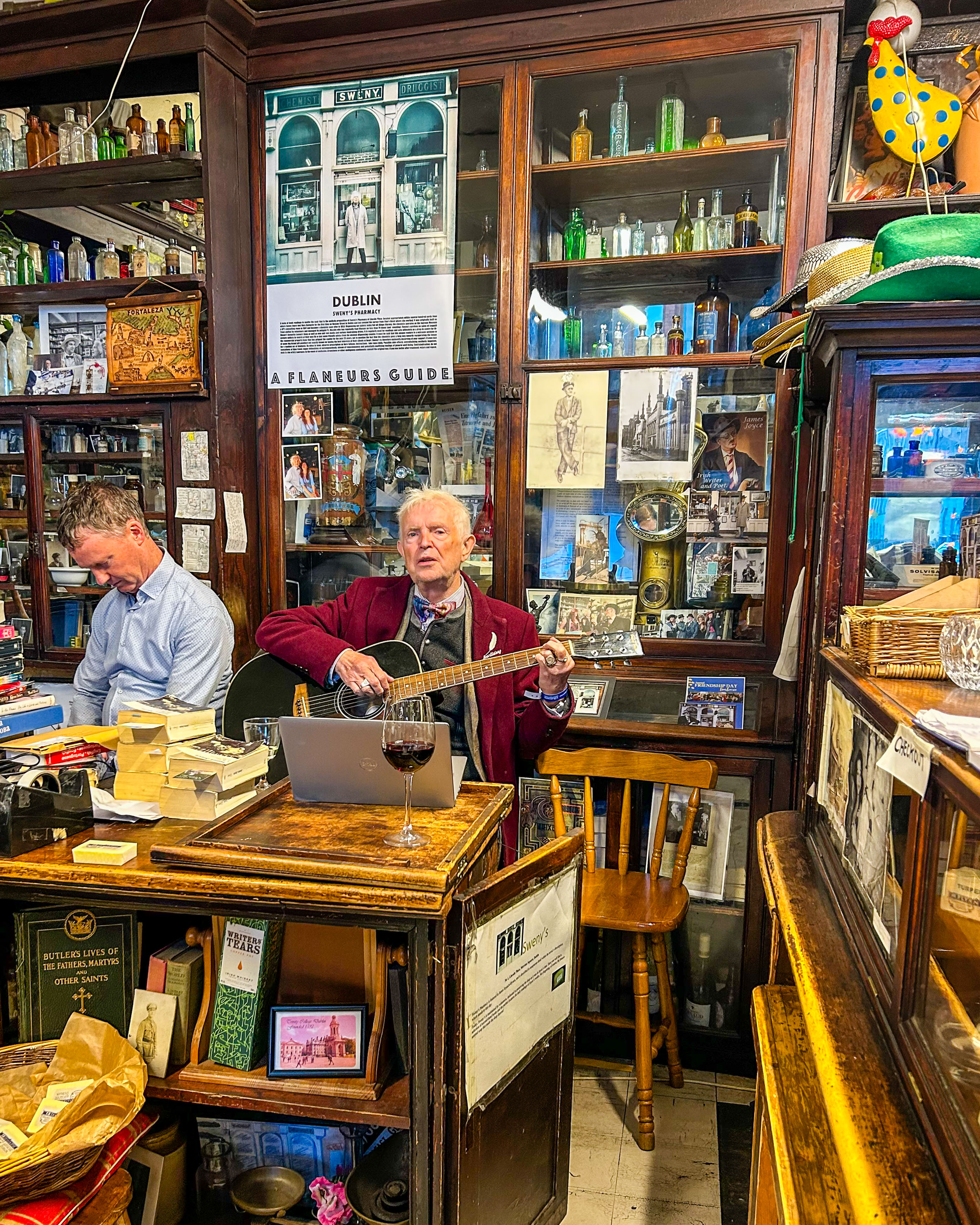
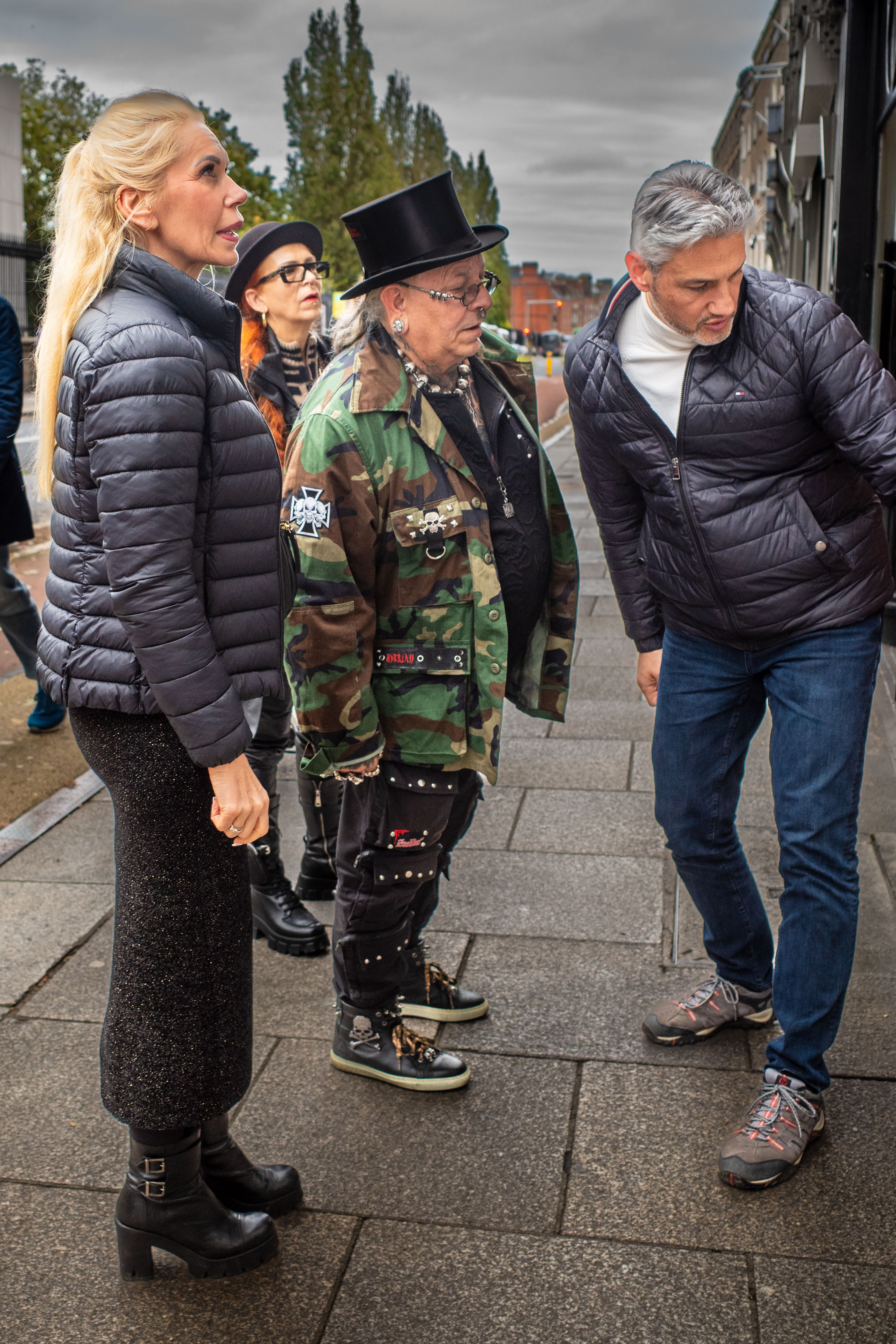
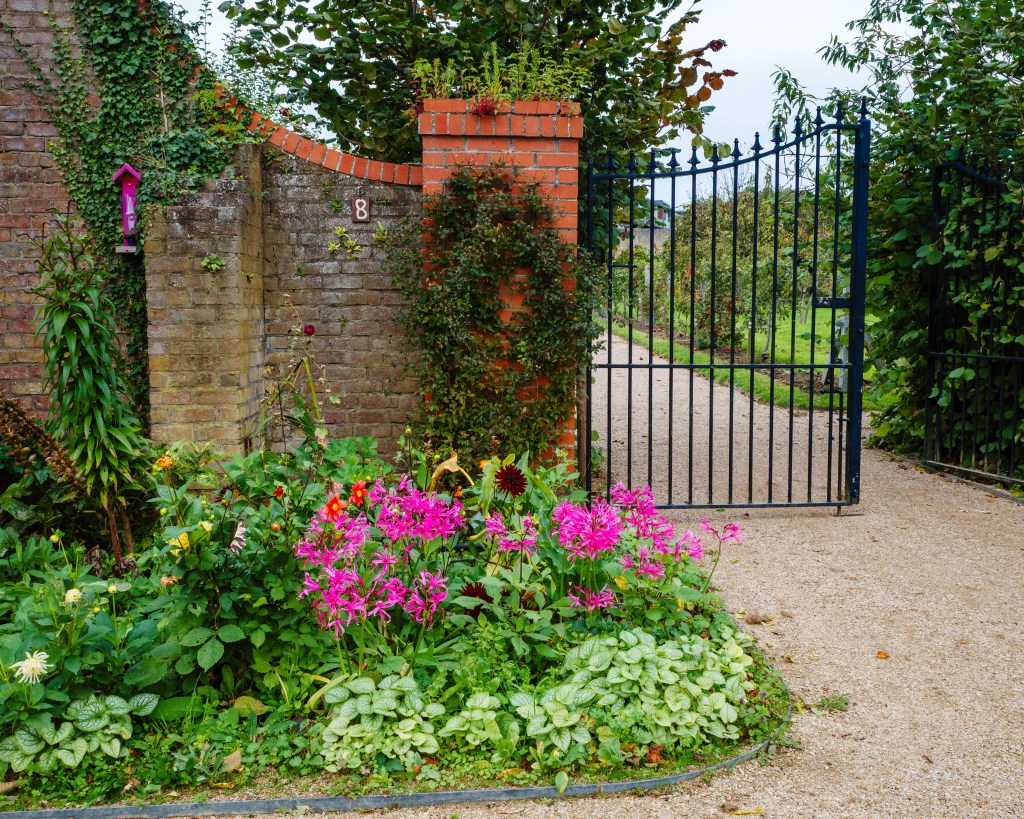
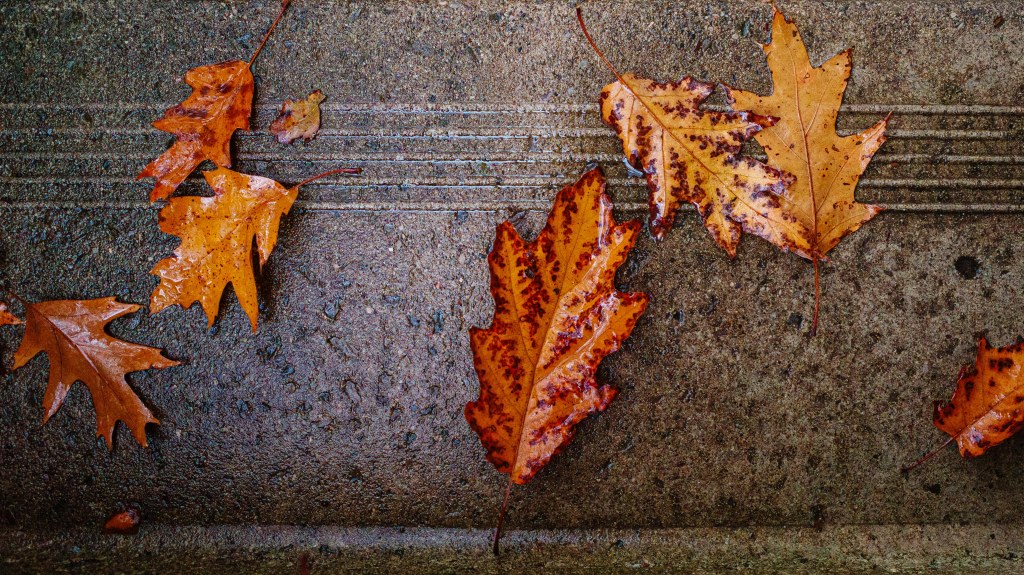
Now, as some of my followers on Strava will know, I give myself the added challenge of finding a worthy photo while I’m completing my daily run. Sometimes that is a bigger test than the running part, particularly with the days getting shorter and winter setting in. There aren’t many great photos taken on a treadmill!

So far in 2025, my commitment is strong, and the weather has been agreeable. There are a few hurdles, mostly a nagging soreness in my right Achilles tendon. Fortunately, that seems to loosen up after a couple of kilometres. Worse for me is that my training partner is still sidelined with a sore hip. That means my running is mostly solo.

Enough words. Here are some images from the 2025 SRS, which started while we were in Toronto. It’s obviously a work in progress, and I hope to send out another batch of pictures by month-end:
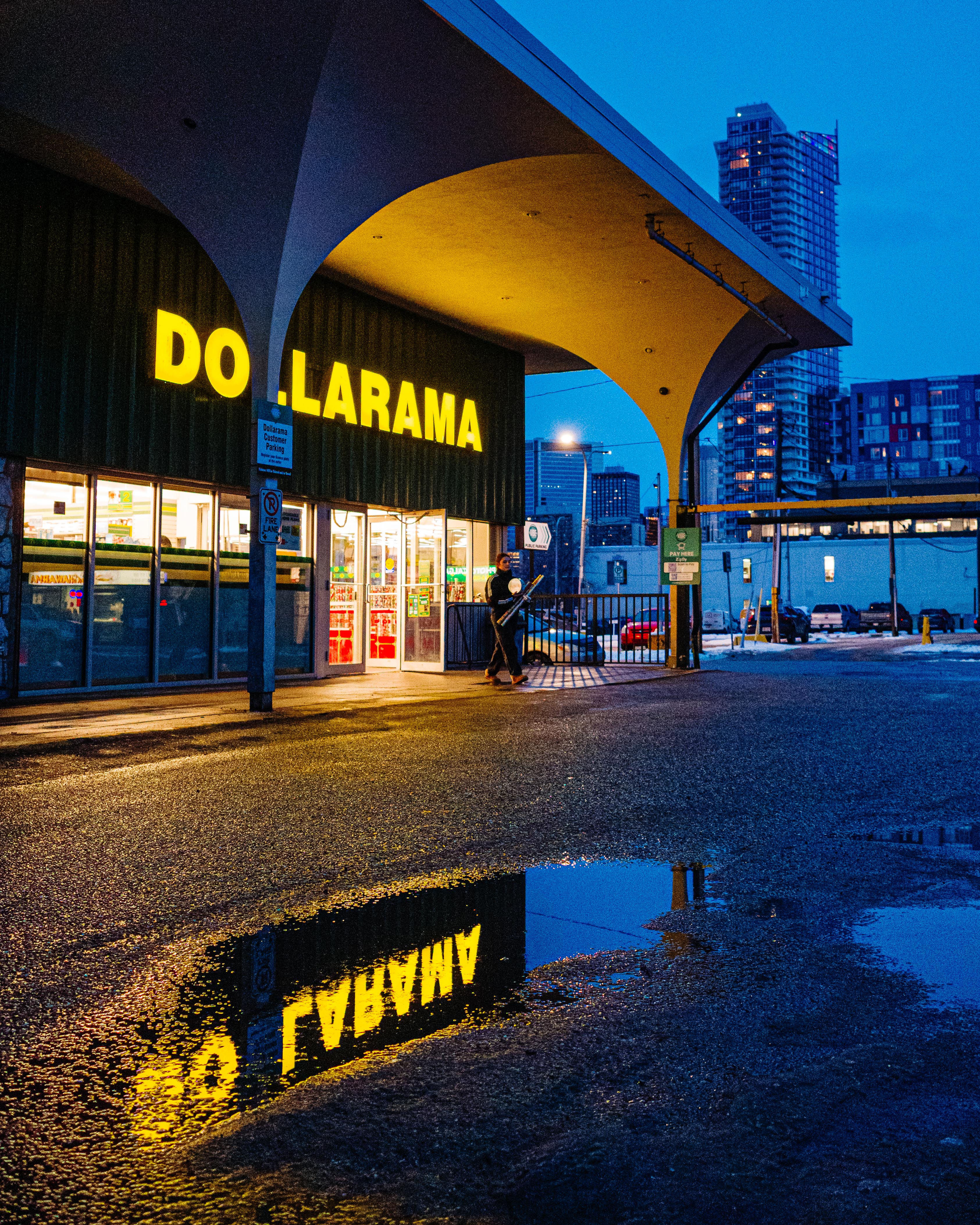
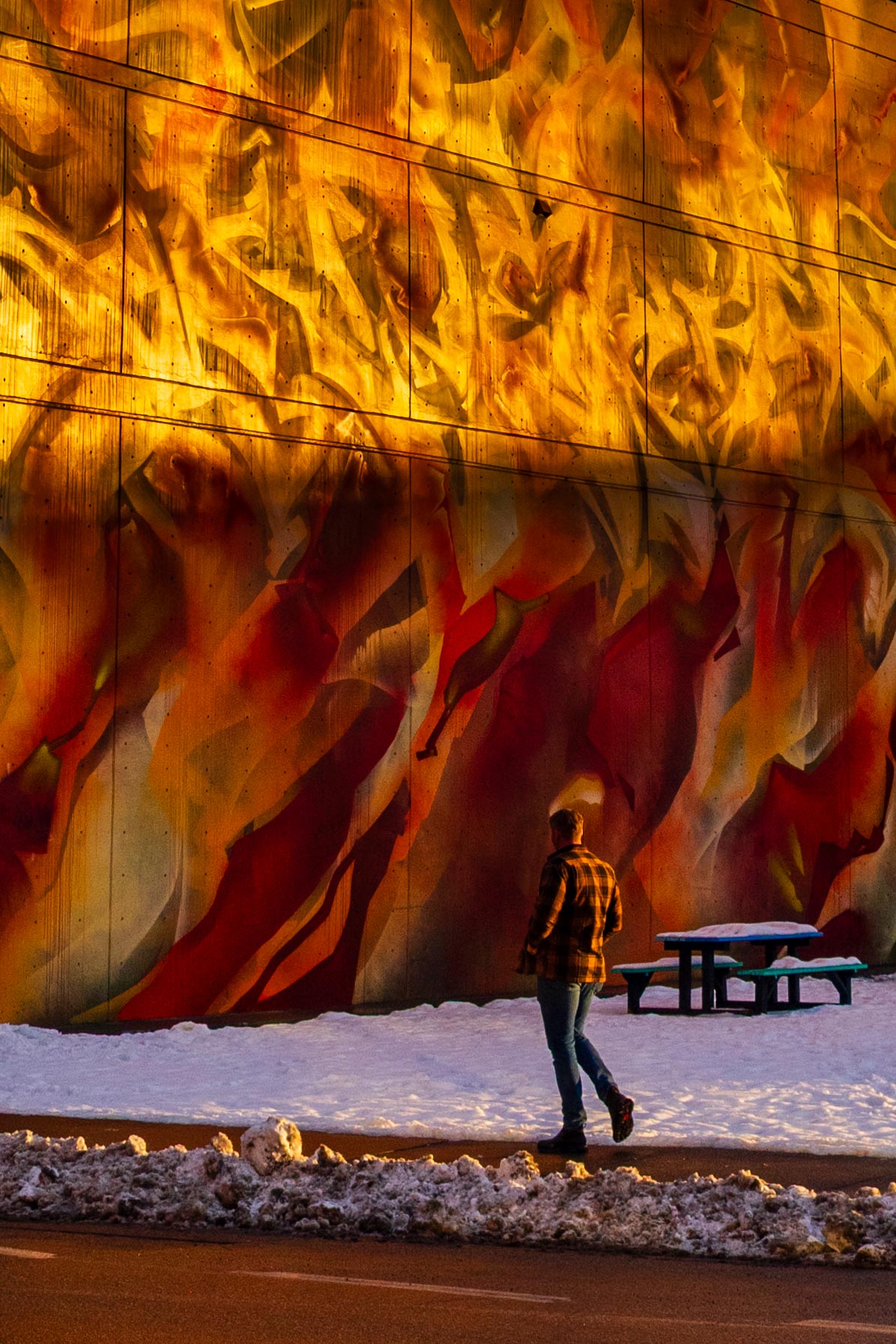
Copyright for all images is mine.

While it’s always nice to capture the festive spirit, I don’t consider it essential. As I’ve said before, my goal is to find images that transport me back to that time and place. I like visiting different neighbourhoods during the month. For me, a good photo run is thrilling; a way of adding meaning to my runs. It doesn’t replace the excitement of competition in a road race, but it’s sure better than nothing. And while there are no governing bodies for photo runs, I can recommend the Ricoh GR III—portable, capable, and durable. It’s been a constant companion on my outings.
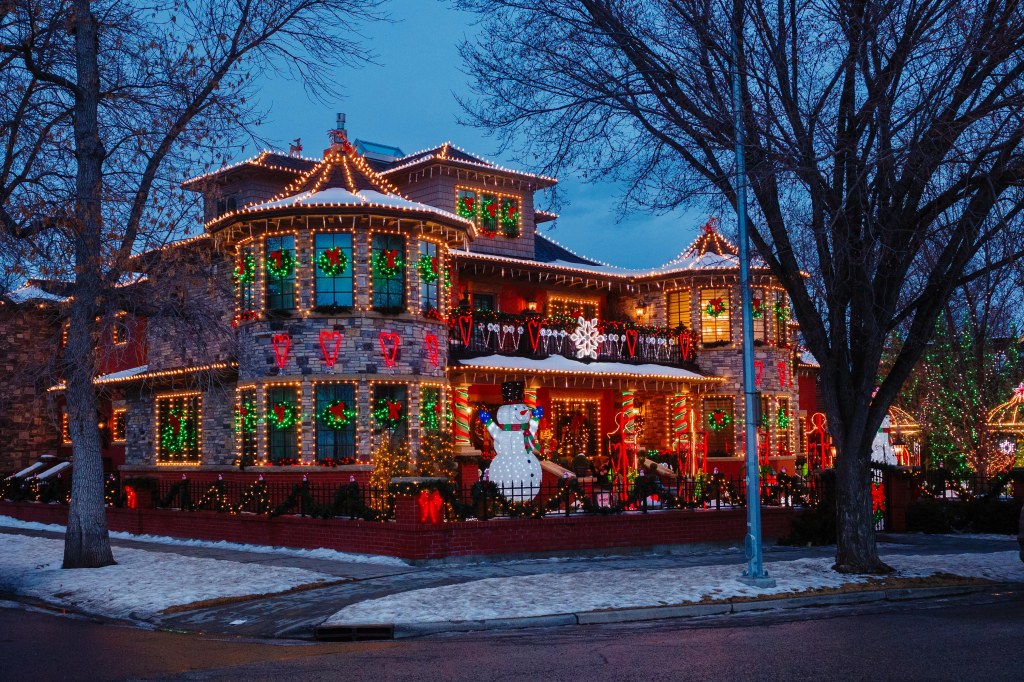
Merry, Merry!

Wrapping Up

I hope you’re finding your own source of motivation at this time of year. While it’s easy to avoid going outside, especially when the temperature is -18c, as it is in Calgary today, I always feel better for having made the effort. So, whether it’s a month-long run streak, a walk with your dog, or a jog on a treadmill, I highly recommend a daily dose of activity. Having a camera with me is a reminder to keep things informal, and if I’m lucky, I’ll come home with a memento of the day.

Happy Holidays! And until next time, be well and BE FAST…

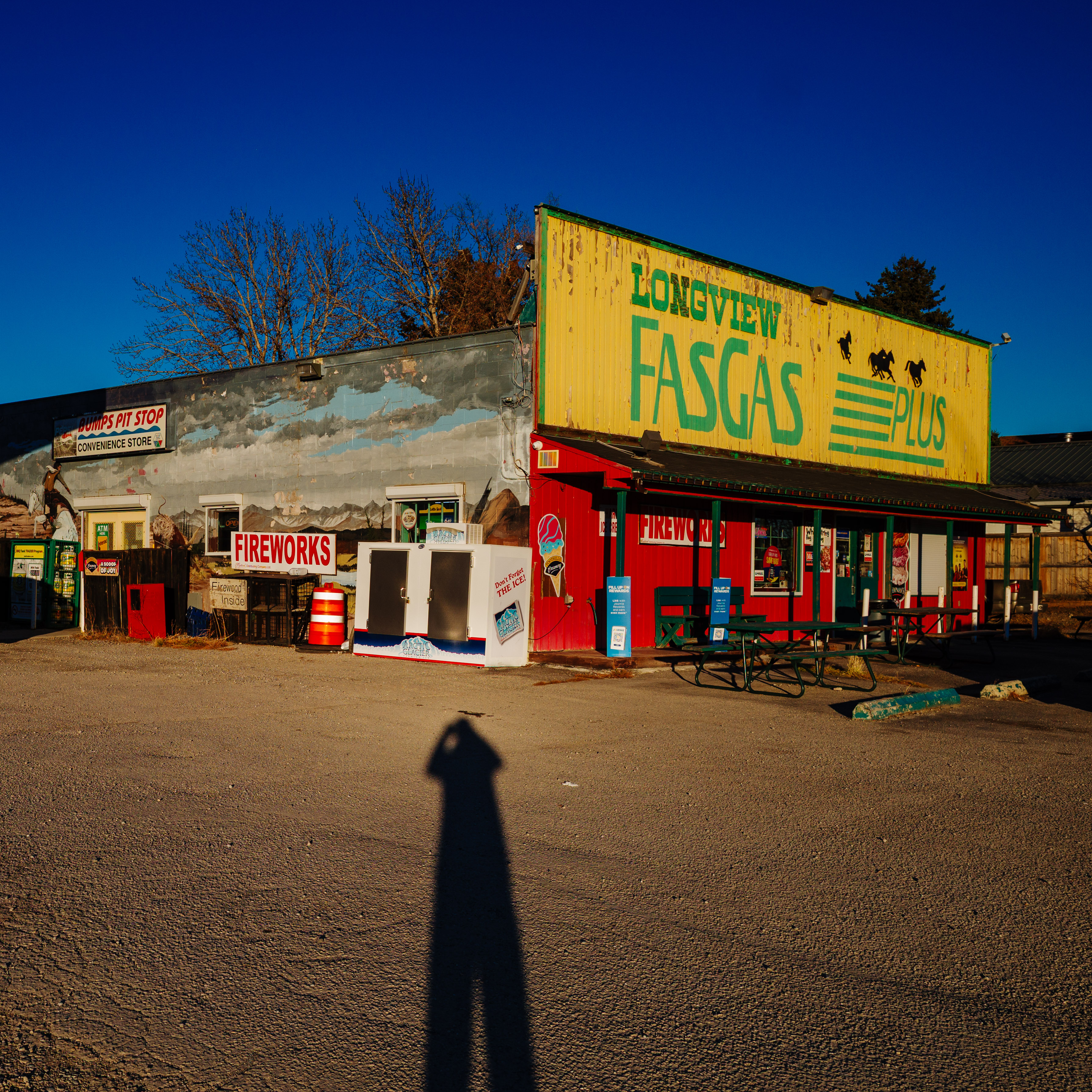
The Longview Photo Run

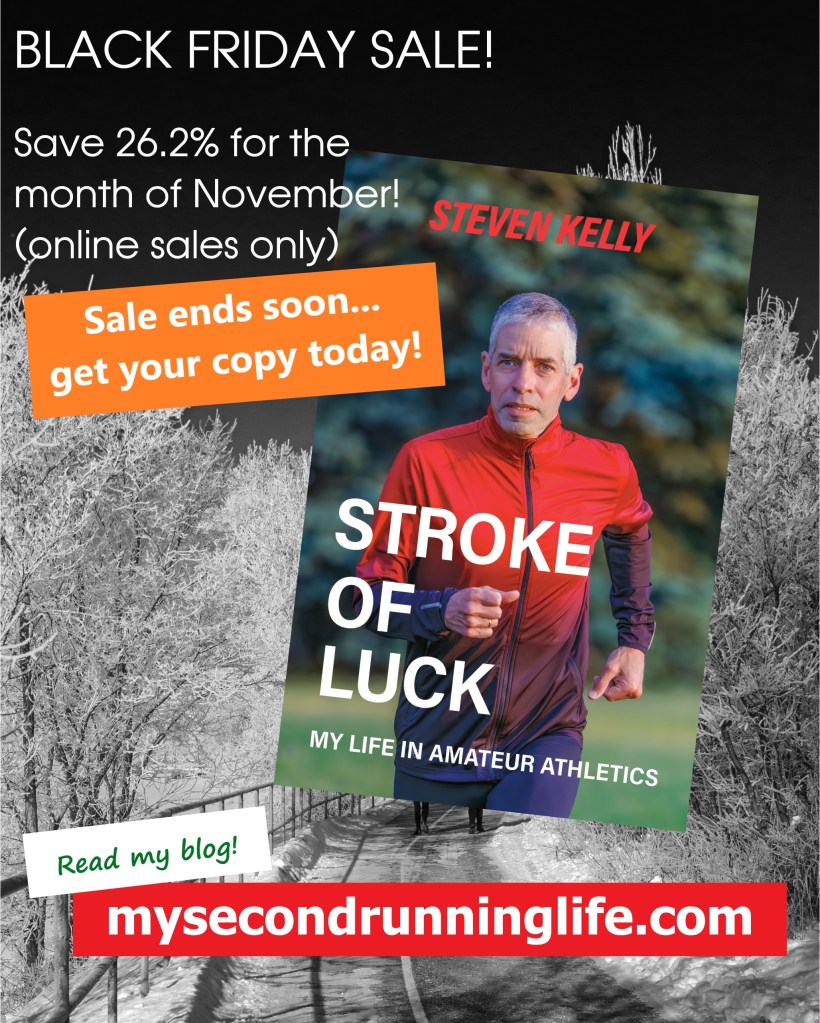
The Black Friday Sale ends soon!

Time is running out for an unbeatable deal on a running story you don’t want to miss!

Stroke of Luck is available on Amazon at a marathon-inspired 26.2 % discount—but only until the end of November.

Get your copy today!

Longview: A Short History

For as long as I’ve been in Calgary, the Village of Longview has been my idea of what makes Alberta special. It’s a quiet village in an idyllic setting. The views of the foothills to the west are spectacular, and that’s because Longview sits just outside Kananaskis Country. Highway 22 (the Cowboy Trail) is the town’s main street. I’ve often told Deb that I want to move to a ranch in Longview, although I wouldn’t have a clue what to do once I actually got there. No matter.

I learned about Longview’s fascinating history when I did my research for this piece. The village is named for brothers Thomas and Oliver Long, who homesteaded in the area at the beginning of the 20th century. Given its location, Longview has a long connection with farming and ranching. When oil was discovered in nearby Turner Valley in the late 1930s, Longview boomed—so much so that it earned the nickname Little New York. Of course, booms tend to go bust, and that’s what happened a few years later. For most of the last 60 years, the village’s population has been around 300.  

One of Longview’s claims to fame is that the annual Kananaskis 100 Mile Relay starts there, early on a Saturday morning in late June, just after the Highwood Pass opens up. There are some fond memories there, I can tell you! I wrote about the race earlier this year—check it out here.

And if anyone needs another reason to visit Longview, here’s one: Flic Film is a business that caters to those of us who can’t quite give up film photography. I used to have a convenient option for film development near my house, until “my guy”—that was Paul Stack—wrapped up his business and retired to Nova Scotia. I’ve been wondering what to do with my film since then, so I was thrilled to learn about Flic Film. I met Dalton on my visit to Longview, and left him with my order.

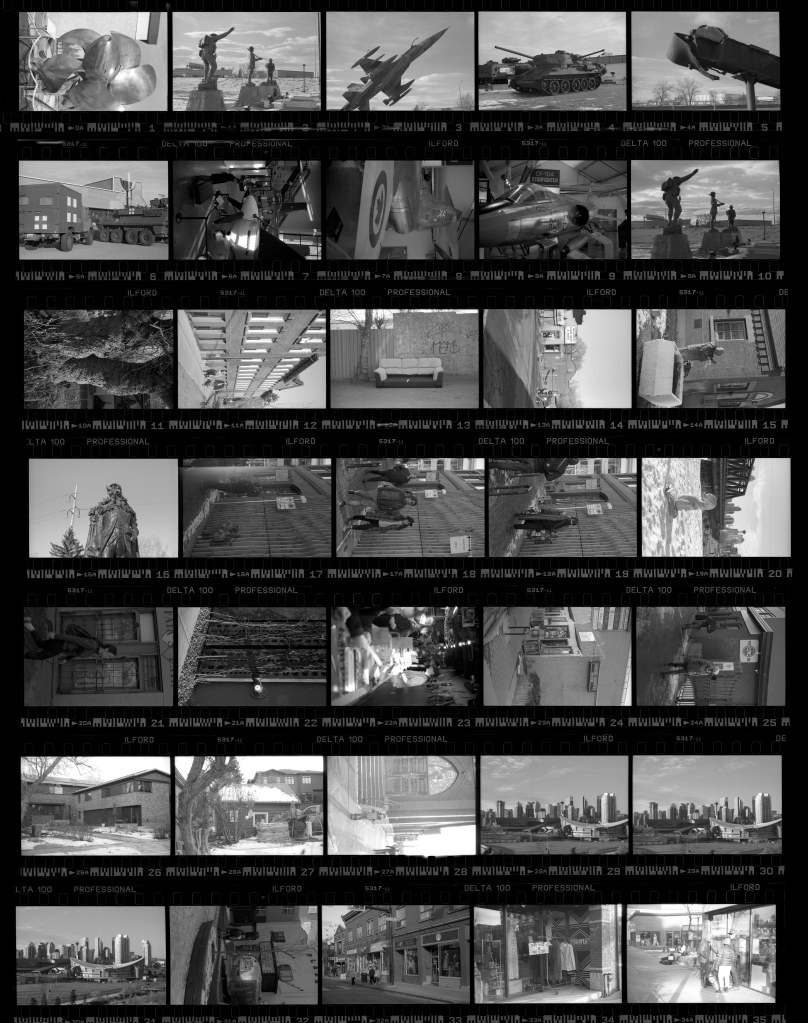
Feeling slightly nostalgic, here’s a contact sheet, which (if you’ve never seen one) is a handy way to identify any “keepers” on a roll of film. There’s something real about flipping through a binder of negatives.

A Short Jog Through the Village

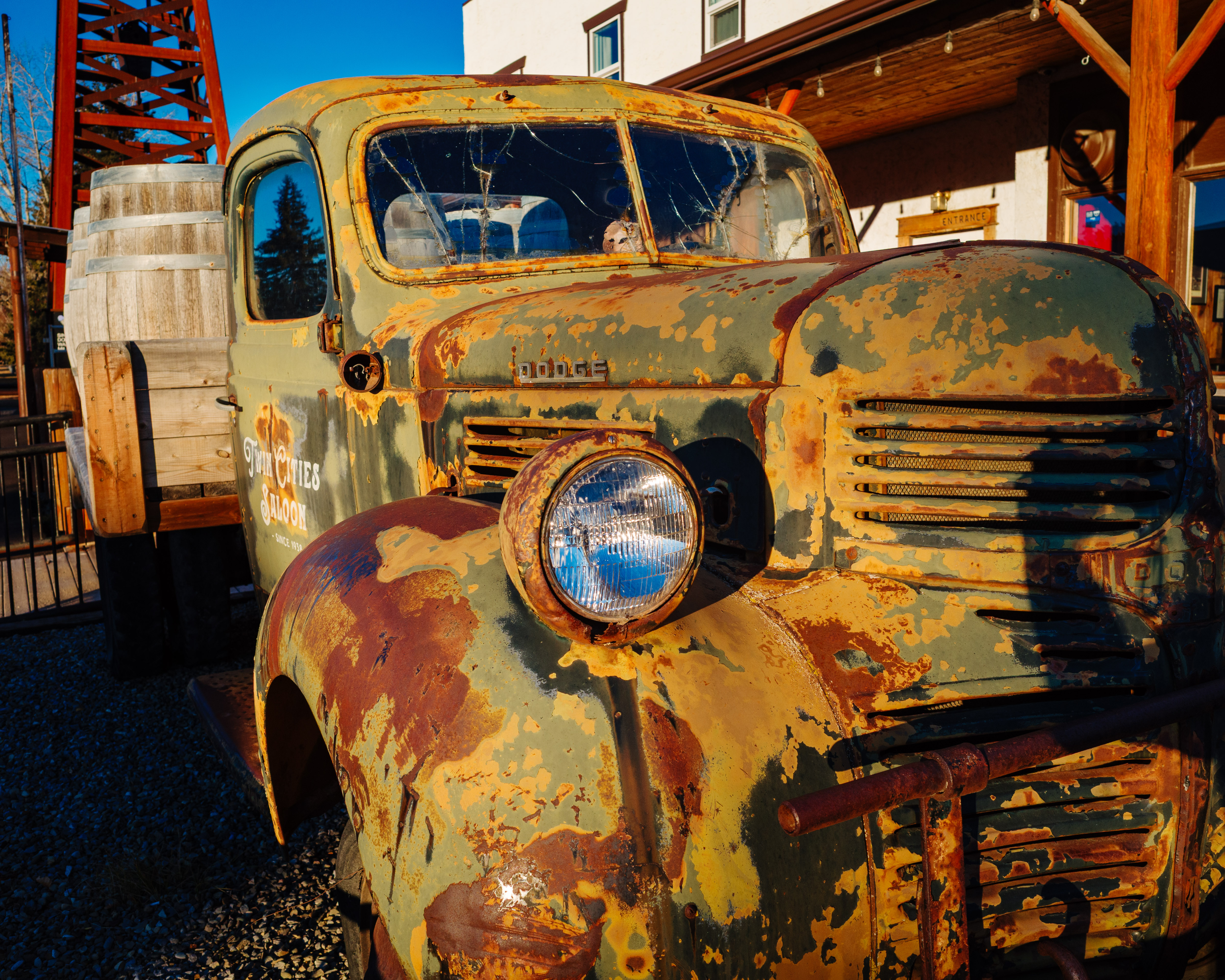
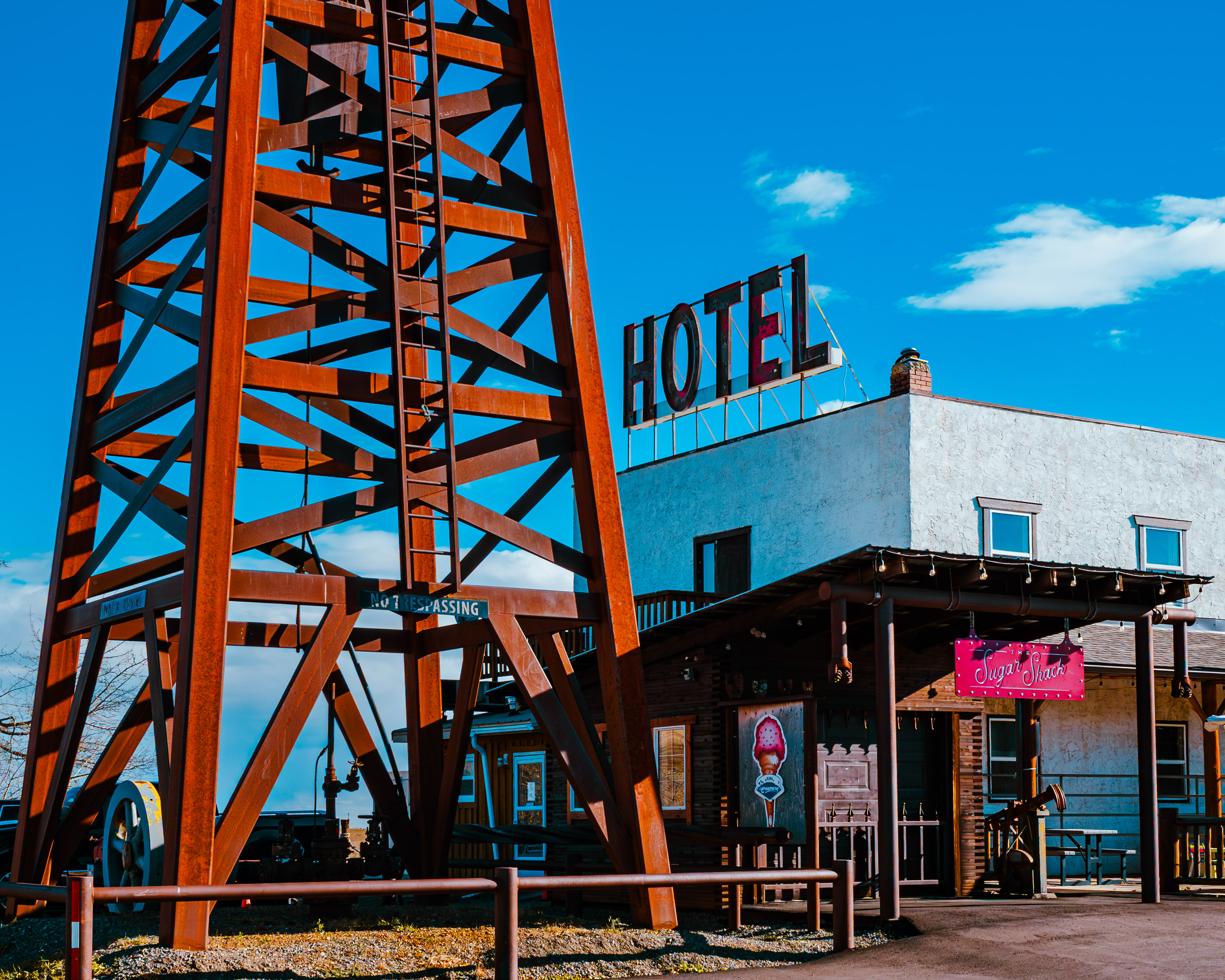
Since I knew I’d be back to pick up my negatives, I decided to add a short photo run through the village on my return visit. I already knew there would be a lot of interesting material along the main street (Morrison Street), like the iconic Twin Cities Hotel. When I’m faced with that situation on a photo run, I try to get a few kilometres under my belt so I’m not starting and stopping too much.

Here’s my running route, courtesy of Garmin:

I did end up with a few worthwhile images, carrying the venerable (but now discontinued) Ricoh GR III. I learned a lesson, though. At this time of year, the sun sets quickly. If you see it, shoot it, because it might not be there a few minutes later!

Enjoy these images (copyright is mine):

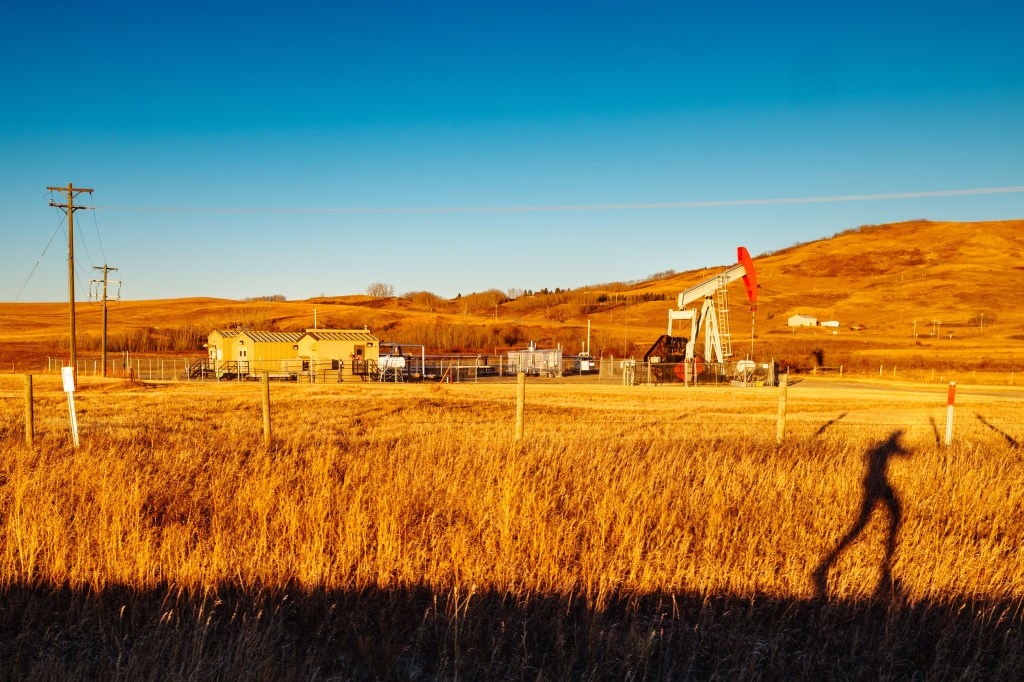
After an out-and-back run to the Highwood River at the south end of the village, including a decent hill, I headed out on Highway 541 towards K-Country. I was thinking about some of my past adventures on the relay. Running the first couple of kilometres was great, and being able to turn around was even better. Here’s a selfie, where I did my best imitation of the pump jack in the background.

Heading for Home

After I got home and started putting this piece together, I read about a bit of Alberta history that I was completely unaware of. A few kilometres north of Longview is a historic site marker, which I have driven by and wondered about, since there doesn’t seem to actually be anything there.

Well, it turns out to be a commemorative plaque and display for Little Chicago. Apparently, the boom that fueled growth in Longview led to another town springing up, just up the road. That’s where the Twin Cities Hotel got its name. The name Little Chicago was changed to Royalties, as it caused confusion with, you know, that other Chicago. At the peak in the late 1930s, the population of the two towns was about 3,200. As things turned sour economically, all traces of Little Chicago disappeared, except for the plaque that tells the story. I’ll definitely stop for a look—and a photo—on my next film drop.

Until next time, be well and BE FAST!

Luck of the (Nearly) Irish

When a window of opportunity opened for us in early October, Deborah proposed and then arranged a short trip to Ireland. We had been to the Emerald Isle once before, about 20 years ago, for a driving tour of the Ring of Kerry. This time, our plan was to stay mainly in Dublin and take a short side trip to Belfast. It was an enjoyable week. 

The Sights of Dublin

With hotel spaces in high demand, we grabbed a same-day reservation at the Leinster Hotel. It’s a comfortable, new boutique hotel in Merrion Square, and a great location for exploring the city on foot. That’s what we did, as Dublin is a very walkable city. 

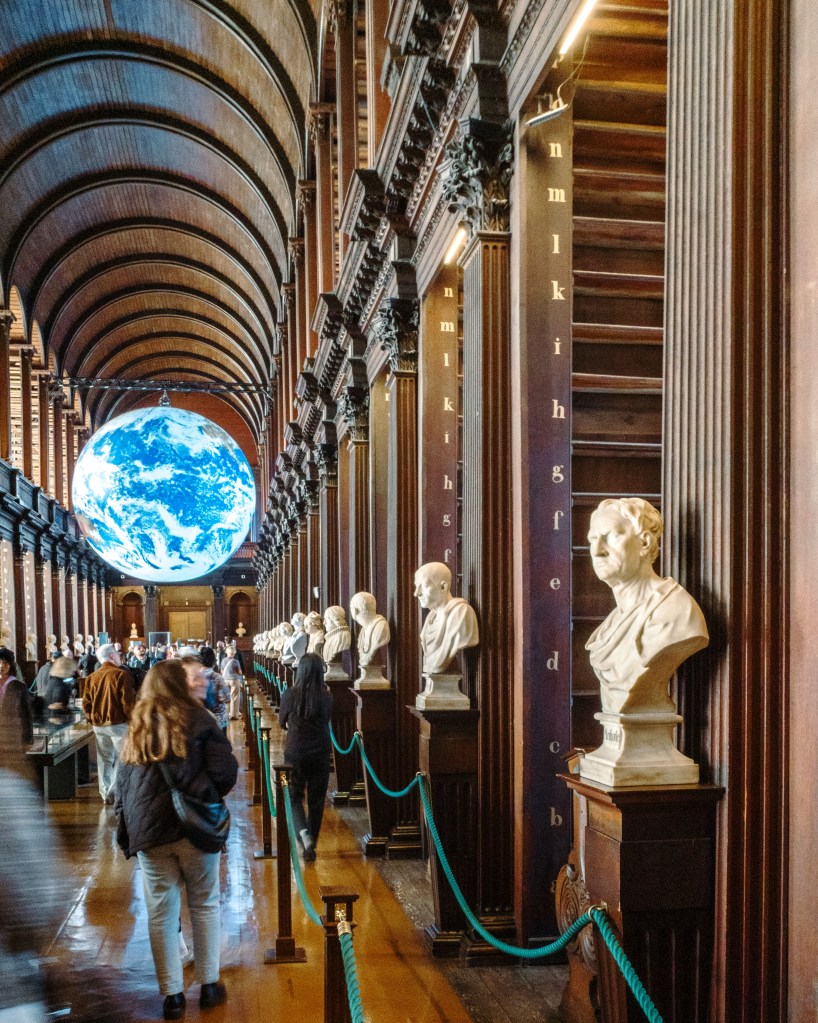
A highlight of our previous trip was a visit to Trinity College to see the Book of Kells and the library at the Long Room. We made sure to visit again, as the college was only a kilometre from the hotel. The library is being extensively renovated, but even with most of the books removed, it’s an impressive building. Watching a video about the project, I wondered how often these ancient books are actually touched by human hands. 

This being Ireland, there was some rain to contend with. In fact, we got caught twice on the same day, and each time we were treated to Irish hospitality. Ducking into a shop for shelter, we found ourselves in a most unusual place. It was Sweny’s Pharmacy, a shop dedicated to local legend James Joyce, and his masterpiece, Ulysses. The proprietor (PJ Murphy) treated us to a Gaelic song, offered us a glass of wine, and invited us to that evening’s reading from the novel—in French! He added that he has personally read the book in at least eight languages. We noticed that the rain was letting up, so we made our excuses and moved on. I was reminded that I have yet to finish my longstanding project of getting through Ulysses for the first time, and only in English. I made a note to give it another try once I was back home.  

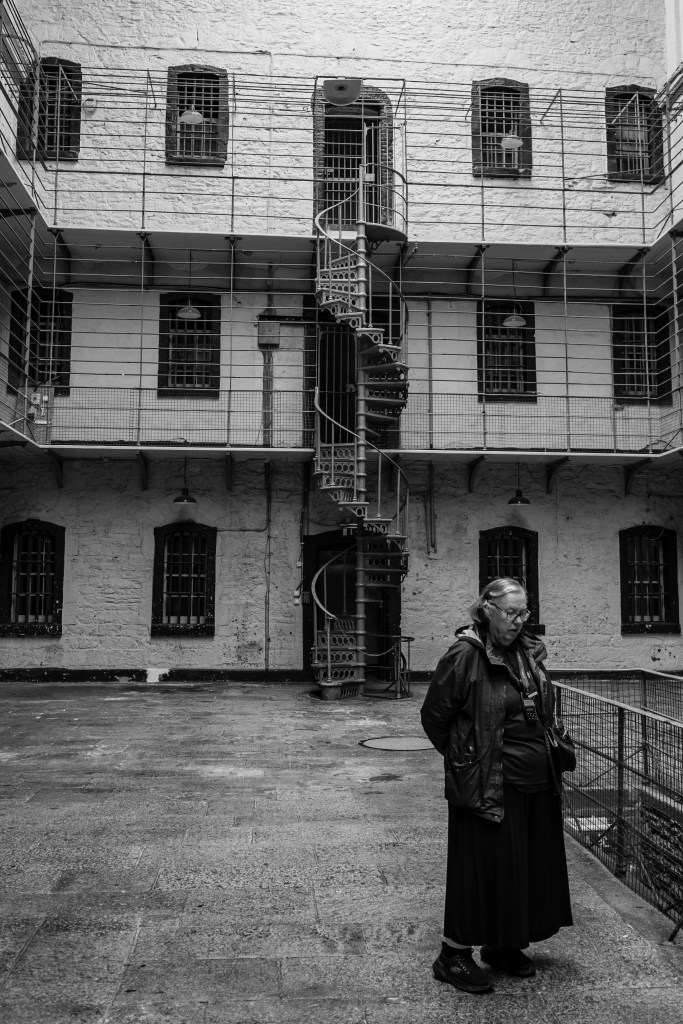
It’s likely not the first thing visitors to Dublin would consider, but we made a trek by city bus to an important place in the history of Ireland, the Kilmainham Gaol Museum. The jail, which opened in 1796, has held thousands of common criminals, as well as political prisoners involved in the struggle for Ireland’s independence. Fourteen leaders of the 1916 Easter Rising were executed by firing squad in the prison yard.

Although the day’s tours were all booked, we took our chances and scored a pair of free tickets—luck of the Irish, perhaps.

The tour was informative, and our guide was passionate about both the jail and Irish history more generally. 

While we waited for our tour, we had a pleasant lunch and chat at the nearby Old Royal Oak pub.

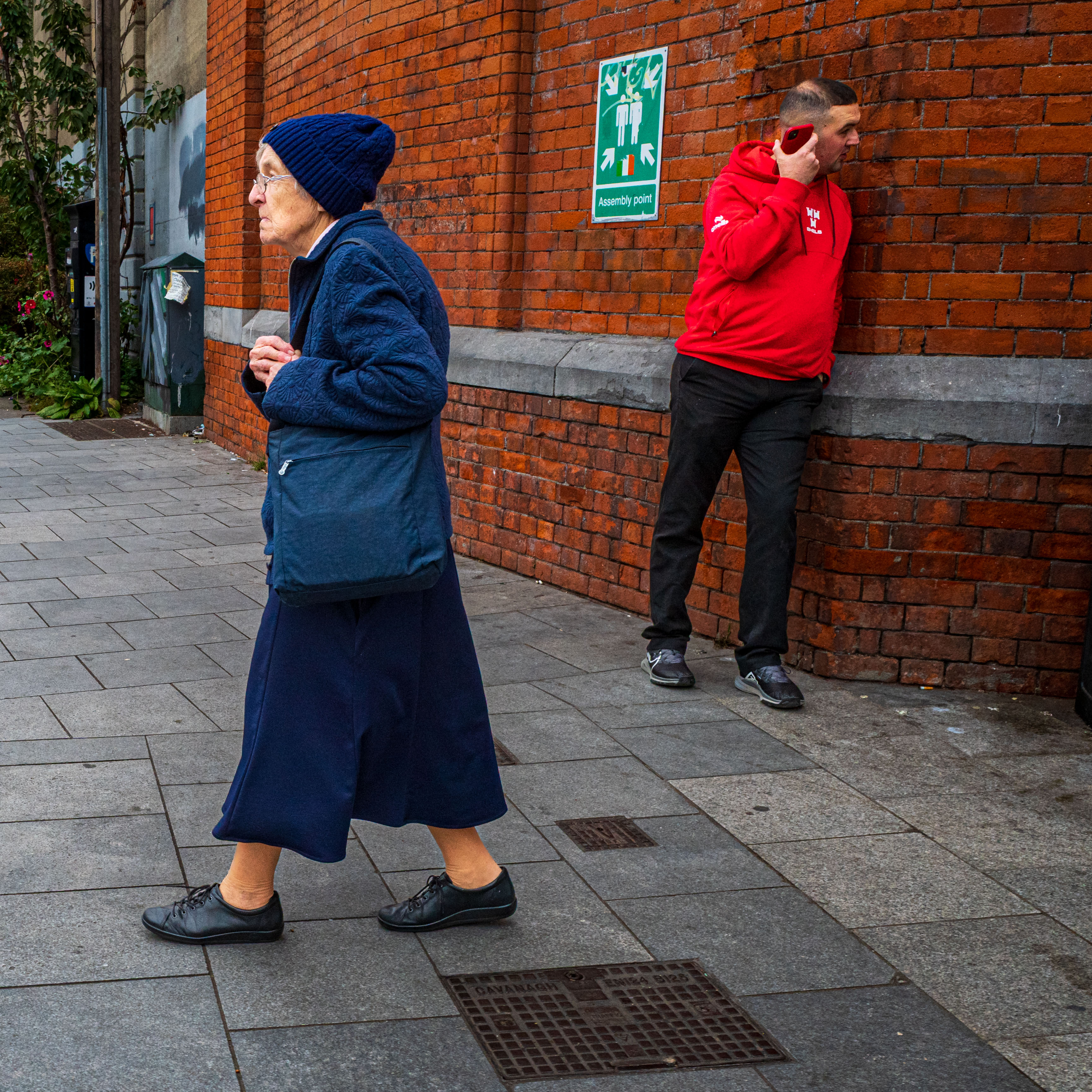
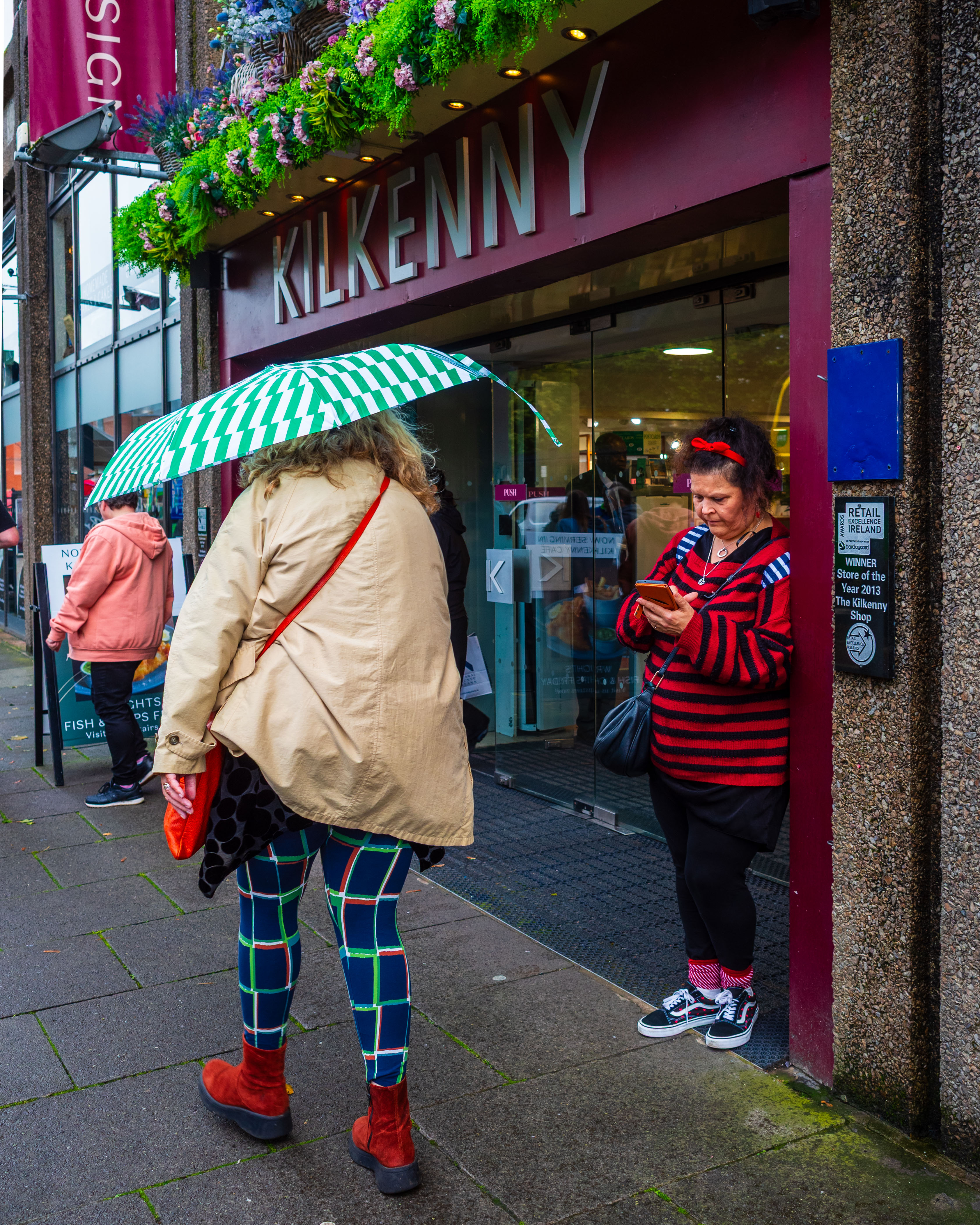
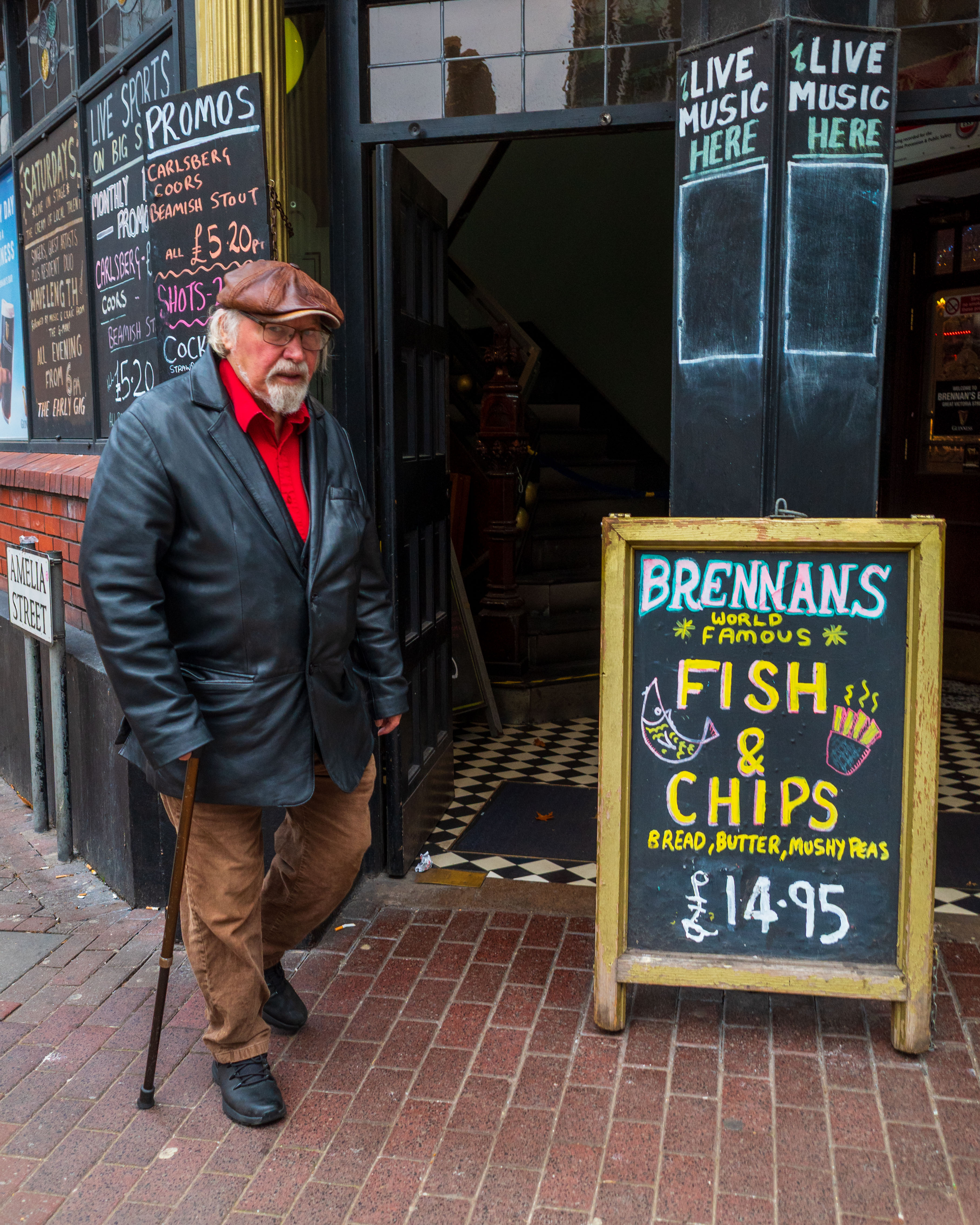
Dublin is an amazing place for street photography, and I did my best to capture some scenes. My muse may have also been on vacation, as I seemed to struggle to find worthy photos on this trip. Well, we do what we can! Copyright for all photos is mine.

We decided not to do the popular Guinness Storehouse brewery tour, because we took the tour on our first visit to Dublin. Besides, we had just finished watching the excellent Netflix series, House of Guinness. I settled for drinking my share of the black stuff while in town—just enough to confirm that it really does taste better in its home city than anywhere else.

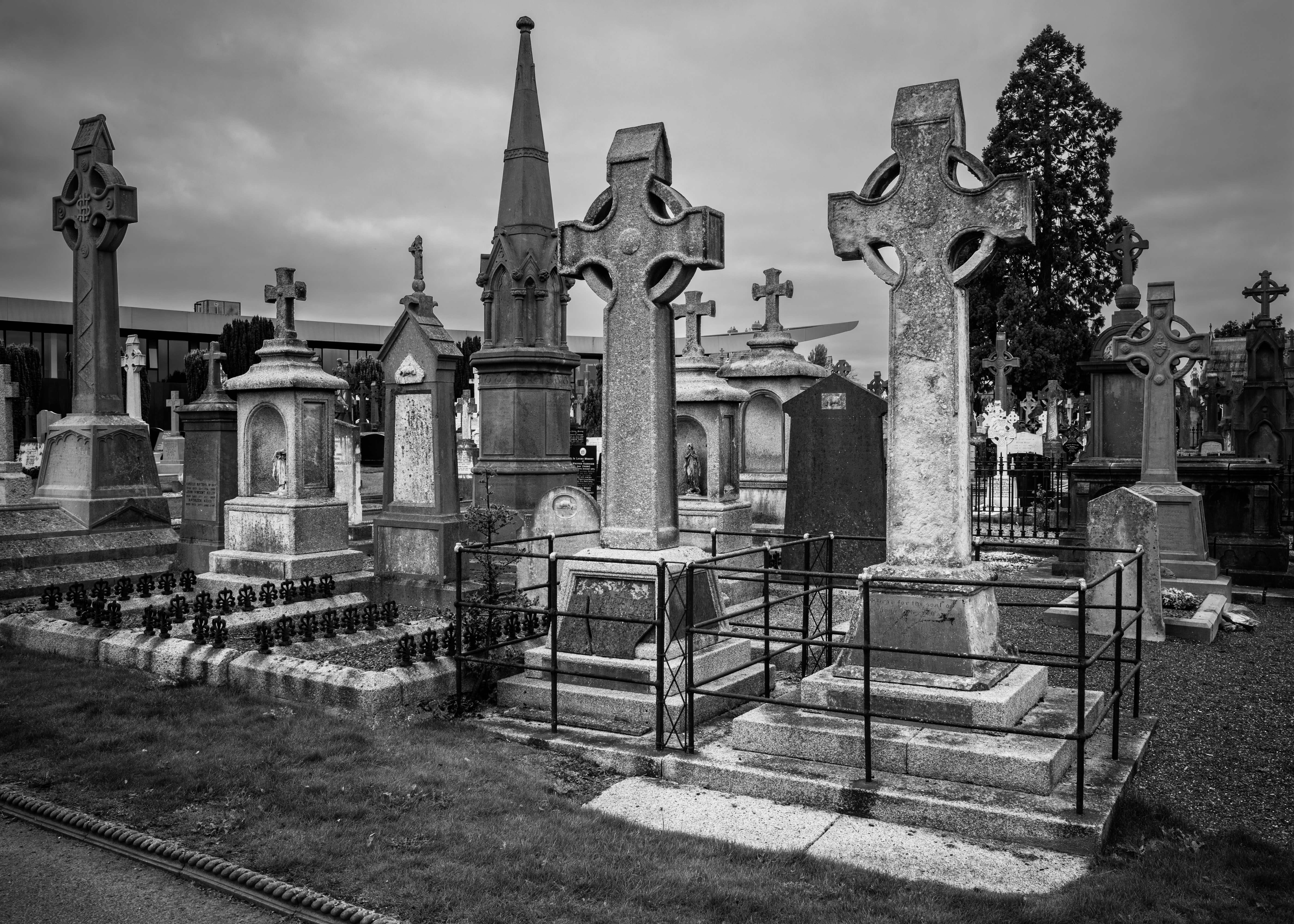
Other highlights of our time in Dublin were a visit to the Glasnevin Cemetery, some window shopping in Grafton Street, a visit to the impressive National Gallery, and a stroll through bucolic St. Stephen’s Green. On our last day, I fit in a short photo run through pretty Santry Park.

Overall, it was a fine stay in Ireland’s capital city. Sláinte!

North to Belfast

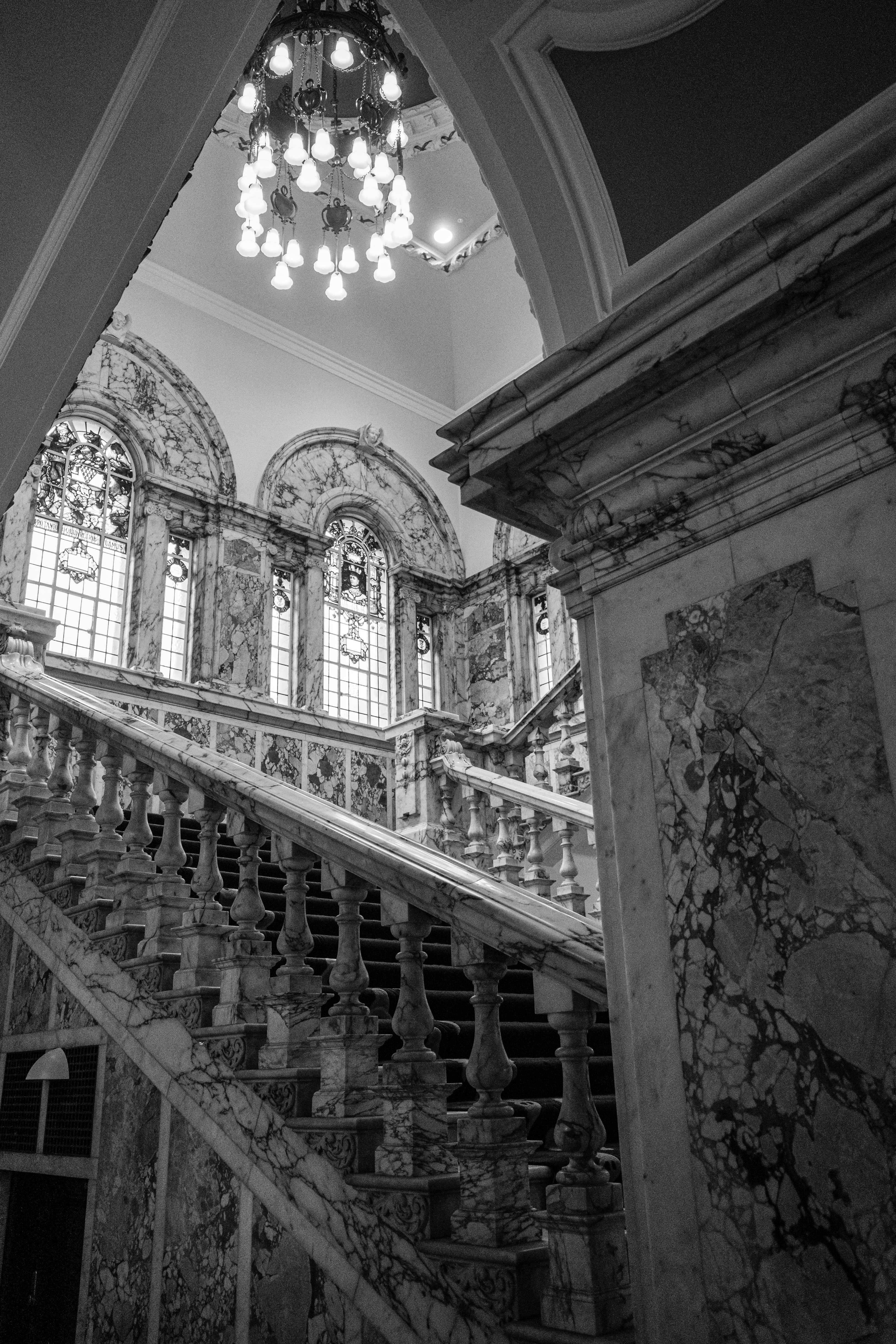
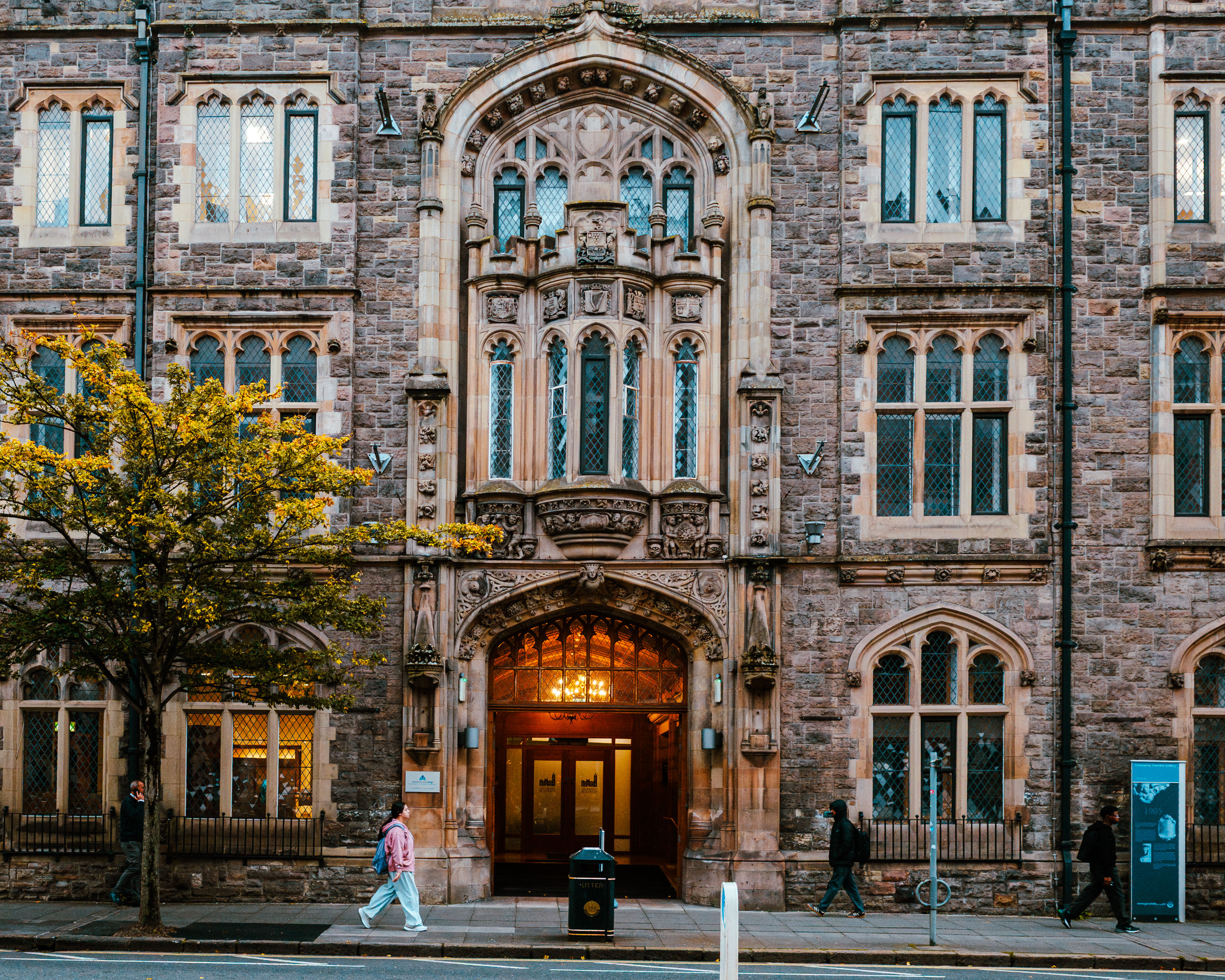
We took advantage of convenient train connections to make a short dash up to Belfast, the capital city of Northern Ireland. The city centre has a very different character to Dublin, not surprising given its historical connection to the United Kingdom. Like Dublin, getting around on foot is the best way to see the city. We stayed two blocks from City Hall, an imposing Victorian building.

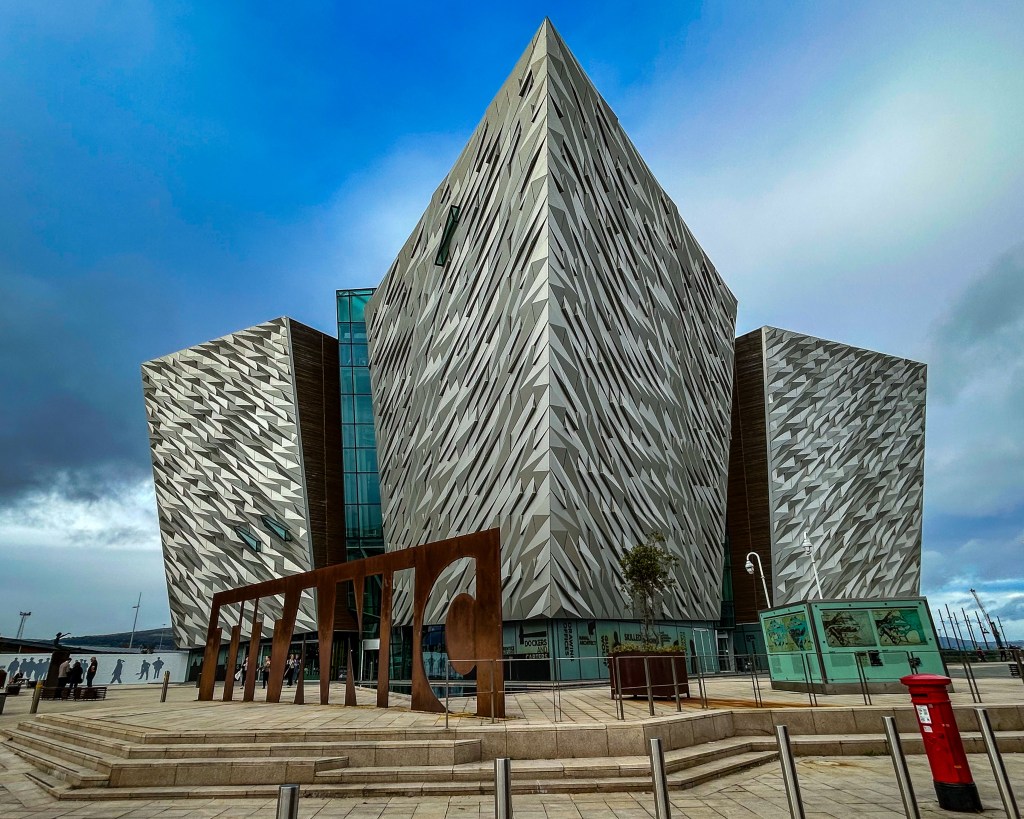
We only began to appreciate the historical significance of Belfast when we took in The Titanic Experience. Part museum and part theme park, we thoroughly enjoyed the two hours it took to work our way through the exhibits. We learned about the socioeconomic impact of shipbuilding on the city: a linen industry which accounted for 75,000 jobs in the early 20th century; and shipyards that employed 15,000 men in all aspects of design and construction of the largest ocean liners that had ever been constructed.

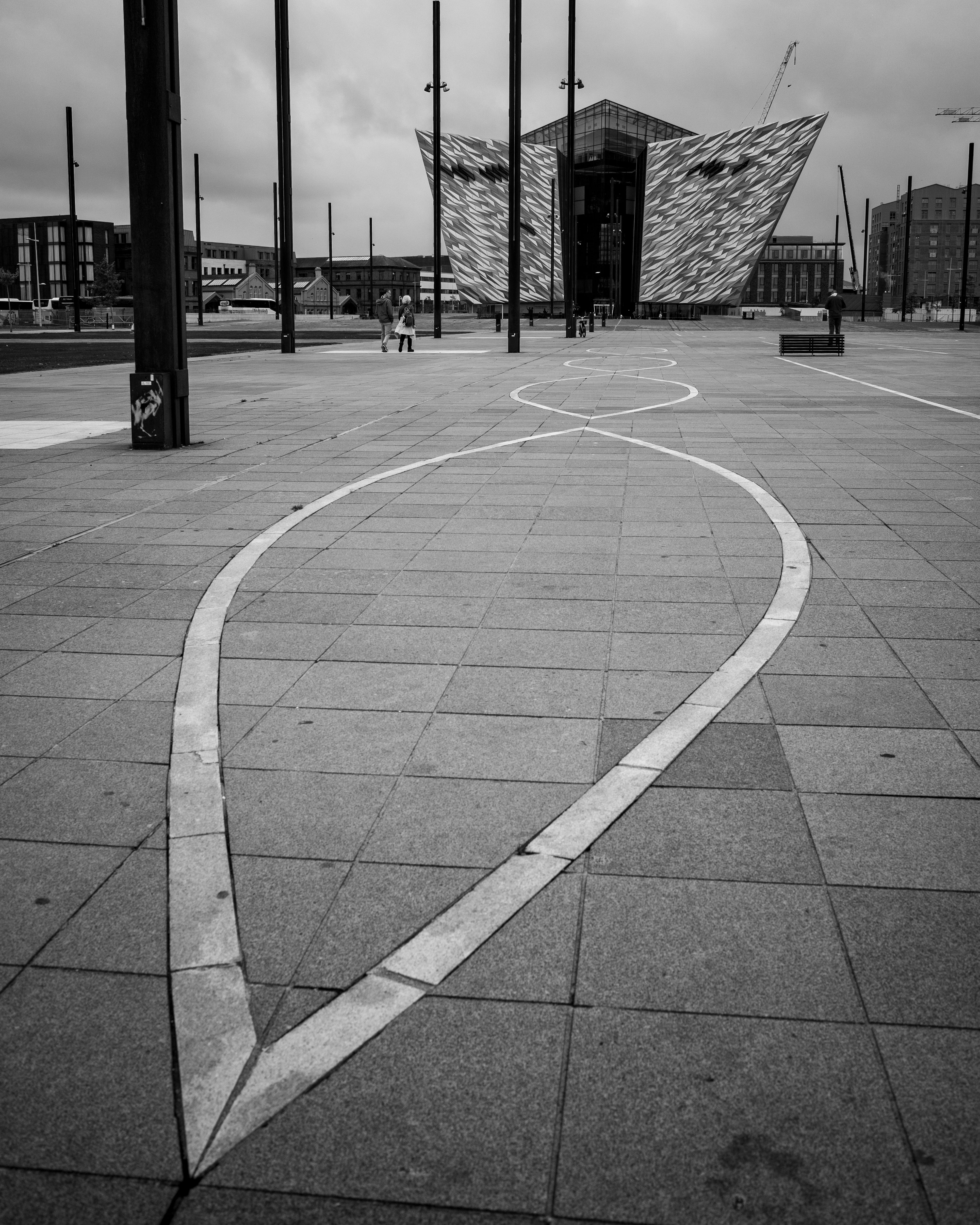
Of course, Titanic is famous for another, more tragic reason—its collision with an iceberg and sinking on its maiden voyage. The exhibits do justice to the whole story, including the discovery of the wreck in the 1980s. For me, walking the length of the ship’s outline, just outside the building, really brought home the sense of immediacy with another part of Belfast’s history.

The next day, we signed up for a coach tour of the coastal region. Over seven hours, our tour guide and driver, Steve, did a wonderful job of explaining the complicated history of Northern Ireland, while pointing out the many sights of the region.

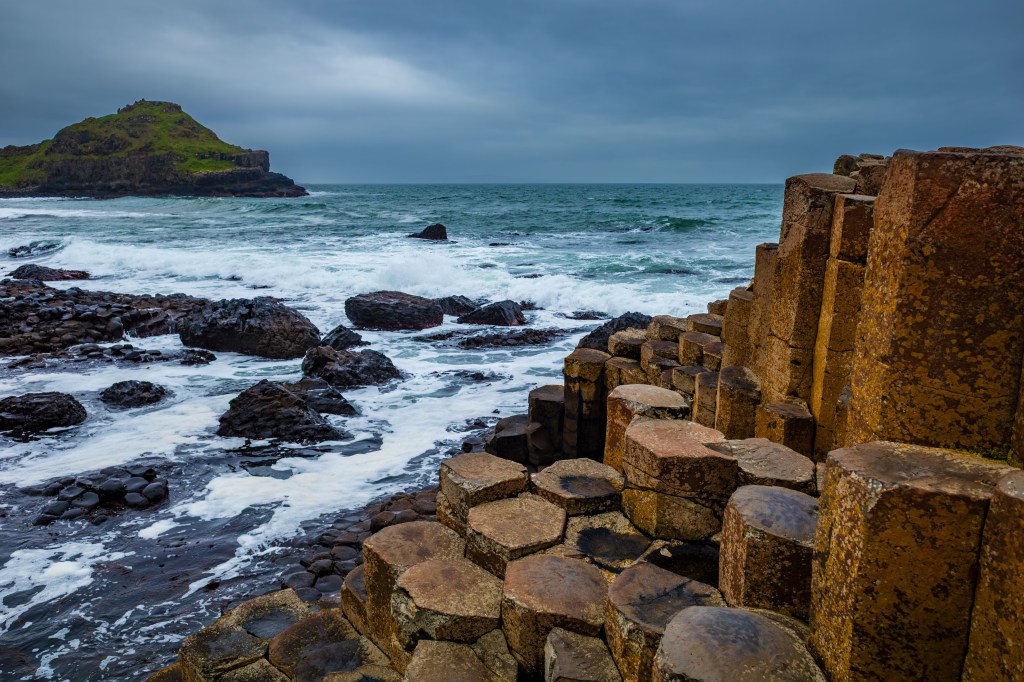
The main attraction for us was the Giant’s Causeway, a unique geological formation and UNESCO site on Ireland’s northern coastline. The Causeway consists of thousands of hexagonal pillars of basalt, which extend out into the ocean. A folk legend says that Fionn McCool, an Irish giant, built the causeway by throwing boulders into the sea. McCool wanted to make a bridge that would reach the Scottish Isle of Staffa, where he could challenge a rival giant, Benandonner, who had made a claim for Fionn’s island (Ireland). You can read the full story and find out what happened to Fionn here.

The scientific explanation is that the causeway resulted from a volcanic explosion about 60 million years ago. As the lava cooled quickly, it cracked into the distinctive pattern of interconnected basalt columns. These two explanations can exist side-by-side, because this is Ireland, after all. However it came to be, the formation is unlike anything else we have seen.

We had no idea that the popular HBO series Game of Thrones had been such a boon to the regional economy. In fact, we were the only people on our coach who had never watched the series. Nevertheless, we enjoyed the pop culture lesson as we checked out many of the shooting locales.

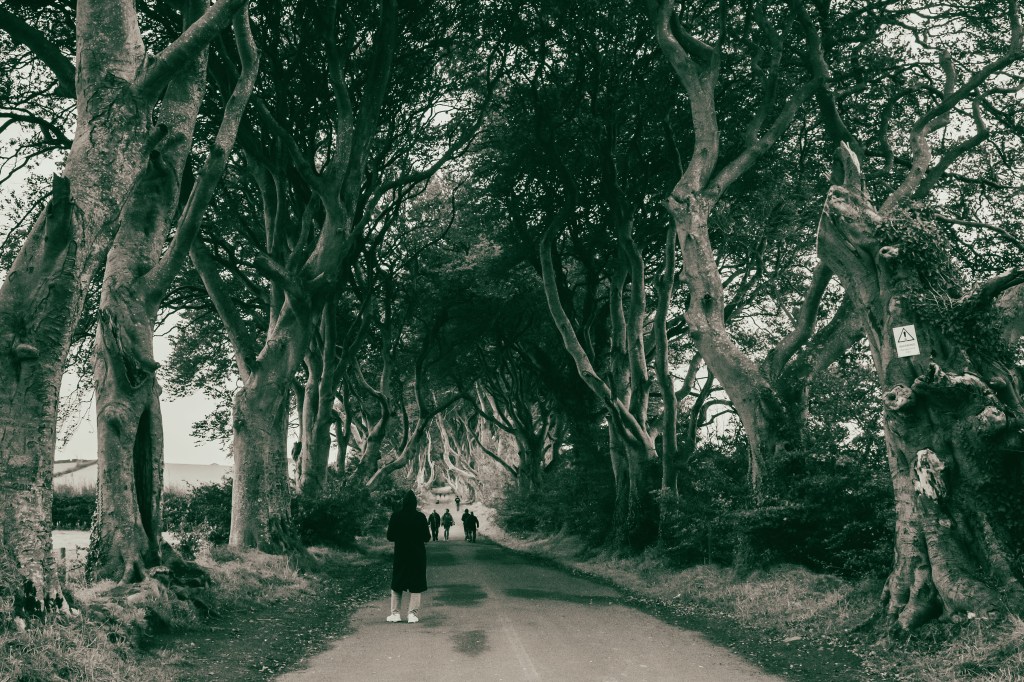
The most recognizable locale is probably the Dark Hedges, a long avenue lined with ancient beech trees, which create a distinctly medieval atmosphere. We enjoyed strolling the length of the avenue as our last stop before returning to Belfast city centre.

Let me share a few pictures from our short but impactful time in Northern Ireland. We’re very glad we decided to visit.

Final Thoughts

Ireland (the whole island) is an easy place to visit, and even better, to enjoy. We’ve found the locals to be welcoming, patient and engaging. We had fond memories of our first visit, so we were keen to return. The main cities, Dublin and Belfast, have very different histories, and that is reflected in the way each city feels as you explore on foot. In a few words, Dublin feels more intimate, warm and friendly. Belfast is more serious and stately. And perhaps due to a couple of peaceful decades, there is also a strong positive vibe in the city.

Until next time, be well and BE FAST!

An Ansel Adams Inspired Photo Run

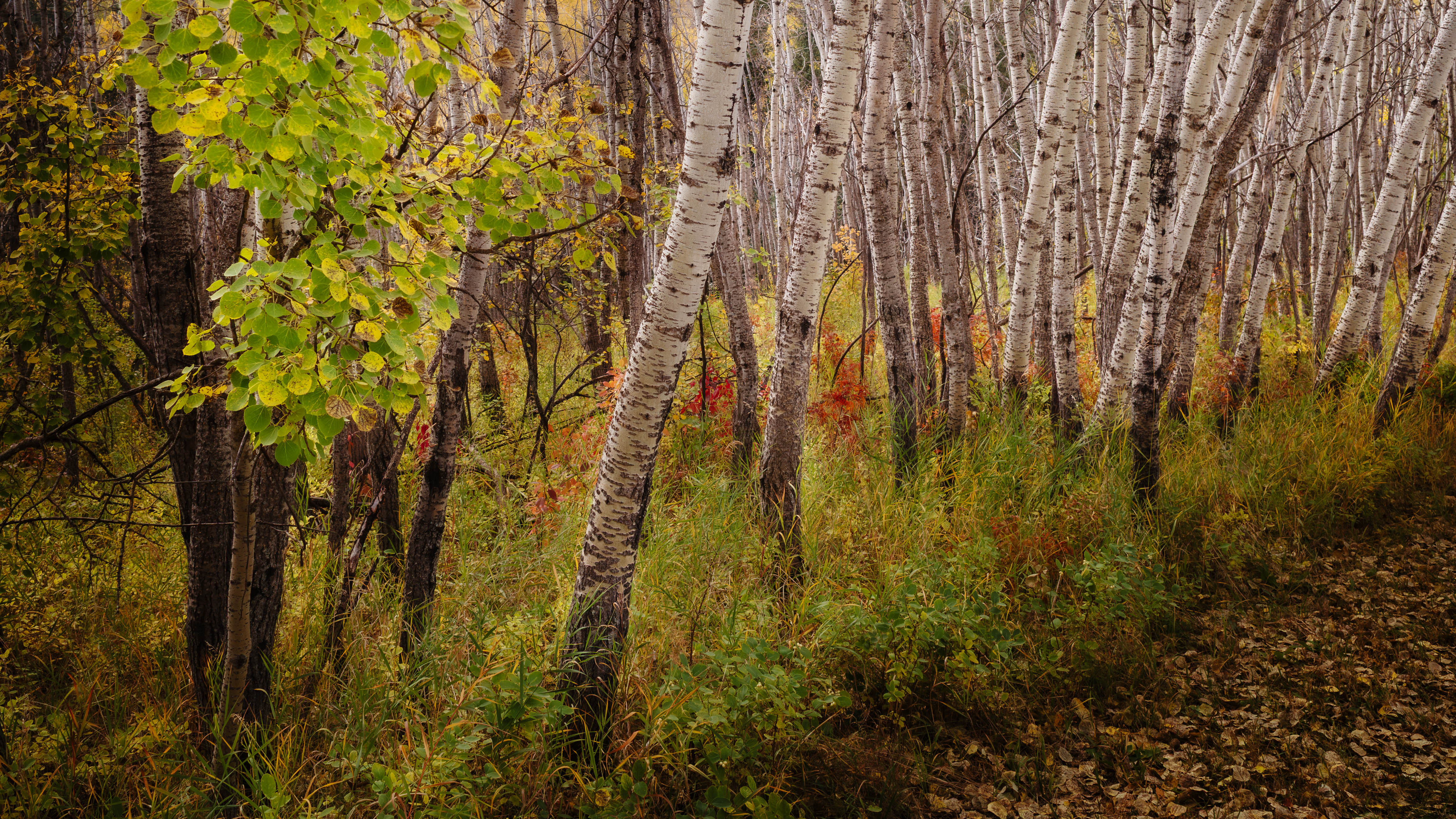
Knowing that Weaselhead Park would be in its full autumn splendour this week, I decided to do a short photo run starting in North Glenmore Park.

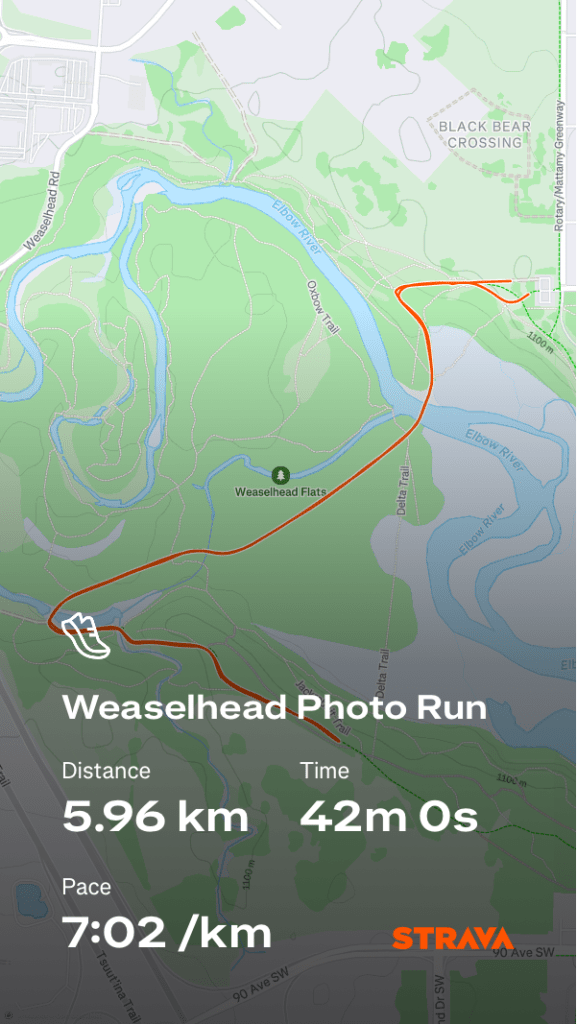
Here’s the Strava record of my out-and-back route through the Weaselhead Flats. It’s a beautiful place to run at any time, but especially at this time of year.

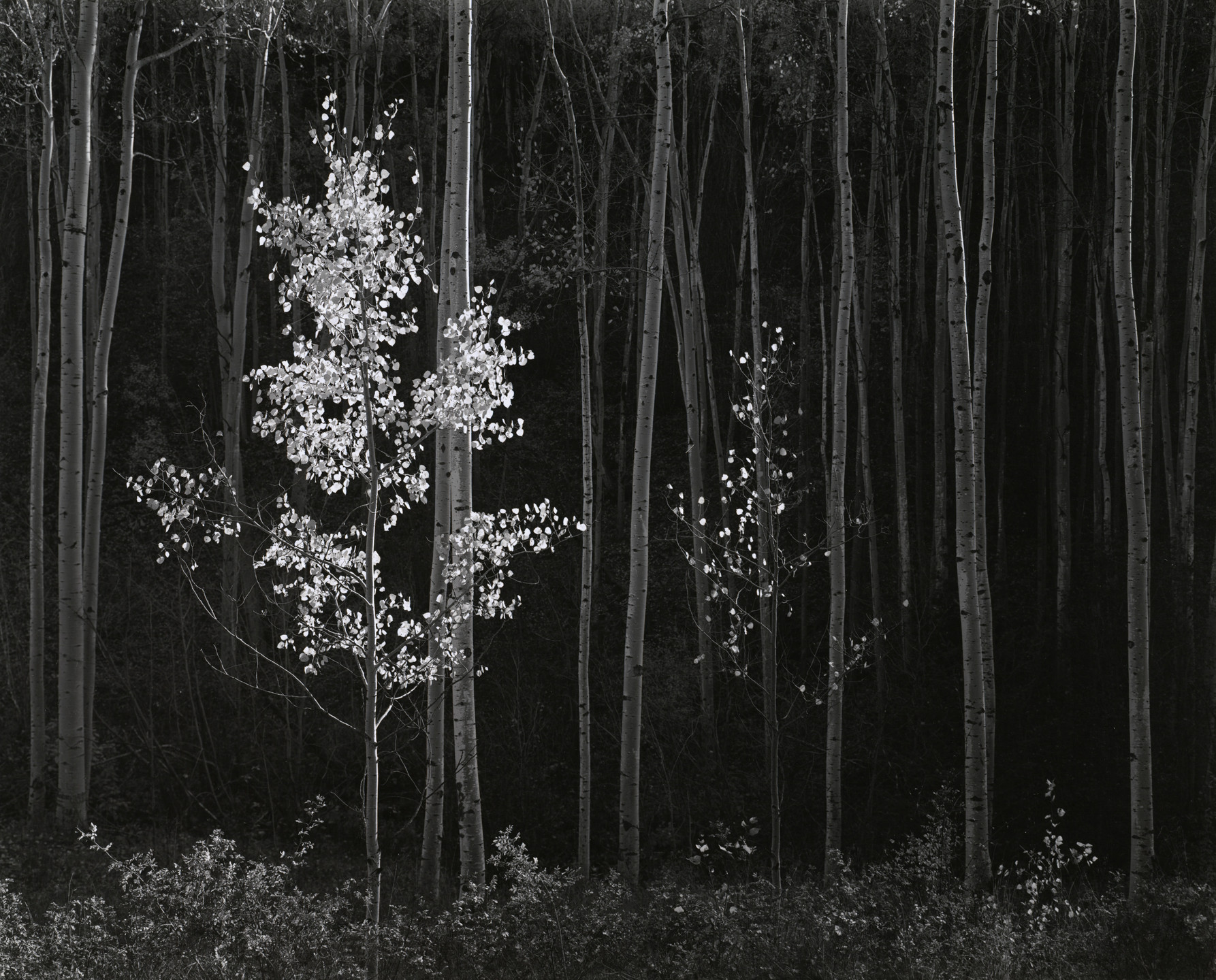
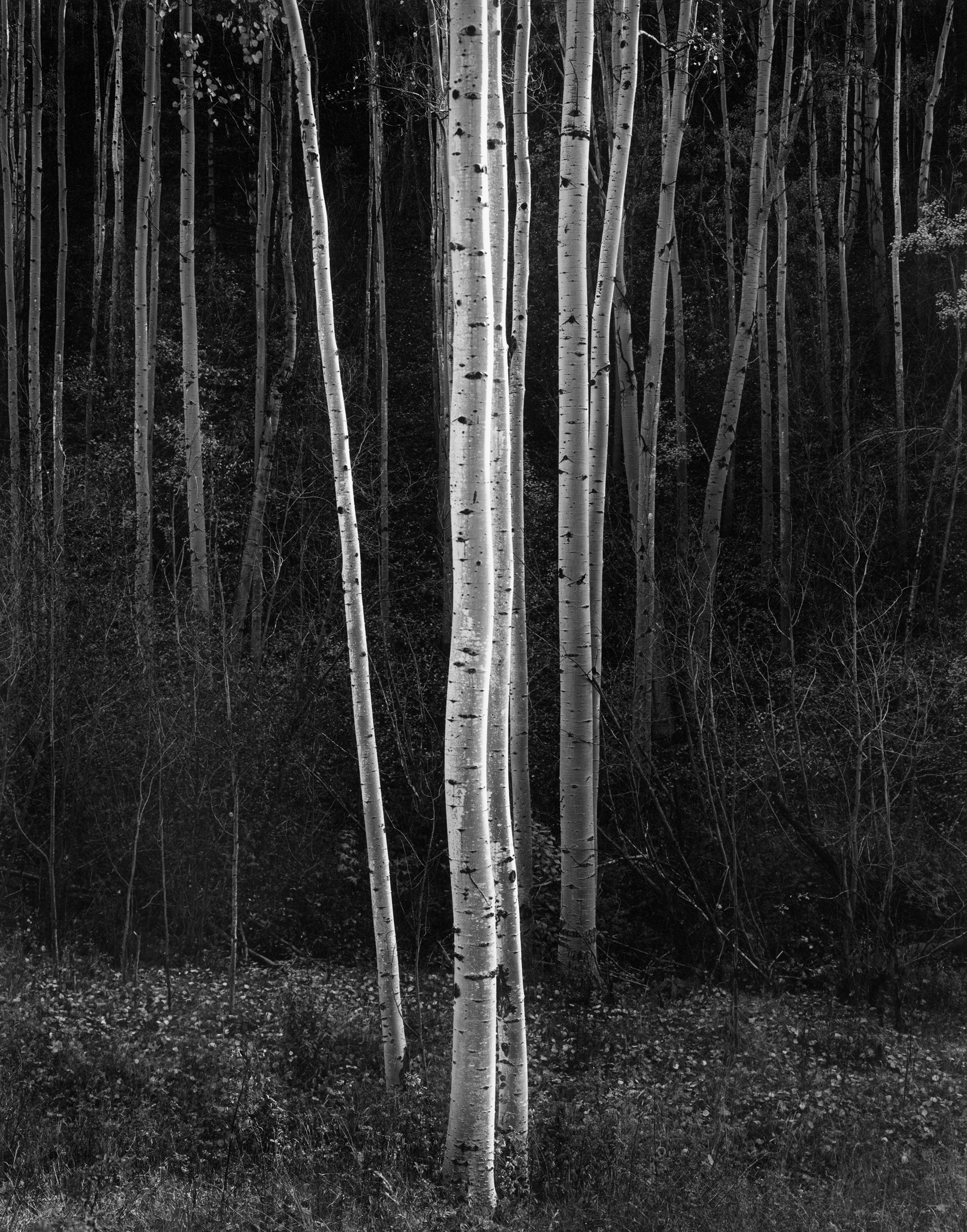
I recently had an idea for a new series, highlighting my favourite photographers. As I trudged up the hill at the far corner of Weaselhead, where the path heads into a pleasant birch forest, I realized I had my first subject: Ansel Adams. Adams is a good choice, given that he was the first photographer who came to my attention after I purchased a film camera as a teenager. I’ve admired his photographs for years. And when I saw the white trunks of the birch trees, two specific images popped into my head.

But first, let me introduce Adams.

Ansel Adams: Photography Legend

Ansel Adams (1902-1984) was an American photographer and environmentalist. As a young man, he showed talent as a pianist. However, he decided to pursue his early interest in photography, even though at the time that was hardly a sure career path.

Adams is best known for dramatic black and white landscape images, many of which were shot on large glass plate negatives. He also developed innovative and disciplined approaches to capturing and printing images. He formalized the use of the Zone System, which allows the photographer to realize what they saw in the scene, based on analysis of the tonal ranges in the image. 

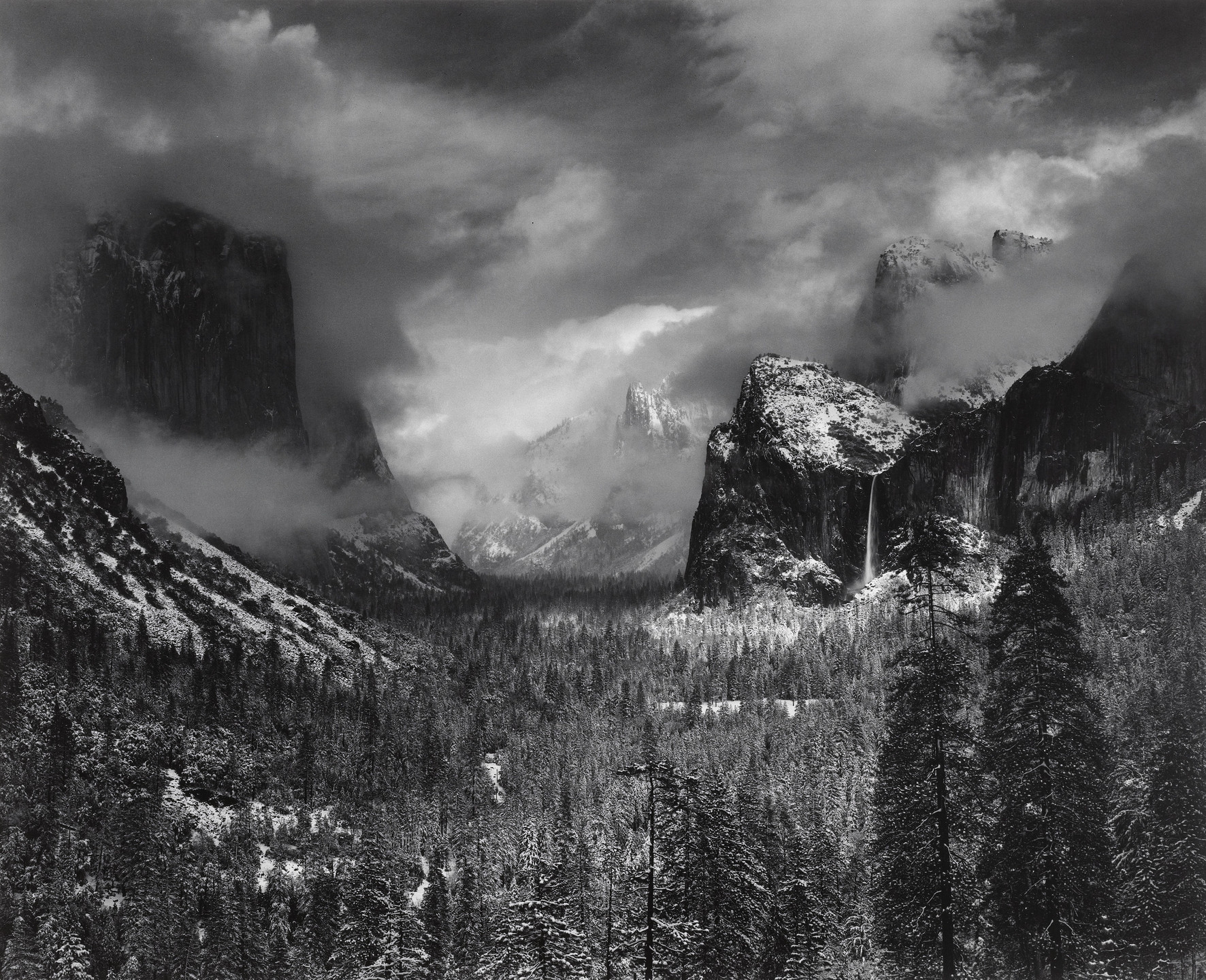
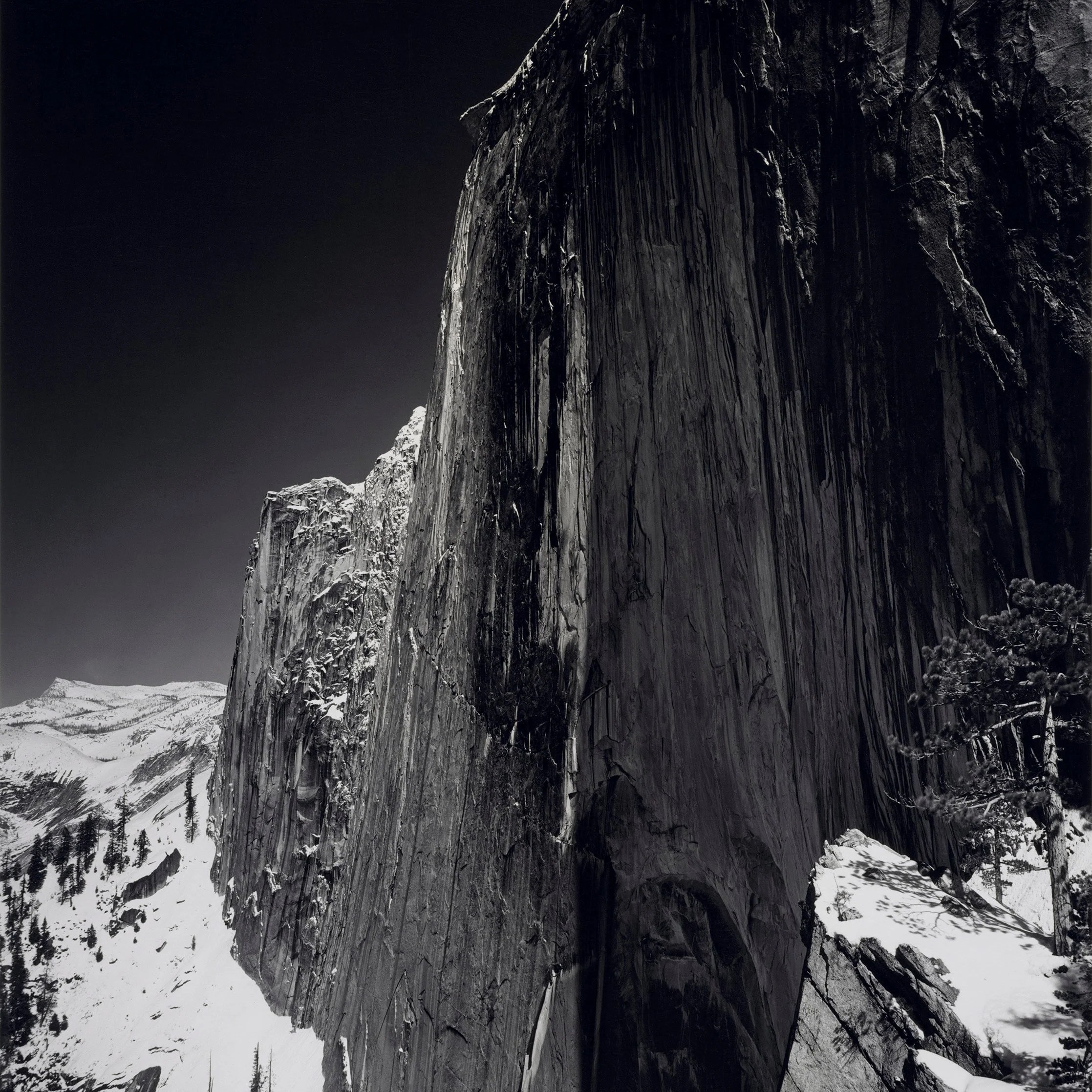
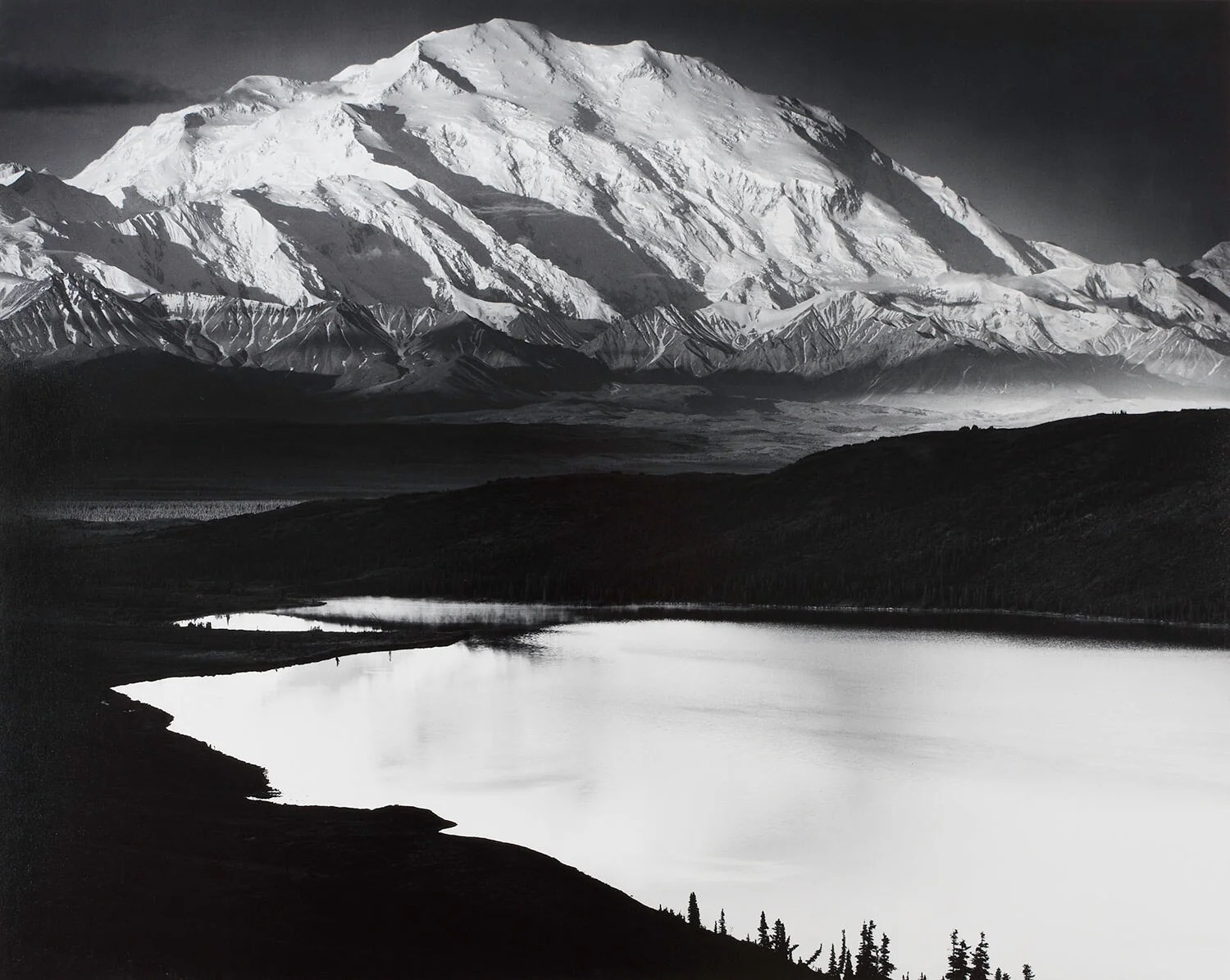
Given the sheer number of Adams’ iconic images, it would be difficult to settle on my personal favourite. I’ve always admired his Clearing Winter Storm (1944) and Monolith, The Face of Half Dome (1927). His photograph of Denali—Mount McKinley and Wonder Lake (1944)—is brilliant. These images matter because they illustrate Adams’ deep commitment to preserving some of the great natural places in the U.S.

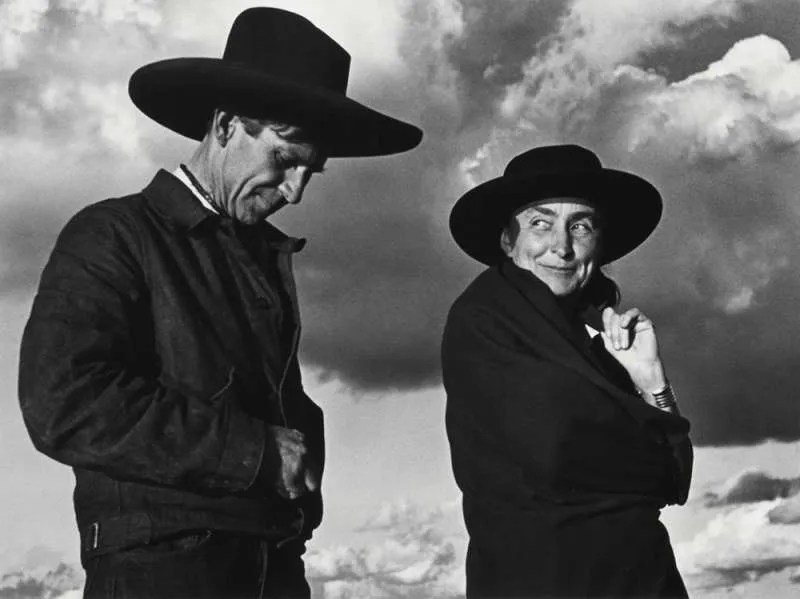
Even though they aren’t what he is best remembered for, Adams’ portraits are remarkable, too. His candid shot of Georgia O’Keeffe and Orville Cox (1937)—shot with a 35mm camera—may be my favourite of all his images. So, regardless of which image we look at, it’s easy to see why Adams is regarded as one of the greatest American photographers. 

Georgia O’Keeffe and Orville Cox (1937)

Aspens, Northern New Mexico (1958)

There’s a book by Adams that I’ve turned to dozens of times for inspiration. It’s called Examples: The Making of 40 Photographs. Adams takes the reader on journeys that culminate in the images in his book. He sets the scene, explains the equipment he used, and the process of creating the final print. It’s far more than a how-to manual. What I appreciate most about the book is Adams’ honesty. Many times, he admits to making errors in his camera settings or finds he’s created challenges for himself in achieving the result he wants. These are refreshing admissions by a person we may think of as being infallible. 

Two images in Examples are relevant to this piece. Aspens, Northern New Mexico (1958) is a pair of complementary photographs, one vertical and the other horizontal. Adams shot them with an 8″x10” camera using a yellow filter, which would have lightened its own colour (yellow) and darkened its opposite colour (blue). He typically printed the images in very large format, up to 30″x40″. Adams describes these as “quite satisfying statements”, “cool and aloof and rather stately”. I’ll say! He also writes that they are good expressions of his philosophical approach to photography, in that he was able to express what he saw and felt in the scene. 

And so, today in Weaselhead

At the risk of embarrassing myself—-we can agree that Adams is a tough act to follow—-let me turn to my own attempt to capture what I saw and felt on today’s Weaselhead photo run. It was a similar day to what Adams described for his Aspens: a crisp autumn day. The birch forest was in full fall colours. Even better, the sun was trying to make an appearance after a short rain shower. There was no wind. In other words, the prospects were good. As usual, I had my Ricoh GR III in hand—no 8″x10” cameras here. 

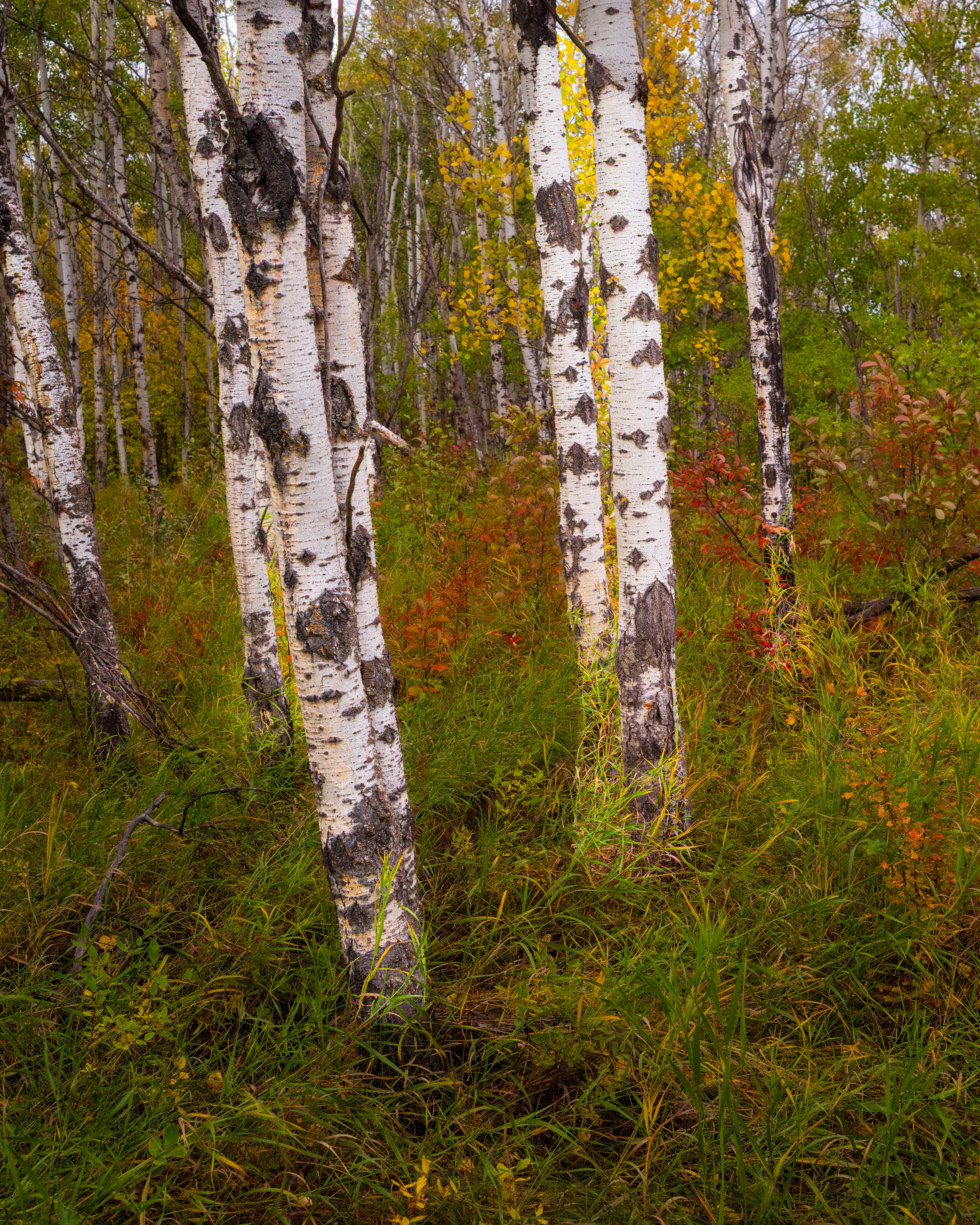
I could see what Adams had to deal with, given all the colours of autumn: reds, yellows, purples, greens. A colour photograph would certainly have impact, but my worry was that it would end up being an incoherent riot of colour. Because digital photography gives us some huge advantages over Ansel and his glass negatives, I’m able to let my readers decide for themselves.

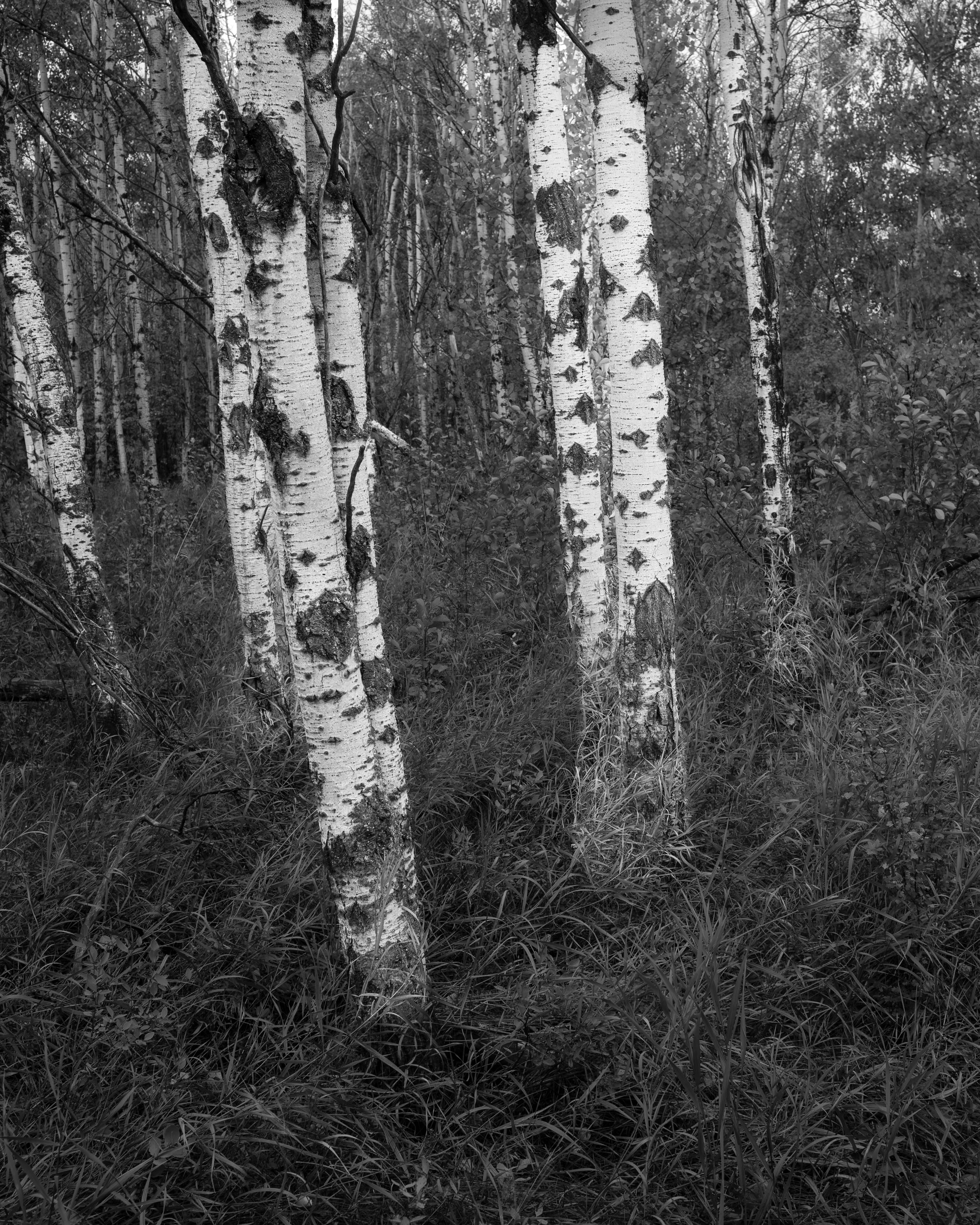
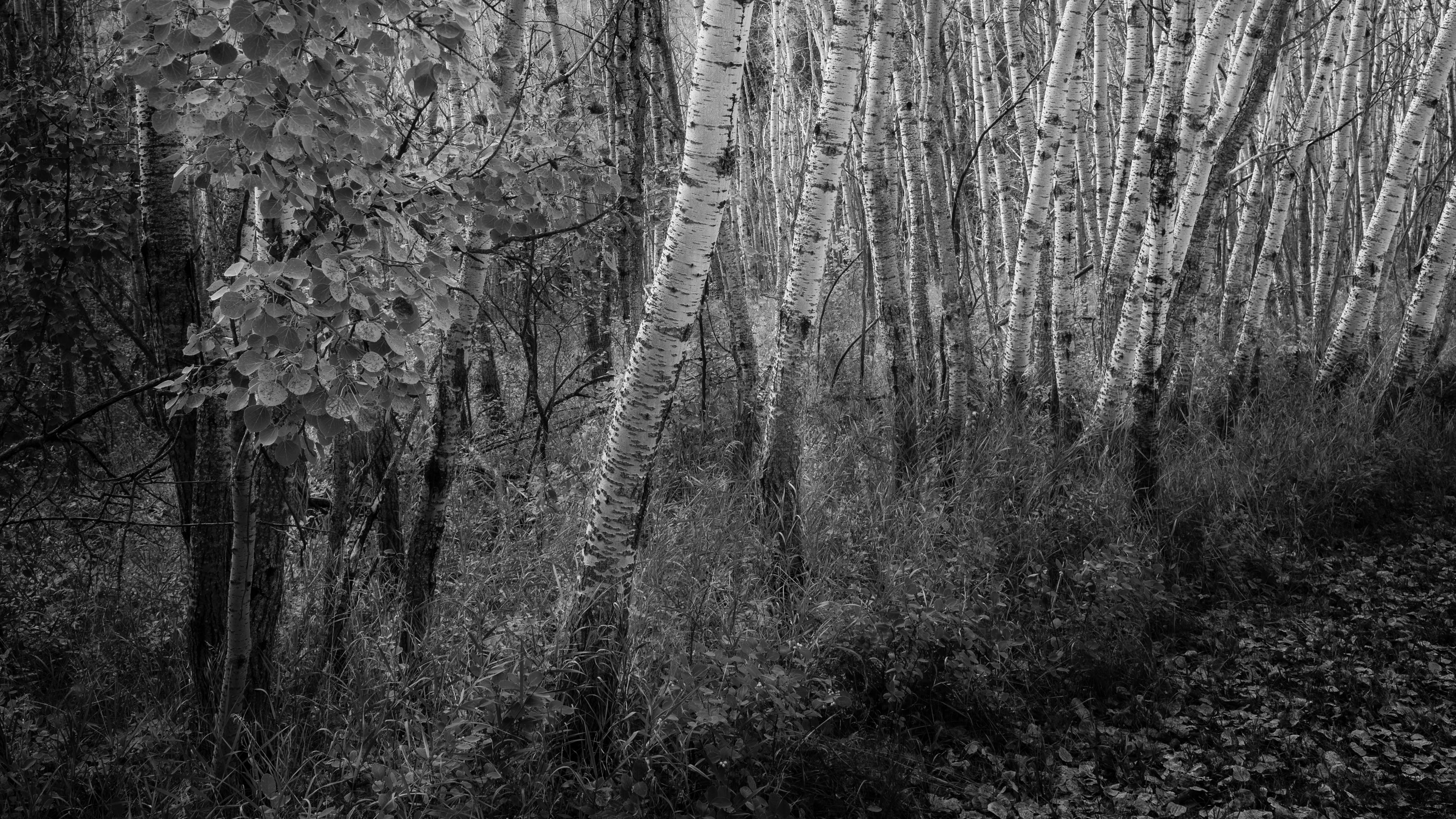
I’ll start with a vertical shot. I did some masking in Lightroom to bring out the trees at the front of the image and give some separation against the busy background. Using Lightroom’s simulated filters, I boosted the yellow channel to brighten the leaves. As is often the case, I prefer the black and white version.

Weaselhead Birch Forest – Vertical (Sept 30, 2025) (Copyright: Steven Kelly)

Moving on, I looked for a scene that might work in horizontal format. My idea was to have some prominent leaves in the picture, as on the left side of Adams’ image. I found a grove with a dense grouping of trees and a splash of green on the left of the frame. I don’t think this was the perfect example, but you know, I was in the middle of my run. I snapped my shot and carried on. Later, I darkened the left edge and the foreground to accentuate the trees that were in sunlight. Again, I prefer the monochrome version, but I’d like to hear from any readers who have an opinion.

Weaselhead Birch Forest – Horizontal (Sept 30, 2025) (Copyright: Steven Kelly)

Wrapping Up

My photo run was short but productive. I headed to this spot because I hadn’t been there for a while, and I wanted to see the fall colours. Once I got to the birch forest on the south side of the reservoir, Ansel Adams’ iconic images popped into my head. It encouraged me to slow my pace and look around. And what I found was well worth the effort. I may even try to get back there with a film camera and tripod—and without my running shoes!

Until next time, be well and BE FAST!

Off Track: A Eulogy of Sorts for GAP 1.0

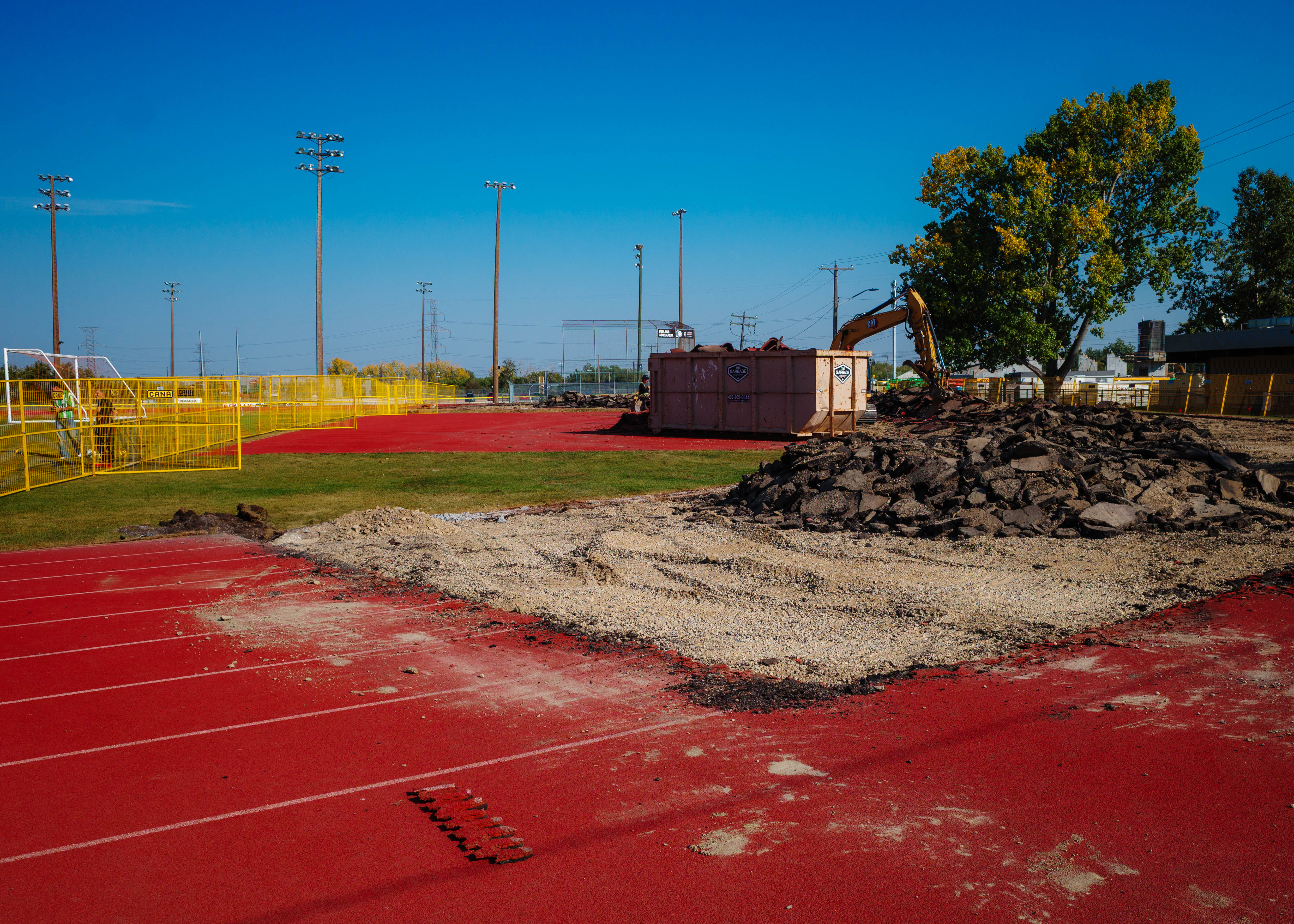
So that’s it. The end of an era. The south end of the original Glenmore Athletic Park (GAP) track—I call it GAP 1.0—is gone. Torn up. 

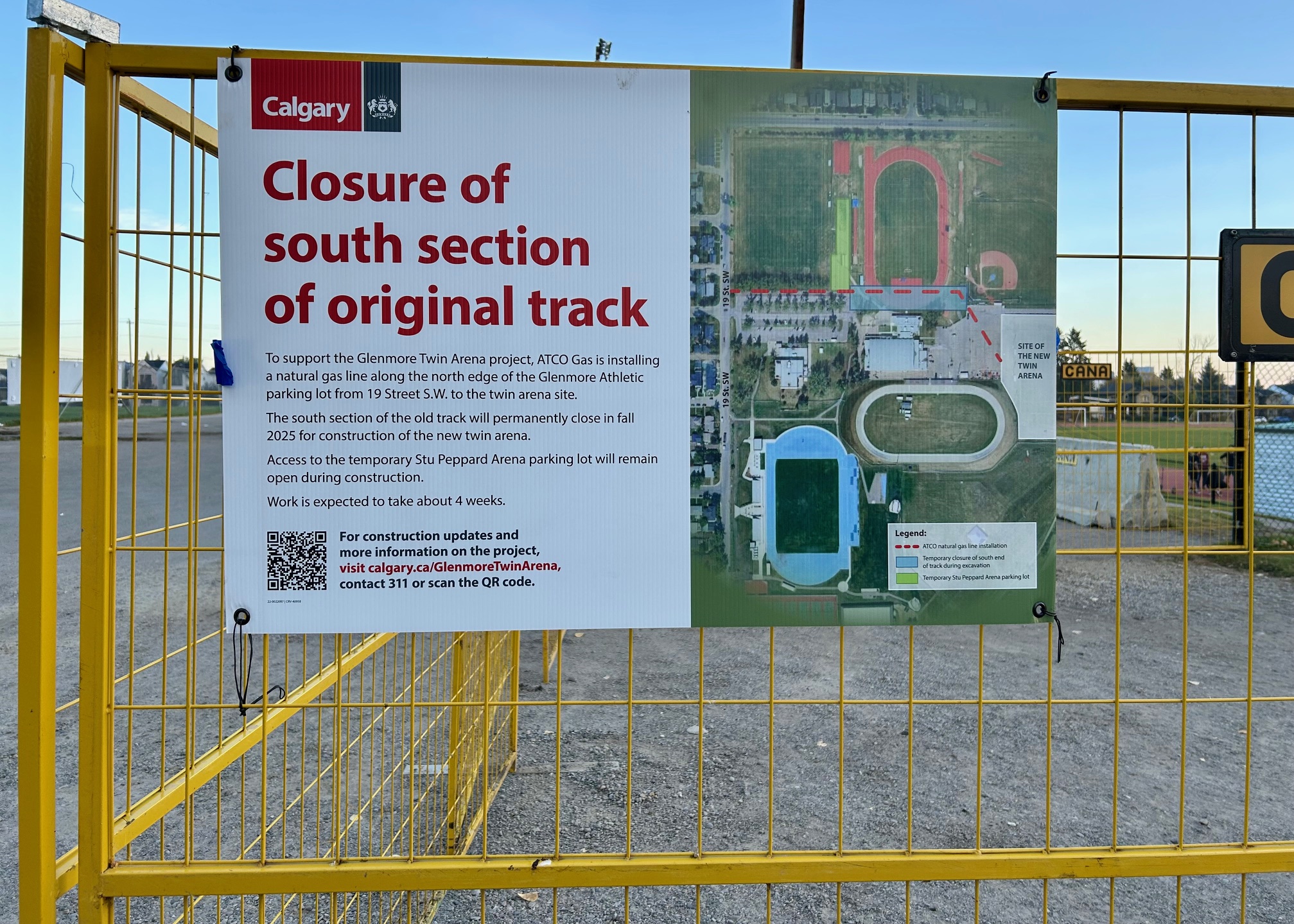
I know the guys in the excavators are just doing their job, but it was hard to watch them pulling up the tattered red surface. The sign posted on the fence helpfully explains that the work is for the installation of a natural gas line to serve the new Glenmore Twin Arena that is being constructed nearby. According to the City website, the south end of the track will become a parking lot. Of course, another parking lot.

I have countless memories of the old circuit. It’s been the site of race finishes (like the Stampede Road Race), club events like handicap races, and innumerable workouts. GAP has hosted hundreds of track meets over the last six decades, including one in May 2011, where my mates and I set a Canadian M35 age group record for the 4x800m relay. (Our record didn’t stand for long, so don’t bother searching for it.)

I wrote about the old GAP track in Stroke of Luck, about how just seeing the red surface puts me in a comfortable place. I also did a blog piece—Homage to GAP 1.0—to mark the seventieth anniversary of Roger Bannister’s historic four-minute mile and the sixtieth (or so) of the GAP track itself. That was more than a year ago.

Sure, with a new, modern facility (some have started calling that one Smurf Turf, but I prefer Big Blue) being built a stone’s throw away, the writing was on the wall. I dared to hope that the City would keep the old place open. And if that wasn’t going to happen, I was sure they would leave it in service until the new track was ready. Well, now we have our answers: no and no.

Here is the main issue I have with the City’s decision: there’s no convenient alternative for running clubs that train in Calgary’s Southwest. As rough as the surface was, the track was in constant use by individual runners and clubs. To demonstrate their commitment, athletes regularly organized themselves into shovelling crews to keep a couple of lanes open through the winter. Speaking of the winter, progress on the new facility seems rather slow, so we’ll have to wait until sometime in the new year. 

I pointed out all of these things when I called 311 today, but it won’t change where we are. 

I don’t need to repeat what I wrote in my previous piece. Instead, with a distinct feeling of nostalgia, the best thing for me to do is add a few more memories, to convey what the old track meant to me. 

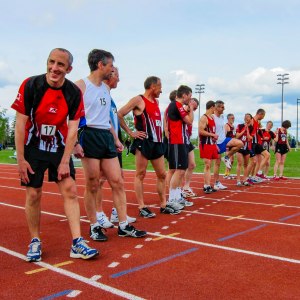
Here’s a photo from a one-mile senior’s challenge race, which took place in May 2010. It was all smiles on the start line, except for competitor 15 (me). For the record, I never smiled in the final few minutes before the gun. That’s okay, though, as I doubt anyone was smiling ten minutes later. I have no record of the results, so that might mean I didn’t do very well. Even so, it’s a cool memory.

This is the current state of the spotting booth on the back straight. Although the plywood mural that covers the scoreboard is deteriorating and falling off in chunks, I can report that the pigeons that have taken up residence in the booth are doing well. I like the juxtaposition of these two half-images.

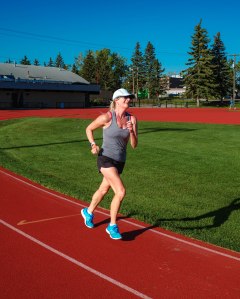
And here’s a photo I took during a recent workout. My friend Doreen and I ran intervals on a beautiful, warm August morning. Little did we know it would be our last spin around the track. This photo of Doreen, smiling as she heads into the back straight, seems to be a fitting one to close with. 

I don’t know if there is such a thing as a memorial service for a facility, but I feel like the Calgary running community could do with one in this situation. For now, I tore off a chunk of the synthetic rubber surface as a keepsake. Deb was grossed out, but I don’t care—I’ll keep it in the garage. 

Maybe I should deal with this the way I usually do—go for a jog and come to terms with this disappointing news. 

Until next time, be well and BE FAST!

Moose Jaw Delivers!

Are there certain places you’ve heard about your whole life? Places you’ve wondered what it might be like to visit? Over the weekend, we made a visit to one such mysterious and notable place: Moose Jaw, Saskatchewan. This is a place that everyone seems to have heard about. After all, it’s a name you remember.

For Deborah and me, there have been tenuous connections to Moose Jaw over the years: family, friends, work colleagues who hail from there. More recently, and more directly, our son Daniel has been stationed in Moose Jaw as an RCAF pilot trainee.

As for initial impressions, Moose Jaw seems to have the whole range covered. You see, the city’s former motto was The Friendly City, but that has been changed to Canada’s Most Notorious City. Hmmm. This was clearly another reason to visit. So we did. And we are very glad we did!

First, that name

This city of 33,000—the fourth largest in Saskatchewan—is located at the confluence of the Moose Jaw River and Thunder Creek, about an hour west of Regina.

The name Moose Jaw is said to come from a phrase in the Cree language, which translates to “warm place by the river”. This phrase likely refers to the sheltered valley where the city is located. Alternatively, the name may have come from the resemblance of the river’s shape to a moose’s jawbone. Whatever the origin, the name is anything but ordinary.

Moose Jaw was a historically important location for the economic development of western Canada, as it was a key railroad hub for the Canadian Pacific Railway. With its wide downtown streets and early 20th-century architecture, it gives the impression of a city that enjoyed some influence.

What we liked

In short, almost everything!

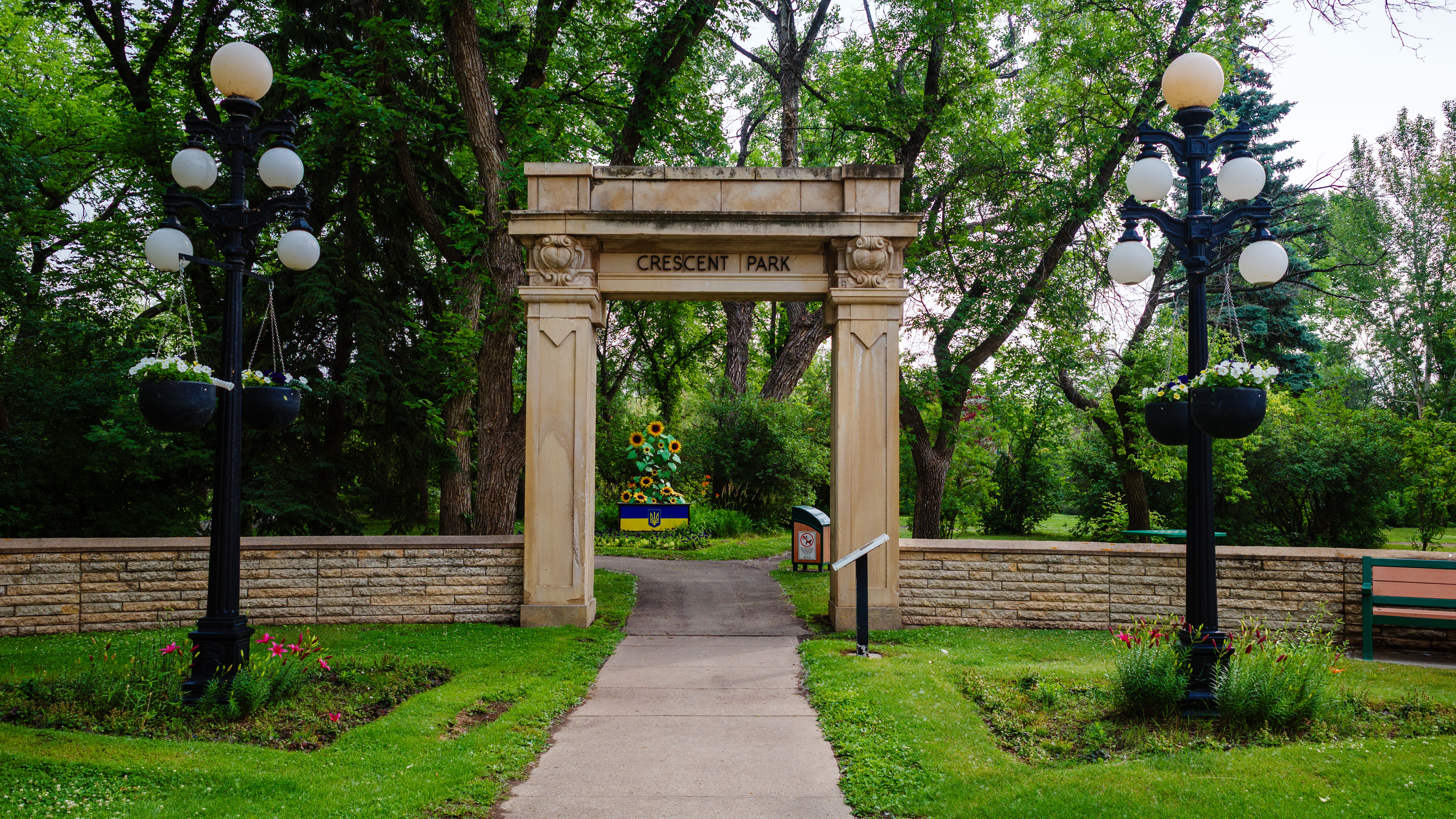
We stayed in the stately Grant Hall Hotel, right on Main Street. In no time, we discovered lovely Crescent Park, a few steps from the hotel. We crossed the street to the bustling Himawari Sushi restaurant, where we enjoyed an excellent dinner. It was delicious, maybe more so because it was so unexpected.

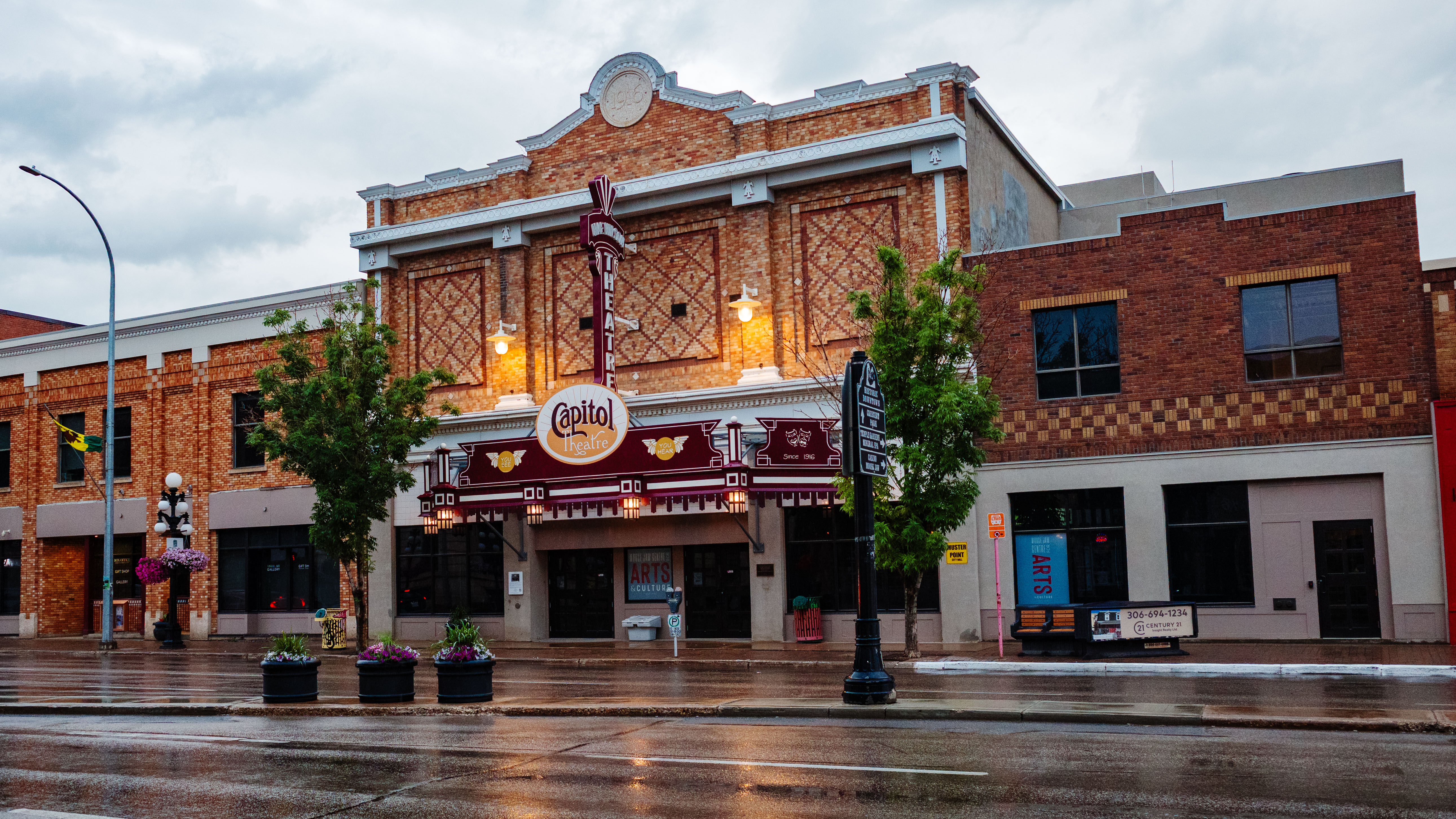
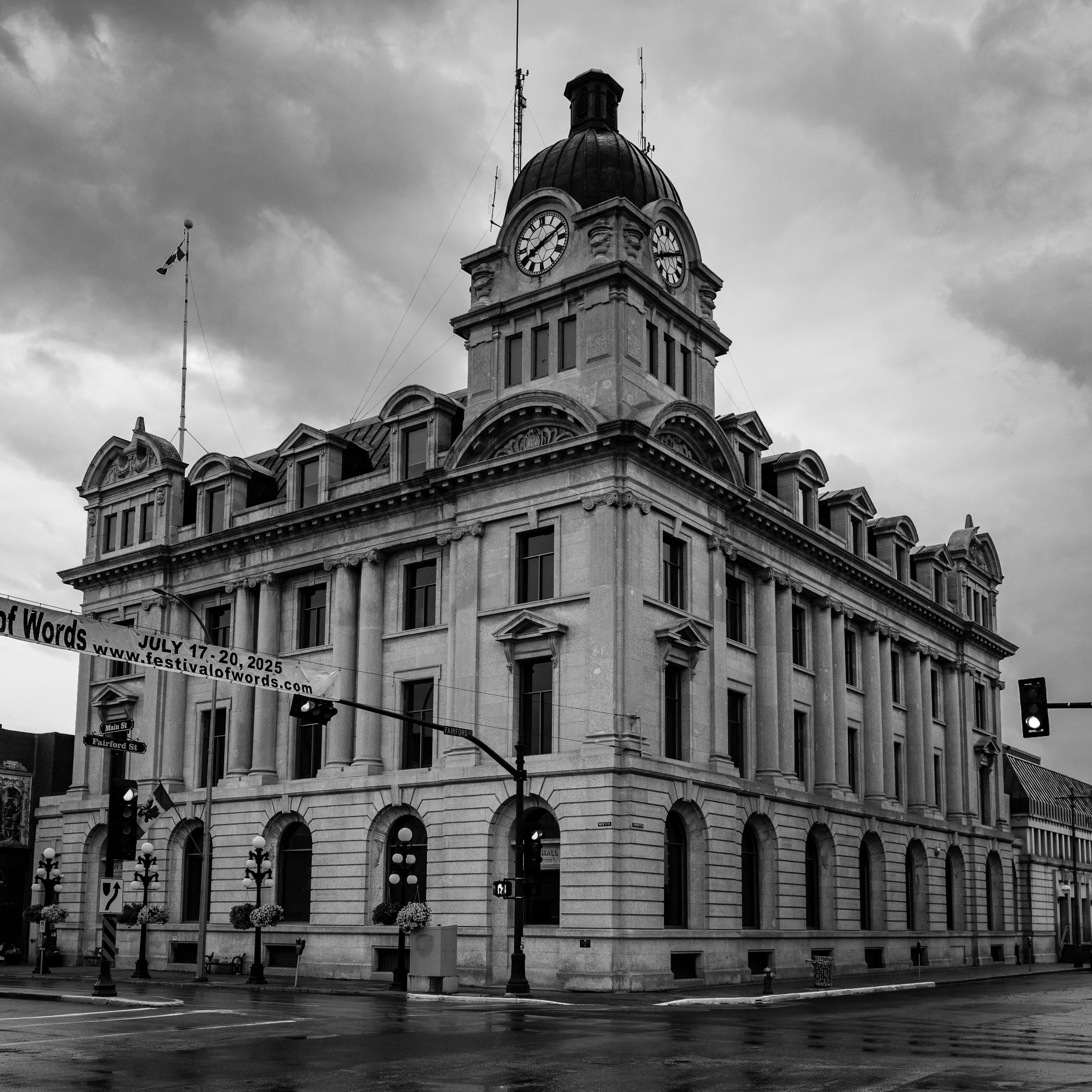
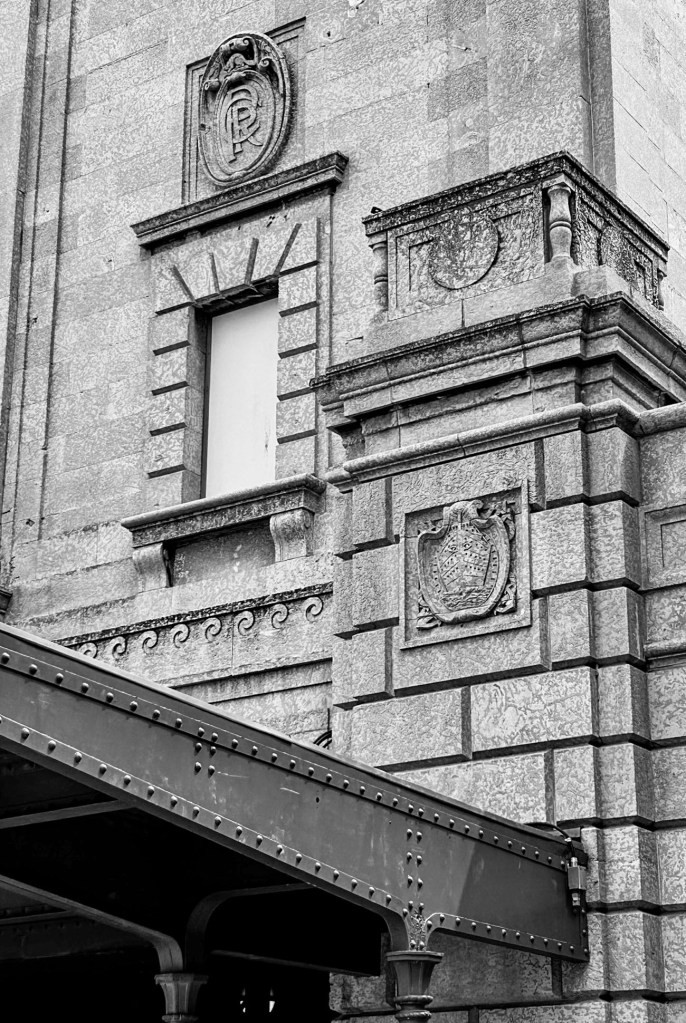
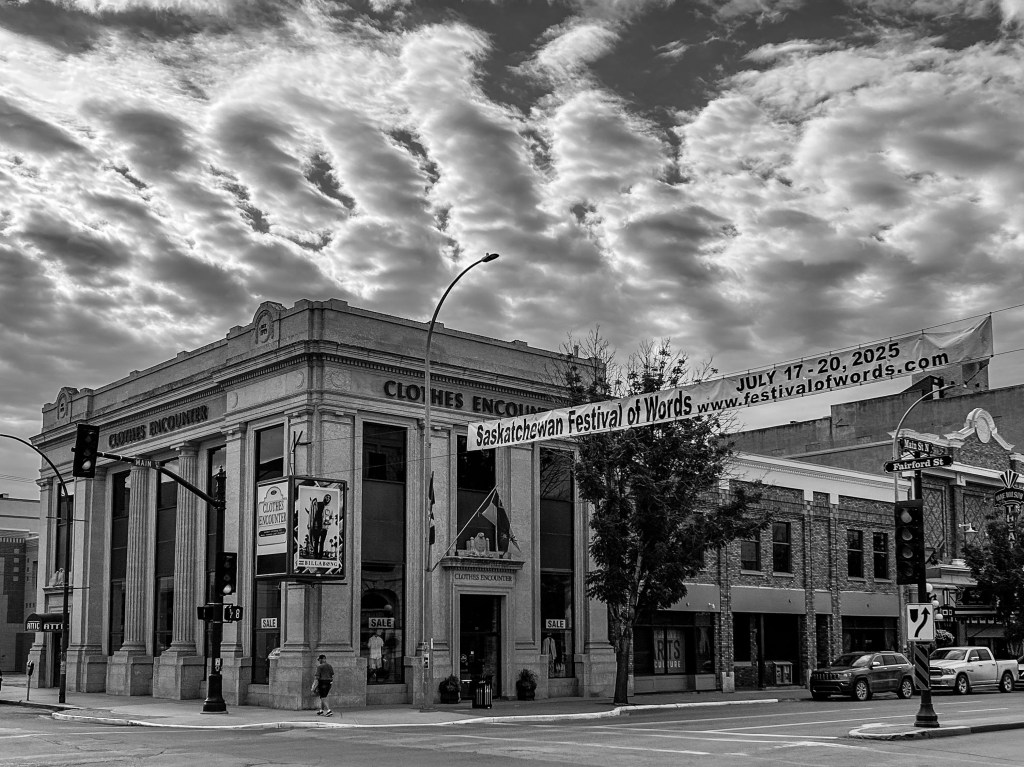
After dinner, we walked a few blocks down Main Street in persistent rain. We noticed the many architectural gems—City Hall, the Capitol Theatre, the CPR train station. This is a city with a rich history. We retired to the hotel and crossed our fingers for a break in the weather, as we had a busy schedule for the next day.

We lucked out in the weather department, although Saturday morning brought a smoky sky due to nearby wildfires. Fortunately, it wasn’t bad enough to put a crimp in our plans. We met with Dan and got a tour of the 15 Wing Air Base. That meant a chance to take in some aviation action up close. We walked through the CT-156 Harvard II hangar and watched a few planes taking off and doing maneuvers. We also peeked in at the simulators and the training rooms. Very cool!

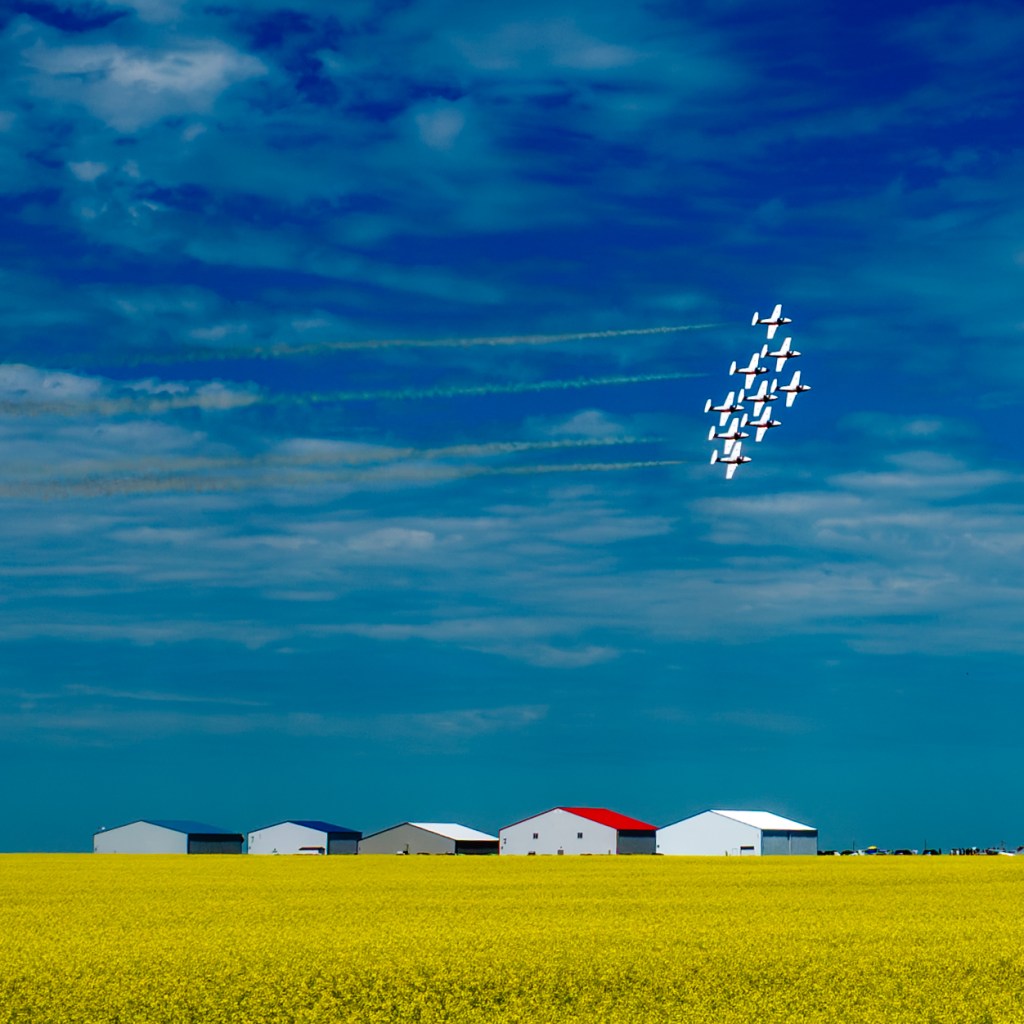
One of the highlights of our visit was an aerobatic display by Canada’s Snowbirds, the famous flight team of the Royal Canadian Air Force. Officially, they’re known as the 431 Air Demonstration Squadron, and Moose Jaw is their home base. We enjoyed 20 minutes of thrilling formation flying from the perfect viewing location that Dan had scouted out for us. It was breathtaking!

There was more—more great meals, more sightseeing, more history. We did touristy things, like the Tunnels of Moose Jaw Chicago Connection guided tour. (The city’s possible connection to the gangster Al Capone is where its “notorious” reputation comes from, by the way.) The tour was good fun.

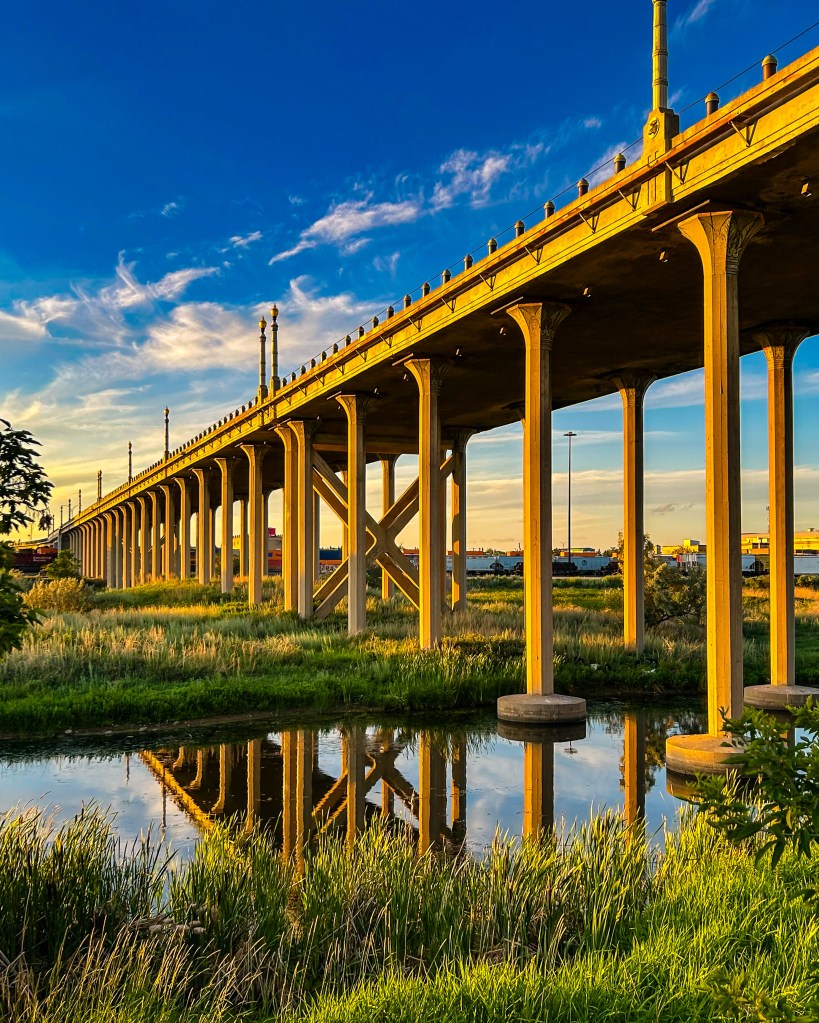
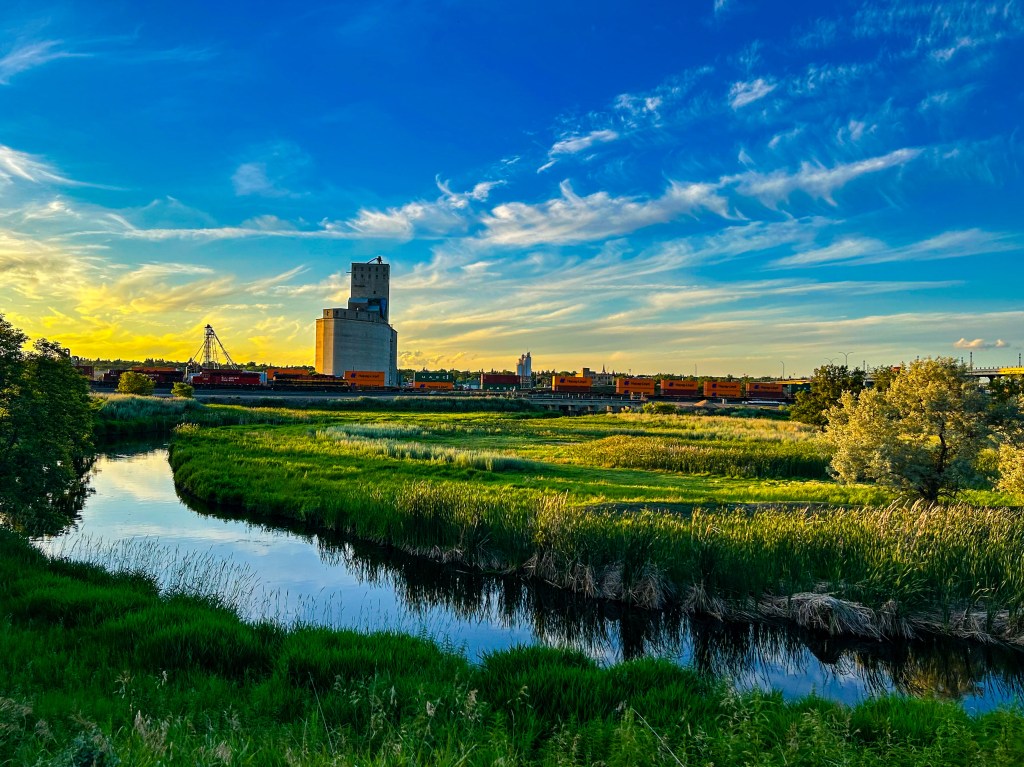
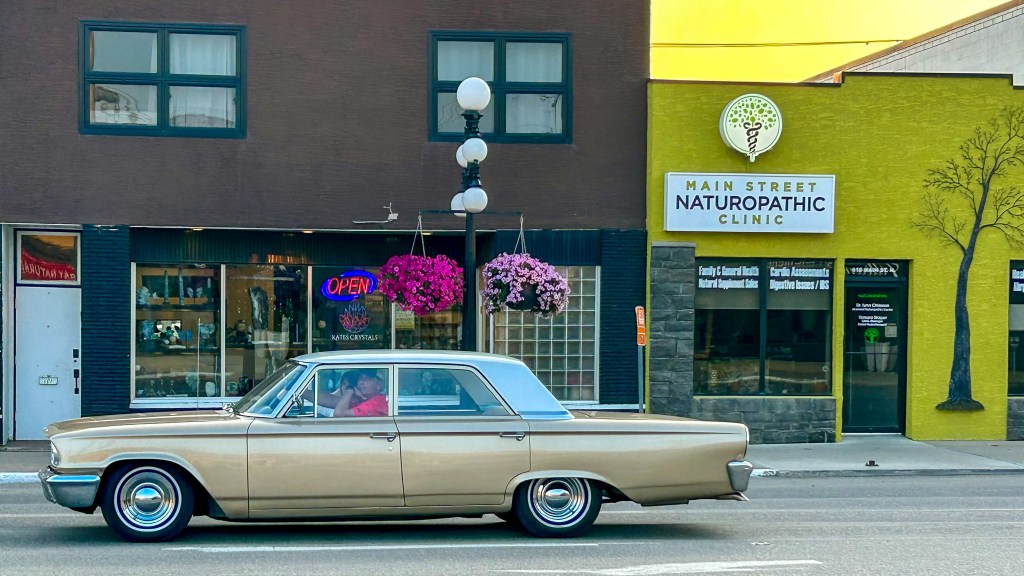
We did artsy things, like the impressive Moose Jaw Museum and Art Gallery. Then, as the sun was setting, we found a couple of beautiful locations for photos, like these taken under the Thunderbird Viaduct (also known as the 4th Avenue Bridge).

Even a Photo Run!

I came prepared for a short photo run while I was in town. So, with the prospect of a warm day ahead, I got up early and jogged some of the downtown streets. What I found was more pleasant surprises.

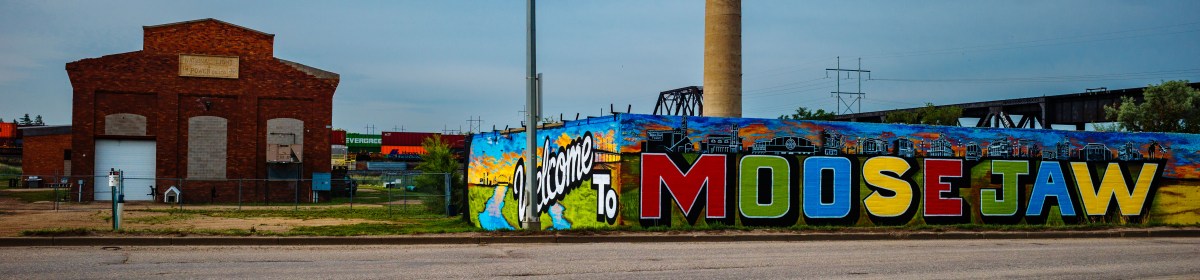
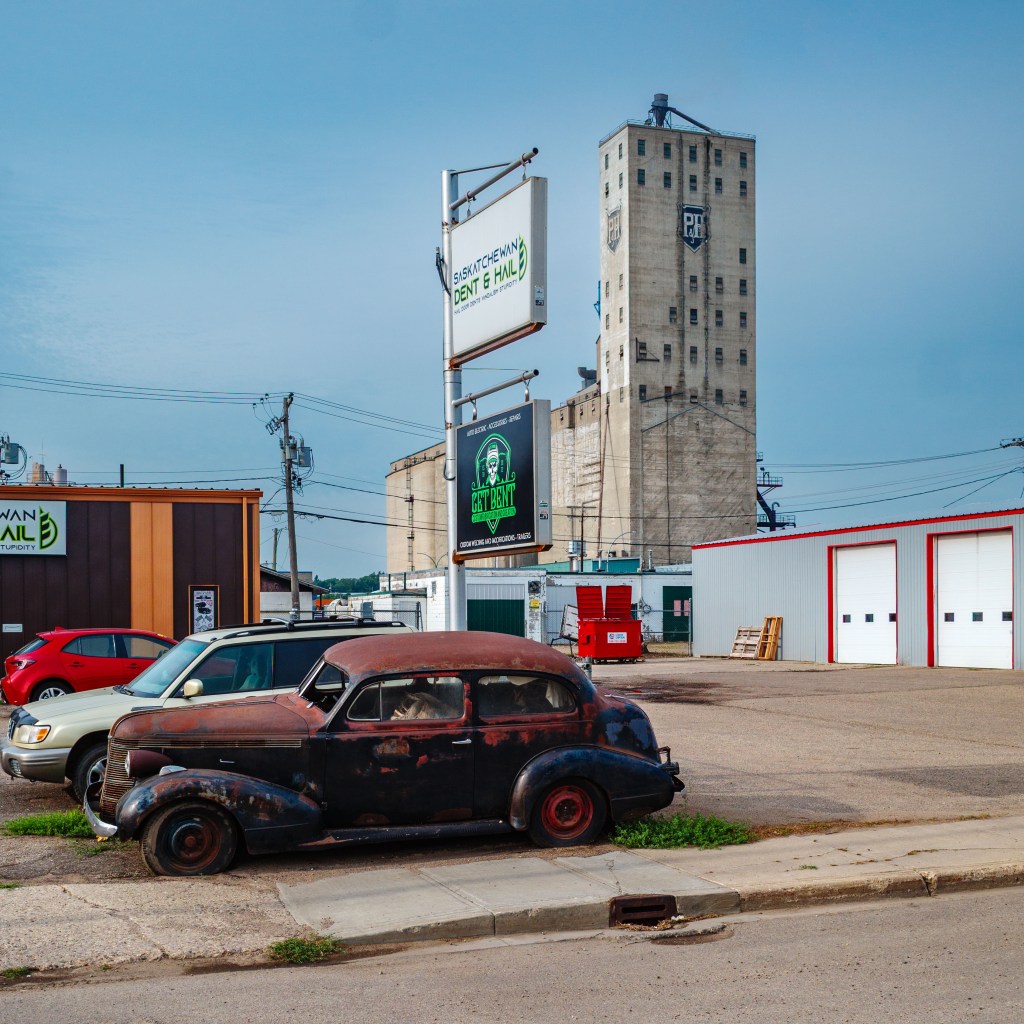
I ran by the historic 1932 Natatorium in Crescent Park—today we would call it a pool. I found some murals in the downtown area. And I checked out the imposing Parrish & Heimbecker grain elevator, adjacent to the rail line just off High Street. All before breakfast!

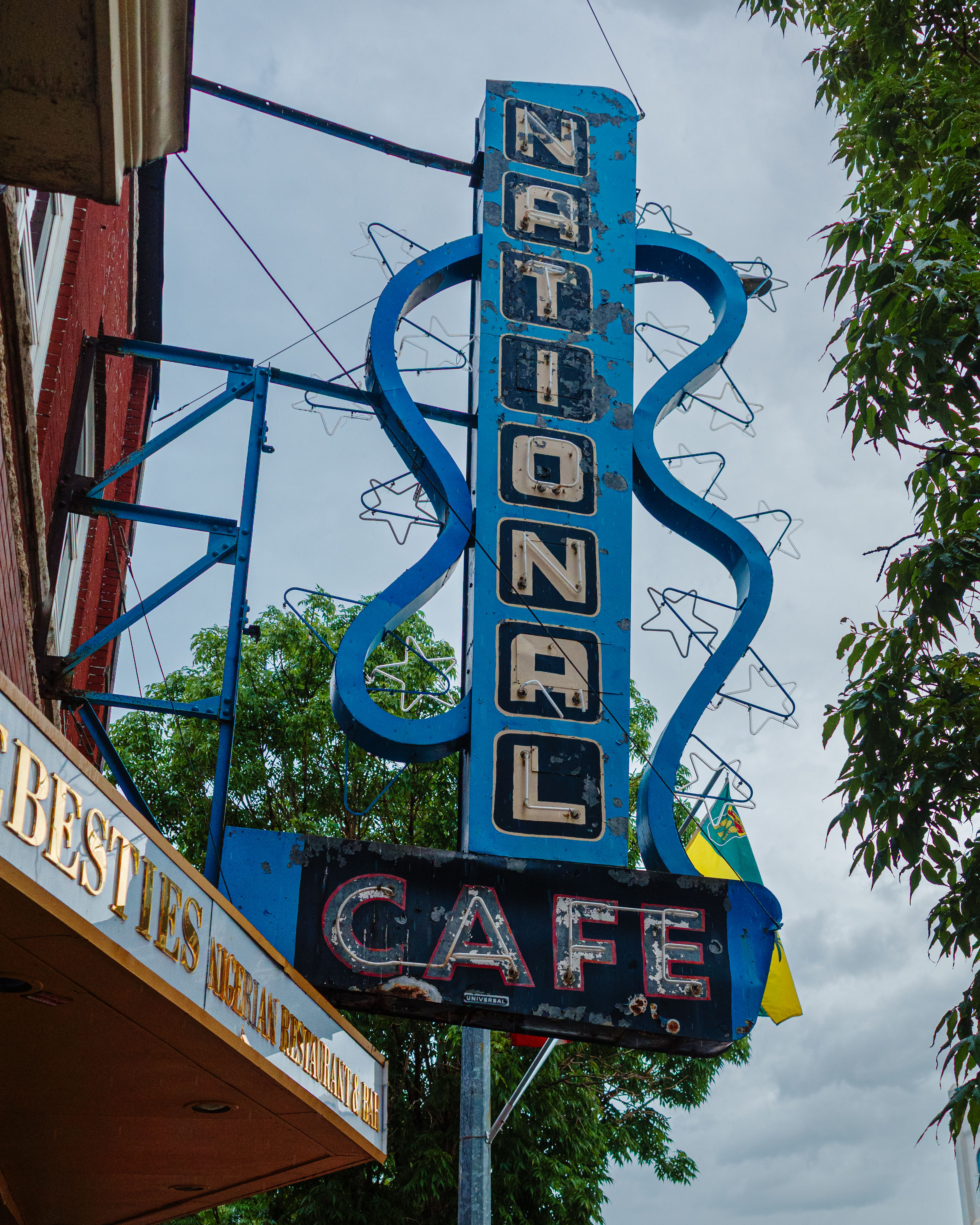
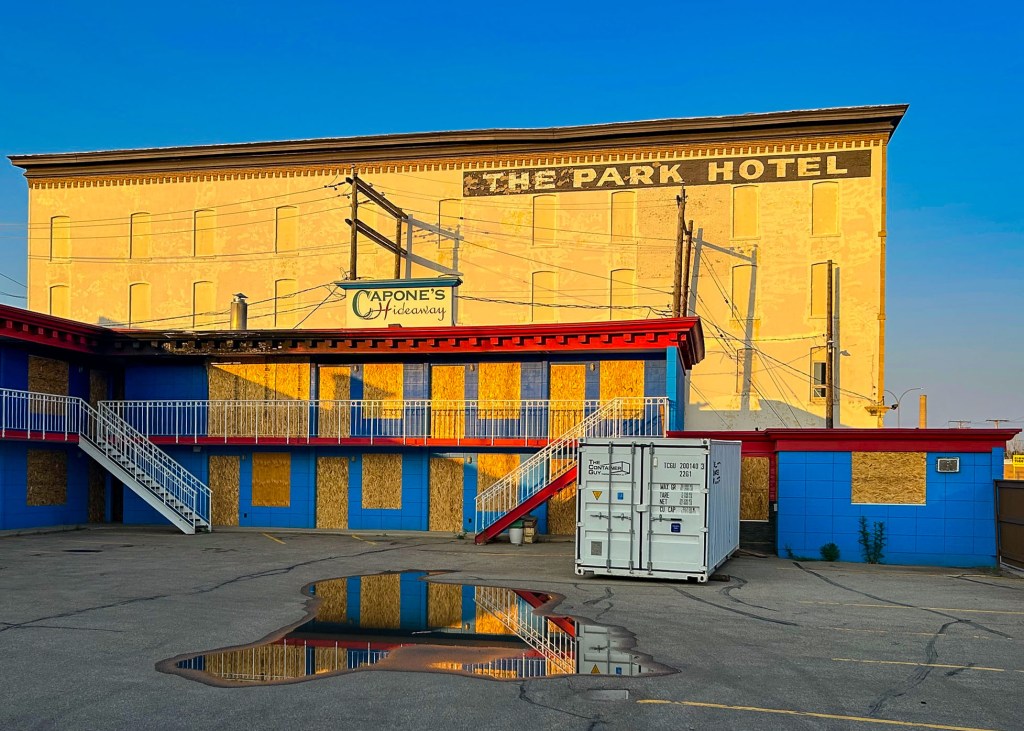
Here are a few more photos, taken in and around downtown Moose Jaw. There was no shortage of photo opportunities!

Wrapping up

We couldn’t help but feel that we should have visited Moose Jaw years before. As we grudgingly headed west for home, it was with a feeling that we had found a real treasure on the prairies. We would welcome the chance for another visit, if we should be so lucky.

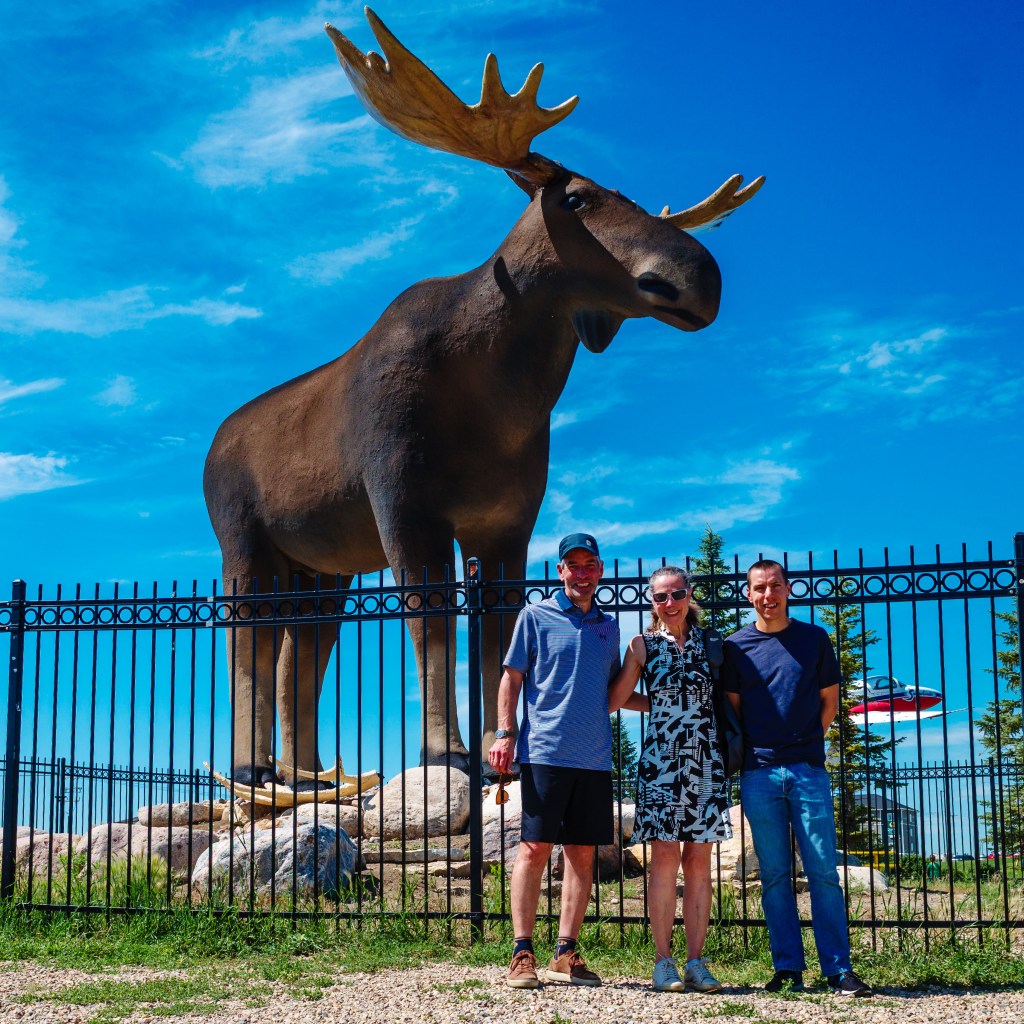
Before we left town, we had to visit Mac the Moose, the city’s mascot. Even here, we found a story. You see, in 2019, Mac lost his title of “world’s tallest moose” to Storelgen, a steel moose sculpture in Stor-Elvdal, Norway. Not to be outdone, the citizens of Moose Jaw rallied and constructed a new set of antlers for Mac, to ensure he could once again proudly guard the eastern entrance to the city. (To be fair, Mac’s initial pair was pretty wimpy. And to avoid an international incident, I will keep my comments about the relative merits of each sculpture to myself…) But I will say, congratulations to Mac and the whole city!

Until next time, be well and BE FAST!

Book Review: “Today We Die A Little”

Today We Die a Little: Emil Zatopek, Olympic Legend to Cold War Hero, by British journalist and author Richard Askwith, tells the fascinating story of the great Czech runner, Emil Zatopek.

Zatopek was an enigma. His life paralleled his country’s history and is intertwined with the Second World War and the rise and fall of the Soviet Union. Askwith did a thorough job of researching his subject.

The Czech Locomotive

Today, if people know anything about Zatopek, it’s likely because of his ungainly running style. Videos of his great performances are easily found, and worth a look. But his rolling head, flailing arms and gnashing teeth may be the least interesting part of his story.

Emil was a true sportsman. His nickname comes from a front-running style that left his competitors strung out behind him. He befriended those same runners and maintained contact with them well into old age. His training techniques were unorthodox. For instance, he was known to train in army boots, or in deep snow. Any of us who have done interval workouts can thank Zatopek—he may have invented 400m repeats. The difference? He did 60, 80, even 100 of them—every day.

Emil Zatopek, giving it his all (Photo: Roger Rössing, Deutsche Fotothek)

There are so many anecdotes about Zatopek that it’s nearly impossible to separate fact from fiction. I give Askwith credit for trying. Some things aren’t in dispute though. Emil taught himself 8 or 9 languages by reading dictionaries. He and his wife, Dana, won 4 gold medals at the 1952 Helsinki Olympics—a count that was second only to the US. Emil won the 5000m, 10000m and marathon, a record likely never to be repeated. Dana won the women’s javelin competition.

Socialist icon or misunderstood hero?

Zatopek may have been the most famous athlete in the world in the late 1940s and early 1950s. Few could match his talent and charisma—he was the Muhammad Ali of his generation. Even after his competitors copied his tactics and started surpassing him, he remained a national hero. It seemed everyone wanted to meet him and feel the warmth of his personality. 

The story that best demonstrates Zatopek’s generosity has him handing a small package to Australian runner Ron Clarke after Clarke visited Emil in Prague in 1966. Clarke had competed at a high level internationally but had come away empty-handed. Zatopek had been the perfect host, readily sharing his training advice. Clarke assumed Zatopek had given him something he wanted smuggled out of the Iron Curtain. In fact, it was one of Zatopek’s 1952 Olympic gold medals. “Because you deserve it,” read the simple inscription. 

Despite the constraints imposed by the Czech regime, Zatopek travelled the world. In fact, he became a sort of role model for socialist ideals. And it’s here where his story gets a bit hazy. Depending on who one believes, Zatopek was either a naive pawn of the regime or a committed agent. He was an officer in the Czech army, so it’s hard to totally accept the former view. However, he had managed to tread a fine line for a long time, apparently avoiding any suspicion of his commitment just by being his gregarious self. Or perhaps by mouthing the words that were expected of him.

Some things may never be known about Zatopek, but it is clear he believed in the concept of socialism. After all, it was how he had tried to live. When Soviet tanks moved in to crush the Prague Spring in 1968, he spoke up for compromise, possibly hoping his celebrity would save him from retribution. Soon after, he was expelled from the army, stripped of his status as a sporting hero, and exiled to years of manual labour in remote work camps. Through it all, he maintained a positive attitude. He was a broken man when he was finally allowed to return to his modest home. Then he suffered several strokes and was all but forgotten when he died in 2000.

Lessons far beyond the track

Askwith is sympathetic to Zatopek, and I found that his enthusiasm for the man clouded his judgment at times. If Askwith is to be faulted, it is for trying too hard. I came to accept Askwith’s case—that there is reason to doubt the worst accusations against Zatopek—and I found it unnecessary that he keep making it.

As for Zatopek, there is no reason to fault him for his eccentricities. He was an intelligent, independent and humble man. I found myself wondering how any of us would have managed in his situation; if our homeland had been first taken by the Nazis, then by the Communists. Zatopek lived and competed bravely, and left us lessons that go well beyond the realm of amateur competition. 

The “Czech Locomotive” was a complex figure, a great athlete, and a gentleman. Askwith’s book is an homage to Zatopek, and there is much to commend it—not least so the reader can decide for themselves how they view the man. I started the book and put it aside for a while. When I persevered, I was rewarded with a complete picture of an astonishing athlete. I’m glad I did.

By the way, the title of the book comes from the comment Zatopek made to his fellow competitors on the start line of the 1956 Olympic Marathon in Melbourne. By then, Zatopek was well past his best form. The day was brutally hot, and he made his remark just as the runners set off for what they all knew would be an extreme physical test. It was a noble gesture. Anyone who has set a challenging goal for themselves and worked hard to achieve it will relate to the sentiment.

Until next time, be well and BE FAST!

Around the Bay – A Personal Journey

When it comes to running history, few races can match Hamilton’s 30k Around the Bay Race. Many greats of the sport have competed in this event since it was first held in 1894, three years before the Boston Marathon. The late Jerome Drayton, one of Canada’s greatest runners, won the race in 1973 and 1974.

It occurs to me that this historic race deserves to have a book written about it. Short of that lofty goal, on this, the eve of the 131st edition of the race, I will add a retrospective piece to share what the “Bay Race” means for me.

The Around the Bay Race

For those unfamiliar with the race, it starts and finishes in downtown Hamilton. The course was measured in imperial units for almost 90 years, before being standardized at 30 kilometres in 1982. To this day, it is one of the few races contested at this distance. It’s a perfect tuneup for anyone planning a spring marathon. Even though the distance has varied, the roughly triangular course has remained the same.

The course has three distinct sections. Really, it’s three distinct personalities. The first 10k skirts Hamilton’s north end, the gritty industrial district that many people associate with the city. The middle third includes a narrow, exposed stretch on Beach Boulevard, between Hamilton Harbour and Lake Ontario. The final 10k through suburban Burlington is notable for rolling hills, which are a test for already tired legs.

As if that wasn’t enough, we must remember that we live in Canada and the race is held the last weekend of March. To state the obvious, weather can be a factor for ATB competitors. (It looks like that might be the case for this year’s edition, but forecasts can be wrong!)

1977 – Into the fray

My personal connection to the ATB goes back to my earliest days in the sport. I first ran the race in 1977, as a novice 16-year-old runner. I wrote extensively about the race in my memoir, Stroke of Luck. Here’s an excerpt:

“That same year, our coach proposed that several of us tackle a unique challenge, the annual Around the Bay Race. Even now it would seem odd to put teenagers through the kind of training needed to attempt this race. His logic was sound—he wanted us to build a base of fitness for the longer track races. … Three of us were signed up for the race. Our training program was simple but surprisingly effective. A couple of times each week, our coach would drive us eight or ten miles from the school and drop us off, and we would run back.”
One of my most vivid running memories is captured in this photo. It was taken by my high school track coach, somewhere along Beach Boulevard. My teammate Mark Orzel and I were battling the elements. Behind us, whitecaps are visible on Lake Ontario. Keen observers might recognize my Tiger Jayhawk racing flats.

According to my handwritten notes on the back of my race bib—showing how much the sport has changed, it’s a stencil on the back of a scrap of floral wallpaper—I would go on to finish in 2:16:19, in 116th place. I was the only one of the three of us to finish. It was a tough day.

Around the Bay, a rich part of Hamilton’s history (Photo: Hamilton Spectator, March 1977)

My impact on the race may have been minimal, but its impact on me was not. In fact, it solidified my growing commitment to the sport. I would go on to try the marathon a few years later and have a lifetime of running adventures after that.

2012 – A virtual showdown

The gap between my first and second ATB race was 35 years. I don’t know where I got the idea to go back and compete against my younger self. Maybe it wasn’t so far-fetched though: Hamilton is my hometown, and I had been a keen follower of the race for years.

The race itself had gone through some lean years in the 1980s and 1990s but was enjoying a renaissance. By the early 2010s, the ATB had pride of place as one of the jewels in the Ontario race calendar. Entries ballooned to the thousands and the 30k race sold out every year. To me, this reflected what was happening to the sport in general, and it was terrific to see.

My plan was to go back and beat my time from 1977. By then, I had decades of running experience. Even though I was a “mature” runner, I thought my chances were good. Quoting again from my book:

“I managed to eke out a small victory in the virtual head-to-head match up, running 2:14:51 but finishing well down in the age group results. As I plodded through the latter stages of the race, I felt myself being transported back to that cold day in March so many years earlier. My exhausted legs seemed to relive every rolling hill on North Shore Boulevard. … I laughed as I ran by a costumed Grim Reaper at the crest of Valley Inn Road who was yelling at us to “D‑I‑E a little out there!” I let this amusing encounter be the beginning of my celebration of this wonderful day. I was overcome by the gamut of emotions. Where had all the time gone?”

It was a momentous day, and not only because I had proven I still had what it took to compete. I treasure the memory of my mother and my sister Carolyn—sadly, both now gone—meeting me at the finish inside the Copps Coliseum. Thinking about them in the context of the race, and the place running has long had in my family, is quite emotional.

2014 – A generation gap opens

Perhaps pushing the envelope of my involvement with the Bay Race, I went back again in 2014. However, this time I had no expectations other than finishing. In fact, the main reason for returning was to share the experience with our son, Daniel. He was rounding into form as a fine runner, and decided he’d like to run this historic race.

I had a tough day. I somehow let myself be psyched out by an adverse race day weather forecast. The thought of howling winds on Beach Boulevard undermined my plans before I’d taken a step. Talk about rookie mistakes! As it happened, race day weather was fine, but by then the damage was done.

The best I can say about the race is that I survived it. Even though I thought I had kept enough in reserve for the rolling hills, they still beat me up. It was a lesson in humility, as I laboured from start to finish. Our ATB rookie, Dan, ran an astonishing 1:54:59. What a performance! I was so proud of him, and I couldn’t wait to see what else he would accomplish.

And me? I was comfortable in the knowledge that I would be an ATB race spectator from then on.

Summing Up

Some races have more impact than others, and Hamilton’s Around The Bay Race is about as impactful as they come. It has a unique place in the history of our sport. It has more than its share of challenges for those brave enough to take it on.

This post has been an opportunity to share a little of my personal connection to the race. I could write so much more!

In short, the Around the Bay Race was instrumental in steering me to a life characterized by dedication to fitness, exploration of my own potential, and fellowship with other runners. It will always be special to me. Maybe that book isn’t such a bad idea…

Until next time, be well and BE FAST!

Tribute to Gord Hobbins

We heard yesterday that Gord Hobbins had passed away. Deb and I are gutted by the news. The Calgary running community has lost one of its greatest supporters, and we’ve lost a friend of many years. It will take a long time to come to terms with his loss.

Coincidentally, Deb and I were walking near Gord’s Running Store a few days ago. We hadn’t been in that part of town for a while. As we passed the familiar storefront, tucked in a strip mall just off Centre Street NW, we chatted about him. I mentioned that the store was celebrating its 35th anniversary. Gord’s Instagram account had been featuring photos from the 1990s, when the hair was longer and the running shorts were shorter. Okay, too short. We had a laugh about that and recounted a few of our many stories about Gord. But our time was limited and we decided not to drop in. Now I wish we had.

My connection to the local running scene goes back more than three decades. We moved here in 1991, and it would have been shortly after that that I first stepped into Gord’s store. I immediately felt his personal warmth, his enthusiasm for the sport, and his passion for customer service. Of course, Gord’s customers soon became his friends, and that never changed. No matter how long since our previous visit, Gord was the same: genuine, kind, inquisitive. He always took time to chat. Visits to the shop were often stretched, so we could get caught up on each other’s family news. He was totally devoted to Cathy and their kids, Ailsa and Gareth.

Gord coached me for a few years, and he was a natural. He had a hand in preparing me for my first Boston Marathon. His trackside cues at the Talisman Centre… “Steve, relax your shoulders!”… were in my ears on race day in April 2001, and helped me to one of the most memorable achievements of my life. Later, I took up a coaching role in my own club, and Gord was a mentor. When he organized group runs from the store, he was invariably the perfect host, making sure all his sheep got back safely.

Gord and I even shared a similar medical history, having both gone through serious cardiovascular issues. We could each credit a lifetime devotion to the sport we loved for getting us through our unique and challenging episodes.

There was a good reason for the longevity of Gord’s store in the tough retail business: he was the best at what he did. He generously shared his vast knowledge of the latest shoes and running gear. I lost track of the number of times I referred people to him. “Go see Gord,” I would say. “There’s no one who knows more about fitting you for running shoes.”

Gord’s own running resume was impressive too. I first saw his name in race results in Edmonton (his hometown and our first stop in Alberta) in the mid-1980s. At the time, he was running road 10k’s and half marathons. But it would be in ultramarathons that he later made a name for himself.

Gord’s success in ultra trail races was attested to by memorabilia in his store. In fact, the last time I saw him, he told me he was looking forward to completing his collection of carved finisher’s stones from the Lethbridge Lost Soul Ultra. He had run the race many times, so it was no surprise when he finished the 50k in an impressive time last September. (Photo by Mark Moland.)

I’ll miss Gord like a brother. His commitment to the sport ensures his legacy in the Calgary running community. More than that, his passion for making everyone around him better, fitter and happier is what I will remember most. Rest in peace, my friend. We wish his family, friends and staff peace and comfort in the difficult days ahead.

Top 5 Athletics Performances

I thought it would be fun to highlight individual performances that have inspired and motivated me. As you’ll see, it isn’t necessary that the person I’m writing about won the race in question. This is all about their effort on the day.

Steve Prefontaine, Munich 5000m Final

I’ll start with a confession: on my own race mornings, I used to watch the video of this great individual performance to get myself into the right frame of mind. BBC commentator David Coleman’s description of Steve Prefontaine, the brash American, as “a sort of athletic Beatle” is classic.

Setting the scene, Prefontaine was running in what would be his only Olympic final, against a deep field. With two slow miles behind them, Pre boldly “states his case” to lead to the finish. As a pack of five separates itself with two laps to go, the Finn Lasse Viren asserts control. Is it over? No, not with Pre in the mix. Time and again, he fights to regain the lead. Coleman’s fateful comment, with 200m to go, that “these are the medal men” would turn out to be wrong, as a totally spent Pre is passed in the last few metres by Ian Stewart. Viren won gold.

Measured by the result… fourth, and out of the medals… this could be seen as a foolish gamble by the inexperienced young American. Instead, I look at it as the epitome of racing. There was no playing it safe for Prefontaine. No wonder I get goosebumps every time I watch the video.

Prefontaine gambles it all, Munich Olympics 5000m final (Photo from Track and Field News)

Mo Ahmed, Paris 10,000m Final

At the risk of repeating myself, I’ve chosen another Olympic finals performance that left the runner out of the medals. This time, it was Canadian Mo Ahmed in the Paris 2024 Olympics 10,000m final.

Ahmed ran what might be the smartest race I’ve ever seen. He stayed out of trouble in a top-class field, paced himself beautifully, and was in contention against team tactics of other runners until the final 30 metres. I thought I might have been the only one who noticed his deceptively smart racing, until I heard David Moorcroft (broadcasting for CBC) make the same observation.

Finishing with nothing in the tank, Ahmed’s performance (26:43.79) was good for fourth place. That he and 12 other finishers were well under the previous Olympic record attests to the quality of the field. It was a spectacular race, and one where Ahmed demonstrated that he belonged with the very best.

Mo Ahmed shines in the Paris 10,000m final (Photo from Athletics Canada)

Paula Radcliffe, 2003 London Marathon

In 2002 and 2003, Paula Radcliffe was on top of the marathon world. She had set a world record in Chicago in October 2002, running 2:17:18, so there was great anticipation for her race the following spring in London. Running before her home crowd, Radcliffe didn’t disappoint. Leading from start to finish, she shattered her own world record, en route to an astonishing 2:15:25. Her nearest competitor was more than four minutes behind her.

I have a tenuous connection to Radcliffe’s race. You see, I was on the same course that sunny April morning in London. Admittedly I finished nearly an hour behind her. I’ve replayed the videos and read the stories so many times to fully grasp what Paula achieved. The strain on her face in the final few kilometres shows how much she wanted this result.

In an era before supershoes and without any team support, Radcliffe delivered a courageous performance, well deserving of being in my top 5.

Filbert Bayi, Christchurch 1,500m Final

In recent years, the Commonwealth Games have struggled to remain relevant. Competition from other mega-events (like the Olympics and the World Cup) and other *um, political* factors have led prospective host cities to back away from the Games.

Whatever the future holds, the Games have been host to some great athletics history. Here’s a case in point. In 1974, the young Tanzanian runner, Filbert Bayi, was relatively unknown. That didn’t stop him from taking on a handful of the world’s best in the 1,500m final in Christchurch, New Zealand. His race was one of the most audacious performances of all time. He led from start to finish and set a world record of 3:32.2. Not only that, he beat the hometown favourite, Kiwi John Walker.

Bayi’s account of the race, in a wonderful Athletics Weekly article, leaves no doubt that he trusted his front-running strategy. “I was confident that anyone trying to close the gap over the last 100m or 200m would have a real fight on their hands,” he states. And with the field in a pack bearing down on him, his plans were certainly put to the test. In the end, Bayi beat Walker by a couple of strides. He knew immediately the importance of what he had achieved. It was a perfectly executed race.

Filbert Bayi leads John Walker and the rest to the finish (Photo from Athletics Weekly)

Roger Bannister, 1954 Mile Double

Even as the 1,500m has largely eclipsed the mile as the middle distance standard, it’s worth noting that the mile continues to get attention. In the last week, the men’s indoor mile record has been broken… not once, but twice. So it is worth looking back to the furor that surrounded Roger Bannister in 1954.

Cheating a little, I will highlight two of Sir Roger’s epic performances. His epic May 1954 run to break the four-minute barrier for the first time is the race everyone knows about. But I would suggest that with his performance in Vancouver at the then-called Empire Games in August, Bannister put an exclamation mark on his miraculous year.

By August 7, Bannister’s record time had already been beaten by Australian John Landy. The Vancouver race was the first time they competed head-to-head. The race generated global hype, and it became known as the Miracle Mile. Although Landy led most of the way, he made a fateful error on the last corner, looking to his left for the hard-charging Bannister. Sensing Landy’s weakness, Bannister passed on the right and didn’t let up. He reached the finish in 3:58.8, five yards and 0.8 seconds ahead of Landy.

I’ve written about Bannister, here and here. What impresses me most about him is that he competed as a pure amateur. As memorable as his exploits on the track were, he never considered them to be his greatest personal achievement.


So that’s my top 5. I could have easily found a top 10, but one has to draw the line somewhere! I’d be interested in any thoughts on these performances, and any that my readers are convinced I’ve missed.

Until next time, be well and BE FAST!