A Tribute to Gerard Rejskind

I don’t have hard rules for the topics on this blog, and there are times when I feel I need to write about something of importance to me. Or someone. This is one of those times.

Gerard Rejskind passed away a year ago to the day that I’m writing these words. I suspected something may have happened to him. As I’ve done occasionally if I’m unsure about someone’s personal situation, I reluctantly typed his name and “obituary” into Google. I was right… he died peacefully in Montreal in December 2023 after a short illness.

So who was Gerard?

It would not be true to say he was a friend. But as I wrote in a similar tribute piece almost two years ago, it is possible in our highly connected world to feel close to someone even if you’ve only spoken to them a few times on the phone. Through his writing, I came to know Gerard and understand him quite well.

Gerard wrote with passion, and he was the driving force behind an independent audio publication (UHF Magazine) that had a small but dedicated following. Through his reviews of audio equipment and recorded music, Gerard influenced many people, including me.

Let me first make a connection, between a subject that I do post about on this site… photography… and music. It isn’t a stretch to say that both these art forms have much in common. They are subjective; that is, they are things that cannot be quantified. If done well, they evoke an emotional response in us. And at their best, they are timeless.

When I found out that Gerard had passed away, I thought about the many ways he had influenced me over more than twenty years. Initially, I had been looking to upgrade my entry-level Sony CD player, a tinny-sounding thing. A colleague lent me a few back issues of UHF, and I was immediately hooked.

UHF (now defunct) was a publication unlike anything else I’d seen. With a modest budget and a small crew, Gerard managed to produce a magazine that bettered any of the big, commercial publications. It did so with a rare offering: totally honest reviews. There were none of the filtered, biased reviews that I read elsewhere. My favourite feature was a short, subjective paragraph from each of the review panelists about a particular piece of gear. This was invaluable for someone like me, who was new to the hobby.

Besides the magazine, Gerard also wrote a couple of books about “hi-fi”. Again, in plain language, he explained what the equipment did (or should do) and how it ought to be designed. This hit a chord with my engineering sensibilities. I found myself coming back to these books time and time again.

My wife will attest that I dropped everything when the latest print issue of UHF showed up in the mail. Because of their shoestring operation, the frequency of publication was, shall I say, variable. Gerard kept UHF going through COVID and his own health challenges. Those things only increased the appeal of the enterprise. I read every word of every issue, and I would save Gerard’s editorial page on the inside of the back cover until last. There, he would offer another nugget of audio wisdom, in his usual style… self-effacing, but with the authority he had earned over a lifetime of experience.

I’ve bought quite a lot of audio equipment and recorded music since I first encountered Gerard and UHF. In all that time, I wouldn’t think about buying anything unless I had checked to see if Gerard had reviewed the gear in question. If he liked it, that was good enough for me. If he really liked an item, he would become a distributor, which said a lot about his motivation. It was also quite convenient. I can honestly say he never steered me wrong.

Beyond all that, he made sure I and his other readers became more self-sufficient, by writing frequent articles and opinion pieces that educated us. In fact, the last edition of UHF, the 101st, consists of a series of introductory “101” pieces (in the usual nomenclature of first-year university courses) on various audio gear. It seems a fitting legacy to Gerard. The final paragraph of his last “State of the Art” piece is worth repeating here:

“The final rule is to do what we do: take notes, with details on
what you liked and what you didn’t. Concentrate on the music,
which is the purpose of the system in the first place.”

Gerard was a rare person: an honest businessman; a knowledgeable and generous resource; and above all, a gentleman. He will be missed.

Now I think I will go and put on a record and re-read some of his pieces.

“So It Goes”

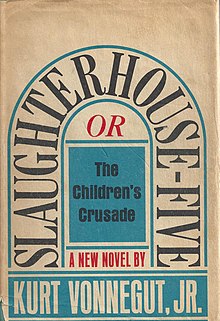
Anyone who has read Slaughterhouse-Five (SH5) by Kurt Vonnegut will recognize this phrase. It stays with you after reading the most famous (or is it infamous?) and arguably the most representative of Vonnegut’s novels.

I’m not sure if SH5 is still required reading in high school English courses… I know it used to be. (I’d be reluctant to guess what required reading might be in high school these days, but that’s another topic.) For my part, I missed the opportunity to read SH5 when I was in school. Perhaps the book wasn’t considered appropriate fare for a Catholic school curriculum.

I’ve only come around to Vonnegut’s works in the last few years. I did read Galapagos in my early twenties, but I found it to be quite forgettable… it certainly didn’t convince me to read anything more by him. Maybe I wasn’t ready for the author’s unique style and keen critical eye.

Something must have changed, because I’ve read three of his books in rapid succession. In this post, I offer my thoughts on what may be his best-known novels. My comments are organized in my order of reading, which just happened to be in reverse order of their publishing date.

Kurt Vonnegut

The author of the books I’m going to discuss is worthy of some discussion himself. Kurt Vonnegut, Jr. (1922-2007) was born in Indianapolis, to German immigrants. He attended Cornell University but dropped out in 1943 after being placed on academic probation. He enlisted in the US Army and was deployed to Europe in 1944 as an intelligence scout. After the war, he pursued academic and technical career paths, never quite succeeding at anything. Vonnegut had a couple of stories published in the early 1950s, which persuaded him to give up other opportunities to pursue writing full-time. His success as a writer did not happen overnight.

Slaughterhouse-Five (1969)

It’s a challenge to summarize SH5. At its core, the story is an account of the Allied fire-bombing of Dresden, Germany in the final months of the Second World War. What genre is the book? Good question. There is an element of historical fiction, but it could just as easily be classified as science fiction. Given that the book was influenced by Vonnegut’s time in the US military, we could even label it as a biography. The author was captured by the Germans, and as a POW he witnessed the destruction of the city firsthand.

In Vonnegut’s signature style, there is a sharp satirical edge to the book. Vonnegut makes no secret of his disdain for “military intelligence”. The casual disregard for life in wartime is a theme repeated often in the book… almost sickeningly so. I think that’s exactly the response Vonnegut wants to elicit from us. That’s where the phrase “so it goes” comes from. SH5 was published at the height of the anti-war movement in the US, and it was the book that made Vonnegut a household name.

The main character in SH5 is Billy Pilgrim, a US draftee. The science fiction element to the story is that Pilgrim experiences time travel. He calls it coming “unstuck in time.” I think the message here is that history is bound to repeat itself. I found this to be a very effective tool; one that shows Vonnegut exercising his full prowess as a mature storyteller.

To summarize, I thought SH5 was brilliant. An amazing creative piece… forceful in its social commentary and totally original. Considering the current events in the world, it is as timely now as when it was written. Very highly recommended!

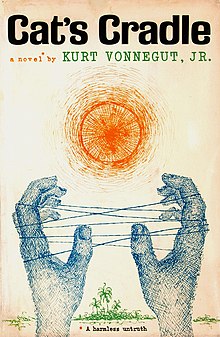
Cat’s Cradle (1960)

Where to begin in explaining this novel?

Cat’s Cradle is a first-person account of the narrator, Jonah, who travels to San Lorenzo, a fictitious and extremely poor island nation. Through an unbelievable sequence of events, Jonah becomes president of the country. At the subsequent inauguration ceremony, an unfortunate incident results in mass destruction on a global scale, when a material called “ice-nine” accidentally comes into contact with seawater.

The book deals with two important themes and manages to touch on several others besides. One major subplot in the book is a fictitious, hedonistic religion called Bokonism. It is the dominant religion in San Lorenzo, seemingly a response by the poor citizens of the country to their dire socioeconomic circumstances.

The book is also a biting commentary on the risks of technology. Ice-nine was invented for military purposes by a brilliant scientist who has complete and callous indifference to the great risks it poses. The obvious parallel is to the proliferation of nuclear weapons, which would have been in Vonnegut’s mind when he wrote Cat’s Cradle in 1960. The story takes the idea of a manmade technological threat to its logical and tragic conclusion.

Only someone with a vivid imagination, black humour and a gift for sharp insight… someone like Vonnegut… could have created Cat’s Cradle. It was a fascinating read, and like SH5, very relevant to the unstable world we find ourselves in.

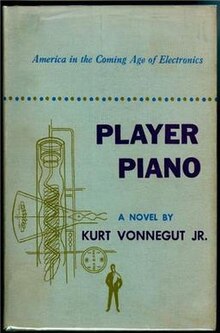
Player Piano (1952)

Player Piano was Vonnegut’s first novel. It tells the story of Paul Proteus, an engineer and manager of the Ilium Works, one of many large industrial complexes that have radically revamped American society. Machines have replaced human beings in every facet of life. For his part, Proteus becomes increasingly uncomfortable as he is being groomed for an expanded role in the system he helped create. The story turns on a clever “double agent” plot, as Proteus finds himself aligned with other, like-minded rebels.

As compared to the other novels, I found the storyline in Player Piano to be the least risky… maybe even simplistic. There are no tricks with time travel here. I suspect Vonnegut was still finding his voice and his style when he wrote the book. Even so, it is a well-constructed story of an all-too-possible dystopian future. Such a future may have been easy to imagine in the early 1950s, as post-war innovations began to change American society; at least it was for Vonnegut.

Of the three novels, Player Piano had the most impact on me. I accept that as a result of my own work as an engineer and manager. Did my career path make me more sensitive to the sharp commentary that Vonnegut dishes out for these vocations in his grim novel? Probably. I don’t take any of it personally, but I do relate to his criticism of an unbridled drive for efficiency.

The world Vonnegut imagines in Player Piano is devoid of almost all pleasure, at least for the average citizen. For the elite (that is to say, the politically savvy) the upside is limitless, as long as the growing majority of displaced citizens are kept notionally busy and marginally employed. It’s a novel that heads to an inevitable tipping point.

The fatal flaw exposed in Player Piano is a conflation of an unstoppable quest for perfection (in countless industrial processes and even in human interactions) with human happiness. I found myself making connections to recent opinion pieces that assess the risks of the increasing use of Artificial Intelligence in our society. Again, Vonnegut’s story seems eerily relevant to our current circumstances.

I can recommend all three of these Vonnegut novels. In my view, his social commentary is timeless, and that keeps the books current. I want to continue my exploration of his work, to see how well his insights have held up in other areas.

Until next time, be well and BE FAST!

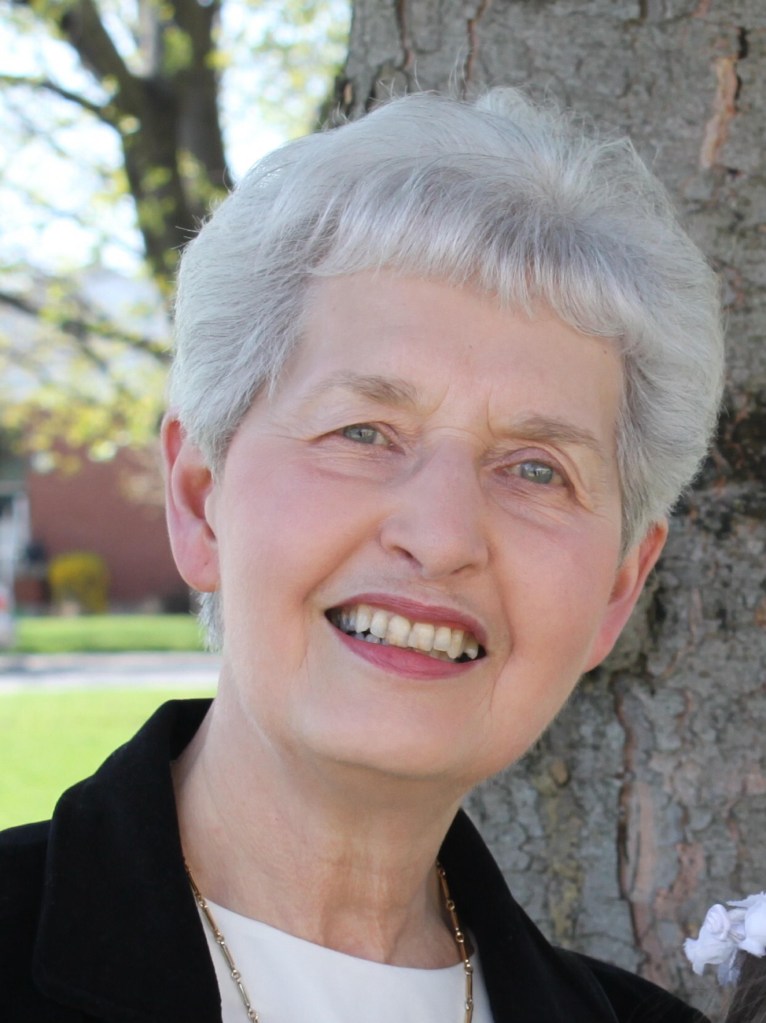
Carmela Kelly (1931-2024)

My mother passed away on July 6, 2024. The world was a better place while she was in it. Now comes the tough part.

Here’s some text from her obituary, which was published in today’s Hamilton Spectator.

With heavy hearts, we announce the passing of Carmela Mary Kelly (née Celi) in her 93rd year. Carm’s birth in a house on MacNab Street was made more joyous to her parents Giuseppe and Rosa Celi by the unexpected arrival of a twin sister, Concetta (Connie), who survives her. She is also survived by a brother, Anthony, and predeceased by a sister, Mary. Carm married the late Kenneth Kelly in 1958, and they had four children. Carm’s grandchildren … were a constant source of joy. Birthdays and holidays were better (and livelier) when celebrated at Gramma’s house, her home for many years. Carm was an avid crossword solver, a keen knitter, and an enthusiastic Tiger-Cats supporter. She enjoyed these activities most from her favourite pink chair. Her cookie tins were never empty, and her spaghetti & meatballs were legendary. She had an eye for fashion, and for years she enjoyed watching the Oscars. Carm was dedicated to her family, for whom she made countless sacrifices. Her generous spirit enriched many lives. Carm found great comfort in her faith, and she faced life’s many challenges with grace. We will struggle to deal with the loss of our beloved mother, grandmother, sister and friend. …

Carmela Mary Kelly (1931 – 2024) Photo: Shelley K

I wrote quite a bit about my mother in Stroke of Luck, and there’s a good reason for that. She was an inspiration. By doing nothing more than being herself, she made the lives of her family, friends, coworkers and neighbours better. That is quite a legacy.

My mother’s eyes are unmistakable in photographs from her youth. Her shy smile hints at her quiet, introverted personality, and tells the story of her growing up during the Depression and the Second World War. She worked as a secretary at Stelco for a while after high school but put aside her own ambitions once she was married. Years later, when we were all grown, she would take a job as a receptionist at a long-term care facility. She soon became indispensable to the staff and residents there. Of course, we knew that would happen because she already was indispensable to us. It was a small step, and one that let her regain some of the self-confidence that had been eroded by too much time and too much worrying about other people.

Mom has handled difficult times with grace and resilience, and she has faced more than her fair share of difficult times. Pain and grief entered our lives when I was in my early teens. This happened in two separate but related ways. At least they are related in my mind. What I know is that nothing was ever quite the same afterwards, and nothing could ever be taken for granted again. Had we crossed some kind of a dividing line, a transition from the innocence of youth to whatever was to come next? I’m not sure. As for my mother, I never heard her complain or shirk from what she had already accepted as her duty. Given her upbringing, I suspect she had never taken anything for granted as it was.

Goodbye mom. We will miss you terribly. May God bless you and welcome you.

Homage to GAP 1.0

Today’s run was just what I needed.

I had a late evening return flight from Ontario yesterday, so I was feeling a bit out of sorts as I parked next to the Glenmore Athletic Park (GAP) track. A high school track meet was in full swing. I watched from trackside for a few minutes, absorbing waves of energy and hearing the screams of hundreds of students as they cheered on their teammates. It motivated me to get going on my short and overdue run. 

I’d been thinking for some time about a homage post to the GAP track. I should say the original GAP track (GAP 1.0), because a spiffy new facility is being constructed by CANA, just a short distance away. I have a lot of criticism for decisions coming out of Calgary city hall but this isn’t one of them. I can’t wait for the new facility to be finished. 

The grandstands have been taken down and moved to the new track. The brilliant blue of the new surface looks magnificent and oh so ready for spiked shoes. Crews are working on the finishing touches, like landscaping. It will soon be the dawn of an exciting new era in track and field in Calgary. 

It seems timely to say a few words about GAP 1.0. I’ll be honest. The place is definitely looking worse for wear. Chunks of Lane 1 are crumbling into the infield. Patches and cracks are plentiful, thanks to our winter freeze-thaw cycles. The spotting booth on the back straight has been taken over by pigeons.

Pigeon holes on the back straight

I did a little research and found out that GAP 1.0 was built in 1962-63. It’s just a couple of years younger than me. No wonder it has cracks and wrinkles! 

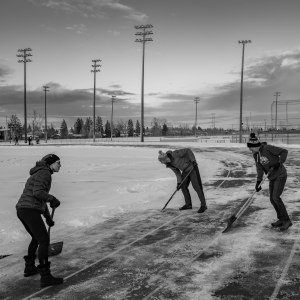
Despite these blemishes, the track has also been the site of countless track meets, interval workouts and road race finishes. I’ve personally done thousands of laps of the track, in all sorts of weather. And that’s a good segue to the fact that the Calgary running community has been second to none when it comes to keeping a lane or two of GAP 1.0 open through the winter months. All it takes is willpower and a lot of shovels, as demonstrated in this shot from October 2023.

Deb, Reinier and Jeremy dig in

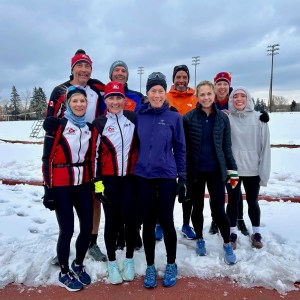
Here’s a shot of an interval session from late March. It was one of those Calgary spring evenings when we started with water in the far corner and ended with sheet ice. No one complained when we decided to cut things short.

Late March interval training, GAP 1.0

Or how about a photo from the 2019 Stampede Road Race? The park was a beehive of activity that morning, with lots of racing action and a pancake breakfast as our reward.

Sherrey and Deb, post-race

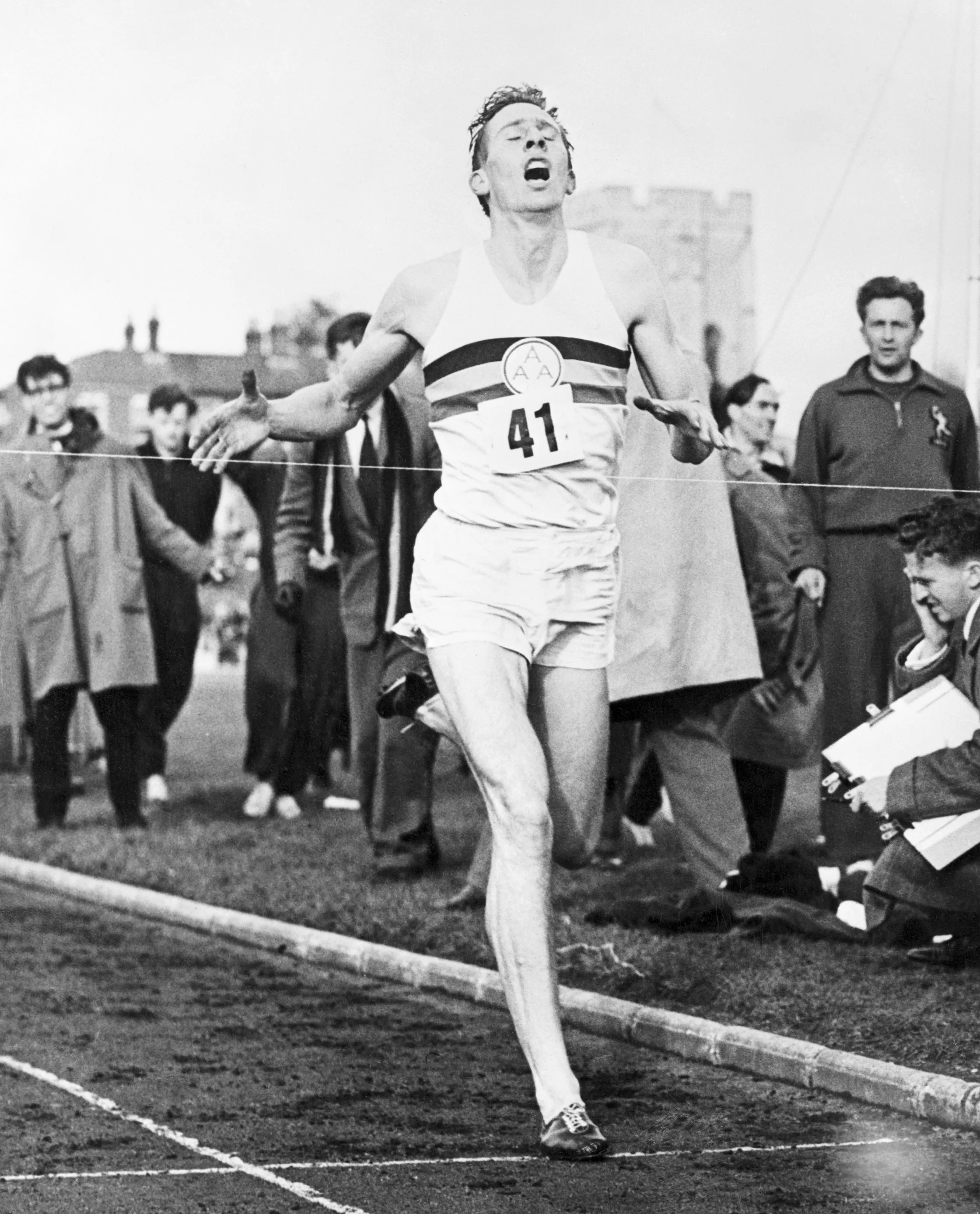
A recent track racing milestone got me thinking nostalgically about GAP 1.0. It was on May 6, 2024, the seventieth anniversary of Roger Bannister’s four-minute mile breakthrough on the Iffley Road track in Oxford, England.

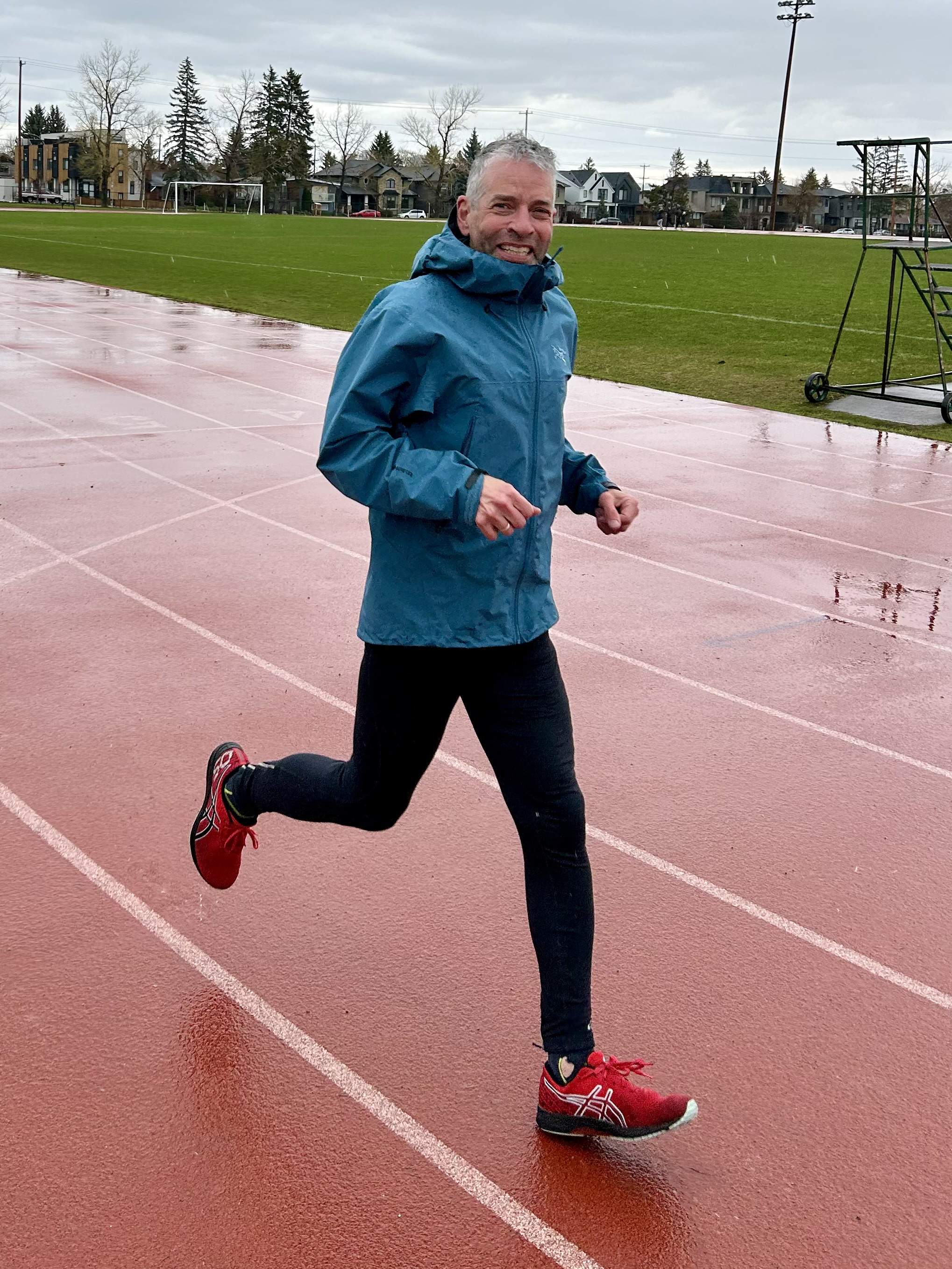
It seemed fitting to make a brief pilgrimage, in pouring rain, to run four ceremonial laps in honour of this great achievement. After all, the GAP track is only 10 years younger than Bannister’s record. I pointed out the significance of the day to a young athlete who had just finished his track workout. He gave me a polite but puzzled smile. I secretly wished for him to do the same on the hundredth anniversary in 2054, running his commemorative laps on the new track. 

In closing, I have many fond memories of running on the GAP 1.0 track. I don’t know what lies ahead, but if they do tear it down I’ll miss that familiar red surface, flaws and all. For years, it has been a great venue and meeting place for runners. It’s one of my favourite spots in the city.

So here’s to a good run for a fine old facility! And here’s to GAP 2.0… can’t wait to try out “big blue”.

Until next time, be well and BE FAST!

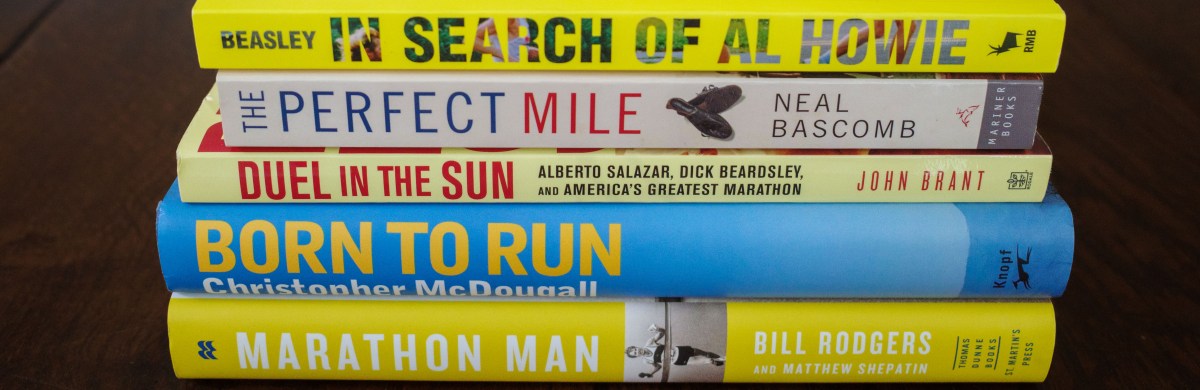
My Top 5 Books About Runners

Marathon Man, Bill Rodgers & Matthew Shepatin

Bill Rodgers was an unlikely sporting hero. His reputation as a flighty drifter stands in contrast to his intensely competitive racing personality. As we learn more about the man, we can understand this contrast and see how Rodgers progressed to the peak of the marathoning world.

I found his mile-by-mile account of the 1975 Boston Marathon—Rodgers’ breakout race and the first of his four Boston victories—to be worth the price of the book.

Marathon Man is full of motivation for amateur runners, and I highly recommend it.

In Search of Al Howie, Jared Beasley

Al Howie was an enigma. He was a troubled loner, who thought nothing of running thousands of kilometres just to compete in a race, only to turn around and run home. His 1991 record for the fastest run across Canada (72 days) stood for decades until it was broken in 2022 by local legend, Dave Proctor.

While Beasley’s book sheds some light on what drove Howie, we are in many ways left to come to our own conclusions about the man. And that’s fine.

I found the book helped me to sort out what running really means to me, and that’s why I recommend you read In Search of Al Howie for yourself.

The Perfect Mile, Neal Bascomb

All of us who enjoy running owe a debt to the three talented men who chased the four-minute mile in the early 1950s. Roger Bannister, a Brit, finally broke the barrier in 1954. And like us, he was a pure amateur. He juggled athletics training with medical studies and did groundbreaking research into the science behind aerobic exercise.

In my opinion, he paved the way for us to enjoy the sport as we do today.

What you may not know is that there was worldwide interest in the rivalry between Bannister, the Australian John Landy, and the American Wes Santee. Bascomb’s superb book, The Perfect Mile, brings this important piece of running history to life. Highly recommended!

Born to Run, Chris McDougall

This book caused quite a stir when it came out in 2010. It uncovered a whole new world of distance running, in the remote part of Mexico that is home to the fascinating Tarahumara people. Reading about their unbelievable feats of endurance left me in awe.

I was also intrigued by the mysterious American loner, Caballo Blanco, who lived and ran in the same mountain region.

The author’s own experience in a fifty-mile trail race leads him to investigate why human physiology makes us ideally suited to distance running.

These threads are woven together to make Born to Run a memorable read. See if you agree.

Duel in the Sun, John Brant

This is the story of one of the great rivalries in distance running, and possibly the most exciting Boston Marathon finish of all time.

The clash between Alberto Salazar and Dick Beardsley in 1982 has all the elements of a thriller: the brash young star and the workmanlike veteran, battling each other to the finish on a scorching day in Boston. Neither runner was ever the same again.

Their compelling personal stories are told in real-time as they run from Hopkinton to Boylston Street. Duel in the Sun is a must-read for anyone who has run that famous stretch of road. Or aspires to.  

Leicaphilia Loses its Creative Force

Tim Vanderweert passed away in early January. I need to say a few words about him, and the impact he had on me. In this digital world, it seems a stretch to say Tim was a friend because I never met him. I only knew him through his online presence and a bit of interaction we had through his blog, Leicaphilia. One thing is certain – I wasn’t the only person who was influenced by Tim.

It’s funny how things go sometimes. About five years ago, I was putting my life back together after a medical episode that left me wondering what my future would look like. Competitive running, which had been a constant presence in my life for more than four decades, looked like it might be taken away forever. I wasn’t sure I could cope with that prospect.

I had always had a passing interest in photography, but to be fair, it had never gone beyond a teenager’s early fascination with the gear and amateurish attempts to emulate the great landscape photographer, Ansel Adams. Boxes of family snapshots, as great as they are, attest to the fact that I focused more on quantity than quality. And that was fine, as I had limited time for hobbies, for all the usual reasons.

Fast forward to 2017. Adrift after a lengthy hospital stay and amid much uncertainty, I picked up my old Canon AT-1–that’s a totally manual film camera by the way–and started carrying it with me on my slow recovery walks around the neighbourhood. For years, I had cruised through the same streets at a faster pace – apparently fast enough that I hadn’t seen things that were right in front of my eyes.

My interest in photography was being rekindled but I was rusty. So rusty that I had missed the whole transition to digital photography, which had made film cameras obsolete. At least that was the conventional wisdom.

And then I discovered Leicaphilia, and its creative force, Tim vdW. Here was a guy, about my age, who had dedicated as much of his life and energy to photography – Leica-based film photography no less – as I had dedicated to competitive running. Different hobby, same passion. I liked him immediately.

The more I delved into Tim’s writing and creative output, the more our connection grew. I especially liked the fact that he steadfastly defended the turf of film photography against the onslaught of digital. Pixels didn’t matter an iota to him. It was more about the emotional impact, the art, than about the technical features of the latest camera. And on that point, Tim had the knowledge (and the courage) to state his views and share his thoughts. He wrote eloquently about the philosophical underpinnings of photography, about topics like aesthetics. His knowledge spanned centuries.

I had never read articles that tied the Greek philosophers to this hobby. But as a returning student, I was more than willing to learn. His lucid posts entertained me (and his other devotees) while they educated me, complete with photographs from his archives and his bike rides around North Carolina. He put together a book of his photographs taken from inside cars – it was called Car Sick – and I bought not one but two copies. (You see, he had made it abundantly clear to his readers that he had lost his shirt on the production of the book. I wanted him to keep going.)

When Tim announced to his readers that he had cancer, we all held our breaths. It looked bad. For a time, he stopped posting. Eventually, he informed us that he was in hospice care, with only a few days to live. Except he didn’t die. He got better, at least for a while.

In the last few months of his life, he gifted his anxious audience with constant posts, full of clear writing about his situation, and yes, some excellent photography. With a creative flourish, he turned his attention to developing the hundreds of rolls of film that had accumulated in his house. He even put together an exhibition of his life’s work.

And now he is gone. Tim showed us all how we might try to face the grim prospect of our own impending death, with grace and purpose, and good humour. As we go through the ups and downs of our own lives, we should all hope to have as much positive impact on those around us.

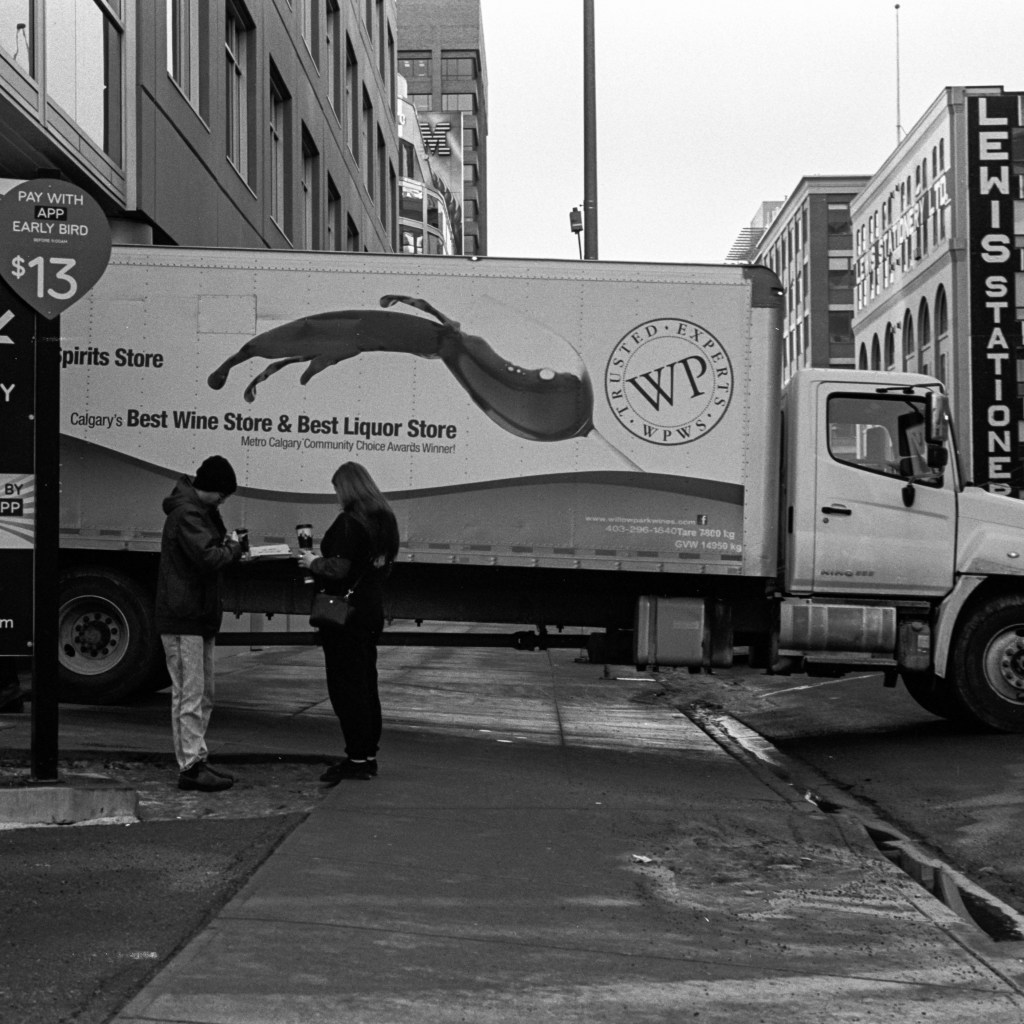
My first reaction to the news of his passing was to load a roll of his favourite film (Kodak Tri-X) into my Leica M6 and shoot some street photographs, hoping for his spirit to walk with me as my muse.

Tim will be missed.

“Look out below”, inspired by Tim vdW (Leica M6 and Kodak Tri-X, 2023)