Remembering Jerome Drayton

Recently, I wrote a piece about several of my sporting heroes. To keep the piece to a reasonable length, I didn’t comment on another man who had certainly earned a place on my list. In fact, he had been one of my personal heroes for years. That man is Jerome Drayton. In light of his sudden passing on February 10 at the age of 80, I’m regretting that decision. It seems appropriate to talk about him now, and the impact he had on me.

Much has been written about Drayton. His personal story is one of strength and resilience. He was born in Germany to Russian-Ukranian parents, just as the war was coming to an end. His parents divorced, and he emigrated to Canada with his mother in 1956. His name at birth was Peter Buniak, and while we hear various reasons for his change of name, it was clearly his way of putting distance between his past in Europe and his future life in Canada.

He started running in high school in Toronto and found early success. More accurately, he earned it. His results speak volumes about his work ethic. I can start with his astounding mileage totals. He was a pure amateur, doing 200-mile weeks while working full-time. Mere mortals struggle to reach a quarter of that.

While I was discovering athletics in the mid-1970s, Drayton was already in the top echelon of the sport. I never met him, but I followed his exploits closely. Here’s some of what I wrote about him in Stroke of Luck:

“Coincidentally, the world around us was discovering running at the same time we were. The mid- to late-1970s marked the beginning of what is now called the running boom. Frank Shorter’s win in the 1972 Olympic Marathon for the United States is often cited as the beginning of the boom, but I wonder how strongly that event resonated in Canada. If we were following any world class distance runners, it was more likely to be the top Canadian, Jerome Drayton, or even some of the top British runners like Ron Hill, rather than the celebrated American.”

Drayton’s running resume is stellar. In an era when distance running was still seen as a fringe sport, Drayton fit the stereotype of the lone, somewhat aloof, character. Obituaries and tributes describe his single-mindedness and determination.

In my book, I described Drayton as an enigma, given his preference for running in dark aviator shades and a tendency to front-run against his toughest competitors. Perhaps fitting that persona, Drayton never seemed to say much. He let his running speak for itself.

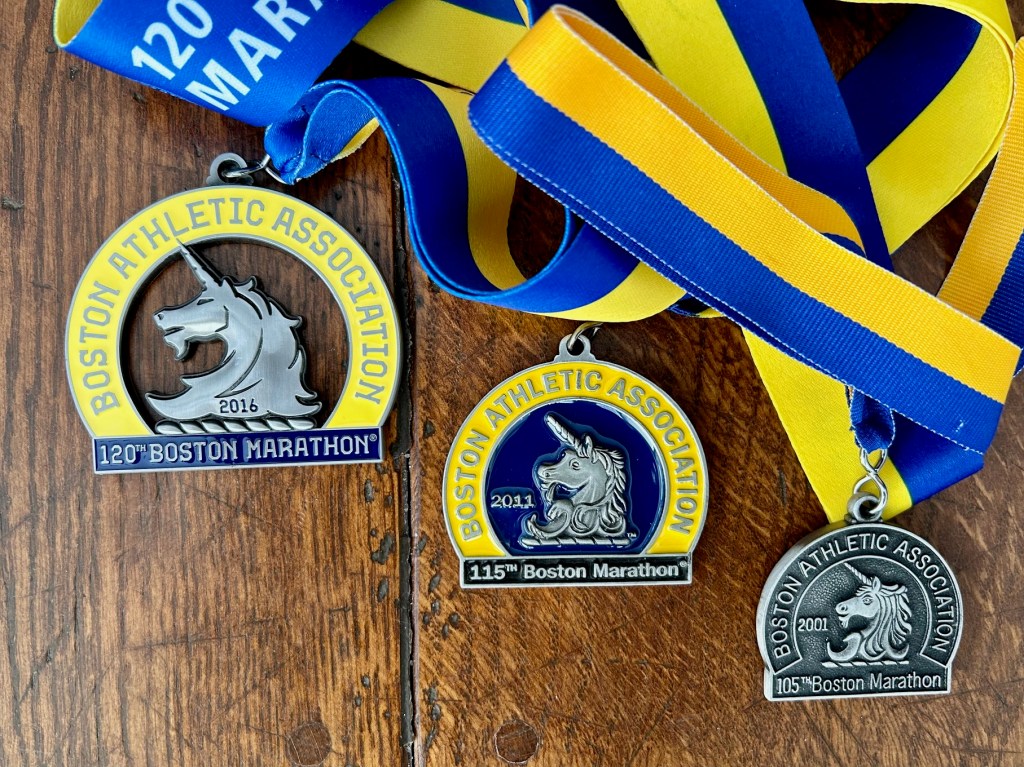
Consider this: long before Boston assumed the title of “world’s premier marathon”, the Fukuoka Marathon in Japan was at the pinnacle of the sport. Entry was by invitation only. Drayton won it, THREE TIMES, in 1969, 1975 and 1976. What about Boston? Well, he won that too, in 1977. He was the last Canadian man to do so.

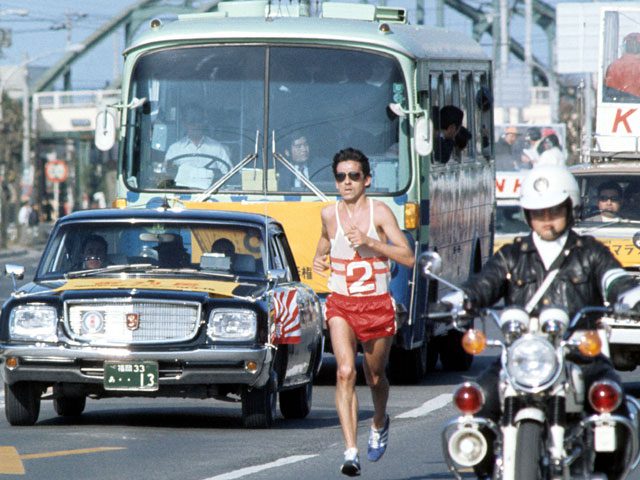
Drayton in the 1976 Fukuoka Marathon (Photo from Canadian Running, 2013)

Speaking of Boston, I suppose we could add “irascible” to the list of words describing Drayton. Apparently, he wasn’t the most gracious winner. Rather, he took the opportunity to point out that he had just about been mugged in the early going, and that his victory had nearly been sabotaged by the lack of water stations. Hearing this story only made me admire him more. Any of us who have run the race can thank Drayton for dragging the BAA into the modern era.

I have to mention the most durable of Drayton’s achievements, his Canadian marathon record. He set the record (2:10:08) in the 1975 Fukuoka Marathon, and it stood for an incredible 43 years until Cam Levins broke it in the 2018 Toronto Waterfront Marathon.

There was a Hamilton connection too, which cemented Drayton’s place as one of my running heroes. Here’s another passage from my book, where I talked about his victories in the Around the Bay Race:

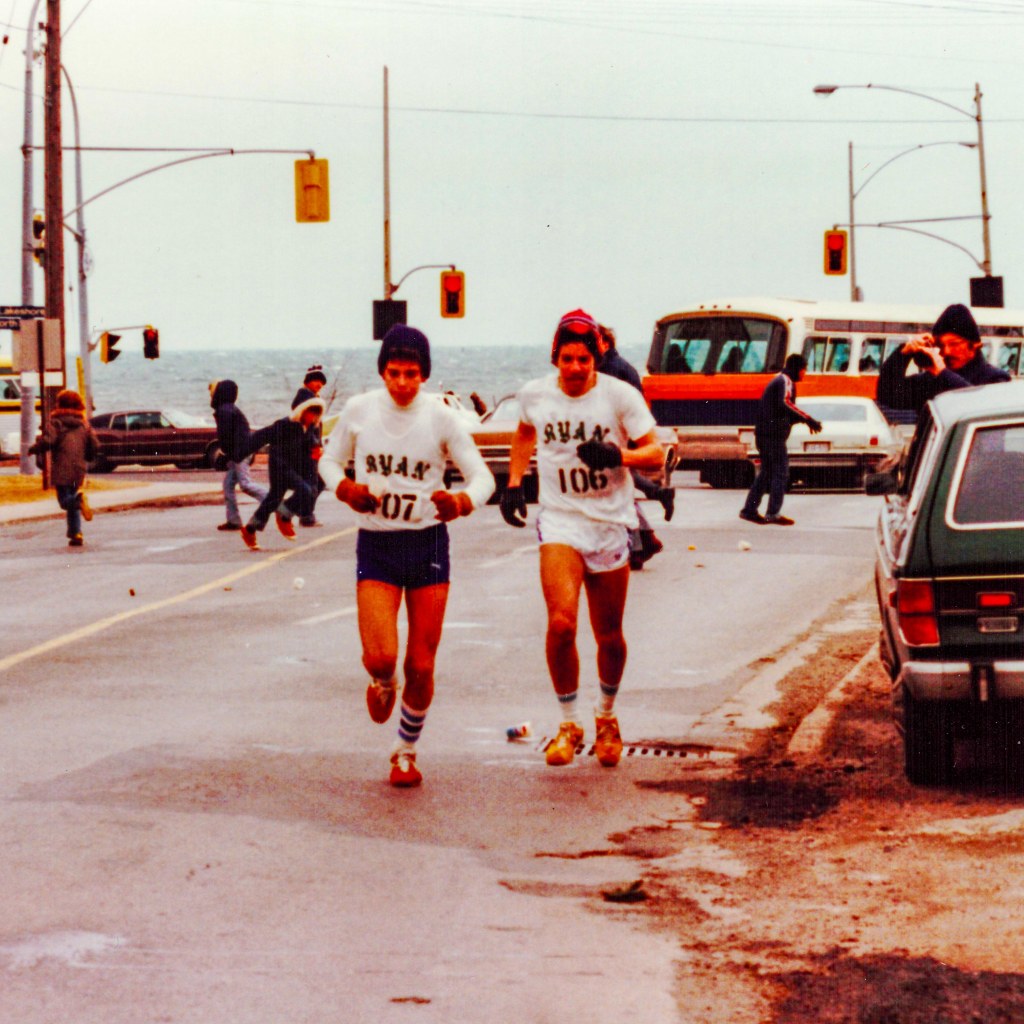
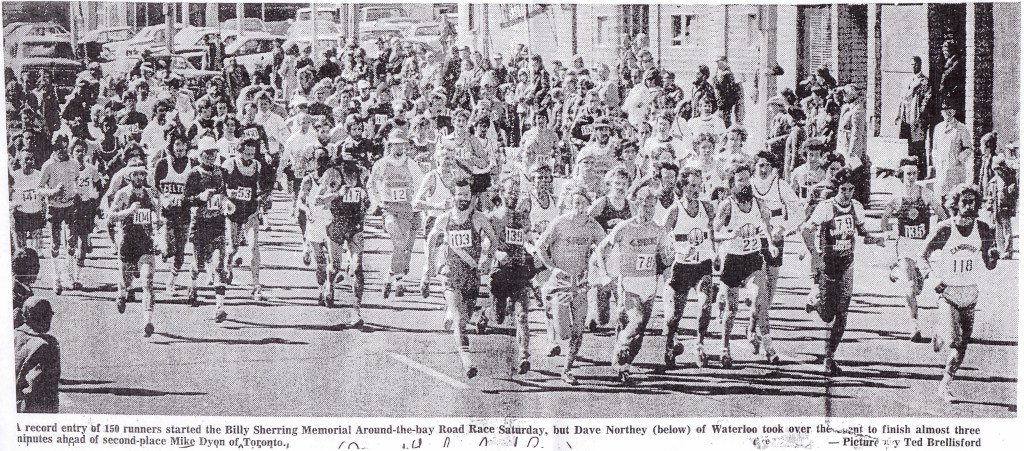
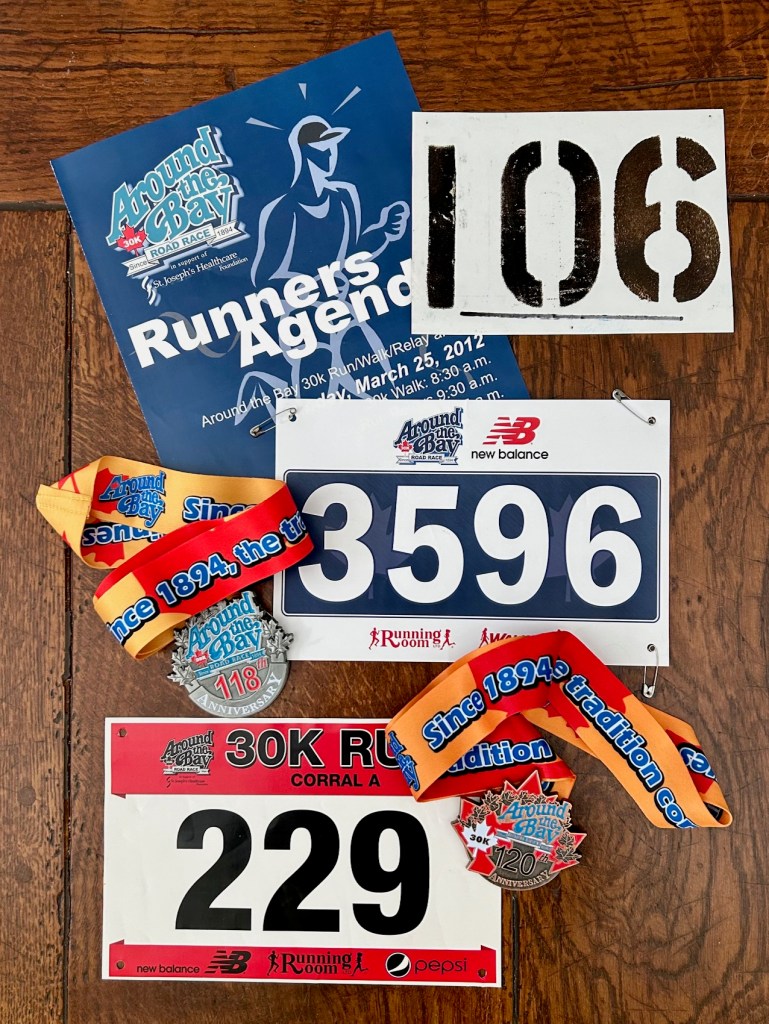
“The history of the Boston Marathon is intertwined with that other famous race, Hamilton’s own Around the Bay Race. Both races were first contested in the 1890s. Many icons of distance running, including some legendary Canadians, had competed in both events. The lists of past winners in Boston and Hamilton include many names that I recognized, even idolized. There was Jerome Drayton, the top Canadian marathoner, the national marathon record holder, and the 1977 Boston winner. He was also a two-time winner of the Bay Race, in 1973 and 1974.”

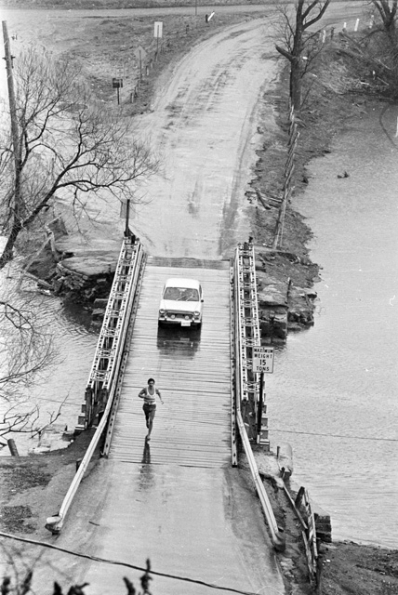
Drayton, alone in the lead at ATB (Photo from Hamilton Archives)

In the 1970s, finding any athletics news at all was tough. I scoured a lot of newspapers. Despite the sport’s relatively low profile, Drayton stood tall. His star shone brightly until his retirement in the early 1980s. When his racing days were behind him, Drayton was a reclusive role model. He appeared from time to time in interviews… this one in Canadian Running Magazine from 2009 is excellent… and when his Canadian record was finally beaten, he was gracious. He expressed surprise that it had taken so long.

In his later years, Drayton took on advisory roles with government sports agencies. He shunned publicity and lived a modest life in Toronto. Some stories mentioned his struggles with arthritis, which may have contributed to his unexpected death. The news reports I’ve read suggest his death came during knee surgery. Sadly ironic, for a man whose legs had carried him to the top of the marathon world half a century earlier.

Jerome Drayton was a true sporting legend, whose place in Canadian sporting history won’t easily be matched.

Until next time, be well and (emulating Drayton) BE FAST!

Homage to GAP 1.0

Today’s run was just what I needed.

I had a late evening return flight from Ontario yesterday, so I was feeling a bit out of sorts as I parked next to the Glenmore Athletic Park (GAP) track. A high school track meet was in full swing. I watched from trackside for a few minutes, absorbing waves of energy and hearing the screams of hundreds of students as they cheered on their teammates. It motivated me to get going on my short and overdue run. 

I’d been thinking for some time about a homage post to the GAP track. I should say the original GAP track (GAP 1.0), because a spiffy new facility is being constructed by CANA, just a short distance away. I have a lot of criticism for decisions coming out of Calgary city hall but this isn’t one of them. I can’t wait for the new facility to be finished. 

The grandstands have been taken down and moved to the new track. The brilliant blue of the new surface looks magnificent and oh so ready for spiked shoes. Crews are working on the finishing touches, like landscaping. It will soon be the dawn of an exciting new era in track and field in Calgary. 

It seems timely to say a few words about GAP 1.0. I’ll be honest. The place is definitely looking worse for wear. Chunks of Lane 1 are crumbling into the infield. Patches and cracks are plentiful, thanks to our winter freeze-thaw cycles. The spotting booth on the back straight has been taken over by pigeons.

Pigeon holes on the back straight

I did a little research and found out that GAP 1.0 was built in 1962-63. It’s just a couple of years younger than me. No wonder it has cracks and wrinkles! 

Despite these blemishes, the track has also been the site of countless track meets, interval workouts and road race finishes. I’ve personally done thousands of laps of the track, in all sorts of weather. And that’s a good segue to the fact that the Calgary running community has been second to none when it comes to keeping a lane or two of GAP 1.0 open through the winter months. All it takes is willpower and a lot of shovels, as demonstrated in this shot from October 2023.

Deb, Reinier and Jeremy dig in

Here’s a shot of an interval session from late March. It was one of those Calgary spring evenings when we started with water in the far corner and ended with sheet ice. No one complained when we decided to cut things short.

Late March interval training, GAP 1.0

Or how about a photo from the 2019 Stampede Road Race? The park was a beehive of activity that morning, with lots of racing action and a pancake breakfast as our reward.

Sherrey and Deb, post-race

A recent track racing milestone got me thinking nostalgically about GAP 1.0. It was on May 6, 2024, the seventieth anniversary of Roger Bannister’s four-minute mile breakthrough on the Iffley Road track in Oxford, England.

It seemed fitting to make a brief pilgrimage, in pouring rain, to run four ceremonial laps in honour of this great achievement. After all, the GAP track is only 10 years younger than Bannister’s record. I pointed out the significance of the day to a young athlete who had just finished his track workout. He gave me a polite but puzzled smile. I secretly wished for him to do the same on the hundredth anniversary in 2054, running his commemorative laps on the new track. 

In closing, I have many fond memories of running on the GAP 1.0 track. I don’t know what lies ahead, but if they do tear it down I’ll miss that familiar red surface, flaws and all. For years, it has been a great venue and meeting place for runners. It’s one of my favourite spots in the city.

So here’s to a good run for a fine old facility! And here’s to GAP 2.0… can’t wait to try out “big blue”.

Until next time, be well and BE FAST!

Arizona Dreaming – Part 1

XTerra Black Canyon Trail Race

It was a monster day of trail racing. An early start on a rainy St. Patrick’s Day morning in central Arizona didn’t deter a large Adrenaline Rush contingent for the Black Canyon XTerra trail races

Our runners toed the line in the 7k, 11k and Half Marathon distances… sadly there were no takers for the marathon. The rain eased up just in time and gave way to perfect racing conditions on the scenic course in the Sonoran Desert.  

Early morning in the Sonoran Desert (March 17, 2024)

Allison Blackmore and Mark Martens were off first in the half marathon. Allison smoothly made her way around the course, a challenging mix of single track and horse trail. Her legs held up until the 16k mark, and she managed the fatigue induced by 525m of elevation gain. Allison nailed down a first-place finish in the F55-59 age group and was fourth overall female in a time of 2:01. 

A stir went through the crowd when word spread of a Sasquatch sighting on the trail. Of course, it was only Mark, who overcame a few nagging injuries that have kept him out of interval training for the winter. He put in a solid performance, finishing in 2:19 and fifth in the M50-54 AG. His performance leaves him optimistic about his chances in the upcoming HM in Mississauga.

A St. Patrick’s Day Sasquatch sighting!

142 runners tackled the 11k, including four AR racers, who left a definite mark on the event. Al Blackmore continued his recent good form by racing to an 18th-place finish. He looked very comfortable running to an excellent time of 1:08. This was good for third in the highly competitive M60-64 AG. 

Doreen Katchmar admitted she couldn’t sleep the night before the race, worrying about getting lost on the course. Fortunately, the XTerra route was extremely well-marked. That meant Doreen could focus on staying upright and running strong… and it was mission accomplished! She turned in a nifty performance of 1:19 and first in her F60-64 AG. What a result!

Carolyn Leonard enjoyed the race and delivered a great performance. At 1:21, her time won her a first-place finish in the F55-59 category. The entertaining race announcer kept her in suspense, but there was never any doubt that she ran “the most perfect race.” Carolyn appreciated the supportive atmosphere among the racers on the trail. 

Coach Janice McCaffrey got into the St. Patrick’s Day spirit (and was easily the best costume of the day, but sadly there was no such category). We heard later that she may have lost a bit of time on course when her green tutu got snagged on a Saguaro cactus. Fortunately she was carrying poles, which she put to good use, en route to a third-place AG result and a 1:29 time. 

Debbie and I had modest expectations for the 7k, due to a sore hip and Achilles, respectively. Things started well, with Deb leading a small group of runners through the single-track section. That is until yours truly hit a rock and went down hard. After a brief pause, we carried on, but not before Deb had confirmed that no women in her age group had passed us. She need not have worried. In the immortal words of the race announcer, she was an “ultimate monster” with a convincing first-place finish in the F65-69 AG in 57:45. And me? I managed 2nd in my AG and was happy to still be upright. 

Deb cruises past the horse stables and heads for home

Rita and Jamie Bertwell turned in awesome performances on what they described as their “first day of training.” They looked like race veterans as they handled everything the course threw at them, including 10-12 fords of Black Canyon Creek in the last 2k. Jamie noted that while it wasn’t a contest, he did notch one better AG place in his race than Mark did. And Rita? She was a cool 5th. Our intrepid announcer called it correctly for their hand-in-hand 1:22 finish: “Now THIS is what it’s all about!”

And in summary, those words rang true for all the AR racers on the day.

What a day at the races for Adrenaline Rush!

Quite a Week!

Owl’s Nest Book Launch – Calgary

On Wednesday, February 7 we held a book launch event at our favourite local indie book store, Owl’s Nest Books. Sarah Pratt, the Events Director at the store (and an avid ultramarathoner) was our marvelous host for the evening.

We were thrilled to welcome a standing-room crowd of friends, neighbours, teammates and work colleagues. I was honoured that my neurologist (Dr. Demchuk) and my long-time teammate at Adrenaline Rush Athletics (Dr. Stephen Wood)… both heroes of my stroke story… joined us for the evening.

I did a short reading from Stroke of Luck: My Life in Amateur Athletics. During the lively Q&A portion of the program, I shared my main messages:

  • the importance of an active lifestyle
  • knowing ALL the signs of stroke
  • raising awareness (and funds) for the world-class stroke care provided by the doctors, nurses and staff in the Foothills Stroke Unit
Owl’s Nest book launch (February 7, 2024)

Sincere thanks to Sarah at Owl’s Nest Books and Jeremy Deere from Strides Running Store, for your support of the reading and running communities in Calgary.

It was a special evening!

First Half Marathon – Vancouver

We didn’t get much time to recover, as we headed off to Vancouver on Friday for a weekend visit with Matthew. The headline purpose of the trip was to participate in the annual First Half Marathon, put on by RunVan and sponsored by BlueShore Financial.

As usual, the race was outstanding. It sold out immediately, as it does every year. This is definitely one of the premier races in Canada; well-organized and perfectly executed. It doesn’t hurt that the scenery is second to none. The highlight is the lap of the Stanley Park seawall.

I wrote about my history with the race in a previous post. This year, our race was challenging. The weather did not cooperate, although the steady rain was little more than an inconvenience. Deb and I were both hobbled by nagging injuries, which affected our preparation. While it is often true that one can run through these things on race day, neither of us was so lucky this time.

The second half of the race was a slog. The good news is that we got through it. The finish line on Drake St. in Yaletown is always a welcome sight. And who cares if we were a few minutes slower than last year?

It was all smiles at kilometre 6 (February 11, 2024) – Photo by Matt Kelly

…and a bit of street photography

I always look forward to walking the streets of Vancouver, armed with my discrete camera, the Ricoh GR III. It is the perfect camera for street photography.

Here are a few samples of the photos from the weekend.

Ready to ride
Suki’s
Too busy to ride

Earl Grey GC Member Profile

In this, Heart Health Month, it was a great pleasure to sit down with Christa Abbott, Director of Marketing & Communications for Earl Grey Golf Club in Calgary. (I’m quite sure it used to be called Heart and Stroke Month, so I should be okay borrowing the older designation!)

I’ve been a member of Earl Grey for many years, although admittedly golf has taken second place behind running for most of that time.

Christa and I talked about my stroke journey… the medical one, not the golf one… about the role that running played in getting me through that ordeal, and about the process of writing my book, Stroke of Luck.

I was really pleased with the piece that Christa wrote, and in particular how she incorporated one of my main messages… the importance of knowing ALL the symptoms of stroke… into the graphic for her article. Here it is:

Splash screen from Earl Grey Member Profile (Christa Abbott, 2024)

You can find the post on the club’s Instagram page here.

Christa neatly highlighted the phrase “BE FAST” as a reminder of the full range of stroke symptoms. You can read my post on this potentially life-saving topic here. I’ve included the information below, for quick reference.

And the picture of me that Christa used?

It was taken at about the 8k mark in the Calgary 10k race, in May 2017. I’ll be the first to admit it isn’t the best picture that’s ever been taken of me during a race. That said, when I do show this picture, I point out that I had just suffered a vertebral artery stroke a few minutes before it was taken!

For me, this is a stark reminder that strokes can affect any of us, at any time.

You can read the full story in Stroke of Luck: My Life in Amateur Athletics, available online at Amazon, or at independent bookstores, like our great local store, Owl’s Nest Books.

Thanks to all my friends at Earl Grey, and everyone else who has supported me in this initiative. Oh, that reminds me, there is one thing I plan to do in this next phase of my life (My Second Running Life)… suck a little less at golf!

Happy Heart Health (and Stroke) Month to all,

Steve

Stroke of Luck – Now Available!

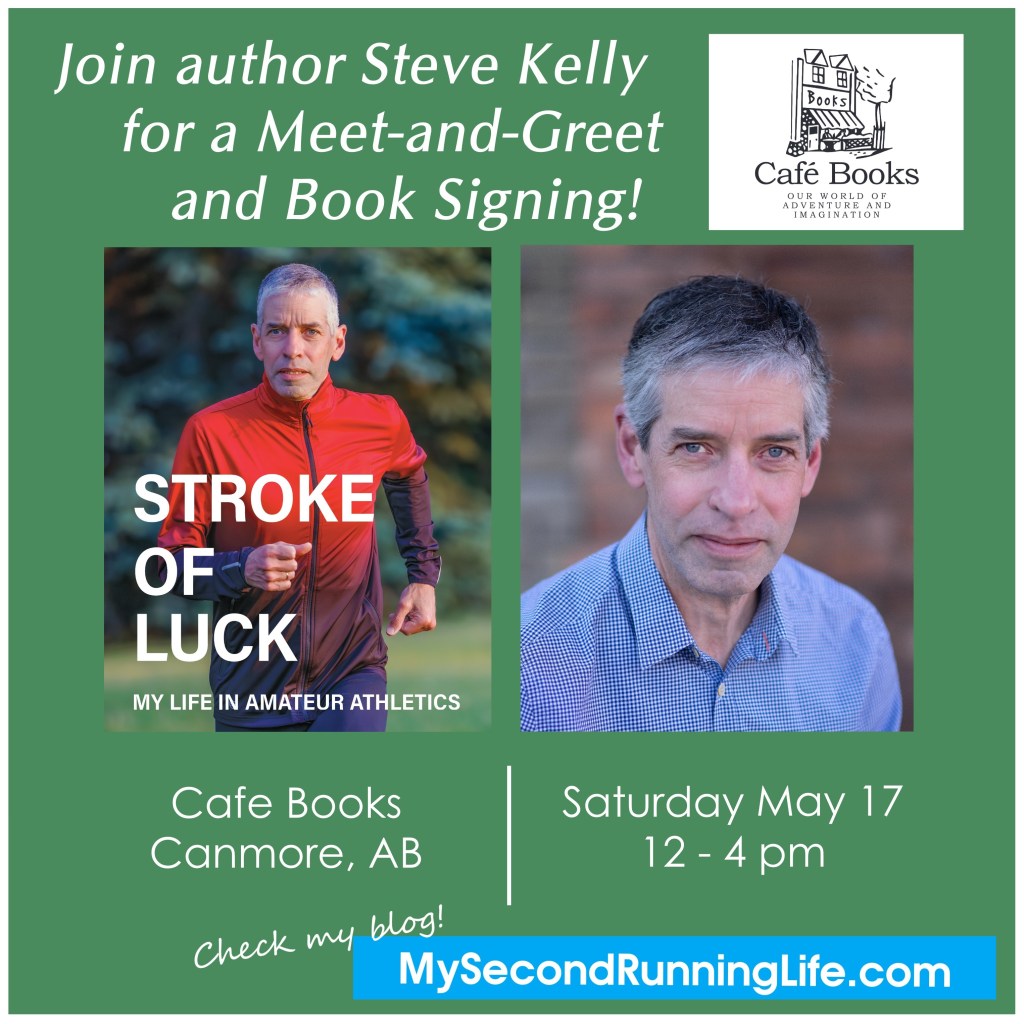
I’m pleased to announce that my memoir, Stroke of Luck: My Life in Amateur Athletics, was recently published. The book is available now on Amazon (in either print or e-book format) or through independent bookstores. For those in Calgary, you can reach out to me directly for a copy. You’ll find details about the book on the dedicated page on this site. Click here.

Writing and publishing the book has been a personal journey of discovery. I hope you will enjoy reading about my lifelong connection with distance running, and the process of recovering from a number of strokes in 2017.

To my readers, and to those of you following me on the blog or on Instagram, I appreciate your interest and support. I look forward to sharing more stories and photographs with you.

Steve

Stroke of Luck: My Life in Amateur Athletics – order your copy today!

What a Difference a Week Makes

As anyone who has lived here can tell you, Calgary doesn’t do fall very well. Sure, it can be nice one day, but we know not to be fooled. It’s only a matter of time before the weather turns into a demon.

This past week was a good case in point.

The First Responders races are hosted by Multisports Canada, in support of all first responders – police, fire, EMS and military. Races are held across Western Canada. This year, the Calgary race was held on October 22, on beautiful St. Patrick’s Island.

It was a cool day… a perfect day for racing. A good turnout for the 5k, 10k and half marathon races provided lots of opportunities for runners and spectators. Deb and I were there to cheer on some young athletes from our club. We were also fortunate to have Dan in town for the weekend. He was with members of his Cold Lake squadron, to compete in the 10k.

Overcast skies and the scenic backdrop of the island also promised some great photo opportunities. I got myself ready in a few strategic locations, with my Leica M10 and the excellent Voigtlander 75mm Heliar f1.8 lens in hand.

Competitors in the Half Marathon make their way across the George C. King Bridge

The racers didn’t disappoint. There was plenty of excitement and some terrific performances. You can find the results for all the races here. The ageless Maria Zambrano, who has been a fixture in the Calgary race scene for decades, won the 10k outright, in a sparkling time of 36:09. She isn’t getting older, she is getting faster. Amazing!

Maria Zambrano heads for home in the 10k

Providing more evidence that age is really just a number, Andrew Brown took home top honours in the half marathon, running 1:26:35. By the way, Andrew is in the 50-59 age group.

I was wearing two hats (well maybe three, given the temperature.) As an assistant coach, I was rooting for two young runners in our Adrenaline Rush club, Alison and Owen MacPherson. Both raced their plans to perfection, chalking up negative splits and looking far too comfortable at the finish. Dad Gord was there to cheer them on!

The MacPherson family celebrates two fine performances in the 5k

Now, what about the demon, you ask?

Our time ran out on Monday, with the arrival of a cold front. It was the first blast of winter. By the time it was done, 15cm of snow had fallen on Calgary, and our pleasant fall was a distant memory. We are still digging out! And running on treadmills for the most part.

Proving the resilience of the Calgary running community, a small army of volunteers picked up their shovels and headed for the track at the Glenmore Athletic Park.

Shovels ready!

As Deb and I worked to clear a couple of lanes on the back straight, I did some math to take my mind off my aching back. It took us an hour of hard work to clear about 200m of one lane. Did you know that one lane on a standard track is 4 feet (1.2m) wide? That means each of us did about 250 square metres of shovelling.

I also had time to figure out that the total surface area of a 400m track is about 4,300 square metres. So, between Deb and I, we managed to clear about 12 percent of the total surface area of the track. Thank goodness we had a lot of help.

No wonder I’m sore today.

Deb, Reinier Paauwe and Jeremy Deere work on the first corner

It all goes to show that Calgarians are adaptable, resilient and community-minded. We runners in the southwest will have a few lanes to train in, at least until the next snowfall.

Stay warm!

Four Ways Running Has Changed

  1. Technology

These days, most runners take for granted that they will have a permanent record of every kilometre they run. Some obsess over it. But the availability of all this information and more is a relatively recent phenomenon. For much of my time in the sport, that is to say, the last half-century, there was almost no information available on pace or distance, let alone heart rate, recovery time or anything else.

I used to check the time on the kitchen clock before I left my house for a run, so I could have some idea of how long I had been running when I got back. Pace? Forget about it. That started to change when GPS watches came into the market. Of course, they are now ubiquitous.

I still think of my Timex Ironman watch as something special. This reminds me, there is something liberating about setting off for a run with no watch of any kind. Try it sometime.

2. Gear

As I plodded through fresh, wet snow on a 16k run yesterday, I thought about how fortunate we are to have tights, high-tech base layers, and Gore-Tex jackets to get us through the worst of our Canadian winter weather. We finished with slightly wet feet, but otherwise we were warm and comfortable. And in the summer, breathable fabrics magically shed water to keep us dry.

Am I the only one that remembers Adidas tracksuits from the 1970s? You know, the gymnast-style pants with the loops that went under your foot? They were made of some strange synthetic fibre whose only attribute was to guarantee to chafe. Or how about cotton T-shirts and sweatpants, which held water like a sponge? Then there were the cringeworthy Dolfin running shorts from the early 1980s. Richard Simmons had nothing on me. Some things are best forgotten – forever.

3. Races

This is probably the category where I’ve seen the biggest changes. Some are good and some are not. I’m thrilled to see so many more races on the calendar than we ever had in the early days. Not only that, races are almost always well-organized now, with proper timing and accurate course measurement. Gone are the days of haphazard planning and poor execution by well-meaning but inexperienced race directors.

But I have to say, there are downsides. I object to shelling out $75 for a race that is, frankly, a pretty minor event. I don’t need a technical T-shirt and a finisher’s medal from each race I run. Sometimes, I’m just there for a quicker pace run, or to get a bit of competition. I’d much rather have the choice of whether to buy the shirt, and I really could do without the medal. Maybe that sentiment underlies the growing Parkrun trend, where runners can show up and run/race, without all the trappings.

4. Participation

For years, the only participants in road races were gaunt, sinewy veterans of the circuit. Even the big races were sparsely attended, and the runners who did show up were all of a certain demographic. Many races went through an existential crisis in the late 1970s, when it became clear that small fields of young adult males didn’t bode particularly well for the future of the sport.

It was the salvation of the sport that running became mainstream starting in the 1980s and 1990s. Frank Shorter is often given credit for enticing a whole generation of new runners to put on a pair of newfangled Nike Waffle Trainers and give it a try. (I think there was more to it, but that’s fine.) Whatever the reason, we should all be thankful, because we are now enjoying the benefits. The starting grid for just about any road race is a healthy cross-section of society, including people of all ages. We’re all better off for it.

On Racing and Recovering

Yesterday’s long run turned into a bit of a slog. Deb woke up with a pinched nerve in her neck, and I was feeling, well, crappy. Fatigued. Lethargic. We started with a walk, thinking that might be enough. Once we were warmed up, we slowly added some pace, but our run ended up being well short of what we planned to do, both in distance and pace. It was one of those runs best forgotten.

There may be more to the story than bad luck. You see, Sunday was two weeks on from a half-marathon that we ran in Vancouver. (Incidentally, it was the fantastic and well-organized First Half Half. Highly recommended!)

Although two weeks should be an adequate recovery period for a half, it got me thinking about how much downtime is enough after a race. I’ve always subscribed to an easy-to-remember formula that I learned years ago. It goes like this: treat yourself to one easy day for each mile you race.

Spelling it out, for a 10k race that means (more or less) a week of easy running; for a half marathon, two weeks; and for a marathon, a month.

There is a tendency to want to shorten these recovery periods. After all, if we had a positive race experience, why wouldn’t we want to get back in the saddle as soon as possible?

For me, that has usually not been an option. Inevitably, racing has taken more out of me than I’m willing to admit. Even after the immediate post-race soreness had cleared, the residual fatigue was too much to overcome in a few days. My effort in interval workouts or long runs during the recovery period, if I could do them at all, had to be scaled back significantly.

Add in the effects of aging, and whatever issues come along with it, and the rule-of-thumb recovery periods should get even longer. It makes sense that we aren’t as quick to bounce back as we used to be.

So, whether or not our recent experience was tied to an inadequate recovery or just bad luck, it’s worth remembering that a race puts major stress on our bodies. In summary, we should always respect the need for a full recovery.

A Special Race

For the second consecutive year, Debbie and I were in beautiful Vancouver, to run in the “First Half” Half Marathon (sponsored by RunVan). It was a special weekend. For me, just to compete in the race felt like an achievement. To run with Deb made it even sweeter. We met our goals for the race, after a long winter of training in Calgary. Several of our teammates and training partners were there with us. Even better was to spend the weekend with our son Matt.

Race Day, 2023

As satisfying as the race was for us, it was also a bittersweet weekend. You can read my race report from the 2022 race to find out why. I’ve reproduced it below. You will see why the First Half is a race that has special memories for me.

2022 First Half Race Report

We each have races that hold special meaning. The First Half Half Marathon in Vancouver is one such race for me. In 2011, it was the first race I ran as a new member of my club, Adrenaline Rush. That winter was harsh, even by Alberta standards, but my teammates and I survived some truly epic long runs on the path to race day.

The First Half is hugely popular. It regularly sells out in a day, so I felt lucky to secure an entry in 2013. In 2016, in a steady rain, I put together a solid performance and finished third in my age group. It was one of my best race results ever. My fondness for the race grew.

In 2017, things went from strange to scary. My wife Debbie and I travelled to Vancouver on Valentine’s Day weekend, only to have a freak snowstorm shut the city down. The race was cancelled. Then in July, my life was turned upside down by a series of strokes. Running at all became an open question. It looked unlikely that I would ever run in the First Half again.

But life has continued. And even better, it includes running. My return to the sport has been cautious. It now includes the pleasant option of running often with Debbie. I have started doing solo runs. And in addition to watching my teammates from the sidelines as an assistant coach, I now benefit from our interval training sessions.

Debbie, too, has ramped up her training. The idea of running the 2022 First Half was mostly hers, and while I wasn’t opposed to it, I wasn’t sure I would even make it to the start line. Knowing her as well as I do, I had no doubt she would put in the necessary hard work.

Our confidence grew through another tough winter as our long runs stretched out. We got to that inevitable point where we couldn’t wait for the taper. The weather outlook was for perfect racing conditions.

Finally, race day arrived. My phone rang as we got ready. Our sister-in-law, who had been bravely battling cancer, had passed away a few hours earlier. We knew this day was coming, but it was still hard to hear the news. As we had already put on our race kit, and knowing that Shelley was a great supporter of my brother’s running, we knew we had to carry on.

We got through the unusual rolling start and settled into our target pace. Through 17k, when my watch blacked out, this was a case study in good race execution. We handled the many distractions with ease: turns, fuelling, and traffic. Deb was in great form and running well. I was feeling good too. As always, the scenery in Stanley Park was a welcome diversion.

We felt the pull of the finish line in the last few kilometres. I could tell that both of us were in the same place mentally. I had warned Debbie about a hill in the last kilometre. She overcame it like just one more interval repeat. Our cruise into the finish felt smooth and effortless.

It was amazing to be in Vancouver again for an actual race. Our performance leaves me optimistic about the season ahead. I’m proud of Debbie, who trained diligently and delivered perfectly on her race plan. And me? I was happy just to have another chance at this race that I enjoy so much. Even though I ran with very different goals this time, I can report that the satisfaction is the same. Finally, on a sad day, we had another reason to experience this unique event, buoyed by memories of our late sister-in-law.