Auroras and Other Distractions

Good news! I’ve extended my Dedication Sale through the end of October. It’s a nod to our Thanksgiving holiday.

Print and e-book versions are available on Amazon at a 20% discount.

There’s a hard stop on the sale on November 1!

In what was a fairly chaotic week, I did manage to capture a few interesting images. There was no shortage of subject matter. I only had to force myself out the door with a camera.

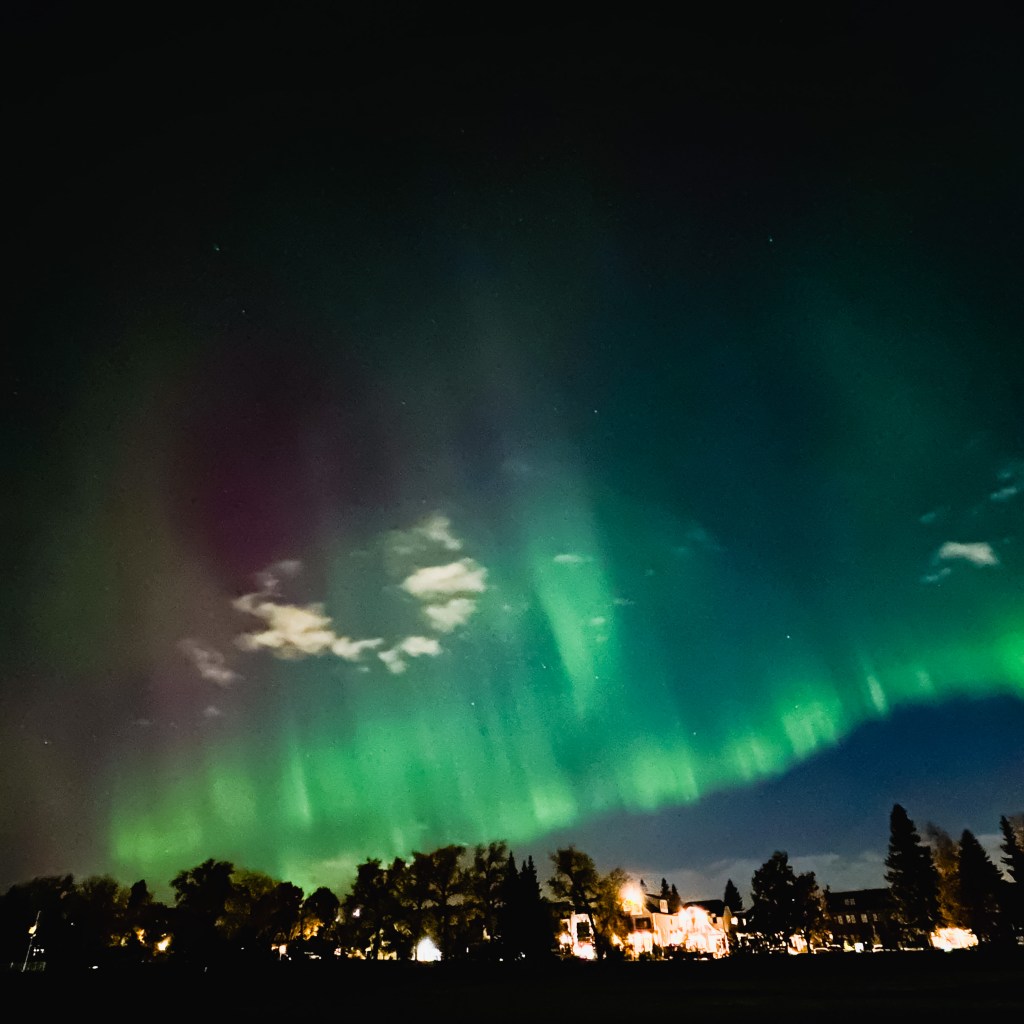
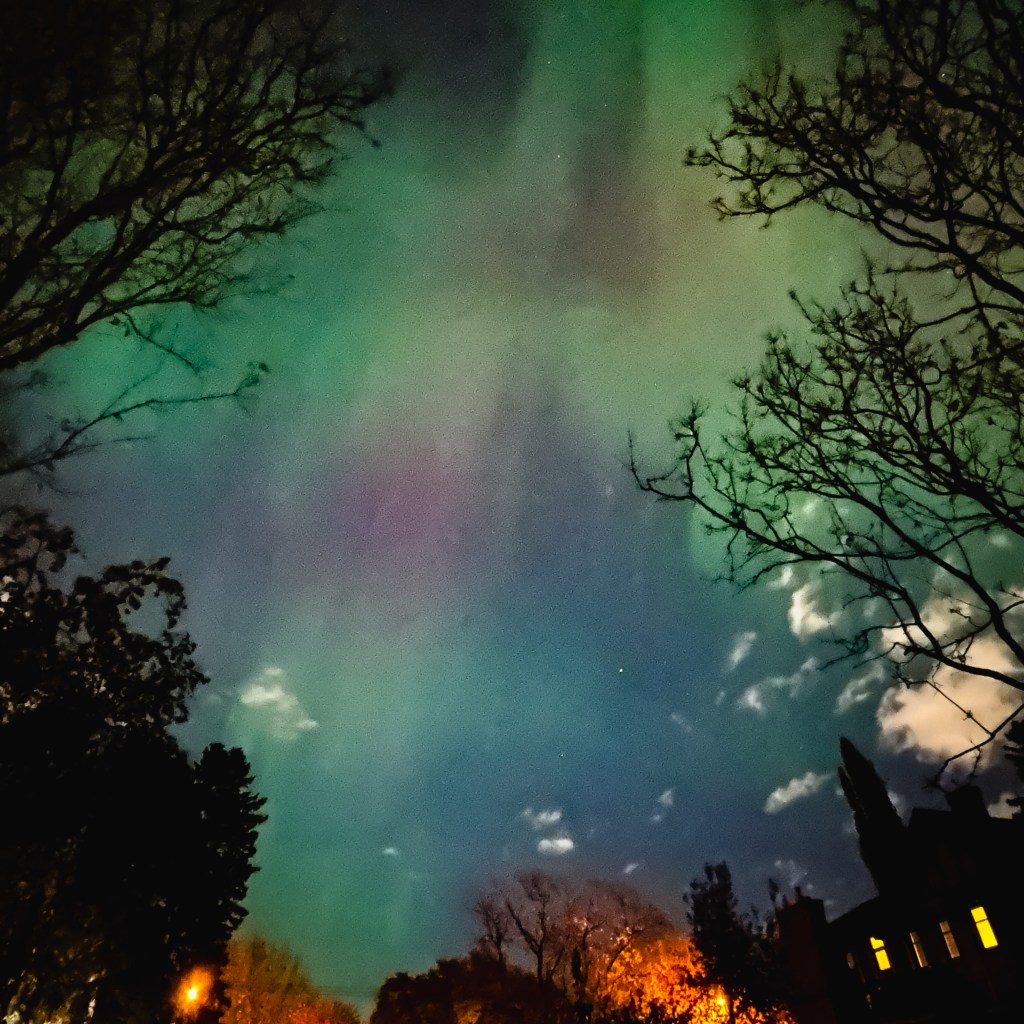
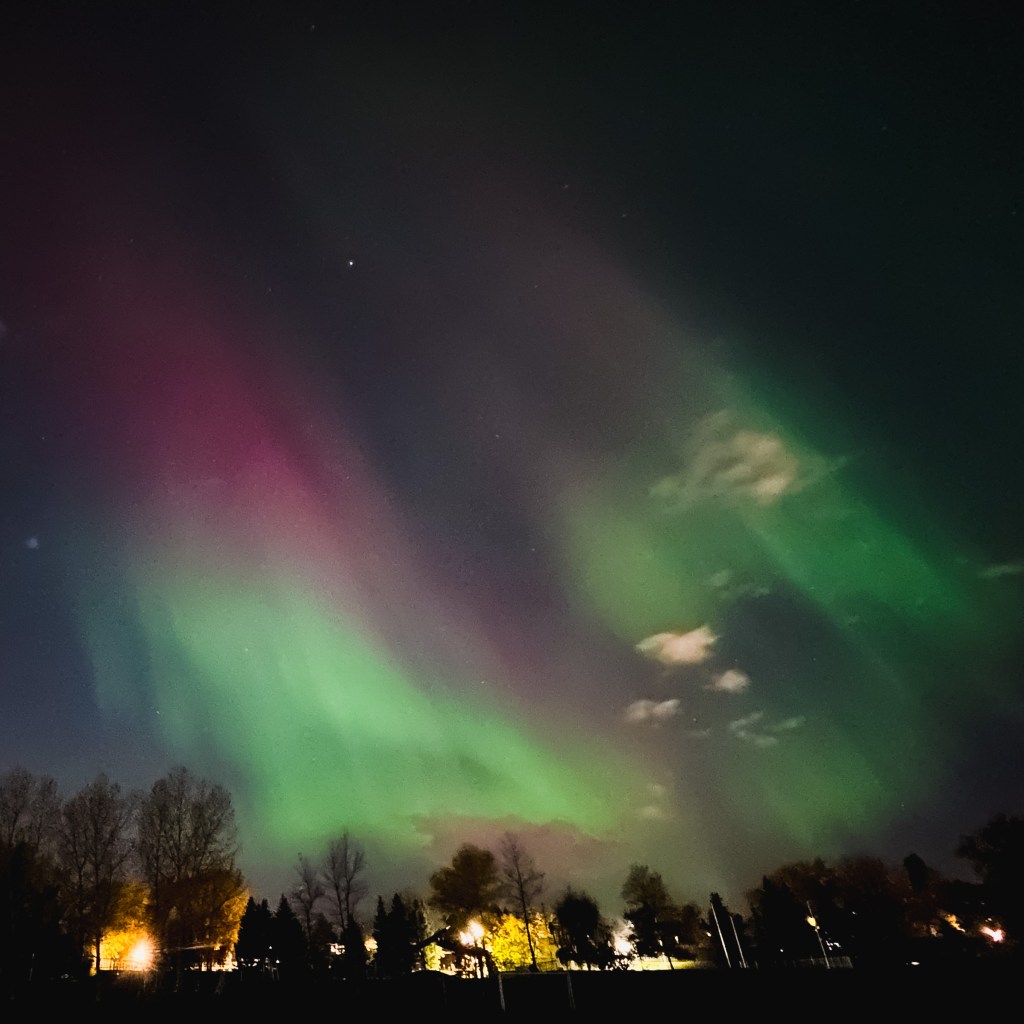
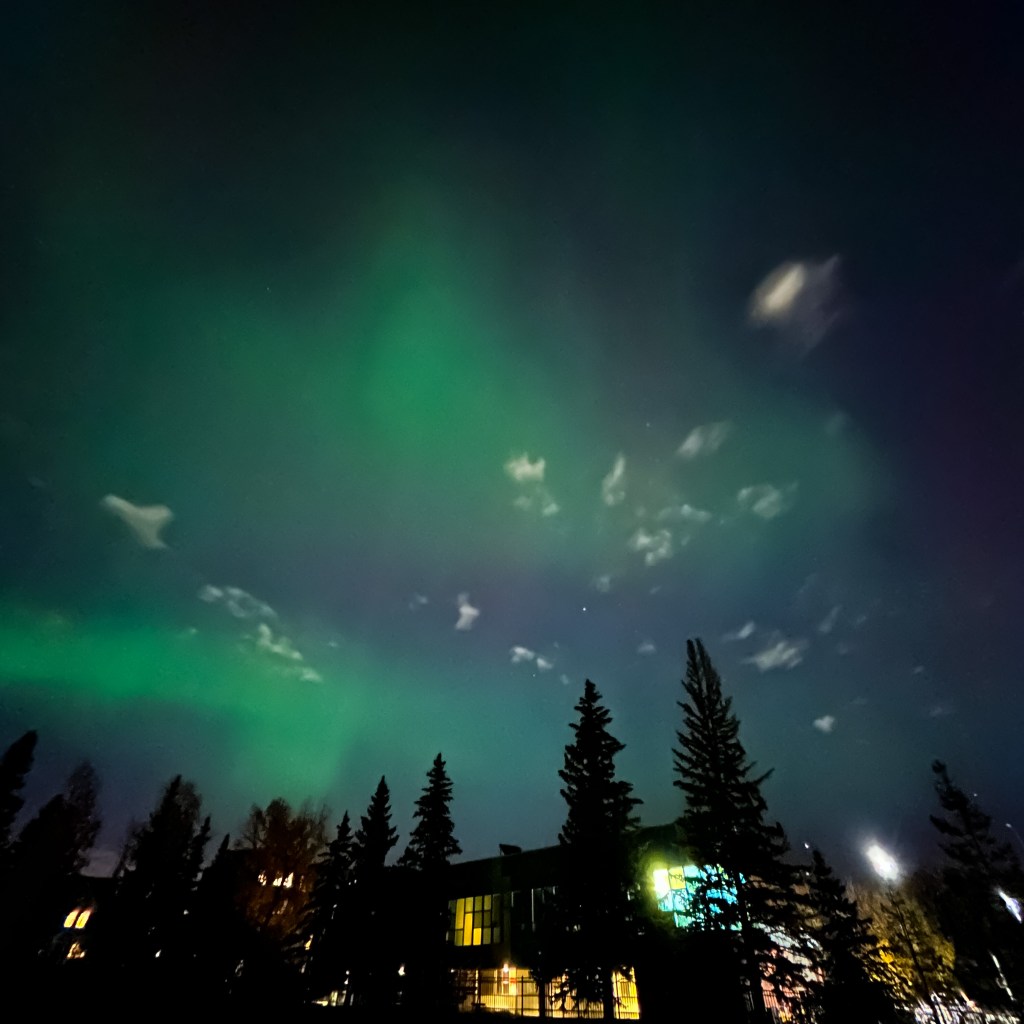
Auroras a-plenty!

This year has been unmatched for solar activity. I read that it’s all because the cycle of solar activity is at its peak. (Sounds like a topic for a future blog piece!)

I’ve always been interested in photographing the aurora borealis (the “Northern Lights”) but frankly, I wasn’t up to what I assumed was the significant effort needed to make it happen. What gear did I need? How much work would it be to get to a good location, and to do so in the middle of winter when the aurora are most active?

It turns out, this year at least, all one has to do is put an iPhone on a tripod (or maybe not), walk to the nearest park, and look up. I started seeing IG posts from friends who were taking pictures from their backyards, so I figured I could make a similar commitment.

I found a great website (Alberta Aurora Status) that estimates the combination of solar and atmospheric conditions necessary for good viewing. Lately, even that much science may not have been needed.

As for the photos, those took a few nights of experimentation. Fortunately, our recent weather has been agreeable and the skies have been mainly clear. I tried some shots with a “real” camera and soon learned that my iPhone 14 was more than adequate to land some decent shots. I plan to try again soon with other cameras… it looks like the good viewing isn’t finished yet.

The iPhone has a “Night Mode”, which uses a long exposure and some noise reduction. Later, it took some trial and error to get the best result with my photo editor… mainly I adjusted the exposure and added some saturation. Overall, I think the results are pretty good, considering how easy it all was.

Here are some of my edited shots from Lightroom.
Fall Colours and Intervals

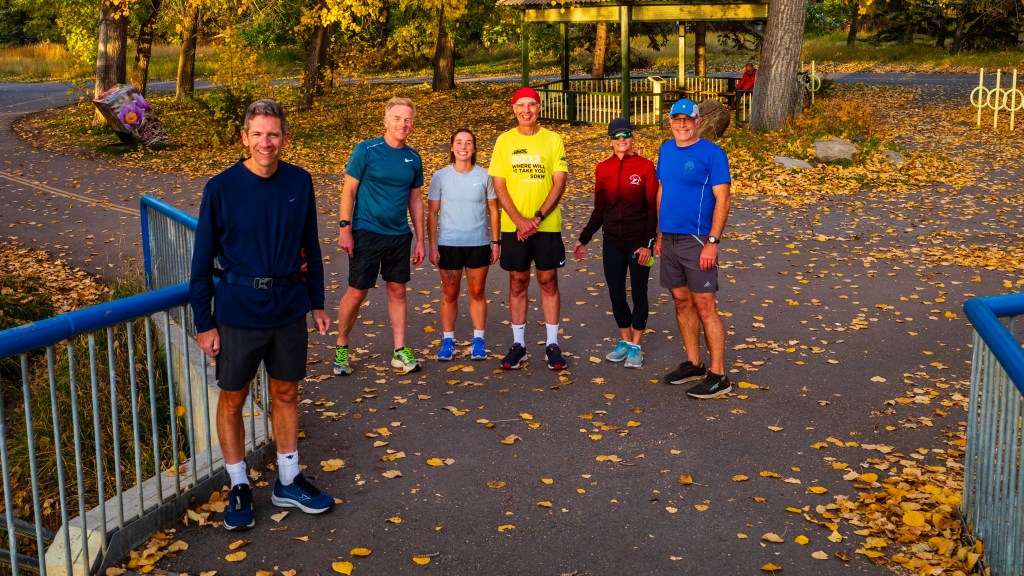
Knowing that our daylight hours are in rapid decline, I made sure to join our weekly group run at Carburn Park on Thursday evening. It was a perfect outing, and it may turn out to be our last outdoor session for the season. A small group showed up since many of our teammates were in recovery mode after a recent target race. Jason G led us through some sets of 500m – 500m – 1k.

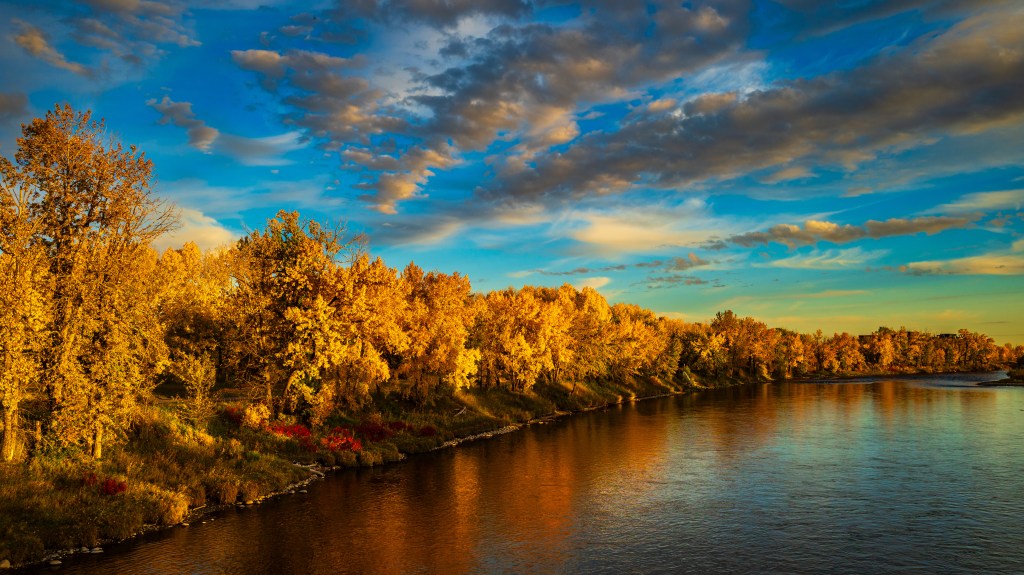
We headed over to the west side of the Bow River and turned north. The views back across the river were spectacular. The setting sun lit up the fall colours, with most of the leaves still on the trees. I used our short 1-minute breaks to good effect, snapping as many pictures as I could before the light show ended. I couldn’t have asked for better training partners than Doreen and Elidh. All pictures with the unbeatable Ricoh GR III.
A-B-C’s

A is for Art and B is for Borduas. What? Who?

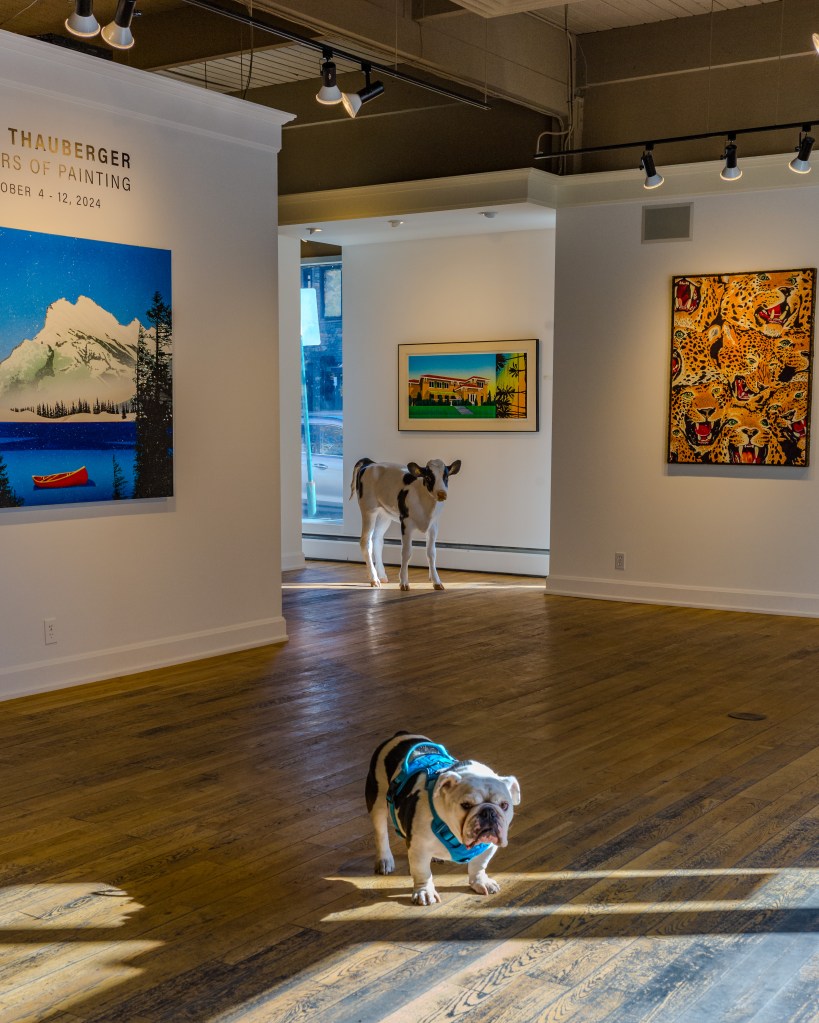
On Saturday, Deb and I made our way to Masters Gallery, to catch the last day of a David Thauberger exhibit. He’s a Saskatchewan painter who’s been active for 50 years. The gallery had an interesting selection of works from his long career.

We always enjoy stopping into the gallery on 4th Street SW to chat with Ryan Green (@ryngreen on IG) and visit with his sidekick. This visit was no exception.

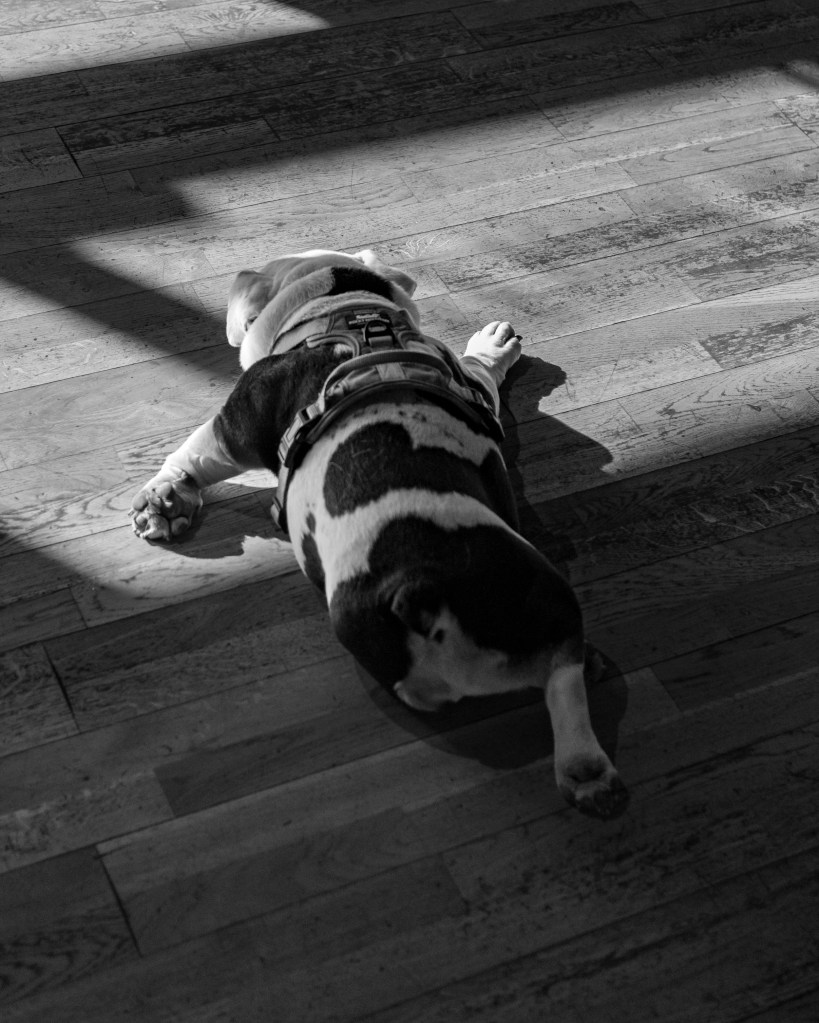
The sidekick I’m referring to is Borduas, aka “Bordy”. Bordy is a wonderful British Bulldog. He’s named after the Canadian artist, Paul-Émile Borduas (1905-1960), and he (the dog) is a fixture in the gallery. I snapped a few pictures of Ryan and Bordy because I had to. You’ll see what I mean.

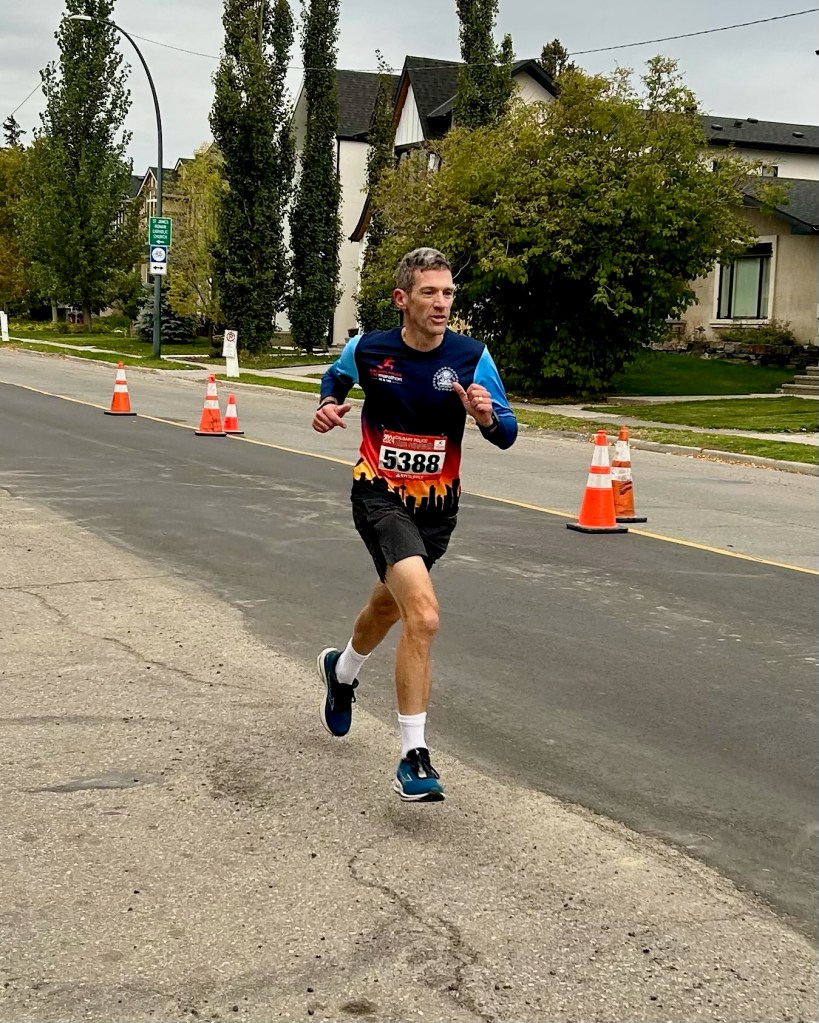
And what about C? This week, C was for Competition, as in racing. After a long hiatus, I signed up for a 5k. This was largely due to peer pressure, from the same Jason I referenced earlier. He had signed up for the 5k as part of the Calgary Police Half Marathon… one of the longest-running, best-organized races in Calgary… and encouraged me to do the same. Thanks for the push, Jason!

I had no illusions of running with Jason, but I set as my goal to run a steady effort at a challenging pace. In other words, I wanted this to be a race, even though it was at my current (reduced) capabilities. I figured I might have a shot at a podium finish in the M60-69 age group, but it was no problem if it didn’t happen. I was just happy to be over my recent calf/Achilles tendon problem.

All photos by Deb Kelly:

Conditions were ideal for racing, and it was a successful outing for Adrenaline Rush runners. Jason flew to a 10th-place overall finish and set a personal best in the process. His time of 19:13 easily placed him first in his age group, by several minutes. Scott did very well in the 10k, running 53:43 and finishing 4th in his age group. Alistair (no photo) cruised to a second-place overall finish in the main event (the half marathon), running 1:22:34. That was impressive enough, but consider that he was taken off course by the lead cyclist, a miscue that added 500m to his race distance. Way to go, guys!

And me? I finished the 5k in 25:55. It was a solid effort. I was happy and maybe a bit surprised with it. I ran smart. I did miss the podium by one spot, and I missed running with Deb even more. Maybe next time!

Prairie Mountain – Summer Solstice

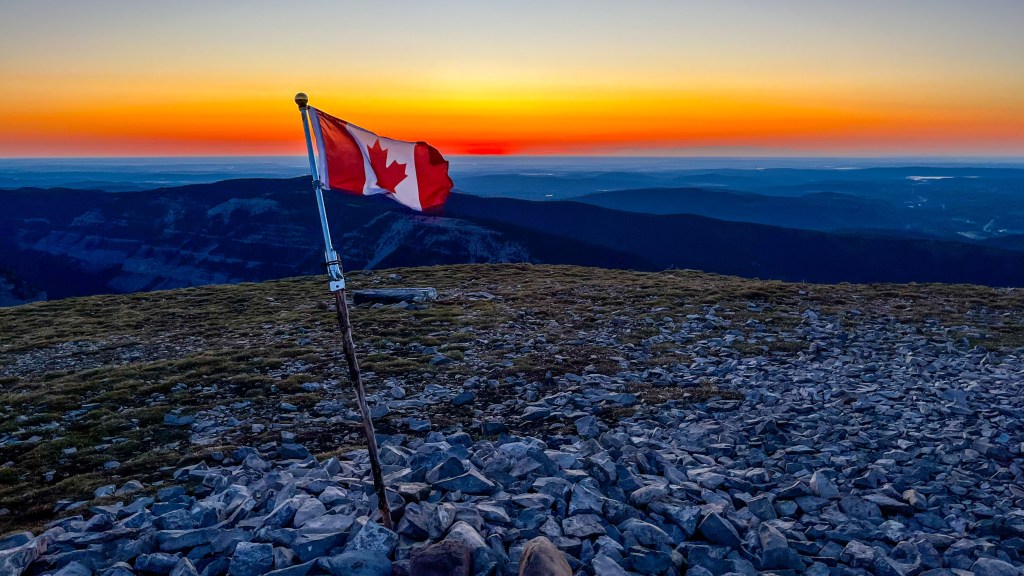
The arrival of summer in the northern hemisphere is welcome, for many reasons. There is a minor downside, if one plans to make a sunrise trek to the peak of Prairie Mountain in Kananaskis: the early start. Of course, my friend Tim hatched the idea, as the perfect complement to our winter solstice hike last December. If you haven’t read my blog pieces for that epic outing, here are links to Part One (the hike) and Part Two (the science).

My first reaction was “I’m in!” Then, when the reality of the required 2:50 a.m. departure from Calgary set in, I found several excuses to bail out. To Tim’s credit, he persevered and he managed to wrangle a couple of friends to join him. He didn’t even mind sharing his photos, so I could pretend to have been there!

The Hike

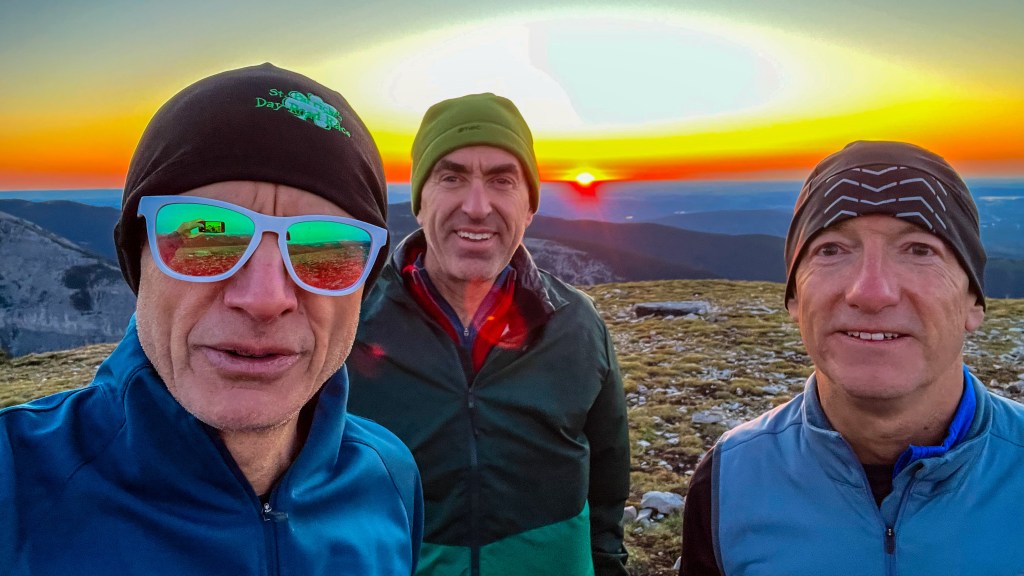
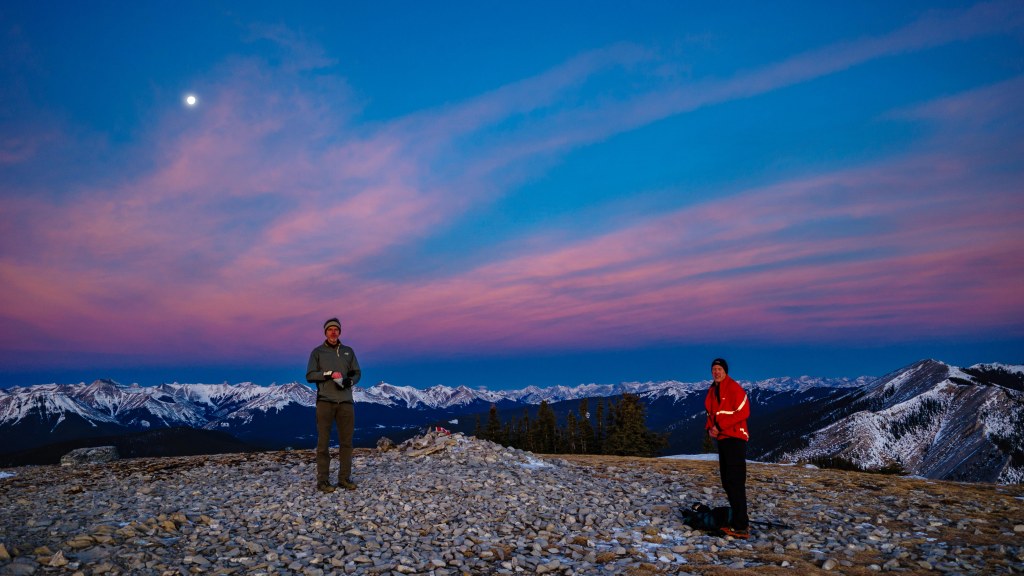
Tim, Jerry and Peter departed the Prairie Mountain trailhead at 3:50 a.m. and reached the summit in time for the 5:21 a.m. sunrise. Tim commented that it was amazing to see the full moon go down in the west while the sun was coming up in the east. He mentioned that while he knew the sun would break the horizon much further north than it did on the winter solstice, it was even more of a difference than he expected. More on that later.

Here are a few photos from their hike:

Prairie Mountain Sunrise / June 20, 2024 (Photo: Tim A)
Tim, Peter and Jerry at the summit / June 20, 2024 (Photo: Tim A)
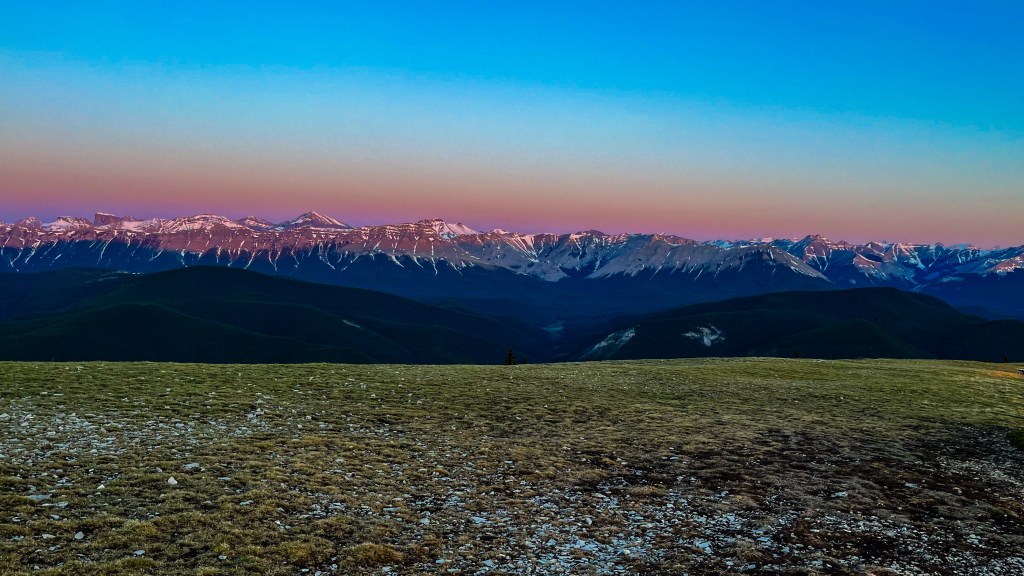
Western vista, from the Summit / June 20, 2024 (Photo: Tim A)

The Science (abbreviated)

For the winter solstice, you may recall I did some research on the unexpected timing of the solstice, and why the day with the latest sunrise wasn’t the same as what we think of as the shortest day of the year. If you are interested in orbital eccentricity, angles of obliquity, and other astronomical wonders, you can read about them here.

Since it’s summer, and I’m feeling a bit lazy, I did a shortened version of the research. You’ll be happy to know that I confirmed the same factors affect the timing of the summer solstice. Here’s what I found:

  • the summer solstice occurred at 2:50 p.m. on June 20
  • the day with the earliest sunrise was June 16 (5:20 a.m.)
  • the longest solar day was June 20 (16 hours, 33 minutes, 17 seconds)

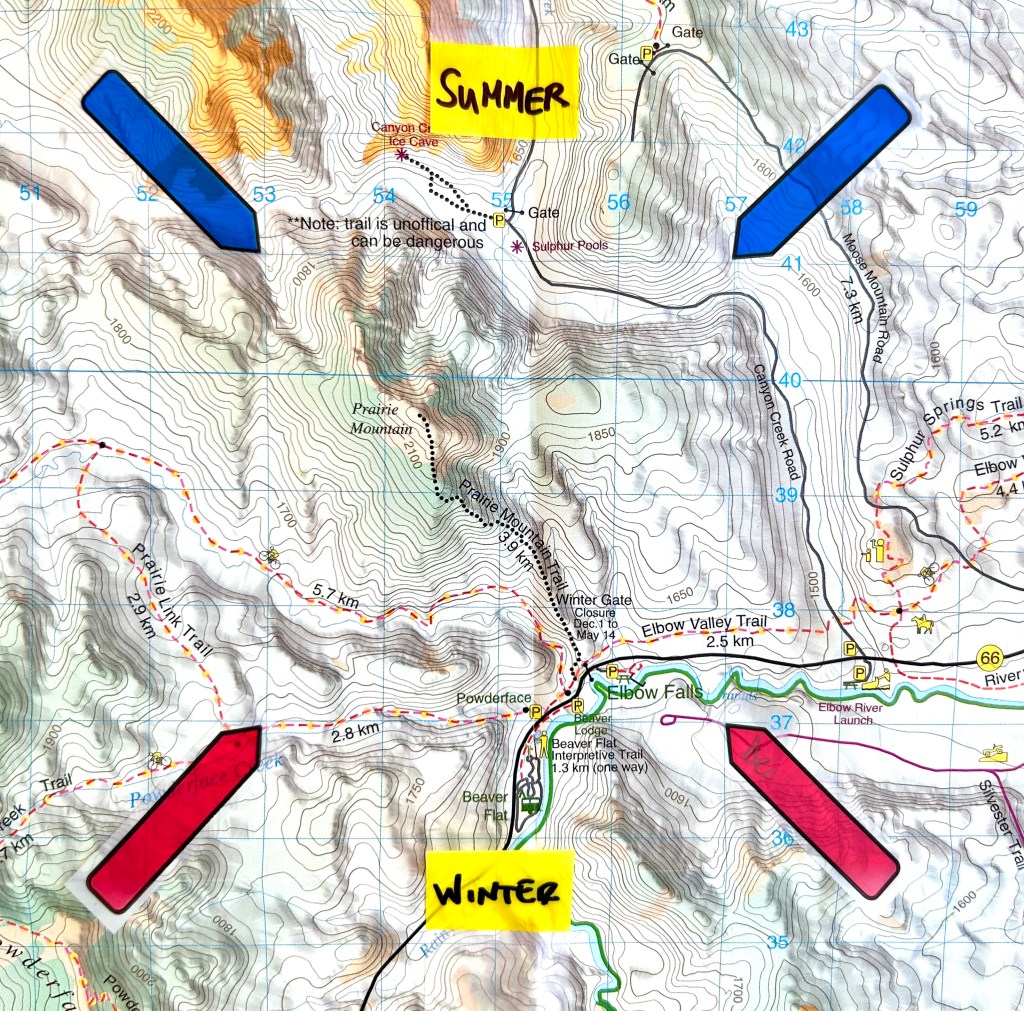
Tim’s comment about the sun’s compass direction at sunrise on June 20 compared to the direction on December 29 got me thinking. I marked up a trail map for the area of Prairie Mountain. The arrows show the sun’s compass direction at sunrise and sunset, on the summer (blue) and winter (red) solstices, respectively. What’s interesting is just how much the sun’s coverage changes between the two solstices.

Sunrise/sunset compass directions at the solstices, Prairie Mountain

The apparent travel of the sun (because it’s the earth that’s moving around the sun, after all) is from 128 degrees at sunrise to 233 degrees at sunset on the winter solstice. That’s a span of 105 degrees. In contrast, the sun traverses a range from 49 to 311 degrees at the summer solstice… a span of 262 degrees.

Isn’t that fascinating? I think so too.

Prairie Mountain Sunrise, Part 2

The Science

After we returned to Calgary from our December 29 Prairie Mountain sunrise hike, I started to wonder about the small anomaly that led us to pick that day. Specifically, the fact that the day with the latest sunrise does not align with the winter solstice in the northern hemisphere. Before I get into the science, here’s another photo from that great morning.

Looking northwest from the summit (December 29, 2023)

I did some research and learned the interesting astronomical reasons for this phenomenon. I first looked up the sunrise/sunset tables for southern Alberta. The solstice occurred at 8:27pm on December 21, but the latest sunrise occurred more than a week later. Not only that, the date of our earliest sunset was well before the solstice… way back on December 12, to be exact. 

What’s going on here? After all, these differences are not small. 

While we think of the solstice as the shortest day based on sunlight hours, it isn’t the shortest “solar day”, defined as the measured time from noon on one day to noon on the next. In fact, solar days are the longest in December.

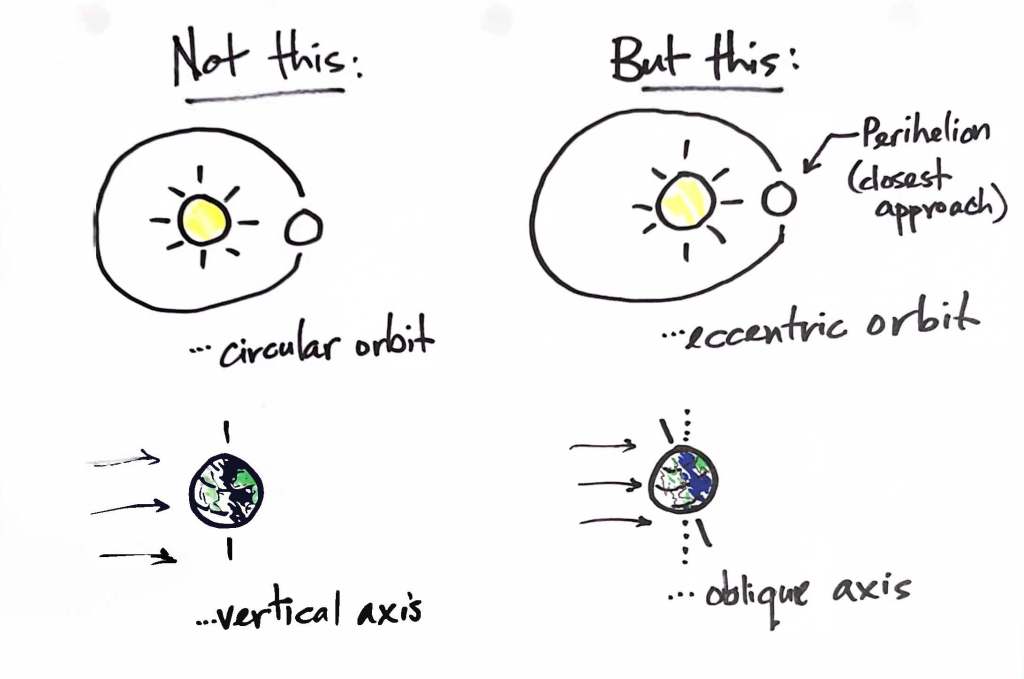
A recent article in Scientific American explains that there are two reasons for this counterintuitive result. With all credit to the excellent minutephysics video by Henry Reich (“Why December Has the Longest Days”) referenced in the article, I’ve reproduced the two reasons in the following chart.

First, the shape of the Earth’s orbit is not a circle but an oval, an ellipse. The difference between the earth’s nearest and farthest points from the sun is small, about 3% of its average orbital distance of 150 million kilometres. This matters because as the earth reaches its closest point (perihelion), it moves faster through space. The faster movement lengthens the time needed for a given line of longitude to come around the next day to align with the sun. This effect adds about eight seconds to the solar day.

Besides the eccentricity of the earth’s orbit, the tilt of the earth’s axis also contributes to the disparity between solar day and clock day. This effect, called the obliquity effect, lengthens the days by about 20 seconds around the solstices, and shortens them by about 20 seconds around the equinoxes.

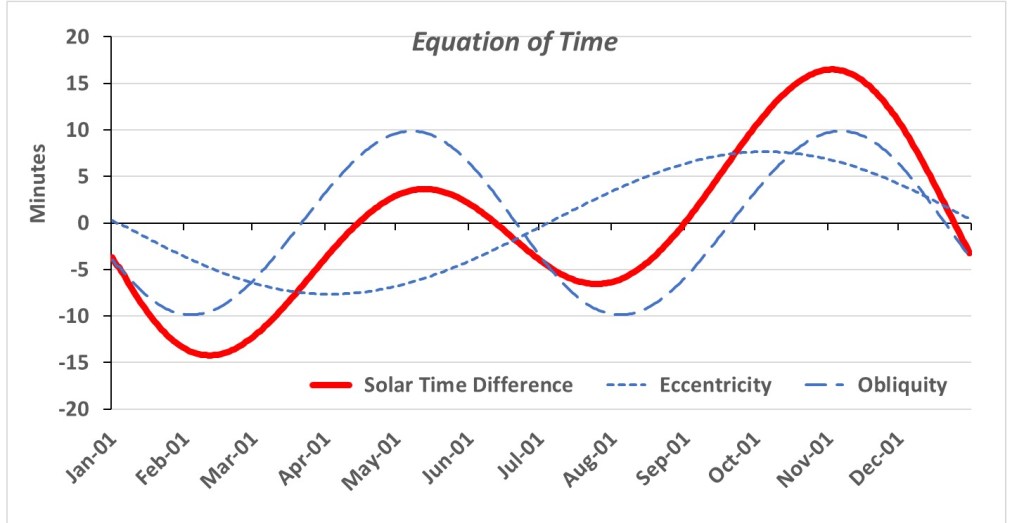
The impact of these two factors on the solar day is well known. There is even an “equation of time” to relate solar time to clock time. Mathematically, the effect is represented by two sine functions. The frequency of the eccentricity curve matches the earth’s annual rotation, and the tilt curve goes through two cycles each year. The figure below was generated on PlanetCalc. It shows how adding the curves results in solar days that are shortest in February and longest in December. There is also a smaller peak in the spring and a dip in the summer.

Source: PlanetCalc Equation of Time calculator for 2024

Because perihelion occurs close to the winter solstice (on January 2), the two day-lengthening effects are additive, totalling about 30 seconds a day at the peak in November. These “extra” seconds are pushed forward to subsequent days, making solar noon later and later at that time of the year. And because sunrises and sunsets are symmetrical around solar noon, we get the observed result: the earliest sunset gets shifted backward (before the solstice) and the latest sunrise gets pushed forward (after the solstice).

Whew!

I expected the answer to this question to be simple, but it’s taken me a few tries and a lot of soak time to understand.

Somehow it seems appropriate, having just started a new year (and passed the perihelion), to recognize that the universe is full of mystery.