The Art of Jaume Plensa
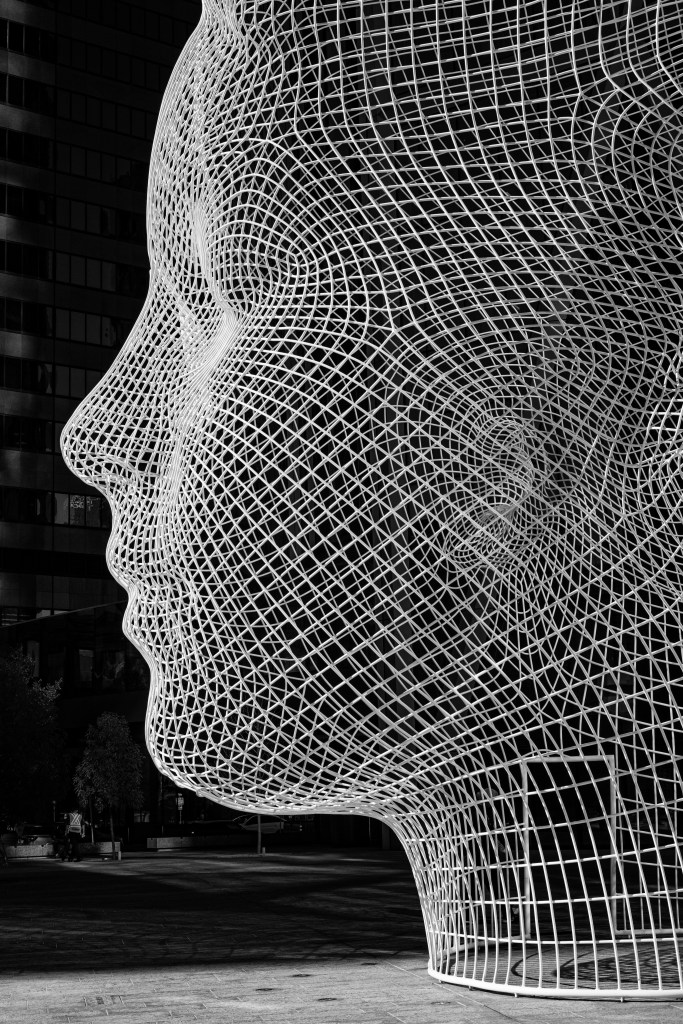
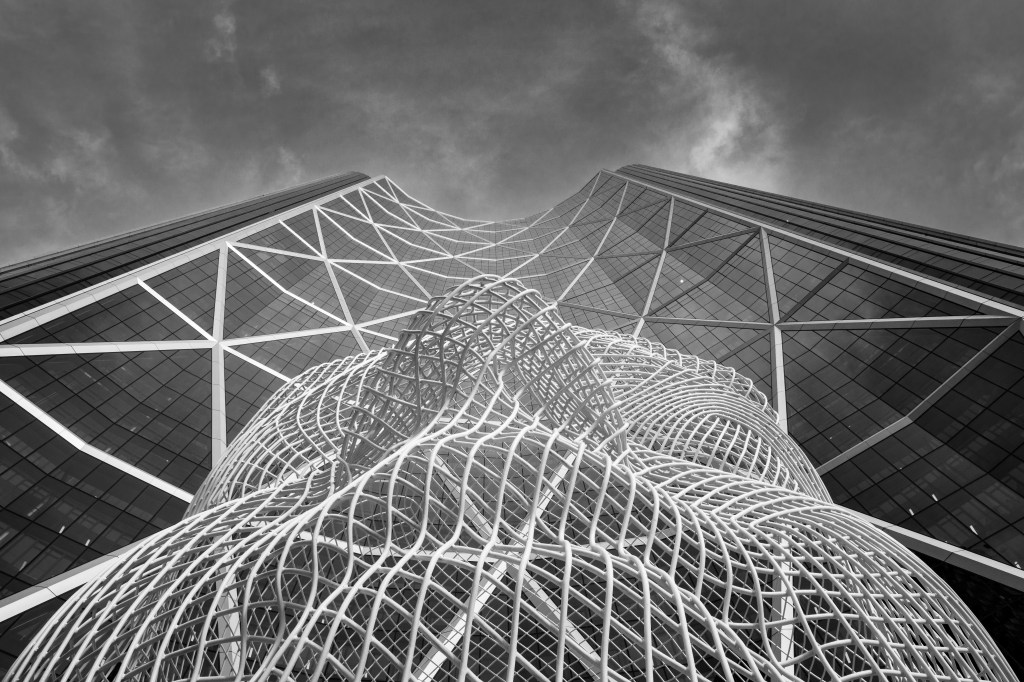
I was looking for an excuse to go into downtown Calgary for some photography, and I thought about the “big head” sculpture that sits in front of The Bow building. Like the building, the sculpture is iconic; it’s a monumental and very popular piece of public art. I’ve photographed the sculpture many times, but it seems to always have more to offer, depending on the season, the time of day and of course, the light.
First, some background. The sculpture’s official name is Wonderland and it’s by the Spanish artist, Jaume Plensa. Plensa was born in 1955 in Barcelona. He studied art in his home city. Over several decades he has lived, worked and exhibited his art in cities across Europe and the United States. Plensa has received international recognition for his exhibitions and installation pieces. His diverse works include sculpture, fountains and graphic arts.
Wonderland (2012), Calgary
Wonderland is one of many sculptures that Plensa has created for public spaces around the world. When I looked into the origin of Wonderland, I learned that he has installed similar large-scale pieces across Europe, Asia and North America.
Wonderland is ideally situated in the curved façade of The Bow, where it’s been since 2013. The sculpture depicts the head of a young girl. It’s about 12 metres high, and it’s made of bent steel wire. I think the piece is so popular because it has openings at ground level, which let visitors enter the sculpture’s inner space. Plensa invites us to contemplate Calgary’s downtown from the perspective of the subject. It’s a thought-provoking piece, for sure.
Here are several of the many shots of Wonderland I’ve taken over the years.

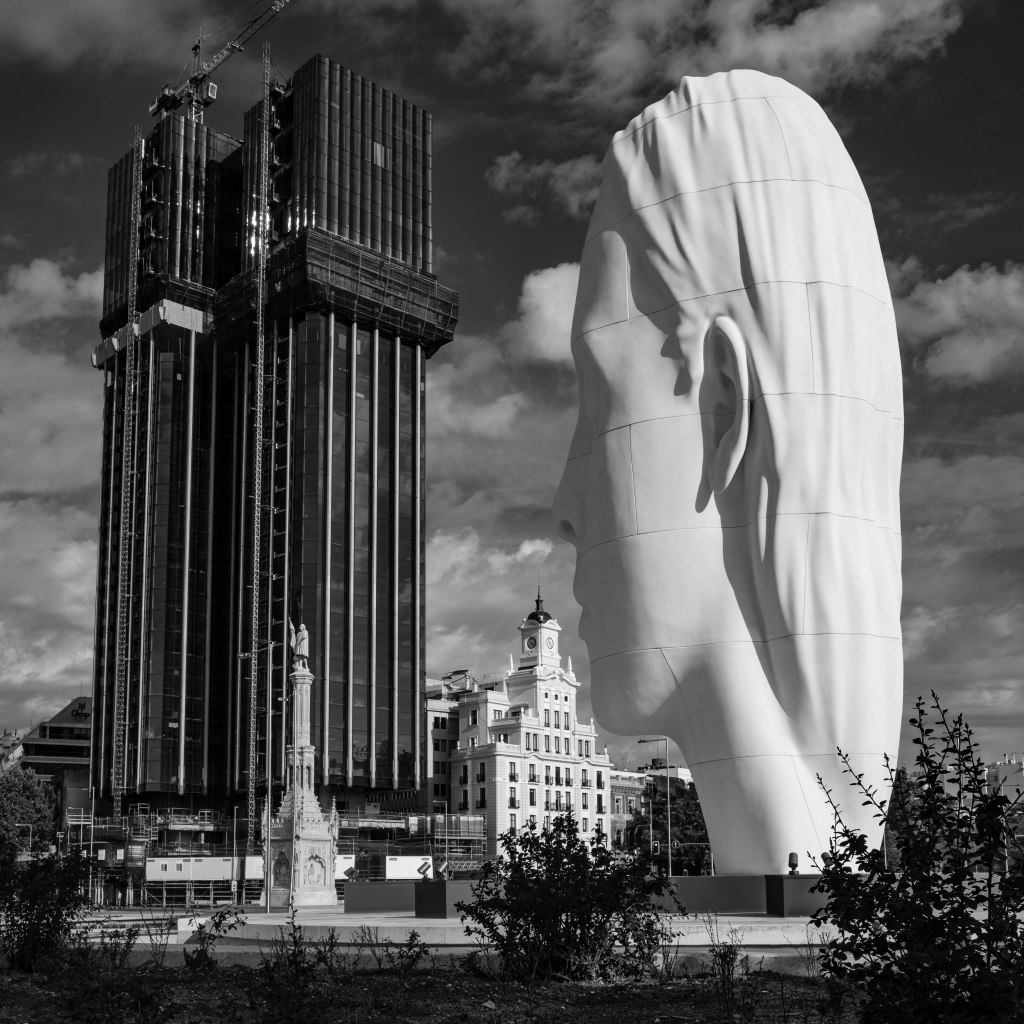
Julia (2018), Madrid
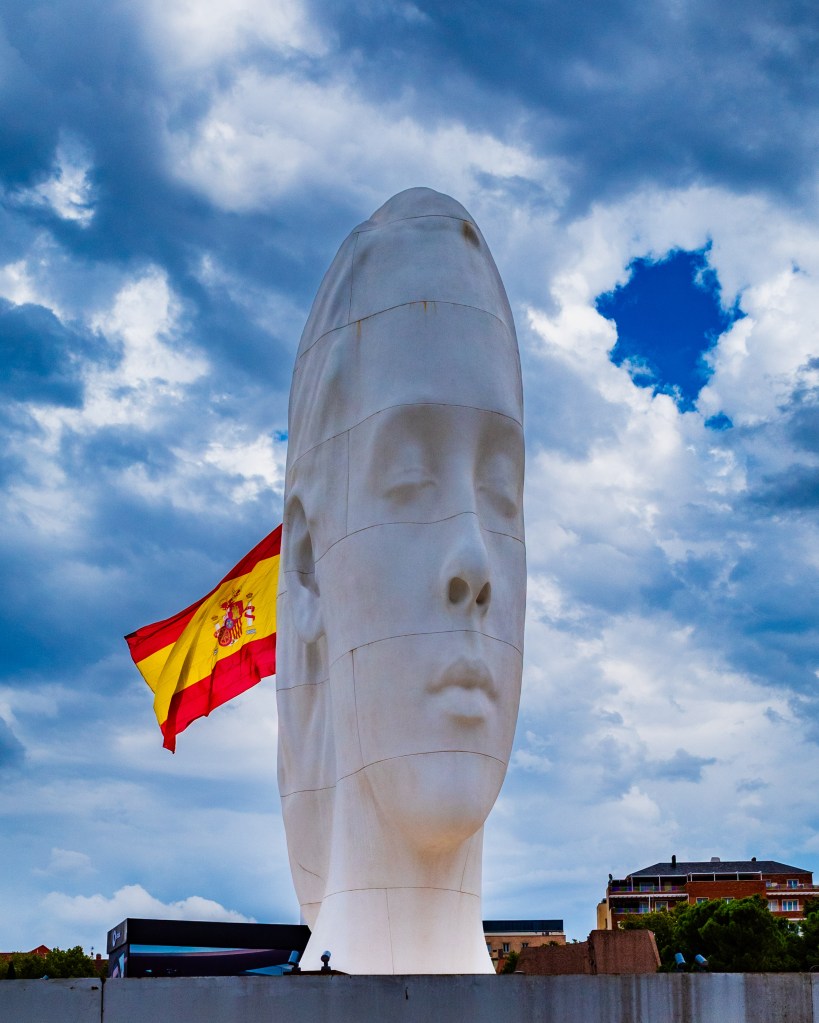
I realized that Debbie and I had seen other Plensa pieces in our travels. Most recently, we stayed a couple of blocks from a monumental sculpture in the Plaza de Colón in Madrid, called Julia. About the same size as the Calgary piece, Julia is also a sculpture of a young woman’s head. The subject’s eyes are closed as if she is meditating.
Julia is typical of Plensa’s large, elongated and flattened busts. When you look at them straight on, they give the impression of being on an angle. It’s an impressive optical illusion. The Madrid piece is made of polyester resin and white marble dust. It’s stunning.
We passed Julia several times a day while we were in the city, and each time I took a few photos. While Julia has been in her current location since 2018, it turns out that she may not be installed permanently… it’s a good thing I took so many photos while we were nearby. Here are a couple of my favourites:
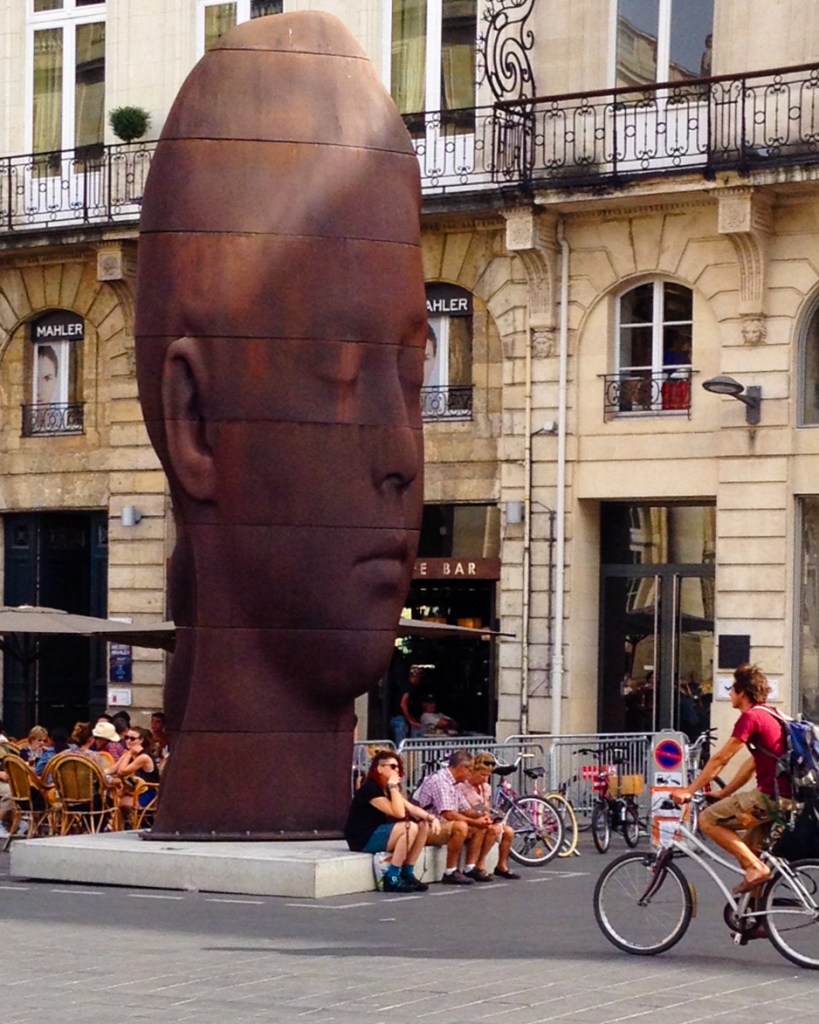
Sanna (2013), Bordeaux
As I did more research into the artist, I realized we had seen another sculpture similar to Julia in Bordeaux, France some years earlier. Sure enough, it was another Plensa piece called Sanna. That one sits in the Theatre Square (the Place de la Comédie) in the heart of the city. Its perspective has been manipulated in the same way as the Madrid piece, and the subject is also shown in a quiet, contemplative pose. Unlike Julia, Sanna is made of cast iron. She is 7 metres high.
The story of Sanna coming to be in Bordeaux is that in 2013 the city hosted an exposition of Plensa’s pieces. The event was popular, so much so that residents initiated a movement to acquire Sanna permanently. As far as I know, it will remain in place until at least 2027.
We have very fond memories of our visit to Bordeaux. The square where Sanna sits is busy with cafes and shops. If we ever make it back there, I hope Sanna will still be there.
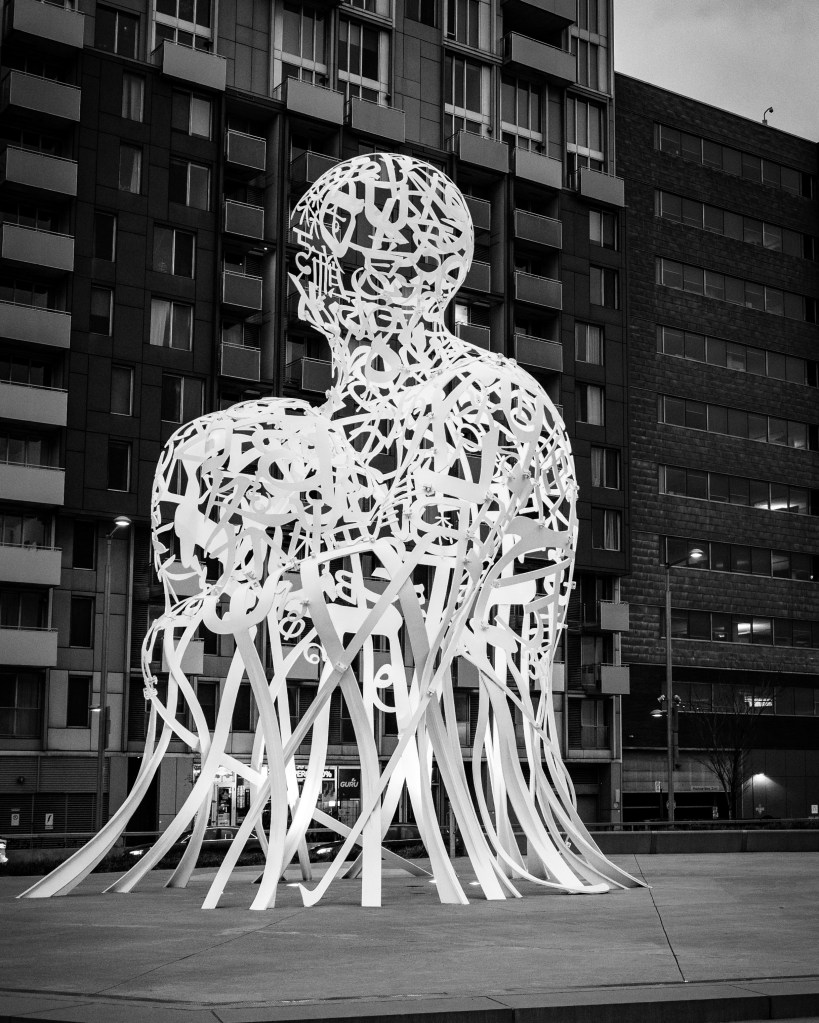
Source (2017), Montreal
The final Plensa sculpture I want to highlight is installed on a terrace in Rue Wellington, just at the entrance to downtown Montreal. Somewhat in the same style as Wonderland, Source is a three-dimensional piece within an open outer frame. It’s a stainless-steel sculpture formed from a random pattern of letters taken from different alphabets, which depict a sitting figure.
The Montreal piece symbolizes the many cultures that have come together over the city’s long history. Fittingly, it was installed for the 375th anniversary of Montreal’s founding in 2017. Like the Calgary piece, Source is open, so it invites visitors to enter the inner space of the piece.
Our stop at the Source was short, and I only have one photo of the piece. Rest assured, I will take more time to check it out next time we are in Montreal.
Concluding thoughts
So what is my take on Plensa, and his large public art pieces?
In a 2019 interview with Forbes, Plensa discusses his use of altered perspective and open gridwork sculptural elements. He described using these techniques as a way of exploring his interest in the way humans communicate, and how different cultures use language.
For me, Plensa’s sculptures seem designed to invite close inspection and discussion. We want to get close to these sculptures. We want to walk around them and even into them. The large scale of his head sculptures could be intimidating, but Plensa defuses this by the way he plays with perspective, and by his use of serene and peaceful subjects.
Having seen four of his works in person, and looked at many others on his website, I find them to be beautiful and innovative. It’s clear from Plensa’s vast catalogue that his formula is a success: there are literally dozens of his pieces installed around the world. I don’t take this as evidence of an overworked theme. Rather, I would say that Plensa has achieved his goal: his works encourage us to get together in pleasant locations and talk. For this reason alone, his art is well suited to the public spaces in which we find it.

 My Second Running Life