Magnificent Japan: Part 3

This post is my third from our recent Japan trip. I’ve dealt with the logistics of our travels in Part 1 and Part 2 of the series, and I have a lot to cover, so I’m going to jump right in.

Historic Kyoto

Kyoto is a must-see destination in Japan. It’s the capital city of Kyoto Prefecture in the Kansai region, and it has a population of 1.5 million. Interesting facts, but totally irrelevant, because Kyoto’s rich history makes it so much more than a compilation of facts and figures. Kyoto was the seat of imperial power in Japan for eleven centuries, from 794 to 1869.
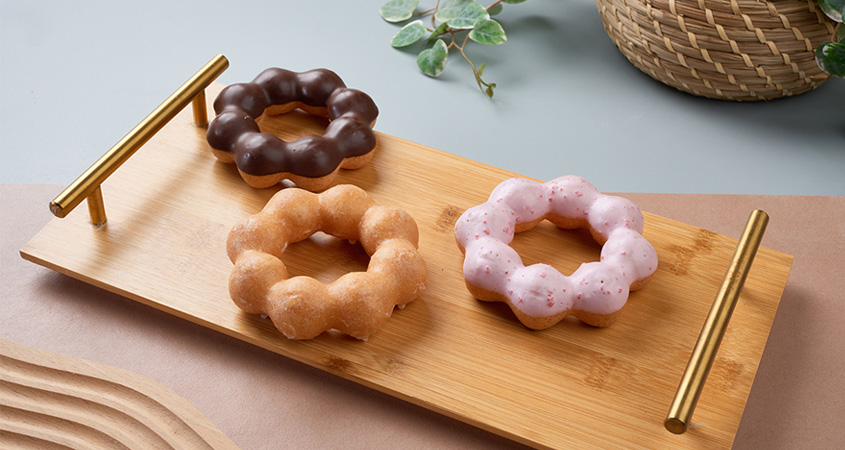
Our time in Kyoto was short, and we made a false start just getting out of Kyoto Station—an impressive but rather intimidating building. We regrouped at a Mister Donut, where we shared a Pon de Ring, their signature mochi donut. (Their photo too.) I’ll admit this was a stop I’d wanted to make for nearly two weeks. It was worth the wait. Delicious!

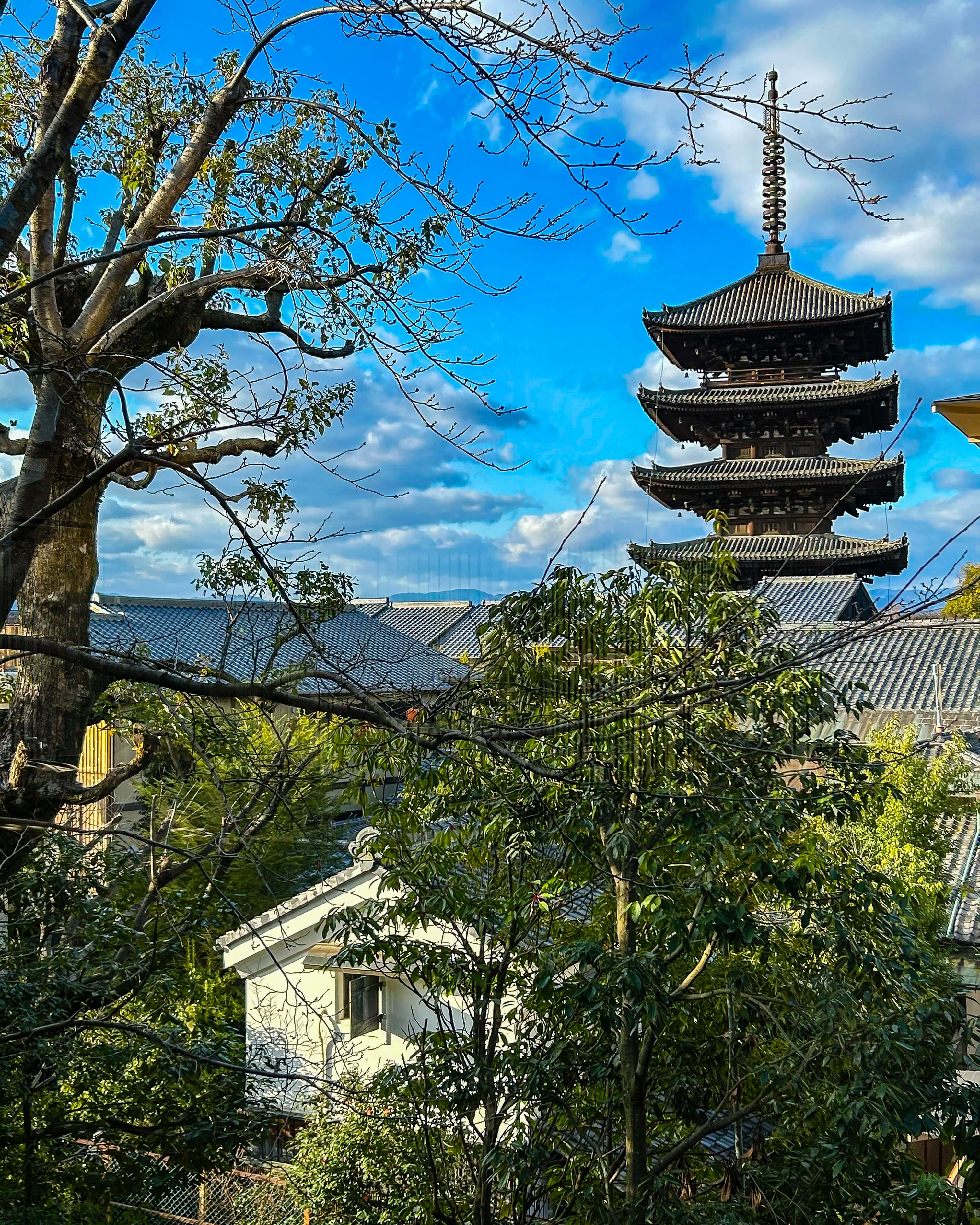
With our courage restored, we successfully hailed a cab and headed for the Hotel Seiryu Kyoto Kiyomizu. The hotel, set in the preserved walls of a former school, had us speechless. It was spectacular. Trendy yet refined, with world-class amenities and impeccably attentive staff. The lounge offered postcard views of the nearby Yasaka Pagoda, a majestic five-storey landmark.

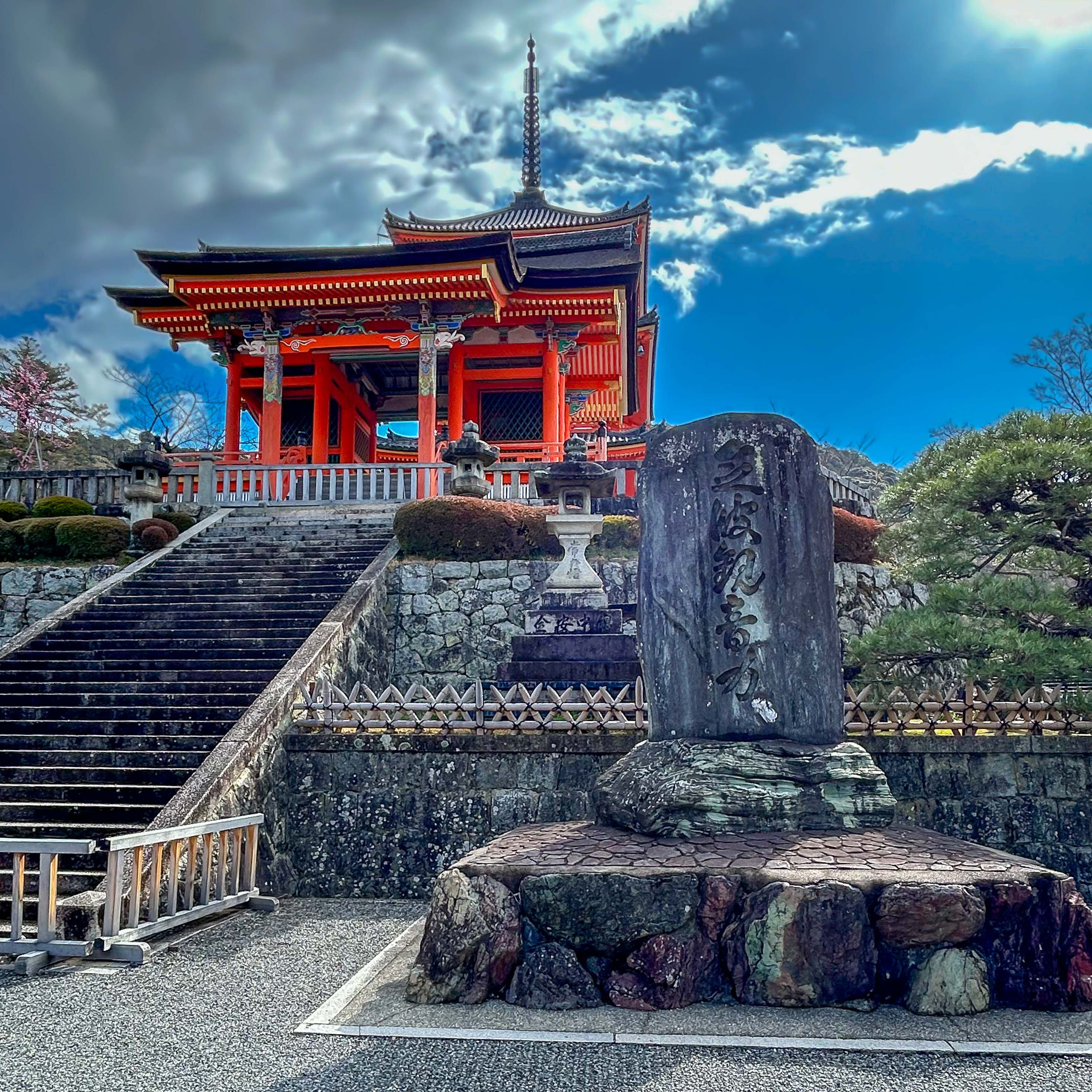
We could have spent our whole time in the hotel, but there was much exploring to do. As we had been doing for the whole trip, we followed Matthew’s advice. We ventured out into the Kiyomizu-dera area. When we visited the site of the eponymous temple, it was clear why it is such a popular attraction—a beautiful site, with great views of the city below.
Copyright for all photographs on the site is mine, unless noted.

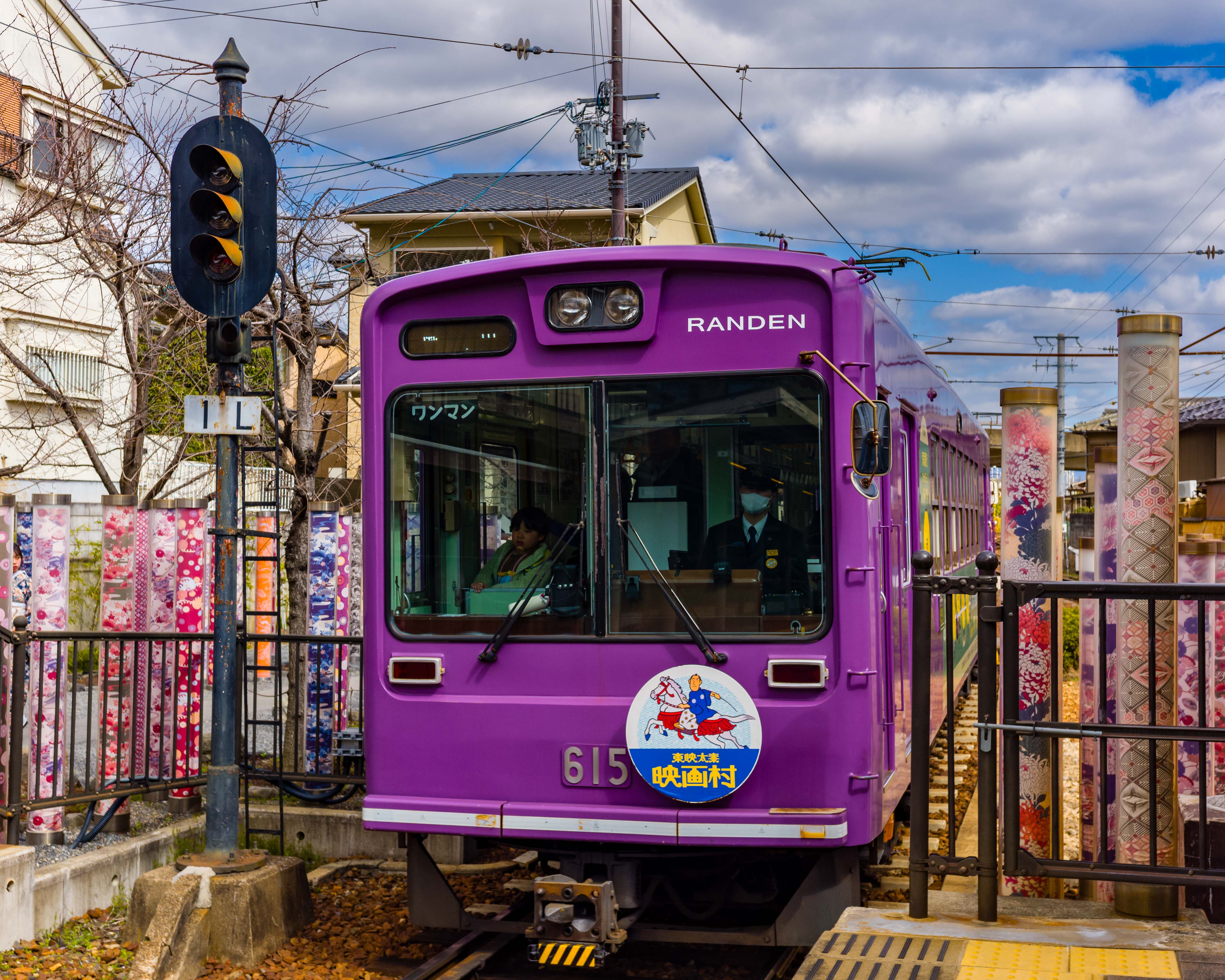
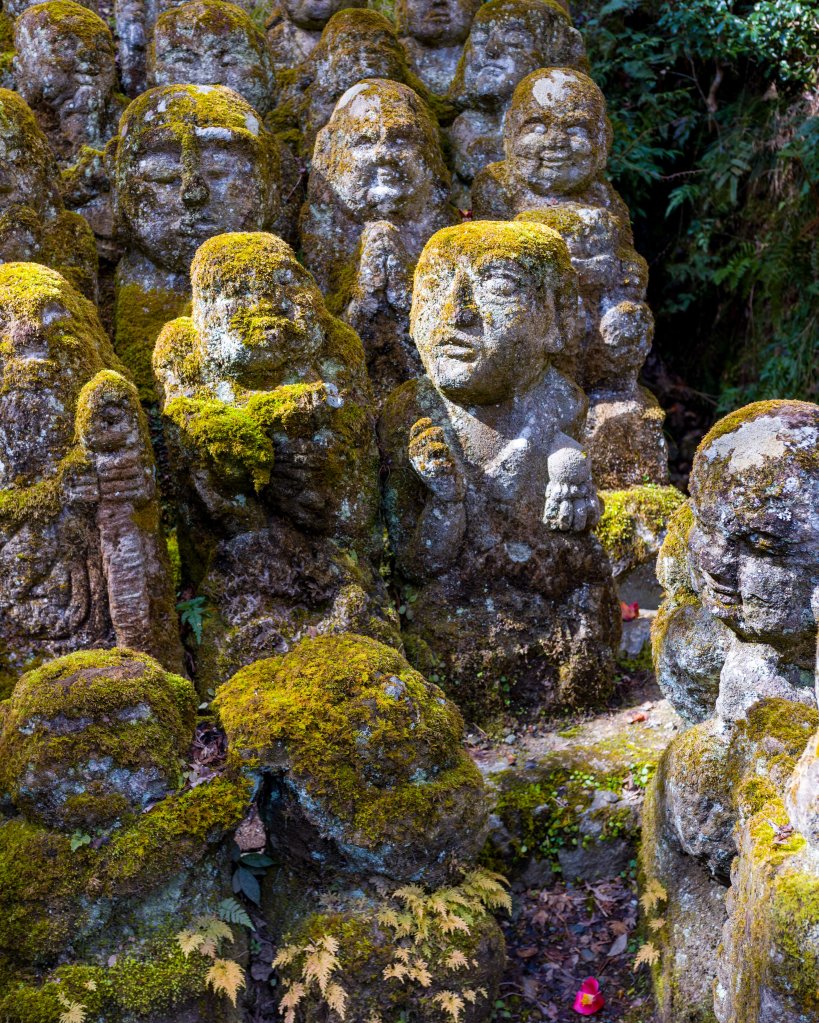
On our first full day, we rode the historic Randen (Keifuku) Arashiyama tram to the end of the line and got a cab to the Otagi Nenbutsuji Shrine. The shrine is (almost) off the tourist track. It holds a hidden treasure, in the form of carved Buddhist statues (rakan). These whimsical statues tell a remarkable story of resilience, for a temple that has moved several times over its long history. The sculptures look ancient, but they actually aren’t. Several decades ago, the head priest initiated a program to share his skill as a sculptor with the community. Given that there are 1,200 statues around the shrine, his efforts were very successful!
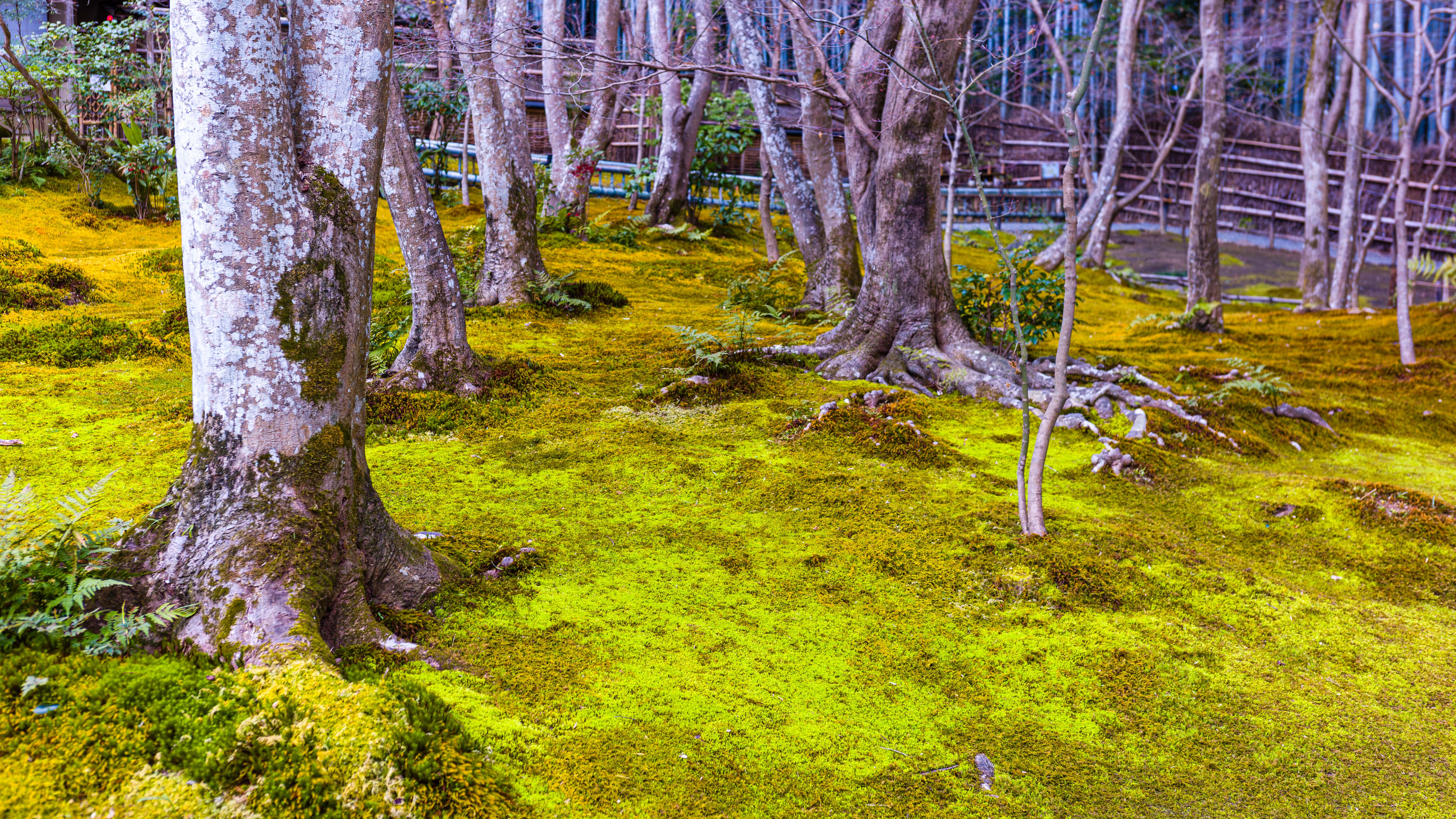
From the temple, it was a easy walk back into the city. On the way, we visited the intimate Gio-ji Shrine, site of one of the finest moss gardens in Japan. Then we walked through the famed Arashiyama bamboo grove, where we encountered the full impact of Kyoto’s popularity with tourists.

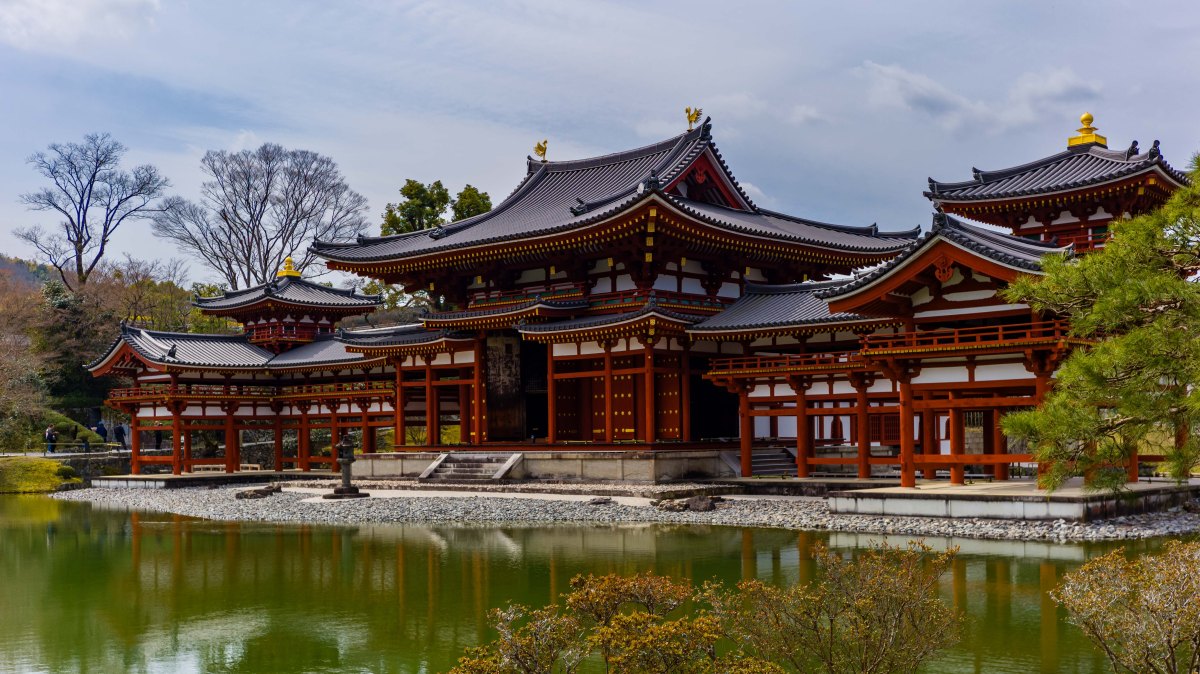
Next day, we made the short trip to Uji, south of Kyoto. We decided to skip Nara, and its resident deer population, in favour of a longer visit to the Byodoin Temple. We found Phoenix Hall (the featured photo, above) and its adjacent museum fascinating, and the streets of Uji—renowned for matcha tea—well worth a bit of sightseeing.

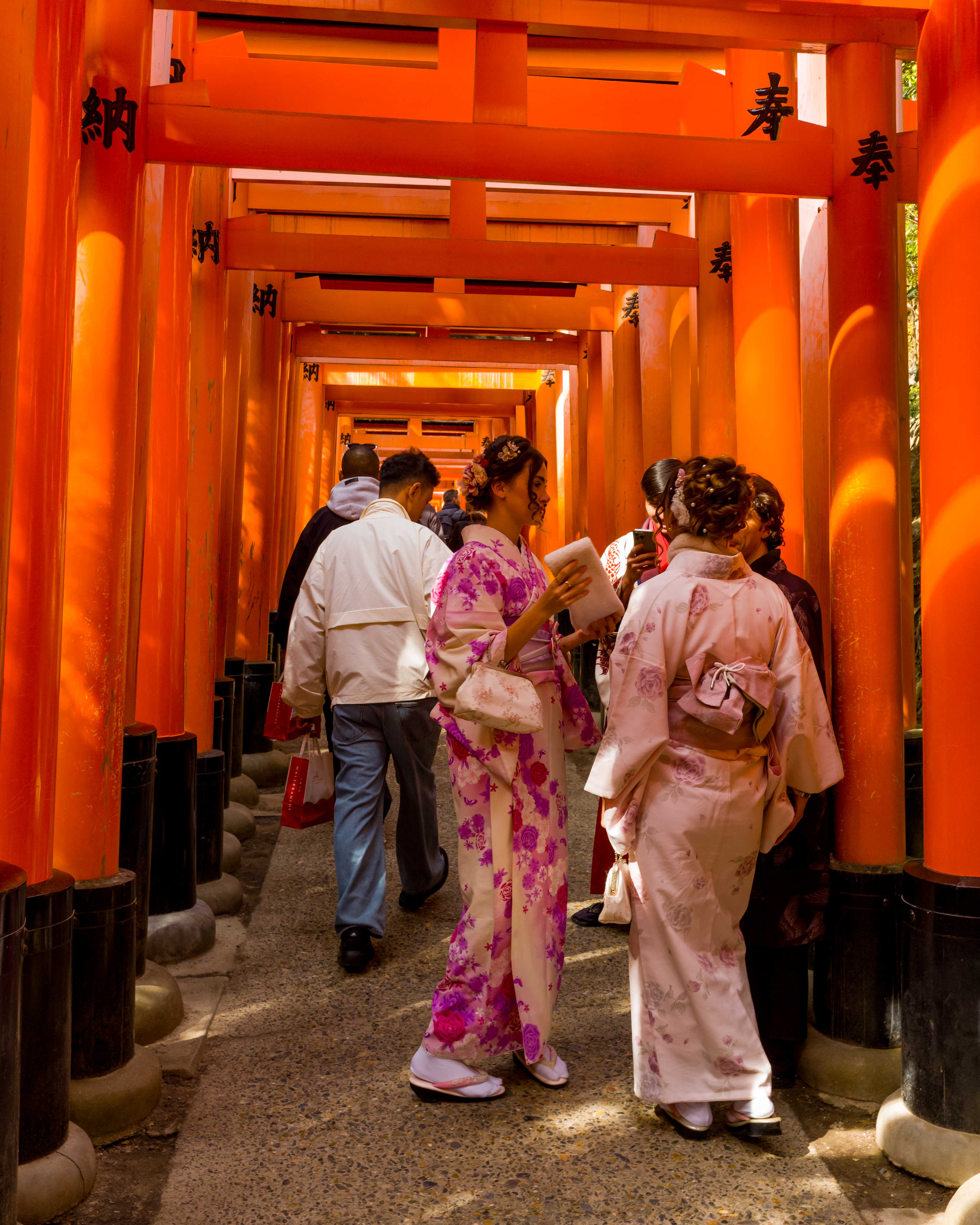
On our return to Kyoto, the train conveniently stopped at Inari, steps from Fushimi Inari Taisha, one of Japan’s most popular sites. There, a long procession of torii gates guides visitors all the way to the top of Mount Inari. We didn’t make it that far, but we were suitably impressed by the spectacle of 10,000 vermillion gates. What dedication!

Here is a small album of photos from our time in Kyoto:
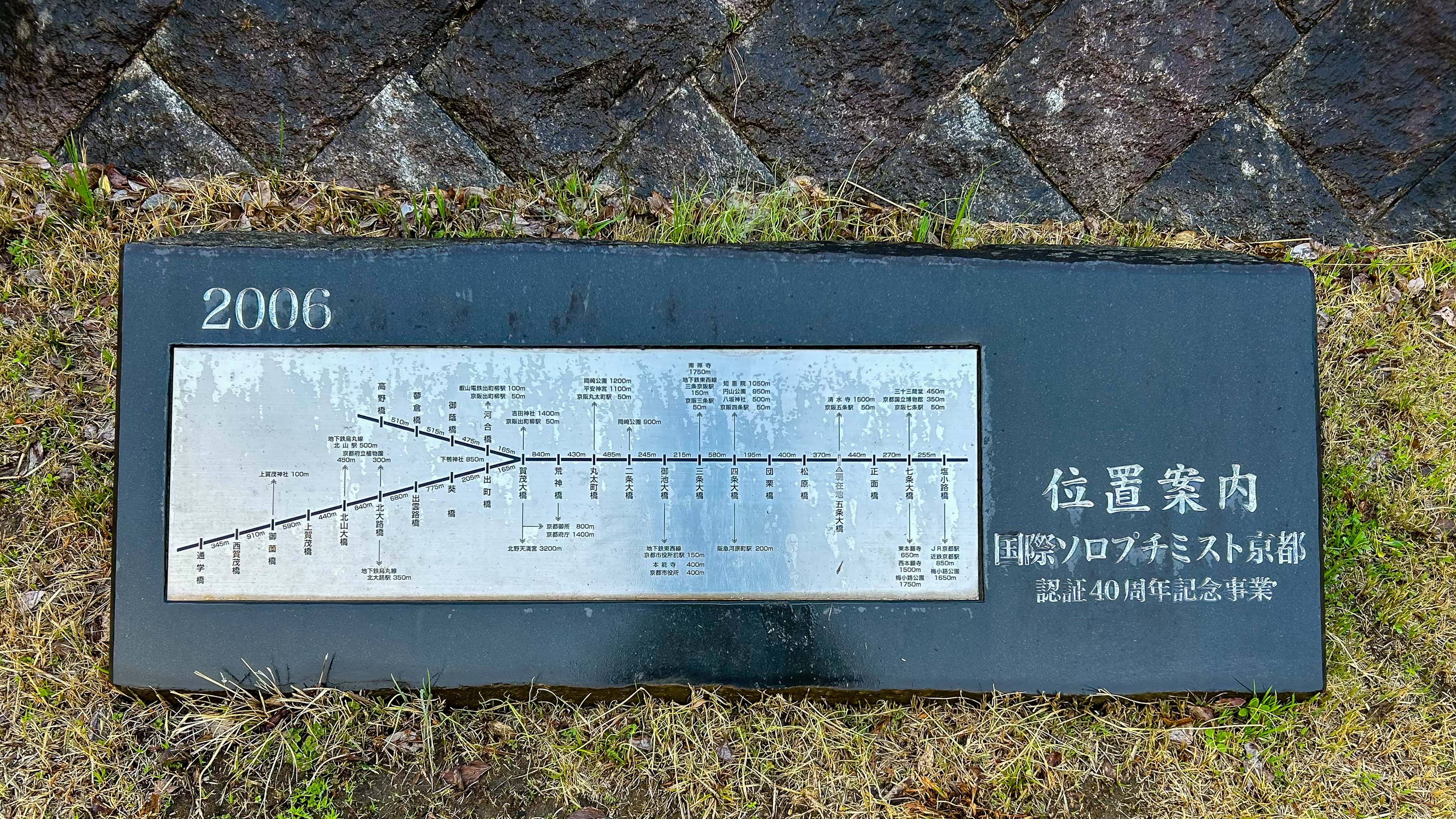
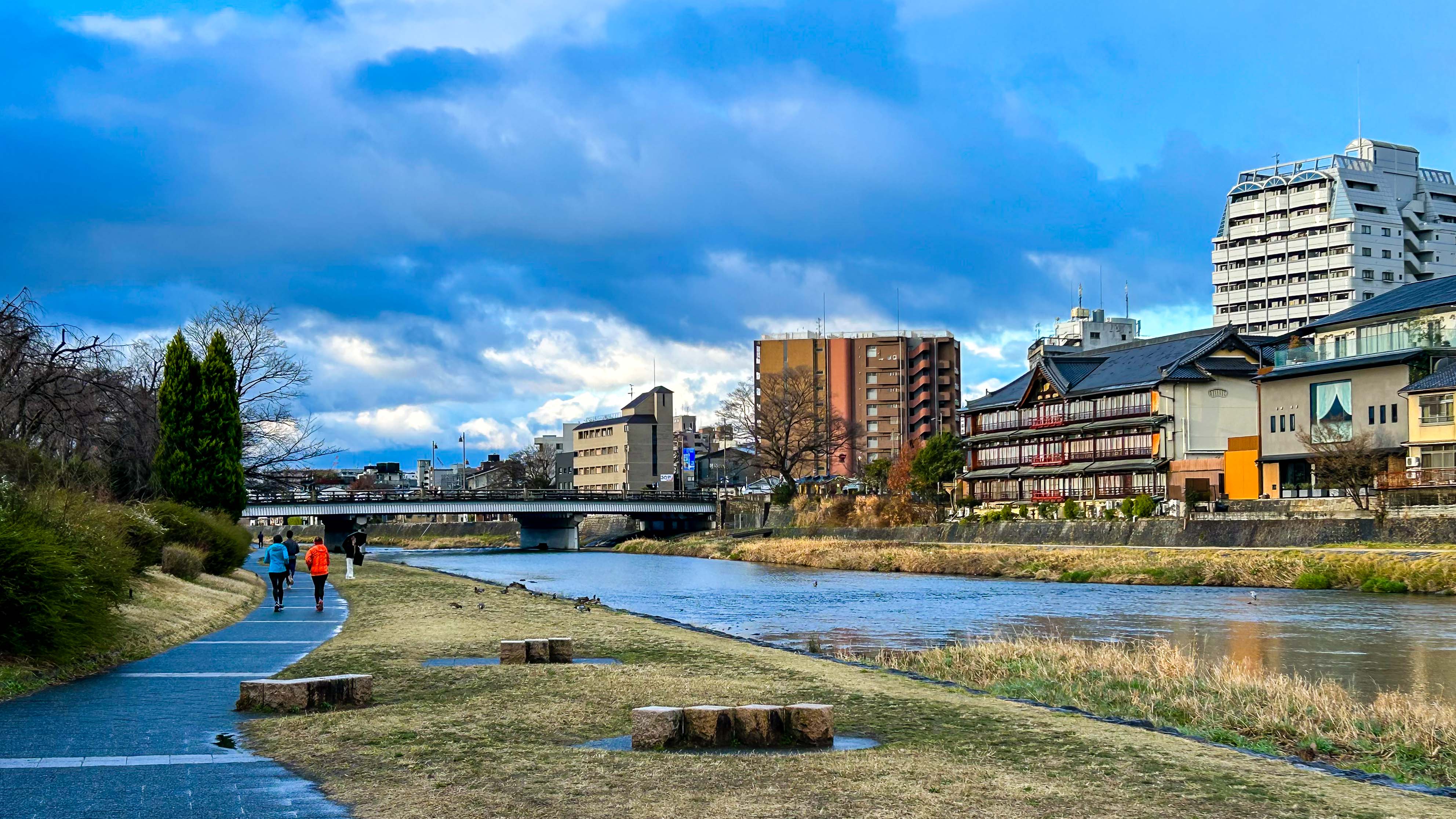
On our last morning, I snuck out early for a run along the Kamo River (Kamo-gawa). The light rain didn’t dampen my enthusiasm. The pathway was quiet—I saw only a few other runners and cyclists. My easy out-and-back jog was just what I needed. It reminded me of the Bow River pathway in Calgary, half a world away. Aside from the views, I really liked the pathway signs, with their absolutely precise distance measurements. It was a nice final memory of a wonderful city.
And finally, it’s dynamic Tokyo!

For the final time, we boarded a Shinkansen, this time bound for Tokyo Station. If you do like numbers, Tokyo’s are impressive. The Greater Tokyo area is the largest metropolitan region in the world, with a population of 37 to 41 million people. To put that in perspective, it’s the population of Canada—in one city!

Four days may not be enough.

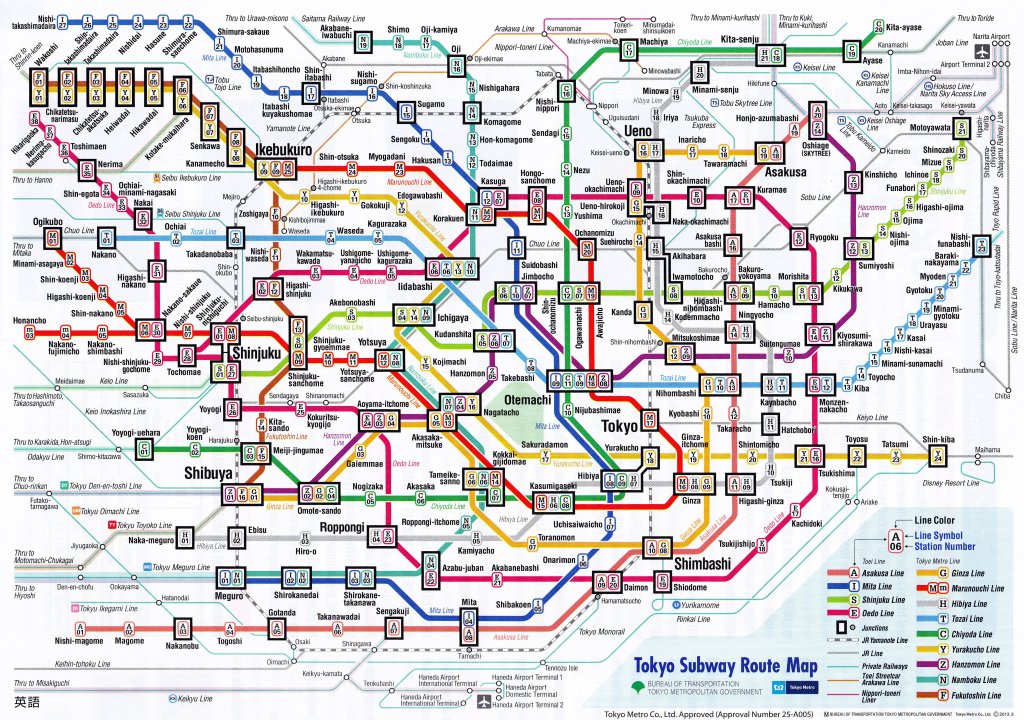
I’ve left myself a big task—to summarize our visit to the capital city of Japan in just a few paragraphs. I can start with an admission that might help—I’m a subway junkie. Anytime we visit a city that has one, I like to study the “Beck Map”, a highly schematic map based on an iconic design created by Henry Beck in 1933 for the London Underground. Even in this simplified format, the Tokyo Metro system is mind-boggling…
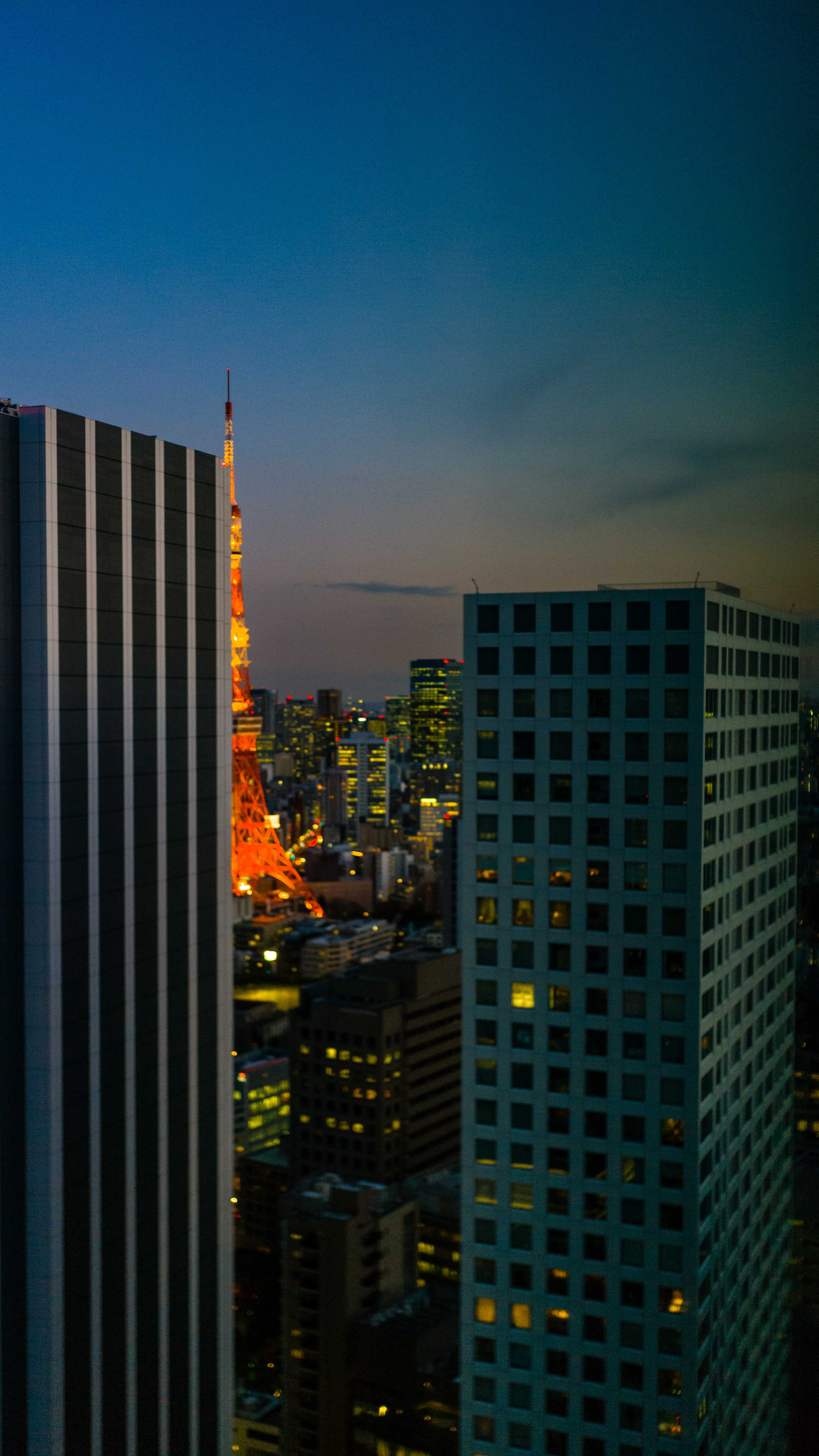
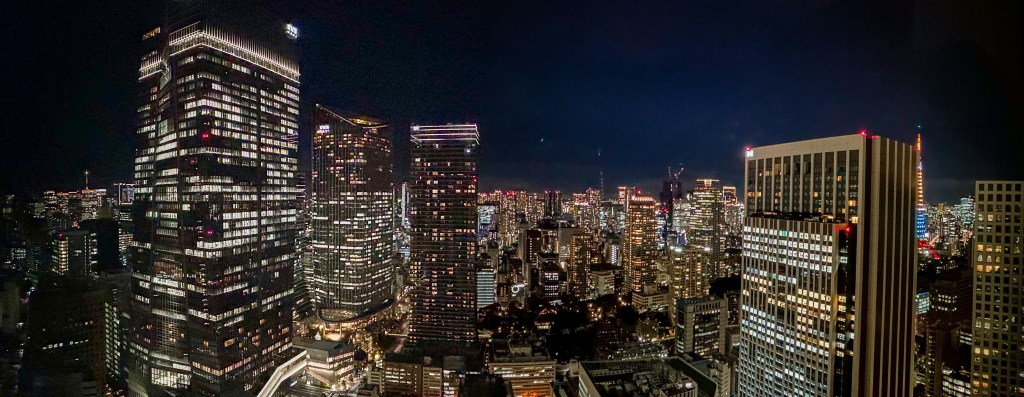
Our hotel in Tokyo was another treasure. After much deliberation, Deborah chose The Okura Tokyo in the Toranomon area. It was a great choice, as the Okura combines mid-century tradition with modern sophistication. We immediately felt at home—a personal welcome from the hotel manager does have that effect! The view to the east from our 34th floor window wasn’t bad either. It spanned the distant Tokyo Skytree to the (much closer) Tokyo Tower.
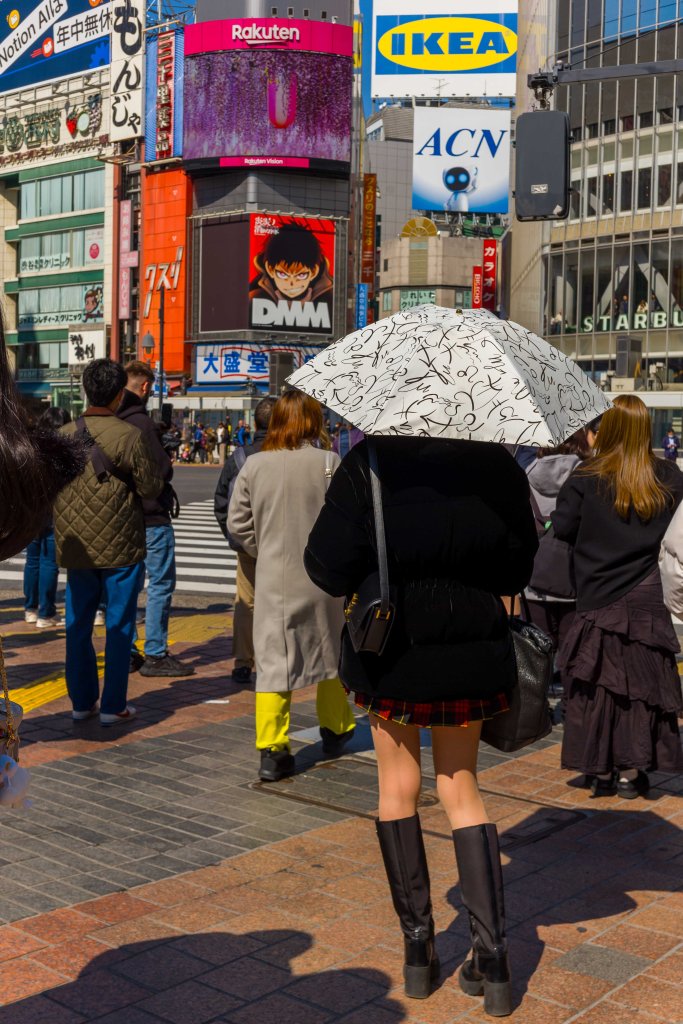
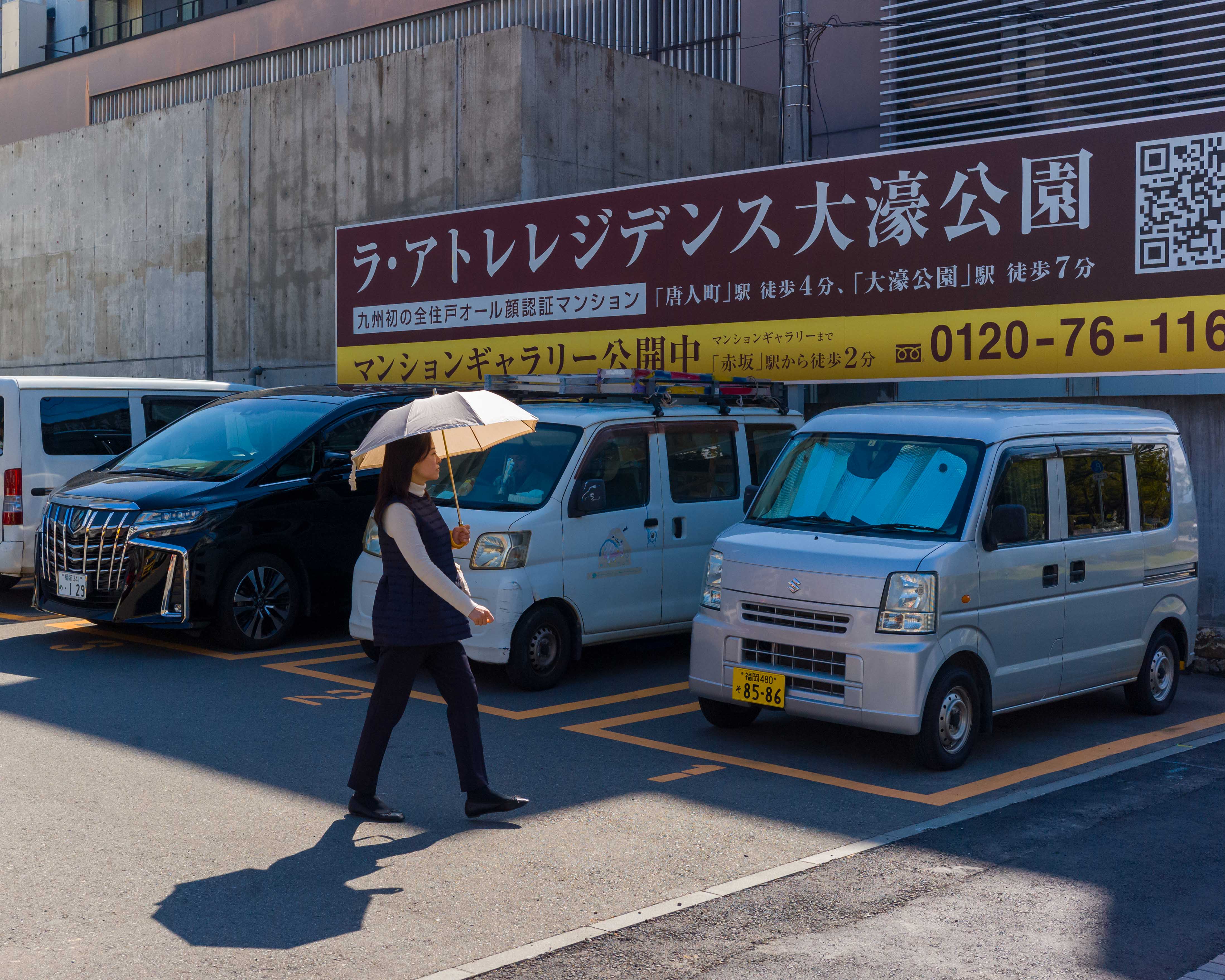
Orienting ourselves, we figured out there were three subway stations near the hotel, giving us flexibility to get anywhere we wanted to go. We ventured out, with our trusty IC cards in hand. Well aware it was a touristy area, we headed for Shibuya—an easy ride on the Ginza Line, Station G07 to G01—and its chaotic Scramble crossing. We saw it, we crossed it, we snapped a couple of pictures. It was interesting, but we soon moved on, feeling this was a so-so introduction to Tokyo.

We headed north to get away from the crowds, and found pleasant Yoyogi Park, where we saw a few early cherry blossoms. Then we walked through the grounds of Meiji Jingu, an important Shinto shrine. The serene forest setting is actually manmade—100,000 trees were planted in 1920 to commemorate Emperor Meiji and Empress Shoken.

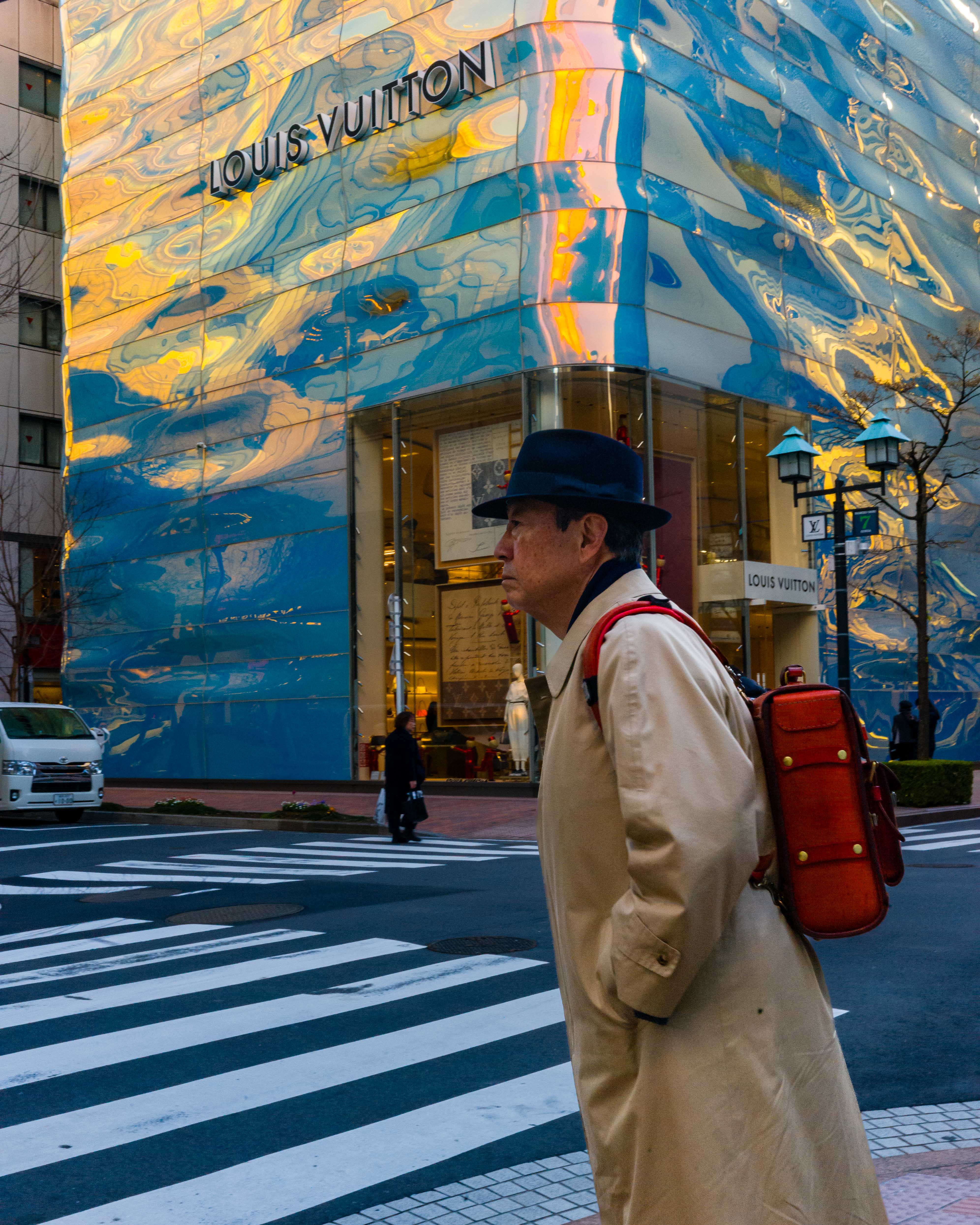
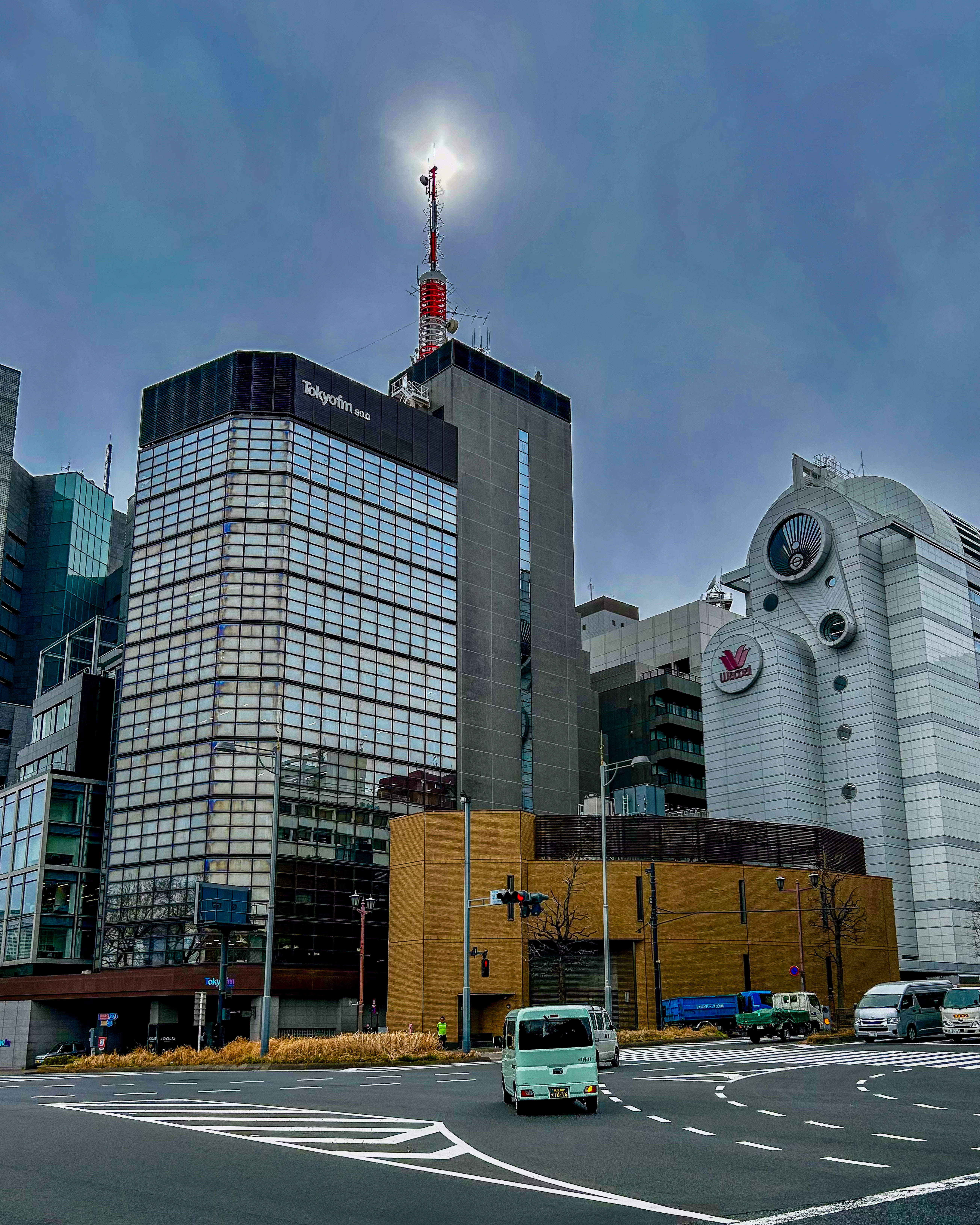
We did some shopping, including a visit to a couple of Tokyo’s famous camera shops in Shinjuku (for me) and a walk through Minato-ku and the high-end shops of Ginza (for Deborah). Closer to our hotel, we found Shiba Park at the base of the Tokyo Tower. That connected us to the Roppongi Hills area and the Azabudai Hills development, a chic cultural and dining hub. Each time out, we expanded our knowledge of the Metro system, with only a couple of missteps along the way…

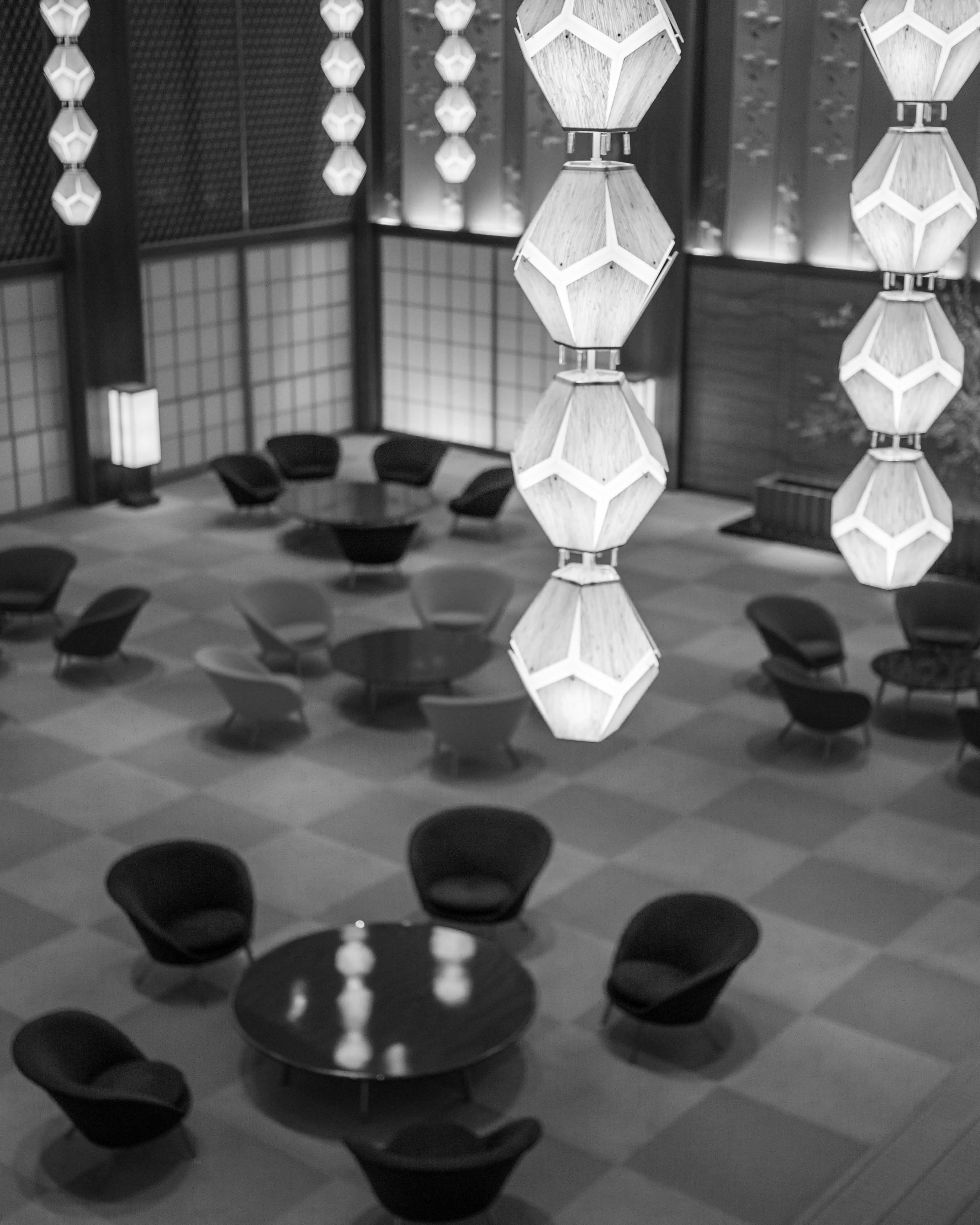
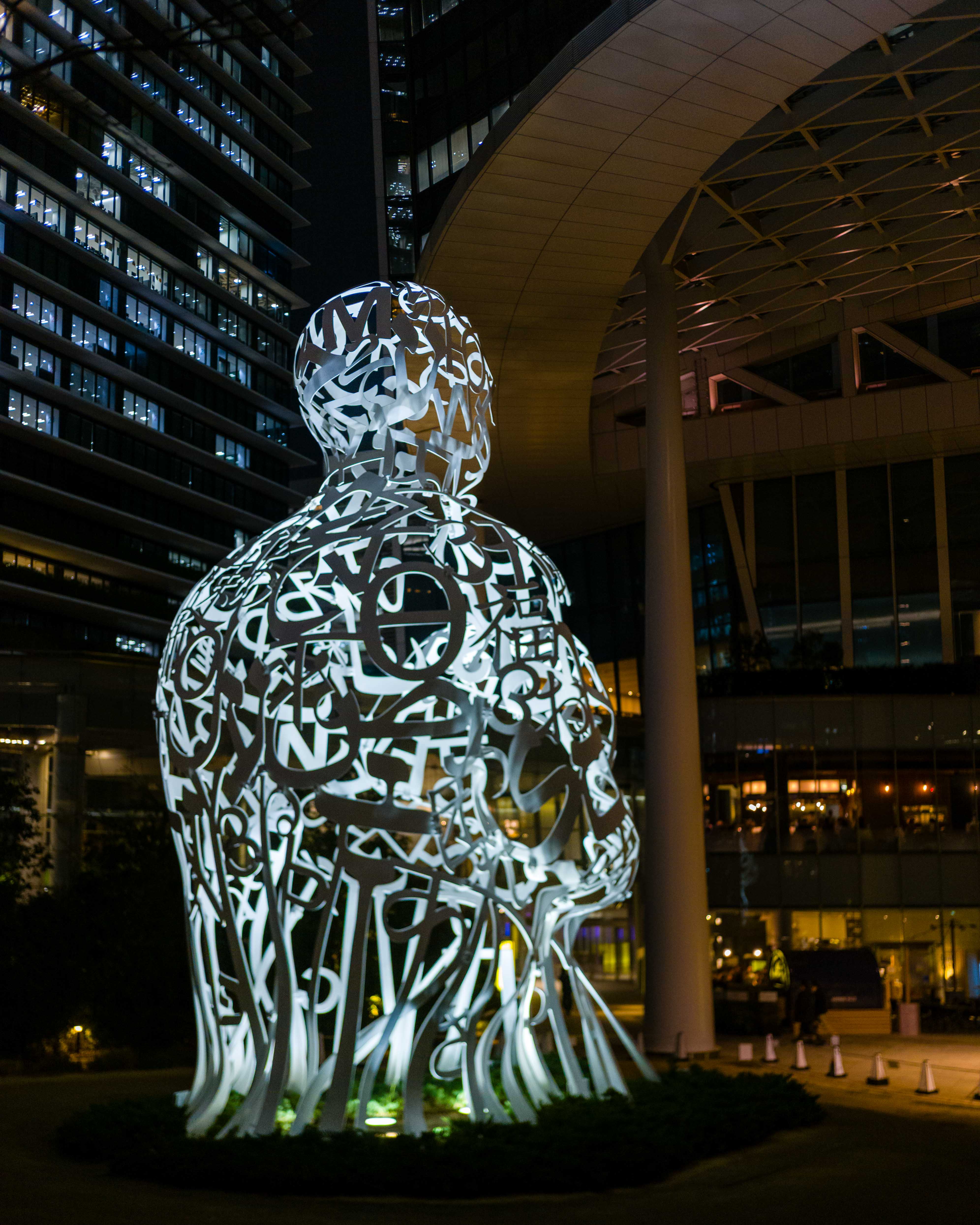
There was history and art in and around the hotel. The original lobby was designed by Yoshiro Taniguchi for the 1962 opening. Then, in 2014, when a rebuilding project was undertaken, it was Yoshiro’s son Yoshio who preserved the look and feel of the original lobby. The Okura Museum of Art—the oldest existing private museum in Japan—was across the plaza. Having seen a tea ceremony in Kinosaki, which seemed a long time ago but was only a week, we enjoyed the exhibit of ancient tea utensils. And we checked out a Jaume Plensa sculpture that we could see from our hotel window—it was similar to one in Montreal that I wrote about here.
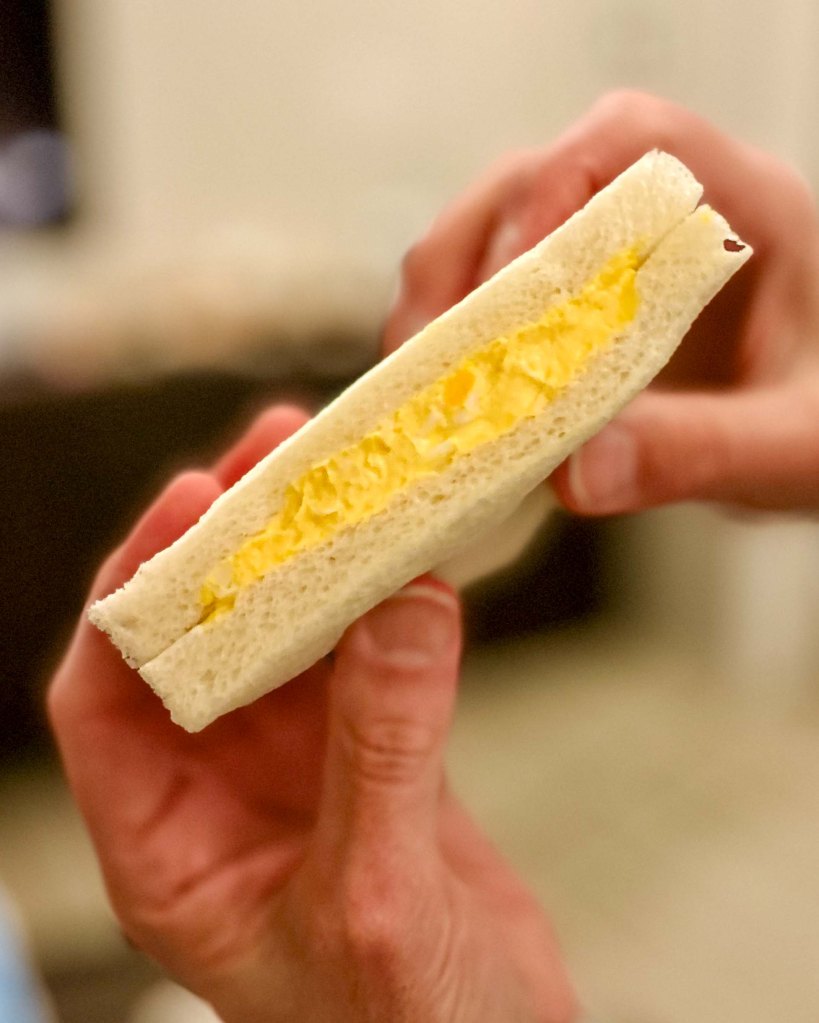
Food? Oh yes! We took full advantage of the amazing breakfast buffet at the hotel, to get us through most of the day. For dinner, we found restaurants with great tonkatsu curry and soba noodles. And there were always onigiri for a snack. One evening, we did a convenience store (konbini) dinner, to see what all the fuss was about over egg salad sandwiches and chicken cutlets. Life changing? No, but they’re not bad.

Here’s an album of pictures from Tokyo…
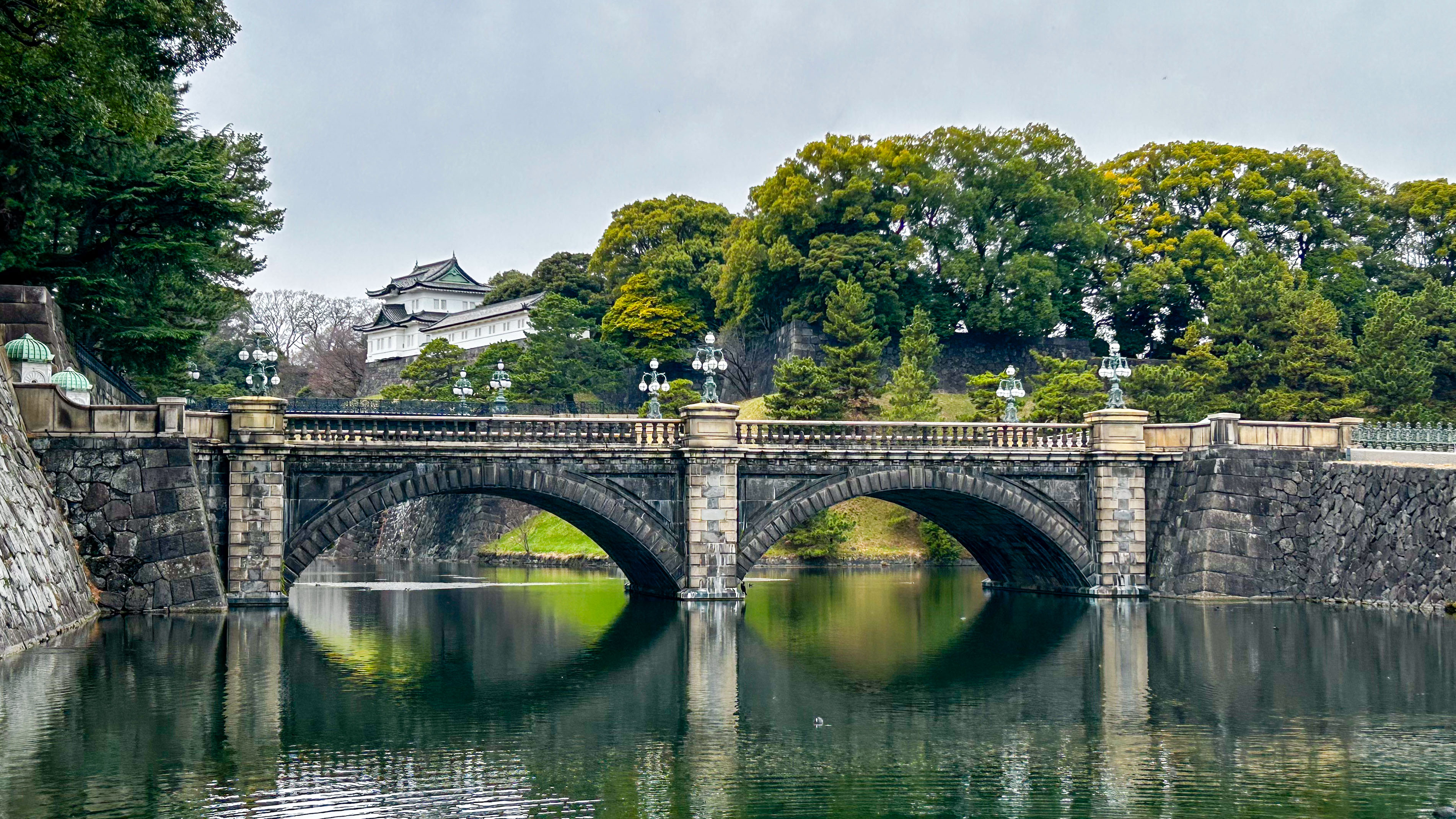
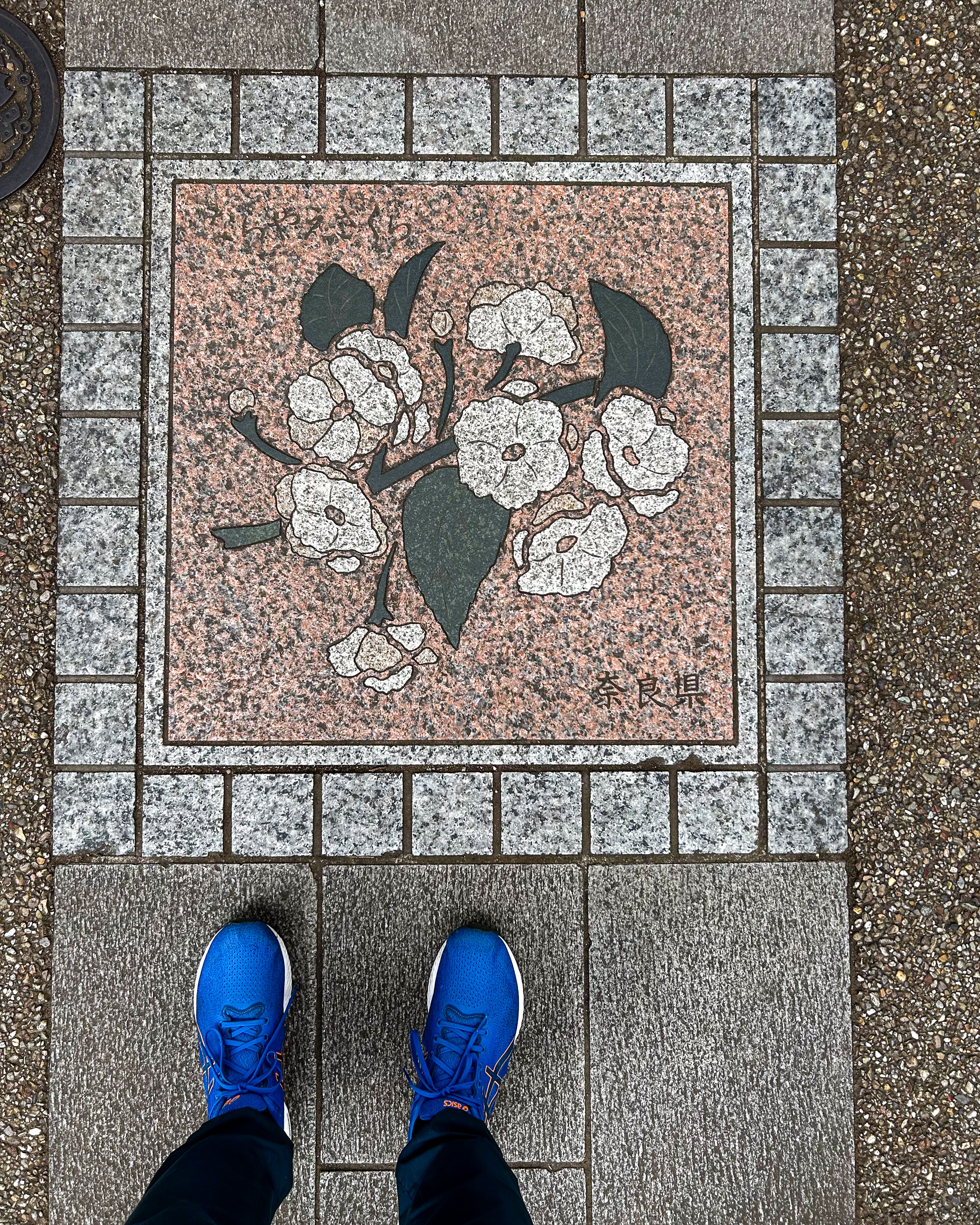
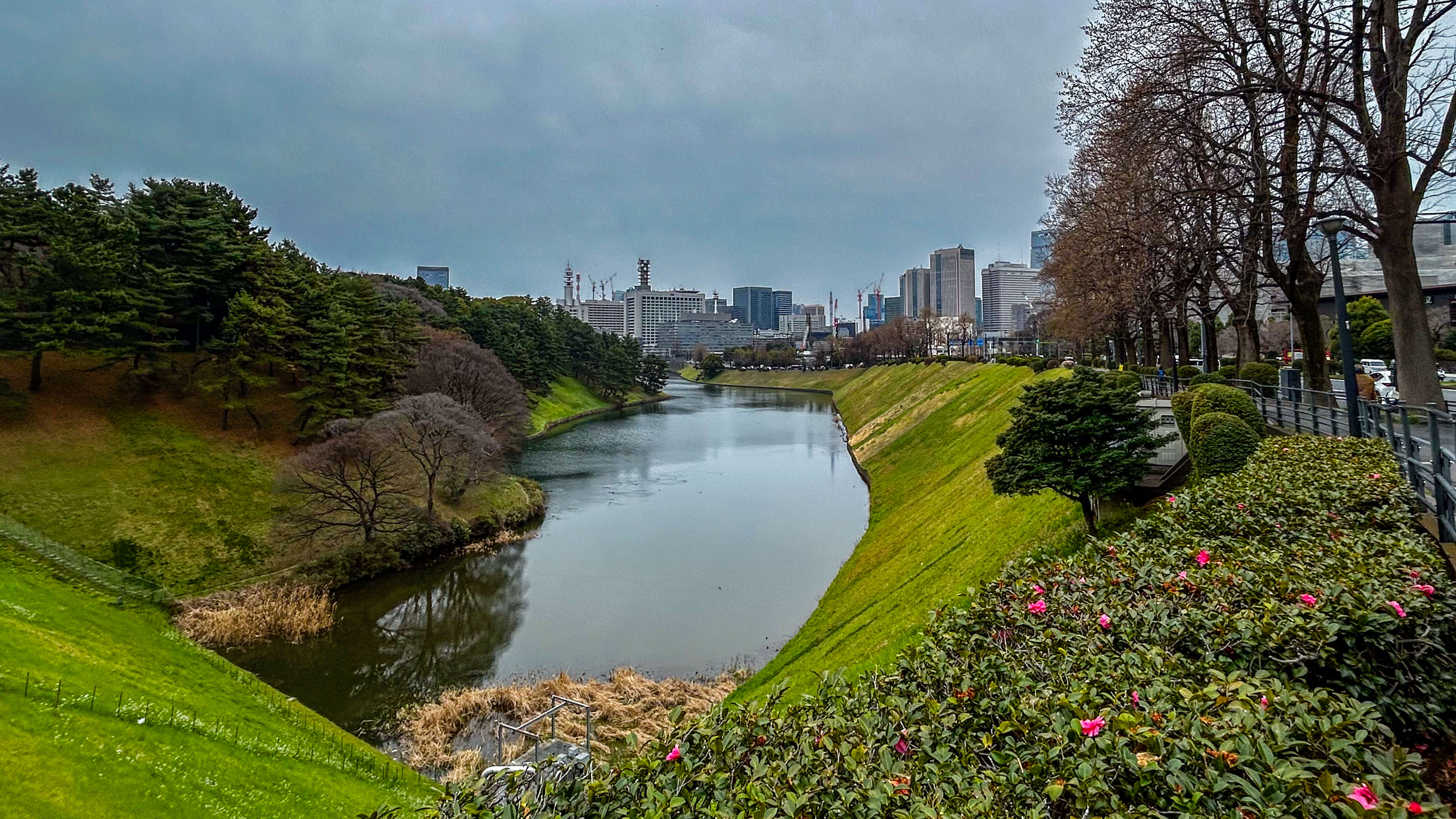
My final run in Japan was a lap around the Imperial Palace. Not surprisingly, it is a popular location in central Tokyo. The grounds are beautiful, with sculptural trees and a huge moat. I noticed a nice touch on the path—the distance markers feature flowers for each prefecture in Japan. I ran and Deb walked, which meant we both earned an ice cream.
The Final Word

Although we’d allowed more time in Kyoto and Tokyo than in other locations, we left both cities feeling there was too much unseen and undone. We were captivated by Kyoto. While it took us a little time to warm up to Tokyo, we left knowing we needed to come back. In the end, we think we were simply overwhelmed, and maybe a bit tired after three weeks. The key takeaway is that we will return to this wonderful country. We’re already planning our next trip, and Matthew has given us a list of Tokyo neighbourhoods we must visit! Who knows, there may even need to be another blog piece, to wrap up some loose ends from this visit.

Sayonara! And until next time, be well and BE FAST!

Mysterious Japan: Part 2

This edition of my trip report focuses on our travels to two smaller destinations, both on the western side of Honshu, the main island of Japan. As mentioned in Part 1, our son Matthew was a great resource for the logistics and details of our trip, particularly this part of it. I hope you’ll enjoy this summary, and of course, do check back in soon for the final installment!

Outline of the Week

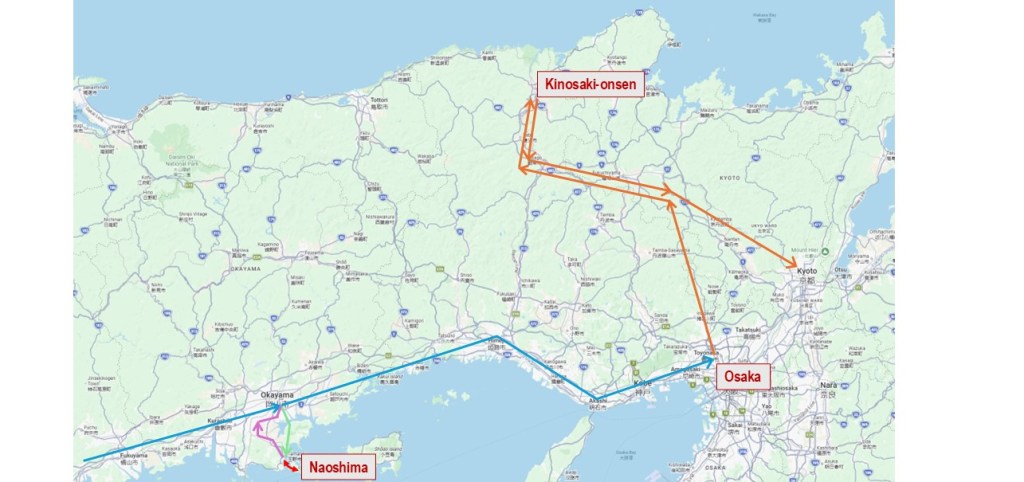
First, a quick overview of our travels for this part of our vacation. Picking up the story at Hiroshima Station, we boarded a Shinkansen for Okayama, the capital city of Okayama Prefecture. From there, we caught a city bus to the port of Uno, and then a passenger ferry to the island of Naoshima.

A couple of days later, we reversed course for Okayama, this time on a local train. Then we transferred to a bullet train bound for Osaka, a short distance to the east. We overnighted near Shin-Osaka Station. The next day we took a regional train to Kinosaki-onsen, a small town in Hyogo Prefecture on the northern Sea of Japan coast.

It’s worth saying at this point, again, how impressed we were by the transportation systems in Japan. We were worried about all these connections, but as it turned out, we had no trouble getting to any of our destinations. Every transfer was flawless, and every component of the system was on time, clean and efficient.

The Art Island of Naoshima

Naoshima is a small island in Japan’s Seto Inland Sea. The whole island is only about 14 square kilometres. The terrain is quite hilly. Ferries make the short hop from Uno to the main port (Miyanoura) in about 10-15 minutes. The economy in the north of the island has long relied on industry, mainly copper smelting and aquaculture.

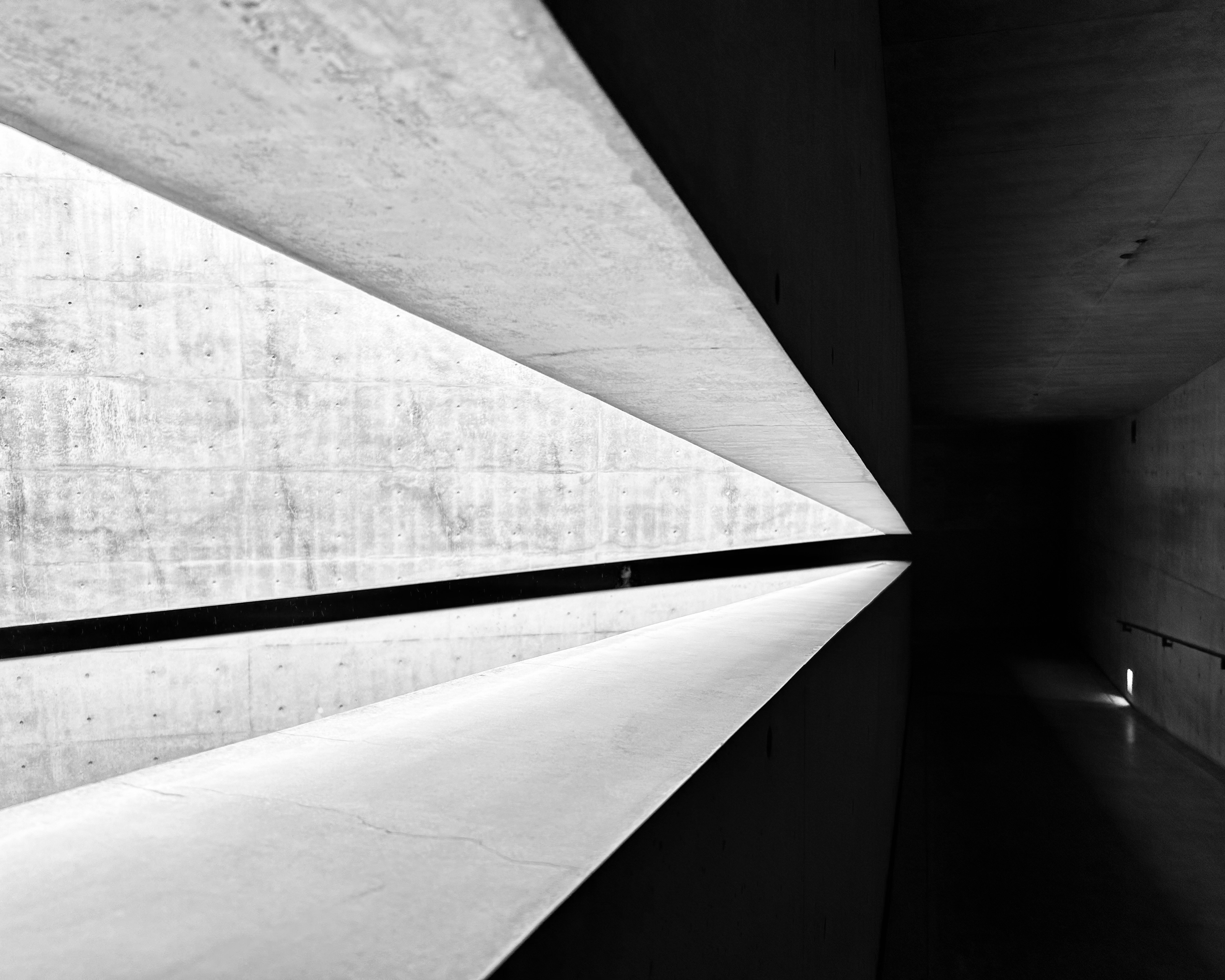
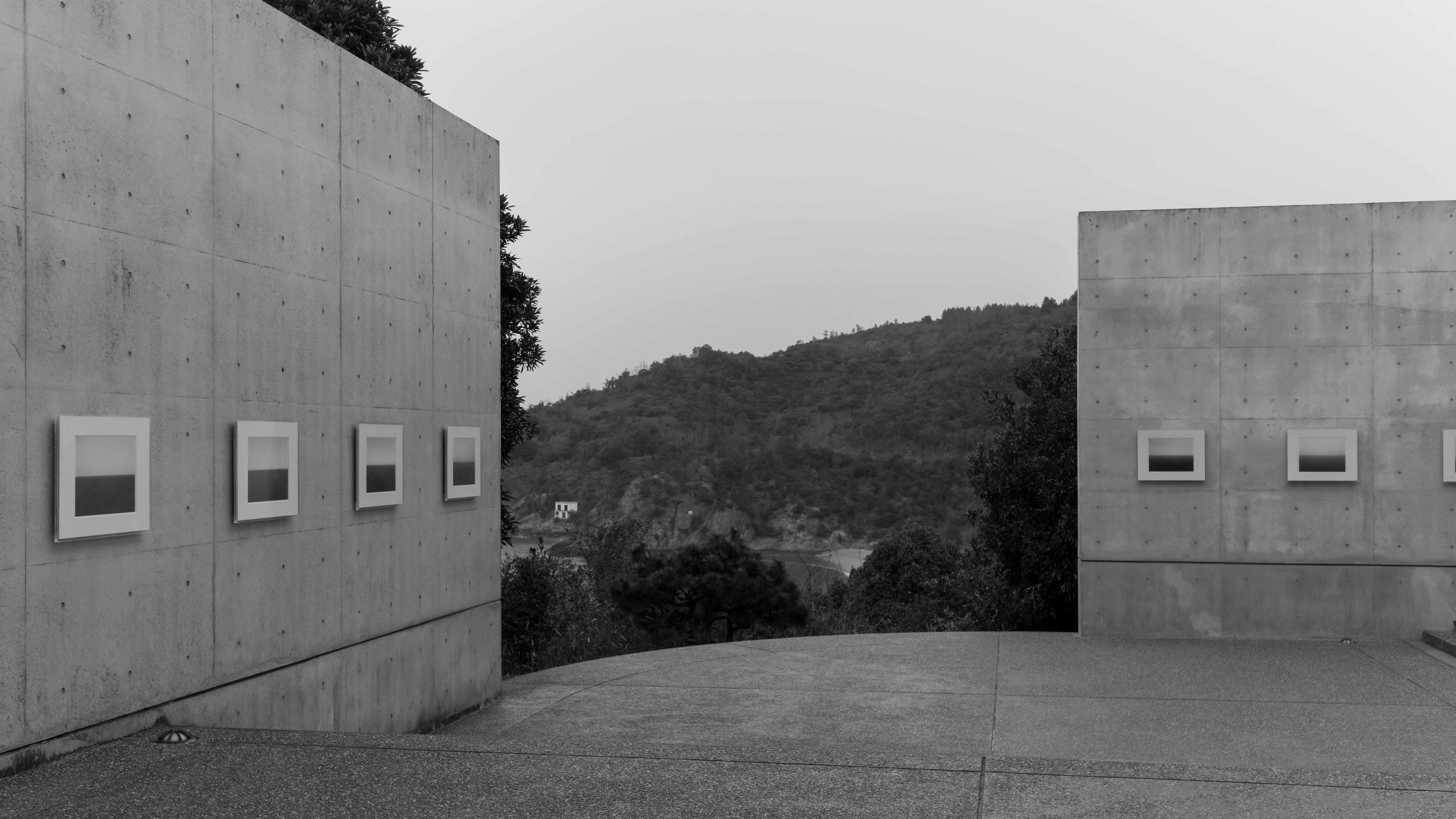
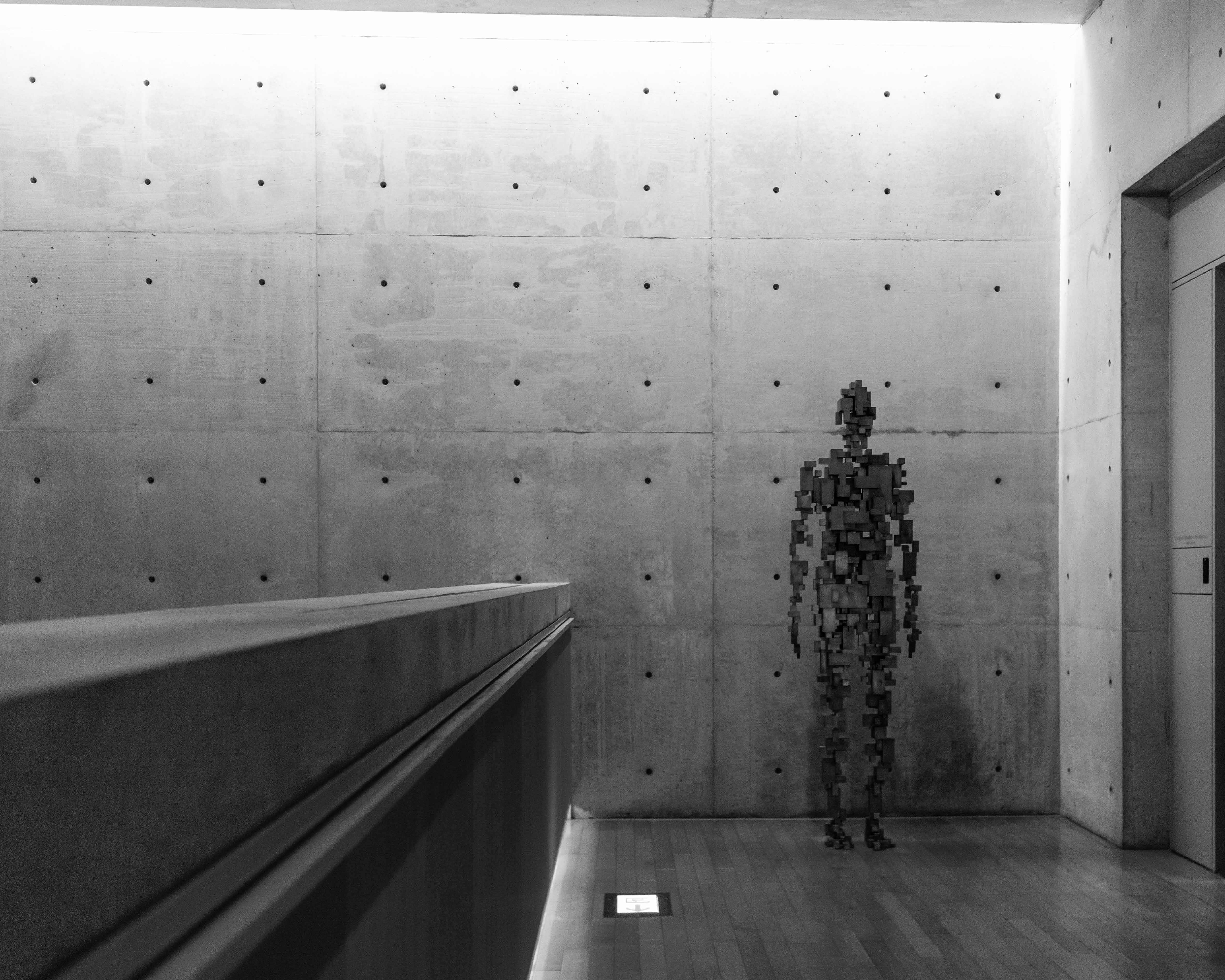
You may ask, what is the attraction to Naoshima? Well, over the last several decades, the south end of the island has become a centre for art and architecture. Benesse House is an organization that works to incorporate art into the local landscape. And when I say into, I mean “into”. The hotel and art museum, which opened in 1992, were designed by renowned Japanese architect Tadao Ando to fit seamlessly into the landscape. One of the buildings, the Chichu Art Museum, is completely underground. There are installations across the island, including multiple sites around the Benesse complex and several conceptual “art houses”.

Copyright for all photographs on the site is mine, unless noted.

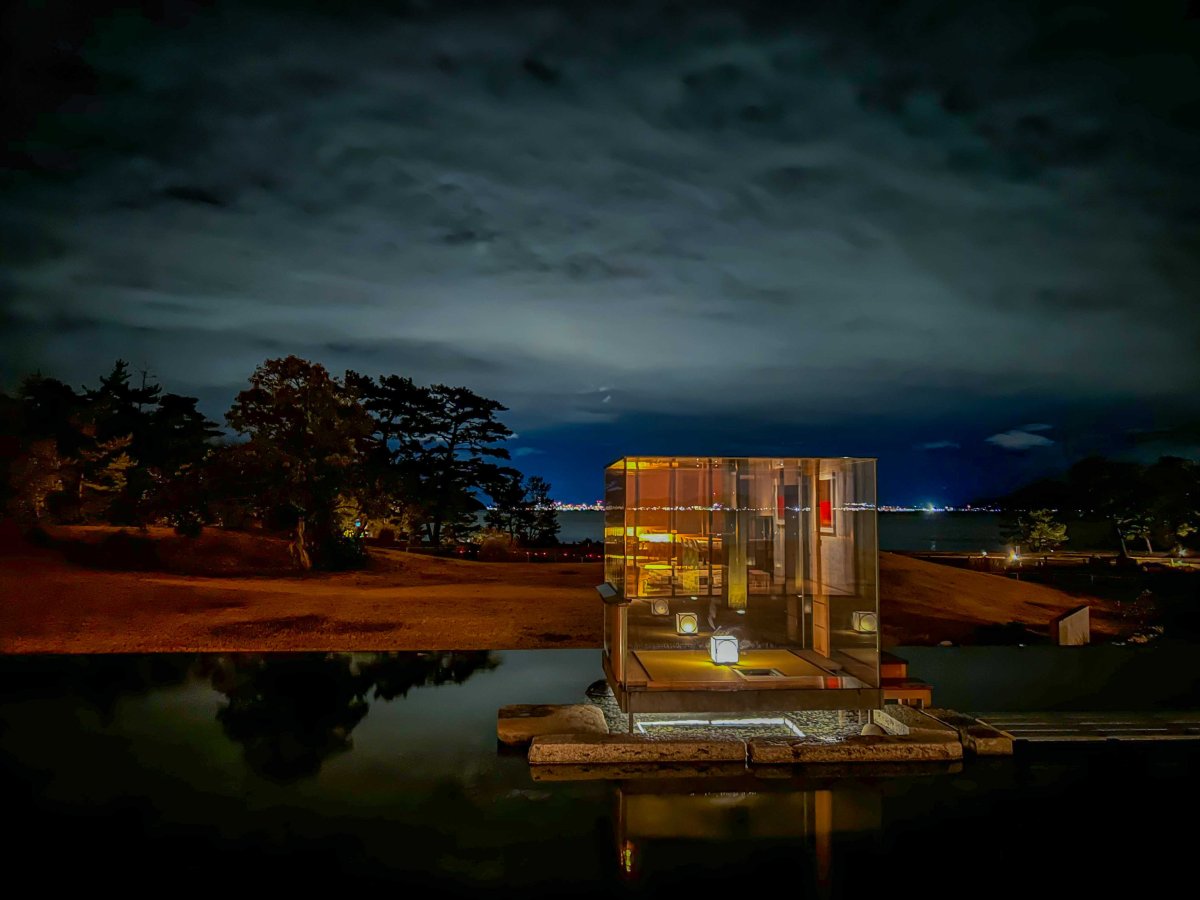
We thoroughly enjoyed our stay in Benesse House Park. The view out over the grounds and the sea was beautiful. Even in a steady rain, the setting was impressive—and in a way, the rain enhanced the appeal of the stark concrete buildings. The artwork at the site includes sculpture and photography. We made the short walk to the Museum, and stopped at a couple of the open-air installations along the way. And we had some great meals in the hotel restaurant. The striking feature image for this post was taken just as the sky cleared after dinner on our second day.

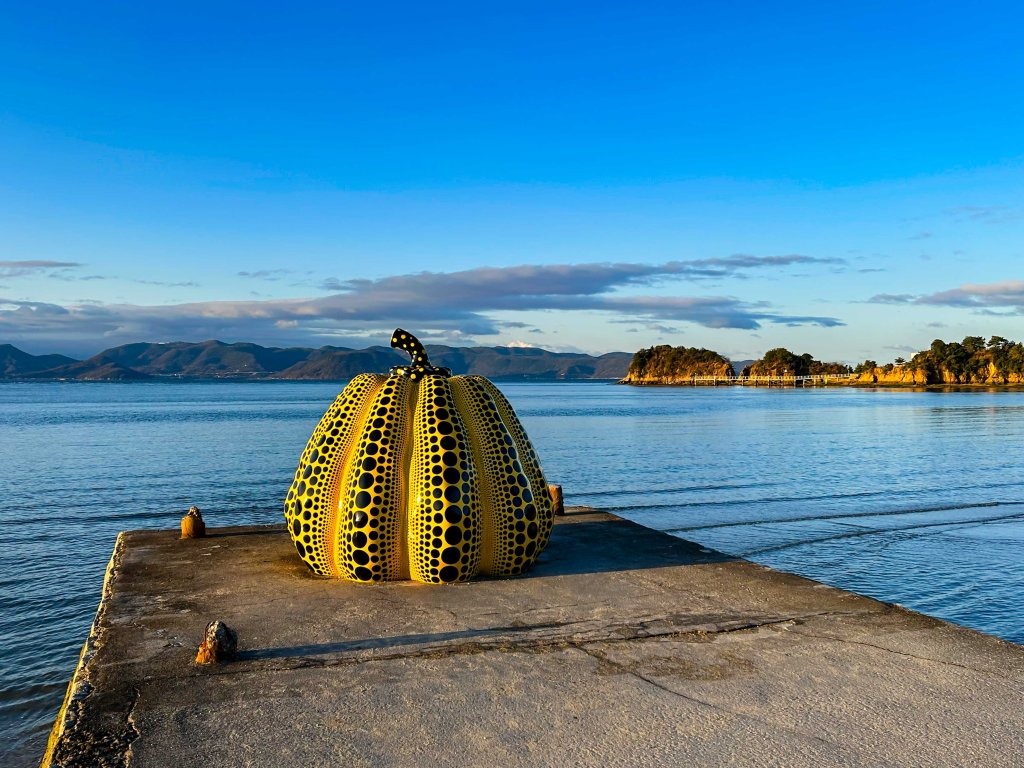
The most famous piece on the site, Pumpkin, is a large sculpture by Yayoi Kusama. Pumpkin sits on its own pier a short distance from the hotel. It is definitely the most popular piece too, judging by the crowds that were snapping selfies with it. (I finally managed to get a nice photo of it when I went out for an early morning jog.) The piece was created for a 1994 exhibition of open air works around the museum. Adding to its appeal, the sculpture was blown out to sea (and rescued) in 2022.

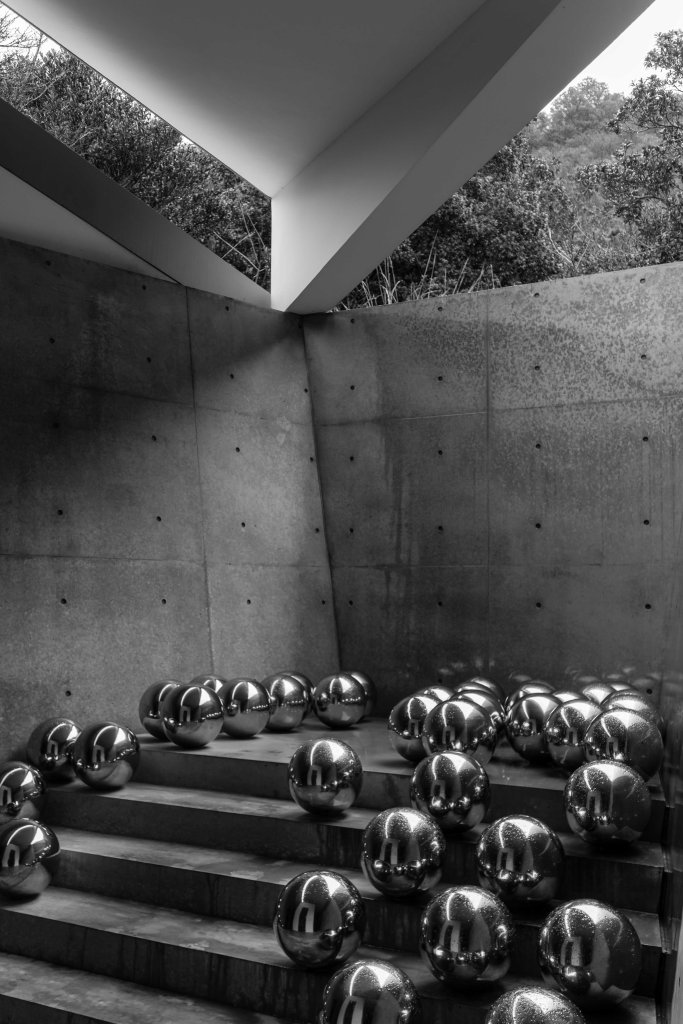
Kusama, who is now 97 years old, has been an avantgarde artist for decades. Her pieces often include polka dots, which she attributes to hallucinations she had as a child. Other works of hers are found in Naoshima. We particularly liked her Narcissus Garden, a free form sculpture of stainless steel balls, installed in an open-air pavilion called the Valley Gallery.

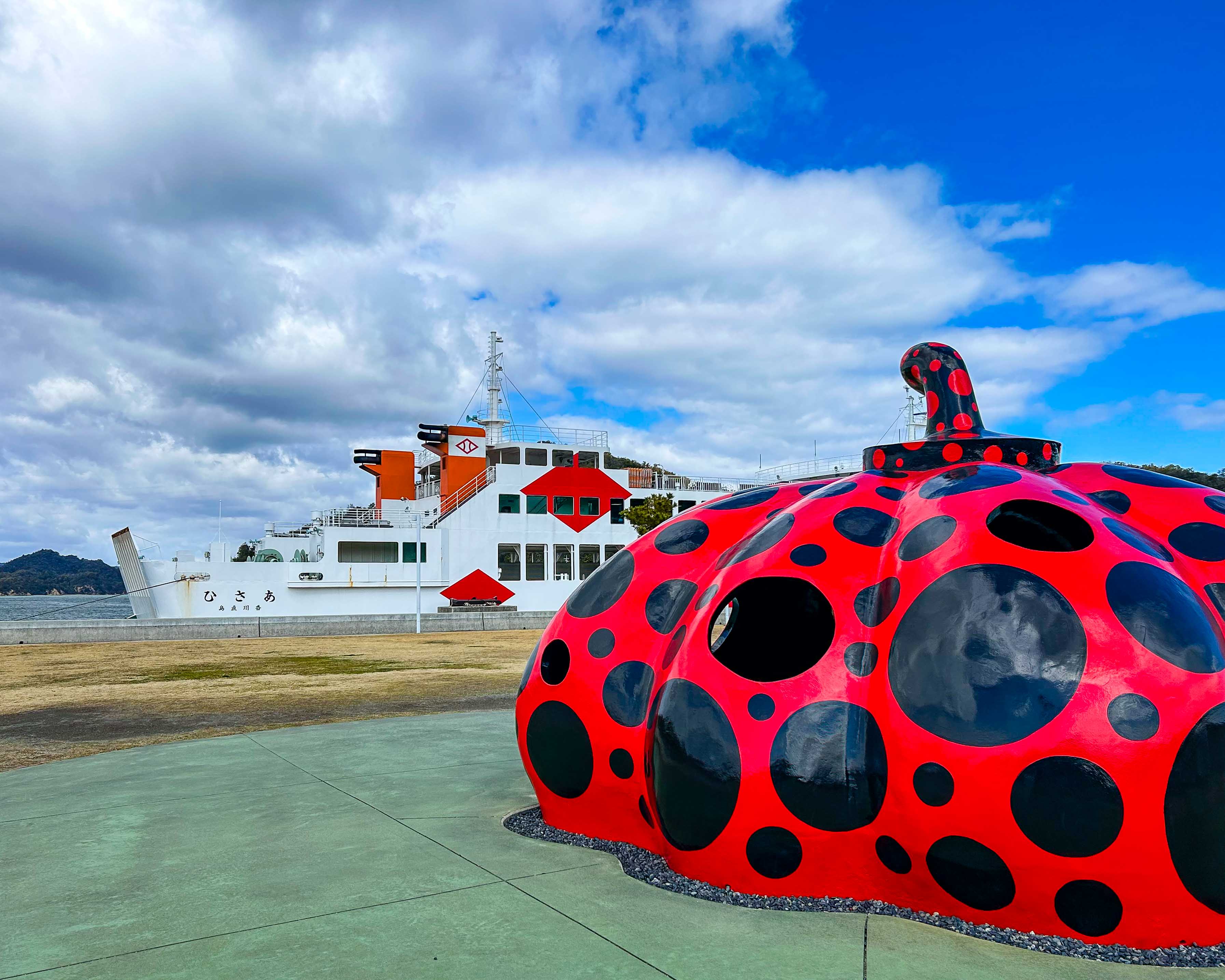
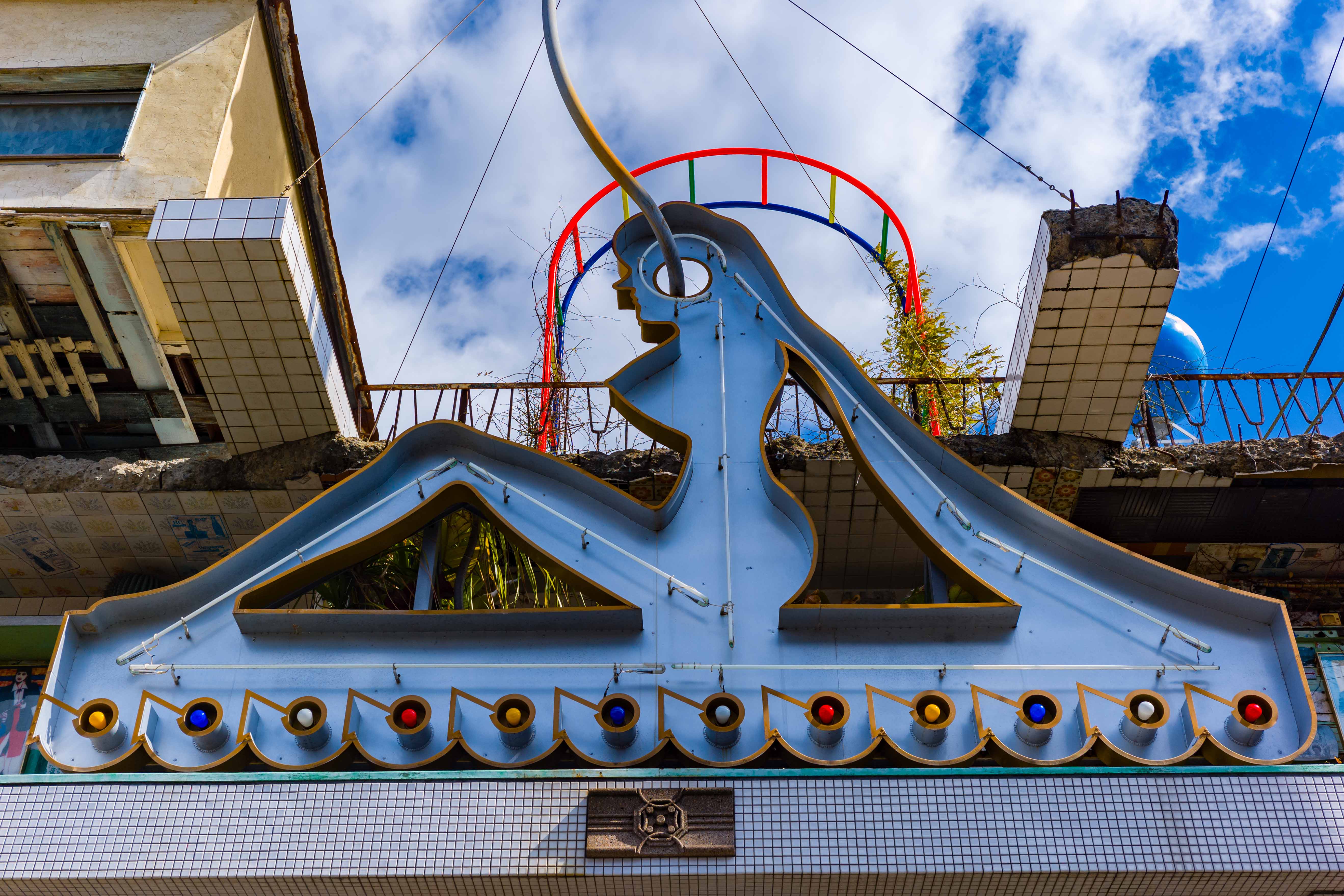
Another large and popular Kusama pumpkin—this one red—is installed at the Miyanoura port. It made for a colourful picture when the ferry was moored close by. We enjoyed a short stroll around the town, which features a public bath that doubles as an art installation. Maybe on our next visit…

The Hot Springs of Kinosaki-onsen

Our next major stop in Japan was similar to Naoshima in one respect—it was rather remote. However, its attractions were quite different. We headed to Kinosaki-onsen, on the northern coast of the Kansai region. Onsen are traditional Japanese hot springs, treasured for their mineral-rich waters. The town of Kinosaki is particularly famous, as it has seven public baths where visitors can experience the relaxing geothermal waters in a serene setting.

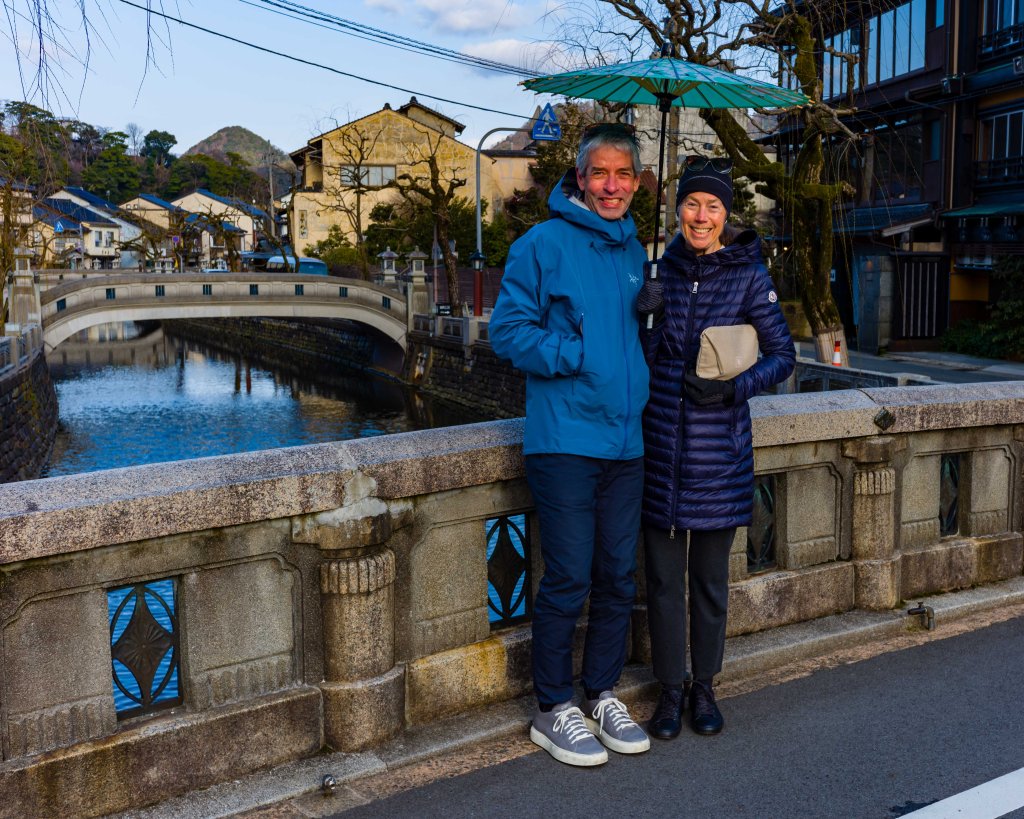
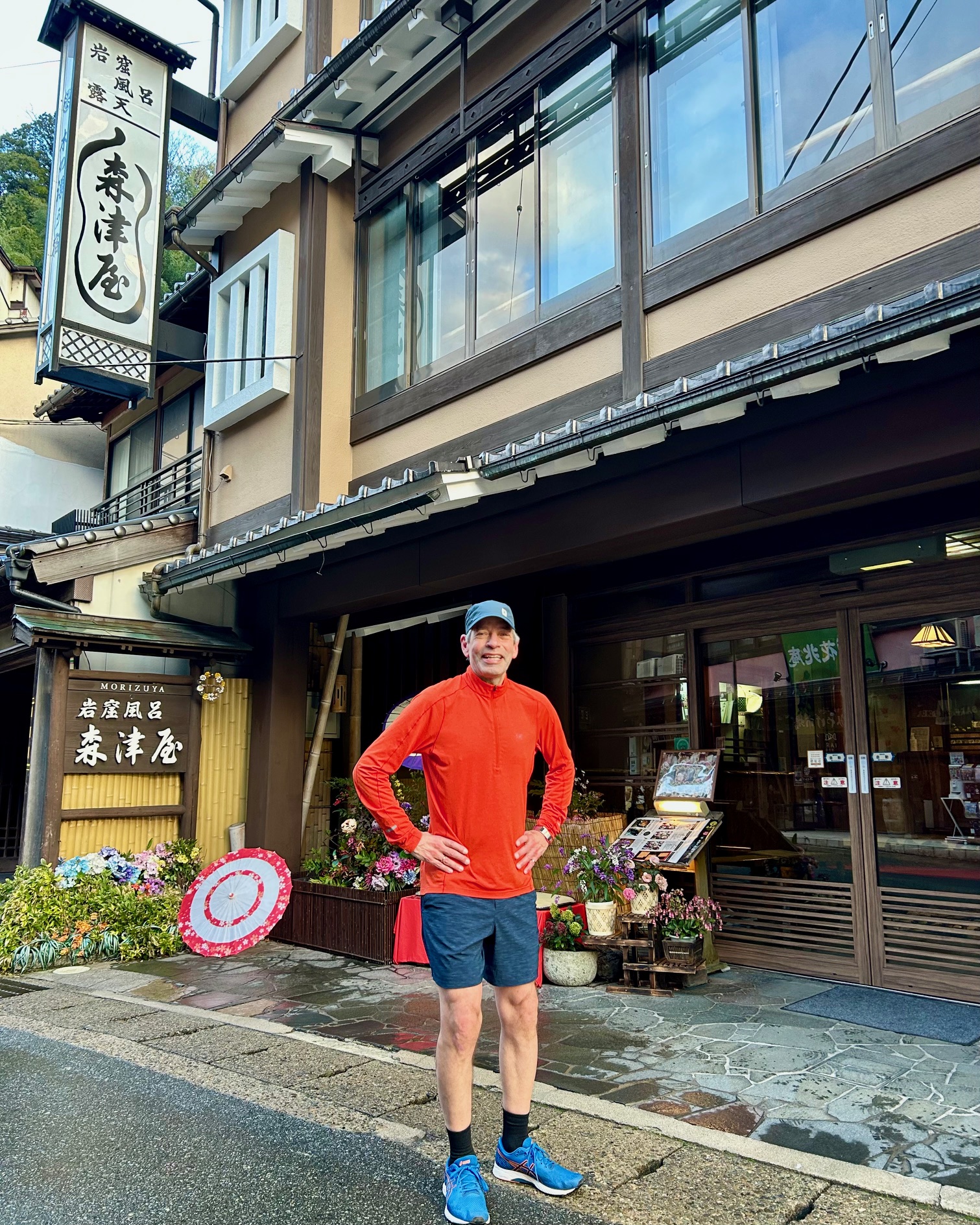
Our JR West regional train got us to Kinosaki at less than Shinkansen speed, but was just as efficient. While we had brushed up on the etiquette for visiting onsen, we really weren’t sure what to expect. We arrived at our ryokan, the comfortable Morizuya Inn on the town’s picturesque main street. Hatchi, the owner/manager, immediately made us feel welcome, even insisting on some photos on a scenic bridge over the Otoni River.

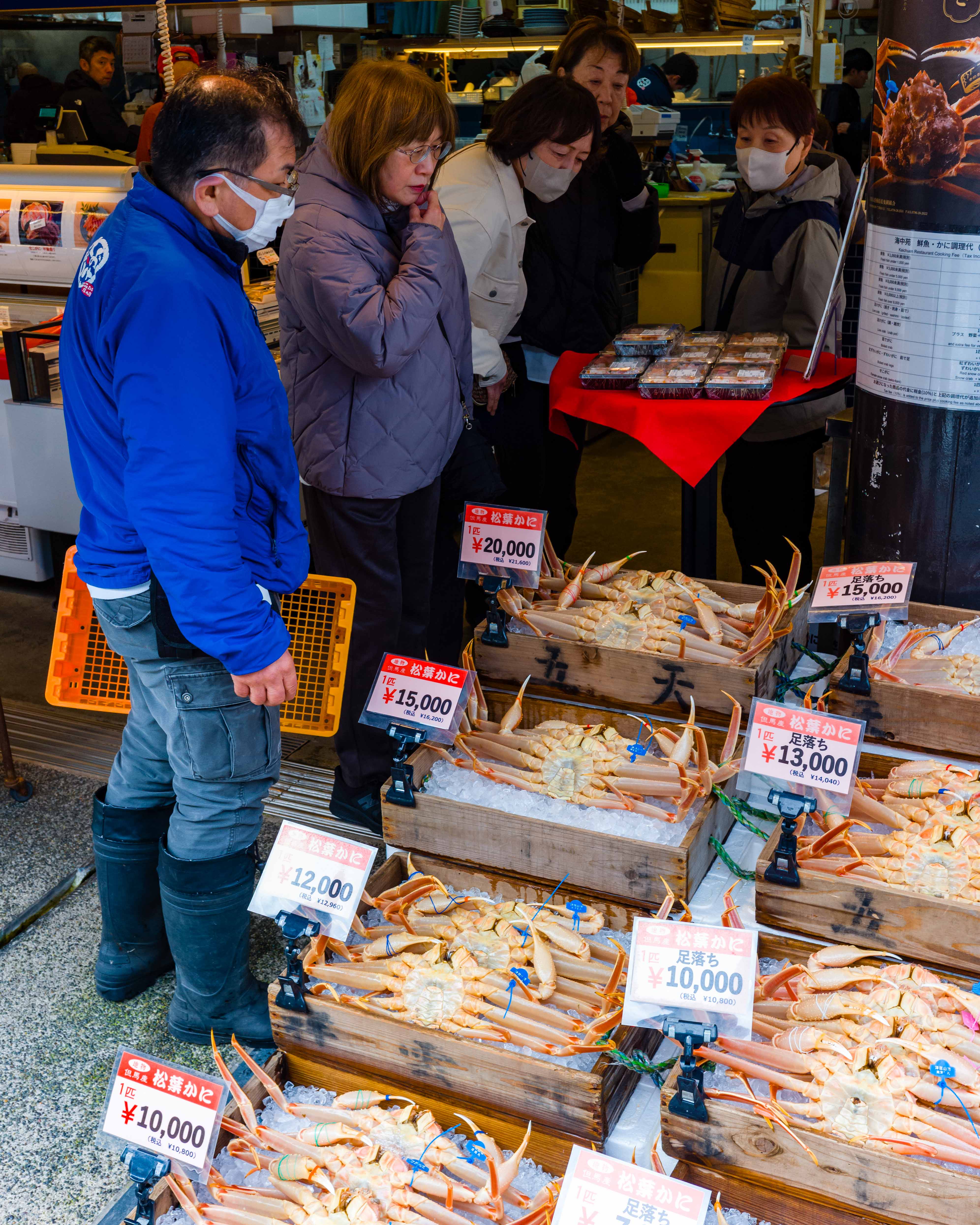
First things first, we put on our yukata (dressing gowns) and enjoyed a traditional multi-course dinner in the dining room. Crab is the local specialty, it was in season, and it was definitely a highlight of our meal.

Many visitors make it a goal to see all the traditional onsens in the town. They can even get a stamp from each one as a souvenir. We set our sights a little lower, having never been to a public bath in Japan. In the end, we visited two of them, and we enjoyed the experience. Very relaxing! We began to appreciate why this is such an important part of Japanese culture.

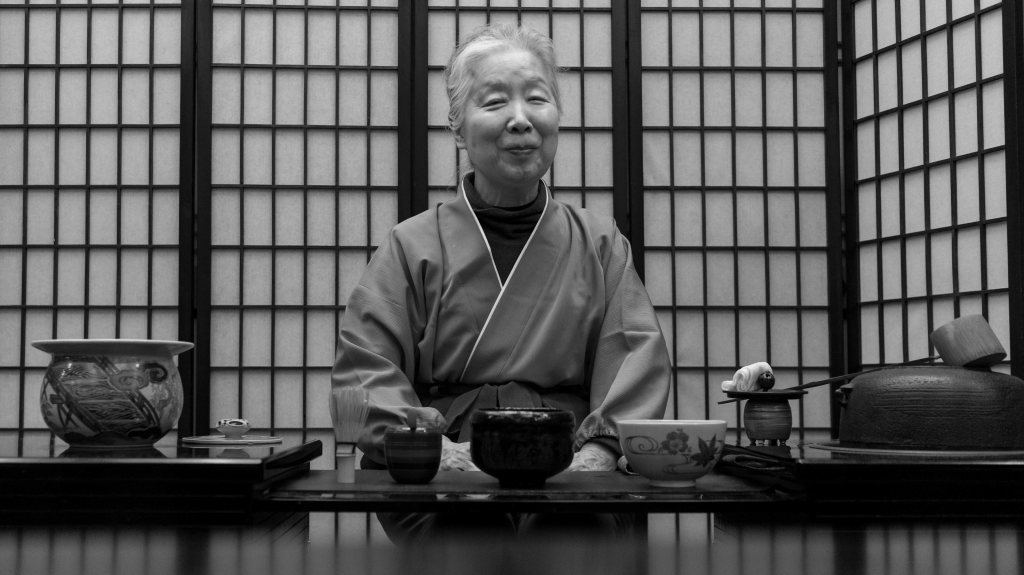
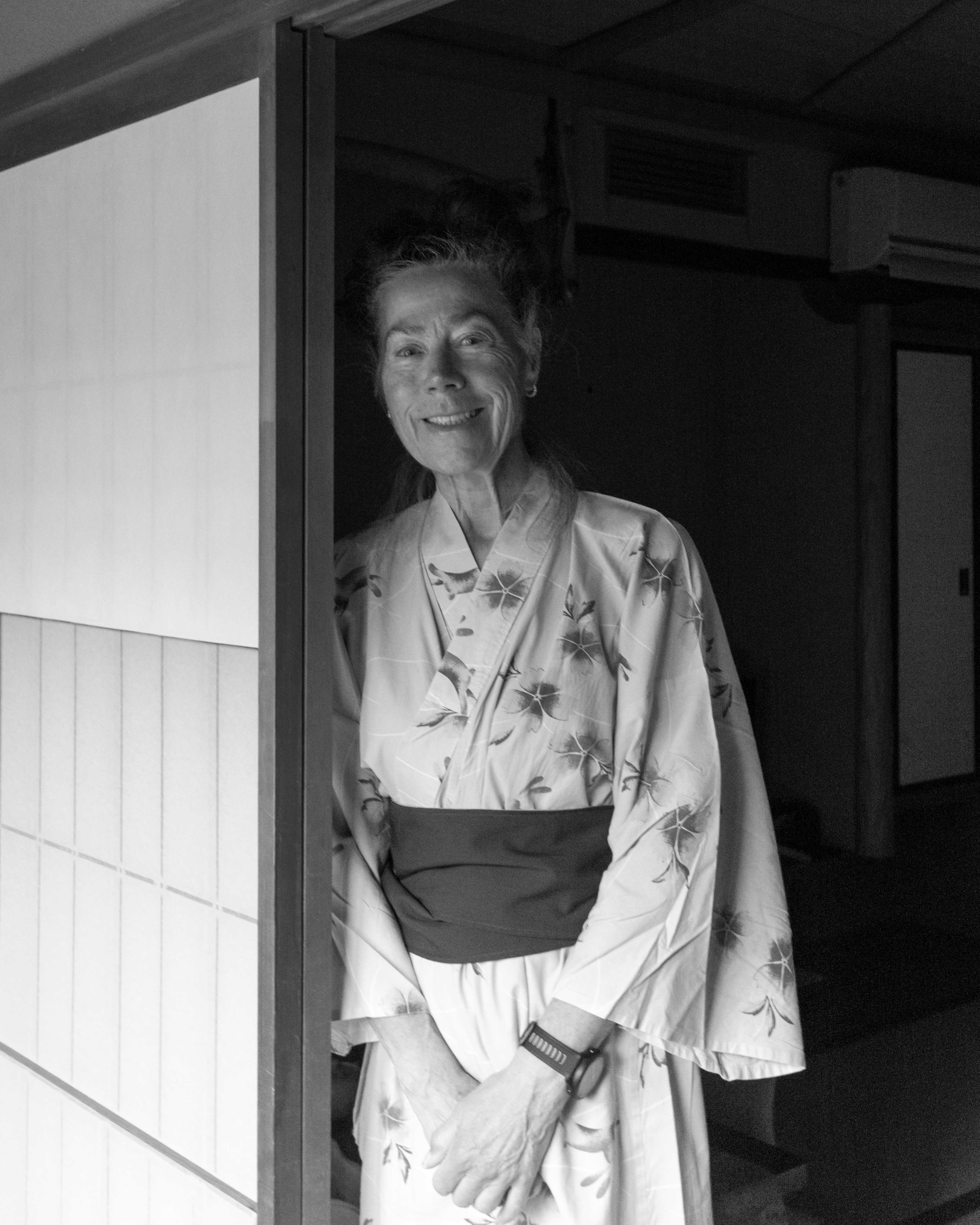
Later, we took part in another cultural experience—the tea ceremony, led by Hatchi’s mother. She is a lovely woman, and the ceremony was very special.

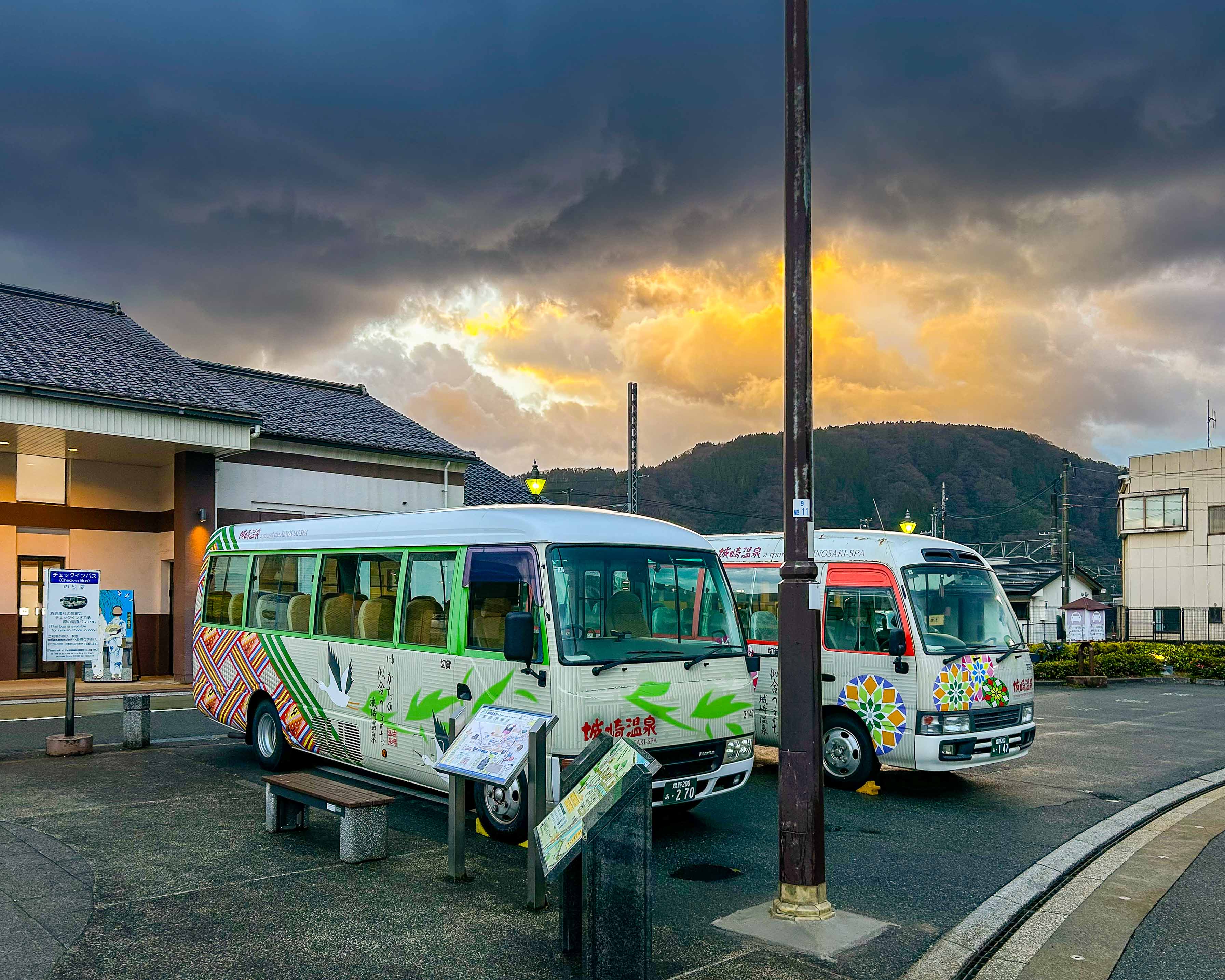
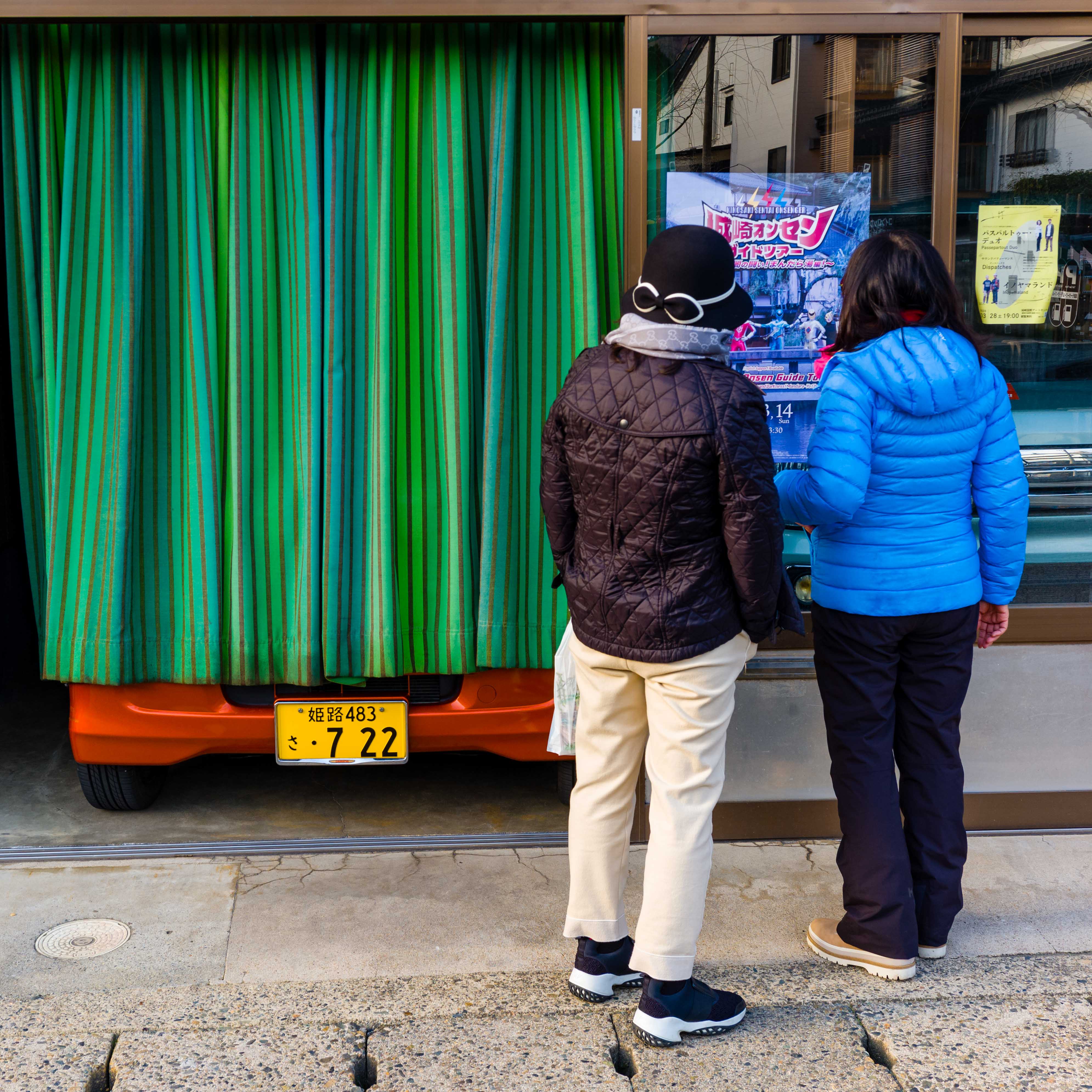
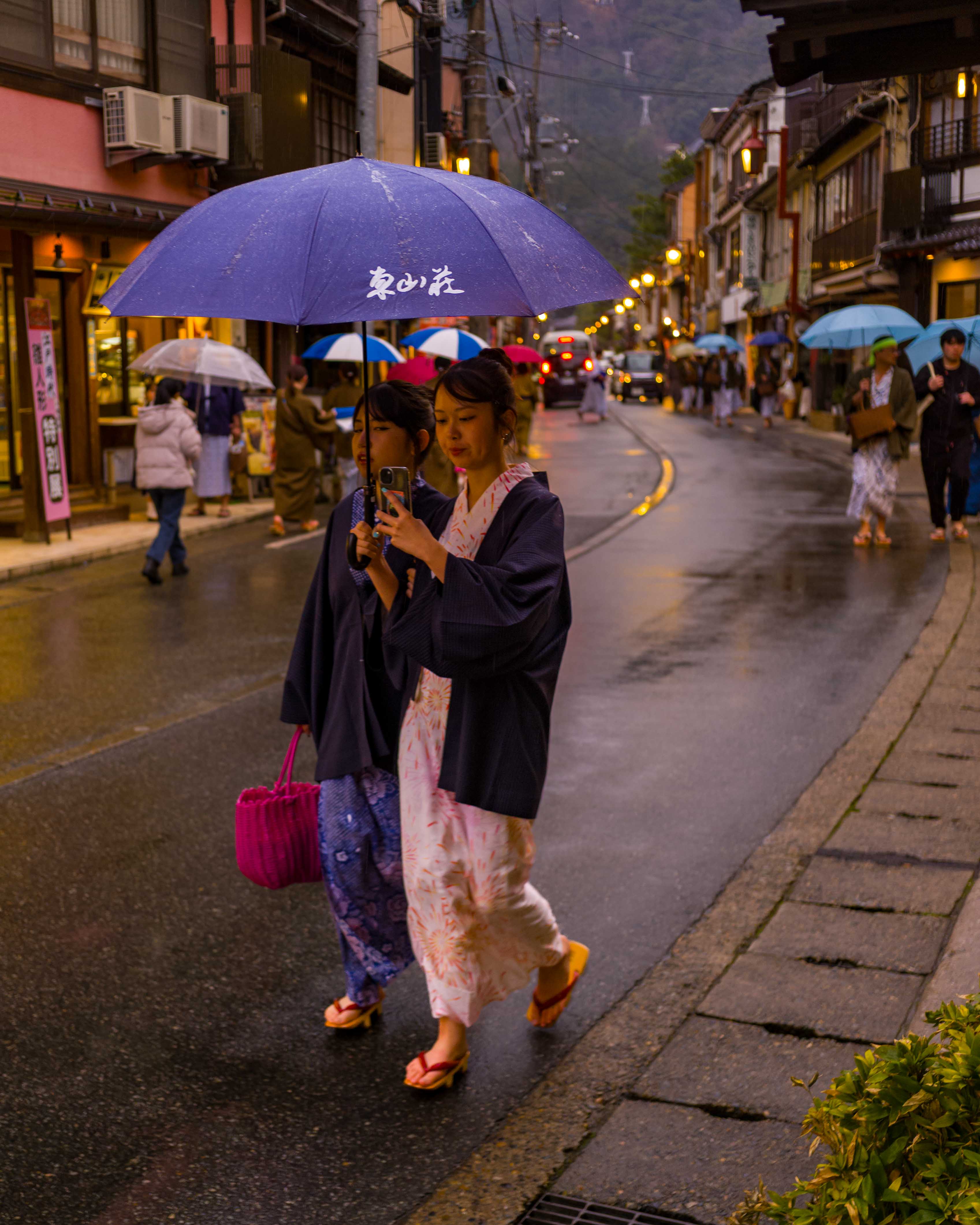
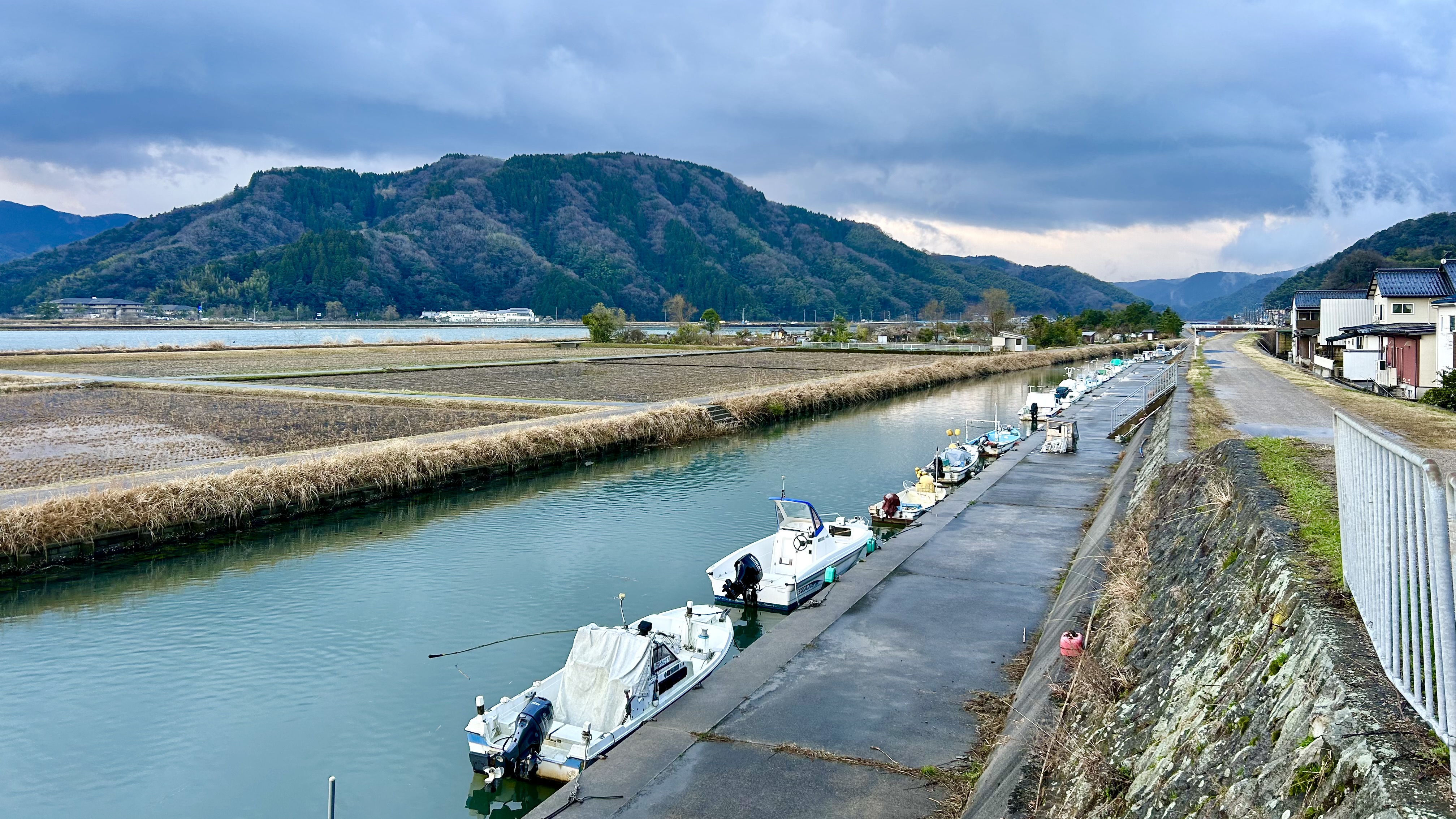
Here are a few pictures from our laid-back time in this unique place. The picture of two ladies looking at a store window reminded me of one of my favourite Fred Herzog photos. On our last morning in town, I had the streets to myself for an early morning jog, and I was treated to a magical sunrise. There was some overnight snow on the cars, but coming from Alberta that didn’t seem photo-worthy!

More Impressions

The middle part of our vacation brought many more positive impressions. We had been to opposite sides of the main island, and seen two very different places—the first celebrated man’s impact on the natural environment, while the other let us experience nature’s impact on us. The food was all extraordinary, especially the traditional Japanese meals. And the people were wonderful—so welcoming and respectful.

Up next were the major cities, Kyoto and Tokyo. Stay tuned for that.

Until then, be well and BE FAST!
Magical Japan: Part 1

Japan is definitely on a roll. The trend in its tourism statistics is astounding—international visitors increased 11 percent per year from 2010 to 2024. Many reasons are cited for Japan’s popularity: it has a rich cultural heritage, it’s safe, it has great food, and unmatched transportation systems.

Our son Matthew is an experienced traveller to Japan, and he was instrumental in our decision to plan a visit. In consideration of the tourism figures, we settled on the last few weeks of winter as a good time to travel there. I’ll be posting several articles to convey our full experience, so I hope you’ll stop by and read them all!
Outline of the Trip

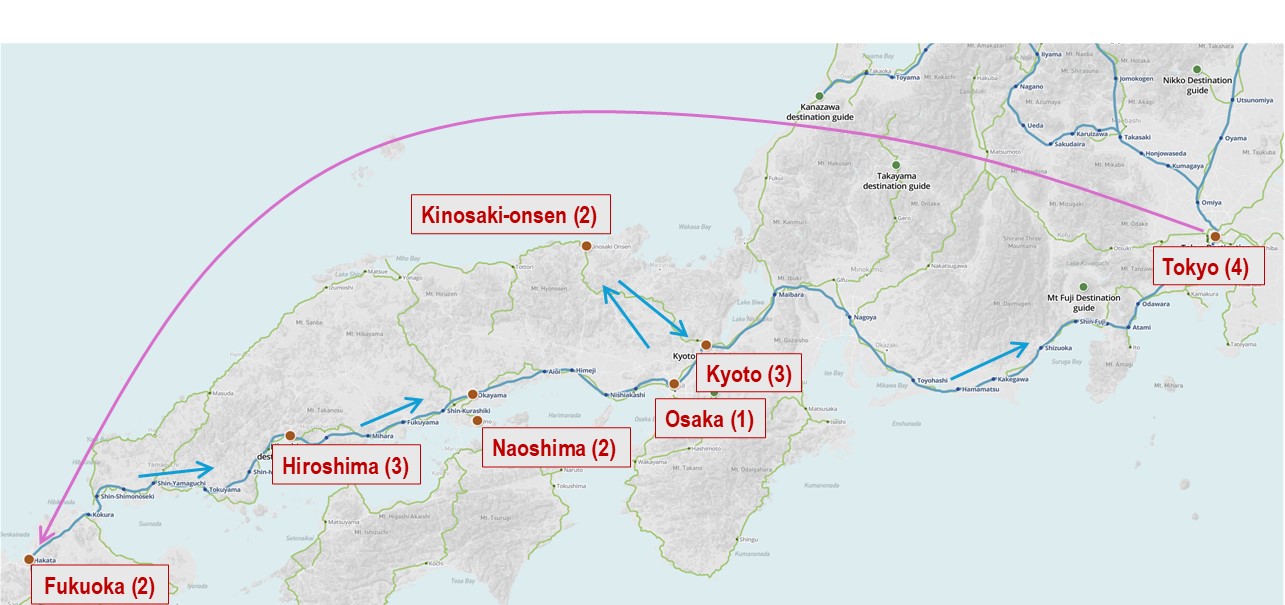
Tokyo’s Narita Airport would be our entry point into Japan, but we decided to immediately head away from the capital. Our logic was simple: we would arrive shortly before the Tokyo Marathon, and we wanted to avoid those crowds. Instead, we would head to the western edge of Japan and work our way back to Tokyo at the end of our vacation. A bonus for Deborah was the chance to fly on Peach, one of Japan’s domestic carriers. We overnighted near the airport and caught an early flight the next morning, which was terrific. Our destination? Fukuoka!

Fukuoka: Gateway to Asia

Fukuoka is the largest city in the Kyushu region and the capital city of Fukuoka Prefecture, south and west of the main island of Honshu. Its population is 1.5 million. Demographically, Fukuoka is a young city, and we found it to have an energetic vibe.

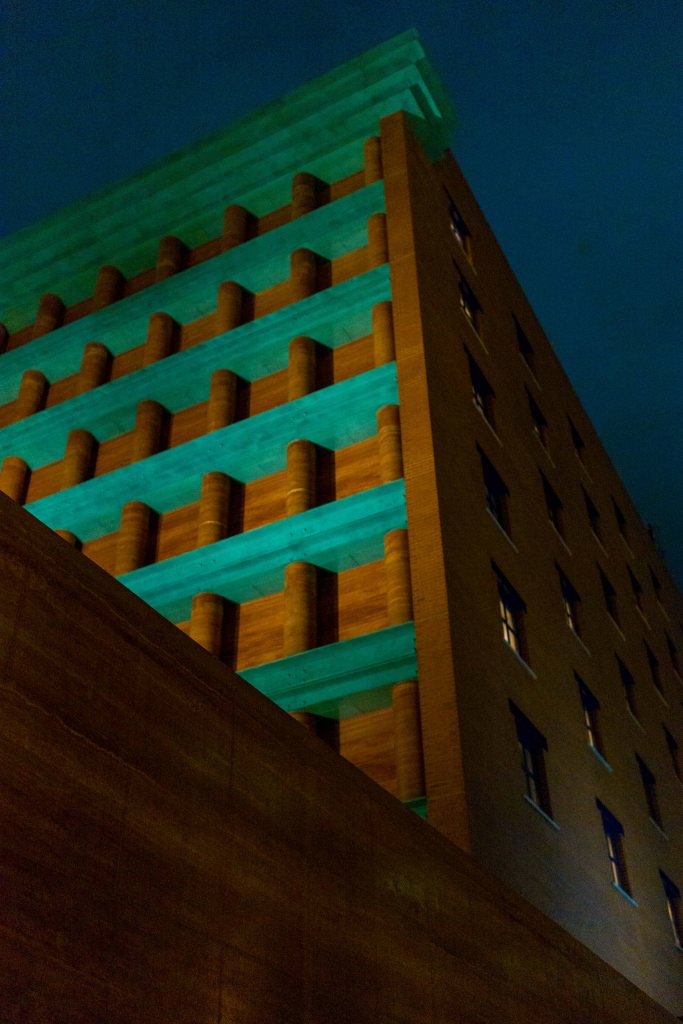
We stayed at the striking Hotel Il Palazzo, a recently renovated boutique hotel located steps from the Naka River. The hotel was designed by Italian architect Aldo Rossi, an ambitious project that combined Eastern and Western influences. Rossi was inspired by the palazzos of Venice and the traditional temple of Kyoto.

Copyright for all photographs on the site is mine, unless noted.

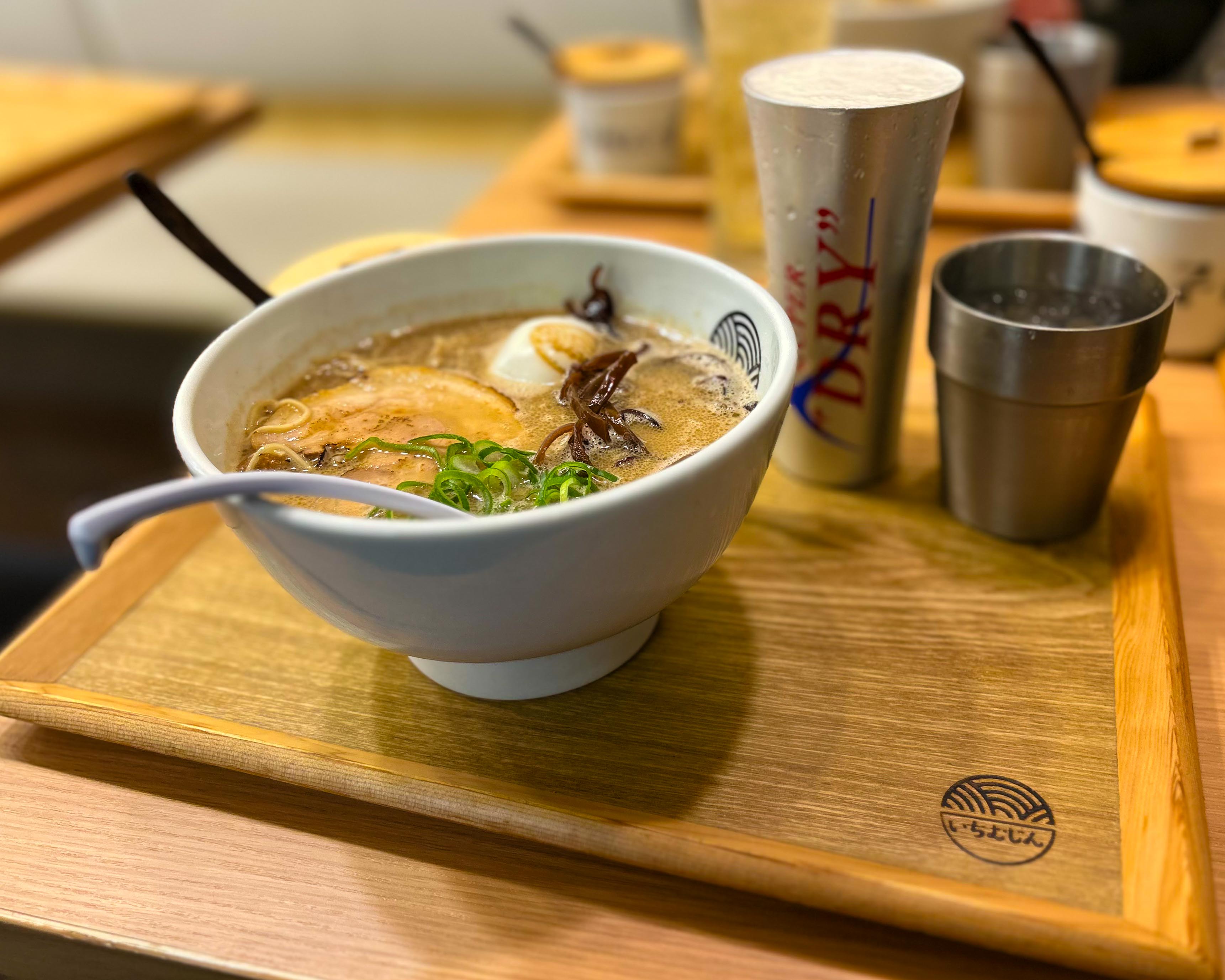
We made the most of our time in the central Hakata district: we walked through the Kawabata pedestrian arcade to avoid the rain, strolled the grounds of the Kushida Shrine, and checked out the famous (and crowded) Nakasu Yatai Street after dark. Yatai are pop-up food stalls that Fukuoka is known for. In fact, Fukuoka has a reputation as a “foodie” city. It is perhaps best known for tonkatsu ramen, thin noodles in rich pork bone broth, which is one of my favourite noodle dishes. Of course, we enjoyed a fine bowl of this delicious soup while in the city.

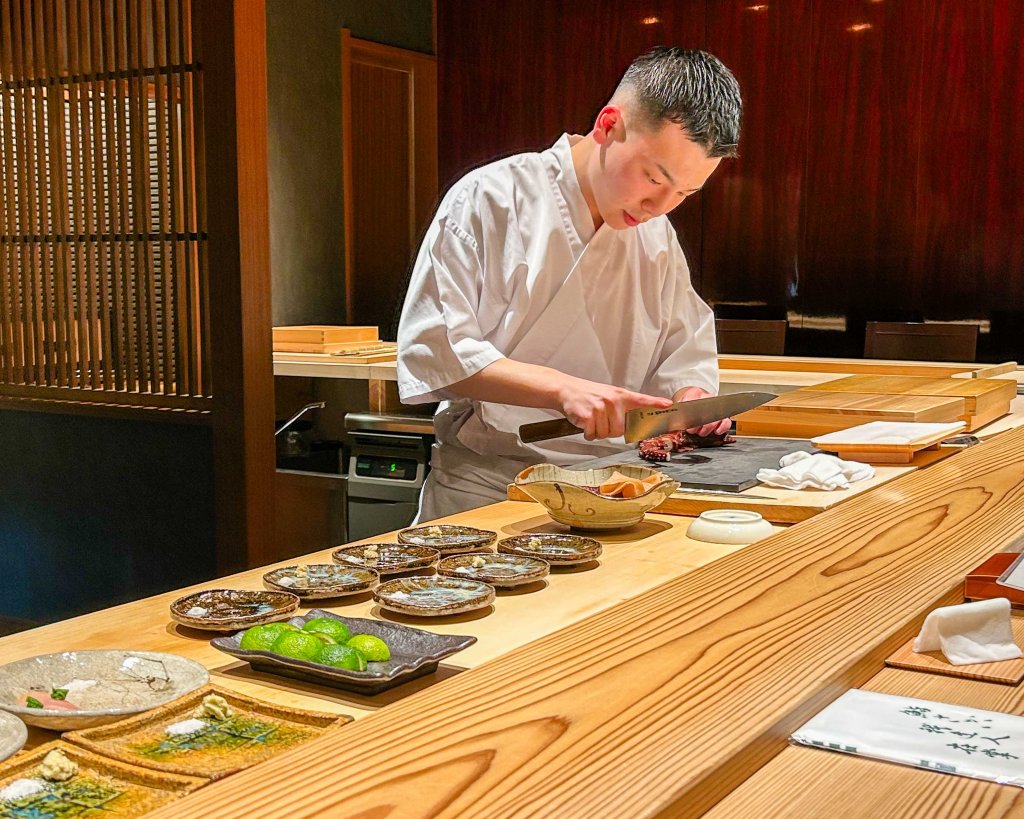
Speaking of food, Deborah managed to secure us a reservation to Zaisho, one of Fukuoka’s best omakase restaurants. Our hotel was an easy walk from the restaurant. The young chef wowed us with six seasonal delicacies and twelve (!) nigiri (bite-sized sushi comprised of fresh fish served over rice). Delicious!

Given our short time in Fukuoka, we took advantage of the efficient subway system (and the versatile IC cards that we would go on to use extensively during our trip) to visit Ohori Park, a large urban park with a scenic central pond.

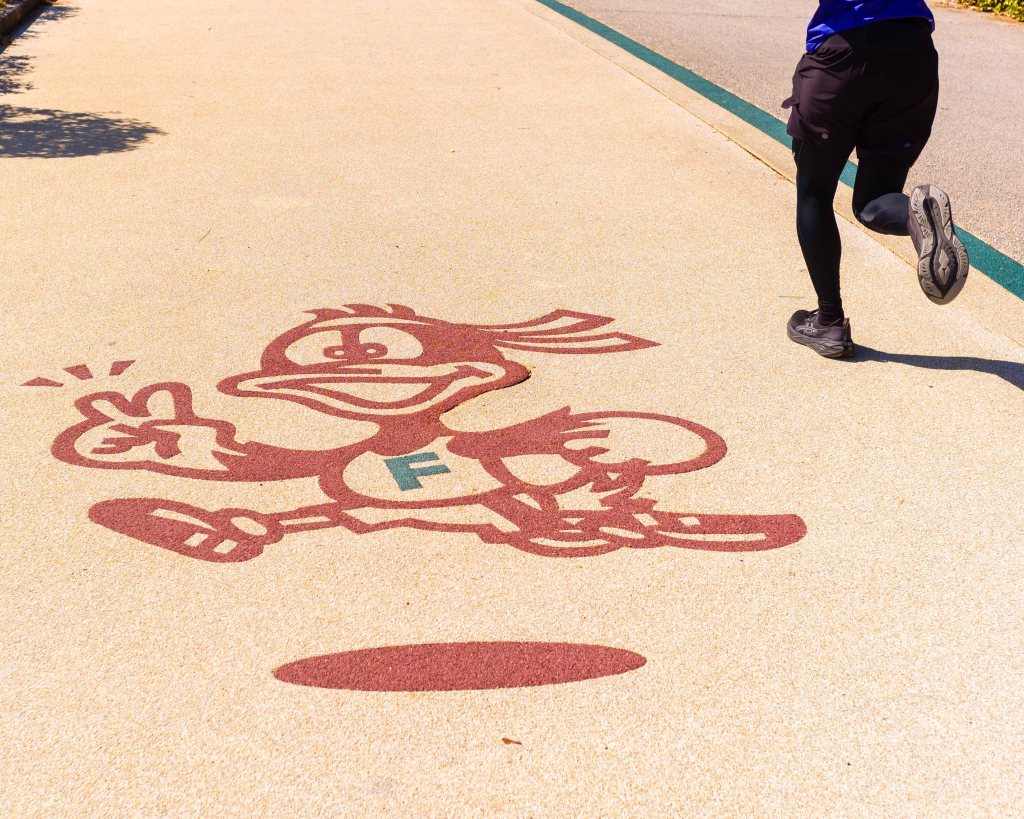
I had a secondary motive to visit the park—it is the start and finish location for the historic Fukuoka International Marathon. Now, it would take me a whole article to properly explain the significance of this storied race. I have written about it before, in my tribute to Jerome Drayton.

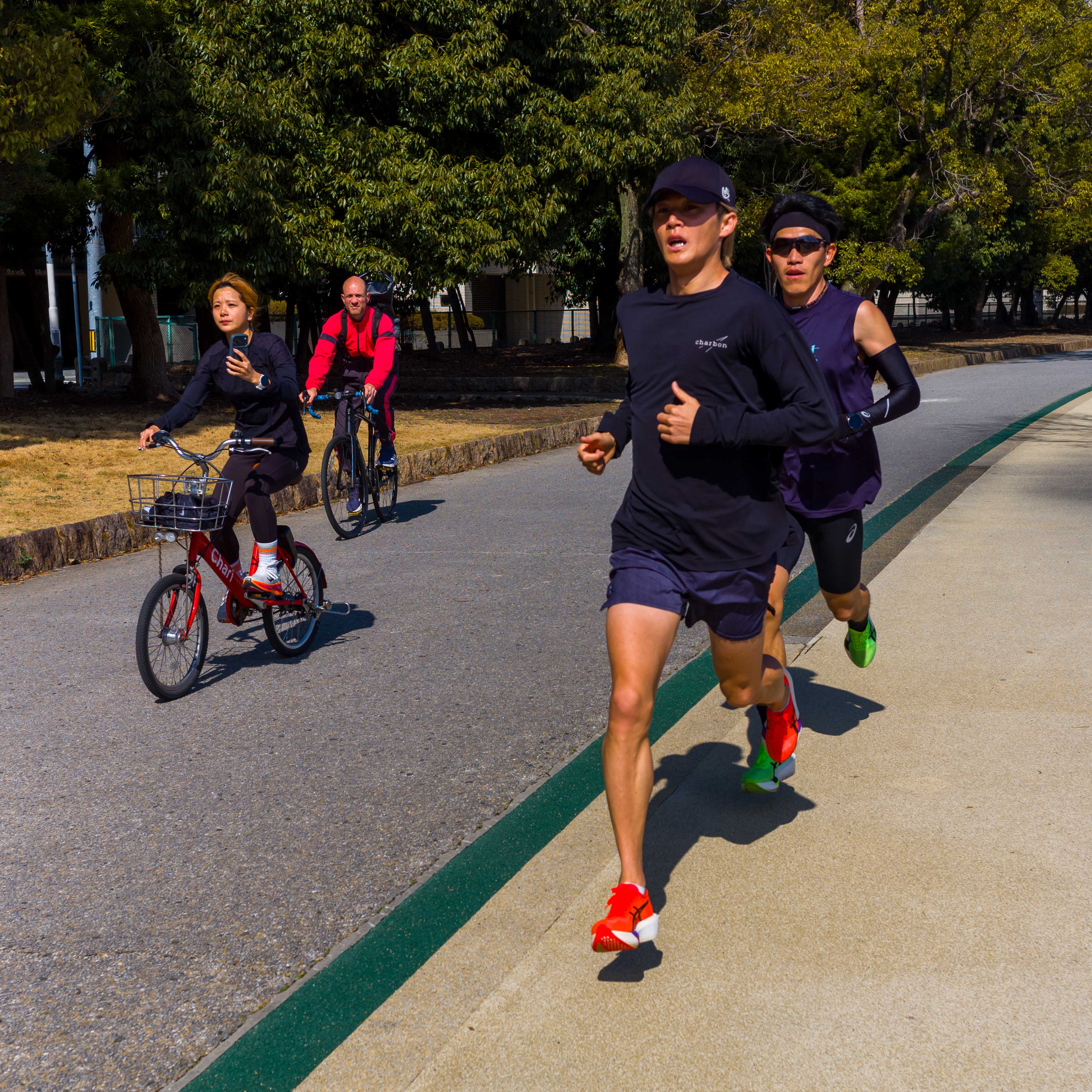
To be truthful, Fukuoka is now relegated from the upper tier of marathon racing. No matter. I was there, and I was determined to do a 4.22 km run—one-tenth of a marathon— by running two laps of the park’s perimeter path, in what I call the Fukuoka Commemorative Run. I changed at the convenient UNPLAN Hostel, and did my run on a beautiful morning.

As I revelled in the company of speedy young athletes, Deb walked and enjoyed the views. She even had an owl sighting, courtesy of an elderly birdwatcher. We enjoyed our first (but far from last) onigiri, delicious and ubiquitous stuffed rice snacks wrapped in seaweed. Then we strolled through the ruins of Fukuoka Castle, where we spotted the first seasonal plum blossoms. Not cherry blossoms—those come later! Already the crowds were growing in anticipation of this welcome sign of spring in Japan.

As we headed to Fukuoka Station for our first ride on the Shinkansen—Japan’s amazing bullet trains—it was already clear that our time in Japan was going to be memorable. Our next destination? Hiroshima!

Hiroshima: City of Peace

Naturally, our arrival at Hiroshima Station was right on time. Hiroshima has a population of 1.2 million, and our hotel (the CANDEO Hatchibori) was ideally located to explore the city.

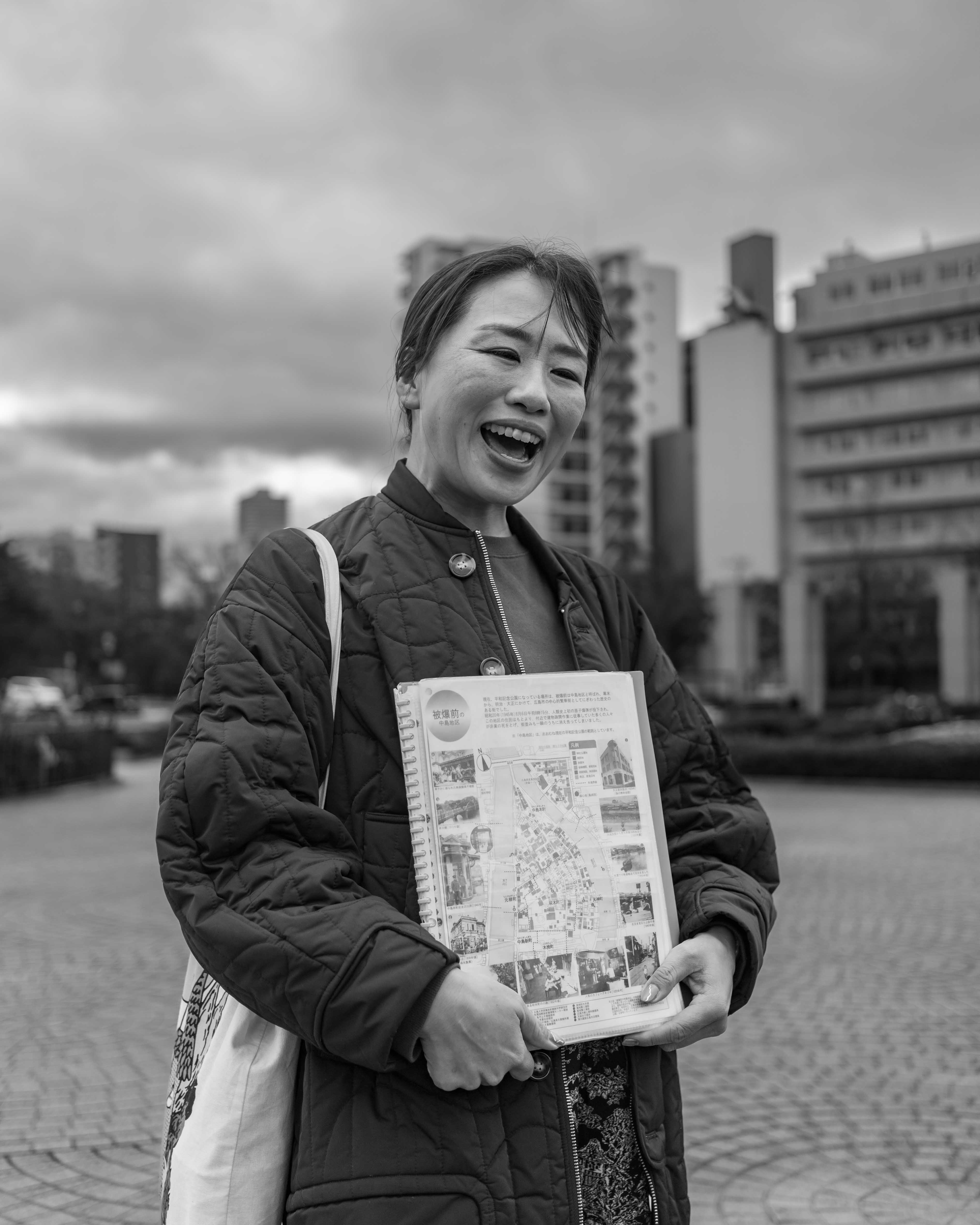
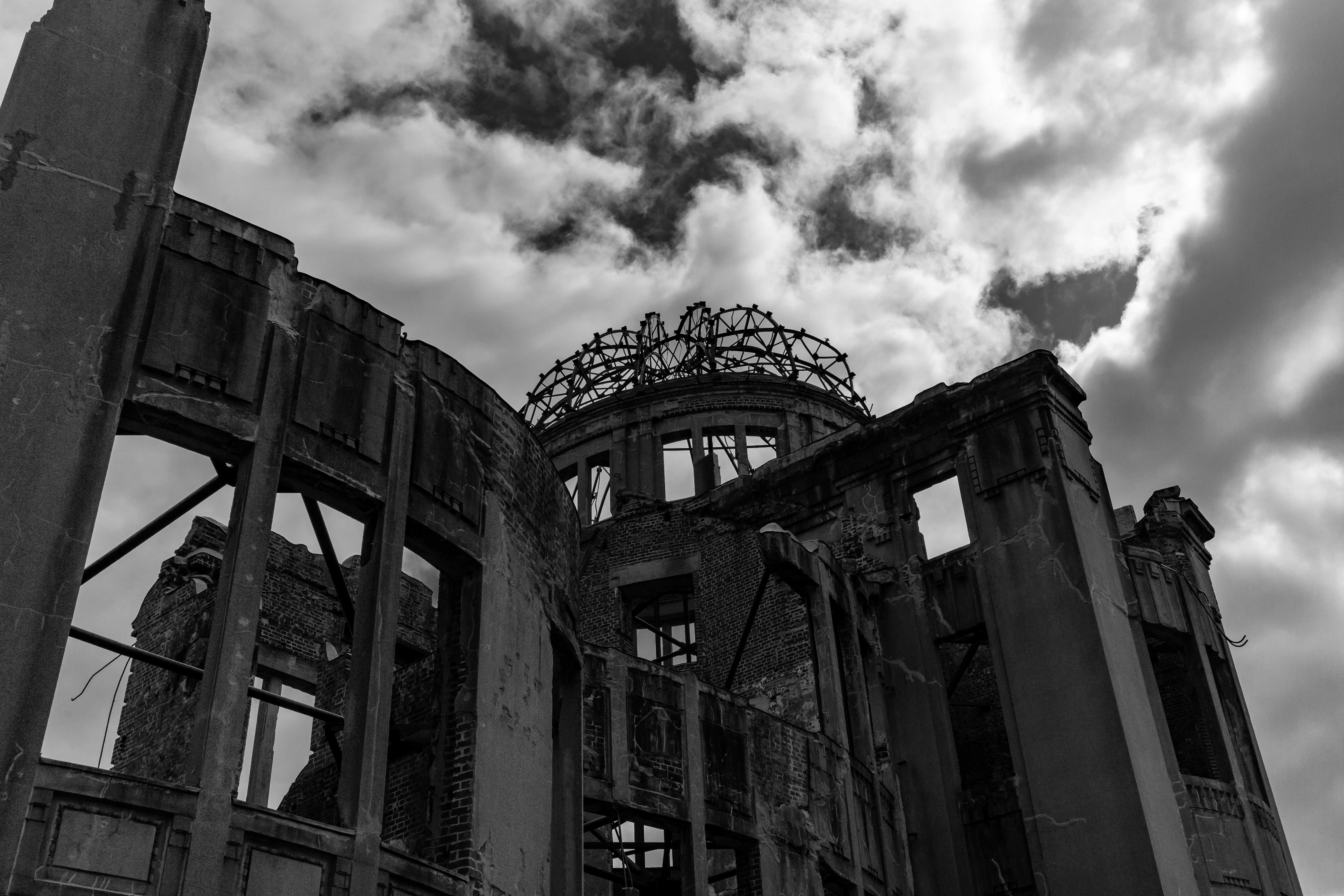
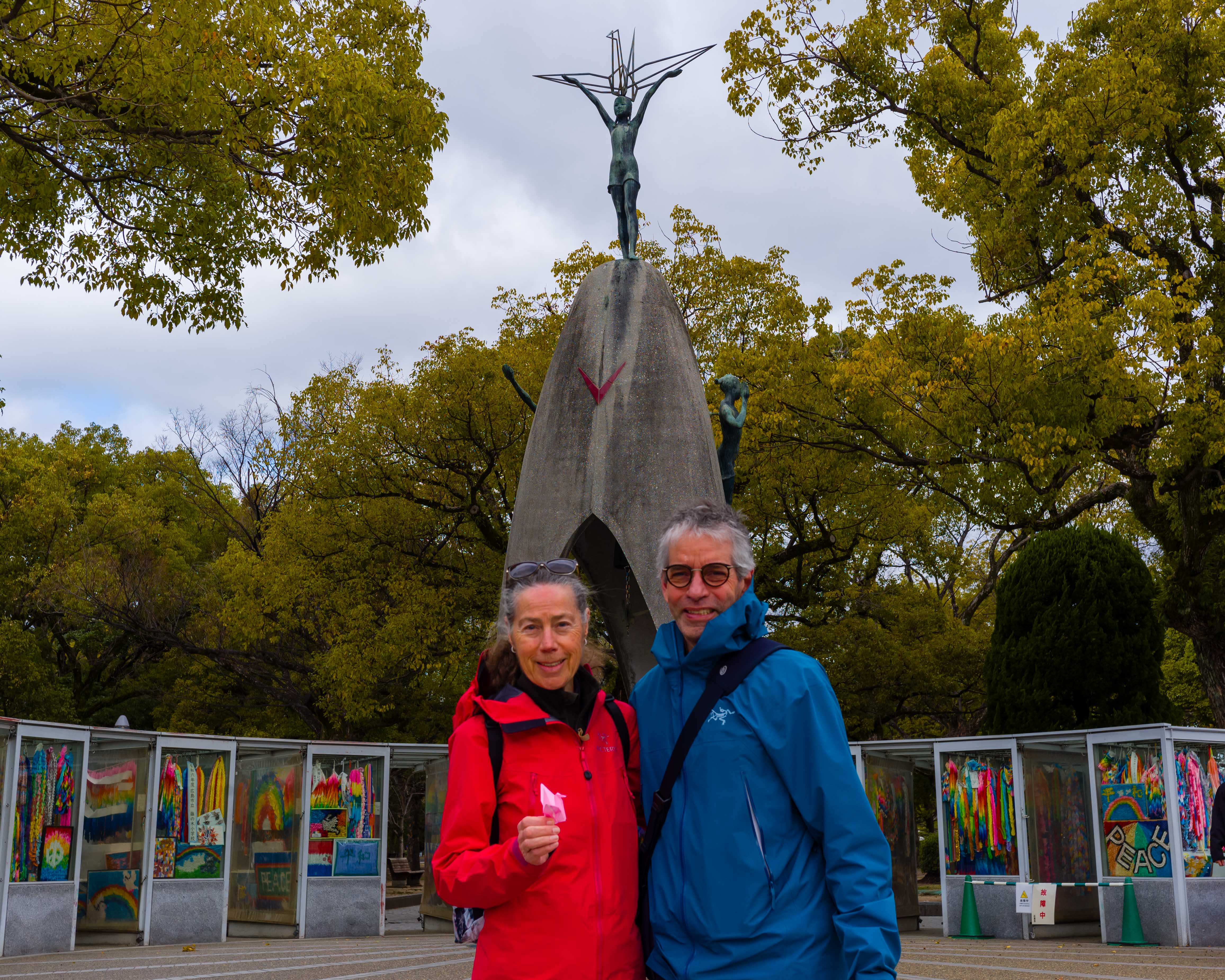
Hiroshima will always be known as the target of the first nuclear bombing, on August 6, 1945. I’ve been aware of this sad event my whole life, because August 6 happens to be my birthday. We signed up for a two-hour walking tour with Viator. Our guide Moe was very knowledgeable about the city’s history and the bombing. Her grandparents were survivors. She took our small group through Peace Memorial Park, and later in the day Deb and I visited the museum—a must see destination in Hiroshima. The emotional power of the exhibits was overwhelming.

There is much more to Hiroshima than its wartime history. After visiting the museum, we walked through Hiroshima Central Park to the grounds of Hiroshima Castle. We heard the roars of a football match at the nearby Edion Peace Wing Stadium, a bold new facility. In case you’re wondering, Hiroshima’s professional sports teams are the Sanfrecce Hiroshima (men’s and women’s football), the Toyo Carp (baseball)—cool name!—and the Dragonflies (basketball).

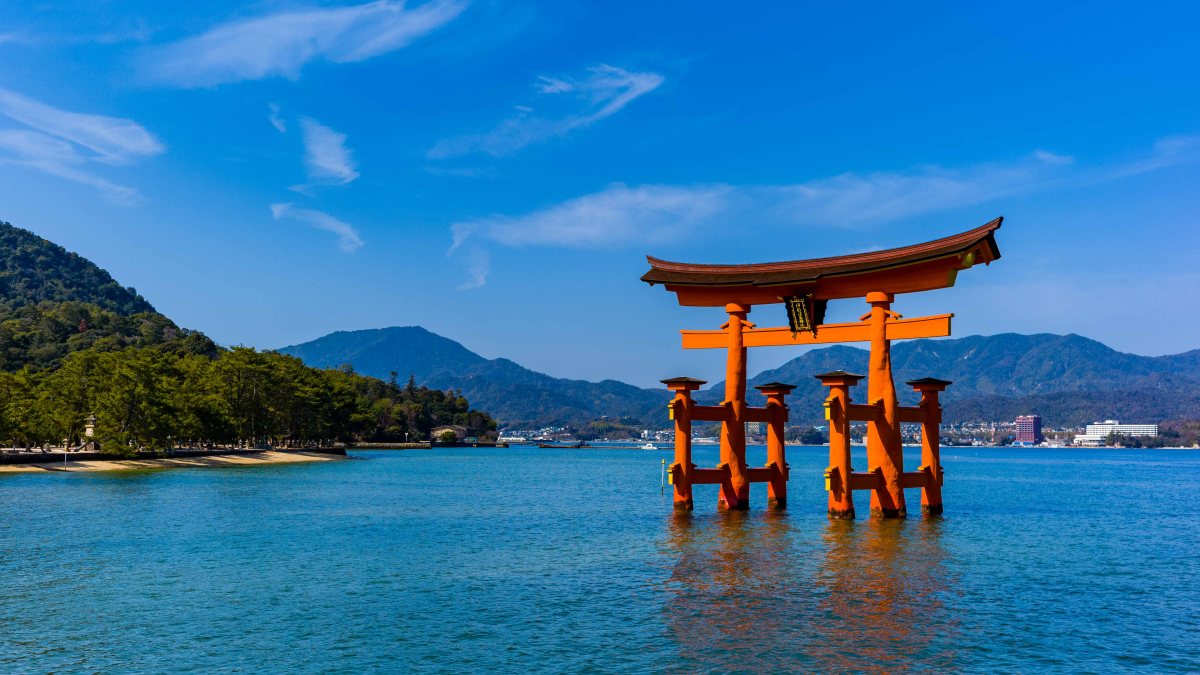
A popular day trip from Hiroshima is to the island of Miyajima. We navigated the city’s tram, train and ferry systems to reach the island, and enjoyed some sightseeing in and around the expansive Itsukushima Shrine. The tide was going out, exposing the “floating” Torii Gate for which the shrine is famous. It’s the featured picture at the top of this post. We were captivated by local rituals, like goshuin, the tradition of having a book signed at shrines and temples. Fans of the hobby were lined up to collect unique, hand-drawn calligraphy and stamps as a record of their visit. Rounding out a perfect Sunday afternoon outing was a delicious coffee ice cream.

While in Hiroshima, we (well, maybe I) wanted to sample okonomiyaki—a savoury pancake made with layers of batter, cabbage, meat, and noodles. Okonomiyaki Mitchan Sohonten is a local restaurant, well known for its version of the dish, and it was two blocks from our hotel. We joined the locals in busy cafeteria style seating and ordered a single plate, which was large enough for both of us to enjoy, with a cold Asahi of course!

First Impressions

After only a few days, Japan was weaving a spell over us. It was all so new, and yet welcoming. The people were kind and respectful. The food was beautiful and delicious. We couldn’t wait for our next stop. As it happened, the Nozomi N700 Series train service whisked us there in excess of 250 kilometres per hour.

Until next time, “genkide, soshite hayaku”… I think that’s close to “be well, and BE FAST!”