The Van Gogh to Van Gogh Photo Run

My photo run was bookended by two very different pieces of public art in Calgary. The pieces have a couple of things in common. Both are large, impressive sculptural works. And both have Vincent Van Gogh as their subject.

What a coincidence! I decided to do some research after I got home. But first, it was time to explore on foot. Here’s my route from Strava:

The Van Gogh Photo Run

And here’s what I found out about the artworks and the artists.

Van Gogh Observes, by Joe Fafard

I parked on 4th Street SW in Mission, near Masters Gallery, for the start of my easy run. I always like checking out what’s on display in their windows. Whatever else I happen to see, I can stop to admire the large piece installed just outside the gallery.

That piece, Van Gogh Observes (VGO), is a major sculpture by the late Joe Fafard. I wrote about Fafard last fall, when I photographed Do Re Mi Fa Sol La Si Do, his sculpture comprising eight stampeding horses. That piece is installed in Harley Hotchkiss Park in downtown Calgary.

Fafard’s piece is big and colourful. It’s fantastic. Van Gogh silently watches everything going on outside the gallery… hence the title. And from his vantage point, he’s seen a lot since the piece was unveiled in 2019. Van Gogh Observes was one of Fafard’s last major works… he died in March of the same year.

Although it wasn’t taken during my recent run, here’s one of my favourite pictures at that location. This couple seems to be deep in conversation with Vincent.

“Hello Vincent!”

Fafard was famous for his sculptural works, which often have a highly animated look. He sculpted livestock, people and other subjects, in bronze or laser-cut steel. His work is always visually appealing. This is certainly true of VGO. I think Fafard’s use of bold yellow and blue was a nod to Van Gogh’s frequent use of the same colours. It’s a piece that brightens up bleak winter days in Calgary.

Even from the back, it’s an amazing piece to look at.

Van Gogh Observes (Joe Fafard), from the rear

Van Gogh Monumental, by Bruno Catalano

I made my way to the UPTEN building at 10 Avenue and 1 Street SE to see Bruno Catalano’s 2020 painted bronze statue, Van Gogh Monumental. The four-metre-tall statue on the southeast corner of the intersection presents the artist walking purposefully while holding a well-used suitcase and carrying a painting on his back. He walks in the direction of the downtown core.

Van Gogh Monumental (Bruno Catalano)

The statue is part of Catalano’s Les Voyageurs series, all of which depict characters in motion. Many of Catalano’s sculptures, including this one, have a large diagonal gap, really a gash, at mid-torso. The sculptures seem to defy physics… they shouldn’t be standing, but they do. Catalano’s bio tells us he discovered this technique when he had a casting accident with an earlier piece. He liked the result, and he incorporated it into many of his subsequent works. It’s become his trademark.

Catalano’s sculpture invites speculation about its meaning. What is Van Gogh searching for? Where is he headed? Maybe there are clues in Catalano’s own story. He was born in Morocco. His French-Italian family moved to Marseille when he was ten. Catalano has Jewish ancestors, who were expelled from Spain in the 15th century, and eventually settled in North Africa. The theme of travelling, of searching nomadically, seems to fit naturally into his art. 

I find it interesting that Catalano chose Van Gogh for this sculpture, because most of his subjects are anonymous people. Here, he has chosen one of the world’s most famous and troubled artists. We shouldn’t be surprised to see Van Gogh searching for something while carrying his worldly possessions and his art. The gap in the statue is visually startling, but it also reinforces the idea that the subject has lost something quite fundamental.

Conclusion

As I jogged back to my car, I pondered the two art pieces I had just seen. I like both the Fafard and the Catalano pieces, even though they give us very different takes on an artist we all have some familiarity with.

The Fafard piece is approachable. Its animated look and bright colours give us an optimistic Van Gogh. Like the couple pictured above, we feel we could have a conversation with the man in the statue. That might explain why the statue is a huge attraction. I often see pedestrians stopping to admire it (or have a chat.)

On the other hand, the Catalano piece is more aligned with how we usually think of Van Gogh. It is a darker piece. The burdens Van Gogh is carrying and the cut across his body seem to portend his death by suicide. These are effective techniques to tell us something about the subject, but also about the artist. If Catalano relates to Van Gogh’s trials, he has done a great job of telling us.

I am most moved by the Catalano piece. What about you? Whichever piece you prefer, we are fortunate to have these important artworks in the city. It’s even better that they are just an easy jog apart.

The LPGA Comes to Town

Just when I needed a reminder that things are rarely as bad (or as good) as they seem, I took up my duties as a volunteer at the CPKC Women’s Open. The tournament is our national championship for the stars of the Ladies Professional Golf Association (LPGA). For 2024, the Open was being held at Earl Grey Golf Club in Calgary, which happens to be my home course. 

I signed up for the gig months ago. That was before the downturn in my mother’s health, and her passing in early July. I almost forgot about the tournament; it seemed so far off. Then, suddenly, tournament week arrived.

After a quick orientation to the role of course marshal, we were thrown into the deep end, with practice rounds on Monday and Tuesday, and a pro-am on Wednesday. The four tournament rounds would run from Thursday to Sunday.

I’ve watched enough golf to have a good idea of my job description. Even so, seeing marshals on television is quite different from being a few feet away from the top golfers as they tee off or line up their putts. 

Where Golf and Hockey Meet

One feature of this tournament promised to make it special. I was assigned to the “rink hole”, a recent but very popular addition to open championships in Canada. It’s now customary to convert a par 3 hole into a hockey rink, with boards around the tee box and a Zamboni parked beside the fairway.

For me and the other marshals, the transformation into a rink was complete when we received our referee shirts. I secretly hoped we were not going to be called upon to break up any fights in the stands. This was golf, after all. 

Getting ready for action in Round 4 at the Rink Hole (July 28, 2024)

Thanks to Wes Gilbertson of the Calgary Herald for featuring us in a story!

Our challenging par 3 9th hole was designated as the rink hole. For the tournament layout, it would be the 17th hole. That meant there was the potential for drama on our hole in the final round. It certainly delivered!

On to the Action

My first shift on Tuesday was a chance to meet my fellow refs… er, marshals… and practice our routines before the tournament started. I enjoyed the day, and I marveled at the skills of the top-tier golfers. It was amazing to see my course changed into a world-class sports venue. And that was before any fans were on site. I already felt better than I had in weeks.

When I returned for my weekend shifts, the energy was palpable. Now every shot mattered. The golfers had their game faces on. Television cameras broadcast the action live around the world. The crowds grew by the day.

Record crowds turned out for the CPKC Women’s Open final round (July 28, 2024)

Amidst the tension, I noticed a few things. Calgarians were doing what they do best… welcoming visitors to our beautiful city. Tournament volunteers were full of pride for what was shaping up to be an exciting (and record-breaking) event. And Earl Grey GC members were beaming, knowing that the world was discovering our gem of a course on the north shore of the Glenmore Reservoir. 

This being Calgary, the weather had to play a role. From a heatwave just a few days earlier, things had changed totally. Wind, smoke and cool temperatures greeted the players on opening day. Visitors must have wondered how such a change was possible in just 24 hours. We locals have a word for that: summer. 

By the end of the third round on Saturday, we had seen history, as tour rookie Mao Saigo of Japan tore up our course with 9 birdies and an eagle, for a stellar 61. It was the lowest score ever recorded in a Canadian women’s open. 

Sunday brought more drama. Several players vied for the lead in the final nine. As marshals, we focused on our assignments, even as Lexi Thompson, Lydia Ko, Minjee Lee and other top players came through the gate into the rink. Brooke Henderson led a strong contingent of Canadians, including her fellow Paris Olympic golfer (and Hamiltonian), Alena Sharp. What a thrill!

The drama reached a peak as the last few groups finished their final round. Saigo watched in disbelief as she stubbed her chip on 17, leading to a bogey. The third-round leader, Haeran Ryu, found the greenside bunker and also struggled to a 4. 

That left only Lauren Coughlin. The American veteran bravely hit a six-iron to the tough back left pin location, leaving a delicate eight-foot birdie putt. By chance, I was stationed at the back of the green, so I was only a few steps from Coughlin and her caddie as they lined up the shot. I had the best spot in the house to see her roll it in, guaranteeing herself a two-shot win with a 13-under score of 275. It was her first tour victory.

It was an exhilarating weekend, and an experience not likely to be repeated. 

On the rink hole, there was plenty of good-natured cheering and banging on the boards. Fans showed their deep patriotic pride and love for our Canadian stars, especially Henderson. This is Canada, so everyone was polite. Thankfully, we didn’t even need to put anyone in the penalty box! 

I walked back to my car on a perfect Sunday evening, exhausted but satisfied. 

Maybe there is still hope for 2024.

Carmela Kelly (1931-2024)

My mother passed away on July 6, 2024. The world was a better place while she was in it. Now comes the tough part.

Here’s some text from her obituary, which was published in today’s Hamilton Spectator.

With heavy hearts, we announce the passing of Carmela Mary Kelly (née Celi) in her 93rd year. Carm’s birth in a house on MacNab Street was made more joyous to her parents Giuseppe and Rosa Celi by the unexpected arrival of a twin sister, Concetta (Connie), who survives her. She is also survived by a brother, Anthony, and predeceased by a sister, Mary. Carm married the late Kenneth Kelly in 1958, and they had four children. Carm’s grandchildren … were a constant source of joy. Birthdays and holidays were better (and livelier) when celebrated at Gramma’s house, her home for many years. Carm was an avid crossword solver, a keen knitter, and an enthusiastic Tiger-Cats supporter. She enjoyed these activities most from her favourite pink chair. Her cookie tins were never empty, and her spaghetti & meatballs were legendary. She had an eye for fashion, and for years she enjoyed watching the Oscars. Carm was dedicated to her family, for whom she made countless sacrifices. Her generous spirit enriched many lives. Carm found great comfort in her faith, and she faced life’s many challenges with grace. We will struggle to deal with the loss of our beloved mother, grandmother, sister and friend. …

Carmela Mary Kelly (1931 – 2024) Photo: Shelley K

I wrote quite a bit about my mother in Stroke of Luck, and there’s a good reason for that. She was an inspiration. By doing nothing more than being herself, she made the lives of her family, friends, coworkers and neighbours better. That is quite a legacy.

My mother’s eyes are unmistakable in photographs from her youth. Her shy smile hints at her quiet, introverted personality, and tells the story of her growing up during the Depression and the Second World War. She worked as a secretary at Stelco for a while after high school but put aside her own ambitions once she was married. Years later, when we were all grown, she would take a job as a receptionist at a long-term care facility. She soon became indispensable to the staff and residents there. Of course, we knew that would happen because she already was indispensable to us. It was a small step, and one that let her regain some of the self-confidence that had been eroded by too much time and too much worrying about other people.

Mom has handled difficult times with grace and resilience, and she has faced more than her fair share of difficult times. Pain and grief entered our lives when I was in my early teens. This happened in two separate but related ways. At least they are related in my mind. What I know is that nothing was ever quite the same afterwards, and nothing could ever be taken for granted again. Had we crossed some kind of a dividing line, a transition from the innocence of youth to whatever was to come next? I’m not sure. As for my mother, I never heard her complain or shirk from what she had already accepted as her duty. Given her upbringing, I suspect she had never taken anything for granted as it was.

Goodbye mom. We will miss you terribly. May God bless you and welcome you.

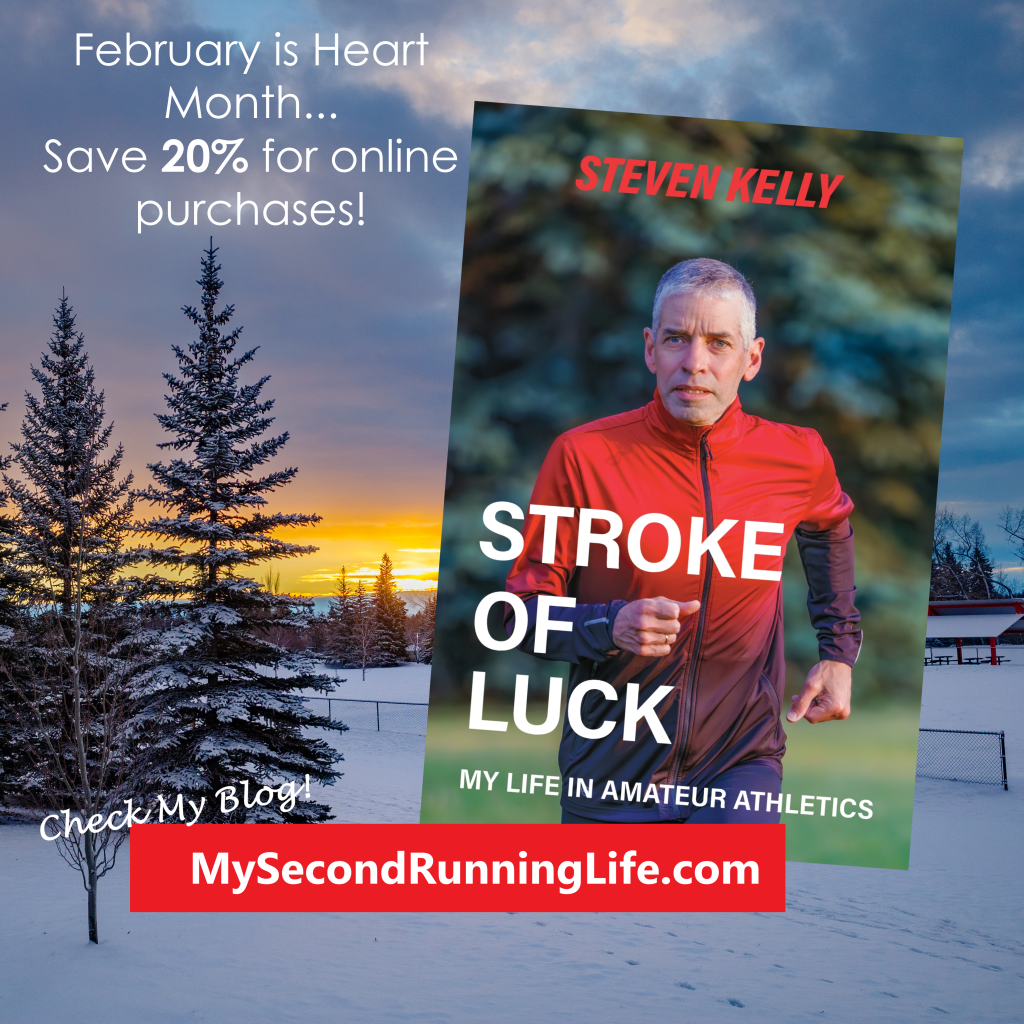
Stroke Awareness Sale Extended!

Did you know that June is Stroke Awareness Month in Canada?

To recognize the importance of stroke awareness, I’ve extended the online promotion for my memoir, Stroke of Luck.

Get your copy on Amazon and save 20% until July 15. And help me help the heroes at the Foothills Stroke Unit!

Stroke incidence continues to rise in Canada – more strokes are happening and more people are living with stroke due to our aging population and more younger people having strokes.  There are now nearly 110,000 strokes each year in Canada. That is roughly one stroke every five minutes.

Strokes occur due to an interruption of blood flow to the brain, and most strokes originate in the carotid arteries. The carotid arteries are the large arteries at the front of the neck. They deliver most of the blood to the brain. Carotid artery strokes produce symptoms that are familiar to many people, thanks to effective public awareness campaigns:

  • FFace drooping
  • AArms can’t be lifted above your head
  • SSpeech is slurred or jumbled
  • TTime to call 9-1-1

As I learned, strokes can also occur due to an interruption of blood flow in the vertebral arteries. These arteries are at the back of the neck. They are smaller than the carotid arteries, but just as important.

The symptoms of vertebral strokes are different than those originating in the carotid arteries because they control different bodily functions. Here’s what to look for as possible signs of a vertebral artery stroke:

  • BBalance and coordination problems, like vertigo
  • EEyes and Ears behaving strangely, especially if uncoordinated

Taken together, these symptoms can be remembered by the words BE FAST.

BE FAST is an appropriate phrase, because regardless of the type of stroke, time is of the essence. If there’s any doubt, call 911 right away!

Be well, and BE FAST!

Prairie Mountain – Summer Solstice

The arrival of summer in the northern hemisphere is welcome, for many reasons. There is a minor downside, if one plans to make a sunrise trek to the peak of Prairie Mountain in Kananaskis: the early start. Of course, my friend Tim hatched the idea, as the perfect complement to our winter solstice hike last December. If you haven’t read my blog pieces for that epic outing, here are links to Part One (the hike) and Part Two (the science).

My first reaction was “I’m in!” Then, when the reality of the required 2:50 a.m. departure from Calgary set in, I found several excuses to bail out. To Tim’s credit, he persevered and he managed to wrangle a couple of friends to join him. He didn’t even mind sharing his photos, so I could pretend to have been there!

The Hike

Tim, Jerry and Peter departed the Prairie Mountain trailhead at 3:50 a.m. and reached the summit in time for the 5:21 a.m. sunrise. Tim commented that it was amazing to see the full moon go down in the west while the sun was coming up in the east. He mentioned that while he knew the sun would break the horizon much further north than it did on the winter solstice, it was even more of a difference than he expected. More on that later.

Here are a few photos from their hike:

Prairie Mountain Sunrise / June 20, 2024 (Photo: Tim A)
Tim, Peter and Jerry at the summit / June 20, 2024 (Photo: Tim A)
Western vista, from the Summit / June 20, 2024 (Photo: Tim A)

The Science (abbreviated)

For the winter solstice, you may recall I did some research on the unexpected timing of the solstice, and why the day with the latest sunrise wasn’t the same as what we think of as the shortest day of the year. If you are interested in orbital eccentricity, angles of obliquity, and other astronomical wonders, you can read about them here.

Since it’s summer, and I’m feeling a bit lazy, I did a shortened version of the research. You’ll be happy to know that I confirmed the same factors affect the timing of the summer solstice. Here’s what I found:

  • the summer solstice occurred at 2:50 p.m. on June 20
  • the day with the earliest sunrise was June 16 (5:20 a.m.)
  • the longest solar day was June 20 (16 hours, 33 minutes, 17 seconds)

Tim’s comment about the sun’s compass direction at sunrise on June 20 compared to the direction on December 29 got me thinking. I marked up a trail map for the area of Prairie Mountain. The arrows show the sun’s compass direction at sunrise and sunset, on the summer (blue) and winter (red) solstices, respectively. What’s interesting is just how much the sun’s coverage changes between the two solstices.

Sunrise/sunset compass directions at the solstices, Prairie Mountain

The apparent travel of the sun (because it’s the earth that’s moving around the sun, after all) is from 128 degrees at sunrise to 233 degrees at sunset on the winter solstice. That’s a span of 105 degrees. In contrast, the sun traverses a range from 49 to 311 degrees at the summer solstice… a span of 262 degrees.

Isn’t that fascinating? I think so too.

Colour or Monochrome?

While flipping through some recent pictures, I realized I was “seeing” them in either black & white or colour. This was before I had started doing any editing. My mind seemed to be jumping to conclusions about the end result. 

Maybe this was inevitable, as I must have “seen” some version of the final image before I pushed the shutter button. Was my initial visualization strong enough to override any subsequent artistic choices?

I try not to limit myself to one expression or another, and I take plenty of photos in each style. My preference is for black & white images. Many of the photographers who have made an impression on me worked mainly in monochrome. Adams. Cartier-Bresson. Schaller.

That would be a good idea for a future piece… the photographers or the images that have been most impactful for me. But for this piece, I wanted to explore the idea of initial visualization and see if that process might be acting as a barrier to my artistic ideas.  I picked several recent images, more or less at random, for the following, non-scientific analysis.

Sedona Landscape

The first image was a landscape, highlighted by the setting sun and building clouds over the peaks in Sedona, Arizona. There’s no doubt I imagined this image in bold monochrome. I shot it using my favourite JPG setting in the Ricoh GR III: hard monochrome. The in-camera JPG looked promising, on the tiny 3″ viewfinder screen. I couldn’t wait to see the image in Lightroom.

I hadn’t even considered the option of a colour version of this image, but maybe I had been too hasty. I reimported the image and forced myself to ignore the monochrome button. This is a comparison of the two versions:

Evening clouds, Sedona (March 2024)

To my surprise, I found the colours in the foreground… the famous red rocks of Sedona… to be a distraction. This wasn’t the result I expected. The dramatic clouds, which I was able to set against the sky with a red filter effect, were hardly noticeable. Instead, they were competing for attention. I had to go with my first instinct. This photograph is better in monochrome. 

Cold, Icy Calgary

My second image was totally different from the picturesque scene in Sedona. We had returned to a late blast of winter in Calgary. It must have been some blast, based on the icicles that were hanging from every rooftop. A photo opportunity!

As with the landscape, I saw this roof and its crop of icicles in black & white. Texture and lines, contrasty clouds (where’s that red filter?) The thick icicles were a cool feature… no pun intended.  

My monochrome image needed only a few edits: an increase in contrast and darkening of the sky. I also bumped up the exposure a little, to ensure the picture wasn’t a complete wash of drab grey. And I added a bit of texture to the peeling paint. This was just about exactly what I visualized when I took the shot.

A good crop of icicles (March 2024)

But had I been too hasty? I had to find out. So I re-imported the RAW image and edited the colour version. I hadn’t even noticed the blue paint on the trim. And I missed the discolouration in the icicles from whatever had been oozing out of the eavestroughs. Time for some repairs.

What do you think?

Personally, I don’t like it at all. My mind’s eye was right to see this image in tones of grey. The colours are irrelevant to the story that this picture is telling. I wanted to put the viewer into a scene that was edgy, cold and stark. Instead, the pale blue trim on the house tempers the scene, while the brownish stuff coming out of the eaves is a distraction.

Springtime in Hamilton

My final image is from a recent visit to Hamilton. Walking around my old neighbourhood in April was a riot for the senses. Spring was in full bloom. I snapped a picture at the corner of (obviously) Maple Avenue and Province Street. I initially saw this as a colour picture, with a sunlit magnolia tree as the highlight.

Maple and Province, Springtime (April 2024)

Even though I like the colour image, I decided to try a monochrome version. This one is more of a toss-up. I like both versions. Why? The colour version puts the viewer right in the scene. Spring has clearly sprung. On the other hand, the monochrome version shows us every detail but leaves us to imagine what colour everything is in the scene.

Of course, these are just my thoughts. Let me ask you: monochrome or colour? Leave me a reply in the comments.

Thanks, Steve

“Stroke Awareness Month” Sale!

To raise awareness of the prevalence of stroke, I’m offering Stroke of Luck: My Life in Amateur Athletics for a special price in June. Order your copy on Amazon and save 20%.

Help me raise funds for the essential work of the doctors and staff at Foothills Stroke Unit!

The Heart and Stroke Foundation of Canada is celebrating 10 years of raising awareness about recognizing the signs of stroke, and the need to call 9-1-1 right away to get to the best hospital for stroke care. 

BE FAST is a memory jogger that I’ve been sharing with people, because it covers the full range of stroke symptoms. Here’s what it stands for:

BE FAST – someone’s life could depend on it!

Stroke incidence continues to rise in Canada – more strokes are happening and more people are living with stroke due to our aging population and more younger people having strokes.  There are now nearly 110,000 strokes each year in Canada. That is roughly one stroke every five minutes.

I’ll leave you with the words of Dr. Michael Hill, the Calgary neurologist who wrote the foreword to Stroke of Luck:

“Time is brain when it comes to stroke and everyone has a role to play. It starts with someone recognizing the signs of stroke and calling 9-1-1”

– Dr. Michael Hill, Neurologist, Calgary Stroke Program

So, during June, why not take a minute to familiarize yourself with ALL the potential signs of stroke? Even better, spread the message to those you care about. It could save a life! And if you’re looking for a bit of motivation, why not order your copy of Stroke of Luck for a discounted price?

BE FAST, and be well!

Steve

Homage to GAP 1.0

Today’s run was just what I needed.

I had a late evening return flight from Ontario yesterday, so I was feeling a bit out of sorts as I parked next to the Glenmore Athletic Park (GAP) track. A high school track meet was in full swing. I watched from trackside for a few minutes, absorbing waves of energy and hearing the screams of hundreds of students as they cheered on their teammates. It motivated me to get going on my short and overdue run. 

I’d been thinking for some time about a homage post to the GAP track. I should say the original GAP track (GAP 1.0), because a spiffy new facility is being constructed by CANA, just a short distance away. I have a lot of criticism for decisions coming out of Calgary city hall but this isn’t one of them. I can’t wait for the new facility to be finished. 

The grandstands have been taken down and moved to the new track. The brilliant blue of the new surface looks magnificent and oh so ready for spiked shoes. Crews are working on the finishing touches, like landscaping. It will soon be the dawn of an exciting new era in track and field in Calgary. 

It seems timely to say a few words about GAP 1.0. I’ll be honest. The place is definitely looking worse for wear. Chunks of Lane 1 are crumbling into the infield. Patches and cracks are plentiful, thanks to our winter freeze-thaw cycles. The spotting booth on the back straight has been taken over by pigeons.

Pigeon holes on the back straight

I did a little research and found out that GAP 1.0 was built in 1962-63. It’s just a couple of years younger than me. No wonder it has cracks and wrinkles! 

Despite these blemishes, the track has also been the site of countless track meets, interval workouts and road race finishes. I’ve personally done thousands of laps of the track, in all sorts of weather. And that’s a good segue to the fact that the Calgary running community has been second to none when it comes to keeping a lane or two of GAP 1.0 open through the winter months. All it takes is willpower and a lot of shovels, as demonstrated in this shot from October 2023.

Deb, Reinier and Jeremy dig in

Here’s a shot of an interval session from late March. It was one of those Calgary spring evenings when we started with water in the far corner and ended with sheet ice. No one complained when we decided to cut things short.

Late March interval training, GAP 1.0

Or how about a photo from the 2019 Stampede Road Race? The park was a beehive of activity that morning, with lots of racing action and a pancake breakfast as our reward.

Sherrey and Deb, post-race

A recent track racing milestone got me thinking nostalgically about GAP 1.0. It was on May 6, 2024, the seventieth anniversary of Roger Bannister’s four-minute mile breakthrough on the Iffley Road track in Oxford, England.

It seemed fitting to make a brief pilgrimage, in pouring rain, to run four ceremonial laps in honour of this great achievement. After all, the GAP track is only 10 years younger than Bannister’s record. I pointed out the significance of the day to a young athlete who had just finished his track workout. He gave me a polite but puzzled smile. I secretly wished for him to do the same on the hundredth anniversary in 2054, running his commemorative laps on the new track. 

In closing, I have many fond memories of running on the GAP 1.0 track. I don’t know what lies ahead, but if they do tear it down I’ll miss that familiar red surface, flaws and all. For years, it has been a great venue and meeting place for runners. It’s one of my favourite spots in the city.

So here’s to a good run for a fine old facility! And here’s to GAP 2.0… can’t wait to try out “big blue”.

Until next time, be well and BE FAST!

Featured in CHF story!

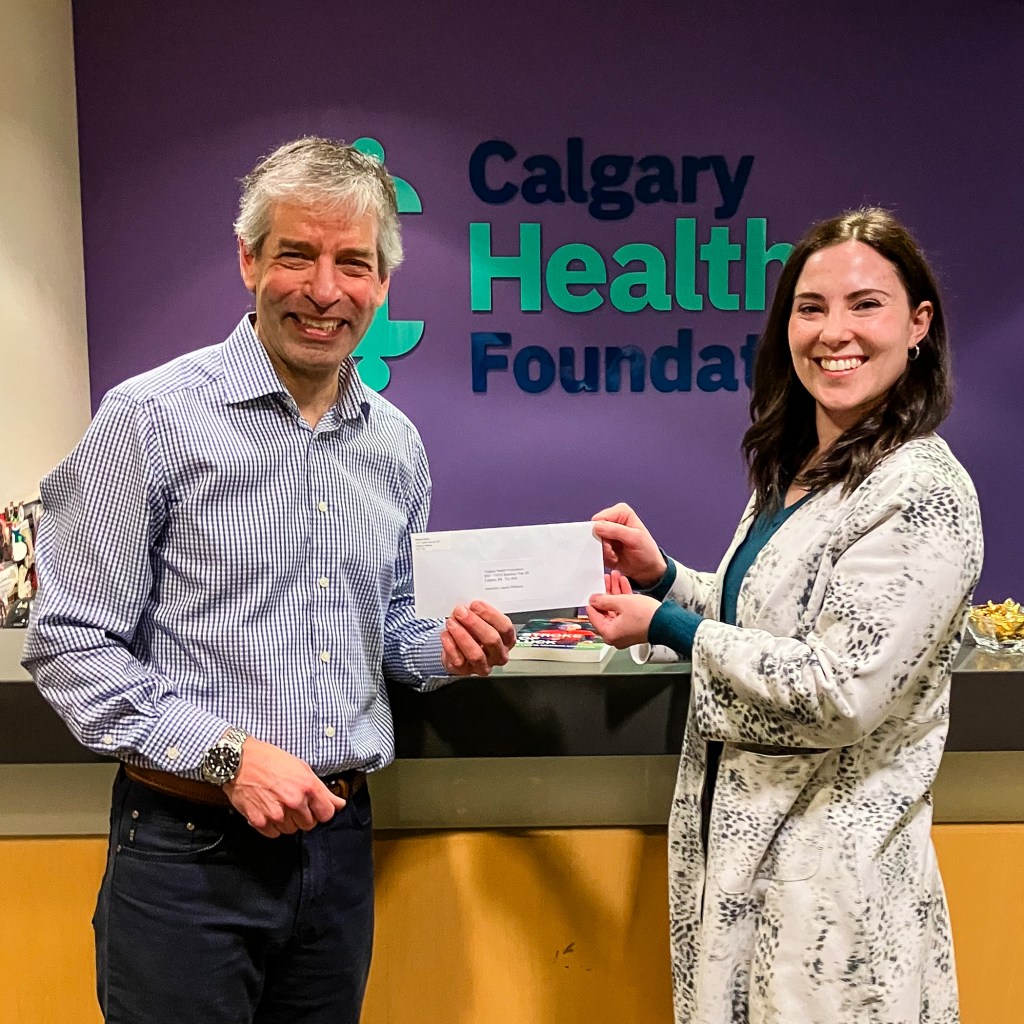
I was thrilled to be featured in a recent story by the Calgary Health Foundation. You can read their piece here. And don’t pass up the opportunity to read some of the other motivational stories on the CHF website.

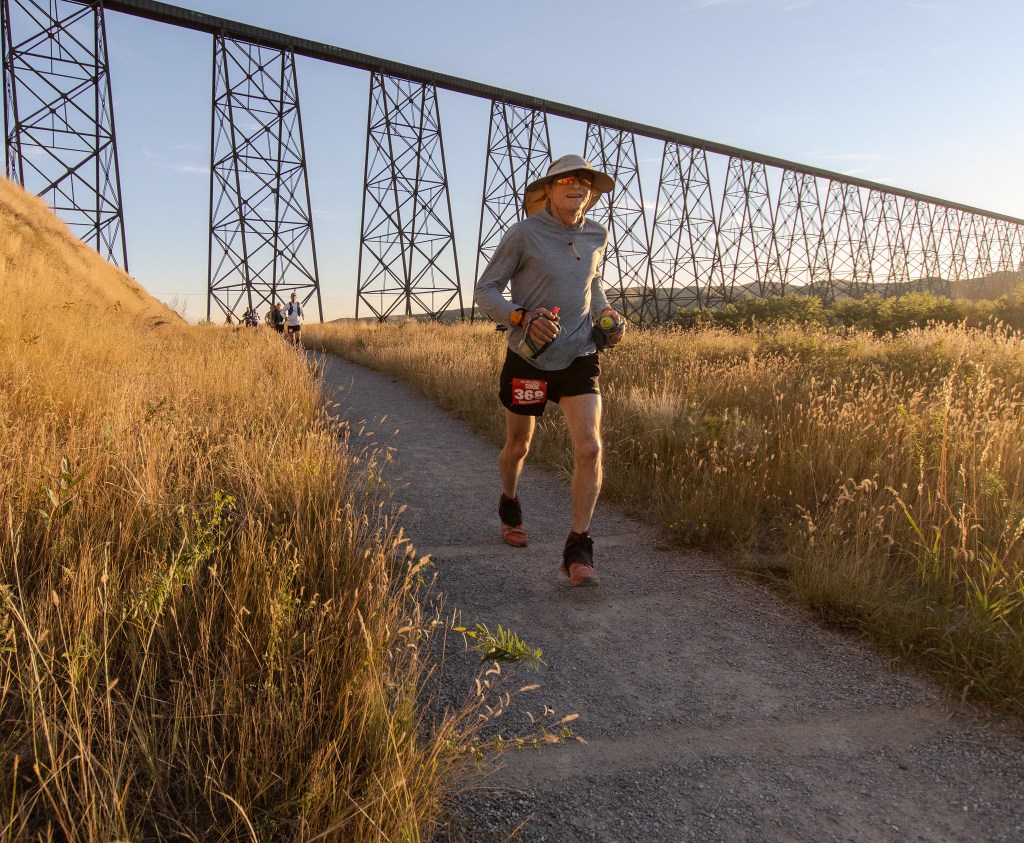
In our interview, Ashley and I talked about my running adventures and my recovery from a series of strokes in the summer of 2017. I shared my experience as a patient at the Foothills Stroke Unit, and what prompted me to write a book about it.

While I’m writing, I will say thanks to those who purchased a copy of my book, Stroke of Luck: My Life in Amateur Athletics. It’s worth reminding my readers of my main messages:

  • The importance of an active lifestyle
  • Awareness of the full range of stroke symptoms… remember, “BE FAST”
  • Support for world-class stroke care at the Foothills Medical Centre

If you haven’t already picked up a copy of Stroke of Luck, it isn’t too late. The book is available directly from me (if you live in the Calgary area), on Amazon, or at any independent bookstore. Speaking of which, let me give a shout-out to Owl’s Nest Books in Calgary!

I’ve been very gratified by the response to Stroke of Luck. Many families are affected by strokes, so my story is one we can all relate to. And don’t forget, funds raised from sales of the book are going directly to support the work of the Foothills Stroke Unit, through the Calgary Health Foundation. It’s a win-win situation!

Until next time, thank you.

Steve

Don’t Stop Believing

Sometimes life is hard.

It will be obvious from the long gap between posts that I haven’t been thinking much about the blog lately. It has been a difficult time on the personal front. I don’t feel like going into the specifics… maybe I will someday. 

Several times, I’ve tried putting my feelings into words, never sure if the result would end up in a blog post. Each time I’ve tried, it has been a failure. It’s frustrating, especially since I’m usually not at a loss for words. 

Music seems to help. As I write this, I’m listening to Car Wheels on a Gravel Road, a classic album by Lucinda Williams. This is melancholic music. It suits my mood and I think it makes me feel better… it’s hard to say. The lyrics of one of my favourite songs, Time from Pink Floyd’s Dark Side of the Moon, have been stuck in my head. This verse seems appropriate. 

Every year is getting shorter
Never seem to find the time
Plans that either come to naught
Or half a page of scribbled lines

My half pages (not literal, of course… they’re typed on my iPad) have been piling up, as I’ve grappled with anxiety. I’ve been feeling helpless against our overwhelming insignificance. Our impermanence. Our mortality.

North Glenmore Park pathway, April 2024

Then came a breakthrough of sorts. It was in a situation that might not be conducive to finding inspiration. But it was no surprise to me because I was running at the time. Anyone familiar with my story (Stroke of Luck is still available, by the way) will know that running has often been a source of consolation and positivity in my life.

To set the scene, I met a small but hardy group of my teammates at Carburn Park in Calgary for an interval workout. It was a ladder workout, which for those who aren’t familiar, is a session with increasing length intervals. This workout, with intervals of 400m up to 2000m, looked daunting. Each set totaled 5.4k, and Coach Janice had specified 2-3 sets. I had to go back to her to confirm the details because it seemed that she must have miscalculated. This was TOO MUCH!

To add another degree of difficulty, the weather was awful. The threatening sky opened up just as we finished our warmup jog around the lagoon. Clouds turned to rain, then snow. My eyes were being pelted with icy crystals. We were soaked in no time. The temperature hovered just above freezing. 

We ran south beside the steel-blue water of the Bow River, and I began to wonder what on earth we were doing. It didn’t help that I was the slowest runner in our group, meaning I also had the pleasure of watching my friends stretch out and away from me as the first set wore on. 

As I approached the turnaround point, now miles from my warm car, my mood lightened. I was enjoying this. Even as my vision was being obscured by sleet, my thoughts were becoming clearer. Then, as if on cue, the sun peeked out briefly, casting a warm glow on the wet pathway in front of me. (I didn’t bring a camera on this run… it would have been waterlogged… so I can’t even show you a picture of that special but fleeting moment.)

By now, I was totally on my own. My teammates were out of sight and the pathway was deserted. I was enjoying the feeling of movement, of being in control. Running was proof of life. I was thriving in what had just a few minutes earlier seemed an impossible task. 

Then the following thoughts came into my head, without any prompting:

  • I don’t have all the answers
  • Sometimes there are no answers to find
  • All I have to offer is my best effort
  • I can only control what I do, not what anyone else does 

I eventually made my way back to Carburn, where I caught up with my teammates. They had waited for me… how nice! We were soaked, shivering, and content. We patted each other on the back for getting through this monstrous workout on a rotten night, together. On that day, we were all heroes. Of course, even heroes need to dry off and warm up, so we said our short goodbyes and headed home. 

With my mind clear, even if temporarily, I was ready to face whatever challenges were still waiting for me. Running and music and writing can help me figure things out, even if the answers themselves remain elusive. 

Look for more pieces and photography soon. 

Peace.