Japan is definitely on a roll. The trend in its tourism statistics is astounding—international visitors increased 11 percent per year from 2010 to 2024. Many reasons are cited for Japan’s popularity: it has a rich cultural heritage, it’s safe, it has great food, and unmatched transportation systems.
Our son Matthew is an experienced traveller to Japan, and he was instrumental in our decision to plan a visit. In consideration of the tourism figures, we settled on the last few weeks of winter as a good time to travel there. I’ll be posting several articles to convey our full experience, so I hope you’ll stop by and read them all!
Outline of the Trip
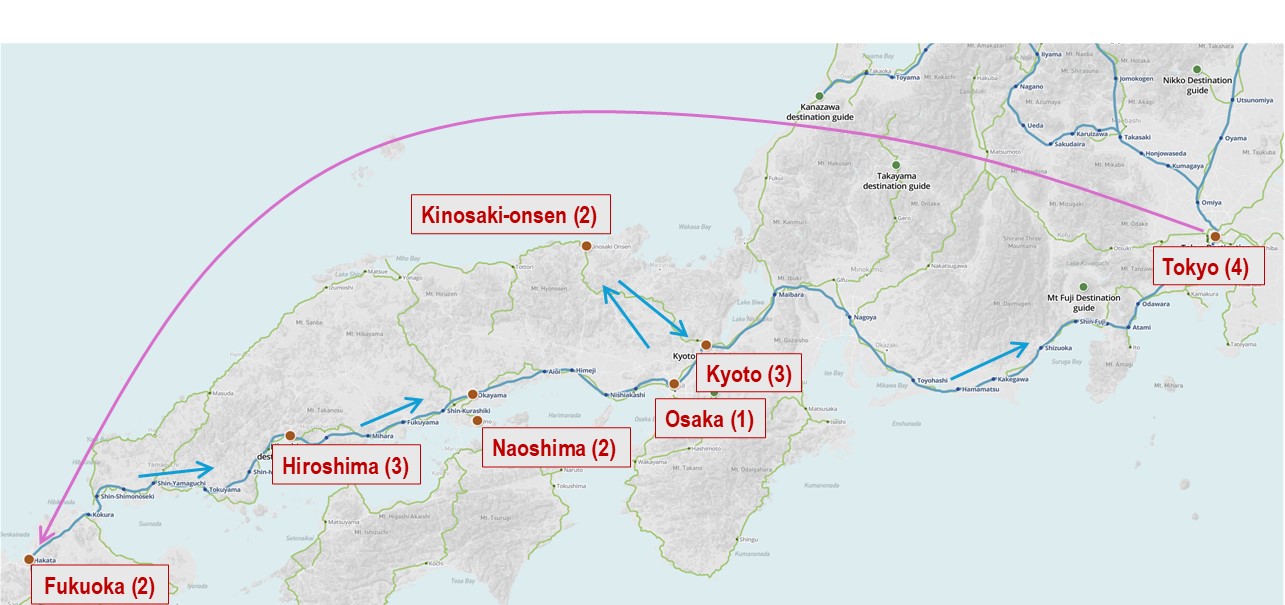
Tokyo’s Narita Airport would be our entry point into Japan, but we decided to immediately head away from the capital. Our logic was simple: we would arrive shortly before the Tokyo Marathon, and we wanted to avoid those crowds. Instead, we decided to head to the western edge of Japan and work our way back to Tokyo at the end of our vacation. A bonus for Deborah was the chance to fly on Peach, one of Japan’s domestic carriers. We overnighted at the airport and caught an early flight the next morning, which was terrific. Our destination? Fukuoka!
Fukuoka: Gateway to Asia
Fukuoka is the largest city in the Kyushu region and the capital city of Fukuoka Prefecture, south and west of the main island of Honshu. Its population is 1.5 million. Demographically, Fukuoka is a young city, and we found it to have an energetic vibe.
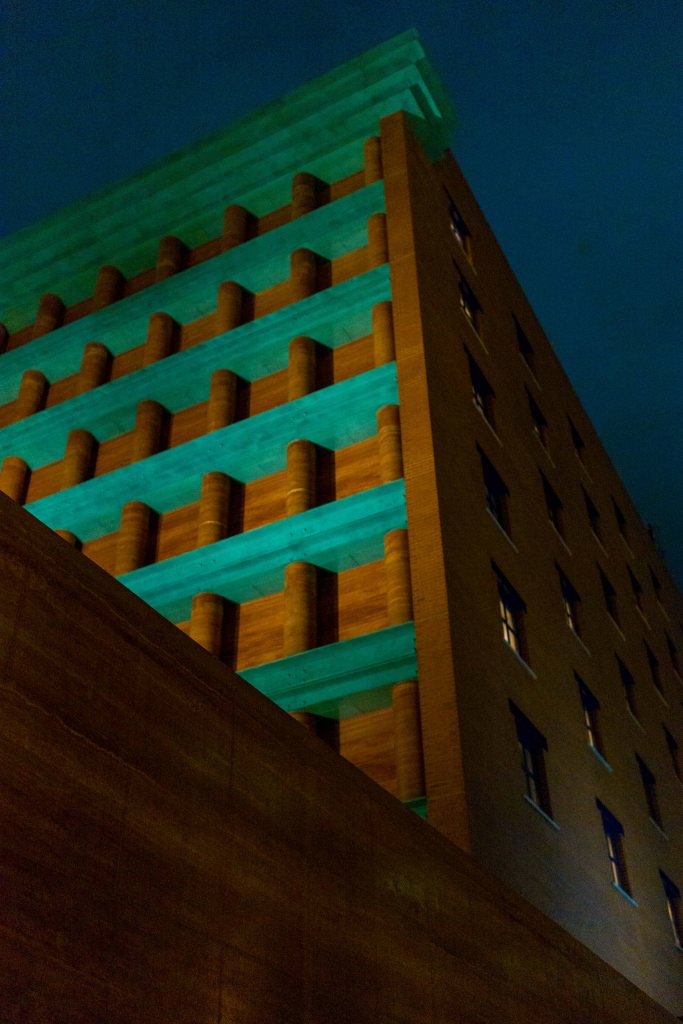
We stayed at the striking Hotel Il Palazzo, a recently renovated boutique hotel located steps from the Naka River. The hotel was designed by Italian architect Aldo Rossi, an ambitious project that combined Eastern and Western influences. Rossi was inspired by the palazzos of Venice and the traditional temple of Kyoto.
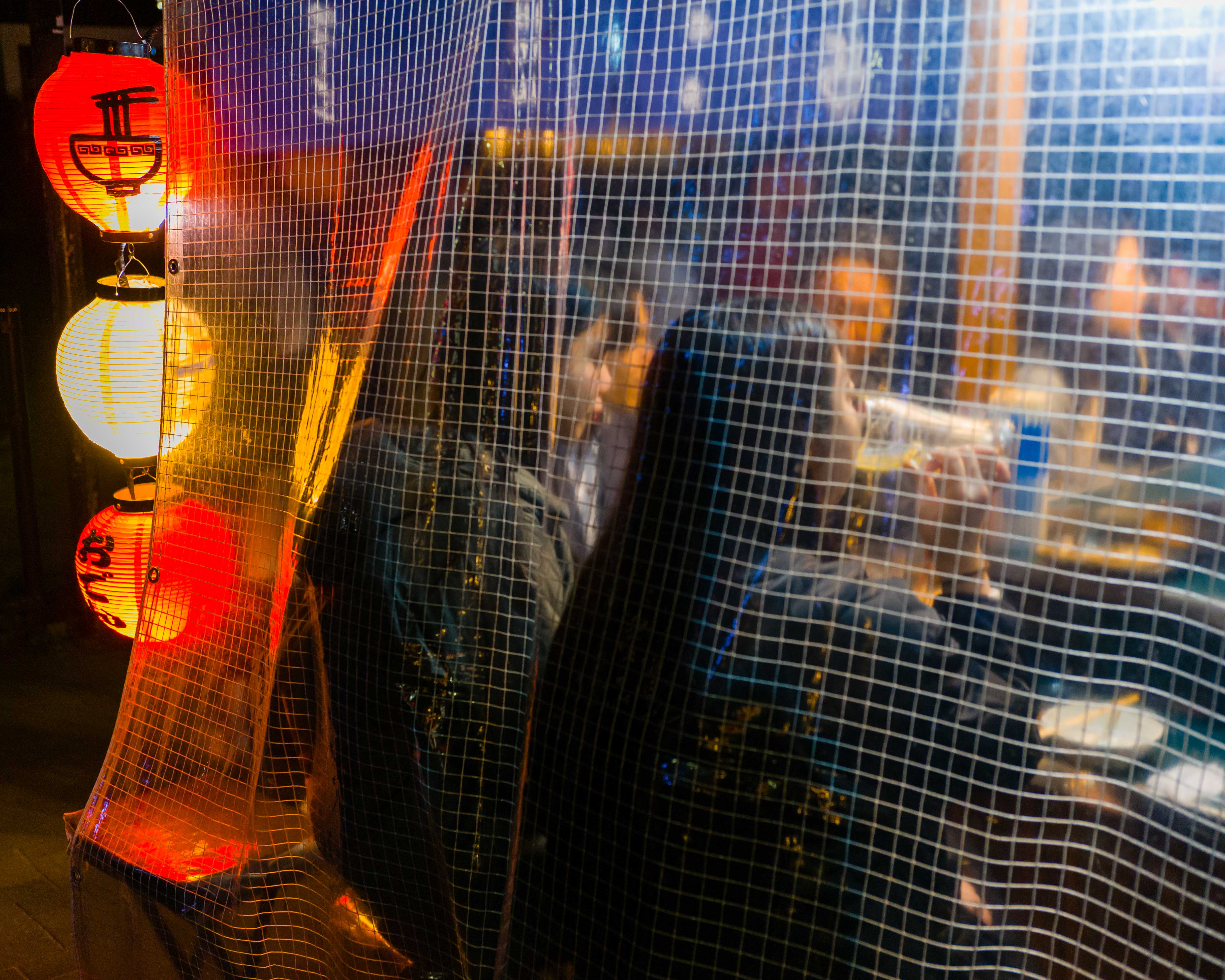
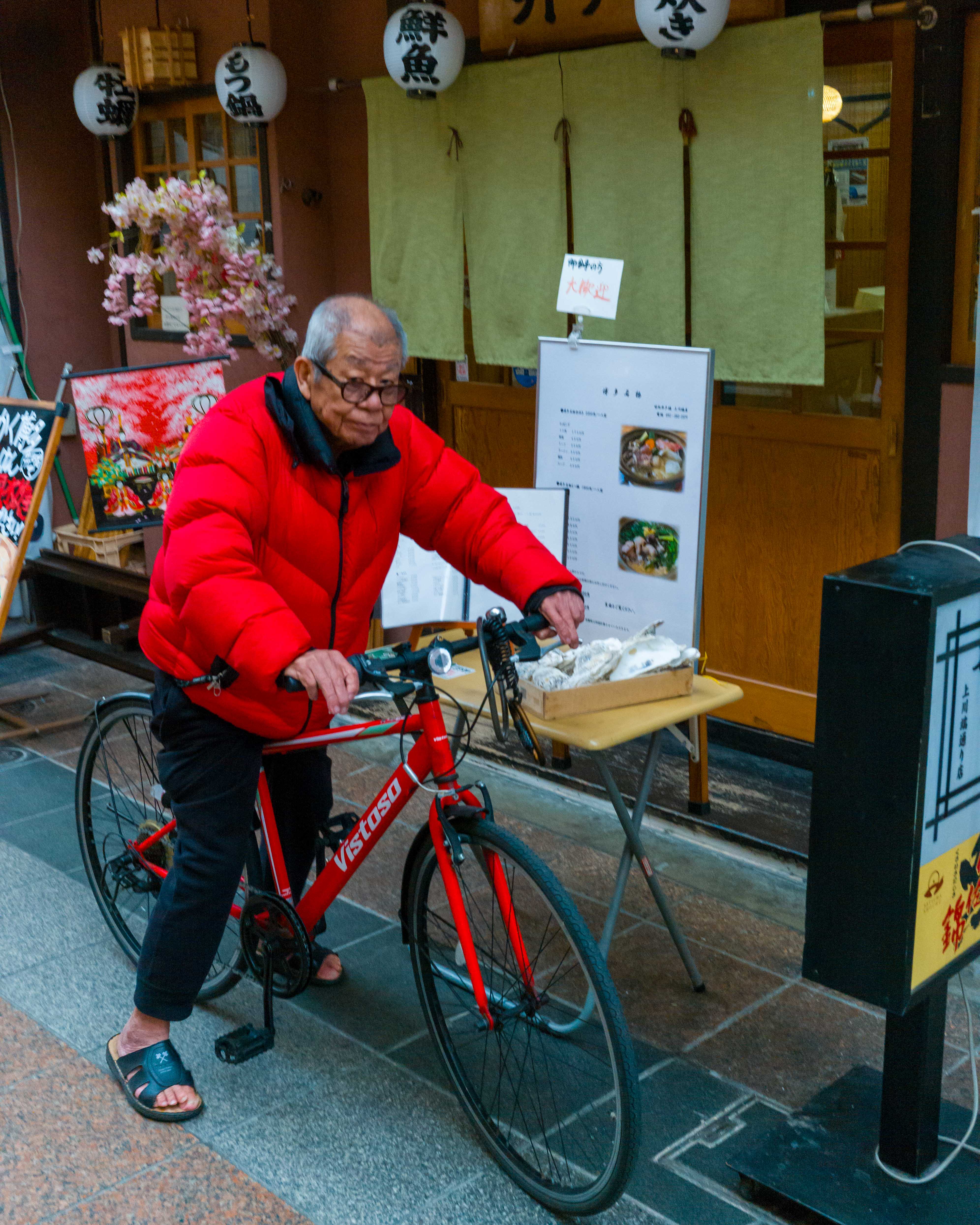
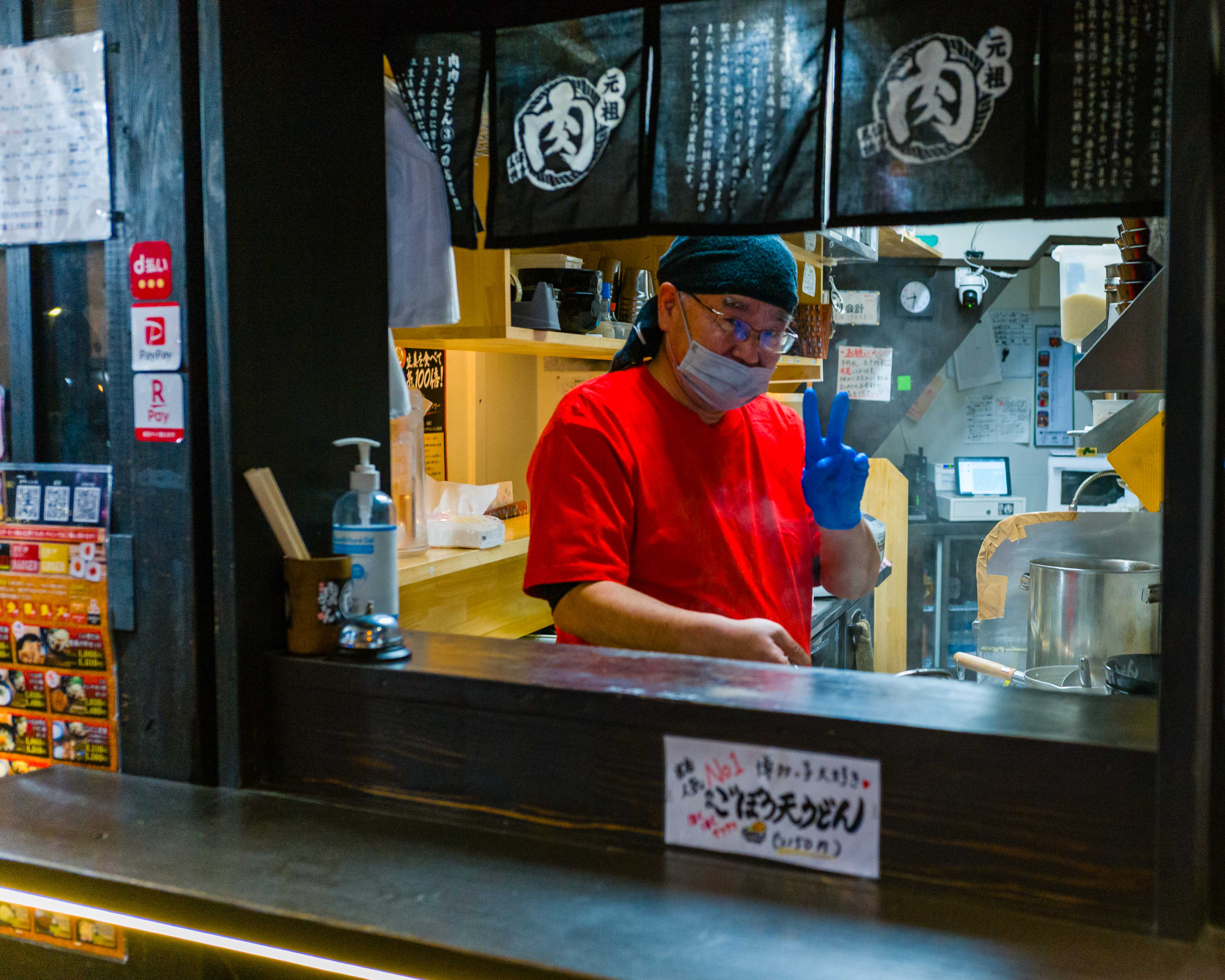
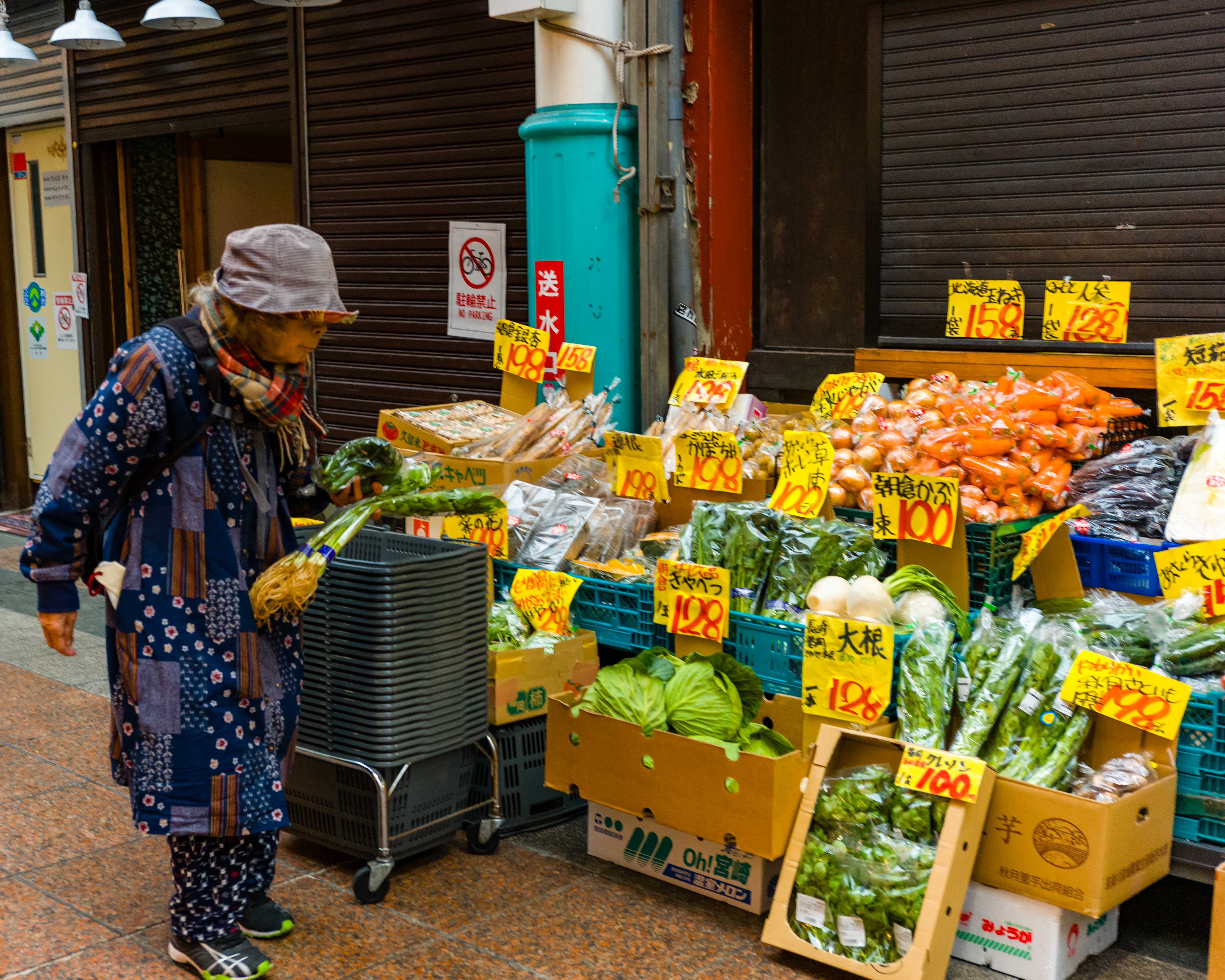
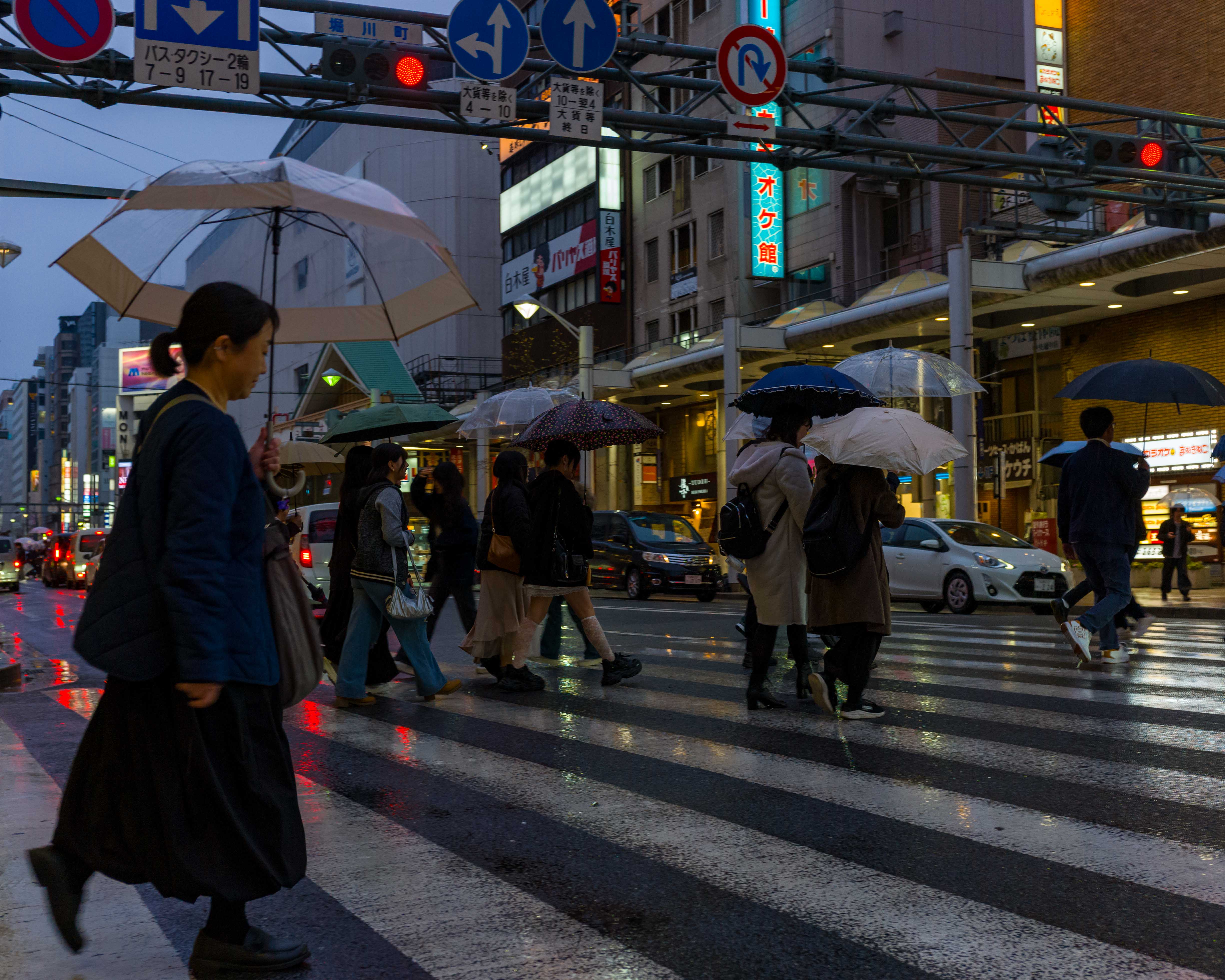
We made the most of our time in the central Hakata district: we walked through the Kawabata pedestrian arcade to avoid the rain, strolled the grounds of the Kushida Shrine, and checked out the famous (and crowded) Nakasu Yatai Street after dark. Yatai are pop-up food stalls that Fukuoka is known for. In fact, Fukuoka has a reputation as a “foodie” city. It is perhaps best known for tonkatsu ramen, thin noodles in rich pork bone broth, which is one of my favourite noodle dishes. Of course, we enjoyed a fine bowl of this delicious soup while in the city.
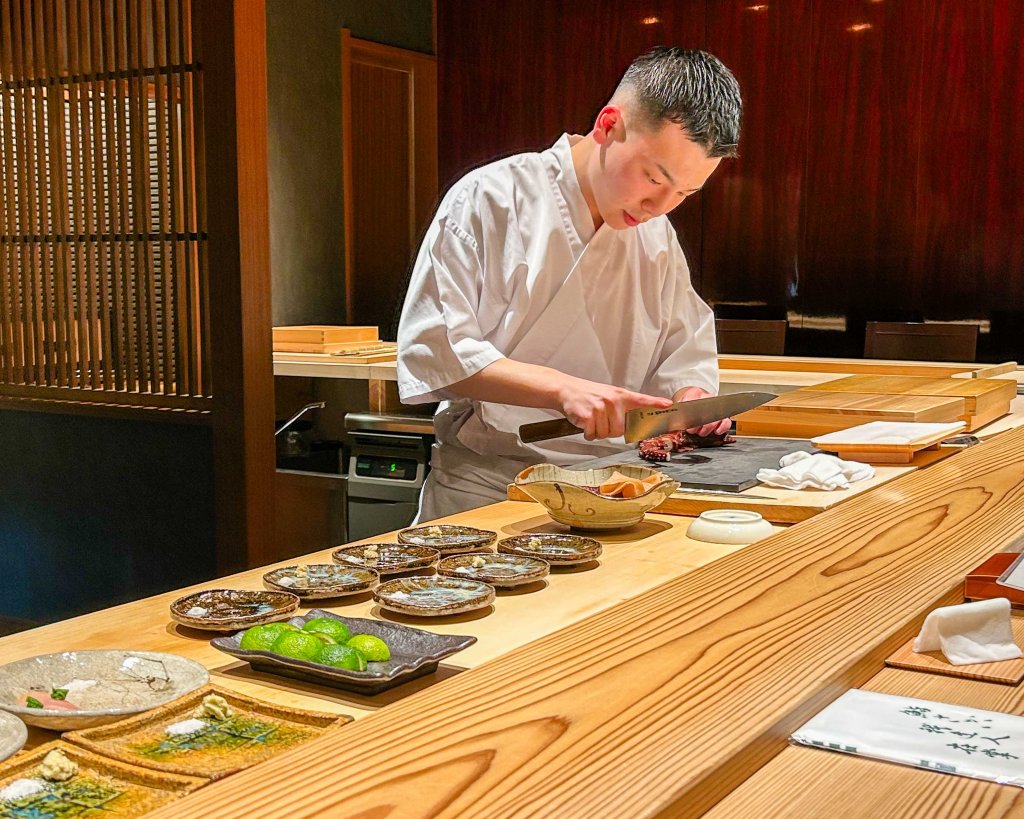
Speaking of food, Deborah managed to secure us a reservation to Zaisho, one of Fukuoka’s best omakase restaurants. Our hotel was an easy walk from the restaurant. The young chef wowed us with six seasonal nigiri and twelve (!) bite sized pieces of fish and seafood. Delicious!
Given our short time in Fukuoka, we took advantage of the efficient subway system (and the versatile IC cards that we would go on to use extensively during our trip) to visit Ohori Park, a large urban park with a scenic central pond.
I had a secondary motive to visit the park—it is the start and finish location for the historic Fukuoka International Marathon. Now, it would take me a whole article to properly explain the significance of this storied race. I have written about it before, in my tribute to Jerome Drayton.
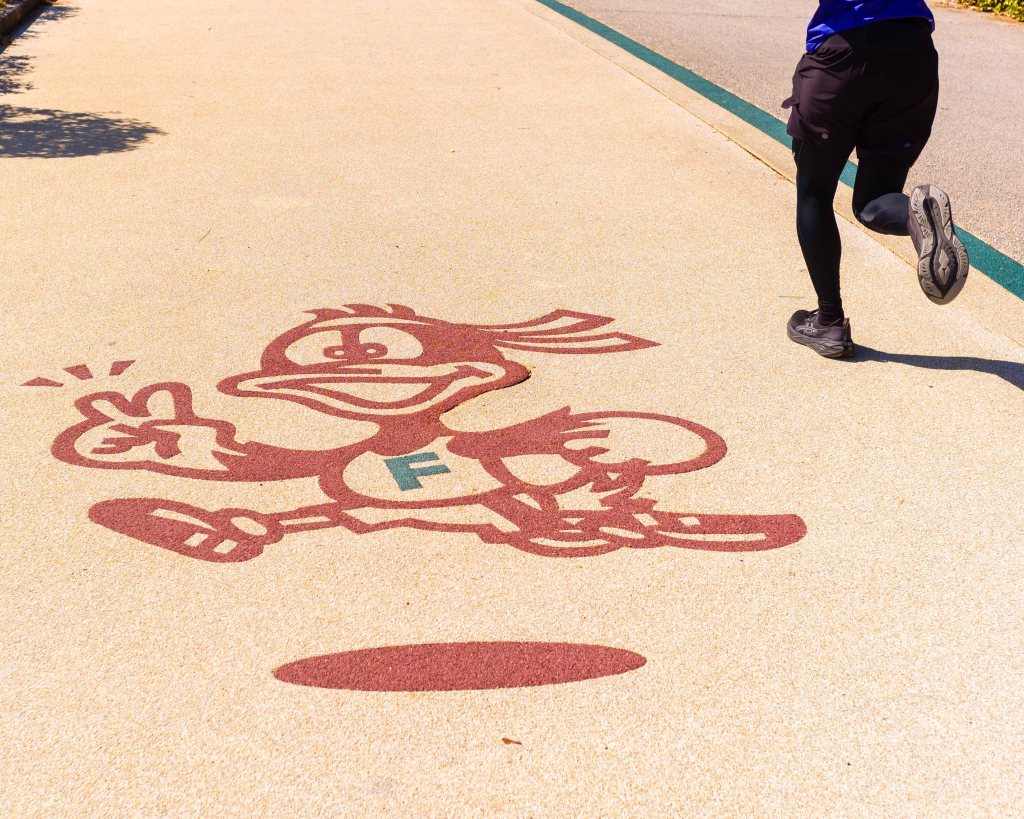
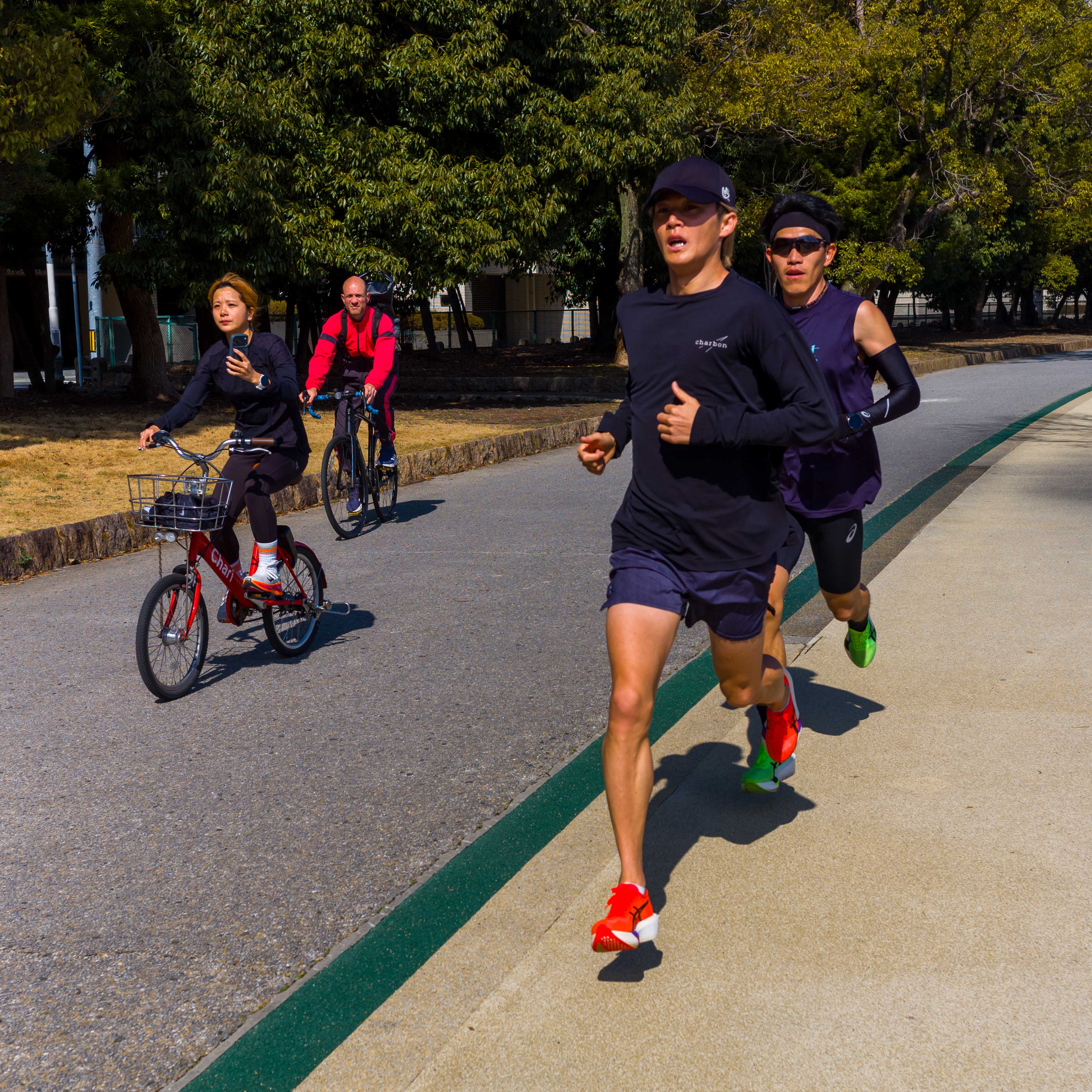
To be truthful, Fukuoka is now relegated from the upper tier of marathon racing. No matter. I was there, and I was determined to do a 4.22 km run—one-tenth of a marathon— by running two laps of the park’s perimeter path, in what I call the Fukuoka Commemorative Run. I changed at the convenient UNPLAN Hostel, and did my run on a beautiful morning.
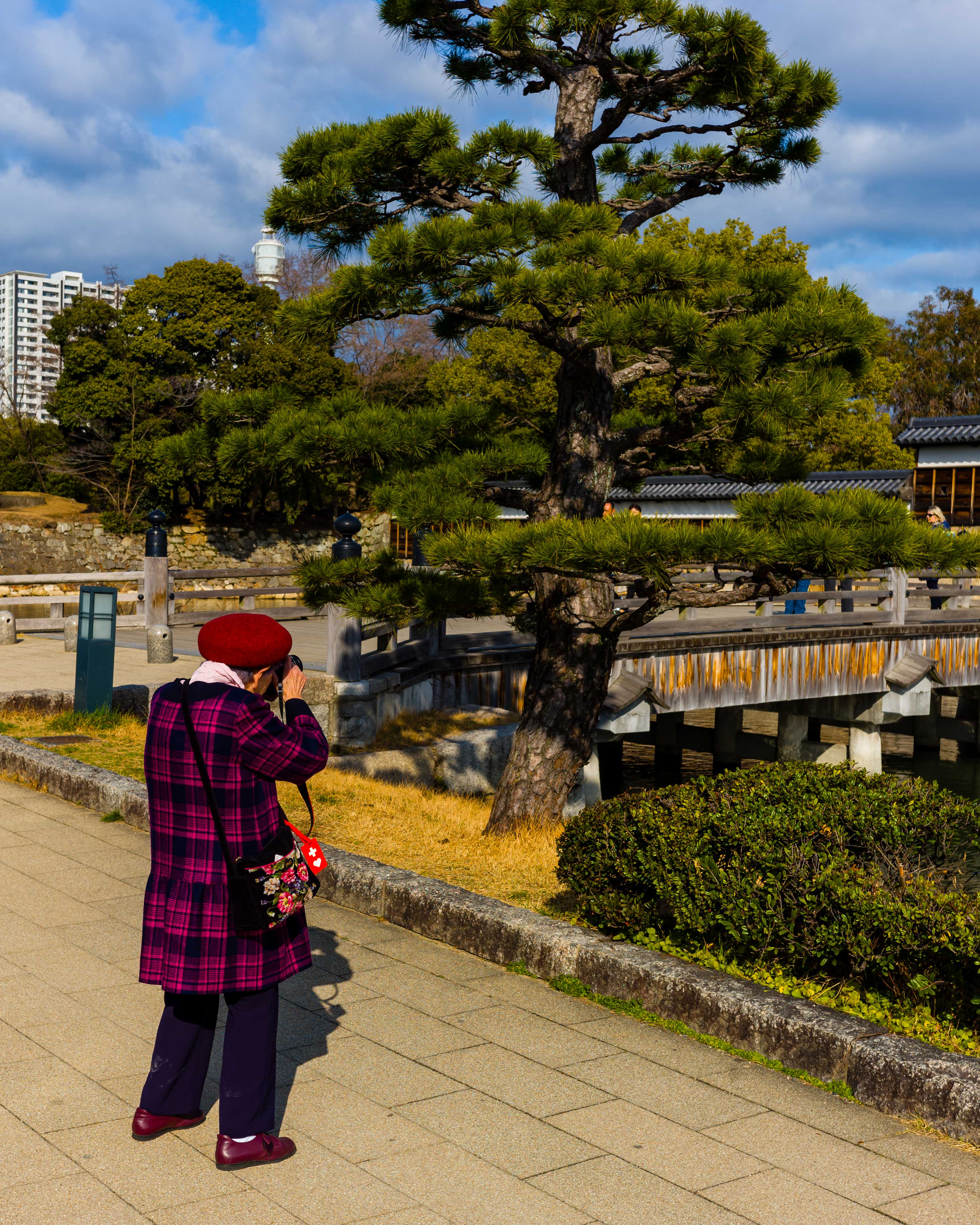
As I revelled in the company of speedy young athletes, Deb walked and enjoyed the views. She even had an owl sighting, courtesy of an elderly birdwatcher. We enjoyed our first (but far from last) onigiri, delicious and ubiquitous stuffed rice snacks wrapped in seaweed. Then we strolled through the ruins of Fukuoka Castle, where we spotted the first seasonal plum blossoms. Not cherry blossoms—those come later! Already the crowds were growing in anticipation of this welcome sign of spring in Japan.
As we headed to Fukuoka Station for our first ride on the Shinkansen—Japan’s amazing bullet trains—it was already clear that our time in Japan was going to be memorable. Our next destination? Hiroshima!
Hiroshima: City of Peace
Naturally, our arrival at Hiroshima Station was right on time. Hiroshima has a population of 1.2 million, and our hotel (the CANDEO Hatchibori) was ideally located to explore the city.
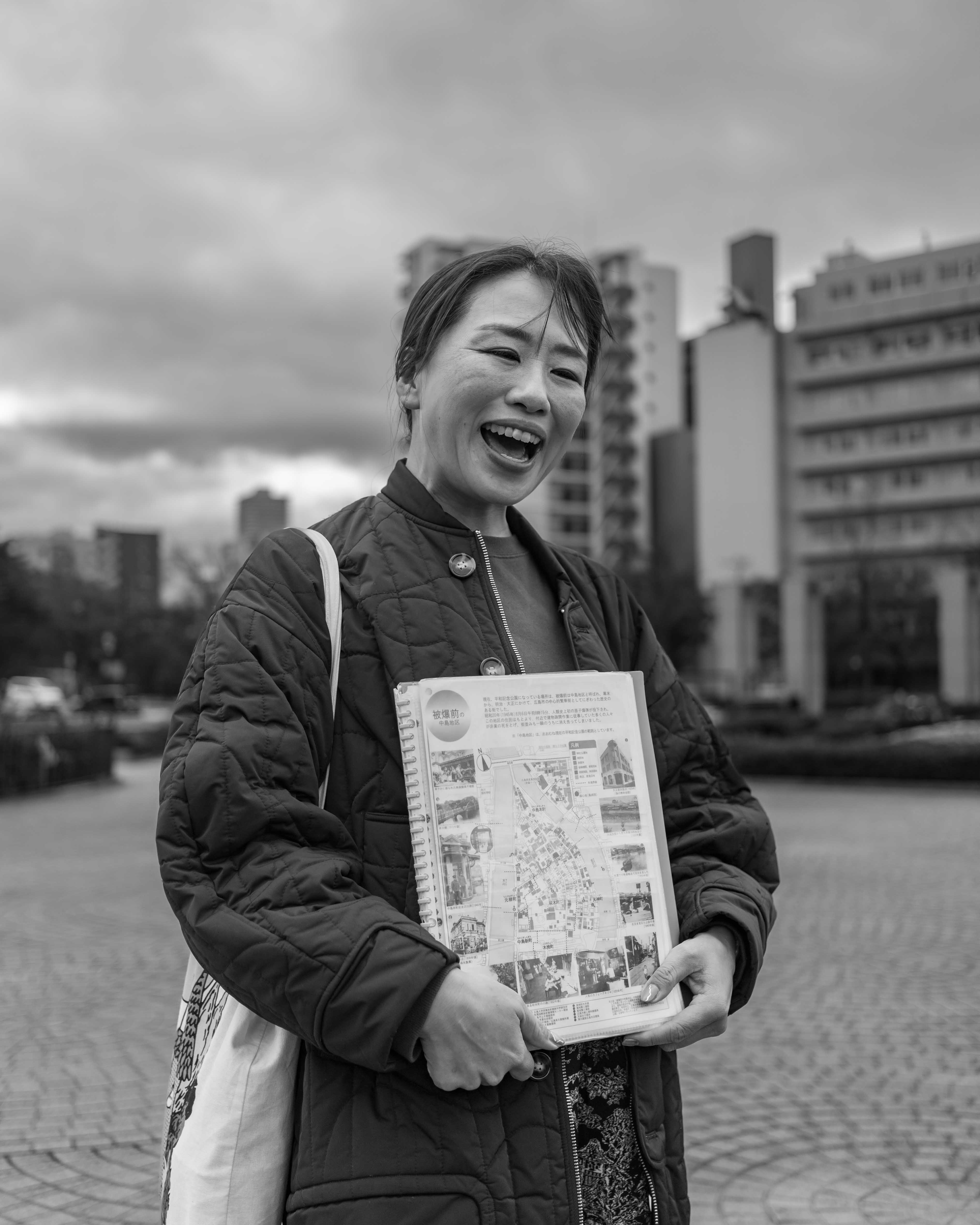
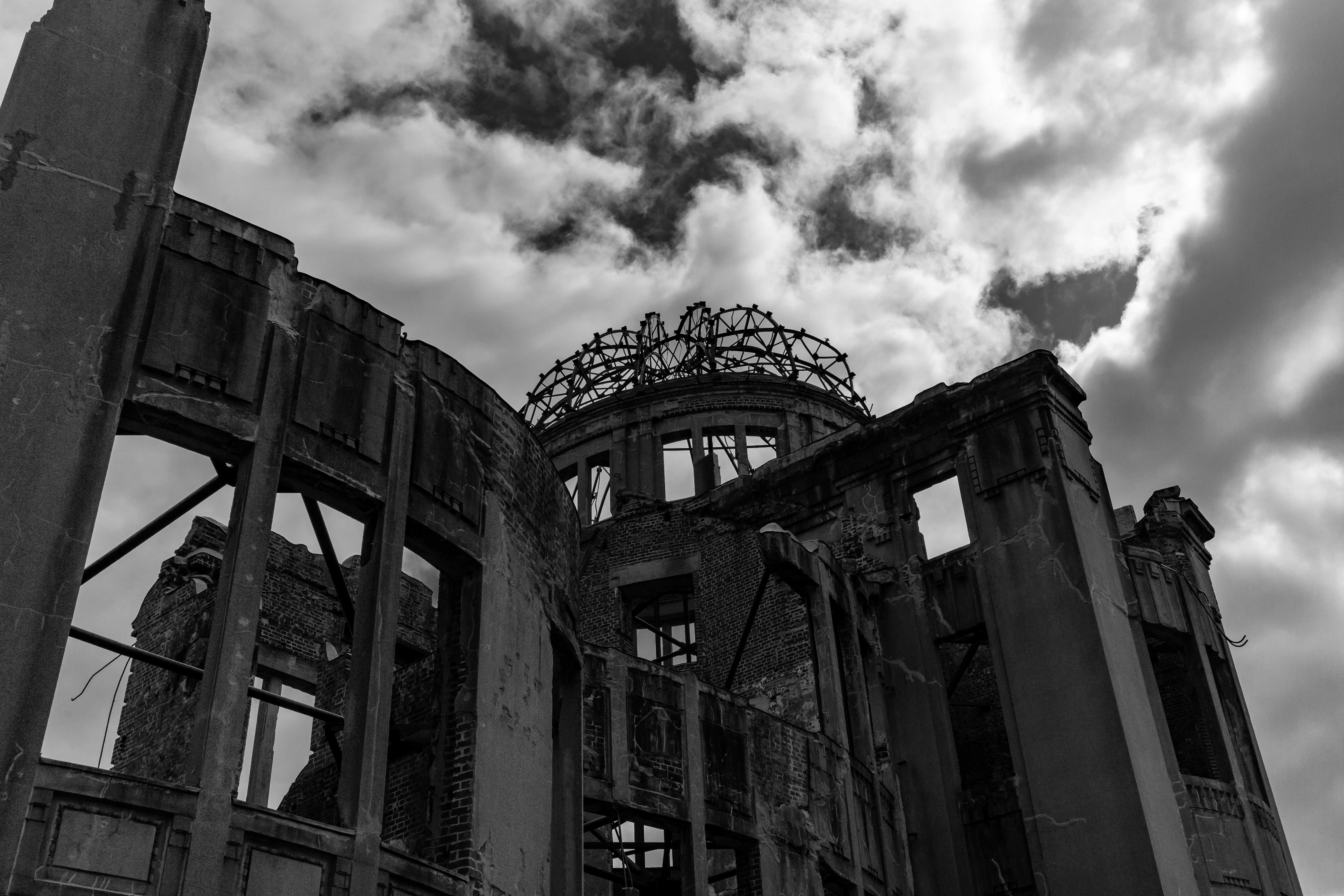
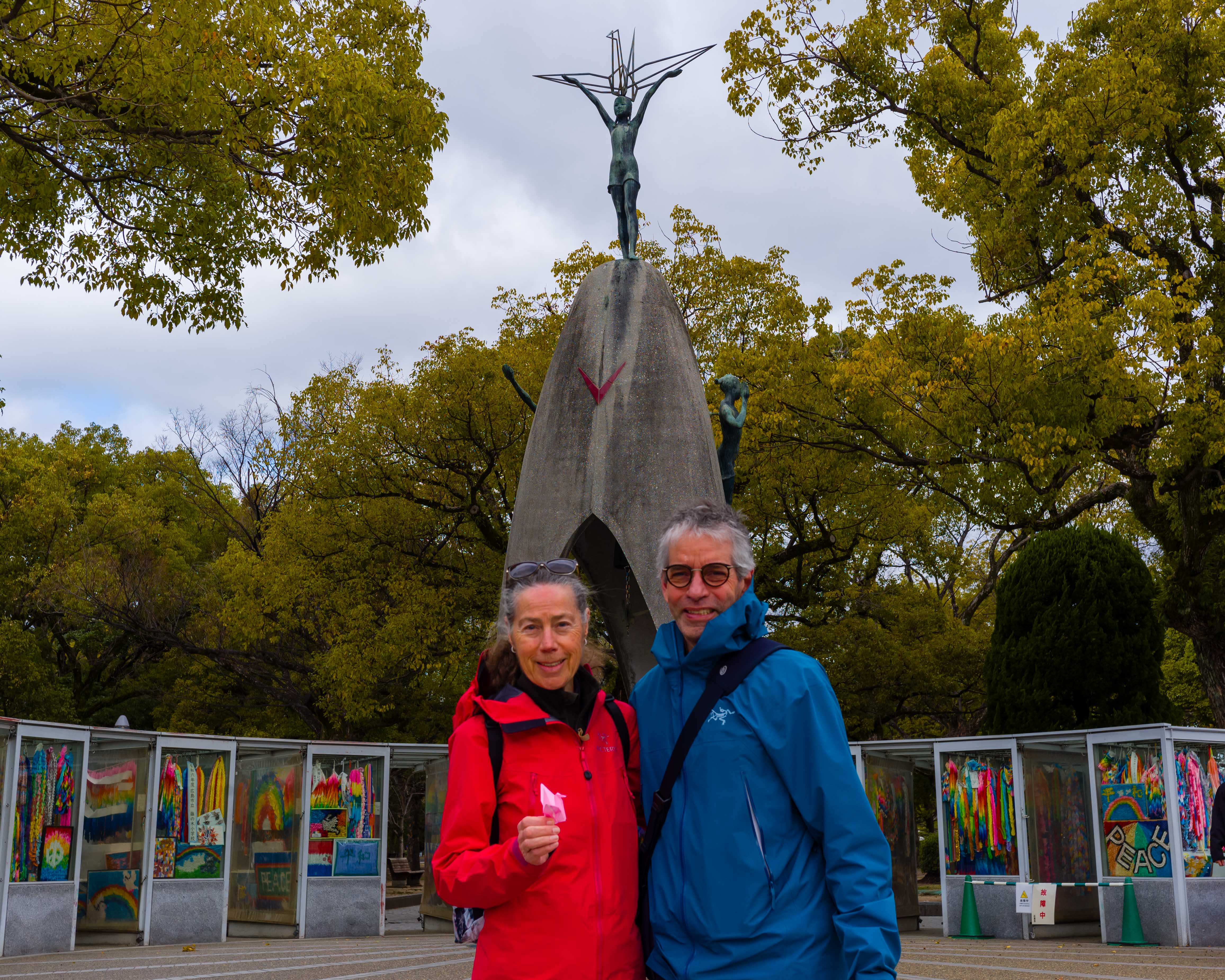
Hiroshima will always be known as the target of the first nuclear bombing, on August 6, 1945. I’ve been aware of this sad event my whole life, because August 6 happens to be my birthday. We signed up for a two-hour walking tour with Viator. Our guide Moe was very knowledgeable about the city’s history and the bombing. Her grandparents were survivors. She took our small group through Peace Memorial Park, and later in the day Deb and I visited the museum—a must see attraction in Hiroshima. The emotional power of the exhibits was overwhelming.
There is much more to Hiroshima than its wartime history. After visiting the museum, we walked through Hiroshima Central Park to the grounds of Hiroshima Castle. We heard the roars of a football match at the nearby Edion Peace Wing Stadium, a bold new facility. In case you’re wondering, Hiroshima’s professional sports teams are the Sanfrecce Hiroshima (men’s and women’s football), the Toyo Carp (baseball)—cool name!—and the Dragonflies (basketball).
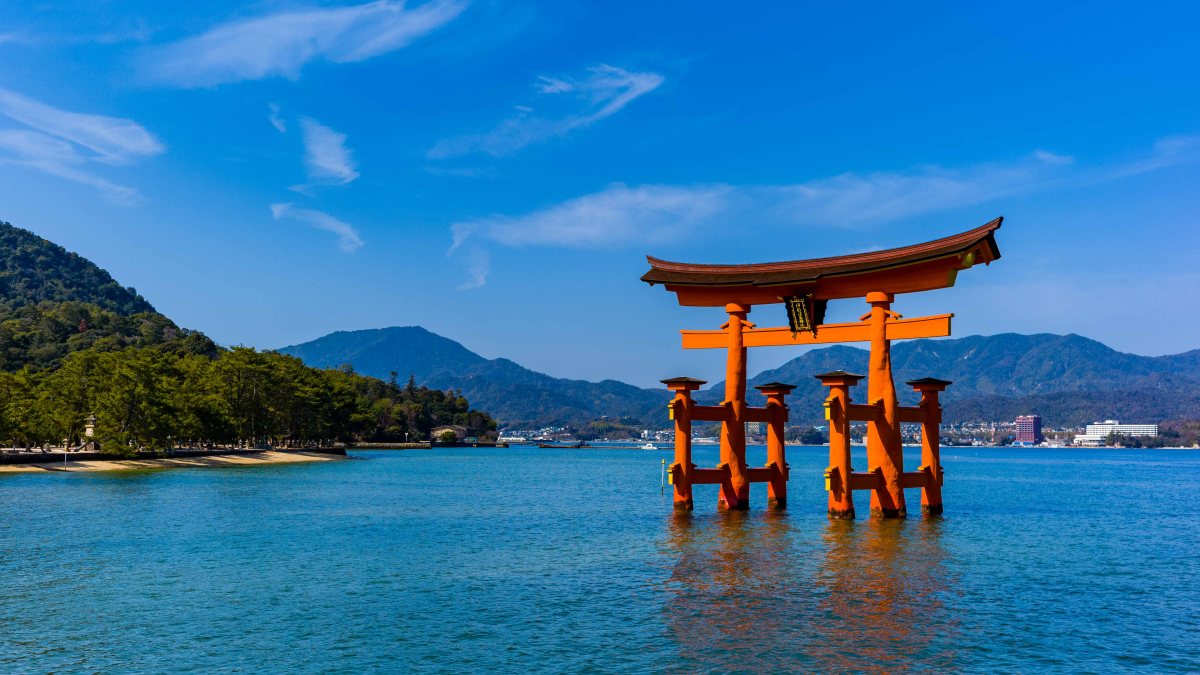
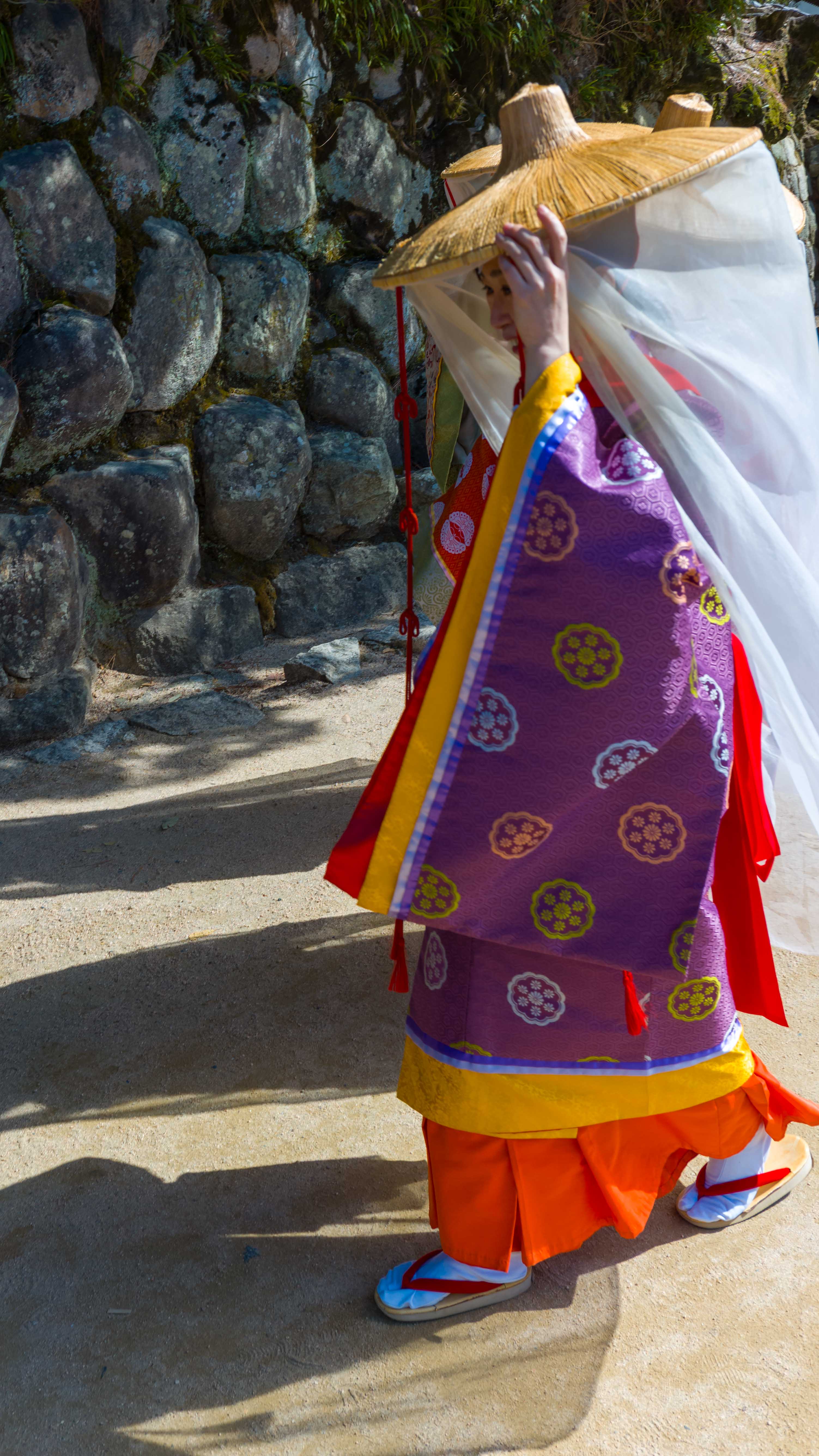
A popular day trip from Hiroshima is to the island of Miyajima. We navigated the city’s tram, train and ferry systems to reach the island, and enjoyed some sightseeing in and around the expansive Itsukushima Shrine. The tide was going out, exposing the “floating” Torii Gate for which the shrine is famous. We were captivated by local rituals, like goshuin, the tradition of having a book signed at shrines and temples. Fans of the hobby were lined up to collect unique, hand-drawn calligraphy and stamps as a record of their visit. Rounding out a perfect Sunday afternoon outing was a delicious coffee ice cream.
While in Hiroshima, we (well, maybe I) wanted to sample okonomiyaki—a savoury pancake made with layers of batter, cabbage, meat, and noodles. Okonomiyaki Mitchan Sohonten is a local restaurant, well known for its version of the dish, and it was two blocks from our hotel. We joined the locals in busy cafeteria style seating and ordered a single plate, which was large enough for both of us to enjoy, with a cold Asahi of course!
First Impressions
After only a few days, Japan was weaving a spell over us. It was all so new, and yet welcoming. The people were kind and respectful. The food was beautiful and delicious. We couldn’t wait for our next stop. As it happened, the Nozomi N700 Series train service whisked us there in excess of 250 kilometres per hour.
Until next time, “genkide, soshite hayaku”… I think that’s close to “be well, and BE FAST!”

 My Second Running Life