Find Your “Why”

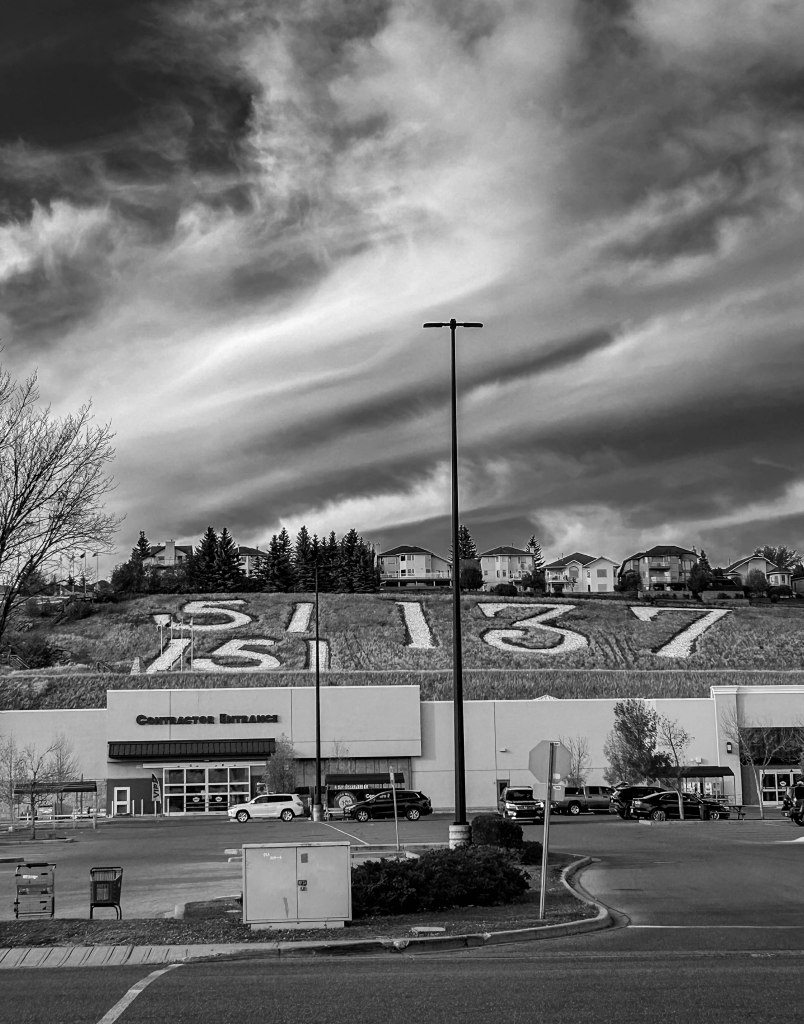
As I started thinking about this piece, I found a podcast on Todd Malcolm’s No Limits Triathlon website which helped me a lot. It’s Episode 151 (“Why do you train for triathlons?”) Kudos Todd, and thanks for the inspiration!


So, here’s a question for you: Have you ever thought about why you run?

(Feel free to substitute your own go-to activity for running, in what follows. I think it’s a valuable exercise, whatever the activity.)

There is a tendency to focus on the “what” of running, rather than the “why”. I might even go so far as to say that running has a “what” problem. 

I recently overheard two runners engaged in an animated conversation. Their talk was all about the “what”… upcoming races and new technical gear. Make no mistake, these are important topics of discussion, and I know they can be very exhilarating. If you were to include discussions about training mileage and pace, I’d guess you have the “what” of running totally covered. 

This is understandable, but in some ways unfortunate. 

We live in a society that focuses to a large extent on “what” questions, often in the realm of personal and professional achievements. So it’s hardly surprising that the running community sees the same reality. For runners, there’s always another must-do race, the latest shoe, or a new sure-fire workout. 

Here are a couple of recent product announcements that caught my eye:

  1. Adidas announced its latest high-performance shoe, the Adios Pro Evo 1. It’s a disposable shoe that is good for one marathon and sells for $650 CDN. Was it a coincidence that this announcement was made just before the B.A.A. announced its time cut-off for the 2024 Boston Marathon? Maybe. But there may soon be more demand for that shoe than Adidas can handle. 
  2. Garmin announced a series of luxury GPS devices, the MARQ smartwatches, that will go for about $4,000 CDN. They feature a lot of titanium and carbon fibre, and according to Garmin, they are “built for greatness, so you can achieve yours”. I’m not sure how they will do that, but I admit they do look nice.

If you compete or just follow athletics, you understand this pressure… the pressure to always be improving. Acquiring. Checking boxes. Maybe you even thrive on it. 

What’s my point? Well, I feel that for whatever good this pressure can do, it can also lead us to miss the whole point of running. We shouldn’t forget to consider the “why”. The “why” has nothing to do with equipment, races or training schedules. 

You won’t find your why by adding things to your regimen. Instead, you should consider subtracting things. The why is inward-looking. 

Ask yourself this: if you didn’t have a major goal race to motivate you; if you had to make do without the latest shoes or GPS watch; if you couldn’t track your training pace or upload your workouts to Strava, would you still run?

If the answer to this question is yes, then you are starting to get at the why. 

If you are willing to go further with this mental exercise, try writing down some thoughts on your “why”. Maybe you enjoy the intrinsic benefits of running… how you feel while you are doing it. Maybe running is a place of refuge when the stress of everyday life seems overwhelming. Maybe you relish the camaraderie of long, easy runs with your friends. Or the challenge of setting hard goals, and then methodically doing the work needed to achieve them. You know, the work that no one sees. 

I hope that by being able to define whatever special benefits you get from running, you will be better able to enhance its indispensable role in your life. 

For me, it’s quite simple.

Running makes me a better person. I think more clearly, I work more efficiently and I believe (hope?) I’m more empathetic in my dealings with other people after a run. I learned these things several years ago, when I faced the prospect of not having running in my life.

You may have guessed that I won’t be on the wait list for any disposable shoes.

Until next time, happy running!

ICYMI: “Map to Triathlon” Podcast Interview

I had the great pleasure of chatting with Todd Malcolm a few months back, just as I was preparing to launch Stroke of Luck: My Life in Amateur Athletics. In case you missed it, I recommend you check out Episode 141 of Todd’s excellent podcast series, “Map to Triathlon”, which is a feature of his No Limits Triathlon program.

Episode 141 of Todd Malcolm’s “Map to Triathlon” Podcast (October 2023)

My interview with Todd was an opportunity for us to look back over our long relationship, which has revolved around our mutual interest in amateur sports. Todd is a highly accomplished triathlete, and has been a respected triathlon coach in Calgary for almost as long as I’ve been a runner. That’s a long time!

Todd and I talked about my memoir, and the events surrounding my hospitalization in 2017 for a number of vertebral artery strokes. I shared my hopes and fears arising from that difficult period of my life. As you can probably tell from the title of my book, I consider myself fortunate to have come through that ordeal as well as I did, and to still have running in my life.

At the time of our interview, Todd was recovering from a serious bike crash, so we shared our thoughts about the importance of overcoming adversity and keeping a positive attitude. In fact, I want to remind my readers of the endorsement that Todd kindly wrote for the cover of Stroke of Luck. It seems very appropriate:

Once I started reading Steve’s book I couldn’t stop. His story really resonated with me. This book encourages an active lifestyle and is a reminder that when you find your passion, find ways to keep doing it.

Todd Malcolm

While you’re on Todd’s No Limits Triathlon website, I encourage you to check out all of his coaching services, and the many other great podcast episodes he has assembled. In a recent podcast (Episode 151) he looks at the question, “Why do you train for triathlons?” Coincidentally, I have been preparing a blog piece on the same question (“Find Your Why”). Look for that piece soon.

Thanks, Todd, for taking the time to chat. Thanks too for everything you do to support amateur athletes in Calgary!

Treadmill… or Dreadmill?

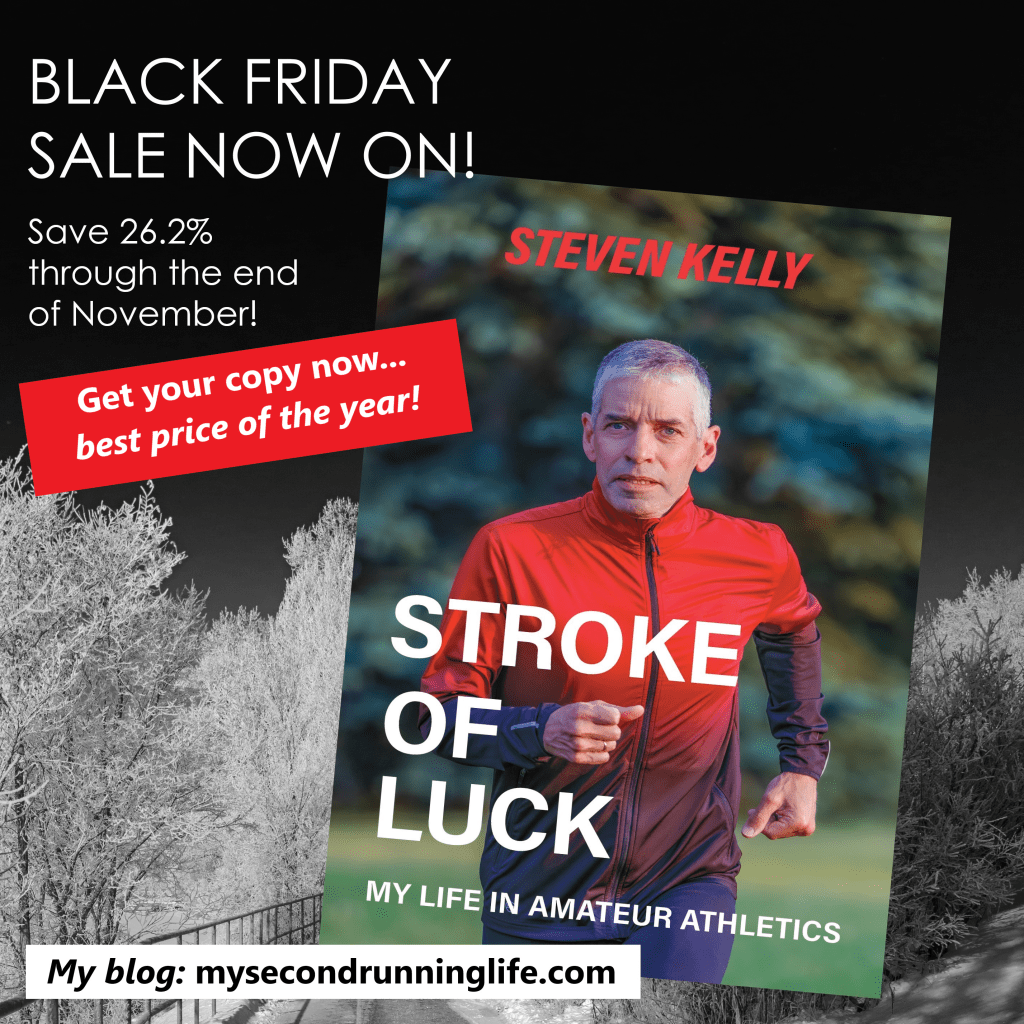
My Resolution Sale is still on. Grab your copy of Stroke of Luck on Amazon for a New Year-inspired discount. This offer is only available until the end of the month!

This week, Alberta was invaded by an unwelcome visitor: the polar vortex. For a few days, we hoped that the forecast would turn out to be wrong. I enjoyed my last comfortable outdoor run on Tuesday with a feeling of impending doom. Change was already in the air: I left the house in fine weather and sunshine but spent the last two kilometres fighting a stiff, cold wind from the north.

Now we are in it. I read somewhere that today (Friday the 12th) was the coldest day in Calgary for the last 20 years. The prospect is for even colder weather in the next day or two.

“Yes, but it’s a dry cold” (January 12, 2024)

While I always prefer to run outside, the time had clearly come to switch to plan B: the treadmill. We have put many miles on our Landice L7 treadmill since buying it in 2010. At the time, I wanted an alternative to outdoor running to get me through the Alberta winter, so I could run the 2011 Boston Marathon.

While the Landice has been a reliable machine and a good investment, I have never warmed up to it. That’s because I find running on a treadmill harder than running outside. To be precise, I find running a given pace on a treadmill feels harder than on the road.

I did some research into why this might be the case. I know it is a debate that has strong opinions on both sides. Some runners hold exactly the opposite opinion than I do. They find treadmill running to be easier than road running.

I’ve always assumed that my perception of treadmill running is due to it being a relatively recent activity for me. In other words, am I programmed for outdoor running because I’ve done it for so long? No, there must be more to it.

There are plenty of studies that compare the two environments, and most find several benefits of treadmill running. For example, the belt turning under us imparts energy to our feet as we land. Treadmill belts are rubber, so there ought to be a small benefit in terms of impact forces on our joints. The ability to control speed and incline can be helpful when recovering from an injury or looking for very specific training conditions.

On the other hand, studies have also shown that many runners do perceive treadmill running to be more difficult. The benefit of a spongier surface may come at the cost of requiring the runner to expend more energy. Apparently, runners tend to self-adjust to a slower speed than they would outside. One study (I only read the summary) had runners do three segments at perceived effort: outside, then on a treadmill, then outside. It found that the treadmill portion was slowest by a statistically significant margin.

Running to stand still (January 2024)

On the physical side, I generally feel a bit of muscle soreness after a treadmill run. It would seem that I’m using different muscles, or interacting with the “ground” differently.

As for the perception of effort, I think it comes down to the way that our brains interact with our environment. I never get 100% comfortable moving while staying in the same spot. On a related point, while I agree that watching television is a welcome distraction available exclusively on a treadmill, I somehow get disoriented by the feeling of running toward the screen.

In practical terms, I find the best thing to do on a treadmill is a structured workout. Today, I did almost a full set of Yasso 800s (repeats of 800 metres at 10k pace). It’s a classic speed endurance workout, and it’s often cited as a predictor of marathon fitness. (Definitely not in my current plans!) Knowing that I have to complete a series of tasks (for example, run two laps on the little screen at a predetermined, not perceived, pace) helps me get past the feeling of confinement and boredom that often accompanies a treadmill run.

Besides, running in shorts and a T-shirt while looking out at a frozen -35c landscape isn’t all bad. And I did have a dram of Macallan 12-year-old sitting ready for me as a reward for getting through it.

The reward

We do what we have to do.

Prairie Mountain Sunrise, Part 2

The Science

After we returned to Calgary from our December 29 Prairie Mountain sunrise hike, I started to wonder about the small anomaly that led us to pick that day. Specifically, the fact that the day with the latest sunrise does not align with the winter solstice in the northern hemisphere. Before I get into the science, here’s another photo from that great morning.

Looking northwest from the summit (December 29, 2023)

I did some research and learned the interesting astronomical reasons for this phenomenon. I first looked up the sunrise/sunset tables for southern Alberta. The solstice occurred at 8:27pm on December 21, but the latest sunrise occurred more than a week later. Not only that, the date of our earliest sunset was well before the solstice… way back on December 12, to be exact. 

What’s going on here? After all, these differences are not small. 

While we think of the solstice as the shortest day based on sunlight hours, it isn’t the shortest “solar day”, defined as the measured time from noon on one day to noon on the next. In fact, solar days are the longest in December.

A recent article in Scientific American explains that there are two reasons for this counterintuitive result. With all credit to the excellent minutephysics video by Henry Reich (“Why December Has the Longest Days”) referenced in the article, I’ve reproduced the two reasons in the following chart.

First, the shape of the Earth’s orbit is not a circle but an oval, an ellipse. The difference between the earth’s nearest and farthest points from the sun is small, about 3% of its average orbital distance of 150 million kilometres. This matters because as the earth reaches its closest point (perihelion), it moves faster through space. The faster movement lengthens the time needed for a given line of longitude to come around the next day to align with the sun. This effect adds about eight seconds to the solar day.

Besides the eccentricity of the earth’s orbit, the tilt of the earth’s axis also contributes to the disparity between solar day and clock day. This effect, called the obliquity effect, lengthens the days by about 20 seconds around the solstices, and shortens them by about 20 seconds around the equinoxes.

The impact of these two factors on the solar day is well known. There is even an “equation of time” to relate solar time to clock time. Mathematically, the effect is represented by two sine functions. The frequency of the eccentricity curve matches the earth’s annual rotation, and the tilt curve goes through two cycles each year. The figure below was generated on PlanetCalc. It shows how adding the curves results in solar days that are shortest in February and longest in December. There is also a smaller peak in the spring and a dip in the summer.

Source: PlanetCalc Equation of Time calculator for 2024

Because perihelion occurs close to the winter solstice (on January 2), the two day-lengthening effects are additive, totalling about 30 seconds a day at the peak in November. These “extra” seconds are pushed forward to subsequent days, making solar noon later and later at that time of the year. And because sunrises and sunsets are symmetrical around solar noon, we get the observed result: the earliest sunset gets shifted backward (before the solstice) and the latest sunrise gets pushed forward (after the solstice).

Whew!

I expected the answer to this question to be simple, but it’s taken me a few tries and a lot of soak time to understand.

Somehow it seems appropriate, having just started a new year (and passed the perihelion), to recognize that the universe is full of mystery. 

Prairie Mountain Sunrise, Part 1

My friend Tim can always be counted on to organize good outings. A coffee, a lunch, a hike. He organized our excellent excursion to Pocaterra Ridge in September to see the larches.

One of Tim’s good ideas in the last few years is a sunrise hike to the summit of Prairie Mountain in Kananaskis. He’s been considerate enough to arrange the hike on the day with the latest sunrise. This year, that day was December 29. Before the hike, I didn’t independently verify Tim’s assertion on this point. More on that in Part 2 of this post. But I did enjoy the extra two minutes of sleep that I was told would be available by delaying our hike from the winter solstice by eight days. 

Dan and I joined the convoy that left Calgary at 6:20 to reach the trailhead by 7:10. A testament to the popularity of Tim’s idea is that our group was ten this year, up from five last year. Mind you, last year’s -20C temperature may have been a contributing factor. (I passed on that one.)

The hike was great. It was my first time on the new and improved Prairie Mountain trail. It’s now 8.4 km with 711 metres of elevation gain. The modifications evened out the trail’s steepest segments, added some Lawrence Grassi-like stone steps in a couple of places, and widened the trail. Even in the dark, lit by a headlamp, I liked the changes. I’m not a PM veteran or a mountain goat. I have done the hike maybe six times, in various weather conditions. And I’ve been in a couple of slippery situations on the old trail that left me wondering if we’d taken a wrong turn. It just never seemed safe to me. Now it does. 

We may have been a bit late getting started. The southeastern sky was already lit with beautiful shades of pink at the first viewpoint. We hustled onward, knowing that if we could get onto the summit ridge we would see the sun break the horizon. Our time for the ascent was about 75 minutes. 

We didn’t have long to wait once we reached the 2,210-metre summit. The light display was stunning. Sunbeams streamed around a lone cloud that was parked just above the horizon. 

First rays (December 29, 2023)

I had my Ricoh GR III with me. (Yes, I know, I say this often, but I really love this camera!) We snapped a few group shots as the sun made its appearance.

The group, on the summit

To the northwest, Moose Mountain was glowing, with snowy highlights and a rosy sky above. 

Moose Mountain looking splendid

We enjoyed the vistas and took more photos. As I reached for a snack, I realized that my fingers were freezing. It was deceptively cool, but thankfully the summit winds were moderate. That isn’t always the case on Prairie. We started down, trading our headlamps for sunglasses.

On the descent

An enjoyable coffee and treat at the Bragg Creek Cafe & Baking Co. rounded out the morning. 

Happy New Year to all!

December Run Streak, Non-festive Edition

The month is almost over, and that means the end of the Strides Run Streak. Looking forward from our December 1 start, the task seemed daunting. But here we are, already closing in on January. The persistent pattern of warm weather and the relative absence of snow in the city this year have certainly made our task much more bearable. Even so, I don’t mind saying that I’m looking forward to a day off on January 1.

Now that Christmas is in the rear-view mirror, I felt I should do a follow-up post to my last piece. That one was my attempt at a (slightly) festive piece, in keeping with the season.

This time, I feel I can loosen up the constraints. The photos in this post were all taken while out for one of my December runs. They were all taken with the incomparable Ricoh GR III. However, the subjects are less “Santa” and more “street”. These are subjects that fall closer to what I might normally look for when I’m out and about with my camera.

So, with no explanatory text, I present… my December Run/Photography Streak, non-festive edition:

Let me know what you think. I haven’t seen much in the comments section lately.

Until next time, Happy New Year!

In closing, I’ll mention that my book, Stroke of Luck: My Life in Amateur Athletics, will be available on Amazon for a special resolution sale price, starting in January. Thanks to everyone who has already picked up a copy. It’s been great hearing your thoughts on the book.

Streaking through December

The pressure has been building for three weeks already. It’s nothing serious, mind you.

For the last few years, the arrival of December has meant the start of the Strides Run Streak, hosted by our wonderful neighbourhood running store. The parameters of the challenge are simple: run at least a mile a day for the full month. It’s wildly popular with the locals, including Deb and I.

I do have some history with this challenge. In 2012, I started running on December 1 and turned a one-month goal into a multi-year streak. That particular streak, which didn’t end well, isn’t the point of this post. You can read all about that adventure in my book, Stroke of Luck: My Life in Amateur Athletics. (By the way, if you hurry, you can still get your copy in time for Christmas, either at Owl’s Nest Books or directly from me. Thanks to all of you who picked up a copy. Much appreciated!)

This year’s streak has brought the usual mix of weather and physical challenges. Pathways have been notoriously icy. I’ve been dealing with a nagging calf issue lately, which fortunately seems to be on the mend. It’s looking promising that I will get through the month.

As has become my custom, I’ve added to the challenge with a photographic element. I look for a memorable photo during each run. That can be a tougher goal than the run itself, but equally rewarding. I’ve been giving my trusty Ricoh GR III a good workout. That camera is amazing!

I like the idea that I don’t know what I’ll see when I leave the house. I have a built-in incentive to explore other neighbourhoods (or even my own) with the idea of finding fresh photographic subjects (and good running).

Gloria Court, Mission (December 2023)

If I’m totally honest… and I think my readers would want me to be… I feel that the results this year have been something less than stellar. Or maybe it’s just that my subjects haven’t been leaping out at me. I think my muse may already be on holiday. But as always, I find if I keep my eyes open and trust my instincts, I will be rewarded with some surprises.

Lines in the sky, Glenmore Athletic Park (December 2023)

I try not to fall into the trap of snapping easy targets, like excessively decorated houses. Yes, that is a small, self-imposed constraint that makes my daily task a little tougher. That said, I find that even if some light displays don’t compare with Clark W. Griswold’s, they are still worth photographing.

Merry Merry, Altadore (December 2023)

My 2023 SRS photos may not be totally traditional, at least as defined by seasonal expectations, but when I look at them as a whole they seem to evoke a rather pleasant feeling. Is it hopefulness? Calm? Wonder?

I’ll let you decide for yourselves. I’m keen to hear from you, so do leave a comment.

Looking slightly festive, Beltline (December 2023)

Signing off for now, I’ll say Merry Christmas. Until next time, I wish you happy running, shooting, or whatever your particular passion is.

Be well and enjoy what’s around you. Peace!

Seeing Double?

Yesterday’s run along the Bow River was nice, but for the ice. And the wind. Otherwise, it was perfect! Good company, bright sunshine, and lots of runners out. Thanks, Deb and Sherrey for getting me to 13k, which was more than I expected to do.  

Given the conditions, we decided to head east from Eau Claire. Better to warm up a bit before facing the breeze. We reached the 12th St bridge in Inglewood before turning around, 3k into our run. Even after so many years, passing the confluence of the Bow and Elbow Rivers always feels special to me.

Our crossing point happens to be the location of a unique statue. Or maybe not so unique. But more on that shortly. 

The statue I’m referring to is called Wolfe and the Sparrows. It was sculpted in bronze by Brandon Vickerd in 2019. Vickerd is a Hamilton-based artist and professor at York University.

Wolfe and the Sparrows (Vickerd, 2019)

General Wolfe was the commander of the British forces at the Battle of the Plains of Abraham. He led the British to a rather important victory there in 1759. 

As I stepped carefully around the statue… that ice!… I stopped to admire it for a few seconds. I wondered what Vickerd had in mind when he replaced Wolfe’s upper body with a flock of sparrows.

Later, I read the city’s description of the statue, which states that the community wanted something  “critical, challenging and funny”. I think Vickerd succeeded with this piece.

According to his bio, Vickerd seeks to “provoke the viewer into questioning the dominate myth of progress ingrained in Western world views.” His Wolfe statue touches on themes of indigenous reconciliation, so maybe he hit the mark there too.

Why? Apparently, in many cultures and religions, sparrows represent good fortune, happiness, and resilience. They are non-native birds in North America, which makes them a good choice for a piece meant to convey the importance of reconciliation. 

I like Vickerd’s statue a lot. I decided that whatever he intended, it works as a thought-provoking piece of public art. 

Back to our run. Continuing west along the river past 14 St, we saw many familiar faces, including some quick runners in RunCalgary‘s 12k’s of Christmas. Well done, Reinier and Mel, Matt and Jeremy!

It was a quick pace at the front of the pack

Now, what about my comment about the uniqueness of the Wolfe statue?

On the drive home, I asked Deb to make a slight detour so we could stop at Calgary’s “other” Wolfe statue. Appropriately, this one sits in Wolfe Park in Mount Royal.

This bronze statue by Scottish sculptor John Massey Rhind was completed in 1898. It was originally located in New York City and was sold to Calgary philanthropist Eric Harvie in 1966. The statue was donated as a public art piece in 2009. 

Wolfe, with no sparrows (Rhind, 1898)

You’d have to call this version of Wolfe a traditional rendering. It shows the general looking off into the distance as if contemplating the battle to come. (By the way, Wolfe didn’t survive it.) 

I like this statue too, and I’ve photographed it often. It certainly is a worthy addition to the neighbourhood. I try capturing it in different lighting conditions, as it seems to change the expression on Wolfe’s face. 

From chest level down, these two statues are identical. Vickerd chose to do this. Was it homage to Rhind’s statue? Maybe. We are left to wonder what message he was sending by adding the swallows. For me, while the original statue is handsome, it can’t match Vickerd’s version as a provocative piece of art.

In closing, we’re fortunate to have two very different Wolfe statues in Calgary. Both are impressive pieces, in their own way.