The Van Gogh to Van Gogh Photo Run

My photo run was bookended by two very different pieces of public art in Calgary. The pieces have a couple of things in common. Both are large, impressive sculptural works. And both have Vincent Van Gogh as their subject.

What a coincidence! I decided to do some research after I got home. But first, it was time to explore on foot. Here’s my route from Strava:
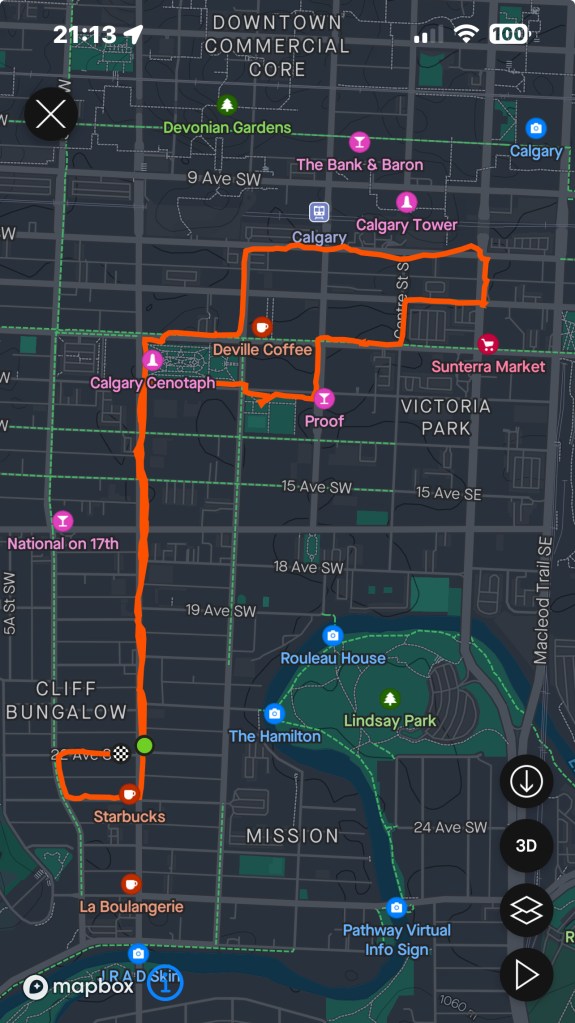
The Van Gogh Photo Run

And here’s what I found out about the artworks and the artists.

Van Gogh Observes, by Joe Fafard

I parked on 4th Street SW in Mission, near Masters Gallery, for the start of my easy run. I always like checking out what’s on display in their windows. Whatever else I happen to see, I can stop to admire the large piece installed just outside the gallery.

That piece, Van Gogh Observes (VGO), is a major sculpture by the late Joe Fafard. I wrote about Fafard last fall, when I photographed Do Re Mi Fa Sol La Si Do, his sculpture comprising eight stampeding horses. That piece is installed in Harley Hotchkiss Park in downtown Calgary.

Fafard’s piece is big and colourful. It’s fantastic. Van Gogh silently watches everything going on outside the gallery… hence the title. And from his vantage point, he’s seen a lot since the piece was unveiled in 2019. Van Gogh Observes was one of Fafard’s last major works… he died in March of the same year.

Although it wasn’t taken during my recent run, here’s one of my favourite pictures at that location. This couple seems to be deep in conversation with Vincent.
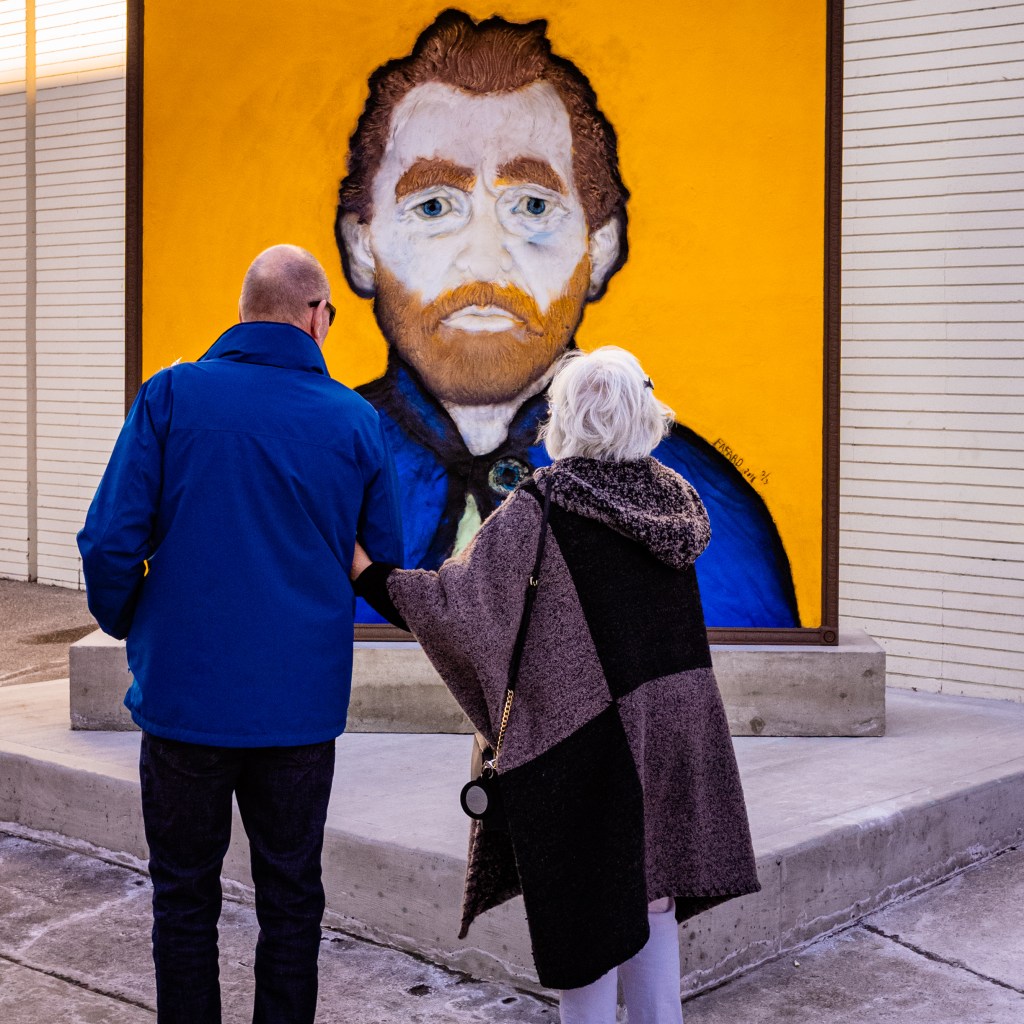
“Hello Vincent!”

Fafard was famous for his sculptural works, which often have a highly animated look. He sculpted livestock, people and other subjects, in bronze or laser-cut steel. His work is always visually appealing. This is certainly true of VGO. I think Fafard’s use of bold yellow and blue was a nod to Van Gogh’s frequent use of the same colours. It’s a piece that brightens up bleak winter days in Calgary.

Even from the back, it’s an amazing piece to look at.
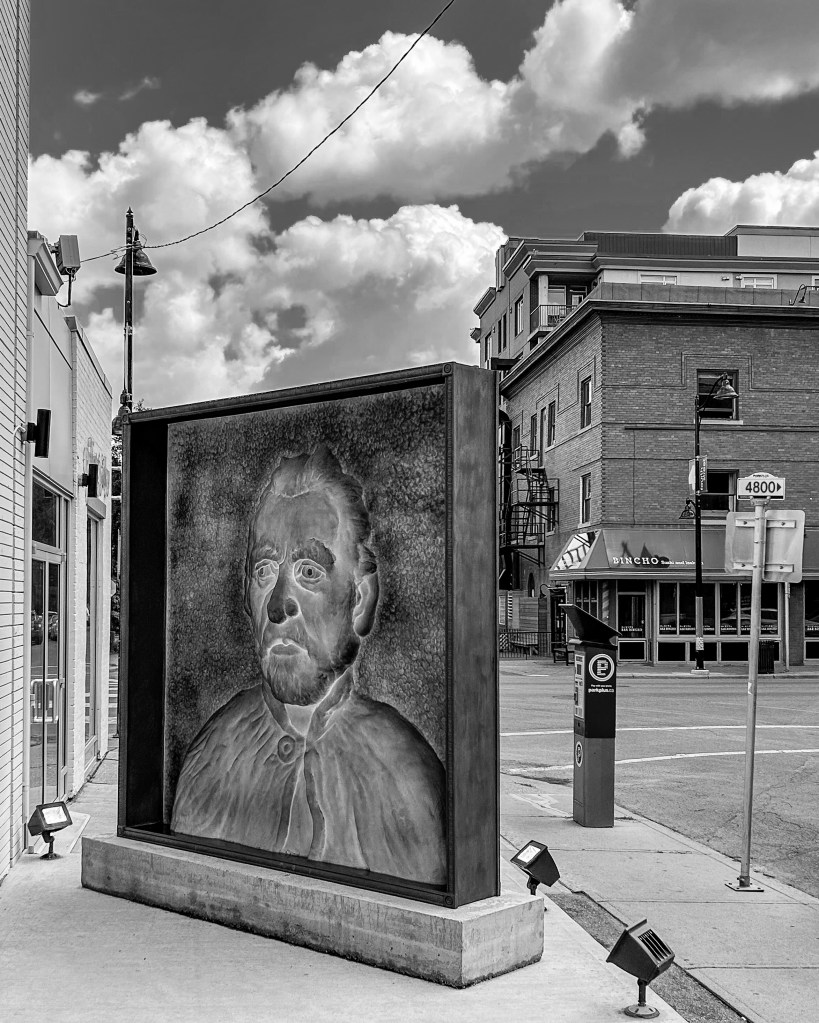
Van Gogh Observes (Joe Fafard), from the rear

Van Gogh Monumental, by Bruno Catalano

I made my way to the UPTEN building at 10 Avenue and 1 Street SE to see Bruno Catalano’s 2020 painted bronze statue, Van Gogh Monumental. The four-metre-tall statue on the southeast corner of the intersection presents the artist walking purposefully while holding a well-used suitcase and carrying a painting on his back. He walks in the direction of the downtown core.
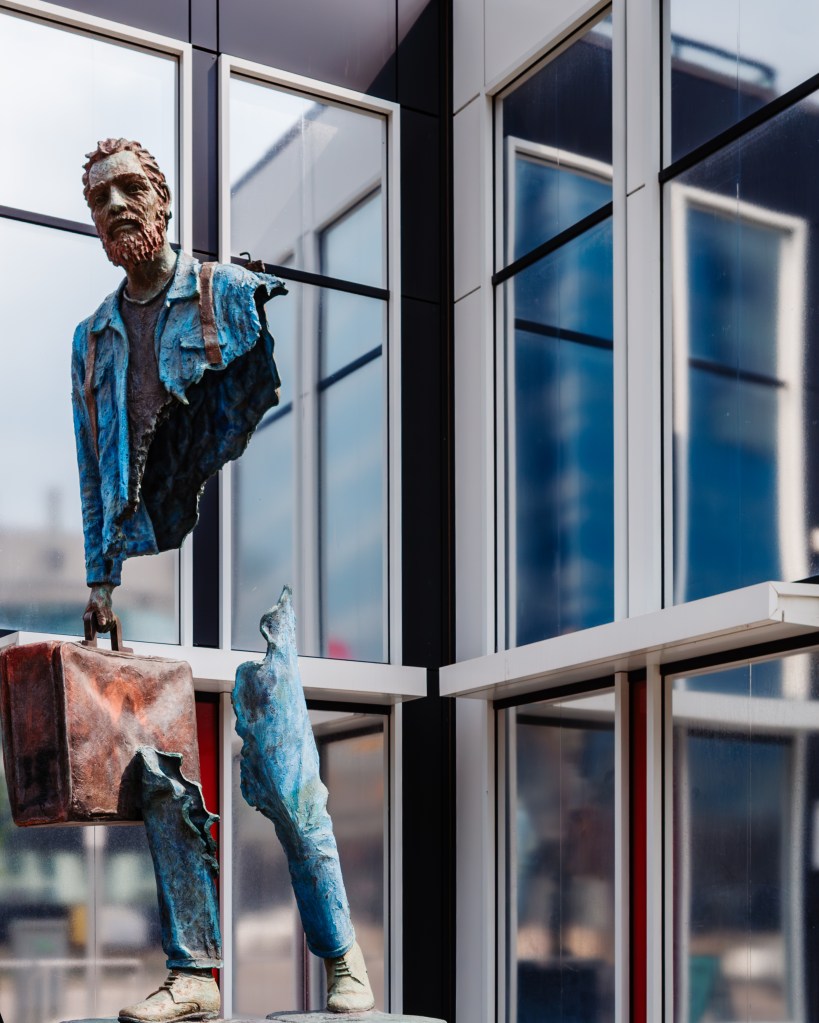
Van Gogh Monumental (Bruno Catalano)

The statue is part of Catalano’s Les Voyageurs series, all of which depict characters in motion. Many of Catalano’s sculptures, including this one, have a large diagonal gap, really a gash, at mid-torso. The sculptures seem to defy physics… they shouldn’t be standing, but they do. Catalano’s bio tells us he discovered this technique when he had a casting accident with an earlier piece. He liked the result, and he incorporated it into many of his subsequent works. It’s become his trademark.

Catalano’s sculpture invites speculation about its meaning. What is Van Gogh searching for? Where is he headed? Maybe there are clues in Catalano’s own story. He was born in Morocco. His French-Italian family moved to Marseille when he was ten. Catalano has Jewish ancestors, who were expelled from Spain in the 15th century, and eventually settled in North Africa. The theme of travelling, of searching nomadically, seems to fit naturally into his art. 

I find it interesting that Catalano chose Van Gogh for this sculpture, because most of his subjects are anonymous people. Here, he has chosen one of the world’s most famous and troubled artists. We shouldn’t be surprised to see Van Gogh searching for something while carrying his worldly possessions and his art. The gap in the statue is visually startling, but it also reinforces the idea that the subject has lost something quite fundamental.

Conclusion

As I jogged back to my car, I pondered the two art pieces I had just seen. I like both the Fafard and the Catalano pieces, even though they give us very different takes on an artist we all have some familiarity with.

The Fafard piece is approachable. Its animated look and bright colours give us an optimistic Van Gogh. Like the couple pictured above, we feel we could have a conversation with the man in the statue. That might explain why the statue is a huge attraction. I often see pedestrians stopping to admire it (or have a chat.)

On the other hand, the Catalano piece is more aligned with how we usually think of Van Gogh. It is a darker piece. The burdens Van Gogh is carrying and the cut across his body seem to portend his death by suicide. These are effective techniques to tell us something about the subject, but also about the artist. If Catalano relates to Van Gogh’s trials, he has done a great job of telling us.

I am most moved by the Catalano piece. What about you? Whichever piece you prefer, we are fortunate to have these important artworks in the city. It’s even better that they are just an easy jog apart.
Colour or Monochrome?

While flipping through some recent pictures, I realized I was “seeing” them in either black & white or colour. This was before I had started doing any editing. My mind seemed to be jumping to conclusions about the end result. 

Maybe this was inevitable, as I must have “seen” some version of the final image before I pushed the shutter button. Was my initial visualization strong enough to override any subsequent artistic choices?

I try not to limit myself to one expression or another, and I take plenty of photos in each style. My preference is for black & white images. Many of the photographers who have made an impression on me worked mainly in monochrome. Adams. Cartier-Bresson. Schaller.

That would be a good idea for a future piece… the photographers or the images that have been most impactful for me. But for this piece, I wanted to explore the idea of initial visualization and see if that process might be acting as a barrier to my artistic ideas.  I picked several recent images, more or less at random, for the following, non-scientific analysis.

Sedona Landscape

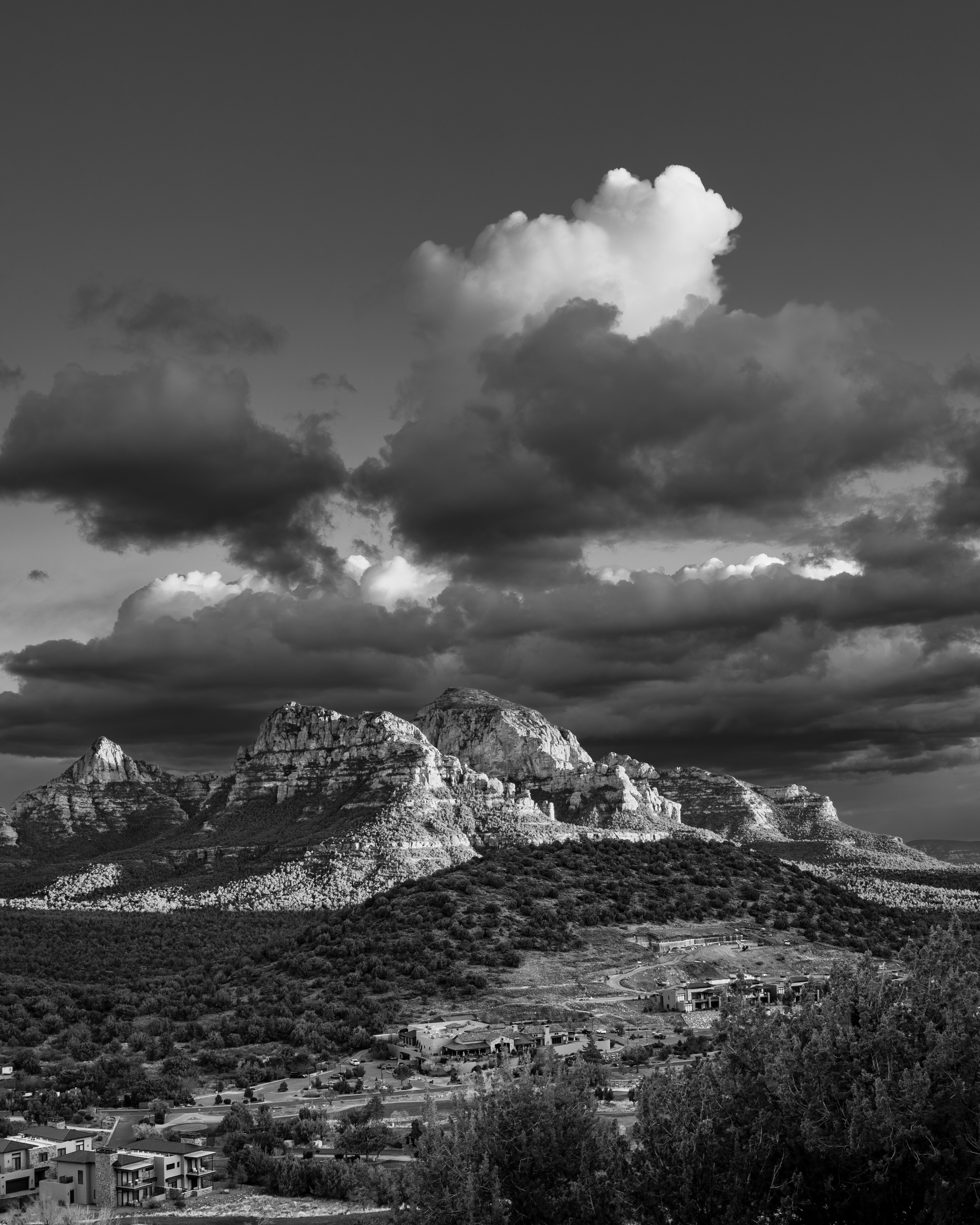
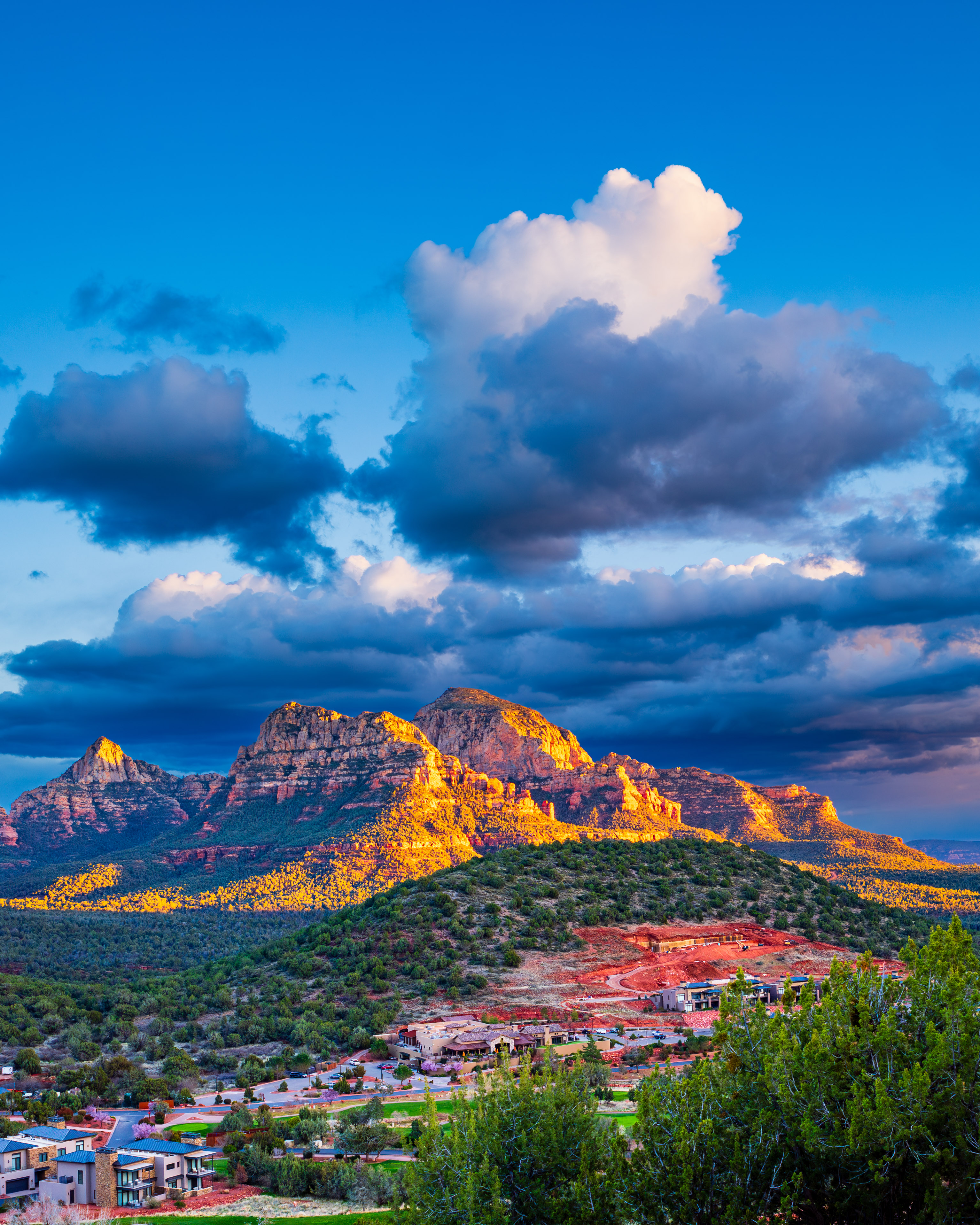
The first image was a landscape, highlighted by the setting sun and building clouds over the peaks in Sedona, Arizona. There’s no doubt I imagined this image in bold monochrome. I shot it using my favourite JPG setting in the Ricoh GR III: hard monochrome. The in-camera JPG looked promising, on the tiny 3″ viewfinder screen. I couldn’t wait to see the image in Lightroom.

I hadn’t even considered the option of a colour version of this image, but maybe I had been too hasty. I reimported the image and forced myself to ignore the monochrome button. This is a comparison of the two versions:

Evening clouds, Sedona (March 2024)

To my surprise, I found the colours in the foreground… the famous red rocks of Sedona… to be a distraction. This wasn’t the result I expected. The dramatic clouds, which I was able to set against the sky with a red filter effect, were hardly noticeable. Instead, they were competing for attention. I had to go with my first instinct. This photograph is better in monochrome. 

Cold, Icy Calgary

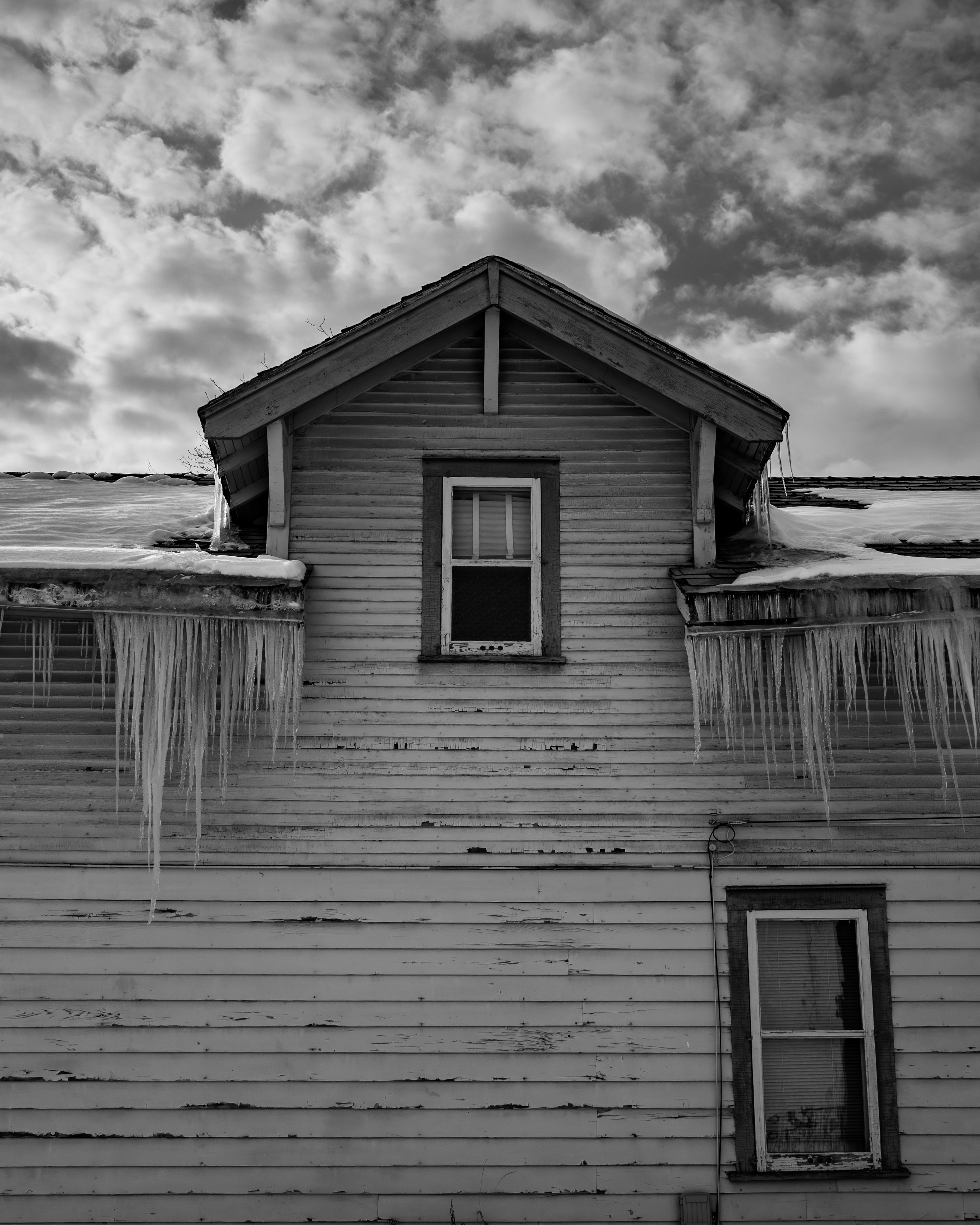
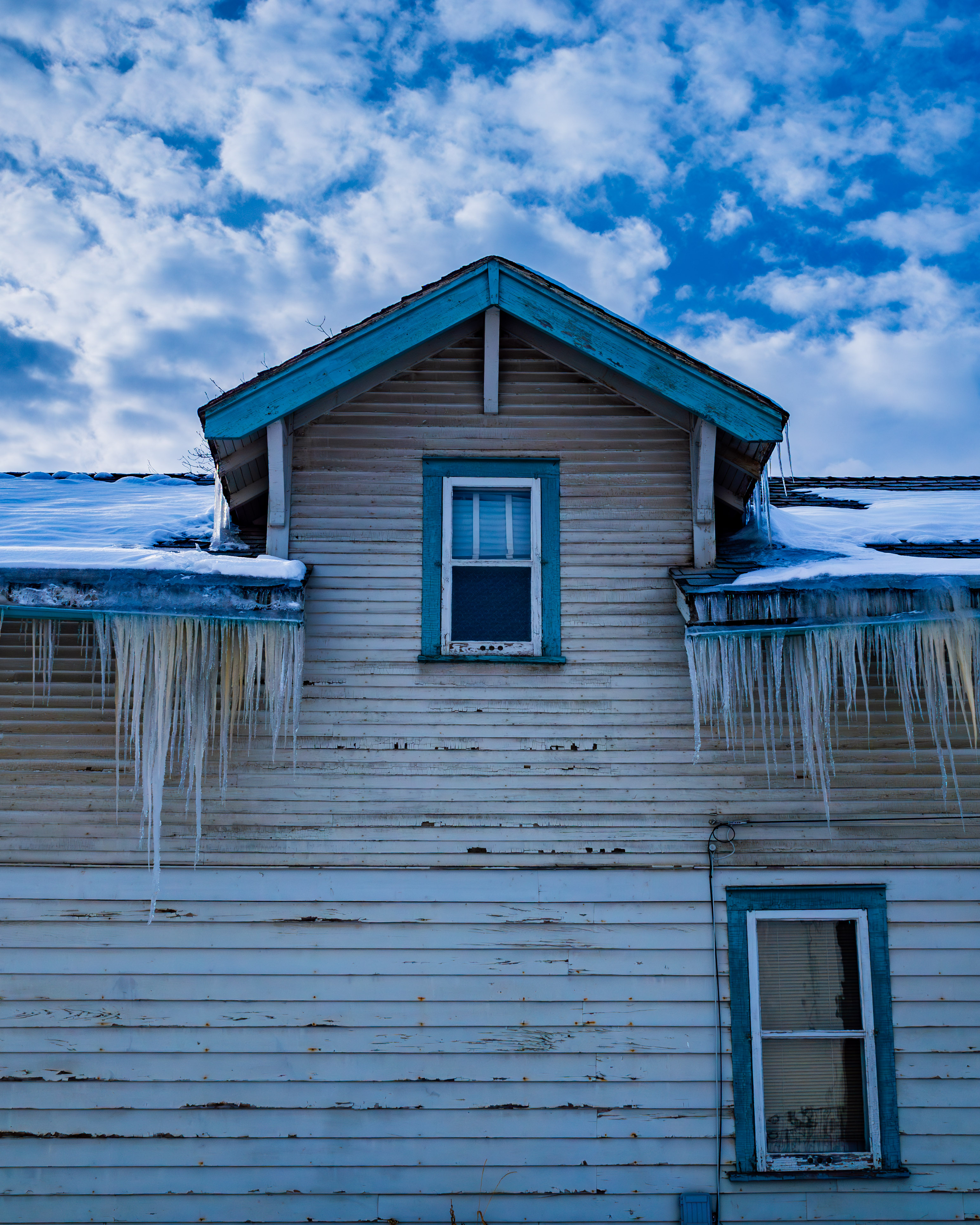
My second image was totally different from the picturesque scene in Sedona. We had returned to a late blast of winter in Calgary. It must have been some blast, based on the icicles that were hanging from every rooftop. A photo opportunity!

As with the landscape, I saw this roof and its crop of icicles in black & white. Texture and lines, contrasty clouds (where’s that red filter?) The thick icicles were a cool feature… no pun intended.  

My monochrome image needed only a few edits: an increase in contrast and darkening of the sky. I also bumped up the exposure a little, to ensure the picture wasn’t a complete wash of drab grey. And I added a bit of texture to the peeling paint. This was just about exactly what I visualized when I took the shot.

A good crop of icicles (March 2024)

But had I been too hasty? I had to find out. So I re-imported the RAW image and edited the colour version. I hadn’t even noticed the blue paint on the trim. And I missed the discolouration in the icicles from whatever had been oozing out of the eavestroughs. Time for some repairs.

What do you think?

Personally, I don’t like it at all. My mind’s eye was right to see this image in tones of grey. The colours are irrelevant to the story that this picture is telling. I wanted to put the viewer into a scene that was edgy, cold and stark. Instead, the pale blue trim on the house tempers the scene, while the brownish stuff coming out of the eaves is a distraction.

Springtime in Hamilton

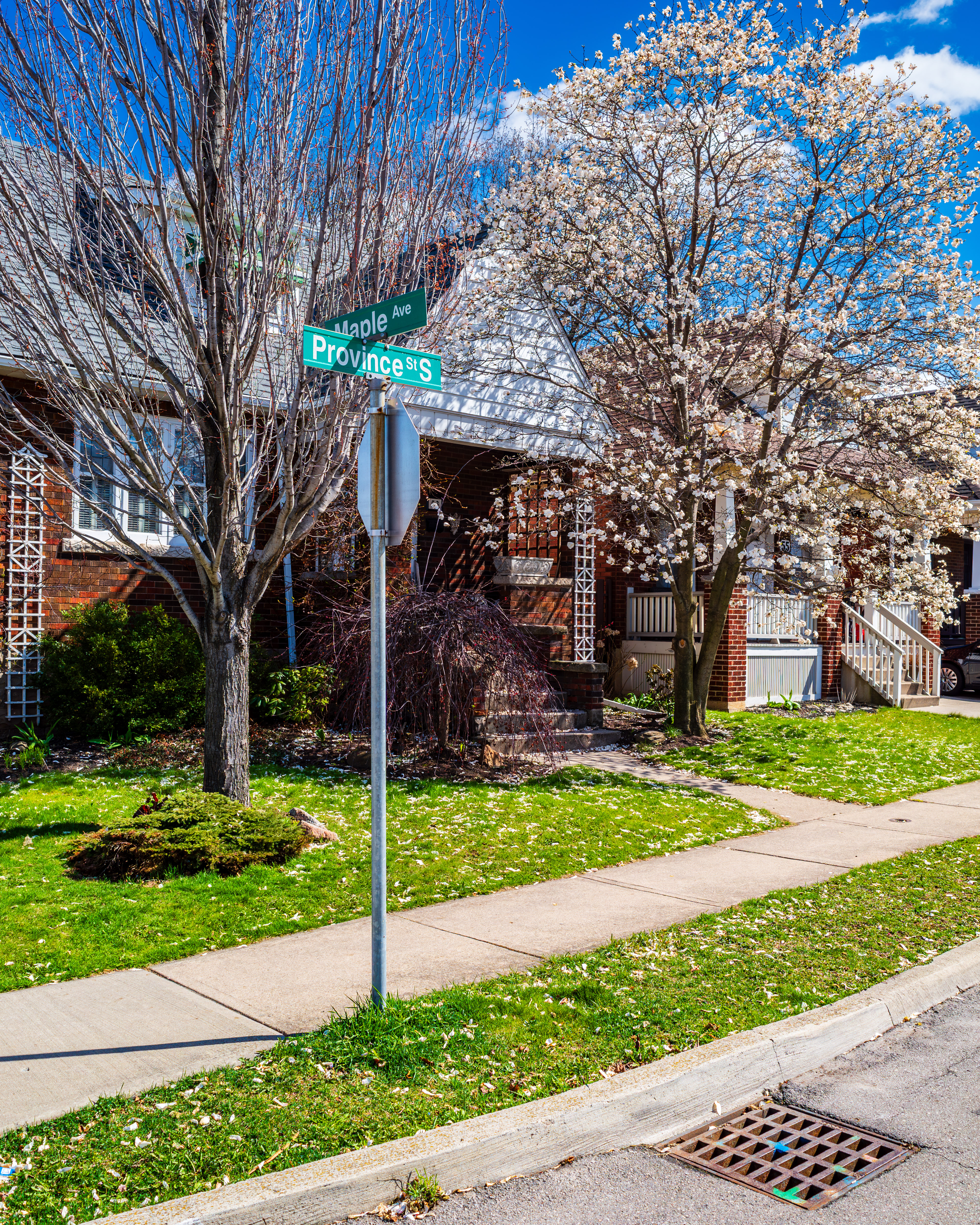
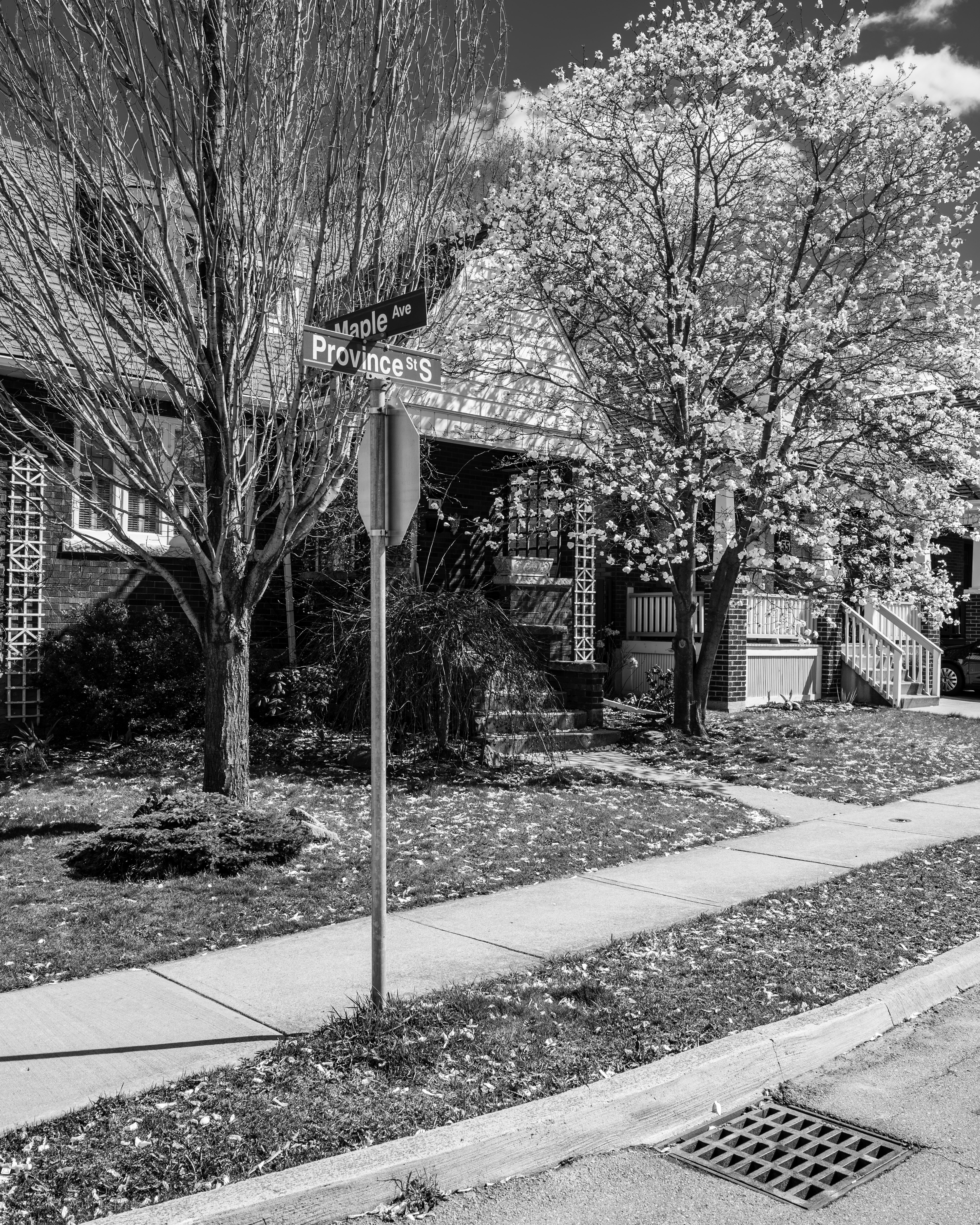
My final image is from a recent visit to Hamilton. Walking around my old neighbourhood in April was a riot for the senses. Spring was in full bloom. I snapped a picture at the corner of (obviously) Maple Avenue and Province Street. I initially saw this as a colour picture, with a sunlit magnolia tree as the highlight.

Maple and Province, Springtime (April 2024)

Even though I like the colour image, I decided to try a monochrome version. This one is more of a toss-up. I like both versions. Why? The colour version puts the viewer right in the scene. Spring has clearly sprung. On the other hand, the monochrome version shows us every detail but leaves us to imagine what colour everything is in the scene.

Of course, these are just my thoughts. Let me ask you: monochrome or colour? Leave me a reply in the comments.

Until next time, thanks for reading

Homage to GAP 1.0

Today’s run was just what I needed.

I had a late evening return flight from Ontario yesterday, so I was feeling a bit out of sorts as I parked next to the Glenmore Athletic Park (GAP) track. A high school track meet was in full swing. I watched from trackside for a few minutes, absorbing waves of energy and hearing the screams of hundreds of students as they cheered on their teammates. It motivated me to get going on my short and overdue run. 

I’d been thinking for some time about a homage post to the GAP track. I should say the original GAP track (GAP 1.0), because a spiffy new facility is being constructed by CANA, just a short distance away. I have a lot of criticism for decisions coming out of Calgary city hall but this isn’t one of them. I can’t wait for the new facility to be finished. 

The grandstands have been taken down and moved to the new track. The brilliant blue of the new surface looks magnificent and oh so ready for spiked shoes. Crews are working on the finishing touches, like landscaping. It will soon be the dawn of an exciting new era in track and field in Calgary. 

It seems timely to say a few words about GAP 1.0. I’ll be honest. The place is definitely looking worse for wear. Chunks of Lane 1 are crumbling into the infield. Patches and cracks are plentiful, thanks to our winter freeze-thaw cycles. The spotting booth on the back straight has been taken over by pigeons.

Pigeon holes on the back straight

I did a little research and found out that GAP 1.0 was built in 1962-63. It’s just a couple of years younger than me. No wonder it has cracks and wrinkles! 

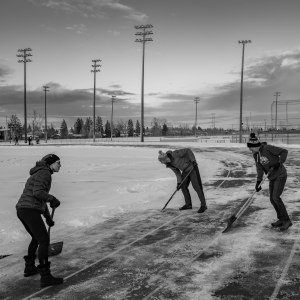
Despite these blemishes, the track has also been the site of countless track meets, interval workouts and road race finishes. I’ve personally done thousands of laps of the track, in all sorts of weather. And that’s a good segue to the fact that the Calgary running community has been second to none when it comes to keeping a lane or two of GAP 1.0 open through the winter months. All it takes is willpower and a lot of shovels, as demonstrated in this shot from October 2023.

Deb, Reinier and Jeremy dig in

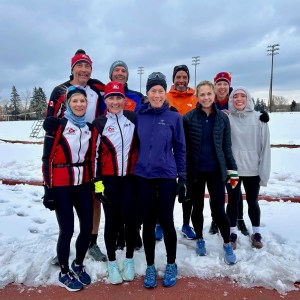
Here’s a shot of an interval session from late March. It was one of those Calgary spring evenings when we started with water in the far corner and ended with sheet ice. No one complained when we decided to cut things short.

Late March interval training, GAP 1.0

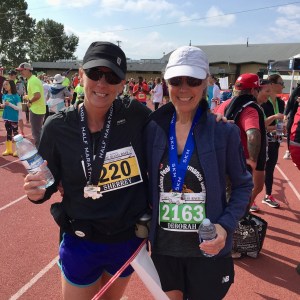
Or how about a photo from the 2019 Stampede Road Race? The park was a beehive of activity that morning, with lots of racing action and a pancake breakfast as our reward.

Sherrey and Deb, post-race

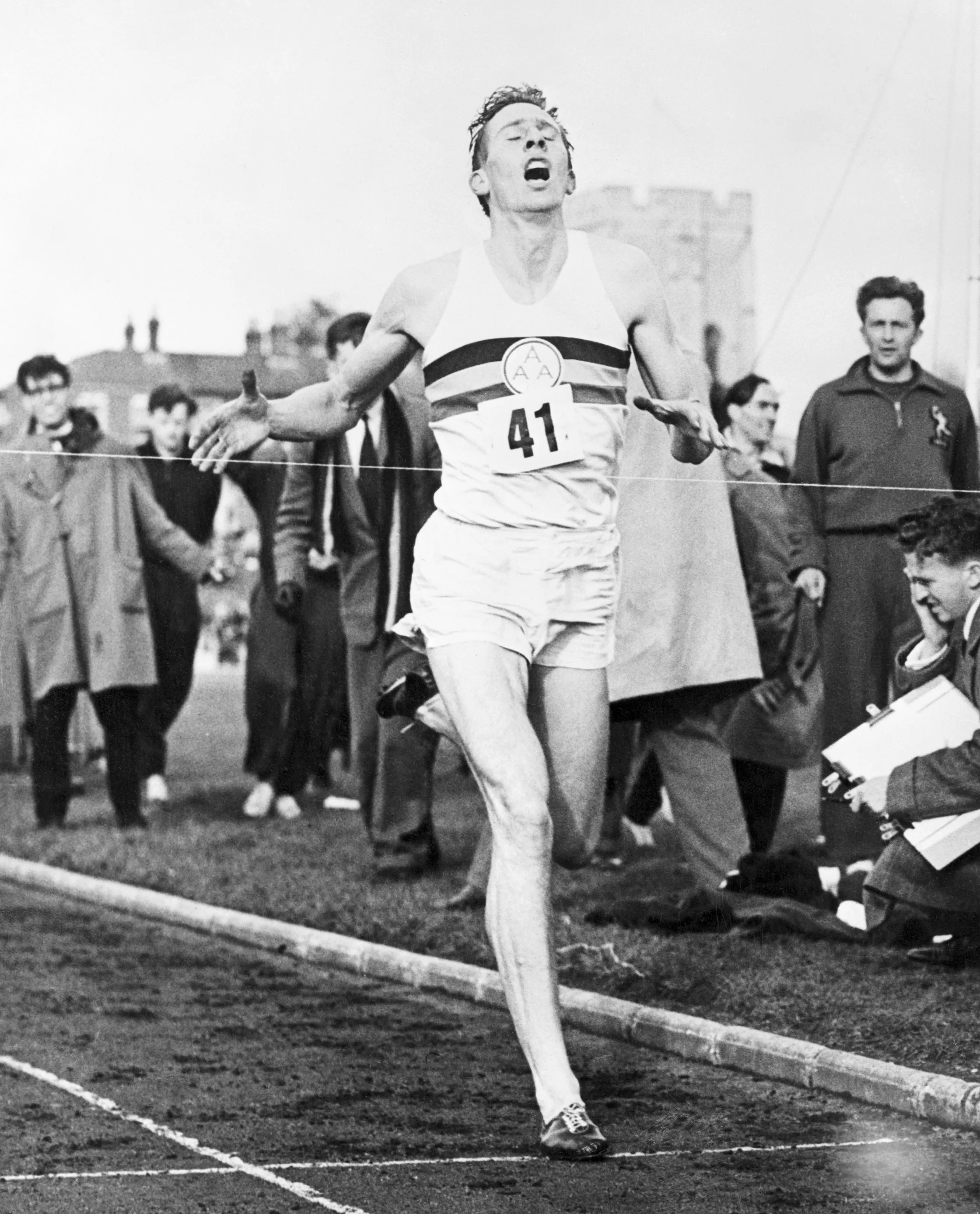
A recent track racing milestone got me thinking nostalgically about GAP 1.0. It was on May 6, 2024, the seventieth anniversary of Roger Bannister’s four-minute mile breakthrough on the Iffley Road track in Oxford, England.

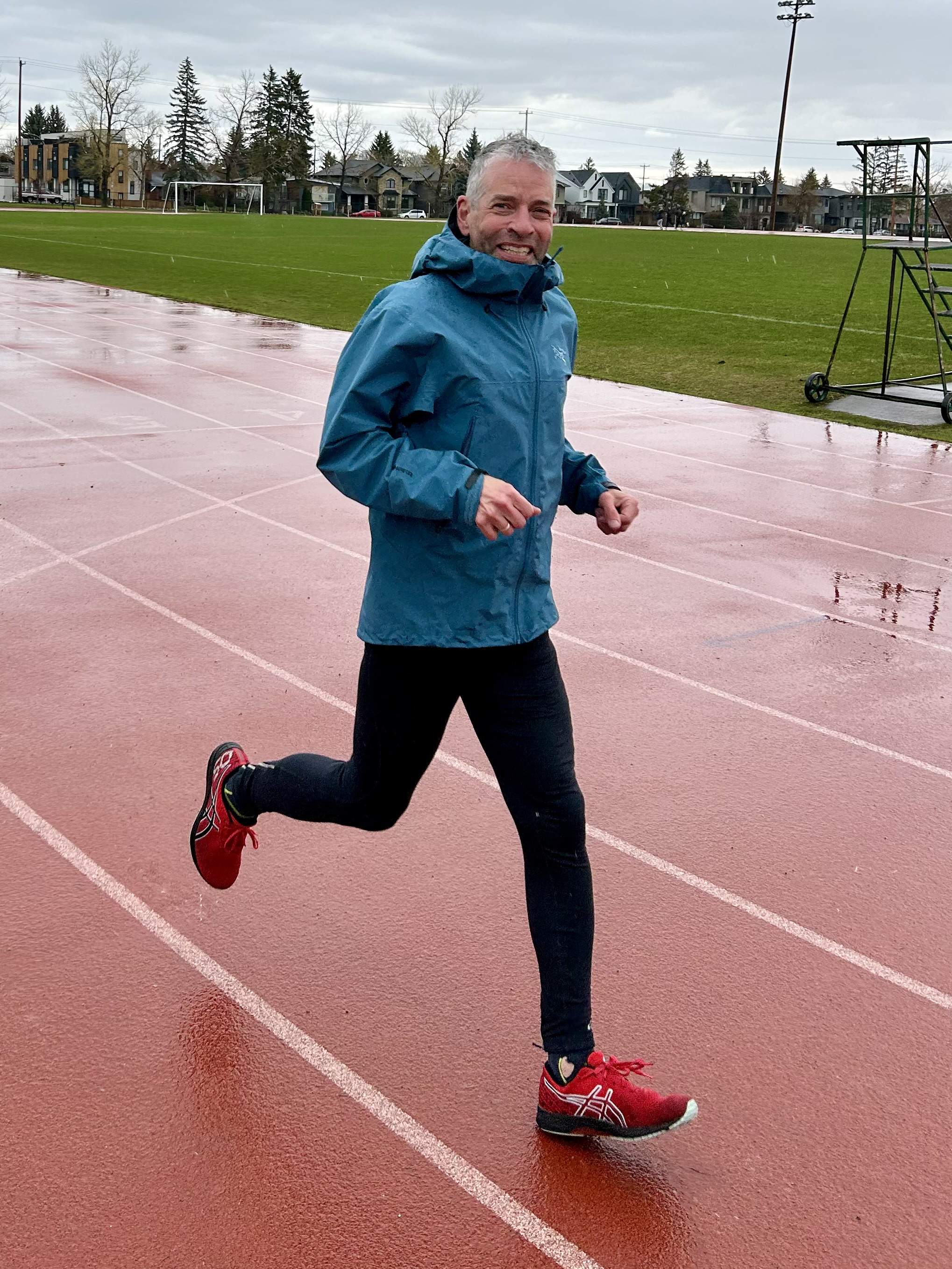
It seemed fitting to make a brief pilgrimage, in pouring rain, to run four ceremonial laps in honour of this great achievement. After all, the GAP track is only 10 years younger than Bannister’s record. I pointed out the significance of the day to a young athlete who had just finished his track workout. He gave me a polite but puzzled smile. I secretly wished for him to do the same on the hundredth anniversary in 2054, running his commemorative laps on the new track. 

In closing, I have many fond memories of running on the GAP 1.0 track. I don’t know what lies ahead, but if they do tear it down I’ll miss that familiar red surface, flaws and all. For years, it has been a great venue and meeting place for runners. It’s one of my favourite spots in the city.

So here’s to a good run for a fine old facility! And here’s to GAP 2.0… can’t wait to try out “big blue”.

Until next time, be well and BE FAST!

Elbow River Photo Walk

Ever had a day when you lacked the drive for running? When a little voice was telling you you’d be better off just doing a walk?

Today was one of those days for me.

It was a week I’d been dreading. I’ve been stressing for weeks about a problem tooth… a molar that had become something of a mystery. I’d been bounced back and forth between two specialists, but eventually, it became clear that the end was looming for tooth number 3-6.

I went through the week with a feeling of dread. But now it’s over and the tooth is gone. We can turn our attention to the next stage of the process, inserting an implant and crown. While I wouldn’t say I’m looking forward to that part, I am curious about how it all works and how the tooth will look in the end. Maybe I’m naive.

So, this morning, even though I was feeling much better, I decided that the tooth episode was a convenient excuse to pass on our usual Sunday long run. It was a pleasant morning, a little cool and breezy, but better than the weather being forecast for the week ahead. The prospect of some good shots along the Elbow River was enough motivation for me to grab the Leica M10 and head out for a photo run… sorry, walk.

I walked along the bluff in Ramsay. The views of downtown are spectacular from Scotsman’s Hill. The light looked promising when I left the house… cloudy but clearing. By the time I got going, the sun had just about burned off the cloud cover. Maybe I was too late. Regardless, it was a brilliant morning and I was feeling fine.

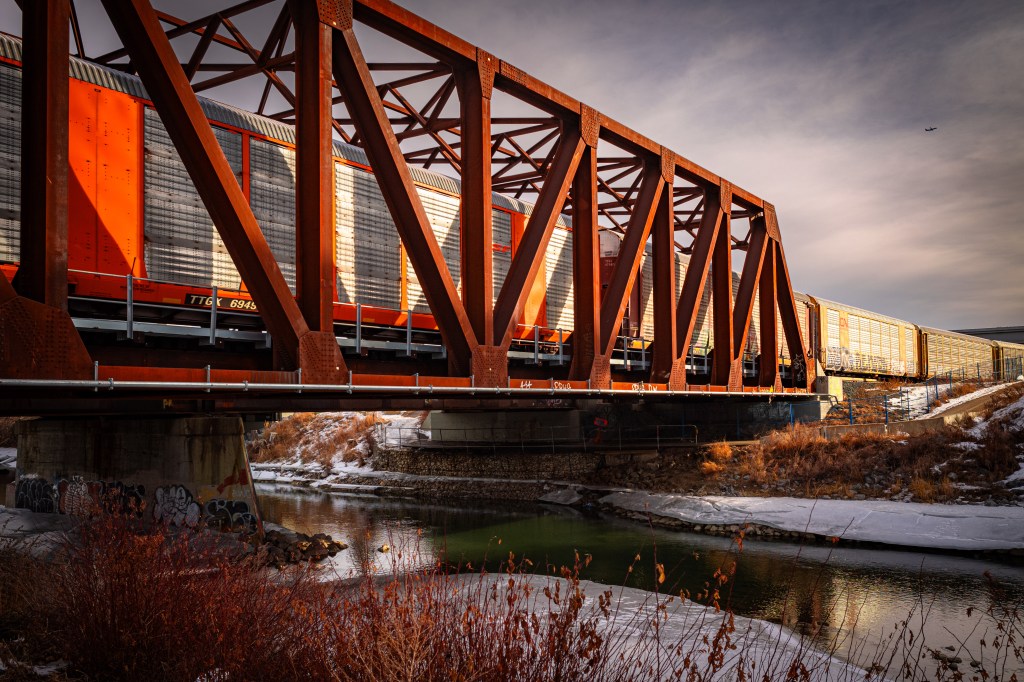
I made my way down towards Fort Calgary, knowing that the old train bridge in Inglewood is often worth a look. This morning, a train was conveniently passing through, heading east, just as I arrived. I snapped a few pictures, drawn by the curving line of identical cars in the sunlight.

Later, in Lightroom Classic, I tried one of the many presets that come with the software. Usually, I avoid these, preferring instead to make all my own editing decisions. But why not try something new? Given the oranges and browns in the scene, an “Autumn” preset seemed appropriate. What do you think?

Inglewood Rail Bridge, Lightroom preset TM07 (February 25, 2024)

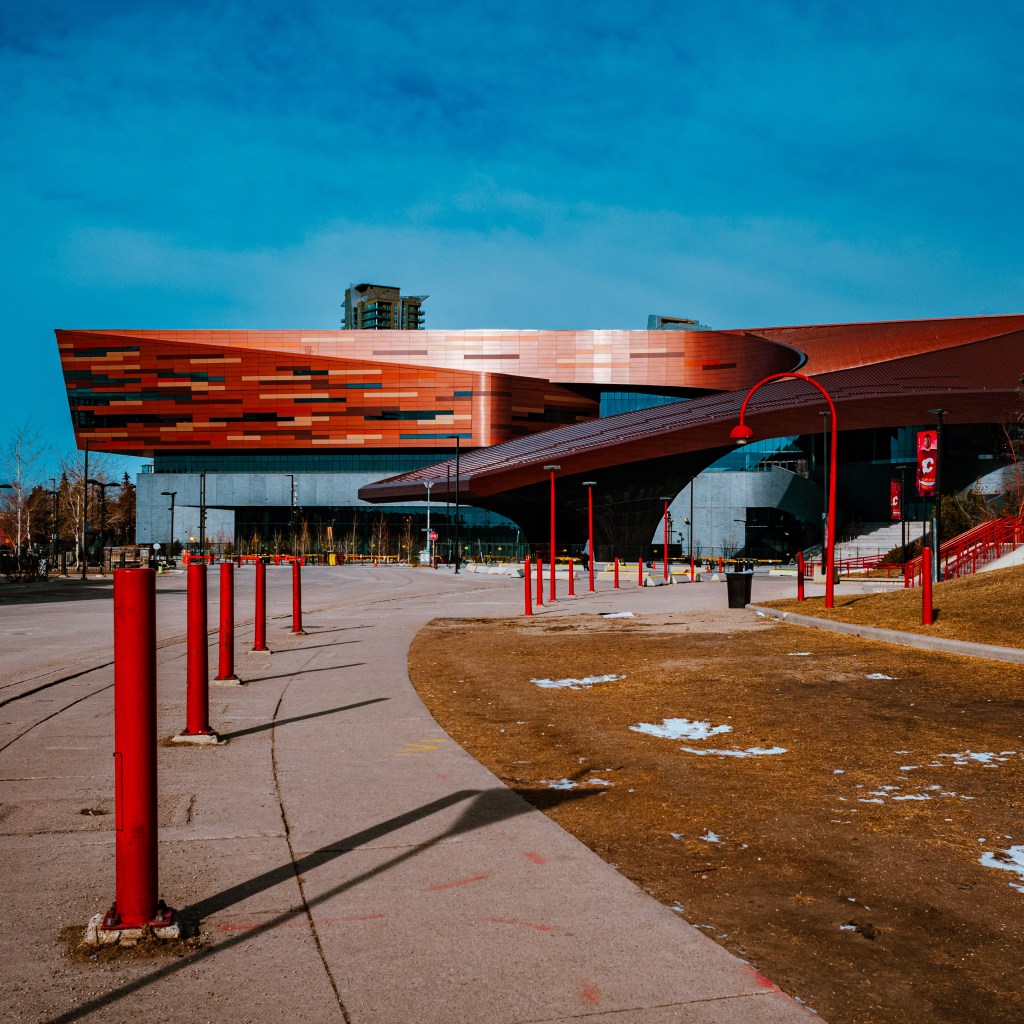
I wandered on through Stampede Park. The new BMO Centre has been under construction for a couple of years. The building is an amazing piece of architecture… especially the graceful curved lines on the eastern facade. I’ve gone by there many times, but it’s not been an easy building to photograph, what with all the construction equipment in front.

Today, I saw a nice scene as I walked along the pathway by the Saddledome. Later, in Lightroom, I stuck close to the subject matter and tried an “Architectural” preset. I have to say, I liked the result.

Stampede Events Centre, Lightroom present UA10 (February 25, 2024)

I continued along the river pathway, past the unimaginatively-named Stampede Ground Bridge at the south end of Stampede Park. It’s an attractive bridge, and I’ve shot it many times. While I was tempted to linger there this morning, the sky wasn’t doing me any favours. I moved on.

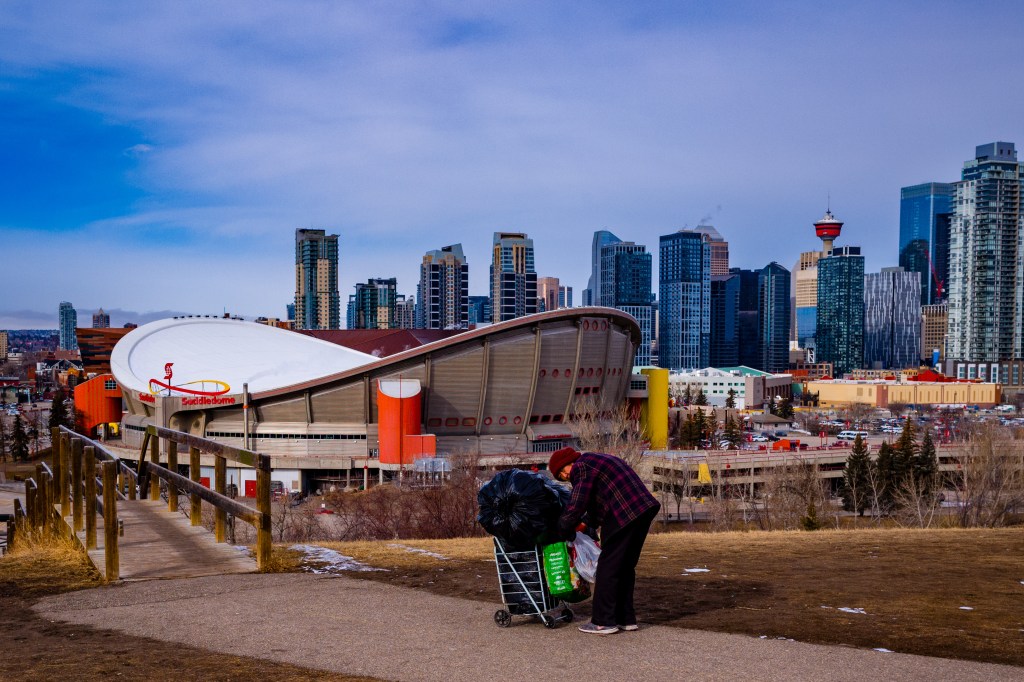
I finished my walk by climbing the stairs back up to Salisbury Avenue. As I approached the car, I realized that much of my walk had been solitary. I’d hardly seen anyone on the path. At the top of the stairs, I was rewarded with one “street shot”… a lady out on her bottle-picking rounds. Let’s say she was a little suspicious of me. But never mind, it was a nice finish for my outing. For this shot, it had to be a “Portrait” preset.

Scotsman’s Hill, Lightroom preset “Gritty Portrait” (February 25, 2024)

Overall, it was a productive morning. I didn’t miss running, not even a little. But I’ll be back at it next Sunday, I promise!

Quite a Week!

Owl’s Nest Book Launch – Calgary

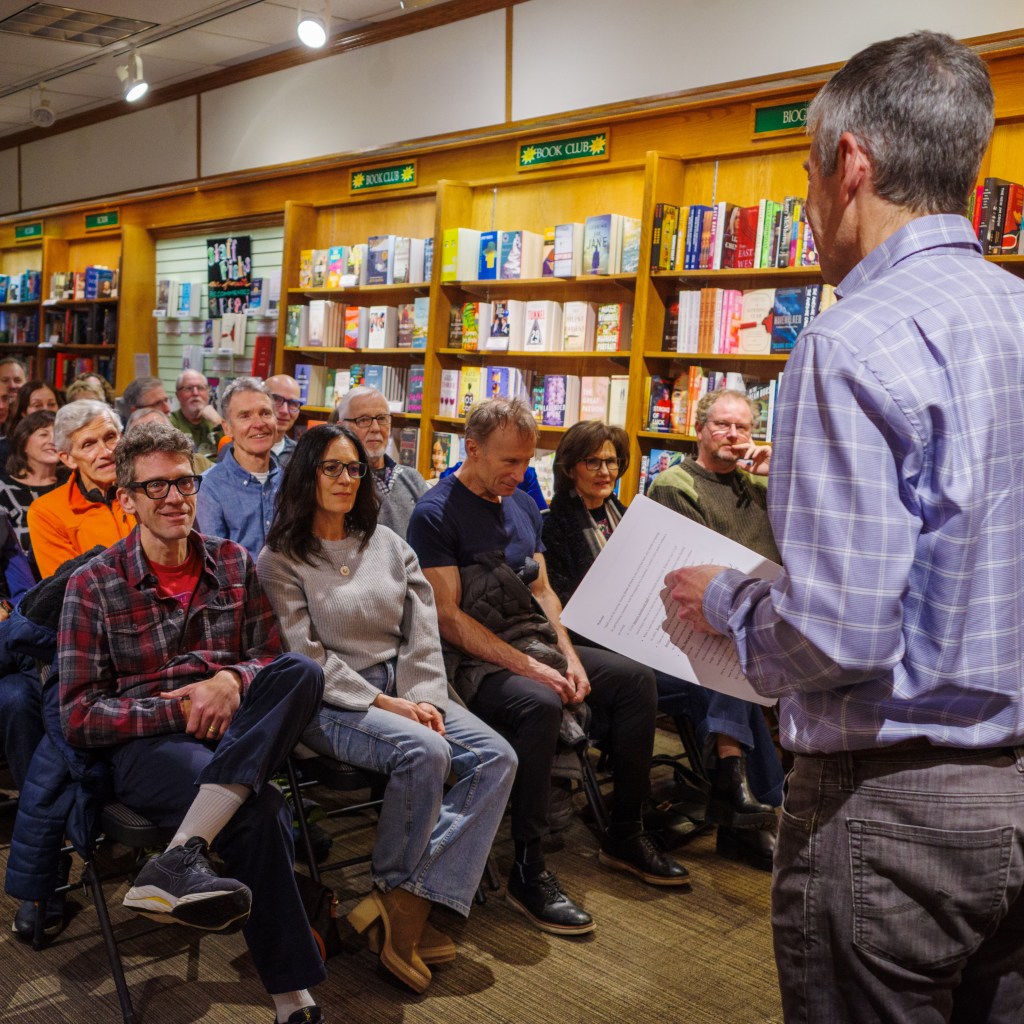
On Wednesday, February 7 we held a book launch event at our favourite local indie book store, Owl’s Nest Books. Sarah Pratt, the Events Director at the store (and an avid ultramarathoner) was our marvelous host for the evening.

We were thrilled to welcome a standing-room crowd of friends, neighbours, teammates and work colleagues. I was honoured that my neurologist (Dr. Demchuk) and my long-time teammate at Adrenaline Rush Athletics (Dr. Stephen Wood)… both heroes of my stroke story… joined us for the evening.

I did a short reading from Stroke of Luck: My Life in Amateur Athletics. During the lively Q&A portion of the program, I shared my main messages:

  • the importance of an active lifestyle
  • knowing ALL the signs of stroke
  • raising awareness (and funds) for the world-class stroke care provided by the doctors, nurses and staff in the Foothills Stroke Unit
Owl’s Nest book launch (February 7, 2024)

Sincere thanks to Sarah at Owl’s Nest Books and Jeremy Deere from Strides Running Store, for your support of the reading and running communities in Calgary.

It was a special evening!

First Half Marathon – Vancouver

We didn’t get much time to recover, as we headed off to Vancouver on Friday for a weekend visit with Matthew. The headline purpose of the trip was to participate in the annual First Half Marathon, put on by RunVan and sponsored by BlueShore Financial.

As usual, the race was outstanding. It sold out immediately, as it does every year. This is definitely one of the premier races in Canada; well-organized and perfectly executed. It doesn’t hurt that the scenery is second to none. The highlight is the lap of the Stanley Park seawall.

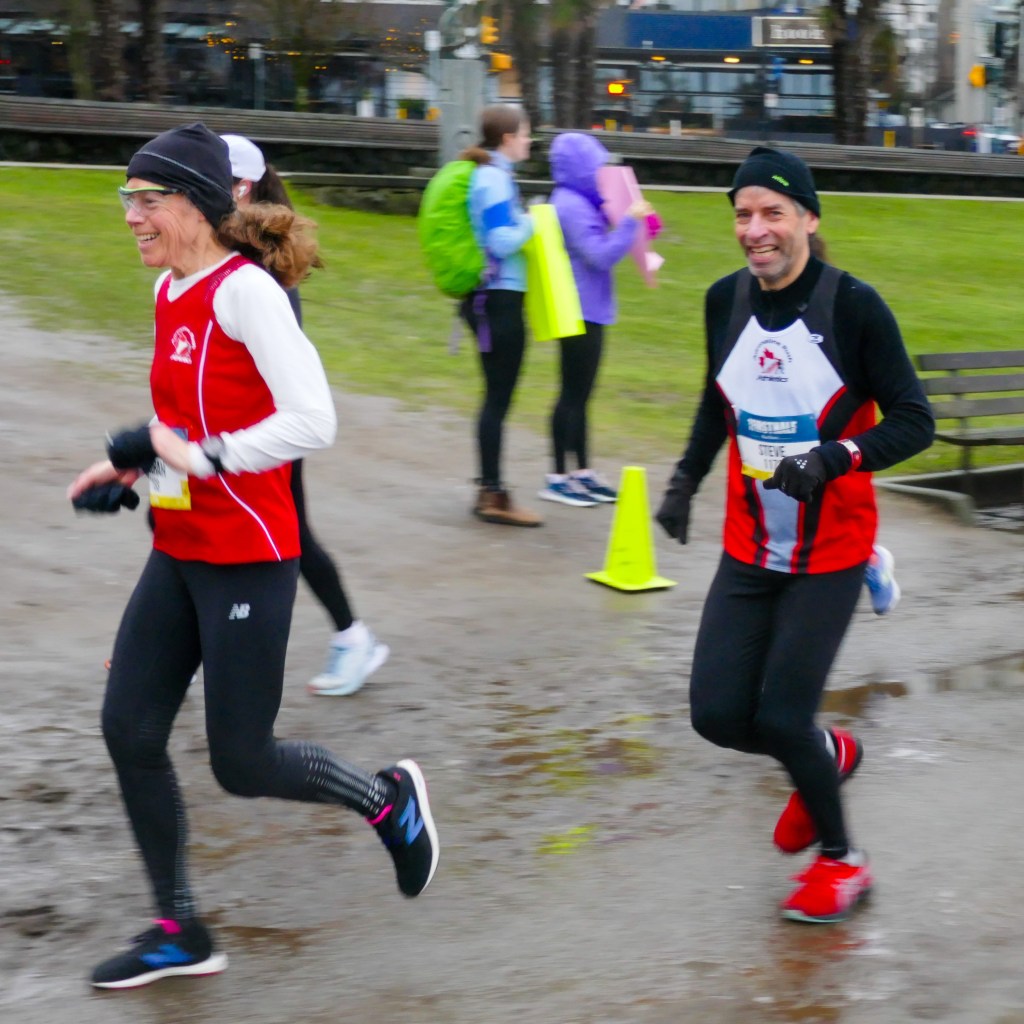
I wrote about my history with the race in a previous post. This year, our race was challenging. The weather did not cooperate, although the steady rain was little more than an inconvenience. Deb and I were both hobbled by nagging injuries, which affected our preparation. While it is often true that one can run through these things on race day, neither of us was so lucky this time.

The second half of the race was a slog. The good news is that we got through it. The finish line on Drake St. in Yaletown is always a welcome sight. And who cares if we were a few minutes slower than last year?

It was all smiles at kilometre 6 (February 11, 2024) – Photo by Matt Kelly

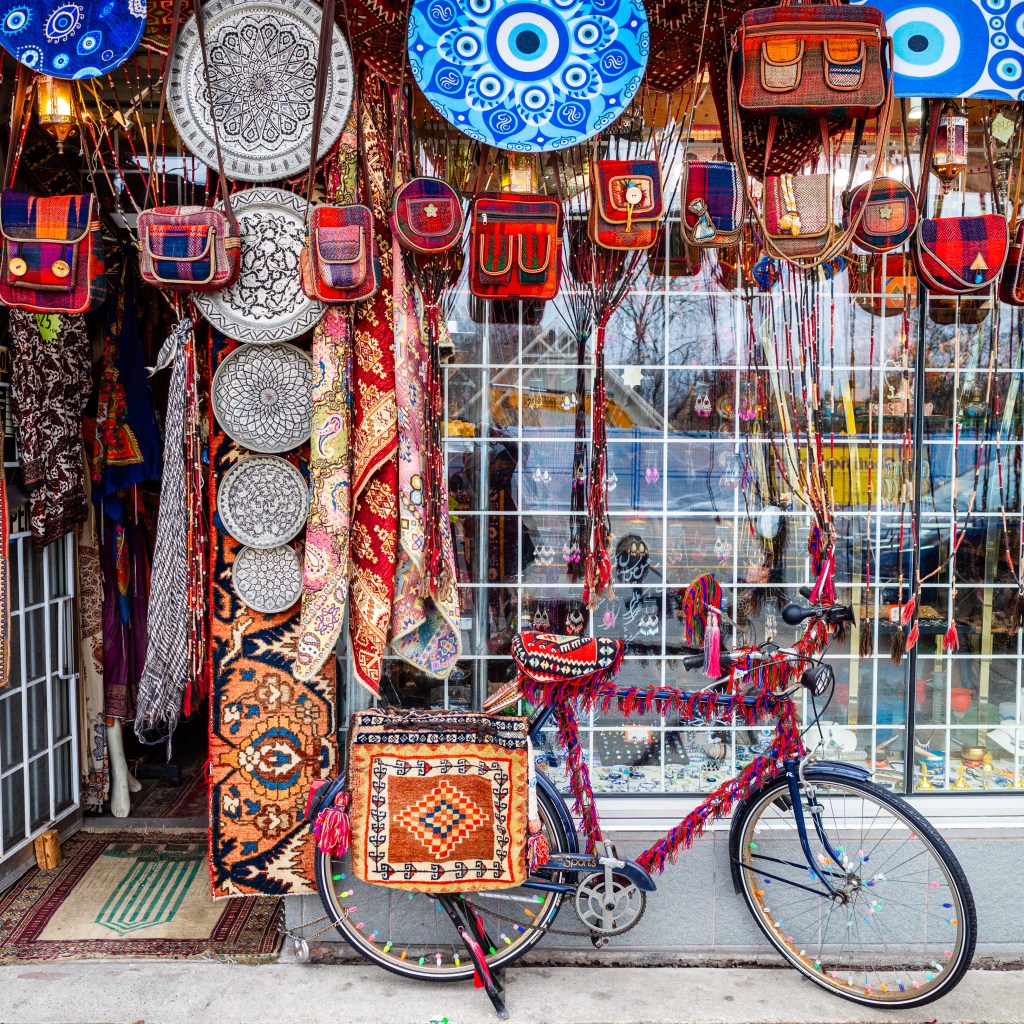
…and a bit of street photography

I always look forward to walking the streets of Vancouver, armed with my discrete camera, the Ricoh GR III. It is the perfect camera for street photography.

Here are a few samples of the photos from the weekend.

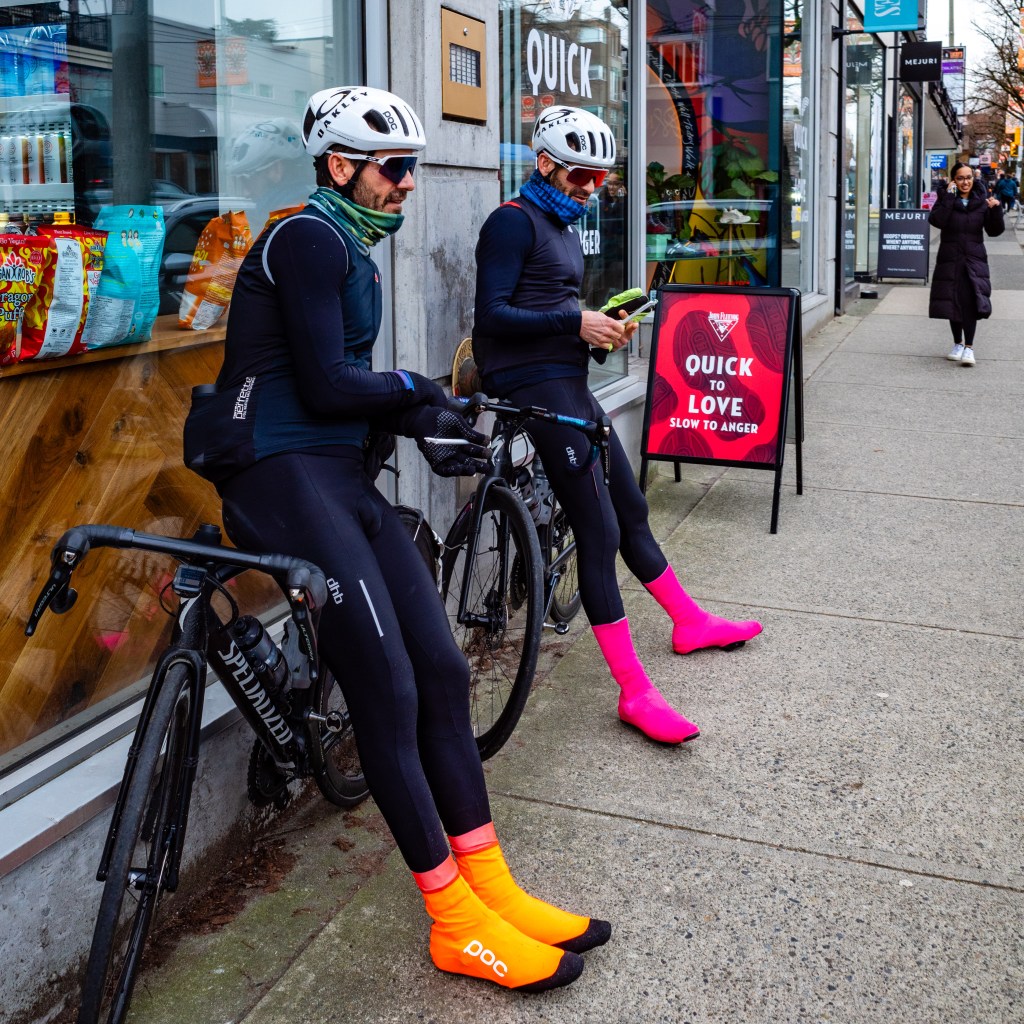
Ready to ride
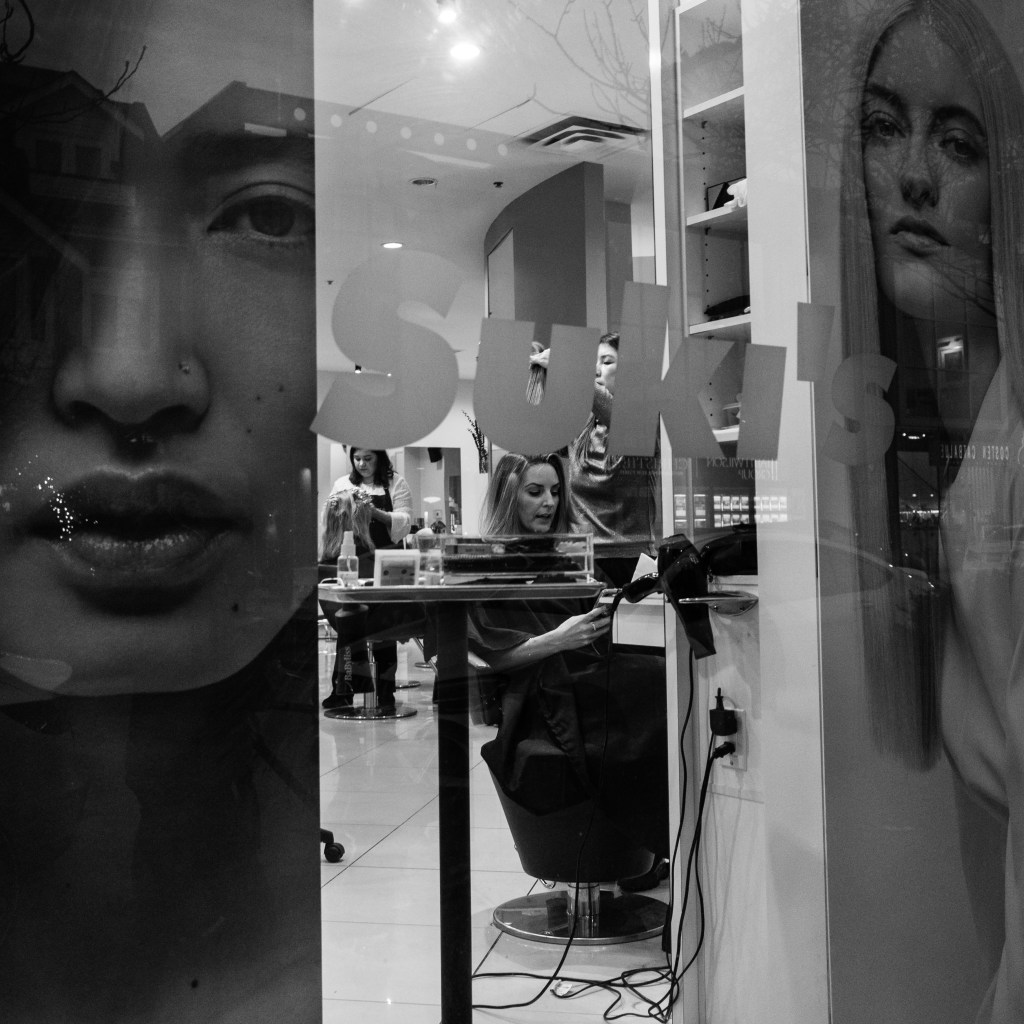
Suki’s
Too busy to ride

Photo Run – Big Game Edition

Our long runs along the Bow River often take us past the Centre Street Bridge. It’s an imposing and historic structure, and in good morning light photo ops are plentiful. As we ran under the bridge last Sunday, I made a note to take a closer look at the lions that guard the four corners of the upper deck.

Fortunately, we ended up back at the bridge towards the end of our run. I welcomed an excuse to stop at that point. Deb was keen to do another kilometre. “Good for you”, I told her, “but I’ll be here checking out the big cats.”

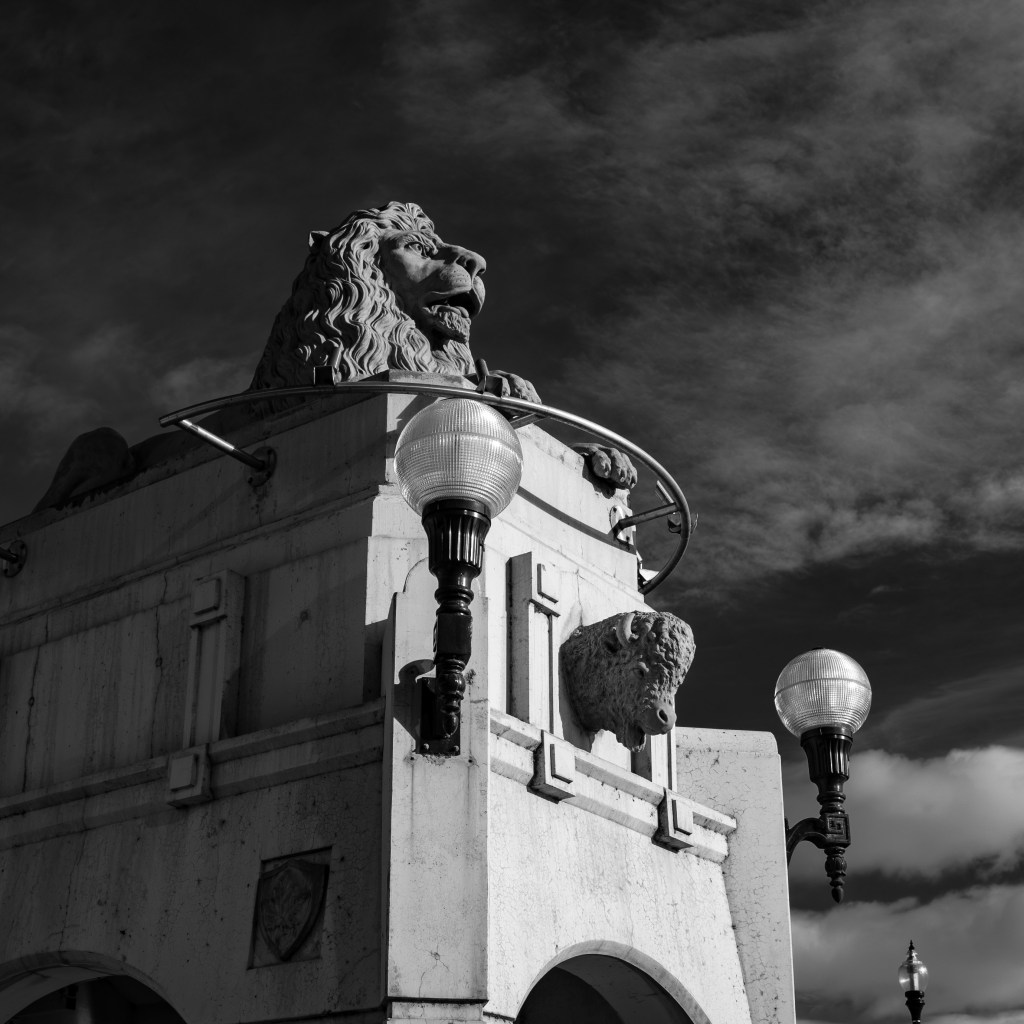
The morning light was strong and contrasty. From the pedestrian ramp, I got a couple of nice shots of the southwest lion. The statue looked great (regal, actually) with a monochrome edit in Lightroom.

Centre Street Bridge, Southwest corner (January 28, 2024)

I decided I would return in a couple of days for a photo run and a closer tour of the lions. In the meantime, I did some research into the history of the statues.

The original lions were commissioned in 1916, along with the bridge. They were modelled after bronze lions that guard Nelson’s Column in Trafalgar Square in London. The Calgary copies were cast in concrete by one James Thomson, a city employee. They each weigh 12,600 kilograms.

By the 1990s, the statues were in a state of significant deterioration, due to decades of Calgary weather cycles and vibration from bridge traffic. In 2000, city council directed the repair and conservation of the southwest lion. It also directed that the same lion be used as a template for the construction of four new statues. The restored lion now sits on display at Calgary’s municipal government building. The original northeast cat was repaired and conserved. It was relocated to its current location in Rotary Park in 2018.

With that background, here’s more on my photo run.

I went late in the afternoon, hoping for an interesting chinook sunset. We’ve had a lot of those lately. Would I get lucky? Yes and no.

I started my run in Rotary Park, so I could see the repaired northeast lion up close. It’s the only statue to have been returned to the bridge, and it commands a perfect spot at the south end of the park, overlooking downtown.

I navigated the ice and mud around the statue. I snapped a few shots, but none of the compositions I tried were very satisfying. I might have had better results with a wider focal length lens instead of the 28mm Ricoh GR III. No problem… this was supposed to be a run, so I moved on.

I jogged along the crest of the bluff for a few minutes and enjoyed the vista, then headed down towards the bridge. When I looked back up the hill, the lion was bathed in the low, setting sun. I knew I had only a few minutes before the light changed, so I scrambled back up the muddy pathway to a spot just below the lion. I snapped one shot. The light was amazing, and I think the result was good. It was by far my best shot of the day.

Rotary Park lion, enjoying the chinook sunset (January 30, 2024)

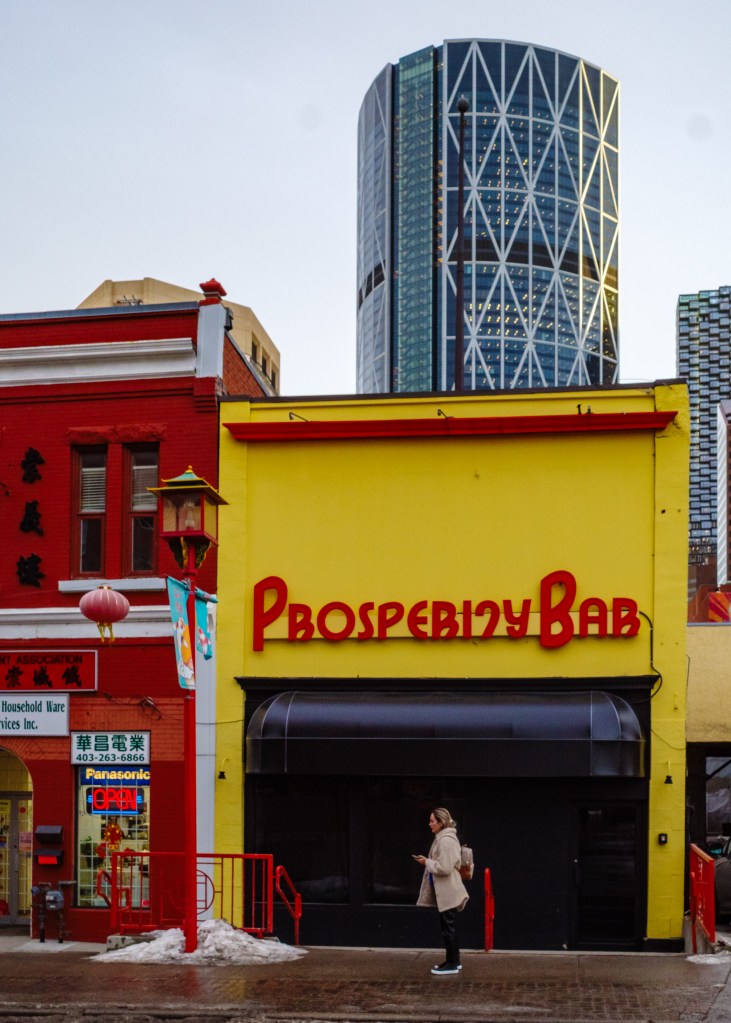
I continued down to the bridge and did a short loop around Chinatown. I was rewarded with a few worthy shots before I made my way back up the bridge on the west side. It had been a while since I ran up this hill… yes, it’s still tough!

Prosperity Bar (January 30, 2024)

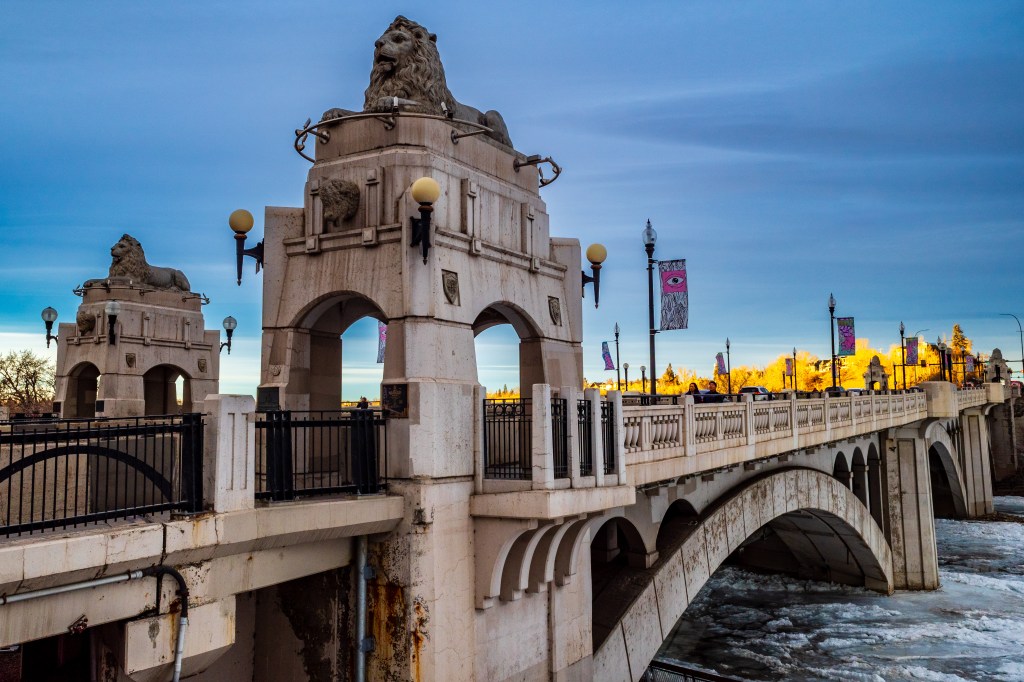
As for any more shots of the lions on the bridge, the fading light was quite flat and uninteresting by that time. There was a bit of chinook magic going on though… so I worked with what I had!

Centre Street Bridge, looking northwest (January 30, 2024)

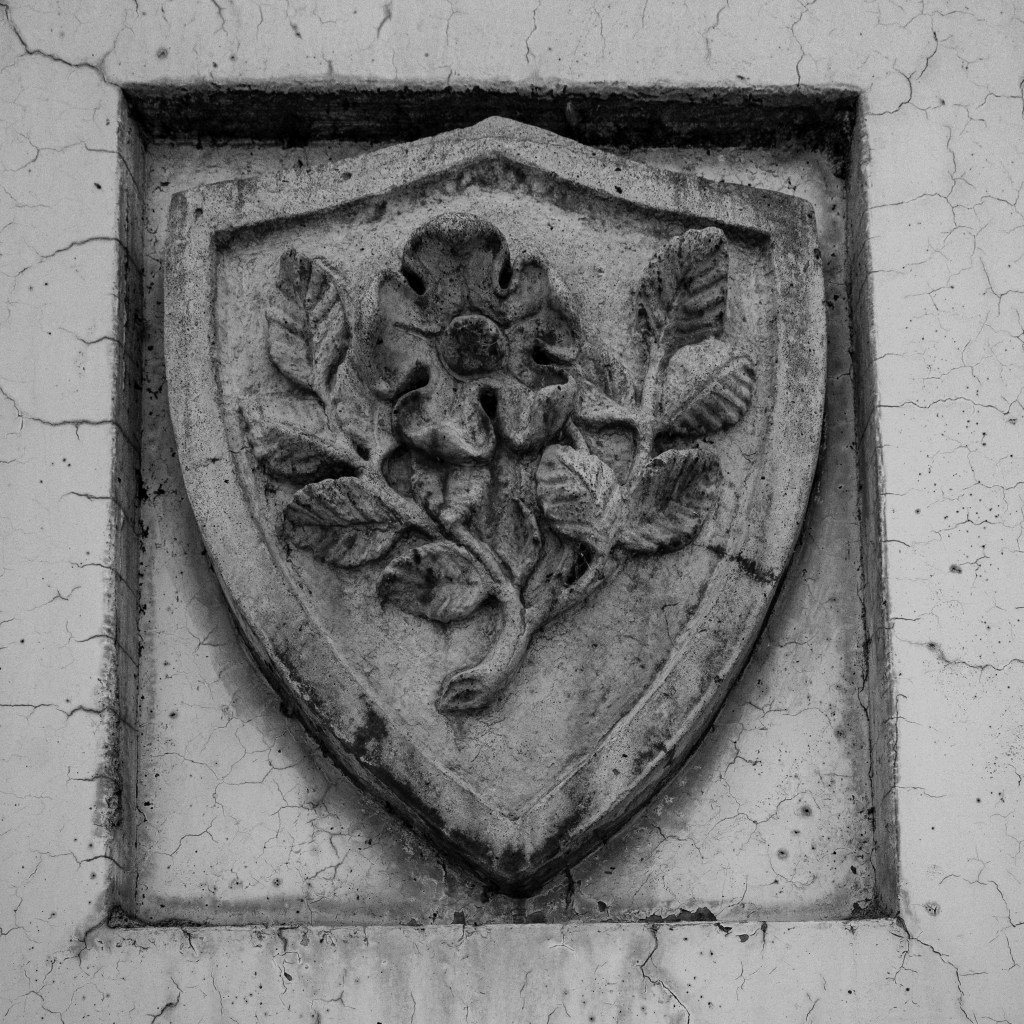
There was also the challenge of getting a good perspective on the statues and the other details on the bridge (like the medallions that recognize the distinct influences in Calgary’s past… see the example below) while being confined to the sidewalks that pass underneath the statues. I suppose a drone would have been a nice accessory for this shoot, but that’s not my thing.

Here’s one of the small details on the bridge: medallions on the side of the “kiosks” that serve as the base for the Centre Street Bridge lions.

There are roses for England, shamrocks for Ireland, thistles for Scotland, and maple leaves for Canada. And bison heads to represent the west.

In the end, I managed to get a few shots of the “big game”. But maybe the best result was the realization that I left many good ones on the bridge for another day.