Our long runs along the Bow River often take us past the Centre Street Bridge. It’s an imposing and historic structure, and in good morning light photo ops are plentiful. As we ran under the bridge last Sunday, I made a note to take a closer look at the lions that guard the four corners of the upper deck.
Fortunately, we ended up back at the bridge towards the end of our run. I welcomed an excuse to stop at that point. Deb was keen to do another kilometre. “Good for you”, I told her, “but I’ll be here checking out the big cats.”
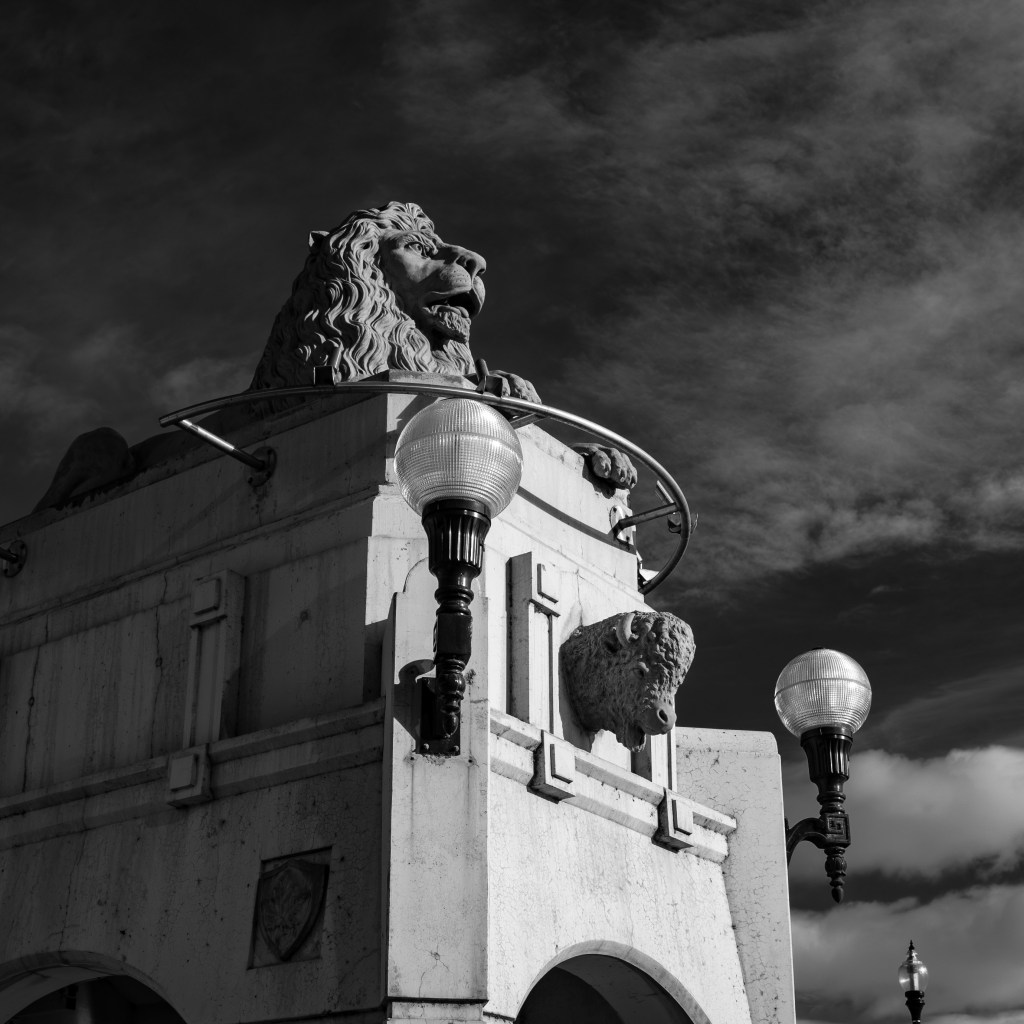
The morning light was strong and contrasty. From the pedestrian ramp, I got a couple of nice shots of the southwest lion. The statue looked great (regal, actually) with a monochrome edit in Lightroom.
I decided I would return in a couple of days for a photo run and a closer tour of the lions. In the meantime, I did some research into the history of the statues.
The original lions were commissioned in 1916, along with the bridge. They were modelled after bronze lions that guard Nelson’s Column in Trafalgar Square in London. The Calgary copies were cast in concrete by one James Thomson, a city employee. They each weigh 12,600 kilograms.
By the 1990s, the statues were in a state of significant deterioration, due to decades of Calgary weather cycles and vibration from bridge traffic. In 2000, city council directed the repair and conservation of the southwest lion. It also directed that the same lion be used as a template for the construction of four new statues. The restored lion now sits on display at Calgary’s municipal government building. The original northeast cat was repaired and conserved. It was relocated to its current location in Rotary Park in 2018.
With that background, here’s more on my photo run.
I went late in the afternoon, hoping for an interesting chinook sunset. We’ve had a lot of those lately. Would I get lucky? Yes and no.
I started my run in Rotary Park, so I could see the repaired northeast lion up close. It’s the only statue to have been returned to the bridge, and it commands a perfect spot at the south end of the park, overlooking downtown.
I navigated the ice and mud around the statue. I snapped a few shots, but none of the compositions I tried were very satisfying. I might have had better results with a wider focal length lens instead of the 28mm Ricoh GR III. No problem… this was supposed to be a run, so I moved on.
I jogged along the crest of the bluff for a few minutes and enjoyed the vista, then headed down towards the bridge. When I looked back up the hill, the lion was bathed in the low, setting sun. I knew I had only a few minutes before the light changed, so I scrambled back up the muddy pathway to a spot just below the lion. I snapped one shot. The light was amazing, and I think the result was good. It was by far my best shot of the day.

I continued down to the bridge and did a short loop around Chinatown. I was rewarded with a few worthy shots before I made my way back up the bridge on the west side. It had been a while since I ran up this hill… yes, it’s still tough!
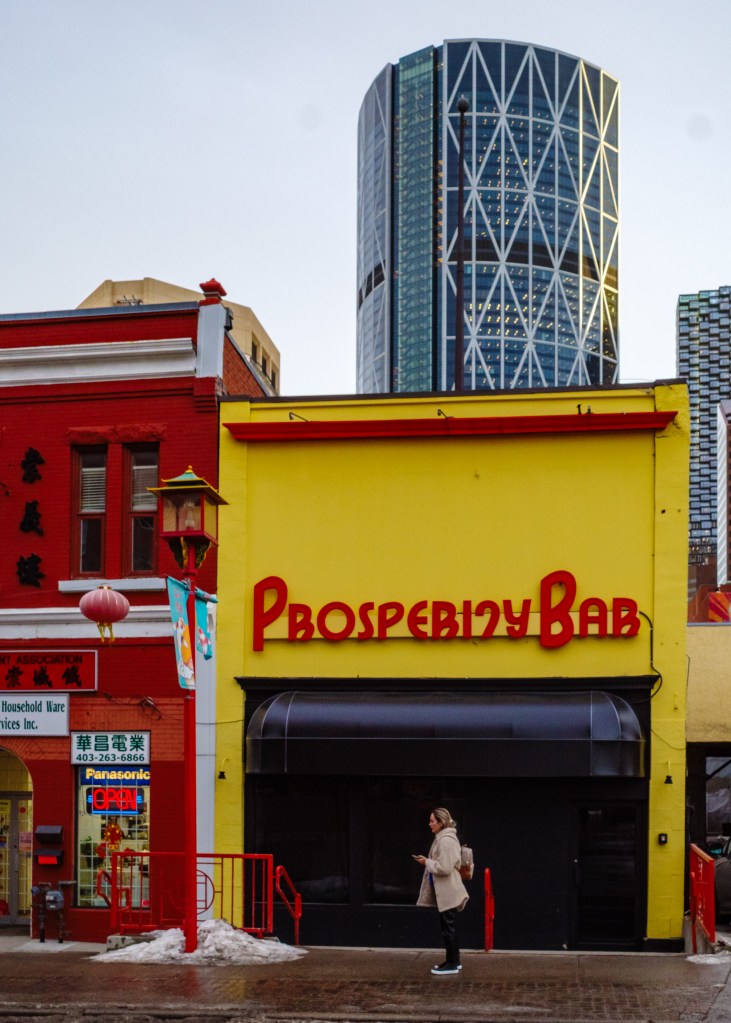
As for any more shots of the lions on the bridge, the fading light was quite flat and uninteresting by that time. There was a bit of chinook magic going on though… so I worked with what I had!
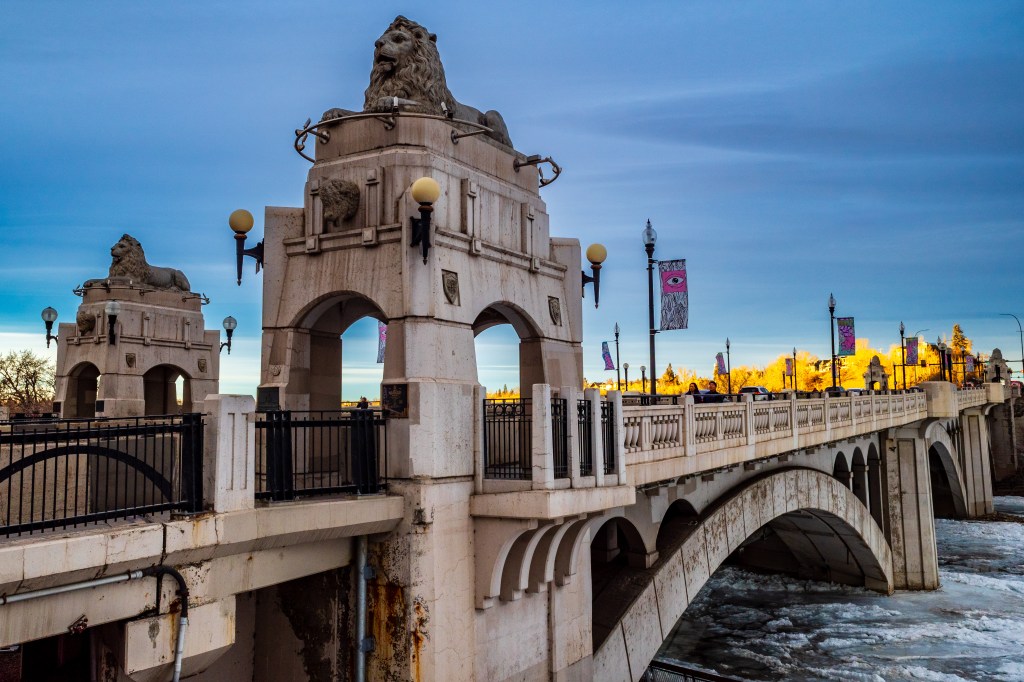
There was also the challenge of getting a good perspective on the statues and the other details on the bridge (like the medallions that recognize the distinct influences in Calgary’s past… see the example below) while being confined to the sidewalks that pass underneath the statues. I suppose a drone would have been a nice accessory for this shoot, but that’s not my thing.
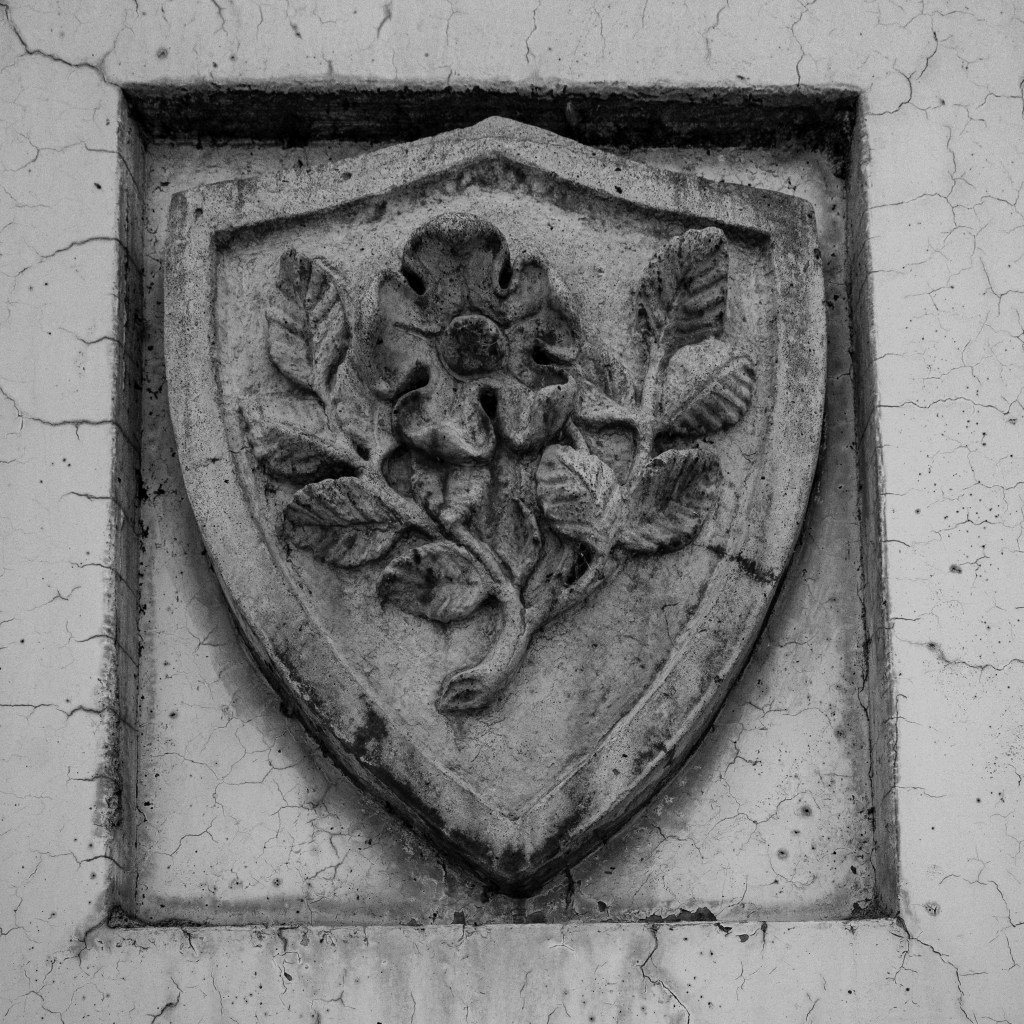
Here’s one of the small details on the bridge: medallions on the side of the “kiosks” that serve as the base for the Centre Street Bridge lions.
There are roses for England, shamrocks for Ireland, thistles for Scotland, and maple leaves for Canada. And bison heads to represent the west.
In the end, I managed to get a few shots of the “big game”. But maybe the best result was the realization that I left many good ones on the bridge for another day.