More BUMP and Run

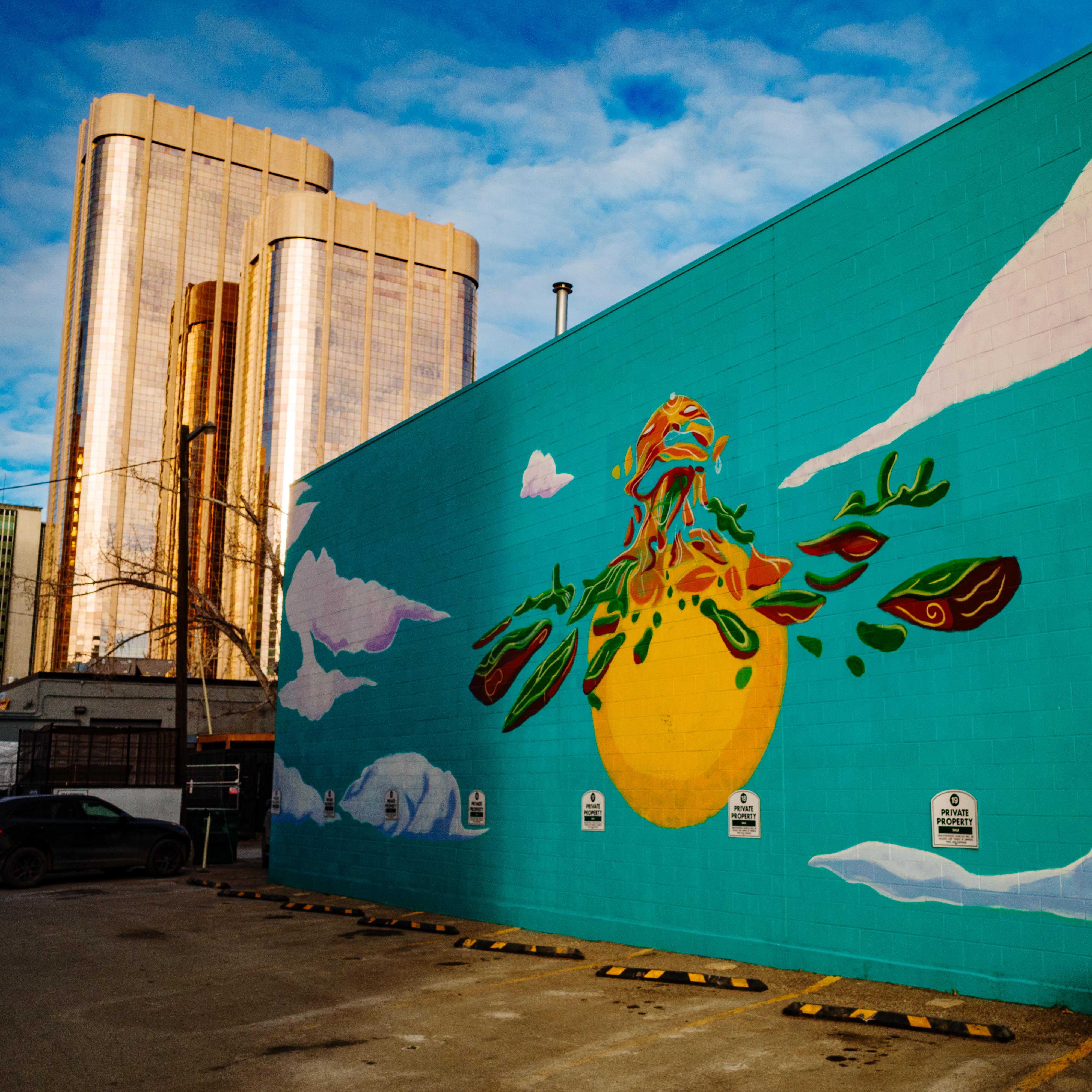
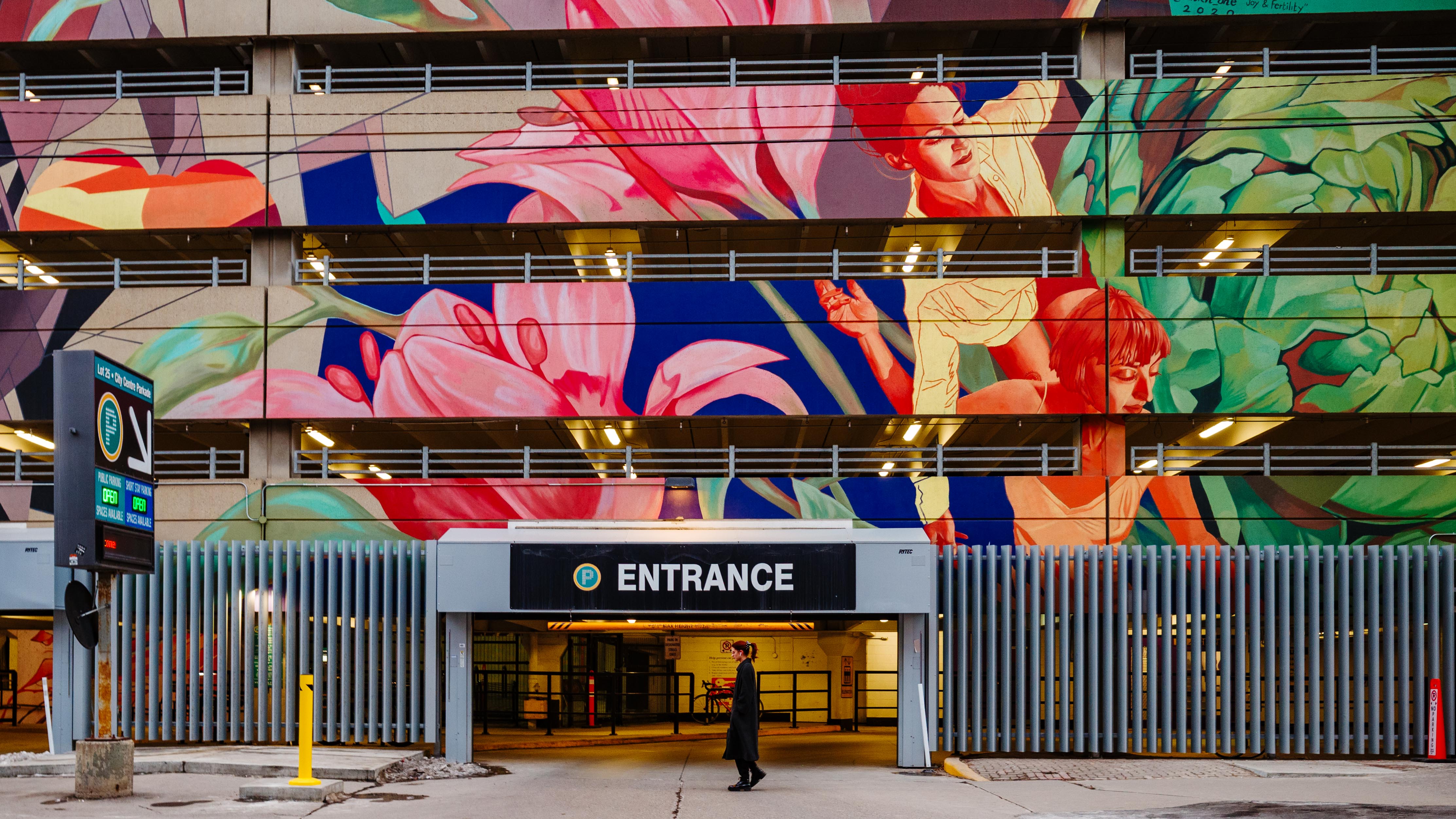
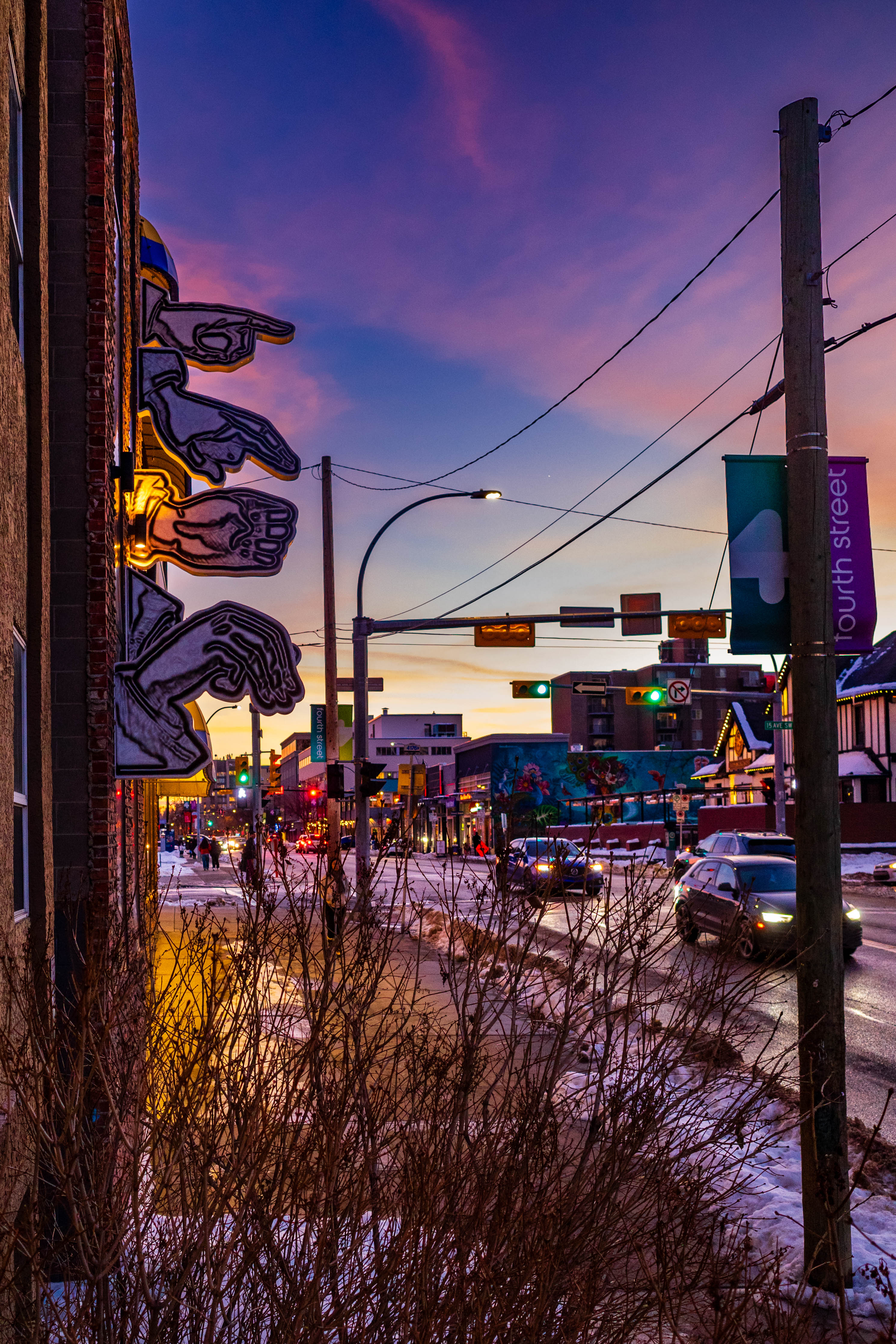
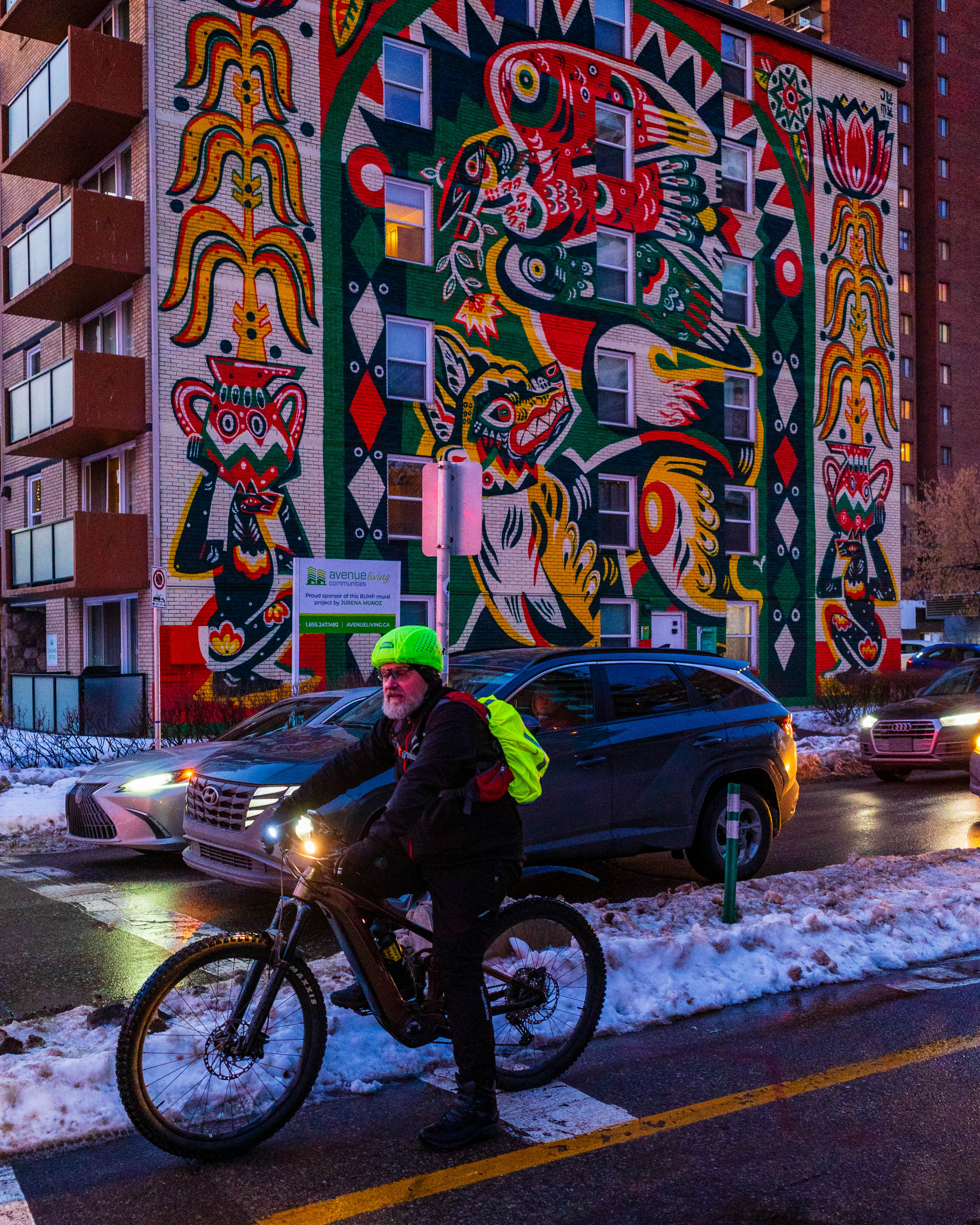
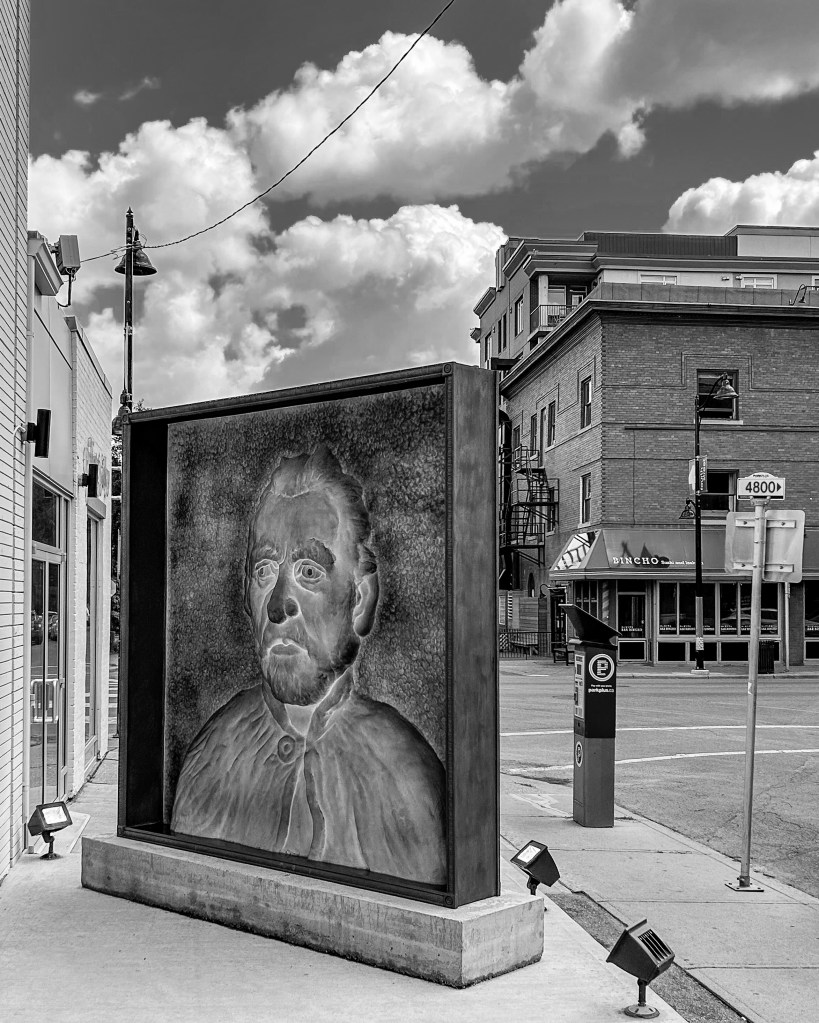
We had a brief return to winter weather last week, which was a good excuse for me to dig through more Beltline mural pictures. This piece is not a lesson in how to hit a “bump and run”… a crafty shot that will be familiar to golfers… it’s a mash-up of pictures from several recent photo runs.

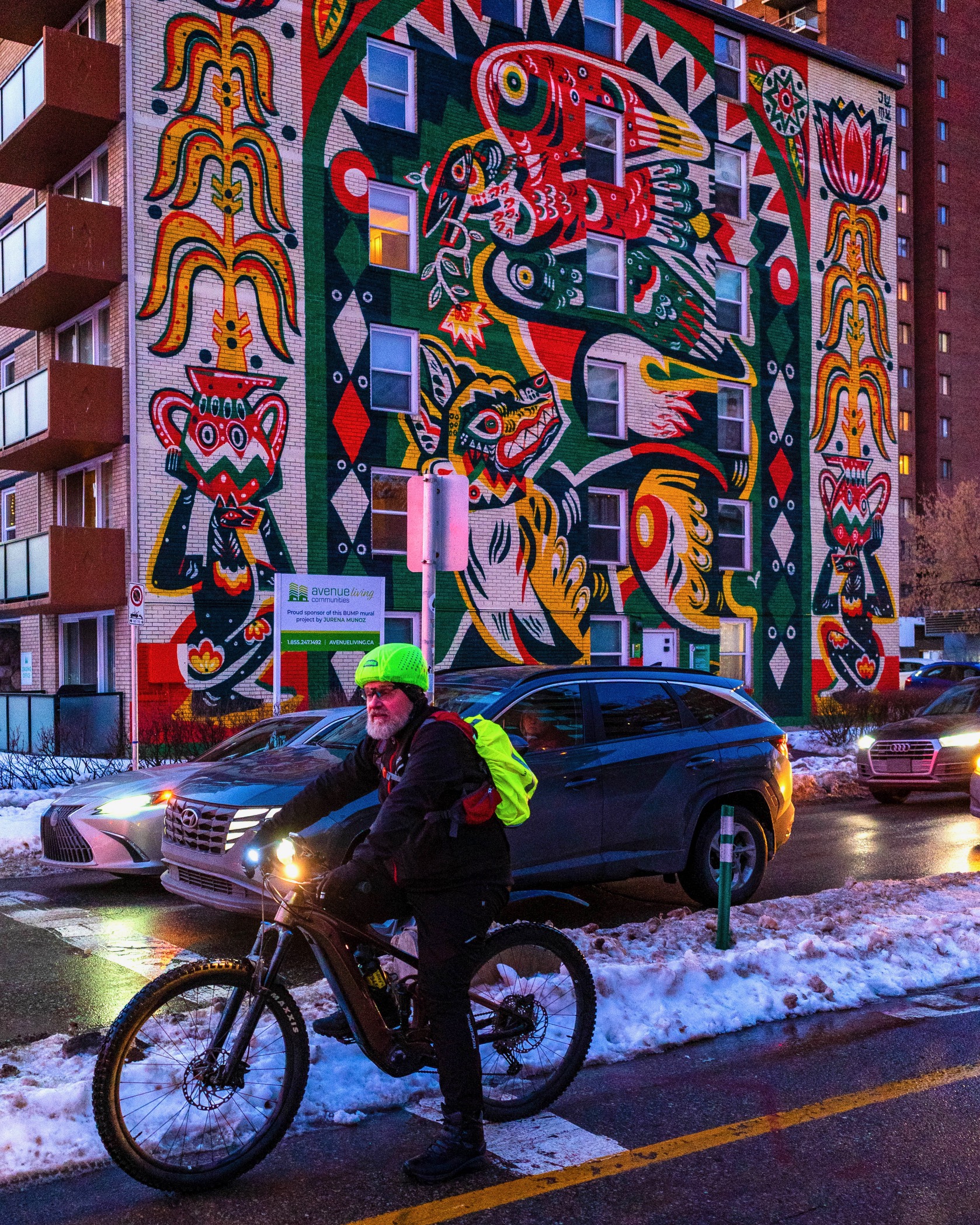
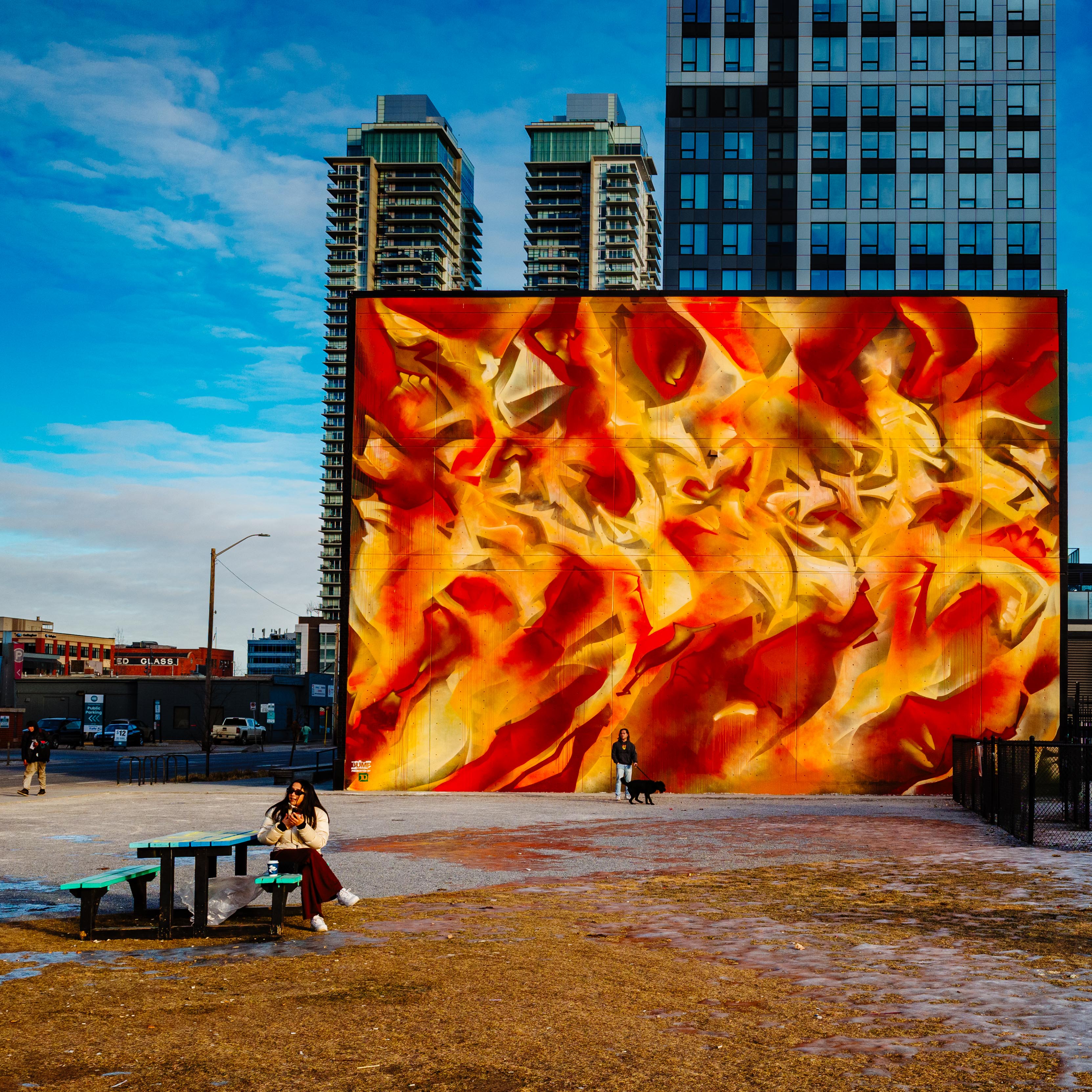
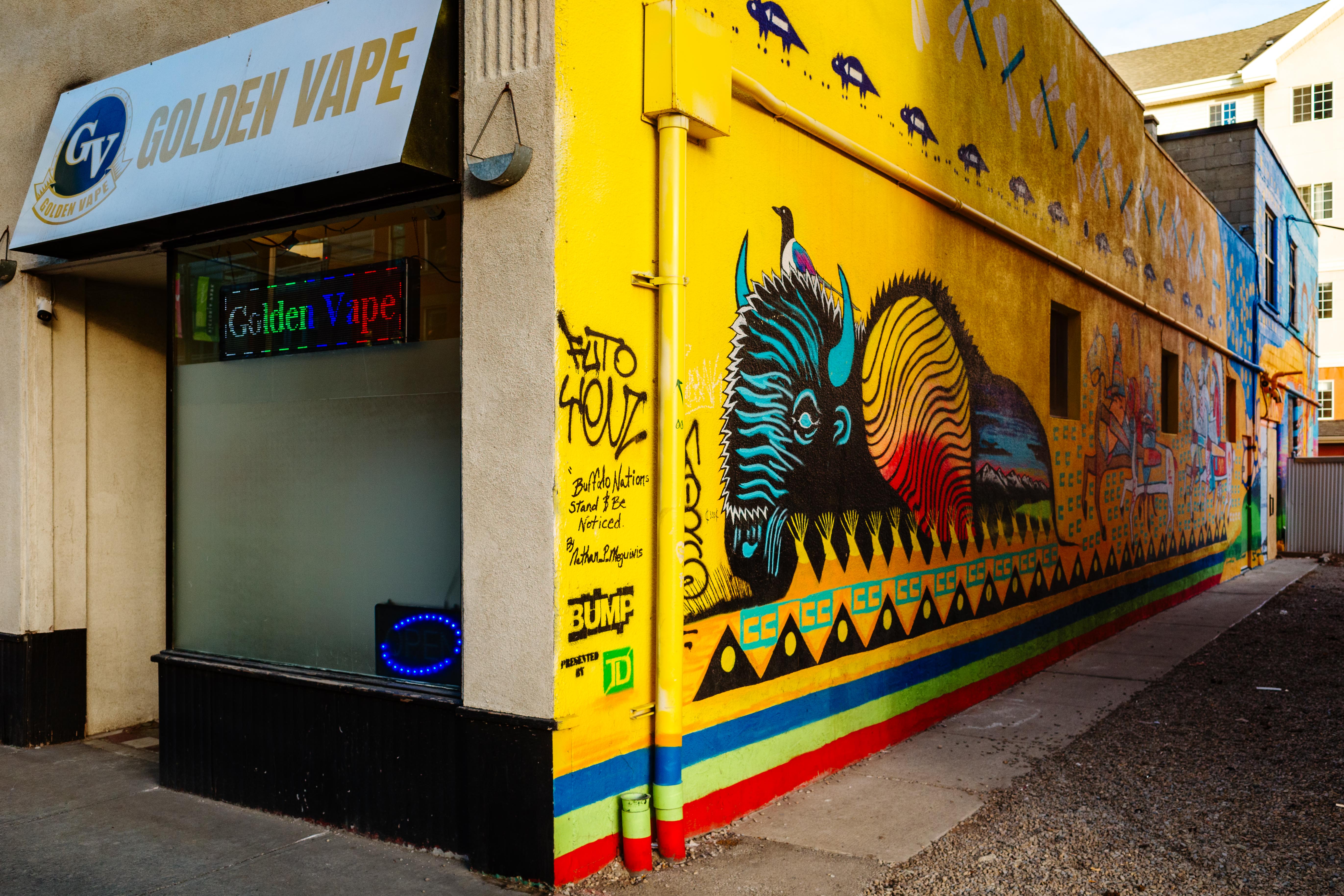
Like the first post in this series, I scouted out Beltline Urban Mural Project (BUMP) murals and did background research on the artists. Routes for all my urban photo runs are “organic”… dictated by red lights, convenient turns, and whatever street scenes catch my eye.

This post highlights murals in the large area from 17th Avenue SW to the downtown core. There are so many pieces in this area, with more coming in 2025, that there will certainly be more posts in the future.

Some of my favourites:

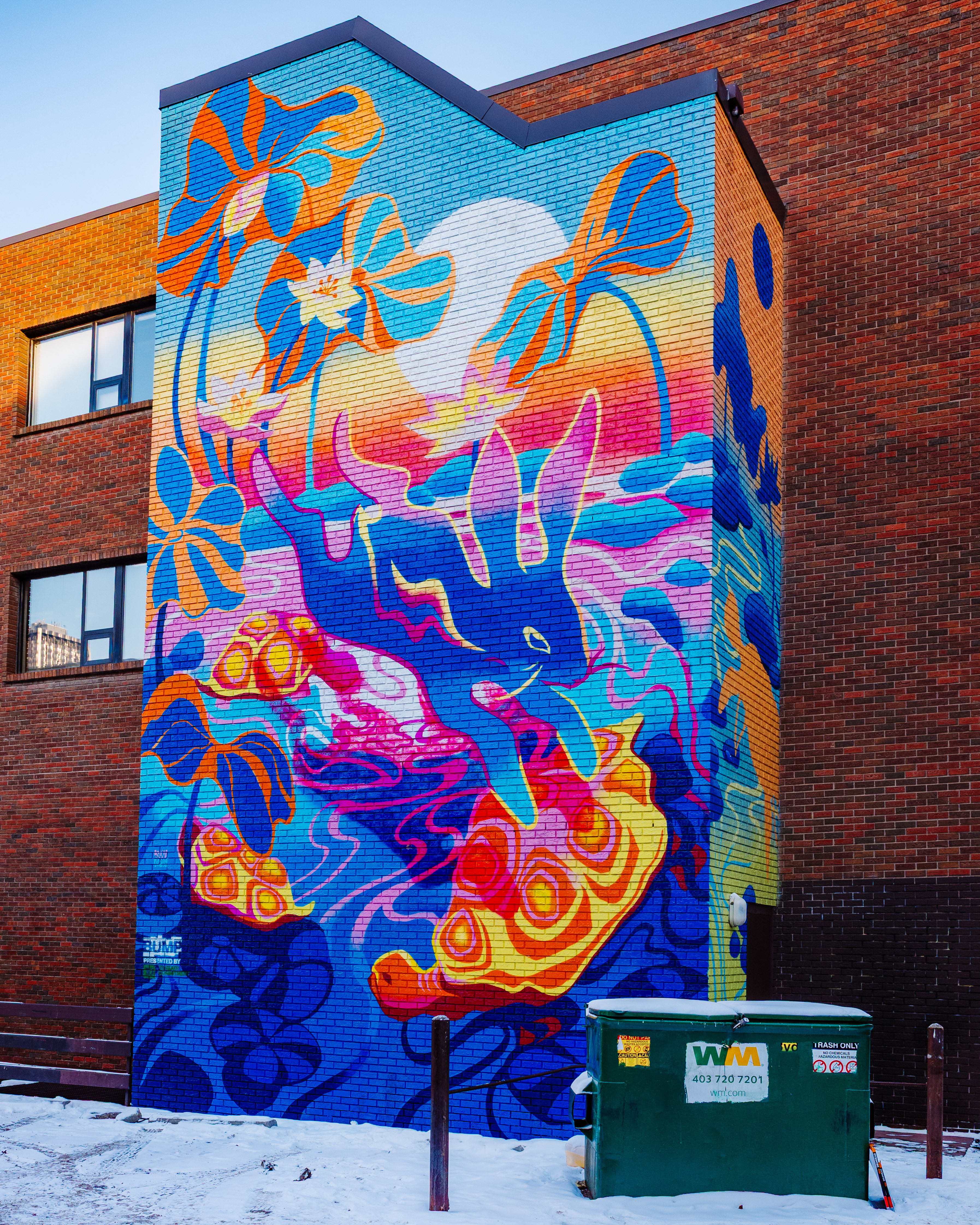
  • Seeroro (Carolyn Wong, @seeroro_ ) is a Chinese-Canadian artist from Vancouver. “Euphoria” is a colourful, three-sided mural inspired by the Tortoise and Hare folktale and the year of the water rabbit in the lunar calendar. Wong’s mural is tucked in between the buildings at 625 11 Avenue SW. Well worth the search!
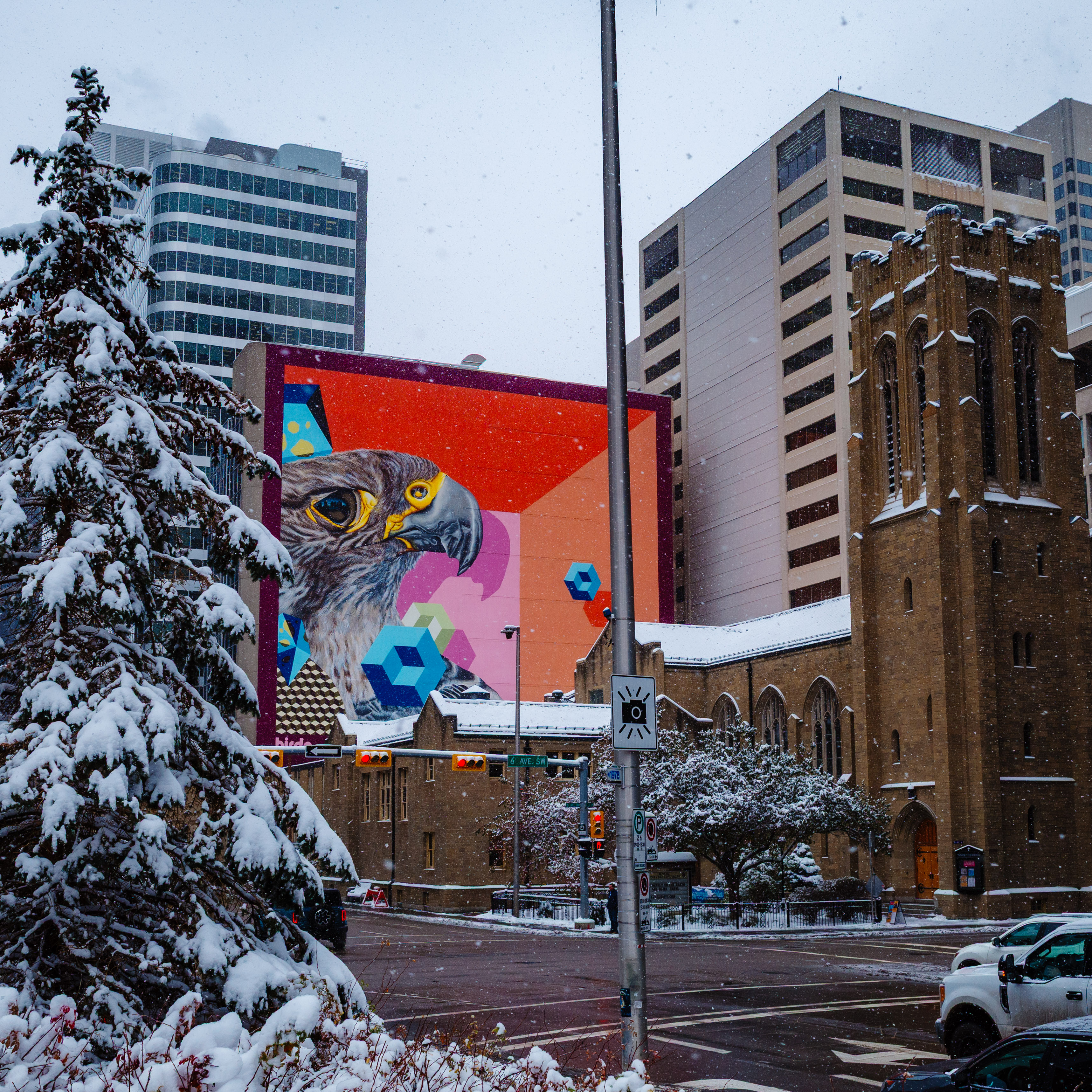
  • birdO (Jerry Rugg, @jerryrugg ) is a multidisciplinary artist based in Toronto. He is well-known for large-scale murals on walls and buildings. His spectacular untitled piece at 441 5th Avenue SW is of a peregrine falcon, with the city skyline reflected in the bird’s eye. I’ve photographed this piece often.
  • Fluke ( @fluke.art ) is based in Montreal. His work as a street artist has roots in graffiti going back to the mid-1990s. Working with photographers, Fluke merges street art and contemporary imagery to create his pieces. His untitled mural on the west face of 1039 17th Avenue SW was glowing in the setting sun when I shot my photo.
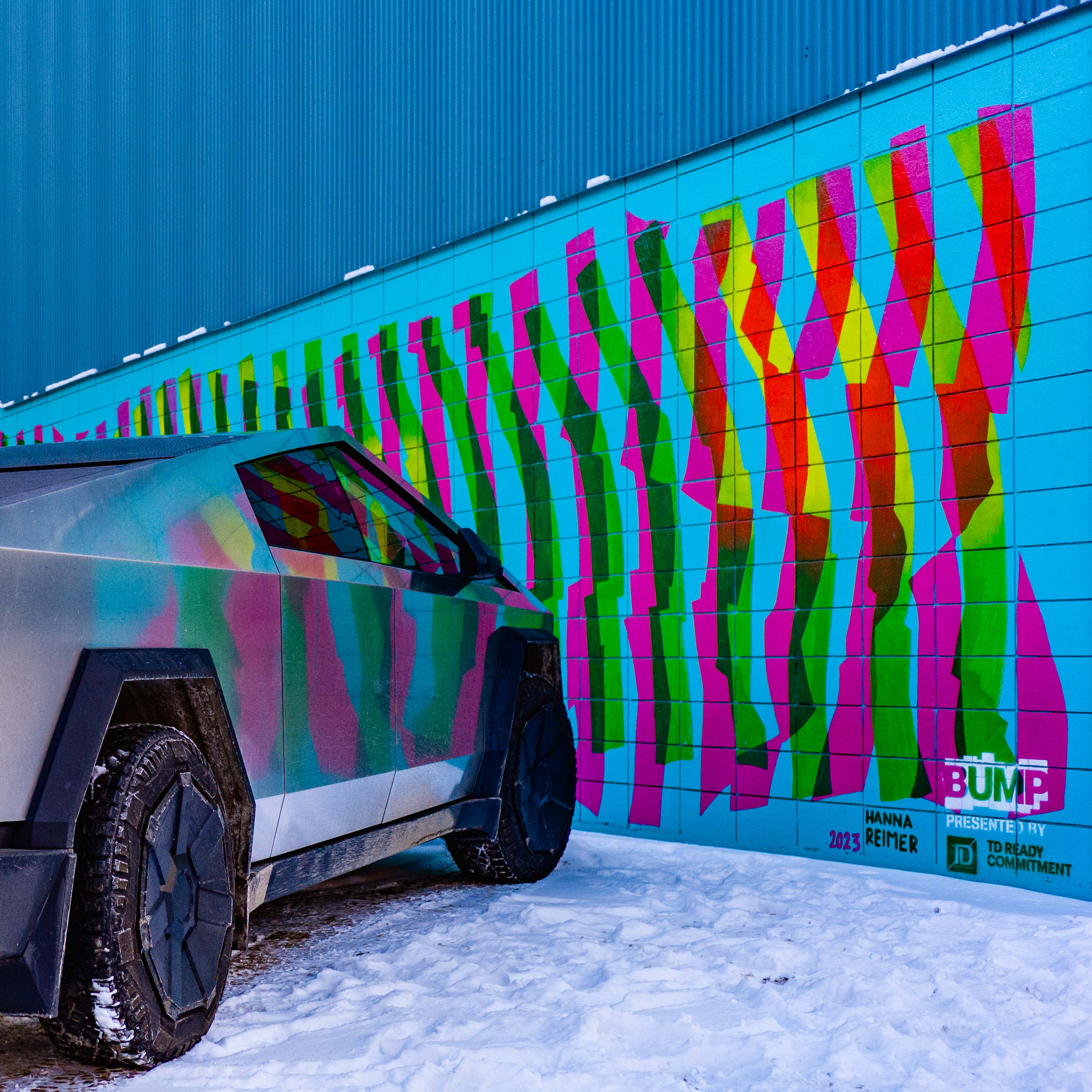
  • Hanna Reimer ( @hannaclare ) is a Treaty 1 artist from Winnipeg, whose works emphasize texture and pattern. Hanna’s interest in fabric was the inspiration for her mural at 739 11 Avenue SW. She chose colours and patterns to make the wall appear to be flowing like sheer fabric. I found the juxtaposition with the angular Cybertruck jarring, but too good to pass up.

And a few more:

While I was thinking about murals, I paged through my files and came up with more pictures and stories. These fall a bit outside the topic of this post as they weren’t taken “on the run”, but that’s okay.

In 2019, I was walking around the Beltline with a newly repaired Voigtlander Vitessa T. I had picked the camera up on eBay with low expectations. It was 70 years old and non-operational. The camera is unique: it’s a rangefinder, and it has a plunger instead of the usual film advance lever. (Perhaps not surprisingly, this is a weak element of the design. It’s probably why this feature didn’t find its way into other cameras!) Fortunately, I found a fellow in Calgary who patiently (and cheaply) sourced the required spring to get it going again.

My first shots with the Voigtlander were of the multicultural artist Fathima Mohiuddin ( @fatspatrol ), as she was finishing her mural at 708 11 Avenue SW. We chatted for a few minutes and I took photos of her in front of the mural. It’s in her signature graphic style, and it’s awesome!

I had no idea if I’d get anything out of the Vitessa, but I was very happy with the result. I never saw Fathima again, so I hope she will see this picture.

The following pictures were taken within a minute of each other. I had been walking around 17th Avenue SW with my Ricoh GR III, on the lookout for interesting people or street scenes. On that day, I remember being disappointed that I had not seen much that caught my eye.

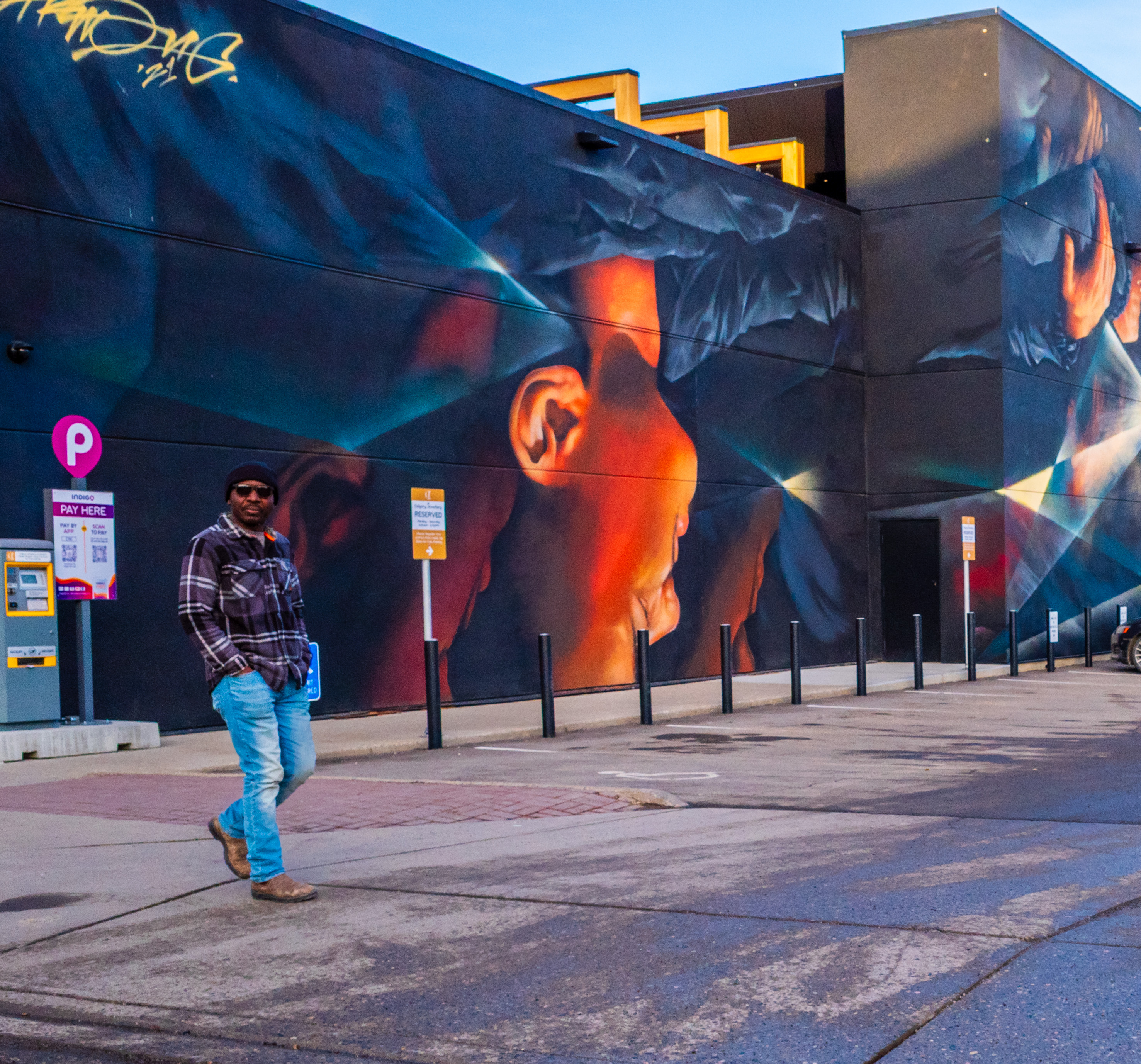
I walked down 13th Street, past the alley behind Calgary Jewellery, and snapped a quick shot of a fellow walking by Alex Kwong‘s huge (and hugely impressive) 2021 piece. Unfortunately, I don’t have many details about the mural. It doesn’t appear to be part of the BUMP series. Alex has done other pieces around the city, including a couple for BUMP. Check out his website and Instagram ( @_alexkwong ).
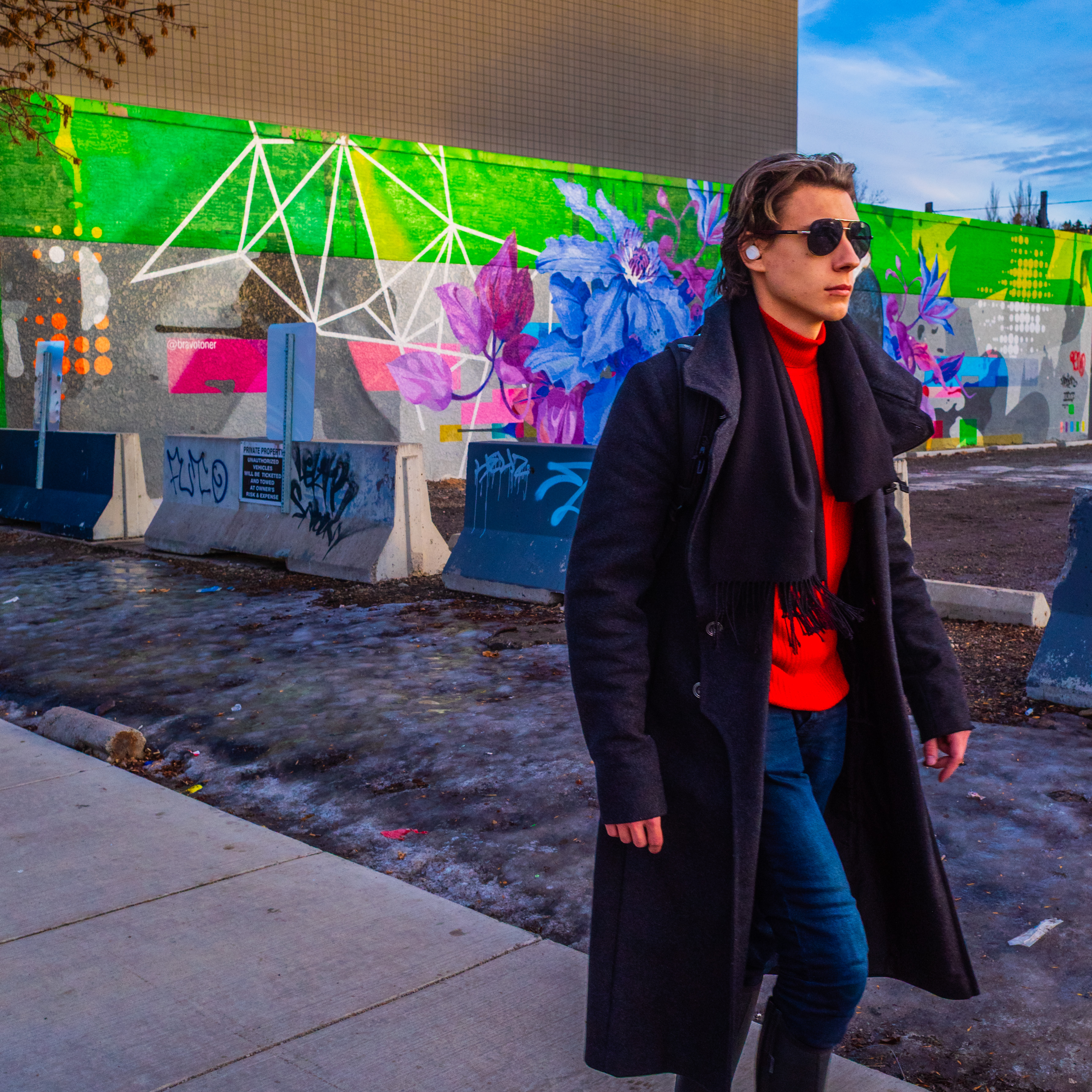
After I snapped this picture I turned onto 17th Avenue, and I noticed a stylish guy approaching me. An obvious picture was coming together… I just had to wait for him to pass in front of the colourful mural at 1137 17th Avenue SW. The bright elements in the mural complement his confident personal style.

In my research, I learned that the mural is by Calgary artist Toner ( @bravotoner ). The piece is titled Companion and it was painted in 2020. I realized I wasn’t being totally fair to Toner by having the best part of his mural obscured, so I went back and photographed it on its own to reveal a beautiful parrot. Here’s the whole image. Nice work Toner!

“Companion” by Toner, 1137 17th Avenue SW, painted in 2020

An interesting fact is that Toner and Kwong have collaborated on pieces around the city. I’ll be back soon with more in my next post.

Until then, be well and BE FAST!

February News Roundup – UPDATED

This is a short post, with the latest news. I’ve been busy compiling and editing photographs for my new BUMP Photo Run series. If you aren’t familiar with BUMP, it’s the Beltline Urban Mural Project, a vibrant project that has been brightening up our city since 2017. Check out my first piece here. You can read about the background of the project while enjoying photographs of some amazing art. Look for more posts very soon!

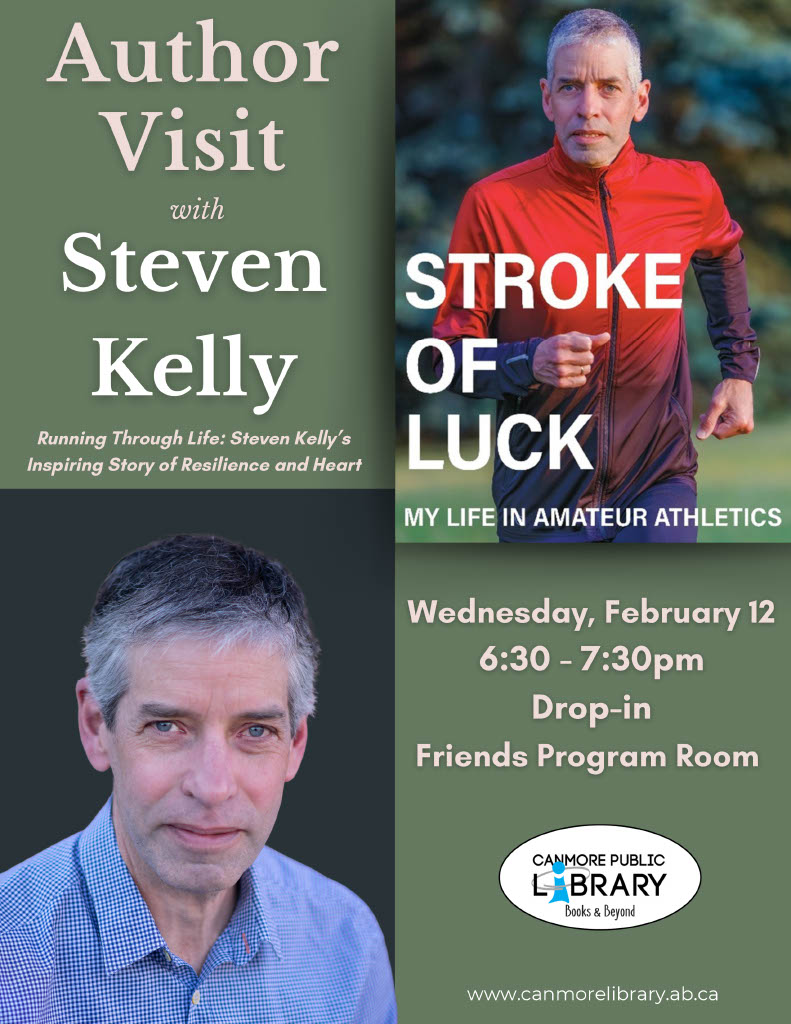
Canmore Public Library Event, Feb 12

UPDATED!

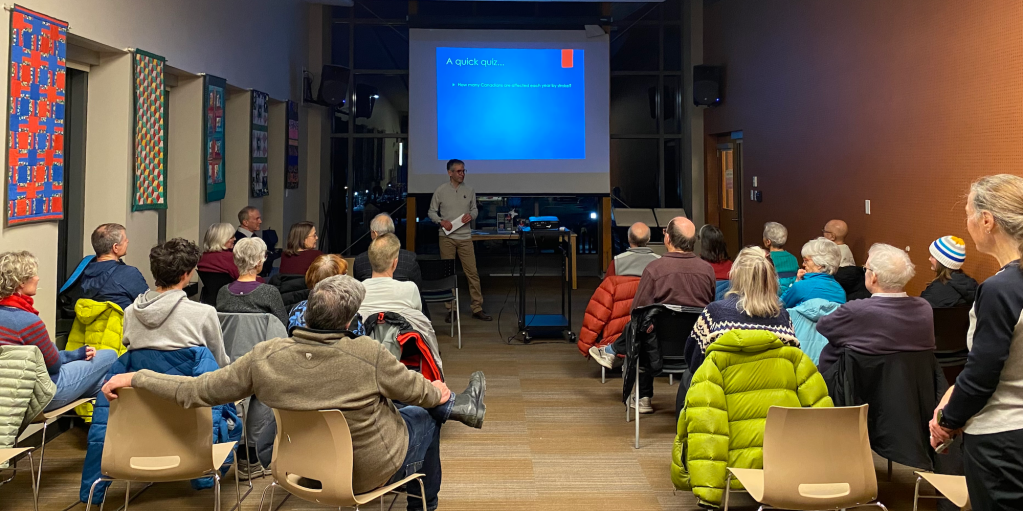
It was a wonderful evening in Canmore. The venue in Elevation Place was beautiful, we had a great turnout for our talk and an engaged audience. What more could we ask for?

Thanks to my friend, Don Crowe, for taking on MC duties, to Carey Lees of the Canmore Public Library for her flawless organization, and to all who attended. Thanks too, to Kylie and Tim at Strides Canmore, for their generous support of this event!

Here’s a synopsis of the talk:

  • A brief personal introduction
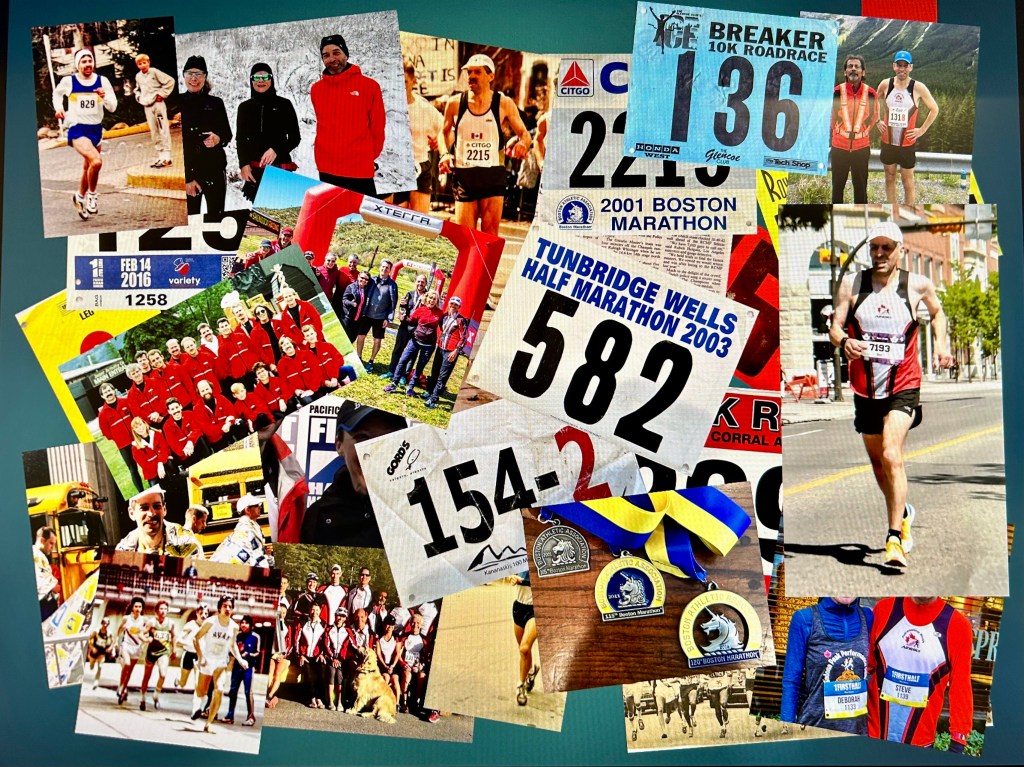
  • A collage of my running adventures (see below)
  • Discussion of my stroke journey, including the useful phrase to remember stroke symptoms (readers of this blog will already be familiar with BE FAST)

Of course, I shared my three main messages, listed below:

  • The importance of an active lifestyle
  • Awareness of ALL the symptoms of stroke
  • Raising funds to support the great work being done every day on stroke prevention and care at the Foothills Stroke Unit
This is what 50 years of running memories look like on one page!

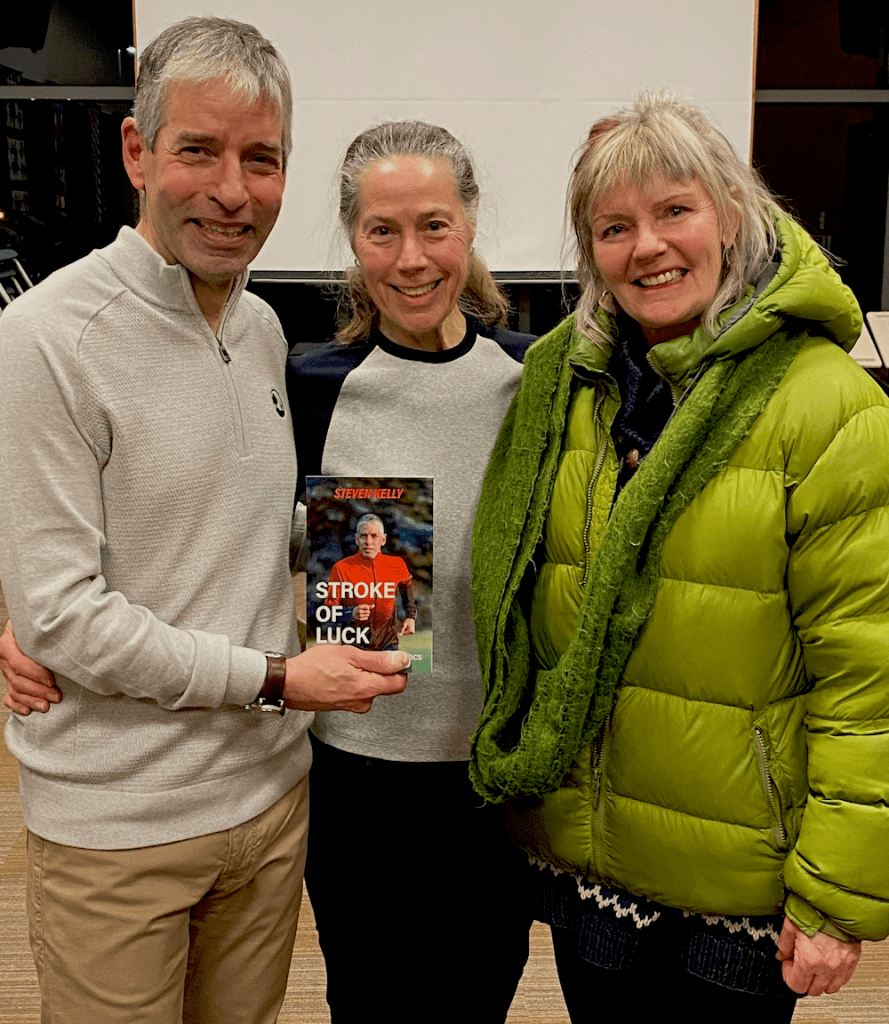
You can read all the details in Stroke of Luck: My Life in Amateur Athletics. And there’s some news on that front: Cafe Books in Canmore will be carrying the book. So, if you live in Canmore, please drop into this unique bookstore and grab your copy!


For anyone in the Canmore area this Wednesday (February 12), I’ll be speaking at an Author Event at the Canmore Public Library at 6:30 p.m. Join me if you can, for an informal (and informative) presentation of my story, as told in Stroke of Luck: My Life in Amateur Athletics. There will be a short presentation, a Q&A session, and some draw prizes. I’ll have copies of the book available for purchase, at a special event price. Proceeds from book sales support the great work being done every day in the Foothills Stroke Unit.

I’d like to thank the staff at the library for hosting us in your wonderful facility. Also, to my friends at Strides Canmore, thank you for spreading the word about this event, and for your ongoing support of my book project. I feel blessed to be part of the tremendous local running community… it’s second to none!

Finally, thanks to Dianne Deans, whom I had the pleasure of meeting at the CanStroke Congress in November. Dianne is an enthusiastic patient support volunteer for stroke victims at the Foothills Medical Centre. She kindly connected me with the Canmore library staff, which led to this event coming together. Thank you, Dianne!

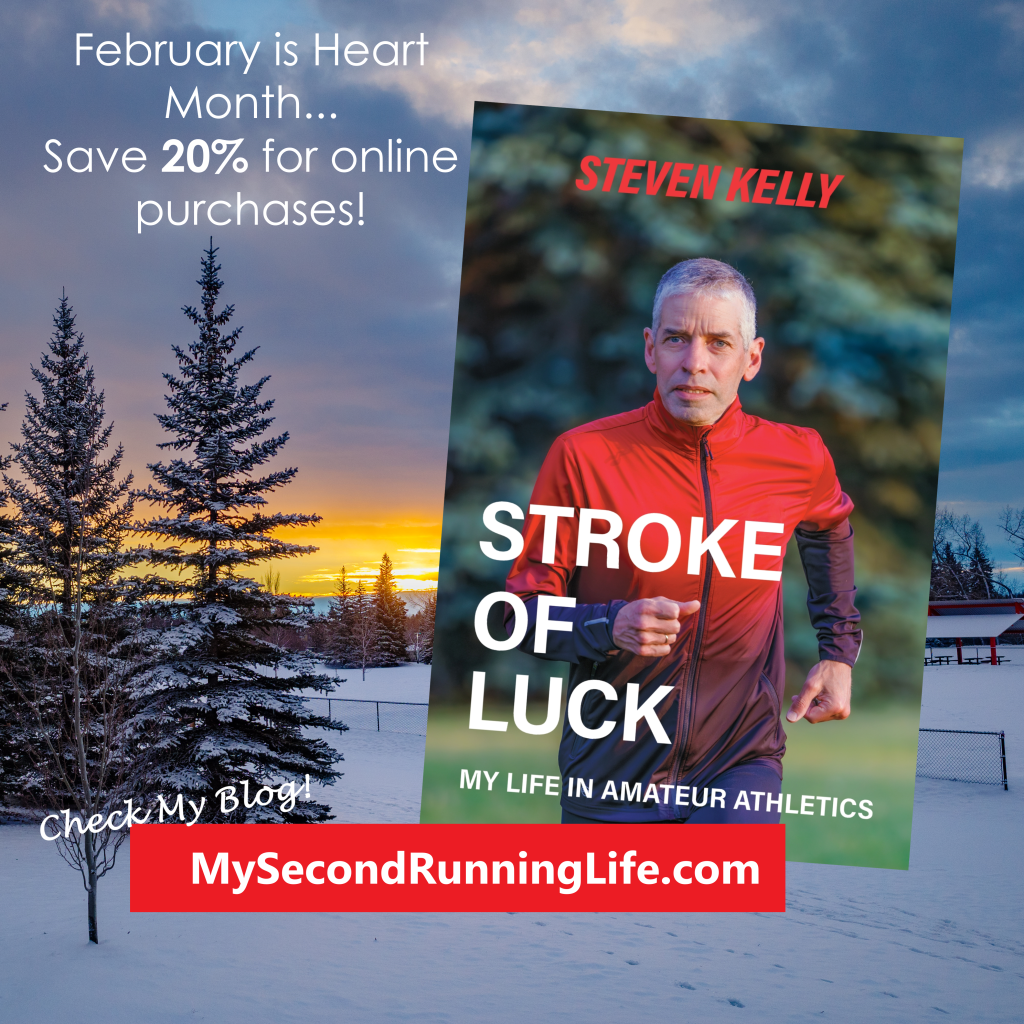
Heart Month Sale Still On!

What better way to mark Heart Month than a healthy discount for online sales of Stroke of Luck?

Order your copy on Amazon, and save 20%. The sale will run through the end of February.

Until next time, be well and BE FAST!
BUMP Photo Runs – Part 1

I was jogging around Calgary’s Beltline, feeling a bit short of ideas for my next urban run/photo adventure. As I rounded the corner from 7th Street onto 15th Avenue, I glanced up at the side of the building. What I saw stopped me in my tracks, and instantly gave me the inspiration I needed.

What’s BUMP?

There’s a program called the Beltline Urban Mural Project… BUMP… that has been making Calgary’s inner city streets more interesting and colourful for years. I had to find out more.

From the BUMP website, I learned that the project started in 2017, and has grown significantly since then. Seeing all the artwork in one run would be challenging, if not impossible. There are dozens of sites, spread throughout the core. I needed a plan. I often start my runs near Lougheed House, so I decided to use that location as my base. I could get a good overview of the murals (and hopefully some worthy photos) by concentrating on different neighbourhoods over several runs. This is the first of what is likely to be an ongoing series.

Run 1 – BUMP in the Beltline

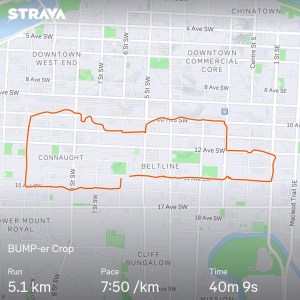
Run 1 focused on the Beltline itself… bounded roughly by 15th and 10th Avenue, and 1st and 10th Street. Here’s my Strava map:

Turning to the art, let me start with the mural that prompted this idea. It’s a large, striking piece in green, called “The Last Maple Leaf”. It was painted in 2023 by the Colombian artist Wosnan. This is from the mural description:

“Rising from nature an ancient guardian of the forest who merges the realms of magic, other worlds and dimensions, spirit and space stands tall, looking over our city…”

Wosnan, “The Last Maple Leaf”, 1411 7th Street SW

This was an apt description of the mysterious tree-like being that loomed over me, guarding his/her corner of the neighbourhood while pondering (no surprise) the last maple leaf. Stirring stuff! I studied the mural carefully, with my stopwatch running. The magnitude of the challenge I had taken on dawned on me. Maybe I should make this a slow photo walk…

No! I resumed my run, with my goal of at least five kilometres in mind. I tried to ignore the glimpses of colour that I started to notice down every alley.

Bottom line? I finished with lots of pictures and a feeling that I had made a small dent in the many Beltline murals. For full disclosure, while I saw all these murals on BUMP Run 1, some of the photos are from previous runs because I liked the shot more. Light is everything, you know!

Here’s a short summary of the pieces in the photographs. I recommend following the links to the map on the BUMP website to find out more.

Mural Making – A Layman’s Perspective

Imagine painting a mural on a wall 60 feet wide by 30 feet high. How does one even begin? Laying out a piece at that size and scale must be extremely difficult. And the execution would bring very different challenges. I marvel at the way the artists manage the intricate details, while still capturing their vision for the whole piece.

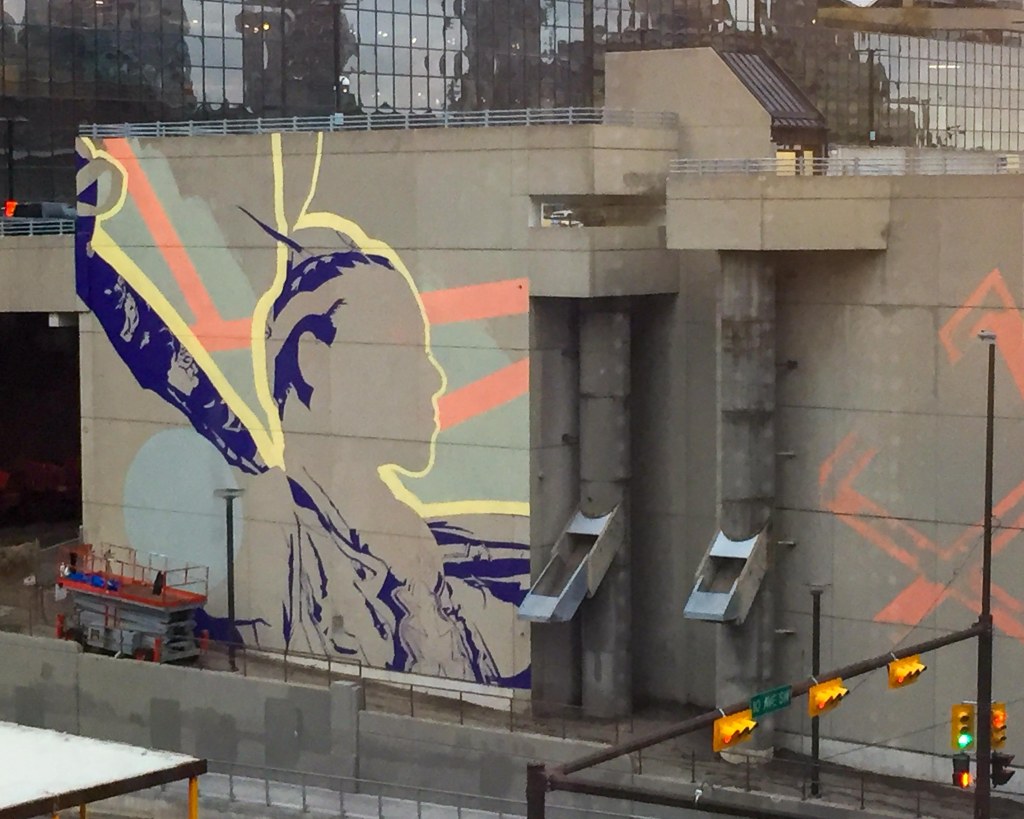
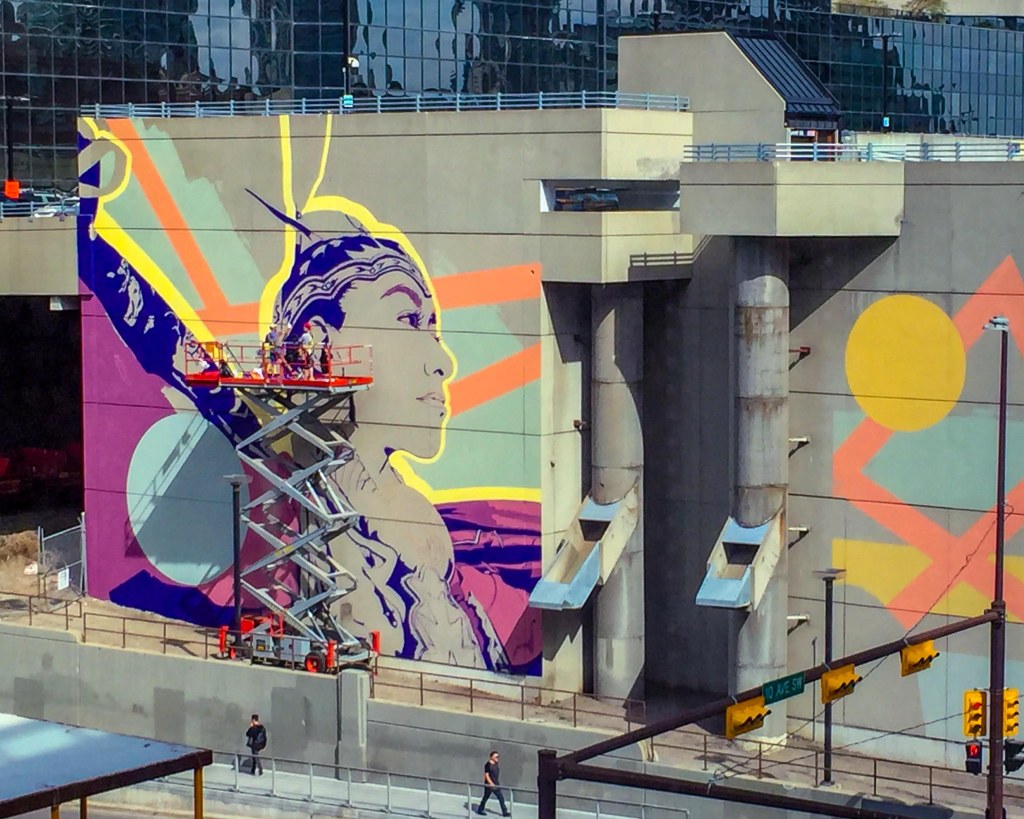
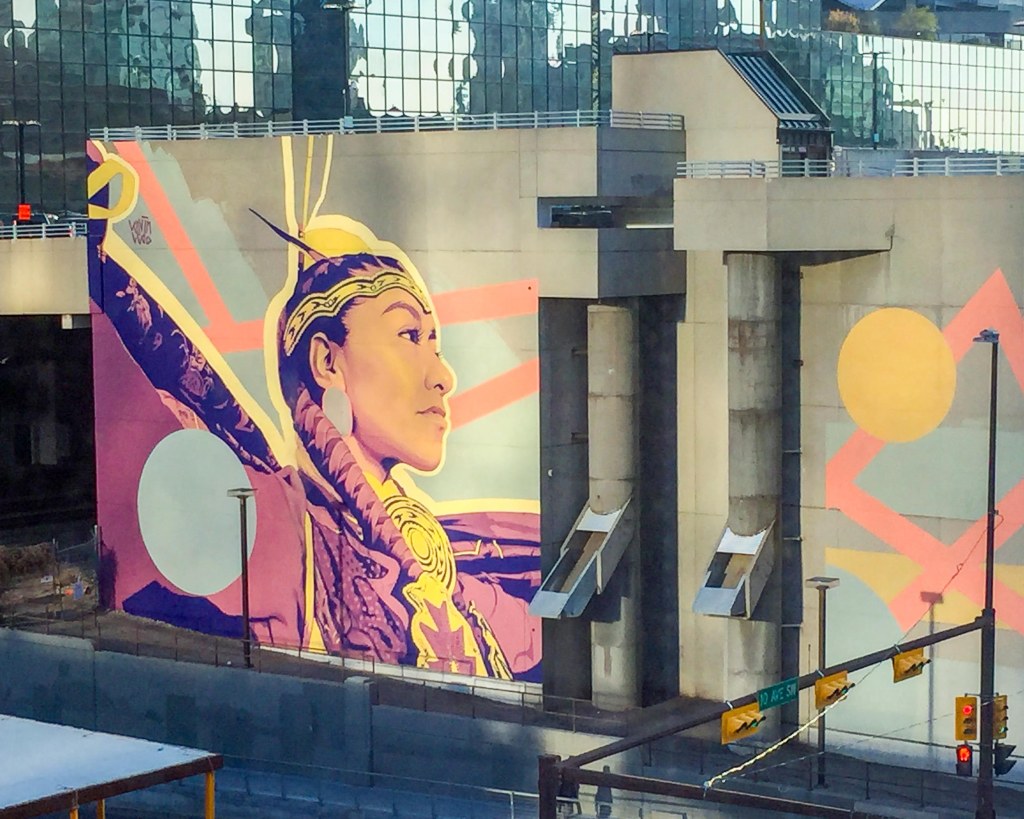
I had a front-row seat for the creation of sôhkâtisiwin (that’s Canadian artist Kevin Ledo’s striking mural at 340 10 Avenue SW). The title means “strength/power” in the Cree language. The image is taken from a picture of B-Girl and traditional hoop dancer, Angela Gladue. I watched the beautiful portrait of this young Indigenous woman come to life in 2018, from the comfort of my office across the street. Kevin and his helpers toiled away in the hot summer sun on a stage lift, going up and down endlessly over several weeks to complete the image, which now livens up the west side of a parking garage. I made sure to give them a thumbs-up every time I walked by.

Here’s a rough timelapse of the process (I had many more pictures on my phone, but I recently deleted most of them). You get the idea though.

Impressions

This is an amazing initiative. To state the obvious, BUMP is a diverse selection of art. I’m impressed by the sheer number and quality of the murals. It’s great to have artists from around the world come to Calgary and share their talent. I hope the project continues and expands its reach across the city.

This is the kind of project that invites us to slow down and take a closer look at the art. Sure, we can (and most often, do) pass by these murals in our daily routine. Maybe we glance at them, maybe we don’t. But this first photo run has already prompted many questions… Who is this artist? What is their message? Do I think they succeeded? What does this piece make me feel?

The BUMP website helpfully lets the user select pieces they would like to see on a walking tour, and this is probably the correct way to see them. I will persevere with my photo run idea, knowing I will still see and learn a lot along the way.

My early impressions are very positive. I already have some favourites. I will defer any thoughts about that question until I’ve done more exploration. There will eventually be a personal top 10 list, but even that will be subject to change as I see more of the contenders. Look for more posts on my BUMP photo runs soon.

Thanks for reading. Please drop me a comment. Let me know if you have a favourite BUMP mural that you think I should see.

Until next time, be well and BE FAST!

Strokes, Streaks and Snow

Now for a post dedicated to the core subjects on this site: strokes, running, and of course photography. Covering all of that might seem like a tall order, but the last month has provided me with plenty of material on all three subjects. So, without further ado…

CanStroke Congress

In late November, Calgary hosted the 2024 Canadian Stroke Congress, which is described as “a forum for stroke researchers, trainees, clinicians, allied health, administrators, policymakers, and People With Lived Experience of stroke (PWLE) to share new discoveries and innovations, the latest science and therapies, and to build relationships for future collaboration.”

I learned about the congress in a recent conversation with representatives of the Heart and Stroke Foundation. By registering as a PWLE, I was able to attend any of the main sessions at a very reasonable cost. It was a unique opportunity to participate in an exceptional event.

Several workshops were offered on the day before the congress, and I attended one on patient engagement. We heard from scientists and advocates on a range of topics, all focused on ways that PWLE can become involved in stroke research and advocacy. Breakout sessions addressed the practicalities of various engagement paths. The workshop was a good chance to meet other people and share our respective stroke journeys.

I was so impressed with the workshop that I returned the next day to attend a couple of the main sessions. Dr. Andrew Demchuk, the hero of my own stroke story, and Dr. Thalia Field from UBC led a discussion, “What’s New in Stroke Prevention?” It was standing room only for this session. While much of the discussion was over my head, I was so impressed by the depth and breadth of the presentation, and the knowledge and confidence of the speakers. It reinforced my opinion that world-class stroke care is available in Canada.

Another session (“What’s New in Acute Stroke?”) had three eminent stroke neurologists discuss developments in stroke diagnostics and therapies, including some that I touched on in a recent post. It turns out I have a connection to all three of the speakers:

  • Dr. Michael Hill was one of the physicians involved in my care at the Foothills Stroke Unit in 2017. He kindly wrote the foreword for Stroke of Luck.
  • I’ve never met Dr. Mayank Goyal, but he would have been the physician responsible for inserting a stent into my blocked vertebral artery, should the decision have been made to follow this treatment route for me.
  • Finally, Dr. Aristeidis Katsanos is an eminent stroke neurologist at my alma mater, McMaster University.

My takeaway from attending the congress is that while stroke incidence is increasing and our healthcare system is under severe pressure, we should be encouraged by many significant advancements that are being made in stroke diagnostics and therapy. There is reason to be optimistic about the future.

A Blast of Winter

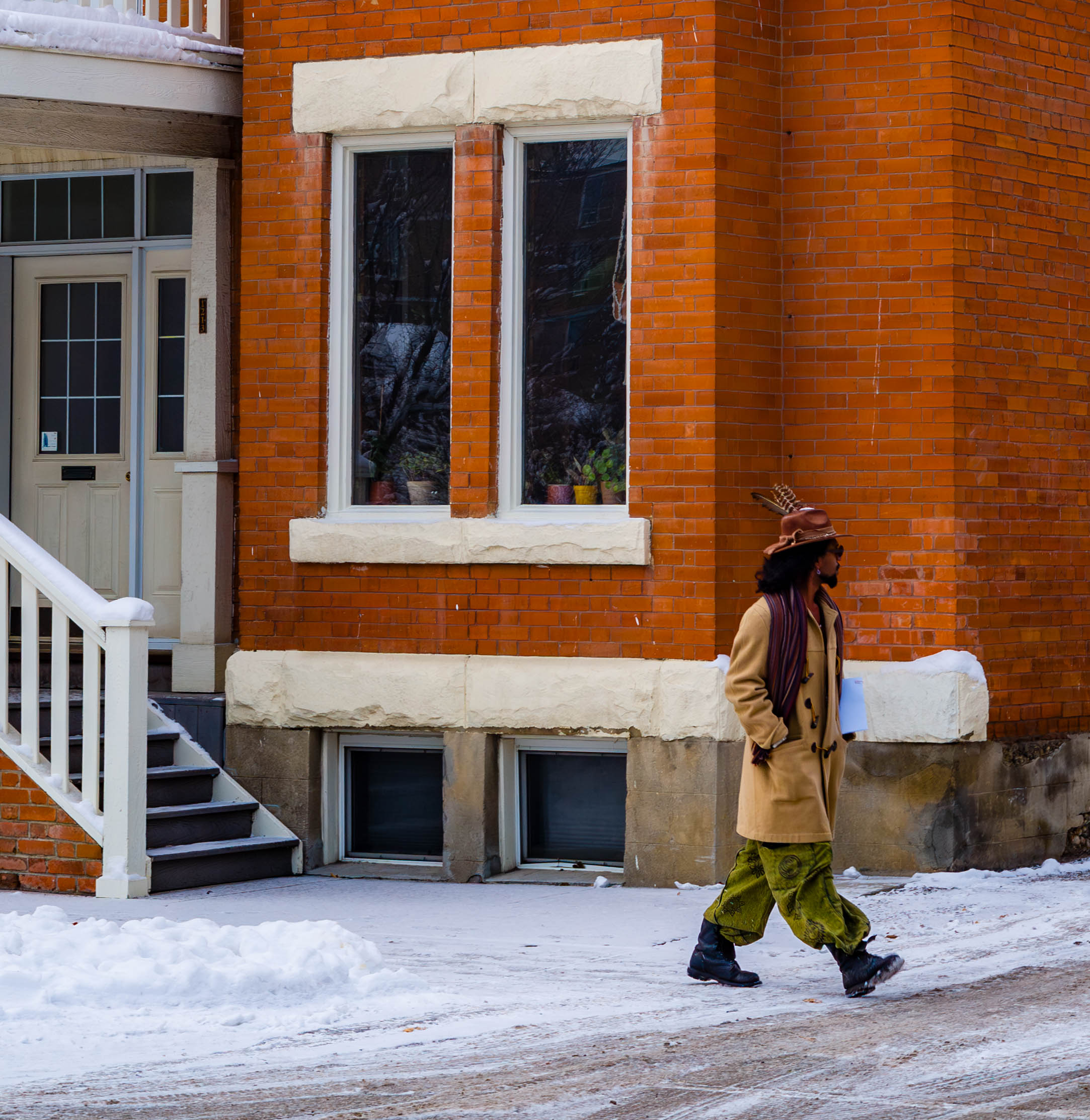
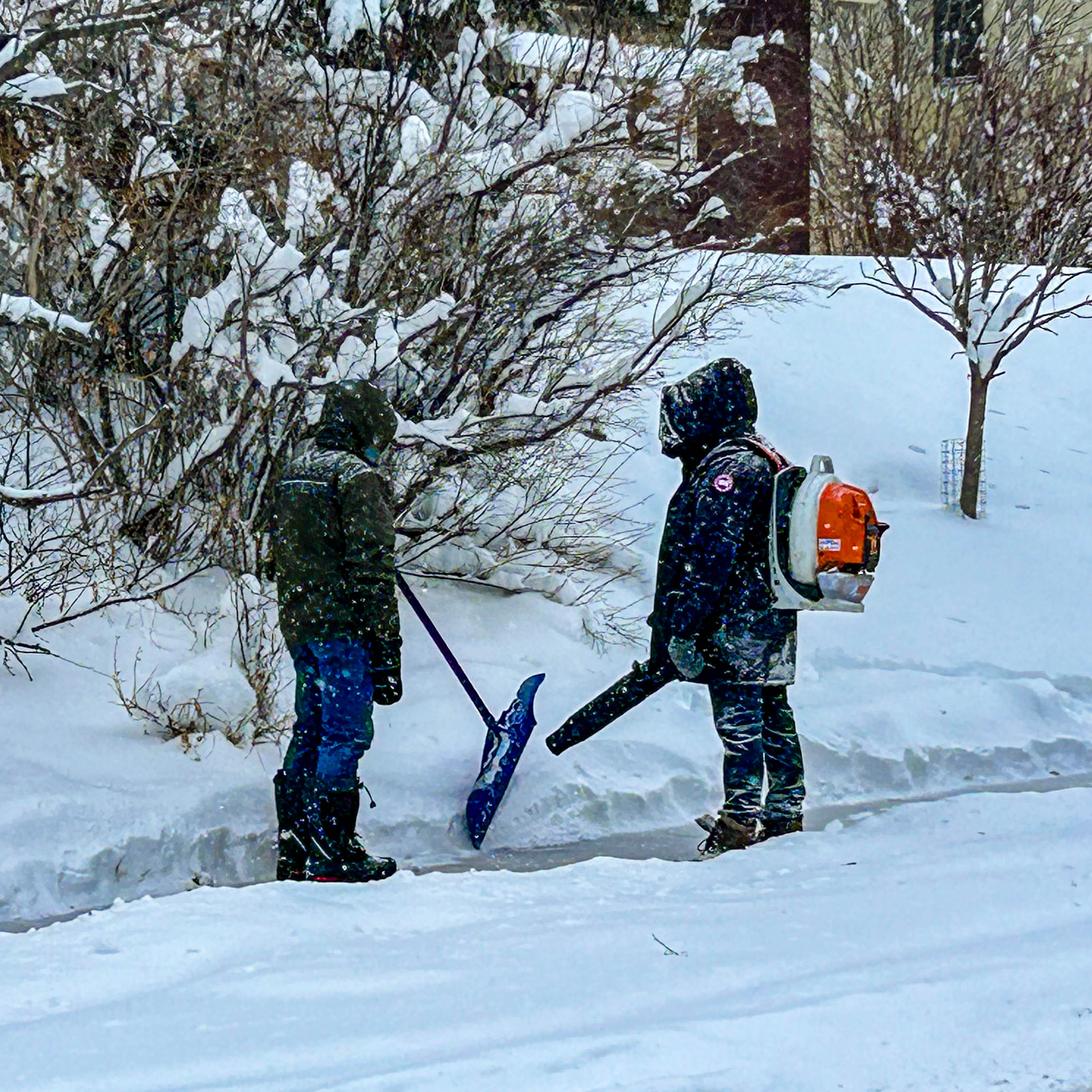
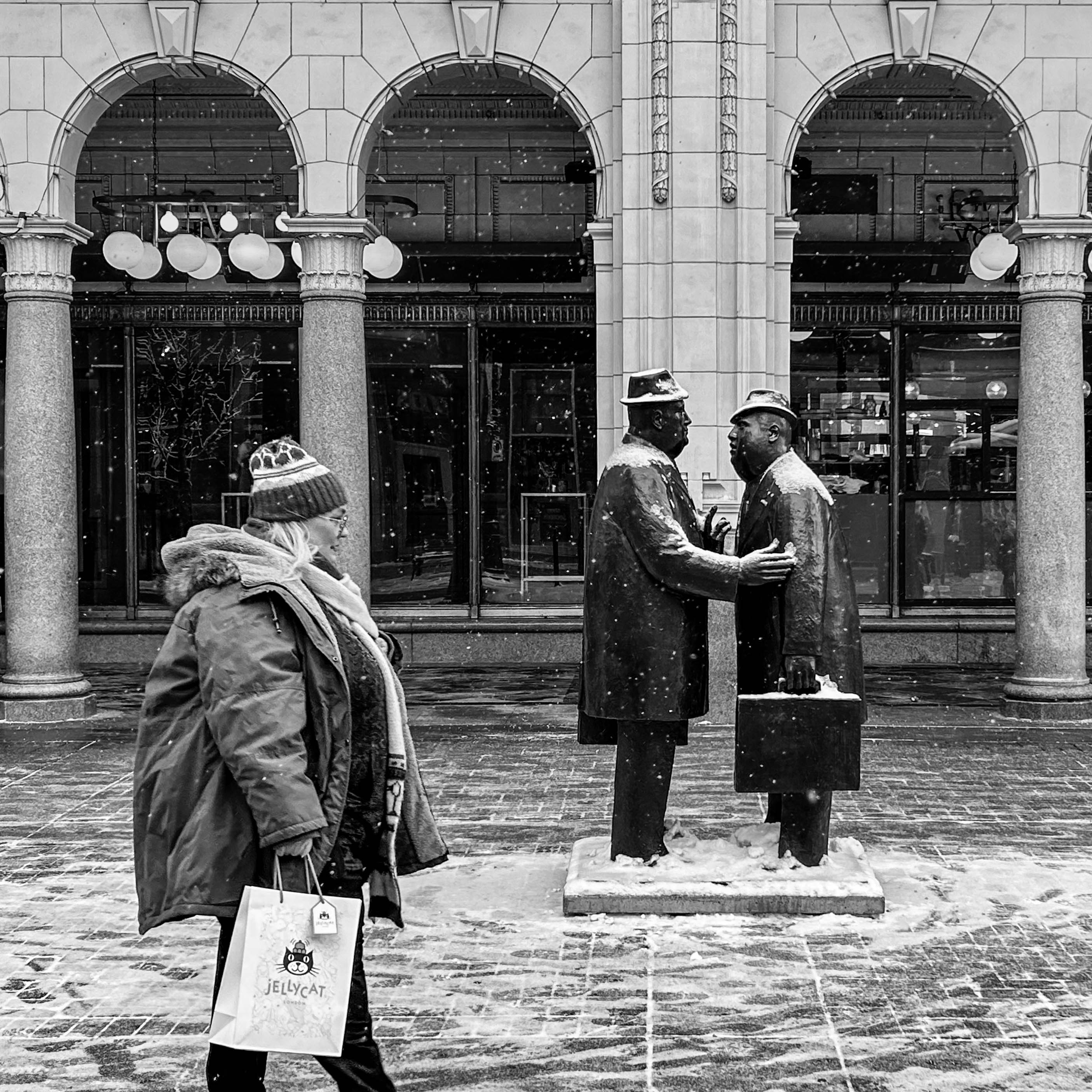
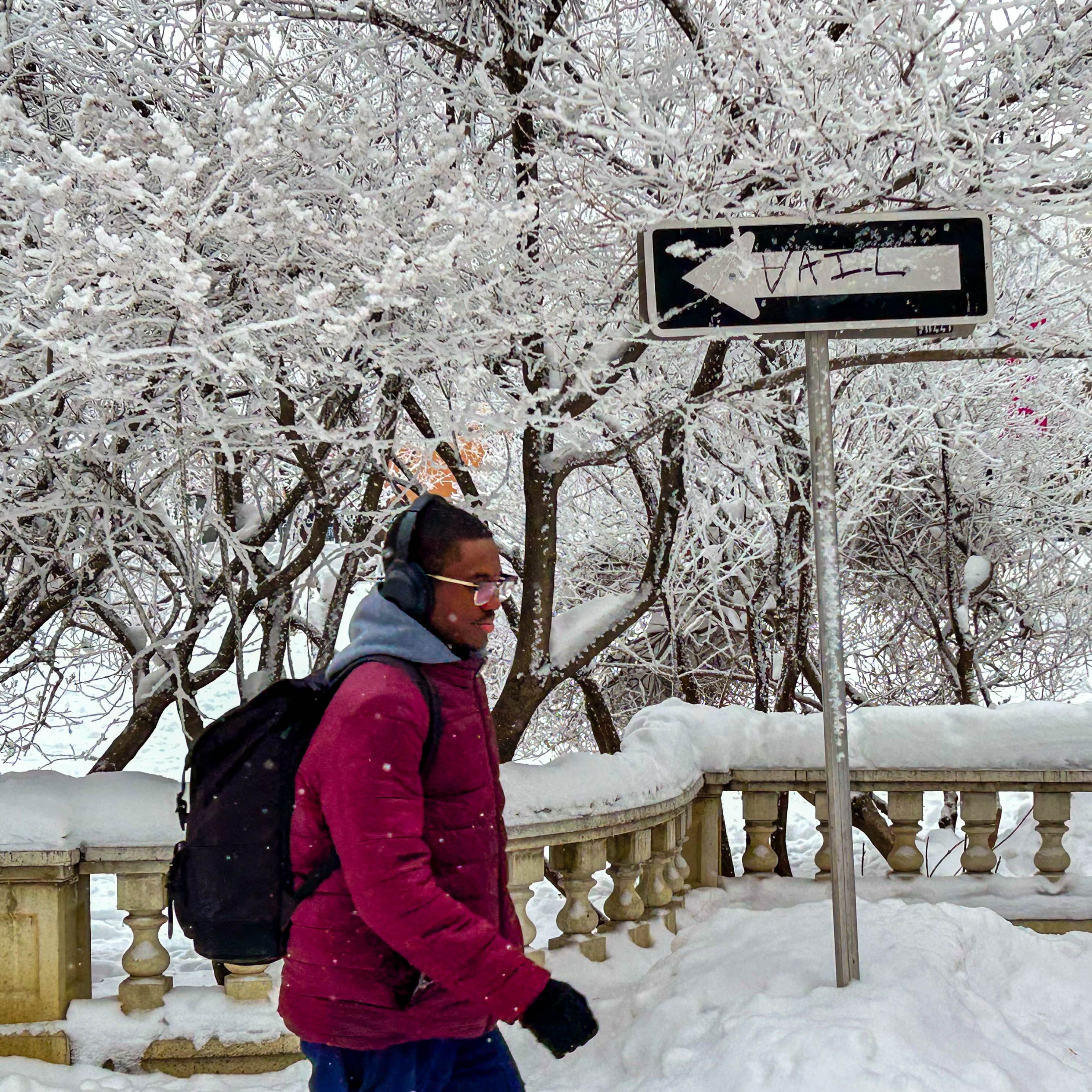
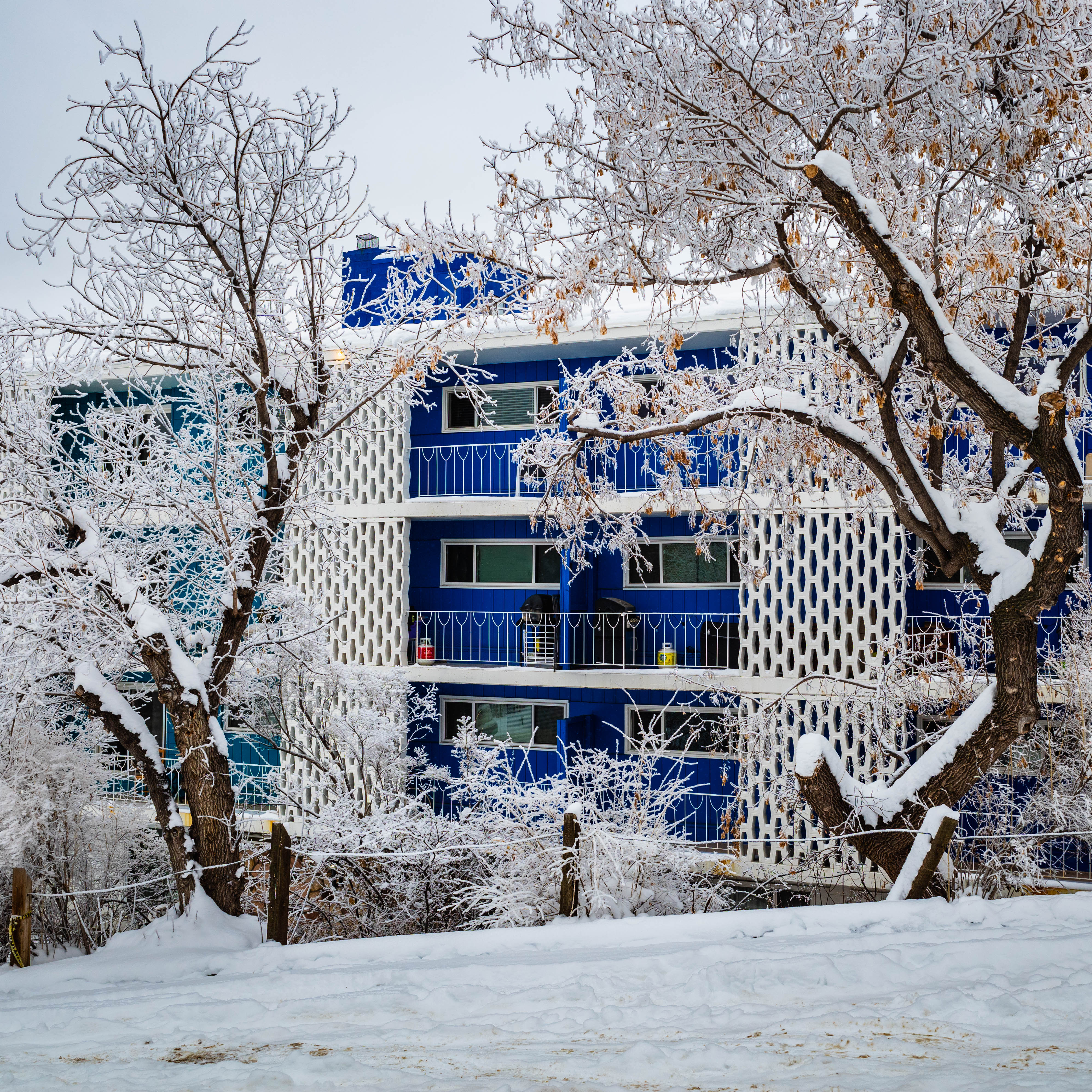
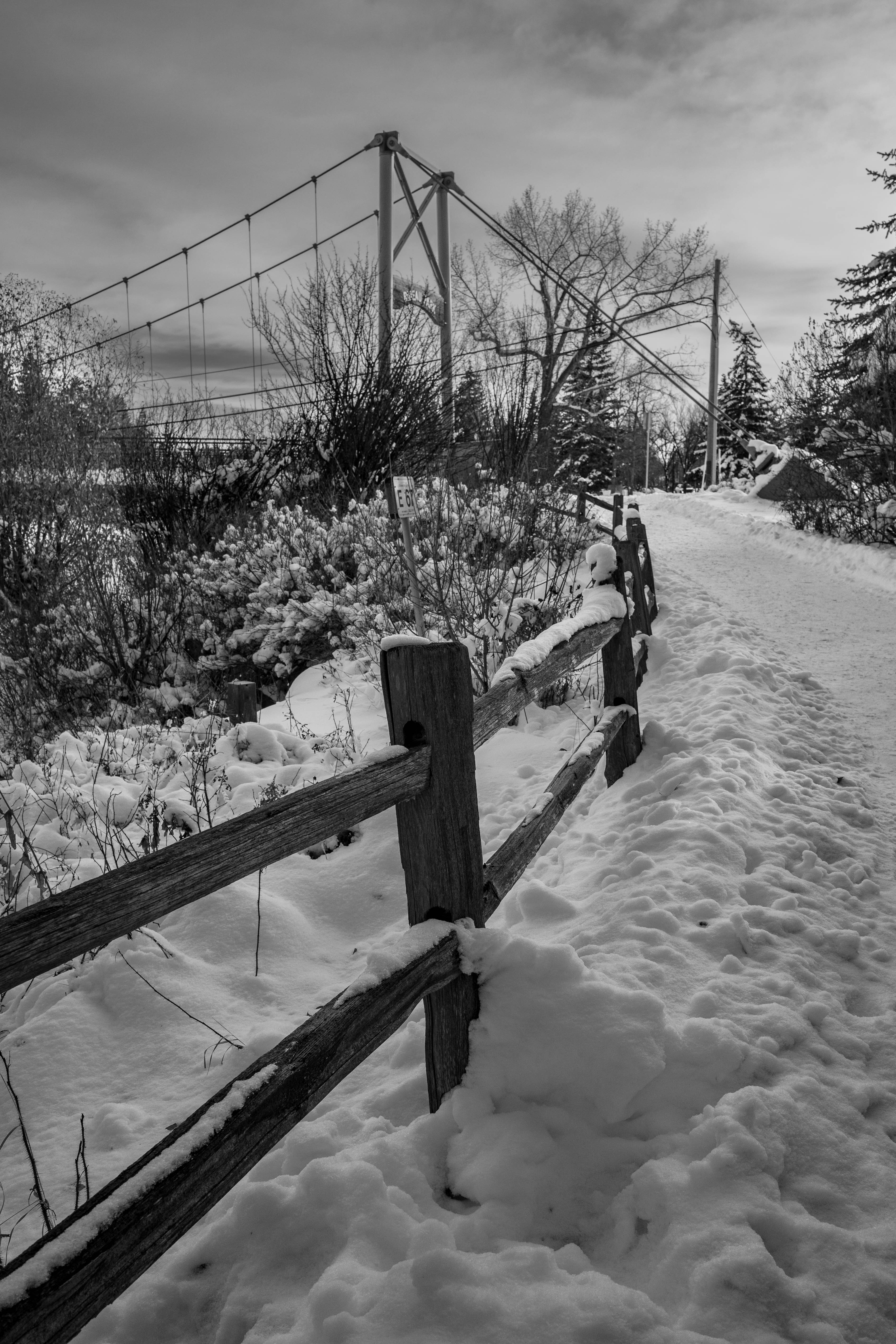
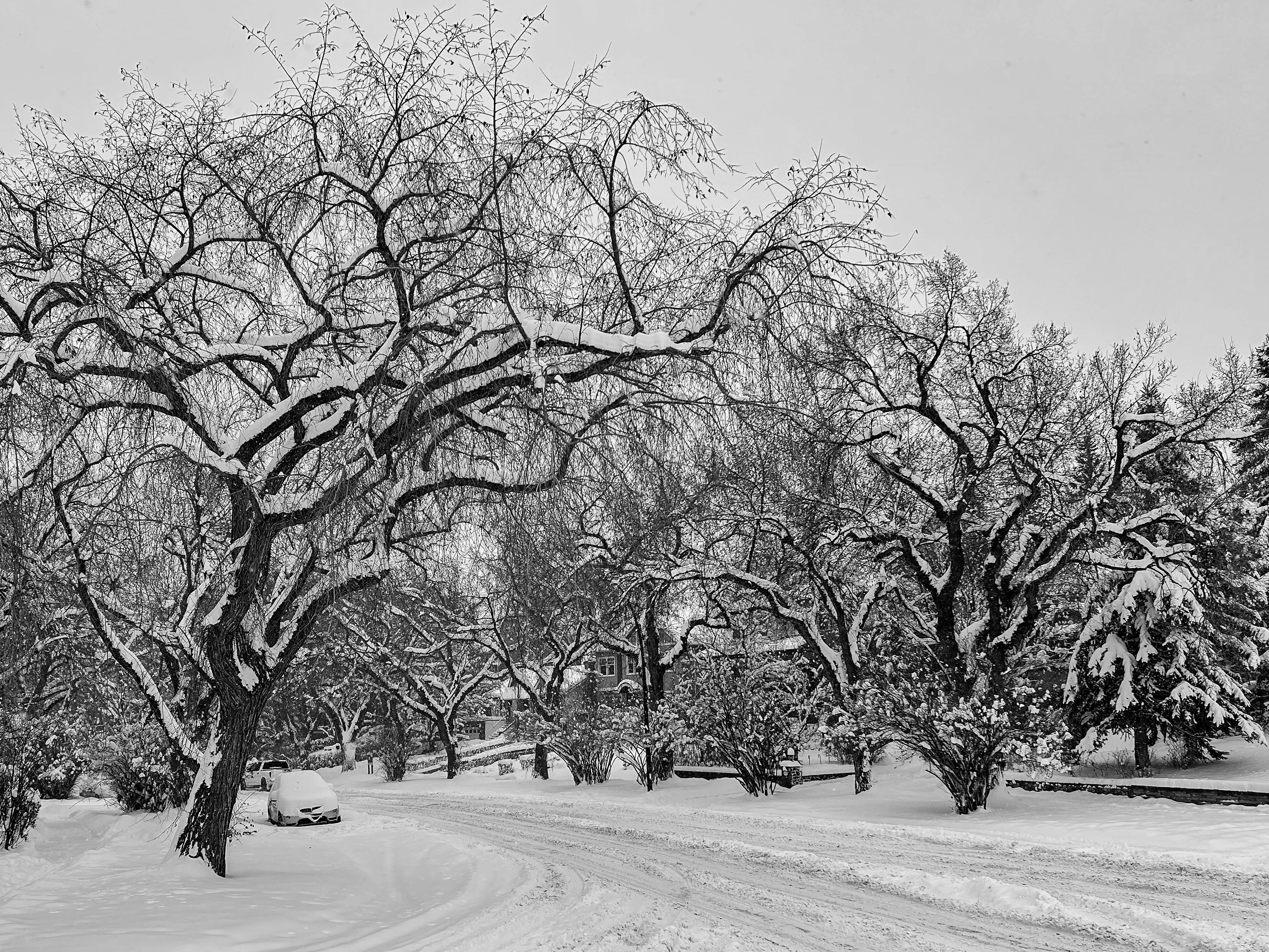
Coincident with the stroke congress was Calgary’s first blast of winter. This likely gave the conference organizers fits. It was quite a wallop. I think we got something like three times our usual November snowfall in one day. Now, while that did complicate a lot of things, it also provided for some great photography. Here are some shots from around the city… with a reminder that the copyright for all images is mine.

Strides Run Streak

Here we are, already halfway through December. Cue the usual observations about where the year has gone. December is also when many Calgary runners take on the annual Strides Run Streak. The challenge is simple: run at least one mile every day during the month.

I have some meaningful connections to this event, so whatever else is going on at this time of year, I like to sign up for it. One mile a day is an achievable goal. I give myself the added challenge of finding a worthy photo or two while I’m completing my run. Sometimes that is a bigger test, particularly with the days getting shorter and shorter!

This year, my commitment is strong, but the challenges are not insignificant. We started the month with plenty of snow on the roads and sidewalks, which have slowly turned into skating rinks. Ah, Calgary weather! I’m also doing most of my running solo these days, as my favourite training partner is sidelined with a sore hip. We are both hoping for some improvement soon.

Two weeks into December, my streak is intact, and I have managed to accumulate a few images. Maybe more images than miles, if I’m honest. While it is nice to capture the festive spirit… the snow does help with that… it isn’t essential. Rather, my goal is to find images that can transport me back into that time and place. It’s a way of adding meaning to my runs. When it comes together, it’s a nice feeling. Here’s a sample.

And while I did say the images don’t have to be festive, there is one that has the potential to put even a Grinch like me into the Christmas spirit. See what you think.

Look for more images soon. I have ideas for other posts before I shut things down for the holidays. In case that doesn’t happen, I will take this opportunity to offer my best wishes for a Merry Christmas to one and all.

Be well and BE FAST!
Signal Hill Photo Run

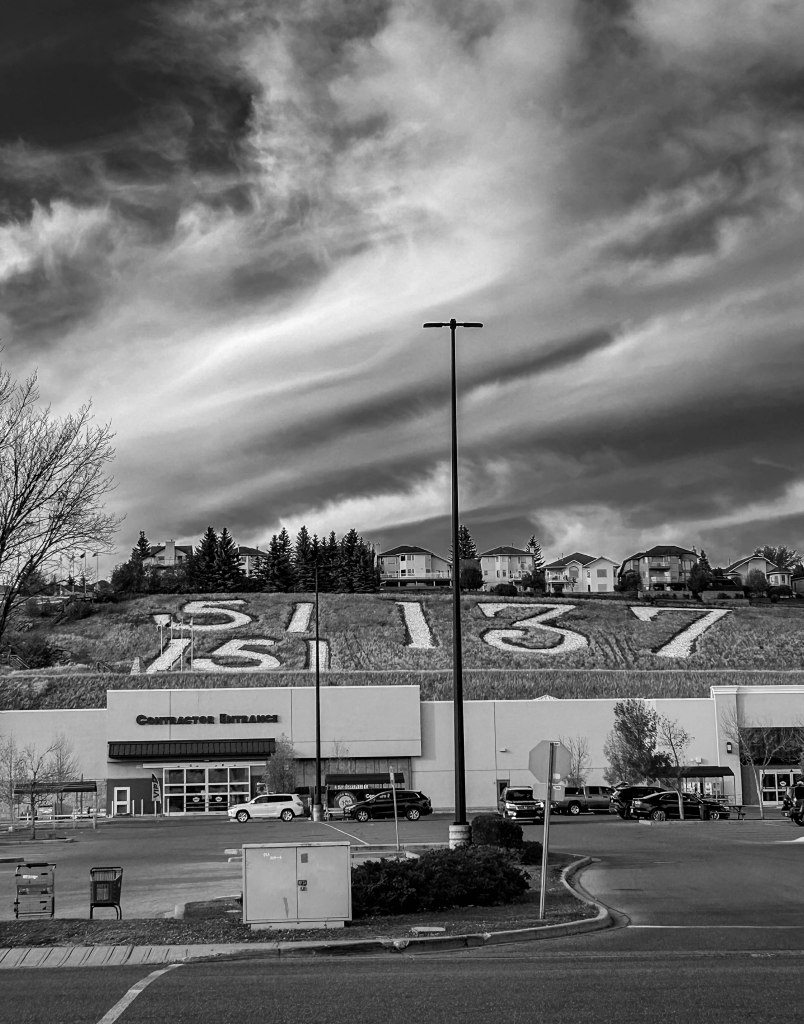
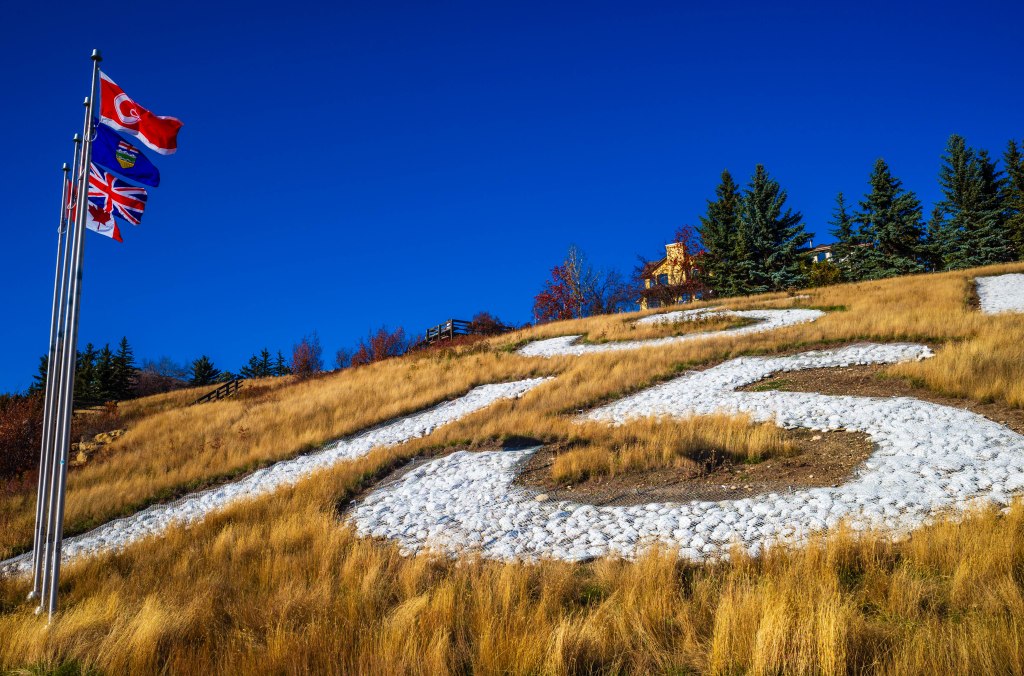
A recent errand led me to an unexpected trail of discovery through Calgary’s military history. I had stopped at the busy Westhills shopping district, the usual collection of big box stores. As I walked back to my car, I noticed the battalion numbers preserved on the side of the hill below the Signal Hill neighbourhood.

I knew about the battalion markers but hadn’t thought much about their significance. My first reaction when I saw the whitewashed stones was how small they looked, sandwiched in between the RONA store and Calgary’s residential sprawl just above. I made a point to return soon for a closer look.

Military history squeezed into the urban landscape

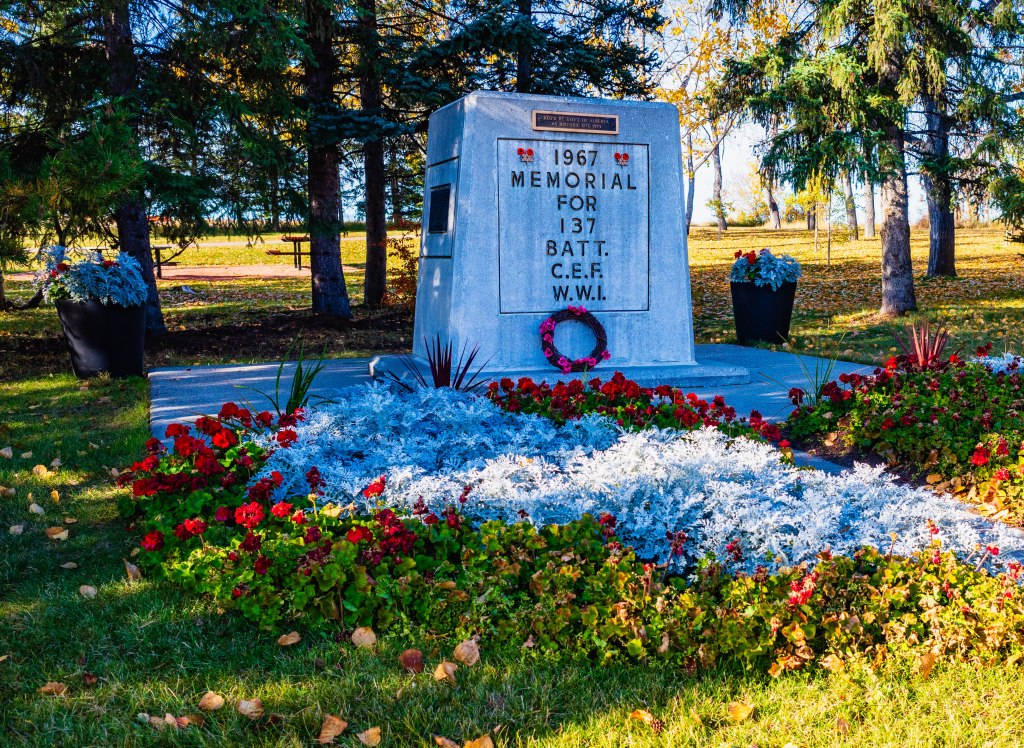
A couple of days later, I was jogging through North Glenmore Park, along the crest of the bluff. I ran by a monument at the west end of the park, one that I had passed hundreds of times. I decided to stop and check it out. The plaque indicated that this was a 1967 memorial to the 137th Battalion of the Canadian Expeditionary Force (the CEF) in World War I. I remembered that “137” was also one of the battalion numbers on Signal Hill.

The 1967 memorial to the 137th Battalion

I guessed, correctly, that this was the same 137th battalion immortalized on the hillside. Now I definitely had to make my way over to Signal Hill. I figured it would be a great excuse for a photo run.

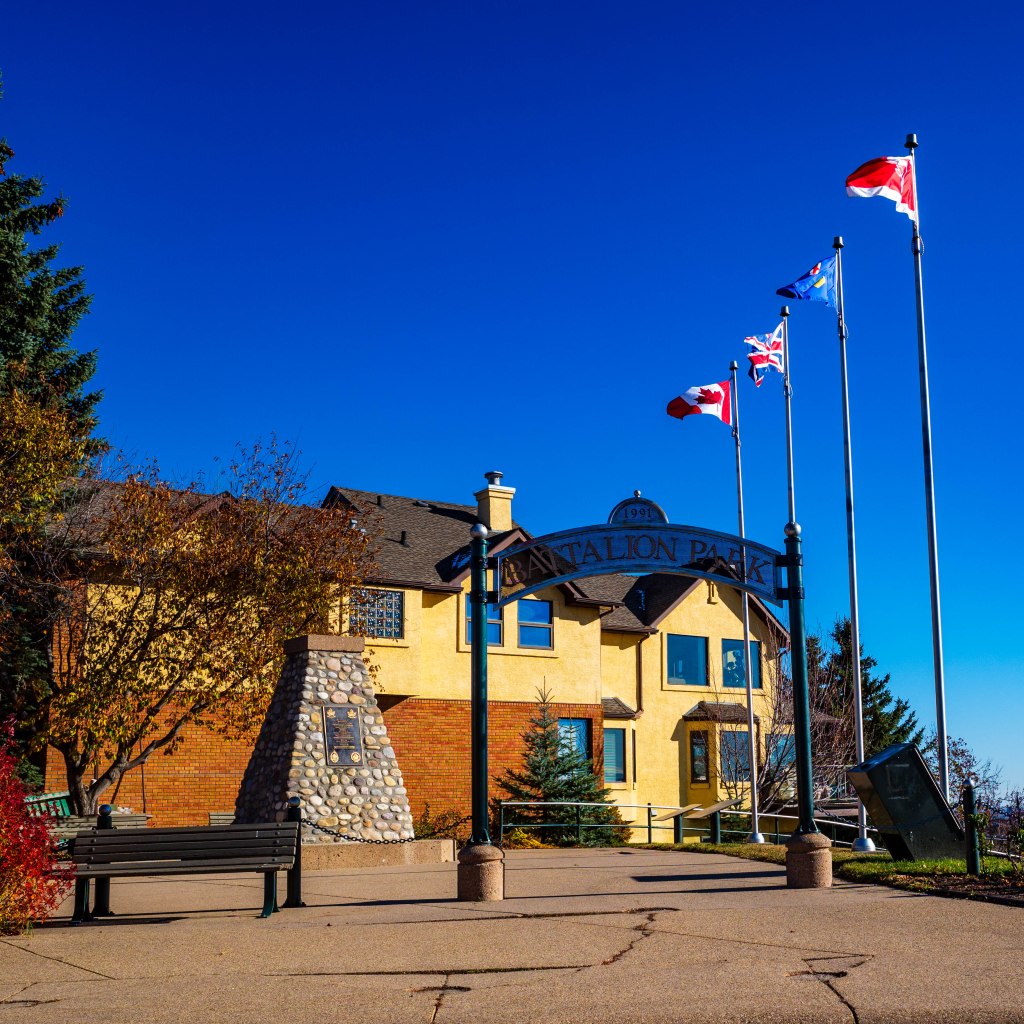
I grabbed my camera (the Ricoh GR III of course) and parked at Battalion Park on Signal Hill Drive. Here’s the Strava entry for my easy run. It was a beautiful day and I did an enjoyable 6-kilometre loop around the neighbourhood.

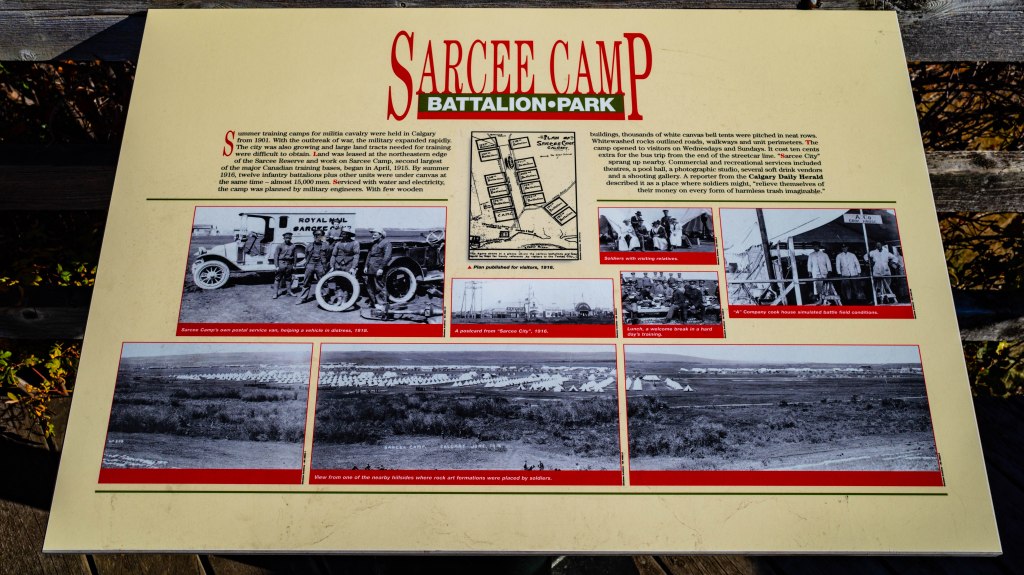
The story of Sarcee Camp is well explained in a series of plaques next to the stairs that wind through the markers. I learned that the camp was established in 1914. It was in a section of the Sarcee Indian reserve (now Tsuu T’ina) that was leased by the Canadian militia as a training site.

Sarcee Camp was a busy place. As many as 45,000 military personnel from 30 battalions trained at the site during the war. It was customary for each battalion to construct a “geoglyph” (that’s a design or motif created by humans and built into the natural landscape) with their unit number. They did this using stones hauled by hand from the riverbed, which is two kilometres away from the hill. 

The 113 is the oldest of the four stone markers on Signal Hill. The 113th Battalion was formed as the Lethbridge Highlanders in 1915. The battalion relocated to Sarcee Camp in May 1916 and sailed for England in September of that year. The 113th was broken up for replacements, with most of the men transferred to France. The battalion never saw action as a unit and was disbanded in 1917.

The other numbers on the hillside were constructed by battalions of the CEF that trained at the Sarcee Camp, including the following:

  • The 137th Infantry Battalion of Calgary began recruiting in late 1915. After sailing to England in August 1916, the battalion was absorbed into the 21st Reserve Battalion.  It’s worth noting that the King’s Own Calgary Regiment (RCAC) perpetuates the 137th Battalion. Members of the 137th Battalion CEF Association erected the memorial to the unit in Glenmore Park.
  • The 151st Central Alberta Battalion began recruiting in 1915. It sailed to England in October 1916 and was absorbed into several reserve battalions.
  • The 51st Canadian Infantry Battalion was recruited in Edmonton. It sailed to England in April 1916 and provided reinforcements for the Canadian Corps until it was reorganized in November 1916.

Although there were approximately 20 geoglyphs built, most were destroyed in the 1950s during the construction of a mess hall.

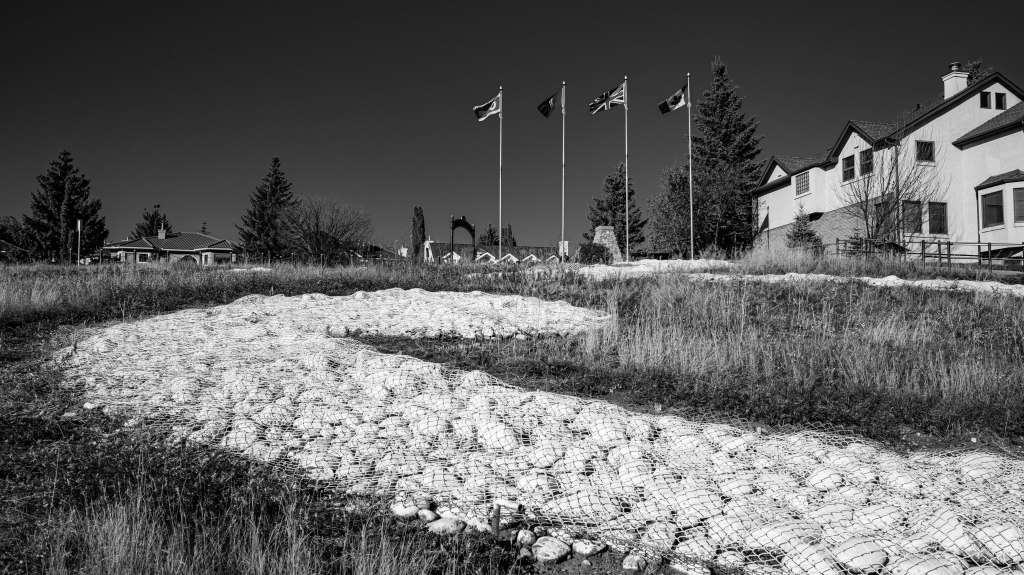
When we first moved to Calgary in the early 1990’s, the battalion markers were just about the only thing in the area. Over time, residential development nearly swallowed up the geoglyphs. Fortunately, there was enough recognition of the significance of these markers that they were preserved. In fact, three of the markers (137, 151 and 51) were meticulously moved a short distance from their original locations.

You can see a few photos I took during my cooldown walk. I found it quite challenging to get any perspective on the geoglyphs when I was right next to them. In that respect, the parking lot of the RONA store isn’t a bad place to stop and admire this unique piece of Canada’s military history. Even so, with Remembrance Day just around the corner, I recommend getting closer and doing more exploration if you have the time.

The Van Gogh to Van Gogh Photo Run

My photo run was bookended by two very different pieces of public art in Calgary. The pieces have a couple of things in common. Both are large, impressive sculptural works. And both have Vincent Van Gogh as their subject.

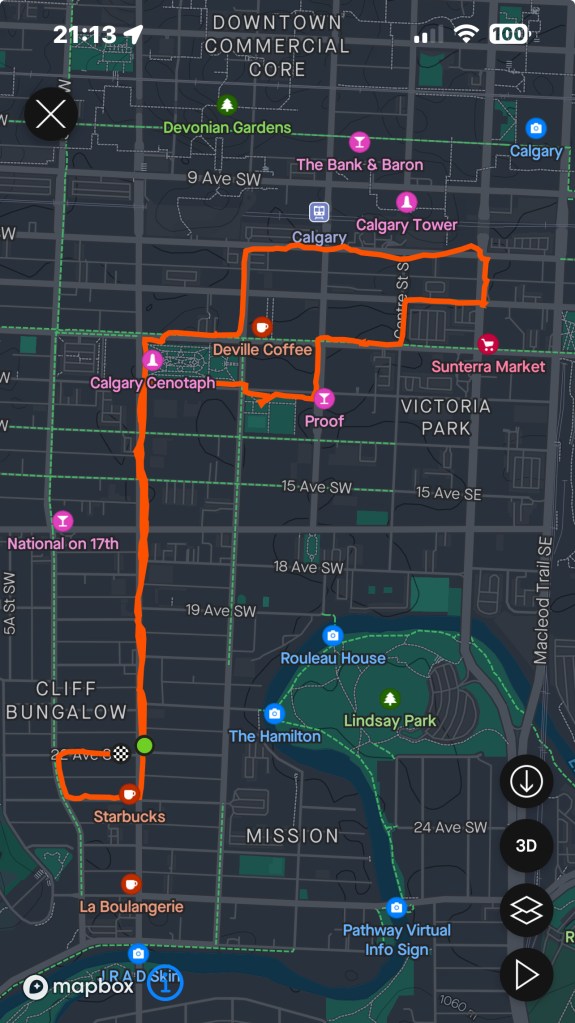
What a coincidence! I decided to do some research after I got home. But first, it was time to explore on foot. Here’s my route from Strava:
The Van Gogh Photo Run

And here’s what I found out about the artworks and the artists.

Van Gogh Observes, by Joe Fafard

I parked on 4th Street SW in Mission, near Masters Gallery, for the start of my easy run. I always like checking out what’s on display in their windows. Whatever else I happen to see, I can stop to admire the large piece installed just outside the gallery.

That piece, Van Gogh Observes (VGO), is a major sculpture by the late Joe Fafard. I wrote about Fafard last fall, when I photographed Do Re Mi Fa Sol La Si Do, his sculpture comprising eight stampeding horses. That piece is installed in Harley Hotchkiss Park in downtown Calgary.

Fafard’s piece is big and colourful. It’s fantastic. Van Gogh silently watches everything going on outside the gallery… hence the title. And from his vantage point, he’s seen a lot since the piece was unveiled in 2019. Van Gogh Observes was one of Fafard’s last major works… he died in March of the same year.

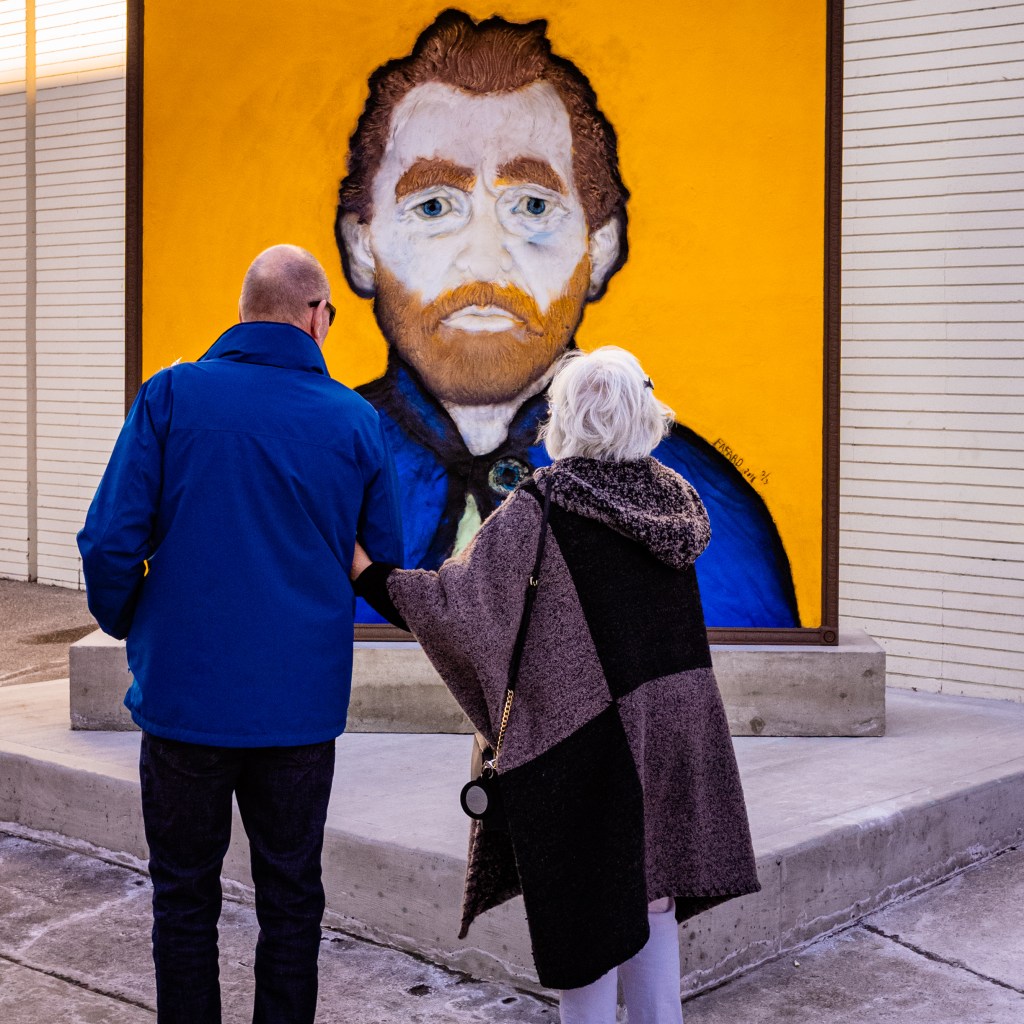
Although it wasn’t taken during my recent run, here’s one of my favourite pictures at that location. This couple seems to be deep in conversation with Vincent.

“Hello Vincent!”

Fafard was famous for his sculptural works, which often have a highly animated look. He sculpted livestock, people and other subjects, in bronze or laser-cut steel. His work is always visually appealing. This is certainly true of VGO. I think Fafard’s use of bold yellow and blue was a nod to Van Gogh’s frequent use of the same colours. It’s a piece that brightens up bleak winter days in Calgary.

Even from the back, it’s an amazing piece to look at.

Van Gogh Observes (Joe Fafard), from the rear

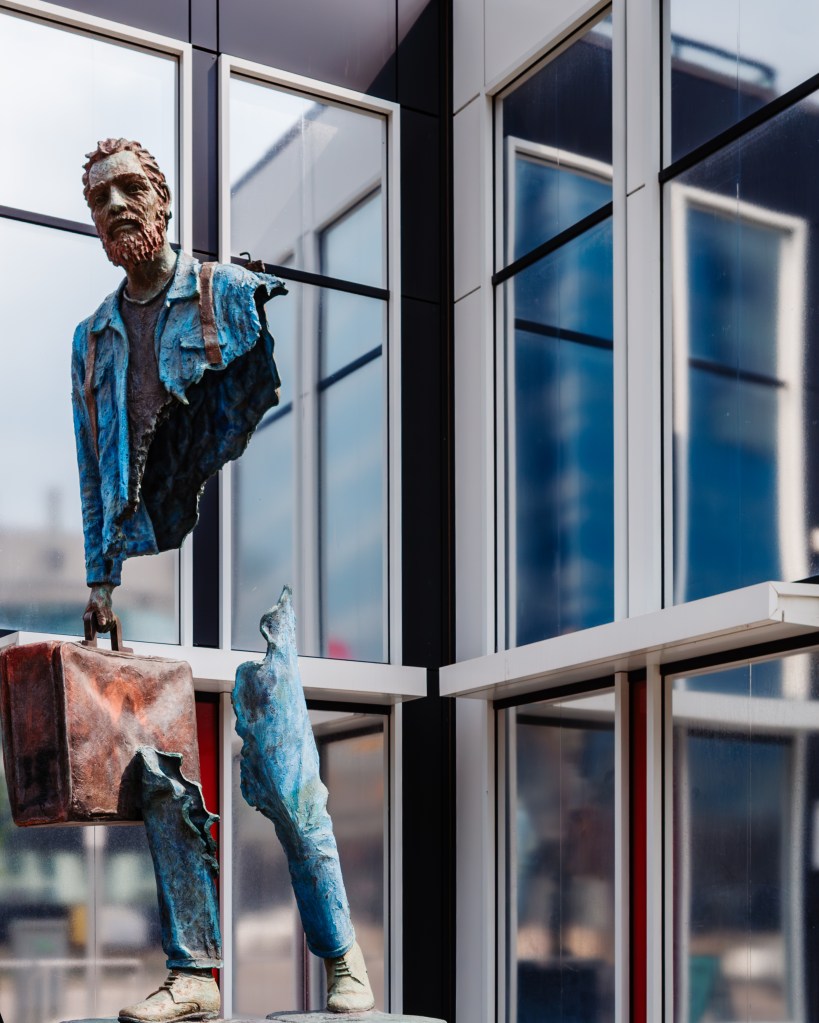
Van Gogh Monumental, by Bruno Catalano

I made my way to the UPTEN building at 10 Avenue and 1 Street SE to see Bruno Catalano’s 2020 painted bronze statue, Van Gogh Monumental. The four-metre-tall statue on the southeast corner of the intersection presents the artist walking purposefully while holding a well-used suitcase and carrying a painting on his back. He walks in the direction of the downtown core.

Van Gogh Monumental (Bruno Catalano)

The statue is part of Catalano’s Les Voyageurs series, all of which depict characters in motion. Many of Catalano’s sculptures, including this one, have a large diagonal gap, really a gash, at mid-torso. The sculptures seem to defy physics… they shouldn’t be standing, but they do. Catalano’s bio tells us he discovered this technique when he had a casting accident with an earlier piece. He liked the result, and he incorporated it into many of his subsequent works. It’s become his trademark.

Catalano’s sculpture invites speculation about its meaning. What is Van Gogh searching for? Where is he headed? Maybe there are clues in Catalano’s own story. He was born in Morocco. His French-Italian family moved to Marseille when he was ten. Catalano has Jewish ancestors, who were expelled from Spain in the 15th century, and eventually settled in North Africa. The theme of travelling, of searching nomadically, seems to fit naturally into his art. 

I find it interesting that Catalano chose Van Gogh for this sculpture, because most of his subjects are anonymous people. Here, he has chosen one of the world’s most famous and troubled artists. We shouldn’t be surprised to see Van Gogh searching for something while carrying his worldly possessions and his art. The gap in the statue is visually startling, but it also reinforces the idea that the subject has lost something quite fundamental.

Conclusion

As I jogged back to my car, I pondered the two art pieces I had just seen. I like both the Fafard and the Catalano pieces, even though they give us very different takes on an artist we all have some familiarity with.

The Fafard piece is approachable. Its animated look and bright colours give us an optimistic Van Gogh. Like the couple pictured above, we feel we could have a conversation with the man in the statue. That might explain why the statue is a huge attraction. I often see pedestrians stopping to admire it (or have a chat.)

On the other hand, the Catalano piece is more aligned with how we usually think of Van Gogh. It is a darker piece. The burdens Van Gogh is carrying and the cut across his body seem to portend his death by suicide. These are effective techniques to tell us something about the subject, but also about the artist. If Catalano relates to Van Gogh’s trials, he has done a great job of telling us.

I am most moved by the Catalano piece. What about you? Whichever piece you prefer, we are fortunate to have these important artworks in the city. It’s even better that they are just an easy jog apart.