Signal Hill Photo Run

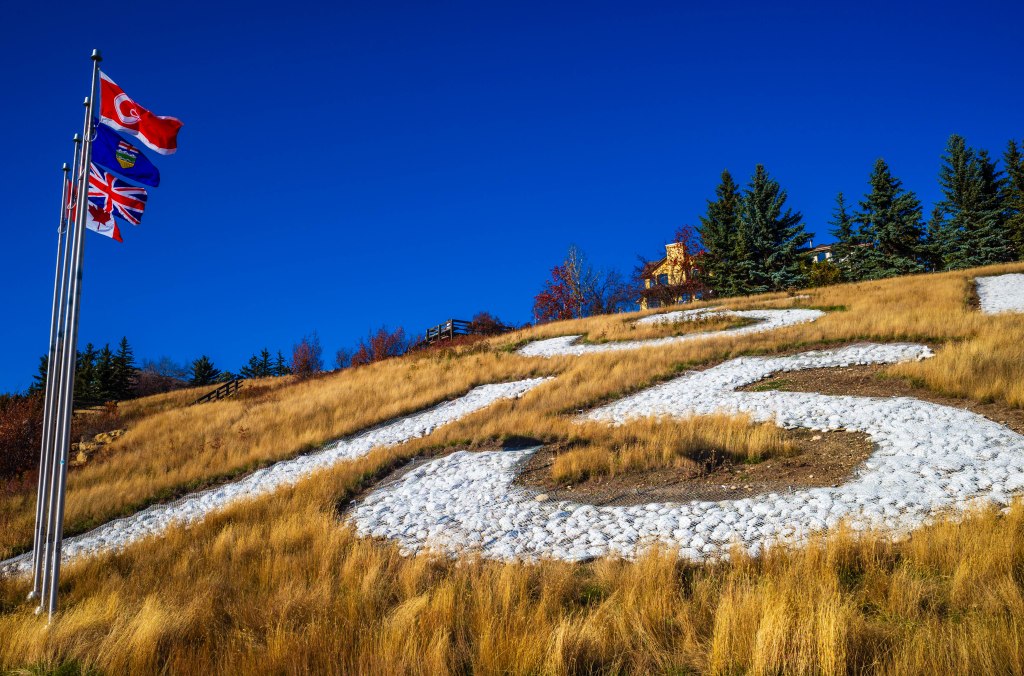
A recent errand led me to an unexpected trail of discovery through Calgary’s military history. I had stopped at the busy Westhills shopping district, the usual collection of big box stores. As I walked back to my car, I noticed the battalion numbers preserved on the side of the hill below the Signal Hill neighbourhood.

I knew about the battalion markers but hadn’t thought much about their significance. My first reaction when I saw the whitewashed stones was how small they looked, sandwiched in between the RONA store and Calgary’s residential sprawl just above. I made a point to return soon for a closer look.
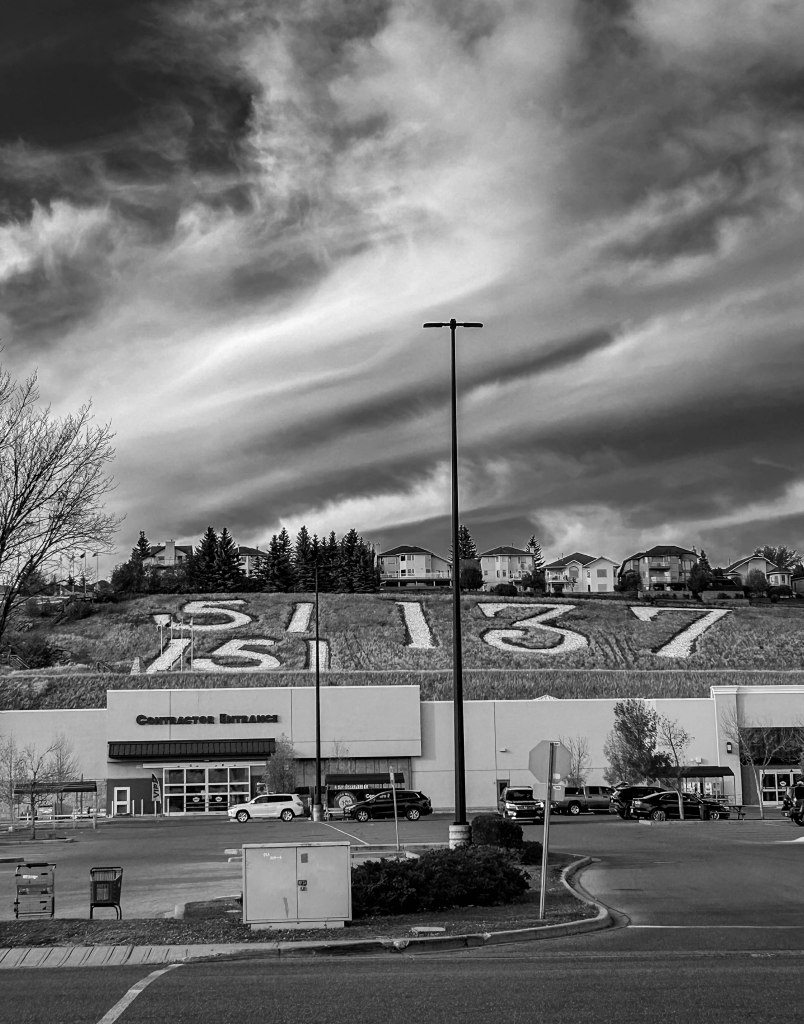
Military history squeezed into the urban landscape

A couple of days later, I was jogging through North Glenmore Park, along the crest of the bluff. I ran by a monument at the west end of the park, one that I had passed hundreds of times. I decided to stop and check it out. The plaque indicated that this was a 1967 memorial to the 137th Battalion of the Canadian Expeditionary Force (the CEF) in World War I. I remembered that “137” was also one of the battalion numbers on Signal Hill.
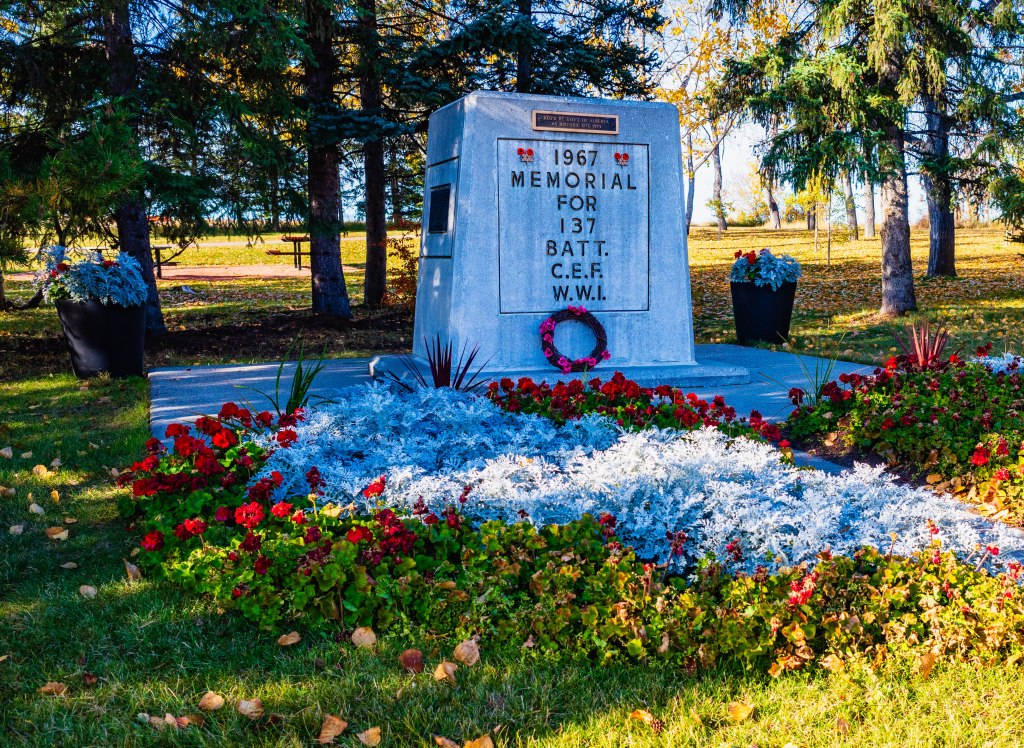
The 1967 memorial to the 137th Battalion

I guessed, correctly, that this was the same 137th battalion immortalized on the hillside. Now I definitely had to make my way over to Signal Hill. I figured it would be a great excuse for a photo run.

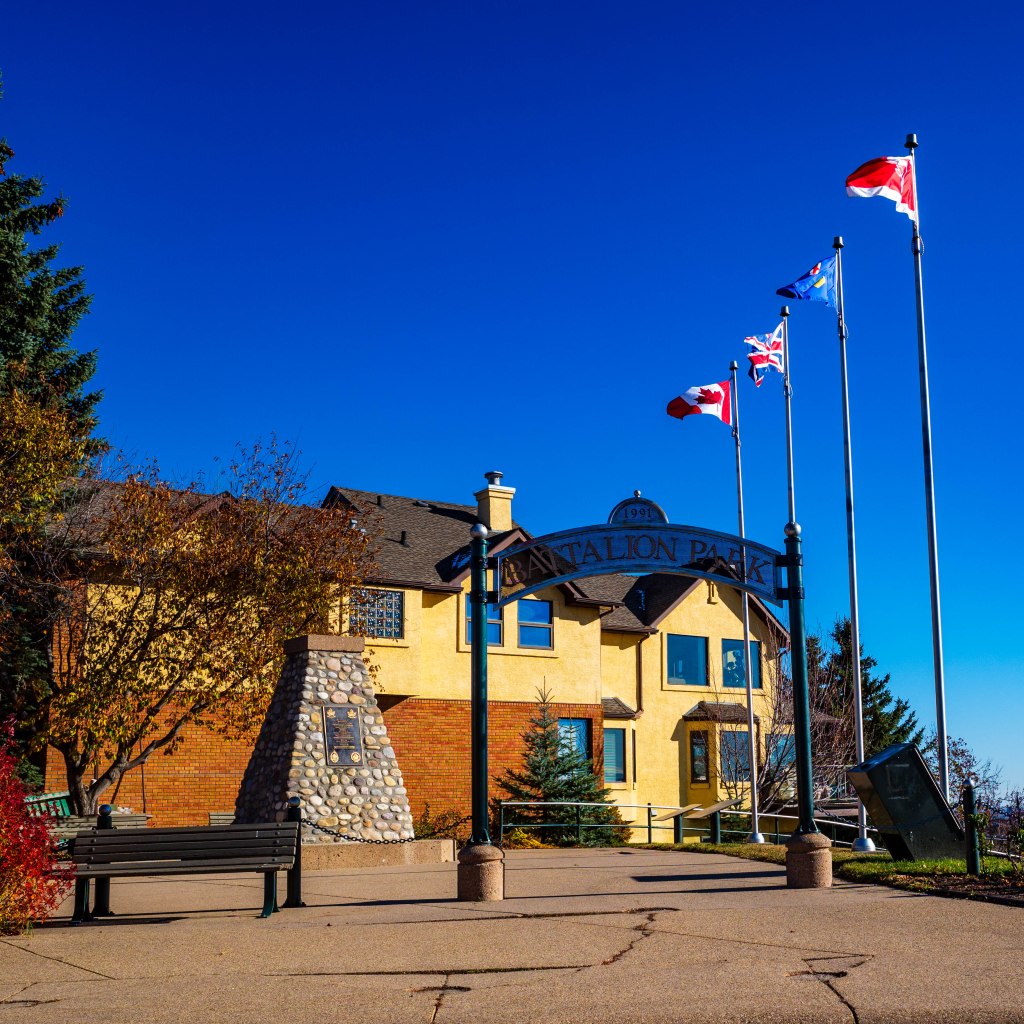
I grabbed my camera (the Ricoh GR III of course) and parked at Battalion Park on Signal Hill Drive. Here’s the Strava entry for my easy run. It was a beautiful day and I did an enjoyable 6-kilometre loop around the neighbourhood.

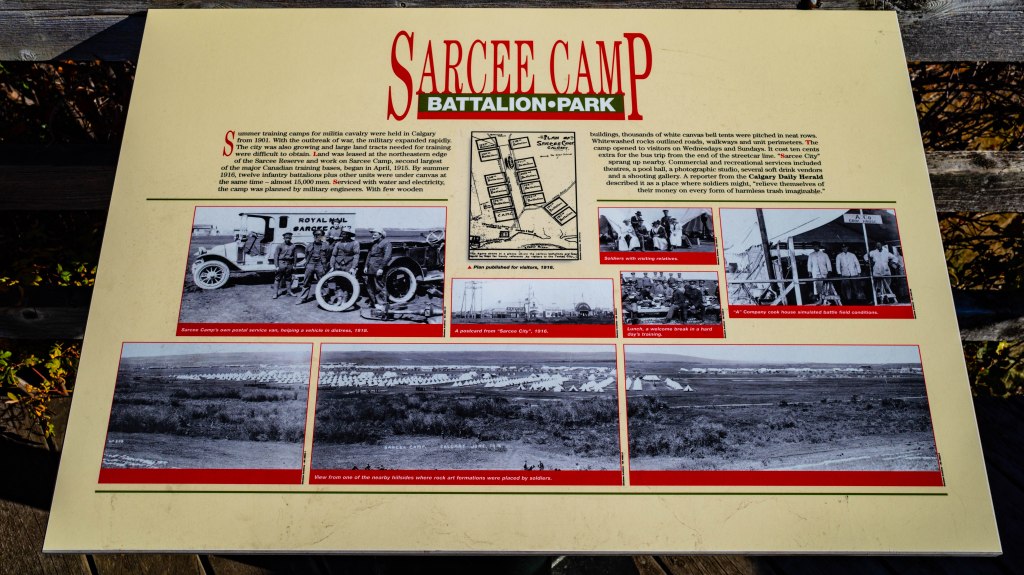
The story of Sarcee Camp is well explained in a series of plaques next to the stairs that wind through the markers. I learned that the camp was established in 1914. It was in a section of the Sarcee Indian reserve (now Tsuu T’ina) that was leased by the Canadian militia as a training site.

Sarcee Camp was a busy place. As many as 45,000 military personnel from 30 battalions trained at the site during the war. It was customary for each battalion to construct a “geoglyph” (that’s a design or motif created by humans and built into the natural landscape) with their unit number. They did this using stones hauled by hand from the riverbed, which is two kilometres away from the hill. 

The 113 is the oldest of the four stone markers on Signal Hill. The 113th Battalion was formed as the Lethbridge Highlanders in 1915. The battalion relocated to Sarcee Camp in May 1916 and sailed for England in September of that year. The 113th was broken up for replacements, with most of the men transferred to France. The battalion never saw action as a unit and was disbanded in 1917.

The other numbers on the hillside were constructed by battalions of the CEF that trained at the Sarcee Camp, including the following:

  • The 137th Infantry Battalion of Calgary began recruiting in late 1915. After sailing to England in August 1916, the battalion was absorbed into the 21st Reserve Battalion.  It’s worth noting that the King’s Own Calgary Regiment (RCAC) perpetuates the 137th Battalion. Members of the 137th Battalion CEF Association erected the memorial to the unit in Glenmore Park.
  • The 151st Central Alberta Battalion began recruiting in 1915. It sailed to England in October 1916 and was absorbed into several reserve battalions.
  • The 51st Canadian Infantry Battalion was recruited in Edmonton. It sailed to England in April 1916 and provided reinforcements for the Canadian Corps until it was reorganized in November 1916.

Although there were approximately 20 geoglyphs built, most were destroyed in the 1950s during the construction of a mess hall.

When we first moved to Calgary in the early 1990’s, the battalion markers were just about the only thing in the area. Over time, residential development nearly swallowed up the geoglyphs. Fortunately, there was enough recognition of the significance of these markers that they were preserved. In fact, three of the markers (137, 151 and 51) were meticulously moved a short distance from their original locations.
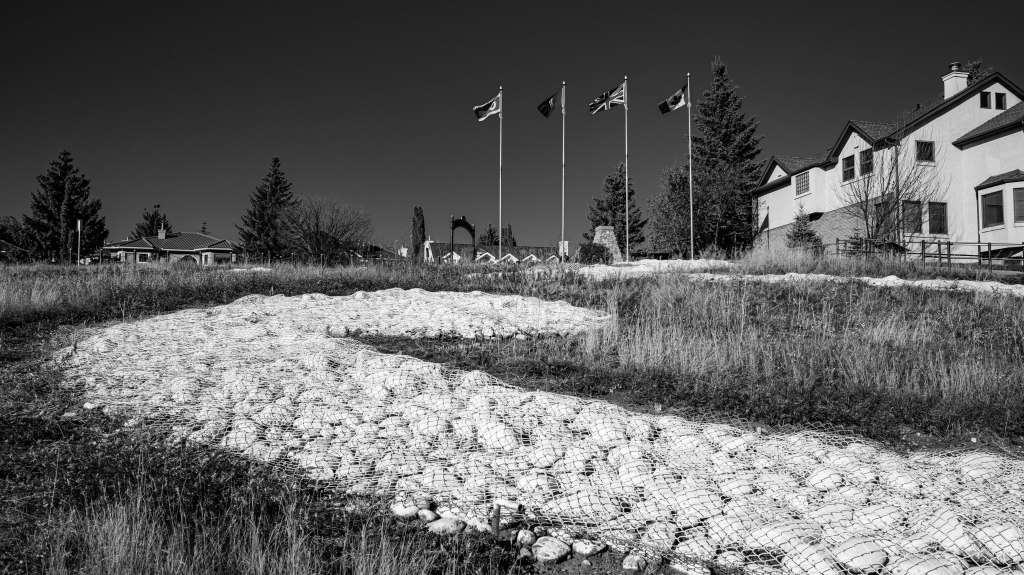
You can see a few photos I took during my cooldown walk. I found it quite challenging to get any perspective on the geoglyphs when I was right next to them. In that respect, the parking lot of the RONA store isn’t a bad place to stop and admire this unique piece of Canada’s military history. Even so, with Remembrance Day just around the corner, I recommend getting closer and doing more exploration if you have the time.

The Van Gogh to Van Gogh Photo Run

My photo run was bookended by two very different pieces of public art in Calgary. The pieces have a couple of things in common. Both are large, impressive sculptural works. And both have Vincent Van Gogh as their subject.

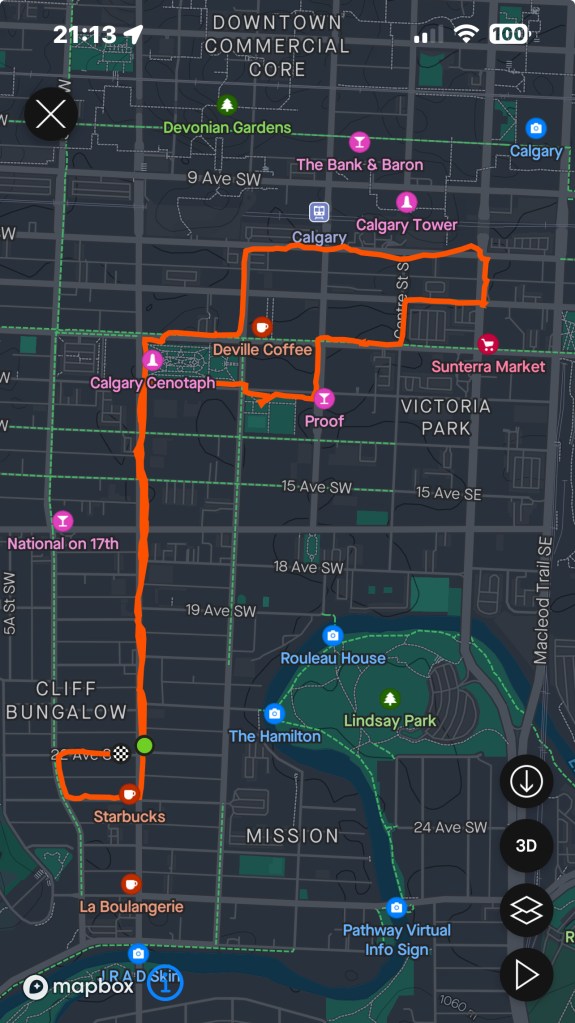
What a coincidence! I decided to do some research after I got home. But first, it was time to explore on foot. Here’s my route from Strava:

The Van Gogh Photo Run

And here’s what I found out about the artworks and the artists.

Van Gogh Observes, by Joe Fafard

I parked on 4th Street SW in Mission, near Masters Gallery, for the start of my easy run. I always like checking out what’s on display in their windows. Whatever else I happen to see, I can stop to admire the large piece installed just outside the gallery.

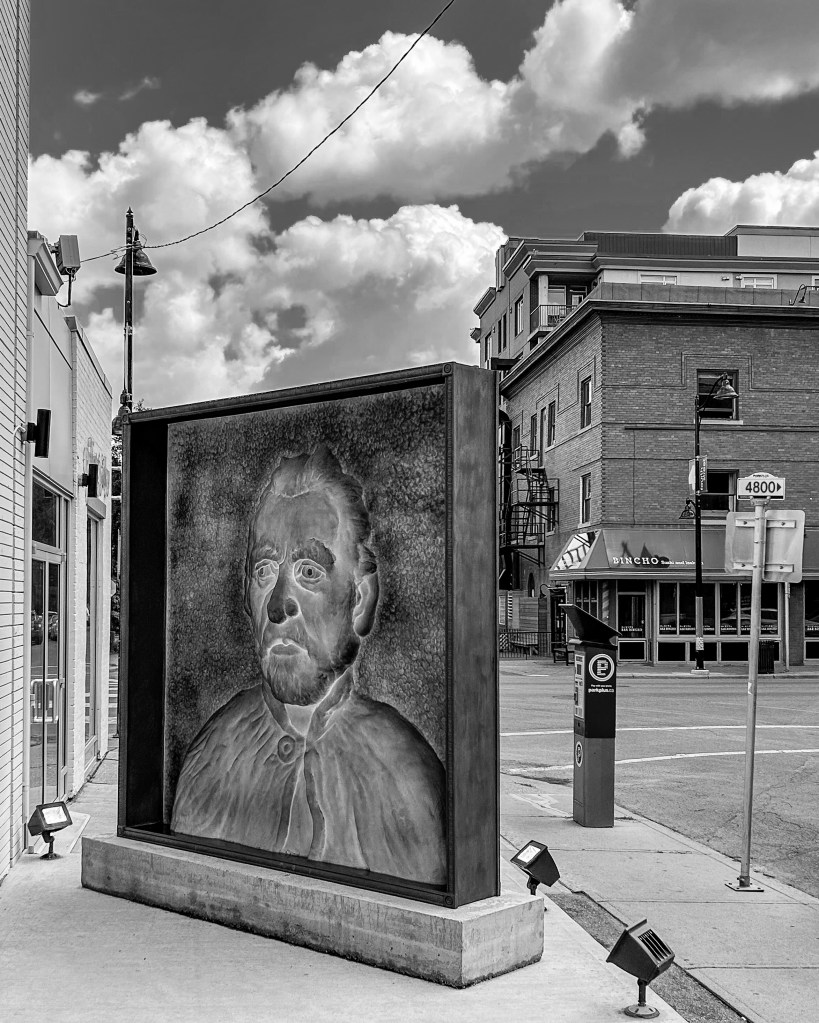
That piece, Van Gogh Observes (VGO), is a major sculpture by the late Joe Fafard. I wrote about Fafard last fall, when I photographed Do Re Mi Fa Sol La Si Do, his sculpture comprising eight stampeding horses. That piece is installed in Harley Hotchkiss Park in downtown Calgary.

Fafard’s piece is big and colourful. It’s fantastic. Van Gogh silently watches everything going on outside the gallery… hence the title. And from his vantage point, he’s seen a lot since the piece was unveiled in 2019. Van Gogh Observes was one of Fafard’s last major works… he died in March of the same year.

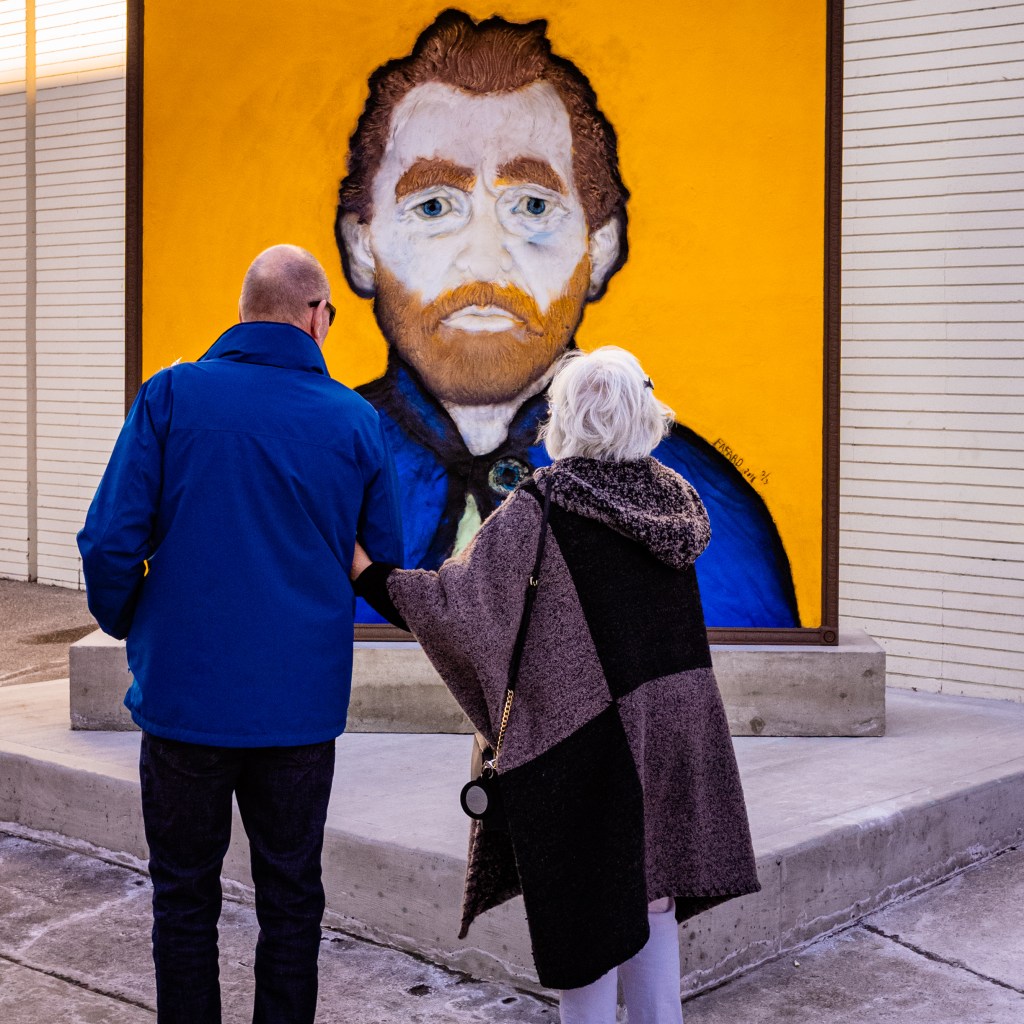
Although it wasn’t taken during my recent run, here’s one of my favourite pictures at that location. This couple seems to be deep in conversation with Vincent.

“Hello Vincent!”

Fafard was famous for his sculptural works, which often have a highly animated look. He sculpted livestock, people and other subjects, in bronze or laser-cut steel. His work is always visually appealing. This is certainly true of VGO. I think Fafard’s use of bold yellow and blue was a nod to Van Gogh’s frequent use of the same colours. It’s a piece that brightens up bleak winter days in Calgary.

Even from the back, it’s an amazing piece to look at.

Van Gogh Observes (Joe Fafard), from the rear

Van Gogh Monumental, by Bruno Catalano

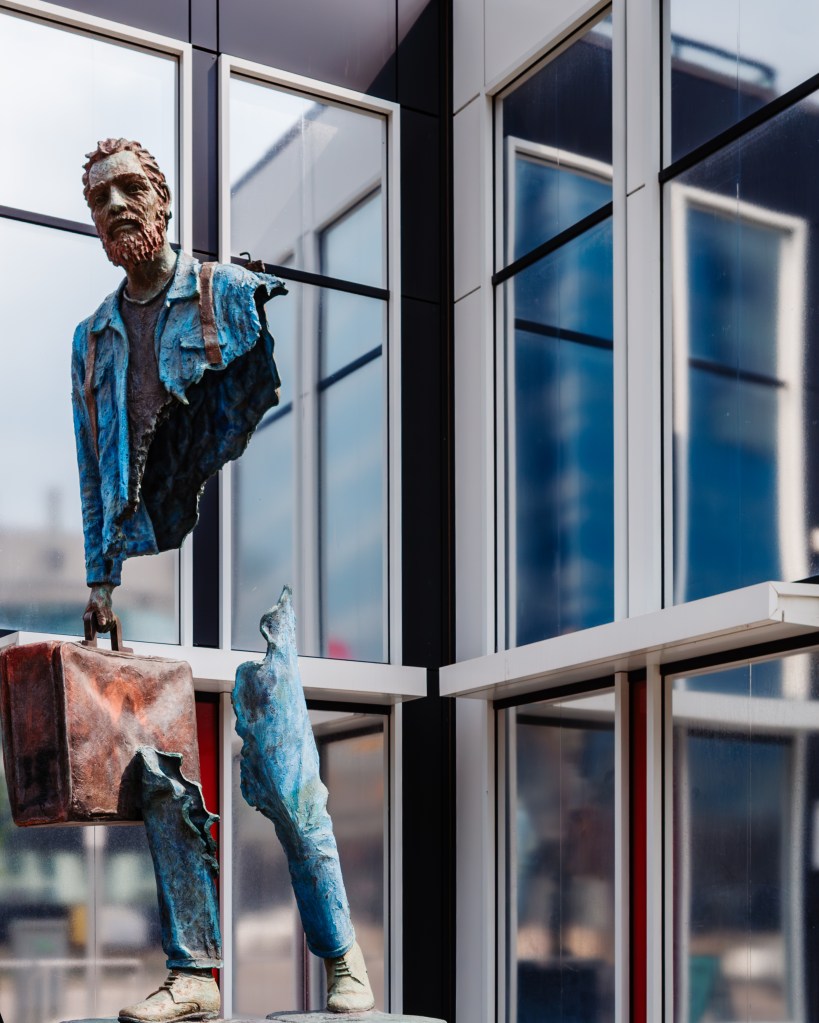
I made my way to the UPTEN building at 10 Avenue and 1 Street SE to see Bruno Catalano’s 2020 painted bronze statue, Van Gogh Monumental. The four-metre-tall statue on the southeast corner of the intersection presents the artist walking purposefully while holding a well-used suitcase and carrying a painting on his back. He walks in the direction of the downtown core.

Van Gogh Monumental (Bruno Catalano)

The statue is part of Catalano’s Les Voyageurs series, all of which depict characters in motion. Many of Catalano’s sculptures, including this one, have a large diagonal gap, really a gash, at mid-torso. The sculptures seem to defy physics… they shouldn’t be standing, but they do. Catalano’s bio tells us he discovered this technique when he had a casting accident with an earlier piece. He liked the result, and he incorporated it into many of his subsequent works. It’s become his trademark.

Catalano’s sculpture invites speculation about its meaning. What is Van Gogh searching for? Where is he headed? Maybe there are clues in Catalano’s own story. He was born in Morocco. His French-Italian family moved to Marseille when he was ten. Catalano has Jewish ancestors, who were expelled from Spain in the 15th century, and eventually settled in North Africa. The theme of travelling, of searching nomadically, seems to fit naturally into his art. 

I find it interesting that Catalano chose Van Gogh for this sculpture, because most of his subjects are anonymous people. Here, he has chosen one of the world’s most famous and troubled artists. We shouldn’t be surprised to see Van Gogh searching for something while carrying his worldly possessions and his art. The gap in the statue is visually startling, but it also reinforces the idea that the subject has lost something quite fundamental.

Conclusion

As I jogged back to my car, I pondered the two art pieces I had just seen. I like both the Fafard and the Catalano pieces, even though they give us very different takes on an artist we all have some familiarity with.

The Fafard piece is approachable. Its animated look and bright colours give us an optimistic Van Gogh. Like the couple pictured above, we feel we could have a conversation with the man in the statue. That might explain why the statue is a huge attraction. I often see pedestrians stopping to admire it (or have a chat.)

On the other hand, the Catalano piece is more aligned with how we usually think of Van Gogh. It is a darker piece. The burdens Van Gogh is carrying and the cut across his body seem to portend his death by suicide. These are effective techniques to tell us something about the subject, but also about the artist. If Catalano relates to Van Gogh’s trials, he has done a great job of telling us.

I am most moved by the Catalano piece. What about you? Whichever piece you prefer, we are fortunate to have these important artworks in the city. It’s even better that they are just an easy jog apart.

Elbow River Photo Walk

Ever had a day when you lacked the drive for running? When a little voice was telling you you’d be better off just doing a walk?

Today was one of those days for me.

It was a week I’d been dreading. I’ve been stressing for weeks about a problem tooth… a molar that had become something of a mystery. I’d been bounced back and forth between two specialists, but eventually, it became clear that the end was looming for tooth number 3-6.

I went through the week with a feeling of dread. But now it’s over and the tooth is gone. We can turn our attention to the next stage of the process, inserting an implant and crown. While I wouldn’t say I’m looking forward to that part, I am curious about how it all works and how the tooth will look in the end. Maybe I’m naive.

So, this morning, even though I was feeling much better, I decided that the tooth episode was a convenient excuse to pass on our usual Sunday long run. It was a pleasant morning, a little cool and breezy, but better than the weather being forecast for the week ahead. The prospect of some good shots along the Elbow River was enough motivation for me to grab the Leica M10 and head out for a photo run… sorry, walk.

I walked along the bluff in Ramsay. The views of downtown are spectacular from Scotsman’s Hill. The light looked promising when I left the house… cloudy but clearing. By the time I got going, the sun had just about burned off the cloud cover. Maybe I was too late. Regardless, it was a brilliant morning and I was feeling fine.

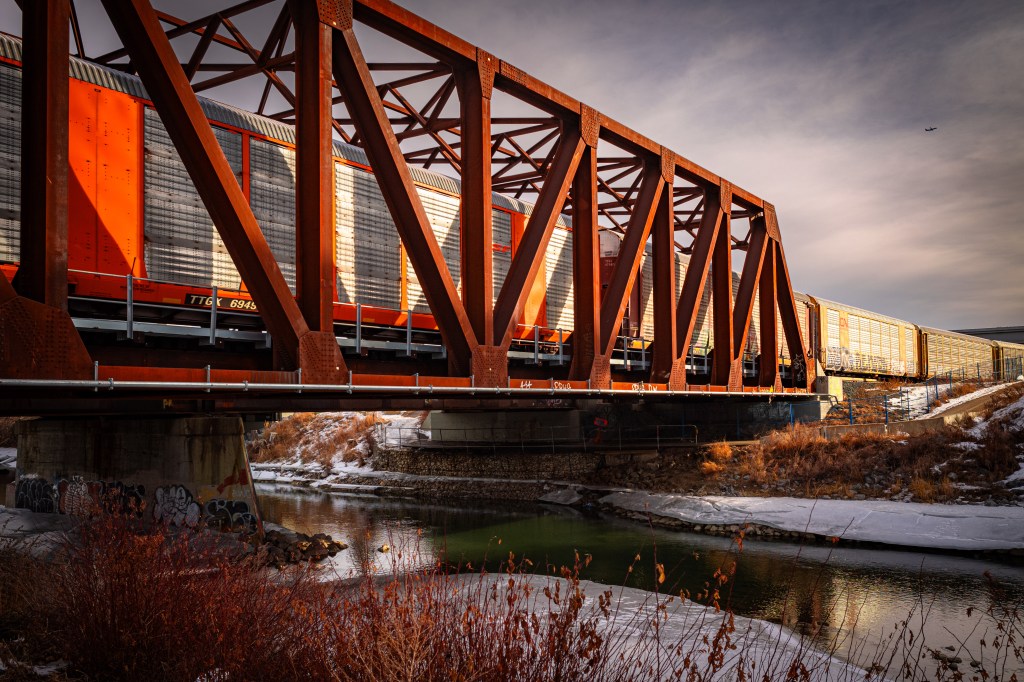
I made my way down towards Fort Calgary, knowing that the old train bridge in Inglewood is often worth a look. This morning, a train was conveniently passing through, heading east, just as I arrived. I snapped a few pictures, drawn by the curving line of identical cars in the sunlight.

Later, in Lightroom Classic, I tried one of the many presets that come with the software. Usually, I avoid these, preferring instead to make all my own editing decisions. But why not try something new? Given the oranges and browns in the scene, an “Autumn” preset seemed appropriate. What do you think?

Inglewood Rail Bridge, Lightroom preset TM07 (February 25, 2024)

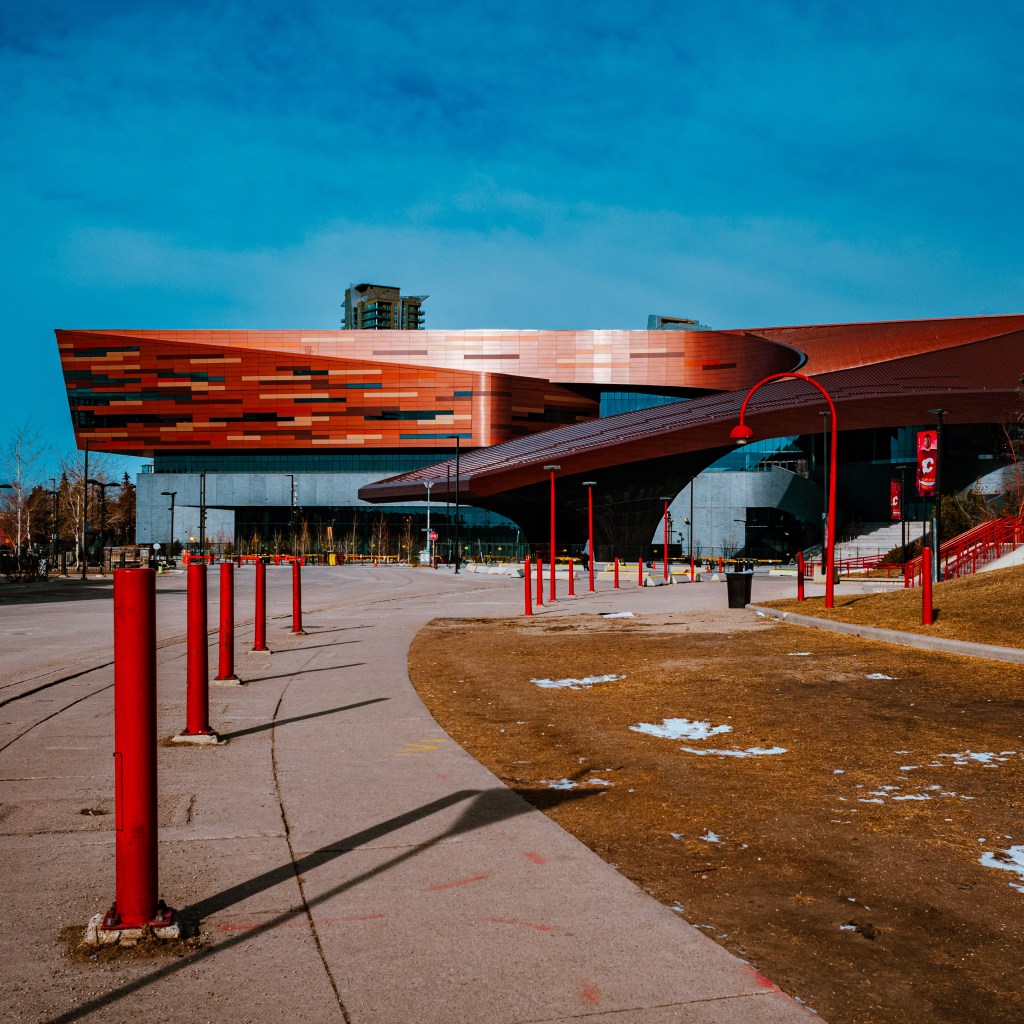
I wandered on through Stampede Park. The new BMO Centre has been under construction for a couple of years. The building is an amazing piece of architecture… especially the graceful curved lines on the eastern facade. I’ve gone by there many times, but it’s not been an easy building to photograph, what with all the construction equipment in front.

Today, I saw a nice scene as I walked along the pathway by the Saddledome. Later, in Lightroom, I stuck close to the subject matter and tried an “Architectural” preset. I have to say, I liked the result.

Stampede Events Centre, Lightroom present UA10 (February 25, 2024)

I continued along the river pathway, past the unimaginatively-named Stampede Ground Bridge at the south end of Stampede Park. It’s an attractive bridge, and I’ve shot it many times. While I was tempted to linger there this morning, the sky wasn’t doing me any favours. I moved on.

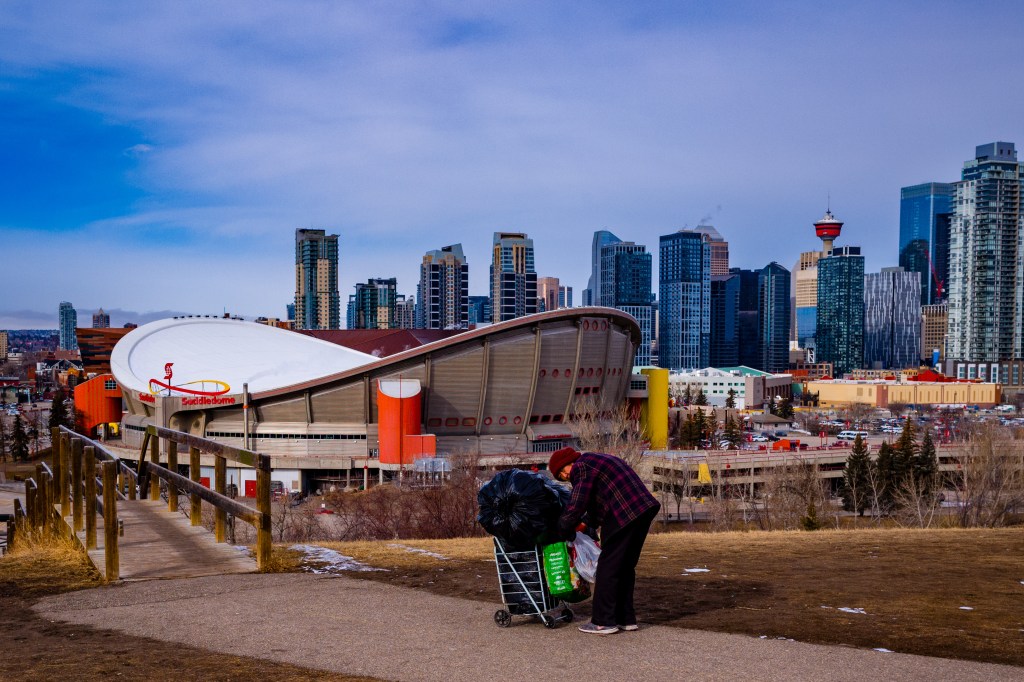
I finished my walk by climbing the stairs back up to Salisbury Avenue. As I approached the car, I realized that much of my walk had been solitary. I’d hardly seen anyone on the path. At the top of the stairs, I was rewarded with one “street shot”… a lady out on her bottle-picking rounds. Let’s say she was a little suspicious of me. But never mind, it was a nice finish for my outing. For this shot, it had to be a “Portrait” preset.

Scotsman’s Hill, Lightroom preset “Gritty Portrait” (February 25, 2024)

Overall, it was a productive morning. I didn’t miss running, not even a little. But I’ll be back at it next Sunday, I promise!

Photo Run – Big Game Edition

Our long runs along the Bow River often take us past the Centre Street Bridge. It’s an imposing and historic structure, and in good morning light photo ops are plentiful. As we ran under the bridge last Sunday, I made a note to take a closer look at the lions that guard the four corners of the upper deck.

Fortunately, we ended up back at the bridge towards the end of our run. I welcomed an excuse to stop at that point. Deb was keen to do another kilometre. “Good for you”, I told her, “but I’ll be here checking out the big cats.”

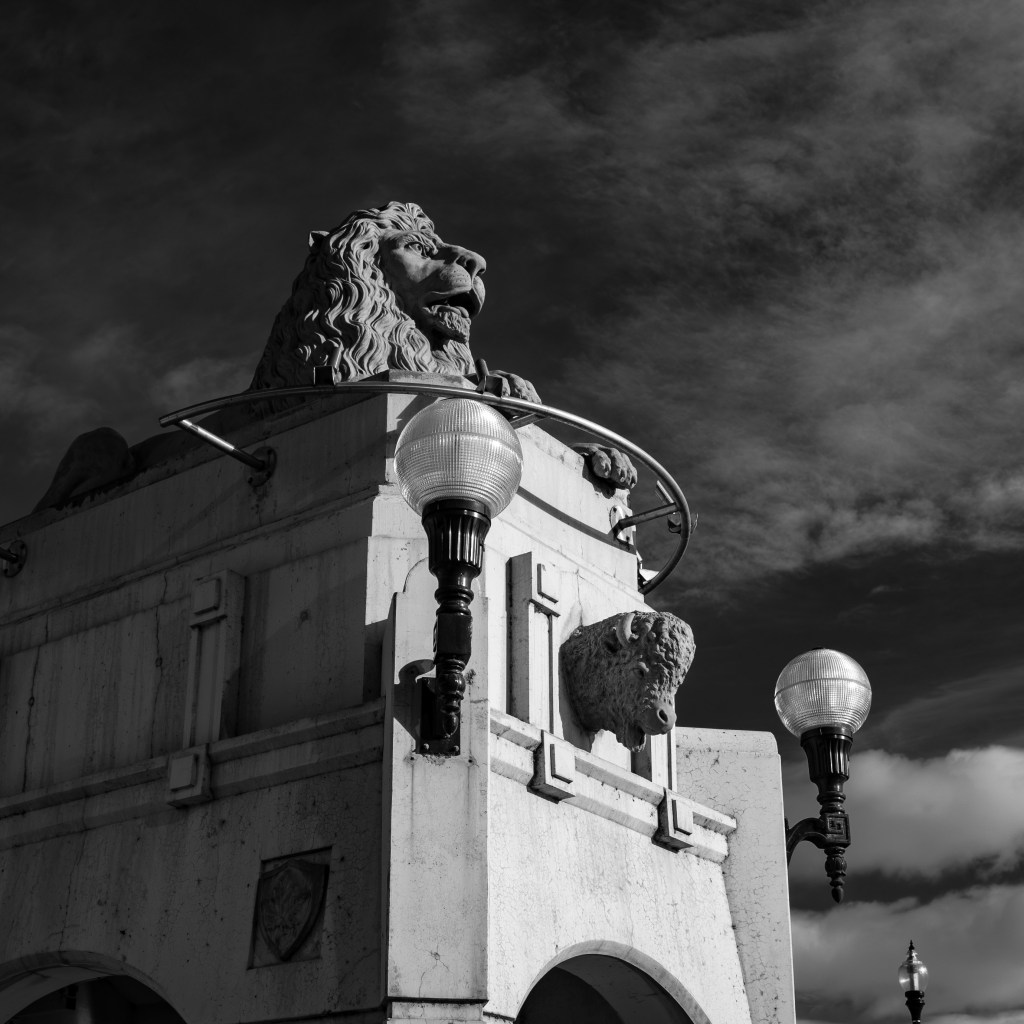
The morning light was strong and contrasty. From the pedestrian ramp, I got a couple of nice shots of the southwest lion. The statue looked great (regal, actually) with a monochrome edit in Lightroom.

Centre Street Bridge, Southwest corner (January 28, 2024)

I decided I would return in a couple of days for a photo run and a closer tour of the lions. In the meantime, I did some research into the history of the statues.

The original lions were commissioned in 1916, along with the bridge. They were modelled after bronze lions that guard Nelson’s Column in Trafalgar Square in London. The Calgary copies were cast in concrete by one James Thomson, a city employee. They each weigh 12,600 kilograms.

By the 1990s, the statues were in a state of significant deterioration, due to decades of Calgary weather cycles and vibration from bridge traffic. In 2000, city council directed the repair and conservation of the southwest lion. It also directed that the same lion be used as a template for the construction of four new statues. The restored lion now sits on display at Calgary’s municipal government building. The original northeast cat was repaired and conserved. It was relocated to its current location in Rotary Park in 2018.

With that background, here’s more on my photo run.

I went late in the afternoon, hoping for an interesting chinook sunset. We’ve had a lot of those lately. Would I get lucky? Yes and no.

I started my run in Rotary Park, so I could see the repaired northeast lion up close. It’s the only statue to have been returned to the bridge, and it commands a perfect spot at the south end of the park, overlooking downtown.

I navigated the ice and mud around the statue. I snapped a few shots, but none of the compositions I tried were very satisfying. I might have had better results with a wider focal length lens instead of the 28mm Ricoh GR III. No problem… this was supposed to be a run, so I moved on.

I jogged along the crest of the bluff for a few minutes and enjoyed the vista, then headed down towards the bridge. When I looked back up the hill, the lion was bathed in the low, setting sun. I knew I had only a few minutes before the light changed, so I scrambled back up the muddy pathway to a spot just below the lion. I snapped one shot. The light was amazing, and I think the result was good. It was by far my best shot of the day.

Rotary Park lion, enjoying the chinook sunset (January 30, 2024)

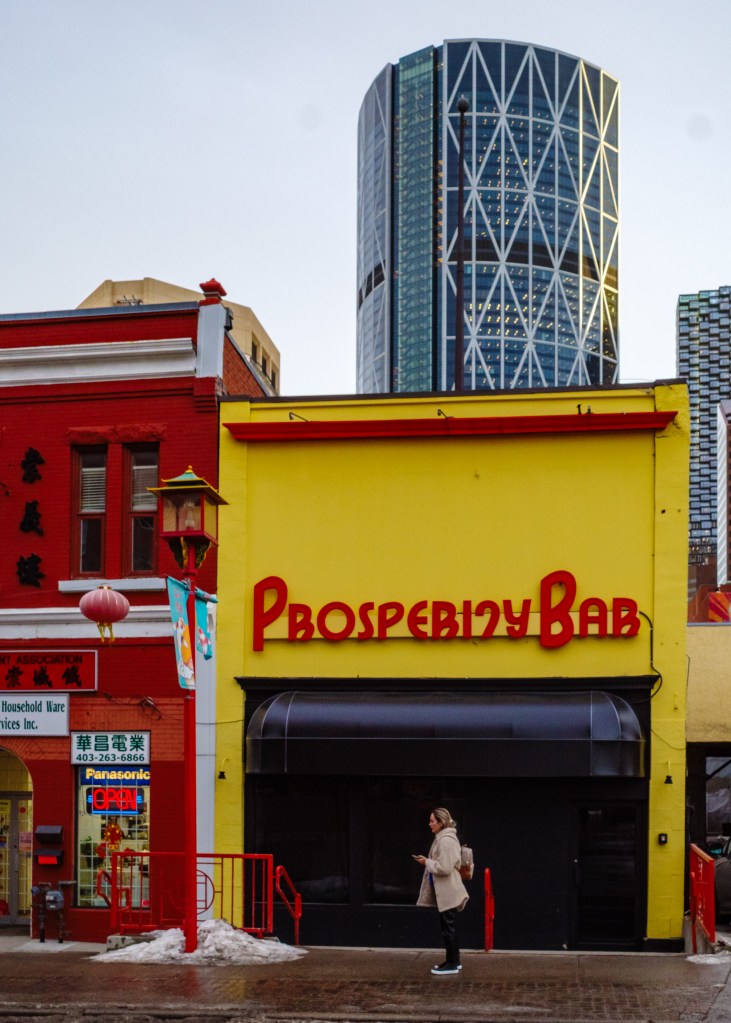
I continued down to the bridge and did a short loop around Chinatown. I was rewarded with a few worthy shots before I made my way back up the bridge on the west side. It had been a while since I ran up this hill… yes, it’s still tough!

Prosperity Bar (January 30, 2024)

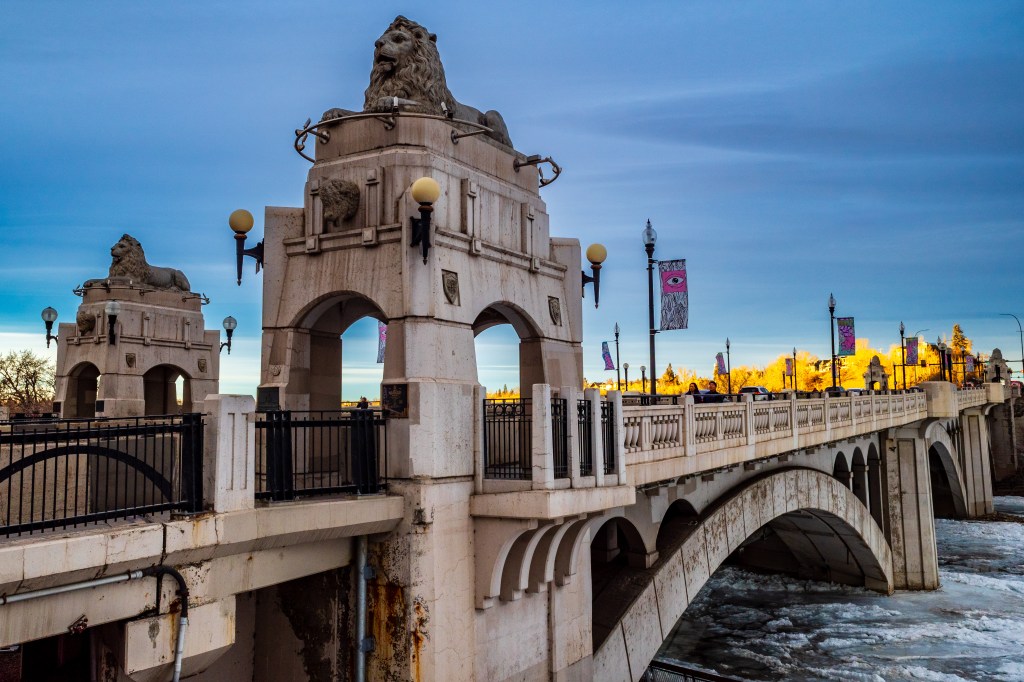
As for any more shots of the lions on the bridge, the fading light was quite flat and uninteresting by that time. There was a bit of chinook magic going on though… so I worked with what I had!

Centre Street Bridge, looking northwest (January 30, 2024)

There was also the challenge of getting a good perspective on the statues and the other details on the bridge (like the medallions that recognize the distinct influences in Calgary’s past… see the example below) while being confined to the sidewalks that pass underneath the statues. I suppose a drone would have been a nice accessory for this shoot, but that’s not my thing.

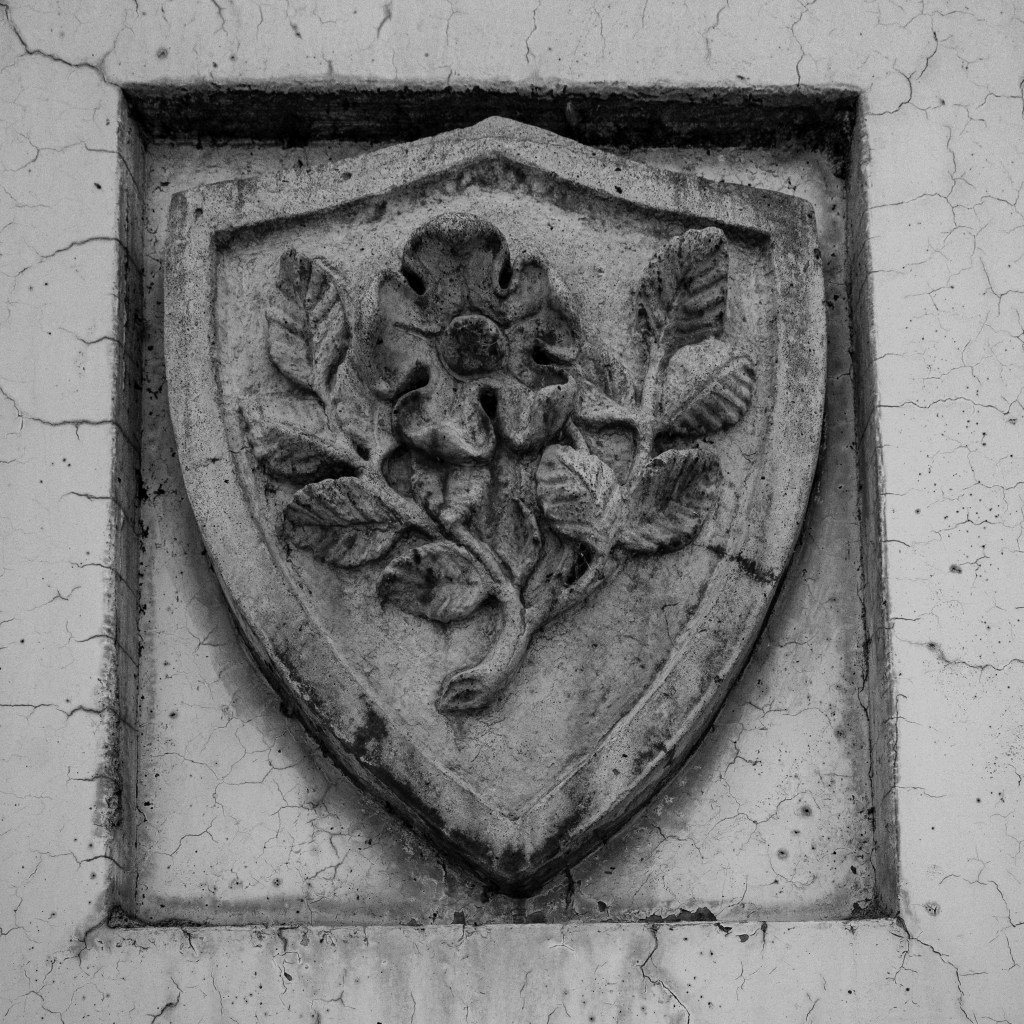
Here’s one of the small details on the bridge: medallions on the side of the “kiosks” that serve as the base for the Centre Street Bridge lions.

There are roses for England, shamrocks for Ireland, thistles for Scotland, and maple leaves for Canada. And bison heads to represent the west.

In the end, I managed to get a few shots of the “big game”. But maybe the best result was the realization that I left many good ones on the bridge for another day.

December Run Streak, Non-festive Edition

The month is almost over, and that means the end of the Strides Run Streak. Looking forward from our December 1 start, the task seemed daunting. But here we are, already closing in on January. The persistent pattern of warm weather and the relative absence of snow in the city this year have certainly made our task much more bearable. Even so, I don’t mind saying that I’m looking forward to a day off on January 1.

Now that Christmas is in the rear-view mirror, I felt I should do a follow-up post to my last piece. That one was my attempt at a (slightly) festive piece, in keeping with the season.

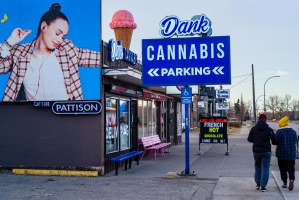
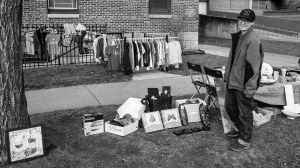
This time, I feel I can loosen up the constraints. The photos in this post were all taken while out for one of my December runs. They were all taken with the incomparable Ricoh GR III. However, the subjects are less “Santa” and more “street”. These are subjects that fall closer to what I might normally look for when I’m out and about with my camera.

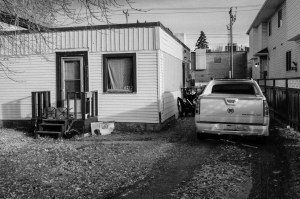
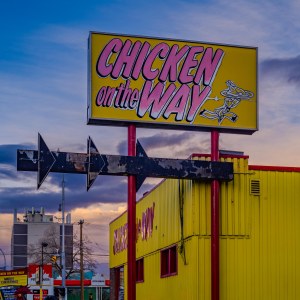
So, with no explanatory text, I present… my December Run/Photography Streak, non-festive edition:

Let me know what you think. I haven’t seen much in the comments section lately.

Until next time, Happy New Year!

In closing, I’ll mention that my book, Stroke of Luck: My Life in Amateur Athletics, will be available on Amazon for a special resolution sale price, starting in January. Thanks to everyone who has already picked up a copy. It’s been great hearing your thoughts on the book.

Streaking through December

The pressure has been building for three weeks already. It’s nothing serious, mind you.

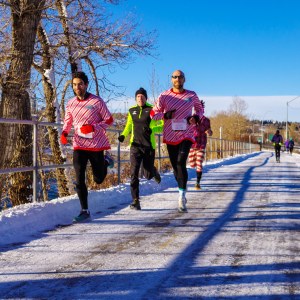
For the last few years, the arrival of December has meant the start of the Strides Run Streak, hosted by our wonderful neighbourhood running store. The parameters of the challenge are simple: run at least a mile a day for the full month. It’s wildly popular with the locals, including Deb and I.

I do have some history with this challenge. In 2012, I started running on December 1 and turned a one-month goal into a multi-year streak. That particular streak, which didn’t end well, isn’t the point of this post. You can read all about that adventure in my book, Stroke of Luck: My Life in Amateur Athletics. (By the way, if you hurry, you can still get your copy in time for Christmas, either at Owl’s Nest Books or directly from me. Thanks to all of you who picked up a copy. Much appreciated!)

This year’s streak has brought the usual mix of weather and physical challenges. Pathways have been notoriously icy. I’ve been dealing with a nagging calf issue lately, which fortunately seems to be on the mend. It’s looking promising that I will get through the month.

As has become my custom, I’ve added to the challenge with a photographic element. I look for a memorable photo during each run. That can be a tougher goal than the run itself, but equally rewarding. I’ve been giving my trusty Ricoh GR III a good workout. That camera is amazing!

I like the idea that I don’t know what I’ll see when I leave the house. I have a built-in incentive to explore other neighbourhoods (or even my own) with the idea of finding fresh photographic subjects (and good running).

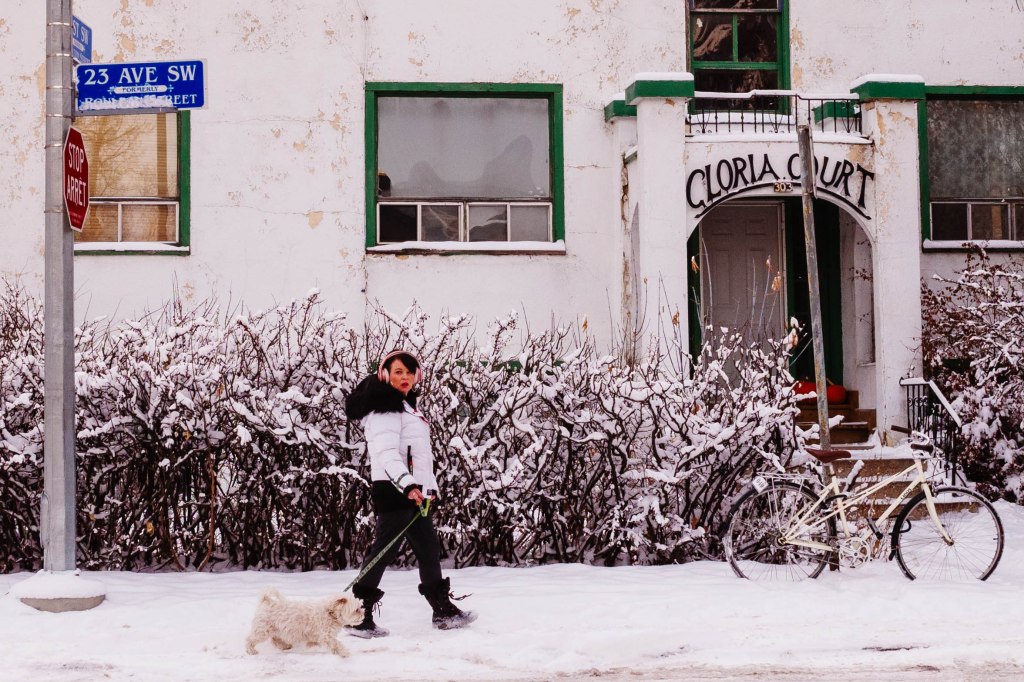
Gloria Court, Mission (December 2023)

If I’m totally honest… and I think my readers would want me to be… I feel that the results this year have been something less than stellar. Or maybe it’s just that my subjects haven’t been leaping out at me. I think my muse may already be on holiday. But as always, I find if I keep my eyes open and trust my instincts, I will be rewarded with some surprises.

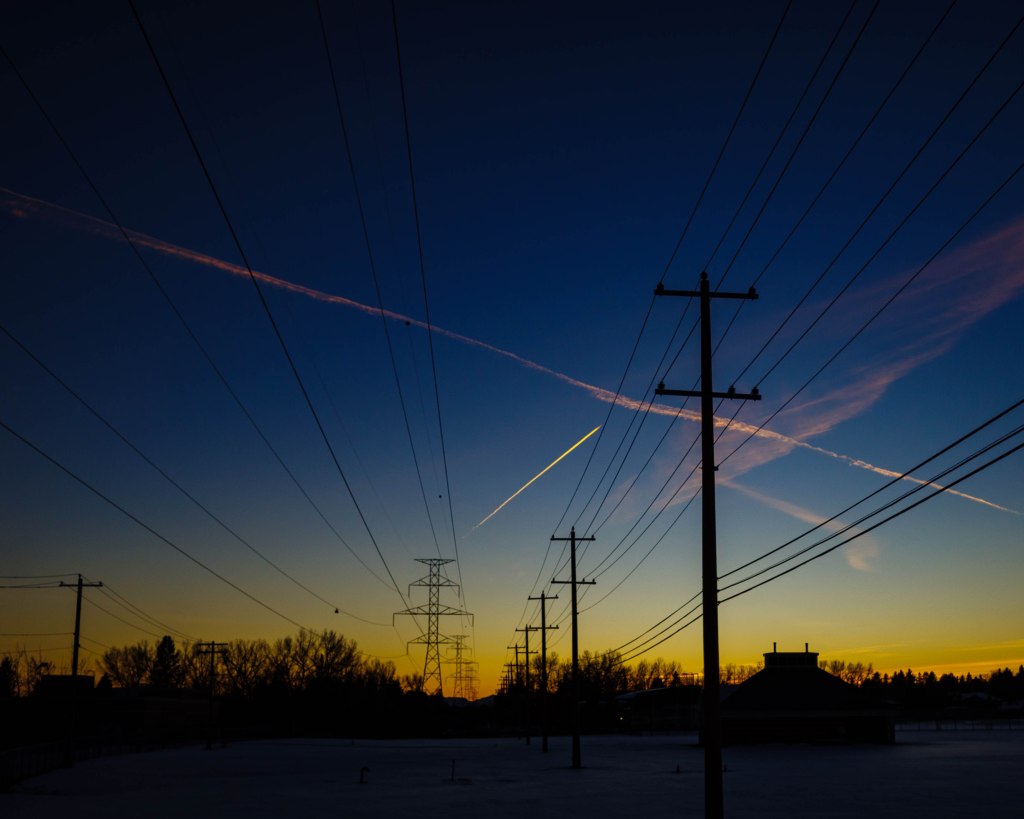
Lines in the sky, Glenmore Athletic Park (December 2023)

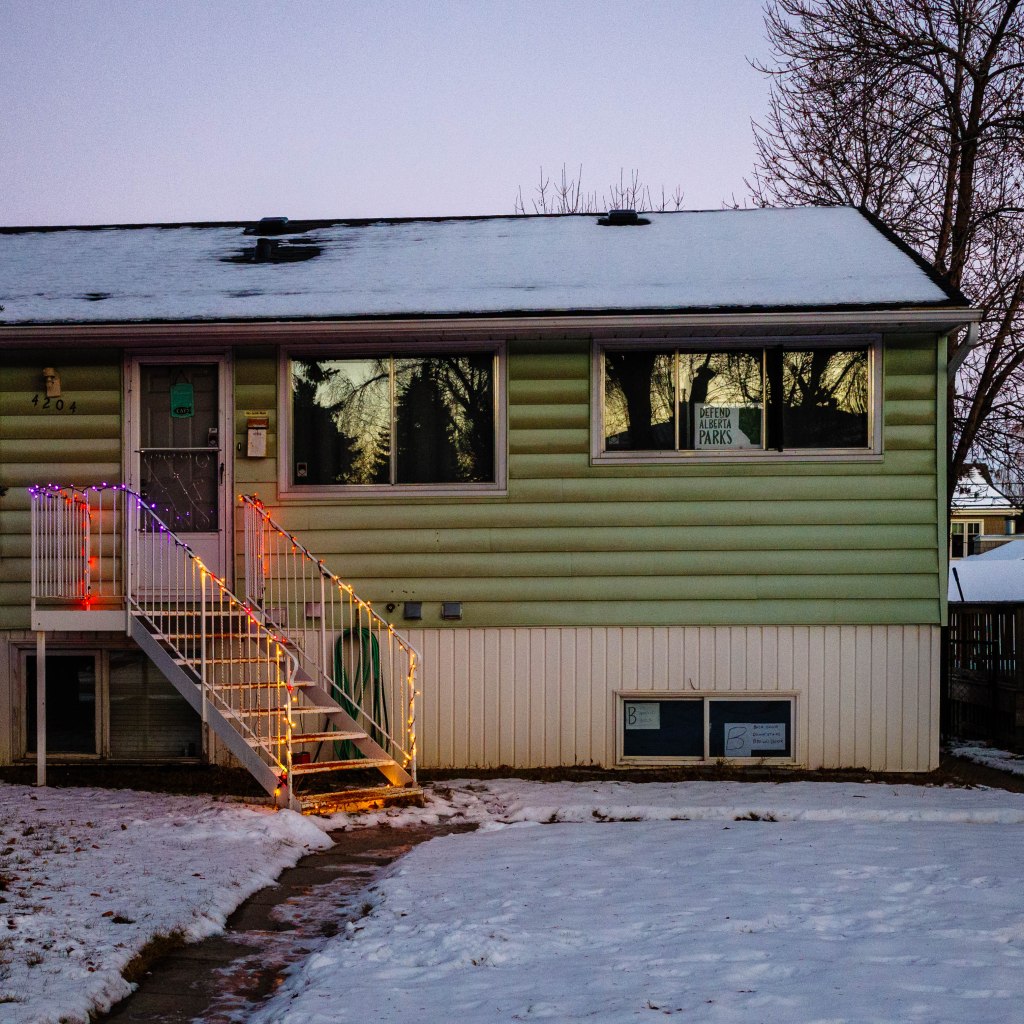
I try not to fall into the trap of snapping easy targets, like excessively decorated houses. Yes, that is a small, self-imposed constraint that makes my daily task a little tougher. That said, I find that even if some light displays don’t compare with Clark W. Griswold’s, they are still worth photographing.

Merry Merry, Altadore (December 2023)

My 2023 SRS photos may not be totally traditional, at least as defined by seasonal expectations, but when I look at them as a whole they seem to evoke a rather pleasant feeling. Is it hopefulness? Calm? Wonder?

I’ll let you decide for yourselves. I’m keen to hear from you, so do leave a comment.

Looking slightly festive, Beltline (December 2023)

Signing off for now, I’ll say Merry Christmas. Until next time, I wish you happy running, shooting, or whatever your particular passion is.

Be well and enjoy what’s around you. Peace!