Favourite Hikes: Cory Pass/Edith Pass

I’m back with another entry in my series of Favourite Hikes. This time, I’ll describe an incredible hike in Banff National Park that is somewhat of a hidden gem. The Cory Pass/Edith Pass circuit is both challenging and scenic. It offers a full experience, with varied terrain and some unusual geological formations. And maybe best of all, it manages to be both close to the Banff townsite AND not overrun by visitors.

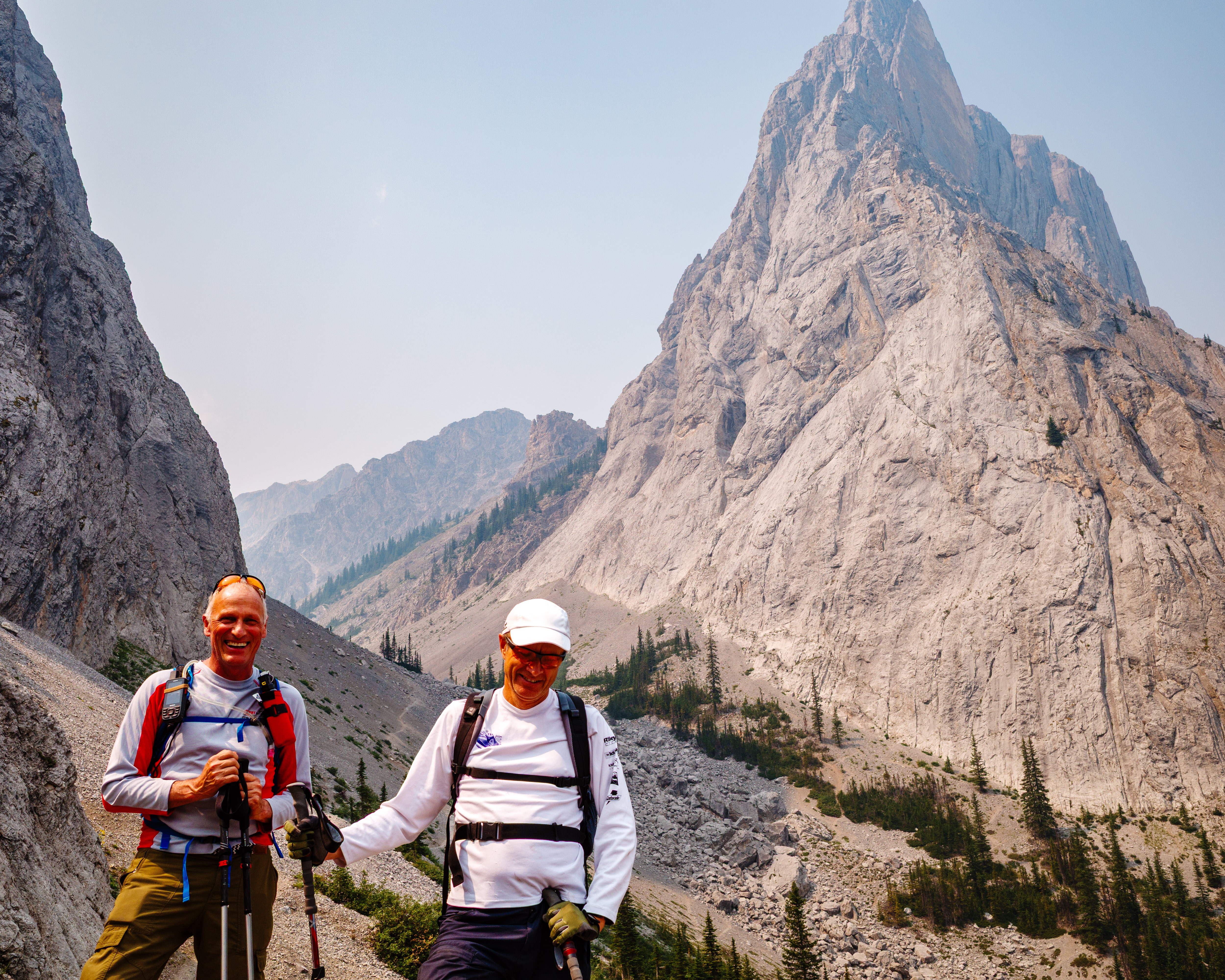
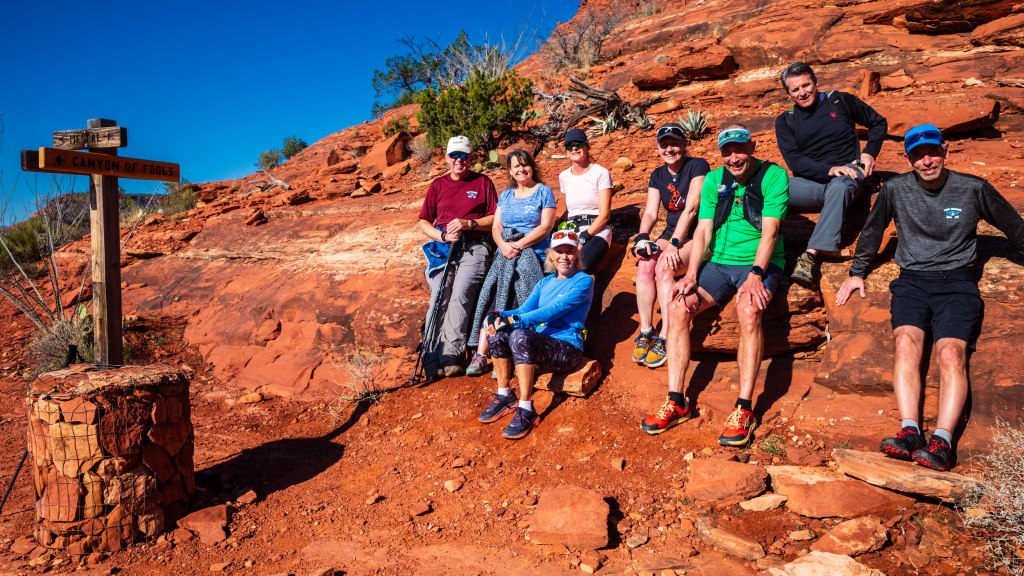
I did this hike in July 2021. It was a long but extremely satisfying day in the mountains with my friends Peter and Tim.

Cory Pass/Edith Pass Overview

We have many hiking guides around our house, and the consensus among them is that the Cory Pass/Edith Pass circuit is well worth the considerable effort it requires. Most guides suggest doing the route as a circuit, to introduce some variety on the return leg. Out-and-back options are obviously available depending on weather, skill level, or one’s own preferences.

The other question to ask, if you’re considering this hike, is the direction to do the circuit. We followed the more popular clockwise direction, and this makes sense because it puts the steep ascent up front. It’s usually easier to climb than to descend steeply.

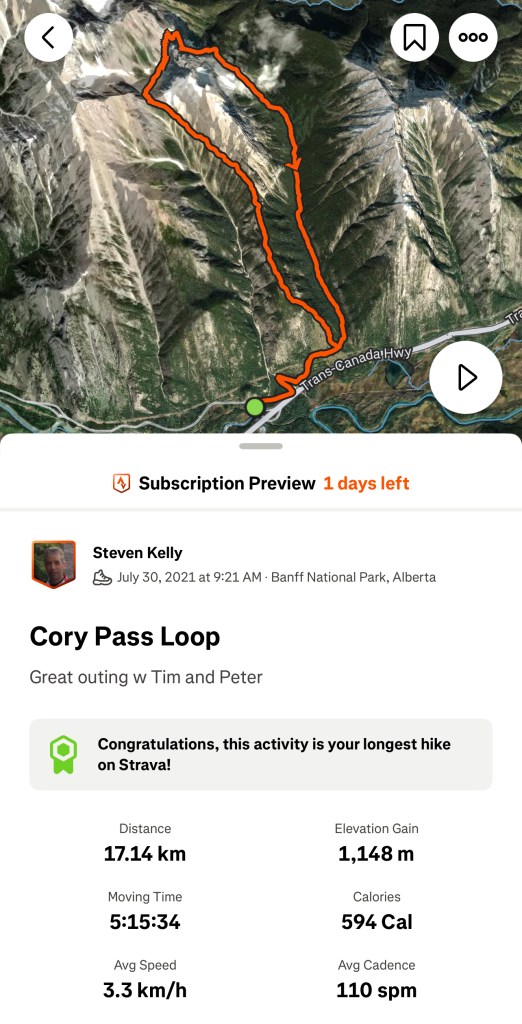
Here’s the Strava record of our hike:

A few things will be clear from this summary. The hike is essentially a circumnavigation of Mount Edith. It’s long and with considerable elevation gain. We did some extra hiking and climbing during the day, so our figures are inflated compared to the basic route. Most descriptions put the circuit at about 14 km and 1,000 m of gain. Timewise, our outing was in the range of most estimates, which are 5-7 hours for the circuit.

Be aware that the north side of Mt. Edith involves some slogging on scree slopes, and the route can be a little hard to find on the return leg where the trail heads back into the forest. It wasn’t an issue when we did the hike, but snow can make the trail impassible until mid-summer. If you plan accordingly, the hike is well worth the effort.

Outbound to Cory Pass

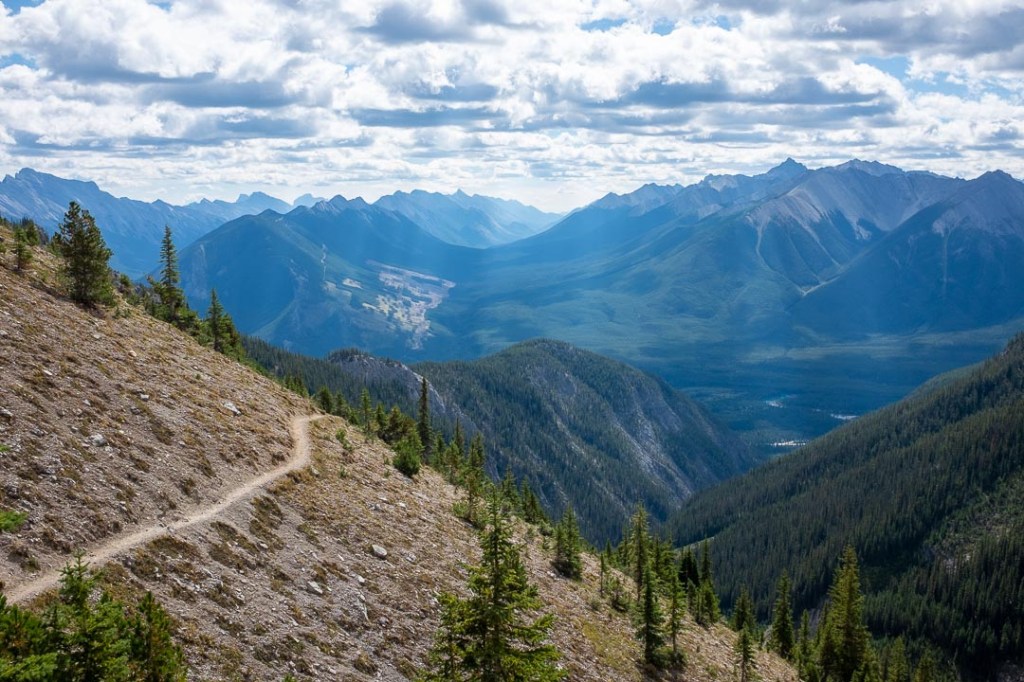
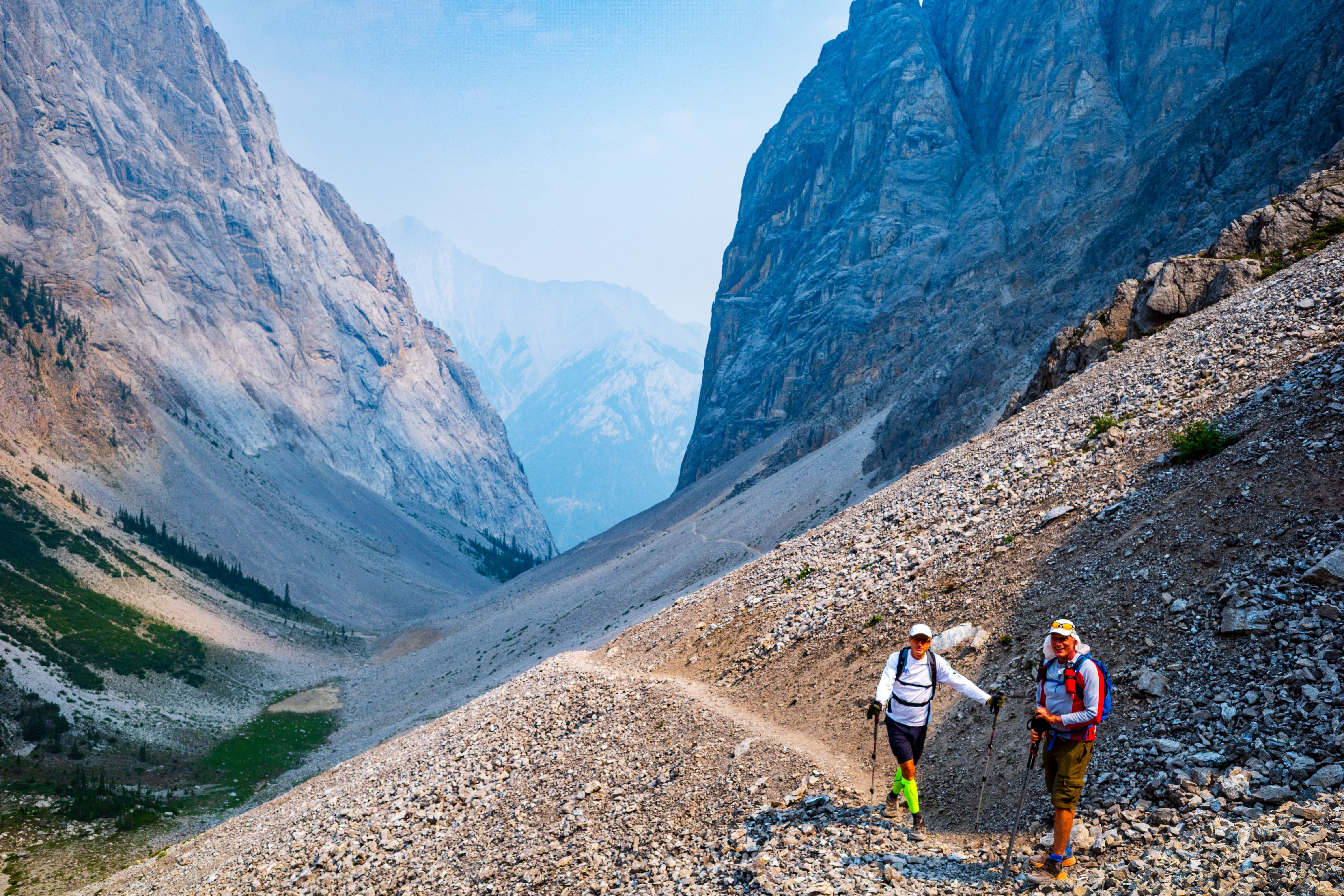
Shortly after departing from the Fireside Day Use area—a quick drive from Banff and a worthy picnic spot—the trail splits to form the Cory Pass/Edith Pass circuit. And the climbing starts immediately after turning left for Cory Pass. There are good views of the Banff townsite and Mount Rundle, but mostly this section is about gaining elevation, and quite relentlessly, for a few kilometres along the south ridge of Mount Edith.

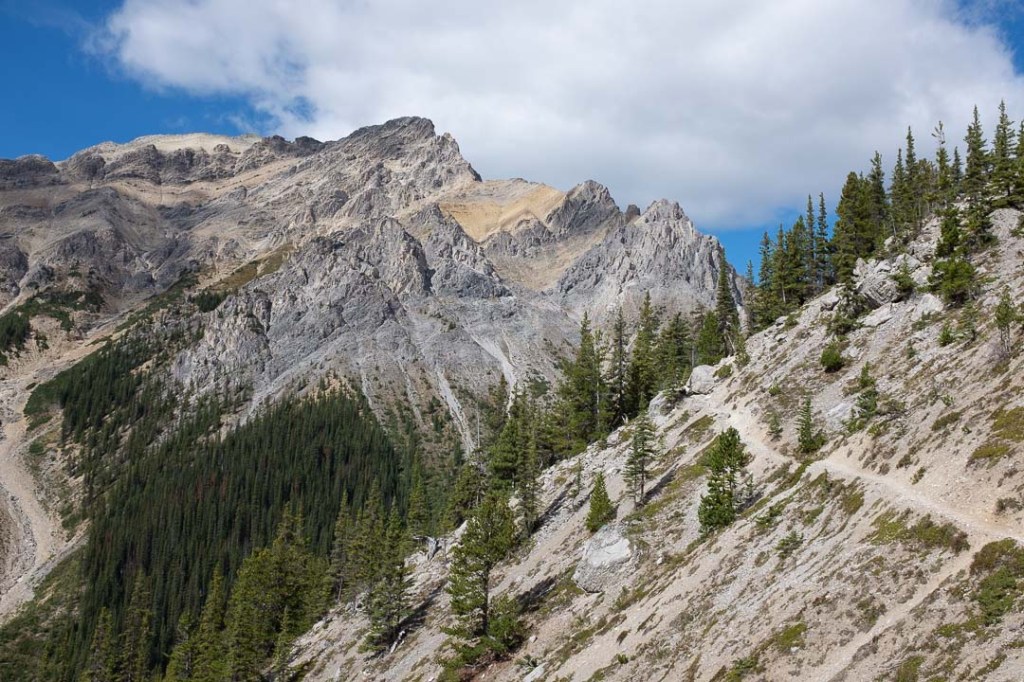
The grade moderates onto a long, dry traverse of the base of the mountain. Mount Cory is on the left. Even though the trail is narrow and exposed in spots, it never creates any significant challenges. For some reason, possibly my aching quads, I have no pictures from this part of the hike. Fortunately, here are a couple of shots taken along the traverse, courtesy of the Hike the Canadian Rockies website.

Finally, after about 6 km of effort, the col at Cory Pass is reached. The elevation is 2,350 metres. Here, the views are spectacular.

Gargoyle Valley

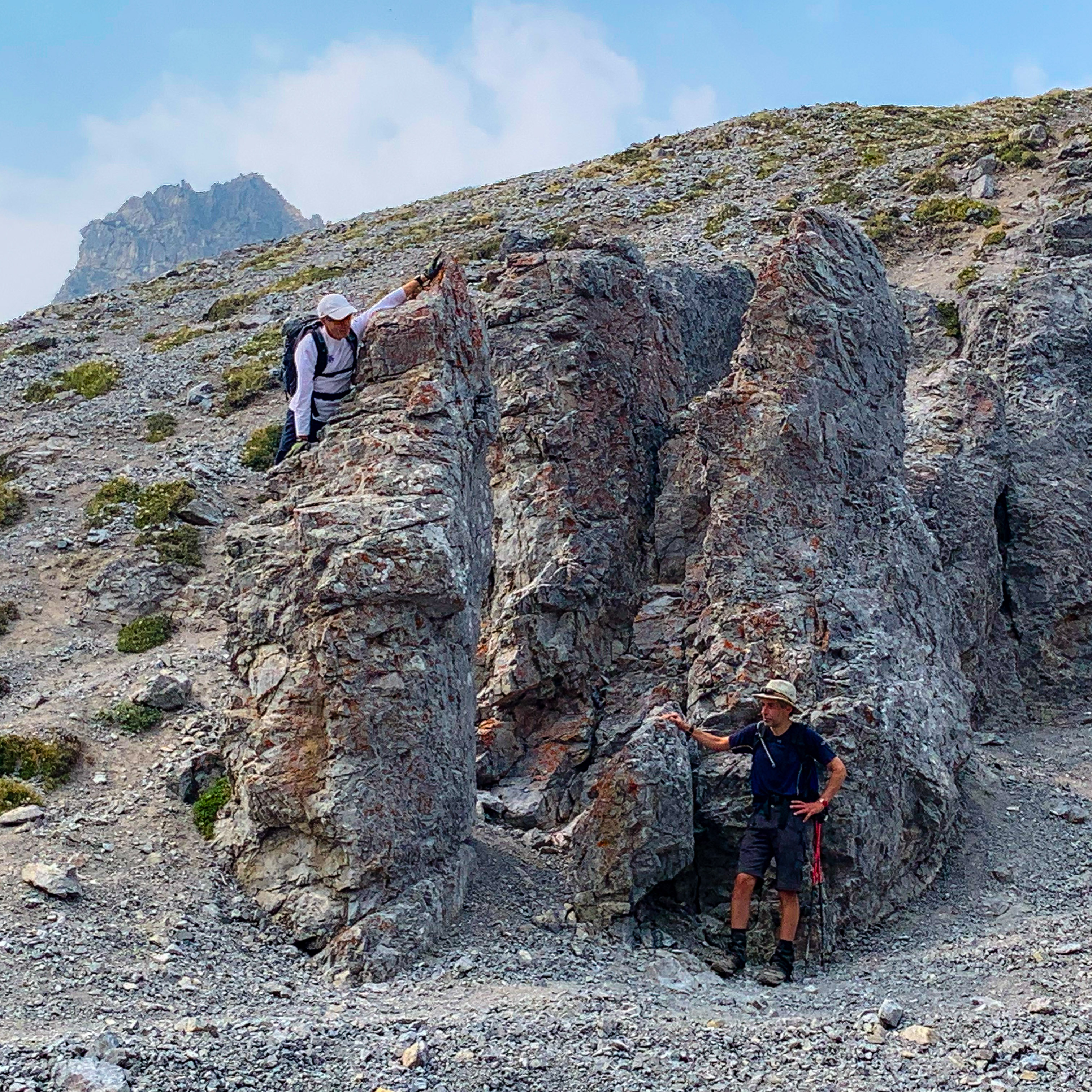
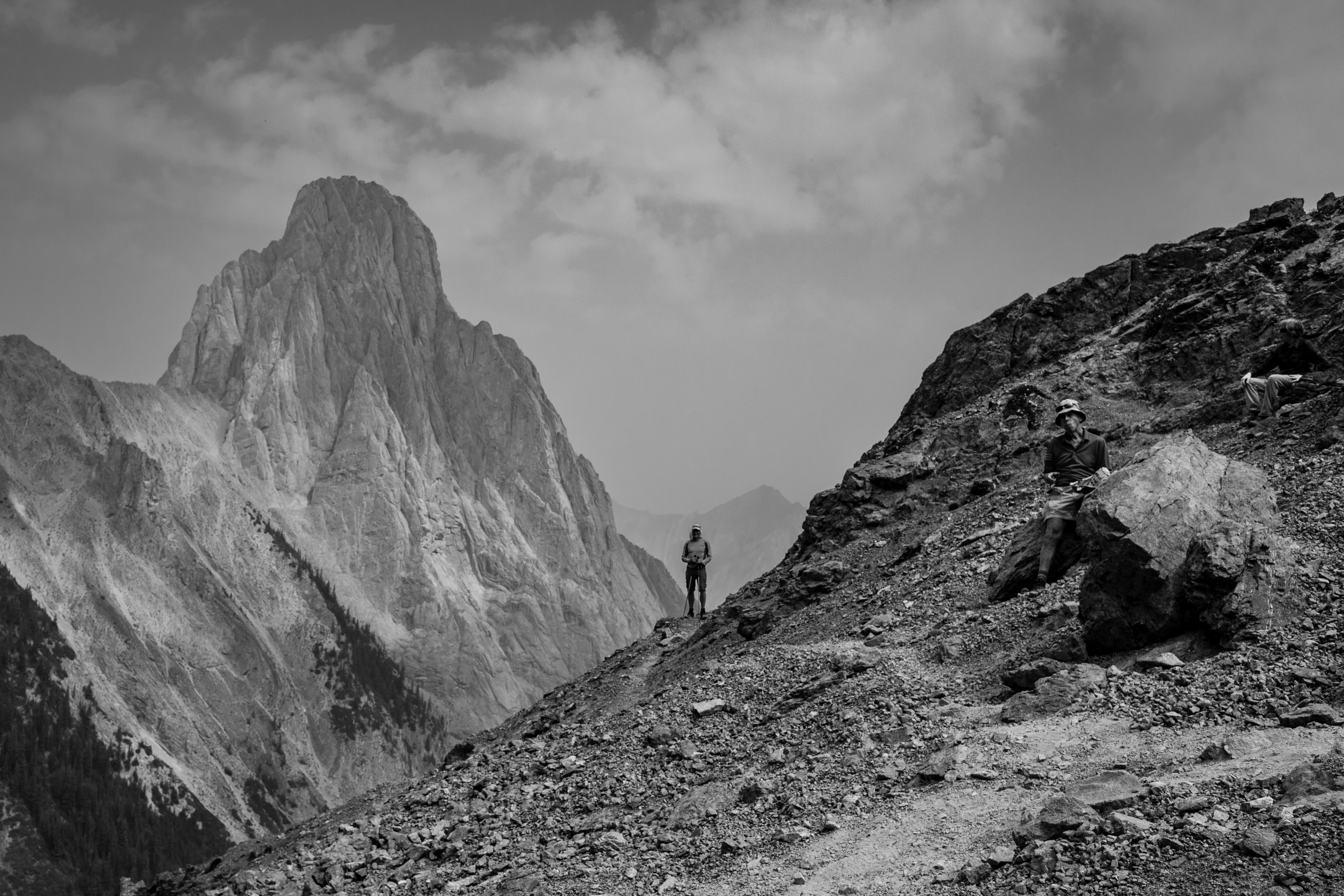
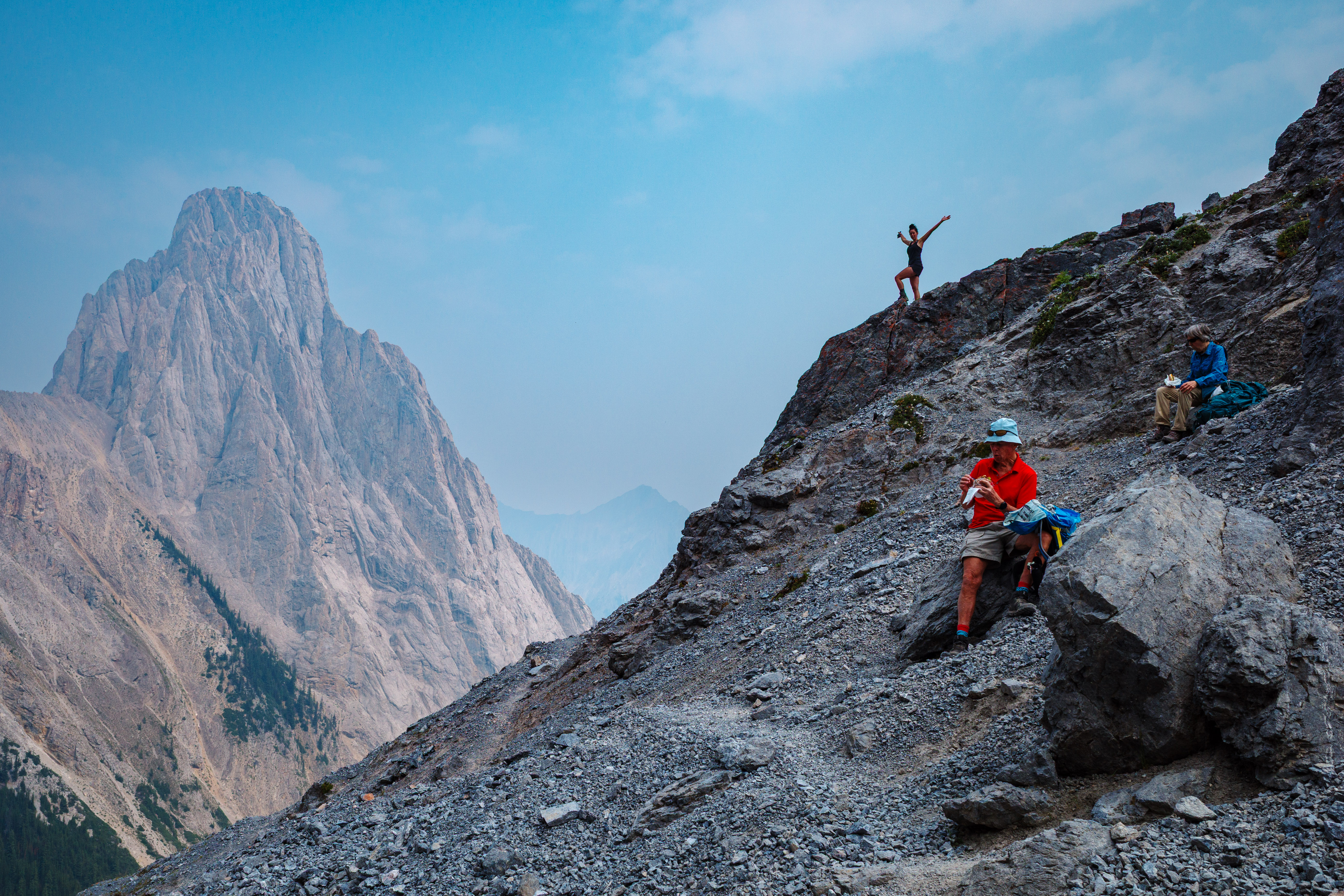
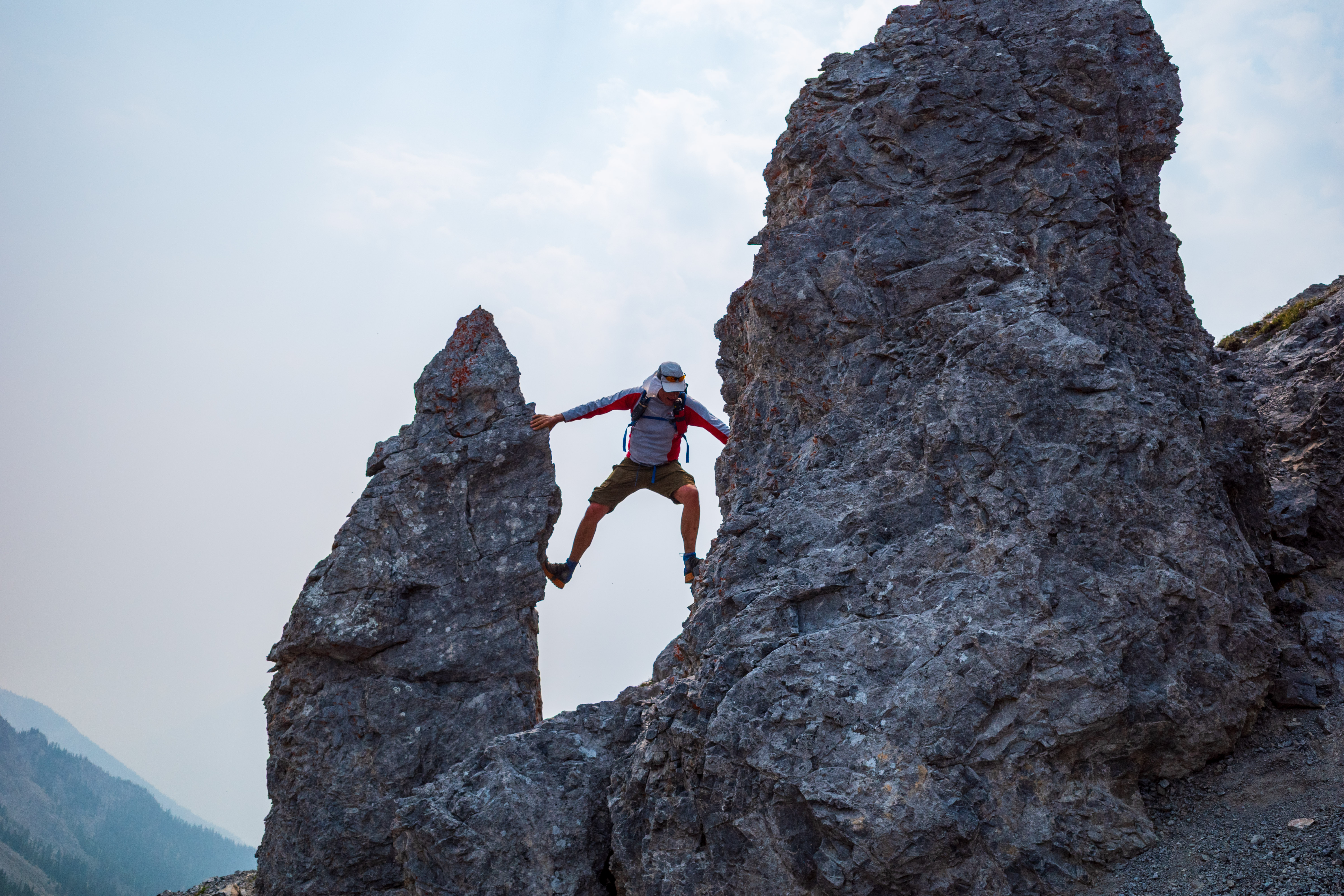
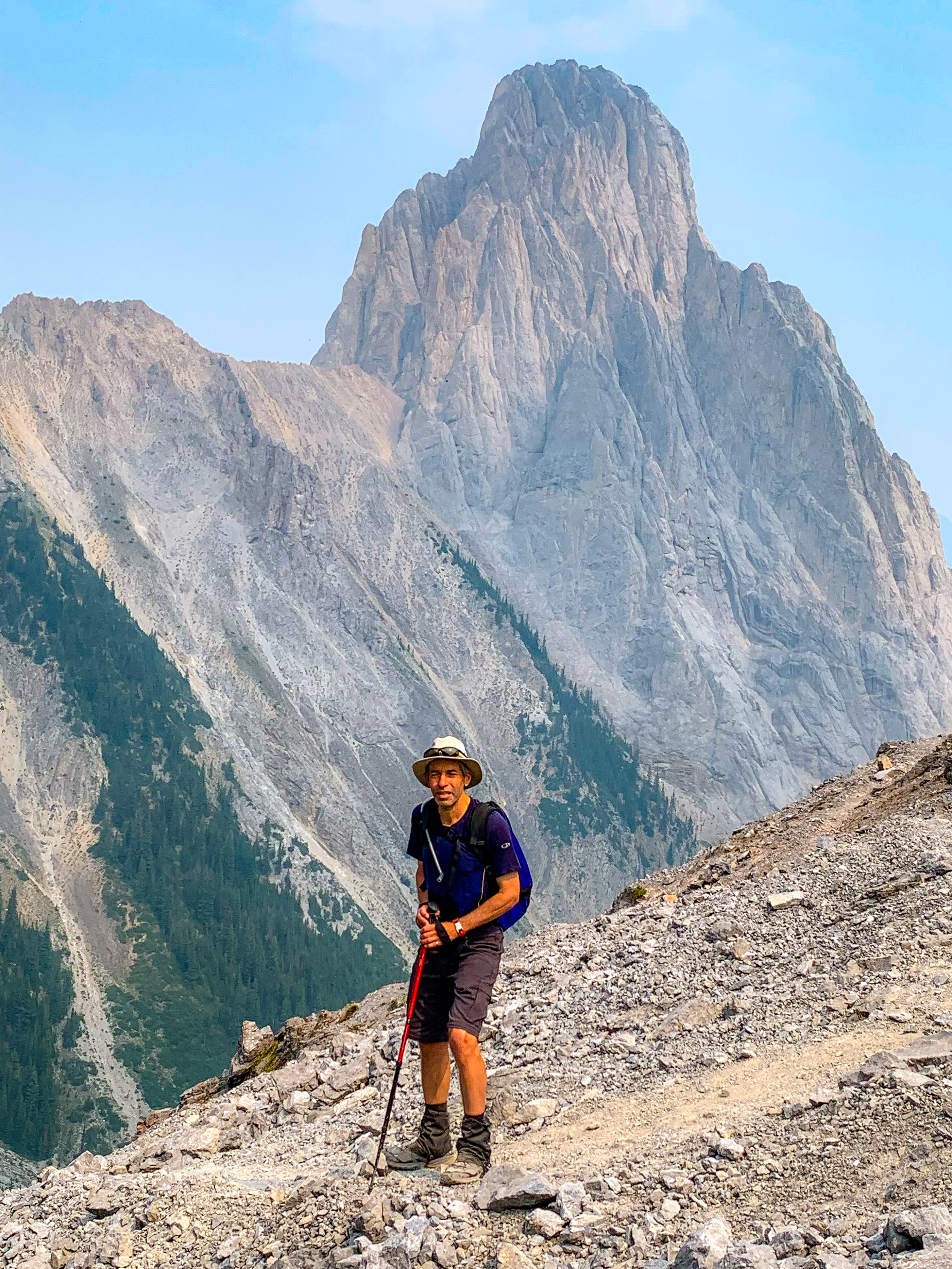
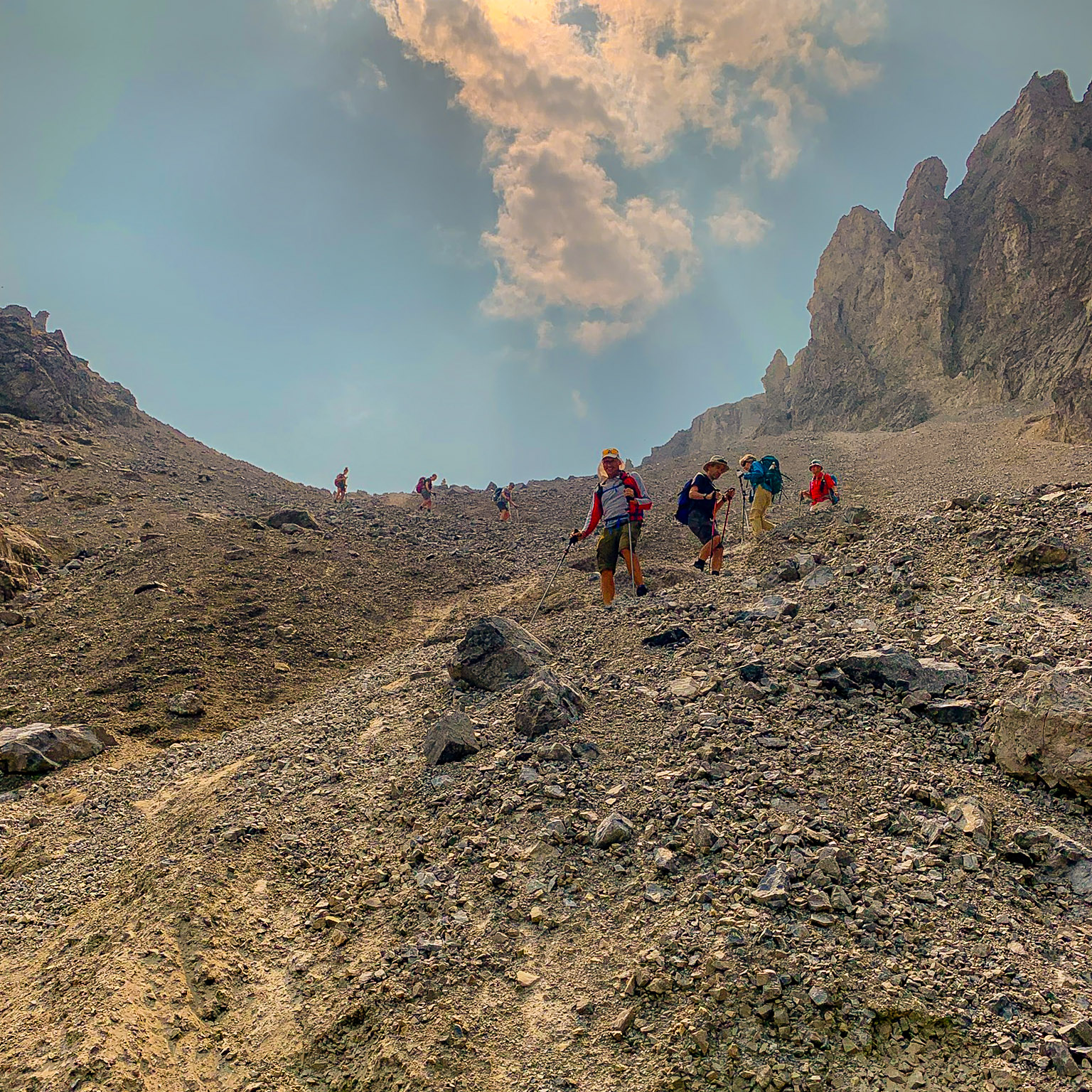
Descending steeply from Cory Pass is a scree trail between Mount Edith and Mount Louis—a jagged, dogtooth peak which looms large on the horizon. This section of the hike was the highlight for me, because of the variations in scenery. Otherworldly geological formations, the “gargoyles”, give the valley its name.

We enjoyed a leisurely lunch and did some exploring in and around the large rock pinnacles. Marmots enjoy sunning themselves on the high flat tops of the formations.

Once past the gargoyles, there is a long slog across a scree slope on the north side of Mount Edith. Finding the trail is never in doubt but the footing can be tricky in spots—poles are a must here. Gaiters too! A large boulder field marks the end of the scree trail. Again, the trail is easily found through the boulders.

Inbound via Edith Pass

Once you’ve picked your way through the boulder field, and enjoyed one last view of Mount Louis—now behind you to the north—it’s important to pay attention to find the return trail. We made one brief false start. The path becomes obvious if you look and hike upwards. There is a sign where bare slopes give way to the treeline.

The last 3 or 4 km of the trail are on a gradual decline through a dense forest. The mosquitoes and the noise of the highway were what I remember most in this section. To be honest, the exit trail is rather anticlimactic after the impressive sights we experienced earlier in the day. As is often the case in the Rockies, the ecosystem on the east side of the mountain is very different from the west side.

Eventually, the Cory/Edith fork is reached, leaving only an easy stroll back to the parking lot.

Summing Up

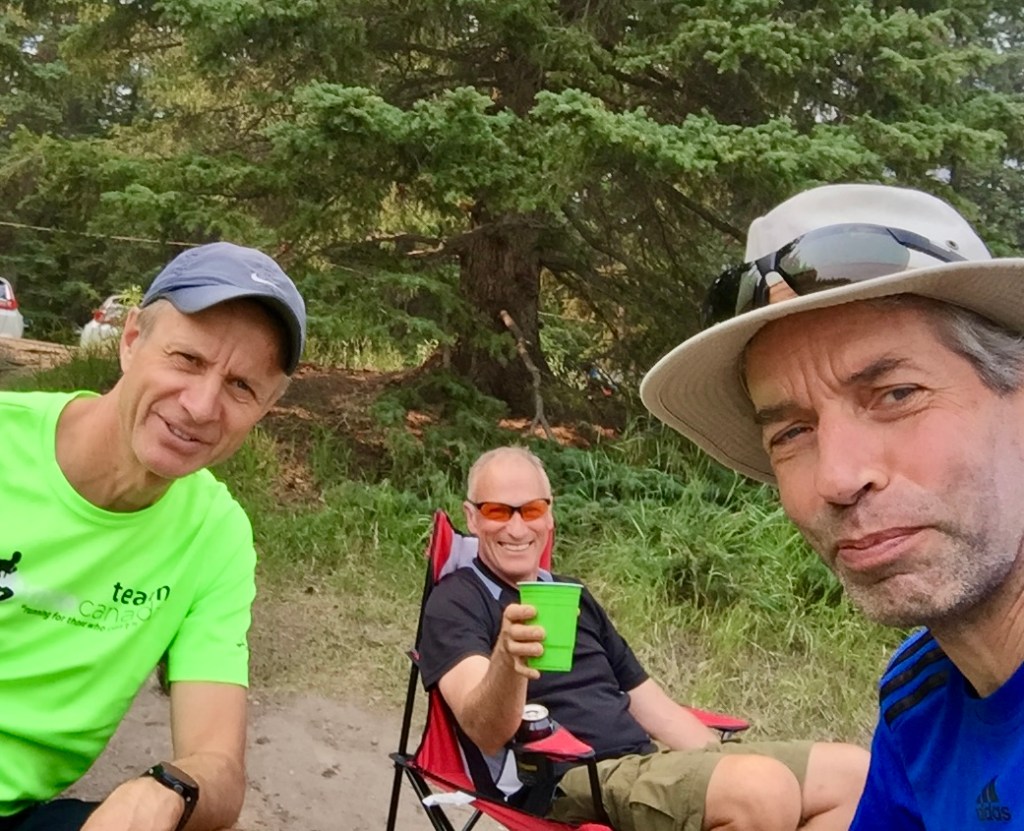
It was smiles all around (sort of) when we got back to Fireside for a well-deserved snack and beverage. Tim, Peter and I agree that the Cory Pass/Edith Pass hike checks many boxes, having everything we look for in a memorable hike. There’s plenty of challenge, but even more rewards. Highly recommended!

Until next time, happy trails. BE FAST!
Head Hunting

The Art of Jaume Plensa

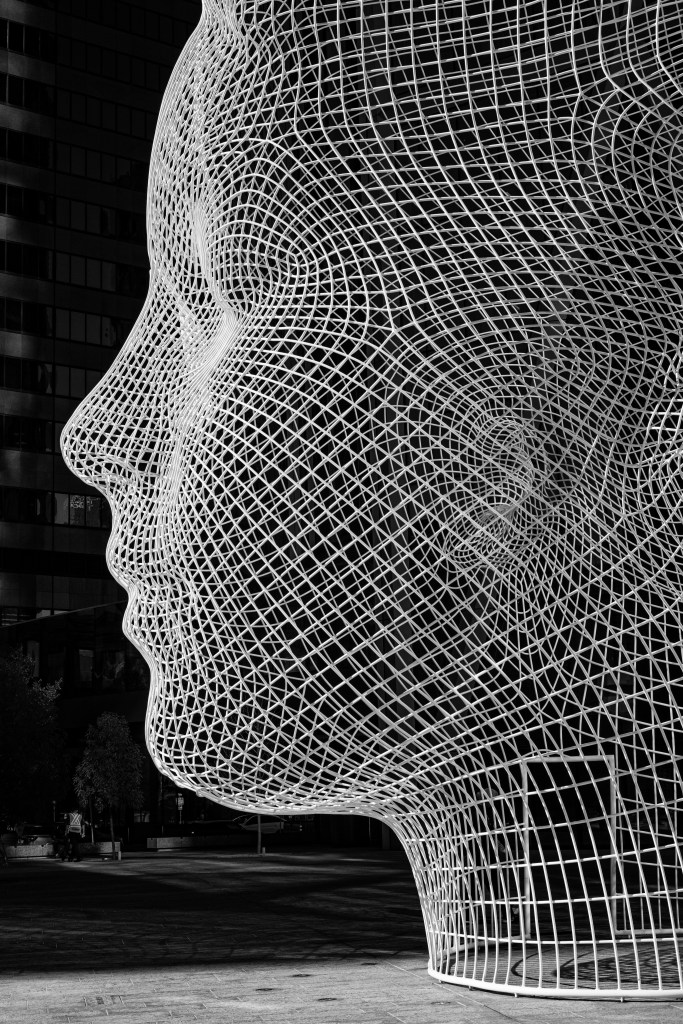
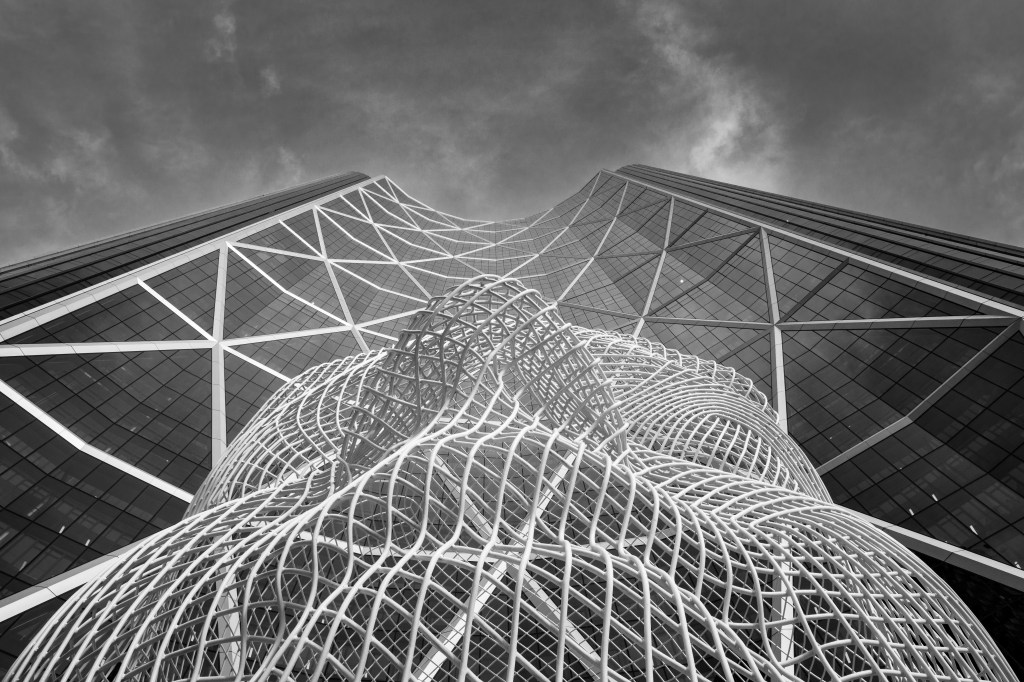
I was looking for an excuse to go into downtown Calgary for some photography, and I thought about the “big head” sculpture that sits in front of The Bow building. Like the building, the sculpture is iconic; it’s a monumental and very popular piece of public art. I’ve photographed the sculpture many times, but it seems to always have more to offer, depending on the season, the time of day and of course, the light.

First, some background. The sculpture’s official name is Wonderland and it’s by the Spanish artist, Jaume Plensa. Plensa was born in 1955 in Barcelona. He studied art in his home city. Over several decades he has lived, worked and exhibited his art in cities across Europe and the United States. Plensa has received international recognition for his exhibitions and installation pieces. His diverse works include sculpture, fountains and graphic arts.

Wonderland (2012), Calgary

Wonderland is one of many sculptures that Plensa has created for public spaces around the world. When I looked into the origin of Wonderland, I learned that he has installed similar large-scale pieces across Europe, Asia and North America.

Wonderland is ideally situated in the curved façade of The Bow, where it’s been since 2013. The sculpture depicts the head of a young girl. It’s about 12 metres high, and it’s made of bent steel wire. I think the piece is so popular because it has openings at ground level, which let visitors enter the sculpture’s inner space. Plensa invites us to contemplate Calgary’s downtown from the perspective of the subject. It’s a thought-provoking piece, for sure.

Here are several of the many shots of Wonderland I’ve taken over the years.

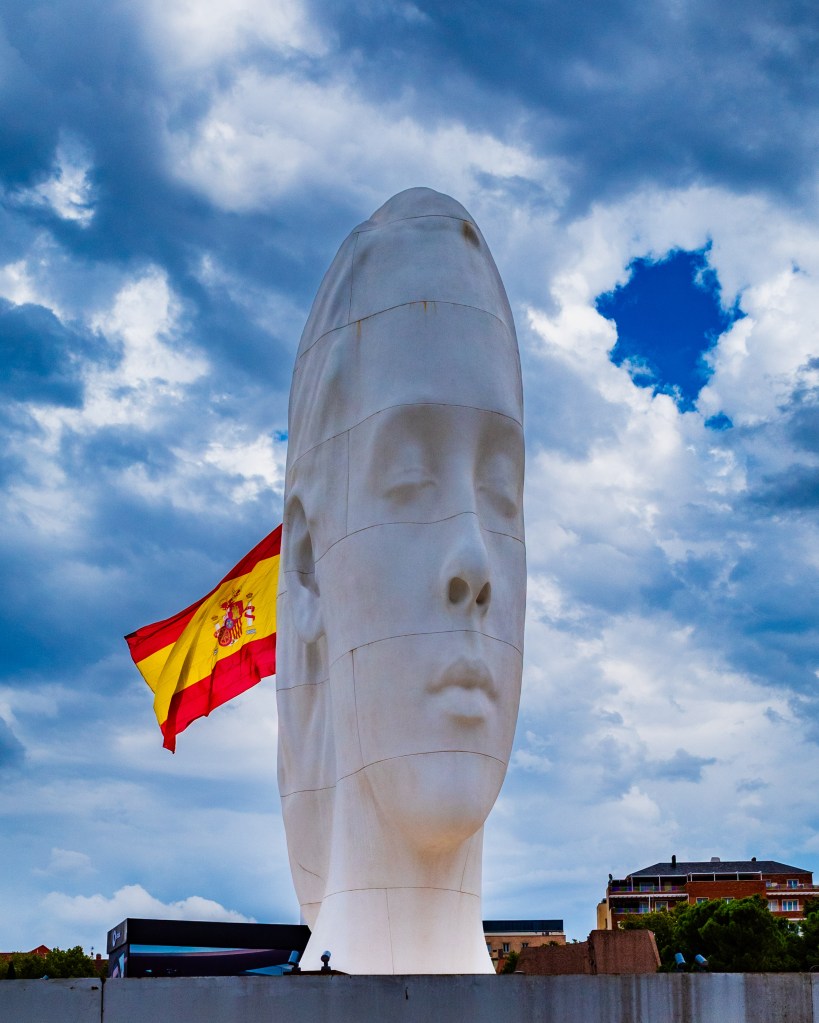
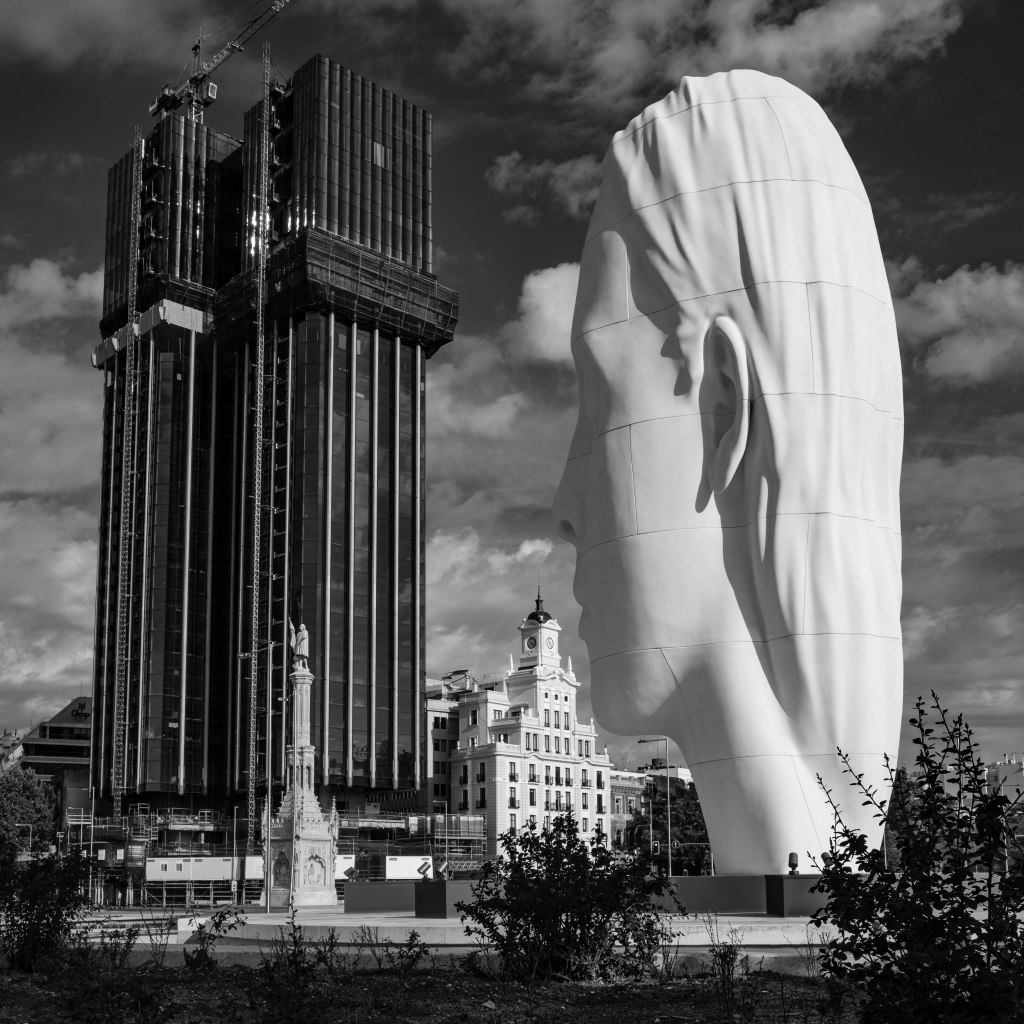
Julia (2018), Madrid

I realized that Debbie and I had seen other Plensa pieces in our travels. Most recently, we stayed a couple of blocks from a monumental sculpture in the Plaza de Colón in Madrid, called Julia. About the same size as the Calgary piece, Julia is also a sculpture of a young woman’s head. The subject’s eyes are closed as if she is meditating.

Julia is typical of Plensa’s large, elongated and flattened busts. When you look at them straight on, they give the impression of being on an angle. It’s an impressive optical illusion. The Madrid piece is made of polyester resin and white marble dust. It’s stunning.

We passed Julia several times a day while we were in the city, and each time I took a few photos. While Julia has been in her current location since 2018, it turns out that she may not be installed permanently… it’s a good thing I took so many photos while we were nearby. Here are a couple of my favourites:

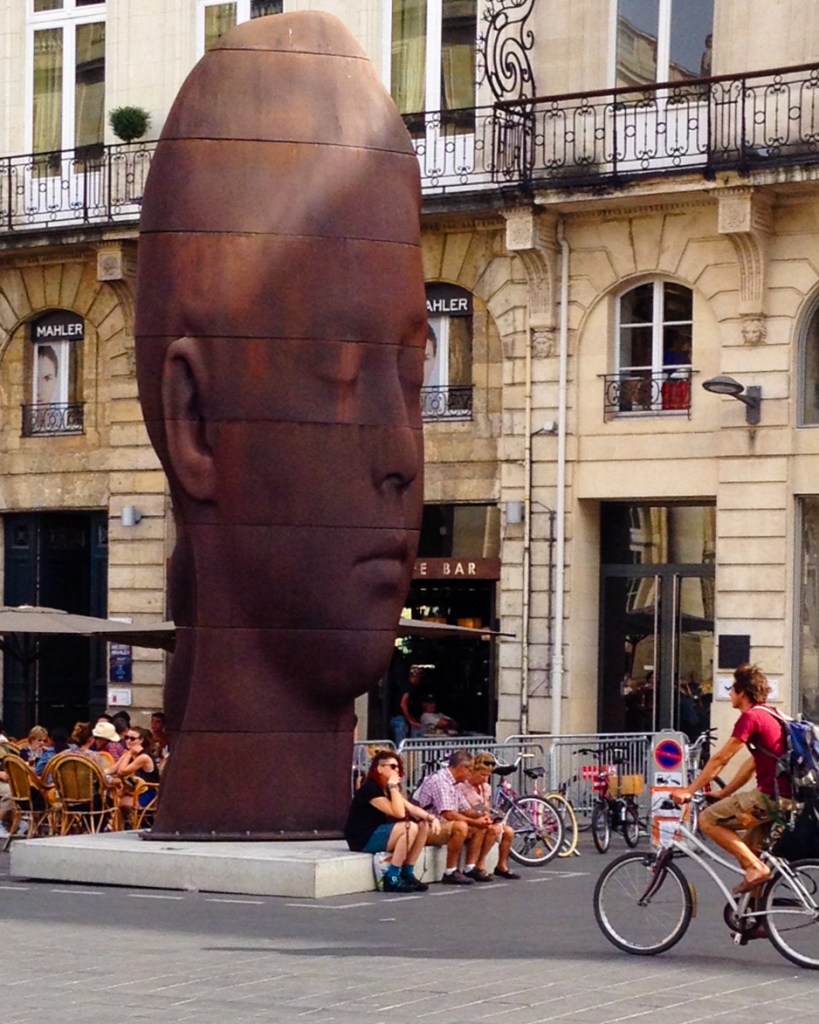
Sanna (2013), Bordeaux

As I did more research into the artist, I realized we had seen another sculpture similar to Julia in Bordeaux, France some years earlier. Sure enough, it was another Plensa piece called Sanna. That one sits in the Theatre Square (the Place de la Comédie) in the heart of the city. Its perspective has been manipulated in the same way as the Madrid piece, and the subject is also shown in a quiet, contemplative pose. Unlike Julia, Sanna is made of cast iron. She is 7 metres high.

The story of Sanna coming to be in Bordeaux is that in 2013 the city hosted an exposition of Plensa’s pieces. The event was popular, so much so that residents initiated a movement to acquire Sanna permanently. As far as I know, it will remain in place until at least 2027.

We have very fond memories of our visit to Bordeaux. The square where Sanna sits is busy with cafes and shops. If we ever make it back there, I hope Sanna will still be there.

Source (2017), Montreal

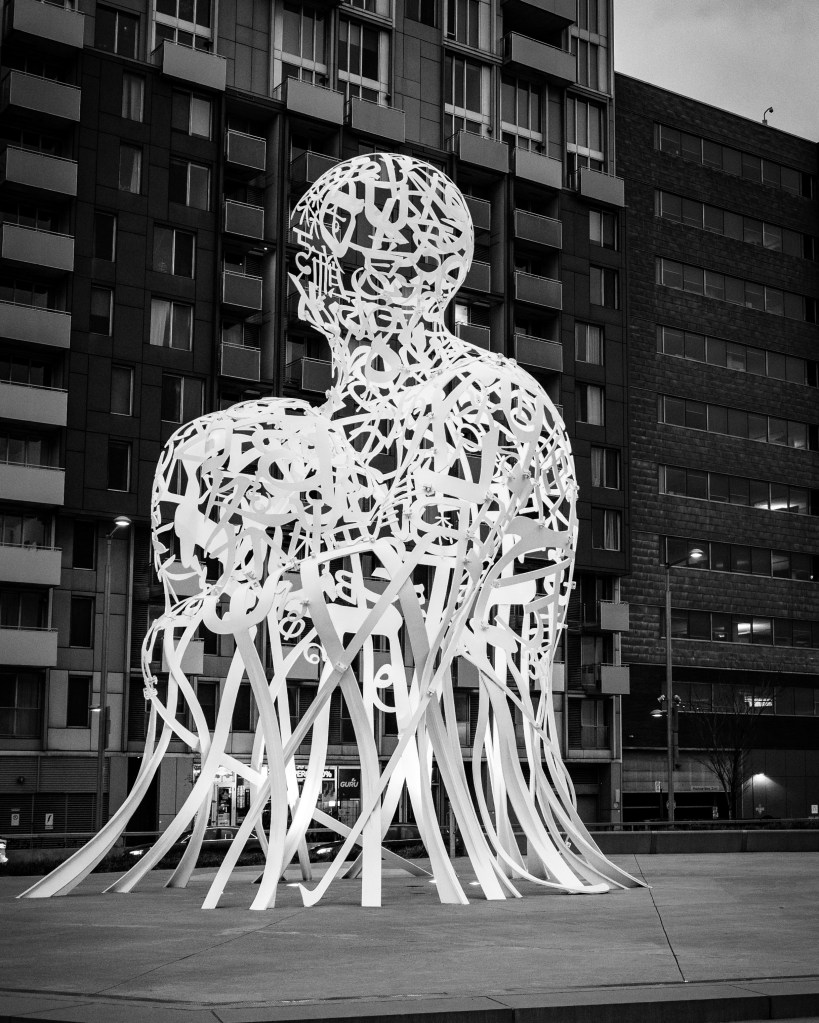
The final Plensa sculpture I want to highlight is installed on a terrace in Rue Wellington, just at the entrance to downtown Montreal. Somewhat in the same style as Wonderland, Source is a three-dimensional piece within an open outer frame. It’s a stainless-steel sculpture formed from a random pattern of letters taken from different alphabets, which depict a sitting figure.

The Montreal piece symbolizes the many cultures that have come together over the city’s long history. Fittingly, it was installed for the 375th anniversary of Montreal’s founding in 2017. Like the Calgary piece, Source is open, so it invites visitors to enter the inner space of the piece.

Our stop at the Source was short, and I only have one photo of the piece. Rest assured, I will take more time to check it out next time we are in Montreal.

Concluding thoughts

So what is my take on Plensa, and his large public art pieces?

In a 2019 interview with Forbes, Plensa discusses his use of altered perspective and open gridwork sculptural elements. He described using these techniques as a way of exploring his interest in the way humans communicate, and how different cultures use language.

For me, Plensa’s sculptures seem designed to invite close inspection and discussion. We want to get close to these sculptures. We want to walk around them and even into them. The large scale of his head sculptures could be intimidating, but Plensa defuses this by the way he plays with perspective, and by his use of serene and peaceful subjects.

Having seen four of his works in person, and looked at many others on his website, I find them to be beautiful and innovative. It’s clear from Plensa’s vast catalogue that his formula is a success: there are literally dozens of his pieces installed around the world. I don’t take this as evidence of an overworked theme. Rather, I would say that Plensa has achieved his goal: his works encourage us to get together in pleasant locations and talk. For this reason alone, his art is well suited to the public spaces in which we find it.

Colour or Monochrome?

While flipping through some recent pictures, I realized I was “seeing” them in either black & white or colour. This was before I had started doing any editing. My mind seemed to be jumping to conclusions about the end result. 

Maybe this was inevitable, as I must have “seen” some version of the final image before I pushed the shutter button. Was my initial visualization strong enough to override any subsequent artistic choices?

I try not to limit myself to one expression or another, and I take plenty of photos in each style. My preference is for black & white images. Many of the photographers who have made an impression on me worked mainly in monochrome. Adams. Cartier-Bresson. Schaller.

That would be a good idea for a future piece… the photographers or the images that have been most impactful for me. But for this piece, I wanted to explore the idea of initial visualization and see if that process might be acting as a barrier to my artistic ideas.  I picked several recent images, more or less at random, for the following, non-scientific analysis.

Sedona Landscape

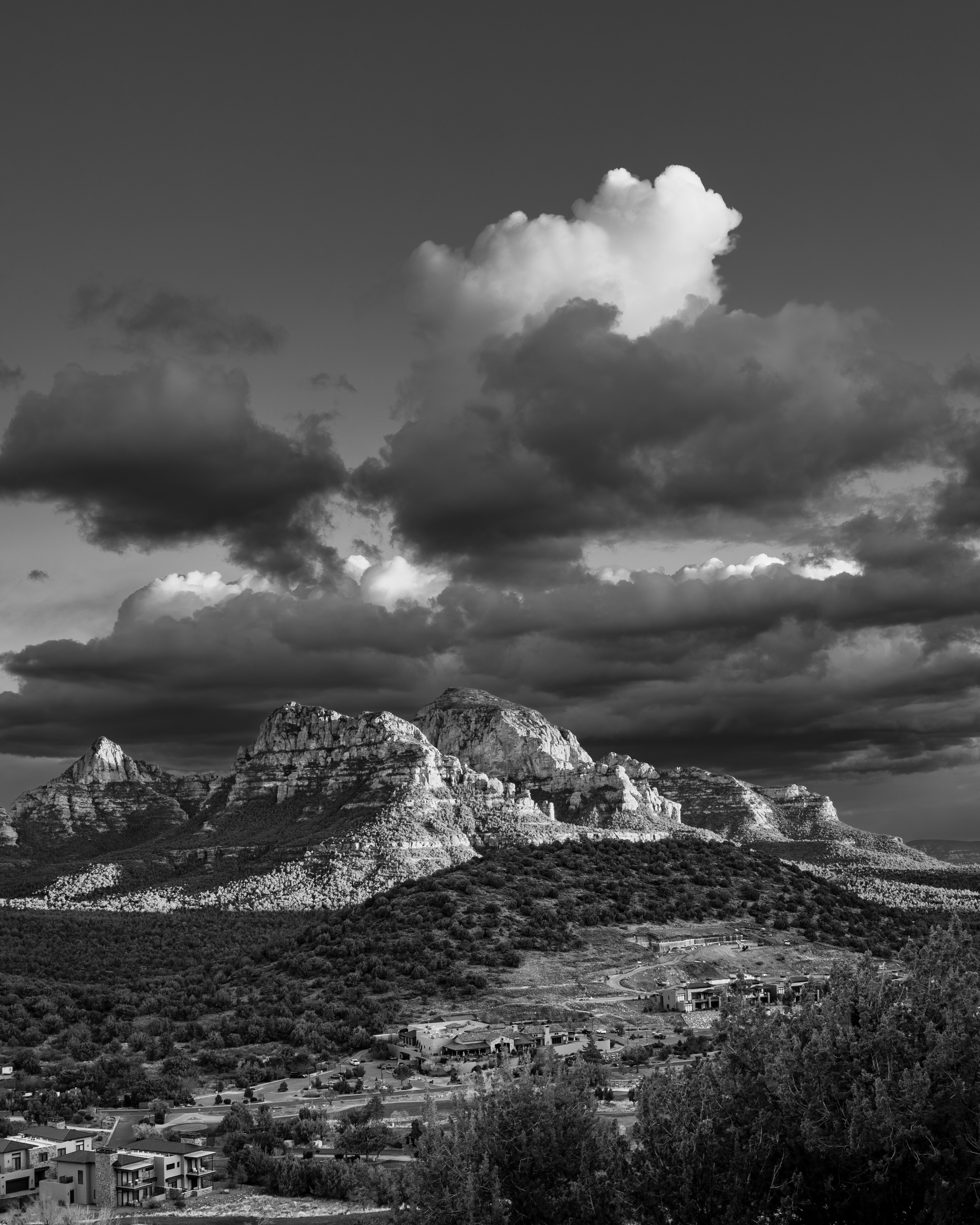
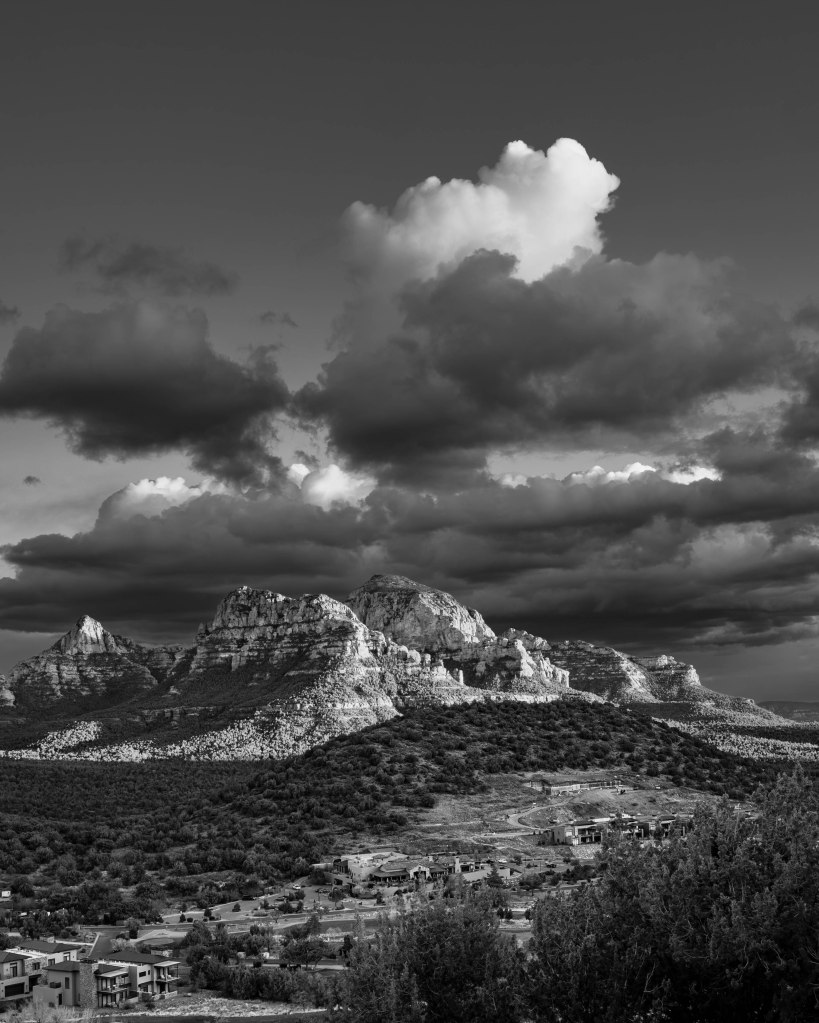
The first image was a landscape, highlighted by the setting sun and building clouds over the peaks in Sedona, Arizona. There’s no doubt I imagined this image in bold monochrome. I shot it using my favourite JPG setting in the Ricoh GR III: hard monochrome. The in-camera JPG looked promising, on the tiny 3″ viewfinder screen. I couldn’t wait to see the image in Lightroom.

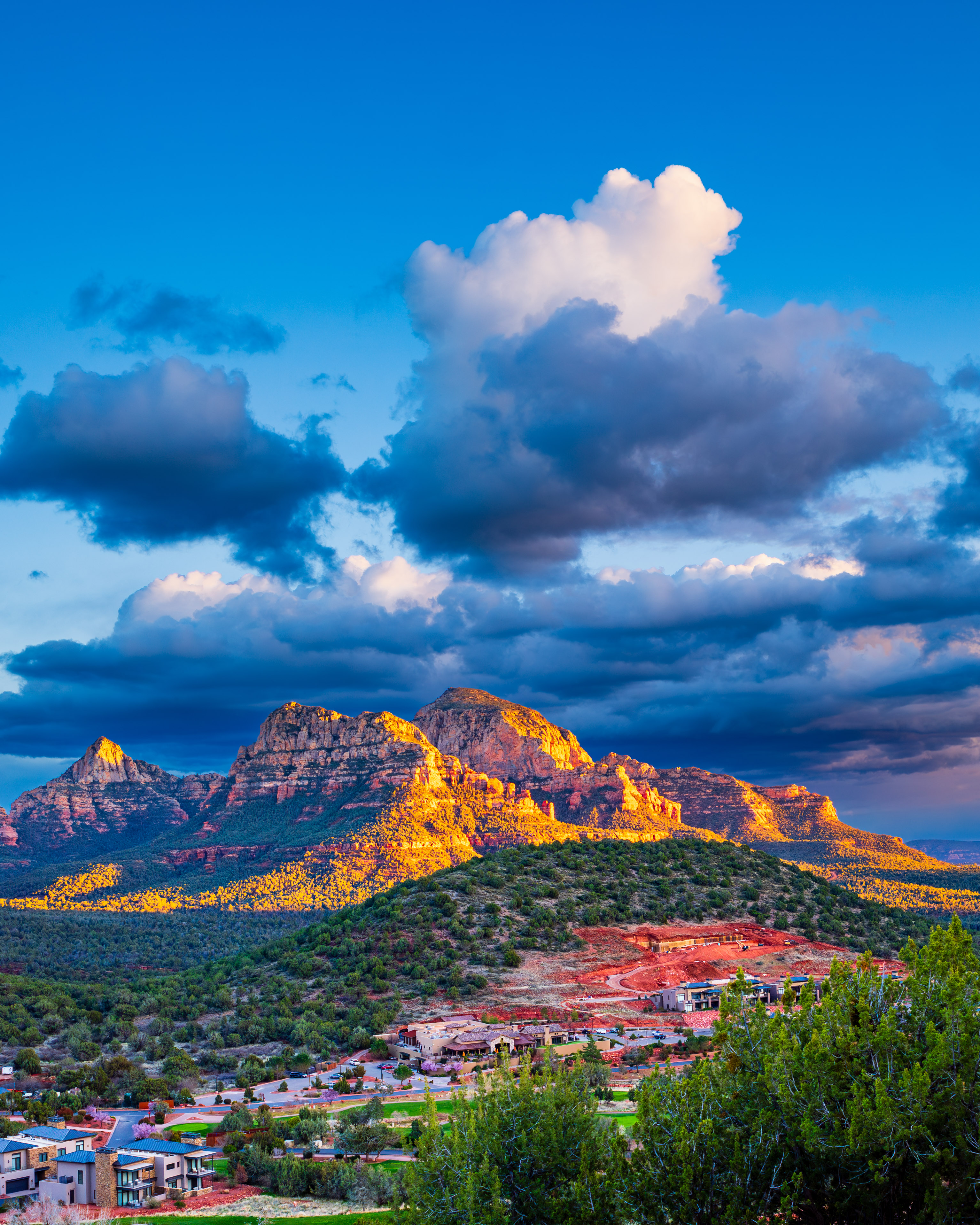
I hadn’t even considered the option of a colour version of this image, but maybe I had been too hasty. I reimported the image and forced myself to ignore the monochrome button. This is a comparison of the two versions:

Evening clouds, Sedona (March 2024)

To my surprise, I found the colours in the foreground… the famous red rocks of Sedona… to be a distraction. This wasn’t the result I expected. The dramatic clouds, which I was able to set against the sky with a red filter effect, were hardly noticeable. Instead, they were competing for attention. I had to go with my first instinct. This photograph is better in monochrome. 

Cold, Icy Calgary

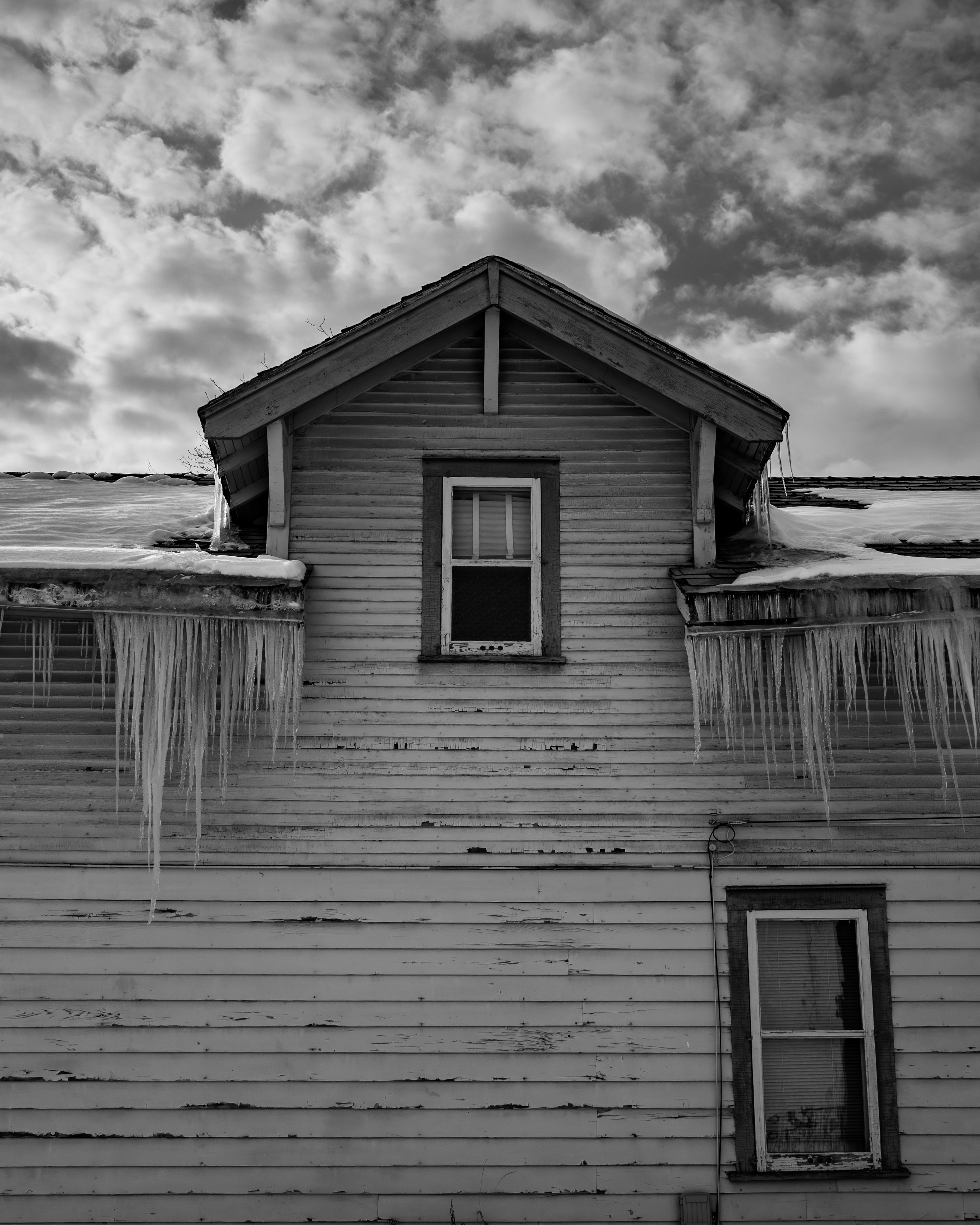
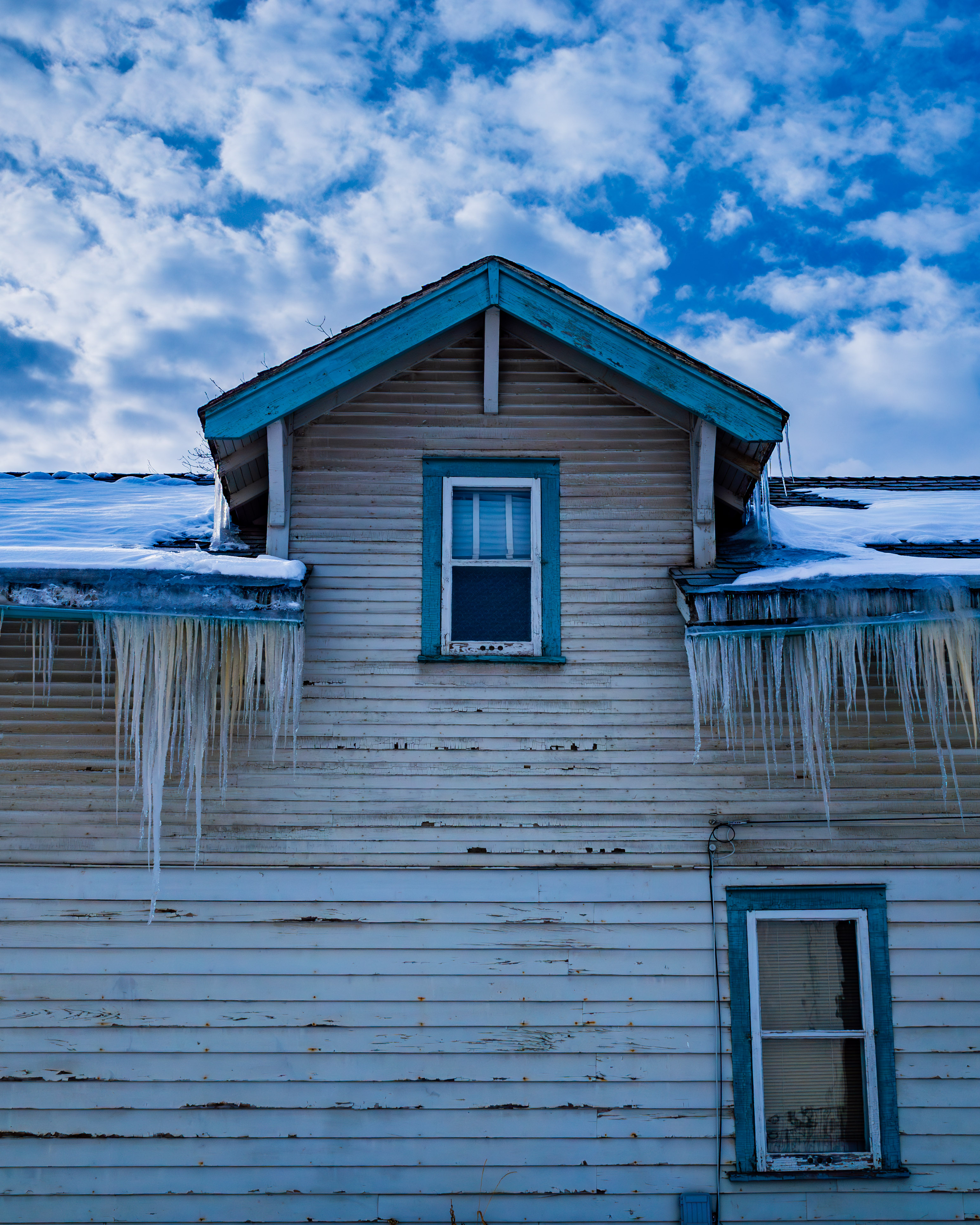
My second image was totally different from the picturesque scene in Sedona. We had returned to a late blast of winter in Calgary. It must have been some blast, based on the icicles that were hanging from every rooftop. A photo opportunity!

As with the landscape, I saw this roof and its crop of icicles in black & white. Texture and lines, contrasty clouds (where’s that red filter?) The thick icicles were a cool feature… no pun intended.  

My monochrome image needed only a few edits: an increase in contrast and darkening of the sky. I also bumped up the exposure a little, to ensure the picture wasn’t a complete wash of drab grey. And I added a bit of texture to the peeling paint. This was just about exactly what I visualized when I took the shot.

A good crop of icicles (March 2024)

But had I been too hasty? I had to find out. So I re-imported the RAW image and edited the colour version. I hadn’t even noticed the blue paint on the trim. And I missed the discolouration in the icicles from whatever had been oozing out of the eavestroughs. Time for some repairs.

What do you think?

Personally, I don’t like it at all. My mind’s eye was right to see this image in tones of grey. The colours are irrelevant to the story that this picture is telling. I wanted to put the viewer into a scene that was edgy, cold and stark. Instead, the pale blue trim on the house tempers the scene, while the brownish stuff coming out of the eaves is a distraction.

Springtime in Hamilton

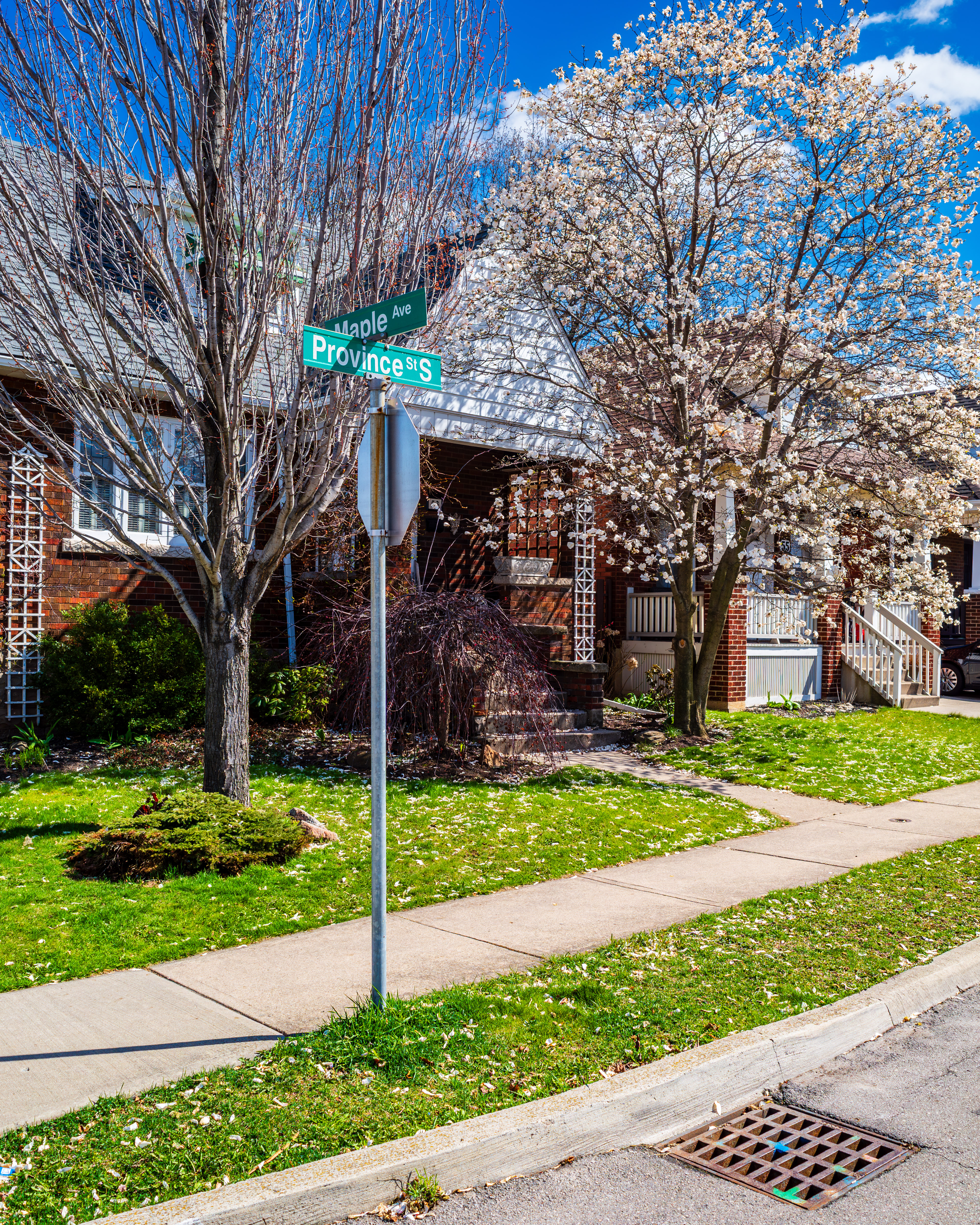
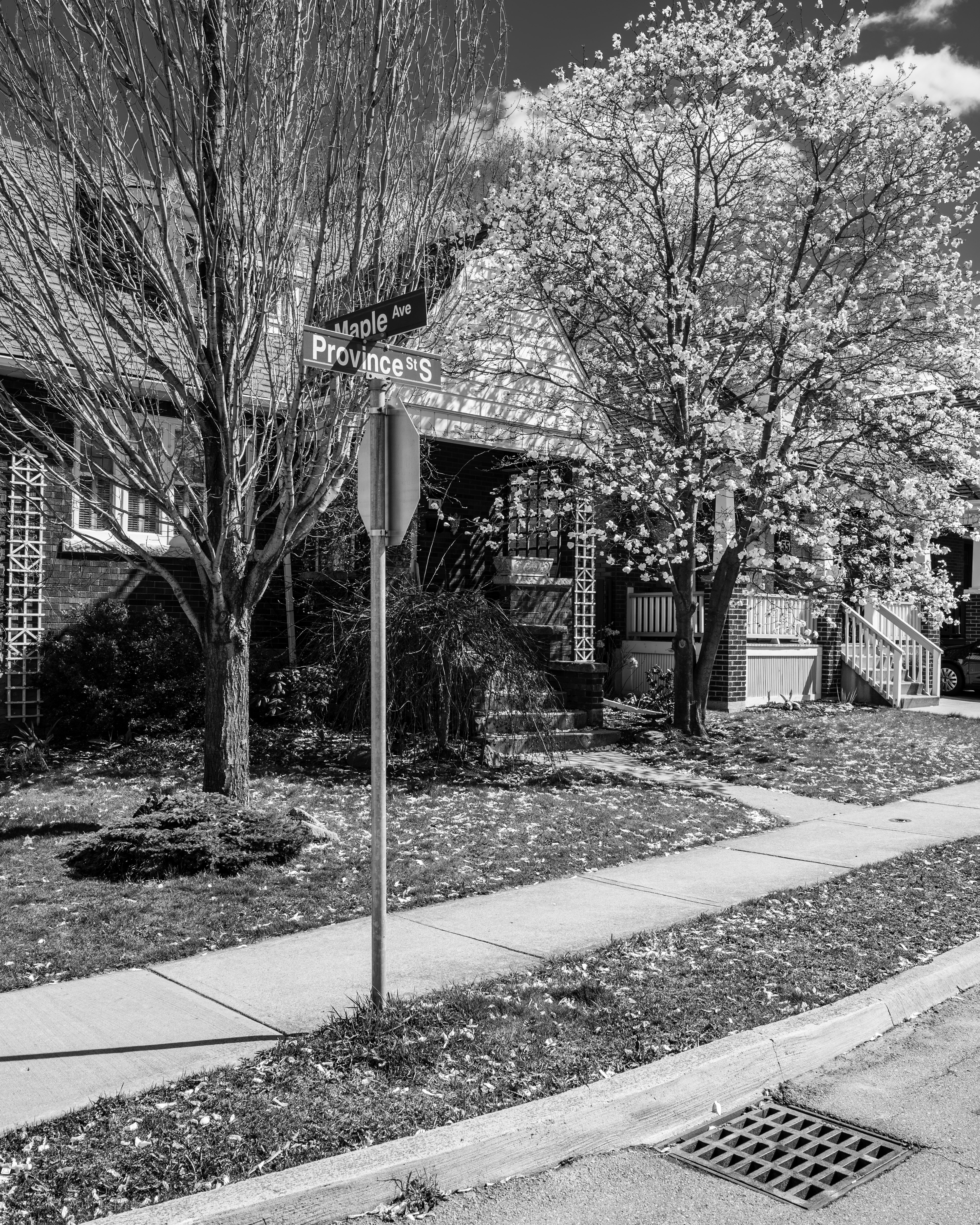
My final image is from a recent visit to Hamilton. Walking around my old neighbourhood in April was a riot for the senses. Spring was in full bloom. I snapped a picture at the corner of (obviously) Maple Avenue and Province Street. I initially saw this as a colour picture, with a sunlit magnolia tree as the highlight.

Maple and Province, Springtime (April 2024)

Even though I like the colour image, I decided to try a monochrome version. This one is more of a toss-up. I like both versions. Why? The colour version puts the viewer right in the scene. Spring has clearly sprung. On the other hand, the monochrome version shows us every detail but leaves us to imagine what colour everything is in the scene.

Of course, these are just my thoughts. Let me ask you: monochrome or colour? Leave me a reply in the comments.

Until next time, thanks for reading

Arizona Dreaming – Part 2

Sedona, Red Rock Country

Straight from our successful morning at the XTerra Black Canyon trail run, our convoy headed north to beautiful Sedona for a week at the Seven Canyons resort. Our theme for the week was “Elevate Performance”, and our hosts, Bill and Janice, were exceptionally generous, opening their home and directing all manner of activities. 

We explored the extensive trail system around Sedona, which brought us awesome views of the stunning “red rocks” for which the city is famous. Sedona was much busier than what we remembered from our last visit, so we made sure to get an early start for our trail runs. 

Did you know that the unique red colour of Sedona’s geological formations comes from iron oxide? The rocks are primarily sandstone and limestone. Because these are relatively soft rocks, they are susceptible to physical and chemical erosion. Wind and water (think flash flooding) have played a significant role in shaping the landscape over millions of years. And the result is spectacular… it’s unlike any other place I’ve been.

Our first group run was on the Little Horse-Bell Rock trail. We could have legitimately said we were still recovering from the race a couple of days earlier. That may have been partly true for Deb, but I was definitely okay with an easy start as I was still feeling the effects of my fall (and knowing that we had a busy week ahead of us.) This trail was perfect, even for those in our group who were a bit more ambitious. We did an out-and-back route that brought us all to the trailhead at the same time, so it all worked out. And what views!

“Elevate Performance” – Adrenaline Rush hits the trails at Little Horse

A highlight of the week was a trail run starting from the Dry Creek trailhead. We went out on the Long Canyon trail and returned via the Mescal-Yucca loop. We knew this route from prior runs, and we stopped along the way to enjoy the breathtaking… in both senses of the word… views.

Taking a break on Mescal

We added a second trail race to our calendar, given that the Sedona Stumble was conveniently scheduled for Saturday March 23, at the Posse Grounds Park in town. The 5k and 10k distances were full of challenges, including sections on a narrow single-track circuit and a mountain bike slalom course. Wow!

The race was very well organized by Run Sedona. Adrenaline Rush runners tackled both distances. Once around this technical loop was enough for Deb and me. We enjoyed the post-race snacks and festivities, especially the delicious donuts provided by Sedonuts. It was no surprise that Adrenaline Rush runners again made an impact on the podium. Congrats to Allison (1st in F50-59) and Al (1st in M60-69) in the 10k, to Doreen (1st in F60-69), Janice (2nd in F60-69) and Carolyn (1st in F50-59) in the 5k, and to the rest of our group on your strong results!

In addition to trail running, there was a lot of golf action on the beautiful Seven Canyons course throughout the week. Deb and I enjoyed a few casual games, although the glaring truth, for me at least, is that my game needs serious attention. A summer project, perhaps?

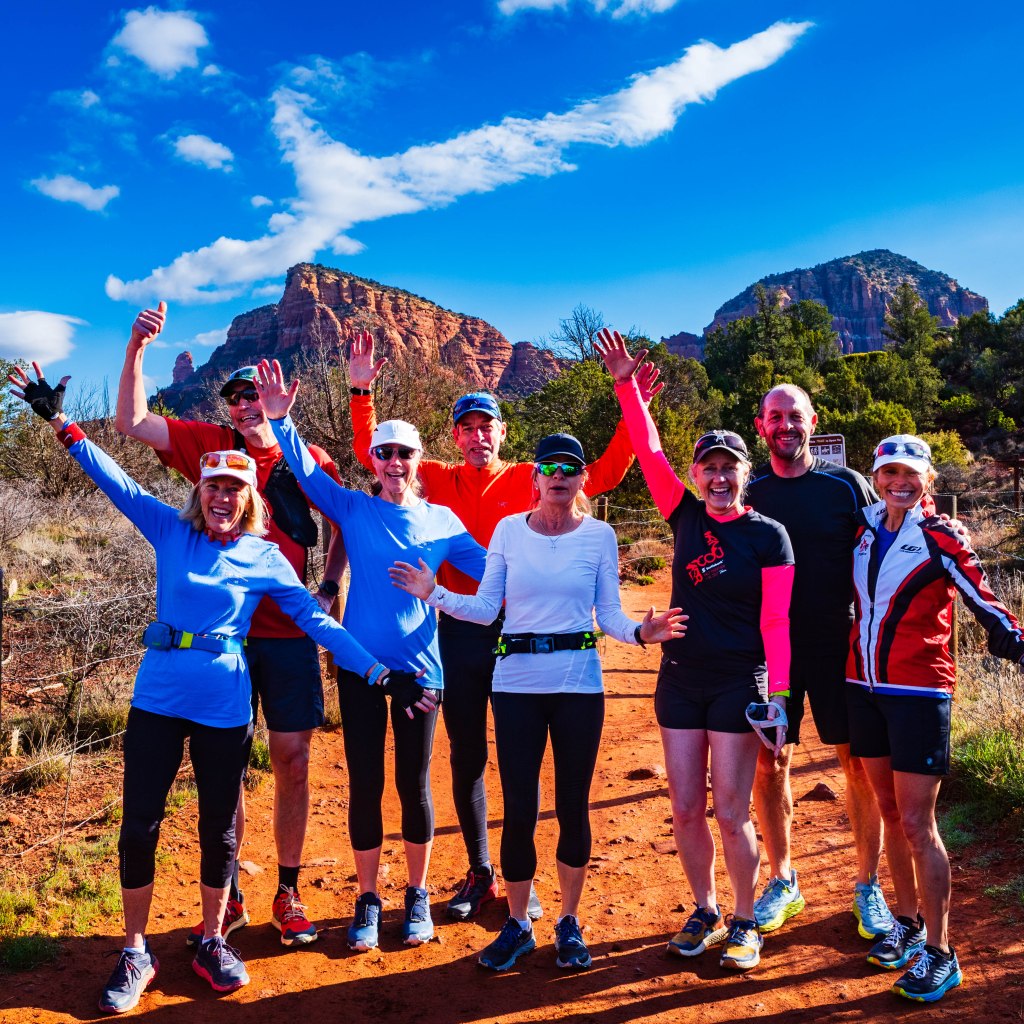
It was all smiles after the (cool and breezy) Adrenaline Rush golf game

Of course, I carried my Ricoh GR III with me on our runs and was rewarded with some good shots. From our vantage point on Rachel’s Knoll, I also got some amazing landscapes. The weather was cool and breezy, which meant some very interesting evening cloud formations. And the sunsets were outstanding.

Evening clouds roll in, Sedona

All told it was a magical week in paradise.

Thanks for reading,

Arizona Dreaming – Part 1

XTerra Black Canyon Trail Race

It was a monster day of trail racing. An early start on a rainy St. Patrick’s Day morning in central Arizona didn’t deter a large Adrenaline Rush contingent for the Black Canyon XTerra trail races

Our runners toed the line in the 7k, 11k and Half Marathon distances… sadly there were no takers for the marathon. The rain eased up just in time and gave way to perfect racing conditions on the scenic course in the Sonoran Desert.  

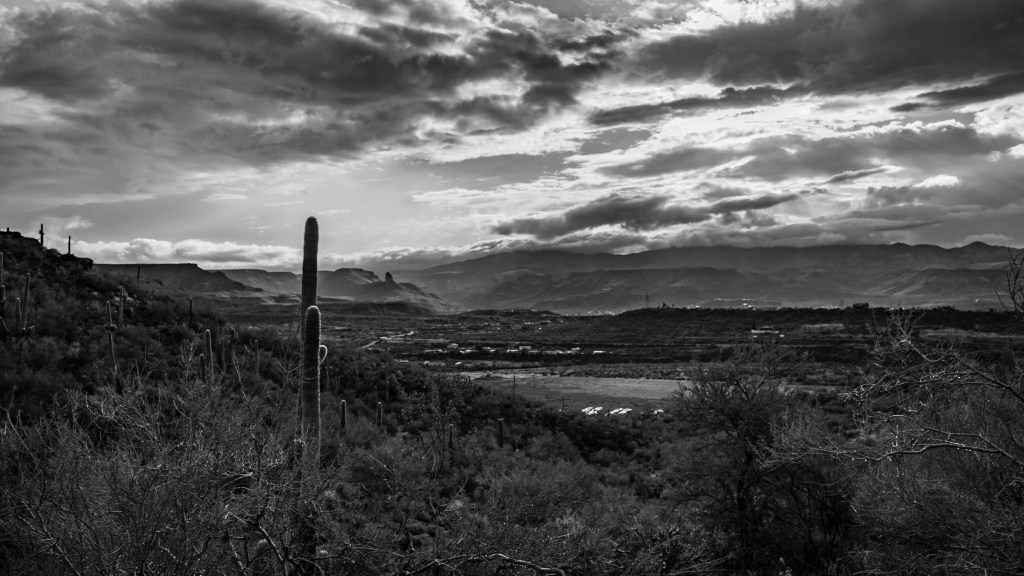
Early morning in the Sonoran Desert (March 17, 2024)

Allison Blackmore and Mark Martens were off first in the half marathon. Allison smoothly made her way around the course, a challenging mix of single track and horse trail. Her legs held up until the 16k mark, and she managed the fatigue induced by 525m of elevation gain. Allison nailed down a first-place finish in the F55-59 age group and was fourth overall female in a time of 2:01. 

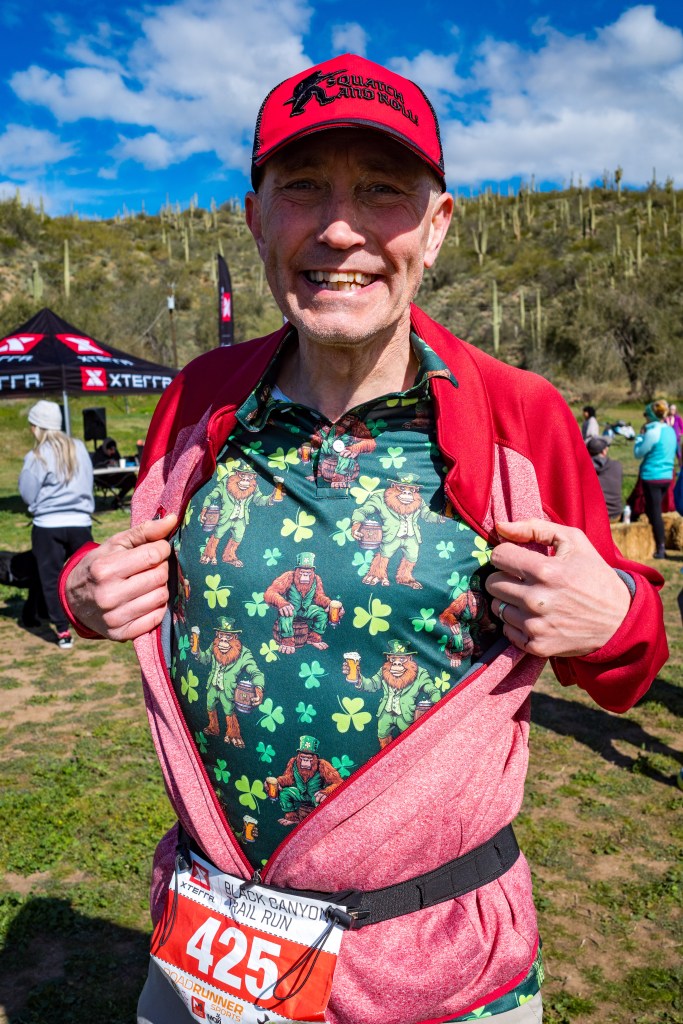
A stir went through the crowd when word spread of a Sasquatch sighting on the trail. Of course, it was only Mark, who overcame a few nagging injuries that have kept him out of interval training for the winter. He put in a solid performance, finishing in 2:19 and fifth in the M50-54 AG. His performance leaves him optimistic about his chances in the upcoming HM in Mississauga.

A St. Patrick’s Day Sasquatch sighting!

142 runners tackled the 11k, including four AR racers, who left a definite mark on the event. Al Blackmore continued his recent good form by racing to an 18th-place finish. He looked very comfortable running to an excellent time of 1:08. This was good for third in the highly competitive M60-64 AG. 

Doreen Katchmar admitted she couldn’t sleep the night before the race, worrying about getting lost on the course. Fortunately, the XTerra route was extremely well-marked. That meant Doreen could focus on staying upright and running strong… and it was mission accomplished! She turned in a nifty performance of 1:19 and first in her F60-64 AG. What a result!

Carolyn Leonard enjoyed the race and delivered a great performance. At 1:21, her time won her a first-place finish in the F55-59 category. The entertaining race announcer kept her in suspense, but there was never any doubt that she ran “the most perfect race.” Carolyn appreciated the supportive atmosphere among the racers on the trail. 

Coach Janice McCaffrey got into the St. Patrick’s Day spirit (and was easily the best costume of the day, but sadly there was no such category). We heard later that she may have lost a bit of time on course when her green tutu got snagged on a Saguaro cactus. Fortunately she was carrying poles, which she put to good use, en route to a third-place AG result and a 1:29 time. 

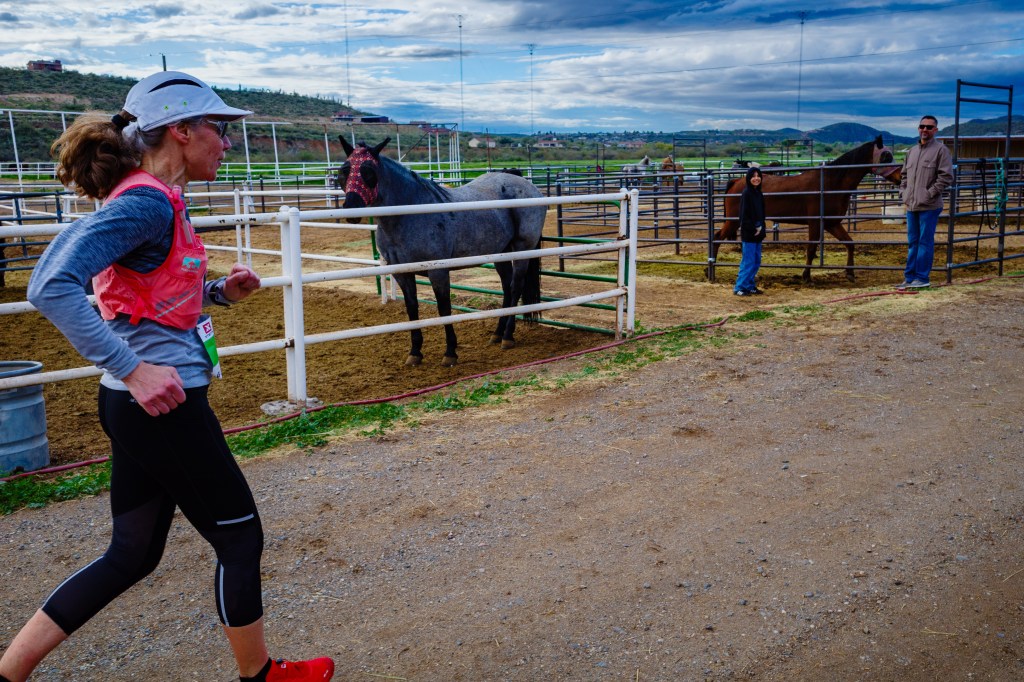
Debbie and I had modest expectations for the 7k, due to a sore hip and Achilles, respectively. Things started well, with Deb leading a small group of runners through the single-track section. That is until yours truly hit a rock and went down hard. After a brief pause, we carried on, but not before Deb had confirmed that no women in her age group had passed us. She need not have worried. In the immortal words of the race announcer, she was an “ultimate monster” with a convincing first-place finish in the F65-69 AG in 57:45. And me? I managed 2nd in my AG and was happy to still be upright. 

Deb cruises past the horse stables and heads for home

Rita and Jamie Bertwell turned in awesome performances on what they described as their “first day of training.” They looked like race veterans as they handled everything the course threw at them, including 10-12 fords of Black Canyon Creek in the last 2k. Jamie noted that while it wasn’t a contest, he did notch one better AG place in his race than Mark did. And Rita? She was a cool 5th. Our intrepid announcer called it correctly for their hand-in-hand 1:22 finish: “Now THIS is what it’s all about!”

And in summary, those words rang true for all the AR racers on the day.

What a day at the races for Adrenaline Rush!

Stroke of Luck – Now Available!

I’m pleased to announce that my memoir, Stroke of Luck: My Life in Amateur Athletics, was recently published. The book is available now on Amazon (in either print or e-book format) or through independent bookstores. For those in Calgary, you can reach out to me directly for a copy. You’ll find details about the book on the dedicated page on this site. Click here.

Writing and publishing the book has been a personal journey of discovery. I hope you will enjoy reading about my lifelong connection with distance running, and the process of recovering from a number of strokes in 2017.

To my readers, and to those of you following me on the blog or on Instagram, I appreciate your interest and support. I look forward to sharing more stories and photographs with you.

Steve

Stroke of Luck: My Life in Amateur Athletics – order your copy today!